

Choosing a New York observation deck is not simply a matter of finding the tallest building. The five principal paid observatories differ in skyline composition, outdoor access, neighborhood and the amount of time devoted to exhibitions. A lower terrace can produce a more recognisable New York photograph than a higher enclosed floor if the city’s major landmarks appear in the right positions.
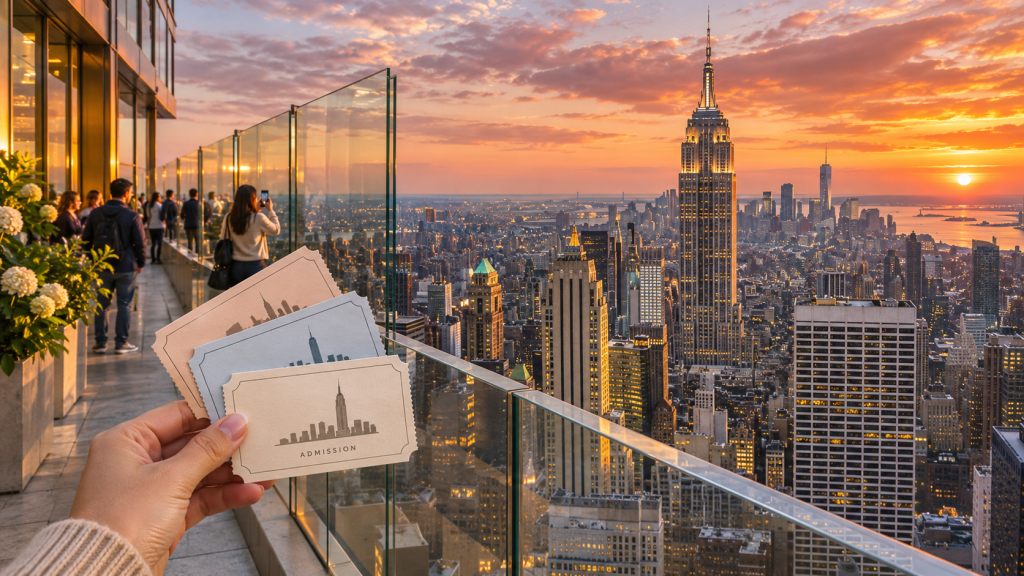
Visitors should first decide what they want to see in the frame. Top of the Rock places the Empire State Building directly ahead, Edge opens towards the Hudson River, and One World Observatory looks over New York Harbor. SUMMIT One Vanderbilt builds an art experience around the skyline, while the Empire State Building combines its view with the history of the landmark itself. In 2026, the choice is no longer between five similar platforms. Each ticket buys a noticeably different experience.
Top of the Rock and the Empire State Building: View or Landmark?
Top of the Rock occupies the 67th, 69th and 70th floors of 30 Rockefeller Plaza. Its highest regular terrace stands approximately 850 feet above Midtown and provides direct sightlines towards the Empire State Building, Central Park and the Hudson River. The upper level is open to the air, with fewer visual obstructions than observatories where every photograph must be taken through glass.
This is the strongest option for travellers who want the familiar Midtown skyline in a single frame. The Empire State Building appears to the south, while Central Park stretches north beyond the towers around Billionaires’ Row. An optional Skylift experience raises visitors another 30 feet on a rotating outdoor platform, but the standard terraces already provide the main panorama.
Top of the Rock also fits efficiently into a Midtown day. Rockefeller Center, Fifth Avenue, St. Patrick’s Cathedral, Radio City Music Hall and the Museum of Modern Art are within walking distance. There is little reason to cross Manhattan only for the observation deck if these nearby locations are already included in the itinerary.
The Empire State Building should be selected for a different reason. Standard admission includes exhibitions about the building’s construction, design and place in popular culture, followed by the open-air observatory on the 86th floor. The promenade extends around all four sides of the tower. Tickets with access to the enclosed 102nd-floor observatory are available at a higher price.
The limitation is obvious but important: the Empire State Building cannot appear in photographs taken from its own observatory. Book it for Art Deco architecture, the museum experience and the sensation of standing inside a defining New York landmark. Book Top of the Rock when the skyline photograph itself is the priority.
Edge and SUMMIT One Vanderbilt: Height or Designed Experience?
Edge projects from Level 100 at Hudson Yards, more than 1,100 feet above Manhattan. The outdoor platform has angled glass walls, tiered seating and a transparent section through which the streets can be seen directly below. Its western position creates a broad view of the Hudson River, Lower Manhattan and New Jersey, with the Midtown skyline grouped to the east.
The 2026 Edge experience also includes new multi-level indoor environments based on light, movement and reflections. These installations add substance to the visit during poor weather, although the cantilevered outdoor deck remains the principal reason to choose Edge. Exterior access can be restricted temporarily when conditions become unsafe.
Edge works well with the High Line, Hudson Yards, Little Island or Chelsea. Scheduling it between attractions on the east side of Manhattan creates unnecessary travel and increases the chance of missing a timed entry.
SUMMIT One Vanderbilt occupies the 91st through 93rd floors beside Grand Central Terminal. Its mirrors, digital installations, glass ledges and changing light turn the city into part of a constructed visual environment. Levitation places visitors inside glass boxes extending above Madison Avenue, while an outdoor terrace provides a less reflective view from the upper level.
This is the better choice when photography, immersive interiors and close views of Midtown East matter more than a traditional open-air terrace. The Chrysler Building is particularly prominent from this position. Bright daylight can create intense reflections, so sunglasses are useful. Visitors should also follow the clothing and footwear guidance provided by the venue because several floors are mirrored.
The internal route is largely one-directional. Once visitors leave a level, they may not be able to return to it. SUMMIT therefore rewards a slower visit rather than moving quickly through the first rooms in search of the highest floor.
Why Choose One World Observatory?
One World Observatory occupies floors 100 to 102 of One World Trade Center. The experience is fully enclosed and climate controlled, making it the most comfortable option during cold weather, strong wind or summer heat. Indoor conditions do not guarantee visibility, however. Low cloud, fog and heavy rain can still remove most of the skyline.
The Lower Manhattan location produces a view that none of the Midtown observatories can replicate. New York Harbor, the Statue of Liberty, Ellis Island, the Brooklyn Bridge, Governors Island and the New Jersey waterfront become the main subjects. Midtown appears farther north as a complete group of towers rather than a collection of nearby buildings.
One World is most efficiently combined with the 9/11 Memorial, the Oculus, Wall Street, Battery Park or a walk across the Brooklyn Bridge. It is also suitable for visitors who prefer to remain indoors or feel uncomfortable near exposed terraces and projecting glass floors.
Its strength is geographic rather than theatrical. Choose One World for the harbor and downtown perspective, not because its building reaches a greater architectural height than the Midtown towers.
How to Select and Book an Observation Deck Ticket
Sunset is the most competitive period because one admission can include daylight, the color change over the skyline and the illuminated city. A timed entry approximately 45 to 60 minutes before sunset usually provides a useful margin for security screening and elevators. This is not guaranteed, and queues vary by date, so visitors should avoid scheduling another reserved attraction immediately beforehand.
Morning sessions often provide cleaner light and lighter crowds. Late-evening visits emphasise illuminated buildings, although Central Park and the harbor become less distinct after dark. For photography through windows, dark clothing reduces reflections. Outdoor decks require an additional layer even in mild weather because wind is stronger at observation level than on the street.
Before payment, check exactly what the ticket includes. The 102nd floor at the Empire State Building, Skylift at Top of the Rock and Ascent glass elevator at SUMMIT may require an upgraded ticket or separate payment. Flexible entry, priority access and cancellation conditions also vary. Current admission options can be reviewed through NYC View Tickets before choosing a time that fits the surrounding neighborhood itinerary.
For a first visit and one classic skyline, Top of the Rock is the most balanced selection. Edge provides the strongest outdoor height experience, SUMMIT is built around immersive photography, the Empire State Building offers the richest architectural history, and One World Observatory dominates the harbor view. The right ticket is the one that matches the intended photograph, weather conditions and location of the rest of the day.
What’s something you’ve forgiven but haven’t forgotten?
View all responses


