

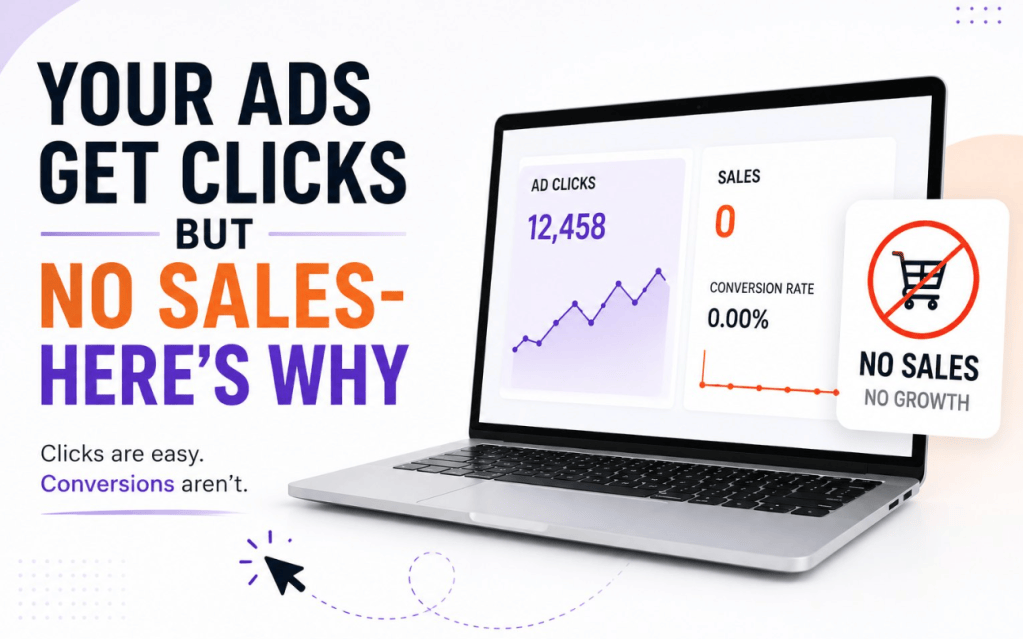
Traffic without sales is the most common complaint in paid advertising, and it is also the most fixable, because the cause is almost never the ads themselves. Work through these five layers in order and the leak usually appears within an hour.
Layer one: are you buying the right intent
Open your search terms report and read the actual phrases people typed. Not the keywords you chose, the queries that triggered your ads. In most underperforming accounts, somewhere between 20% and 40% of spend goes to searches with no buying intent at all: how-to guides, DIY instructions, job seekers, students researching a topic.
Someone searching “how to fix a leaking tap” is not hiring a plumber. Someone searching “emergency plumber near me” is. Both can trigger the same broad keyword.
Layer two: does the page match the promise
Click your own ad on a phone and count the seconds before you understand what is offered, what it costs, and how to get it. If that takes longer than five seconds, you have found the problem.
- The headline should repeat the query, not your brand slogan.
- Pricing or a range should be visible without scrolling or filling in a form.
- The page should load in under three seconds on mobile data, not office wifi.
- The form should ask for two fields, not seven.
- The action should be repeated at the top and bottom of the page.
Sending paid traffic to a homepage is the single most expensive habit in small business advertising. A homepage is designed to serve everyone, which means it persuades no one in particular.
Layer three: is the conversion actually being recorded
Before concluding that nothing converts, submit a test enquiry yourself and confirm it appears in your reporting within a day. A surprising share of “no conversions” cases turn out to be broken tracking after a website update, and the campaigns were working the whole time.
Two failures are especially common: a form that submits without firing an event, and phone calls that never get recorded at all because no one set up call tracking. If most of your enquiries come by phone, an account measuring only form fills is effectively blind. This is the sort of thing worth having tag management and event tracking checked properly before spending another month optimising against incomplete data.
Layer four: is the offer competitive
Open three competitor sites for the same query and compare honestly. If they publish prices and you do not, if they promise next-day service and you say “contact us for availability”, if they show 200 reviews and you show none, then your clicks are effectively funding their sales.
The fix here is rarely advertising. It is a better guarantee, clearer pricing, visible proof, or a lower-commitment first step such as a free assessment rather than a consultation booking.
Layer five: what happens after the enquiry
Response speed changes outcomes more than any campaign setting. The odds of converting a lead drop sharply after the first five minutes, and someone who filled in your form has usually filled in two others as well. Whoever calls back first tends to win.
Check three things: who is responsible for enquiries, how quickly they respond during working hours, and whether anyone follows up more than once. Many businesses buy leads at $40 each and then abandon them after one unanswered call.
Work in this order
Fix tracking first, because everything else depends on measuring it. Then the landing page, because it multiplies the value of all traffic. Then the queries, because that is where waste lives. Then the offer and the follow-up. Changing bids and ad copy sits at the bottom of the list, which is unfortunate, because it is where most people start.


 Eduindex
You must be logged in to post a comment.