JAIPUR – Pink City of India (Part – 2)

Jaipur or pink City, is the capital of Indian state of Rajasthan, and its largest city. The city was built in the 18th century by Sawai Jai Singh as India’s first planned city, and today it’s a major tourist attraction for Indians and for international visitors. It is a very picturesque city with splendid palaces, forts and historical monuments. Some of the tourists places are —

1 – City Palace in Jaipur

City Palace has stood at the heart of the Old City of Jaipur for nearly three centuries, shortly after Maharaja Sawai Jai Singh II decided to relocate his court from the city of Amber. Protected by huge guard walls, the fairy-tale-like structure is still the home of Jaipur’s modern-day royal family, and is more extravagant and enchanting than you might imagine.

City Palace is more than a sand-colored regal abode—it’s a sprawling complex of buildings built around a series of landscaped garden courtyards overlooking Jaipur and Lake Palace. The entire property is a stunning display of Rajasthani and Mughal architecture.

The current occupants reside in the most eye-catching building, the Chandra Mahal, an elegant structure with curved eaves and domed rooftops. Each of its seven stories features an entirely different style. The ground floor is included in the price of admission, but you’ll need to book a private tour to go upstairs.

2 – Jantar Mantar

At first glance, Jantar Mantar may look to be nothing more than a bunch of larger-than-life abstract sculptures. But this is not an art gallery—it’s a special collection of astronomical tools started by Rajput ruler Jai Singh II to measure the heavens nearly 300 years ago.

Each of the 20 or so structures at the UNESCO World Heritage Site serves a distinctive purpose. The observatory’s massive sun dial, known as Samrat Yantra, is particularly striking. At 27 meters tall, it casts a huge shadow that accurately measures time down to two seconds.

3 – Hawa Mahal
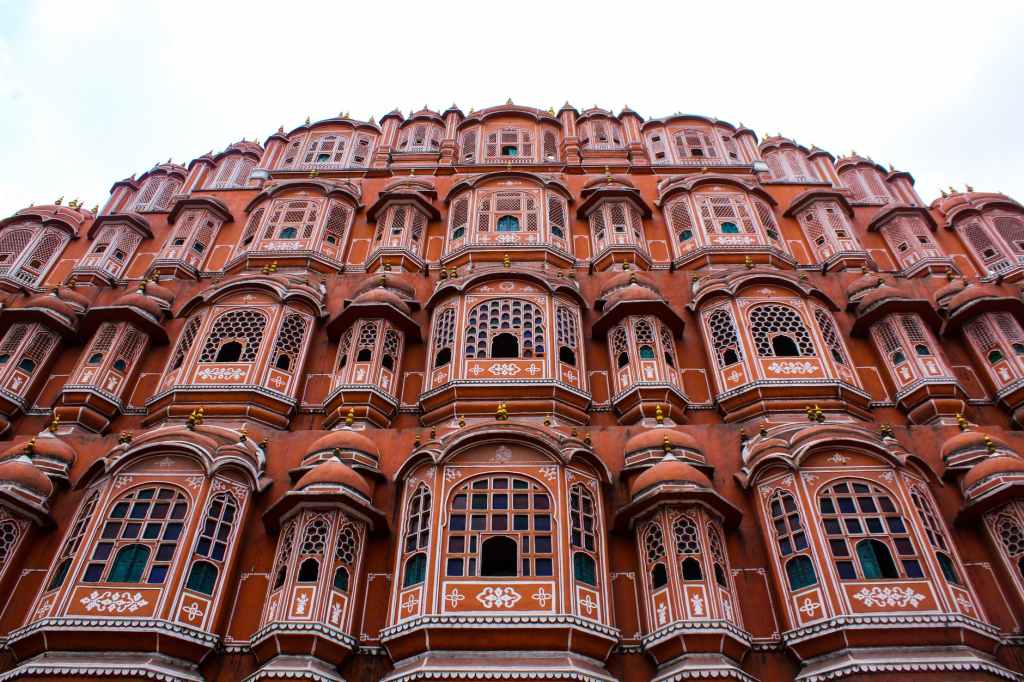
If you had any preconceived notions about how the buildings in Jaipur look, they probably came from Hawa Mahal (Palace of Breeze). It has all of the distinctive architectural features that appear in postcards of the city, from the salmon-pink, honeycombed facade, built to resemble the crown of Hindu god Krishna, to the geometric accents and rows of tiny windows.

The landmark was built in 1799 to allow royal ladies to watch festivals on the street without being seen by the public. Its 953 windows allow plenty of breeze to pass through, making it an ideal summer palace.

4 – Amber Fort

Jaipur is home to one of India’s most-visited forts: Amber Fort. Built in the year 1592, the sandstone and marble monolith stands atop a small hill roughly 20 minute’s driving distance northeast of the center of Jaipur. It’s best known for being a pristine example of Rajasthani architecture.

Getting to Amber Fort typically involves a short uphill hike that’s well worth the effort. It’s decked out with intricate patterns of inlaid marble in nearly every color of the rainbow. The fort is laid out into four separate sections, each of which has a spectacular garden courtyard outside. While you’d never know it from above, you can actually explore the fort’s underground tunnels, some of which have been restored.

5 – Albert Hall Museum

When English writer Rudyard Kipling visited the Albert Hall Museum in Jaipur, he wrote that it was a “rebuke to all other museums in India from Calcutta downwards.” That’s high praise coming from the son of a curator, and fitting for this renowned institution.

The oldest museum in Rajasthan, the Albert Hall Museum boasts an extensive collection of art and historically significant artifacts. Come for the Egyptian mummy, stay to see antique coins from different periods in India’s history, charming permanent exhibits of miniature paintings, 18th-century costumes worn by members of different castes, and a peculiar collection of 19th-century clay figures demonstrating all the yoga poses.

6 – Birla Mandir

In a city that seems to be dipped from top to bottom in pink, the stark white marble Birla Mandir stands out—big time. The Hindu temple pays tribute to Lakshmi, the goddess of wealth and purity, and Vishnu, one of the religion’s main deities.

7 – Nahargarh Fort

When it comes to sightseeing around Jaipur, the views don’t get better than what you’ll find at Nahargarh Fort. Also known as Tiger Fort, the nearly 300-year-old fort overlooks the entire city from atop the Aravalli Hills—a prime location for the structure to defend Jaipur against enemies many years ago.

More than just a formidable barrier though, this fort also contains Madhavendra Bhawan, a summer destination for royalty. The sumptuous Rajasthani building features a dozen identical boudoirs for the queens, which all connect to the king’s suite through mural-filled corridors.

8 – Jal Mahal on Man Sagar Lake

One look at the Jal Mahal, and you might think you’re seeing a mirage. The graceful palace seems to float atop the twinkling Man Sagar Lake , a calm sight compared to the rest of the frenzied city.

While it appears to have just one story, the Water Palace has four other levels submerged beneath a reservoir. Tourists can’t access the site, however, that may change in the future.
JAIPUR – Pink City of India (Part-1)

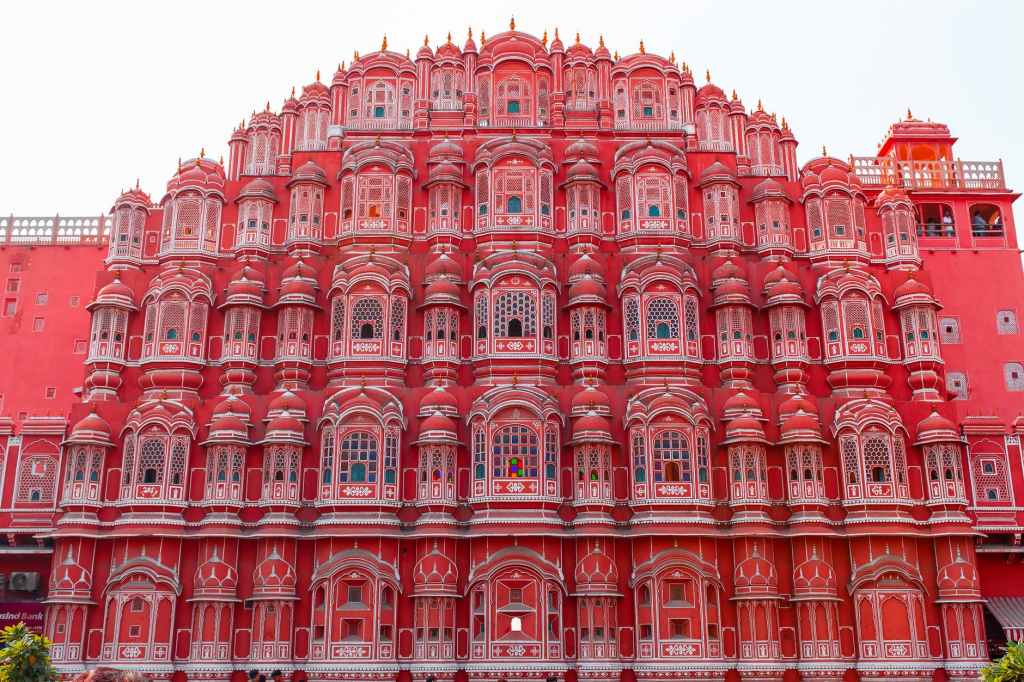
Jaipur is also known as the Pink City, due to the dominant color scheme of its buildings. It is located 268 km (167 miles) from the national capital New Delhi. Jaipur was founded in 1727 by the Kacchawa Rajput ruler Jai Singh II, the ruler of Amer, after whom the city is named.

Jaipur is the Capital City of Rajasthan. Jaipur is famous for Rajasthani traditional Jewelry, traditional fabrics and handicrafts, and also for traditional rajasthani cuisine.

This nicknames arise from the distinctive architectural features of each city. The Pink City of Jaipur, for example, is so named because its buildings were painted pink in the 19th century, back when India was a British colony, to prepare for a visit by Edward, Prince of Wales.

Maharaja Sawai Ram Singh II, who was the then ruler of Jaipur, in his infinite spirit of hospitality, had the whole city painted pink terracotta in honour of the royal guest. Pink was considered the colour of hospitality. … Historic accounts state the city was coloured in white before it was turned pink.

A romantic dusty pink hue — which has defined the city since 1876, after it was painted pink to welcome Queen Victoria’s husband, Prince Albert — gives Jaipur its status as the “Pink City,” as it is commonly known.

The number of tourists visiting these monuments and paying tribute to the historical traditions of the city, this city’s nickname is Paris of India.

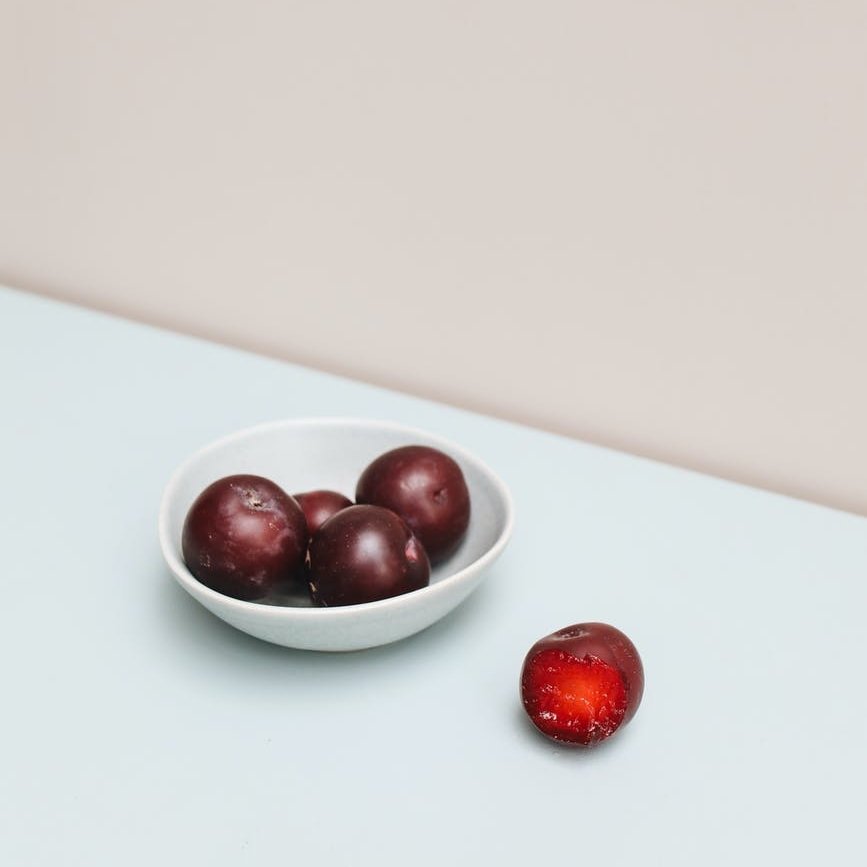
PLUM – ALOO BUKHARA

A plum is a small sweet fruit with a smooth red or yellow skin and a stone in the middle

It boasts of carotenoid zeaxanthin and improves one’s vision.

It protects an individual from harmful ultraviolet rays. Additionally, aloo-bukhara aids in developing cardiovascular movements in the body.

It possesses iron and that subsequently plays a part in the evolution of more red blood corpuscles.

Plums and prunes are rich in antioxidants, which are helpful for reducing inflammation and protecting your cells from damage by free radicals. They are particularly high in polyphenol antioxidants, which have positive effects on bone health and may help reduce the risk of heart disease and diabetis.

Plums contain a high amount of vitamin C, which is why it is considered beneficial to treat dark spots, skin discoloration as well as age spots. Also plum can improve blood flow in the skin, which also helps in minimizing the appearances of marks and scars.

It helps the skin to heal faster and replace damaged skin with new skin. Consuming plums also improve skin texture and elasticity. It also reduces the appearance of dark spots, freckles and treats other skin conditions.

Plums are chock full of fiber, which helps slow down a blood sugar spike after you eat carbs. They can also boost your body’s production of adiponectin, a hormone that helps regulate your blood sugar levels. Bone health. Research on animals shows prunes (dried plums) may help reduce bone loss, and may even reverse it.

Aloo Bukhara or plum is a pulpy fruit that has a number of health benefits if consumed as a part of a balanced healthy diet. Eating Aloo Bukhara helps to maintain body weight and combats diabetes and obesity. It lowers cholesterol, improves blood circulation and quality, and helps to maintain proper heart health. It also improves vision, helps to maintain proper digestive health, and helps to keep a healthy glowing, and vibrant skin. Aloo Bukhara can also combat cancer due to a large number of antioxidants present.


PHOTOGRAPHY


                       “Photography is the story I fail to put into words.”

                                – Destin Sparks

What is photography ?

Photography is the art, application, and practice of creating durable images by recording …
Other names: Science or art of creating durable images

The art or process of producing images by the action of radiant energy and especially light on a sensitive surface (such as film or an optical sensor)

Concepts of photography –

Aperture, shutter speed, ISO speed, exposure. Photography is all about light.  You use aperture and shutter speed to achieve the proper exposure, while taking into account some important side-effects you should be aware about.

Principles of photography –

The seven principles of art and design in photography; balance, rhythm, pattern, emphasis, contrast, unity and movement, form the foundation of visual arts. Using the seven principles allows you to take greater control of your photographic practice. This will lead to better photos and more photographic opportunities.

Elements used in photography –

Patterns, texture, symmetry, asymmetry, depth of field, lines, curves, frames, contrast, color, viewpoint, depth, negative space, filled space, foreground, background, visual tension, shapes. We use one or more of these elements to create a composition that works for our image.

There are many elements in photography that come together to make an image be considered “good”. Elements like lighting, the rule of thirds, lines, shapes, texture, patterns, and color all work well together to add interest and a great deal of composition in photographs.

A good photographer must have a very keen eye for detail to ensure that all elements within the photo , the lighting , the composition , the subject , and everything else in between to work together harmoniously to convey the right vision or message. Even the tiniest detail can make or break a photograph.

                           ” Photography is a way of feeling, of touching, of loving. What you have caught on film is captured forever… It remembers little things, long after you have forgotten everything.”

                                 – Aaron Siskind

A picture is a poem without words.

The art or process of producing images of objects on photosensitive surfaces. Photography is the art, practice or occupation of taking pictures with a camera. An example of photography is someone taking pictures for a magazine.

Photography in career –

Photography is a good career if you have an excellent skill set, good creative ability, composition, and technical expertise.  Good photography skills come with a lot of practice and hard work. This career can be rewarding if you love to take challenges and are eager to live your life through the eye of the camera.

Photographer skills –

Photographer skills are those skills needed to create high-quality pictures, including artistic vision and technical knowledge of camera equipment and the art of photography

             
                           “There is one thing the photo must contain – the humanity of the moment.”

                                     –Robert Frank


                       “Photography is the story I fail to put into words.”

                                – Destin Sparks

What is photography ?

Photography is the art, application, and practice of creating durable images by recording …
Other names: Science or art of creating durable images

The art or process of producing images by the action of radiant energy and especially light on a sensitive surface (such as film or an optical sensor)

Concepts of photography –

Aperture, shutter speed, ISO speed, exposure. Photography is all about light.  You use aperture and shutter speed to achieve the proper exposure, while taking into account some important side-effects you should be aware about.

Principles of photography –

The seven principles of art and design in photography; balance, rhythm, pattern, emphasis, contrast, unity and movement, form the foundation of visual arts. Using the seven principles allows you to take greater control of your photographic practice. This will lead to better photos and more photographic opportunities.

Elements used in photography –

Patterns, texture, symmetry, asymmetry, depth of field, lines, curves, frames, contrast, color, viewpoint, depth, negative space, filled space, foreground, background, visual tension, shapes. We use one or more of these elements to create a composition that works for our image.

There are many elements in photography that come together to make an image be considered “good”. Elements like lighting, the rule of thirds, lines, shapes, texture, patterns, and color all work well together to add interest and a great deal of composition in photographs.

A good photographer must have a very keen eye for detail to ensure that all elements within the photo , the lighting , the composition , the subject , and everything else in between to work together harmoniously to convey the right vision or message. Even the tiniest detail can make or break a photograph.

                           ” Photography is a way of feeling, of touching, of loving. What you have caught on film is captured forever… It remembers little things, long after you have forgotten everything.”

                                 – Aaron Siskind

The art or process of producing images of objects on photosensitive surfaces. Photography is the art, practice or occupation of taking pictures with a camera. An example of photography is someone taking pictures for a magazine.

Photography in career –

Photography is a good career if you have an excellent skill set, good creative ability, composition, and technical expertise.  Good photography skills come with a lot of practice and hard work. This career can be rewarding if you love to take challenges and are eager to live your life through the eye of the camera.

Photographer skills –

Photographer skills are those skills needed to create high-quality pictures, including artistic vision and technical knowledge of camera equipment and the art of photography

             
                           “There is one thing the photo must contain – the humanity of the moment.”

                                     –Robert Frank

MACHINE LEARNING

Machine learning is the study of computer algorithms that improve automatically through experience and by the use of data. It is seen as a part of artificial intelligence.

Machine learning is a subfield of artificial intelligence, which is broadly defined as the capability of a machine to imitate intelligent human behavior. Artificial intelligence systems are used to perform complex tasks in a way that is similar to how humans solve problems

Machine learning allows the user to feed a computer algorithm an immense amount of data and have the computer analyze and make data-driven recommendations and decisions based on only the input data.

Machine learning (ML) is a type of artificial intelligence (AI) that allows software applications to become more accurate at predicting outcomes without being explicitly programmed to do so. Machine learning algorithms use historical data as input to predict new output values.

For example, medical diagnosis, image processing, prediction, classification, learning association, regression etc. The intelligent systems built on machine learning algorithms have the capability to learn from past experience or historical data.

Common machine learning problems

1) Understanding Which Processes Need Automation.

2) Lack of Quality Data.
 
3) Inadequate Infrastructure.
 
4) Implementation.
 
5) Lack of Skilled Resources

These are three types of machine learning: supervised learning, unsupervised learning, and reinforcement learning.

                
                           “Machine learning will automate jobs that most people thought could only be done by people.”
                          
                                         ~Dave Waters

Artificial Intelligence (AI)

Artificial intelligence (AI) is the simulation of human intelligence processes by machines, especially computer systems. Specific applications of AI include expert systems, natural language processing (NLP), speech recognition and machine vision.

Artificial Intelligence (AI) is the branch of computer sciences that emphasizes the development of intelligence machines, thinking and working like humans. For example, speech recognition, problem-solving, learning and planning.

The Four Types of AI

• Reactive Machines. Reactive machines are the simplest level of robot.

• Limited Memory. A limited memory machine, as the name might suggest, is able to retain some information learned from observing previous events or data.

• Theory of Mind.

• Self-awareness

The basic objective of AI ( machine intelligence) is to enable computers to perform such intellectual tasks as decision making, problem solving, perception, understanding human communication (in any language, and translate among them).

Artificial Intelligence Examples

• Manufacturing robots.
• Self-driving cars.
• Smart assistants.
• Proactive healthcare management.
• Disease mapping.
• Automated financial investing.
• Virtual travel booking agent.
• Social media monitoring.

Artificial intelligence is impacting the future of virtually every industry and every human being. Artificial intelligence has acted as the main driver of emerging technologies like big data, robotics and IoT, and it will continue to act as a technological innovator for the foreseeable future.

Artificial Intelligence enhances the speed, precision and effectiveness of human efforts. In financial institutions, AI techniques can be used to identify which transactions are likely to be fraudulent, adopt fast and accurate credit scoring, as well as automate manually intense data management tasks.

“As more and more artificial intelligence is entering into the world, more and more emotional intelligence must enter into leadership.”

-Amit Ray, Famous AI Scientist, Author of Compassionate Artificial Intelligence

TRAVELLING

TAKE MEMORIES, LEAVE FOOTPRINTS

“Life is either a daring adventure, or nothing at all”
                         
                               – Helen Keller

Travel is defined as the act of going on a trip or going on vacation.A Hodophile is “One who loves to travel.”

Travel is the activity of going from one place to another place. When a person makes the same trip every day to work or school, this type of travelling is usually called “commuting.” Some people travel to other cities as part of their job.

                       “The world is a book, and those who do not travel read only one page.”
                      
                                      –Saint Augustine

The purpose of travel is connected with building social relationships, opportunities to learn and grow, and commitment. It gives us the chance to be truly engaged in an activity, to develop new skills and to discover new cultures. It brings us closer to ourselves and others.

Travel takes us out of our comfort zones and inspires us to see, taste and try new things. It constantly challenges us, not only to adapt to and explore new surroundings, but also to engage with different people, to embrace adventures as they come and to share new and meaningful experiences with friends and loved ones

                “Once a year, go somewhere you have never been before.”
               
                                   –Dalai Lama

Travelling is the most important mean of gaining health, happiness, a pleasure. It also helps to develop national unity in everyone. Travel also develops  and providing an opportunity to meet new people . Travelling makes us familiar with the vast world outside the narrow space of our homes.

                   “There are no foreign lands. It is the traveler only who is foreign”
                  
                           – Robert Louis Stevenson

DEPRESSION

“Depression is living in a body that fights to survive, with a mind that tries to die.”

Depression (major depressive disorder) is a common and serious medical illness that negatively affects how you feel, the way you think and how you act. Fortunately, it is also treatable. Depression causes feelings of sadness and/or a loss of interest in activities you once enjoyed.

There are many possible causes of depression, including faulty mood regulation by the brain, genetic vulnerability, stressful life events, medications, and medical problems.

Depression can affect a person psychologically, it also has the potential to affect physical structures in the brain. These physical changes range from inflammation and oxygen restriction, to actual shrinking. In short, depression can impact the central control center of your nervous system

Research has found that stress caused by sleep deprivation increases signs of aging, such as fine lines, reduced elasticity, and uneven pigmentation. The loss of skin elasticity may also contribute to the formation of bags under your eyes

Depression doesn’t just get in the way of being happy. It can also interrupt your ability to think. It hampers your attention, memory and decision-making abilities. You may find that your executive functions are limited, so you begin having trouble seeing your way through issues.

                          “The sun is a daily reminder that we too can rise again from the darkness, that we too can shine our own light.” 

PHOBIA


                     “Nothing in life is to be feared. It is only to be understood.’
                    
                                         –Marie Curie

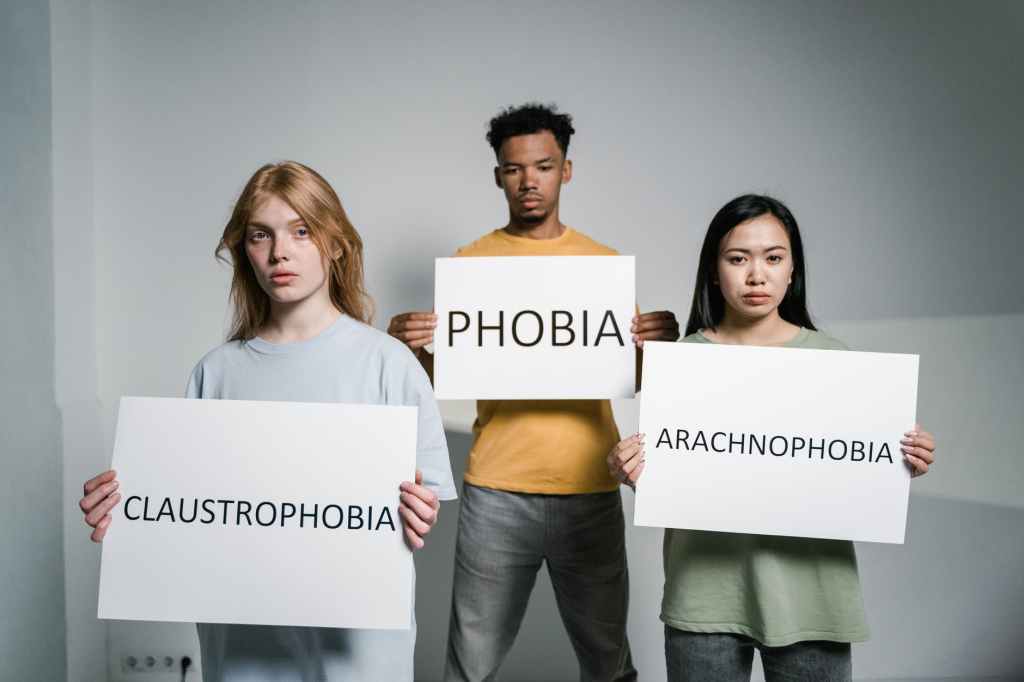
A phobia is a persistent, excessive, unrealistic fear of an object, person, animal, activity or situation. It is a type of anxiety disorder. A person with a phobia either tries to avoid the thing that triggers the fear, or endures it with great anxiety and distress. Some phobias are very specific and limited

There are three types of phobia: social phobia, agoraphobia, and specific phobia. Symptoms, or phobic reactions, may be psychological, such as an intense feeling of unease or foreboding; physical, such as crying or gastrointestinal distress; or behavioral, which includes a wide variety of avoidance tactics

Some of humanity’s most common fears are well known, like fear of heights or the dark. Others, however, are less talked-about, like the fear of speaking to strangers due to thoughts of what they might think of you. To free yourself of these fears, it’s not enough to change the channel or end the conversation.

Fear is a natural emotion that protects people from harm when they face real and imminent danger. A phobia is an excessive fear or anxiety related to specific objects or situations that are out of proportion to the actual danger they present.

                                  “The brave man is not he who does not feel afraid, but he who conquers that fear.”

                                –Nelson Mandela

PSYCHOLOGY

Psychology is the study of mind and behavior. It encompasses the biological influences, social pressures, and environmental factors that affect how people think, act, and feel.

Psychology is the science of mind and behavior. Psychology includes the study of conscious and unconscious phenomena, as well as feelings and thought. It is an academic discipline of immense scope. Psychologists also seek an understanding of the emergent properties of brains, linking the discipline to neuroscience.

Psychology is the scientific study of how people behave, think and feel. Psychologists study everything about the human experience from the basic workings of the human brain to consciousness, memory, reasoning and language to personality and mental health.

There are different types of psychology, such as cognitive, forensic, social, and developmental psychology. In modern psychology, the varying viewpoints on human behavior have been split into eight different perspectives: biological, behavioral, cognitive, humanistic, psychodynamic, sociocultural, evolutionary, and biopsychosocial.

Psychology helps people in large part because it can explain why people act the way they do. With this kind of professional insight, a psychologist can help people improve their decision making, stress management and behavior based on understanding past behavior to better predict future behavior.

Psychology can also be a useful tool for improving your overall health. From ways to encourage exercise and better nutrition to new treatments for depression, the field of health psychology offers a wealth of beneficial strategies that can help you to be healthier and happier.

                    “If positive psychology teaches us anything, it is that all of us are a mixture of strengths and weaknesses. No one has it all, and no one lacks it all.”
                           
                                     — Chris Peterson

BALANCED DIET

“TO ENSURE GOOD HEALTH: EAT LIGHTLY, BREATHE DEEPLY, LIVE MODERATELY, CULTIVATE CHEERFULNESS AND MAINTAIN AN INTEREST IN LIFE.”                                           – WILLIAM LONDEN

A balanced diet is a diet that contains differing kinds of foods in certain quantities and proportions so that the requirement for calories, proteins, minerals, vitamins and alternative nutrients is adequate and a small provision is reserved for additional nutrients to endure the short length of leanness.

A well-balanced diet provides important vitamins, minerals, and nutrients to keep the body and mind strong and healthy. Eating well can also help ward off numerous diseases and health complications, as well as help maintain a healthy body weight, provide energy, allow better sleep, and improve brain function.

There are seven main classes of nutrients that the body needs. These are carbohydrates, proteins, fats, vitamins, minerals, fibre and water. It is important that everyone consumes these seven nutrients on a daily basis to help them build their bodies and maintain their health.

A healthy diet is essential for good health and nutrition. It protects you against many chronic noncommunicable diseases, such as heart disease, diabetes and cancer. Eating a variety of foods and consuming less salt, sugars and saturated and industrially-produced trans-fats, are essential for healthy diet.

“HEALTH IS WEALTH”

“To keep the body in good health is a duty… otherwise we shall not be able to keep our mind strong and clear.”                       

                                      – Buddha

The proverb ‘Health is wealth’ means that one’s health is the greatest wealth. The definition of health is a state of a person’s physical, mental, emotional, and social well-being . Every person must maintain good health. It makes them feel good and positive.

This gives large meaning to our life, as health is considered the most valuable and precious for every individual .  Good health means not only the absence of disease in the body but a complete physical, mental, social as well as spiritual well-being of an individual.

The value of health is vital for every human being . Many people have to suffer from diseases to allergies and stuck with it for their entire life . If people had control over health , then they would make sure that there are no issues with it.

Being healthy should be part of your overall lifestyle. Living a healthy lifestyle can help prevent chronic diseases and long-term illnesses. Feeling good about yourself and taking care of your health are important for your self-esteem and self-image. Maintain a healthy lifestyle by doing what is right for your body.

Be physically active for 30 minutes or at least 10 – 15 minutes for every day . Healthy movement.  includes  walking, sports, dancing, yoga, running or other activities you enjoy. Eat a well-balanced, low-fat diet with lots of fruits, vegetables and whole grains.

       
                        “Health is not valued till sickness comes.”
                       
                           – Thomas Fuller

➡️ Healthy habits to stay fit and happy

• Eat nourishing food

• Sleep seven to eight hours a day

• Stay positive and read good thoughts

• Avoid smoking and alcohol

• Get regular exercise

            “Happiness is the highest form of health.”
                       
                              – Dalai Lama

SEASONAL FOODS

“Your diet is a bank account. Good food choices are good investments.” – Bethenny Frankel

Seasonal food refers to the times of year when the harvest or the flavour of a given type food is at its peak. This is usually the time when the item is harvested, with some exceptions; an example being sweet potatoes which are best eaten quite a while after harvest. It also appeals to people who prefer a low carbon diet that reduces the greenhouse gas emissions resulting from food consumption . Macrobiotic diets emphasise eating locally grown foods that are in season.

Some weather conditions, found only in a particular season, are favourable for the growth of the fruit. For example,  mango fruit, it needs the hot temperature of the summer to ripen, along with some light summer showers.

The seasonal fruits and vegetables have all the vitamins and nutrients that our body needs in that particular season. So, it is wise to eat the fruits and vegetables when it’s their season because the seasonal fruits are affordable and since they are more abundant, we can stock them up.

➡️Benefits of Eating Seasonal Products :

• Reduced Carbon Footprint

• Reduced Pesticide Consumption

• High Intensity Nutrients

Seasonal fruits and vegetables that naturally ripen in the sun are fresher, taste better and have the highest amount of nutrition, antioxidants . Consumption of seasonal products closer to the time of harvesting provides the most nutrition.

Some of the seasonal fruits and vegetables are –
Mango and litchi in summer.
Corn and jamun in rainy season.
Oranges, Guava , Strawberries and Grapes in winter.

Seasonal food refers to the times of year when the harvest or the flavour of a given type food is at its peak. This is usually the time when the item is harvested, with some exceptions; an example being sweet potatoes which are best eaten quite a while after harvest. It also appeals to people who prefer a low carbon diet that reduces the greenhouse gas emissions resulting from food consumption . Macrobiotic diets emphasise eating locally grown foods that are in season.

Some weather conditions, found only in a particular season, are favourable for the growth of the fruit. For example,  mango fruit, it needs the hot temperature of the summer to ripen, along with some light summer showers.

The seasonal fruits and vegetables have all the vitamins and nutrients that our body needs in that particular season. So, it is wise to eat the fruits and vegetables when it’s their season because the seasonal fruits are affordable and since they are more abundant, we can stock them up.

➡️Benefits of Eating Seasonal Products :

• Reduced Carbon Footprint

• Reduced Pesticide Consumption

• High Intensity Nutrients

Seasonal fruits and vegetables that naturally ripen in the sun are fresher, taste better and have the highest amount of nutrition, antioxidants . Consumption of seasonal products closer to the time of harvesting provides the most nutrition.

Some of the seasonal fruits and vegetables are –
Mango , melon, water melon and litchi in summer.
Corn and jamun in rainy season.
Oranges, Guava , Strawberries and Grapes in winter.

“Healthy eating is a way of life, so it’s important to establish routines that are simple, realistically, and ultimately livable.” – Horace

RAIN

          “Clouds come floating into my life, no longer to carry rain or usher storm, but to add color to my sunset sky.”
                                
                                  – Rabindranath Tagore

The monsoon is also called the rainy season , it is the time of year when most of a region’s average annual rainfall occurs. Generally, the season lasts at least a month.

Monsoon or rainy season, lasting from June to September. The season is dominated by the humid southwest summer monsoon, which slowly sweeps across the country beginning in late May or early June. Monsoon rains begin to recede from North India at the beginning of October.

Rainy Season has very pleasant weather with cool breeze and rain showers. … Dark clouds and lightning are very common during the rainy season. Rainy season helps farmers by providing rainwater needed for good cultivation of crops.

All plants and trees become green and greenery makes the environment more beautiful.

It refreshes everyone by making the climate cool and delightsome and brings in a sigh of relief from the scorching heat. Rainy day gives us relief from the usually hot and humid climate and slow cool breeze, smell of fresh wet earth and moist air.

➡️ Tips to be healthy in rainy season:

• Normal rains are the most enjoyable thing in the rainy season .

• We should protect ourself from diseases that spread in the monsoon.

• We should Keep our surroundings clean.

➡️ Food/ snaks enjoyed in monsoon :

• Bhutta (Corn)
• Pakoras
• Samosa
• Masala Chai
• Kachoris
• Spring roll
• Momos
• Jalebi

                     “Celebrate the rain; it only means that the sun shall shine bigger and brighter than ever.”
                
                                             — Unknown

FESTIVALS

A festival is an event ordinarily celebrated by a community and centering on some characteristic aspect of that community and its religion or cultures. It is often marked as a local or national holiday.

Festivals are larger than life celebrations of various things. They occur at regular intervals and helping in breaking the monotony of life. Furthermore, they give you the chance to celebrate the little and big things in life. Festivals are the carriers of peace and joy in the communities.

Festivals are perfect learning experiences to teach moral values . Festivals are full of excitement, celebration and happiness. They not only bring joy to our homes but also brings families together.

Some of the benefits of festivals are :

•Keeps us closer to our religion and tradition.

•Promotes harmony.

•Carrying the message of the past generations to the present and future.

•Festival celebrations promote communal harmony.

•We get to know about different religions.

• Helps to preserve our culture and heritage.