5 best affordable headphone July 2021.

Are you a music lover too? Check out these five amazing budget headphones.

  1. Sony MDR-XB550AP Wired Extra Bass On-Ear Headphones.
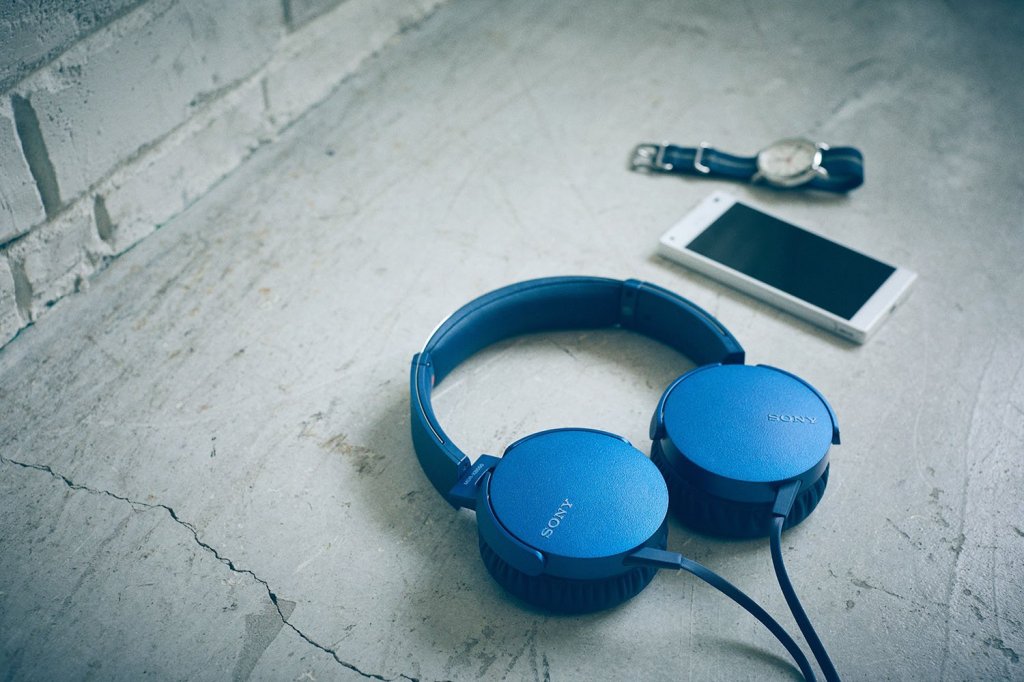
Sony has been producing audio equipment for many years and is capable of producing high-quality portable headphones that seldom disappoint clients.
The Sony MDR-XB550AP is a small and light speaker that weighs only 190 grammes. Sharp colours were chosen by Sony to give these headphones an edgy look. When it comes to wired headphones, you won’t have to worry about audio compression or battery life.

Red, Black, and Blue are the three colours available for the headphones.
The headphones’ finer features will leave you speechless. You’ll note that the earcups have a rough surface and are somewhat marbled.
The wire on these headphones is quite durable. When you store it in your bag, it will retain its shape and will not tangle.

Key specification:

  • In-line mic for hands-free calling
  • Tangle-free flat serration cord
  • Portable and revolving folding design
  • Matte finish
  • Cord-length – 1.2 meter.
  • Sensitivity – 102dB, Frequency Response – 5Hz-22,000Hz, Impedance – 24 ohm.
  • Cushioned ear pads
  • 30mm dynamic driver unit
  • 1-year warranty.

Pros

  • The earcups are quite soft and plush and allow you to wear for a long duration sans any discomfort
  • The headphones work in conjunction with all other sounds.
  • Good Bass if you’re looking for extra bass.
  • The headphones sound quite precise, controlled, and tight thus leaving you engaged and impressed
  • You can also attend a call without any hassle
  • Offers you an incredibly great value
  • The headphones offer great durability

Cons

  • Not extremely loud.
  • Headphone foams can get soiled after a year or two (replaceable).
  • Active noise cancellation is missing

2. JBL Tune 500 Powerful Bass On-Ear Headphones
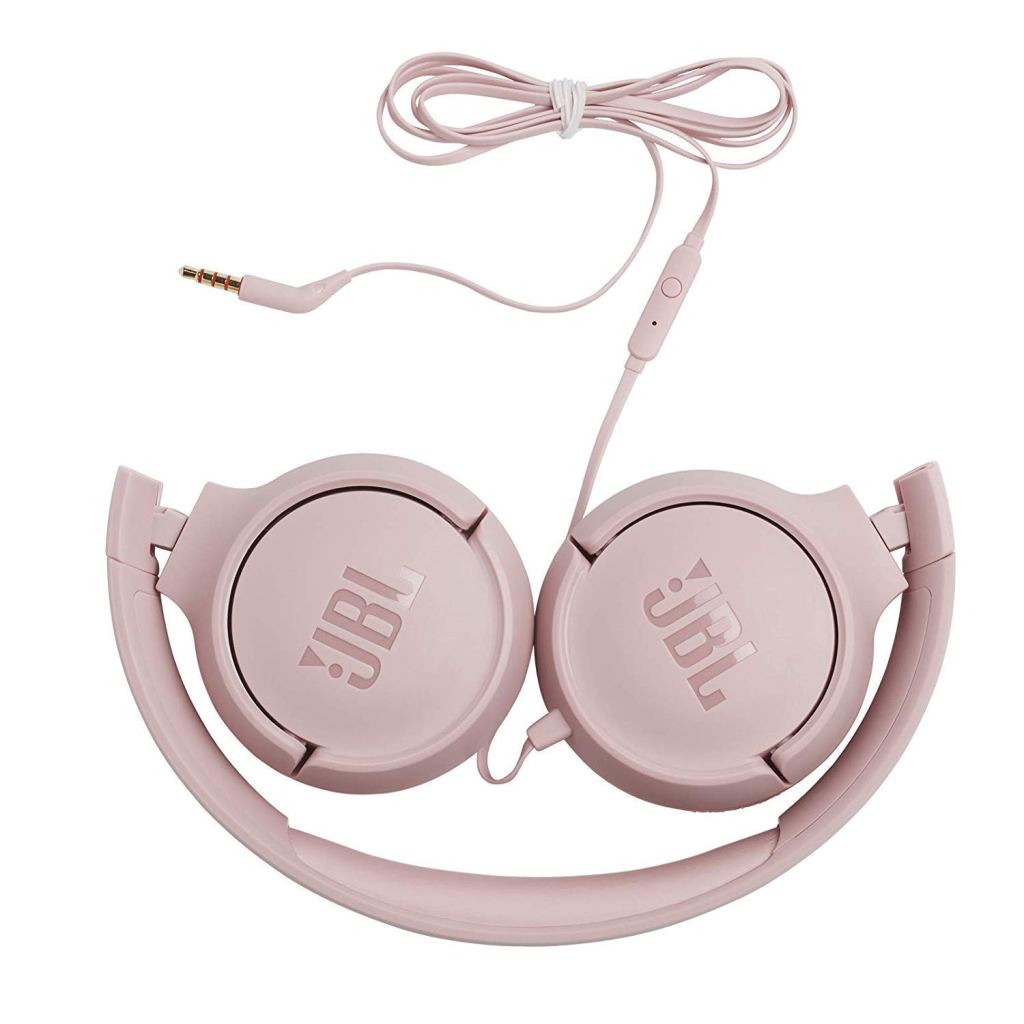
If you’re looking for a pair of headphones that won’t break the bank, the JBL Tune 500 is a good option. Also, if you enjoy listening to contemporary music, you will be completely happy with these.
The JBL Tune 500 has a foldable and lightweight design. You’ll have the choice of purchasing the headphones in one of four beautiful hues. While travelling, the strong and flat cable can efficiently maintain the cable tangle-free.
The concept for travelling, listening to music, and playing games while on the go.

Key specification

  • Quick launch access to Google Assistant and Siri
  • 12 months manufacturing warranty
  • Compatible with Android and IOS mobile, tablet, laptop, and audio player
  • It weighs 150g
  • One button remote/mic
  • Tangle-free flat cable
  • Requires a Li-ion battery

Pros

  • You will get good cushioning on the headband and it sits quite firm against ears.
  • The button lets you play/pause, skip tracks, and answer the phone calls
  • The terminations of the headphones appear to be well-insulated
  • The small yet foldable design of the on-ear cans make them quite portable
  • The frequency range of the headphones is 20-20,000 Hz

Cons

  • May not excite bass heads and audiophiles looking for studio-grade audio.
  • Overall a good mix of sound and ergonomics – not excel in any field.

The headphones allow you to enjoy clear audio for music, calls, and games. When you buy the headphones, you are assured of a trustworthy headset for daily chores that may include video calls with family members and friends.

3. Boat BassHeads 900 Wired Headphone with Mic
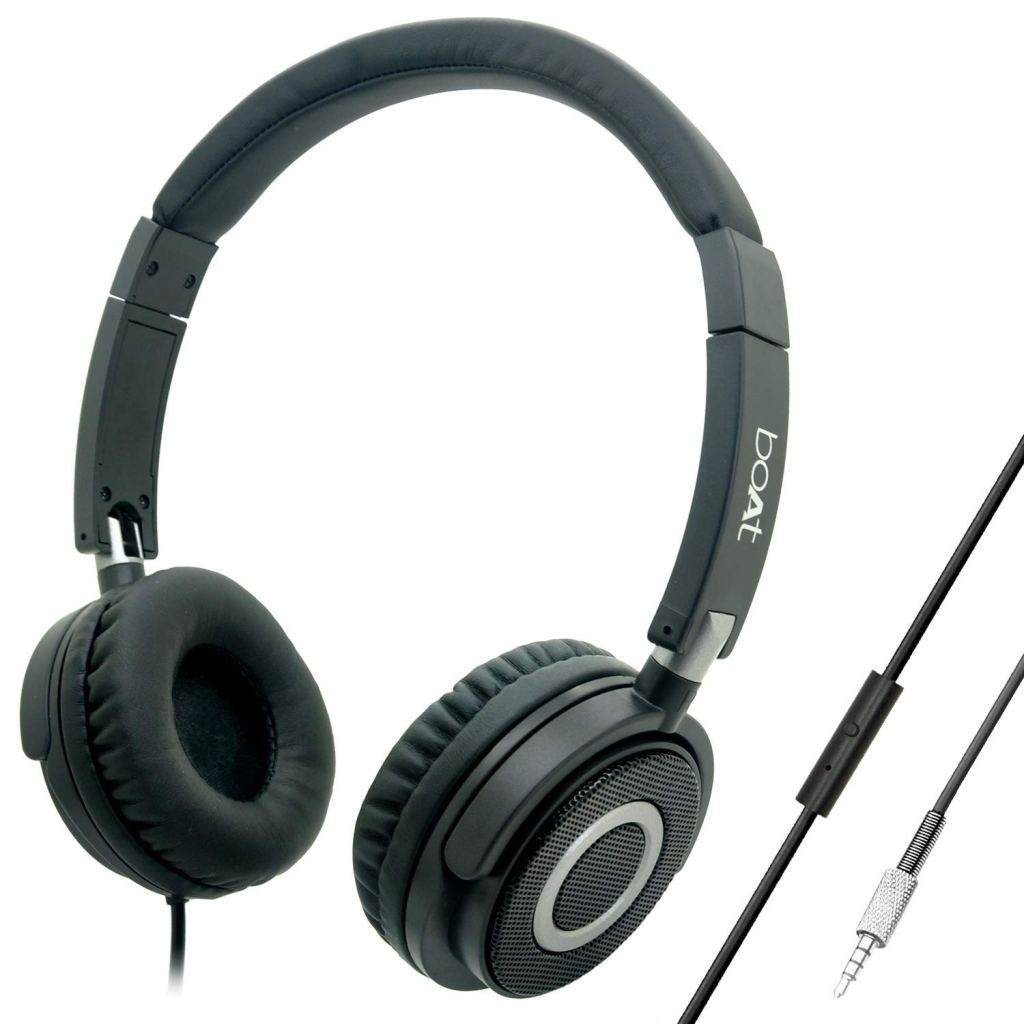
The headphones’ super extra bass allows you to experience a shockingly strong and dramatic bass at an inexpensive price.
The sound stage will be more grounded, and the frequency response will range from 20 to 20,000 Hz. The headphones’ sleek and small form makes them extremely portable.
Furthermore, the on-ear headphones with rotating ear cups offer a flexible fit and a pleasant fit for all users.

Key specifications

  • Designed for all 3.5mm supported device
  • On the ear
  • 12 months warranty
  • In-line microphone
  • Tangled-resistant cable
  • 40mm Neodymium drivers
  • Weighs 150 g

Pros

  • Offers flexible wearing and comfortable fit for all users
  • The headphones are available in sleek, compact, and lightweight design.
  • The travel-friendly headphones are easy to store.
  • The price is quite affordable.
  • The padding in the device helps in blocking external noise.

Cons

Average comfort and they don’t sound very natural and miss on lows and highs.

4. Sony MDR-ZX110AP Wired On-Ear Headphones
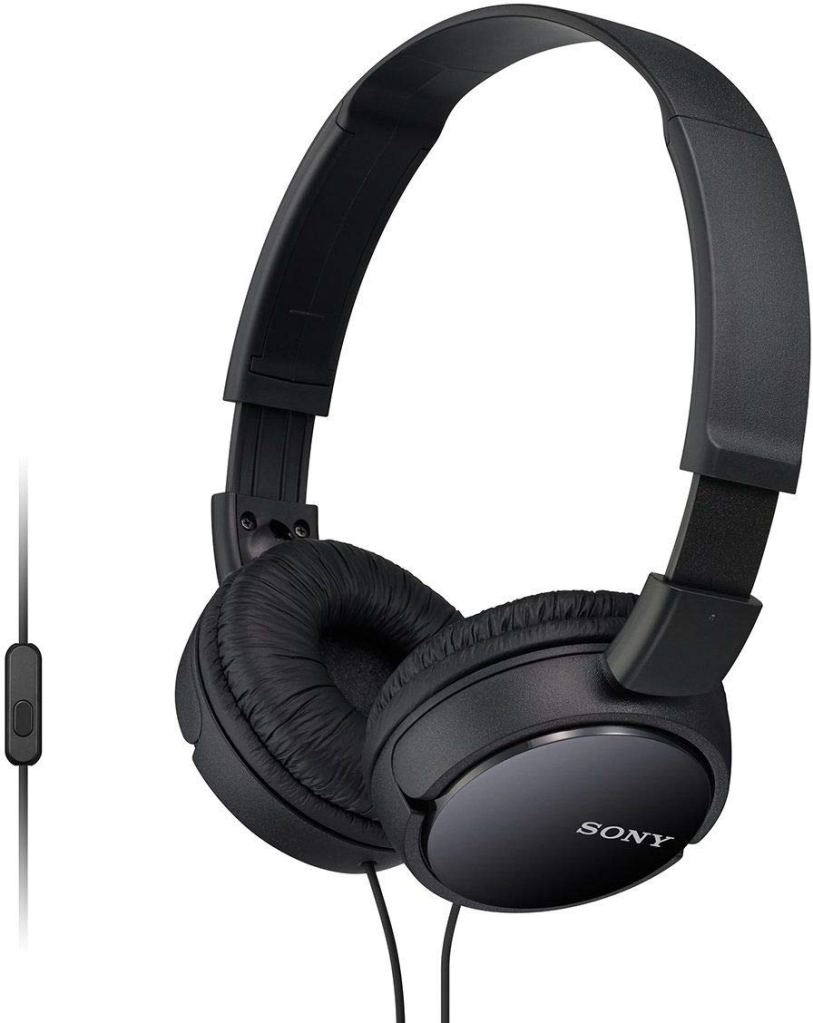
The Sony MDR-ZX110 wired headphones have 30 mm dynamic drivers for incredible sound. The cushioned earpads provide a lengthy period of pleasant use.
Almost all soundtracks feel sharp and rhythmic through the headphones. These headphones have a well-balanced sound with no excessive bass or treble.

These also have a wide frequency range of 12Hz to 22KHz, allowing for a more immersive listening experience. On some of the most basic TWS headsets, you can hear the small beats that you might miss.
The enfolding shape prevents you from being distracted when listening to music or making phone calls.

Key specification:

  • 30 mm dynamic driver unit
  • On-ear headband
  • Cushioned Earpads
  • In-line microphone and controls
  • Tangle-free cord
  • Portable and Swivel folding design
  • Weight – 120 grams
  • Frequency Response – 12 Hz-22 kHz
  • Impedance – 24 ohm
  • 3.5 mm jack

Pros

  • Good sound clarity 
  • Soft and comfortable cushions
  • Handy and lightweight
  • Durable

Cons

  • Missing active noise cancellation
  • Cable is fragile.

5. Sony MDR- XB 450AP (Bass King)
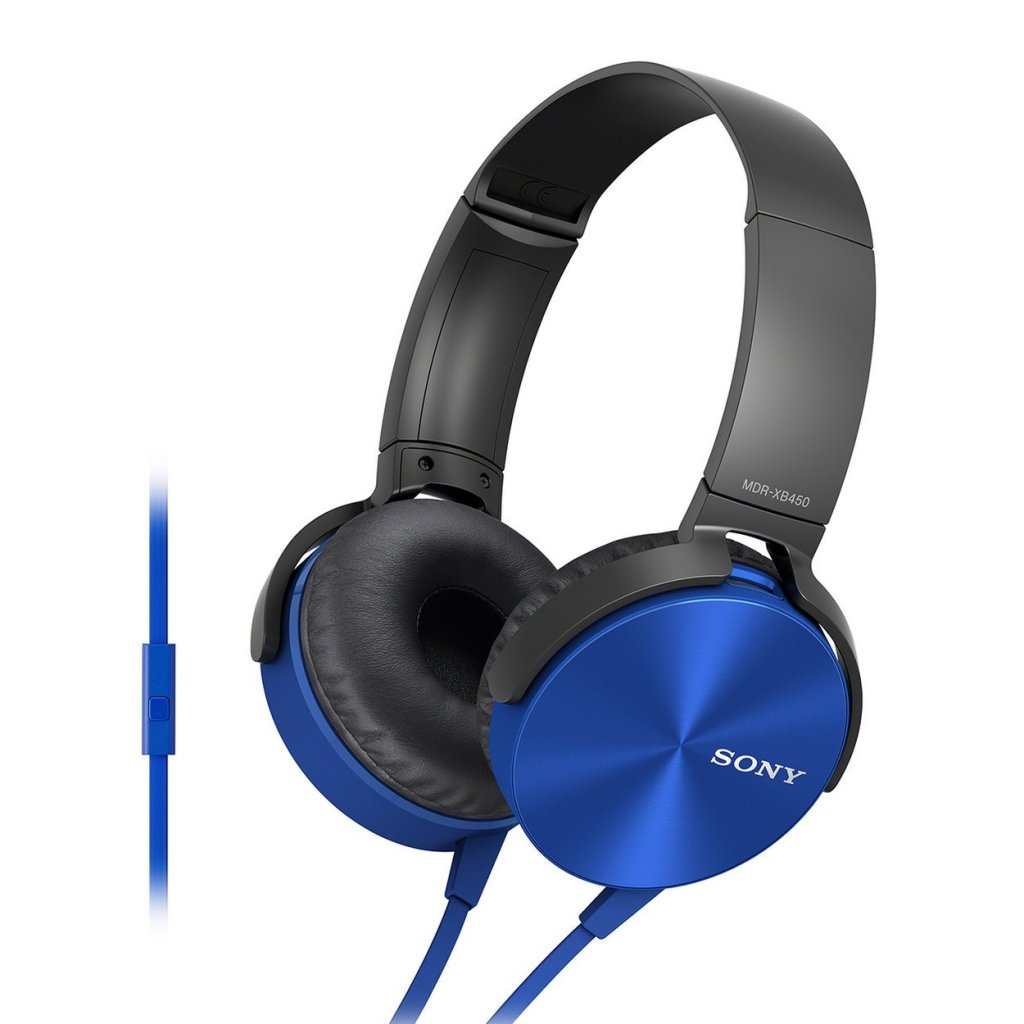
The headphones were created with electronic dance music fans in mind. Deep bass notes are made possible with Extra Bass technology.
Furthermore, it has the ability to efficiently enhance low-end frequencies, providing you with a memorable experience. The swivel design in the housing allows you to store your headphones flat, making them ideal for travel.

Key specifications

  • Weighs 165 g
  • Wired extra bass headphones
  • Tangle-free wire
  • Frequency response 5 -22000 Hz
  • Available in 3 colors
  • 30 mm powerful bass
  • Wired 3.5 mm single pin  

Pros

  • The headphones are equipped with cushioned earpads for maximum comfort
  • Strong sensitivity for clear and loud sound
  • The headphones offer an in-line remote and mic for hands-free calls
  • Neodymium dynamic driver help in providing top-quality sound

Cons

  • Sound Stage is not as wide as on Sennheiser.
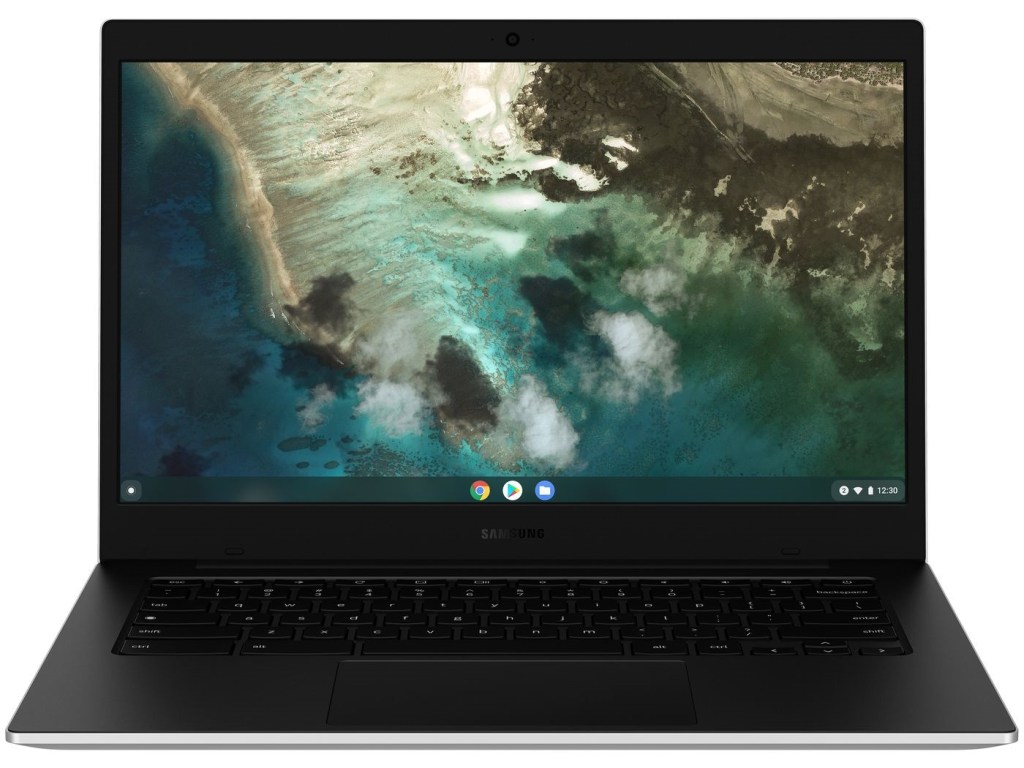
The new price efficient Samsung Galaxy Chromebook Go.

The Galaxy Chromebook Go launched on Samsung’s website last month as a new cheap Chromebook from the company. There were still a lot of unknown facts regarding the 14-inch tablet, other than a few specifications and pictures. The notebook is now official and may be purchased.

While just the Wi-Fi variant will be available on Thursday, Samsung plans to release an LTE version in the following weeks, which could be a great bonus for on-the-go web browsing.

Galaxy Chromebook Go.

The low pricing of the Galaxy Chromebook Go appears to be reflected in its features. It has a 14-inch 1366 x 768 HD display, which is a significant downgrade from the Galaxy Chromebook 2’s 4K OLED panel. It also has an Intel Celeron N4500 CPU and 4GB of RAM, which won’t set the world on fire but should suffice for everyday Chrome use.

Two USB Type-C connectors, a USB 3.0 port, and a headphone-out/microphone-in combination port are included on the Galaxy Chromebook Go. The Chromebook boasts a military-grade construction and weighs only 3.2 pounds, according to Samsung (1.45kg). The island-style keyboard is spillproof and can withstand the odd drop. There are two 1.5W speakers included, as well as Wi-Fi 6 which is significantly quicker.

Samsung says that the Galaxy Chromebook Go’s 5480mAh battery would last 12 hours on a single charge, which is impressive compared to the Chromebook 2’s seven-hour battery life (in our tests) but is likely due to the changes in display and CPUs.

The Galaxy Chromebook Go is already available for purchase on Samsung’s website for $299. You may get it for as little as $129.99 if you have a device that can be traded in. An LTE version will be available shortly, according to Samsung.

Second-generation holographic displays are being developed by Looking Glass.

Looking Glass, a producer of holographic displays, has announced the development of two variants of their second-generation holographic display. Looking Glass has a video on its website demonstrating the capabilities that consumers may anticipate from the two new devices, the 4K Gen2 and the 8K Gen2, which are both powered by the company’s unique light-field technology.

The term “Through the Looking-Glass, and What Alice Found There” is derived from another word for a mirror, which was made popular by Lewis Carroll’s “Through the Looking-Glass, and What Alice Found There.” In reality, they resemble the shoebox dioramas made by elementary school children, albeit the images in the box are computer-generated in this case.

Looking Glass Portrait, the company’s first-generation holographic display, will be updated with the new goods. These were available for as cheap as $249 through a Kickstarter campaign. The second-generation gadgets are significantly more expensive, costing $3,000 for the 4K model and $17,500 for the 8K model.

The second-generation versions are a size and quality increase rather than a technological upgrade. The Portrait’s display is 7.9 inches, while the 4K version is 15.6 inches, and the 8K version is 32 inches. The two new models are both smaller and lighter, with ways for reducing ambient reflections.

All three of the company’s gadgets can transform and display images taken with a smartphone (through the Looking Glass app) into 3D pictures or movies that appear to be taken by a moving camera. The gadget may also be used to make and display 3D items; in the introduction video, they are seen designing and displaying a new shoe. In an animation, the screens may also be utilized to build and show 3D characters. All three devices run the HoloPlay Studio software from Looking Glass.

The devices operate with 3D applications such as Unity, Unreal Engine, and Blender, allowing users to generate a wide range of content. Users can also share their material with other Looking Glass users. The Looking Glass website now sells both of the new second-generation gadgets directly.

The firm sees the Portrait as a type of ambassador for its technology, especially given how difficult it was to get the systems in front of potential consumers last year. I’ve seen a few of Looking Glass’ earlier systems in person, and I can tell you that the impact isn’t quite the same over Zoom. As it strives to meet demand and overcome global supply chain difficulties, Looking Glass claims to have sold 11,000 devices and is delivering “thousands” each month.

“I think of it as their first chance to acquire their holographic display without having to gain consent from their boss,” says CEO Shawn Frayne. “Someone is interested in it, so they order it, and it meets or surpasses their expectations, and they proceed from there. The Portrait has a very high-quality level, and the larger pieces are a larger format variation of that quality.”

The new models will succeed their predecessors, which were essentially development units rather than mass-market goods (though the company will continue to offer support). In addition to being less expensive, the second-generation devices are lighter and have better visual quality than their predecessors, especially at the edges, where holographic displays often have problems.

India is pressuring Twitter with requests for user data and content removal.

This year, Twitter is under a lot of pressure in India. However, even before the country imposed stringent new regulations on tech firms, the corporation was bombarded with requests from the government to delete material or disclose user data.

Indian authorities requested more account information from Twitter in the final six months of 2020 than any other nation, according to the Silicon Valley-based company’s newest transparency report released on Wednesday. The number of requests for content removal submitted by India increased by 152% to over 7,000.

This journalist explains why one of her tweets vanished.

India’s demands for user information amounted to 25% of the total it received during the reporting period, which runs from July 1 to December 31, 2020, according to Twitter (TWTR). Over 99 percent of the requests were ignored by Twitter.

“Notably, this is the first time since we began releasing our transparency report in 2012 that the US is not the top worldwide requester,” the firm stated, adding that the US came in second in terms of global volume.

According to the company, the information requests comprised normal legal demands as well as emergency requests from government agencies and law enforcement authorities.

“Where appropriate, Twitter will push back on requests for account information that are incomplete or inappropriate,” according to the firm, such as those that are “invalid or overbroad in scope.” In the event of an emergency involving the risk of death or serious harm, the firm may reveal account information if sufficient proof is presented that such information will prevent the hazards.

Just over 150 information requests from India were classed as emergencies by Twitter. According to the firm, the United States sent the most such requests in the globe, with 822.

Meanwhile, legal requests from India to delete or withhold information increased by 152% in the latter six months of 2020 compared to the previous reporting period. Just over 9% of the 6,971 demands were met, according to Twitter.

After Japan, which made over 16,000 requests mostly connected to narcotics, obscenity, or money lending, India became the world’s second-highest submitter of such requests. The number of requests from Japan decreased by 16 percent from the previous quarter, but it still accounted for 43 percent of all worldwide requests.

According to the firm, 361 requests for information removal were made on 199 verified journalist and news outlet accounts throughout the world. It went on to say that India accounted for 128 of the requests.

The research excludes 2021 when Twitter is embroiled in a heated standoff with the Indian government over new information technology regulations.

During a series of farmer demonstrations in February, the business fought with the Ministry of Electronics and Information Technology over accounts that the agency wanted to be taken down. Some of the requests were granted, but Twitter declined to take action against accounts belonging to journalists, activists, or politicians.

Weeks after the feud, India issued new rules requiring social media companies to establish three roles in the country: a “compliance officer” who will ensure that their platforms comply with local laws, a “grievance officer” who will handle complaints from Indian users about their platforms, and a “contact person” who will be available to Indian law enforcement 24 hours a day, seven days a week. They are all required to live in India. If authorities demand it, companies must track out the “first originator” of messages.

In May, the firm raised worries about “fundamental components of the new IT Rules” as well as the country’s “potential threat to freedom of speech.” It promised to fulfill the new standards a few days later.

A Delhi court recently chastised Twitter for failing to comply with the new guidelines promptly. In a court filing last week, the business stated that it had appointed an interim compliance officer. It also stated in the filing that it will “attempt in good faith to make an offer of employment to a qualified candidate” for all of the positions within eight weeks.

The company’s website featured a complaints officer and a Bangalore location where Twitter could be reached as of last weekend.

Trials of a more precise and comfortable MRI to identify early breast cancer begins in the United Kingdom.

A new, more convenient method of detecting breast cancer has begun testing in the United Kingdom, with the potential to identify tumors at an earlier stage.

At some time in their life, one in every eight British women will be diagnosed with breast cancer. Because malignancies and fibrous tissue both show up as solid white regions on X-ray, mammograms are less effective in younger women whose breasts contain denser, fibrous tissue and less fat because cancers and fibrous tissue both appear as solid white areas on X-ray.

Mammograms may miss malignancies in postmenopausal women with thick breast tissue, who are also more likely to acquire breast cancer in the first place.

Women with a dubious lump may be given an ultrasound scan or a biopsy, and if the diagnosis is still unclear, they may be directed for DCE-MRI, which detects the development of new blood vessels supporting tumors. However, in women with early-stage malignancies, they may not be visible, leading to false comfort.

Multiparametric MRI was first created to evaluate liver disorders without the need for a painful biopsy, and it is now widely utilized in Europe and the United States.

It works similarly to traditional MRI in that it utilizes high magnetic fields and radio waves to excite protons in the tissue, then exploits variations in the time it takes for them to settle to generate a “map” of the various tissues in the breast. Multiparametric MRI, on the other hand, allows an even more comprehensive map to be generated by merging pictures created by multiple MR pulses and sequences.

A scan of healthy breasts with multiparametric MRI. Photograph courtesy of Perspectum Diagnostics

“We believe that if we differentiate the tissue rather than looking at the blood vessels around the tumor, we should be able to spot not only tumors in dense breasts but potentially tumors that aren’t seen on mammograms,” said Prof Sally Collins, a consultant obstetrician and medical lead for women’s health at Oxford-based Perspectum Diagnostics, who herself recently received treatment for breast cancer.

“We’re also working to improve the scanning experience for patients. “Mammograms are awful because they squish your breast on this plate, which is undignified and unpleasant, and MRIs are much worse because you have to lie face down with your boobs dangling in this coil and your arms raised over your head for ages,” Collins added.

“We’re attempting to make it such that women may be fully dressed, respectable, and comfortable while being scanned, which is critical for the patient journey to cancer diagnosis.”

The prospectus has received ethical clearance to enroll 1,030 women in the study, including 10 women who have been diagnosed with breast cancer and 30 to 40 healthy women who are presently being scanned, to see if the technology can properly map their breast tissue while laying on their backs. It is estimated that the study would take two years to complete.

“It will never replace regular mammography screening for postmenopausal women, but we think it will enhance the diagnosis route for women with thick breasts or premenopausal women who are at extremely high risk of breast cancer, eliminating the need for repeated tests,” Collins said.

A “wobble” in the moon’s orbit, according to NASA, may cause record flooding on Earth.

Because of a “wobble” in the moon’s orbit, which is acting in concert with climate change-fueled rising sea levels, every coast in the United States is experiencing fast-growing high tide floods.

New research published recently in the journal Nature Climate Change by NASA and the University of Hawaii warns that future changes in the moon’s orbit might result in record flooding on Earth in the next decade.

Researchers discovered flooding in American coastal towns may be many times worse in the 2030s, when the next moon “wobble” is projected to begin, by mapping the National Oceanic and Atmospheric Administration’s (NOAA) sea-level rise scenarios, flooding thresholds, and astronomical cycles. They predict major infrastructure damage and community displacement as a result of the water.

While the study emphasizes the grave position that coastal towns are in, the lunar wobble is a natural phenomenon that was first documented in 1728. The moon’s orbit causes periods of greater and lower tides every 18.6 years, although they aren’t harmful in and of themselves.

“Earth’s typical daily tides are suppressed during half of the Moon’s 18.6-year cycle: high tides are lower than usual, and low tides are higher than normal,” NASA says. “Tides are magnified in the second part of the cycle, with high tides getting higher and low tides getting lower. High tides are only going to get higher as the world’s sea level rises. As a result, half of the 18.6-year lunar cycle reduces the influence of rising sea levels on high tides, while the other half increases it.”

Scientists, on the other hand, are more alarmed this time. The next high tide floods are anticipated to be more severe and frequent than ever before as sea levels rise owing to climate change, compounding already dire projections.

In 2019, the National Oceanic and Atmospheric Administration (NOAA) reported around 600 such floods. After another decade of sea-level rise, scientists predict three to four times that amount in the mid-2030s.

Based on the current study, these floods will emerge more often throughout the country and can occur in clusters lasting over a month, depending on the moon, Earth, and sun’s locations. Floods might occur as frequently as every day or every other day during certain alignments.

“Low-lying regions around sea level are becoming increasingly vulnerable and suffering as a result of rising floods, and the situation is only going to get worse,” NASA Administrator Bill Nelson said. “Coastal flooding on our coasts and throughout the world will continue to be exacerbated by the Moon’s gravitational pull, increasing sea levels, and climate change.”

Almost all of the United States’ continental coasts, as well as Hawaii and Guam, are likely to be affected. By the end of the century, sea-level rise is anticipated to have rendered hundreds of thousands of square kilometers of coastline untenable, displacing over 100 million people globally.

Researchers hope that their findings will spur more focused efforts to avert as many harmful effects on the environment and people’s welfare as possible before it becomes too late. While high tidal floods may not include as much water as hurricanes, their regularity poses a serious threat.

What will have an impact is a cumulative effect over time,” said lead author Phil Thompson. “A firm cannot operate with its parking lot underwater if it floods 10 or 15 times each month. People lose their employment as a result of their inability to get to work. Sewage ponds have become a public health concern.”

In a Chinese city, facial recognition technology is combating the coronavirus.

To combat the coronavirus epidemic, officials in a Chinese city bordering Myanmar have deployed facial recognition technology connected to personal health codes.

In the last five years, China’s government has rushed to install more than 200 million Surveillance cameras to “cover all public areas,” making it one of the world’s most surveilled countries.

In China, which was the first country to deploy a QR code system to register test results and monitor interactions, surveillance has also been widely used to combat COVID-19.

However, this is the first time that face recognition has been used to follow a person’s activities and health state as they enter and depart residential neighborhoods, supermarkets, transportation hubs, and other public locations.

On Saturday, officials in Ruili, Yunnan province, informed reporters that “everyone who comes in and out needs to have their (health) code and face scanned to pass.”

According to data released Tuesday, Ruili found 155 cases in the previous week, making it one of the deadliest viral outbreaks in recent months in China.

In critical places, security technologies like face recognition cameras, smart door locks, and road barricades (managed by police or community volunteers) have been installed, according to local authorities.

According to China National Radio, the scanners can also monitor people’s temperatures.

There are no specifics on how long the database will keep records or whether the system, which is being overseen by the city’s pandemic prevention team, would be shut down once the outbreak is under control.

Privacy related concerns

Ruili, a city of about 210,000 people, is a key crossing point from Muse, Myanmar, which has witnessed growing instability since a February 1 coup, generating worries that people would flee the bloodshed by crossing the Chinese border.

According to the Yunnan Provincial Health Commission, Myanmar citizens accounted for over half of the new cases recorded in the last week, but it was unclear how they reached the city.

When it comes to coronavirus clusters, China has taken a zero-risk strategy.

With strict border restrictions, mass testing, lockdowns, and tie-ups with big tech for surveillance, the illness has been mostly contained since it first surfaced in the central city of Wuhan in late 2019.

However, the proliferation of new health tracking applications has prompted worries about privacy.

According to a New York Times investigation in January, a widely used app monitoring travel history and virus testing produced by Chinese e-commerce giant Alibaba exchanged data with the authorities.

During the peak of the epidemic, police officers in major cities donned helmets with facial recognition technology and infrared cameras to monitor pedestrian temperatures.

China’s ubiquitous monitoring network has been criticized by human rights groups, who claim it is being used to stifle dissent and target minority, ethnic groups.

90-year-old woman infected with both Alpha and Beta Covid strains.

According to experts, a 90-year-old Belgian woman who died after contracting Covid-19 was infected both with the Alpha and Beta forms of the coronavirus at the same time.

After a series of falls in March, the unvaccinated lady was hospitalised to the OLV hospital in Aalst and tested positive for Covid-19 the same day.

While her oxygen levels were initially adequate, her health soon worsened and she died five days later.

She tested positive for both the Alpha strain and the Beta variant.

Both these variants were circulating in Belgium at the time, so it is likely that the lady was co-infected with different viruses from two different people,” said molecular biologist Anne Vankeerberghen from the OLV hospital who led the research.

“Unfortunately we don’t know how she became infected.”

Vankeerberghen stated it was impossible to determine whether the co-infection contributed to the patient’s rapid decline.

The study, which has not yet been published in a medical journal, will be presented at a European symposium on microbiology and infectious illnesses.

While Vankeerberghen stated that there had been “no other reported examples” of comparable co-infections, she also stated that the “phenomenon is probably underestimated.”

This was due to a lack of testing for potentially harmful variations, she explained, urging a greater use of rapid PCR testing to detect known variants.

Scientists in Brazil claimed in January that two patients had been infected with two different strains of the coronavirus at the same time, but the work has yet to be published in a scholarly publication.

According to Lawrence Young, a virologist and professor of molecular oncology at the University of Warwick, finding single individual infected with several strains was not surprising.

This study does emphasise the need for more research to establish whether infection with numerous variations of concern alters the clinical course of Covid-19 and whether this in any way limits immunisation efficacy,” he added.

Rachid Yazami, a Moroccan innovator, breaks the world record for charging EV batteries in under 10 minutes.

Electric vehicles are sweeping our cities, and an overwhelming number of individuals are choosing to commute in electric vehicles. Electric mobility is unquestionably the way of the future, given the environmental advantages offered by these vehicles and the commitment of both manufacturers and drivers.

Rachid Yazami, a Moroccan innovator, revealed a few weeks ago:

We broke a new world record a few weeks ago by charging an electric car battery in just 10 minutes. I hope that morocco will succeed in developing and marketing ultra-rapid chargers.

Statement by Rachid El Yazami

Dr. Rachid Yazami, the inventor of one of the most important components of lithium-ion batteries, is working on a method to charge an electric vehicle in less than 10 minutes.

Given the recent technological advancements, electric vehicles still face obstacles in becoming the preferred mode of transportation and replacing combustion engine vehicles. One of the most significant concerns is slow battery charging, however, it appears that this impediment is coming to an end.

Dr. Rachid Yazami, the inventor of the graphite anode, a critical lithium-ion battery component, is working on a method that will allow the electric car to be charged in as little as 10 minutes. A breakthrough in these aspects will be a watershed moment in electric transportation, virtually equating the time spent charging the vehicle’s battery to just the time spent replenishing traditional fuel.

According to The Register, Dr. Rachid Yazami is working on a new quick charging system for electric automobiles that beats any other technology now available. Your technology, according to current testing, can charge a high-density battery in under 10 minutes, which itself is seven times faster than Tesla.

To attain this goal, Dr. Rachid Yazami uses a different loading method than the usual one. Instead of utilizing constant current, they utilize non-linear voltammetry, which adjusts voltage instead of current.

Voltage, according to the expert, should be seen as a sequence of steps on a ladder. Every one of those rungs’ voltage must remain constant until the conditions are met and that the next rung can be advanced. During the charging process, this charging mechanism gives the batteries a break, helping them to last longer.

“Fast-charging technology improves battery life by decreasing stress”, according to Dr. Rachid Yazami. “We can preserve the battery for 10 years instead of five because we charge it in such a way that it is not subjected to high temperatures or current stress. The optimal charging situation for the battery would be 10 minutes of charging time for an 800 km range.

Yes, our connection with “Memes” is significant.

“If you got exceptional humor be my friend”

In a wide variety of contexts, we employ memes nowadays.
They help us connect and feel we are part of, can be the beginning of a conversation, and even assist you to manage a problem or make an observation.
Memes also allow us to relax while we surf and dwell in distressing news. They are free entertainment, a choice always even if you don’t have time to spend more time. It’s even easier to have them penetrate a large variety of specialist circles, being so great mixing cultures and touches of humor, to generate viral content.

The introduction of Meme Studies, an actual academic course on memes, at Northwestern University in the US state of Illinois in 2011 has long been cited as a barometer of the internet’s impact on society, from language to culture to beliefs.

Memes have a variety of goals and functions, but at their most basic level, they serve as a means of expressing people’s thoughts and feelings. Memes are created by appropriating sequences of words from television shows and films, which are then taken out of context, remixed with other content, and given new meanings in a humorous and relevant way. Meme content might range from whining about the difficulties of being a college student to expressing shame experienced during a daily encounter – something that everyone can relate to.

Memes, on the other hand, can have an impact on how we connect with others. Some aspects of meme culture have caused ripples in our social fields outside of the internet. After all, every meme has a creator who created it intending to spread a viral message, whether for enjoyment or to persuade others.

What exactly are memes? And how does it matter to our society?

Memes are statements that are clear, brief, and explicit, and this cultural paradigm reflects current society’s mentality – one that loves entertainment, celebrates materialism, and reinforces people’s need to stay relevant.
Memes can be used as propaganda tactics because of their accessibility and capacity to reach a large audience in minutes (and become part of the online vernacular in days), which means they can readily instill and cement opinions that fast become popular among cybernauts (a habitual user of the internet).

The working of memes that make them interestingly catchy to the readers allows them to further cultivate their humor and let them become a new mark or a strong speaker of the society. As we know memes are not only for entertainment but also imprint a deep message for society.

Memes allow people to communicate with one another. Knowing the correct memes can assist you in joining a group. They give a sensation of belonging to a group.
Memes are an excellent approach to get influence online because they are based on social media today. People can gain more followers by creating and reblogging popular memes, and these social ties can be used in both positive and negative ways.

Memes don’t merely bridge languages; their relatability fosters a sense of community among specific internet users of a certain age range. Memes are a simple and amusing way for youngsters to communicate with their pals, whether they’re used to express their opinions about certain socio-political concerns or to reinforce their fascination with famous people. Indeed, the process of spreading memes, sharing them on social media platforms, and tagging their friends within specific meme pages has improved global communication and made a significant contribution to globalization’s success.

But memes, just like many other parts of online culture, are easily misrepresented by those who aren’t familiar with them. Some people believe they are unimportant. Others believe memes are destructive and damaging to our communication, others in some sectors believe that memes, which have become the vernacular language of many a teen, have had a detrimental influence.

They suggest that memes obstruct communication in more ways than just reducing things to one-liners and visuals. They can be utilized to exacerbate hostile and discriminatory sentiments against various races, genders, religions, and sexualities, therefore expanding rather than closing the gap between people.

Memes, on the other hand, are a medium of communication that may be utilized for a variety of objectives. They can help to bring about constructive societal changes, but they can also be exploited to cause harm to others. It’s critical to establish a realistic understanding of memes’ potency as a communication medium, both today and in the future.

Solar air conditioning and efficient, low-consumption cooling systems work together.

Researchers from the Universitat Politècnica de València (UPVCMT-Motores )’s Térmicos (Thermal Engines) group are developing new, more efficient cooling systems that use solar air conditioning, which will assist in addressing the summer increase in electricity bills Their study results made an appearance in the International Journal of Refrigeration.

“In the last month, the ‘perfect storm’ has occurred in all aspects of the electricity bill. On the one hand, there is the so-called rate change, which is divided into three segments, and on the other, there are consumption peaks in the summer during the hottest days of the year. In these days of high temperatures, air conditioning units and cooling systems consume more electricity, raising the cost of electricity significantly—without going any further, the price of electricity surpassed its annual record last Saturday. Solar air conditioning, while an oxymoron, has the potential to be a solution to this perfect storm, says “José Ramón Serrano”, a CMT researcher.

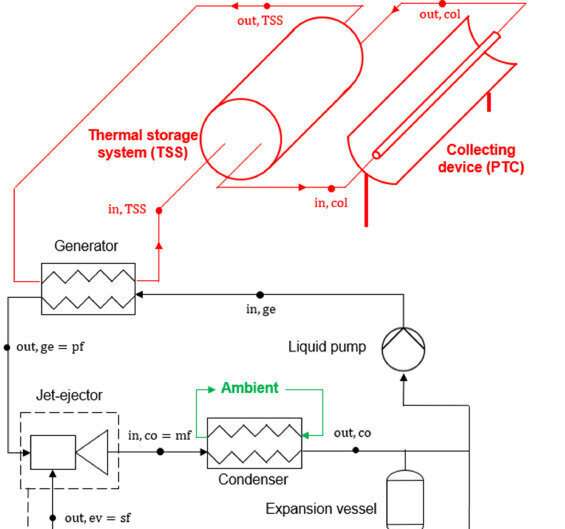
Solar-assisted thermal storage tank jet ejector cooling system.

Solar air conditioning equipment

Solar air conditioning is the equipment used to cool a space with solar energy. Two main groups are involved, as explained by Serrano: on the one hand, photovoltaic panels are used to produce traditional air conditioners. The problem with these solutions is their low efficiency: barely 10 percent, which means the nearly 1,000W per sqm that we get with the most solar radiation during the summertime, generates only 100W of electricity. “This represents about 300 W of cooling power in a traditional cold unit,” Serrano describes.

Solar thermal cooling systems, on the other hand, are more efficient and versatile. In this case, thermo-solar panels are used in place of photovoltaic panels that warm up a liquid by using surfaces that absorb or concentrate solar rays. These systems are used in the cold winter months in households to heat sanitary water and solar heating systems. The CMT-Motores Térmicos researchers concentrate their efforts on the latter to use them during the summer.

They propose coupling these panels to absorption or ejection cycles, which would allow them to cool the room using the sun’s heat as the source of energy. The 1,000 W per square meter received in these cases can be converted into 500 W of heating power using the thermal oil that flows through the thermo-solar panels. The 500 W can then be converted into 600 W of cooling power via high-efficiency absorption cycles.

“One advantage of using this equipment is that the cooling capability increases in tandem with the solar radiation, which coincides with periods of higher cooling demand,” says Vicente Dolz, UPV professor and CMT-Motores Térmicos researcher.

And how would this allow you to save money on electricity?

A typical household air conditioning unit in the living room has a cooling capacity of around 3,500 W. According to the UPV researchers, these values can be achieved with around 6 m2 of thermo-solar panels coupled to an absorption cycle during the hours of highest irradiation (midday in the summer) to completely replace the traditional air conditioning unit with the absorption cycle.

“A traditional air conditioning unit consumes approximately 1,170 W of electricity to achieve the 3,500 W of cooling power.” The technology that we propose would allow us to eliminate said consumption from our bills while enjoying the greatest level of comfort possible thanks to the combination of solar panels and absorption cycles.

CMT-Motores Térmicos proposed that solution can also be implemented as a hybrid system that provides part of the traditional system’s cooling capabilities or improves its efficiency while also reducing global electricity consumption by providing the solar air conditioning system.

Best budget gaming laptop July 2021.

Here’s our top 5 picks of gaming laptops that are affordable and powerful.

Lenovo Legion Y7000 81V4000LINAmazon₹64990
ASUS TUF Gaming FX505DD-AL185TAmazon₹57990
HP Pavilion Gaming 15-ec0026AXAmazon₹62479
ASUS TUF Gaming FX505DY-BQ024TAmazon₹54990
Mi Notebook Horizon Edition 14Amazon₹59999

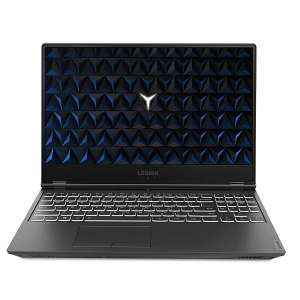
  1. LENOVO LEGION Y7000 81V4000LIN
Lenovo Legion Y7000 81V4000LIN
  • OSOS: WINDOWS 10
  • DisplayDISPLAY: 15.6″ (1920 X 1080)
  • ProcessorPROCESSOR: 9TH GEN INTEL CORE I5 | 2.4 GHZ
  • MemoryMEMORY: 8 GBGB DDR4

Legion by Lenovo is a dedicated gaming emblem from Lenovo with aesthetics and specifications tailored to game enthusiasts. Even though the specifications are broadly speaking similar to the other laptops on this list, we’ve got the extra storage as you get a 256GB SSD in addition to a 1 TB hard disc drive. Summary of specifications: Intel i5-9300H, GTX 1050, 8 GB, 256 SSD + 1 TB HDD, 15.6-inch 1080p.

SPECIFICATION
OS:Windows 10 Home
Display:15.6-inch screen with (1920X1080) full HD display | Anti Glare technology | 60Hz refresh rate | 250 Nits Brightness | IPS Display
Processor:Intel I5-9300H, 2.4 Ghz base speed, 4.1 Ghz max speed, 4 Cores, 8Mb Smart Cache
Memory:8GB DDR4
Weight:2.3Kg
Storage:1 TB HDD (5400rpm) + 256 GB SSD
Graphics Processor:NVIDIA GTX 1050 3GB Graphics

2. ASUS TUF GAMING FX505DD-AL185T

ASUS TUF Gaming FX505DD-AL185T
  • OSOS: WINDOWS 10
  • DisplayDISPLAY: 15.6″ (1920 X 1080)
  • ProcessorPROCESSOR: AMD Ryzen 5-3550H
  • MemoryMEMORY: 8 GBGB DDR4

The ASUS TUF Gaming series is all about making their hardware more accessible, and the FX505DD does just that by combining the Ryzen 5-3550H with the GTX 1050 and even having a high-refresh-rate panel. A recent drop has increased the value of this one-of-a-kind aggregate even further. Ryzen 5-3550H, GTX 1050, 8 GB RAM, 1 TB HDD, 15.6-inch 120 Hz 1080p display.

SPECIFICATION
OS:Windows 10 Home
Display:Display: 15.6″ (16:9) LED-backlit FHD (1920×1080) 120Hz Anti-Glare IPS-level Panel with 45% NTSC
Processor: AMD Ryzen 5-3550H processor, 2.1GHz Base speed (6MB cache, up to 3.7GHz)
Memory: 8GB DDR4 2400MHz
Weight:2.20kg 
Storage:1 TB HDD (5400 RPM)
Graphics Processor:NVIDIA GeForce GTX 1050 GDDR5 3GB VRAM Graphics

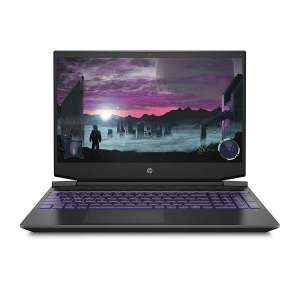
3. HP PAVILION GAMING 15-EC0026AX

HP Pavilion Gaming 15-ec0026AX
  • OSOS WINDOWS 10
  • DisplayDISPLAY 15.6″ (1920 X 1080)
  • ProcessorPROCESSOR: AMD Ryzen 5-3550H
  • MemoryMEMORY: 8 GBGB DDR4

The HP Pavillion Gaming 15 series of laptops come in a wide range of configuration options. The only one we chose is powered by an AMD Ryzen 5-3550H processor and a GTX 1050 graphics card. This makes this one-of-a-kind SKU one of the best AMD-based configurations we could find. Summary specifications: Ryzen 5-3550H. GTX 1050, 8 GB RAM, 256 SSD + 1 TB HDD, 15.6-inch 1080p display.

SPECIFICATION
OS:Windows 10 Home
Display:15.6-inch Full HD (1920 x 1080) anti-glare IPS display | 60Hz refresh rate | 250 Nits Brightness
Processor:AMD Ryzen 5-3550H Quad-core processor (2.1 GHz base clock speed, up to 3.7 GHz max boost clock speed, 6 MB cache, 4 cores)
Memory:8 GB DDR4
Weight:1.98 kg
Storage:1 TB 7200 rpm SATA HDD + 256 GB PCIe NVMe M.2 SSD
Graphics Processor:NVIDIA GeForce GTX 1050 (3 GB GDDR5 dedicated) 

4. ASUS TUF GAMING FX505DY-BQ024T

ASUS TUF Gaming FX505DY-BQ024T
  • OSOS: WINDOWS 10
  • DisplayDISPLAY: 15.6″ (1920 X 1080)
  • ProcessorPROCESSOR: AMD RYZEN 5-3550H | 2.1GHZ
  • MemoryMEMORY: 8 GBGB DDR4

In terms of performance, the ASUS TUF Gaming FX505DY is quite close to the FX505DD. The Graphics card which is AMD RX 560X, and the display is a 60 Hz 1080p panel are the key differences between them. Specifications in summary: Ryzen 5-3550H, RX 560X, 8 GB RAM, 512 SSD, and a 15.6-inch 1080p display.

SPECIFICATION
OS:Windows 10 Home
Display:15.6″ (16:9) LED-backlit FHD (1920×1080) 60Hz Anti-Glare IPS-level Panel with 45% NTSC
Processor:AMD Ryzen 5-3550H processor 2.1GHz (6M cache, up to 3.7GHz, 4 Cores)
Memory:8GB DDR4 2400MHz
Weight:2.2 kg
Storage:PCIe NVMe 512GB M.2 SSD
Graphics Processor:Graphics: AMD Radeon RX 560X GDDR5 4GB VRAM

5. MI NOTEBOOK HORIZON EDITION 14

Mi Notebook Horizon Edition 14
  • OSOS: WINDOWS 10 HOME
  • DisplayDISPLAY: 14″ (1920 X 1080)
  • ProcessorPROCESSOR: 10TH GENERATION INTEL® CORE™ I7 | 1.8GHZ
  • MemoryMEMORY: 512 GB SSD/8GB DDR4

Xiaomi is the most latest company to release a laptop in India that is powered by an Intel Core i5-10210U processor and an NVIDIA MX350 GPU. As long as you keep the game settings to low or medium, you can play a few games on the MX350. Both the CPU and the GPU are designed for power efficiency rather than long gaming sessions. Summary configuration: Core i5-10210U, MX350, 8 GB RAM, 512 SSD.

SPECIFICATION
OS:Windows 10 Home
Display:Horizon Display|14-Inch (1920X 1080 )Full HD Anti-Glare Screen
Processor:Intel Core i7-10510U processor, 1.8 GHz base speed, 4.9 GHz max speed, 4 Cores, 8 threads
Memory:8GB DDR4-2666MHz
Weight:1.35 kg
Storage:512 GB PCIE Gen 3×4 NVMe SSD
Graphics Processor:Nvidia MX350 2GB GDDR5 Graphics

The all new Nintendo Switch OLED Model.

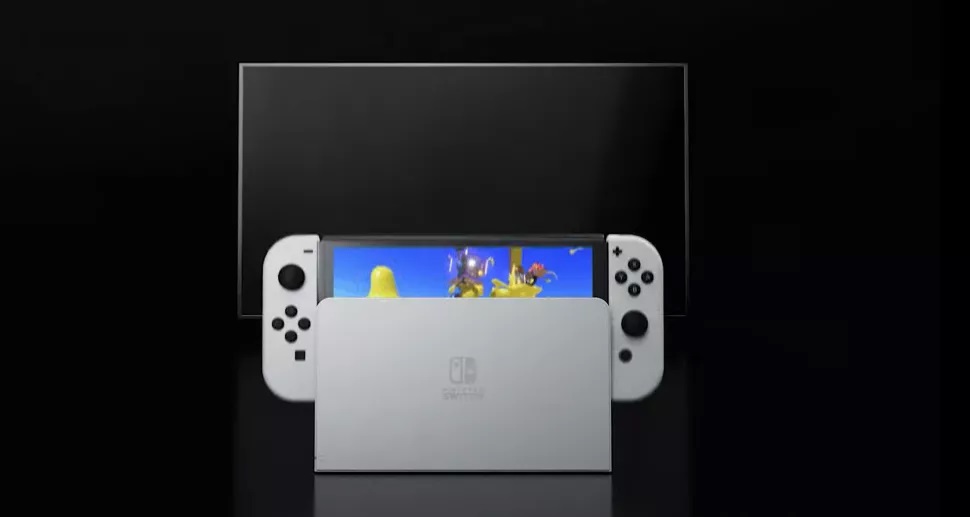
The Japanese gaming company Nintendo has launched its trendy version of the Switch gaming console, called the switch (OLED model). As for the key highlights, the tool comes with a bigger 7.0-inch OLED display in conjunction with an upgraded NVIDIA chipset and superior audio system. It carries a charge tag of $349.99 (around Rs. 26,000) and is to be had in two color options.

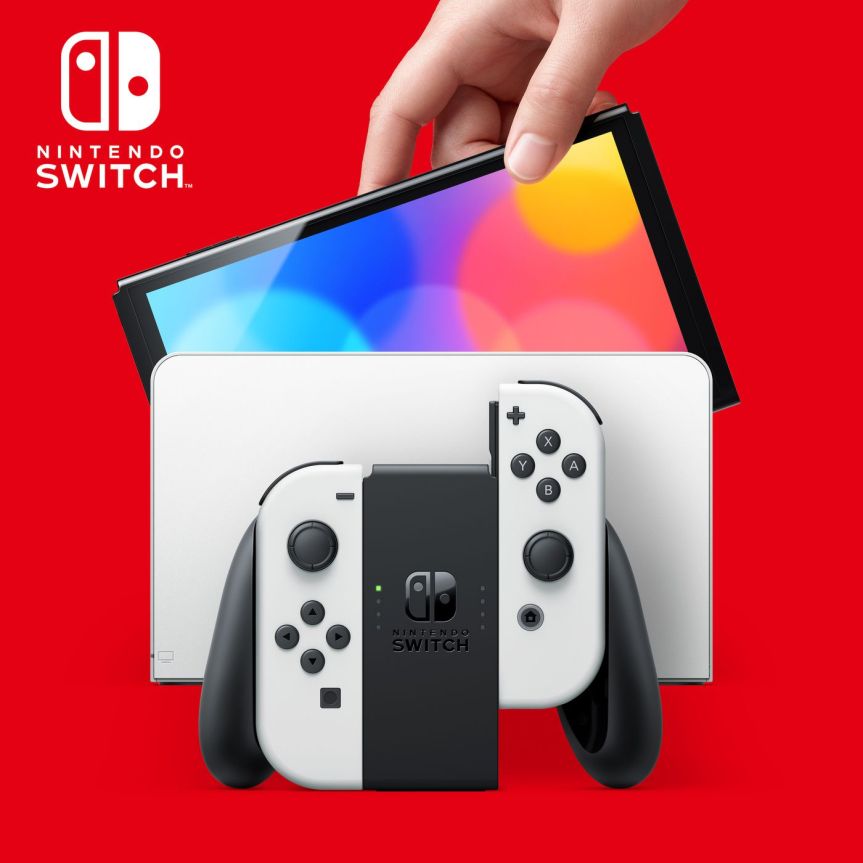
Nintendo Switch OLED 2021.

The Nintendo Switch OLED model — which was released on July 6, 2021 — is similar to the normal Nintendo switch that was released in March 2017. It is a hybrid console that swaps without problems from hand-held mode to television mode. There are pleasure-Con on both aspects of the console, which might be similar to those at the normal Switch. It plays all the same old switch video games, has the equal processor, battery, RAM, and most different specifications.

However, Nintendo upgraded and more advantageous a selection of capabilities of the console to make it higher (greater on that in the subsequent section). This makes the console advanced to the normal Switch and the hand-held-only switch Lite. It does now not make it a switch pro or switch 2, though, because it’s no longer modified that a lot.

New Nintendo Switch OLED specifications-

Switch OLEDOriginal Switch
Display7-inch OLED touchscreen6.2-inch LED touchscreen
Resolution720p handheld/1080p docked720p handheld/1080p docked
Storage64GB (expandable)32GB (expandable)
ChipsetCustom Nvidia Tegra X1Custom Nvidia Tegra X1
Battery LifeApprox. 4.5 – 9 hoursApprox. 4.5 – 9 hours
ConnectivityUSB-C, 3.5mm audio, microSD, wired LANUSB-C, 3.5mm audio, microSD
Size9.5 x 4 x 0.55 inches9.4 x 4 x 0.55 inches
WeightApprox. 0.93 poundsApprox. 0.88 pounds

lamentably, the Nintendo Switch OLED remains lacking some things we would hope a brand new Switch console could have. For a start, the joy-Cons are the same as the present-day Nintendo switch, which means they may (and we strain could) fall victim to Joy-Con drift that has blighted the controllers of the authentic Switch.

There may be also no aid for Bluetooth headphones, which with stellar headsets like the Sony WH-100XM4 available, appears to be a rather disappointing omission with the Switch OLED. simply bear in thoughts, the identical workarounds for wireless headphones used in the unique switch ought to paintings with the Switch OLED.

However, arguably the maximum disappointing thing is the Switch OLED does not provide a lift in overall performance over the authentic switch. It makes use of the same custom Nvidia Tegra X1 gadget-on-a-chip with reputedly no specs modifications, which means a shape of 4K output while docked or 1080p when treated isn’t always to be had.

All it is no longer to mention the Nintendo switch OLED is flawed, however, it cannot be a must-have for those who are already playing the present-day Switch.

The new adjustable stand and LAN-

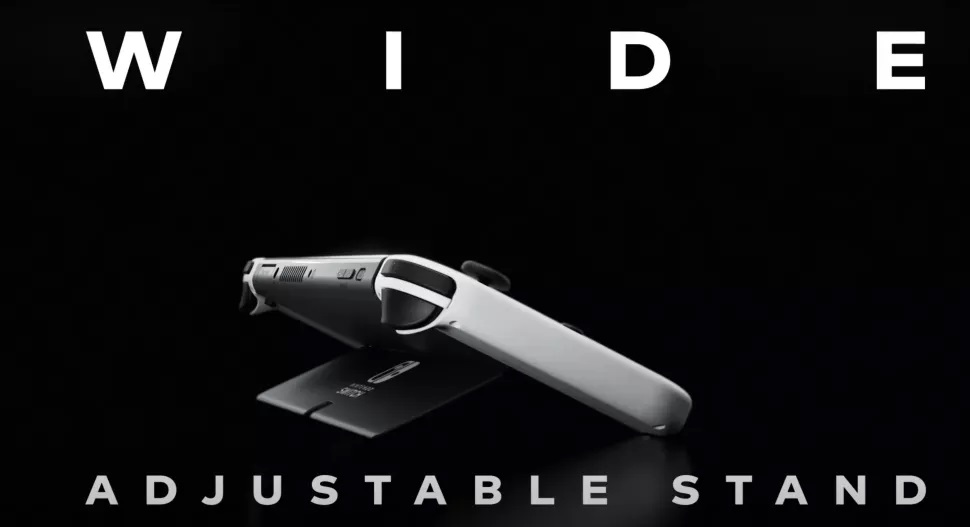
The bigger and adjustable stand is arguably the most compelling upgrade for the brand new Switch after the OLED show. The single-role stand on the original Switch changed into instead skimpy and flimsy and often toppled over on the merest wobble.

(Image Credit- Nintendo)

The broader stance at the switch OLED seems lots more stable and the larger display method it can make for a wi-fi new portable console that can be legitimately installation everywhere for a bit of Mario Kart or damage Bros local multiplayer.

(Image Credit- Nintendo)

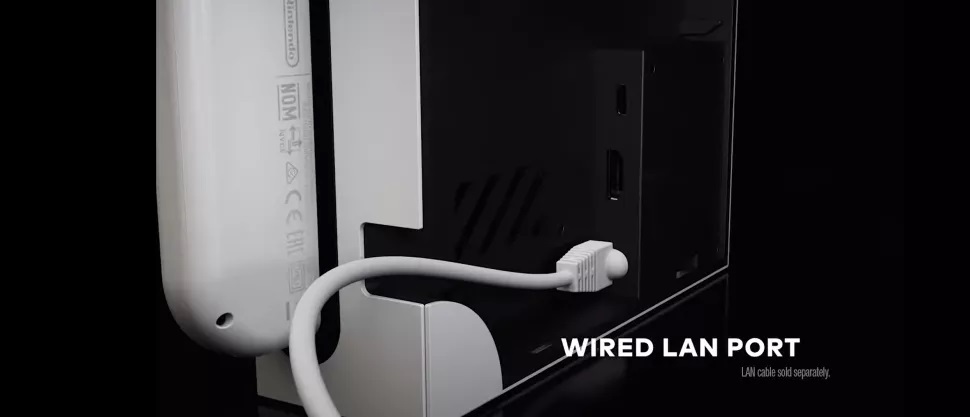
And speaking of multiplayer, the Nintendo switch OLED also has a LAN port to guide a stressed-out internet connection for extra stable online gaming. that would be available for people in homes with patchy Wi-Fi.

Nintendo Switch OLED Pricing and availablity-

The Nintendo Switch (OLED model) is priced at $349.ninety-nine (around Rs. 26,000). it’ll be to be had for buy within the US from October 8 onwards. information concerning its availability in different markets is doubtful as of now.

A new membrane production could desalinate water with 99.9% efficiency.

According to the World Health Organization, more than 785 million people lack clean drinking water. Although 71% of the Earth’s surface is covered with seawater, we can’t drink it. Scientists around the world are working to find effective means of desalinating seawater at a low cost. Now, a team of Korean scientists may have figured out how to do it in a matter of minutes.

The freshwater necessary for most human activities represents only 2.5 percent of the total water available on the planet. Rivers and lakes hold only a fraction of them, but that is what life on Earth depends so much on.. Unfortunately, human activities are putting this vital resource under tremendous strain.

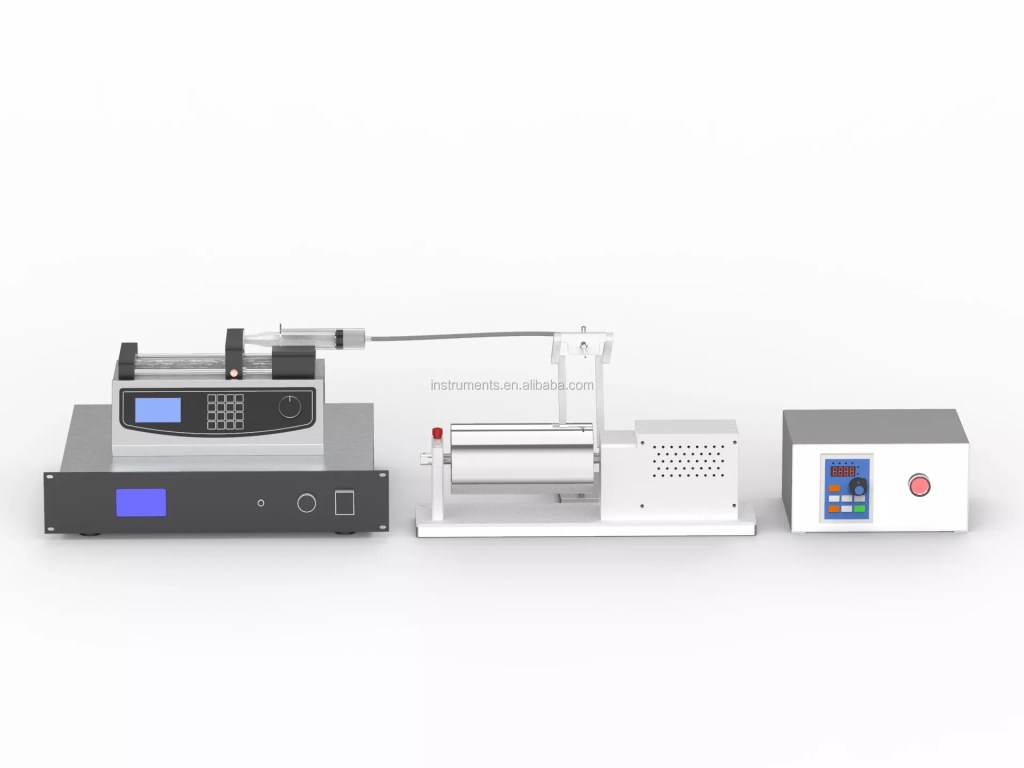
Diagram of the electrothreading device used to make this membrane from nanofibres.

It is hardly surprising that desalination of seawater is the easiest way to address this issue. But these processes have their limitations. One such limitation is membrane wetting.  Wetting the membrane pores eliminates dry pathways where contaminants, like particles, gels, or bubbles could pass through, resulting in high defect levels in your process. Polymer membranes are natively hydrophobic or hydrophilic.

•           Hydrophobic – having a natural aversion to water

•           Hydrophilic – having a natural affinity to water

If a membrane is hydrophobic, it is difficult to wet with water. This results in a high contact angle, or a very round bead of water sitting on top of the membrane. If a membrane is hydrophilic, it is easily wet with water, and the water will penetrate the pores of the membrane.

When using membranes to filter seawater, the membrane must remain dry for long periods. If the membrane becomes moist, the filtration process becomes inefficient and permits large quantities of salt to pass through the membrane. For long-term operations, progressive membrane wetting has been observed regularly, which be resolved by changing the membrane.

Researcher Yunchul Woo and his team at the Korea Institute of engineering and Building Technology (KICT) have now developed a membrane that’s less vulnerable to wetting and is stable within the future .

The membrane is formed of nanofibres that are fabricated into a three-dimensional hierarchical data structure , This was achieved by employing a sort of nanotechnology called electrospinning. Using this technology, the researchers were ready to fabricate a highly hydrophobic membrane — i.e. water repellent.

The hydrophobic nature of the membrane is valuable because it is designed to keep water molecules from passing through. Instead, a temperature differential is applied on both sides of the membrane which causes the water to evaporate from one end to the water vapor. The membrane allows water vapor to pass, which then condenses onto the cooler side. Called, membrane distillation, this is a commonly used method of desalination using membranes. Because salt particles are not transformed into gas, they are set aside on one side of the membrane, giving highly purified water on the other side.

The Korean researchers also used silica aerogel in their membrane fabrication process which further enhanced the flow of water vapor through the membrane, providing quicker access to desalinated water.

In tests, the team ran the new membrane for 30 days, and found that it still filtered out 99.99 percent of the salt after that time. That’s a far longer runtime than other electrospun nanofiber membranes, which the team says struggle to last more than 50 hours of continuous use before they begin to leak.

The co-axial electrospun nanofiber membrane have strong potential for the treatment of seawater solutions without suffering from wetting issues and may be the appropriate membrane for pilot-scale and real-scale membrane distillation applications,” says Dr. Yunchul Woo, lead researcher on the study.

[GUIDE] How to install the Windows 11 Insider Build.

At a virtual event on 24 June 2021, Microsoft unveiled “the next generation of Windows”, Windows 11. It is the successor of the Windows 10 May 2021 update (also known as version 21H1), and it came out with big improvements and key features like:-

  • A new, more Mac-like interface.
  • Integrated Android apps.
  • Microsoft Teams integration.
  • Widgets.
  • Snap Groups and better multitasking.

Today I am going to show you how to install the Insider Build of Windows 11, but before check out the minimum system requirments to run Windows 11 on Microsoft’s official website.

Before Installing

Back up any file that you would deem essential somewhere safe (e.g USB drive, Cloud storage, etc…). Download the ISO then get a USB drive minimum of 8GB or more and create a bootable USB drive. Next, go into the BIOS and follow these steps:-

Enable TPM-

If INTEL, you need to enable PTT (TPM)

BIOS> Security> Intel Platform Trust Technology> Enable> Save and Exit.

IF AMD, You need to enable fTPM (TPM)

BIOS> Advanced> CPU Configuration> AMD fTPM Switch> Enable> Save and Exit.

Disable Compatiblity Support Module (CSM) and turn Secure Boot OFF (on few motherboard).

NOTE- TPM 2.0 is required but in some cases, it ran in TPM 1.2. Make sure to check your TPM version and enter BIOS and enable your TPM settings.

Steps for installing Windows

  1. ISO method

Connect your bootable USB and turn on your PC, press F8 (or ESC, F1, F11 depending on your motherboard) to go into the boot menu select your USB drive and it’ll take you to WIndows installation.

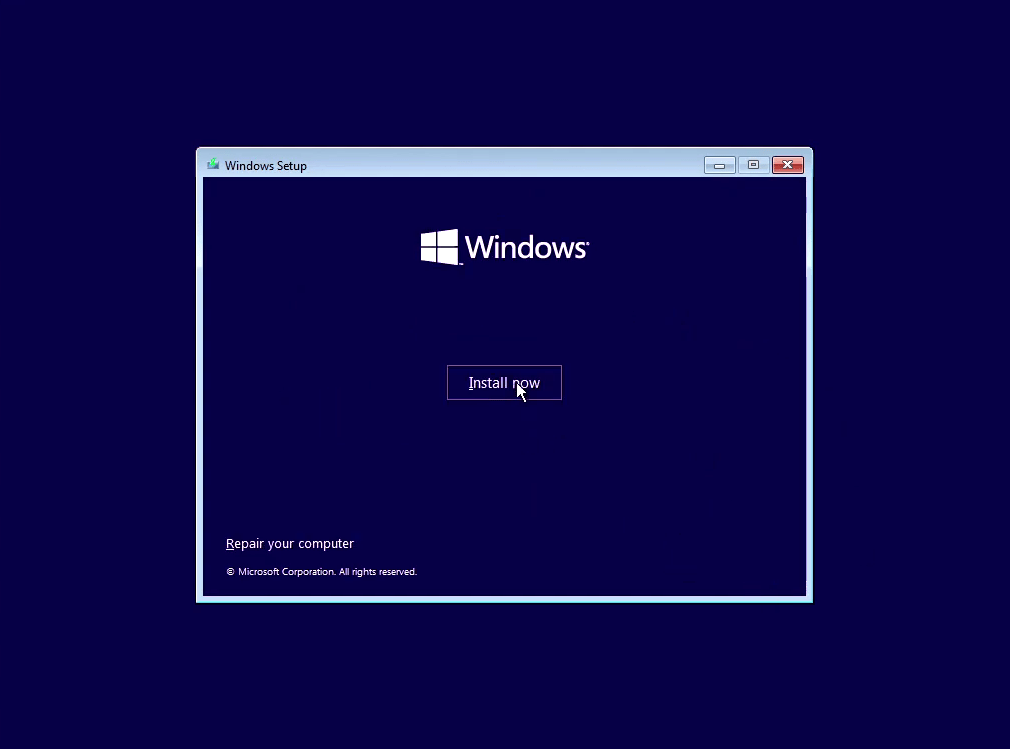
Click on “Install now”
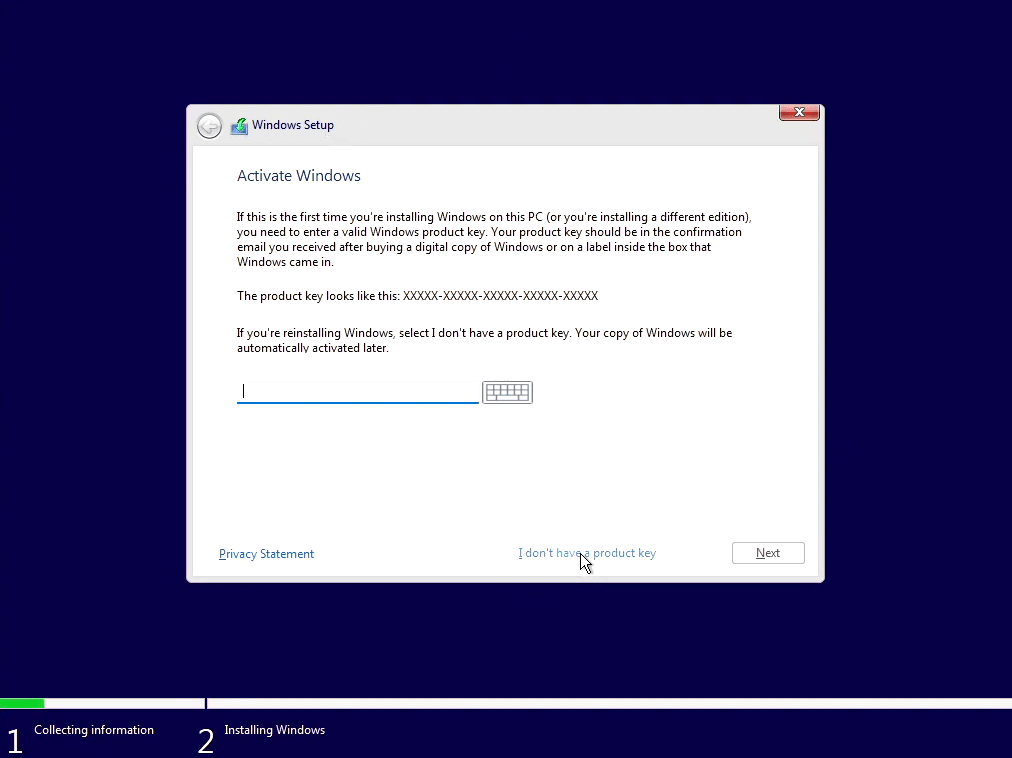
Click on “I don’t have a product key”
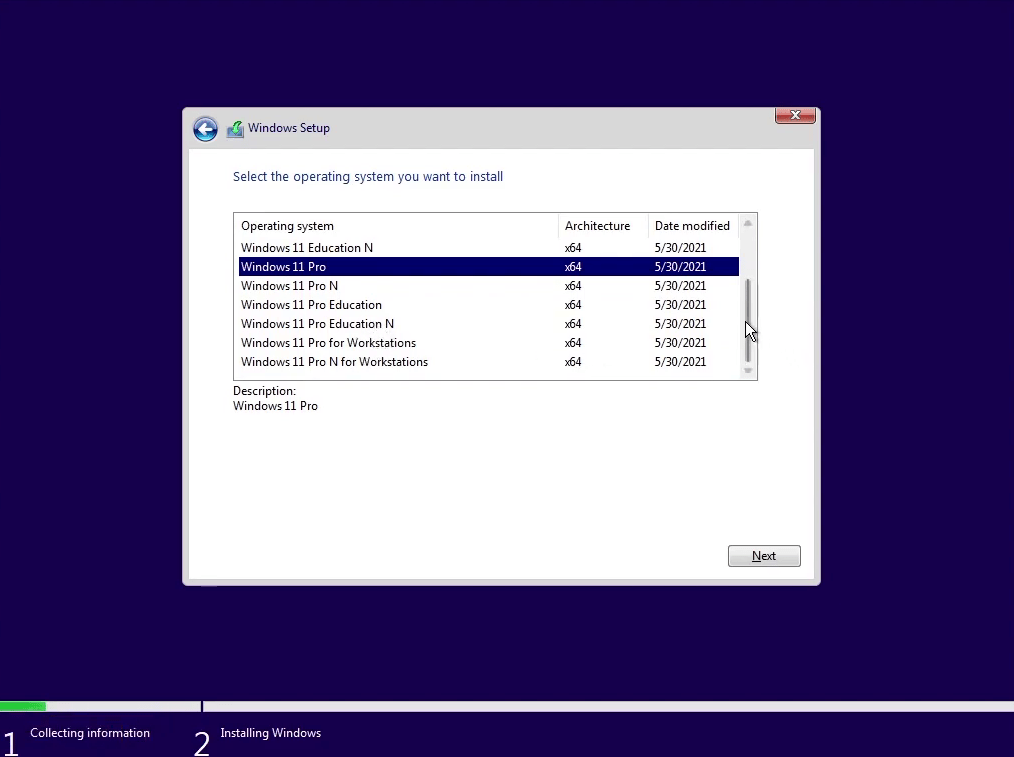
Select the edition of Windows you would like to install and click Next and Click on “I agree on terms and condition” and again click Next.
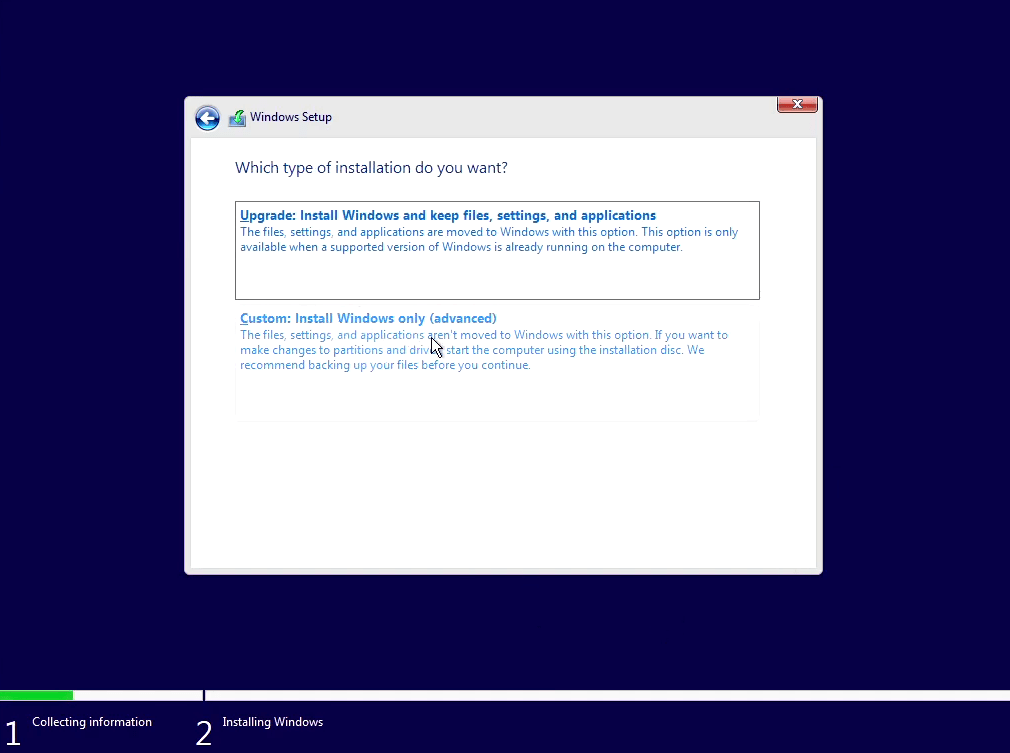
Now, click on “Custon: Install Windows Only (advanced)”.
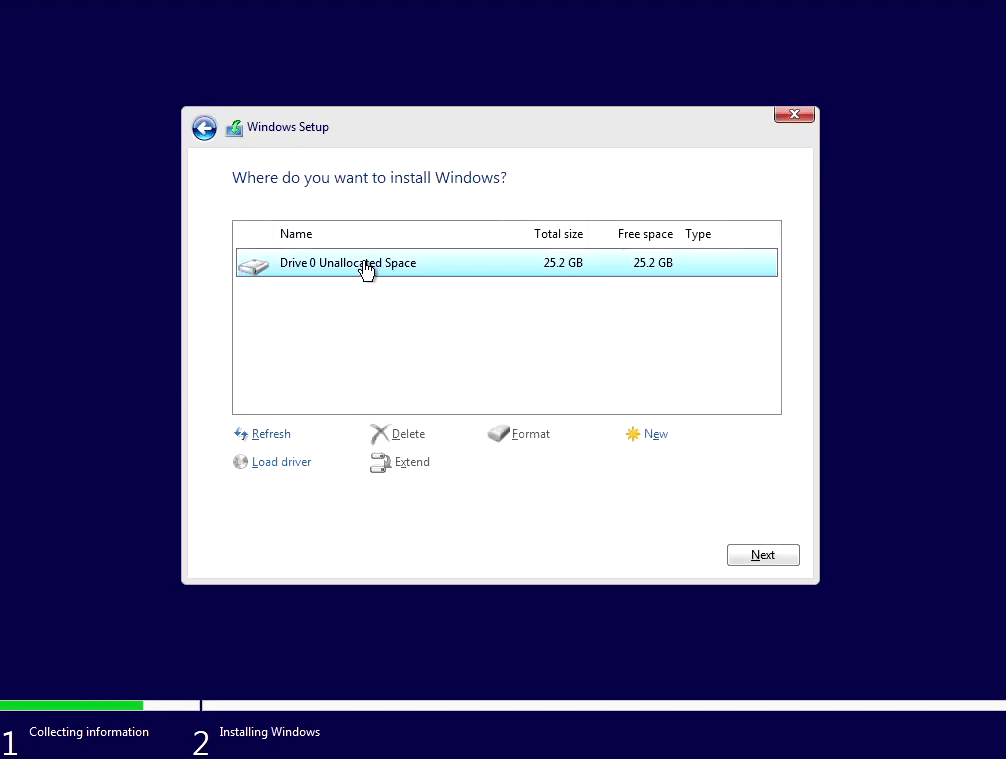
Click on “New” to make new partiton or select the partition you want and click on “Next”.
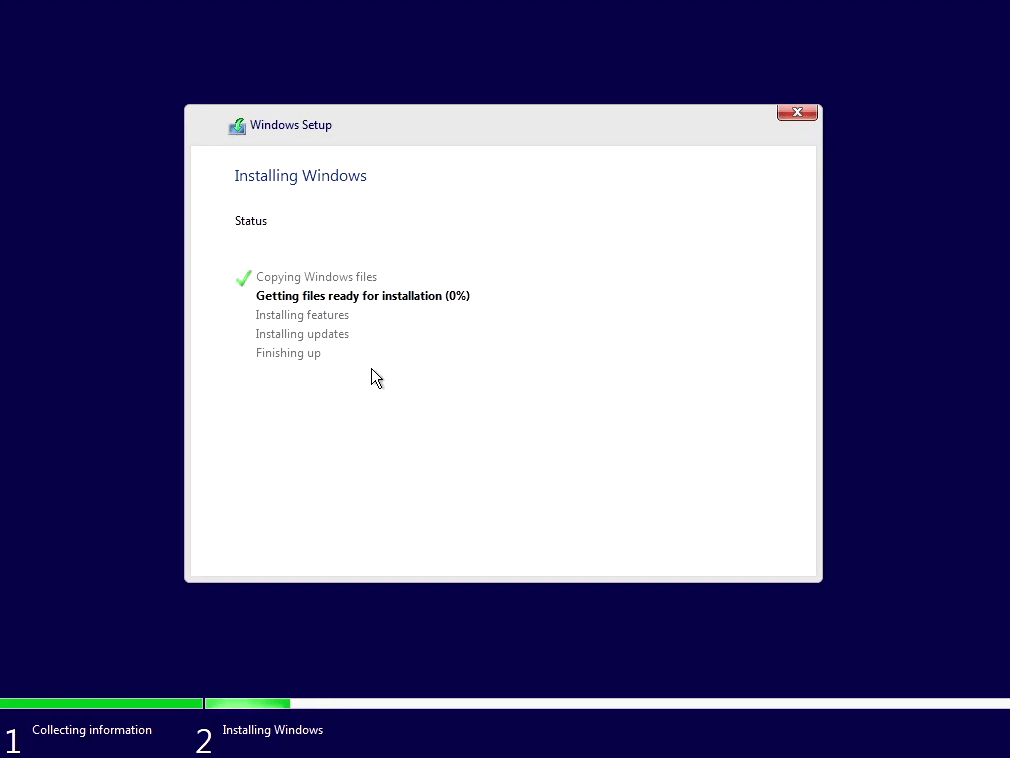
Now, wait for the installation to complete (don’t turn your PC off during the process). It will “Restart” several times and will come to the Setup screen.
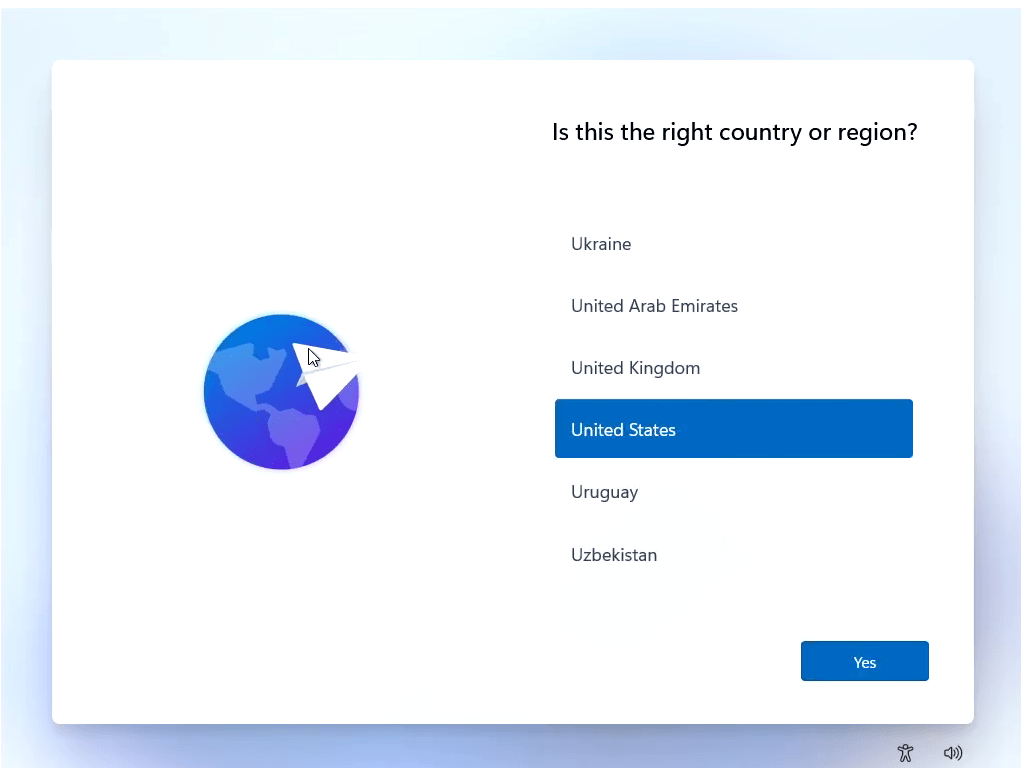
Now Select your Region, Time and Date, Username, Password, Preference, and complete the setup.
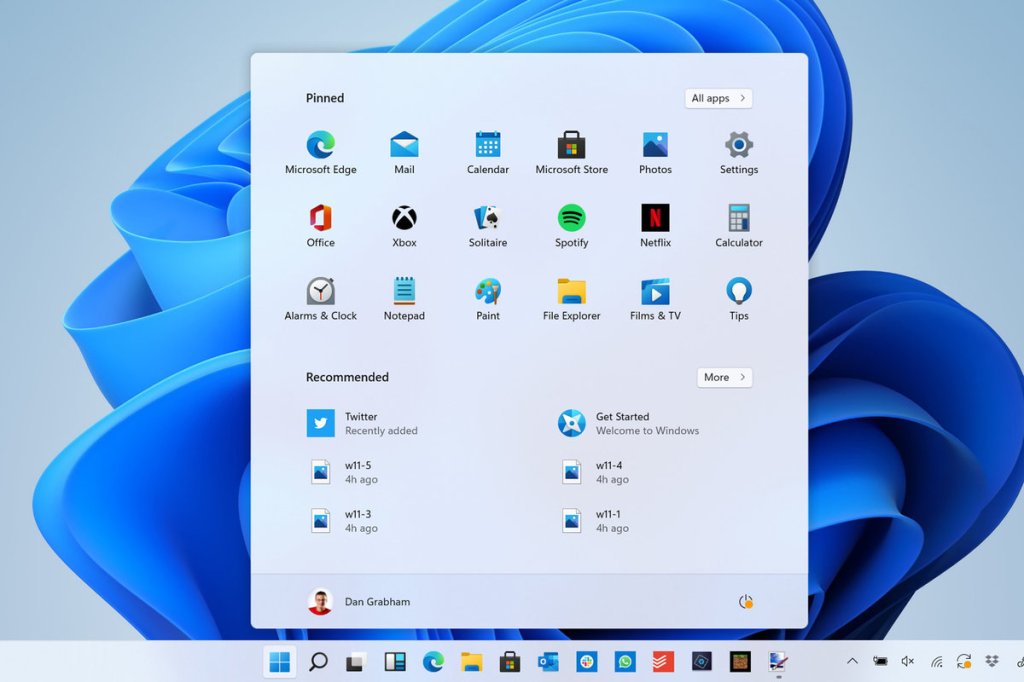
Windows 11 Insider build

After completing the setup you’re good to go. Enjoy the latest Windows on your PC.

Post installation tweaks

  • Install drivers related to your PC.
  • Join the Windows Insider Program via Settings > Windows Update > Windows Insider Program.
  • Check for Windows Update.

2. Upgrade Method

Installing windows 11 via the Windows Insider development ring:

  • Go to Settings > Privacy > Diagnostics & feedback and check that option instead of “Basic” to “Full”.
  • Now to join the Insider Program, go into Settings > Update & Security > Windows Insider Program and click on “Get Started”, then follow the prompt and select “Pick your Insider settings” and choose “Dev Channel”, now click confirm and reboot you PC.
  • Now check for Windows Update and install “Windows 11 Insider Preview 10.0.22000.51 (co_release)”
  • Follow the Post Installation Tweaks and you’re good to go.

WARNING! As this is the Insider Build it can contain some bugs and cons and may not be ideal for a daily driver for many users.