EduPub (Edupedia Publications Pvt Ltd) is a company dedicated to the development of the education, learning, research and innovation in the field of the research and books publication. We are pioneer in providing wide range of services to educational institutions, government agencies, individuals and corporates in the field of training and education, research and development, research and innovation. research and publication.
K-pop as usual is loved by a lot of people all around the world and recently there are many Indian celebrities that have come out about their love for k pop. All if these one is Tiger Shroff. Previously when most popular k-pop group BTS released their first full English song it was loved by fans all over the world and also sat up some new records. The band also got nominated for Grammys for dynamite.
Tiger Shroff did a dance cover to the song and it was appreciated by many fans of BTS.
And once again Tiger Shroff has done a dance cover of “Mmmh” BY kAI of the popular boy band EXO. The song was released a month ago and was a big hit.
where many fans are appreciatibng the fact that K pop is getting the recognisation it deserve there are some of the fans who are accusing the actor to grab attention by coverng the songs all of sudden. Acoording to them as Kpop is getting popular worldwide people are just getting around it for clout.
So, WHAT DO YOU THINK OF THIS. DON’T FORGET TO TELL YOUR THOUGHTS IN THE COMMENTS ABOUT DO YOU THIN THAT TIGER SHROFF IS DOING JUST CAUSE HE LIKES TO DO OR TO GRAB THE CLOUT ONLY??
According to a report released by the corporate making company Kepios, more than half of the world’s population -a staggering 396 crore people-use social media. This means that apps like Instagram can easily target more than 100 crore people with just an single advertisement. As a result people we, the users, become the artefact and our behaviors are up for sale whether we know it or not.
Researchers have defined Instagram influencers as a new type of independent third-party endorser, who can shape the attitude of an audience through their blogs, tweets, and the use of other social media. Instagram influencers that inscribe a product seems powerful enough to make someone buy that stuff. You see these person daily either on your Instagram feed, stories or IGTV, and they start feeling so friendly so whenever they say something, it almost feels like they are helping you with recommendation like a friend would do, which is extremely powerful
According to me there’s nothing wrong with Instagram influencers as they help us to know different things, but of course like the other sectors in the world, you have bad apples, and bad actors too.
There have certain incidents, that Instagram influencers with prominent Instagram influencers have endorsed horrible products without testing them, only for the amount of money they are provided to advertise it.
I would further emphasize the article with an example where Kendall Jenner who is well known for her stunning looks, and is a huge Hollywood celebrity and is also one of the greatest influencer, advertise the Fyre Festival in The Bahamas was horribly wrong and even two documentaries were made about how much a disaster the entire thing was. Kendall reportedly for 250,000 dollars for the advertisement about the Fyre festival.
In this case she was not aware of the quality of the event, so I wouldn’t call her wrong ,but neither a smart one either. But there have been a case where the influencer tested for example a drink, and tested how horrible it was and still advertised it for an amount of money that was offered.
I do feel there are lot of good influencers who are very well going because of the double checking of products they advertise as they want their name in the good, and have a good credibility scores for future agreements and maybe their own products.
To say Education is essential is an understatement. Education may be a weapon to reinforce one’s life. It is likely the most vital device to trade one’s life. Education for a infant starts off evolved at home. It is a lifelong technique that ends with death. Education simply determines the first-class of an individual’s life. Education improves one’s knowledge, abilities and develops the persona and attitude. Most noteworthy, Education influences the probabilities of employment for people. A exceedingly skilled character is probable very in all likelihood to get a suitable job. In this essay on significance of education, we will inform you about the price of training in existence and society.
Importance of Education in Life
First of all, Education teaches the capability to study and write. Reading and writing is the first step in Education. Most facts is completed via writing. Hence, the lack of writing talent capability lacking out on a lot of information. Consequently, Education makes humans literate.
Above all, Education is extraordinarily necessary for employment. It sincerely is a terrific chance to make a respectable living. This is due to the competencies of a excessive paying job that Education provides. Uneducated human beings are possibly at a large downside when it comes to jobs. It appears like many bad human beings enhance their lives with the assist of Education. Better Communication is but some other position in Education.
Education improves and refines the speech of a person. Furthermore, humans additionally enhance different capability of verbal exchange with Education.Education makes an man or woman a higher consumer of technology. Education in reality affords the technical capabilities quintessential for the use of technology. Hence, besides Education, it would likely be tough to take care of contemporary machines.People emerge as greater mature with the help of Education. Sophistication enters the existence of skilled people. Above all, Education teaches the price of self-discipline to individuals. Educated human beings additionally recognise the price of time a good deal more. To skilled people, time is equal to money.
Finally, Educations permits persons to categorical their views efficiently. Educated persons can give an explanation for their opinions in a clear manner. Hence, skilled humans are pretty probably to persuade humans to their point of view.
Importance of Education in Society
First of all, Education helps in spreading understanding in society. This is possibly the most noteworthy factor of Education. There is a speedy propagation of know-how in an trained society. Furthermore, there is a switch of expertise from era to every other via Education.Education helps in the improvement and innovation of technology. Most noteworthy, the extra the education, the greater science will spread. Important traits in warfare equipment, medicine, computers, take vicinity due to Education.
End
Education is a ray of mild in the darkness. It really is a hope for a properly life. Education is a fundamental proper of each and every Human on this Planet. To deny this proper is evil. Uneducated formative years is the worst issue for Humanity. Above all, the governments of all nations have to make sure to unfold Education.
Child rearing has become challenging during past years and great expectations are placed for parenthood . althrough the public upbringing has become professionalized and the day care and school services are available in today’s society .parents have the main responsibility for rearing children .how and into what should children be raised? in this article ,good parenthood is paralleled with parental love.as a result ,two valuable and demanding underlying contents of parental love are discussed in this article .setting up safe boundaries and constructing good self-esteem as the core of good parenthood and parental love .the perspective in this article is fundamentally positive .parental love appreciates and cares about the child and does not abandon the child even when his/her behaviour causes disappointments and trouble.
The sacrifices , belives ,and values parents implant in their children will help determine the person they grow up to be . a child is like a sponge that absorbs their parents thoughts and view points that will stay with them for the rest of their lives.
Parents make great sacrifices for the care of their children .day after day, parents protect their children from danger, attend their cries ,and reassure their children after a bad dream. Parents give up many necessities for their children every day. In the poem “those winter sundays ” by robert hayden , the father displays the sacrifices he makes for this son. The father’s “cracked hand that ached” ,shows he sacrified pain and discomfort for this child. The father takes no thought for this own confront. Also ,self-sacrificing this own warmth so his child could wake up to a warm house. The father would get up in the “blueblack cold”,to make a fire. The sacrifices parents make for their childrens will have and impact on them when they become parents.
Beliefs are taught to children in subtle ways such as just listening to their parents conversations. Its not uncommon to over hear a child explain something as being absolutely true because what their parents have told them. In the poem “the victims” by sharon olds ,the children hated their father because of the beliefs the mother in stilled in her children. Their mother “taught us to take it, to hate you…….” . the children pick up the hate the mother had against their father and this begun the hatred for their father. In “ the death of a salesman”, the father sets a foundation of beliefs for his son biff. The father believes that all it takes to be successful in life is to we well liked. He tells his son ,”be liked and you will never want . you take me, for instance. I never have to wait in line to see a buyer &apo.
In modern society, many aspects of life have become increasingly similar around the world -one of the rare exceptions to this is probably the way be parent our children. In the united states, there is some truth to the stereotype of “helicopter parents” who monitor and guide every step of their childrens lives. Scandinavian parents tent be the opposite. They are more interested in having their children develop imagination, independence and a sense of discovery, and they generally interfere much less with their childrens choice .
The authoritative parents are more likely to be viewed as reasonable , fair and just, their children are more likely to comply with their parents requests. Also, because these parents provide rules as well as explanation for these rules, children are much more likely to internalize these lessons.
Rather then simply following the rules because they fear punishment, the children of authoritative parents are able to see why the rules exist, understand that they are fair and acceptable, and strive to follow these rules to meet their own internalized sense of what is right wrong.
Parenting styles are associated with different child outcomes, and the authoritative style is generally linked to positive behaviors such as strong self -esteem and self -competence. However , other important factors including culture, childrens temperament, childrens perception of parental treatment, and social influences also play and important role in childrens behaviour .
Modern society is giving more importance to parenting styles . it represent the different approaches parents use to raise their children. This paper looks into various kinds of parenting styles followed by families . modern parenting is mixed with various issues . the root cause of majority of the mental health problems arise in adolescence are related to parenting styles. Most parents use a variety of styles developing upon their culture and societal demands. The patterns of parenting styles and their impact on child development are explained in the paper the impact of the social changes on childhood in india derives attention parenting style needs change according to the changes taking place in a society
“Artificial intelligence !” a new lucrative field in which many peeps wanna dive in and why not coz it is not just restricted to the computer science world but finance law industries etc . we are now living in a time where we have chatbots listening to our instruction doing as said, solving problems and looking for loopholes in a system the data better and faster than us. and it’s just starting AI and machine learning is going to grow more and more as time goes. With this huge need for AI experts, in all these fields will also come. Artificial intelligence isn’t just a fad. It’s here to stay!
that’s why many interesting learners want to make a career in this AI field, here the very vital question arises as what does it take to build a career in AI?
Scientific-brain!
As AI is highly scientific, the primary attempt of AI is to make it work the same as humans( or better in some cases) it requires the person to have quite a lot of knowledge, training, and cognitive skill! A huge learning curve is there to understand to make suitable and best-approximated outcomes. Which requires years of learning and practice. like researchers and scientists.
Mathematical thinking
A huge need for mathematical ability is needed to make a career in AI. Fields like statistics, probability, predictions, calculus, algebra, Bayesian algorithms, and logic are going to be primary tools for you in your arsenals. With maths, you are also going to need some science knowledge such as mechanics, cognitive learning theory, language processing, and computer science skills that a mathematical thinker must have
“A quip in Tesler’s Theorem says “AI is whatever hasn’t been done yet”
highly critical thinking
Being rational with the approach is very necessary as you go ahead you find yourself making choices that need to be based on critical thinking. nothing will be important at face value. huge experiments and failures will happen, and decisions would be based on results only! critical thinkers in normal day-to-day life are considered to be very smart and hard nuts! That’s what we search for in a field with many challenges.
Naturally curious
Working in AI field is unlike any other field where you faces similar problems which have to be solved with an already existing solution or where you exactly know what and why you doing and what will likely to happen but here it AI its just changes altogether as this field is about uncovering the unknown and exploring like a captain of a ship in this huge sea of unknown. What we can know or figure out with this technology is still a few drops. we have yet to reach the primary mission of us humans “ to make an artificial intelligence like the human brain. In this journey, we need curious peeps who love to think out of the box and think curiously
Loves challenges
Field with multiple failures and a huge need to push boundaries makes it really hard digestible tea for many. but if you have that willpower and love challenges in life! then this is your thing for sure. finding ways to do the same thing with different approaches, again and again, and again! Taking a huge toll of work on yourself and pushing yourself to reach deadlines! If you have these skills then this is it
No doubts AI is the future! and a career in this field is also very exciting and challenging! It gives everything that a person asks for!
pls let me know what you think in comment section and share ! :), sayonara!
In its counterparts as public law , it widely known as “the law of sea “. It also called Admiralty law. the process of carrying goods through sea, rules concerning protection and maintenance of ships at sea, registration and damage to ships, marine insurance etc. , is covered under maritime laws .
As india is surrounded by water from the three sides , it created nature condition for Marin trade after the water territorial trade started.
Legislations prior to Independence : maritime laws in India were governed under the British government. There are some of the regulations which deal with various aspects of maritime in India.
Coasting Vessels Act, 1838
Indian Registration of Ships Act, 1841,
Admiralty Offences (Colonial) Act, 1849
Inland Steam Vessels Act, 1917
Indian Ports Act, 1908
Control of Shipping Act, 1947
Legislations after independence : after the independence sea laws mostly governed under article 297 of the constitution. And there are different lex on waters, continental shelf, EEZ and other maritime zones.
Some of the acts are there , for maritimes affairs . This are
The Merchant Shipping Act, 1958
The Admiralty (Jurisdiction and Settlement of Maritime Claims) Act, 2017.
Article 297 of the constitution
Marines crimes , are frequent offenses which have been committing in sea . There are some marine offences mentioned below –
Maritime Piracy
Smuggling Exotic plants and animals
Unauthorized entry
Illegal Carrying of Weapons and artillery
Maritime Drug trafficking
Maritime Human Trafficking
Discharging in Ocean Waters
Sailing or fishing in unauthorized areas–
Tax evasion
Maritime piracy is an illegal act of violence, detention or destruction against a ship , on person or property, for private purposes, by the crew or passengers of a private ship . Piracy also includes inciting and intentionally facilitating such acts of violence, and voluntarily participating in the operation of a pirate ship . Pushiment for piracy is prescribed in anti maritime piracy bill 2019 , that is (i) life imprisonment ; or (ii) death , if the act of piracy is caused or seek to cause death.
Smuggling Exotic plants and animals : For a ship without authorization, its illegal to do Smuggling of exotic plants and animals for wildlife smuggling. This is because wildlife smuggling involves the isolation of plants and animals. When they arrived at the destination, they may not be able to adapt to the new place. Animals may also cause vulnerable diseases in people. And it may also leads to the serious illness or death of animals . To smuggle Endangered Species of Wild Fauna and Flora , is crime in maritime law.
Unauthorized entry : the ship must seek permission from government of that nation , For entry in a nation’s marine boundary . Sailing on that nation’s waters without a permission is a maritime crime and punishable in all countries. And a person who illegally and secretly boards and hides in to the ship, without the consent of ship owner and master, to travel into international waters to reach some other country without any monitory payment and legal documents , is known as stowaway.
Illegal Carrying of Weapons and Artillery : to carry weapons and artillery, throughout the water territory of any country , which is not legally bonded , is a martime offence .Goods which are sensitive in nature can be transported by specific ships only . Bringing in weapons on a ship, is not authorized , it is a punishable offense.
MaritimeDrug trafficking : maritime drug trafficking means transportation of illegal drugs produced in this region to global consumer markets through using ships . To sell drug, is illegal in itself and trafficking of it become more severe offence .
Maritime Human Trafficking : maritime Human Trafficking involves the use of force, fraud, or coercion to obtain some type of labor or commercial sex act , through exporting victim in other country vie ships .
Discharging in Ocean Waters : it refers to the sewage discharge done by the vessels and ships in the water territory of any nation . Marine pollution is a serious issue and almost all countries have strict policies against ships discharging sewage or oil into their coastal waters.
Sailing or fishing in unauthorized areas : it’s an offence to do sailing in an areas of water territory where the sailing or fishing is not allowed .
Tax evasion : ship owners trying to evade taxes through false documentation or incorrect representation of cargo material have been increasing rapidly, posing a threat to maritime security. It’s a white collar crime.
Curiosity killed the cat, but for a while I was a suspect.
What is pandora effect?
The relentless human desire to know – to satisfy curiosity at all costs –People are more likely to open the box if the outcome is uncertain and expectedly negative than if the outcome is certain and neutral or certain and negative can be more of a curse than a blessing,. We refer to this effect as the Pandora effect.
Whether it’s surreptitiously checking your partner’s phone for signs of infidelity, avidly reading celebrity gossip mags, or hunting people down on social media, too much curiosity can be like opening Pandora’s Box: the urge to do it can outweigh any benefits you might get from knowing, and it can seriously affect your happiness and wellbeing.
Opening the box
Curiosity is a spark behind the ……..
The researchers provided volunteers with a box containing prank pens that gave anyone clicking the button at the top a painful but harmless electric shock. The participants were randomly allocated a box containing either pens with a certain outcome or pens with an uncertain outcome. One group were given five pens with red stickers telling them the pens would give an electric shock and five pens with green stickers indicating the pens wouldn’t give an electric shock. The participants in the uncertain outcome group were given 10 pens all marked with yellow stickers indicating that they might or might not give a shock.
It turned out that the volunteers were far more likely to click the uncertain pens than either of the other sets of pens, and even more than both of the certain groups combined.
Curiosity leading to unpleasant experience
The cure for boredom is curiosity but there is no cure for curiosity.
Results like this show we have an innate desire to resolve uncertainty even if we know that doing so will have no positive effect and may even be unpleasant. The researchers suggest that we might make better decisions in life if we first stop and consider whether our choices will have positive or negative outcomes.
Perhaps, for example, if we consider the harmful effects of rubbernecking before we see a motorway accident we can help protect ourselves from being overcome by curiosity and end up in an accident ourselves. But if the researchers’ hunch is correct, even if we know about the unpleasant consequence of curiosity, we are still likely to open that box.
Curiosity brings excitement in our life and makes it more interesting doesn’t mean that we should make choices that can hurt us just for fulfilling our desire of curiosity .
Sometimes it’s better to leave the things the way they are .
William Shakespeare was an actor, playwright, poet, and theatre entrepreneur. He was born in Stratford, Evan on April 23, 1564. He is the son of John Shakespeare and Mary Arden and may have been educated at King Edward VI High School in Stratford, where he learned Latin and a little Greek, and read Roman dramatists. At the age of eighteen, he married Anne Hathaway, a woman seven or eight years older than him.
Shakespeare wrote more than thirty plays. These are usually divided into four categories: histories, comedies, tragedies, and romances. Some of his famous works include Hamlet, Romeo and Juliet, Much ado about nothing, King John, The tragedy of King Lear, etc. William Shakespeare first appeared on the London stage around 1592, where his plays will be written and performed, but the exact date is unknown. After 1594, Shakespeare’s plays were performed in their entirety by a company owned by a group of actors, which became the leading company in London. After the death of Queen Elizabeth in 1603, the company obtained a royal patent and changed its name to King`s Men, named after King James I.
Shakespeare has written at least 38 plays and more than 150 long and short poems, many of which are considered the best English plays of all time. His works have been translated into several existing major languages, in addition to other languages. Even after 400 years after his death, they are still performed around the world. In his poems and plays, Shakespeare invented thousands of words. According to the Oxford English Dictionary, includes such words as arch-villain, birthplace, bloodsucking, courtship, dewdrop, downstairs, fanged, heartsore, hunchbacked, leapfrog, misquote, pageantry, radiance, schoolboy, stillborn, watchdog, and zany.
Shakespeare’s influence on art, literature, language and a wide range of creative arts has long been known and documented. He is the most widely read playwright in the Western Hemisphere, and English is full of quotes and phrases derived from his plays. He is also the inventor of the iambi pentameter, a form of poetry that is still widely used even today.
He is also one of the most influential figures in English literature, having a profound influence on everyone like Herman Melville, Charles Dickens, Agatha Christie, Anthony Burgess, etc. But his influence is not limited to the field of art. The psychoanalyst Sigmund Freud used Hamlet as the basis for many of his theories about human nature. His influence is also reflected in painting and in the opera, especially Giuseppe Verdi and the entire community of Romantic and Pre-Raphaelite painters.
On April 23, 1616, he died at the age of fifty-two in his hometown of Stratford-upon-Evan. His death occurred on or near his birthday (which is still unknown).
Some famous quotes by Shakespeare
“It is not in the stars to hold our destiny but in ourselves”
Ever had someone tell you to cheer up and smile? It’s probably not the most welcomed advice, especially when you’re feeling sick, tired or just plain down in the dumps. But there’s actually good reason to turn that frown upside down, corny as it sounds. Science has shown that the mere act of smiling can lift your mood, lower stress, boost your immune system and possibly even prolong your life. It’s a pretty backwards idea, isn’t it? Happiness is what makes us smile; how can the reverse also be true? The fact is, as Dr. Isha Gupta a neurologist from IGEA Brain and Spine explains, a smile spurs a chemical reaction in the brain, releasing certain hormones including dopamine and serotonin. “Dopamine increases our feelings of happiness. Serotonin release is associated with reduced stress. Low levels of serotonin are associated with depression and aggression,” says Dr. Gupta. “Low levels of dopamine are also associated with depression.” Fake It Till You Make It In other words, smiling can trick your brain into believing you’re happy which can then spur actual feelings of happiness. But it doesn’t end there. Dr. Murray Grossan, an ENT-otolaryngologist in Los Angeles points to the science of psychoneuroimmunology (the study of how the brain is connected to the immune system), asserting that it has been shown “over and over again” that depression weakens your immune system, while happiness on the other hand has been shown to boost our body’s resistance. “What’s crazy is that just the physical act of smiling can make a difference in building your immunity,” says Dr. Grossan. “When you smile, the brain sees the muscle [activity] and assumes that humor is happening.” In a sense, the brain is a sucker for a grin. It doesn’t bother to sort out whether you’re smiling because you’re genuinely joyous, or because you’re just pretending. “Even forcing a fake smile can legitimately reduce stress and lower your heart rate,” adds Dr. Sivan Finkel, a cosmetic dentist at NYC’s The Dental Parlour. “A study performed by a group at the University of Cardiff in Wales found that people who could not frown due to botox injections were happier on average than those who could frown.” And there are plenty more studies out there to make you smile (or at least, serve as reference for why you should). Researchers at the University of Kansas published findings that smiling helps reduce the body’s response to stress and lower heart rate in tense situations; another study linked smiling to lower blood pressure, while yet another suggests that smiling leads to longevity. Studies aside, there are plenty of living, breathing, smiling humans who can testify to the fact that looking the part of happy helps them get through the day.
“Smiling absolutely changes the way I think and feel,” says Jaime Pfeffer, a success coach and meditation instructor based in Florida. “My husband and I purposely spend 60 seconds every morning smiling to supercharge our mood. It’s part of our morning routine. If something goes awry during the day, I usually use smiling to quickly shift my mood. It only take 10 to 15 seconds for it to make a difference for me now. It helps me to feel less stressed, transform my mood quickly and put things in a different perspective.” Pfeffer adds that she recommends smiling to all her clients, particularly when they’re dealing with long days or tedious work. “One of my clients last week told me smiling for 30 seconds at a time a few times per day helps him stay upbeat when doing sales calls. He said the task can get old after a while, but the smiling helps him stay more energized and avoid burnout.” A smile’s contagion is so potent, that we may even be able to catch one from ourselves. Dr. Ritzo recommends smiling at yourself in the mirror, an act she says not only triggers our mirror neurons, but can also help us calm down and re-center if we’re feeling low or anxious.
It turns out there’s solid evidence that smiling can do us a world of good. Since researching this piece I’ve been conducting my own little smile experiments. I tried smiling when I tensed up in traffic yesterday, and again during a rigorous workout and then today when I woke up with a headache. I found that it feels completely incongruous to smile when I’m tense or tired, and there’s a strange sense of departing a comfort zone. But I have to admit, instantly I was calmer, less upset and, maybe just ever so slightly for a second, smiling made me feel happy.
English is a Global language that helps us communicate with each other regardless of where we are! There are billions of people in over 49 countries who speak English. When we talk about the importance of English some people may get bored because it is an ancient topic that we discuss often. We talk in English to express our ideas and thoughts with people of our country and other countries. Nowadays, English has been a very common language that influences our daily lives other than our mother tongue.
English plays a major role in our daily life. It is an essential language to be learned in this fast growing world. Ever since our childhood, our parents and teachers says often that English plays a vital role in our future. We want to improve our communication skills to shine in our lives. Nowadays, the Internet and social media play a huge role in promoting English as communicative language. This is the reason why non-English speaking countries make them learn better English.
ENGLISH IN BUSINESS
In business, the vitality of the English language is more important. It can often be called as business language. This is the basic reason why the companies hire people with good English and communication skills. This reduces their high pressure and makes a better future for their colleagues and themselves. There is always a preference for the people who are good in English personnel at global level. If you want to shine as a business analyst, consultant, social media analyst, etc., learn better. English to establish yourself in your fields.
ENGLISH IN EDUCATION
The importance of English in education, it makes people open their minds and establish their thoughts as words and make them a better person. Learning English appropriately and master in non-lingual subjects (Economics, Commerce, History etc.,) make them blossom in their respective fields. Students working hard to go abroad for higher studies or research, the ability to read and write English is a must. If a person could not communicate or write well in English, the percentage of selecting them will be very low.
The only thing to be worried is that we Indians make common mistakes that makes it more difficult.
WHY IMPORTANT?!
English is essential not only for getting a job, studying abroad, and so on. We should not be material or goal-oriented but we should think more, how English improves our ability and communicative skills. Communicative skills and the ability to do so will determine the success and failure of life and other deeds.
Learning English is not that difficult and any interested people can learn it better to improve their standard of living. Though learning a new language is a bit hard, we should pull ourselves together to learn better. Those who moves forward to learn English being very interested in it, are the ones who communicate with major people across the world without fear. English helps in improving your confidence level to some extent. English has become the one to develop the personality of an individual. So, learn English; shine bright!!
THE ENGLISH IS NOBODY’S SPECIAL PROPERTY. IT IS THE PROPERTY OF IMAGINATION: IT IS THE PROPERTY OF LANGUAGE ITSELF.
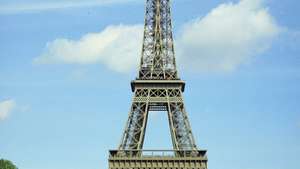
Paris, the capital of France, is located in the north-central portion of the country. It constitutes one of the départements of the Île-de-France administrative region and is France’s most important centre of commerce and culture. The city is home to the Eiffel Tower, one of the world’s premier tourist attractions, which opened to the public on May 15, 1889. Paris, city and capital of France, situated in the north-central part of the country. People were living on the site of the present-day city, located along the Seine River some 233 miles (375 km) upstream from the river’s mouth on the English Channel (La Manche), by about 7600 BCE. The modern city has spread from the island (the Île de la Cité) and far beyond both banks of the Seine. Paris occupies a central position in the rich agricultural region known as the Paris Basin, and it constitutes one of eight départements of the Île-de-France administrative region. It is by far the country’s most important centre of commerce and culture. Area city, 41 square miles (105 square km); metropolitan area, 890 square miles (2,300 square km). Pop. (2012) city, 2,265,886; (2015 est.) urban agglomeration, 10,858,000.
Character of the city For centuries Paris has been one of the world’s most important and attractive cities. It is appreciated for the opportunities it offers for business and commerce, for study, for culture, and for entertainment; its gastronomy, haute couture, painting, literature, and intellectual community especially enjoy an enviable reputation. Its sobriquet “the City of Light” (“la Ville Lumière”), earned during the Enlightenment, remains appropriate, for Paris has retained its importance as a centre for education and intellectual pursuits. Paris’s site at a crossroads of both water and land routes significant not only to France but also to Europe has had a continuing influence on its growth. Under Roman administration, in the 1st century BCE, the original site on the Île de la Cité was designated the capital of the Parisii tribe and territory. The Frankish king Clovis I had taken Paris from the Gauls by 494 CE and later made his capital there. Under Hugh Capet (ruled 987–996) and the Capetian dynasty the preeminence of Paris was firmly established, and Paris became the political and cultural hub as modern France took shape. France has long been a highly centralized country, and Paris has come to be identified with a powerful central state, drawing to itself much of the talent and vitality of the provinces.
Climate of Paris In its location on the western side of Europe and in a plain relatively close to the sea, Paris benefits from the balmy influences of the Gulf Stream and has a fairly temperate climate. The weather can be very changeable, however, especially in winter and spring, when the wind can be sharp and cold. The annual average temperature is in the lower 50s F (roughly 12 °C); the July average is in the upper 60s F (about 19 °C), and the January average is in the upper 30s F (about 3 °C). The temperature drops below freezing for about a month each year, and snow falls on approximately half of those days. The city has taken measures to decrease air pollution, and a system of water purification has made tap water safe for drinking. City layout Over the centuries, as Paris expanded outward from the Île de la Cité, various walls were built to enclose parts of the city. After the Roman town on the Left Bank was sacked by barbarians in the 3rd century CE, the fire-blackened stones were freighted across to the Île de la Cité, where a defensive wall was constructed. Neglected in times of peace, it was rebuilt several times over the course of the centuries. The earliest of the bridges to the Left Bank, the Petit Pont (Little Bridge), which has been rebuilt several times, was guarded by a fortified gate, the Petit Châtelet (châtelet meaning a small castle or fortress). The bridge to the Right Bank, the Pont au Change (Exchange Bridge), was guarded by the Grand Châtelet, which served as a fort, prison, torture chamber, and morgue until it was demolished in 1801.
Around the Eiffel Tower Back within the city limits, south of Place Charles de Gaulle, is the Chaillot Palace (Palais de Chaillot). Standing on a rise on the Right Bank of the Seine, where the river begins its southwestward curve, the palace is an impressive spot from which to view what is arguably the most recognized symbol of Paris, the Eiffel Tower. The palace, which dates from the International Exposition of 1937, replaced the Trocadéro Palace, a structure left over from the 1878 International Exposition. It is made up of two separate pavilions, from each of which extends a curved wing. Several museums, including the Museum of Mankind, the Naval Museum, the Museum of French Monuments, and the Cinema Museum, are located there. Under the terrace that separates the two sections are the National Theatre of Chaillot and a small hall that serves as a motion-picture house of the national film library. The terrace, which is lined by statues, gives a splendid view across Paris. The slope descending to the river has been made into a terraced park, the centre of which is alive with fountains, cascades, and pools. The Trocadéro Aquarium (Cinéaqua) is a few steps away in the park. From the bottom of the slope the five-arched Jena Bridge (Pont d’Iéna) leads across the river. It was built for Napoleon I in 1813 to commemorate his victory at the Battle of Jena in 1806. On the Left Bank rises the Eiffel Tower itself, an unclad metal truss tower designed by Gustave Eiffel. The tower was built for the International Exposition of 1889, against the strident opposition of national figures who thought it unsafe or ugly or both. When the exposition concession expired in 1909, the 984-foot (300-metre) tower was to have been demolished, but its value as an antenna for radio transmission saved it. Additions made for television transmission added about 79 feet (24 metres) to the height. From the topmost of the three platforms, the view extends for more than 40 miles (64 km). From the 2-acre (0.8-hectare) base of the tower, the Champ-de-Mars (Field of Mars), an immense field, stretches to the Military Academy (École Militaire), which was built from 1769 to 1772 and later became the site of the War College (École Supérieure de Guerre). The Champ-de-Mars, which originally served as the school’s parade ground, was the scene of two vast rallies during the French Revolution: the Festival of the Federation (1790) and the Festival of the Supreme Being (1794). From 1798 there were annual national expositions of crafts and manufactures, which were followed by world’s fairs between 1855 and 1900. Behind the Military Academy stands the headquarters of UNESCO (United Nations Educational, Scientific and Cultural Organization). The building, erected in 1958, was designed by an international trio of architects and decorated by artists of member nations.
Beauty is an essential part of our lives even though we don’t always realise it. Beautiful in looks and quality is that special thing that make us wonder and fall in love with people and things. Sometimes people are beautiful not in looks, not in what they say, just in what they are. Everything has a beauty but not everyone sees it.
What if we have a jasmine, beside a beautiful rose, will you still look for the beauty, when the the smell of the jasmine blows?
What we hear a cuckoo singing, beside a beautiful peacock, will you still look for the beauty, when the voice of the cuckoo evoke?
Acid Attacks in India is a gruesome act which almost finishes the lives of survivors. But the IPC in the year 2013 got amended. And now we have strict laws against acid attackers.
An acid attack is a very dangerous incident. This does not only happens in India but also happens in foreign countries. According to a survey most of the acid attacks have been reported in UK and Bangladesh. An Acid attack causes a serious threat to the body parts resulting in the deformation of the face, limbs & legs and it’s been observed that most acid attacks are targeted at the face of victims. Acid attack is a heinous crime. It makes the life of the survivor miserable. There are many motives for acid attacks. In India, the cause of such gravity offence happens due to love issues, rejections, sexual abuse, dowry, extra-marital reason, cruelty, ego and the list of reasons go on. This form of crime happens as a form of Revenge against women. Acid Attack is a gruesome act which is horrible in nature and has lethal consequences on the lives of victims. This kind of incident makes the life of the acid attack survivors tough and way more miserable. The victims go through a lot of pain mentally and physically. Often it’s seen, the victims don’t get social acceptance post the crime. This leads to psychological disorders in them. It creates a negative impact on the lives of women. The after-effect of an acid attack depends upon the concentration of acid thrown. Body part gets decomposed like the skull, lip, skin, face, lose of eyesight, cause of deafness, hairs & teeth are destroyed and the skin also shrinks. Sometimes the victims don’t even survive. It especially happens to women who are the victims. They often isolate themselves after such incidents. The crime against them creates post-traumatic effects. There has been an increasing rate of acid attack incidents all over the world. The Government is opening rehabilitation centres to such victims to overcome the horrible assault against them. Many NGOs have stepped forward against this social issue by creating awareness among people. In my point of view, there should be strict regulations regarding the sale and purchase of acids in shops. The acids which are used in acid attacks are very easily available and also its cheap. The easy access to such acids should be strictly regulated. Acid attack is seen as a very common issue in India. But deforming someone’s face or neck or the entire body is an attempt to kill. The lawmakers should make special laws for acid attack cases and the victims or else they should amend the IPC. In IPC section Section 326 deals with the acid attackers. But its scope is really narrow and it is not comprehensive in nature. Section 326 of the IPC does not exactly chalks out the facts but it’s also very shady. The punishment to the criminals is also not defined in this section neither the penalties and fines. But depending upon the seriousness of the offence I feel the acid laws in India should be treated seriously. Till now there was no specific law relating to acid attacks in India. But After the famous landmark case of LAXMI VS. UNION OF INDIA 2013, the acid laws are strictly taken into consideration and IPC got amended. Under Section 326A and 326B of IPC it was held that acid attack is a crime in India! The Code of Criminal Procedure Under Sec 357A and 357B got amended too!
Being an acid attacker victim is not easy! Starting a life from the beginning is not easy! Often it’s seen the victims do not get social recognition after such incidents. This is a big NO!! to such unhealthy hospitality. We should support and love the survivors for their courage!
The entire universe is conspiring to give you everything you want!
Abraham Hicks
The new fast-moving world indeed changes with every passing second, but along with its fast pace, the craze to access and achieve everything within a blink of an eye has found its place in the new modern world. With the growing network of TikTok’s and YouTube videos, the idea of manifesting your goals has taken over the lives of people around the globe. ‘Manifesting’ out of its traditional Cambridge dictionary explanation of to show something clearly, through signs or actions has now gained this broad meaning of practising inspirational thoughts to make them real. As the pandemic trapped us in a literal digital bubble, confined to our homes, “achieving things’” had a newfound meaning: to achieve is to manifest. During the year 2020, the google search logs showed a record surge in keyword Manifest. Google searches for the same were more than 669 per cent that year. Manifesting was the new addition to the bandwagon of crystals, essential oils and meditation. While compared to its contemporaries, manifestation routines have gained widespread popularity due to the zero-cost investment and quick, miraculous effects.
Manifesting in simple terms is making something you want to happen by simply believing it will happen. What forms the base of manifestations is the law of attraction, which states that we attract what we focus on. There are several manifestation methods that you can find online, the vision board method, gratitude journal, two cup method etc. But the basic idea that it depends largely upon is the positive mindset a person has towards achieving a goal and a feeling of gratitude for all that he has already. One of the treading manifestation methods that were made famous by tiktokers was the 3,6,9 Method.
The 369 manifestation method is said to be inspired by Nikolas Tesla’s numerology obsession. He believed that the numbers 3, 6 and 9 had a unique connection to the universe. Numerology experts believe the numbers three, six and nine stands for positive energy nurturing and fulfilment. It is a method of manifesting your goals by writing them down in a journal or a paper three times in the morning, six times in the evening and nine times before you sleep. To manifest a goal using this method, you’ll have to pen down your intention throughout the day. You start by writing your affirmation (the vision you want to manifest) three times in the morning in your journal/paper. During this time, visualise what you would feel, what would you do once you achieve what you are manifesting. In the afternoon, write your affirmation six times and express gratitude for whatever you already have. At night, before you wind up for the day, write your affirmation nine times and visualise the whole scenario and imagine what you might feel when you achieve your goal.
This technique helps you visualise your goal and bring about a positive change in how you look at your desires. The major takeaways from manifestation techniques are the importance of expressing gratitude and a positive outlook. So trust the process and believe in it until it manifests for you, for you become what you attract!
The field of development economics is concerned with the causes of underdevelopment and with policies that may accelerate the rate of growth of per capita income. While these two concerns are related to each other, it is possible to devise policies that are likely to accelerate growth (through, for example, an analysis of the experiences of other developing countries) without fully understanding the causes of underdevelopment. Studies of both the causes of underdevelopment and of policies and actions that may accelerate development are undertaken for a variety of reasons. There are those who are concerned with the developing countries on humanitarian grounds; that is, with the problem of helping the people of these countries to attain certain minimum material standards of living in terms of such factors as food, clothing, shelter, and nutrition. For them, low per capita income is the measure of the problem of poverty in a material sense. The aim of economic development is to improve the material standards of living by raising the absolute level of per capita incomes. Raising per capita incomes is also a stated objective of policy of the governments of all developing countries. For policymakers and economists attempting to achieve their governments’ objectives, therefore, an understanding of economic development, especially in its policy dimensions, is important. Finally, there are those who are concerned with economic development either because they believe it is what people in developing countries want or because they believe that political stability can be assured only with satisfactory rates of economic growth. These motives are not mutually exclusive. Since World War II many industrial countries have extended foreign aid to developing countries for a combination of humanitarian and political reasons. Those who are concerned with political stability tend to see the low per capita incomes of the developing countries in relative terms; that is, in relation to the high per capita incomes of the developed countries. For them, even if a developing country is able to improve its material standards of living through a rise in the level of its per capita income, it may still be faced with the more intractable subjective problem of the discontent created by the widening gap in the relative levels between itself and the richer countries. (This effect arises simply from the operation of the arithmetic of growth on the large initial gap between the income levels of the developed and the underdeveloped countries. As an example, an underdeveloped country with a per capita income of $100 and a developed country with a per capita income of $1,000 may be considered. The initial gap in their incomes is $900. Let the incomes in both countries grow at 5 percent. After one year, the income of the underdeveloped country is $105, and the income of the developed country is $1,050. The gap has widened to $945. The income of the underdeveloped country would have to grow by 50 percent to maintain the same absolute gap of $900.) Although there was once in development economics a debate as to whether raising living standards or reducing the relative gap in living standards was the true desideratum of policy, experience during the 1960–80 period convinced most observers that developing countries could, with appropriate policies, achieve sufficiently high rates of growth both to raise their living standards fairly rapidly and to begin closing the gap. The impact of discontent Although concern over the question of a subjective sense of discontent among the underdeveloped and developing countries has waxed and waned, it has never wholly disappeared. The underdeveloped countries’ sense of dissatisfaction and grievance arises not only from measurable differences in national incomes but also from the less easily measurable factors, such as their reaction against the colonial past and their complex drives to raise their national prestige and achieve equality in the broadest sense with the developed countries. Thus, it is not uncommon to find their governments using a considerable proportion of their resources in prestige projects, ranging from steel mills, hydroelectric dams, universities, and defense expenditure to international athletics. These symbols of modernization may contribute a nationally shared satisfaction and pride but may or may not contribute to an increase in the measurable national income. Second, it is possible to argue that in many cases the internal gap in incomes within individual underdeveloped countries may be a more potent source of the subjective level of discontent than the international gap in income. Faster economic growth may help to reduce the internal economic disparities in a less painful way, but it must be remembered that faster economic growth also tends to introduce greater disruption and the need for making bigger readjustments in previous ways of life and may thus increase the subjective sense of frustration and discontent. Finally, it is difficult to establish that the subjective problem of discontent will bear a simple and direct relationship to the size of the international gap in incomes. Some of the apparently most discontented countries are to be found in Latin America, where the per capita incomes are generally higher than in Asia and Africa. A skeptic can turn the whole approach to a reductio ad absurdum by pointing out that even the developed countries with their high and rising levels of per capita income have not been able to solve the subjective problem of discontent and frustration among various sections of their population. Two conclusions may be drawn from the above points. First, the subjective problem of discontent in the underdeveloped countries is a genuine and important problem in international relations. But economic policy acting on measurable economic magnitudes can play only a small part in the solution of what essentially is a problem in international politics. Second, for the narrower purpose of economic policy there is no choice but to fall back on the interpretation of the low per capita incomes of the underdeveloped countries as an index of their poverty in a material sense. This can be defended by explicitly adopting the humanitarian value judgment that the underdeveloped countries ought to give priority to improving the material standards of living of the mass of their people. But, even if this value judgment is not accepted, the conventional measure of economic development in terms of a rise in per capita income still retains its usefulness. The governments of the underdeveloped countries may wish to pursue other, nonmaterial goals, but they could make clearer decisions if they knew the economic cost of their decisions. The most significant measure of this economic cost can be expressed in terms of the foregone opportunity to raise the level of per capita income. Shortage of savings: Given the broad relationship between capital accumulation and economic growth established in growth theory, it was plausible for growth theorists and development economists to argue that the developing countries were held back mainly by a shortage in the supply of capital. These countries were then saving only 5–7 percent of their total product, and it was manifest (and it remains true) that satisfactory growth cannot be supported by so low a level of investment. It was therefore thought that raising the savings ratio to 10–12 percent was the central problem for developing countries. Early development policy therefore focused on raising resources for investment. Steps toward this end were highly successful in most developing countries, and savings ratios rose to the 15–25 percent range. However, growth rates failed even to approximate the savings rates, and theorists were forced to search for other explanations of differences in growth rates.
The central problem of countries with low per capita output is that they have not as yet succeeded in making use of their potential economic opportunities. To do so, they must achieve an efficient allocation of the available resources and provide incentives for resource accumulation. But efficient allocation of resources is not merely a matter of the formal optimum conditions of economic theory. It requires the building up of an effective institutional and organizational framework to carry out the allocation of resources. In the private sector this requires the development of a well-articulated market system that embraces the markets for final products and the markets for factors of production. In the public sector the development of the organizational framework requires improvements in the administrative machinery of the government, especially in its fiscal machinery. In the setting of the developing countries, one is concerned not only with the once for all problem of efficient allocation of resources but also with improving the capacity of these countries to make a more effective use of their resources over a period of time. That is to say, one is concerned not only with the static problem of the efficient allocation of given resources with the given organizational framework but also with dynamic problems of improving the capability of this framework. From this point of view, there is no conflict, as some have maintained, between the static, or the short-run, considerations and the dynamic, or long-run, considerations. The two sets of requirements move in the same direction.


























 Eduindex
You must be logged in to post a comment.