

The Tsunami We Don\’t Always See

Our hearts go out to the sufferings of people in Japan. The pictures of the tsunami rushing in and engulfing everything in sight, wreaking havoc – will stay with us. Our sympathies and support should – and will – be available to help our fellow human beings in whatever way we can.
Our horror – and the desire to do something – would obviously be even more if we saw something similar happening all around us. And in a way something similar is happening all around us, only it is not as dramatic as a physical tsunami, making it a little difficult to be noticed by most people. It is what I would call the tsunami of poor quality of education that is hitting a million schools and tens of millions of children, its impact likely to be visible over the years rather than right now, instantly, in front of our eyes.
The Tsunami Around Us
No this is not alarmist, but an effort to put across a real picture and the urgency with which it needs to be recognized and acted upon. Every day, in hundreds of thousands of locations across the country, children make their way to the school. Around a quarter of them may find their teacher not there. This number alone is staggering, ranging as it would between one and two million teachers. MILLION! And if each teacher has 30 children in his class, you can estimate the number but not really conceive how enormous it is. And it is huge not just in terms of numbers, but for each child who loses a day of learning, and does so for many days every month, it is incalculable.
Had the facilities or the teachers not been available we could have cried over our fate in terms of being an underdeveloped country. But having the infrastructure (over 98% children have a school within a kilometre, and most buildings are not bad) and teachers actually in place (though the number of vacancies is still very large) – it is horrifying to watch or at least it should be, for there doesn\’t seem to be a sense of horror, or as much of it as would shake the country into action.
However the story doesn\’t end there. It is when \’teaching\’ takes place that the impact on children is often at its greatest. Decades ago, the Yashpal Committee\’s report on The Burden of the School Bag had detailed the \’burden of incomprehension\’ a majority of children bear. And it is difficult to see if things have changed dramatically, despite changed curricula, textbooks, the use of TLM, evolving assessment patterns, new training programmes… The number of children attending school – and their diversity – too has grown in leaps and bounds, while the approach to handling their needs has remained fairly static. Hence, survey after survey shows that – despite a degree of improvement – we continue to be far from the levels of learning desired (and possible).
But it is when it comes to the process that the greatest deadening effect takes place. Rote memorization, \’explanation\’ ina language not necessarily understood by children, a disregard for the needs of children who are too poor to be able to attend regularly, (an often active) discrimination in the classroom, are the lot of a majority of our children. If you doubt this, all you have to do is visit any 10 government schools in different locations, especially those away from \’headquarters\’.
This is not to say that all government schools are bad and that the \’bad\’ is restricted to government schools. It is to point out that even if only a third of schools are like the ones described above (and the number is surely more than that), it adds up to literally hundreds of thousands of schools and tens of millions of children – a slow tsunami of poor quality education that is surely wreaking havoc on the potential of our children, our country.
Dealing With It
So after all this panic, what do we do?
As in any disaster, stay calm! First recognize that there is a problem and accept that something must be done about it.
Second, realize that you are the right person to do something about it. Anyone is, everyone is. Every small action counts. Even if you smile at a child, say an encouraging word to a teacher, raise this issue with friends, relatives and colleagues, you are doing something.
Third, if you are willing to be more proactive or are already active, please do look at the urgency of the situation. Children cannot wait for us to learn or get our act together slowly. We need to quickly:
  • Establish the minimum conditions that must obtain. These are well laid out in the RTE (Right to Education) and its rules. Raise this issue wherever you can, and directly with the school or education authorities.
  • Encourage and support the community and the school management committees (SMCs) drawn from among the community to become more active. You can help in setting them up, in record keeping, in setting the agenda, in follow up, in helping ensure that teachers take them seriously and that they in turn don\’t take an adversarial position vis-à-vis teachers. You can use your position to ensure that the educational agenda is not hijacked by the money-making or power-gaining agenda.

If you are a Head Teacher, supervisor, CRC-BRC / district level teacher educator or officer:
  • Model the kind of behaviour you want from teachers
  • Share practical steps they can take in their classes, especially in terms of activity-based teaching (see the many entries in this blog for support)
  • Encourage teachers to be innovative, support them. If they ask questions, don\’t be dismissive (pass on the questions here if you can answer them!)

If you are a planner / policy-maker / decision- maker, please start by not dismissing what you have just read here. It is real, and it is happening – and it\’s on a gargantuan scale. On any given day, the number of children who are in school and not learning is more than the population of many countries – and it is a shame. What kind of performance standards can you set in place? What kind of outcomes can you insist on? How can you prepare the institutions and the system to deliver this, monitor them effectively and enable an ongoing improvement? Once again, the many entries in this blog would be helpful – and you could always share issues you would like others to provide suggestions / inputs on.
As surely as Japan will recover from the huge earthquake and the devastating tsunami, we can deal with this too. But first we have to see it as an emergency and address it. With all our might.
The Tsunami We Don\’t Always See

Our hearts go out to the sufferings of people in Japan. The pictures of the tsunami rushing in and engulfing everything in sight, wreaking havoc – will stay with us. Our sympathies and support should – and will – be available to help our fellow human beings in whatever way we can.
Our horror – and the desire to do something – would obviously be even more if we saw something similar happening all around us. And in a way something similar is happening all around us, only it is not as dramatic as a physical tsunami, making it a little difficult to be noticed by most people. It is what I would call the tsunami of poor quality of education that is hitting a million schools and tens of millions of children, its impact likely to be visible over the years rather than right now, instantly, in front of our eyes.
The Tsunami Around Us
No this is not alarmist, but an effort to put across a real picture and the urgency with which it needs to be recognized and acted upon. Every day, in hundreds of thousands of locations across the country, children make their way to the school. Around a quarter of them may find their teacher not there. This number alone is staggering, ranging as it would between one and two million teachers. MILLION! And if each teacher has 30 children in his class, you can estimate the number but not really conceive how enormous it is. And it is huge not just in terms of numbers, but for each child who loses a day of learning, and does so for many days every month, it is incalculable.
Had the facilities or the teachers not been available we could have cried over our fate in terms of being an underdeveloped country. But having the infrastructure (over 98% children have a school within a kilometre, and most buildings are not bad) and teachers actually in place (though the number of vacancies is still very large) – it is horrifying to watch or at least it should be, for there doesn\’t seem to be a sense of horror, or as much of it as would shake the country into action.
However the story doesn\’t end there. It is when \’teaching\’ takes place that the impact on children is often at its greatest. Decades ago, the Yashpal Committee\’s report on The Burden of the School Bag had detailed the \’burden of incomprehension\’ a majority of children bear. And it is difficult to see if things have changed dramatically, despite changed curricula, textbooks, the use of TLM, evolving assessment patterns, new training programmes… The number of children attending school – and their diversity – too has grown in leaps and bounds, while the approach to handling their needs has remained fairly static. Hence, survey after survey shows that – despite a degree of improvement – we continue to be far from the levels of learning desired (and possible).
But it is when it comes to the process that the greatest deadening effect takes place. Rote memorization, \’explanation\’ ina language not necessarily understood by children, a disregard for the needs of children who are too poor to be able to attend regularly, (an often active) discrimination in the classroom, are the lot of a majority of our children. If you doubt this, all you have to do is visit any 10 government schools in different locations, especially those away from \’headquarters\’.
This is not to say that all government schools are bad and that the \’bad\’ is restricted to government schools. It is to point out that even if only a third of schools are like the ones described above (and the number is surely more than that), it adds up to literally hundreds of thousands of schools and tens of millions of children – a slow tsunami of poor quality education that is surely wreaking havoc on the potential of our children, our country.
Dealing With It
So after all this panic, what do we do?
As in any disaster, stay calm! First recognize that there is a problem and accept that something must be done about it.
Second, realize that you are the right person to do something about it. Anyone is, everyone is. Every small action counts. Even if you smile at a child, say an encouraging word to a teacher, raise this issue with friends, relatives and colleagues, you are doing something.
Third, if you are willing to be more proactive or are already active, please do look at the urgency of the situation. Children cannot wait for us to learn or get our act together slowly. We need to quickly:
  • Establish the minimum conditions that must obtain. These are well laid out in the RTE (Right to Education) and its rules. Raise this issue wherever you can, and directly with the school or education authorities.
  • Encourage and support the community and the school management committees (SMCs) drawn from among the community to become more active. You can help in setting them up, in record keeping, in setting the agenda, in follow up, in helping ensure that teachers take them seriously and that they in turn don\’t take an adversarial position vis-à-vis teachers. You can use your position to ensure that the educational agenda is not hijacked by the money-making or power-gaining agenda.

If you are a Head Teacher, supervisor, CRC-BRC / district level teacher educator or officer:
  • Model the kind of behaviour you want from teachers
  • Share practical steps they can take in their classes, especially in terms of activity-based teaching (see the many entries in this blog for support)
  • Encourage teachers to be innovative, support them. If they ask questions, don\’t be dismissive (pass on the questions here if you can answer them!)

If you are a planner / policy-maker / decision- maker, please start by not dismissing what you have just read here. It is real, and it is happening – and it\’s on a gargantuan scale. On any given day, the number of children who are in school and not learning is more than the population of many countries – and it is a shame. What kind of performance standards can you set in place? What kind of outcomes can you insist on? How can you prepare the institutions and the system to deliver this, monitor them effectively and enable an ongoing improvement? Once again, the many entries in this blog would be helpful – and you could always share issues you would like others to provide suggestions / inputs on.
As surely as Japan will recover from the huge earthquake and the devastating tsunami, we can deal with this too. But first we have to see it as an emergency and address it. With all our might.

The Tsunami We Don\’t Always See

Our hearts go out to the sufferings of people in Japan. The pictures of the tsunami rushing in and engulfing everything in sight, wreaking havoc – will stay with us. Our sympathies and support should – and will – be available to help our fellow human beings in whatever way we can.
Our horror – and the desire to do something – would obviously be even more if we saw something similar happening all around us. And in a way something similar is happening all around us, only it is not as dramatic as a physical tsunami, making it a little difficult to be noticed by most people. It is what I would call the tsunami of poor quality of education that is hitting a million schools and tens of millions of children, its impact likely to be visible over the years rather than right now, instantly, in front of our eyes.
The Tsunami Around Us
No this is not alarmist, but an effort to put across a real picture and the urgency with which it needs to be recognized and acted upon. Every day, in hundreds of thousands of locations across the country, children make their way to the school. Around a quarter of them may find their teacher not there. This number alone is staggering, ranging as it would between one and two million teachers. MILLION! And if each teacher has 30 children in his class, you can estimate the number but not really conceive how enormous it is. And it is huge not just in terms of numbers, but for each child who loses a day of learning, and does so for many days every month, it is incalculable.
Had the facilities or the teachers not been available we could have cried over our fate in terms of being an underdeveloped country. But having the infrastructure (over 98% children have a school within a kilometre, and most buildings are not bad) and teachers actually in place (though the number of vacancies is still very large) – it is horrifying to watch or at least it should be, for there doesn\’t seem to be a sense of horror, or as much of it as would shake the country into action.
However the story doesn\’t end there. It is when \’teaching\’ takes place that the impact on children is often at its greatest. Decades ago, the Yashpal Committee\’s report on The Burden of the School Bag had detailed the \’burden of incomprehension\’ a majority of children bear. And it is difficult to see if things have changed dramatically, despite changed curricula, textbooks, the use of TLM, evolving assessment patterns, new training programmes… The number of children attending school – and their diversity – too has grown in leaps and bounds, while the approach to handling their needs has remained fairly static. Hence, survey after survey shows that – despite a degree of improvement – we continue to be far from the levels of learning desired (and possible).
But it is when it comes to the process that the greatest deadening effect takes place. Rote memorization, \’explanation\’ ina language not necessarily understood by children, a disregard for the needs of children who are too poor to be able to attend regularly, (an often active) discrimination in the classroom, are the lot of a majority of our children. If you doubt this, all you have to do is visit any 10 government schools in different locations, especially those away from \’headquarters\’.
This is not to say that all government schools are bad and that the \’bad\’ is restricted to government schools. It is to point out that even if only a third of schools are like the ones described above (and the number is surely more than that), it adds up to literally hundreds of thousands of schools and tens of millions of children – a slow tsunami of poor quality education that is surely wreaking havoc on the potential of our children, our country.
Dealing With It
So after all this panic, what do we do?
As in any disaster, stay calm! First recognize that there is a problem and accept that something must be done about it.
Second, realize that you are the right person to do something about it. Anyone is, everyone is. Every small action counts. Even if you smile at a child, say an encouraging word to a teacher, raise this issue with friends, relatives and colleagues, you are doing something.
Third, if you are willing to be more proactive or are already active, please do look at the urgency of the situation. Children cannot wait for us to learn or get our act together slowly. We need to quickly:
  • Establish the minimum conditions that must obtain. These are well laid out in the RTE (Right to Education) and its rules. Raise this issue wherever you can, and directly with the school or education authorities.
  • Encourage and support the community and the school management committees (SMCs) drawn from among the community to become more active. You can help in setting them up, in record keeping, in setting the agenda, in follow up, in helping ensure that teachers take them seriously and that they in turn don\’t take an adversarial position vis-à-vis teachers. You can use your position to ensure that the educational agenda is not hijacked by the money-making or power-gaining agenda.

If you are a Head Teacher, supervisor, CRC-BRC / district level teacher educator or officer:
  • Model the kind of behaviour you want from teachers
  • Share practical steps they can take in their classes, especially in terms of activity-based teaching (see the many entries in this blog for support)
  • Encourage teachers to be innovative, support them. If they ask questions, don\’t be dismissive (pass on the questions here if you can answer them!)

If you are a planner / policy-maker / decision- maker, please start by not dismissing what you have just read here. It is real, and it is happening – and it\’s on a gargantuan scale. On any given day, the number of children who are in school and not learning is more than the population of many countries – and it is a shame. What kind of performance standards can you set in place? What kind of outcomes can you insist on? How can you prepare the institutions and the system to deliver this, monitor them effectively and enable an ongoing improvement? Once again, the many entries in this blog would be helpful – and you could always share issues you would like others to provide suggestions / inputs on.
As surely as Japan will recover from the huge earthquake and the devastating tsunami, we can deal with this too. But first we have to see it as an emergency and address it. With all our might.

What Do We Actually \’Celebrate\’ In Our Schools?

\’So, you\’re \’celebrating\’ again.\’
\’Yes, it\’s Independence Day tomorrow.\’
\’Oh, so another round of ritualistic speeches?\’
\’What do you mean, ritualistic speeches?\’
\’You know what I mean. The same old \’important\’ people will be called. They will be welcomed, garlanded and they will walk around, feeling even more self-important.\’
\’You\’re being very unkind, you know.\’
\’But close to the truth, isn\’t it?\’
\’I\’m not sure if this is really ritualistic…\’
\’No, it is what follows afterwards…. The same formal atmosphere will be created. Children will sit in neat rows and told not to talk too much. The LIP (or your Local Important Person) will be praised, invited to give us the benefit of his wisdom, children will be asked to shush, and then the LIP will give the same speech as every year – you are the future of the country… freedom is very important.. our great leaders were so very great… you must work hard… you must try to like the great people of the past… And all this while instead of experiencing freedom on Independence Day of India, children will be sitting bored, stiff, not allowed tomove around or talk or express themselves….\’
\’You\’re being really harsh!\’\’
\’OK, tell me, didn\’t you hear the same speeches when you were a child?\’
\’Ye-es.\’
\’Did you really enjoy those celebrations? Were they a celebration for you?\’
\’Actually, to be honest, no, not really.\’
\’Aren\’t you surprised that the same speeches are being made even now?\’
\’Yeah, now that you mention it…\’
\’And shouldn\’t children be more like the leaders of tomorrow rather than the leaders of long past. After all, every kid is not going to experience walking 17 kilometres to school!\’
\’Hmm… something to think about, there. And come to think of it, why was every great man\’s school 17 kilometres away?\’
\’See, it\’s getting you too!  And when it comes to – no, no, better not to say that.\’
\’Well you can tell me… I\’m not going to shout at you!\’
\’I know you won\’t. But I don\’t want you to feel depressed either.\’
\’Come on, I can handle it. Tell me what you were going to say.\’

\’Well, if you insist. The thing is, children attend all these functions year after year, experience the same thing over and over again. And what do they learn? They learn that they don\’t matter. Their job is to listen. Their role is to be passive, not think for themselves. And look at you – you were a child who once found these functions boring but you are organizing exactly the same kind of function again! Independence Day isn\’t quite an experience in Independence, isn\’t it? My thesis is that these National Day type of \’celebrations\’ only teach us to be slaves, to accept that we have no freedom to be different or better, to allow ourselves to be defined by the limited vision of those limited adults who were similarly made limited by the experience they went through as children themselves…. Hey, you\’re suddenly very silent now. This is not look good… come on, say something.\’
\’What do I say? I\’m feeling so…\’
\’So… what?\’
\’So depressed!\’
————————————————-
What do you think about the other \’celebrations\’ we have in our schools? Is the birthday of a child celebrated \’more\’ or differently or better than that of other children whose families are considered to be less important or not influential?
What are the festivals celebrated in schools? Whose festivals are left out? Many communities / religious groups never see their festivals even discussed in school? What do they feel about it? And what do they \’learn\’ from this?
On Sports Day, do most children have the scope to participate and gain something? Or is only the \’victory\’ of a  few celebrated again and again? And what do the rest learn from this?
And on Results Day, whose achievements stand out? And what does everyone learn from this? (Maybe CCE will make a difference here?)
Perhaps all these celebrations, in the end, make us realise that their isn\’t much about us that is worth celebrating. When I was younger I would have said that this happens even though the intention is quite different. But now, a little more battered and older, I think the intention was always this – to make you realise that only a few can be \’important\’ persons worth celebrating, not you.
————————————————-
So what should we celebrate in our schools?
For starters, children and learning. Simply the presence of every child is worth celebrating (rather than \’Oh God, another one!\’). And how to celebrate? By smiling, by welcoming, by genuinely talking with the child, giving space to her questions, by looking for ways to ensure she is comfortable, involved and engaged in an actual learning.
Children will ask unexpected questions, offer different points of view, find innovative ways of doing things, or help each other… celebrate this. Point out what they have done which is so good, and why it is so.
There will be times when those who usually \’fall behind\’ will make an effort, come up with something of their own (of course, only if you ensure they have the opportunity to do so). Celebrate their efforts, point out their good parts, and indicate what else they can do that will earn them similar \’celebration\’.
If you find a fellow teacher, a staff member, a parent, an SMC member who is doing something successfully and contributing to children and the school, that\’s worth celebrating.
And on Independence Day? Start a few days before. Discuss with children what Independence Day means to us. Ask them how they think it should be celebrated. Come up with ideas that puts the children in the front, not adults or LIPs. Maybe they make drawings and posters related to freedom. Maybe they hold a debate on what freedom means and whether we really are a free people. Maybe they decide not to do a \’function\’ in the  school at all and instead spend time with children who are unable to be in school because they are not really free…And maybe they will learn something very different from such \’celebrations\’ than we did.

What Do We Actually \’Celebrate\’ In Our Schools?

\’So, you\’re \’celebrating\’ again.\’
\’Yes, it\’s Independence Day tomorrow.\’
\’Oh, so another round of ritualistic speeches?\’
\’What do you mean, ritualistic speeches?\’
\’You know what I mean. The same old \’important\’ people will be called. They will be welcomed, garlanded and they will walk around, feeling even more self-important.\’
\’You\’re being very unkind, you know.\’
\’But close to the truth, isn\’t it?\’
\’I\’m not sure if this is really ritualistic…\’
\’No, it is what follows afterwards…. The same formal atmosphere will be created. Children will sit in neat rows and told not to talk too much. The LIP (or your Local Important Person) will be praised, invited to give us the benefit of his wisdom, children will be asked to shush, and then the LIP will give the same speech as every year – you are the future of the country… freedom is very important.. our great leaders were so very great… you must work hard… you must try to like the great people of the past… And all this while instead of experiencing freedom on Independence Day of India, children will be sitting bored, stiff, not allowed tomove around or talk or express themselves….\’
\’You\’re being really harsh!\’\’
\’OK, tell me, didn\’t you hear the same speeches when you were a child?\’
\’Ye-es.\’
\’Did you really enjoy those celebrations? Were they a celebration for you?\’
\’Actually, to be honest, no, not really.\’
\’Aren\’t you surprised that the same speeches are being made even now?\’
\’Yeah, now that you mention it…\’
\’And shouldn\’t children be more like the leaders of tomorrow rather than the leaders of long past. After all, every kid is not going to experience walking 17 kilometres to school!\’
\’Hmm… something to think about, there. And come to think of it, why was every great man\’s school 17 kilometres away?\’
\’See, it\’s getting you too!  And when it comes to – no, no, better not to say that.\’
\’Well you can tell me… I\’m not going to shout at you!\’
\’I know you won\’t. But I don\’t want you to feel depressed either.\’
\’Come on, I can handle it. Tell me what you were going to say.\’

\’Well, if you insist. The thing is, children attend all these functions year after year, experience the same thing over and over again. And what do they learn? They learn that they don\’t matter. Their job is to listen. Their role is to be passive, not think for themselves. And look at you – you were a child who once found these functions boring but you are organizing exactly the same kind of function again! Independence Day isn\’t quite an experience in Independence, isn\’t it? My thesis is that these National Day type of \’celebrations\’ only teach us to be slaves, to accept that we have no freedom to be different or better, to allow ourselves to be defined by the limited vision of those limited adults who were similarly made limited by the experience they went through as children themselves…. Hey, you\’re suddenly very silent now. This is not look good… come on, say something.\’
\’What do I say? I\’m feeling so…\’
\’So… what?\’
\’So depressed!\’
————————————————-
What do you think about the other \’celebrations\’ we have in our schools? Is the birthday of a child celebrated \’more\’ or differently or better than that of other children whose families are considered to be less important or not influential?
What are the festivals celebrated in schools? Whose festivals are left out? Many communities / religious groups never see their festivals even discussed in school? What do they feel about it? And what do they \’learn\’ from this?
On Sports Day, do most children have the scope to participate and gain something? Or is only the \’victory\’ of a  few celebrated again and again? And what do the rest learn from this?
And on Results Day, whose achievements stand out? And what does everyone learn from this? (Maybe CCE will make a difference here?)
Perhaps all these celebrations, in the end, make us realise that their isn\’t much about us that is worth celebrating. When I was younger I would have said that this happens even though the intention is quite different. But now, a little more battered and older, I think the intention was always this – to make you realise that only a few can be \’important\’ persons worth celebrating, not you.
————————————————-
So what should we celebrate in our schools?
For starters, children and learning. Simply the presence of every child is worth celebrating (rather than \’Oh God, another one!\’). And how to celebrate? By smiling, by welcoming, by genuinely talking with the child, giving space to her questions, by looking for ways to ensure she is comfortable, involved and engaged in an actual learning.
Children will ask unexpected questions, offer different points of view, find innovative ways of doing things, or help each other… celebrate this. Point out what they have done which is so good, and why it is so.
There will be times when those who usually \’fall behind\’ will make an effort, come up with something of their own (of course, only if you ensure they have the opportunity to do so). Celebrate their efforts, point out their good parts, and indicate what else they can do that will earn them similar \’celebration\’.
If you find a fellow teacher, a staff member, a parent, an SMC member who is doing something successfully and contributing to children and the school, that\’s worth celebrating.
And on Independence Day? Start a few days before. Discuss with children what Independence Day means to us. Ask them how they think it should be celebrated. Come up with ideas that puts the children in the front, not adults or LIPs. Maybe they make drawings and posters related to freedom. Maybe they hold a debate on what freedom means and whether we really are a free people. Maybe they decide not to do a \’function\’ in the  school at all and instead spend time with children who are unable to be in school because they are not really free…And maybe they will learn something very different from such \’celebrations\’ than we did.

What Do We Actually \’Celebrate\’ In Our Schools?

\’So, you\’re \’celebrating\’ again.\’
\’Yes, it\’s Independence Day tomorrow.\’
\’Oh, so another round of ritualistic speeches?\’
\’What do you mean, ritualistic speeches?\’
\’You know what I mean. The same old \’important\’ people will be called. They will be welcomed, garlanded and they will walk around, feeling even more self-important.\’
\’You\’re being very unkind, you know.\’
\’But close to the truth, isn\’t it?\’
\’I\’m not sure if this is really ritualistic…\’
\’No, it is what follows afterwards…. The same formal atmosphere will be created. Children will sit in neat rows and told not to talk too much. The LIP (or your Local Important Person) will be praised, invited to give us the benefit of his wisdom, children will be asked to shush, and then the LIP will give the same speech as every year – you are the future of the country… freedom is very important.. our great leaders were so very great… you must work hard… you must try to like the great people of the past… And all this while instead of experiencing freedom on Independence Day of India, children will be sitting bored, stiff, not allowed tomove around or talk or express themselves….\’
\’You\’re being really harsh!\’\’
\’OK, tell me, didn\’t you hear the same speeches when you were a child?\’
\’Ye-es.\’
\’Did you really enjoy those celebrations? Were they a celebration for you?\’
\’Actually, to be honest, no, not really.\’
\’Aren\’t you surprised that the same speeches are being made even now?\’
\’Yeah, now that you mention it…\’
\’And shouldn\’t children be more like the leaders of tomorrow rather than the leaders of long past. After all, every kid is not going to experience walking 17 kilometres to school!\’
\’Hmm… something to think about, there. And come to think of it, why was every great man\’s school 17 kilometres away?\’
\’See, it\’s getting you too!  And when it comes to – no, no, better not to say that.\’
\’Well you can tell me… I\’m not going to shout at you!\’
\’I know you won\’t. But I don\’t want you to feel depressed either.\’
\’Come on, I can handle it. Tell me what you were going to say.\’

\’Well, if you insist. The thing is, children attend all these functions year after year, experience the same thing over and over again. And what do they learn? They learn that they don\’t matter. Their job is to listen. Their role is to be passive, not think for themselves. And look at you – you were a child who once found these functions boring but you are organizing exactly the same kind of function again! Independence Day isn\’t quite an experience in Independence, isn\’t it? My thesis is that these National Day type of \’celebrations\’ only teach us to be slaves, to accept that we have no freedom to be different or better, to allow ourselves to be defined by the limited vision of those limited adults who were similarly made limited by the experience they went through as children themselves…. Hey, you\’re suddenly very silent now. This is not look good… come on, say something.\’
\’What do I say? I\’m feeling so…\’
\’So… what?\’
\’So depressed!\’
————————————————-
What do you think about the other \’celebrations\’ we have in our schools? Is the birthday of a child celebrated \’more\’ or differently or better than that of other children whose families are considered to be less important or not influential?
What are the festivals celebrated in schools? Whose festivals are left out? Many communities / religious groups never see their festivals even discussed in school? What do they feel about it? And what do they \’learn\’ from this?
On Sports Day, do most children have the scope to participate and gain something? Or is only the \’victory\’ of a  few celebrated again and again? And what do the rest learn from this?
And on Results Day, whose achievements stand out? And what does everyone learn from this? (Maybe CCE will make a difference here?)
Perhaps all these celebrations, in the end, make us realise that their isn\’t much about us that is worth celebrating. When I was younger I would have said that this happens even though the intention is quite different. But now, a little more battered and older, I think the intention was always this – to make you realise that only a few can be \’important\’ persons worth celebrating, not you.
————————————————-
So what should we celebrate in our schools?
For starters, children and learning. Simply the presence of every child is worth celebrating (rather than \’Oh God, another one!\’). And how to celebrate? By smiling, by welcoming, by genuinely talking with the child, giving space to her questions, by looking for ways to ensure she is comfortable, involved and engaged in an actual learning.
Children will ask unexpected questions, offer different points of view, find innovative ways of doing things, or help each other… celebrate this. Point out what they have done which is so good, and why it is so.
There will be times when those who usually \’fall behind\’ will make an effort, come up with something of their own (of course, only if you ensure they have the opportunity to do so). Celebrate their efforts, point out their good parts, and indicate what else they can do that will earn them similar \’celebration\’.
If you find a fellow teacher, a staff member, a parent, an SMC member who is doing something successfully and contributing to children and the school, that\’s worth celebrating.
And on Independence Day? Start a few days before. Discuss with children what Independence Day means to us. Ask them how they think it should be celebrated. Come up with ideas that puts the children in the front, not adults or LIPs. Maybe they make drawings and posters related to freedom. Maybe they hold a debate on what freedom means and whether we really are a free people. Maybe they decide not to do a \’function\’ in the  school at all and instead spend time with children who are unable to be in school because they are not really free…And maybe they will learn something very different from such \’celebrations\’ than we did.

Anna\’s is NOT a movement for change

Let\’s imagine for a moment that corruption vanishes – no one takes bribes any more. Which of the following do you think would now happen as a result?
  • Dalits will not face discrimination anywhere; people will stop believing in caste and elections will be around issues, not social groups. Unborn girls will not be killed, dowry will go, sexual harassment will vanish, the notion of \’minority\’ will not need to be discussed, equality and equity will be established.
  • People will start working harder, with greater commitment, be much more innovative, and therefore the economy will shoot up. Private enterprise will no more be required to shore up government efforts.
  • We will stop exploiting environmental resources in a dangerous manner, all power and energy related problems will be solved, petrol will become cheaper, our sources of water will not be polluted any more and global warming will come to a halt (at least in India).
  • All children will start attending school and learning well; teachers will transform into good teachers, all government schools will become great schools, and India\’s learning standards will be among the highest in the world. In sports too we will emerge as a world power.
  • Inflation will not affect us any more, the price of food and other essentials will come down, no matter what happens elsewhere in the world.
  • Health and nutrition levels will go up greatly, diseases of the poor (water-borne ones or those caused by malnutrition, for instance) will be vanquished.
  • Poor governance will vanish – in the absence of bribes, officials will become competent, start taking good decisions, stop representing power groups, start listening to people and actually working for their betterment.
I hope you were able to tick off quite a few!

Oscar Wild said: \’Stupidity is the only sin.\’ And in that sense, Anna&Co are great sinners. Unfortunately, those who continue to believe they\’re helping destroy the roots of our problems and bringing about real change – are even more so.

Anna\’s is NOT a movement for change

Let\’s imagine for a moment that corruption vanishes – no one takes bribes any more. Which of the following do you think would now happen as a result?
  • Dalits will not face discrimination anywhere; people will stop believing in caste and elections will be around issues, not social groups. Unborn girls will not be killed, dowry will go, sexual harassment will vanish, the notion of \’minority\’ will not need to be discussed, equality and equity will be established.
  • People will start working harder, with greater commitment, be much more innovative, and therefore the economy will shoot up. Private enterprise will no more be required to shore up government efforts.
  • We will stop exploiting environmental resources in a dangerous manner, all power and energy related problems will be solved, petrol will become cheaper, our sources of water will not be polluted any more and global warming will come to a halt (at least in India).
  • All children will start attending school and learning well; teachers will transform into good teachers, all government schools will become great schools, and India\’s learning standards will be among the highest in the world. In sports too we will emerge as a world power.
  • Inflation will not affect us any more, the price of food and other essentials will come down, no matter what happens elsewhere in the world.
  • Health and nutrition levels will go up greatly, diseases of the poor (water-borne ones or those caused by malnutrition, for instance) will be vanquished.
  • Poor governance will vanish – in the absence of bribes, officials will become competent, start taking good decisions, stop representing power groups, start listening to people and actually working for their betterment.
I hope you were able to tick off quite a few!

Oscar Wild said: \’Stupidity is the only sin.\’ And in that sense, Anna&Co are great sinners. Unfortunately, those who continue to believe they\’re helping destroy the roots of our problems and bringing about real change – are even more so.

Anna\’s is NOT a movement for change

Let\’s imagine for a moment that corruption vanishes – no one takes bribes any more. Which of the following do you think would now happen as a result?
  • Dalits will not face discrimination anywhere; people will stop believing in caste and elections will be around issues, not social groups. Unborn girls will not be killed, dowry will go, sexual harassment will vanish, the notion of \’minority\’ will not need to be discussed, equality and equity will be established.
  • People will start working harder, with greater commitment, be much more innovative, and therefore the economy will shoot up. Private enterprise will no more be required to shore up government efforts.
  • We will stop exploiting environmental resources in a dangerous manner, all power and energy related problems will be solved, petrol will become cheaper, our sources of water will not be polluted any more and global warming will come to a halt (at least in India).
  • All children will start attending school and learning well; teachers will transform into good teachers, all government schools will become great schools, and India\’s learning standards will be among the highest in the world. In sports too we will emerge as a world power.
  • Inflation will not affect us any more, the price of food and other essentials will come down, no matter what happens elsewhere in the world.
  • Health and nutrition levels will go up greatly, diseases of the poor (water-borne ones or those caused by malnutrition, for instance) will be vanquished.
  • Poor governance will vanish – in the absence of bribes, officials will become competent, start taking good decisions, stop representing power groups, start listening to people and actually working for their betterment.
I hope you were able to tick off quite a few!

Oscar Wild said: \’Stupidity is the only sin.\’ And in that sense, Anna&Co are great sinners. Unfortunately, those who continue to believe they\’re helping destroy the roots of our problems and bringing about real change – are even more so.

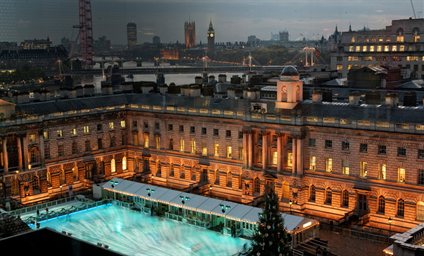
King\’s College London

Image result for King\'s College London

King\’s College London is one of the top 25 universities in the world (2016/17 QS World University Rankings) and among the oldest in England. King\’s has more than 27,600 students (of whom nearly 10,500 are graduate students) from some 150 countries worldwide, and some 6,800 staff.
King\’s has an outstanding reputation for world-class teaching and cutting-edge research. In the 2014 Research Excellence Framework (REF) King’s was ranked 6th nationally in the ‘power’ ranking, which takes into account both the quality and quantity of research activity, and 7th for quality according to Times Higher Education rankings. Eighty-four per cent of research at King’s was deemed ‘world-leading’ or ‘internationally excellent’ (3* and 4*). The university is in the top seven UK universities for research earnings and has an overall annual income of more than £684 million.
King\’s has a particularly distinguished reputation in the humanities, law, the sciences (including a wide range of health areas such as psychiatry, medicine, nursing and dentistry) and social sciences including international affairs. It has played a major role in many of the advances that have shaped modern life, such as the discovery of the structure of DNA and research that led to the development of radio, television, mobile phones and radar.
King\’s College London and Guy\’s and St Thomas\’, King\’s College Hospital and South London and Maudsley NHS Foundation Trusts are part of King\’s Health Partners. King\’s Health Partners Academic Health Sciences Centre (AHSC) is a pioneering global collaboration between one of the world\’s leading research-led universities and three of London\’s most successful NHS Foundation Trusts, including leading teaching hospitals and comprehensive mental health services. For more information, visit: www.kingshealthpartners.org.
King’s £600 million campaign, World questions|KING’s answers, has delivered huge global impact in areas where King’s has particular expertise. Philanthropic support has funded new research to save young lives at Evelina London Children’s Hospital; established the King’s Dickson Poon School of Law as a worldwide leader in transnational law; built a new Cancer Centre at Guy’s Hospital; allowed unique collaboration between leading neuroscientists to fast-track new treatments for Alzheimer’s, Parkinson’s, motor neurone disease, depression and schizophrenia at the new Maurice Wohl Clinical Neuroscience Institute; created the Cicely Saunders Institute: the first academic institution in the world dedicated to palliative care, and supported the King’s Sierra Leone Partnership in the Ebola crisis. Donations provide over 300 of the most promising students with scholarships and bursaries each year.More information about the campaign is available at www.kcl.ac.uk/kingsanswers.

King\’s College London

Image result for King\'s College London

King\’s College London is one of the top 25 universities in the world (2016/17 QS World University Rankings) and among the oldest in England. King\’s has more than 27,600 students (of whom nearly 10,500 are graduate students) from some 150 countries worldwide, and some 6,800 staff.
King\’s has an outstanding reputation for world-class teaching and cutting-edge research. In the 2014 Research Excellence Framework (REF) King’s was ranked 6th nationally in the ‘power’ ranking, which takes into account both the quality and quantity of research activity, and 7th for quality according to Times Higher Education rankings. Eighty-four per cent of research at King’s was deemed ‘world-leading’ or ‘internationally excellent’ (3* and 4*). The university is in the top seven UK universities for research earnings and has an overall annual income of more than £684 million.
King\’s has a particularly distinguished reputation in the humanities, law, the sciences (including a wide range of health areas such as psychiatry, medicine, nursing and dentistry) and social sciences including international affairs. It has played a major role in many of the advances that have shaped modern life, such as the discovery of the structure of DNA and research that led to the development of radio, television, mobile phones and radar.
King\’s College London and Guy\’s and St Thomas\’, King\’s College Hospital and South London and Maudsley NHS Foundation Trusts are part of King\’s Health Partners. King\’s Health Partners Academic Health Sciences Centre (AHSC) is a pioneering global collaboration between one of the world\’s leading research-led universities and three of London\’s most successful NHS Foundation Trusts, including leading teaching hospitals and comprehensive mental health services. For more information, visit: www.kingshealthpartners.org.
King’s £600 million campaign, World questions|KING’s answers, has delivered huge global impact in areas where King’s has particular expertise. Philanthropic support has funded new research to save young lives at Evelina London Children’s Hospital; established the King’s Dickson Poon School of Law as a worldwide leader in transnational law; built a new Cancer Centre at Guy’s Hospital; allowed unique collaboration between leading neuroscientists to fast-track new treatments for Alzheimer’s, Parkinson’s, motor neurone disease, depression and schizophrenia at the new Maurice Wohl Clinical Neuroscience Institute; created the Cicely Saunders Institute: the first academic institution in the world dedicated to palliative care, and supported the King’s Sierra Leone Partnership in the Ebola crisis. Donations provide over 300 of the most promising students with scholarships and bursaries each year.More information about the campaign is available at www.kcl.ac.uk/kingsanswers.

King\’s College London

Image result for King\'s College London

King\’s College London is one of the top 25 universities in the world (2016/17 QS World University Rankings) and among the oldest in England. King\’s has more than 27,600 students (of whom nearly 10,500 are graduate students) from some 150 countries worldwide, and some 6,800 staff.
King\’s has an outstanding reputation for world-class teaching and cutting-edge research. In the 2014 Research Excellence Framework (REF) King’s was ranked 6th nationally in the ‘power’ ranking, which takes into account both the quality and quantity of research activity, and 7th for quality according to Times Higher Education rankings. Eighty-four per cent of research at King’s was deemed ‘world-leading’ or ‘internationally excellent’ (3* and 4*). The university is in the top seven UK universities for research earnings and has an overall annual income of more than £684 million.
King\’s has a particularly distinguished reputation in the humanities, law, the sciences (including a wide range of health areas such as psychiatry, medicine, nursing and dentistry) and social sciences including international affairs. It has played a major role in many of the advances that have shaped modern life, such as the discovery of the structure of DNA and research that led to the development of radio, television, mobile phones and radar.
King\’s College London and Guy\’s and St Thomas\’, King\’s College Hospital and South London and Maudsley NHS Foundation Trusts are part of King\’s Health Partners. King\’s Health Partners Academic Health Sciences Centre (AHSC) is a pioneering global collaboration between one of the world\’s leading research-led universities and three of London\’s most successful NHS Foundation Trusts, including leading teaching hospitals and comprehensive mental health services. For more information, visit: www.kingshealthpartners.org.
King’s £600 million campaign, World questions|KING’s answers, has delivered huge global impact in areas where King’s has particular expertise. Philanthropic support has funded new research to save young lives at Evelina London Children’s Hospital; established the King’s Dickson Poon School of Law as a worldwide leader in transnational law; built a new Cancer Centre at Guy’s Hospital; allowed unique collaboration between leading neuroscientists to fast-track new treatments for Alzheimer’s, Parkinson’s, motor neurone disease, depression and schizophrenia at the new Maurice Wohl Clinical Neuroscience Institute; created the Cicely Saunders Institute: the first academic institution in the world dedicated to palliative care, and supported the King’s Sierra Leone Partnership in the Ebola crisis. Donations provide over 300 of the most promising students with scholarships and bursaries each year.More information about the campaign is available at www.kcl.ac.uk/kingsanswers.

King\’s College London

Image result for King\'s College London

King\’s College London is one of the top 25 universities in the world (2016/17 QS World University Rankings) and among the oldest in England. King\’s has more than 27,600 students (of whom nearly 10,500 are graduate students) from some 150 countries worldwide, and some 6,800 staff.
King\’s has an outstanding reputation for world-class teaching and cutting-edge research. In the 2014 Research Excellence Framework (REF) King’s was ranked 6th nationally in the ‘power’ ranking, which takes into account both the quality and quantity of research activity, and 7th for quality according to Times Higher Education rankings. Eighty-four per cent of research at King’s was deemed ‘world-leading’ or ‘internationally excellent’ (3* and 4*). The university is in the top seven UK universities for research earnings and has an overall annual income of more than £684 million.
King\’s has a particularly distinguished reputation in the humanities, law, the sciences (including a wide range of health areas such as psychiatry, medicine, nursing and dentistry) and social sciences including international affairs. It has played a major role in many of the advances that have shaped modern life, such as the discovery of the structure of DNA and research that led to the development of radio, television, mobile phones and radar.
King\’s College London and Guy\’s and St Thomas\’, King\’s College Hospital and South London and Maudsley NHS Foundation Trusts are part of King\’s Health Partners. King\’s Health Partners Academic Health Sciences Centre (AHSC) is a pioneering global collaboration between one of the world\’s leading research-led universities and three of London\’s most successful NHS Foundation Trusts, including leading teaching hospitals and comprehensive mental health services. For more information, visit: www.kingshealthpartners.org.
King’s £600 million campaign, World questions|KING’s answers, has delivered huge global impact in areas where King’s has particular expertise. Philanthropic support has funded new research to save young lives at Evelina London Children’s Hospital; established the King’s Dickson Poon School of Law as a worldwide leader in transnational law; built a new Cancer Centre at Guy’s Hospital; allowed unique collaboration between leading neuroscientists to fast-track new treatments for Alzheimer’s, Parkinson’s, motor neurone disease, depression and schizophrenia at the new Maurice Wohl Clinical Neuroscience Institute; created the Cicely Saunders Institute: the first academic institution in the world dedicated to palliative care, and supported the King’s Sierra Leone Partnership in the Ebola crisis. Donations provide over 300 of the most promising students with scholarships and bursaries each year.More information about the campaign is available at www.kcl.ac.uk/kingsanswers.

King\’s College London

Image result for King\'s College London

King\’s College London is one of the top 25 universities in the world (2016/17 QS World University Rankings) and among the oldest in England. King\’s has more than 27,600 students (of whom nearly 10,500 are graduate students) from some 150 countries worldwide, and some 6,800 staff.
King\’s has an outstanding reputation for world-class teaching and cutting-edge research. In the 2014 Research Excellence Framework (REF) King’s was ranked 6th nationally in the ‘power’ ranking, which takes into account both the quality and quantity of research activity, and 7th for quality according to Times Higher Education rankings. Eighty-four per cent of research at King’s was deemed ‘world-leading’ or ‘internationally excellent’ (3* and 4*). The university is in the top seven UK universities for research earnings and has an overall annual income of more than £684 million.
King\’s has a particularly distinguished reputation in the humanities, law, the sciences (including a wide range of health areas such as psychiatry, medicine, nursing and dentistry) and social sciences including international affairs. It has played a major role in many of the advances that have shaped modern life, such as the discovery of the structure of DNA and research that led to the development of radio, television, mobile phones and radar.
King\’s College London and Guy\’s and St Thomas\’, King\’s College Hospital and South London and Maudsley NHS Foundation Trusts are part of King\’s Health Partners. King\’s Health Partners Academic Health Sciences Centre (AHSC) is a pioneering global collaboration between one of the world\’s leading research-led universities and three of London\’s most successful NHS Foundation Trusts, including leading teaching hospitals and comprehensive mental health services. For more information, visit: www.kingshealthpartners.org.
King’s £600 million campaign, World questions|KING’s answers, has delivered huge global impact in areas where King’s has particular expertise. Philanthropic support has funded new research to save young lives at Evelina London Children’s Hospital; established the King’s Dickson Poon School of Law as a worldwide leader in transnational law; built a new Cancer Centre at Guy’s Hospital; allowed unique collaboration between leading neuroscientists to fast-track new treatments for Alzheimer’s, Parkinson’s, motor neurone disease, depression and schizophrenia at the new Maurice Wohl Clinical Neuroscience Institute; created the Cicely Saunders Institute: the first academic institution in the world dedicated to palliative care, and supported the King’s Sierra Leone Partnership in the Ebola crisis. Donations provide over 300 of the most promising students with scholarships and bursaries each year.More information about the campaign is available at www.kcl.ac.uk/kingsanswers.

King\’s College London

Image result for King\'s College London

King\’s College London is one of the top 25 universities in the world (2016/17 QS World University Rankings) and among the oldest in England. King\’s has more than 27,600 students (of whom nearly 10,500 are graduate students) from some 150 countries worldwide, and some 6,800 staff.
King\’s has an outstanding reputation for world-class teaching and cutting-edge research. In the 2014 Research Excellence Framework (REF) King’s was ranked 6th nationally in the ‘power’ ranking, which takes into account both the quality and quantity of research activity, and 7th for quality according to Times Higher Education rankings. Eighty-four per cent of research at King’s was deemed ‘world-leading’ or ‘internationally excellent’ (3* and 4*). The university is in the top seven UK universities for research earnings and has an overall annual income of more than £684 million.
King\’s has a particularly distinguished reputation in the humanities, law, the sciences (including a wide range of health areas such as psychiatry, medicine, nursing and dentistry) and social sciences including international affairs. It has played a major role in many of the advances that have shaped modern life, such as the discovery of the structure of DNA and research that led to the development of radio, television, mobile phones and radar.
King\’s College London and Guy\’s and St Thomas\’, King\’s College Hospital and South London and Maudsley NHS Foundation Trusts are part of King\’s Health Partners. King\’s Health Partners Academic Health Sciences Centre (AHSC) is a pioneering global collaboration between one of the world\’s leading research-led universities and three of London\’s most successful NHS Foundation Trusts, including leading teaching hospitals and comprehensive mental health services. For more information, visit: www.kingshealthpartners.org.
King’s £600 million campaign, World questions|KING’s answers, has delivered huge global impact in areas where King’s has particular expertise. Philanthropic support has funded new research to save young lives at Evelina London Children’s Hospital; established the King’s Dickson Poon School of Law as a worldwide leader in transnational law; built a new Cancer Centre at Guy’s Hospital; allowed unique collaboration between leading neuroscientists to fast-track new treatments for Alzheimer’s, Parkinson’s, motor neurone disease, depression and schizophrenia at the new Maurice Wohl Clinical Neuroscience Institute; created the Cicely Saunders Institute: the first academic institution in the world dedicated to palliative care, and supported the King’s Sierra Leone Partnership in the Ebola crisis. Donations provide over 300 of the most promising students with scholarships and bursaries each year.More information about the campaign is available at www.kcl.ac.uk/kingsanswers.