Hardly The Picture Of A Welfare State: MP HC Reprimands EOW

It is most refreshing, most reassuring and really remarkable to see that the Madhya Pradesh High Court has just recently on August 11, 2020 in a latest, landmark and extremely laudable judgment titled Colonel Bhupendra Singh Kharayat v. The State of Madhya Pradesh in Case No. : MCRC 26706/2020 taken very strong exception of a 78-year-old retired Colonel of the Indian Army being arrested and has rapped the EOW (Economic Offences Wing), Bhopal for arresting him in a case where an arrest was simply not warranted and the court below for rejecting the applicant’s bail application. The applicant was in judicial custody since 24/7/2020 in the above-said case. This noteworthy case is worth emulating and its ruling must always be adhered to by all the courts in similar such cases!

                         To start with, the Bench of Justice Atul Sreedharan of Madhya Pradesh High Court which has decided this case sets the ball rolling in para 1 of this notable judgment wherein it is mentioned that, “This application has been filed on behalf of the applicant under section 439 of the Cr.P.C. for offence under sections 420, 467, 468, 471, 472, 474 read with section 120B of IPC and registered vide Crime No. 95/2020, at P.S. E.O.W Bhopal, District Bhopal.”

               While outlining the background, it is then enunciated in para 2 that, “The applicant is in judicial custody since 24/07/2020 in the above said case. The investigating agency is the Economic Offences Wing, Bhopal (hereinafter referred to as the “EOW”). The applicant is 78 years of age and is a retired Colonel of the Indian Army. He is President of the Tilak Grah Nirman Society, Bhopal.”

                        While enumerating the facts, it is then stated in para 3 that, “Briefly, the facts of this case are that one Rabiya Bi is the complainant along with others registered the FIR against the applicant and other co-accused persons. The property in question is land ad-measuring 93.37 acres situated in Village Singaraholi, Bhopal. The owner was one Faiz Mohammad who died leaving behind seven legal heirs. They are Mohammad Ayub, Mohammad Yakub, Hanifa Sultan, Asma Sultan, Sikandar Khan, Qamar Khan and Anwar Khan. Out of the total area of 93.37 acres, 54 acres was demarcated for residential purpose while the remaining approximately 39 acres was kept aside for agricultural purpose.” 

                                 To put things in perspective, it is then envisaged in para 4 that, “With the exception of Mohammad Yakub, the remaining six legal heirs of Faiz Mohammad jointly executed a power of attorney dated 17/01/1989 and transferred all the rights with regard to the aforesaid property to the power of attorney holder Mohammad Sharif (the then President of Tilak Grah Nirman Society). Similarly, Mohammad Yakub also executed a power of attorney on 05/08/1989 transferring all his rights with respect to the aforesaid property in favour of power of attorney holder Mohammad Sharif. Thus Mohammad Sharif became the power of attorney holder for six of the legal heirs by way of power of attorney dated 17/01/1989 and also the power of attorney holder for Mohammad Yakub vide power of attorney dated 05/08/1989. On the basis of the combined power of attorney given by the six legal heirs, Mohammad Sharif sold 34 acres of agricultural land through 12 registered sale deeds, executed in favour of various individuals between 04/02/1989 and 26/06/1989. On the basis of the power of attorney executed by Mohammad Yakub, Mohammad Sharif sold the remaining agricultural land of five acres and 64 decimal to Tilak Grah Nirman Samity vide 11 registered sale deeds and the same was executed between 15/11/1994 and 23/11/1994. Besides the power of attorney mentioned hereinabove all the 7 legal heirs of Faiz Mohammad executed 7 different power of attorneys in favour of Mohammad Sharif between February and March 1990. Vesting the rights of remaining 54 acres of land in favour of Mohammad Sharif, the power of attorney holder.”

                           To be sure, it is then stated in para 5 that, “On the strength of the 7 power of attorneys the remaining land of 54 acres was also sold to Tilak Grah Nirman Samiti by 14 registered sale deeds executed in the year 1997 and Tilak Grah Nirman Samiti further sold the land to 1500 persons.”

                        Be it noted, it is then disclosed in para 6 that, “In the FIR dated 07/02/2020, it has been alleged by the complainants that Mohammad Sharif had executed the power of attorney dated 17/01/1989 without the knowledge of the 6 legal heirs, the ancestors of the complainant and altered the remaining paragraphs of the power of attorney and thereby committed forgery. In the FIR, it was also alleged that Mohammad Sharif, in connivance with other accused persons, executed various sale deeds in favour of his family members and friends in the year 1989.” 

                             Needless to say, it would be pertinent to mention here that it is then brought out in para 7 that, “The applicant has been arrested in this case only because he happens to be on the post of President Tilak Grah Nirman Samiti, which had purchased land from Mohammad Sharif who sold the same on the strength of the power of attorneys executed in his favour by the legal heirs of Faiz Mohammad, more than twenty five years ago.” 

                             Significantly, it is then stated in para 8 that, “Learned counsel for the applicant has taken this Court through the medical documents pertaining to the applicant which are as recent as 29/05/2020, which reflect that the applicant who is aged about 78 years is suffering from a heart ailment. The oldest documents go back to the year 2016, which show that the applicant is an old patient of heart disease. Learned counsel for the applicant also states that the cell in which the applicant has been housed, one inmate was detected suffering from coronavirus. Learned counsel for the applicant has also taken this Court through various reports given by the prosecuting agency, the EOW. The first report is dated 28/03/2020 addressed to the Special Judge, EOW, Bhopal. In paragraph 16, the said report lays down the allegation specific to the applicant. The allegation is that the applicant Colonel Bhupendra Singh (Retd.), is the President of the Tilak Grah Nirman Samiti and in that capacity he sold 34 acres of agricultural land from the 39 acres and the remaining 5 acres and 64 decimal were purchased in the name of the Grih Nirman Society, it is not the case of the EOW that any property has been purchased in the name of the applicant. It further says that this land which belong to Yakub Mohammad was transferred to the Grih Nirman Society by Mohammad Sharif, the power of attorney holder for Yakub Mohammad (by power of attorney dated 05/08/1989) and for the remaining six legal heirs, through power of attorney dated 17/01/1989, through 11 registered sale deeds between 15/11/1994 to 23/11/1994. The second report is dated 30/06/2020, where yet again in paragraph 16, the same identical role is attributed to the applicant as has been stated hereinabove with regard to the first report. Likewise, also in the remaining two reports (in all four reports) given to the Special Judge at Bhopal (EOW, Bhopal) it is the same allegation. The Ld. Counsel for the State has opposed the applicant for grant of bail on the ground that investigation is still in progress.”

                                         More significantly, it is then held in para 9 that, “This Court feels it essential to refer to the judgment of the Supreme Court in Joginder Kumar’s case where the Supreme Court has extensively discussed the power of the police to effect an arrest. The Supreme Court refers to the third National Police Commission report and extracts therefrom “In India, Third Report of the National Police Commission at p. 32 also suggested: “An arrest during the investigation of a cognizable case may be considered justified in one or other of the following circumstances: (i) The case involves a grave offence like murder, dacoity, robbery, rape etc., and it is necessary to arrest the accused and bring his movements under restraint to infuse confidence among the terror-stricken victims. (ii) The accused is likely to abscond and evade the processes of law. (iii) The accused is given to violent behaviour and is likely to commit further offences unless his movements are brought under restraint. (iv) The accused is a habitual offender and unless kept in custody he is likely to commit similar offences again. It would be desirable to insist through departmental instructions that a police officer making an arrest should also record in the case diary the reasons for making the arrest, thereby clarifying his conformity to the specified guidelines……” [Joginder Kumar v. State of U.P., (1994) 4 SCC 260, Paragraph 20]. After reproducing the above from the NPC report, the Supreme Court holds “The above guidelines are merely the incidents of personal liberty guaranteed under the Constitution of India. No arrest can be made because it is lawful for the police officer to do so. The existence of the power to arrest is one thing. The justification for the exercise of it is quite another. The police officer must be able to justify the arrest apart from his power to do so. Arrest and detention in police lock-up of a person can cause incalculable harm to the reputation and self-esteem of a person. No arrest can be made in a routine manner on a mere allegation of commission of an offence made against a person. It would be prudent for a police officer in the interest of protection of the constitutional rights of a citizen and perhaps in his own interest that no arrest should be made without a reasonable satisfaction reached after some investigation as to the genuineness and bona fides of a complaint and a reasonable belief both as to the person’s complicity and even so as to the need to effect arrest. Denying a person of his liberty is a serious matter. The recommendations of the Police Commission merely reflect the constitutional concomitants of the fundamental right to personal liberty and freedom. A person is not liable to arrest merely on the suspicion of complicity in an offence. There must be some reasonable justification in the opinion of the officer effecting the arrest that such arrest is necessary and justified. Except in heinous offences, an arrest must be avoided if a police officer issues notice to person to attend the Station House and not to leave the Station without permission would do. [Joginder Kumar v. State of U.P., (1994) 4 SCC 260, Paragraph 20].  

                     Most distressingly, it is pointed out in para 10 without mincing any words that, “This court is distressed at the alacrity and absolute insensitivity with which the EOW has considered it fit to arrest the applicant. It just didn’t matter to the EOW that the applicant is a senior citizen aged seventy-eight. It mattered little to them that the applicant was suffering from a heart ailment. The EOW couldn’t care less that the applicant with his co-morbidities came under the high-risk category of persons for whom the corona affliction could prove fatal. Not for a moment, did the EOW pause to think whether it was necessary to arrest the applicant in a case where the alleged offence was committed more than twenty-five years ago. In the facts of this case, the arrest of the applicant by the EOW betrays a sadistic pleasure on the part of the EOW to decimate the dignity and self-respect of the applicant by arresting him in a case where an arrest was simply not warranted.”       

                                     Most significantly yet most tellingly,  it is then lamented in para 11 that, “We in the judiciary too have not exactly covered ourselves with glory in the manner in which we have dealt with the applicant. The rejection order of the Ld. Court below is routine and completely devoid of human empathy to the plight of the applicant, unmoved either by the age of the applicant, his health condition or his peripheral involvement in the case or that his arrest has been effected in an alleged offence which has taken place more than twenty five years ago. The Ld. Court below does not even momentarily reflect on the need for the continued incarceration of the applicant but for observing that the investigation is still in progress. The rejection of the applicants bail application by the Ld. Court below is not unique to the present case but reflects a deeper malaise afflicting the District Judiciary which displays a subliminal fear in allowing bail applications under the perceived notion that explanation may be called for by the High Court if, in the opinion of the High Court, the discretion in granting bail by the Ld. Court below is erroneously exercised. Resultantly, for the District Judiciary, Jail is the norm and bail the exception. An application which ought to have been allowed by the Ld. Court below, has trudged its way up to this court and nothing can indict the insensitivity of the judicial process more than this case where the applicant, a retired Colonel of the Indian Army, a senior citizen aged 78 years, ailing from a heart disease, has been in judicial custody since 24/07/2020 for an alleged non-heinous offence committed over twenty five years ago. Hardly the picture of a welfare state.” 

                          Briefly stated, it is then stated in the last relevant para 12 that the application is allowed and it is directed that the applicant shall be forthwith enlarged on bail upon his furnishing a personal bond of Rs 10,000/- with one solvent surety in the like amount to the satisfaction of the Trial Court. It is also directed that a copy of this order be sent to the court concerned by e-mail to expedite the process of furnishing the bail bonds.

                    Finally, para 13 then concludes by observing that, “The jail authorities shall have the applicant checked by the jail doctor to ensure that he is not suffering from the coronavirus and if he is, he shall be sent to the nearest hospital designated by the State for treatment. If not, he shall be transported to his place of residence by the jail authorities.”

                       In short, MP High Court has not minced any words to highlight its strongest displeasure at the manner in which EOW arrested a 78-year-old retired Colonel of Army in a case where arrest was just not warranted at all and also at the manner in which the courts below rejected the applicant’s bail application! This was most shocking and so rightly condemned by the MP High Court. No denying it!     

Sanjeev Sirohi, Advocate,

s/o Col BPS Sirohi,

A 82, Defence Enclave,

Sardhana Road, Kankerkhera,

Meerut – 250001, Uttar Pradesh.

Why, TEACHERS??

“Shut up! Jao jaake class ke bahar khade ho jao”. I still think, was it a punishment or just a way of giving freedom to go washroom or bunk the class.

Hey friends, today is a special day. Today is Teacher’s day, and it’s not only for school teachers but to every single person who came in our life, because everyone teach something. But, school teacher is important because, they only taught us that whosoever is teaching you is to be respected.

Sir/ma’am, your selfless acts are still helping us in our life. Thank you for teaching us everything from the book and those discipline, which you made us to learn for life.
But, today I’m writing this for you and the company you gave us, not about those things which you taught us even though we all are thankful for that.

Rightnow, we adults are happy that we didn’t had to attend online classes. Man! That’s really Scarry. Means you can’t meet your friends, you can’t see your crush, you can’t live the most precious life, your school life. At that time the most hateable person was our teachers, and we are sorry for that, But, because you always stoped us from enjoying. Which at a certain age we only do it by our own, and you all grown up peoples were knowing that, still you stoped us from doing, why?.

Still, when you leave your school and move forward in your life, you are going back to them like, a boomerang. The way you hate your teachers back then, yeah!, you are gonna wish for having them as your teacher, back in your life again.

What you will never understand is there  punishment. Those punishment which were meaning less back then and even now. Go outside, write this 20 times on blackboard, murga bano, and keep your hands up. Why?? And there dialogues, Khana khaana to nhi bhule? Like you all wanted to answer that particular question, right? Yeah, because my body wants food for energy not your homework.

Even though with all that difference, one thing was for sure that they really treated us like there own child and forgot about that while giving marks, huh!. Thankyou teachers and HAPPY TEACHER’S DAY.

Now, what you think about your school day’s and about your teacher? Let me guess, same like me, huh! Until you attended online classes.

P.S:- A special thanks to all those teachers who use to tell us story rather then teaching us from those boring books. You all have great a part in making our school days memorable. Thankyou

❤️

See yaa.

Vice President calls for well-strategized, collective action on multiple fronts to ensure well-being of young children

The Vice President, Shri M Venkaiah Naidu today called for a well-strategized collective action on multiple fronts to ensure well-being of young children for India to take full advantage of demographic dividend.

Child development should be the foundation of our development architecture, the Vice President said while releasing ‘The State of Young Child in India’ report, a comprehensive account of the challenges related to early child development in India.

The report has been prepared by Mobile Creches a policy advocacy organisation which works with the underprivileged children across India. Appreciating the report, Shri Naidu said that such reports help in policy formulation by developing greater understanding of the shortcomings and urgent needs of the children. He also appreciated the publisher Taylor & Francis Group for making the digital copy of report freely available for everyone.

Underlining the importance of ensuring healthy, happy, caring and playful early years for children for their holistic development, he observed that adequate nutrition and positive caring environment at home play an important role in a child’s development. The years from birth until the age of five were critical, he pointed out.

Shri Naidu said that for healthy development, children should grow up in an environment where their emotional, social, educational and other needs are fully met. Educated and healthy people with a good foundation in the early years contribute to the financial and social wealth of their societies.

Pointing out that poor nutrition hampers physical as well as intellectual development of children, Shri Naidu said it would make them vulnerable to illness and affect their performance in school. “We need to understand the crucial importance of this aspect of national development and take effective steps to ensure all children have a healthy start to their lives”, he added.

Quoting from the report, the Vice President said that of the 159 million children aged below 6 years in India, 21 per cent are undernourished, 36 per cent are underweight and 38 per cent do not receive full immunization. “These figures underline the crucial importance to invest in early childhood for realizing the full potential in later years”, he stressed.

Referring to several comprehensive policies and flagship programmes like the ICDS and India’s conscious efforts to meet the international commitments like the UN Convention on Rights of the Child (UNCRC), he said the challenges were still huge and need to be addressed.

Shri Naidu said it was important for all stakeholders, including the government, policy makers and civil society organizations to intensify their efforts in ensuring the well-being of the young child through better policies and effective programmatic interventions.

Maintaining that the children are our future, the Vice President said “we should take care of them”. He emphasised the need for uplift of the last man in true spirit of Antyodaya as espoused by Mahatma Gandhi and Pandit Deendayal Upadhyay.

Ms. Amrita Jain, Chairperson of Mobile Creches, Ms Devika Singh, Co founder of Mobile Creches, Ms Sumitra Mishra, Executive Director, Shri Sanjay Kaul, IAS (Retd), Member, Dr Shashank Sinha, Publishing Director of Taylor and Francis Group, Dr Anuradha Rajivan, IAS (Retd), Lead technical advisor, Shri N Ram, former Editor-in-Chief of The Hindu were among the dignitaries who participated in the virtual release of the report.

Following is the full text of the speech-

“I am extremely pleased to release the ‘State of the Young Child in India’ report. It is a comprehensive account of the challenges related to early child development in India and it also makes a set of recommendations on how to address them.

I must compliment everyone associated with bringing out this informative book, which will be useful to all the stakeholders from policy-makers to academics. All of us realize the importance of ensuring healthy, happy, caring and playful early years for children. All of us care for their well-being and holistic development.

It is well-known that the years from birth until the age of five are critical. Adequate nutrition and positive caring environment at home play an important role in a child’s development.  For healthy development, children should grow up in an environment where their emotional, social, educational and other needs are fully met.

 A good foundation in the early years makes a difference through adulthood and even gives the next generation a better start. Educated and healthy people participate in, and contribute to, the financial and social wealth of their societies.

As you all are aware, poor nutrition hampers physical as well as intellectual development of children. It makes them vulnerable to illness and affects their performance in school.

It is estimated that early childhood stunting affects nearly one-in-four children younger than five globally due to lack of nutrition.  As mentioned earlier, under-nutrition and poor sanitation – can lead to developmental delays and a lack of progress in school. For a country, poor early childhood development could mean economic loss. We need to understand the crucial importance of this aspect of national development and take effective steps to ensure all children have a healthy start to their lives.

It has been mentioned in the just released report that of the 159 million children aged below 6 years in India, 21 per cent are undernourished, 36 per cent are underweight and 38 per cent do not receive full immunization. These figures underline the crucial importance to invest in early childhood for realizing the full potential in later years.

The report also pointed to the insurmountable evidence of the huge returns on investment in Early Childhood Development (ECD) at the individual, household and country levels. “Proper nutrition, stimulation and care during the first 1,000 days of life (from conception to the second birthday) has a profound impact on the child’s ability to grow, learn and rise out of poverty, and in the process shape society’s long term stability and prosperity”, it was stated.

Based on ranking and values on the Young Child Outcome Index (YCOI), the report named Kerala, Goa, Tripura and Tamil Nadu to be among the top performers, while eight states– Assam, Meghalaya, Rajasthan, Chhattisgarh, Madhya Pradesh, Jharkhand, Uttar Pradesh and Bihar– with scores below the national average lagged behind.

The report has rightly pointed to the criticality of a holistic approach to development, including public awareness and parental education, improved living conditions with access to clean drinking water, proper sanitation and reliable primary healthcare service to make a difference to health and nutritional standards among children.

India has made considerable progress over the years in child welfare.

While the Government of India has introduced several comprehensive policies and flagship programmes like the ICDS and the national nutrition mission ( Poshan Abhiyaan) for Early Childhood Development in the country, the need of the hour is to implement them effectively through proper coordination among various ministries.

The Rashtriya Bal Swasthya Karyakram (RBSK) is an important initiative for early identification and intervention for children from birth to 18 years to cover 4 ‘D’s — Defects at birth, Deficiencies, Diseases and Development delays including disability

Similarly, Beti Bachao Beti Padhao (BBBP) is equally important to ensure protection, education and empowerment of the girl child.

The recently unveiled National Educational Policy rightly states that “the overarching goal will be to ensure universal access to high-quality early childhood care and education across the country in a phased manner.”

As you all are aware, India has been making conscious efforts to meet the international commitments like the UN Convention on Rights of the Child (UNCRC) and the Convention on the elimination of all forms of discrimination against women (CEDAW), and more importantly the sustainable development goals (SDG).

But the challenges are still huge and we need to address them.

It is important for all stakeholders, including the government, policy makers and civil society organizations to intensify their efforts in ensuring the well-being of the young child through better policies and effective programmatic interventions.

In other words, there should be well-strategized collective action on multiple fronts. Ensuring the well-being of the young child assumes greater importance if India has to take full advantage of its demographic dividend.

We must continue to focus our attention on early childhood care and education.

Child development should be the foundation of our development architecture.

Dear sisters and brothers, we are all reorienting our lives and adapting to a new normal in the wake of COVID-19 pandemic, which has disrupted our routine. The adverse impact of the pandemic on poor and marginalized families and their children has been quite severe. This is the time for all of us to come to the help of the needy, display collective resilience and overcome the hardship caused by the pandemic. The lessons learnt in this pandemic should stand us in good stead to effectively tackle any future health emergency, especially in regard to the well-being of children and other vulnerable groups.

Before concluding, I once again compliment Mobile Creches (MC) and other organizations involved in bringing out this insightful report.

Introduction of the National Education Policy 2020 a landmark decision toward rectifying all education anomalies: Dr.Jitendra Singh

Union Minister of State (Independent Charge), Development of North Eastern Region (DoNER), MoS PMO, Personnel, Public Grievances, Pensions, Atomic Energy and Space, Dr Jitendra Singh said that introduction of the National Education Policy 2020 was a landmark step by the Modi Government in clearing several  anomalies prevailing in the education system of the country. 

Addressing a webinar on “National Education Policy-2020:Health Education Perspective” organised by Shri Vishwakarma Skill University(SVSU), Haryana in association with Indira Gandhi National Open university (Ignou) here today, MoS Dr. Jitendra Singh said that it was the strong political will of Modi Government to take out of the box decision of introducing the National Education Policy-2020 which focuses more on skill and vocational education. The Minister said that the National Education Policy-2020 is an aptitude based rather than score based policy.  He said that this Policy will rectify all the previous anomalies prevailing the system.

INDIAN ARMY

The Chief of the Army Staff, General MM Naravane concluded a two day visit to Leh today. The COAS arrived at Leh on 03 September 2020 and proceeded to forward areas to undertake a firsthand assessment of the situation along the LAC. The COAS interacted with soldiers and local commanders deployed in difficult High Altitude forward areas. He appreciated their high morale and standards of professionalism exhibited by the units in safeguarding own territorial integrity. The COAS urged all ranks to remain vigilant and maintain a high order of operational readiness.

Later, at Leh, Lt Gen YK Joshi, General Officer Commanding-in-Chief, Northern Command and Lt General Harinder Singh, GOC, Fire and Fury Corps briefed him on the state of operational preparedness and on the logistics arrangements for sustenance of forces in winters. The COAS expressed satisfaction on the efforts being made to ensure operational effectiveness and capability enhancement of the forces.

Centre exhorts the States to proactively curb the Chain of Transmission and bring Mortality below 1%

Union Health Secretary Shri Rajesh Bhushan held a review meeting through video conference (VC) with the Health Secretaries of 15 districts across 5Statesof Andhra Pradesh, Punjab, Karnataka, Tamil Nadu and Uttar Pradesh today. These 15 districts comprise Chittoor, Prakasam, Mysuru, Bengaluru Urban, Ballari, Koppal, Dakshina Kannada, Davangere, Ludhiana, Patiala, Chennai, Coimbatore, Salem, Lucknow and Kanpur Nagar. They have been exhibiting higher active caseload, fatality rates and a surge in the COVID cases for the past four weeks. In addition to the State Health Secretaries, District Collectors, Municipal Commissioners and other district functionaries also participated in the digital review meeting.

The Union Secretary shared the overall status and performance of the districts on the key parameters of testing, positivity, case fatality etc., focusing on the need of continuing containment measures, increasing testing, effective clinical management of patients.State Health Secretariesprovided an in-depth analysis on the current status of COVID-19 in these 15 districts coveringaspects of containment measures, contact tracing, surveillance activities, facility-wise case fatality rates, trends in terms of weekly new cases and deaths, etc. and shared their detailed roadmaps and action plans for the next one month.

Granularities in terms of split of RT-PCR and Rapid Antigen tests conducted in the district, re-testing percentage of symptomatic negatives from Antigen tests, testing lab utilization, home isolation status, hospitalization status and bed occupancies of oxygen-supported beds, ICU beds and ventilator etc., were also shared with the Center.

The States were advised to take steps on the following specific areas:

  1. Limiting and eventually breaking the spread of the infection by implementing stringent containment measures and following social distancing measures, strict peri-meter control, and active house-to-house case search.
  2. Early identification by ramping up testing across the districts, optional utilization of RT-PCR testing capacity and use of Rapid Antigen Tests as a screening test in hotspots and densely populated areas.
  3. Effectivemonitoring of home isolation cases and early hospitalization in case of disease progression.
  4. Seamless hospitalization and early admission for patients requiring medical support, especially in cases of co-morbid and elderly population.
  5. Following effective infection control measures in hospitals to safeguard healthcare workers from contracting the infection.
  6. District Collectors and other functionaries to prepare and update district specific plans to continue their efforts to manage the pandemic with the same rigor.

Union Minister Dr.Jitendra Singh addresses the one-day workshop on Good Governance Practices in a Pandemic for 117 District Collectors of Aspirational Districts

Dr.Jitendra Singh, Minister of State for Personnel, PG and Pensions delivered the valedictory address at the NCGG-NITI one-day Workshop on Good Governance Practices in Aspirational Districts in a Pandemic through a webinar today. In his address,Dr.Jitendra Singh said that District Collectors in Aspirational Districts have out-performed many non-aspirational districts in fighting the COVID-19 Pandemic and that the performance of Aspirational Districts represents an opportunity to prove the resilience of the Indian Nation. One of the reasons for this high quality performance was that IAS officers who had served as Assistant Secretaries in Government of India had gained from their mentorship in Union Government. Dr.Jitendra Singh said that the “show must go on with due precautions” despite the pandemic, as can be seen in the conduct of several entrance examinations – the JEE/ NEET/ CSE all of which have been notified. Only because of the collective people’s effort India was able to fight the pandemic better than other countries. He urged the District Collectors of Aspirations Districts to consistently focus on achieving continuous growth in developmental indicators.

CCI approves the acquisition of Metso Oyj’s (“Metso”) minerals business by Outotec Oyj (“Outotec”)

The Competition Commission of India (CCI) approves the acquisition of Metso Oyj’s (“Metso”) minerals business by Outotec Oyj (“Outotec”) under Section 31(1) of the Competition Act, 2002, [Combination Registration No. C-2020/03/735].

The CCI has published the order approving the acquisition of Metso’s minerals business (“Metso Minerals”) by Outotec. All such assets, rights, debts, and liabilities of Metso that relate to, or primarily serve, its minerals business (comprising the mining, aggregates, minerals consumables, minerals services, pumps, and recycling businesses) will be acquired by Outotec. The approval is subject to modifications that are aimed at eliminating the likely anti-competitive effects of the proposed combination.

The above order was a result of an detailed inquiry undertaken pursuant to the notice given by Metso and Outotec under sub-section (2) of Section 6 of the Competition Act, 2002 (Act) on 12th  March, 2020. The Commission found that the Proposed Combination is an integration of two strong and close competitors in the market for Iron Ore Palletisation (IOP) Equipment Island in India and appears to:

  • limit the number of suppliers available to customer in this market in India;
  • reduce the intensity of innovation in the technology for pelletizing technology and equipment;
  • perpetuate the substantial market position of the Parties in the market; and reduce or eliminate the competitive pressure that would prevail in the absence of Proposed Combination;
  • reduce the extent of countervailing bargaining power that the customers enjoy on account of the competition exerted by independent presence of Metso and Outotec;
  • increase the cost of the entrants and rivals to compete and increase their presence in the market given that there is no likeliness of a timely and sufficient entry that could act as a competitive constraint to the combined entity; result in creation of a strong integrated player

Thus, the CCI was of the view that the proposed combination would reduce competition and confer the combined entity, the ability to increase price etc.

In order to address the competition concerns arising as a result of the proposed combination, the Parties proposed voluntary remedies / modifications (VRP). The Commission noted that VRP given by Parties eliminates the overlap between the Parties in the IOP segment in India and would effectively transfer Metso Minerals’s Indian Straight Grate (SG) IOP capital equipment business to a suitable buyer, thereby preserving the competition.

The modification essentially involves transferring a right to fully use and exploit the SG IOP capital equipment drawings, including the related registered IP by way of an exclusive and irrevocable license, subject to a lump sum upfront payment and no ongoing royalties. VRP will allow the emergence of a new competitor, thus resolving any concerns whatsoever in relation to this segment.

Canister bag that solidifies infectious secretions like COVID 19can save health workers from exposure during handling

Infectious secretions from contagious diseases such as COVID 19, tuberculosis (TB), and influenza poses high risk for healthcare workers. Their exposure to the high-risk hazard while handling the waste can soon be controlled with a canister bag that solidifies the secretions rapidly, making disposal safer.

For the safe management of infected respiratory secretions, the researchers at Sree Chitra Tirunal Institute for Medical Sciences and Technology (SCTIMST), an autonomous institute under the Department of Science and Technology, Govt of India, have come up with a method for safe handling and disposal of respiratory secretions in hospitals for ICU patients or those with copious respiratory secretions treated in the wards. They have developed canister bags lined with super-absorbent material containing an effective disinfectant, named “AcryloSorb”.

When the patient is admitted to the hospital, secretions are sucked into bottles or canisters using vacuum line and discarded through the waste fluid disposal system after subjecting to decontamination process. There is a high risk of contamination during the handling, and the disposal needs well-equipped sluice rooms with disinfection facilities. The safety threat and manpower issues will be manifold in less equipped hospitals or temporary isolation wards set up during pandemics.

The canister bags can absorb 500 ml of secretions and solidify it immediately. In addition to that, the whole system will be decontaminated within no time because of the presence of disinfectant. The liner structure has a patented design which allows the progressive absorbent availability upwards. Solidification and immediate disinfection that occurs inside these bags eliminate risk of secondary infections by avoiding spilling and aerosol formation, and thereby protect healthcare workers and promote safe workplace management.Canister bags are enclosed in a customizable sealer bag which can pack it as spill-proof decontaminated biomedical waste disposable through incineration. The product has been tested as per the international standards.

The SCTIMST team that realized this technology consists of biomaterial scientists and clinicians – Dr. Manju, S., Dr. ManojKomath, Dr. Asha Kishore, Dr. Ajay Prasad Hrishi. The know-how of the AcryloSorb suction canister liner (CL Series) bags has been transferred to Romsons Scientific and Surgical Pvt. Ltd for manufacture and immediate marketing. The approximate cost will be Rs. 100/- for each canister liner bag.

Romsons Scientific & Surgical Pvt. Ltd, located at Uttar Pradesh, is a global player in medical devices with more than 200 products in market. The company has proven expertise of half a century in the area of disposable medical and surgical devices and is a prominent brand in the medical device community. The company has its distribution channel across 65 countries. Quality is a prime motto of Romsons, evidenced by the ISO and CE certifications for many of their products.

The field trials of the in-house designed suction canister liner bags are being conducted in SCTIMST.

Portable Sterilization unit using new hybrid sterilization technology can decontaminate PPEs rapidly

Scientists have developed a portable sterilisation unit using a new technology called the hybrid sterilization system that can decontaminate personal protective equipment (PPE) necessary for combating COVID 19, easily and rapidly, allowing them to be used multiple times.

It can be used by health professionals and other COVID warriors for whom PPEs are essential and can prevent generation of hazardous solid waste from PPEs.

IIT Tirupati (IITT) and IISER Tirupati have jointly developed the Portable Optical Cavity

Sterilization Unit (POSCU) to provide efficient and rapid decontamination of personal protective equipment (PPE) and other household items. A working point-of-use sterilization unit has been developed with the support of Science and Engineering Research Board (SERB), a statutory body under the Department of Science and Technology (DST).

UV radiation is a proven method for sterilization. However, the lower penetration depth of UV-C and faster divergence from the source can result in nonuniform treatment. The team consisting of Dr. Reetesh Kumar Gangwar (Asst. Prof., Physics), Dr. Arijit Sharma (Asst. Prof.,  Physics), and Dr. Shihabudheen M. Maliyekkal (Asst. Prof., Civil & Environmental Engineering) from IITT have developed this hybrid sterilization system consisting of a UV radiation cavity, cold plasma, and H2O2 spray.

Unlike the traditional UV systems, this unit follows the optical cavity concept to optimize the use of photon flux in the treatment area. The system confines the UV radiation and enhances photon-flux and sterilization efficacy. The coherent operation of UV-C, cold plasma, and H2O2 spray further strengthens the sterilization efficiency due to more hydroxyl radical production.

CSIR-CMERI develops Affordable Solar Powered Battery based Sprayers to tackle Water Crisis in Agriculture

Water is a precious resource and water scarcity is looming large over the entire Nation. Agriculture, which consumes around 70% of Water, for irrigation purpose, is the most vulnerable sector of the Economy owing to this crisis. To address this issue there has been discussion on implementing solar pump in almost every farmland.

Apart from solar pumps, CSIR-CMERI isworking on methods to reduce water consumption required for irrigation. Initially, Drip irrigation was considered but later it was realised that Drip irrigation is not affordable for marginal to small farmers, who are the major stake holders in Indian Agrarian scenario. Those farmers use manual sprayers costing a few thousand rupees.

As per the available knowledge, pesticides play very big role in increasing crop productivity, but large amount of pesticide sprays is wasted due to lack of appropriate machinery, and soil, water and air become polluted. Due to such harmful effects of pesticides, there is an increasing pressure to reduce their use and make their spraying more efficient. To make efficient sprayer, there is need to understand science of surface tension, viscosity, wettability, air drag, dynamic pressure, particle size, etc. CSIR-CMERI developed two variants of battery operated spray systems one for “marginal famers” and other for “small farmers”. Back Pack Sprayer, having capacity of 5 litres, is made for “marginal farmers”, while the Compact Trolley Sprayer having capacity of 10 litres, is made for “small farmers”. These sprayers are equipped with two separate tanks, flow control and pressure regulator to handle different water requirements of the crops, target/site specific irrigation, maintaining appropriate dilution of pesticide/fungicide to control the pest (on foliage, under the leaves, at root zone etc.), creating water based micro-roughness of leaf surface, maintaining soil moisture levels in a narrow range, and weed control. The systems functions on Solar-Powered batteries, thus enabling its usage even in energy and power deprived agricultural regions of the Nation, thus reducing dependence on price volatile fossil fuels. The sprayers are simple to develop, easy to learn and implement, therefore will help to overcome water crisis faced by Indian farmers.

The flow control feature of the Sprayers helps achieve multiple levels of Water/Pesticide flow thereby enhancing the flexibility and dynamicity of the coverage area as well as the intensity of the application. The Dual-Chamber design of the Sprayers helps achieve a degree of resource versatility as it allows the system to carry two variants of liquids at any particular instant. As per experiments conducted at CSIR-CMERI, the engaged farmers have informed that it helps save 75% of Water and 25% time-consumption while using the CSIR-CMERI developed sprayers. This design element might also help reduce the time consumption for Spray based Agricultural applications, as the farmer need not empty the contents of a single vessel completely before using a different content.

Prof. (Dr.) Harish Hirani, Director, CSIR-CMERI, elaborated, “These couple of variants can bring about a revolution in the sphere of Precision Agriculture by reducing usage of Water in Agriculture. This revolutionary technology will help in creating agricultural avenues even in arid and semi-arid regions, as the Water scarcity will no longer be feared by the farming community. The CSIR-CMERI developed sprayers provide a cost-effective socio-economic solution for both marginalised and small-scale farmers. The affordable pricing profile helps to provide opportunities to cottage and micro-industries in furthering the outreach factor of the technology widely.”

CSIR-CMERI has already developed solar tree of capacity 1 Kwp, 3 kwp, 5 kwp, 6 kwp, 7.5 kwp and 11.5 kwp,(which is now the Largest Solar Tree in the world).

NEET, JEE: Supreme Court rejects review petition to postpone the exams

Photo credit: Google images

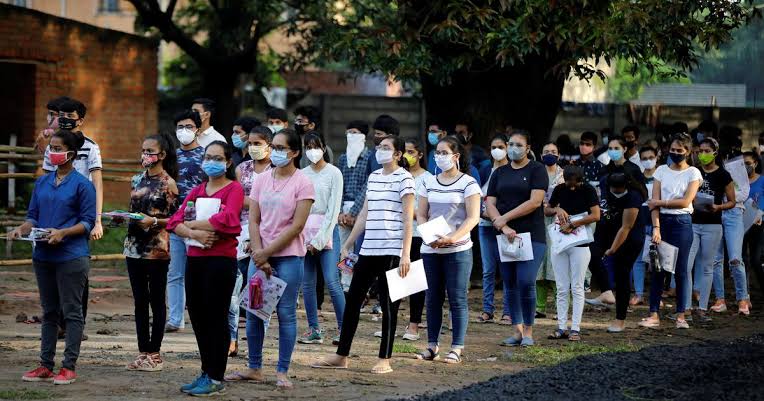
Supreme Court on Friday refused to entertain the review petition filed by ministers of six opposition-ruled states who were seeking review of the court’s August 17 order to conduct NEET-UG and JEE EXAMINATIONS.

Six ministers from Maharashtra, Punjab, West Bengal, Jharkhand, Rajasthan and Chhattisgarh had had moved to the apex court saying that if the order was not reviewed, “grave and irreparable harm and injury would befall on the student community”.

The petitioners in the case were Moloy Ghatak (minister from West Bengal), Rameshwar Oraon (Jharkhand), Raghu Sharma (Rajasthan), Amarjeet Bhagat (Chhattisgarh), Balbir Singh Sidhu (Punjab), and Uday Ravindra Samant (Maharashtra). In its review plea, stated, “not only will health, welfare and safety of students/candidates appearing for the NEET/JEE examinations stand imperilled but also the public health at large would be in severe jeopardy…”

The ministers in the plea had claimed that the top court order failed to secure students’ “right to life” and ignored “teething logistical difficulties” to be faced in conducting the exams during the COVID-19 pandemic.

The state ministers on August 28 moved SC and demanded that the examinations be postponed by at least six to eight weeks keeping in mind the surge in coronavirus cases and health concerns of students. It alleged that the government’s decision to go ahead with examinations despite the 3.3 million covid cases with over 60,000 deaths, “reveals non application of mind, and is unreasonable, arbitrary and capricious exercise of power”.

The bench of Justices Ashok Bhushan, B R Gavai and Krishna Murari, which considered the pleas in-chamber, also rejected the applications seeking listing of the review petition in the open court. “Applications seeking permission to file review petitions are allowed. We have carefully gone through the review petitions and the connected papers. We find no merit in the review petitions and the same are accordingly dismissed,” the bench said in its order.

The JEE-Main will be held from 1 to 6 September, while NEET exams for admission to undergraduate courses in medical colleges is scheduled for 13 September. JEE Advanced for the Indian Institutes of Technology (IITs) is scheduled for later in September.

JEE-Mains have already begun across the country from September 1, with guidelines for maintaining social distance minimising contact.

PTI reported that on the third day of the JEE-Mains, 82.14 percent of the registered candidates appeared for the examination, as against 54.67 percent on the first day.

Positive Results for the Russian Vaccine for Covid.

From last 7 to 8 months the virus has hit globally.The virus was generated from the Wuhan from Chinese province and spread all over the world.Most affected country due to this virus is US it is having almost 63,35,653 cases.As moving slowly and steadily coming out of this situation every country is in race for making the vaccine.Recently the Russia has prepared the vaccine and had started the trials.

Russia has already created an vaccine and started its trials.The results of the trial have came as a positive sign for the people as it shows that there are no side or adverse effects after having its doses.All these results are present in Lancet medical journal.It showed a great sign in T-cells a type of white blood cell which destroys the infection.The positive results were in phase 1 and 2 trials.The country’s main aim is for getting international credibility,for this the health officials have heavily criticized.

The name of the vaccine is Sputnik V,named after soviet union 1957 launch of the world’s first satellite into space.The data tells the trials were done in two hospitals.It was done on 76 adults age comprising of around 18 to 60 used a two-part vaccine with two different human adenoviruses which is linked to the common cold.The vaccine was tested on all participants and there was no restriction made.They took the plasma of around 4817 people to compare post-vaccination immunity with natural immunity.Antibody responses were hire who got vaccinated.

As the Russian government is moving ahead for the wider use of these vaccine they are ready for test on medical members and teachers in coming weeks.The investigators tested around 2 types of vaccines namely frozen and freeze-dried.It was used in both phases and all the 40 participants produced antibodies.The frozen vaccine produced the higher antibodies.Russia already started to use this vaccine outside the trial groups for the officials and other prominent people.Vladimir Putin’s daughter got the first dose of it and started to feel good.Even the mayor of Moscow Sergie Sobyanin,62 was also feeling good after taking this vaccine.

A phase 3 trial was approved on Aug 26 for 40000 volunteers from different age and risk groups.It is an positive sign for the world that the first vaccine is going to be registered.As it is the need of the hour material and India is also race in the preparing of the vaccine.So,lets hope the best for the society.

CBSE Compartment Exams to be conducted by the end of September: BOARD to SC

Photo credit: Goolge images

The Supreme Court on Friday issued notice to CBSE on petitions filed by Class 10 and 12 students, who are seeking cancellation of compartment exams, to be conducted for those who have failed or are seeking improvement in subjects they appeared.

The exams are scheduled to be conducted in the last week of September. The top court has also sought an explanation from CBSE regarding holding the exams amid COVID-19 pandemic.

The petition challenges the notification on the grounds that holding of these exams would be detrimental to the health of the students.

A three-judge Bench of the Supreme Court comprising Justices AM Khanwilkar, Dinesh Maheshwari, and Sanjiv Khanna considered the plea filed against CBSE’s decision to conduct compartment examinations for class 10 and 12.

“Without examination where do you stand. Is there any other methodology contemplated by CBSE,” the bench asked during the hearing conducted through video conferencing.

The petitioner argued, ” The students will ultimately come in the category of failed students since exams will not be able to be conducted by September and the students will not be able to apply for further studies. The main grievance in the matter is that the main exam and the CBSE have not yet asserted why the compartment exam cannot be cancelled.”

It has also been pointed out by the petitioners that the, “Admissions in Universities will close by the time the exams are conducted.”

Advocate Rupesh Kumar, arguing in favour of CBSE, said, “We have increased the centres for compartment exams to 1278. We have taken a decision that in a class where 40 students could sit, now only 12 will sit. We are taking all precautions.”

The counsel for the Central Board of Secondary Education (CBSE) said the board has increased the number of examination centres for compartment tests from 575 to 1,278.

The bench of the top court has dismissed the hearing on Friday and will be gathering on September 10 to continue hearing the case. 

ECI formally welcomes Election Commissioner Shri Rajiv Kumar

Chief Election Commissioner, Shri Sunil Arora, and Election Commissioner Shri Sushil Chandra, formally welcomed Election Commissioner Shri Rajiv Kumar in the Commission meeting today. Other officers of the Commission, including Secretary General Shri Umesh Sinha, DECs, Directors and Senior Principal Secretaries were also present on the occasion.

            Welcoming Shri Rajiv Kumar, the CEC recalled his rich administrative experience across a range of sectors, especially DoPT, Banking and Finance. He appreciated the path-breaking work done by Shri Rajiv Kumar in his earlier assignments. He said the Commission will be immensely benefited by his rich experience.