Why bollywood is destroying itself by Remix.

“Ye khaan aagye hmm, yunhi saath saath chlte” that’s exactly what we feel when we listen today’s songs. If this is what we say evolving is, then Stop it! Stop it! Stop it!..

Hello everyone, This blog is dedicated in favour of retro songs and also stand firm for there justice. We have to come together, we have to, otherwise these new released songs will just destroy everyone’s taste and make them move towards English songs. We can’t let them do that.okay!
See, I’m not against of english songs but I just don’t want anyone to go for it just because bollywood doesn’t have some.

Those famous lyricist like Javed Akhtar ji,  Sameer, Gulzaar sahab.. all have performed greatly in the industry and also given us many evergreen masterpiece. But, you know it was never only the lyrics that made the song popular but the singers too like, Kishore Kumar, Mohammad Rafi, Lata mangeshkar. They use to sing a particular song for 25 to 30 times, to present it in a fabulous way to you all. There was nothing like auto tuner in those days, just try to imagine how hard it was and so the hard works payed. They got fame for there work. And now a days, these so cold rappers using those cheap words and not only using it but repeating it many times in a single sentence, actually there whole sentence is repeated in a song which makes it awful are getting fame just like that. Who’s fault is this??

It’s not like they all are bad but those rappers are good only if they go for there separate albums. So, we can’t blame this whole on them,ok! Like they are bad but it’s us who are encouraging them to do this. And after that we just hit the dislike button but that particular songs legacy is already been destroyed. We can’t let them do that, we can’t. We need some good Songs. There are few non rappers who are literally good like Gajendra verma, Darshan Raval and Arjun Kanungo, Deno james etc.

Some of you must be fan of NEHA KAKKAR and his brother Tony Kakkar. So, let me just clear you that being in trend doesn’t make something look good. Ok! Otherwise, Go for Binod.

So, we have stand firm for our choice. If we hate listening those remix then don’t just dislike it but make them realize that we are not going to accept anything like this. And also because, Old is Gold.

Let’s make a pact among us and make them Learn ” Don’t destroy our beloved Songs”. There’s many things I want to say but I think I made my point clear till now.

So, drop down your views on this blog and also on this topic. And also tell us your way to Stop them in destroying our favourite Bollywood songs.

See yaa.

UGC: New Guidelines for Online Course and Distance Learning

Photo credit: Google images

University Grants Commission (UGC), on 5th September, finalized its integrated online and distance learning regulations to provide easier access to students. 

“On Teachers Day, @ugc_india integrated distance and online regulations notified in the gazette focusing on access and equity on one side and quality-centric autonomy to the universities on the other,” Education Minister Ramesh Pokhriyal ‘Nishank’ said on social media.

Under these regulations, the top 100 universities in the National Institutional Ranking Framework (NIRF) or those with 3.26 or above National Assessment and Accreditation Council (NAAC) grades will be permitted to provide online courses without prior permission.

“The integrated regulations are student-centric. Many quality provisions have been made to ensure mobility, equivalence among different modes of education, complaint handling mechanism,” Mr Ramesh Pokhriyal ‘Nishank’ said on social media.

The minister further added that the integrated distance and online regulations are compliant to budget and Aatma Nirbhar Bharat announcements made by the government.

The University Grants Commission (UGC) has also released a checklist for students regarding adherence to the duration of the academic session, the prohibition of franchising agreement, and ensuring all activities are within the territorial jurisdiction before enrolling them into distance learning programmes.

“Please ensure that the minimum duration, nomenclature, and qualification for degree programme under which they are enrolling is strict as per UGC notification on the specification of degrees and its amendments,” said UGC Secretary Rajnish Jain in a notice listing the precautions need to be taken by students before enrolling in Open and Distance Learning (ODL) programmes.

“Also ensure that all activities of Higher Education Institutions (HEIs) including admission, counselling sessions, contact programmes, programme delivery and examinations are strictly conducted within the territorial jurisdiction,” he added.

As per norms, no university whether central, state, private or deemed to be university, can offer its programmes through franchising agreements with private coaching institutions for admitting learners and conducting courses through open and distance learning and online mode.

“Please ensure that the admission process is carried out through headquarters of the HEIs in a transparent manner. The learners are also advised to verify all details as claimed by the institution on the website. If any deviation is noticed, please communicate the same to UGC for necessary punitive action as per provisions defined under respective regulations,” Jain said.

The secretary also said that in view of the COVID-19 pandemic, the Commission has decided that the revised academic session for this year as decided by the commission for ODL programmes, shall be kept as a period of 12 months starting from September-October, 2020 and February-March, 2021.

The students have also been advised against taking admission in programmes which are prohibited in distance learning including engineering, medicine, law, dental, pharmacy, nursing, architecture, physiotherapy, agriculture, hotel management, culinary studies, valuation of real estate and MPhil or Phd programmes in any discipline.

Big Deal in the Cement Industry!

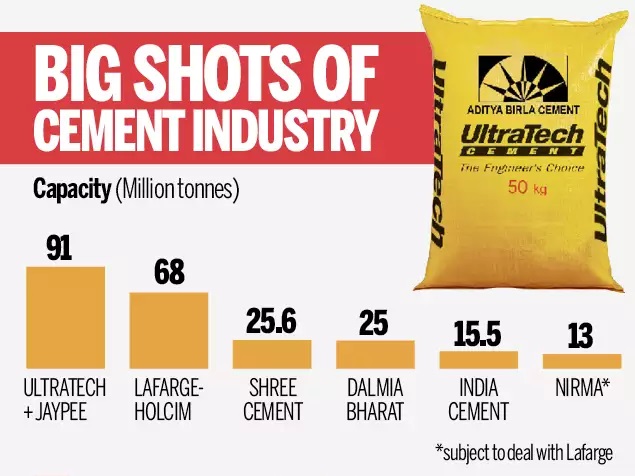
India already is the second largest cement producer in the world.India’s overall cement production capacity was around 545 million tonnes in FY20.Around 98% is produced by private sector rest by public sector and the top 20 companies account of production i.e 70% of the total cement production in India.It is expected that till 2025 around 550-560 million tonnes will be produced because of the expanding divisions like housing,commercial construction and industrial construction.

The deal is between famous detergent maker Nirma and Lafarge cement. In which Nirma is in talks to buy the India business of Lafarge Cement in the deal of the value of Rs 9400 crore. By this, the soap to soda enterprise will become the sixth-largest manufacture in India. If the deal goes well then the company will take on brands like Piramal & JSW. Nirma itself is going to finance the acquisition with a mix of equity & debt. It will increase the cement business to around 13 million tonnes from 2 million tonnes in the state of Rajasthan.

Nirma’s MD Hiren Patel said that,”this will be an transformational and a landmark step for the company’s cement business”.He also added that strong platform like Lafarge’s India business,we plan to take cement business to next level.The best part of Nirma in many years has been that the products that they produce are at lower cost through which everyone can afford.As everyone knows it that Nirma has always given tough competition to the likes of HUL and P&G.It is one of the major players in the field of detergent & toiletries segments.

Nirma had a plan to build a large size cement unit in Gujarat but the plan failed due to environmental issues. But later in November, it commissioned its first cement plant in Rajasthan. The buyout will be the second acquisition after Jaypee Cement by Ultratech for Rs 16189 crore.Lafarge is trying to enter the deal so that its partnership with Swiss Holcim should conclude & operate as single operator in the country.Previously,it tried to sell part of its business to Birla Corp but due to issues of the law it could not.

Analysts expect that Narendra Modi led government has a confidence that it will boost the cement demand in the country.From an annual growth rate of 10% in 2008,of late the rate had fallen to 4% while the prices has came down from Rs 1300 per tonne to Rs 700 per tonne now.

India registers highest single day recoveries with more than 70,000 COVID patients discharged

India’s TEST, TRACK and TREAT strategy is showing tangible results.The Recovery Rate of India touched a record high of more than 70000 patients being discharged in a single day.The highest ever single day recoveries of 70,072 were recorded in the last 24 hours. With this high number of COVID-19 patients recovering and being discharged from the hospitals and home isolation, the Recovery Rate now is 77.23%.This has also led to the declining Case Fatality Rate, which stands at a new low of 1.73%today.

Early identification through TESTING has led to higher daily number being reported but surveillance& contact TRACING along with focus on timely and appropriate clinical TREATMENT of patients have ensured speedy recovery.Higher number of recoveries and declining fatality has shown that India’s graded strategy has worked.

India has posted more than 22.6 lakh recoveries than the active cases (846,395).The active cases currently comprise only 21.04%of the total positive cases.

The total number of recoveries have crossed31 lakh (31,07,223) today.Five States have contributed to 60% of the total recoveries. Maharashtra has contributed the maximum recoveries amounting to almost 21%, followed by Tamil Nadu(12.63%) ,Andhra Pradesh (11.91%), Karnataka (8.82%) and Uttar Pradesh(6.14%).

Shri Piyush Goyal addresses the ACMA annual session;

Union Commerce and Industry & Railways Minister Shri PiyshGoyalhas called upon the Indian Automotive Component Manufacturers to work in the spirit of cooperation, collaboration, and commitment, and Compete with the rest of the world and grow with confidence.Addressing Automotive Component Manufacturers Association (ACMA)’s 60th Annual Session today, he said that Manufacturers have grown over the last few years and pushed themselves to be globally competitive.

The Minister said that the industry is ready for the future and going to emerge victorious in the post-COVID world. “It is only in the time of crisis that best comes out of our organisation. Through trade promotion, technology upgradation, quality enhancement, measures to collect and disseminate information, ACMA can be at the forefront of this new normal”, he added

Shri Goyal said that the entire country adopted the Prime Minister Shri NarendraModi’s clarion call of Aatmanirbhar Bharat to engage with the rest of the world from a position of strength and confidence for the way forward. He said that there is a huge demand for trusted partners in resilient global supply chains. “We will expand our global engagement. We see huge opportunities to expand businesses and provide truly high-quality products at competitive prices & become that trusted partner”, the Minister added.

Talking about the positive trends in the Indian economy, the Minister said “In the Railways, last month we have been able to grow our freight traffic by 4 percent over the corresponding period last year.In the current month, the trend is even better than that.Tractor sales have already been revived, two-wheelers and three-wheelers are also showing very good traction. It is a day to bring in positivity into our crystal gazing of the future, move out of pessimism. And look forward with hope and faith.”

The Minister said that we should start taking measures to tighten the belt, improve productivity, start looking at every element of cost and smarter solutions to become the preferred suppliers to customers. He said Aftermarket business can open up a lot of opportunities for ACMA if the industry starts looking at more affordability and more attractive ways. With perseverance towards quality and bringing in scale, the industry will certainly become more export competitive. He called for innovative financing for the auto industry.

Indian Railways to start Computer Based Test for notified vacancies from 15th December 2020

Indian Railways is going to start computer based tests for notified vacancies from 15th December 2020.

Indian Railways had notified 3 types of vacancies. These were 35208 for NTPC (non technical popular categories like guards, office clerks, commercial clerks etc), 1663 for Isolated & Ministerial categories (Steno & Teaches etc) and 103769 for Level 1 vacancies (track maintainers, pointsman etc). In all RRBs had notified a total of 1.40 lakh such vacancies for NTPC categories, Level-1 Posts and isolated and miscellaneous categories. Against the above vacancies, RRBs had received more than 2.40 crore applications. The Computer Based Test (CBT) for above vacancies had to be deferred due to Covid-19 pandemic and resultant lockdown which was imposed throughout country.

Scrutiny of the applications had been completed but the process of further examination had got delayed due to covid related restrictions.

RRBs of Railways are committed to hold the CBT for all the notified vacancies and have been actively assessing the ground situation imposed due to pandemic. Now that experience of conduct examination for the JEE for IITs and NEET is there, it was felt that Railways too can start the process which had to be stopped due to Covid pandemic.

SOPs for conduct of examination of this magnitude are being framed. Norms of social distancing and other protocols prescribed by the various Central and State authorities need to be followed which are essential in the interest of safety of candidates.

Railway now proposes to commence 1st stage online computer based tests from 15 December, 2020 and necessary action has been initiated in this regard.

Department of Biotechnology supported GCLP Facility for Viral Immunogenicity Testing now open for operations

Department of Biotechnology, Government of India has taken myriads of initiatives to increase investments in research and development (R&D) of affordable Biotech healthcare products. Establishment of National Biopharma Mission is one such endeavour to identify the needs and gaps of Biotherapeutics, Vaccine and Devices Industry and address those capacity bottlenecks.

Vaccine development requires extensive evaluation in humans to establish safety, immunogenicity and clinical efficacy. Centralised Viral and Bacterial clinical Immunogenicity labs meeting the stringent GCLP standards were therefore identified as a critical need for the vaccine Industry.

National Immunogenicity & Biologics Evaluation Center (NIBEC) for assessing clinical Immunogenicity of viral vaccines is established jointly by Bharati Vidyapeeth University through its constituent unit Interactive Research School for Health Affairs (IRSHA) and BIRAC-DBT, Government of India through National Biopharma Mission. The facility was inaugurated virtually by Dr Renu Swarup, Secretary, DBT, Government of India in an e-inauguration ceremony presided by Dr Vishwajeet Kadam, Minister of State; Government of Maharashtra.

NIBEC, having a dedicated area of about 10,000 sq ft, was established in a record time of just a year. It has state of the art one BSL-3+, 4 BSL-2 and 10 BSL-1 laboratories. Key immunogenicity evaluation tests like Plaque Reduction Neutralization Test (PRNT), Microneutralization assay, IgM and IgG ELISA have been developed, standardized and validated for Dengue, Chikungunya and SARS-CoV-2 viruses. The laboratory has already started associating closely with leading Indian vaccine manufacturing companies and National and International institutes engaged in vaccine developments.

Inaugurating the facility via video conference, Dr Renu Swarup, Secretary, DBT, said that she has very high expectations from NIBEC with regards to clinical immunogenicity testing of vaccine candidates specially with the COVID 19 vaccine pipeline in the country. She further elaborated that having domestic capabilities maintaining international standards in this space, will accelerate and fast track development of indigenous vaccines in the country.

Speaking on the subject, Dr Vishwajeet Kadam, Minister of State; Government of Maharashtra said that Government support for creation of such a facility at IRSHA is heart-warming. He acknowledged and thanked the support of DBT and BIRAC.

About DBT

The Department of Biotechnology (DBT), under the Ministry of Science & Technology, promotes and accelerates the development of biotechnology in India, including growth and application of biotechnology in the areas of agriculture, healthcare, animal sciences, environment and industry.

About BIRAC:

Biotechnology Industry Research Assistance Council (BIRAC) is a not-for-profit Section 8, Schedule B, Public Sector Enterprise, set up by Department of Biotechnology (DBT), Government of India as an Interface Agency to strengthen and empower the emerging Biotech enterprise to undertake strategic research and innovation, addressing nationally relevant product development needs

About National Biopharma Mission:

The Industry-Academia Collaborative Mission of Department of Biotechnology (DBT), Govt of India for accelerating discovery research to early development for Biopharmaceuticals approved by the Cabinet for a total cost US$ 250 million and 50% co-funded by the World Bank is being implemented at Biotechnology Research Assistance Council (BIRAC). This program is dedicated to deliver affordable products to the nation with an aim to improve the health standards of India’s population. Vaccines, medical devices and diagnostics and biotherapeutics are few of its most important domains, besides, strengthening the clinical trial capacity and building technology transfer capabilities in the country.

About IRSHA:

Interactive Research School for Health Affairs (IRSHA) is a unique constituent unit of Bharati Vidyapeeth (Deemed to be University), totally dedicated to research. The institute was established in 2001. The institute is mandated to conduct research in priority areas of human health in co-ordination with other constituents of the university like Medical, Ayurveda, Homeopathy, Dental colleges, Rajiv Gandhi Institute of IT & BT, Environmental sciences etc. The core area of research includes Mother and child health, Cancer, Diabetes, Obesity, Osteoarthritis & Herbal medicine.

Machine learning solution can make exploring geo-resources simpler

Scientists struggling with the manual interpretation of growing seismic data to explore causes of earthquake, particularly when the area is geologically complex, are now armed with a machine learning-based solution that can help in automatic interpretation of this data.

Effective detection of subsurface geologic features from surface seismic data is very important for understanding the geotectonic, basin evolution, resource exploration, and process that causes earthquakes (seismogenesis) of an area. For this, acquisition of seismic data keeps on growing, making the processing computationally intensive and interpretation tedious. Thanks to high-performance computing systems, that have allowed analysis of such voluminous data within a reasonable time after receiving guidance and inputs from interpreters. However, human analysts struggle for manual interpretation, particularly when the area is geologically complex and data is copious.

To automate the process and accelerate the interpretation, Scientists from Wadia Institute of Himalayan Geology(WIHG), an autonomous Institute under the Department of Science & Technology, Govt. of India, have developed a neural-based (machine learning-based) practical approach for automatic interpretation of 3D seismic data. This first of its kind approach has been developed by computing a new attribute called meta-attribute.

The tabular sheet intrusions between older layers of sedimentary rock or beds of volcanic lava (sill complexes) significantly contribute to the transport and storage of hot magma, and leading to overburden. This acts as plausible structural traps for hydrocarbon accumulations in sedimentary basin. The petroliferous (petroleum containing) Canterbury basin off New Zealand is a classic example, where saucer-shaped magmatic sills are embedded within the Cretaceous to Eocene (geological period that lasted from about 145 to 33.9 million years ago) succession resulting into forced folds and hydrothermal vents above the sill terminations.

Scientists from WIHG captured this scenario by designing a workflow and computing Sill Cube (SC) and Fluid Cube (FC) meta-attributes. These are hybrid attributes that are generated by amalgamating a number of seismic attributes (associated with the geologic targets) using a neural-based approach.  This study is published in the research journal ‘Tectonophysics’. The WIHG team prepared the meta-attributes following supervised neural learning (machine learning), where computing systems are trained under the guidance of a human analyst.

According to the findings of this study, individual sills cover from 1.5 km2 to17 km2 areas, respectively. Moreover, the fluxed-out magmatic fluids from the tip of the principal sills vertically rise to a height of around 800 m through hydrothermal vents and uplift the overburden. Such an interpretational approach is automated and effectively narrates subsurface magmatic activities from 3D seismic data.

This work is an important step forward towards application of machine learning to address geological problems and looks promising in understanding complex geological processes in an active mountain belt such as the Himalaya.

Low ozone over Brahmaputra River Valley brings good news for health of people

There is good news for the Brahmaputra River Valley (BRV). Researchers have found that the concentration of near surface ozone in this region in the North-East corner of India is low compared to the other urban locations in India

Scientists at the Aryabhatta Research Institute of Observational Sciences (ARIES), Nainital an autonomous research institute under the Department of Science and Technology (DST) Govt. of India have evaluated the near surface ozone in the Brahmaputra River Valley (BRV) and found relatively low concentration of Ozone over Guwahati compared to the other urban locations in India. Their present work has been published recently in the journal ‘Atmospheric Pollution Research’.

Tropospheric, or ground-level ozone, is created by chemical reactions between oxides of nitrogen (NOx) and volatile organic compounds (VOC). It usually increases when pollutants emitted by cars, power plants, industrial boilers, refineries, chemical plants, and other sources chemically react in the presence of sunlight, impacting human health.

In the study led by Dr. Umesh Chandra Dumka (Scientist, ARIES, Nainital, India) along with contributions by Dr. A. S. Gautam (Professor at Hemvati Nandan Bahuguna Garhwal University), Dr. Suresh Tiwari (Scientist Indian Institute of Tropical Meteorology, New Delhi Branch) and Prof. Philip K. Hopke (Adjunct Professor, University of Rochester School of Medicine and Dentistry, USA) and Prof. R. K. Chakrabarty (Washington University, USA) and other team members analysed the variability of ozone and other air pollutants over Brahmaputra River Valley region. It also assessed seasonal, day of week, and characteristics of ozone to identify the emission source of ozone and its precursors, especially methane (CH4) and NMHCs, along with study the relationships between the meteorological parameters, ozone and its precursors in a tropical setting.

The examination of nitric oxide, nitrogen dioxide, and ozone concentrations in this study suggested that this site is well influenced by local sources such as adjacent major national highway. During the daylight hours, the site is in or nearly in a photo-stationary state, indicating a low impact of organic species on the ozone concentrations.

Time to change appeal from “Don’t be afraid, take precaution” to “Don’t be careless, take precaution”: Prakash Javadekar

“Next month will be crucial for containment of COVID-19 in Pune, hence it is necessary that we change our appeal from “Don’t be afraid, take precaution” to the new appeal of “Don’t be careless, take precaution”. The Union Minister Shri Prakash Javadekar said this, after taking stock of Covid situation in Pune today.

The Minister held three meetings today to review the spread of COVID-19.  The first meeting was with officials of district and state government. The second meeting was with people’s representatives and the third with editors of newspapers.  “We received many suggestions and we have formulated a plan of action. We will increase antigen tests in containment zones. We will also soon begin second round of serological survey; this time, the sample will be bigger”, he said briefing media in the evening.

The third initiative that will be taken is the implementation of directives to wear masks.  Strict fines will be levied: Rs. 500 for not wearing masks and Rs. 1,000 for spitting in public.

“We need to break the chain. Cooperation from the media is very important in this fight, it is everyone’s fight. Coordination among various agencies is necessary. We have also decided that updated information will be shared periodically so there is no information gap. The centre will give all possible help in this regard. In a day or two, we will come out with an action plan for Jumbo facilities” Shri Javadekar added.

Earlier, newspaper editors gave various suggestions for containment of COVID-19.  It was suggested that fatigue due to continuous hard work of 3 to 4 months was being observed and that law enforcement agencies seemed to be exhausted and were seen in fewer numbers on roads. It was also suggested to create a one stop solution for providing information about ambulance and availability of beds.

A cyclonic circulation lies over southwest Uttar Pradesh &neighbourhood

According to the National Weather Forecasting Centre/Regional Meteorological Centre, New Delhi of the India Meteorological Department (IMD):

SignificantWeatherFeatures  (September 05, 2020):

♦ The Monsoon Trough at mean sea level lies north of its normal position.

♦ A cyclonic circulation lies over southwest Uttar Pradesh &neighbourhood and another over northwest Rajasthan in the lower tropospheric levels.

Under its influence;

  1. Scattered to Fairly widespread rainfall with isolated heavy rainfall accompanied with thunderstorm & lightning very likely over Rajasthan.
  2. Isolated to scattered rainfall with isolated thunderstorm & lightning very likely over West Uttar Pradesh, Haryana, Chandigarh & Delhi on 05th September, 2020.

♦ A cyclonic circulation lies over southeast and adjoining eastcentral Arabian Sea at lower & middle tropospheric levels and an east-west shear zone runs roughly along 10°N across peninsular India in the lower tropospheric levels.

Under its influence:

  1. Fairly widespread to widespread rainfall with isolated heavy falls and thunderstorm & lightning very likely over Peninsular India during next 3-4 days.
  2. Scattered to fairly widespread rainfall with Isolated heavy to very heavy rainfall accompanied with thunderstorm & lightning also very likely over Vidarbha and Chhattisgarh on 05th September, 2020.
  • Moderate thunderstorms with lightening very likely over Rajasthan, Haryana, Chandigarh & Delhi, west Uttar Pradesh, Chhattisgarh, Vidarbha, Odisha, East Madhya Pradesh, north Madhya Maharashtra & Marathwada and Tamilnadu, Puducherry &Karaikal during next 12 hours.

FORECAST:

05 September (Day 1): ♦ Heavy to very heavy rainfall very likely at isolated places over Chhattisgarh and Tamilnadu, Puducherry &Karaikal and heavy rainfall at isolated places over Rajasthan, Vidarbha, Sub-Himalayan West Bengal & Sikkim, Odisha, Andaman & Nicobar Islands, Arunachal Pradesh, Assam & Meghalaya, Madhya Maharashtra, Telangana and South Interior Karnataka.♦ Thunderstorm accompanied with lightning very likely at isolated places over Punjab, Haryana, Chandigarh & Delhi, West Uttar Pradesh, Rajasthan, Bihar, south Gujarat state, Madhya Pradesh, Vidarbha, Chhattisgarh, West Bengal & Sikkim, Odisha and Andaman & Nicobar Islands, Arunachal Pradesh, Assam & Meghalaya, Madhya Maharashtra, Marathwada, Konkan & Goa, Coastal Andhra Pradesh &Yanam, Telangana, Rayalaseema, Karnataka, Tamilnadu, Puducherry &Karaikal and Kerala &Mahe.♦ Strong Wind (speed reaching 45-55 kmph) very likely over Southwest Arabian Sea and Squally Weather with wind (speed reaching 45-55 kmph) over & Southeast Arabian Sea and Maldives area. Fishermen are advised not to venture into these areas.
06 September (Day 2): ♦ Heavy to very heavy rainfall very likely at isolated places over Sub-Himalayan West Bengal & Sikkim and heavy rainfall at isolated places over Uttarakhand, Odisha, Arunachal Pradesh, Assam & Meghalaya, Madhya Maharashtra, Karnataka, Tamilnadu, Puducherry &Karaikal and Kerala &Mahe.♦ Thunderstorm accompanied with lightning very likely at isolated places over East Madhya Pradesh, Vidarbha, Chhattisgarh, Jharkhand, Gangetic West Bengal, Odisha, Assam & Meghalaya, Madhya Maharashtra, Marathwada, Konkan & Goa, Coastal Andhra Pradesh &Yanam, Telangana, Karnataka and Tamilnadu, Puducherry &Karaikal.♦ Strong Wind (speed reaching 45-55 kmph) very likely over Southwest Arabian Sea and Squally Weather with wind (speed reaching 45-55 kmph) over & Southeast Arabian Sea and Maldives area and along & off Comorin & Gulf of Mannar, Kerala- Lakshadweep area. Fishermen are advised not to venture into these areas.
07 September (Day 3): ♦ Heavy to very heavy rainfall very likely at isolated places over Sub-Himalayan West Bengal & Sikkim and South Interior Karnataka and heavy rainfall at isolated places over Chhattisgarh, Odisha, Assam & Meghalaya, Telangana, Coastal & North Interior Karnataka and Kerala &Mahe.♦ Thunderstorm accompanied with lightning very likely at isolated places over East Madhya Pradesh, Vidarbha, Chhattisgarh, Bihar,Jharkhand, Assam & Meghalaya, Nagaland, Manipur, Mizoram & Tripura, Konkan & Goa, Coastal Andhra Pradesh &Yanam and Telangana.♦ Strong Wind (speed reaching 45-55 kmph) very likely over Southwest Arabian Sea and Squally Weather with wind (speed reaching 45-55 kmph) over & Southeast Arabian Sea and along & off Kerala-Lakshadweep area. Fishermen are advised not to venture into theseareas.
08 September (Day 4): ♦ Heavy rainfall likely at isolated places over East Madhya Pradesh, Vidarbha, Chhattisgarh, Sub- Himalayan West Bengal & Sikkim, Assam & Meghalaya, Nagaland, Manipur, Mizoram & Tripura, Coastal Andhra Pradesh &Yanam, Telangana, Rayalaseema, Coastal Karnataka and Kerala &Mahe.♦ Thunderstorm accompanied with lightning likely at isolated places over Bihar, Jharkhand, Gangetic West Bengal, Odisha, Assam & Meghalaya, Nagaland, Manipur, Mizoram & Tripura, Coastal Andhra Pradesh &Yanam, Telangana and Rayalaseema.♦ Strong Wind (speed reaching 45-55 kmph) very likely over Southwest and Squally Weather with wind (speed reaching 45- 55 kmph) over Southeast Arabian Sea and Comorin area, Gulf of Mannar. Fishermen are advised not to venture into these areas.
Kindly download MAUSAM APP for location specific forecast & warning, MEGHDOOT APP for Agromet advisory and DAMINI APP for Lightning Warning.
09 September (Day 5): ♦ Heavy rainfall likely at isolated places over East Madhya Pradesh, Vidarbha, Chhattisgarh, Sub- Himalayan West Bengal & Sikkim, Odisha, Andaman & Nicobar Islands, Assam & Meghalaya, Nagaland, Manipur, Mizoram & Tripura, Coastal Andhra Pradesh &Yanam and Telangana.♦ Thunderstorm accompanied with lightning likely at isolated places over Bihar, Jharkhand, Assam & Meghalaya, Nagaland, Manipur, Mizoram & Tripura, Coastal Andhra Pradesh &Yanam, Telangana and Rayalaseema.♦ Strong Wind (speed reaching 45-55 kmph) very likely over Southwest Arabian Sea and Squally Weather with wind (speed reaching 45-55 kmph) Comorin area, Gulf of Mannar. Fishermen are advised not to venture into these areas.

Indian Railways to run additional 40 pairs of more special trains w.e.f. 12th September 2020

Ministry of Railways (MoR) in consultation with Ministry of Health & Family welfare (MoHFW) and Ministry of Home Affairs(MHA) has decided to run 40 pairs (80trains) of more special trains from 12th September 2020. These 40 pairs of special trains shall be operated as per the details mentioned in the annexure. (link is given below). The booking of accommodation in these trains shall start from 10th September, 2020. These will be fully reserved trains. 

These trains will be in addition to the existing30 special Rajdhani type trains started w.e.f. 12.05.2020 and 200 Special Mail Express trains introduced w.e.f. 01.06.2020 (total 230 trains). 

It may be noted that presently Indian Railways is running 30 special Rajdhani type trains started w.e.f. 12.05.2020 and 200 Special Mail Express trains introduced w.e.f. 01.06.2020 (total 230 trains).

Hon. President and Prime Minister to address the Governors’ Conference on NEP-2020

Hon President of India Shri Ram NathKovind and Prime Minister Shri Narendra Modi shall address the inaugural session of the Governors’ Conference on National Education Policy on at 1030 AM on 7th September 2020, through video conference.

The Conference titled “Role of NEP-2020 in Transforming Higher Education” is being organized by the Ministry of Education, Govt of India.

NEP-2020 is the first education policy of the twenty-first century which was announced after 34 years of the previous National Policy on Education 1986. NEP-2020 is directed towards major reforms in both school and higher education level.

The new National Education Policy strives for making India into an equitable and vibrant knowledge society. It envisions an India-centred education system that contributes directly to transforming India into a Global Superpower.

The comprehensive transformation aimed the NEP will bring about a paradigm shift in the country’s education system and create an enabling and reinvigorated educational ecosystem for a new Atmanirbhar Bharat envisaged by Hon’ble Prime Minister of India.

Various Webinars, Virtual Conferences, and Conclaves on various aspects of National Education Policy 2020 are being organised across the country.

The Ministry of Education and University Grants Commission earlier organized a “Conclave on Transformational Reforms in Higher Education under National Education Policy-2020” which was addressed by the Prime Minister Shri Narendra Modi.

The Governors’  Conference on 7th September is also being attended by Education Ministers of all States, Vice-Chancellors of State Universities and other senior officials.

The address of the Hon. President and Prime Minister shall be live telecast on DD News.

Rankings of States in Ease of Doing Business

In India from last few years ease of doing business has been given a lot of importance and due to this the country is on another level now for doing business.The changes that have been done in the promotion of business in India has led to more FDI coming in the country and investors are happy for their investment and gaining good amount of profit.

In the list Andhra Pradesh in on the top again followed by Uttar Pradesh which was on 12th position has climbed to 2nd position and on 3rd position is Telangana which has dropped from 2nd to 3rd.Haryana,Karnataka,Odisha saw their ranks dip significantly.This data are based on Business Reform Action Plan is based on user feedback,ignoring reform claims by state governments.This result was represented by Finance minister Nirmala Sitharaman with her cabinet ministers.

Commerce & Industry Minister Piyush Goyal said that these rankings reflect the efforts taken by different states to improve their system and processes.The ranking which was started in 2015 with 285 action points,expanded to 372 measures in 2017-2018 spread across 12 areas including registering property,paying taxes and regulation enables.For 2019,the performance of states and union territories have been measured through more than 180 indicators based on user feedback.

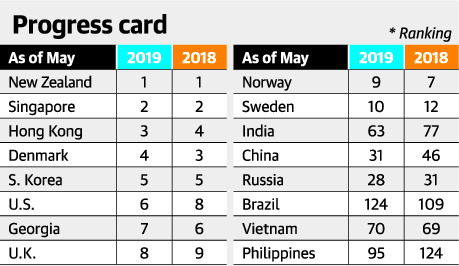
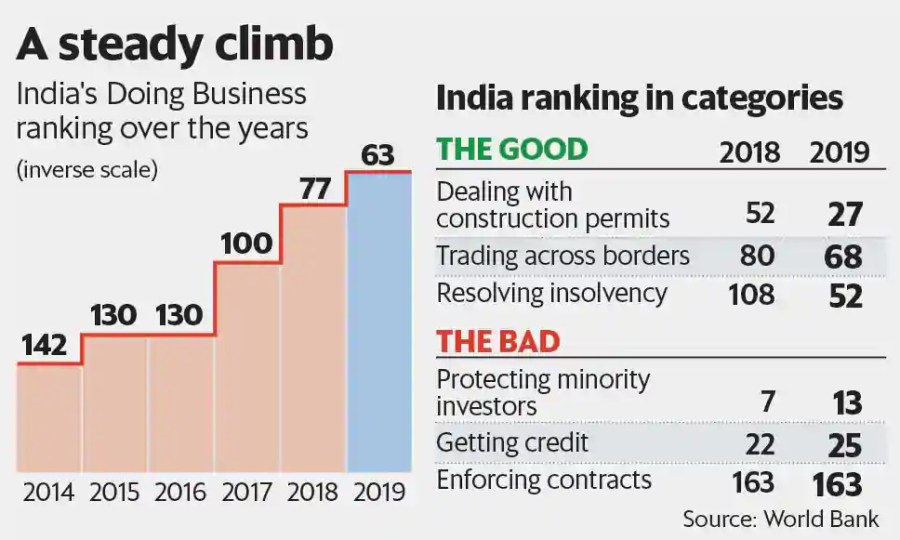
The exercise of doing this is for promoting the business in different states and encouraging the business climate the attract business in different sectors as well as foreign investments.This is the fourth edition of the report and DPIIT collaboration with world bank conducts an annual reform for all over the states & UTs.It is also been noted that India has jumped into places and came to the 63rd position for“Doing Business”.

So this is the New India which is going to give a great platform for the youth.It is great opportunities for the young people to present their new ideas at great level so that society will be very helpful for their talents.Example for this Mr Arjun Deshpande of Generic Aadhaar which is great startup which is helped by one of the greats in the industry by Ratan Tata.

Check your privilege : Veganism.

There is a sense of entitlement that goes along with being vegan. In case you aren’t familiar with veganism, it is best described as vegetarian fundamentalism.
According to the Oxford dictionary; “Veganism is the practice of abstaining from the use of animal products, particularly in diet, as well as following an associated philosophy that rejects the commodity status of sentient animals.”  Although like most ideologies and religions there are varying degrees of adherence, vegans do not consume, wear, possess or use products that involve the use of animals.

Most vegan substitutes, like nondairy milk or cheese, fake meats, and other specialty ingredients for recipes are expensive. If someone were lower-class and struggling financially, buying these foods absolutely would not be a possibility.
Yet, many middle and upper class vegans will still shame people who cannot afford to spend an excessive amount of money on food.
No, no one’s bashing veganism, mose people’s intentions are good but the thing is one can’t ignore the unprivileged people while talking about veganism.
Speaking specifically about our own country, we need to check our privilege when promoting veganism. Almond milk for eg, costs around Rs.390/litre. Clearly, not everyone can afford that.

People who are being crushed by the demands of capitalism and facing oppression are often not thinking about going vegan.
Yet, privileged vegans (not all) will still find it necessary to indirectly shame them by boasting about how cheap being vegan really can be and why everyone should go vegan because of this.
Ignoring the fact that tribal people have been relying on meat for generations in order to survive and that the current situation is the fault of capitalists, is problematic.
In many regions, eating home reared is more sustainable than clearing land of vegetation for agriculture.

When families are struggling to put food on the table, the last thing they need is to be shamed for what kind of food that is.

The problem with the vegan movement isn’t its aims and goals at stopping animal cruelty and saving the environment. The problem is a perceived lack of accessibility and options for many Indians. While having food choice is a privilege, having that privilege used for justice is essential.

When vegans pressure their diet onto others, they neglect to acknowledge both financial struggles and accessibility.
Caring for animals isn’t wrong, but it’s  socially irresponsible to care more for animals than humans, especially when so many are falling below the poverty line and struggling to afford food of any kind.

If it is a viable option for you to go vegan, you can simultaneously follow the diet while acknowledging that by accident of birth only, you have the financial means to maintain the practice. By the same token, if you believe this is a lifestyle option that should be equally accessible to everyone, you can use your platform and knowledge to fight for the deconstruction of a system that prevents this accessibility.

Doing this will be more effective than condemning those are not vegan for reasons personal to them.
It’s unfair but realistic that a financially comfortable individual will find it easier to pursue a healthy vegan diet than someone at a comparative economic disadvantage.
We also cannot hold people morally accountable if they have grown up in a culture that says there is nothing wrong with eating meat; it is a necessary part of human nutrition and we are not bad for doing so.

I support going vegetarian or vegan if you have the privilege to do so, because I truly do believe it can make a positive impact on our environment, but one can’t force it on others without realizing the fact that everyone isn’t in the same economic or dietary position.