

How to balance both work & life ?

There used to be a time when the domain of work and personal life were clearly distinct. But with globalization becoming the norm of the day the chances of work encroaching into one’s personal life and vice versa has become alarming. If you think one day you will be lucky enough to get everything set and then relax, you are bound to be disappointed. Life will be always demanding and may not slow up any time soon. Learning to strike a balance between work and life is an ongoing art. Despite the never ending quest for ‘Work-Life Balance’ it has been cropping in our mind what does it actually mean.  

Work–life balance is a broad concept including proper prioritizing between “work” ( career and ambition ) on the one hand and “life” ( health, pleasure, leisure, family and spiritual development ) on the other. It is also related to “lifestyle balance” and “life balance”. Sadly, there is no perfect ‘one-size fits all’, balance you are looking for. It is different for each of us because we all have different priorities and different lives. Trying to schedule an equal number of hours for each of your various work and personal activities seems unrealistic and robotic. Life is and should be more fluid than that.  

The paradox is that right balance for you today will probably be different tomorrow say when you are single or when you get married, or when you start a new career or are nearing your retirement. Work-life balance is a two-pronged approach. The other prong of work-life balance, which many individuals overlook, relates to what individuals do for themselves. Our haphazard lifestyle has put us in the paraphrase of “I am running all the time.” At the core of an effective work-life balance are two key concepts that are relevant to all of us. They are daily achievement and enjoyment. Why do you want a better income, a new house, a good college or a dream job ? Achievement and Enjoyment are the front and back of the coin of value in life. Trying to live a one sided life is why so many “successful” people are not nearly as happy as they should be.  

Engraining a fuller meaning of these two concepts is like half the battle won to define a positive ‘Work-Life Balance’. Most of us already have a good grasp on the meaning of achievement. But enjoyment is not restricted to simply ha ha. It means pride, satisfaction, happiness, celebration, love, a sense of well being, in a nutshell it means all the joys of living. On the other hand corporate world today has become exceedingly demanding. The changing economic conditions and social demands have changed the nature of work throughout the world. Within the ramped up competition of a 24/7 business cycle, ‘work-life’ balance is becoming unbalanced. The imbalance also has a negative impact in the personal life of working people- increasing number of divorces, infertility due high stress levels, advent of nuclear families etc.  

While we strike for a work life balance, we are not merely balancing our profession and family, we are also balancing our mental and status quo and thereby balancing our emotional intelligence, which is the worldly ability to manage you and to handle others. This benefits the company in the long-run. Similarly, women work force now constitutes a significant percentage of the total work force in any organization today. Women executives have to deal with- running a home, doing daily chores like cooking/cleaning, raising family and handle the tight deadlines at home and work. The society over the years has recognized women’s need to legal and financial independence. But the transition to motherhood still continues to have practical and emotional consequences. It also affects their professional stature when they return to work.  

Organizations today to some extent have realized the importance of the employee-work-life balance and its importance in the efficiency of the employees. They can help facilitate work-life balance for their employees through work-life programs and training. In offices also, efforts are being made to provide friendly work atmosphere for the employees by providing all sorts of refreshments available for the employee. The employees are given the freedom to have their own ways of doing the work. They are given the assignments with deadlines and they can have their own schedule as far as they are meeting the deadlines. Some organizations have gone to the extent of involving the families of the employees by introducing maternity leaves / paternity leaves and various holiday packages and insurance schemes. Organizations now focus on grooming their employees who are now not considered merely a work force but regarded as the ‘Human Capital’ of the organization.  

To maintain work-life balance is an arduous task. But still it is within one’s reach, if one follows the simple tips listed here :  

Plan your agenda : Start your day by taking care of the little things you have to do at home. A little planning is essential. Taking care of home needs in advance will help you to be less tensed during working hours. Strike a work-life balance by evaluating your work-home relationships like listing out the amount of time you are spending at work and home.  

Organize : Everything in your business should be set up using logical systems so anyone needing anything can find it when they need it.  

Prioritize ruthlessly : The secret to booking your time effectively boils down to knowing what’s important and what can wait. Ask questions that help you determine the level of urgency.  

Don’t overbook : Things rarely go according to a prearranged agenda. Don’t try to plan on doing too many things. Assume that only 50% of the things you plan on doing today will actually get done. If you don’t, you’ll just waste valuable time trying to find out why things didn’t happen.  

Be Productive : Switch on to the work mode when you are at work. Be sure that you shut off the part of the brain that makes you worry about your home life. Remind yourself that it is work time and you need to be most productive.  

Learn to say no : One of the biggest land mines to effective time management is recognizing you don’t have to agree to everything and with everyone. Use your priority criteria to identify requests that simply aren’t worth your time.  

Everything is not perfect : Time management isn’t an exact science. Do what you can and enjoy whatever time you spend more pleasantly or productively.  

Focus on Home Life : While you are enjoying your home life, try to avoid intruding into work life by checking emergency e-mails or answering work- related phone calls. The best way to focus on home life will be crumbled to pieces if you intrude into your work life while at home.  

Hence, the concept of ‘Work life balance’ is becoming more and more relevant in a ever-dynamic working environment. The role played by the individual is as important as that of the organization in managing this tumultuous see saw. One of the best approaches to this is by the use of one’s emotional intelligence. Be sure to remember that striking a work-life balance is a continuous process, rather than a one-shot deal. Work and home life should be balanced. If there is a tilt in the balance there are chances of soaring stress levels.
Business success in failure

No business is a failure until you give up. Business literature is full of people, who despite having faced setbacks, have risen beyond the challenges and moved forward in life. There are ups and downs in any business and it is important to learn from one’s mistakes and make improvements on existing plans. In particle physics, it is said that sub-atomic particles are so small that they cannot be observed until they collide with one another. The same principle applies in the business arena. If your business is doing well, it is difficult or even impossible to tell the difference between success and failure. However, once problems arise, your tenacity and determination to succeed are tested. This is when success and failure becomes evident.   

Walt Disney, co-founder of Walt Disney Productions, dream of becoming a newspaper cartoonist when he was young. However, no one was willing to hire him. So, he established a commercial art studio and took up a part-time job to support himself. Later, he started an animation company, which was a huge success in Kansas City, US. Unfortunately, the company went bankrupt. But this did not stop Walt Disney from pursuing his dreams and interests. Despite his initial failure, he rose to the challenge, learnt from his mistakes and started all over again in Los Angeles, US. Today, Walt Disney is considered one of the greatest entrepreneurs of all time. And Walt Disney Productions, now popularly known as The Walt Disney Company, is a multi-billion dollar company, with more than 150,000 employees worldwide.   This is a true example of ‘business success in failure’. In every setback, Walt Disney learnt important and valuable lessons, which acted as seeds that eventually grew into a tree of success.  

According to experts, acceptance of failure is essential for business growth. Making mistakes is not taboo; not understanding your mistakes is taboo and detrimental to progress. Kingfisher Airlines was one of the top performing companies in India till December 2011. In fact, its customer base was growing by leaps and bounds and it had the second largest share in India’s domestic air travel market. Unfortunately, due to a major financial crisis faced by the company in early 2012, its market share fell sharply and it was forced to shut down its operations. There are many airline companies in the world that have faced financial problems. However, they have managed to enhance their services and products to gain more market share. One such company is Southwest Airlines.  

Every year, Southwest Airlines manages to turn a profit, even during difficult times. After many trials and errors, Southwest Airlines managed to come up with a policy that works for them – keep operations simple. This way, the airline company saves cost and manages to attract more passengers. Southwest Airlines does not assign seat numbers. This way, when there are last minute changes to an airplane, the crew need not make changes to seating arrangement and issue new boarding passes. Such innovations and novel ideas are essential for the survival of businesses. It is true that failure is the forgotten ingredient of business success. People associate failure with shame, embarrassment and weakness. Failure is disappointing, no doubt, but it makes a business stronger. Once you know what can hurt your business, you will try your best to avoid them and prevent mistakes from occurring again. Plus, failures make you more confident of your abilities. Business leaders who have faced challenges are more determined and confident than those who have been enjoying success all along. So, business is not considered a failure when its market share drops or it loses revenue; it is a failure when you give up.  

Businesses fail for many reasons. The following list includes some of the most common reasons :

1 – Lack of planning – Businesses fail because of the lack of short-term and long-term planning. Your plan should include where your business will be in the next few months to the next few years. Include measurable goals and results. The right plan will include specific to-do lists with dates and deadlines. Failure to plan will damage your business.

2 – Leadership failure – Businesses fail because of poor leadership. The leadership must be able to make the right decisions most of the time. From financial management to employee management, leadership failures will trickle down to every aspect of your business. The most successful entrepreneurs learn, study, and reach out to mentors to improve their leadership skills.

3 – No differentiation – It is not enough to have a great product. You also have to develop a unique value proposition, without you will get lost among the competition. What sets your business apart from the competition? What makes your business unique? It is important that you understand what your competitors do better than you. If fail to differentiate, you will fail to build a brand.

4 – Ignoring customer needs – Every business will tell you that the customer is #1, but only a small percentage acts that way. Businesses that fail lose touch with their customers. Keep an eye on the trending values of your customers. Find out if they still love your products. Do they want new features? What are they saying? Are you listening? I once talked to the CEO of a training company who told me that they don’t respond to negative reviews because they are unimportant. What? Are you kidding me?

5 – Inability to learn from failure – We all know that failure is usually bad, yet it is rare that businesses learn from failure. Realistically, businesses that fail, fail for multiple reasons. Often entrepreneurs are oblivious about their mistakes. Learning from failures is difficult.

6 – Poor management – Examples of poor management are an inability to listen, micro-managing – AKA lack of trust, working without standard or systems, poor communication, and lack of feedback.

7 – Lack of capital – It can lead to the inability to attract investors. Lack of capital is an alarming sign. It shows that a business might not be able to pay its bills, loan, and other financial commitments. Lack of capital makes it difficult to grow the business and it may jeopardize day-to-day operations.

8 – Premature scaling – Scaling is a good thing if it is done at the right time.  To put it simply, if you scale your business prematurely, you will destroy it. For example, you could be hiring too many people too quickly, or spend too much on marketing. Don’t scale your business unless you are ready. Pets.com failed because it tried to grow too fast. They opened nationwide warehouses too soon, and it broke them. Even the great brand equity that they have built couldn’t save them. Within a few months, their stock went from $11 to $0.19.

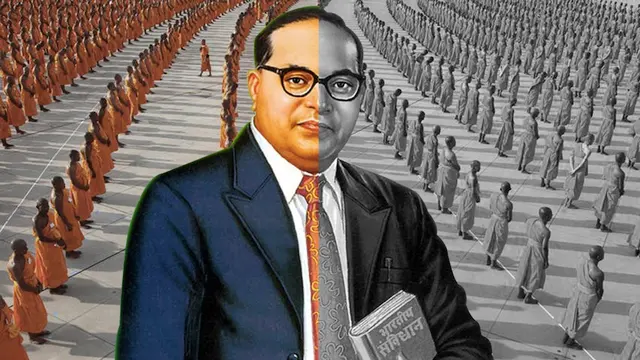
B. R. Ambedkar

Bhimrao Ramji Ambedkar was an Indian economist, politician and social reformer. He was also known as Babasaheb Ambedkar. He campaigned against social discrimination against the lower castes or Dalits of the country. Completing his doctorate from Columbia University and The London School of Economics, he gained reputation as a scholar for his research in economics, law and political science. 

In the early phases of his career, he was an economist, professor and lawyer. Towards the later phases, he was actively involved in campaigns for India’s independence. He published journals and advocated for political and social rights for Dalits. He made a significant contribution to the establishment of the state of India. He was the first Minister of Law and Justice of India and the chief architect of the Constitution of India. 

He had a Marathi family background and was from the town of Ambadawe in Ratnagiri district of modern-day Maharashtra. Ambedkar was born into a poor Mahar (Dalit caste), who were treated as untouchables and faced a lot of socio-economic discrimination. Although he attended school, Ambedkar and other untouchable children were segregated from the rest of the children and given little attention by teachers. They were not even allowed to sit inside the class. He had to sit on a gunny sack which he took home after school. When they needed to drink water, someone from a higher caste had to pour that water from a height as they were not allowed to touch the water vessel. It was usually the peon who did this for him and on days when the peon was not available, he had to go without water. He had later described this as “No peon, No water” in one of his writings.  

During British rule, Ambedkar’s effort for the political representation of the oppressed untouchables of India bore fruit in the 1920s. The colonial state was forced to include two members from among the Dalits in the Round Table Conference in 1930. This eventually led to the framing of the Government of India Act, 1935.   

From 1927, Ambedkar launched active movements against untouchability. He began public movements and marches to open up public drinking water resources for all. He led a satyagraha in Mahad to fight for the right of the untouchable community to draw water from the main water tank of the town. He also began a struggle for the right of Dalits to enter Hindu temples. In a conference in1927, Ambedkar publicly condemned the Hindu text Manusmriti (Laws of Manu), for ideologically justifying caste discrimination and “untouchability”. He ceremonially burned copies of the ancient text. On 25th December 1927, he led thousands of followers to burn copies of Manusmrti. Since then 25 December is celebrated as Manusmriti Dahan Din (Manusmriti Burning Day) by Ambedkarites and Dalits.  

In 1956, he converted to Buddhism, initiating mass conversions of Dalits which eventually led to the Dalit-Buddhist movement. 

A few days after completing his final manuscript ‘The Buddha and His Dhamma’, he died in his sleep on 6 December 1956 at his home in Delhi.  

WHY SO NEGATIVE FOR BURKHA ?

IT WAS EVENING , I WAS CHILLING OUT WITH MY FRIENDS ONLINE , AS EVERYTHING IS VIRTUAL NOW A DAYS ,BUT , WE GET CHANCE TO TASTE NEW THINGS AND SAVING NEW MEMORIES . WE WERE TALKING ABOUT RANDOM THINGS AND TAKING FREQUENT SWITCH FROM ONE TOPIC TO ANOTHER . MY BUDDIES ARE VAERY MUCH IN INTRESTED IN KNOWING ABOUT MY RELIGION ‘ISLAM’ , THEY USUALLY ASK ME QUESTIONS AND OPINIONS ABOUT NUMERABLE THINGS REGARDING IT AND I LOVE ANSWEREING IT . ONE OF THEM ASKED ME ABOUT MY FAMILY ‘s NATURE REGARDING MY STUDIES , ARE THEY OPEN MINDED IN THIS CASE ? , I SAID YES , IF THEY WERE NOT , THEY WOULD HAVE ENROLLED IN DISTANCE EDUCATION RATHER THAN IN A REGULAR COLLEGE . HE FURTHER ELABORATED THE QUESTION BY ADDING HIS THOUGHTS ABOUT BURKHA IN IT . I WAS NOT SHOCKED WHEN HE SAID , ” MTLB ZADA SHADI KRDO N BHURKHA , VGERA ” . MY EYES SHINED UP AFTER READING THEESE WORDS AND I TOOK IT AS AN OPPORTUNITY TO CLEAR THE VISION REGARDING “BURKHA WEARING ” .

AN IDEA CLICKS IN MY MIND , TO WRITE AN ARTICLE ON IT . I KNOW HE IS NOT THE ONLY ONE WHO HAS THIS PERCEPTION BUT THERE ARE MANY WHO HAVE THIS KIND OF THINKING , DUE TO WHICH THEY ALL MOCK . HERE , I AM GOING TO CLEAR YOUR VISION ABOUT IT AND GIVING YOU A POSITIVE OUTLOOK . HONESTLY SPEAKING , I DON’T WEAR BURKHA , BUT , I AM NOT AGAINST IT . I DON’T SEE IT WITH DEMEANING EYES . EVEN , IN MY FAMILY , FEW WEAR BURKHA AND FEW NOT , THERE IS NO PROBLEM UNLESS AND UNTIL YOU ARE FULLY COVERED. IT’s NOT ISLAM FORCING US WEAR TO BURKHA , BUT , THOSE LITTLE MINDS WHO HAVE INJECT POISON TO THIS WITH THIER NEGATIVE THINKING. I LOVE TO WEAR BURKHA AND HIJAB , IT GIVES SO ELEGANT AND CLASSY LOOK , IS N’T IT ? YOU ALL MUST HAVE SEEN GIRLS , THEY LOOK SO BEAUTIFUL AND THEIR BURKHAS ARE ALSO VERY MODEST . THEY TOO WEAR WESTERN DRESSES JUST BECAUSE THEY LOVE TO WEAR , BUT , THEY WEAR BURKHA OVER IT WHEN THEY STEP OUT , BUT , IN THEIR OWN PERSONAL SPACE , THEY DON’T WEAR BURKHA , THEY FLAUNT WESTERN DRESSES IN THEIR PERSONAL SPACE .

NOW , ITS TIME TO CHANGE YOUR PERSPECTIVE TOWARDS IT , WE ALL GIRLS KNOW THE SUFFERING OF TANNING , SUN BURN , RASHES AND WHAT NOT DUE TO THE CHANGES IN ENVIROMENT . WE USE SKEEVES , WEAR SCARFS , COVER OUR WHOLE FACE WITH A CLOTH THAT MEASURE EVERY CORNER FROM OUR FACE TO OUR HANDS , JUST TO SAVE OURSELVES FROM TANNING . THEN WHAT DOES BURKHA DO ? IT COVERS US AND SAVE US FROM ALL THE PROBLEMS , ALL THE DUST AROUND RIGHT ? . THEN WHY SO MUCH LOVE FOR SCARF WHICH IS THE SIMPLER VERSION OF BURKHA WHAT WE CALL HIJAB , BUT WHY HATE FOR BURKHA ? BOTH ARE SO MUCH CONNECTED , ARE N’T THEY ? . IT’S NOT ABOUT WEARING BURKHA , IT’S ABOUT THE ‘LITTLE MINDS’ BEHIND, FORCING GIRLS TO WEAR IT AND SPREADING NEGATIVES REGARDING IT .

JUST THINK ABOUT IT !

A Vision of becoming Self-Reliant and Science Driven India.

In recent years India has focused on lot in developing the areas which were least considered at times.As we all know this is only possible because of the government ruled by Prime Minister of India Narendra Modiji.In this period India has become a great market for every investor from through out the world.Whether its US,Russia,France and many others have contributed a lot in India’s growth and development.

At present we all know every country is hit by these severe pandemic crisis of Covid-19.If we talk about India,it has came a long way throughout this tough times as giving jobs,completing the projects that were pending from years,production of PPE kits,masks,sanitizers and infinite number of disinfectants by every brand.It also manufacturd and produced a large qauntity of medicine due to which India could help every other country which require any drugs for the cure of pandemic.

India came forward as the market to develop medicines for Covid-19 as quickly as any other country.The companies like Cipla,Glenmark ,Sun Pharma,and Patanjali came forward with their medicines and immunity boosters.It is all because of the science behind it and such a strong technology.India created a example of being recognised as a helping hand in such situation of most countries.Even WHO heavily relied on India for the vaccine,drugs and different models.WHO praised the Dharavi model of curing the pandemic.

India is now at a time of great growth and development.India is testing at a good rate and they are increasing the testing rates all over the country.In coming years everyone will look at India’s development and consider the same model of India for their own country’s development.Now,the time has come to make our medical colleges and institutions to make them strong,flexible and provide all facilities so that we can get great doctors,staff for health sector so that it can create a strong and great impact in the country.

LIFE’S SECRET AND TIPS.

  • Memorize something everyday: Not only this will leave your brain sharp and your memory functioning, you will always have a huge liberty of quotes to burst out at any moment. Poetry, sayings and philosophies are your best options.
  • Learn to focus on the present: The past is unchangeable, so it is futile to reflect on it. Unless you make sure, you do not repeat past mistakes. The future is but a result of your action today. So, learn from the past to do better in the present so that you can succeed in the future.
  • Even more specifically leave in this moment: Even 10 minutes ago is the past. If you live purely this moment, you will always be happy because there is nothing wrong in the split second.
  • Smile more often: Whenever you get a grin on your face, your brain release the happy hormones. Smiling is the natural way to help yourself. So be happy. Many people smile for 5 minutes first in the morning to get themselves in a great mood for the day.
  • Don’t take life so seriously: Learn to laugh at little things and this whole “existence” will be a lot easier. Be amused by your mistakes and failures and be thankful that you learn your lesson and won’t mess up like that again. Most importantly do things that you enjoy! Life is not strictly business, it can be mixed with pleasures.
  • Think positive thoughts: When you find yourself thinking negatively, stop it immediately by any means necessary. Do whatever it takes to get back to a positive mind-set, as it is necessary for continual happiness and success.
  • Help others: You grow by giving and helping others. It can change you in ways you never expected. Your relationship between that person becomes stronger.
  • Be honest at all times: Lies lead to nothing but trouble. Being known as trustworthy is an excellent trait to mantain and essential for integrity.
  • Learn to control your emotions: The only person that can make you unhappy is you! You are one that decides to be affected by the words and actions of others. Realise this so that the next time you experience a negative emotion, you can find the strength within yourself to overcome it.

Cement Industry

The basic characteristic of cement is that after it has been mixed with water, it will set hard as rock, and will bind together any rock or mineral fragments mixed into it. Mortar is made from a mixture of sand and cement, and bonds together bricks in a wall. Most cement is mixed with both sand and aggregate to make concrete.

In simple term, Cement is a binder, a substance that sets and hardens independently, and can bind other materials together. Cement used in construction is characterized as hydraulic or non-hydraulic. Hydraulic cements harden because of hydration, chemical reactions that occur independently of the mixture’s water content; they can harden even underwater or when constantly exposed to wet weather. The chemical reaction that results when the anhydrous cement powder is mixed with water produces hydrates that are not water-soluble. Non-hydraulic cements must be kept dry in order to retain their strength.

All of the great ancient civilizations utilized cement, from the Greeks to the Egyptians, the Chinese Empire to the Roman Empire. In fact, the Romans actually named the substance “cement,” although the cement that they used varied a great deal from modern cement. It wasn’t until the Industrial Revolution that cement would become more modernized and standardized, which vastly improved the final product.

The cement industry is one of the main beneficiaries of the infrastructure boom. In earlier days, there is only one cement was available ‘Portland cement’. Now there are wide varieties of cement in the market such as ;

  • Low heat cement,
  • Rapid hardening cement,
  • High early strength cement,
  • Sulphated cement, hydrophobic cement,
  • Oil well cement, high aluminum cement
  • Masonry cement. Each type of cement has a specific role to play.

The choice of cement depends upon the nature of work, local environment, method of construction etc.

There are many disadvantages are also attached with the invention of cement and cement industry. In recent years, the cement industry has been responsible for contributing large amounts of greenhouse gas into the atmosphere. Disturbingly, the majority of that carbon dioxide output comes from the chemical processes needed to manufacture the cement, not from the burning of fossil fuels. If environmental scientists are correct and global warming begins to harm the planet, cement production could be largely to blame.

With robust demand and adequate supply, the industry has bright future. According to cement manufacturing association survey, April 2010, Indian is the world’s second largest producer of cement with a total capacity of 224 million tones. Cement is a key infrastructure industry. With the government of India giving boost to various infrastructure projects, housing facilities and road networks, the cement industry in India is currently growing at an enviable pace. More growth in the Indian cement industry is expected in the coming years. It is also predicted that the cement production in India would rise to 236.16 million tones  by 2011and expected to rise to 262million  tones in 2012.

The history of the cement manufacturing in India can be traced back to 1889 when a private firm in Kolkata began manufacturing cement from Argillaceous. But the industry started getting the organized shape in the early 1900s. In the year 1914, India Cement Company Ltd started cement production in Porbandar with an output of 10,000 tons and a production of 1000 installed capacity. The First World War gave the initial momentum to the cement industry in India and the segment demonstrated a geometric growth in terms of installed capacity, number of manufacturing units and the volume output. Industry Expert terms this as the nascent stage in the history of Indian Cement industry. The Concrete association on India was established in the year 1926 to create awareness among the public with respect to the utility of cement in addition to promoting cement consumption.

Cement Company, in any country, plays a major role in the growth of the nation. Cement industries produce Portland cement which is a prime ingredient of concrete for buildings, bridges, canals and roads. There is also an enormous scope of waste heat recovery in the cement manufacturing plants that will give way to reduction in the levels of emission and consequently contribute to environment-friendly practices. Cement industry in India is currently going through a technological change as a lot of up gradation and assimilation is taking place. The recent up gradation of technology across the cement industry segment has helped the industry to enormously conserve fuel and energy and make a huge saving on materials. The industry experienced a complete shift in the technology of production, from wet process to dry process.

The competitiveness among the firms in Indian cement industry has also been evaluated.  Cement industry in India was under full control and supervision of the government. However, it got relief at a large extent after the economic reform. But government interference, especially in the pricing, is still evident in India. Now, cement industry in India has successfully maintained almost total capacity utilization levels, which resulted in maintaining a 10% growth rate.

Some of the regions where major clusters of cement industries located in India are Satna (Madhya Pradesh), Yerranguntla (Andhra Pradesh), Chandrapur (Maharashtra), Bilaspur (Chattisgarh), Gulbarga (Karnataka), Nalgonda (Andhra Pradesh), and Chandoria (Rajasthan).

In a fast developing economy like India, there is always large possibility of expansion of cement industry. In spite of being the second largest cement producer in the world, India falls in the list of lowest per capita consumption of cement with 125 kg. The reason behind this is the poor rural people who mostly live in mud huts and cannot afford to have the commodity. Despite the fact, the demand and supply of cement in India has grown up. The cement industry is experiencing a boom on account of the overall growth of the Indian economy primarily because of increased industrial activity, flourishing real estate business, growing construction activity, and expanding investment in the infrastructure sector.

In every country, the cement industry plays a major role in deciding the growth. The demand and supply of cement has undergone a phenomenal growth in India. Domestic demand is one of the chief reasons for the rapid growth of cement manufacturing in India. One can say that the domestic demand for the commodity has in fact clearly overtaken the rate of economic growth in the country. On the whole, the fact that India is a fast developing nation presents an enormous scope for the development of cement industry.

A number of successful companies are leading the cement production in the country. However, about 20 big firms alone account for over 70% of the total cement production in the nation.

The major players in the cement industry in India are as follows :

  • ACC,
  • Gujarat Ambuja,
  • Ultratech,
  • Grasim,
  • India Cements,
  • jaypee Group,
  • JK Group,
  • Century,
  • Madras Cements
  • Birla Corp

The cement industry is one of the booming sectors in the India.  Developments in the domestic environment and a large number of infrastructure projects have created an unforeseen demand for cement consumption in India, which is bound to increase manifold over the coming years. While concrete steps are being taken to bring down, costs, the cement industry is heading towards a very bright future in India. More than 25 lakh people are employed in cement companies. Some trends of the Indian cement industry which will add to the job prospect in this sector are :

  • It is expected that the cement industry will steadily grow and more than 50 million tons will be produced annually to cater to the high demand in the real estate sector.
  • The annual exports will also significantly increase by around 9 to 10% which will favorably affect the overall Gross Domestic Product of the country.
  • India will become the second largest cement producing country after China.

If one is looking forward to start a wonderful career which can help to climb up the path of success, then the job in cement industry can  be an ideal choice. With the growth in the infrastructure and technological projects, there has been a rise in the cement industries in the country. There are a number of employment opportunities that offer along with good salary package  like site engineer, packaging engineer, sift in charge, surveyor, geologist, contractor, supervisor and other posts. Many distinguished institute in India like Dr Babasaheb Ambedkar National Institute of Social Sciences, (MP), Indore, National Council for Cement and Building Materials, and many more are offering post graduate diploma in Cement technology.

Cement is one of the most important building materials in the modern world. The Roman Empire relied on cement to build its roads, its aqueducts, and all of its other great engineering marvels. Today, modern skyscrapers couldn’t exist without the strength added to modern-day concrete by Portland cement. In other words, human society as it exists today would not be possible without cement.

Exhibition Industry

For many of us the word ‘Exhibition’ is merely limited to visiting a modern art gallery, raving at a collection of paintings by a renowned artist or getting awed by the international auto expo held every year. Surprisingly for some people it is the exhibition at school or college that restricts their thinking to idea of an ‘Exhibition.’

It may be startling to know that the exhibition industry is one of the most booming industries in India and has been contributing significantly to the GDP of the country for the past four years. In the globalised world of the 21st century which has been shrinked by communication, exhibitions and trade fairs underline the importance of face-to-face interaction among the different countries on a common platform.

Fairs and melas in every nook and corner of the country have been prevalent since the ancient times and even now. India being the second largest country in terms of population with 1.5 billion people and fourth largest GDP in terms of purchasing power parity (PPP) has emerged as the favourite regional market for exhibition and trade show organizers. It has behind it a rich heritage of Trade fairs – the Pushkar and the Kumbh Mela respectively for just not being trade fairs, but business generation too.
 
Main sectors like handicrafts, food, electrical, automation etc. are growing tremendously and thereby needs focused attention. Due to this business growth requires a platform where interactions can happen and growth prospects can multiply. Trade shows and exhibitions are apt for this and play a vital role in today’s business world.

Every year over 2,000 exhibitions are held in India with on an average, 100 exhibitors each. Of these between 10 to 15 percent are from overseas, bringing with them on an average 5 personnel per exhibitor. This makes between 100,000 to 150,000 international visitors coming to India every year through the exhibitions which results in huge spending on hotels, airlines, restaurants, entertainment, ground transportation, sightseeing etc. impacting the economy of the region in a very significant way.

In the list of countries offering indoor exhibition space, India ranks 16th offering a total of 2,60,000 sqm with USA and Germany topping the list. In the Asian scenario India is being surpassed by China which gives 66 percent of exhibition space.

Our country reflects buoyant growth and this in turn has driven demand for international trade shows as well. But the limited convention space and lack of infrastructure facilities are some of the bottlenecks we need to tackle to make this sector a booming industry. Growth in this sector depends upon new and modern venues. There is a need to find a quick-fix solution as exhibitions and trade shows highlight the social and economic prospects of the industry. Thus, the exhibition industry needs to promote the key role it can play in the development of city, region or industry far better.

India has ventured into the arena of exhibition industry very late. In 2006 the India Exhibition Industry Association (IEIA) was formed that represents the entire country and all segments related to the exhibition industry. It brings together all the exhibition organizers, managers, designers and stand contractors, freight forwarders, services and facilities providers, venue owners etc., so that there is a common platform available to the entire industry to consider ways and means for the sound and scientific development of various facets of the industry.

Thus, IEIA acts a one stop window where all the information pertaining to various exhibitions, trade shows, industry news, various agencies, private and public organizations operating in the exhibition industry can be accumulated.

For an exhibition to be successfully executed the 5P’s that come to fore are : Purpose, planning, passion, patience and persistence-but it is the passion that helps Indian exhibition organizers and service providers to open shows successfully.

The top 10 of B2B Fairs organized in India are : Aahar, ACETECH, Automation, bc India, Elecrama, IIJS, International Horti Expo, IITF, Kisan and Plast.

With growth prospects immense the exhibitions and trade shows in India have a huge potential which needs to be tapped in the right way, and helped to grow with best global practices. There needs to be a harmonious blend of global practices which is in sync with local business interests. Festivals like Diwali serve as the perfect launch pad to introduce ones product and build the brand in the market. As a result the marketing and the sales department benefit a lot.
 
Having said so it is important to know the importance of Trade fairs and Exhibitions :

  • Trade fairs and exhibitions contribute to intensification of competition as well as to an increase in growth and employment. They are the intermediary between producers and buyers
  • It improves the company’s image and increase brand awareness as well as the introduction of new products
  • They attract new customers and cultivate contacts with regular customers
  • Trade fairs serve the development and cultivation of customer relations, the search for partners and personnel as well as the positioning of the entire company
  • They work as test markets for new products and also market research instruments
  • They help to increase the level of awareness of the own company, to analyze the competitive situation and to prepare the sale of product and services.
  • For young companies in particular, exhibitions play a vital role to have an opportunity to gain an overview of the competition, their presentation and their products
  • Exhibitions are proven to generate more sales prospects than almost any other form of marketing or promotional activity.
  • They create a value proposition in a conducive business environment where customers are able to do generate business leads and network – under single roof
  • The knowledge shared and the people interacted with over 3-4days of an exhibition is immeasurable in its value as compared to other marketing tools.

To make India as an attractive destination with a promising market its high time that the exhibition sector should get the much needed industry recognition. The government needs to incentivize the sector the way it is done in China or Germany. Also the exhibition industry needs to be more of a government-funded model with the authorities providing finance for construction of trade fair venues as contrast to infrastructure in India which is being solely done by the private sector. The need of a public-private partnership model, where the government acts as a facilitator and is more actively involved in infrastructure development is the much required agenda.

But there are few bottlenecks and challenges that the Indian exhibition industry has to overcome to become a full-fledged emerging sector :

  • Problem of paucity of space and venue
  • Abysmal quality and high prices
  • Mind boggling array of NOCs and permissions
  • Application of multiplicity of taxes as there is no exemption from taxation and fees and subsidies for trade shows and venue creation
  • Non-uniform policies of the state governments
  • Unfair competition from state-owned venue owners
  • Narrow vision of the private sector

Despite the challenges, the Indian exhibition industry is one of the most exciting in the region. According to research the Indian exhibition industry now generates over 700,000 square meters in net space sales each year- making it the fifth largest in the Asia and clearly one with the potential for substantially more growth. Even in the new age of technology led communication, social media and the mobile internet, face to face interactions are still key to fostering profitable business relationships and that comes with exhibitions and trade fairs.

Thus, we need to grow at a faster rate and post higher returns. It has to be a consistent growth as regards the top-line and also the bottom-line. However, the question is not to realize the potential but how soon we can do it.

MS Dhoni, Suresh Raina quit International Cricket

Former Indian Cricket Team Skipper Mahendra Singh Dhoni announced his retirement from International Cricket. In a social media post, he thanked everyone for their immense support and love throughout his career.  

Under his captaincy, India won the 2007 ICC World Twenty-Twenty, the 2010 and 2016 Asia Cups, the 2011 ICC Cricket World Cup and the 2013 ICC Champions Trophy. A right-handed middle-order batsman and wicket-keeper, Dhoni is one of the highest run scorers in One Day Internationals (ODIs) with a formidable score of more than 10 thousand runs.

Suresh Raina, another Indian Cricketer has also announced his retirement from International Cricket. In a social media post, he said, it was always a pleasure to play along with Dhoni and following Dhoni’s retirement, he also chose to retire from International Cricket.

Vaishno Devi yatra to resume today in J&K

The pilgrimage to Vaishno Devi shrine in Jammu and Kashmir  will resume today. The yatra was under suspension for nearly five months in view of the coronavirus pandemic since March 18.

Chief Executive Officer of Shri Mata Vaishno Devi Shrine Board, Ramesh Kumar said during the first week, there will be a cap of 2,000 pilgrims each day of which 1,900 will be from Jammu and Kashmir and the remaining 100 from outside.

Mr Kumar said that people will be allowed to undertake the pilgrimage after registration only through online in order to avoid any assembly at the yatra registration counter. The pilgrims will be required to install the Aarogya Setu App on their mobile phones. Wearing face masks and face cover is mandatory and they will have to undergo thermal scanning at yatra entry points.

Children below 10 years, pregnant women, persons with co-morbidities and those above 60 years have been advised to avoid the pilgrimage.

COVID negative reports of the pilgrims from outside Jammu and Kashmir and also from the red zone districts of the Union Territory will be checked and only those with negative reports will be allowed to move towards Bhawan. Ponies, pithus and palkis will not be allowed to ply on the tracks initially.

The CEO informed that booking and sitting of pilgrims in Atka Aarti area and Shradha Suman Vishesh Pooja will not be allowed till further orders. 

Manipur extends complete lockdown till Aug 31 to contain spread of COVID-19

The Manipur government has extended the complete lockdown till August 31 to contain the spread of COVID-19 in the state. With 192 more people tested positive yesterday, the tally rose to 4,390. New cases of COVID-19 continue to be detected amongst people who have no travel history outside the state.

A total of 78 people have been discharged in the last 24 hours, taking the recovery rate in the state to 55.53 per cent. Manipur now has 1,939 active cases. There have been 13 COVID-19 deaths in the state so far.

Centre to launch projects for Lion & Dolphin conservation to replicate successes of Project Tiger

The Prime Minister announced that the Centre will soon launch Project Lion and Project Dolphin for the biodiversity conservation of these species to replicate the successes of Project Tiger. In his independence day speech, Mr Modi we have successfully carried forward Project Tiger and Project Elephant. The Tiger population has increased in India. In the coming days, we are starting Project Lion for the Asiatic lions. Mr Modi said Project Dolphin will focus on both river and sea dolphins. He said, this will also give a boost to biodiversity and also create employment opportunities.

The Prime Minister also announced that India will soon have a new cyber security policy. He said his government is aware of the threats arising from cyberspace and their potential impact to India’s society, economy and development. Mr Modi said, changing nature of cyber threats and warfare has prompted India to build a roadmap to overhaul its existing cyber security policy with an eye on challenges like social media, securing critical data and the need for new laws.

PM Modi launches National Digital Health Mission; Every Indian to have Health IDs

Prime Minister Narendra Modi has launched the National Digital Health Mission (NDHM). Every Indian will have an Aadhar like ID card containing all relevant information about his/her medical conditions and treatments and tests. Addressing the nation from the ramparts of the Red Fort on Independence Day, Mr Modi said that the initiative which is completely technology based will revolutionise the health sector in India.

The vision of National Digital Health Mission is to create a national digital health ecosystem which provides timely and efficient access to inclusive, affordable, and safe healthcare to all citizens. 

The Casteless Collective

The Casteless Collective is a Chennai based Tamil indie band.   

The band currently consists of 19 members including Tenma (leader and music producer), singers Muthu, Bala Chandar, Isaivani, Arivu and Chellamuthu, Dharani (Dholak), Sarath (Satti), Gautham (Katta molam), Nandan (Parai and Tavil), Manu Krishnan (drums) and Sahib Singh (guitar).  

Formed in the year 2017, the band was started by Pa. Ranjith and Tamil Indie Musician and Composer, Tenma, founder of Madras Records. The band’s name originated from the phrase ‘Jaathi Illadha Tamizhargal’ which was coined by the 19th century anti caste activist C. Iyothee Thass. He was a social activist who urged Dalits across Tamil Nadu to register themselves as Tamils without caste in the first census in 1871. The band makes music to protest and rebel against the age-old caste-based discrimination and violence. Their songs are political which speaks against the inequalities of the caste system and oppression of women and minorities in Tamil Nadu.  

The leader and music producer of the band, Tenma was preparing to put together a group of indie musical artists for the Madras Indie Collective in 2017 when he got the idea from Pa. Ranjith, of training Gaana musicians for it. They prepared auditions for over 150 applicants and looked for artists who had a socio-political motivation in their lives as well as musical strengths. A mixture of Gaana, hip hop, rap and folk musicians were brought together. About 19 singers were selected for the initial ensemble.  

Jai Bhim Anthem (2018), Quota (2018), Magizhchi (2018), Vada Chennai (2018), Thalaiva (2019), Dabba Dabba (2019) are popular singles of the band.  

It has broken caste boundaries by engaging with the current social and political issue in the state. Instead of making music for entertainment alone the band has tried to eradicate discrimination through its music. Their main intention is “to create political awareness through music and art” because “art which makes us question discomfort is beautiful”. The band is a collective without caste which aims to eradicate caste based and religious discrimination through music.  

The Casteless Collective had their very first concert on January 2018 in Chennai. It was their first performance in front of more than 4000 people. The 19 members including one female artist, all dressed in identical grey suits gave a wonderful performance. Their cries of “Jai Bhim!” would be greeted with thunderous applause. They did not expect such a big entusiastic crowd and it was a very emotional experience for all of them. This was also because most of the artists came from small backgrounds and they had mostly performed in one or two funeral processions. The instumentalists who played katte and chatti were really overwhelmed as these instuments were restricted to only funeral events. 

It was not a concert that had people head-banging or jumping to the beat of drums. Instead, the audience listened to the songs with rapt attention. They broke into applause and shouts of agreement whenever the lyrics hit home. The Bhim Rap, a song on BR Ambedkar’s life and work, was met with a very enthusiastic reception. So was the rap song that condemned honour killings in the name of caste pride which was a major social evil in Tamil Nadu. Another popular track, Madrasin Magizhchi, spoke about the small joys of living in Madras, despite being poor.  

They say that people often ask them about the song lyrics and the stories about their experiences, so a discussion has begun. The band believes that social problems cannot be solved unless it is spoken about. Without discussions around caste-based discrimination one cannot attempt to eradicate the social evil. Their songs have already fulfilled their aim and created a stir among people. We hope that the band achieves greater heights and reaches out to everyone out there who has been a victim of caste discrimination and that it becomes successful in eradicating the malpractices of the system.