

Next Few Months Very Critical to revive the Economy of India.

As we all know what has happened in last 5 months due to lockdown.Every sector in the country was on lockdown leaving the FMCG sector for essentials products.Every other part whether the railways,airways,roadways was at complete halt through which there was no movement any kind in the country.International dealings also came to halt.

In coming months as everything is unlocking phase wise,it is important to maintain every sector their market size,market growth and new possibilities into different markets.There is also need of an great expertise in reviving the economy in a phase manner for the government.Due to having cash crisis for the MSME,and many other sectors government announced Rs 20 Lakh crore stimulus for the growth of the country due to this economic crisis.

Due to this fiscal deficit of the country is going to widen significantly.In June there was green shots visible as the economy started to revive and there was increment in the economy so it looked a good sign.As we also know that the global economic contraction is on cards.It is not only India but different countries as well who are announcing the stimulus packages to come out of such economic crisis.But it is not easy for every country to announce such large stimulus packages on their own they are taking hefty debts to avail the package to their citizens.

If we talk about India’s debt it is at the level of historic height,and interest rates are at historic lows,credit-driven growth is likely to be modest at best.In this case to grow independently Prime Minister Of India Narendra Modiji announced the vision to become “Atmanirbhar” it means not to depend on anyone make your own products.Due to this saying such as “Vocal For Local” are used by many people nowadays.It is clearly seen that slowly and steadily people will start using more “Made In India or Make In India” products so that economy will get a great boost to it.

So not only for India but for every country it is a crucial time for the next three to four months so that they can make their think-tank team and work on how the country can be recovered from such crisis.We hope for the best.
Regional Arts And Moral Education.

India, undoubtedly is a land of cultures, diversity and uniqueness. As Swami Vivekananda stated, “It teaches not only tolerance, but also acceptance. Various languages, cultures, practices have flourished throughout the nation with all their multiplicity. It has therefore retained it’s originality, in spite of the advent of modernity. In other words, some of these arts have become successful in coping with the dynsmism of the society by undergoing some changes in it along with retaining it’s original essence. Every such community inherits it’s own way of life and culture. However, all such diversities are blended together by epics like Ramayana, Mahabharata and other Puranic stories. It has become the common hold which brings all the diversities yo lead a harmonious life.

We can take a example of South Canara. It is not an exception to this. Yakshagana, Harikatha, Bhutakola, Kambala and so on represent the uniqueness of our culture. While Kambala and Bhutakola glorify our local ethnicity, Yakshagana and Harikatha through the recitation of mythological stories uphold common life and simultaneously educate the younger generation to lead a humble and meaningful life.

Value education is must to the younger generation, both for peaceful existence and national progress. Hence it would be a good idea to educate them in this direction by exposing them to such arts which not only provide entertainment but also develop a deeper insight and introspection, distinction between good and evil, along with the imparting human values among them. This in turn, reduces cruelty, inefficiency, increases love for truth, justice and universal welfare.

I have seen number of Yakshagana episodes in my childhood. I have always associated myself with the divine and just personalities, both in their joys and sorrows acknowingly. I have shed tears for their downfall and pains and have also rejoiced in their joys and victories. Therefore, we have been brought up in such a way that we are not only cleansed to injustice but also made to respond to another’s agony.

In this way, people through their involvement with these kinds of regional arts, get cleansed from all evils and have been imparted virtues without bothering much about the trivialities of life. While an innocent mind is fascinated by its miraculous nature, the matured mind is fashioned by its historicity. However, as they delve into it more and more, they discover something which makes the world more tangible and intangible. By and large, there is necessary for the exposure of children to the regional arts which not only cultivates passion for literature, but also open their thoughts to the harsh realities of life and show the path towards solving problems.

V. President M. Venkaiah Naidu greets people on Independence Day

Vice President M. Venkaiah Naidu has greeted the people on the occasion of Independence Day. He conveyed his greetings and good wishes to the people of the country.

Mr Naidu paid tributes and remembered the brave freedom fighters who made countless sacrifices to build an independent nation. Mr Naidu said, the most meaningful tribute which can be paid to the patriots is to build an India they aspired for. 

He urged every citizen to renew commitment towards building a united, strong, prosperous, inclusive and peaceful nation where a billion plus dream can find expression and fulfillment. The Vice President wished for amity, harmony and prosperity in the country on the eve of the 74th Independence Day.

If enemy country attacks India, it will be given a befitting reply: Defence Minister Rajnath Singh

Defence Minister Rajnath Singh has said that the government is doing everything to keep the morale of armed forces high and meet the operational requirement. He said, the country’s forces are at the forefront in the defence of the nation. 

Mr Singh said, history is a witness to the fact that India has never attacked anywhere and anytime to capture the land of another country. He said, India believes in winning hearts and not land. He said, but it does not mean that we will allow our self-respect to come down and whatever we do in the realm of national security, we always do it for self-defence and not for attacking others. The Defence Minister said, if any enemy country attacks on India, then it will be given a befitting reply.

Mr Singh said, Indian Air Force was lacking modern combat aircraft for a long time and as soon as the Prime Minister Narendra Modi led government took over, it started procurement of 36 Rafale fighter aircraft from France through agreement. Mr Singh said, five Rafale aircraft have already arrived at Ambala air base two weeks ago and the remaining aircrafts will also arrive soon.

The Defence Minister said, DRDO in collaboration with the Home Ministry, Health  Ministry of Health and Family Welfare, Armed Forces and other industry groups built the Sardar Vallabhbhai Patel Covid Hospital in New Delhi in a record time of 12 days.

He said, Prime Minister Narendra Modi has always supported the idea of permanent commission for women and also announced this  during his Independence Day speech in 2018. He said, Defence Ministry has issued formal government approval letter on 23rd July to provide permanent commission to women officers in the Indian Army and thus paving the way for empowering women officers to discharge big roles in the organization.

The Defence Minister also paid tributes to Indian Soldiers who sacrificed their lives in Galwan valley in Ladakh and assured their family members that the whole country is standing with them. On the occasion of Independence Day, Mr Singh also extended his greetings to the armed forces personnel.

926 Police personnel awarded Medals for their conspicuous gallant action on Independence Day

A total of 926 Police personnel have been awarded Medals on the occasion of Independence Day. Police Medals for Gallantry have been awarded to 215 police personnel for their conspicuous gallant action. 

President’s Police Medals for Distinguished Service has been awarded to 80 police personnel and Police Medal for Meritorious Service to 631 police personnel. 

Among the majority of the 215 Gallantry Awards, 123 personnel are being awarded for their gallant action in Jammu and Kashmir, 29 personnel for their gallant action in Left Wing extremism affected areas and 8 personnel for their gallant action in North-East Region. 

Among the personnel receiving Gallantry Awards, 55 are from CRPF, 81 are from J & K police, 23 are from Uttar Pradesh, 16 from Delhi Police, 14 from Maharashtra and 12 are from Jharkhand and the remaining from the other States and UTs and Central Armed Police Forces.

President approves 84 gallantry awards for defence personnel

President Ram Nath Kovind has approved 84 gallantry awards for defence personnel, including nine Shaurya Chakra. The Kirti Chakra has been posthumously awarded to Abdul Rashid Kalas, Head Constable, Jammu and Kashmir Police. 

Those from the Army who have been awarded the Shaurya Chakra for counter-terrorist operations in Jammu and Kashmir are Lt.Col. Krishan Singh Rawat from the elite Special Forces, Major Anil Urs and Havildar Alok Kumar Dubey. Wing Commander Vishak Nair from the Indian Air Force was also awarded the Shaurya Chakra.

The Shaurya Chakra is awarded for ‘gallantry otherwise than in the face of the enemy’. It is the third highest gallantry award in peacetime.    

The President also approved Sena Medal (gallantry) to 60 Army personnel, Nao Sena Medal (gallantry) to four from the Navy and five Vayu Sena Medal (gallantry) for the Air Force. The Bar to Sena Medal has been approved for five Army personnel. 

The President has also approved 19 Mention-in-Despatches to the Army personnel for their significant contributions in different military operations, which include eight posthumous for ‘Operation Meghdoot’ and ‘Operation Rakshak’.  

Operation ‘Meghdoot’ was launched in 1984 to secure control of the heights predominating the Siachen Glacier. 

‘Operation Rakshak’ is also an ongoing counter-insurgency operation in Jammu and Kashmir.

Prime Minsiter says India is dealing effectively with both terrorism and expansionism

Prime Minister said India is dealing effectively with both terrorism and expansionism. He said those who challenged India’s sovereignty, be it at LOC or LAC, have been given a befitting reply in their own language. He asserted that India became a challenge to forces of expansionism with its freedom struggle. The Prime Minister said that respect for India’s sovereignty is supreme and the world has seen in Ladakh what country’s brave soldiers can do to uphold this resolution.

The Prime Minister said one-fourth of the world’s population lives in South Asia and several possibilities can be created with cooperation and participation. He said all leaders of the countries of the region have an important responsibility towards the development and progress of this population. 

He said ASEAN countries, which are also India’s maritime neighbors, also hold very special importance. He said that as much as India’s efforts are for peace and harmony, India is committed to its security and strengthening the army. He said India is working towards self-sufficiency in defence production.

Govt. identifies 7,000 projects from different sectors to bring new revolution in infrastructure

Mr Modi in his Independence Day speech, said many big companies of the world are turning to India today. He said, the country must not only go ahead with the mantra of Make in India, but Make for World as well. He said there is a need to give a new direction to the overall infrastructure development of the country to move India towards modernity at a fast pace.

He said the National Infrastructure Pipeline Project will enable this and the country is moving towards spending more than Rs 100 lakh crore on this. He said about 7,000 projects of different sectors have been identified to bring a new revolution in infrastructure.

He emphasised on the need to remove silos saying that the entire country has to move towards multi-modal connectivity infrastructure. He said the Vocal for Local, Re-Skill and Up-Skill campaigns will raise the standard of living of people below the poverty line.

He said many areas of the country have lagged behind in terms of development and by choosing more than 110 such aspirational districts, special efforts are being made there so that people get better education, better health facilities, and better employment opportunities. He said 7 crore poor families were given free gas cylinders, more than 80 crore people were provided free food grains, and about Rs 90,000 crores were directly transferred to bank accounts.

The Prime Minister said education has a great importance in building self-reliant India. Keeping this in mind, Mr Modi said, a new National Education Policy was brought.  He said Digital India too has a great role to play in making the nation self reliant.

Mr Modi said before 2014, only 5 dozen panchayats in the country were connected with optical fiber. In the last five years, 1.5 lakh gram panchayats in the country have been connected with optical fiber. The Prime Minister said in the coming 1,000 days, every village in the country will be connected with optical fiber.

He said there is a need to give a new direction to the overall infrastructure development of the country to move India towards modernity at a fast pace. He said the National Infrastructure Pipeline Project will enable this and the country is moving towards spending more than Rs 100 lakh crore on this. 

He said about 7,000 projects of different sectors have been identified to bring a new revolution in infrastructure. He emphasised on the need to remove silos saying that the entire country has to move towards multi-modal connectivity infrastructure. 

The Prime Minister also said that a special campaign with a holistic approach is also being worked out to reduce pollution in 100 selected cities of the country. He said India is fully committed to the preservation and promotion of its biodiversity. 

In the recent past, the tiger population has increased at a rapid pace in the country. Mr Modi said a project for safeguarding Asiatic lions is also going to start in the country soon. He said Project Dolphin is also going to begin for protection of dolphins both in rivers and seas. 

PM Narendra Modi reiterates country’s resolve for Atma Nirbhar Bharat

Prime Minister Narendra Modi today said India must become self-reliant and use its vast natural resources to produce for the domestic as well as the global market. 

Addressing the nation from the ramparts of the Red Fort on the occasion of India’s 74th Independence Day, Mr Modi said in the midst of the COVID-19 pandemic, 130 crore Indians have pledged to build an ‘Atma Nirbhar Bharat’. He expressed confidence that India will realise this dream.

The Prime Minister said the country received record foreign direct investments during the last fiscal and the FDI growth was recorded at 18 per cent. He said even during the Coronavirus pandemic, big global companies are looking towards India.

Mr Modi reiterated the ‘Vocal for Local’ call and said that India should strive for meeting the needs of the world as well. He wondered how long the country would continue to export raw materials and import finished products. He said India has vast natural resources and the need of the hour is value addition. 

He said, the nation has to move forward with the mantra of Make for the World along with Make-in-India. He further said ‘Atma Nirbhar Bharat’ does not mean only reducing dependence on imports, but strengthening India’s capacity, creativity and skills. 

Addressing the nation for the seventh time in a row from the Red Fort, he said there are numerous challenges in becoming self-reliant, but there are millions of solutions as well. He said India has always believed that the entire world is one family and while India focuses on economic growth and development, humanity must retain a central role in this process. Citing an example of what India can do, Mr Modi said before the COVID-19 pandemic, the country was not making N-95 masks, PPE and ventilators, but now it is in a position to export such items. 

The Prime Minister said that Atma Nirbhar Krishi and Atma Nirbhar Kisan are priorities of an Atma Nirbhar India. He said, the Agriculture Infrastructure Fund of Rs one lakh crore has been created recently to give modern infrastructure to the farmers of the country. 

Mr Modi said the Jal Jeevan Mission was announced from the Red Fort last year and now, more than one lakh houses are getting water connection every day.

The Prime Minister said, education has a great importance in building self-reliant India. Keeping this in mind, Mr Modi said, a new National Education Policy was brought. 

He said Digital India too has a great role to play in making the nation self reliant. Mr Modi said before 2014, only 5 dozen panchayats in the country were connected with optical fiber. In the last five years, 1.5 lakh gram panchayats in the country have been connected with optical fiber. The Prime Minister said in the coming 1,000 days, every village in the country will be connected with optical fiber. He said Lakshadweep will also be connected to submarine optical fiber cable. 

He said NCC is being expanded in border areas and special training will be provided to about one lakh new NCC cadets.

Mr Modi stressed that women empowerment has a huge role to play in Atma Nirbhar bharat. He informed that of the 40 crore Jan Dhan accounts opened in the country, about 22 crore accounts belong to women. He said that in April, May and June this year, about Rs 30,000 crore have been directly transferred to the accounts of women.

Prime Minister Narendra Modi announced the launch of National Digital Health Mission from today. He said the National Digital Health Mission will bring a new revolution in India’s health sector and all Indians will get health IDs. He said every test, every disease, medicines prescribed by doctors, reports and related information will be contained in this one health ID.

Mr Modi informed that three Corona vaccines are in various stages of trial in India and  large-scale production will begin once scientists give their nod. He said the government’s roadmap to bring a Corona vaccine to all Indians in the shortest possible time is ready.

Mr Modi said the government fulfilled a long standing demand of people by making Ladakh a Union Territory last year.  He said Ladakh is moving forward today to touch new heights of development. He said just as Sikkim has made its mark as an organic State, efforts are being made to make Ladakh a carbon neutral region.

Nation celebrates its 74th Independence day today, PM Modi unfurls Tri-Colour from Rampart of Red Fort

The Nation is celebrating 74th Independence Day today. Prime Minister Narendra Modi hoisted the national flag at the ramparts of the historic Red Fort in Delhi and addressed the nation this morning. Mr Modi was received by Defence Minister Rajnath Singh at the Red Fort. The Prime Minister then inspected the Guard of Honour.
 
The Guard of Honour contingent for the Prime Minister consisted of one officer and 24 men each from the Army, Navy, Air Force and Delhi Police. This year, the Guard of Honour was commanded by Lieutenant Colonel Gaurav S Yewalkar.
 
Before coming to Red Fort, the Prime Minister paid homage to Father of the Nation Mahatma Gandhi at Rajghat.

Silk Industry

Silk is a natural protein fiber produced from the silk glands of silkworms and some form of which can be woven into textiles. Making in triangular prism pattern make silk fabric appearance shimmering which allows silk cloth to refract incoming light at different angles which resultant to produce different colors.

Silk is considered as one of the most expensive and luxurious fabric available in today’s fashion world. These days wearing any dress or accessory in silk fabric has become a society status. For women silk is the material that flaunts and patronizes their beauty. Because of its unique soft gleaming quality, silk fabric is called as Royal garment which was discovered by Chinese. In ancient time it was the fabric of aristocrats and the royals and was the garment exclusively for them.

Merely mentioning silk fabric causes the mind to think luxury. Royal garment has now turned to the chosen material for fashion. From expensive wedding dresses, men’s shirt to tie, from silk sarees or shiny suit-dupatta, silk is the material for it. In fact a little touch of silk just renders the right kind of impression to the whole outfit.

Historically, sericulture was introduced for the first time, into China in 27th Century B.C. In fact, raising silk worms was one of the many chores of the farm women in China. From China, silk was exported via the Silk Route.

To know about how silk is made and the history behind the production of silk is absolutely fascinating. The technique of silk production is called as ‘Sericulture’ that comprises cultivation of mulberry, silkworm rearing and post cocoon activities leading to production of silk yarn.  The farmers collect these cocoons and deliver them to the factory, where they are subject to filature operations.

There are innumerable varieties of silk but only few types of commercially valuable natural silk.

Types of silk are :

  • Chiffon
  • China Silk
  • Crepe de Chine
  • Charmeuse
  • Jacquard
  • Douppioni
  • Noil
  • Raw silk
  • Tussar
  • Shantung

The process of making silk is delicate and involves a number of steps :

  • The first step is to sort the cocoons according to color, size, shape and texture
  • Then, the cocoons are made to go through a serious of hot and cold immersions. In this way, the sericin (the gummy substance that holds the fibroin strands in the silk filament together) is softened
  • Once this is done, the filament is unwound from the cocoon and combined to produce a thread of raw silk. This is the process of reeling. Usually, three to ten strands are reeled at a time
  • Finally the skeins, into which the filament was reeled, are packed into bundles called books which are then put into bales to be exported to the mill
  • In the mill, the silk fiber is woven into silk fabric, using either a hand loom or a power loom.

India is the second largest producer of silk after China and the largest consumer of silk in the world. According to reports available, sericulture was introduced into India about 400 years back and the industry flourished as an agro-industry. As per the 2001-02 records, India produced 17550 MT of silk. India is known for mainly five types of silk namely, Mulberry silk, Tasar, Oak tasar, Eri, Muga. In India, mulberry silk is produced mainly in the states of Karnataka, Andhra Pradesh, Tamil Nadu, Jammu & Kashmir and West Bengal, while the non-mulberry silks are produced in Jharkhand, Chattisgarh, Orissa and north-eastern states.

The public sector organizations in the textile industry are governed by the Ministry of Textiles of Government of India. This ministry offers a wide range of employment opportunities through different public sector organizations, autonomous and statutory bodies, advisory bodies and textile research associations are working under its control. To lift up this sector and for its overall development of sericulture and silk industry, Central Silk Board was established in 1949 as a statutory body under government of India is a national organization. Headquarter of central silk board is located in Bangalore.

The India silk industry is an integral part of the Indian Textile Industry and is among the oldest industries in India. The silk industry in India engages around 60 lakh workers and it involves small and marginal farmers. There is a lot of scope for doing extensive research work in the field of textile for those who want to do something different and dedicate themselves in making new inventions. Indian silk industry is flourishing and has lots of job openings for talented and skilled human resource.

Textile jobs primarily fall into the following categories –

  • Textile design jobs
  • Textile pattern makers
  • Fabric jobs
  • Apparel jobs
  • Knitting jobs

Other related jobs for professionals mostly prevalent in textile sector are Marketing professionals, Technical professionals, Process development professionals, Packaging professionals, Administrative and Finance professionals. Different courses related to this sector are offered in India. Candidates having any specialized degree in their hands can easily find employment in silk industry.

In developing countries, like India, agriculture and agro-based industries play a vital role in the improvement of rural economy. Globally, silk production is around 70,000 to 90,000 M.T. and the demand for silk is annually increasing by 5%. With the increase in population and also with the increased demand for fashionable clothing items due to fast changing fashion designs in developed countries, the demand for silk is bound to increase even more. International Trade Council is involved in its work to help developing countries to improve their exports.

On the other hand, Sericulture provides gainful employment, economic development and improvement in the quality of life to the people in rural area and therefore it plays an important role in anti poverty programme and prevents migration of rural people to urban area in search of employment.

Tea Industry

There are lots of reasons why people enjoy a hot cup of tea. Countless tea lovers take it as a source of refreshment. Most of us have a sip of tea in the morning while reading a newspaper just to make our day complete. Hot tea mug warms many hands in winter morning. Sipping tea in front of the fire place is a great way to relax. Ladies Chit chat remains incomplete till they don’t share a cup of tea together. In many homes tea serves as a welcome drink. Quantity of two soft green tea leaves is enough to inject energy into your body. This is what called the magic of TEA.

“Tea” refers to the aromatic beverage prepared from the cured leaves by combination with hot or boiling water and is the common name for the Camellia sinensis plant itself. Camellia sinensis is an evergreen plant that grows mainly in tropical and sub-tropical climates.

After water, tea is the most widely consumed beverage in the world. Its aroma of cooling, slightly bitter, astringent flavor attracts many. The term herbal tea usually refers to infusions of fruit or herbs containing no actual tea, such as rosehip tea or chamomile tea.

There are at least six varieties of tea :

  • White
  • Yellow
  • Green
  • Black oolong
  • Oolong (can be used medicinally)
  • Post-fermented teas (can be used medicinally)

Tea plants takes approximately 4 to 12 years for a tea plant to bear seed, and about 3 years before a new plant is ready for harvesting. Tea plants require at least 127 cm. (50 inches) of rainfall a year. Only the top 1-2 inches of the mature plant are picked. These buds and leaves are called flushes. A plant will grow a new flush every seven to fifteen days during the growing season, and leaves that grow slowly will always produce better flavored teas.

Tea is known as nature’s wonder drug. Tea not only good in taste, but have many health benefits as well. It also contains a variety of ingredients that are favorable to one’s health.

Let us see how a small cup of tea can be beneficial to your health :

  • Tea contains antioxidants : Antioxidants can help to slow down the aging process, and help to regenerate and repair the body cells. Many studies suggest antioxidants also assist our bodies in preventing cancer.
  • Tea help to lower stress hormone levels : Black tea can reduce the effects of stressful events by lowering the amount of the stress hormone cortisol in the body.
  • Tea fights cavities and reduces plaque : Tea gives you a sweet smile. Tea contains fluoride and tannins that  are capable of killing or suppressing growth and acid production of cavity causing bacteria in our mouths
  • Tea reduces the risk of stroke and heart attack : Tea helps to prevent from formation of unwanted blood clots that are formed from cholesterol and blood platelets, which are often the cause heart attacks and strokes.
  • Tea help to lower blood pressure : Drinking green tea daily can reduce the risk of hypertension by up to 50%.
  • Tea aids body in digestion : Tea is used as an after-meal digestive aid. It can also help to relieve stomach cramps and help body’s immune system to fight off infection. According to researchers, tea drinkers’ immune system activity in the blood is higher than non tea drinkers.
  • Tea prevent from diabetes : There is some evidence that suggests, green tea might help to lower the risk of getting Type 2 Diabetes.
  • Tea increases metabolism : Green tea helps to increase metabolic that can burn 70 to 80 additional calories by drinking just five cups of green tea per day.

Tea contains caffeine, so its benefits are bit controversial. But Green tea, is no doubt, is very useful and beneficial for health.

Tea is nearly 5,000 years old and was discovered in 2737 B.C. by a Chinese Emperor. In the 1600s, tea became popular throughout Europe and the American colonies. Since colonial days, tea has played a role in American culture and customs. In India almost 178 years ago, the race for growing tea has begun. Robert Bruce in 1823 discovered tea plants growing wild in Brahmaputra Valley. In 1838 the first Indian tea from Assam was sent to United Kingdom for public sale.

India is one of the largest tea growers in the world. However, over 70% of it is consumed by Indians themselves. Cultivation of tea in India, popularly known as ‘Chai’ started in 1833. The production of tea really took off during the days of British rule in India, when the industry primarily produce & trade tea for the British East India Company. Assam, Darjeeling, Dooars, Nilgiris are the name of the major regions in India where tea plantation thrives.

Indian tea is the finest quality in the world. Indian Tea industry is the second largest employer in the country. It occupies an important place and plays a keen role in Indian foreign trade that’s why it enjoys government attention.  Indian tea industry has major participation in Indian economic growth. In all aspects of tea production, consumption and export, India has emerged to be the world leader, mainly because it accounts for 31% of global production.

The Tea industry is an agro based labour intensive industry. It provides direct employment to over 1 million persons. It is one of the largest employers of women amongst organized industries in India. Women constitute nearly 51% of the total workforce.

There is ample scope for making a career in this field. The demand for human resources to operate tea industry with professional expertise increases tremendously. Work in the Tea industry includes plantation, processing, auctioning, branding, marketing and research. Tea tasting is the highly specialized area of work. You can opt for any specialized area for a bright career in Tea Management such as Plantation/factory Manager, Tea Taster, Researcher, Tea Brokers, Marketing or Consultants. Several varieties of tea can be grown in one garden. Tea gardens are controlled by professional Managers.  Some employment area for tea management professionals are : Tea Companies, Tea Gardens, Tea Broking House, Tea Associations, Tea Board of India, Tea Researcher Companies. There are a plenty of jobs emanates from the Tea Management.

Environment Protection is at stake or not with the New Bill?

As Environment has always been an hot topic in India.Everybody what is the importance of pure and natural environment,good quality of air and proper care for the forest life.In the month of March an draft of New Environment Bill was notified since than it was open for the public to give their opinion on it.As the opinion or suggestion have been closed on 11th August 2020.

According to what is written in the draft of the bill it states that many industries will be exempted from taking permissions.So it means that it will directly harm the society and make a bad environment to live in.In this bill it can be clearly seen that public cannot raise their voice against any of the industries if they are harming their vicinity or any particular place.

The EIA(Environment Impact Assessment) came into force on 1994 after regulatory short comings in the Environmental Protection Act,1986 were brought to light.The proposed amendment or bill is giving the industry full liberty and easing industrial activity all around the country.This bill not only drifts away from the promise made under Article 48A of the constitution which fosters to protect and improve the environment but also protects the forest and wildlife of the country.It also disgraces the promise made to the global community under Rio Declaration 1992.

With this bill fundamental rights and duties of a citizen concerning the environment under Article 51A(g),the new notification is considered to be inappropriate as concerning the fundamental rights and directive principles.The preamble which is the most important part of constitution says that India is a ‘democratic Republic’,which means people interests and consultation is an important task in making any government decision.In this they have reduced the time for public hearing from 30 to 20 days so that there is limit in raising objections.Secondly,the failure of the government that they did not publish the bill into 22 different languages before July 10 as ordered by the Delhi High Court,it is only been carried in Hindi and English.Third thing by iterating that no reporting of public violence.

Introduction of legislation such as EIA 2020 would bring disturbances in the country such as increased pollution,violences,inconsistencies between state and central laws and there will be lot of pressure on the courts because judicial activism will be more.It is really important to have safe,clean and green environment else it will be just a dream for many to experience good environment.

Exotic Island Getaways

Island destinations offer beautiful beaches, exotic food and interesting tales of history and culture. Such islands are present all across the world. Iconic beaches, striking landscapes and coral reefs will make one fall in love with these beautiful islands. Most travellers would keep such destinations in their travelling bucket list. Some of these iconic travel destinations are mentioned here –  

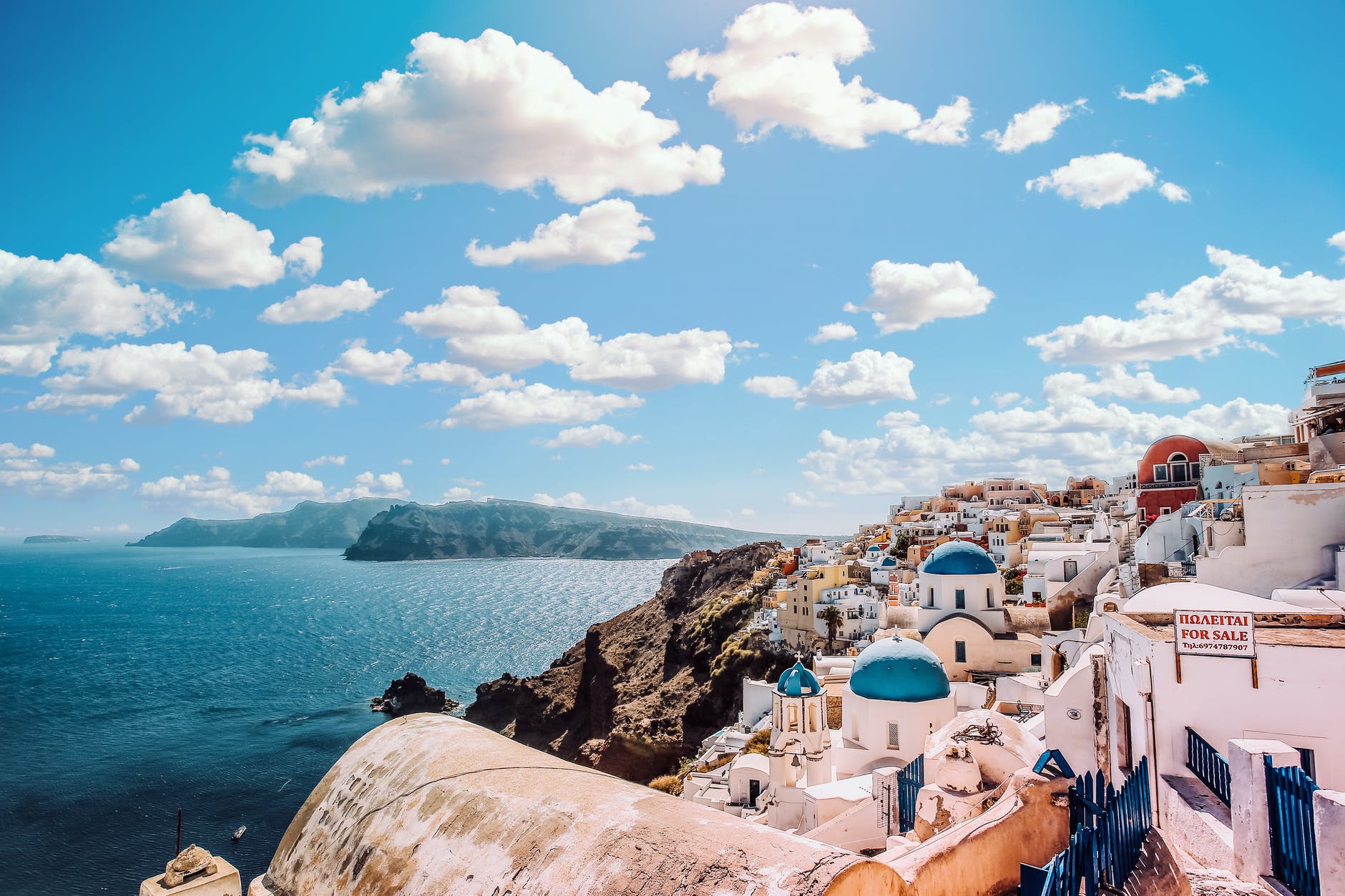
Santorini – The iconic island city of Greece, is a very popular travel destination which is a must visit in every traveller’s list. The turquoise waters, aromatic Mediterranean flavours and historical tales will surely make you admire and fall in love with the island. It was devastated by a volcanic eruption in the 16th century BC, which has shaped its rugged landscape. The two principal towns Fira and Oia are situated along cliffs above an underwater crater. The unique red and black sand beaches due to the volcanic setting of the island makes some picturesque sites. Visitors can walk around the lanes of white washed villages and find some great restaurants and shops.  

Photo by Aleksandar Pasaric on Pexels.com

Cyprus – This Mediterranean island is a home to both Greek and Turkish descendants which makes it a rich cultural amalgamation. The honey coloured beaches, ancient ruins will appeal to every traveler. It is known as the jewel of the Meditteranean. History enthusiasts can admire the Hala Sultan mosque while beach lovers will love the vibrant waters of Nissi Beach. While in Cyprus, one can also visit the city of Paphos which is the mythical birthplace of Aphrodite, the ancient Goddess of love and beauty. The traditional food include grilled meat kababs, pork marinated in coriander, fried halloumi cheese, olives, pitta bread, lamb, rabbit stews, root vegetables, chickpeas and artichokes. 

Maldives – Situated in the Indian Ocean, this island is a paradise for all beach lovers. It has striking beaches and exceptional diving spots. You can also try activities like snorkeling at Hulhumale beach, or take a pleasant evening stroll at Cocoa Island during the sunset. The Grand Friday Mosque and Male’ Fish Market are also some popular spots. It consists of a chain of about 1,200 small coral islands and sandbanks (some 200 of which are inhabited), grouped in clusters. The archipelago was inhabited as early as the 5th century BC by Buddhist peoples, from Sri Lanka and southern India.  

Phuket – This dreamy Thai island in the Andaman Sea with its dreamy white beaches with mountainous rain-forests will give you the best views. The towns are full of ornate Buddhist temples like Wat Chalong. The southernmost tip of the island, Promthep Cape, is something which you wouldn’t want to miss. You can also enjoy shopping and dining in Patong. It is famous for a number of things like exotic beaches, vibrant nightlife, colourful night markets, delicious seafood, white marble Big Buddha and scuba diving. Phuket has a tropical climate and it is usually warm, cool or rainy. It can however get quite hot in April and May. The tourist season is from November to February when it has a cool and dry weather.

IS YOUR CHARECTER REFLECTED IN THE WAY YOU DRESS?

Why do we chose to buy or to wear the clothes we have? Is the intention to be attractive? Revealing? Modest? I always wonder why a lady would like to appear to be sexy. I what is her intention? It applies for men too……. I believe that what we wear is a true refection of the heart. When you go shopping, you only buy what you like, and when you wear it, you advertise the fact. So you show off your personality and reveal your character to those who see you. Does it make sense!?

The choice of your clothing speaks louder than the talk. The motives of one’s charecter are always judged by what they wear. People will always judge you by the looks. If you present yourself in cheap clothing, the thing that will be remembered is this and not your goodness or character.

Though we have the freedom to dress anyway we please, I do believe that our clothes reflect our character and hence we should be careful.

But if we think from another perspective, we miss out on many opportunities by judging by appearance only. This happens a lot of times. Dressing varies from land to land do judging personality based on dressing would be inappropriate. True Charecter I’d reflected is how we behave and not in how we dress.

In my opinion, in the case of a few, we can judge them by their looks while in some other cases, we cannot do like that. To be sure, dressing is your choice. Wear what you like, but only decent ones.