GREEN CONFESSION – AN INDIAN FARMER

OK GOOGLE!! “IMAGES OF INDIA FARMER” The moment you say these words on the Google search engine, you will have a list of images. ‘A lean farmer sitting on a land affected by drought, his hand on the head, waiting for rain! You will never have an image of a farmer with a smile and greenery around him. This is what are see an Indian farmers as. Now, again if you say OK GOOGLE!! “images of an American farmer” You will get images which are exactly opposite to that of the Indian farmer, i.e., hectares of green crops, cars, bungalows, barns, soils, combine, tillers etc….

This is how the world of an Indian farmer differs from that of a US farmer. When will we be able to see an Indian farmer in such a condition? Is it impossible? The present condition tells us that the possibility of such an occurrence is very remote. So it is our duty to make the farmers live in such a condition they are financially strong.

An average Indian farmer toils his sweat and works hard day and night, but what does he get in return? Not enough to meet his needs. Farmers take loan to cultivate their crops but when they are indebted to someone and unable to repay the loan, they hang themselves. The government clears that loan but forces them to take loans again next year. This is the reality. When will he be able to stand self-sufficient to lead a good life? Now a question to all the readers: “Will any girl who is educated be ready to marry a farmer”? No, not at all. Even if she is ready, her parents will never allow her to. Why? It is just because they think his life is full of hardships, never has he led a life on a flowered path. On the contrary, his life is a life on a bed of thorns. This is what we think.

Now, if you ask any kid, “What is your dream, when you grow up?” the answer you get is “a doctor, or an engineer”. You will never hear the word ‘farmer’ as people know the hardships of a farmer’s life. This condition should change: the farmers should lead the nation’s economy. We just say that farmers are “the backbone of our nation”, but the backbone is about to break. It is our duty to protect them. A day should arrive when we see farmers travel in cars and irrigate through planes. BUT WHEN?

Jai Jawan!! Jai Kisan??

Graphology

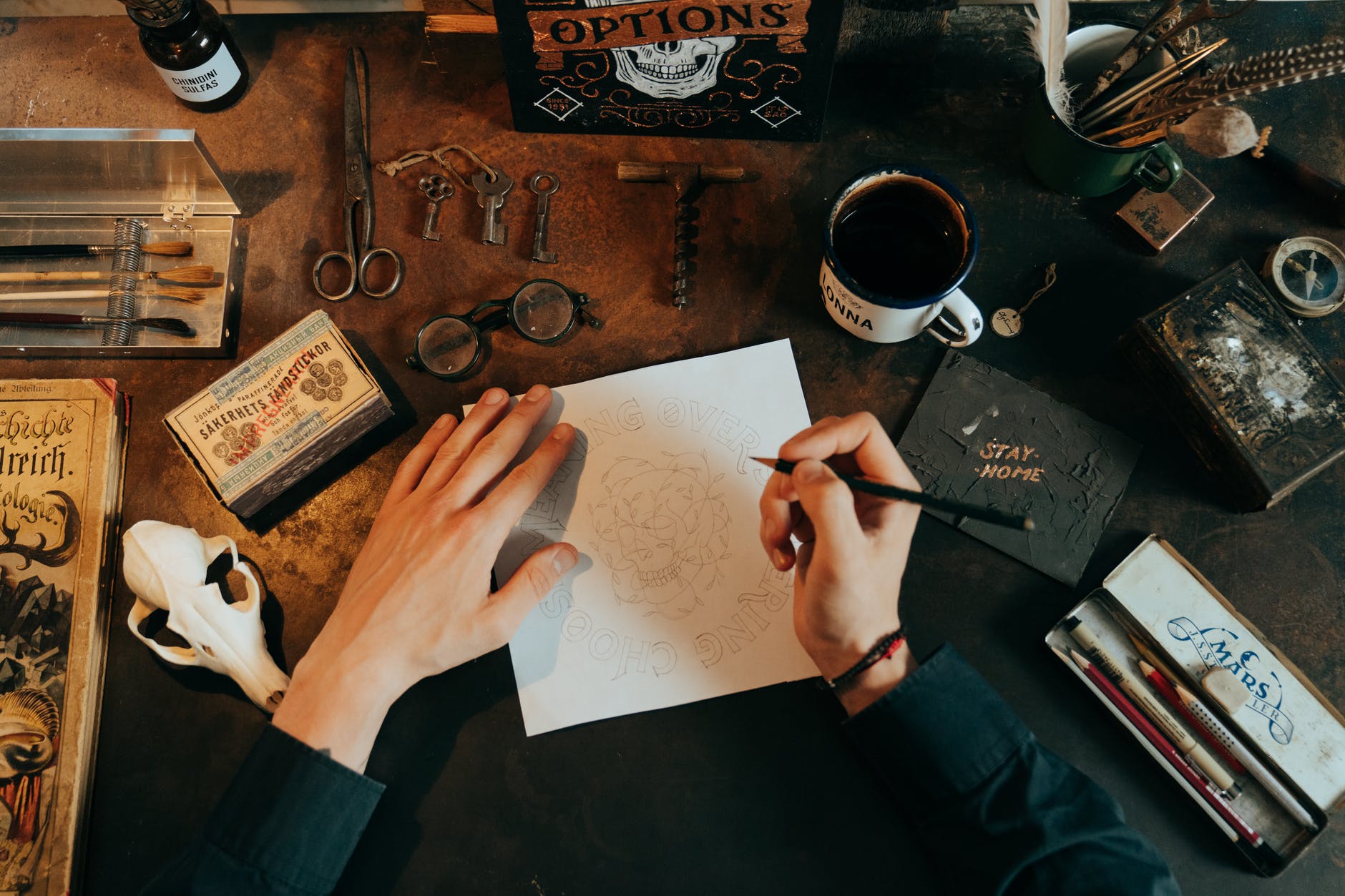
Photo by Karolina Grabowska on Pexels.com

Graphology is the study of hand writing to assess the personality traits of a person. It is the evaluation of physical characteristics and patterns of a handwriting to identify personality characteristics. Graphology is also used to identify the writer and their mental state during the time of writing. The word ‘graphology’ has been derived from the Greek word grapho meaning writing and logos meaning study or discussion. Graphology has been used by European psychologists and counsellors. It says that there is a relationship between personality, conducts, intellectual level, temper and character in handwriting. Hand writing can be analysed according to pressure, size, slant, zones, layout (margins, spaces between letters, words and lines). At present there are also some AI tools and websites which can be used.

Alfred Binet conducted a study on handwriting and called graphology “the science of the future”. In 1929, Milton Bunker founded The American Grapho Analysis Society. It made two different branches in the world of American graphology – graphoanalysis and holistic graphology.

Graphologists:

The works of some graphologists are mentioned below:

Max Pulver had authored three graphology books (from 1931 to 1949) and several articles. He has worked on pressure, intelligence, and crime. He developed the theory of Symbolism of Space and founded the Schweizerische Graphologische Gesellschaft (Swiss Graphological Society) in 1950 and was its president until his death.

Camillo Baldi was an Italian philosopher who worked on a variety of subjects. His best known essay on graphology was the first detailed investigation of the discipline.

Robert Saudek was a Czech-born graphologist. He was also a writer of novels, stories, poems and plays. He had considerable influence on the content and standing of graphology worldwide and published numerous articles in many languages like The Listener, Zeitschrift für Menschenkenntnis and the Journal of Social Psychology. He founded the Professional graphology society in the Netherlands and started two academic periodicals: in Dutch and English. Many graphologists worldwide today refer to Saudek’s work without knowing the origin. He published Experimental Graphology in 1929. Saudek examined the speed in handwriting and quantified handwriting by using a microscope, caliper, pressure board, ruler, protractor and slow-motion pictures. He also dealt with graphological phenomena in terms of the experimental psychologists.

Sheila Lowe is a British-born novelist and graphologist. Her first book was published in 1999 and was a bestseller in the Complete Idiot’s Guides series. In 2007, the first edition of Poison Pen, the first of her Claudia Rose forensic mystery series came out, published by Capital Crime Press. She is at present the president of the American Handwriting Analysis Foundation.

Photo by cottonbro on Pexels.com

Studies:

There has been studies in the U.S. on handwriting and sex. According to the research sex could be determined through writing at a significant level. Studies on ethnicity, race, age, nationality, sexual orientation, weight have got mixed results.

According to the Hungarian Parliamentary Commissioner for Data Protection and Freedom of Information, handwriting analysis without informed consent is considered to be a privacy violation.

Controversy:

Graphology has been a controversial topic for about a century. Some suggest that empirical studies have failed to show its validity to perform personality evaluation. Although it has got support from the scientific community in the mid twentieth century, some recent researches have rejected the validity of graphology as a tool for assessing personality and job performance.

Succulents

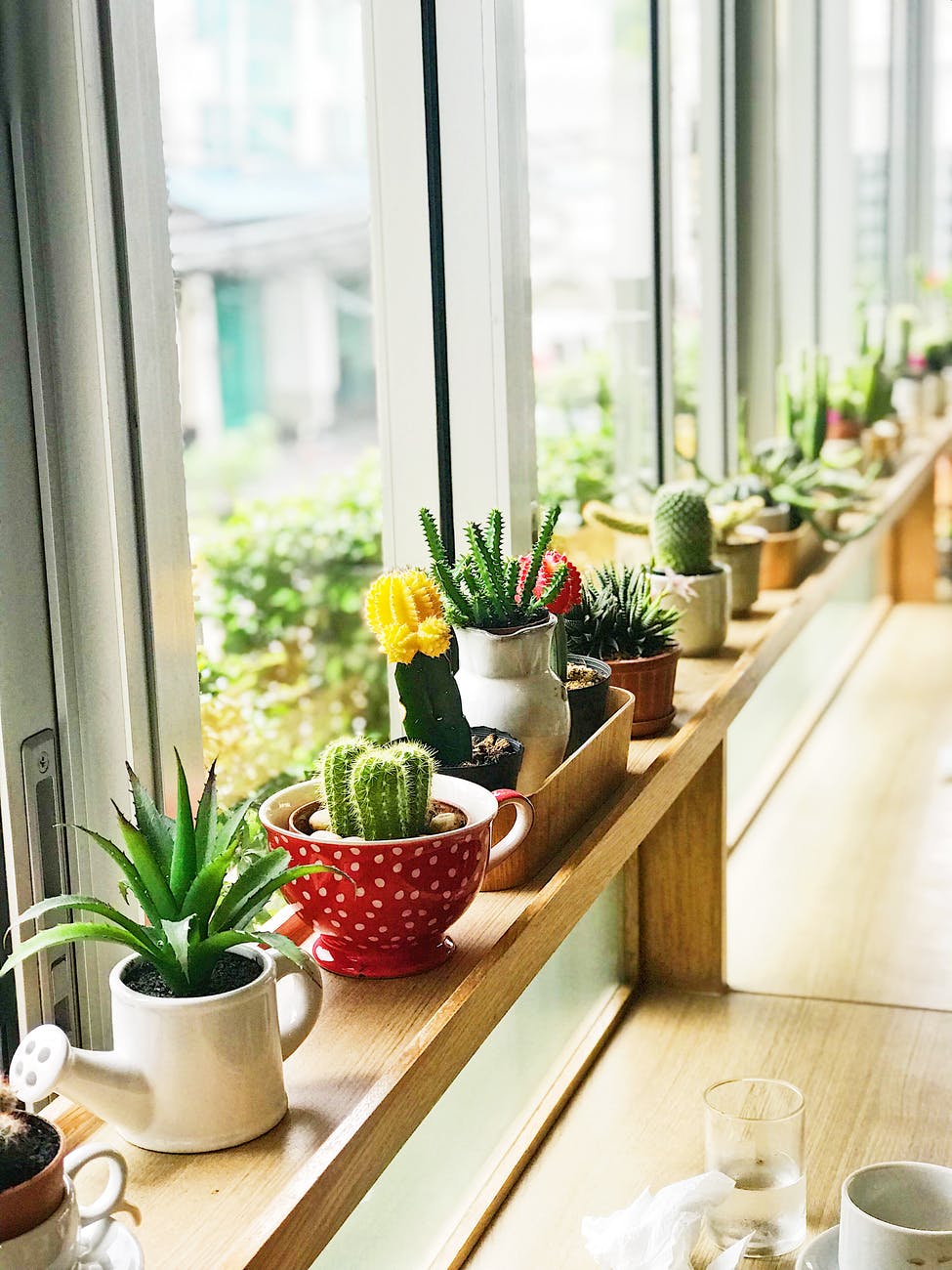
Succulents are indoor plants which can grow with very little water. They are ornamental plants and are used to decorate spaces for their interesting shapes and colours. If you are in search of house plants which can thrive with little care succulents are for you. Over the last few years succulents have grown very popular. There are hundreds of unique varieties and one doesn’t need gardening skills to care for them, anyone can grow them. They have special water storing tissues which help them to grow even in very dry conditions which is not favorable for most other plants. So, they are ideal for growing in your living room. They are also very easy to find in nurseries and shops.

Photo by Rovelyn Camato on Pexels.com

In botany, succulent are plants which are thick and fleshy to retain water in arid climates or soil conditions. The word succulent comes from the Latin word sucus, meaning ‘juice’, or ‘sap’. These plants may store water in various structures, such as leaves and stems. The natural habitats of these water preserving plants are in areas where there is high temperatures and low rainfall, like deserts. Having the ability to thrive on limited water sources, such as mist and dew, succulents are equipped to survive in an ecosystem with scarce water sources. In horticulture, the term succulent regularly excludes cacti. However, in botanical terminology, cacti fall under succulents.

Some easy to grow succulent varieties are –

Burro’s tail – It is a trailing succulent that looks good in a hanging basket or container so it can drape over. The stems can reach up to 3 feet long and have gray-green leaves which looks like the grains of rice. Although it rarely blooms, pink or red flowers might be visible at the end of the stems in summer.

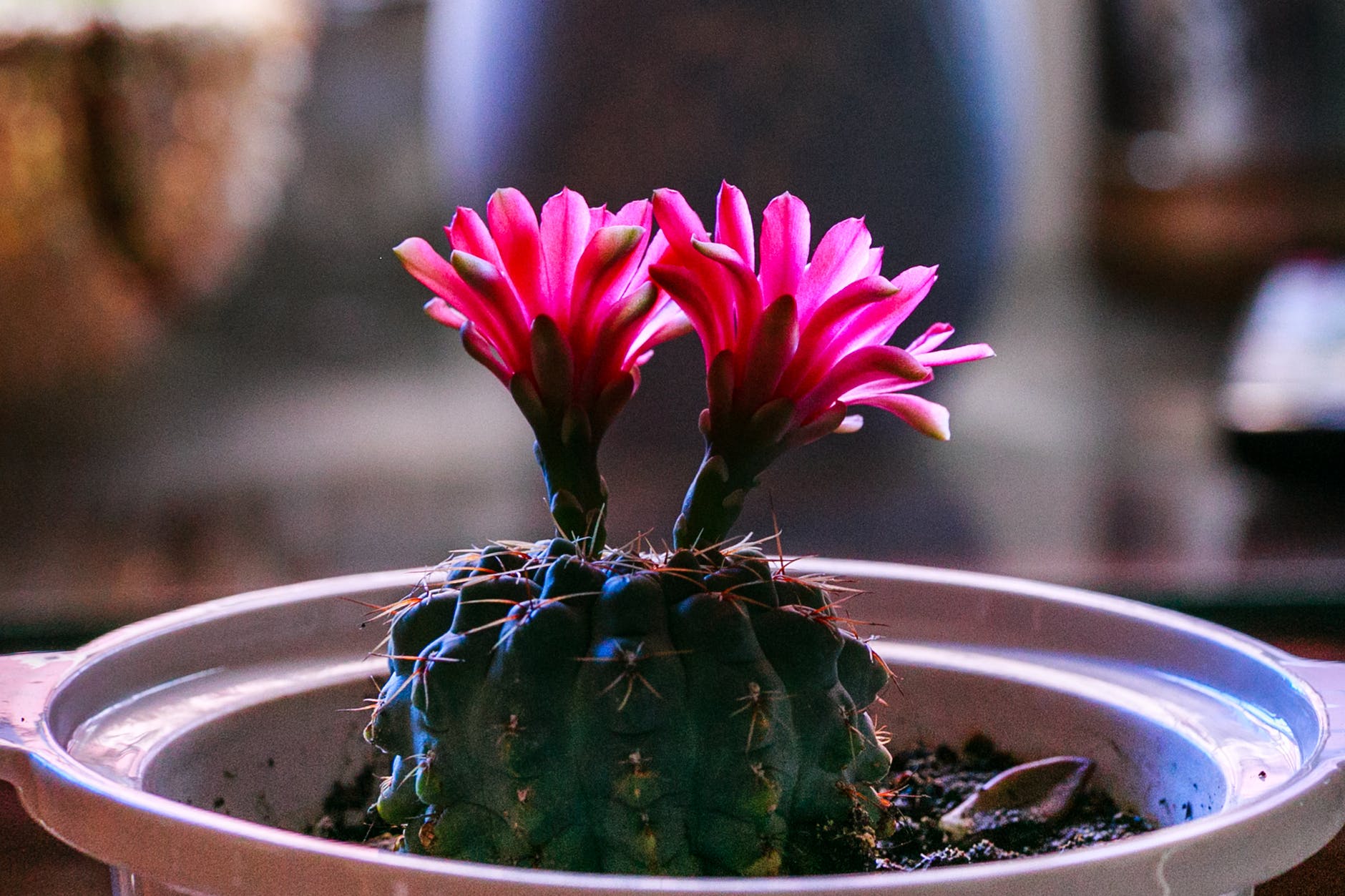
Photo by Quang Nguyen Vinh on Pexels.com

Christmas Cactus – It has flat segmented stems like crab claws which gives it the nick name crab claw cactus. It also prefers a bit more moisture so you can water it whenever the top inch of soil in the container is dry. Keeping it in bright light near a window, can make it bloom in winter.

Hens and Chickens – It is a very common type of succulent and is characterized by flower like structures with round edges. They are actually two different plants which look very similar. They have star shaped flowers.

Aloevera – It has long slender leaves with sharp teeth like edges. It’s well known for its sap which is used to treat skin diseases and heal wounds. Aloevera is an easy to grow houseplant and is tough to kill.

Photo by Mu00e3 Minh on Pexels.com

Snake Plant – They have thick, stiff and pointed leaves which grow straight up to 3 feet long. Having a patterned marking makes it look like a snake and hence the name. It will multiply and grow leading to filling the whole pot. It might require you to divide it in different pots.

African Milk Tree – It is capable of growing up to nine feet tall in natural habitat, and it isn’t actually a tree. As a houseplant, this succulent reaches up to three feet tall, producing upright, triangular, branched stems bordered with short sharp thorns. The tips of the green stems have small leaves with a reddish tinge.

Zebra Haworthia – It has striking stripes and spiky foliage which makes it look like a rare and exotic plant, but it’s often available at garden centers and is very easy-going when it comes to taking care of. It will stay small within 5 inches.

Success…….!?

Everyone wants success in life. The word itself had magical power in it. Becoming unique and getting success are very important. Now many of us concentrate only on marks in examination. One who concentrates only on marks cannot make a good mark in life. Life is like a game. We have to play it wisely. If at first we have a failure, we have to continue putting on our efforts until we get success. So, never give up attempts in life. It’s the first thing we have to adopt in our life.

Just think about it. Many people came to earth. Some are living and some are dead. But we remember some of them who are unique. When we came to this earth all smiled happily but we cried, but when we die, who will cry? So we have to live in such a way that when we die happily, others may cry for our death.

We must always think positively. When you wake up in the early morning simply think that all the power is within you. You can do anything and everything. The whole day will be good for you. First we have to achieve our set goals. We must become good believers. “In life, stand for something: otherwise you will fall for everything”. So, in life we have stick to our own goals. It gives us all the power to achieve our goals.

Finally, we have to ‘prepare, attack and destroy the difficulties that we may encounter. Remember that a winner never quits and a quitter never wins. Be unique and show your identity in the competive world.

Why smiling is important!

SMILE. A five-letter word. So light and simple, yet not easy to access. Why is it so hard to smile? Why do so many people find it difficult to get that one curve on their lips? After all, it is said that a smile is the most beautiful curve in the body. We all blame situations for the missing smile. But little do we know that external factor I’d responsible for our behavior. It is the mind that controls everything.

Two friends in a market. One was always happy and the other was always seen with frown on his face. The latter asked, “How is it that you’re always smiling and happy every time I met you?”. The other one replied, “it is because I keep my mind empty. I too have a lot of problems in my life. But I CHOOSE to stay happy. I CHOOSE to keep all those worries away from my mind. Once I think about it, cry over it, then I’m done. Even if I can’t solve the problem, I don’t let it consume my mind. I follow this motto: When you can’t laugh over the same joke again and again, why cry over the same problem again again?”

Trust me, with this motto a lot can happen. If we think over this properly, it makes a lot of sense. When life gives you a hundered reasons to cry, show it that you have a thousand reasons to smile. Everything happens for a reason. Live it, love it and learn from it. Make your smile change, the world but don’t let the world change your smile.

Plastic Free Environment

Plastic has become an important part of our modern life and are used in different sectors of applications like packaging, building materials, consumer products and much more. Each year about 300 million tons of plastic are produces world wide and about 1.2 million kg of plastic enters the earth’s oceans and this figure could be doubled in the next decade. Demand of plastic increasing year after year. Plastic are non-biodegradable synthetic material made from a wide range of organic polymer such as polyethylene, PVC, Nylon etc., that can be moulded into shape while soft and then set into rigid or slightly plastic which leads to plastic pollution. Degradation is defined as reduction in the molecular weigh of the polymer. Several attempts have been made to biologically degrade plastic such as soil burial treatment, Fungal treatment etc. but the little success. A team of European scientists discovered a common insect that can help in global pollution crisis by degrading plastic shopping bag.

The discovey was led by Federica Bertocchini, I a developmental biologist at the University of Cantabria in Spain. She was an amateur beekeeper, while cleaning beehives she found that it was infested with wax worms which feed on beehives and area headache for beekeepers. She collected the larvae and placed it inside the plastic cover and observed there were wholes in the plastic cover made by the wax worms.

Paolo Bombelli and Chris Howe research scientist working on biodegradable plastic in Cambridge University joined with Federica Bertocchin keen to understand the molecular mechanism if consumption and degradation of plastic. Their research finding were published in current biology.

Honeycomb wax moth is the common name of Galberia mellonella a Lepidopteran insect that belongs to pyralidae family found widely. A caterpillar larvae measuring about 16-20 mm completes it’s life cycle in beehives.

They chew and swallow plastic as it is similar to consuming beehives a natural plastic. Wax is a polymer, which consist of a long string of carbon atom held together, with other atom branching off the sides of the chain. Both wax and polyethylene into ethylene glycol, representing unbonded ‘monomer’ molecules.

Scientists say that the degradation rate is extremely fast compared to other recent discoveries. For example, gut bacteria in the larvae of the Indian meal moth Plodia interounctella can break down polythelene takes between 100 and 400 years to degrade in land fill sites. Wax moth as the ability of degrading average 5.5 gram plastic bag in a month.

As the molecular details of the process become known, the researcher say it could be used to devise a biotechnological solution on an industrial scale for managing polythelene waste and plastic pollution. Thus there is another ray of hope for plastic free environment.

Indian Railways – Lifeline Network of Indian Economy

Among the triumphant and majestic inventions of the modern world, is widespread transportation. Compared to other transports available today, railways transport as one of the eloquent one. No doubt aeroplanes and automobiles have provided much ease in everyday life but the importance of railway transportation is perpetual.

Railways have edge roadways as it carries more passengers and loads of heavy goods to long distance. Perhaps journey is more comfortable and faster also. Its operation is less affected by adverse weathers conditions like rain, floods, fog, etc. Railways also make it possible to conduct different activities like business, sightseeing, and pilgrimage along with transportation of goods over longer distances. Railways in India bind the economic life of the country as well as accelerate the development of the industry and agriculture.

World’s first railway line was opened between Stockholm and Darlington in northern England in 1825 and railways became important mode of transport. It occupies an important place in land transport system of India and is the most dependable mode of transport to carry goods and passengers over a long distance. Besides long distance, local transport of passengers is also provided by local trains or metro-rail in some metropolitan cities. Rail transport is available throughout the country except some hilly or mountainous regions.

Indian Railways plays a role of national integration. The railways were introduced in the country in 1853 by the British almost immediately after it established in England. The first railway on Indian sub-continent ran over a stretch of 21 miles from Bombay to Thane on 16 April 1853. The first passenger train steamed out of Howrah station destined for Hooghly, a distance of 24 miles, on 15 August 1854. In South, the first line was opened on 1 July 1856 by the Madras Railway Company. It ran between Veyasarpandy and Walajah Road (Arcot), a distance of 63 miles. In the North, a length of 119 miles of line was laid from Allahabad to Kanpur on 3 March 1859.

In 1947, at the time of independence, there were forty-two rail systems exist in the country.  40 percent of the railways then passed through the newly independent Pakistan and thirty-two lines owned by the former Indian states, spanning a total of 55,000 km, later these were merged into the Indian railways.

In 1951, the systems were nationalized as one unit, becoming one of the largest networks in the world. Thus Indian Railways was born.

India has a large network of railways throughout the country. There are two types of rails rolling on Indian railway tracks. One is passenger train and other is goods train. While passenger trains carry both human beings and a limited quantity of goods, the goods trains are exclusively used for carrying goods from one place to another. At present the Indian Railways have three types of engines – Steam engines, Diesel engines and the Electric engines. The Indian Railways is the largest public sector undertaking in the country.

Today, Indian Railways has one of the largest and busiest rail networks in the world. It transports 20 million passengers and more than 2 million tones of freight daily and is one of the world’s largest commercial employers, with more than 1.6 million employees. Indian Railways covers total 63,140 route kilometers as on 31.3.2002, including broad gauge (total 45,099 kilometers), narrow gauge (total 3,265 kilometers) and meter gauge (total 14,776 kilometers). The Indian Railway system is operated through several zones and other operating divisions. It is considered as the main part of the India’s transportation system.

Some major statistics related to Indian Railways are as follows :

•Wagons (units) – 2,16,717
•number of locomotives (operating) – 7,739
•Operating trains – 14,444
•Daily Passengers – 8,702
•Coaches – 39,236


East Indian Railway established a Carriage and Wagon Department as part of the Locomotive Works in 1855 in Howrah. Established in 1986, the Rail Coach Factory (RCF) was the second coach manufacturing unit of Indian Railways. Its foundation stone was laid by the then Prime Minister of India Mr. Rajiv Gandhi. At present there are  few  more rail coach factories like Internal coach  factory which  located in Chennai, Chittaranjan Locomotive  works, West Bengal and Diesel Locomotive  works, Varanasi. 

Apart from being fast, comfortable and cheap, railways play an important role in the economy of a country. Indian Railways carry more than a million ton of freight traffic encompassing around 6,856 numbers of rail stations. Being the primary infrastructural sector of India, Railways has been developing to maintain a pace with the development of Indian economy. Indian Railways is a department owned and controlled by the Government of India, under the aegis of Ministry of Railways. It is administered by the Railway Board.

The Himsagar Express, between Kanyakumari and Jammu Tawi, has the longest run in term of distance and time on Indian Railways network.  The Indian Railways started introducing the prestigious Rajdhani and Shatabdi services during the ‘70s and ‘80s respectively or to match the best in the world. The Bhopal Shatabdi : Express is the fastest train in India which has a maximum speed of 150 m/h on the Faridabad-Agra section. 
 

Fares on the Indian Railways across categories are among the cheapest in the world. In the past few years, despite a recessionary environment, the Indian Railways have not raised fares on any class of service. On the contrary, there has been a minor dip in fares in some categories. Indian Railways makes 70 per cent its revenues and most of its profits from the freight and uses these profits to cross-subsidies the loss-making passenger sector. It also owns locomotive and coach production facilities.

Since 1924-25, railway finances have been separated from General Revenue. Indian railways have their own funds in the form of Railway Budget presented to the Parliament annually. This budget is presented to the Parliament by the Union Railway Minster two days prior to the General Budget, usually around 26th February. It has to be passed by a simple majority in the Lok Sabha before it gets final acceptance. Indian Railways are subject to the same audit control as other government revenues and expenditure. The government of India has initiated a scheme, ‘National Vikas Yojna’ for the development of the Indian Railways. The scheme would focus on completion on strategic projects within a stipulated period of time. Railways are doing very useful service to the nation. This also creates impact on the Indian Economy.

To conclude, Indian Railways has played a vital role for the transportation needs of the country & Indian Railways have also emerged as the major strength of the Indian economy.

The Power Sector of India

Following the independence of India in 1947 the decades of economic planning placed significant emphasis on the development of the power sector in the country. India has the fifth largest generation capacity in the world with an installed capacity of 152 GW as on 30 September 2009, which is about 4 percent of global power generation. The top four countries, viz., the US, Japan, China and Russia together consume about 49 percent of the total power generated globally.  

The average per capita consumption of electricity in India is estimated to be 704kWh during 2008-09. However, this is fairly low when compared to that of some of the developed and emerging nations such as the US (~15,000 kWh) and China (~1,800 kWh). The world average stands at 2,300 kWh2. The Indian government has set ambitious goals in the 11th five-year plan for power sector owing to which it is poised for significant expansion. Electricity generation capacity with utilities in India had grown from 1713 MW in December 1950 to over 124,287 MW by March 2006 (CEA, 2006a). However, per capita electricity consumption remains much lower than the world average and even lower than some of the developing Asian economies. Total installed capacity for power in India as on 31.12.06 was 127,753 MW and Government of India plans to add capacity of 100,000 MW by 2012.   

India had been traditionally depending on thermal power as a major source of power generation, which constitutes about 65% of current capacity. Balance is contributed by Hydel power (26%), Nuclear (3 %) and Renewable energy (6%). Some of the major sectors of power generation are :

Coal : At 51%, Coal is the single-largest source of energy at the disposal of the power sector. By 2011– 12, demand for coal is expected to increase to 730 MMT p.a., creating a supply shortage of over 50 MMT. India has the fourth largest proven coal reserves in the world, pegged at 96 billion tones, creating an investment opportunity of USD 10 – 15 billion over the next 5 years.   

Oil : The demand for oil which is currently the second most important source of energy – is expected to grow from 119 MTOE in 2004 to 250 MTOE in 2025 at an annual growth rate of 3.6%. However, domestic production for the corresponding period is expected to increase at approximately 2.6% only. As a result, our reliance on oil imports is likely to increase from its present level of 72% to 90% by 2025. To combat this issue, the government has opened up the domestic oil sector for private participation under the New Exploration Licensing Policy (NELP). Under the competitive bidding process prescribed under the NELP, investment commitments of USD 8 billion towards oil exploration projects have already been received.   

Natural Gas : India has vast reserves of natural gas. More than 700 billion cubic meters of natural gas have been discovered in the last decade alone. Demand for Natural Gas is expected to grow at a CAGR of 12% over the next 5 years to reach 279 MMSCMD by 2012. It is mainly because of three reasons: Rising popularity of compressed natural gas (CNG) as an alternative source of automotive fuel; increased penetration through availability of “piped gas” at residences; and imminent depletion of traditional energy sources such as coal and oil.  

Hydro Power : With its intricate network of rivers, substantial opportunities for generation of hydro-power exist in India. Only 22% of the 150 GW hydroelectric potential in the country has been harnessed so far. Private participation will play a key role in meeting the target requirement of an additional 45 GW over the next 10 years.  

Wind Energy : India is the 4th largest country in the world in terms of installed wind energy. India’s potential of wind power is pegged at 45,000 MW while its current capacity stands at only 7,660MW. Tax incentives, including availability of accelerated depreciation @ 80% under WDV method on cost incurred on setting up of wind turbine generators have resulted in significant private investment in this area  

Solar Energy : Despite the prevalence of an inherent advantage in the form of solar insulation, the potential for solar energy is virtually untapped in India. India’s installed solar – based capacity stands at a mere 100MW compared to its present potential of 50,000MW. Based on the substantial investment opportunities that exist in this sector, it is estimated that by 2031–32, solar power would be the single largest source of energy, contributing 1,200 MTOE i.e. more than 30% of our total expected requirements.   

Nuclear Energy : By 2032, the government plans to raise the contribution of nuclear energy from the current level of less than 3% to around 10% of the country’s installed capacity. The signing of the Indo-US nuclear deal has created significant opportunities for several players across the entire power supply chain, with an estimated investment opportunity of USD 10 billion over the next five years.   

Further, India has among the world’s largest reserves of alternative nuclear fuel – thorium. Accordingly, substantial investment opportunities are also likely to arise once commercial production based on thorium becomes feasible. Over 87% of the current installed capacity in the country is by the government; with the state governments having lion’s share of over 52% and the balance by central (federal) government. Due to the initiative of government of India to encourage Public Private Partnerships in power sector, share of private companies’ power generation capacity has gone up to steadily to 17,112.62 MW, about 13 % of the installed capacity.

With Government of India opening up Ultra Mega Power Projects (UMPP) for private investments, a number of private companies, including overseas companies, have been increasingly showing interest in investing in power projects.   State-owned Power Finance Corporation, which is the nodal agency for the UMPP, has set up nine Special Purpose Vehicles (SPVs) to conduct preliminary studies and obtain government approval for the planned projects. Once these SPVs will become operational it will generate a capacity of 36,000 MW power. Renewable energy offers a huge potential as a physical target of 15,000 MW with an outlay of Rs.39, 250 million is proposed for grid interactive / distributed renewable power generation during 2007-12. The total investment required would be about Rs. 600 billion.  

In the Constitution of India “Electricity” is a subject that falls within the concurrent jurisdiction of the Centre and the States. The Electricity (Supply) Act, 1948, provides an elaborate institutional frame work and financing norms of the performance of the electricity industry in the country. The Act envisaged creation of State Electricity Boards (SEBs) for planning and implementing the power development programmes in their respective States.   

The Act also provided for creation of central generation companies for setting up and operating generating facilities in the Central Sector. The Central Electricity Authority constituted under the Act is responsible for power planning at the national level. In addition the Electricity (Supply) Act also allowed from the beginning the private licensees to distribute and/or generate electricity in the specified areas designated by the concerned State Government/SEB. During the post independence period, most of the States have established State Electricity Boards. In some of these States separate corporations have also been established to install and operate generation facilities. In the rest of the smaller States and UTs the power systems are managed and operated by the respective electricity departments. In a few States private licenses are also operating in certain urban areas.  

It is evident that the deficit in power availability in India is a significant impediment to the smooth development of the economy. In this context, bridging the gap in demand and supply has become critical and consequently, large projects are being undertaken in different segments of the sector i.e. 

  • Generation : In order to provide availability of over 1000 units of per capita electricity by year 2012, it has been estimated that need-based capacity addition of more than 100,000 MW would be required.
  • Transmission : The current installed transmission capacity is only 13 percent of the total installed generation capacity. With focus on increasing generation capacity over the next 8-10years, the corresponding investments in the transmission sector is also expected to augment. The Ministry of Power plans to establish an integrated National Power Grid in the country by 2012 with close to 200,000 MW generation capacities and 37,700 MW of inter-regional power transfer capacity. 
  • Distribution : While some progress has been made at reducing the Transmission and Distribution (T&D) losses, these still remain substantially higher than the global benchmarks, at approximately 33 percent. In order to address some of the issues in this segment, reforms have been undertaken through unbundling the State Electricity Boards into separate Generation, Transmission and Distribution units and privatization of power distribution has been initiated either through the outright privatization or the franchisee route; results of these initiatives have been somewhat mixed. 

While there has been a slow and gradual improvement in metering, billing and collection efficiency, the current loss levels still pose a significant challenge for distribution companies going forward. The story remains pretty much the same in power transmission and distribution space. The central and the state utilities own nearly 40 percent and 60 percent, respectively of the total transmission lines of 2.7 million circuit kilometers (ckm). Power Grid Corporation of India Ltd (PGCIL), the central transmission utility (CTU), is the largest transmission company in India. Similarly, in distribution, the SEBs own nearly 95 percent of the distribution network.  

However, there are some challenges facing the Indian power sector which is expected to grow at 10 per cent but is currently going through a critical phase as the existing capacity is ageing very fast. The most important cause of the problems being faced in the power sector is the irrational and not remunerative tariff structure. Although the tariff is fixed and realized by SEBs, the State Governments have constantly interfered in tariff setting without subsidizing SEBs for the losses arising out of State Governments desire to provide power at concessional rates to certain sectors, especially agriculture.

If the SEBs were to continue to operate on the same lines, their internal resources generation during the next ten years will be negative, being of the order of Rs.(-) 77,000 crore. This raises serious doubts about the ability of the States to contribute their share to capacity addition during the Ninth Plan and thereafter. This highlights the importance of initiating power sector reforms at the earliest and the need for tariff rationalization.   

The power sector was predominantly dominated by the thermal power plants, whose share was expected to rise up to 75 per cent from the current 64 per cent in the coming years. But after 2013, there might be some shortage due to capacity addition. As India has not witnessed such a large scale of implementation before, there is a need to review and enhance project execution capabilities to help ensure targets are met.   

This strongly necessitates employing a comprehensive project management structure to address the major challenges of the power sector projects and to be able to deliver them as per the planned targets. Historical records also indicate the presence of a weak project management structure which does not assess all the key project aspects.

HOW IS YOUR MENTAL HEALTH ?

WE ARE IN THE MIDDLE OF AUGUST OF 2020 , STILL ALIVE AND KICKING AGAINST THE COVID – 19 PANDEMIC . IN DELHI CASES ARE SHOOTING UP DAY BY DAY , BUT , THE RECOVERY RATE IS ALSO HIGH COMPARED TO ALL OTHER STATES OF INDIA . IT WAS EVENING , I WAS DRINKING COFFEE AND MY DAD WATCHING NEWS . I USUALLY DON’T WATCH AND BELEIVE IN NEWS , SPECIALLY IN THEESE DAYS , RATHER THAN LOWERING OUR STRESS , THEY BOOST UP OUR STRESS BY COMMUNICATING US FALSE NEWS . ALEARDY WE ARE FACING VERY DIFFICULT TIME AND THEY ARE ADDING FUEL TO IT , IT IS VERY DEPRESSING FOR PEOPLE. I HAVE HEARD PEOPLE SHARING THAT THEY ARE CHILL AND HAPPY BEFORE WATCHING THE NEWS , AND AFTER WATCHING THE NEWS , THEY FEEL HEAVINESS IN THEIR MINDS , THIS IS ONE OF THE REASON BEHIND MENTAL ILLNESS AMONG US.

AS WE ALL KNOW , IT IS A DISEASE TO BE CURED BY VACCINATION AND COUNTRIES ARE EXPERIMENTING THE VACCINES . THE NEWS BUZZ IS AROUND THAT RUSSIA HAS INVENTED THE VACCINATION TITLED “SPUTNIK” AND IT IS GONNA DISTRIBUTE IN COMING DAYS . UNTIL THEN , THE ONLY WEAPON TO FIGHT THIS PANDEMIC IS ‘ SOCIAL DISTANCING ‘ . PEOPLE ARE FOLLOWING IT RELIGIOUSLY , BUT IT IS ALSO IMPACTING OUR HEALTH . WE ARE LOCKED IN OUR HOUSES FROM PAST SIX TO SEVEN MONTHS , NOT MEETING ANYONE . EVERYTHING IS WORK FROM HOME , WHICH IS MAKING US BUSY AND OCCUPIED . STILL , SOMETHING IS VOID IN OUR LIFE AND THAT IS LACK OF COMMUNICATION , HEAVING US UP WITH THE BUNDLE OF MENTAL STRESS . PEOPLE ARE NOT COMMUNICATING EVEN AFTER SITTING AT HOME , THEY ARE BUSY SO MUCH IN THEIR WORK , NOT MAKING TIME FOR FAMILIES , FRIENDS AND FOR FEW ” MINUTES OF HAPPINESS” .

THOSE PEOPLE WHO DON’T EVEN HAVE WORK FROM HOME ARE FEARING TO BE HAPPY DUE TO THEIR VULNERABLE SITUATION AND HEADING TOWARDS DEPRESSION THROUGH THIS WAY. IT IS BECOMING A HUGE THREAT MORE THAN CORONA , AS IN DEPRESSION , YOU CAN’T JUDGE THE ILLNESS OF THE PERSON WHEREAS IN CASE OF CORONA , YOU CAN ATLEAST SEE THE SYMPTOMS.

HERE I AM GOING TO SHOW THE POINTERS ON HOW TO MAKE YOURSELF STRESS FREE.

  • READ BOOKS . THEY ARE THE BEST STRESS BUSTER , WHENEVER YOU HAVE NEGATIVE THOUGHTS AND STRESS IN YOUR MIND . JUST READ , IT WILL HEAL YOUR MIND BY RELAXING IT FIRST AND INCREASE YOUR FORESIGHT GIVING YOU IDEAS HOW TO WORK TO INCREASE YOUR WORTH.
  • HAVE A HABBIT OF WAKING UP EARLY IN THE MORNING AND BREATH FRESH AIR , GAZE AT THE NATURE FOR FEW GOOD MINUTES . IT WILL DEFINITELY GIVE YOU POSITIVE VIBES.
  • MEDITATE , CLOSE YOUR EYES AND FOCUS ON EVERY PART OF YOUR BODY FROM THE NAIL OF YOUR LEG TO THE CENTRE OF YOUR HEAD . IT WILLL GIVE GOOD ENERGIES TO YOUR SOUL.
  • EXERCISE . IN EXERCISE , I WILL SUGGEST YOU TO DO YOGA , IT WILL MAKE YOU FEEL LIKE A FEATHER BY POLISHING YOU FROM YOUR BREATHING TO YOUR BODY TRIMMING . IT WILL MAKE YOU ACTIVE.
  • LISTEN TO OPTIMISTIC VOICES , IT WILL MAKE YOU MOTIVATED AND ACT AS A DRIVING FORCE FOR YOUR LITTLE POSITIVITY INSIDE YOU . JUST STAY MOTIVATED.
  • SPEND TIME WITH YOUR FAMILY , PLAY WITH YOUR CHILDREN . CERTAINLY , IT’S GONNA BE BEST STRESS BUSTER FOR YOU .
  • TALK TO YOUR CLOSE ONES , SHARE YOUR BADS AND GOODS WITH THEM . DO SOCIAL DISTANCE BUT NOT SOCIALLY DISTANCE YOURSELF FROM YOUR CLOSE ONES .
  • AND THE LAST BUT MOST IMPORTANT ONE , PRAY . TALK TO GOD , SHARE YOUR PROBLEMS WITH HIM , HAVE FAITH IN HIM AND PRAY HIM TO GUIDE TO GUIDE IN YOUR EVERY PATH . DO THIS AND I AM CENT PERCENT SURE WHATEVER PROBLEMS COMES YOUR WAY , YOU WILL FIND YOUR HEARTY AND MIND IN PEACE , WITH THE SOLUTIONS TO ALL YOUR PROBLEMS. SPRITIUALITY IS THE EQUATION WHICH DIRECTLY CONNECTS DIRECTLY YOU TO THE GOD WHO IS THE PLANNER , THE SUPREME AND KNOWS WHAT IS BEST FOR US , HE HAS PLANNED ALEARDY.

DON’T TRY TO BE STRESS – FREE ! TRY TO FREE YOURSELF FROM STRESS , BECAUSE LIFE CAN NEVER BE VOID .

The Kite Runner – Book Review

Author – Khaled Hosseini

Language – English

Publisher – Riverhead Books

Publication Date – May 29, 2003

Country – United States

ISBN – 1-57322-245-3

The Kite Runner by Khaled Hosseini is a historical fiction which is set in Afghanistan and America at the times of the Soviet Afghan War. It is one of the most loved books by readers across the world. The Times describe the book as “Heart breaking”. It was a number one New York Times bestseller for over two years, with over seven million copies sold in the United States. It has also been made into a motion picture after being a bestselling novel.

The book is a beautiful and endearing tale of two friends, Amir and Hassan who grew up together in ”a peaceful but prejudiced Kabul”. They share a beautiful bond of friendship but the surrounding social prejudice intervenes in it. During their childhood years, they spend their days flying kites along the streets of Wazir Akbar Khan district. Amir occupies a special place in Hassan’s heart and he expresses his love for Amir in a few words, ”for you, a thousand times over”. These words happen to be the book’s most iconic lines. Hassan who was the servant’s son was a Hazara and suffered tremendous social and cultural discrimination for that. During a kite flying event, an incident changes their relationship forever. Eventually Hassan and his father move out of their house.

Their lives change dramatically when the Taliban arrives in Kabul and the Soviet Afghan War changes the entire atmosphere of the country. After 5 years, Amir and his father escape the country and move to America to start a new life. Amir continues to suffer with guilt for the past. It is after he grows up to be a successful writer that he receives a call from a familiar voice of the past and goes back to Kabul. The story takes a different turn at the end when Amir discovers the truth that his relationship with Hassan was deeper than he realised.

Born in Kabul, the author draws inspiration from his own life as well but the plot and characters of the book however are fictional. The characters of the book are beautifully woven and the story is unforgettable. Several conflicts within the plot makes the readers fall in love with the characters. The book created some controversy within Afghan readers as it portrayed Pashtuns as prejudiced towards Hazara people. The racial and religious extremism is deeply saddening and the violence is frightening. The kite has been portrayed as an important symbol which represents Amir’s guilt for his betrayal towards Hassan and thus he does not fly a kite after that incident until the very end.

The book encourages its readers to look at the world in a new way and provides a different perspective for a country which has long been stigmatized. The message conveyed by the book towards the ending offers some hope for its characters and also for war torn Afghanistan as well. The book is highly recommended and it is sure to make a lasting impression on readers.

In this Pandemic Post Services are back on track.

As in the country on 25th March 2020 lockdown was announced after that every thing stopped.There were no movement people,courier services,and even the retail market came to standstill.As we are moving ahead with phase wise unlocking and also unlocking different services again in the country in that major was courier and postal services that were the main agenda to start back and bring them on track.

Postal services is one of the most traditional means of delivery of couriers all around the country.In India there are almost 1,56,600 post offices divided under 23 postal circles.Some services that post offices do are remitting money by money orders,accepting deposits under small savings schemes,providing life insurance coverage under Postal Life Insurance and many other services.These services are majorly used by the people of villages in India.As there no private players in the village.The best of post offices are located at every corner of the country whether its a hill station or the low lying area.But in recent times mail services has seen decline in 2009 it was 645 crore,then it came down 608 crore in 2014 and in last year it was 576 crore.

In this lockdown as post services are back the employees working in post offices are now delivering medicines,PPE kit,insurance,and govt papers to the people who are far enough.If we take an example of staff of UP where the crossed the Saryu River to reach the two Ayodhya Villages because people of village had run out of cash and could not go to the bank.So the postman in this case withdrew the money and delivered to them.They also carried biometric devices to record transactions on Aadhar link accounts.They have provided around Rs 967 crore to 53 lakh people in UP.

In many other states they also disburse pension to different beneficiaries.In Uttarakhand the postal services department are working on their own project of setting delivery settlement of ayurvedic medicines.They have also tied up with e-commerce sites for delivery of the orders placed online.So,in this case the postal services has became an savior in this tough period for the people of villages because in villages the ATMs were without money,no mail services was there.So it has came an untimely savior.

Northwest-Shoals Community College (NW-SCC)

 Welcome to the online and distance education experience at Northwest-Shoals Community College (NW-SCC).  NW-SCC is proud to offer a variety of educational opportunities through online education. Our courses teach the very same objectives and outcomes as courses offered on campus; the difference is in the delivery. Instead of attending a class where an instructor provides a lecture and leads a classroom discussion, distance courses are delivered over the Internet and/or through video capture. Most courses require approximately 9-12 hours per week during the semester to complete the assigned work. These courses require as much commitment as any traditional on-campus class. They require dedicated, ongoing, and regular participation.

While the requirements and commitment are the same for online and distance courses versus on-campus courses, online and distance education offers definite advantages. Students may complete their coursework at any point during the day, instead of a set class time. Online classes fit within students\’ work schedules or family commitments. Concerns such as lining up transportation to and from class or arranging for childcare while in class aren\’t an issue with online classes; the classes may be attended from any place where you have a working computer.

NW-SCC will be working on improving Distance Education programs and support over the next five years through the college\’s Quality Enhancement Plan (QEP) titled In-Sync: Improving Distance Learning, Support, and Success.  To learn more about this project, visit our QEP Website.

Earn an Associate\’s Degree 100% Online

NW-SCC offers students the ability to earn an Associate in Science or Associate in Arts degree completely online. These degrees prepare students to transfer to another institution to pursue a four-year degree. Based on Spring 2019 tuition and fee rates, approximate total cost for courses in this program is $9,360 plus books and possible test proctoring charges if students choose to take exams off-campus.

Academic Plan (Fall Admit)
Academic Plan (Spring Admit)

Getting Started

A variety of online and distance course options are available each semester at NW-SCC. To view this semester’s class offerings, click here to view the current course schedule.

To get started:

  • View Steps for New Distance Students

  • ​Complete the Distance Education Orientation (Operation: Early Launch)

  • To access the orientation:

    • Log into Moodle

    • Username:  NW-SCC \’N\’ Number (student number)

    • Password:  Six-Digit (mmddyy) Birthdate

  • With the exception of possible test proctoring fees, tuition & fees for Distance Education courses are the same as for on-campus courses.  Please see current tuition and fee listing for updated cost information.

  • Registration is the same as for on-campus courses.  All students may register online, but new students should talk with an advisor in our campus advising center before registering (advising@nwscc.edu or 256-331-5221).

  • ​View current class schedule

  • Review the Distance Education Student Handbook for policies and services related to Distance Education.

  • Visit the Technology Resources site for information on Computer and Personal Skills needed to be successful as well as information on tools used in our courses.

NC-SARA Logo

State Authorization

To protect students located outside the state of Alabama who may take distance education courses, NW-SCC has joined the National Council for State Authorization Reciprocity Agreements (NC-SARA).  This enables students to take distance courses with us who are located in other states, with the exception of California.  Students located in the state of California or outside of the U.S. should contact the Distance Education Office before enrolling.

Note to Students Located Outside the State of Alabama:   If you are located outside the state of Alabama and are seeking certification or licensure, must pass an exam administered by a particular state, or are required to complete some type of internship such as cosmetology or nursing, you should verify that credit will be accepted in the state where you are located before enrolling in classes.

Students enrolling in the blended NAS100 (CNA) course must complete clinical requirements in the state of Alabama; this program prepares students to take both the written and skills examinations required by the Alabama Department of Health (ADPH) to be a Certified Nurse Assistant (CNA) in the state of Alabama.  It is not intended to prepare students for certification in states other than Alabama.  However, we are contacting other states to determine if course credit / certification earned at NW-SCC may apply in those states.  Those determinations will be posted to the chart linked here.

NW-SCC must provide enrolled and prospective distance education students with information on filing complaints or grievances with the college, with its accrediting agency, and with the appropriate state agency for handling complaints in the student\’s state of residence/location.  Please review the information linked below from our Distance Education Student Handbook for details.

Northeast Alabama Community College

 Whatever your education needs, Northeast Alabama Community College (NACC) will provide you with an opportunity to set the foundation for your future. As a comprehensive community college, NACC provides educational programs in academic transfer, career and job training, cultural activities, the fine arts, and adult basic education. College personnel strive for excellence and the result is a community college that is one of the best in the South.

Know that when you enroll in one of our academic transfer programs and follow the appropriate guidelines that your courses are guaranteed by state law to be accepted at any public college in Alabama. For more information on this visit the STARS website at http://www.nacc.edu/STARS.htm. Know, also, that our career programs are among the best in the state. Our nursing students, for example, consistently pass National Council Licensure Examination (NCLEX) for registered nurses at a rate much higher than state and national averages. Take part, or simply enjoy our outstanding cultural arts programs at Northeast, such as those in theatre, music, art, and the humanities. NACC has steadily built a reputation as a major center for the arts in North Alabama. Perhaps you need job skills training and refresher courses in developmental studies; these opportunities are available at NACC as well.

As you read through this catalog, know also that financially there is a way for you to attend NACC. Our tuition is very affordable — only fifty to sixty percent of that at a four-year school. Additionally, NACC operates an outstanding financial aid and scholarship program. Our student loan program, in fact, provides anyone with the opportunity to attend Northeast. Loans are made with little or no interest in the repayment schedule. The college has never been so accessible.

While at Northeast, students may take part in a diverse range of activities, such as intramural sports, physical activities, academic honoraries, professional and career groups, student government, clubs, and organizations. We want our students to enjoy their experiences here at Northeast and our campus is lined with courtyards, flower gardens, sidewalk tables, and benches. The college has a walking/nature trail around a four-acre lake on the north end of campus. We know that at a college much learning takes place in the interaction of fellow students, faculty, and staff. Our college is designed toward providing that interaction.

We at Northeast are proud of the national recognition that we have received in recent years. The prestigious Aspen Institute, for example, has named NACC is one of the top community colleges in America. Also, CNNMoney ranked the college the fifteenth best among the approximately 1,200 American community colleges, and BestSchools.org named Northeast the twentieth best in the nation. The college has doubled its enrollment over the past decade and added new programs and buildings. Our state-of-the-art Mathematics, Science, and Engineering Technology Center was recently opened. As one of the first completely Wi-Fi access locations in Alabama, we take special pride in the educational technology that we have on campus. This technology includes twenty-two computer labs that serve students. Attend Northeast and find out why our Instructors are so often described as the “best teachers I ever had” by so many people who attend the college. Come join us at Northeast and feel the energy and pride of an institution that is on the move. You will forever be a part of the Northeast family! Begin your future here!

Dr. David Campbell, President

Northeast Alabama Community College

Douglas MacArthur State Technical College


History of the College

Douglas MacArthur State Technical College

Douglas MacArthur State Technical CollegeOn May 3, 1963, Governor George C. Wallace announced that Opp would be the site of a postsecondary technical institution that would serve five South Alabama counties.  A local committee, chaired by Opp City Schools Superintendent Vernon L. St. John, directed plans for the construction of the school one mile north of downtown Opp on a 100 acre campus provided by the City of Opp and the Covington County Board of Revenue.  Mr. E. C. Nevin, then principal of Kinston High School, was appointed President.

On November 22, 1965, Douglas MacArthur State Technical College opened its doors, admitting 116 students in twelve departments.  The campus consisted of four buildings, the George C. Wallace Administration Building and three shop buildings. 

In the next several years, six additional buildings were added to the campus.  These were the Gaines Ray Jeffcoat Building, the Vernon L. St. John Building, the Henry R. Donaldson-Bennie Foreman Building, the E. Claude Nevin Building, an electronics building and the Student Center.

Mr. E. Claude Nevin retired in December of 1982, and Dr. Raymond V. Chisum was appointed President in January of 1983.  The Raymond V. Chisum Health Sciences Building was added in 1996. 

After Dr. Chisum’s retirement in August of 1996, Mr. L. Wayne Bennett was named Interim President and served until the merger with Lurleen B. Wallace Junior College in January of 2003.

Lurleen B. Wallace Junior College

Lurleen B. Wallace Junior CollegeOn December 14, 1967, the Alabama State Board of Education authorized the development of a junior college to be located in Andalusia, Alabama.  On August 15, 1968, the State Board of Education named the College the Lurleen Burns Wallace State Junior College in honor of the former governor.  Dr. William H. McWhorter was appointed the first president.  In September of 1969, the College opened in the Bethune School, a temporary location leased from the Covington County Board of Education.  In May of 1970, the College moved to its new campus consisting of 112 acres, an administration/classroom building and physical education dressing rooms.

The 160 acre Andalusia campus consists of nine buildings, six lighted tennis courts, a lighted baseball field, a lighted softball field, a two-mile scenic trail, a nine-hole golf course and driving range, and expansive parking.  Dr. and Mrs. Solon Dixon of Andalusia, Alabama, through the Solon and Martha Dixon Foundation, have provided more than $3 million through the years for facility development, such as the Solon and Martha Dixon Center for the Performing Arts and the Dixon Conference Center.

On August 31, 1990, Dr. McWhorter retired and Dr. James D. Krudop was named Interim President until February 1, 1991, when Mr. Seth M. Hammett was selected as the new President.

Extensive renovation, remodeling, and refurbishing of the infrastructure of the College took place with twenty-six major projects undertaken.

On October 6, 1992, groundbreaking ceremonies took place for construction of a new 11,300 square foot facility on seventeen acres of property in Greenville, Alabama.  This facility opened for classes in the fall of 1993.

President Hammett retired in June of 2002 and Dr. James D. Krudop served as Interim President until the merger with Douglas MacArthur State Technical College in January of 2003.

Lurleen B. Wallace Community College

Lurleen B. Wallace Community College in AlabamaOn January 23, 2003 the Alabama State Board of Education took official action to merge Lurleen B. Wallace Junior College and MacArthur State Technical College.  Dr. Edward Meadows was appointed President on that date, with the responsibility of providing leadership to bring about the consolidation of the two colleges to create Lurleen B. Wallace Community College.  The Commission on Colleges of the Southern Association of Colleges and Schools recognized the two institutions as a singly accredited community college in December, 2003.  The Alabama State Board of Education took final action regarding the merger in December, 2003, and the U.S. Department of Education recognized the two colleges as a single institution in January, 2004.  The successful consolidation resulted in a multi-campus, comprehensive community college with campuses in Andalusia, Greenville, and Opp, Alabama, serving the counties of Butler, Crenshaw, Coffee, Covington, and Geneva. 

In 2004, a ten-year Facilities Master Plan was developed to facilitate the programmatic growth of the College as a result of the consolidation and expanded mission of the College.  Major renovations and new construction were undertaken at the Andalusia and MacArthur campuses to accommodate new programs and courses.  In 2005, construction of a 30,000 square foot technology center was initiated on the Greenville campus to facilitate the expanded comprehensive mission of that campus.

In January 2006, the College established a center in Luverne with the primary function of offering adult education and training for business and industry.  Classes were held in the former National Guard Armory which was leased from the Armory Commission.  The State Board of Education approved the purchase of the Luverne facility in July 2007.  In February 2015, SACSCOC gave its approval to offer complete programs of the College at this center.

In October, 2006, the Vermelle Evers Donaldson Cosmetic Arts Center was dedicated on the MacArthur Campus.  In November, 2007, the College celebrated the completion of two new buildings:  the Child Development Center on the Andalusia Campus and the Technology Building on the Greenville Campus.

Dr. Meadows retired as President in August, 2008 and Mr. L. Wayne Bennett served as Interim President of the College until December 31, 2008.  On January 1, 2009, Dr. Herbert H. J. Riedel began his service as President of Lurleen B. Wallace Community College.

The Wendell Mitchell Conference Center on the Greenville Campus was completed in August, 2009.  Renovations to the Luverne Center were completed in 2009 as well.   This year also saw completion and implementation of the college’s five-year strategic plan.

Renovation to the Martha and Solon Dixon Center for the Performing Arts entrance was completed in 2010 and a landscape enhancement plan for the Andalusia Campus was developed. The first phase was completed in 2012, and included a drop-off area in front of the performing arts center, an enhanced streetscape along Dannelly Boulevard with improved drainage, new curbs, angled parking, more than 40 new trees, and additional attractive street lighting.  A concrete patio with picnic tables and benches was also added in front of the Jeff Bishop Student Center as a place for students to sit and relax outdoors.

A collaborative effort between LBWCC, the LBWCC Foundation, and local, state, and national government entities resulted in the creation of Saints Hall in 2013, a Foundation-owned student housing apartment complex adjacent to the Andalusia campus. This collaboration resulted in the College being named a 2014 Bellwether Award Finalist by the Community College Futures Assembly.

In 2015, following the passage of Alabama Act No. 2015-125, LBWCC was placed under the governance control of the newly created Alabama Community College System Board of Trustees.  That same year, LBWCC celebrated the 50th anniversary of providing higher education in South Alabama. 

In 2016, LBWCC received a five-year, $2.25 million grant under the U.S. Department of Education’s Title III “Strengthening Institutions” program.  This grant is designed to improve academic and student services and includes online advising and early intervention tools, success coaches, and resources for starting a new Physical Therapist Assistant program.

In 2017, the College’s federally funded Upward Bound program was not refunded and ceased operation.  However, a grassroots community effort secured sufficient local funds to start a new program, called Apex, that serves the same population of high school students to prepare them for college success.

As a result of several initiatives contained in the 2014-2019 Strategic Plan, LBWCC won national recognition in 2018 as an AACC Awards of Excellence finalist in Student Success, based on exceptional increases in fall to fall retention, graduation rates, and other measures.

The members of the Douglas MacArthur State Technical College Foundation (DMSTCF) and the Lurleen B. Wallace Community College Foundation (LBWCCF) voted in May 2019 to merge the DMSTCF into the LBWCCF.  The combined Foundation will administer endowed scholarship funds from both prior foundations and raise money to support students at all locations of LBWCC.

On June 12, 2019, the ACCS Board of Trustees authorized LBWCC to enter into an agreement with the LBWCC Foundation for the lease, operation, and management of the Foundation’s student residential property known as Saints Hall.  Under the terms of this agreement, the College has the option to purchase the housing complex for a nominal amount at the end of the United States Department of Agriculture loan, on January 8, 2044.

Following the retirement of Dr. Herbert H. J. Riedel, the Alabama Community College System appointed Mr. Bryan Helms as Acting President of Lurleen B. Wallace Community College on September 3, 2019.  Mr. Helms served in this role until December 31, 2019.  Effective January 2, 2020, The Alabama Community College System appointed Dr. Chris Cox as Interim President of Lurleen B. Wallace Community College. 

LBWCC’s 2020-2025 Strategic Plan was approved by the College’s Executive Council on February 11, 2020.  The goals and objectives in this document will serve as a roadmap to guide the College over the next several years.


live the life YOU want!

It is very devastating to know there are millions of people in the world who are sacrificing their entire life because of the complications that the society tagged in every relationships. I have seen situations where our gender tries to win over the base of our very existence. What is the purpose of living? Amidst the relentless battle to live and survive, we often forget why are we living for? I am sure people may have different reasons to run their lives but the basic reason is to make themselves happy. But we are living in such a world now, where seeking our own happiness, seeking the very base of our existence has been termed as selfish. Just imagine, what it would have been, if everybody lives on account of their wishes. What if everybody was happy in their life, what if everyone loved their way of life. What a heaven it would have been! Why do we have to sacrifice this? Why can’t we decide our life the way we want. Why is it very hard to realize that being divorced is okay? Why is it so confusing and daring to seek second marriage? Why is it so shameful to be single always? And for heaven’s sake why is it so simple and common to spend our life with people who don’t value us? Live life freely! You have got only one. Live peacefully. Every single individual deserves to be happy. Everybody has the sole right to decide what’s good for them.
If deciding your future for your happiness is considered as selfish, then proudly accept you are selfish. Because you don’t have to give your life up for others.