PIL Challenging Relaxations Prescribed Under MHA’s ‘Unlock 1.0’ With Cost

In a latest and fresh development, the Delhi High Court has just recently on June 12, 2020 in a latest, landmark and extremely laudable judgment titled Arjun Aggarwal Vs Union Of India And Anr in W.P. (C) 3449/2020 & C.M. No. 12224/2020 (stay) dismissed a PIL filed by a petitioner who is a law student. The PIL had challenged the June 30 order of the Ministry of Home Affairs wherein considerable relaxations from lockdown were operationalised under ‘Unlock 1.0’. The Delhi High Court has taken a very stern view of this PIL and termed it as “completely misconceived” and “has been filed only to gain publicity”.

                                  To begin with, this noteworthy judgment authored by Justice Subramonium Prasad for himself and Justice Hima Kohli sets the ball rolling by first and foremost pointing in para 1 that, “The instant Public Interest Litigation (PIL) challenges the order dated 30.05.2020 bearing No. 40-3/2020-DM-1, issued by the Government of India, Ministry of Home Affairs. By the impugned order, in exercise of powers under Section 6 (2) (i) of the Disaster Management Act, 2005, the Government of India has extended the lockdown which had initially been issued by an order bearing the same number, dated 25.03.2020 for containment of COVID-19 in the country up to 30.06.2020, in containment zones and to reopen activities in a phased manner outside containment zones.”    

                                           To put things in perspective, it is then laid bare in para 8 that, “The writ petitioner has averred that he is a 5th year student of BA LLB (Hons.) course, studying in Guru Gobind Singh Indraprastha University and has the means to pay, if any cost is imposed by the Hon’ble Court. The instant writ petition challenges the guidelines on the ground that phased reopening will result in rampant spread of COVID-19 in the country. It is contended in the writ petition that the impugned Notification will deprive the citizens of their basic fundamental rights such as life and it ignores the health of its citizens by exposing them to the threat from COVID-19. It is stated in the writ petition that the reopening has been done only keeping in mind economic considerations while endangering its citizens to the extent of succumbing to a contagious disease in the absence of any proven medical cure for it. It is stated that there was no need or justification for reopening the prohibited activities.”

                                       As it turned out, the Delhi High Court Bench after hearing Mr Apratim Animesh Thakur who is the learned counsel for the petitioner as pointed out in para 10, it then goes on to state in para 12 that, “A series of orders have been passed starting from the month of March, 2020 to tackle the situation and decisions have been taken by the Government to ensure minimum hardship to the people. Several economic packages have been announced to regenerate the economy. This Court can also take judicial notice of the fact that world over, the trend is now to reduce the restrictions which were imposed due to lockdown and to return to normal life. In order to ensure a proper balance between containing the spread of COVID-19 pandemic and at the same time make certain that people are not forced to starvation the Government has issued the impugned order. The re-opening has been directed in a phased manner and is not a decision that appears to have been taken in haste. The Government is expected to remain cognizant of the situation and evaluate it closely. If it is found that the rate of infection is going up, they can always review their decision and impose curbs, depending upon the situation.”

                                                  More crucially, while drawing a red line for itself, the Delhi High Court Bench then minces no words to make it clear in para 13 that, “The scope of judicial review of Government policies is well known. Courts do not and cannot act as an appellate authority examining the correctness, suitability and appropriateness of the policy; nor are court advisors to the executive in matters of policy which the executive is entitled to formulate. Courts cannot interfere with the policy either on the ground that it is erroneous or on the ground that a better or a wiser alternative is available. Illegality of the policy and not the wisdom and soundness of the policy is the subject matter of judicial review. (see: Union of India v. J.D. Suryavanshi, (2011) 13 SCC 167 and Directorate of Film Festivals & Anr. vs. Gaurav Ashwin Jain & Ors. (2007) 4 SCC 737.)”.  

                                                     Most crucially, it is then made pretty clear by the Delhi High Court Bench in para 15 that, “The instant writ petition has been filed by the petitioner who is a law student without looking at the abovementioned position in law. Nothing has been shown as to how the impugned order is so arbitrary or is based on such irrelevant consideration that it deserves to be struck down as being violative of Article 14 of the Constitution of India. The writ petition is completely misconceived and has been filed only to gain publicity. It cannot be said that this instant petition has been filed bonafide. In State of Uttaranchal vs. Balwant Singh Chaufal and Ors., (2010) 3 SCC 402, Supreme Court has given guidelines in order to streamline the growing abuse of public interest litigation which read as under:

“180. In our considered view, now it has become imperative to streamline the P.I.L.

181. We have carefully considered the facts of the present case. We have also examined the law declared by this court and other courts in a number of judgments. In order to preserve the purity and sanctity of the PIL, it has become imperative to issue the following directions:-

(1) The courts must encourage genuine and bona fide PIL and effectively discourage and curb the PIL filed for extraneous considerations.

(2) Instead of every individual judge devising his own procedure for dealing with the public interest litigation, it would be appropriate for each High Court to properly formulate rules for encouraging the genuine PIL and discouraging the PIL filed with oblique motives. Consequently, we request that the High Courts who have not yet framed the rules, should frame the rules within three months. The Registrar General of each High Court is directed to ensure that a copy of the Rules prepared by the High Court is sent to the Secretary General of this court immediately thereafter.

(3) The courts should prima facie verify the credentials of the petitioner before entertaining a P.I.L.

(4) The court should be prima facie satisfied regarding the correctness of the contents of the petition before entertaining a PIL.

(5) The court should be fully satisfied that substantial public interest is involved before entertaining the petition.

(6) The court should ensure that the petition which involves larger public interest, gravity and urgency must be given priority over other petitions.

(7) The courts before entertaining the PIL should ensure that the PIL is aimed at redressal of genuine public harm or public injury. The court should also ensure that there is no personal gain, private motive or oblique motive behind filing the public interest litigation.

(8) The court should also ensure that the petitions filed by busybodies for extraneous and ulterior motives must be discouraged by imposing exemplary costs or by adopting similar novel methods to curb frivolous petitions and the petitions filed for extraneous considerations.”

The instant writ petition does not satisfy the dictum of the Guidelines laid by the Supreme Court and this Court.”

                                             Equally significant if not more is what is then stated in para 17 while deprecating the petitioner’s careless conduct that, “During the counsel hearing, we had informed learned counsel for the petitioner that we are not inclined to entertain the petition as we find that it is an abuse of the process of the law. We had also warned the counsel that if he presses the petition, we would be constrained to dismiss it with costs. We cautioned learned counsel only because the petitioner is a law student. Despite that, counsel for the petitioner upon taking instructions from the petitioner, continued to addressing arguments, wasting valuable judicial time. We deprecate this conduct of the petitioner. He has not cared to read the judgments relating to public interest litigations and the limits on the Court while exercising its power of judicial review on policy matters.”  

                                            Finally, it is then held in the last para 18 that, “The writ petition is accordingly dismissed along with pending application with costs of Rs. 20,000/- imposed on the petitioner who is directed to deposit the same in the Delhi High Court Bar Association Lawyers’ Security and Welfare Fund within a period of two weeks from today, with proof of deposit to be filed with the Registry of this Court.”

                                             To sum up, this latest, landmark and extremely laudable judgment by a two Judge Bench of the Delhi High Court is a very loud and strong wake up call to all the litigants that they should not waste the precious time of the court without any firm reason! If they dare to do still then they would have to be ready to pay the costs as we see in this leading case also! Centre took this daring decision after lots of deliberations, discussions and debate with the concerned experts which we all must admire, appreciate and applaud and not instead resort to gimmicks like filing PIL against it as we see in this case!

Sanjeev Sirohi, Advocate,

s/o Col BPS Sirohi,

A 82, Defence Enclave,

Sardhana Road, Kankerkhera,

Meerut – 250001, Uttar Pradesh
Who is Owner of the Vehicle?

In a fresh development, the Supreme Court just recently on June 18, 2020 in a latest, landmark and extremely laudable judgment titled Surendra Kumar Bhilawe vs The New India Assurance Company Limited in Civil Appeal No. 2632 of 2020 (Arising out of Special Leave Petition (C) No. 20569 of 2016) has laid down in no uncertain terms that it is the person in whose name the motor vehicle stands registered, who would be treated as the owner of the vehicle, for the purposes of the Motor Vehicles Act. The case arose out of an insurance claim made by one Surendra Kumar Bhilawe. Surendra’s insurance claim was thus upheld!

                                           To start with, this noteworthy judgment authored by Justice Indira Banerjee for herself and Justice R Banumathi sets the ball rolling in para 2 wherein it is observed that, “This appeal is against a judgment and order dated 23.2.2015 passed by the National Consumers Disputes Redressal Commission, New Delhi, hereinafter referred to as ‘National Commission’, allowing Revision Petition No. 4126/2014 filed by the Respondent, hereinafter referred to as ‘the Insurer’, setting aside an order dated 09.01.2014 passed by the District Consumer Disputes Redressal Forum, Raipur, hereinafter referred to as ‘the District Forum’ allowing the Complaint Case No. 404 of 2012; and an order dated 22.7.2014 passed by the Chhatisgarh State Consumer Disputes Redressal Commission Pandri, Raipur (C.G), hereinafter referred to as the State Commission, dismissing an appeal being Appeal No. FA/14/85 of the Insurer against the said order of the District Forum; and dismissing the said complaint filed by the Appellant.”  

                                         To be sure, para 3 then states that, “The Appellant was the owner of Ashok Leyland 2214 Truck bearing Registration Number C.G.04/JA3835, which was covered by a Policy of Insurance issued by the Insurer being Policy Number was 45030031110100001693, effective for the period from 2.6.2011 to 1.6.2012.”

                                          Needless to say, it is then mentioned in para 4 that, “On 11.11.2011, the said lorry, which was loaded with Ammonia Nitrate at Raipur, commenced its journey for Dhanbad, where the Ammonia Nitrate was to be unloaded. The lorry was driven by Driver, Rajendra Singh.”

                                                   While elaborating further, it is then specified in para 5 that, “On 13.11.2011, at about 1.45 p.m., while the said truck was on its journey from Raipur to Dhanbad, it met with an accident near Bhakuwa Toil Police Station, Gumla in Jharkhand. It is stated that while negotiating the said truck, near a culvert, to save a cow, which had come on its way, the Driver lost control, as a result of which the said truck turned turtle and fell into a river by the side of the road and was extensively damaged. The Ammonia Nitrate, carried in the truck was also washed away.”

                                           On expected lines, we then see that it is revealed in para 6 that, “The accident was reported to the Gumla Police Station, District Gumla, Jharkhand on 16.11.2011 and on 25.11.2011 the Appellant lodged a claim with the Insurer, through one Mohammad Iliyas Ansari.”    

                                     What followed next is then stated in para 7 that, “On receipt of information regarding the accident, and the claim, the Insurer appointed an independent Surveyor and Loss Assessor to conduct a spot survey. The independent Surveyor and Loss Assessor appointed by the Insurer, namely, Shri Birendra Kumar Gupta, conducted a spot survey and submitted his report on 29.11.2011.”

                                    As it turned out, para 8 then notes that, “The Insurer, thereafter, appointed one Shri Gyan Chandra, Valuer, Surveyor, Loss Assessor and Investigator to conduct the final survey.  The said Shri Gyan Chandra submitted a report dated 25.1.2012 assessing the loss recoverable from the insurer at Rs. 4,93,500/- after deduction of salvage value.”

                                           While explaining the twists and turns that followed, it is then enunciated in para 9 that, “However, instead of reimbursing the loss, the Insurer issued a show cause Letter dated 22.3.2012 to the Appellant requiring the Appellant to show cause why the claim of the Appellant should not be repudiated, on the allegation that, he has already sold the said truck to the said Mohammad Iliyas Ansari on 11.4.2008. It is, however, not in dispute that the Appellant continued to be the registered owner of the said truck, on the date of the accident.”

                                        While dwelling on the appellant’s version, it is then enshrined in para 10 stating: “It is the case of the Appellant that the said truck which had been purchased with finance from ICICI Bank, stood hypothecated to ICICI Bank, and the same could not be transferred without the consent of ICICI Bank. ICICI Bank had not issued ‘No Objection’ to the Appellant for transfer of the said truck, as the dues of ICICI Bank had not been repaid in full till the date of the accident. Admittedly, however, the Appellant had entered into a sale agreement with the said Mohammad Iliyas Ansari.”

                             While carrying on forward in the same vein, it is then pointed out in para 11 that, “The Appellant claims that he duly replied to the show cause letter and that he also sent a legal notice on 2.6.2012 to the Insurer to which there was no reply. The Insurer was disputing the claim, as it had been submitted by Mohammad Iliyas Ansari, and also on the ground of delay in filing the police complaint and in reporting the accident to the Insurer.”

                                     Furthermore, it is then revealed in para 12 that, “The Appellant himself submitted a motor claim again on 22.8.2012, but the Insurer refused to accept the same. Under cover of a letter dated 22.8.2012, the Appellant sent the claim form, along with the requisite documents, to the Insurer by Registered Post.”

                                                As a consequence, what then unfolds is elaborated in para 13 stating that, “Aggrieved by the action of the Insurer company in not releasing the claim of the Appellant, towards reimbursement of losses on account of the Accident, the Appellant approached the District Forum with the complaint numbered Case No. 404 of 2012, referred to above.”  

                                         What came as a shot in the arm for the Appellant is then enumerated in para 14 stating that, “By a judgment and order dated 9.1.2014, the District Forum allowed the complaint filed by the Appellant and directed the Insurer to pay Rs. 4,93,500/- to the Appellant within a month along with interest @ 6% per annum from the date of filing of the complaint, that is, 6.10.2012 till the date of payment and further directed the Insurer to pay the Appellant a sum of Rs. 5,000/- towards compensation for mental agony and Rs. 2,000/- towards cost of litigation.”

                                Against this backdrop, what follows next is then explained in para 15 holding that, “The Insurer appealed to the State Commission. The said appeal, being Appeal No. FA/14/85, was dismissed by the State Commission by an order dated 22.7.2014, which was challenged by the Insurer before the National Commission by filing the Revision Petition No. 4126 of 2014.”

                                  What ultimately turned the tables is then stated in para 16 as follows: “By the judgment and order impugned bfore us, the National Commission has allowed the Revision Petition, set aside the orders of the District Forum and the State Commission respectively, and dismissed the complaint of the Appellant.”

                                    No doubt, the tables were again restored to its original state by the Supreme Court Bench and this is best manifested in para 29 wherein it is held that, “There was no material evidence at all before the National Commission, on the basis of which the National Commission could have reversed the concurrent factual findings of the District Forum and the State Commission which unerringly led to the conclusion that ownership of the said truck never stood transferred to Mohammad Iliyas Ansari.”    

                                            In a stinging rebuke to the National Commission, the Apex Court Bench also noted in para 28 that, “The National Commission completely ignored the following concurrent findings of the District Forum and State Commission:-

(i)                         Even after the date of the purported sale agreement, that is, 11.4.2008, the Appellant continued to pay instalments to ICICI Bank towards repayment of the loan for purchase of the said truck.

(ii)                      The ICICI Bank had neither released the said truck from hypothecation nor given ‘No Objection’ for the sale of the said truck.

(iii)                   The Appellant paid the premium and took out the policy of insurance on or about 31.5.2011 covering the period from 2.6.2011 to 1.6.2012 in his own name. This was over three years after the date of the purported sale agreement.

(iv)                   No steps were taken by the Appellant or by Mohammad Iliyas Ansari to have the registration of the said truck transferred in the name of Mohammad Iliyas Ansari.

(v)                      The permit for operating the said truck was still in the name of the Appellant over three years after the purported sale agreement.”

                                            More damningly, it is then also held in para 39 that, “It appears that the National Commission patently erred in holding that the Appellant had been paid the consideration without even examining if Mohammad Iliyas Ansari had paid any instalments to ICICI Bank.”   

                               Most significantly, it is then very rightly held in para 53 that, “In our considered opinion, the National Commission erred in law in reversing the concurrent factual findings of the District Forum and the State Commission ignoring vital admitted facts as stated above, including registration of the said truck being in the name of the Appellant, even as on the date of the accident, over three years after the alleged transfer, payment by the Appellant of the premium for the Insurance Policy, issuance of Insurance Policy in the name of the Appellant, permit in the name of the Appellant even after three years and seven months, absence of ‘No Objection’ from the financier bank etc. and also overlooking the definition of owner in Section 2(30) of the Motor Vehicles Act and the Rules framed thereunder, including in particular the transferability of a policy of insurance under Section 157.”

                                      Be it noted, it is then envisaged in para 54 that, “In view of the definition of ‘owner’ in Section 2(30) of the Motor Vehicles Act, the Appellant remained the owner of the said truck on the date of the accident and the Insurer could not have avoided its liability for the losses suffered by the owner on the ground of transfer of ownership to Mohammad Iliyas Ansari.”

                                           Finally, it is then held in the last para 57 that, “The judgment and order of the National Commission is unsustainable. The appeal is, therefore, allowed. The impugned order of the National Commission under appeal is set aside and the order of the District Forum is restored. The Insurer shall pay to the Appellant a sum of Rs. 4,93,500/- as directed by the District Forum with interest as enhanced by this Court to 9% per annum from the date of claim till the date of payment. The sum of Rs. 5,000/- awarded by the District Forum towards compensation for mental agony and Rs. 2,000/- awarded towards the cost of litigation, is in our view grossly inadequate. The Insurer shall pay a composite sum of Rs. 1,00,000/- to the Appellant towards cost and compensation for the agony caused to the Appellant by withholding his legitimate dues. The amounts as directed above shall be paid to the Appellant within six weeks from date of the judgment and order.”

                                          To sum up, this carefully drafted, excellently worded and well reasoned judgment delivered by a two Judge Bench of the Apex Court comprising of Justice Indira Banerjee and Justice R Banumathi speaks for itself! It makes it abundantly clear that the Insurer cannot shirk of his responsibility in case of an accident on any ground if the insured continues to remains the owner of the vehicle as we see in this case also! Very rightly so! No denying or disputing it!

Sanjeev Sirohi, Advocate,

s/o Col BPS Sirohi,

A 82, Defence Enclave,

Sardhana Road, Kankerkhera,

Meerut – 250001, Uttar Pradesh. 

A Story of African Diamonds…

It’s a far cry from the clean, mechanized mines of South Africa, but it’s how much of Africa’s gemstones are mined: men dig by hand in pits, gravel and stream beds, looking for telltale signs of that elusive stone that will make them rich – or at least bring in enough money to sustain them and maybe secure the family’s future. Over one million diggers search for diamonds this way in Africa. They make less than a dollar a day,  while the global diamond trade nets an estimated $80 billion a year. But, economic woes are not the only human toll of the gem industry.

In countries like Angola, the Democratic Republic of Congo, and Sierra Leone, diamonds were used by armed militias and rebels to fan civil war and inflict misery on the population. These became known as “blood diamonds.” Global Witness was one of the first non-governmental organizations to focus on the issue. Speaking with VOA in London, Annie Dunnebacke says the group set out to document the tragedy of conflict diamonds. “Sierra Leone is one of the most notorious cases where hundreds of thousands of people died as a result of the conflict that saw the eastern part of the country, where the diamond fields are, controlled by the Revolutionary United Front, a rebel group backed by then Liberian president Charles Taylor,” says Dunnebacke. “Horrific destruction and havoc were wreaked, especially upon the civilian population really, because the diamonds represented an economic incentive for the war to continue.”

The horrors of that war shocked the public, especially the scenes of innocent men, women, and children with their limbs cut off by rebels, and youngsters being forced into combat. Efforts to publicize the link between the atrocities, the warlords, and the diamonds paid off.

51IRhr4x9CL

The movie Blood Diamonds helped. In it, Leonardo DiCaprio plays an ex-mercenary who sells arms to Sierra Leone rebels in exchange for diamonds. In the end, though, he gives up the business and helps publicize the illicit trade. Global Witness was an advisor on the film, and Annie Dunnebacke says it had an impact. “I think bringing the message is sort of Hollywood terms to a much wider audience than possibly our reports get to, it does have value,” she says.

Eventually, international pressure made the diamond industry sit up and listen. In 2003, the Kimberley Process came into being. It requires member governments to certify that exports and imports are free from blood diamonds. Industry associations said they would comply. Tom Tweedy is a spokesman for DeBeers, the world’s largest producer of. He says the Kimberley Process is a good way forward. “We have a system, and however imperfect it may be, it is probably the only comprehensive system of its type in the world,” says Tweedy.

At the World Diamond Center in Antwerp, Director Philip Claes says that before the Kimberley Process, conflict diamonds accounted for 4 to 15 percent of rough diamonds traded worldwide. “Today, conflict diamonds account for only 0.2 percent of all rough diamonds traded worldwide,” says Claes.The emphasis is on certifying the origin of the diamonds to weed out goods traded illegally. Annie Dunnebacke of Global Witness says it’s a good start but there are loopholes.

“There are huge weaknesses ranging obviously from porous borders in African artisanal producing countries and basic lack of infrastructure, corruption, things like this which are stopping the scheme from being implemented effectively, things that encourage a lot of smuggling, cross-border smuggling,” she says. In Johannesburg, diamond trader Janine Chaveau agrees. “I know quite a few people who are multi-millionaires who have never dealt in legal diamonds,” she says, “it’s always been illegal, blood diamonds.”

Chaveau says she has been offered many undocumented diamonds. She says if they don’t have papers, she doesn’t touch them. But, it’s not just diamonds that are causing trouble. More than 90 percent of the world’s rubies come from Burma, a poor country with a military government that controls the sale of gems. The trade helps maintain the government in power. Human rights activists are working to tighten sanctions against Burmese rubies. But, like with diamonds, the potential profits are large and many are willing to look the other way.

Rights activists are hoping consumers will start to ask more questions of the jewelers to make sure that the gemstone they buy is not sullied by anguish and blood.

Ram Vilas Paswan meets Food Ministers of states, UTs to discuss roll out of One Nation One Ration Card scheme

Union Minister for Consumer Affairs, Food and Public Distribution Ram Vilas Paswan today held video conference with Food Ministers of States and Union Territories.

The meeting was held to discuss the roll out of One Nation One Ration Card scheme in remaining 14 states and Union Territories. Speaking on the occasion, Mr Paswan said that in the time of Covid-19 pandemic, the scheme proved immensely beneficial for migrant labourers, stranded and needy persons to access their quota of food.

He said by August this year, three more States – Uttarakhand, Nagaland and Manipur will be added to the national cluster. He said, the Department is making all necessary arrangements to include all remaining 14 States under One Nation One Ration Card scheme by end of this year. Mr Paswan said that sufficient food grains are available in buffer stock and assured no one will go hungry in this difficult time. The Minister said that around ten States have written to the ministry to extend the distribution of free food grains under Pradhan Mantri Garib Kalyan Ann Yojana for three more months.

Mr Paswan asked the remaining States and UTs to speed up the authentication of biometric and ePoS, so that the beneficiaries can conveniently lift their entitled quota of subsidised food grains from anywhere across the country.

Indian Railways terminate Chinese Contract due to poor performance

Dedicated Freight Corridor Corporation of India (DFCCIL) has decided to terminate the contract with Beijing National Railway Research and Design Institute of Signal and Communication Group limited. In a statement, DFCCIL said, the contract has been terminated due to poor performance of the company.
 
In 2016, the Chinese company had won the contract to install signalling system and telecommunications work in over 400 kilometre of rail lines of kanpur Deendayal Upadhyaya section.
 
DFCCIL said, despite the passage of four years there is only 20 per cent progress in the work. Non availability of their engineer and authorised personnels at site was serious constraint. The physical work also could not progress as they have no tie up with local agencies.

Health Ministry issues advisory for healthcare workers managing COVID, Non-COVID areas in hospitals

Health Ministry has issued an advisory for managing health care workers working in COVID and Non-COVID areas of the hospitals. The Health and Family Welfare Ministry said an Infection Control Officer cum Nodal Officer will be identified by each hospital to address all matters related to Healthcare Associated Infections to prevent and manage the Covid-19 infection among the health care workers.
 
The Nodal Officer will ensure that healthcare workers shall use Personal Protective Equipments (PPEs) as per their risk profile while on duty.
   
In the advisory, it is said, all healthcare workers managing COVID-19 cases are being provided with chemo-prophylaxis under medical supervision.
 
Healthcare workers have been asked to use appropriate PPE during their duties and any breach in PPE and exposure should immediately bring into the notice of the Nodal Officer of the Department.
 
It is recommended that pregnant, lactating mothers and immuno-compromised healthcare workers shall inform their medical condition to the hospital authorities to get them posted only in non-Covid areas.
 
It is advised that all the health care workers must report every exposure to COVID-19 to the concerned nodal officer of Department immediately.
 
After the information, the Nodal officer will get the exact details of exposure to ascertain whether the exposure constitutes a high risk or low risk exposure.
 
The Nodal Officer will form a sub-committee to assess the level of exposure and the risk and further action will be taken on the basis of guidelines issued by the Health Ministry.

Centre to launch Garib Kalyan Rojgar Abhiyaan tomorrow in 116 districts to boost livelihood in rural areas

Prime Minister Narendra Modi will launch Garib Kalyan Rojgar Abhiyaan on Saturday to boost livelihood opportunities in rural India. The Prime Minister will launch the campaign through video-conference in the presence of Chief Minister and the Deputy Chief Minister of Bihar.
 
The campaign will be launched from Telihar village at Beldaur Block in Khagaria district of Bihar. It aims to provide livelihood opportunities to the returnee migrant workers and rural citizens.
 
Briefing media about the scheme, Finance Minister Nirmala Sitharaman said, Pradhan Mantri Garib Kalyan Rojgar Yojana with an outlay of  50 thousand crore rupees will cover 116 districts in six States, namely Bihar, Jharkhand, Uttar Pradesh, Madhya Pradesh, Odisha and Rajasthan.
 
She said, workers from all over the country wanted to go back to villages after the lockdown began and Central and State governments made some arrangements, and they have gone back. The Minister said, the government looked at the districts to which they have largely returned.
 
She said, the Centre and State governments have meticulously mapped the skill sets of the migrant workers who have returned in large numbers to the 116 districts. 
 
The Minister said, everyone who needs an assignment in these districts will be given work under the Garib Kalyan Rojgar Abhiyaan. Ms Sitharaman said, the campaign will involve intensified and focused implementation of 25 different types of works to provide employment to the migrant workers and create infrastructure in the rural regions of the country.
 
The Minister said, nearly 25 schemes of the Central government are being brought together under Garib Kalyan Rojgar Abhiyaan for 116 districts. She said, the objectives under these schemes will be achieved within 125 days, by offering work to migrant workers and rural citizens.

Elections for 19 Rajya Sabha seats spread over eight states to be held today

Elections for 19 Rajya Sabha seats spread over eight states will be held today. Of the 19 seats, four each are from Andhra Pradesh and Gujarat, three each from Madhya Pradesh and Rajasthan, two from Jharkhand, and one each from Manipur, Mizoram and Meghalaya.

In Karnataka, where elections were to be held for four seats, all the candidates have been declared elected unopposed. They are former prime minister HD Deve Gowda, Congress leader Mallikarjun Kharge, BJP candidates Iranna Kadadi and Ashok Gasti.

BJP nominee Nabam Rebia was also elected unopposed to the lone Rajya Sabha seat from Arunachal Pradesh.

The counting of votes for all the 19 seats will be held this evening. Legislators vote to elect candidates for the Upper House of Parliament.

Election Commission has made elaborate arrangements for the voting keeping in mind the coronavirus pandemic. Every voter (MLA) will be screened for body temperature and will have to use mask and adhere to social distancing norms.

Legislators having a fever or showing other symptoms will be kept in a separate waiting room.

PM Modi says yoga provides multidimensional solutions to Covid-19

Prime Minister Narendra Modi has appealed people to mark 6th International Yoga Day on Sunday at home with family while following all norms of Physical Distancing. In a video message, Mr Modi said, we are marking the 6th International Yoga Day in extraordinary times. He said, usually yoga day is about public events and mass participation but this year yoga day goes indoors.
 
The Prime Minister said, the theme of the International Yoga Day this year is Yoga at Home and Yoga with Family. He said, the world is fighting a pandemic of monumental scale, but yoga provides multidimensional solutions to multiple challenges Covid-19 has brought.
 
Mr Modi said, Yoga gives people an opportunity to know their immune system better, enables strong mind and healthy body. He said, yoga has potential to cater mental, physical and psychological challenges.
 
The Prime Minister said, in post covid era, the focus on preventive healthcare will get stronger. He expressed confidence that yoga will be more popular. Mr Modi expressed happiness over growing popularity of yoga in last few years especially among the youth.

Tamil Nadu govt imposes full lockdown in Chennai & its suburbs

In Chennai and its suburbs, the full lockdown has come into effect from midnight last night. It will be in force till the end of the month, as announced by the Tamil Nadu Government.
 
Meanwhile, the total Covid-19 infection in the state has zoomed to 52,334, with 2141 people tested positive yesterday. They include 1373 in Chennai. A record 26,736 persons were tested in the state on a single day yesterday. Meanwhile, 1017 patients were discharged from hospitals while 49 others succumbed to the disease taking the fatalities to 625. The active caseload in the state is 23,065, as mentioned in the state health department bulletin.
 
AIR correspondent reports that the full lockdown in Chennai and its suburbs is necessitated by the pouring new cases of COVID-19 for the past many days in the region. Shops will be open till 2 pm during the 12 days from today. Relaxations are being extended only to medical and other essential services.
 
The health, revenue and police officials in Chennai, Chengalpattu, Kanchipuram and Tiruvallur districts have prepared an elaborate action plan to implement the full lock down.
 
The public bus transport already stands withdrawn for quite long in the region though flight and long distance train travel continues as per the existing schedule of the service providers.
 
Though ATMs will function normally, banks will be open only during the last two days of the month, as announced by the state government. However, in other parts of the state, the unlock-phase-1 continues.

Astro-Evaders Super Exclusive : A Phenomenal Journey to Universe >>>>>//

Credit : Third Party Reference

SHREDDING A SUPERNOVA.  

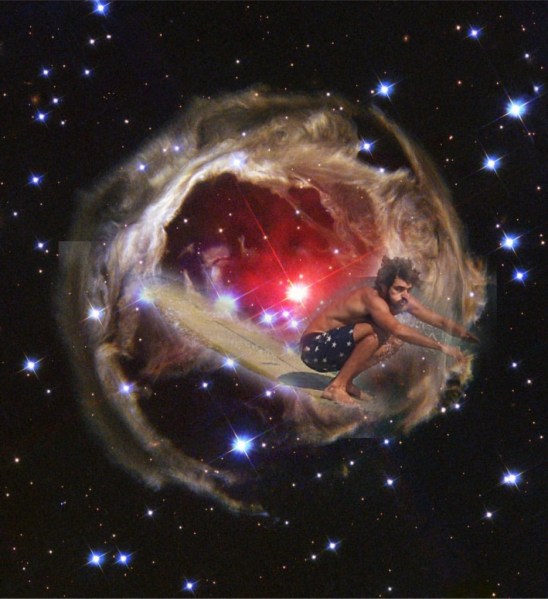
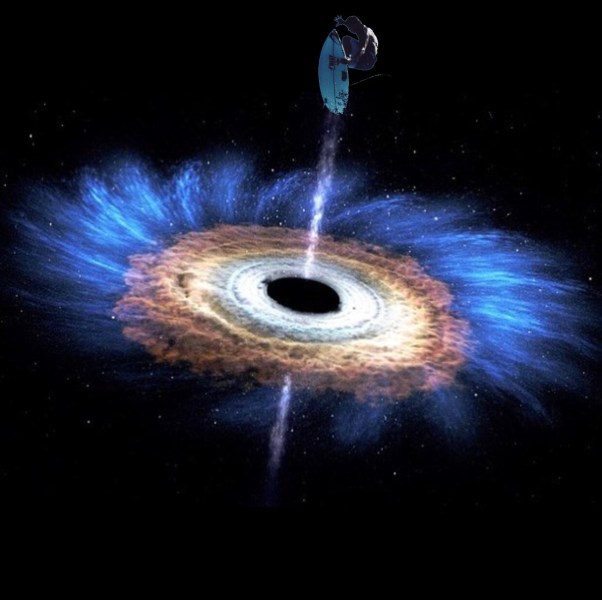
Surfing on a distant star in a galaxy far, far, away.  Walking out on the nose of your board for a cheater-five, riding a nebulous cloud through the infinite darkness of space. Getting spit out of a black hole, executing a grab-rail, carving cut-back.  Ripping a hole in the space-time continuum. Finessing the very fabric of the Universe.

Credit : Third Party Reference

WATER IS COSMIC.

All of the water on Earth came from space in exactly the form it is in now: H2O.  Water not only came from space it was created out in space.  Hundreds of millions (or even billions) of years before the solar system itself, the world’s Ocean came from an interstellar cloud somewhere in the Milky Way galaxy—formed one molecule at a time.  All of the water on Earth was delivered here when Earth was formed (within the first 100 million years or so) and what we have is what we’ve got.  There is no geological mechanism on Earth to create or destroy H20.  The Ocean (and all of Earth’s water) has literally been here forever.

Credit : Third Party Reference

The Ocean—all the water on Earth—began as the finest mist, tiny ice crystals drifting around inside an interstellar cloud. However, scientists don’t actually know how all that water gets from the interstellar cloud to our Ocean, nor do they know how much water is actually on Earth.

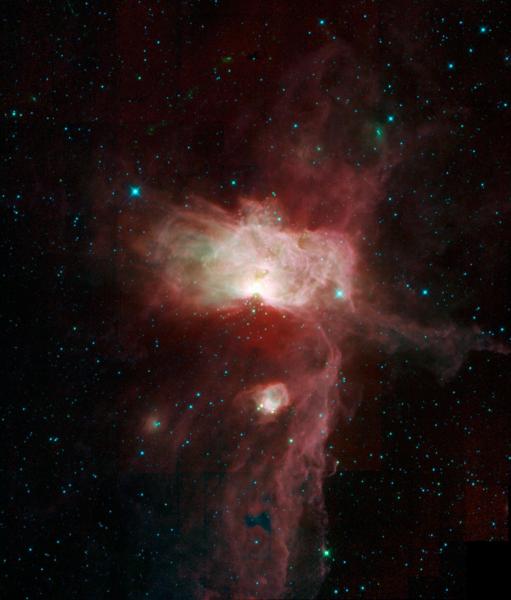
THE ORION MOLECULAR CLOUD.

DISTANCE FROM EARTH: A MERE 1400 LIGHT YEARS (1 LIGHT YEAR = 5.88 TRILLION MILES)

The OMC is an interstellar spring of water. This massive glowing cloud of hydrogen gives birth to thousands of stars at once.  As the stars coalesce and collapse in on themselves, they send shockwaves out through the clouds of gas which contain lots of loose hydrogen and oxygen.  When the shock waves slam the hydrogens and oxygens into each other, they often form water. There is enough water being formed in the OMC to fill all of Earth’s Oceans every 24 minutes.  Surf’s up!

Credit : Third Party Reference

The Orion Molecular Cloud is making 60 Earth Oceans every 24 hours but it is doing it across a span of space 420 times the size of our entire solar system—so even the dustiest (most dense, with the most particles) parts of the cloud are emptier than any vacuum that people can create on Earth.

VENUS

DISTANCE FROM EARTH: 162 MILLION MILES

Venus may have been our solar system’s first Ocean world —a supercritical carbon dioxide Ocean of a bubbly sort of fluid that flowed a bit more like a liquid, with bubbles that behaved more like a gas popping up where the temperature and pressure varied a bit. Here on Earth, International Surfing Day is celebrated in the Summer on the longest day of the year.  Venus boasts an endless summer—with an average surface temperature of 864° Fahrenheit (462° C)—and a single day on Venus is equal to 243 Earth days.  That’s a lot of time to surf each day!

 Venus is so hot, though, that the atmospheric pressure (92 bar or 1334 pounds per square inch pressing down on you) would be the equivalent of being 3000 feet deep in the Ocean—you would be crushed before you ever had a chance to catch a bubbling hot wave.

Credit : Third Party Reference

It’s this extreme Venusian pressure and heat that initially may have created a supercritical carbon dioxide Ocean.  Scientists are still in debate on what type of liquid—water or lava—etched Venus’ surface features which look very much like canyons, lake beds, and broad plains that may have once been sea floors. Venus no longer has liquid on its surface, the planet is dry and is not currently hot enough to melt its carbons (which make up 96% of its atmosphere).  While the surface rotates slowly, the winds blow at hurricane force, sending clouds around the planet every five days.

 Venus lacks a strong global magnetic field, which on Earth helps protect our atmosphere.  If there ever was an Ocean of water here, then Billions of years ago, a runaway greenhouse effect began raising temperatures enough (over 1340° F or 727° C) on Venus to boil off all of the water in the Ocean ( a small amount of water vapor still exist on Venus, something like 20 parts-per-million), which escaped into space due to the unrelenting solar wind.

Credit : Third Party Reference

“Should’ve been here billions of years ago, the surf was firing—before the wind got on it.” -Surfer on Venus

MARS

DISTANCE FROM EARTH: 34 MILLION MILES

Mars was once much more Earth-like, with a thick atmosphere, abundant water, and an Ocean covering nearly a third of the Red Planet.  Imagine surfing huge, slow-motion barrels. Mars has only 10% the mass of Earth and its gravitational field is only one-third of Earth’s so less gravity would produce larger yet slower moving waves compared to Ocean swells of Earth. Aerial surfing maneuvers would be extra lofty.  

Credit : Third Party Reference

However, Mars lost its protective atmosphere billions of years ago and has since lost approximately 87% of its water. Most of its remaining water is frozen in ice caps or trapped beneath the soil, but a small amount of muddy, brackish water can be seen moving down the side of Martian hills in the local summer.

Reference – https://divyanshspacetech.wordpress.com

India asks China to confine its activities to its side of LAC

External Affairs Ministry has said that India and China have been discussing through military and diplomatic channels the de-escalation of the situation in the border area in Eastern Ladakh.
 
On 6th of this month, the Corps Commanders of both nations held a meeting in the Chushul Moldo region where an agreement was reached on de-escalation and disengagement along the Line of Actual Control (LAC). Ground Commanders were meeting regularly to implement this consensus throughout last week.
 
Briefing media, External Affairs Ministry spokesperson Anurag Srivastava said while it was India’s expectation that this would unfold smoothly, the Chinese side departed from the consensus to respect the LAC in the Galwan valley.
 
He said they took premeditated and planned action that was directly responsible for the violence and casualties suffered by both sides. He added that this could have been avoided had the agreement at the higher level been scrupulously followed by the Chinese side.
 
The spokesperson stated that India is very clear that all its activities are always within the Indian side of the LAC given its responsible approach to border management. He said India expects the Chinese side to also confine its activities to its side of the LAC.
 
During his telephone conversation with the Chinese Foreign Minister on Wednesday, External Affairs Minister S Jaishankar conveyed that the need of the hour was for the Chinese side to reassess its actions and take corrective steps.
 
The Minister said they should strictly respect and observe the Line of Actual Control and not take any unilateral action to alter it. It was agreed that both sides would implement the dis-engagement understanding of 6th June sincerely.
 
Neither side would take any action to escalate matters and instead, ensure peace and tranquility as per bilateral agreements and protocols.

PM convenes all-party meeting today to discuss situation along India-China border

Prime Minister Narendra Modi has convened an all-party meeting at 5 this evening to discuss the situation along the India-China border. In a tweet, PMO said, the virtual meeting will be attended by Presidents of various political parties.
 
The meeting assumes significance in the wake of recent violent face-off between Indian and Chinese troops in the Galwan Valley in eastern Ladakh.

Career Opportunities after CLAT ….

today every young individual is worried about career option. what should he adopt, and what not accordingly his interest of studies and also the economic part plays a very important role in chosing the career.

Let’s take a view on career opportunities With CLAT Exam. The way to career gets cleared scoring good in this exam. There are many options available for acquiring a good job after going through CLAT.

1. Indian Corporate Law Services through UPSC, one can go through the most respected and difficult exam that is UPSC CSE to acquire a respected job.

2. As a professer or lecturer , one can acquire this being a professer in law subjects as a career.

3. Judiciary, The another best way to go through is to become a judge or a lawyer . One can go through state level judiciary exam to become direct a judge or through a lawyer he can adopt is career in Law.

4. Corporate Sector , Today corporate sector is developing day by day and also is very broad. All the big companies have some law related issues for which they need a permanent lawyer. these companies offer very good pay and perks.

5. Banking sector and PSUs , banking sector always has need of a lawyer to resolve all it’s law related issues and also for services provided by bank are done with the help of these lawyers . So hiring of lawyers is necessary for Banking sector and also PSUs have many law related works for what they have to hire lawyers.

6. Law firms , law firms provide general services to the public which is never ending. These firms have a collection of all lawyers and manage all the issues . These firms offer good salaries accordingly experiance and skills of the individual.

Law sector is very broad. One can adopt a very good and high paid job through the CLAT and acquiring further degrees.

All The Best…

Thanks.

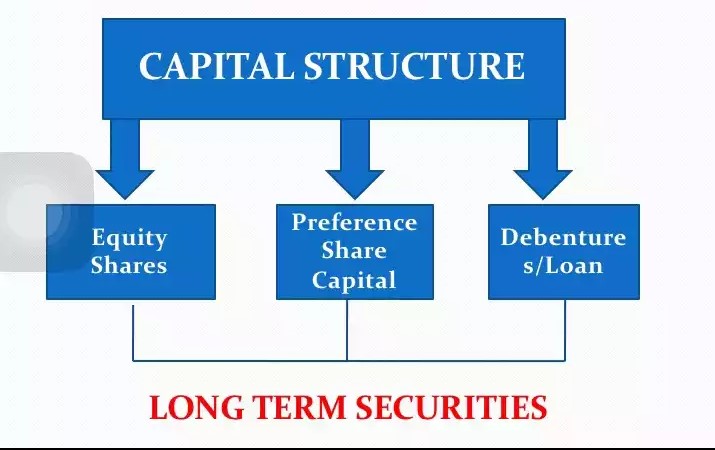
CAPITAL STRUCTURE

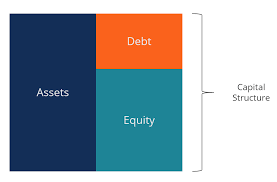
Capital structure signifies the composition of the amount of long-term financing and according to Gerstenberg, “Capital structure means the types of securities to be issued and the proportionate amounts that makeup capitalization”. Long term finds can be obtained from owners and borrowers. The owner’s fund consists of equity shares, preference shares, and retained earnings. Borrower’s fund (debt capital) includes debentures and other long term borrowings and the ratio between the owner’s fund (equity) and borrower’s fund is decided under the capital structure.

DETERMINANTS OF CAPITAL STRUCTURE

As stated earlier capital structure decision is highly individualistic and the capital structure of a company is planned initially when the company is floated. The initial capital structure must be designed very carefully since it will have long-term implications. However, the capital structure decision is a continuous one and has to be taken every time whenever a firm needs additional finances. Several factors affect the capital structure of a firm. Some of the important factors which must be kept in mind while determining the capital structure are discussed as follows:

1. Cash flow position

While choosing if capital structure the future cash flow position must be considered before issuing debt. Cash flow must not only cover fixed cash payment obligations but there must be sufficient buffer also, it must be kept in mind that a company has cash payments obligations for (i) Normal business operations; (ii) for investment in fixed assets; and (iii) for meeting the debt service commitments i.e. payment of interest and repayment of principal.

2. Interest Coverage Ratio

By the use of this ratio, it can ascertain whether the company can pay interest or not. The greater this ratio, the more will be the capacity of the company to use debt. The ratio can be calculated as under:

 Interest coverage ratio= Earnings before interest & Taxes/ Interest

3. Debt Service coverage ratio- DSCR:

 The debt service coverage ratio takes care of the weaknesses referred to in the interest coverage ratio-ICR. A higher DSCR indicated better ability to meet cash commitments and consequently, the company’s potential to increase debt components in its capital structure.

4.Cost of Debt

The capacity of a company to take depends on the cost of debt. In case the firm arranges borrowed funds at a low rate of interest then it will prefer more debt as compared to equity and vice versa.

5. Tax rate

High tax rate makes debt cheaper as the interest paid to debt security holder is subtracted from income before calculating tax whereas companies have to pay tax on dividend paid to shareholders. So high-end tax rate means prefer debt whereas at low rate tax the company can prefer equity in the capital structure.

6. Cost of equity capital

 The cost of a source of finance is the minimum rate of return expected by its Suppliers. Equity shareholders bear the maximum risk because no rate of dividend is fixed. To pay interest on debentures is a statutory liability of the company whether the company earns a profit or not. Thus, debt is cheaper as compared to ordinary share capital. The cost of debt becomes lesser because interest is a charge on the taxable income.