Sahakar Mitra: Scheme on Internship Programme, an initiative by National Cooperative Development Corporation

In keeping with Prime Minister Shri Narendra Modi’s clarion call for AtmaNirbhar Bharat(Self Reliant India) emphasizing the importance of local for vocal, Sahakar Mitra: Scheme on Internship Programme (SIP) was launchedyesterday by Union Minister for Agriculture & Farmers’ Welfare Shri Narendra Singh Tomar. Launching the scheme, Shri Tomar said that the unique cooperative sector development finance organization, National Cooperative Development Corporation, NCDC has embarked upon a series of initiatives in the cooperative sector entrepreneurship development ecosystem through capacity development, paid internship to youth and assured project loans on liberalized terms to young cooperators on start-up mode.

The Minister said that NCDC has been proactive in delivering innovative solutions for the cooperative sector. In the series of initiatives by NCDC, the new scheme called Sahakar Mitra: Scheme on Internship Programme (SIP) will provide the young professionals an opportunity of practical exposure and learning from the working of NCDC and cooperatives as a paid intern. NCDC has also introduced a complementary scheme to promote start-up cooperative ventures. Sahakar Mitra would also provide an opportunity to professionalsfrom academic institutions to develop leadership and entrepreneurial roles through cooperatives as Farmers Producers Organizations (FPO).

Sahakar Mitra scheme is expected to assist cooperative institutions access new and innovative ideas of young professionals while the interns gain experience of working in the field giving confidence to be self-reliant. It is expected to be a win-win situation both for cooperatives as well as for the young professionals. 

Under the scheme, professional graduates in disciplines such as Agriculture and allied areas,IT etc. will be eligible for internship.  Professionals who are pursuing or have completed their MBA degrees in Agri-business, Cooperation, Finance, International Trade, Forestry, Rural Development, Project Managementetc. will also be eligible.

NCDC has earmarked funds for Sahakar Mitra paid internship program under which each intern will get financial support over a 4 monthsinternship period. Online application portal for internship application available on NCDC website, was also launched by the Union Agriculture & Farmers’ Welfare Minister.

BUSINESS FINANCES

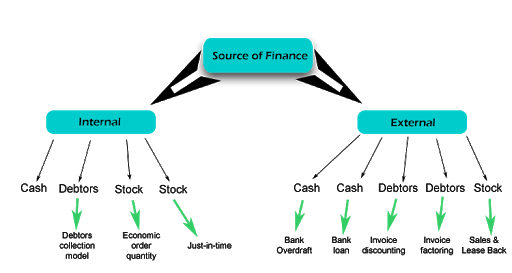
Finance is a must for the smooth conduct of business operations. A business firm can raise funds from two main sources: Owned funds or owned capital and Borrowed funds or loaned capital. Insole proprietorship and partnership the funds contributed as capital are called owned funds. In a joint-stock company fundraised through the issue of shares and reinvestment of earnings (retained earnings) are the owned funds, borrowed funds refer to the borrowings of a business firm. In a company borrowed funds consist of finance raised from debenture holders, financial institutions, public deposits, and commercial banks. Finance can be classified in to:

1. LONG-TERM FINANCE

  Long-term finance can be defined as any financial instrument with a maturity exceeding one year (such as bank loans, bonds, leasing, and other forms of debt finance), and public and private equity instruments. Long-term finances are required for permanent investment in the business. It may be raised for more than five years. Long-term finance is required for investment in fixed assets like land and buildings, plant and machinery, furniture and fixtures, etc.

In a business house following are the main sources of long-term finance:

  1. Issue of shares
  2. Issue of debentures
  3. Ploughing back of profits/retained earnings
  4. Loans from specialized financial institutions

The amount of long-term funds required depends on the type of business and the investment required for fixed assets. For example, the manufacturing of steel, cement, chemicals involves heavy investments in buildings, machinery, and equipment. A small factory producing garments or a small workshop for repairing electrical goods will require a small investment in fixed assets. Traders generally require lesser amounts for long-term investment as compared with the requirements of manufactures.

-FROM WALLSTREETMOJO

2. MEDIUM-TERM FINANCE

Medium-term finance is required for a period ranging from 3 to 5 years. It is used for the modernization of plant and machinery, investment in permanent working capital, and for repayment of debts. The main sources of medium-term sources of finance are:

  1. Issue of debentures
  2. Issue of preference shares
  3. Bank loans
  4. Public deposits/fixed deposits
  5. Loans from financial institutions

Manufacturing and trading concerns require more working capital to pay wages and to finance the purchase of raw materials and goods.

3. SHORT-TERM FINANCE

The amount of such capital is required for a short period, say up to one year and as soon as goods are sold and funds are recovered, the amount is again used for current operations. Generally, production processes are completed within a year and goods are ready for sale. Hence short-term funds can be used over and over again from year- to year. Short-term funds are required for meeting day-to-day working capital needs. They raised for twelve months or so. The main sources of short-term finance are as follows:

  1. Bank credit
  2. Customer advances
  3. Trade credit
  4. Deferred incomes
  5. Installments credit

                 The requirements of short-term finance depend on:

  1. The nature of business undertaken
  2. The time gap between the commencement of production or purchase of goods and their sales
  3. The volume of business.

Trading firms normally require proportionately more of short-term capital than a long-term capital. Manufacturing concerns, on the other hand, need relatively smaller amounts of short-term capital as compared to long-term capital.

State of CHILD LABOUR in the world!

On the rising population there is also rise in demand of  family members related to commodities. Many of the family don’t even get 2 meals per day! there is lack of only one thing and that is money. It is said that

“Empty stomach can make you to do anything”

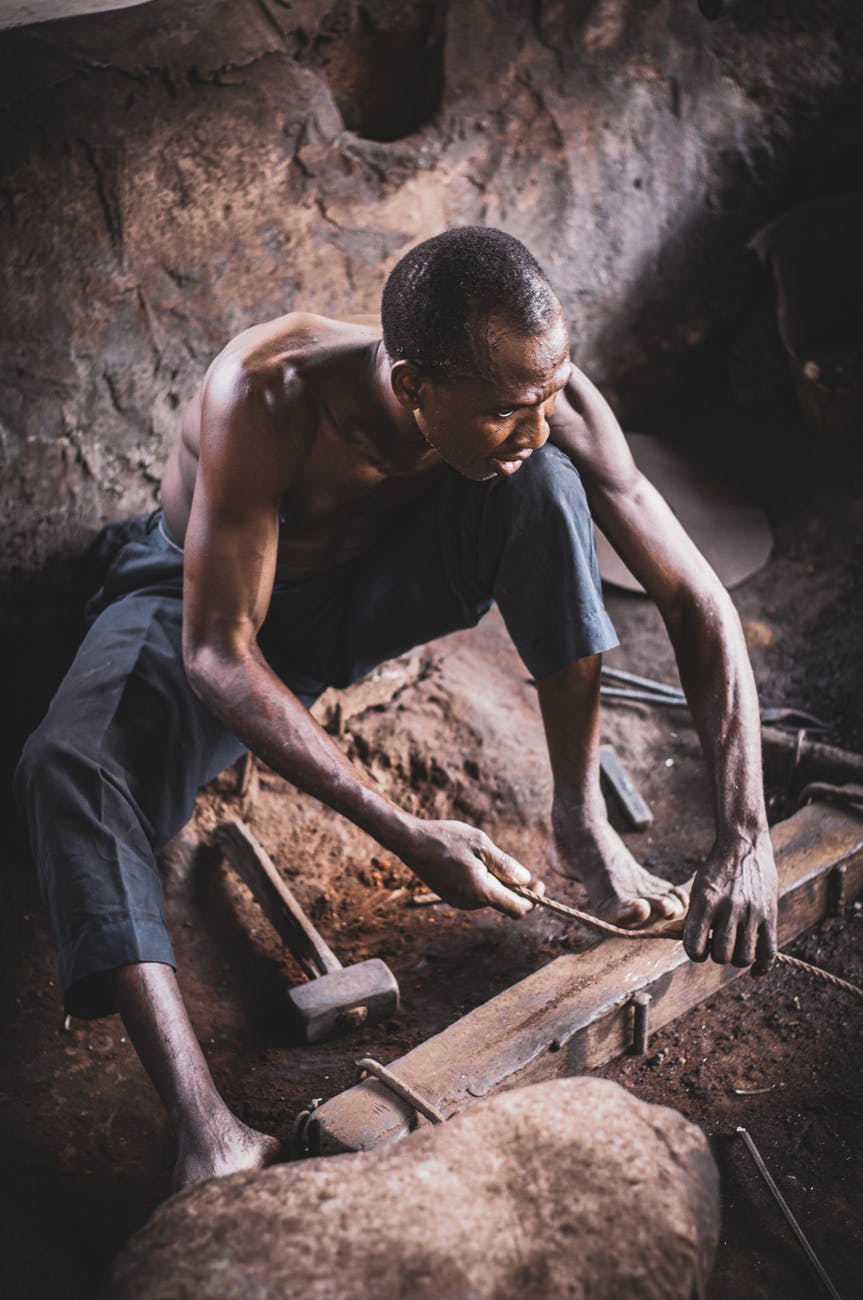
To fill the stomach people can do anything especially when they have family to feed. Now-a-days the crises and cruelty has increased drastically that alone 1 man cannot feed the all 4 members in the lower labour section. So, unwillingly all the family members had to work at the field and contribute some money towards family to sleep without an empty stomach at night.

a photo of a hardworking man
Photo by Tope A. Asokere on Pexels.com

There are many schemes released by government to stop the child labour like making primary education almost free for poor children along with mid-day meal to them so that they do not have to crave for the meals and keep focus on the study, they are also regularly checked by medical if there is any weakness in any of the student. National Child Labour Project (NCPL) is a central government branch which takes strict actions against child labour and works at the best to resist this act. According to UNICEF, India with the highest amount of population has also high number of child labour cases under the age of 14 and 1% of it i.e. approx 1,20,000 are forced to engage in hazardous jobs.

images

Image source: Jatinverma.org

Every year on the day of 12 June it is marked as Anti-Child labour day to draw the attention on the issue of child labour. Every year there is different themes on this day:

  • In 2020 the theme was “Protect children from child labour, now more than ever”.
  • In 2019 the theme was  “Children shouldn’t work in fields, but on dreams”.
  • In 2018 the theme was Generation safe and Healthy”.
  • IN 2017 the theme was “In conflicts and disasters, protect children from child labour”.
  • In 2016 the theme was “End child labour in supply chains – It’s everyone’s business!”.
  • In 2015 the theme was NO to child labour – YES to quality education!”.

Now the matter is not just to put it to one day and on a piece of paper, it’s a world wide conflict and has to be somehow resolved. Every year various types of acts and event are performed by students of schools, college and NGOs too, but this year digitally the message was forwarded as due to lockdown and pandemic situation rallies, etc cannot be held.

“Why had his mother gone to the trouble of bringing him into the world if the most exciting moment in his life was having been made lame by a bayonet?” -Félix J. Palma

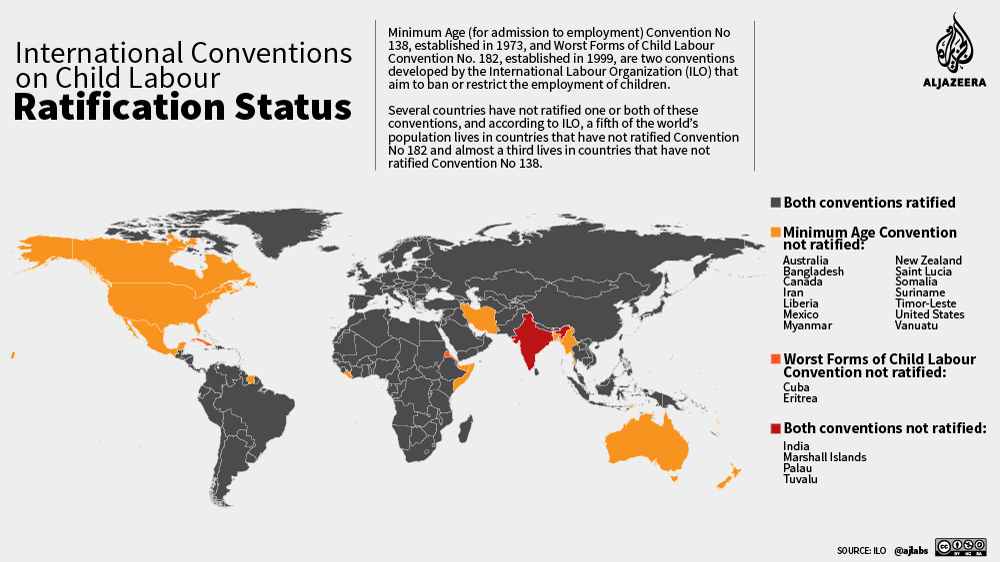
Let us have some stats:

2cc325d1413d4c61aabb17eb63fcd1d6_18

Image source: Al Jazeera

Small Farmers’ Agribusiness Consortium (SFAC) has responsibilty of formation of FPOs and e-NAM platform

Union Minister of Agriculture & Farmers’ Welfare, Rural Development & Panchayati Raj Shri Narendra Singh Tomar has said that Prime Minister Shri Narendra Modi has made revolutionary reforms in the field of agriculture including the important step of announcing the formation of 10 thousand Farmer Producer Organizations (FPOs). The responsibility of completing this task lies with the Small Farmers’ Agribusiness Consortium (SFAC), which is also responsible for strengthening the e-NAM platform in the present circumstances. There has been considerable progress in institutional and private investments after the establishment of SFAC. 

Addressing the 24th Management Board and 19th Annual General Board meetings of the SFAC, Shri Tomar congratulated SFAC team for linking 1000 markets to e-NAM in two phases. He further said that the purpose of creating the platform should be accomplished. Business of more than Rs. I lakh crore has been transacted over the e-NAM platform till now. More than 1.66 crore farmers and more than 1.30 lakh businesses have been registered with e-NAM since its inception. Shri Tomar said that it is a challenge for us to ensure that as a result of reforms, there is ease in selling of produce, along with transparency, farmers get remunerative prices for their produce and they have direct access to this platform. Farmers have completed the harvesting work with great dedication even during the period of lockdown and earning is also now being completed successfully. SFAC must be congratulated for helping the farmers in this.

Shri Tomar said that previously SFAC used to form FPOs on the basis of existing schemes, but it is a matter of happiness today that Hon’ble Prime Minister has announced the formation of 10 thousand FPOs across the country which will give a boost to this task. FPOs must not only be formed but they they must also achieve their objectives. Their responsibilities increase in ensuring that farmers gather in groups, hold discussions and get trained, increase their production, diversify their crops, and discuss ways of decreasing use of pesticides etc. Hon’ble Prime Minister has set the target of doubling farmers’ incomes. In between the problem of COVID appeared yet the pace of Ministry of Agriculture and farmers has not slackened. Shri Narendra Singh Tomar appreciated that SFAC launched the Kisan Rath app with the help of officials of the Ministry of Agriculture which lessened the problem of transport of farm produce during lockdown. 

Himachal- Around the Next Bend

The Union Tourism Ministry’s “ Dekho Apna Desh”  webinar series on 11th June 2020 walked into its 31st session showcasing “Himachal- Around the next bend” focusing on the beautiful villages, mountains, pristine rivers, culture and heritage. Dekho Apna Desh Webinar Series is an effort to showcase India’s rich diversity under Ek Bharat Shreshtha Bharat programme. 

The session of the Dekho Apna Desh webinar series on 11th June, 2020 was moderated by Rupinder Brar, Additional Director General, Ministry of Tourism.  The session was presented by Frank Schlichtmann, Founder, The 4tables Project, Ankit Sood, Managing Host, Sunshine Himalayan Adventures and Michael & Devanshe Lidgley, Owners, Himalayan Orchard.   The three presenters virtualised and highlighted the unexplored destinations and unique cultural and heritage wealth of Himachal Pradesh.

Mr. Frank Schlichtmann started the session by highlighting an interesting Art village Called Gunehar, beautiful amalgamation of nature, streams, forest. Gunehar is located in the Kangra district. The idea behind this Art project in Gunehar is to develop conscious effort among the travellers to put focus on the village without affecting the place with too much crowding.  Gunehar is well connected by road, rail and air.  The valley has many small villages and Gunehar is the largest panchayat with just 3000 people.  People are largely Gaddis with a few Bara Bhangalis.  The settlement started a little 100 years ago.  Originally people of the village are shepherds but now many of them are farmers, some have shops and some work.  Villagers are grounded, have sense of dignity and knowledgeable.  4 tables project started in the year 2008 with good participation, followed by Art festival in 2013.  Art shops were developed, inviting the artists to come and work in empty spaces and present their art work which is attended by people from all walks of life.  The whole event is a joint venture with the artist, visitors and villagers.  The villagers call it Mela.  It has become a huge success and final week is organised as art festival with theatre, music, film screening etc.  Local cultural elements are well represented towards the closing ceremony of the Art festival. 

Mr.Ankit Sood took us virtually through the World Heritage Site Great Himalayan National Park located in the Kullu region.  Great Himalayan National Park is spread across four valleys-Sainj valley,  Jiwa Nal valley, Tirthan Valley and Parvati valley. The park protects over 1,000 plant species, including many medicinal herbs, 31 mammal species and 209 bird species, as well as amphibians, reptiles and insects. Four of GHNP’s mammal species and three of its bird species are globally threatened, including the musk deer and the western horned tragopan.

The third little known destination in Himachal Pradesh showcased by Michael & Devanshe Lidgley was that of  Kotkhai, a town in Shimla district.

• Kotkhai Palace is 800 years old and the royal family is still residing in the palace.

• Rukhla  village – An apple growing village.  A three hour hike from Rukhla takes you to the highest point where you can have a mesmerising 360 degree view of Greater Himalayas. The village is well known for its majestic flora and fauna including Black Bear, Barking Deer, Musk Deer, Langur, Leopards and Monal.

• Kiari temple- Kotkhai architecture wood and stone earthquake resistant

• Narayan temple- Rebuild based on original style.

• Naga cult-.Master of the underworld reigns over subterranean water sources linked to fertility.  Naag is the son of Bhuri Mata, a powerful Goddess worshipped in Himachal and sacrifice of sheep pleases him.  Songs are sung in Pahadi dialect.

• Apple farming

The Dekho Apna Desh Webinars are conducted in association with National e-Governance Division (NeGD) created by the Ministry of Electronics & Information Technology (MeitY).

The sessions of webinars are now available on the https://www.youtube.com/channel/UCbzIbBmMvtvH7d6Zo_ZEHDA/featured and also on all social media handles of Ministry of Tourism, Government of India.   

The next episode of the webinar scheduled on, 13th June 2020 at 11.00 am, is titled Trekking in the Himalayas – Magical Experiences. Registrations https://bit.ly/HimalayasDAD 

Courage: Being Brave

WHO DOESN’T LOVE A TALE OF COURAGE?

They pop up in all cultures, traditions and eras. From shepherd-boy David facing giant Goliath, to Gilgamesh defeating the monster Humbaba, to Harry Potter and friends confronting deadly Lord Voldemort.

There’s something exhilarating about individuals, pitted against the odds, rising above fear and narrow concerns about self-preservation.

And when real life provides examples of valour, our faith in human nature, in the possibility of virtue, is enhanced.

SO WHAT IS COURAGE?

To Aristotle it was a virtue, the greatest quality of the mind. For Richard Avramenko, who teaches political science at the University of Wisconsin, courage is the primary means by which humans raise themselves out of their individualistic, isolated and materialistic existence.

He writes: ‘Courage… is the willingness to risk life and limb for the sake of something. In other words, courage reveals what we care about… It reveals that which inspires us to overcome ourselves. And it is the self-overcoming character of courage that makes it so poignant. When we are witness to real acts of courage, we know immediately what matters most fundamentally to the courageous actor – and it is not herself, not her own physical well-being.’

In praising fearlessness we may be making a virtue of deficiency

Physical bravery attracts most attention, winning honours and awards. But courage takes many forms – moral, intellectual, emotional, psychological, political, social, spiritual, financial…

You have to pluck up your courage to express ideas that are not majority opinion, or to face the hostility or ridicule that may accompany departing from social norms.

BRAVE IS NOT FEARLESS: THE SCIENCE

Often we call brave people ‘fearless’. But courage isn’t fearlessness. As Nelson Mandela recalled: ‘I learned that… the brave man is not he who does not feel afraid, but he who conquers fear.’

If there is no fear to start with, there is no need for courage.

Admitting we are afraid can make us feel small. But often the first step towards being brave is to feel fear – then do the thing we are afraid of anyway, to paraphrase Sheila Jeffers’ self-help classic.

Even those who feel no fear at the time of performing heroic deeds may find that the trauma catches up with them later – as was the case for Loyau Kennett, who became depressed in the months following the event.

In praising fearlessness we may be making a virtue of deficiency. There is, indeed, a rare medical condition called Urbach Wiethe disease that damages the amygdala – the part of the brain that processes fear – and may result in total fearlessness.

‘In biological terms,’ says science author Jeff Wise, ‘bravery emerges from a primal struggle between the brain’s decision-making hub, the prefrontal cortex, and the focal point of fear: the amygdala. When we find ourselves in an unexpected and dangerous situation, the amygdala sends a signal to the prefrontal cortex that interferes with our ability to reason clearly.’

It can be paralysing.

People who act bravely appear not to succumb to fear. Sometimes their calm, practical responses derive from intense preparation. Firefighters, airline staff, paramedics, soldiers and the like, will have been trained for dangerous, unexpected situations. Their responses may be like ‘muscle memory’.

In one 2009 study, Yale University psychiatrist Deane Aikins subjected soldiers to extremely stressful situations to see what happened to their body chemistry. He found those who remained calm produced less of the ‘stress’ hormone cortisol. They also made more neuropeptide Y, a compound that counteracts the effects of cortisol. His work suggests that by measuring hormone levels it is possible to predict who will keep their cool under pressure – and who won’t. 4 More recently, neuroscientists have identified a brain region called the subgenual anterior cingulate cortex (sgACC for short) as the part activated during courageous acts.

PASSION AND COMPASSION

But for many analysts, the cultivation of courage has more to do with emotions. ‘Follow your heart’ is how psychotherapist Melanie Greenberg puts it in her useful analysis of the six main attributes of courage, which provides the framework for this article. She quotes the pioneering, 20th century Japanese actor, Midori Komatsu: ‘Passion is what drives us crazy, what makes us do extraordinary things, to discover, to challenge ourselves. Passion should always be the heart of courage.’

And so should compassion.

In this magazine we feature half a dozen exceptionally brave people and their accounts are dominated by compassion, as well as passion.

Tatiana Vivienne braves daily violence in the Central African Republic to reach the most vulnerable girls and women; Alicia Cawiya, in Ecuador, defies authority at every level to defend her people and their environment from ruin by oil companies; Jlo Córdoba in Honduras, despite numerous attempts on her life, keeps challenging impunity for those who murder and abuse transgender people, because she ‘loves’ her community.

As the 6th century BCE Chinese philosopher Lao Tzu says, being loved gives you strength, but loving deeply makes you brave. He also says: ‘From caring comes courage.’

It’s a view that might be shared by Abdullah Al Khateeb, also featured in this edition, who will not be deterred from his humanitarian work with refugees though it has turned him into a target for both sides in the Syrian conflict. ‘When you care about people, your responsibility is total,’ he says.

STAND UP FOR WHAT IS RIGHT

Brave people are often those who take a moral stand and have a clear sense of purpose.

Environmental activist S Mugilan, like others we interviewed, ignores death threats to confront powerful business interests and their hired thugs who are ‘swindling and destroying’ the state of Tamil Nadu. He puts his courage down to being ‘the kind of person who is determined to change how things work’.

‘A hero is no braver than an ordinary man, but he is braver five minutes longer’

Today, some of the bravest people in the world are defenders of human rights. ‘Human rights activists in Saudi Arabia are an endangered species,’ said Amnesty International’s Lynn Maalouf recently. ‘One by one they are vanishing – prosecuted, jailed, intimidated into silence or forced into exile – highlighting the authorities’ zero-tolerance approach to freedom of expression.’

Whistleblowers, too, pay heavily for their efforts. Often they lose not only their jobs, but their friends, relationships, homes and liberty. Chelsea Manning, Edward Snowden and, more recently, Barrett Brown, have felt the weight of US government retribution for their exposures of abuses the state wishes to conceal.

In all these cases, solidarity, the existence of people out there who support the whistleblower’s actions, is vital.

PERSISTENCE IN ADVERSITY

‘A hero is no braver than an ordinary man,’ wrote poet Ralph Waldo Emerson, ‘but he is braver five minutes longer.’

Staying power in the heat of adversity is a frequent characteristic of the valiant engaged in long-term struggles for social justice.

Take Turkish lawyer and former newspaper editor Eren Keskin, hauled before the courts more than 100 times for her criticisms of the government, particularly its treatment of the Kurdish minority. Over the years she has been given several prison sentences. Following the failed military coup in Turkey in July 2016, her passport was revoked. Erin was to have been interviewed for this edition, but she is once again in court.

As artist and writer Mary Anne Radmacher puts it: ‘Courage does not always roar. Sometimes courage is like the little voice at the end of the day that says I’ll try again tomorrow.’

EXPANDING HORIZONS

In his seminal study The Hero with a Thousand Faces, mythologist Joseph Campbell identified key ingredients of the archetypal hero’s journey.

She or he leaves their familiar surroundings and passes into a special world where they must confront demons, face challenges and ordeals, and encounter their worst fears. They need to conquer their fear and will ultimately claim ‘treasure’ or reward. Then they return home to their familiar world, but they themselves will have changed.

The people we are featuring in this magazine have, in various ways, left their familiar surroundings, journeyed, and grown. For Angolan rapper Luaty Beirão, the journey has been literal, political, personal. While in prison for speaking out against a repressive government, he became stronger. He thought: ‘I won’t accept your threats. If you want to kill me, do it. With each step I found I could take one step further. I found out I had the guts for things I hadn’t imagined before.’

For all the physical privations the brave people in these pages have suffered, their actions have enabled them to overcome fear, to grow, and in a moral sense claim the ‘treasure’.

ULTIMATE COURAGE

Finally, there is what some people call ‘spiritual’ courage. This includes the bravery we may show when we endure suffering – and ultimately, face death. Deep down it’s the thing most of us fear most. I have witnessed people I love dig deep into their reserves of courage as they experience terminal illness. I have seen how their courage encourages those around them to be brave too. Courage does that. It encourages; it is positively infectious, even in the worst, most hopeless seeming of situations.

GOOD COURAGE, BAD COURAGE?

While scientific studies of courage are intriguing – one Israeli study puts the subject into an MRI tunnel, then exposes them to snakes! – they have some worrying implications.

It would be deeply troubling – if not plain immoral – if such research led to the development of a ‘courage pill’ that could turn soldiers into ‘perfect’, fearless fighters.

Fear can stop us taking necessary action. But it can also give us pause for thought. The trick is not to let it take hold, and to be able to transcend it when we need to. ‘There’s only one way with fear and that’s through it,’ says psychologist Noam Shpancer. It’s an ongoing, dynamic process, that will never be completed and that is essential for making change happen, in the individual and in the world.

Of course, bravery does not always involve virtuous action. It can be violent, militaristic, macho, tribal. ‘This is the paradox of courage,’ according to Avramenko. ‘On the one hand, it is about self-overcoming and commitment to others. On the other hand… it is exclusionary and violent.’

He sees the shift away from an ancient, martial conception of courage to one that is political and justice-based as a way through this theoretical conundrum. The kind of courage we are focusing on in this edition is the justice-based variety. It is empathetic and community minded, geared towards resisting and limiting harm.

One common theme in all the stories is caring, and the comradeship that courage fosters as it creates a virtuous circle of valour. Many of our interviewees point to the work of others, and the sacrifices they have made, as sources of inspiration.

Such courage is the lifeblood of a healthy individual and a healthy society. It’s what makes for meaningful, purposeful change, challenging the cynicism of that slick, fashionable, armchair elision of the word ‘brave’ with ‘stupid’.

It inspires and impels the human spirit towards building a better world.

INDUSTRIAL FINANCIAL CORPORATION OF INDIA (IFCI)

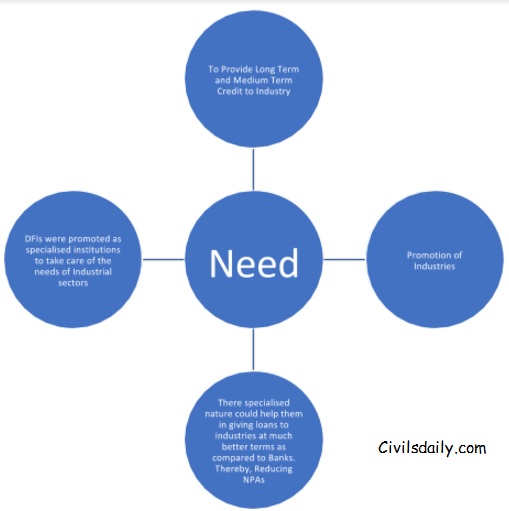
IFCI was the first industrial financing institution to be set up in India soon after independence. It was set up as a statutory corporation in July 1948 under the Industrial finance corporation of India Act 1948. It has now been converted into a joint-stock company with effect from July 1, 1993, under the Companies Act, 1956 because there was a high NPA increase and it was causing a huge loss to the government and now IFCI is a Non-banking finance company in the finance sector. IFCI is a company currently listed in NSE and BSE and currently has seven subsidiaries and one associate. Currently, it is allowed to access the capital markets only. IFCI has financed various projects such as airports, roads, telecom, power, real estate, manufacturing, services sector, and such other allied industries. During its financing term, it has financed mega-projects like Adani Mundra Ports, GMR Goa International Airport, Salasar Highways, NRSS Transmission, Raichur Power Corporation, and many more projects. The Government of India has placed a fund of Rs 200 crore with IFCI to promote entrepreneurship among the Scheduled Castes and to provide finance to these entrepreneurs at concessional rates.

OBJECTIVES OF IFCI

The main purpose or objective of IFCI is  “to make medium and long-term credits more readily available to industrial concerns in India, particularly in circumstances where normal banking accommodations are inappropriate or recourse to capital methods is impracticable”. IFCI provides financial assistance for the setting up of new ventures as well as for the modernization and expansion of existing enterprises. It gives priority to the dispersal of money to the industry, development of backward areas, etc. It pays special attention to the following types of projects:

  1. Projects located in backward areas.
  2. Projects based on indigenous technology.
  3. Projects likely to meet the growing demand for essential commodities.
  4. Projects promoted by new entrepreneurs and technocrats.
  5. Projects having potential for export and import substitution.
  6. Projects that provide plant and machinery, fertilizers, pesticides, and other inputs for agriculture.
-FROM CIVILDAILY.COM

FUNCTIONS OF IFCI

IFCI grants loans and advances to or subscribing to debentures of industrial concerns repayable within 25 years and these loans are guaranteed with the central government, loans raised from, or credit arrangements made by industrial concerns with any bank or financial institution outside India. The loans are raised by industrial concerns from the capital market, scheduled banks, or co-operatives, which are repayable within 25 years.IFCI underwrites the issue of shares sad debentures by industrial concerns that be disposed of within 7 years. IFCI provides guarantees for deferred payments for imports of capital goods manufactured in India.

IFCI acts as an agent of the central government and the world bank when loans are sanctioned by them to industrial concerns in India and subscribing directly to the shares of industrial concerns. IFCI also provides a guarantee in the foreign market for the purchase of capital goods. So, IFCI may act as a consultancy, in issue house, an underwriting agency, and a credit agency. IFCI is not merely a lending agency but has assumed the role of a development bank.

Punjab Govt orders lockdown on weekends, public holidays

Punjab Chief Minister Captain Amarinder Singh has ordered  lockdown on the weekends and public holidays, with movement to be restricted to e-passes holders. All citizens, except medical staff and essential service providers will be required to download e-passes from the COVA app. Chief Minister issued these directions at a Video Conference meeting to review the pandemic situation and the state’s preparedness to handle further spread. Industry, however, will be allowed to function normally on all days. Chief Minister has asked DGP Dinkar Gupta to ensure strict implementation of these directives to prevent gathering of large crowds.

The Chief Minister also asked medical and health experts to consider imposition of strict conditions, including mandatory testing certification, for entrants from Delhi, where Corona cases are rising sharply. On an average, 500-800 vehicles come to Punjab from the national capital every day.

Third phase of Vande Bharat Mission to have 432 international flights from 43 countries

The Phase-Three of Vande Bharat Mission began yesterday. Briefing media, External Affairs Ministry Spokesman Anurag Srivastava said, it will last till the 2nd of July. Phase-Three will have 432 international flights from 43 countries reaching 17 States and Union Territories. In this phase, there will also be 29 flights from private carriers – 24 Indigo flights, three Go Air flights and two Vistara flights.

The number of flights from the US and Canada have also been increased given the huge demand. There are 53 flights from the US and 24 from Canada. There will be 16 flights from Paris and 16 from Frankfurt which are to be used as hubs in Europe. Mr Srivastava said, this phase of Vande Bharat Mission has widened the reach by including more countries and increasing the number of entry points.

Railways fully geared to provide modified coaches for use as COVID Care Centres

Indian Railways is fully geared to provide COVID Care Centres to State Authorities. Trains with unit composition of 10 coaches, with patient capacity of 16 per coach have been made ready.

Railway Ministry said, a total of five thousand 231 coaches were modified to be used as COVID Care Centre. Telangana has asked for coaches to be stationed in three locations- Secunderabad, Kachiguda and Adilabad. Uttar Pradesh has finalized 24 stations for deployment. In Delhi, 10 coaches are stationed at Shakurbasti location.

The Ministry said, Zonal Railways have converted these coaches for a quarantine facility. The coaches can be used for very mild cases that can be clinically assigned to the COVID Care Centres as per guidelines issued by the Health and Family Welfare Ministry. These coaches can be used in areas where the state has exhausted the facilities and needs to augment capacities for isolation of both suspect and confirmed COVID cases. These facilities are part of the integrated COVID plan developed by Union Health Ministry and NITI Ayog.

Railways has kept 158 stations ready with watering and charging facility and 58 stations with watering facility for these COVID Care Centres.

Recovery rate of Covid-19 patients improves to 49.47 pct

The Central government today said that the recovery rate from corona virus has reached 49.47 per cent in the country and the total number of recovered people is one lakh 47 thousand 195. During the last 24 hours, six thousand 166 people have been cured from this virus. Total active COVID19 cases in the country stands at  one lakh 41 thousand 842.

The Health and Family Welfare Ministry said, 10 thousand 956 new cases of Covid-19 have been reported in the last 24 hour taking the total number of cases to two lakh 97 thousand 535 in the country. This is the highest spike in fresh cases in one day since the outbreak of coronavirus in the country. During the last 24 hours, 396 deaths have been registered taking the nationwide toll to eight thousand 498. The case fatality rate is 2.85 per cent in the country.

Meanwhile, the Indian Council of Medical Research, ICMR, has said that a total of one lakh 50 thousand 305 tests of corona virus were conducted in the country by various laboratories in the last 24 hour. So far, 52 lakh 13 thousand 140 tests have been conducted in the country. ICMR is continuously scaling up its testing facilities for Covid-19 by giving approval to government and private laboratories. As of now, total 877 laboratories across India have been given approval to conduct the test for Covid-19 including 637 government laboratories and 240 private laboratory chains.

PM Narendra Modi calls for converting Covid-19 crisis into an opportunity to make India self-reliant

Prime Minister Narendra Modi said the country has moved from the policy of command and control to plug and play in order to prepare it for the post COVID world. Addressing the Industry heads at the 95th annual plenary session of Indian Chamber of Commerce on the theme of people, planet and profit in Kolkata through video conference today, Prime Minister highlighted government’s people-centric, people-driven and planet-friendly policies. He said, it is the time for bold investments and bold decisions to build a globally competitive strong domestic supply chain in the country.

The Prime Minister said, the country is fighting multiple challenges on many fronts. He affirmed that these odds have further strengthened the determination of the country. Highlighting the importance of Atma Nirbhar Bharat, he said, the country is determined to convert the challenges into an opportunity and termed self-reliance as the key solution to pave path for the Post COVID world.
 

Mr. Modi said, self-reliance has been paramount in government’s policy decisions in the last 6 years and maintained that the COVID crisis has given an opportunity to speed up efforts in this direction. Remembering Swami Vivekananda’s mantra for Indian’s to use their own produce and find markets in other countries, he  termed self-reliance as the key solution for India. He said that Swami Vivekananda has shown the path for a Post COVID world.

Emphasising on the need to cut down imports, he said production of goods in the country has been encouraged by the various reforms announced by the government and reiterated his call to go vocal for local. Appreciating the efforts of small traders and producers, he said that when we buy local produce from them, we are not just paying them for their goods and services, but are honouring their contributions.

Underlining the reforms of definitional change of MSME to decriminalization of provisions for the industrial sector, he said, these will pave way for better growth in the country. Citing the amendments in the APMC and Essential Commodity Act, the Prime Minister said these historic changes will help farmers develop a bigger and better market. He said, the recent historic decisions have liberated the agrarian economy from years of restrictions.

The Prime Minister said, banking services in the country have reached those who were kept in the category of have-nots for a long time. He also hailed the decision of development of cluster based markets, which he said, will open doors of opportunities for increased local produce.

Prime Minister reckoned path breaking policy decisions taken to boost up manufacture and sale of LED bulbs in the country, which helped save 19 thousand crore rupees for the common people. It also reduced carbon dioxide emission by 4 crore ton and saved non-renewable energy resources.  He added that the development of Inland waterways, banning of single-use plastic, boosting use of digital payment and renewable energy sources have helped drive the economy benefiting both people and planet along with equitable gains.

Mr. Modi said, along with the country, eastern and north eastern states have huge potential to utilize the benefits of the economic reforms to boost their productivity.

He urged the Industrial body and corporates to chalk out strategies to further help achieve the goal of self-reliance by adopting greater investment in the manufacturing sector. The Prime Minister appreciated the efforts of the Indian Chamber of commerce in serving the nation since its creation in 1925. He also applauded the ICC’s contribution to the development of the North East

ISRO-NASA Joint Mission “NISAR” : Super Exclusive

NASA (National Aeronautics and Space Administration) and ISRO (Indian Space Research Organisation) are one of the most admired space agencies know in today’s world (not to forget about ROSCOSMOS and ESA). While NASA is known throughout the world for its diverse missions (Voyagers, New Horizons, Cassini, Juno and many more to count on). In the meantime, ISRO is gearing up by creating the most cost-effective and marvelous launches known till date. But what if these two space agencies were to come together and work on a single project..? Well, that’s what NISAR is all about!

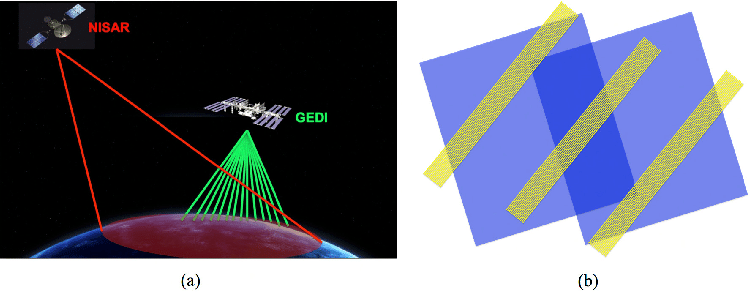
NISAR (NASA-ISRO Synthetic Aperture Radar) mission is a joint project between NASA and ISRO to co-develop and launch a dual-frequency synthetic aperture radar (SAR) satellite with the hopes of understanding our home planet in a better perspective than ever before.

Credit: Third Party Reference

KEY FACTS ABOUT NISAR:

  1. NISAR is designed to map out earth’s entire land and ice masses 4 to 6 times a month and possibly provide an explanation for planet’s most complex geological problems, including natural disasters like earthquakes, volcanoes, tsunamis and even the mysteries to their origin.

2. NISAR will use Advance Radar Imaging to provide mankind with the finest and crispier view of the earth than ever achieved, with a staggering resolution of 5-10 m/pixel(For example, Google Earth has a peak resolution of 15m/pixel!). Moreover,all the data from NISAR would be freely available within 1-2 days of any natural disaster, if any.

3. The Project has an allocated budget of over $1 Billion, making it the most expensive earth-imaging satellite till date. ISRO’s share of the project cost is about US$110 million, and NASA’s share is about US$808 million.

4. NISAR is planned to be launched by 2021 aboard a GSLV MKII (Geosynchronous Satellite Launch Vehicle Mark II) from Satish Dhawan Space center located in India. The mission will have a payload mass of 2800 kg and will be suspended in a Sun-Synchronous orbit. It has a life expectancy of about 3 years.

5. The satellite consists of a L Band and a S-Band Polarimetric Synthetic Aperture Radar (SAR), operating at the frequencies of 1.25 GHz and 3.2 GHz respectively. While NASA will be providing the L-band SAR, a payload data subsystem, a solid state recorder, and GPS receiver, ISRO will provide the Launch Vehicle and S-Band SAR.

Credit : Third Party Reference

Planned Launch Date: 2022

The NASA-ISRO SAR (NISAR) Mission will measure Earth’s changing ecosystems, dynamic surfaces, and ice masses providing information about biomass, natural hazards, sea level rise, and groundwater, and will support a host of other applications.

NISAR will observe Earth’s land and ice-covered surfaces globally with 12-day regularity on ascending and descending passes, sampling Earth on average every 6 days for a baseline 3-year mission.

Reference- divyanshspacetech.wordpress.com

No Room For Sympathy While Sentencing Terror Convicts

It is most heartening and most refreshing to learn that in a latest, landmark and extremely laudable judgment, the top court that is the Supreme Court has very rightly held in Union of India Vs Yasmeen Mohammad Zahid @ Yasmeen in Criminal Appeal No. 1199 of 2019 (Arising out of Special Leave Petition (Cri.) No. 461 of 2019) with Criminal Appeal No. 1200 of 2019 (Arising out of Special Leave Petition (Cri.) No. 6899 of 2019) (D. No. 740 of 2019) delivered on August 2, 2019 that there can be no room for sympathy while sentencing terror convicts. This noteworthy and commendable judgment authored by Justice UU Lalit for himself and Justice Indu Malhotra has very rightly while disagreeing with Kerala High Court judgment restored the sentence of seven years imprisonment awarded to a woman, Yasmeen who was convicted for propagating dreaded international terror group ISIS ideology. Very rightly so!

                               To start with, the ball is set rolling in para 1 wherein it is held that, “Special leave to appeal granted.” It is then observed in para 2 that, “The judgment and order dated 04.10.2018 passed by the High Court of Kerala in Criminal Appeal No. 506 of 2018 has given rise to these two appeals, one by Union of India against acquittal of A2-Yasmeen Mohammad Zahid @ Yasmeen in respect of offences punishable under Section 125 of the Indian Penal Code (“IPC” for short), Sections 39 and 40 of the Unlawful Activities (Prevention) Act, 1967 (UAPA for short) and also against reduction in sentence ordered by the High Court for offences under Section 38 of the UAPA, while said A2-Yasmeen is in appeal against her conviction and sentence under Section 120B IPC and Section 38 of the UAPA.”   

                                  Briefly stated, para 3 then postulates that, “The case of the prosecution, in brief, was as under:

(a)          Pursuant to complaint received on 10.07.2016 in Chandera Police Station, Kasaragod preliminary investigation was undertaken which revealed that 14 persons had left India to join Islamic State of Iraq and Syria (ISIS) which is declared to be a terrorist organisation (Serial No. 38 in the First Schedule to the UAPA).

(b)         During the course of investigation, A2-Yasmeen was arrested on 01.08.2016 at Indira Gandhi International Airport, New Delhi while she was attempting to travel to Afghanistan along with her child.

(c)           According to the prosecution, there was a criminal conspiracy between original Accused No. 1 (husband of A2-Yasmeen) and A2-Yasmeen from 2015 pursuant to which conspiracy A1 and A3 to A15 left India and joined ISIS in Afghanistan; and A2-Yasmeen was an active participant supporting terrorist activities of ISIS; and she had raised funds to further the activities of ISIS and had received funds which were utilised for supporting the activities of ISIS.”

                                                  To be sure, it is then envisaged in para 4 that, “Out of 15 accused named in the charge-sheet all the other accused were declared to be absconding and A2-Yasmeen alone was sent up for trial for the offences punishable under Section 120B IPC, Section 125 IPC and under Sections 38, 39 and 40 of the UAPA. The charges were framed against her in respect of said offences. The prosecution examined 52 witnesses and relied upon various documents and material objects. Insofar as the role attributed to A2-Yasmeen was concerned, the relevant witnesses were PWs 4, 6, 7, 8, 11, 12 and 13.”

                                     To put things in perspective, it is then pointed out in para 5 that, “After going through the material on record, the Special Court for the trial of NIA Cases, Ernakulam, found that the prosecution had established the case against A2-Yasmeen and convicted her for the offences punishable under Sections 120B and 125 IPC and under Sections 38, 39 and 40 of the UAPA and sentenced her to suffer rigorous imprisonment for three years, seven years, seven years, seven years and seven years respectively under the aforesaid five counts. A2-Yasmeen was also directed to pay fine in the sum of Rs. 25,000/- under Section 120B IPC, in default whereof she was directed to suffer three months rigorous imprisonment. The judgment and order dated 24.03.2018 passed by the trial court was the subject matter of challenge at the instance of A2-Yasmeen in Criminal Appeal No. 506 of 2018.”

                                As it turned out, para 6 then discloses that, “The High Court by its judgment under appeal, set aside the conviction and sentence of A2-Yasmeen for the offences punishable under Section 125 IPC, Section 39 and 40 of the UAPA while upholding her conviction for the offence punishable under Section 120B IPC and Section 38 of the UAPA. The High Court however reduced the substantive sentence from three years and seven years to one year and three years respectively on said two counts. The other elements, namely, sentence of fine and the default sentence were not varied or modified by the High Court.”

                                    Needless to say, para 7 then illustrates that, “During the course of its judgment, the High Court observed as under:-

“The aforesaid evidence of PW4, PW6, PW18 and PW21 who had attended the class of 1st accused clearly proves the propagation of ideology of IS. Therefore there is absolutely no difficulty in assuming that the class attended by A2 in the house of PW7 and PW8 and taken by A1 was with reference to IS and the Jihad, which according to them was a war against non Muslims…………….

The prosecution has thus proved that the account ending with 251 is of Sonia Sebastian who is the wife of the 1st accused and the amount was withdrawn from the said account on various dates from 3.6.2016 to 22.07.2016 by the 2nd accused. Contention is that the money was deposited by A1 in the account of Sonia Sebastian and the ATM card given to Sonia Sebastian was used by A2 for collecting the amounts. It is stated that the CCTV footage would show that the 2nd accused has withdrawn money from the bank accounts.

The 2nd accused was arrested on 1.8.2016 and she was under judicial custody in Kannur women prison. At the time of admission, her personal belongings were entered in a register. Among the articles, there were two Idea SIM cards. The SIM cards were seized by PW41 as per P29 mahazar and produced as MO13 and MO14. The articles also contained a memory card marked as MO15. The memory card contained revelation videos and videos relating to ISIS, audio speech of Anwar Alwaki, a brief guide to Islamic State and women of Islamic State. This according to the prosecution further proved that she was preparing to go to Afghanistan at the instance of the 1st accused. When these facts are proved, the question is, whether the accused had committed any such offence.”

            In the backdrop of these proved facts, the High Court then considered whether the offences alleged against A2-Yasmeen under the aforesaid five counts were made out. It was observed that there was evidence to prove that A2 had attended classes of Jihad propagating ISIS ideology by original Accused No. 1 but there was nothing to indicate that she had taken any steps to wage a war or had attempted or abetted waging of such war against any Asiatic Power in alliance with or at peace with Government of India and as such there was no material to sustain the charge under Section 125 IPC. As regards charge under Section 38 of the UAPA it was observed as under:

There is evidence to prove that the 2nd accused was associated with A1 who propagated ISIS ideology and had gone even to the extent of joining him. Her attempt to proceed to Afghanistan was with a clear intention to meet 1st accused and to involve in IS related activities. Therefore, she is punishable under Section 38(2)”.”  

                                It would be pertinent to mention here that it is then observed in para 8 that, “In respect of charge under Section 39 of the UAPA the High Court found that though A2 was certainly influenced by the ideology professed by A1, she herself had not arranged any of the acts falling under Clauses (a) to (c) of Section 39. The High Court went on to observe as under:

She had already become a member of the organization as contemplated under Section 38 of the Act. If a person is punishable under Section 38, Section 39 becomes superfluous”.”

                             Not stopping here, it is then added in para 9 that, “As regards charge under Section 40 of the UAPA, the High Court found that she was not raising any funds for terrorist organisation; the amounts she received were for personal use and for purchasing tickets for travel and other arrangements for herself and for her son and as such charge under Section 40 of the UAPA was not made out.”

                                 Suffice it to say, para 10 then holds that, “Concluding that A2-Yasmeen was guilty of the offences punishable under Section 120B IPC and Section 38 of the UAPA, the High Court considered the case with a lenient view and reduced the substantive sentences in respect of these two offences as stated hereinabove.”

                                 Going forward, while highlighting the importance of mens rea in convicting in such cases, it is then enunciated in para 15 that, “The evidence on record, as culled out by the High Court in the observations quoted hereinabove establishes that A1 was propagating the ideology of IS and advocating among other things, war against non-Muslims; that the classes were attended by A2-Yasmeen; that the videos relating to such speeches were found on her person when she was arrested; and that she was attempting to go to Afghanistan at the instance of A1. These features definitely point the existence of mens rea. The Courts below were therefore absolutely right in recording conviction against A2 in respect of offences under Section 120B IPC and Section 38 of the UAPA. The submissions advanced by Mr. Krishnan, therefore, cannot be accepted and the appeal preferred by A2-Yasmeen must fail.”

                    Interestingly enough, para 16 then elaborates stating that, “We now turn to the appeal preferred by the Union to see whether the acquittal of A2 for offences under Section 125 of IPC and Sections 39 and 40 of the UAPA was justified. As regards the offence under Section 125 of the IPC, the matter was rightly appreciated by the High Court and we are in complete agreement with the view taken by the High Court.”

                     Simply put, it is then observed further in this same para 16 that, “Coming to Sections 39 and 40 of the UAPA, these provisions require certain elements in respect of which there is no material evidence on record. For Section 39 of the UAPA to get attracted, support to a terrorist organisation must be within the meaning of either of three clauses viz clauses (a), (b) and (c) of sub Section (1). Similarly, Section 40 requires certain elements on satisfaction of which a person can be said to be guilty of raising funds for a terrorist organisation. None of those features are established as against A2-Yasmeen. The acquittal in respect of charges under Sections 39 and 40 was therefore rightly recorded by the High Court.”

                            But in the same vein, adding a rider, it is then clarified in para 17 that, “We must however state that the High Court was not right in observing “if a person is punishable under Section 38, Section 39 becomes superfluous”. In our view, the scope of these two Sections and their fields of operation are different. One deals with association with a terrorist organisation with intention to further its activities while the other deals with garnering support for the terrorist organisation, not restricted to provide money; or assisting in arranging or managing meetings; or addressing a meeting for encouraging support for the terrorist organisation.”     

                                Importantly, para 18 then states that, “Lastly, we come to the quantum of sentence in respect of offences where A2-Yasmeen has been found guilty by both the Courts.”

                        More importantly and more crucially, while rapping the High Court on its knuckles, it is then held in para 19 that, “The only ground that weighed with the High Court while reducing the sentence was sympathy. The material on record indicates the role played by A2-Yasmeen. Even at the time of her arrest, while leaving for Afghanistan, certain objectionable material was found on her person. The intensity of her participation and involvement were clearly made out. In the circumstances, there was no room for invoking sympathetic considerations. The quantum of sentence imposed by the trial court was absolutely correct and adequate.”

                             Finally and most importantly, it is then held in para 20 that, “In the premises,

A] Appeal preferred by A2-Yasmeen challenging her conviction and sentence under Section 120B IPC and Section 38 of the UAPA is dismissed.

B] Appeal preferred by the Union challenging the acquittal of A2-Yasmeen in respect of offences under Section 125 of the IPC and Sections 39 and 40 of the UAPA is dismissed.

C] Appeal preferred by the Union as regards reduction of sentence awarded to A2-Yasmeen for offences under Section 120B IPC and Section 38 of the UAPA is allowed. The order passed by the High Court in that behalf is set aside and the sentence imposed by the trial court in respect of offences under Section 120B IPC and Section 38 of the UAPA against A2 is restored.”

                                          To summarise, it must be said with certitude that the Apex Court in this latest, landmark and extremely laudable judgment has very rightly reiterated like it has earlier also in many cases that there must be no room for sympathy while convicting the terror convicts. Moreover, it minced no words to hold that in the circumstances, there was no room for invoking sympathetic considerations. So no wonder that the Apex Court set aside the High Court order to reduce the sentence of imprisonment while also restoring the sentence imposed by the Trial Court in respect of offences under Section 120B IPC and Section 38 of the UAPA against A2! Very rightly so! Terrorism is the most heinous crime directed not against one or few individuals unlike other crimes like murder or rape or dacoity or robbery but against the entire humanity which affects all of us and is the biggest threat to our nation as a whole! So there has to be zero tolerance for it! Any display of sympathy will only boost terrorism which no country can dare to ever afford under any circumstances come what may as it will certainly be the surest recipe of unmitigated disaster, destruction and death!      

Sanjeev Sirohi, Advocate,

s/o Col BPS Sirohi,

A 82, Defence Enclave,

Sardhana Road, Kankerkhera,

Meerut – 250001, Uttar Pradesh.

Evidence of a Solitary Witness in a Criminal Trial Requires Heightened Scrutiny

On expected lines and as anticipated, the Supreme Court has most recently on August 6, 2019 in a latest judgment titled Jagdish and another vs The State Of Haryana in Criminal Appeal No(s). 1864 of 2009 has once again very rightly reiterated like many times in the past that the evidence of a solitary witness in a criminal trial requires heightened scrutiny. It is not that the evidence of solitary witness in a criminal trial is not acceptable. It is certainly acceptable but what the Apex Court has wished to make it amply clear in this noteworthy case like in the past is only that the evidence of a solitary witness must be subjected to heightened scrutiny before accepting it and it cannot be accepted just at face value!

                                     To start with, this notable judgment authored by Justice Navin Sinha for himself and Justice Ashok Bhushan sets the ball rolling by first and foremost pointing out briefly in para 1 that, “The two appellants have been convicted under Sections 302, 149 and 148 of the Indian Penal Code (hereinafter referred to as ‘IPC’). Originally there were 13 accused. Only six were charge-sheeted. Two of them were tried by the juvenile court. Seven were summoned under Section 319. The Trial Court convicted three persons. One of them, Ishwar has been acquitted by the High Court.”  

                                      To be sure, para 2 then brings out that, “Sri S.R. Singh, learned senior counsel, on behalf of the appellants submits that once the other accused have been acquitted, the two appellants alone cannot be convicted with the aid of Section 149 of the Indian Penal Code. The High Court erred in convicting with the aid of Section 34 in absence of a charge framed under that Section. There is no evidence of any common intention, displaying a prior meeting of minds to commit the assault. PW-1 and PW-8 were not eye witnesses. They reached after the occurrence. Their claim to be high witnesses is highly improbable from their own evidence. An alternative submission was made that in any event at best it was a case for conviction under Section 304 Part-II I.P.C. Reliance was placed on Dalip Singh vs. State of Punjab, AIR 1953 SC 364 : 1954 SCR 145, and Sakharam Nangare vs. State of Maharashtra, 2012 (9) SCC 249.”

                                 Quite the contrary, para 3 then reveals that, “Learned counsel for the State submitted that PW-1 and PW-8, the eye-witnesses to the occurrence had stated that Appellant no. 2 made the fatal assault on the head of the deceased with a lathi while appellant no. 1 also assaulted the deceased. The parties resided in the same locality and there is evidence of a street light. Relying on Khem Karan and others vs. State of U.P. and another, 1974 (4) SCC 603, it was submitted that because PW-1 was the sister of the deceased, the credibility of her evidence as an eye-witness to the occurrence cannot be doubted to grant acquittal in the nature of materials available on the records.”

                                      As it turned out, it is then illustrated in para 4 that, “We have considered the submissions on behalf of the parties and perused the materials on record. The parties resided in the same locality and were known to each other. Animosity existed between them because the son of the second appellant had written love letters to the daughter of PW-1. Earlier an altercation had taken place between the parties on 20.05.1995 leading to a police case being lodged against both sides. There was another incident on 12.06.1995 for which the appellants and the deceased were proceeded with under Sections 107, 151 Cr.P.C. The deceased had been released on bail and was returning from the house of PW-1 on 16.06.1995 at about 9.00 P.M. when the assault is stated to have taken place.”

                                            While elaborating further, it is then pointed out in para 5 that, “PW-8 and PW-1 are husband and wife holding arms licence in their individual names. They are stated to have been accompanied to the place of occurrence by Kamla the sister of PW-8 and one Pali Ram who was also an arms licensee. Surprisingly, the latter two have been given up by the prosecution and have not been examined. All four are stated to have moved away from the place of assault out of fear, as claimed. If three of them were possessed of weapons there has to be an explanation why they did not act in self defence when the assault is alleged by lathis, gandasi and guns. It is also difficult to accept that her husband PW-8 and Palli continued to hide in fear while PW-1 accompanied by her sister-in-law alone shortly returned to the place of occurrence to check on the deceased. An additional fact which is not only improbable but highly unnatural according to normal societal rural customs and mores is that PW-1 accompanied by her sister-in-law alone went to the police station at 3.00 A.M. a kilometer away, to lodge the F.I.R. while her husband and Pali Ram who was staying with them remained at home.”

                                     Going forward, it is then brought out in para 6 that, “In the F.I.R. PW-1 made generalized allegations of assault by all the 13 accused who are stated to have surrounded the deceased. But her court statement was more specific with regard to the nature of assault made by each of the accused. A total of 11 injuries were found on the person of the deceased. The first injury was bone deep in the right parieto occipital region with damage to brain and pieces of bone in the wound. There was injury on the neck, lacerated wound over the right wrist joint over the middle of forearm, on the left side of the chest wall, over the iliac crest, over the left scapular region with a linear incision due to sharp weapon, over left deltoid region and lacerated wound over the right knee left ankle and left forearm. The two appellants were armed with lathis by which an incised wound could not have been caused. In any event, the number of injuries on the deceased leaves us satisfied that it was the result of a mob assault and not an assault by the two appellants alone.”

                                    To put things in perspective, it is then acknowledged by the Apex Court in para 7 that, “The High Court has committed an error of record by considering PW-8 to be an eye witness without any discussion when his presence at the time of occurrence has been disbelieved by the Trial Court. With regard to PW-1, the Trial Court has itself observed that her deposition “does not contain the entire truth and it makes the court to sit up and to find out the kernel out of the chaff”. This observation assumes significance in view of the acquittal of the remaining accused by the Trial Court itself, excluding the juveniles.”

                                        More importantly, the Apex Court then poses a question, sounds a note of caution and while further calling for greater scrutiny of solitary witness as rightly pointed out in para 8 wax eloquently to state that, “The question that arises to our mind is that in the mob assault by 13 persons who had surrounded the deceased at night, PW-1 was the sole eye-witness. Even if a light was burning some of them undoubtedly must have had their back to PW-1 making identification improbable if not impossible. The witness has been severely doubted both by the trial court and the High Court to grant acquittal to the other accused. Can the evidence of a solitary doubtful eye witness be sufficient for conviction? We may have a word of caution here. Conviction on basis of a solitary eye witness is undoubtedly sustainable if there is reliable evidence cogent and convincing in nature along with surrounding circumstances. The evidence of a solitary witness will therefore call for heightened scrutiny. But in the nature of materials available against the appellants on the sole testimony of PW-1 which is common to all the accused in so far as assault is concerned, we do not consider it safe to accept her statement as a gospel truth in the facts and circumstances of the present case. If PW-1 could have gone to the police station alone with her sister-in-law at an unearthly hour, there had to be an explanation why it was delayed by six hours. Given the harsh realities of our times we find it virtually impossible that two women folk went to a police station at that hour of the night unaccompanied by any male. These become crucial in the background of the pre-existing enmity between the parties leading to earlier police cases between them also. The possibility of false implication therefore cannot be ruled out completely in the facts of the case.”

                                  Be it noted, it is then observed in para 9 that, “The High Court concluded that the appellants alone were the assailants of the deceased. Ishwar is also stated to have assaulted with a lathi capable of causing lacerated wounds. We find it difficult to hold that the appellants were any differently situated than Ishwar. The susceptibility of eleven injuries, including incised wounds, by two accused is considered highly improbable.”   

                            While citing the relevant case laws, it is then pointed out in para 10 that, “Therefore, in the entirety of the facts and circumstances of the case, the relationship between PW-1 and the deceased, the existence of a previous animosity, we do not consider it safe and cannot rule out false implication to uphold the conviction of the appellants on the evidence of a doubtful solitary witness, as observed in State of Rajasthan vs. Bhola Singh and Anr., AIR 1994 SC 542, (Cri. Appeal No. 65 of 1980 decided on 25.8.1993):

‘4. From the above-stated facts, it can be seen that the case is rested entirely on the solitary evidence of P.W.1. The High Court has pointed out several infirmities in the evidence of P.W.1. It is well-settled that if the case is rested entirely on the sole evidence of eye-witness, such testimony should be wholly reliable. In this case, occurrence admittedly took place in the darkness….’”

                                   Furthermore, it is then envisaged in para 11 that, “In Lallu Manjhi and another vs. State of Jharkhand, (2003) 2 SCC 401, it was observed that if ten persons were stated to have dealt with blows with their respective weapons on the body of the deceased, and that if each one of them assaulted then there would have been minimum of ten injuries on the person of the deceased. In  the present case, as noticed there are 11 injuries on the person of the deceased. Giving the benefit of doubt granting acquittal, it was observed as follows:

’13…..The version of the incident given by the sole eyewitness who is also an interested witness on account of his relationship with the deceased and being inimically disposed against the accused persons is highly exaggerated and not fully corroborated by medical evidence. The version of the incident as given in the Court is substantially in departure from the earlier version as contained and available in the first information report. We cannot, therefore, place reliance on the sole testimony of Mannu (PW9) for the purpose of recording the conviction of all the accused persons.’”

                               Now let us turn to the concluding paras. Para 12 holds that, “We therefore find the order of the High Court to be unsustainable and accordingly set it aside. The appellants are acquitted. They are directed to be released forthwith if they are not required in any other case.” Lastly, it is then held in para 13 that, “The appeal is allowed.”

                                    In essence, this notable judgment like in the past has fully and firmly endorsed the long held position that conviction can be based on the evidence of a solitary witness but it requires heightened scrutiny. There can be no denying it! It is only after strict scrutiny that evidence should be accepted in such cases!

Sanjeev Sirohi, Advocate,

s/o Col BPS Sirohi,

A 82, Defence Enclave,

Sardhana Road, Kankerkhera,

Meerut – 250001, Uttar Pradesh.