

This blog turns to politics

On October 18th, or immediately thereafter, a small line of people will walk in  into the Great Hall of the People in Tiananmen Square. That will be the new Standing Committee headed by Xi Jinping. And at that time the world shall know what has happened to the \”elections\” in China. The stunning fact is that very few people in the world seem to even know about one of the most momentous events in world politics. Very little has been written about it in the world press and almost nothing has made it to TV. Not even the significant Beidaihe retreat that happened in August.
All this at a time when many people in the world seem addicted to the nonsense that a certain person spews sitting on his toilet seat.  The lack of interest in what is happening in China is, to this blogger, unbelievable. Perhaps unfamiliarity is the reason. And hence this blogger is breaking his vow to keep this blog completely apolitical and is launching into a series of posts on what is happening in China.
I begin with a small primer on the current Chinese political system. The Communist Party of China (CPC) is the apex body in China. The government is subservient to the Party. Even the People\’s Liberation Army is not the army of China; its the army of the Party. Therefore what happens in the Party is of prime (only) importance in the politics of China.
The apex decision making body in the CPC is the Politburo, currently consisting of 25 members. Consider it as the Cabinet. From amongst these, an elite group forms the Standing Committee of the Politburo. Currently it has 7 members. This is the all powerful body.
When Mao Zedong established the Party, and for as long as he ruled China, all these institutions were irrelevant. Mao was the sole power centre. But when he died and the dangers of concentrating so much power in one man became apparent, the party elders led by Deng Xiaoping, established some rules and norms  for the politics of the future. Thus far they have been adhered to. They are
The principle of retirement . The unofficial term is \”qishang baxia\” or \”Seven up; Eight down\”. The unwritten rule is that if you reach 68 at the CPC Congress meeting  which is held once every five years (think of it as election year), you step down and retire. 5 of the 7 members of the Standing Committee  and 11 of the 25 members of the Politburo have crossed 68.
  • The General Secretary and the Premier usually serve for two terms – 10 years – and then stand down. The current incumbents are finishing their first term and can therefore continue for one more term.
  • An all powerful single power centre , a la Mao, was never allowed to happen post his death. Even Deng was not all powerful – he had an equivalent power centre in Chen Yun. Factions  abound ; the Shanghai faction, the Youth League, etc. These factions and their powerful overlords jockey for power behind closed doors. Retired leaders don\’t keep quiet – they exercise power by placing their underlings on these bodies.
  • The norm in China is for leadership changes to happen with great turmoil, purges and the like. Only two peaceful transitions have ever happened – the handover from Jiang Zemin to Hu Jintao and from Hu Jintao to Xi Jinping. Even the transition from Hu Jintao saw the dramatic fall and subsequent imprisonment of Bo Xilai.
  • There are three powerful positions in China – The President of China (a mere titular position), the Secretary of the Communist Party (the real powerful position) and the chairmanship of the Central Military Commission that governs the armed forces. Currently all these three positions are held by  Xi Jinping. That was the case with Jiang Zemin and Hu Jintao as well, but in the Deng era, he was simply the Chairman of the CMC and the other positions were held by his chosen people. A fourth, and less powerful position is that of the Premier – currently held by Li Keqiang and is the No 2 position in China.
  • Every year in the summer, the power brokers in China retire to a coastal town called Beidaihe , where all the skullduggery, bargaining and negotiations happen. Each faction tries to get its people on to the Politburo and the Standing Committee. Usually most of the big decisions are made here on the beach behind thick closed doors. This is the real \”election\” in China. The Beidaihe meeting happened last month and this blogger is mystified that not only have there been very little leaks, there has been scant reporting in the press as well. Next to the US elections, this is the most important political activity in the world. And we don\’t hear even a squeak.
  • In the last two peaceful transitions, at the end of the first of the two terms of the incumbent leaders, the top of the subsequent generation is usually nominated to the Standing Committee. This gives the clue as to who would subsequently take over as leaders. If the past 20 years is a guide, then this should happen in the current change and the successor to Xi Jinping who would take over 5 years from now, would at least be indicated. But as we would see in subsequent posts, there is a good chance that this won\’t happen.
In the next post, we will assess the current political landscape and who are the power brokers in China.
Who’s who in Chinese politics

Xi Jinping, the current Chinese leader is easily the most powerful leader that China has had ever since Deng Xiaoping faded away in the early 90s. But in order to understand his power, we have to go back a bit in time in modern Chinese history.
Mao was a tyrant and supremely powerful in China and until his death, he was simply the sole power centre. But that degree of concentration of power resulted in chaos in China – the Great Leap Forward and the Cultural Revolution being two big disasters. When he died, the elders decided that no single person should ever be allowed to accumulate such power. Deng Xiaoping became the preeminent leader, but there was a rival power centre in Chen Yun and to a lesser extent in Li Xiannian. Multiple purges later,  Jiang Zemin was appointed the Secretary of the Communist Party immediately after the infamous Tiananmen incident in 1989.
Jiang accumulated a fair degree of power, but was never all powerful. He led the party out of the post Tiananmen crisis and then earned his own notoriety by the brutal suppression, and virtual extermination, of  Falun Gong – a cult loosely based on mysticism, but which was feared by the Party as a political movement. By the norms set by Deng, which he followed and reinforced,  he stepped down after some 12 years as the Secretary of the Party and handed over to Hu Jintao, who was handpicked by Deng himself before his death. However, Jiang continued to remain the Chairman of the Central Military Commission and therefore in his first term Hu really did not have much power and had to constantly “handle” Jiang. Jiang continues to remain a power centre and is the leader of the Shanghai faction. However he is getting old (he’s past 90) and his power is fading, helped along by Xi’s efforts to undermine this faction.
Hu Jintao is a colourless and plodding leader, who even while he was the Secretary of the Party, was never a charismatic leader. His hold on power was weaker. When he handed over the reins to Xi Jinping, he quit all his formal roles. He leads the Youth League, another faction, but is not a powerful leader.
Xi Jinping comes from a group called the “princelings” – their fathers were revolutionary leaders in the Mao era and their positions, at least to some measure, is owed to their parentage. When Xi took over, he swiftly started to consolidate his power with a massive anti corruption drive, the likes of which China has never seen.
Ostensibly Xi was tackling one of the greatest scourges of China – corruption. The scale of corruption in China is simply unbelievable. Nowhere has mankind seen anything like this. It is all pervasive . I won’t say anything more – I still wish to travel to China !! Let me just say that whatever you think is the level of corruption in China, the reality is probably tenfold worse. It is an existential threat to the Party.  Therefore tackling corruption was a popular thing to do.
But the anti corruption drive was also a big consolidation of power by Xi. It was positioned as catching “tigers and flies” – both the small fry as well as the really powerful.  Unsurprisingly, the people targeted the most were political opponents. More than 100,000 flies have been indicted, but more importantly so have nearly 200 tigers. This includes some 100 senior people in the military including two former Vice Chairmen of the Central Military Commission (the equivalent would be Defence Secretary and the Joint Chiefs of Staff in the US military being purged). The biggest tiger of all who was jailed is clearly Zhou Yongkang, a past member of the Standing Committee. Such a thing is simply not done in Chinese politics – the upper echelon of the Communist Party was thought untouchable.
Xi’s main ally who has carried out the anti corruption drive is Wang Qishan, a current member of the Standing Committee and 6th in the formal order of seniority. But clearly the real no 2 in China is Wang Qishan. He is a star economic leader in China – having held a number of economic portfolios in the past. But for the last 5 years he has been Xi’s enforcer in the anti corruption drive. Crucially he is 69 and by the tenets of the unofficial retirement policy, he should retire in October. All the rumours swirling around China are that Xi will keep him. 
The formal No 2 is the Premier Li Keqiang. His job is to run the economy and the general consensus is that he has not been successful. His power base is small and he belongs to the Youth League faction of Hu Jintao. In fact at the time of Xi’s succession it was rumoured that Hu actually wanted Li to succeed him and not Xi. Li is only 62 and can continue as Premier for one more term.  This blogger has a view (wild guess) as to what might happen to both Wang Qishan and Li Keqiang and he will boldly articulate a prediction in a subsequent post !
Two other names need mention. When Xi and Li were appointed, there was also speculation as to who would succeed them in 10 years time (the next generation of leaders). Two names were mentioned – Hu Chunhua and Sun Zhengcai. Both were included in the politburo last time around and given important positions. Just two months ago, Sun Zhengcai was summarily replaced and an anti corruption investigation started against him. Clearly he lost out in a power struggle.
How do the Chinese themselves view all this ? You may be surprised ! Watch out for the next post.
PS – Chinese names are not easy to pronounce to Western tongues. Here is an approximation

Mao Zedong – Mao Tze Dhong
Deng Xiaoping – Dhung Hsiao Ping
Jiang Zemin – Jiang Tze Min
Hu Jintao – As written
Xi Jinping – Hsi Jin Ping
Li Keqiang – Li Khe Chiang
Wang Qishan – Waang Chi Shaan

Five Ideas for Teachers\’ Day

Teachers\’ Day is round the corner. Once again, we\’ll have the same old speeches, boring comments and everyone showing so-called \’respect\’ for teachers for one day – then it will all be forgotten till the next year comes around again! 
For those of us who feel we need to go beyond the usual platitudes, here are a few straightforward suggestions. As always, your responses and further suggestions would be very welcome indeed!

1. Prepare a \’Teacher Strength Chart\’
On a chart, put a photo of the teacher (could even be children\’s drawing) and write down 5 things that you like about the teacher or 5 good qualities the teacher has. (Every teacher has these, just that some of them may not know they have them.) Who should do this? Students / SMC or parents / CRCC or fellow teachers. Keep the chart up for as long as you want.
2. Invite the teachers\’ families and honour them
Host a function where teachers\’ parents / spouses / children are invited and honour them along with the teacher. Why? Firstly because if a teacher teaches well, gives a lot of time, and lives up to professional standards, the family has to support the teacher and sometimes even make sacrifices. On the other hand if a teacher doesn\’t live up to professional standards, the family will… you get the picture! The SMC or the CRCC would obviously have to take the lead in organizing this, with students\’ help.
3. A special \’sports\’ session for teachers
Teachers have to be so responsible that they sometimes forget what it is to be a teacher. So how about something that helps them recall the time when they themselves were young. So you could organise a kabaddi or cricket match for teachers, or even races. Other possibilities include a Talent Show (whether teachers get to display their skills such as singing or mimicry) or even a picnic. Once again, the SMC with the students\’ help and the CRCC\’s support can easily organize this.
4. Stock the school library with books bought especially for teachers
Ask the teachers what they would like to read – and buy as many of those books for your school library as the budget permits. The CRCC would need to take active lead in this, with guidance from BRC and DIETs/
5. Launch a year-long \’Search for Greatness\’
This is a difficult idea, so read carefully! Every teacher and every school can improve and reach a level far better than what it is today. In honour of teachers on Teachers\’ Day, the SMC and students as well as the CRCC can get together, promise their support and work out how they will improve the school in the year ahead. Together they will discuss what it means for their school to be \’great\’ (and will not focus on infrastructure but learning processes), identify concrete steps to attain this greatness (see suggestions separately in my blog), and work out a phased implementation plan (see ADEPTS). Teachers will naturally be part of this discussion.

You can build on the School Development Plan and dedicate the effort to teachers (of course, they too would take active part in implementing the plan). Inform the teachers that the successes will be because of them, and shortcomings because they would not have got enough support from us (that is our Teachers\’ Day gift to teachers). So this would be a year long effort to show our respect to teachers while also working with them to bring about actual improvement. Neat, no?

Five Ideas for Teachers\’ Day

Teachers\’ Day is round the corner. Once again, we\’ll have the same old speeches, boring comments and everyone showing so-called \’respect\’ for teachers for one day – then it will all be forgotten till the next year comes around again! 
For those of us who feel we need to go beyond the usual platitudes, here are a few straightforward suggestions. As always, your responses and further suggestions would be very welcome indeed!

1. Prepare a \’Teacher Strength Chart\’
On a chart, put a photo of the teacher (could even be children\’s drawing) and write down 5 things that you like about the teacher or 5 good qualities the teacher has. (Every teacher has these, just that some of them may not know they have them.) Who should do this? Students / SMC or parents / CRCC or fellow teachers. Keep the chart up for as long as you want.
2. Invite the teachers\’ families and honour them
Host a function where teachers\’ parents / spouses / children are invited and honour them along with the teacher. Why? Firstly because if a teacher teaches well, gives a lot of time, and lives up to professional standards, the family has to support the teacher and sometimes even make sacrifices. On the other hand if a teacher doesn\’t live up to professional standards, the family will… you get the picture! The SMC or the CRCC would obviously have to take the lead in organizing this, with students\’ help.
3. A special \’sports\’ session for teachers
Teachers have to be so responsible that they sometimes forget what it is to be a teacher. So how about something that helps them recall the time when they themselves were young. So you could organise a kabaddi or cricket match for teachers, or even races. Other possibilities include a Talent Show (whether teachers get to display their skills such as singing or mimicry) or even a picnic. Once again, the SMC with the students\’ help and the CRCC\’s support can easily organize this.
4. Stock the school library with books bought especially for teachers
Ask the teachers what they would like to read – and buy as many of those books for your school library as the budget permits. The CRCC would need to take active lead in this, with guidance from BRC and DIETs/
5. Launch a year-long \’Search for Greatness\’
This is a difficult idea, so read carefully! Every teacher and every school can improve and reach a level far better than what it is today. In honour of teachers on Teachers\’ Day, the SMC and students as well as the CRCC can get together, promise their support and work out how they will improve the school in the year ahead. Together they will discuss what it means for their school to be \’great\’ (and will not focus on infrastructure but learning processes), identify concrete steps to attain this greatness (see suggestions separately in my blog), and work out a phased implementation plan (see ADEPTS). Teachers will naturally be part of this discussion.

You can build on the School Development Plan and dedicate the effort to teachers (of course, they too would take active part in implementing the plan). Inform the teachers that the successes will be because of them, and shortcomings because they would not have got enough support from us (that is our Teachers\’ Day gift to teachers). So this would be a year long effort to show our respect to teachers while also working with them to bring about actual improvement. Neat, no?

Five Ideas for Teachers\’ Day

Teachers\’ Day is round the corner. Once again, we\’ll have the same old speeches, boring comments and everyone showing so-called \’respect\’ for teachers for one day – then it will all be forgotten till the next year comes around again! 
For those of us who feel we need to go beyond the usual platitudes, here are a few straightforward suggestions. As always, your responses and further suggestions would be very welcome indeed!

1. Prepare a \’Teacher Strength Chart\’
On a chart, put a photo of the teacher (could even be children\’s drawing) and write down 5 things that you like about the teacher or 5 good qualities the teacher has. (Every teacher has these, just that some of them may not know they have them.) Who should do this? Students / SMC or parents / CRCC or fellow teachers. Keep the chart up for as long as you want.
2. Invite the teachers\’ families and honour them
Host a function where teachers\’ parents / spouses / children are invited and honour them along with the teacher. Why? Firstly because if a teacher teaches well, gives a lot of time, and lives up to professional standards, the family has to support the teacher and sometimes even make sacrifices. On the other hand if a teacher doesn\’t live up to professional standards, the family will… you get the picture! The SMC or the CRCC would obviously have to take the lead in organizing this, with students\’ help.
3. A special \’sports\’ session for teachers
Teachers have to be so responsible that they sometimes forget what it is to be a teacher. So how about something that helps them recall the time when they themselves were young. So you could organise a kabaddi or cricket match for teachers, or even races. Other possibilities include a Talent Show (whether teachers get to display their skills such as singing or mimicry) or even a picnic. Once again, the SMC with the students\’ help and the CRCC\’s support can easily organize this.
4. Stock the school library with books bought especially for teachers
Ask the teachers what they would like to read – and buy as many of those books for your school library as the budget permits. The CRCC would need to take active lead in this, with guidance from BRC and DIETs/
5. Launch a year-long \’Search for Greatness\’
This is a difficult idea, so read carefully! Every teacher and every school can improve and reach a level far better than what it is today. In honour of teachers on Teachers\’ Day, the SMC and students as well as the CRCC can get together, promise their support and work out how they will improve the school in the year ahead. Together they will discuss what it means for their school to be \’great\’ (and will not focus on infrastructure but learning processes), identify concrete steps to attain this greatness (see suggestions separately in my blog), and work out a phased implementation plan (see ADEPTS). Teachers will naturally be part of this discussion.

You can build on the School Development Plan and dedicate the effort to teachers (of course, they too would take active part in implementing the plan). Inform the teachers that the successes will be because of them, and shortcomings because they would not have got enough support from us (that is our Teachers\’ Day gift to teachers). So this would be a year long effort to show our respect to teachers while also working with them to bring about actual improvement. Neat, no?

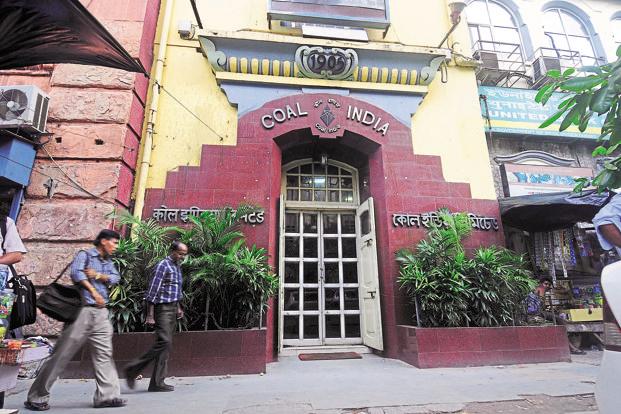
Coal India Liquidates 35 Mt of Coal from its Pithead Stock in the First Half of Fy 19-20: Shri Pralhad Joshi

The state-run Coal India Limited (CIL) has liquidated 35 Million Tonnes (MT) of coal from its pithead stock in the first half of the current fiscal 2019-20, the Coal Minister Shri Pralhad Joshi informed parliament on Monday.

“The pithead coal stock with CIL was 54.15 Million Tonne (MT) as on April 1, 2019 which reduced to 19.15 MT as on September 30, 2019. Thus, the coal stock liquidation was 35 MT in the first half of the financial year 2019-20” Coal Minister Shri Pralhad Joshi said in a reply to the Rajya Sabha.

The minister also informed the upper house that CIL’s coal production rose by 10.6% in the first half of FY 18-19 to 256.47 MT as against 231.88 MT produced in the corresponding period of FY 17-18.

In a reply laid on the table of the upper house the minister also informed that India’s coal production grew by 8.14% to 730.35 MT in FY 18-19 in comparison to 675.40 MT of coal produced in the county in FY 17-18.

In another reply to the Rajya Sabha, the Minister informed that 319 Billion Tonnesof geological reserves of coalhave been estimated in India so far as on April 1, 2018.


*******

The Case for Children\’s News Programmes

Imagine regular news programmes for children
While advertising and entertainment programmes have begun to cater to children\’s needs, for some reason news channels have ignored children altogether! Imagine a regular children\’s news programme, at a fixed time, presented in a lively way, as something for children to look forward to daily. It could be on radio and better still, on TV.

What such programmes could contain
While national and international events would figure in it, children\’s news would focus on the world as seen by children. Background information would make the news more accessible, along with activities that can be done at home or school. There might even be discussions and debates on issues that children have views and opinions on, along with scope to engage with the channel through phone calls / sms / email.

Newspapers too
And perhaps newspapers would follow with some space for children\’s news, based on what came on TV the previous night. This would not only enable greater understanding of the news itself, it would greatly boost higher order literacy (apart from newspaper circulation). This would also provide teachers with more current material for use in different classes across a range of subjects!

Many benefits
The immediate benefits for the channels themselves would be in terms of developing loyal viewers for the future (and perhaps an expanded revenue source through increased advertising range).

However, the longer term implications for children themselves, for society and the country would be enormous.

  • Children who have had the opportunity to engage with a world beyond their immediate environment would develop cognitively and socially (well exceeding the abysmal levels attained at present!) 
  • Focusing the programming at special groups (e.g. girls, or children with disabilities or the rural poor or those who need help to learn the state language – such as tribal children – or English) would dramatically increase learning opportunities for the marginalized and the disadvantaged.
  • Wide spread use of such programmes would also help harness the demographic dividend India has at the present.

If handled sensitively, this could help create a nation where plurality is cherished and the narrow confines of identity are not allowed to become a source of conflict.

The Case for Children\’s News Programmes

Imagine regular news programmes for children
While advertising and entertainment programmes have begun to cater to children\’s needs, for some reason news channels have ignored children altogether! Imagine a regular children\’s news programme, at a fixed time, presented in a lively way, as something for children to look forward to daily. It could be on radio and better still, on TV.

What such programmes could contain
While national and international events would figure in it, children\’s news would focus on the world as seen by children. Background information would make the news more accessible, along with activities that can be done at home or school. There might even be discussions and debates on issues that children have views and opinions on, along with scope to engage with the channel through phone calls / sms / email.

Newspapers too
And perhaps newspapers would follow with some space for children\’s news, based on what came on TV the previous night. This would not only enable greater understanding of the news itself, it would greatly boost higher order literacy (apart from newspaper circulation). This would also provide teachers with more current material for use in different classes across a range of subjects!

Many benefits
The immediate benefits for the channels themselves would be in terms of developing loyal viewers for the future (and perhaps an expanded revenue source through increased advertising range).

However, the longer term implications for children themselves, for society and the country would be enormous.

  • Children who have had the opportunity to engage with a world beyond their immediate environment would develop cognitively and socially (well exceeding the abysmal levels attained at present!) 
  • Focusing the programming at special groups (e.g. girls, or children with disabilities or the rural poor or those who need help to learn the state language – such as tribal children – or English) would dramatically increase learning opportunities for the marginalized and the disadvantaged.
  • Wide spread use of such programmes would also help harness the demographic dividend India has at the present.

If handled sensitively, this could help create a nation where plurality is cherished and the narrow confines of identity are not allowed to become a source of conflict.

The Case for Children\’s News Programmes

Imagine regular news programmes for children
While advertising and entertainment programmes have begun to cater to children\’s needs, for some reason news channels have ignored children altogether! Imagine a regular children\’s news programme, at a fixed time, presented in a lively way, as something for children to look forward to daily. It could be on radio and better still, on TV.

What such programmes could contain
While national and international events would figure in it, children\’s news would focus on the world as seen by children. Background information would make the news more accessible, along with activities that can be done at home or school. There might even be discussions and debates on issues that children have views and opinions on, along with scope to engage with the channel through phone calls / sms / email.

Newspapers too
And perhaps newspapers would follow with some space for children\’s news, based on what came on TV the previous night. This would not only enable greater understanding of the news itself, it would greatly boost higher order literacy (apart from newspaper circulation). This would also provide teachers with more current material for use in different classes across a range of subjects!

Many benefits
The immediate benefits for the channels themselves would be in terms of developing loyal viewers for the future (and perhaps an expanded revenue source through increased advertising range).

However, the longer term implications for children themselves, for society and the country would be enormous.

  • Children who have had the opportunity to engage with a world beyond their immediate environment would develop cognitively and socially (well exceeding the abysmal levels attained at present!) 
  • Focusing the programming at special groups (e.g. girls, or children with disabilities or the rural poor or those who need help to learn the state language – such as tribal children – or English) would dramatically increase learning opportunities for the marginalized and the disadvantaged.
  • Wide spread use of such programmes would also help harness the demographic dividend India has at the present.

If handled sensitively, this could help create a nation where plurality is cherished and the narrow confines of identity are not allowed to become a source of conflict.

A tough ethical issue

Businesses are often considered as machines without a heart. But even businesses face some gut wrenching ethical issues , where the \”right\” course of action is by no means obvious.  Take the case of the compassionate care issue face by pharmaceutical companies.
Drugs produced by pharmaceutical companies are marketed after years, and sometimes, decades of clinical trials. They have to be approved by a regulating body – in the case of the US, the FDA – before they can be made available for use by doctors and patients. This is a justifiably stringent process.
It is therefore obvious that at any point in time, there are a number of experimental drugs which are at various stages of testing or approval. They may or may not finally make it to the market place. But the fact of their existence, their performance in the trials, the stage of FDA approval (relevant since most drugs are discovered in the US) are all fairly common knowledge and often in the public domain.
The ethical issue comes when there is say a terminally ill patient who does not have much time left and where conventional approved forms of treatment have failed. The patient, or his family, makes the appeal to a pharmaceutical company for an experimental drug that is not yet fully tested and has not been approved by the FDA. Is it ethical for the company to release an experimental drug for such a patient ? They may not even be making the drug outside of the lab as yet. Should they actually produce it in a pilot facility to make it available ?
I learnt from this news article that hundreds of such requests actually come to the FDA every year . The regulator examines each such request and apparently they are mostly approved. But for any serious evaluation of a request, they need time and that is probably what the patient does not have. Even if there was a little time, the patient and the family would be understandably anxious to try the treatment tomorrow if possible. So, even with an FDA approval of the case, how does a company respond to such a request.
On one hand, it is absolutely cruel to withhold a possibility of a chance, however slim, from somebody who will otherwise die. The case for release of experimental drugs is very strong. It doesn\’t need any further elaboration.
But consider the risks. Doctors will be the first to tell you that there are many grey cases where it is not easy to determine if the patient is terminally ill. What if there are are horrendous side effects which are not yet known – at what stage of experimentation of a drug is it OK for it to be released to a live patient. What about the risks of lawsuits – after all we are talking about the US a notoriously litigious society. What about the risks that companies may simply use terminal patients as clinical trials if compassionate care becomes widespread. What about non terminal cases (say Parkinson\’s or Alzheimer\’s, which are non fatal but horrible diseases) where an experimental treatment might drastically alter the quality of life.
Thorny ethical issues. I would hate to be in a position making the decision. Johnson & Johnson, a famously ethical company has moved to set up an independent panel to be organised by the New York University to decide on each case. That is probably the best course of action, but each decision would be extremely difficult to make.

What do you think – in which direction would you lean ?

Who\’s who in Chinese politics

Xi Jinping, the current Chinese leader is easily the most powerful leader that China has had ever since Deng Xiaoping faded away in the early 90s. But in order to understand his power, we have to go back a bit in time in modern Chinese history.
Mao was a tyrant and supremely powerful in China and until his death, he was simply the sole power centre. But that degree of concentration of power resulted in chaos in China – the Great Leap Forward and the Cultural Revolution being two big disasters. When he died, the elders decided that no single person should ever be allowed to accumulate such power. Deng Xiaoping became the preeminent leader, but there was a rival power centre in Chen Yun and to a lesser extent in Li Xiannian. Multiple purges later,  Jiang Zemin was appointed the Secretary of the Communist Party immediately after the infamous Tiananmen incident in 1989.
Jiang accumulated a fair degree of power, but was never all powerful. He led the party out of the post Tiananmen crisis and then earned his own notoriety by the brutal suppression, and virtual extermination, of  Falun Gong – a cult loosely based on mysticism, but which was feared by the Party as a political movement. By the norms set by Deng, which he followed and reinforced,  he stepped down after some 12 years as the Secretary of the Party and handed over to Hu Jintao, who was handpicked by Deng himself before his death. However, Jiang continued to remain the Chairman of the Central Military Commission and therefore in his first term Hu really did not have much power and had to constantly \”handle\” Jiang. Jiang continues to remain a power centre and is the leader of the Shanghai faction. However he is getting old (he\’s past 90) and his power is fading, helped along by Xi\’s efforts to undermine this faction.
Hu Jintao is a colourless and plodding leader, who even while he was the Secretary of the Party, was never a charismatic leader. His hold on power was weaker. When he handed over the reins to Xi Jinping, he quit all his formal roles. He leads the Youth League, another faction, but is not a powerful leader.
Xi Jinping comes from a group called the \”princelings\” – their fathers were revolutionary leaders in the Mao era and their positions, at least to some measure, is owed to their parentage. When Xi took over, he swiftly started to consolidate his power with a massive anti corruption drive, the likes of which China has never seen.
Ostensibly Xi was tackling one of the greatest scourges of China – corruption. The scale of corruption in China is simply unbelievable. Nowhere has mankind seen anything like this. It is all pervasive . I won\’t say anything more – I still wish to travel to China !! Let me just say that whatever you think is the level of corruption in China, the reality is probably tenfold worse. It is an existential threat to the Party.  Therefore tackling corruption was a popular thing to do.
But the anti corruption drive was also a big consolidation of power by Xi. It was positioned as catching \”tigers and flies\” – both the small fry as well as the really powerful.  Unsurprisingly, the people targeted the most were political opponents. More than 100,000 flies have been indicted, but more importantly so have nearly 200 tigers. This includes some 100 senior people in the military including two former Vice Chairmen of the Central Military Commission (the equivalent would be Defence Secretary and the Joint Chiefs of Staff in the US military being purged). The biggest tiger of all who was jailed is clearly Zhou Yongkang, a past member of the Standing Committee. Such a thing is simply not done in Chinese politics – the upper echelon of the Communist Party was thought untouchable.
Xi\’s main ally who has carried out the anti corruption drive is Wang Qishan, a current member of the Standing Committee and 6th in the formal order of seniority. But clearly the real no 2 in China is Wang Qishan. He is a star economic leader in China – having held a number of economic portfolios in the past. But for the last 5 years he has been Xi\’s enforcer in the anti corruption drive. Crucially he is 69 and by the tenets of the unofficial retirement policy, he should retire in October. All the rumours swirling around China are that Xi will keep him. 
The formal No 2 is the Premier Li Keqiang. His job is to run the economy and the general consensus is that he has not been successful. His power base is small and he belongs to the Youth League faction of Hu Jintao. In fact at the time of Xi\’s succession it was rumoured that Hu actually wanted Li to succeed him and not Xi. Li is only 62 and can continue as Premier for one more term.  This blogger has a view (wild guess) as to what might happen to both Wang Qishan and Li Keqiang and he will boldly articulate a prediction in a subsequent post !
Two other names need mention. When Xi and Li were appointed, there was also speculation as to who would succeed them in 10 years time (the next generation of leaders). Two names were mentioned – Hu Chunhua and Sun Zhengcai. Both were included in the politburo last time around and given important positions. Just two months ago, Sun Zhengcai was summarily replaced and an anti corruption investigation started against him. Clearly he lost out in a power struggle.
How do the Chinese themselves view all this ? You may be surprised ! Watch out for the next post.
PS – Chinese names are not easy to pronounce to Western tongues. Here is an approximation

Mao Zedong – Mao Tze Dhong
Deng Xiaoping – Dhung Hsiao Ping
Jiang Zemin – Jiang Tze Min
Hu Jintao – As written
Xi Jinping – Hsi Jin Ping
Li Keqiang – Li Khe Chiang
Wang Qishan – Waang Chi Shaan

Who\’s who in Chinese politics

Xi Jinping, the current Chinese leader is easily the most powerful leader that China has had ever since Deng Xiaoping faded away in the early 90s. But in order to understand his power, we have to go back a bit in time in modern Chinese history.
Mao was a tyrant and supremely powerful in China and until his death, he was simply the sole power centre. But that degree of concentration of power resulted in chaos in China – the Great Leap Forward and the Cultural Revolution being two big disasters. When he died, the elders decided that no single person should ever be allowed to accumulate such power. Deng Xiaoping became the preeminent leader, but there was a rival power centre in Chen Yun and to a lesser extent in Li Xiannian. Multiple purges later,  Jiang Zemin was appointed the Secretary of the Communist Party immediately after the infamous Tiananmen incident in 1989.
Jiang accumulated a fair degree of power, but was never all powerful. He led the party out of the post Tiananmen crisis and then earned his own notoriety by the brutal suppression, and virtual extermination, of  Falun Gong – a cult loosely based on mysticism, but which was feared by the Party as a political movement. By the norms set by Deng, which he followed and reinforced,  he stepped down after some 12 years as the Secretary of the Party and handed over to Hu Jintao, who was handpicked by Deng himself before his death. However, Jiang continued to remain the Chairman of the Central Military Commission and therefore in his first term Hu really did not have much power and had to constantly \”handle\” Jiang. Jiang continues to remain a power centre and is the leader of the Shanghai faction. However he is getting old (he\’s past 90) and his power is fading, helped along by Xi\’s efforts to undermine this faction.
Hu Jintao is a colourless and plodding leader, who even while he was the Secretary of the Party, was never a charismatic leader. His hold on power was weaker. When he handed over the reins to Xi Jinping, he quit all his formal roles. He leads the Youth League, another faction, but is not a powerful leader.
Xi Jinping comes from a group called the \”princelings\” – their fathers were revolutionary leaders in the Mao era and their positions, at least to some measure, is owed to their parentage. When Xi took over, he swiftly started to consolidate his power with a massive anti corruption drive, the likes of which China has never seen.
Ostensibly Xi was tackling one of the greatest scourges of China – corruption. The scale of corruption in China is simply unbelievable. Nowhere has mankind seen anything like this. It is all pervasive . I won\’t say anything more – I still wish to travel to China !! Let me just say that whatever you think is the level of corruption in China, the reality is probably tenfold worse. It is an existential threat to the Party.  Therefore tackling corruption was a popular thing to do.
But the anti corruption drive was also a big consolidation of power by Xi. It was positioned as catching \”tigers and flies\” – both the small fry as well as the really powerful.  Unsurprisingly, the people targeted the most were political opponents. More than 100,000 flies have been indicted, but more importantly so have nearly 200 tigers. This includes some 100 senior people in the military including two former Vice Chairmen of the Central Military Commission (the equivalent would be Defence Secretary and the Joint Chiefs of Staff in the US military being purged). The biggest tiger of all who was jailed is clearly Zhou Yongkang, a past member of the Standing Committee. Such a thing is simply not done in Chinese politics – the upper echelon of the Communist Party was thought untouchable.
Xi\’s main ally who has carried out the anti corruption drive is Wang Qishan, a current member of the Standing Committee and 6th in the formal order of seniority. But clearly the real no 2 in China is Wang Qishan. He is a star economic leader in China – having held a number of economic portfolios in the past. But for the last 5 years he has been Xi\’s enforcer in the anti corruption drive. Crucially he is 69 and by the tenets of the unofficial retirement policy, he should retire in October. All the rumours swirling around China are that Xi will keep him. 
The formal No 2 is the Premier Li Keqiang. His job is to run the economy and the general consensus is that he has not been successful. His power base is small and he belongs to the Youth League faction of Hu Jintao. In fact at the time of Xi\’s succession it was rumoured that Hu actually wanted Li to succeed him and not Xi. Li is only 62 and can continue as Premier for one more term.  This blogger has a view (wild guess) as to what might happen to both Wang Qishan and Li Keqiang and he will boldly articulate a prediction in a subsequent post !
Two other names need mention. When Xi and Li were appointed, there was also speculation as to who would succeed them in 10 years time (the next generation of leaders). Two names were mentioned – Hu Chunhua and Sun Zhengcai. Both were included in the politburo last time around and given important positions. Just two months ago, Sun Zhengcai was summarily replaced and an anti corruption investigation started against him. Clearly he lost out in a power struggle.
How do the Chinese themselves view all this ? You may be surprised ! Watch out for the next post.
PS – Chinese names are not easy to pronounce to Western tongues. Here is an approximation

Mao Zedong – Mao Tze Dhong
Deng Xiaoping – Dhung Hsiao Ping
Jiang Zemin – Jiang Tze Min
Hu Jintao – As written
Xi Jinping – Hsi Jin Ping
Li Keqiang – Li Khe Chiang
Wang Qishan – Waang Chi Shaan

Who\’s who in Chinese politics

Xi Jinping, the current Chinese leader is easily the most powerful leader that China has had ever since Deng Xiaoping faded away in the early 90s. But in order to understand his power, we have to go back a bit in time in modern Chinese history.
Mao was a tyrant and supremely powerful in China and until his death, he was simply the sole power centre. But that degree of concentration of power resulted in chaos in China – the Great Leap Forward and the Cultural Revolution being two big disasters. When he died, the elders decided that no single person should ever be allowed to accumulate such power. Deng Xiaoping became the preeminent leader, but there was a rival power centre in Chen Yun and to a lesser extent in Li Xiannian. Multiple purges later,  Jiang Zemin was appointed the Secretary of the Communist Party immediately after the infamous Tiananmen incident in 1989.
Jiang accumulated a fair degree of power, but was never all powerful. He led the party out of the post Tiananmen crisis and then earned his own notoriety by the brutal suppression, and virtual extermination, of  Falun Gong – a cult loosely based on mysticism, but which was feared by the Party as a political movement. By the norms set by Deng, which he followed and reinforced,  he stepped down after some 12 years as the Secretary of the Party and handed over to Hu Jintao, who was handpicked by Deng himself before his death. However, Jiang continued to remain the Chairman of the Central Military Commission and therefore in his first term Hu really did not have much power and had to constantly \”handle\” Jiang. Jiang continues to remain a power centre and is the leader of the Shanghai faction. However he is getting old (he\’s past 90) and his power is fading, helped along by Xi\’s efforts to undermine this faction.
Hu Jintao is a colourless and plodding leader, who even while he was the Secretary of the Party, was never a charismatic leader. His hold on power was weaker. When he handed over the reins to Xi Jinping, he quit all his formal roles. He leads the Youth League, another faction, but is not a powerful leader.
Xi Jinping comes from a group called the \”princelings\” – their fathers were revolutionary leaders in the Mao era and their positions, at least to some measure, is owed to their parentage. When Xi took over, he swiftly started to consolidate his power with a massive anti corruption drive, the likes of which China has never seen.
Ostensibly Xi was tackling one of the greatest scourges of China – corruption. The scale of corruption in China is simply unbelievable. Nowhere has mankind seen anything like this. It is all pervasive . I won\’t say anything more – I still wish to travel to China !! Let me just say that whatever you think is the level of corruption in China, the reality is probably tenfold worse. It is an existential threat to the Party.  Therefore tackling corruption was a popular thing to do.
But the anti corruption drive was also a big consolidation of power by Xi. It was positioned as catching \”tigers and flies\” – both the small fry as well as the really powerful.  Unsurprisingly, the people targeted the most were political opponents. More than 100,000 flies have been indicted, but more importantly so have nearly 200 tigers. This includes some 100 senior people in the military including two former Vice Chairmen of the Central Military Commission (the equivalent would be Defence Secretary and the Joint Chiefs of Staff in the US military being purged). The biggest tiger of all who was jailed is clearly Zhou Yongkang, a past member of the Standing Committee. Such a thing is simply not done in Chinese politics – the upper echelon of the Communist Party was thought untouchable.
Xi\’s main ally who has carried out the anti corruption drive is Wang Qishan, a current member of the Standing Committee and 6th in the formal order of seniority. But clearly the real no 2 in China is Wang Qishan. He is a star economic leader in China – having held a number of economic portfolios in the past. But for the last 5 years he has been Xi\’s enforcer in the anti corruption drive. Crucially he is 69 and by the tenets of the unofficial retirement policy, he should retire in October. All the rumours swirling around China are that Xi will keep him. 
The formal No 2 is the Premier Li Keqiang. His job is to run the economy and the general consensus is that he has not been successful. His power base is small and he belongs to the Youth League faction of Hu Jintao. In fact at the time of Xi\’s succession it was rumoured that Hu actually wanted Li to succeed him and not Xi. Li is only 62 and can continue as Premier for one more term.  This blogger has a view (wild guess) as to what might happen to both Wang Qishan and Li Keqiang and he will boldly articulate a prediction in a subsequent post !
Two other names need mention. When Xi and Li were appointed, there was also speculation as to who would succeed them in 10 years time (the next generation of leaders). Two names were mentioned – Hu Chunhua and Sun Zhengcai. Both were included in the politburo last time around and given important positions. Just two months ago, Sun Zhengcai was summarily replaced and an anti corruption investigation started against him. Clearly he lost out in a power struggle.
How do the Chinese themselves view all this ? You may be surprised ! Watch out for the next post.
PS – Chinese names are not easy to pronounce to Western tongues. Here is an approximation

Mao Zedong – Mao Tze Dhong
Deng Xiaoping – Dhung Hsiao Ping
Jiang Zemin – Jiang Tze Min
Hu Jintao – As written
Xi Jinping – Hsi Jin Ping
Li Keqiang – Li Khe Chiang
Wang Qishan – Waang Chi Shaan

When you give

“Thus, when you give to the needy, sound no trumpet before you, as the hypocrites do in the synagogues and in the streets, that they may be praised by others. Truly, I say to you, they have received their reward. But when you give to the needy, do not let your left hand know what your right hand is doing, so that your giving may be in secret. And your Father who sees in secret will reward you” (Matthew 6:2-4).

Although giving to the needy necessarily involves another person, the act of giving still is largely between ourselves and God. In Jesus’ day, giving to the needy did not involve charitable organizations, income tax deductions, and other technicalities. Today the government allocates money to help the needy. As a result, some people lobby the government for more help or for different kinds of help. Hundreds of other organizations also help the needy; they are funded by contributions, which they seek to raise in a variety of ways. Not all the needy get the help they need from the government and from charities. Some beg on the roadsides for money, and others travel from church to church asking for money. Some are truly poor and needy. Others have chosen poverty and begging as a way of life. Many are under the control of addictions or other mental disorders. All the same, in the United States today, more ways of helping the needy exist than ever before in any time or any place.

Because there are so many ways to offer help to the needy—and because we all receive frequent reminders of the help that is needed—we easily forget that the help we give to others is a secret part of our relationship with God. The Lord has given most of us more than we need so we have the privilege of sharing what we have with others. We begin by helping the members of our family and those nearest to us. We continue by seeing what we can do to assist the needy person who crosses our paths. Merely handing out money does not meet the needs of all the needy. Instead, we can provide food for the hungry, shelter for the homeless, clothing for those who lack clothing, and time to visit those who are sick or in prison or lonely. We have different opportunities to serve our Lord by helping the least of our neighbors. When we choose to give to charities, we take time to think—maybe even do some research—to make sure that our money, our time, and our resources are accomplishing the greatest good possible.

If we try to keep for ourselves everything the Lord has provided us, we sin against God and against our neighbors. When we waste our resources—even when we carelessly give to liars and con artists—we sin against God and against our neighbors who have real needs. (Yes, Jesus did say, “Give to everyone who asks.” At the same time, Jesus wants us to be wise stewards of the property he has entrusted to us. He wants each of us to do the most good possible with what we have.) Jesus stresses that, when we give to the needy to call attention to ourselves, we sin. Being self-centered about the help we give to others taints our giving, keeping it from being recognized by God as a good work.

We sin every day. We need God’s forgiveness every day. God forgives us every day. He sends us forgiveness as surely as he sends us daily bread, more than we need, so we can share what we have with others. Jesus sets an example for us to follow. When he healed the sick, he told them not to talk about it. He told them to keep the healing secret. Even today, as Jesus meets our needs for daily bread and daily forgiveness, he does it in a way that other people do not notice. Often, his gifts even escape our attention!

Because our sins are forgiven each day, we are free to be like Jesus. We are free to use what we have to help others. After all, God gave us more than we need so that our help given to others is part of our relationship with God. As we help, we are free to help quietly, so the matter remains secret between ourselves and God. J.

What\’s your favourite advice to facilitators/trainers of teachers?

Over the years, you\’ve taken part in workshops, training programmes, meeting, on-site coaching – either as participant or as facilitator or trainer. Maybe you have even trained trainers or prepared them in different ways. So what\’s your favourite advice to anyone involved with training and facilitation?