The poor state of business journalism

If you clicked on Business News from the US on Google, here’s a sample of the news items that are featured
Business news has become a reality show. Where are the many important economic issues facing the world ? Where is the reasoned debate ? I had hoped that the dry area of economics and business would be the last to succumb to trivialisation and  sensationalisation. Alas, it has already fallen.
Take the case of the Nirav Modi – Punjab National Bank fraud that has hit the headlines in India. It is a massive fraud and yet try as I might,  and despite the millions of words written and aired on this (the favourite word is scam – in India everything is a scam), I am not able to make out what exactly happened. There isn’t one journalistic piece on what exactly happened in detail, why it happened and how can it be prevented. Instead the predominant coverage is that because of the same surname as the Indian Prime Minister, the opposition Congress Party has been going around calling Nirav Modi as “Chhota Modi” (Smaller Modi) although there is absolutely no evidence of any relationship.  Both the parties are blaming each other loudly (from what news has come out, this appears to be a plain banking fraud with no link to politics).
The two finest business newspapers in the world – Financial Times of the UK and the Wall Street Journal have become obsessed with Trump. No, I don’t want to read anything about him, thank you.
The Economist remains the only “good” read. Alas, this blogger’s subscription is having some niggles and there has been no issue to read for a month.
Can we examine America pumping itself with steroids? They are reducing taxes, increasing military spending, increasing social spending and presuming to invest in infrastructure at the same time, and that too when the country is near full employment. This is deficit financing on a staggering scale , being done by the party that ostensibly hates deficits. 
Can we examine the Brexit issue in terms of what exactly the trade deal issues are ? Can we examine China’s pile of debt ? Can we marvel at Europe overtaking the US in economic growth – yes that happened last quarter. Can we think about the boom in India’s indirect tax revenues ?
Instead I am being told that a Transavia flight made an emergency landing because a passenger refused to stop farting.

Address by the Hon’ble President of India Shri Ram Nath Kovind at the FICCI Higher Education Summit

  1. I am happy to address the 15th Higher Education Summit 2019 organised by the Federation of Indian Chambers of Commerce and Industry in collaboration with the Ministry of Human Resource Development and the Ministry of Commerce and Industry. This global conference has come to occupy a vital place in the thought leadership forum on higher education. We have a large and diverse gathering of stakeholders from India and abroad participating in the event. I am sure you will find this edition as enriching as the previous ones.


  1.  Higher education as a public-policy issue enjoys primacy the world over. It is seen as a fundamental enabler of social, economic, scientific and intellectual progress and advancement. In the case of India, we have a distinguished history of higher education to inspire us as we work to strengthen and illuminate our universities as fonts of knowledge and learning. India has been home to the oldest university in the world. At its peak in the 7th century CE, the Nalanda University had 10,000 students from all over Asia enrolled in its campus. The methods of teaching prevalent in these ancient temples of learning and the emphasis on critical analyses could be of relevance as we look at modern trends in pedagogy.


  1. Investing in people through higher education and education in general has an omnibus impact on nation-building. The investment is made once but the dividends are realised in perpetuity. Recently, I had gone to Mysore to join the centenary celebrations of the enlightened “Monarch – Democrat” Jayachamaraja Wadiyar, the late Maharaja of Mysore. He was a pioneer in higher education who generously invested in his people. The lead that the Maharaja took in empowering people several decades ago, today provides the strong foundation of technological transformation that we see in Bengaluru, Mysuru and the adjoining areas. A country such as ours that wishes to transform itself within a short span of time, must transform its higher education journey first.


Ladies and gentlemen,

  1. Higher education is a subject close to my heart, both for personal and professional reasons. I have myself experienced its power and potential to bring about intra-generational change and mobility. As President of India, I am Visitor to 152 Universities and Institutes of Higher Learning. I have had the opportunity to interact with Vice-Chancellors and Directors of almost all of them.  India with over 990 Universities is home to one of the largest higher education ecosystems in the world. We are constantly at work to improve their standards and convert them into global knowledge hubs. We have just begun nationwide consultations on the New Education Policy. It would lay out the path for transforming Indian education landscape suited to 21st century needs.


  1. The world of tomorrow will be driven by knowledge, machine-intelligence and digital pathways. To prepare ourselves for this transformation and to leverage its limitless opportunities, we have to recast our higher education with new courses and deeper research-orientation. Ideation, innovation and incubation should be given primacy in our curriculum. India has the third largest scientific human resource pool in the world.  If we establish robust academia-industry linkages, we have the potential to become the R&D capital of the world.  And along with science, liberal arts and humanities must get equal attention – for fruits of technology have to be ultimately made relevant to people, communities and cultures. The connectedness of disciplines is not a mere reality today, but the inner core of knowledge itself.  I am happy that our Universities have already made progress with                            inter-disciplinary approach, combining courses in mathematics with music, and artificial intelligence with animal husbandry. Much more work is required on this account.


Ladies and gentlemen,

  1. Another important aspect that we need to attend is how to bring pedagogical changes in our education system.  Spirit of inquiry, critical thinking and an overall culture of looking at what, how and why of issues and perspectives needs to be nurtured. Creativity, imagination and thought in the minds of our students have to be unlocked and its exuberance allowed to flow and flower. To bring about this educational renaissance, we would require attitudinal adjustments and openness about new concepts on several fronts: at the level of academic leadership; at the level of student-teacher engagement; and at the level of technology integration.  These would only be possible if there is a vision to move forward and a committed urge to make things happen. In this context, I would like to commend the programmes initiated by the Ministry of Human Resource Development – LEAP that is “Leadership for Academicians Program” and   ARPIT that is “Annual Refresher Programme in Teaching”. While LEAP aims to build leadership and vision among higher education administrators, ARPIT is geared to improve pedagogical skills of our teachers.


  1.  Earlier I had talked about our ancient universities. They had a learning culture where ideas and concepts were constantly tested and subjected to verification and critical analyses. The system that produced a Panini, an Aryabhat, a Charak, or a Kautilya must have been robust. We must use modern tools to reopen wisdom stored in our countless knowledge traditions, even as we optimize the opportunities of a machine-intelligence age. An open learning culture will foster the spirit to innovate and give new wings to Atal Innovation Centres established in our Universities.


Ladies and gentlemen,

  1. Our economic needs are immense. Over the next several decades, India will witness tremendous growth leading to higher standards of living for its people. All this demands that we bring new energy and dynamism in our higher education profile. Programmes for vocational education, apprenticeship and internship are needed for combining theoretical and practical knowledge streams. We have to also draw and learn from global institutions and experiences.


  1. At the same time, India’s diverse higher education ecosystem offers immense opportunities for the world at large. The forces of globalisation pose their own imperatives for making learning a cross-cultural experience and an integrated construct. To promote India as a global knowledge destination, the Government of India has begun a “Study in India” programme to attract international students. Our Universities have also been developing international networks for faculty, student, pedagogy and knowledge exchange. Making our higher education ecosystem world class will also give a wider choice to Indian students who go abroad seeking quality education.


Ladies and Gentlemen,

  1. The world of higher education is an expansive one. For it to grow and empower us, we need support from all stakeholders – policymakers, educationists, researchers, entrepreneurs and others. Given the socio-economic reality of our country, public institutions will play a lead role. But along with it, the private sector must continue to contribute to national efforts.  We will also have to look at innovative models of funding to boost research and scholarship. Just last month,            I had the pleasure to launch the IIT Delhi Endowment Fund. This is the first of its kind Fund in India and is based on the contribution of the alumni. The Fund within a very short span has raised Rupees 250 crore and has a target to raise 1 billion US dollars for supporting academic excellence and research at IIT Delhi. I impress upon FICCI Higher Education Committee to galvanize greater people’s participation in strengthening our higher education system.


Ladies and gentlemen,

  1. As we talk of higher education as a public good, a critical bearing in the Indian context is how to deal with regional imbalance in the quality of education. We are trying to narrow the gap but a lot more initiatives are required.  Another related aspect is the rural-urban divide that we see in the field of higher education. Our Founding Fathers, Mahatma Gandhi and Rabindranath Tagore had paid detailed attention to it, be it the Medical College in Wardha or the Visva Bharati in Santiniketan. I had the opportunity to visit both these illustrious campuses this year. For our inclusive growth and progress, we have to take inspiration from them and build on their ideas. In this effort, technology platforms such as digital classrooms, e-learning and National Digital Library can be a key enabler.


Ladies and gentlemen,

  1. I have put forth some of my ideas on higher education before you.  It is now for you, the stakeholders, to flesh out the way forward. And as you deliberate and discuss, I would remind you of an old saying in Sanskrit, and I quote : “ सा विद्या या विमुक्तये” that is “true learning is that which liberates”.  Let us together create that university, that classroom, that curriculum, that culture which allows our students to realize their fullest potential as a human being, in service of our people, our nation and the world.


  1. I wish the Summit all success.


Thank you,

Jai Hind!

Corporate Fluff

Lucy Kellaway of the Financial Times is one of my favourite columnists. One of her specialities is to roast companies that spew out meaningless bullshit in their communications and press releases. She even hands out annual Golden Flannel Awards for the worst corporate gobbledygook.

She\’s at her best today canning Mondelez (The Oreos to Cadbury company). The company\’s marketing head quit and this is what they had to say about finding a successor

\” Our search for a successor will focus on finding a digital-first, disruptive and innovative leader who can build on Dana’s legacy and mobilise breakthrough marketing in a rapidly changing global consumer landscape\”

Every word is a cliché and the sentence says absolutely nothing other than mouth inanities. Does it make you any wiser who they are going to hire ?

She has , over the years, mocked at meaningless drivel, quoting such outstanding examples as these

From Burberry – \”In the wholesale channel, Burberry exited doors not aligned with brand status and invested in presentation through both enhanced assortments and dedicated, customised real estate in key doors\”

Or this from E Bay – \”We are passionate about harnessing our platform to empower millions of people by levelling the playing field for them\”

Have you stopped to think about the nonsense that is shovelled each day. Infosys is doing an \”orderly ramp down of about 3000 people\”, ie sacking them.  Citibank was \”optimising the customer footprint across geographies \” ie, er firing people. What about grandiose words for mundane things .  Speedo\’s swimming cap is a \”hair management solution\”, another\’s aluminium doors are \”entrance solutions\” and Siemen\’s healthcare business is \”Healthineers\”.

We ourselves mouth such fluff often – We want to touch base . We are moving forward. We are solutioning for a client. We are mitigating risks by risk management. We are at a \”workshop\” where somebody is droning through 200 slides and the rest are supposedly paying attention. We are tele commuting.

How about some good old plain English for a change. Something the Queen would approve of. Declare the next week as a fluff free week. Speak in simple English. If you cannot, try Gurmukhi ! A language where fundamentally jargon and flowery language is impossible.

A passing note to American readers. I know the English language is strange to you, but you may want to try and learn it !!

The poor state of business journalism

If you clicked on Business News from the US on Google, here\’s a sample of the news items that are featured
Business news has become a reality show. Where are the many important economic issues facing the world ? Where is the reasoned debate ? I had hoped that the dry area of economics and business would be the last to succumb to trivialisation and  sensationalisation. Alas, it has already fallen.
Take the case of the Nirav Modi – Punjab National Bank fraud that has hit the headlines in India. It is a massive fraud and yet try as I might,  and despite the millions of words written and aired on this (the favourite word is scam – in India everything is a scam), I am not able to make out what exactly happened. There isn\’t one journalistic piece on what exactly happened in detail, why it happened and how can it be prevented. Instead the predominant coverage is that because of the same surname as the Indian Prime Minister, the opposition Congress Party has been going around calling Nirav Modi as \”Chhota Modi\” (Smaller Modi) although there is absolutely no evidence of any relationship.  Both the parties are blaming each other loudly (from what news has come out, this appears to be a plain banking fraud with no link to politics).
The two finest business newspapers in the world – Financial Times of the UK and the Wall Street Journal have become obsessed with Trump. No, I don\’t want to read anything about him, thank you.
The Economist remains the only \”good\” read. Alas, this blogger\’s subscription is having some niggles and there has been no issue to read for a month.
Can we examine America pumping itself with steroids? They are reducing taxes, increasing military spending, increasing social spending and presuming to invest in infrastructure at the same time, and that too when the country is near full employment. This is deficit financing on a staggering scale , being done by the party that ostensibly hates deficits. 
Can we examine the Brexit issue in terms of what exactly the trade deal issues are ? Can we examine China\’s pile of debt ? Can we marvel at Europe overtaking the US in economic growth – yes that happened last quarter. Can we think about the boom in India\’s indirect tax revenues ?
Instead I am being told that a Transavia flight made an emergency landing because a passenger refused to stop farting.

Unexpected and Unintended – Consequences of Curriculum and Material Development Processes

The following piece was difficult to write since it appears to make a tall claim. All I can say is that it is based on events that actually took place, and is true.
What started in Nagaland…
It was in the fourth workshop in Nagaland, in 2000, that participants stopped me and said they had something to share. All the education stuff they were learning was certainly very useful but what they valued far more was this: People from all the 16 tribes of the state were present in one room and, for the first time, they said, were not fighting! The process had somehow led all of them to feel like a family and they cherished this even more than the curriculum that was emerging from it.
How did this happen, I wondered. It was not being attempted (and in fact there was not even the awareness that something like this was required in the first place). So what went right? A little probing led to the realization that not being aware of who was from which tribe or occupied what social / professional position, the facilitation process could not distinguish between participants – no one was treated as being more ‘important’ or ‘different’.
A second feature was that much of the process revolved around generating a common set of experiences such as activities, school observations, classroom trialling, and intensive group discussions around key questions that had a larger canvas while also affecting state-specific decisions and implementation. The opportunity to evolve a common vision, agree upon the aims and objectives around which the curriculum would be built and developing consensus around the practical means to be adopted – all this led to ‘feeling like a family.’
Could this effect – that had happened ‘by mistake’ – actually be deliberately implemented? That is, could disparate groups who believed they had conflicting interests be brought together to ‘feel like a family’ through a consciously implemented version of this process?
It was not long before an opportunity to test this presented itself – in Afghanistan.
…Continued in Afghanistan
‘My brother from India,’ said a fearsome-looking senior member of the National Resource Group in Kabul, part of the Teacher Empowerment Programme, in 2003-04. It was the first effort to implement a country-wide in-service teacher training programme after the war. ‘My brother from India, do you know that we have in our group some people who are bandits! And we have to develop training with them!’
Before I could respond, another equally fierce gentleman thumped his desk, stood up and bellowed, ‘Our professor from India, when we were fighting the Russians in the mountains, some people were sitting in luxury in the USA!’ No one else seemed discomfited by this except me. How do you work with a group where members seemed intent on settling long-standing personal scores through you?
Once again it was really useful not to know who was exactly what. During the security briefing, I had been given a small chart depicting the various factions that had been at war with each other and now comprised the post-war nation. I had carefully put the chart away without looking at it. And had then thought about the kind of questions would work with this gathering of conflicting factions.
Therefore, as in many other places, the first question the participants got to work on was: ‘What games did you play as a child? And can you name at least 40 of them?’ In just a few moments the mood in the group had changed dramatically. People were gesturing, doing actions of the games they were describing, prodding each other to remember the names of the games they could recall, smiling more and more as their childhood seeped up and transported them into another time when they didn’t have this animosity. From then on, over the next several months, the process continued, with the fearsome gentlemen becoming less and less ferocious till they were actually good friends, and contributed greatly to the outcomes. Along with them, whatever factions that might have been there within the group also shed such reservations as they might have had about the ‘others’. By the end, in fact, it really was difficult to make out the groups that might have been there earlier….
And in a very different setting
Could there be a more difficult situation than Afghanistan? Actually, there could. During the thick of the LTTE-Sri Lankan Army war, I found myself in a workshop for writers, about half of whom were Tamil with the other half being Sinhala. Tamil writers arrived late to the venue, a few hours away from Colombo, as they had been held up again and again along the way by police and other security authorities – on the ground that they were Tamils moving around. One of the writers had just learnt that his brother had been arrested by the Sri Lankan police, on suspicion. Tamil and Sinhala writers were clearly unwilling to mix; in fact, there were many who did not know the other group’s language or English. It was the sensitivity displayed by the organizers and all others present that enabled the workshop to be held at all. However, a sense of awkwardness and whispered conversations pervaded the atmosphere and made it difficult to start.
Working through interpreters, one for each language, the challenge was to have a group that achieved some degree of comfort with each other and would relax sufficiently to enable a creative process to flow. Listening to lectures from the facilitator, however wonderful, was unlikely to achieve this. In this case the strategy of not knowing who was who was obviously not going to work…
What did work, however, was the use of ‘idea triggers’, which are ways to get people to think of things they otherwise would not. For example, take two completely unrelated words (such as ‘rocket’ and ‘goat’) and see if you can make a long and interesting sentence (at least 10 words long) that contains both the words. (Try this out a few times with the same two words and see what happens). Or, take an ordinary object – such as a spoon – and think of a place where it will usually never be found (e.g. on a branch high up on a tree) – and think of how it got there, what happened afterwards – and you will soon begin to get a story in your head.
As these ‘triggers’ began to be used, the ‘writer’ in the participants began to come to the fore. They bounced ideas off each other, laughing at the ridiculous and funny juxtapositions that were cropping up, teasing them into ideas for stories, applauding each others\’ creativity and slowly forgetting that that they were two peoples affected by being on the opposite sides of an ongoing war…

Piss off US Government

Disclosure : This blogger is hopping mad and this post is written in a state of fury . Readers beware !
Why is it so difficult for the United States to understand a simple principle – the laws of the United States apply to the geographical boundaries of the country. It does not apply globally. It certainly does not apply to me.
The trigger for this rant is the case between the US government and Microsoft that is now up before the US Supreme Court. The case involves the US government demanding that Microsoft give up emails of foreign citizens stored in its server in Ireland. Microsoft refused. Hence the case. As the case wound up through the layers of the US justice system, two lower courts ruled for the US government. However the Appeals Court in New York ruled with Microsoft. Now its in the Supreme Court.
The US government’s position is that Microsoft is a US company and therefore its laws apply worldwide – a notion that is seductive, but flawed. We’ve been there many times before. What is a “US Company” ? Is it because it is headquartered in the US ?  If that is the logic, then its easy to beat it. My contract when I use Microsoft services can easily be modified to be with Microsoft India, an Indian company. That will make it outside the US jurisdiction.
Wait a minute, will say the US worthies. Microsoft India is a subsidiary of Microsoft US. So ultimately it is a US company. So, is beneficial ownership the norm ? That’s easy to refute too. Who are the shareholders of Microsoft US ? Bill Gates holds most of the shares but there are foreign entities as well. Take Citibank. The largest shareholder is the Emirate of Abu Dhabi. The second largest holder is Prince Alwaleed of Saudi Arabia. So , Citibank is an Arabian company subject to GCC laws ?
Complicating the matter is the obsolete US constitution. The constitution , which  Americans swear by, is written in prehistoric times. They have a system where the constitution can never be amended. And they have packed the Supreme Court with “originalists” (RIP Antonin Scalia), who interpret the words literally. Nobody ever thought of globalisation and the Internet when the US constitution was written. The protection is only under the Fourth Amendment which relates to unreasonable searches and seizures.
The country actually most pissed off by all this is Germany which has strict privacy laws. The German Government has declared that if the US chooses to read every email and access every data, it will simply stop using “American” companies altogether.
Just because you can do something does not necessarily mean that its a good thing to do. Here is a poser to Americans. Consider a situation where E Bay is acquired by Jack Ma (an entirely plausible scenario). Alibaba is a Chinese company. So if the Chinese government decides to monitor every transaction on E Bay and required Alibaba to hand over all details to it. Would Americans take to that meekly ? 
The right thing for America to do would be to execute treaties with other governments on data sharing and then operate under the framework. Sure, that’s difficult. But that is the right thing to do.
The US won’t do that of course. It has never done that. Principles of natural justice apply only when convenient. They poke their ugly noses into every aspect of my life – I am still signing the damned FATCA forms . I can only rant and rave. Hence the title of the post.
This post is being stored on a Google server in the US. Presumably this will be handed over to John F Smith II from Topeka, Kansas (the American equivalent of Ramamritham). I hope he can see my middle finger !

Piss off US Government

Disclosure : This blogger is hopping mad and this post is written in a state of fury . Readers beware !
Why is it so difficult for the United States to understand a simple principle – the laws of the United States apply to the geographical boundaries of the country. It does not apply globally. It certainly does not apply to me.
The trigger for this rant is the case between the US government and Microsoft that is now up before the US Supreme Court. The case involves the US government demanding that Microsoft give up emails of foreign citizens stored in its server in Ireland. Microsoft refused. Hence the case. As the case wound up through the layers of the US justice system, two lower courts ruled for the US government. However the Appeals Court in New York ruled with Microsoft. Now its in the Supreme Court.
The US government\’s position is that Microsoft is a US company and therefore its laws apply worldwide – a notion that is seductive, but flawed. We\’ve been there many times before. What is a \”US Company\” ? Is it because it is headquartered in the US ?  If that is the logic, then its easy to beat it. My contract when I use Microsoft services can easily be modified to be with Microsoft India, an Indian company. That will make it outside the US jurisdiction.
Wait a minute, will say the US worthies. Microsoft India is a subsidiary of Microsoft US. So ultimately it is a US company. So, is beneficial ownership the norm ? That\’s easy to refute too. Who are the shareholders of Microsoft US ? Bill Gates holds most of the shares but there are foreign entities as well. Take Citibank. The largest shareholder is the Emirate of Abu Dhabi. The second largest holder is Prince Alwaleed of Saudi Arabia. So , Citibank is an Arabian company subject to GCC laws ?
Complicating the matter is the obsolete US constitution. The constitution , which  Americans swear by, is written in prehistoric times. They have a system where the constitution can never be amended. And they have packed the Supreme Court with \”originalists\” (RIP Antonin Scalia), who interpret the words literally. Nobody ever thought of globalisation and the Internet when the US constitution was written. The protection is only under the Fourth Amendment which relates to unreasonable searches and seizures.
The country actually most pissed off by all this is Germany which has strict privacy laws. The German Government has declared that if the US chooses to read every email and access every data, it will simply stop using \”American\” companies altogether.
Just because you can do something does not necessarily mean that its a good thing to do. Here is a poser to Americans. Consider a situation where E Bay is acquired by Jack Ma (an entirely plausible scenario). Alibaba is a Chinese company. So if the Chinese government decides to monitor every transaction on E Bay and required Alibaba to hand over all details to it. Would Americans take to that meekly ? 
The right thing for America to do would be to execute treaties with other governments on data sharing and then operate under the framework. Sure, that\’s difficult. But that is the right thing to do.
The US won\’t do that of course. It has never done that. Principles of natural justice apply only when convenient. They poke their ugly noses into every aspect of my life – I am still signing the damned FATCA forms . I can only rant and rave. Hence the title of the post.
This post is being stored on a Google server in the US. Presumably this will be handed over to John F Smith II from Topeka, Kansas (the American equivalent of Ramamritham). I hope he can see my middle finger !

Fear of Flying

In the normal world of business, companies are supposed to treat their customers with kids gloves. And customers are supposed to be very partial to the brands that they buy. It\’s all supposed to be a love love relationship .

Not so in the airline industry. Customers absolutely loath airlines. The act of flying is considered by most flyers, especially the regular ones, as next only to root canal surgery.  And airlines (mostly) hate their customers. They are little more than cattle, in their eyes. And everybody associated with the act of flying hates everybody else. The security folk are hated by all. Most airports in the world are glorified cattle pens. And yet the industry is booming. The rash of incidents being reported from the US will simply pass over. The hate hate relationship is alive and kicking and will simply continue thriving.

Why is this so ?  Two reasons primarily, in my view

– One, there is no option but to fly.
– Two,  customers care for nothing else but price. All the talk of wanting service is humbug.

We all moan about how seats have become cramped, food has disappeared altogether, everything costs extra , security lines are impossible, etc etc. And yet , if there was a flight that costed $1, but required you to stand on one leg throughout the flight, we\’ll cheerfully take it. And therein lies the problem.

Take India and the case of New Delhi . I had the misfortune of flying from there a couple of days ago and hence this post.

There are two domestic terminals in Delhi. One is swank, large, with lots of space, small security lines and can compare favourably with the best in the world. The three airlines that use this as the base are very good, serve complimentary food, are generally on time and don\’t charge ridiculous extras. The other terminal is a disgrace – crowded worse than a train station, no place to even sit, and  a close approximation of a pig pen. The airlines that are based here charge extra for everything, offer no complimentary food and bus you to the plane worse than a Mumbai local. But this lot are generally cheaper than the other lot by say Rs 500; maybe Rs 1000. Absolutely no prizes for guessing which one the passengers prefer.

We really should stop complaining about how airlines treat us. Until we are prepared to open our wallets a little more.

The REAL Reasons Why Change Is So Difficult In Education

If you\’re not in the government but are working to bring about change in education in India, you\’re likely to be using one or a mix of the following strategies:
1. Protest against whatever is going wrong
2. Provide data and evidence that things are not working (and occasionally, for what is working)
3. Intervene in policy and decision-making to the extent possible
4. Develop working models and ask the government or others to take them up
5. Actually take over or supplement the delivery function on behalf of the government
(As of now I can\’t locate any other strategy in use – but if you are using another one, do let me know so it can be part of this list.)
Here\’s a quick look at what each of these strategies involve and the kind of impact they seem to be having. (This is only a broad overview and not a nuanced analysis.)
Strategy 1: Protest against whatever is going wrong
From small village committees carrying their demands to block/districts officials, to state-wide forums of NGOs as well as the national RTE forum/s (there seem to be a few of these), various pressure groups have exerted themselves to protest against much that is not being done by the government.


The general notion seems to be that if you criticize the system or are able to make a serious protest – the system will somehow listen and start improving. As of now, there is no evidence that it really does. (It\’s very good in showing that it does, though! Look at all the advertisements issued by state governments where they list their achievements, including in education.) 
Results: Unsure impact. Getting a decent hearing is not easy, and even where there is a hearing, there is no guarantee that there will be an impact.
Strategy 2: Provide data and evidence that things are not working (and occasionally, for what is working)
The assumption is that if the system and decision-makers realize how wrong things are, or evidence is provided on what works and what doesn\’t, there will be appropriate changes and things will improve. Or that investment will be made on what is known to work. Partly based on this, a large number of think tanks have emerged (mainly comprising of western educated professionals) and produce a number of evidence-based documents every year. INGOs, donors and now VCs/similar funding agencies also take this view and back such efforts. The expansion of CSR and corporate supported initiatives all bring in this emphasis on \’in data we trust\’.
Unfortunately, there is not enough data to show that our education system ever pays serious attention to data on student learning, or classroom processes – and makes a difference accordingly. (That it should is another matter – the fact is that it doesn\’t.) Though a huge amount of data is collected, and the system itself does a great deal of the collecting, its impact on actual functioning is extremely limited. (For instance, which curricula or textbooks in any state have been influenced by such evidence-based approaches? Or by the NCERT\’s own data from country-wide surveys of learning levels, or even by ASER?) Where the data is used to some extent – as in the case of DISE – its actual reliability is in question. Attendance data, for example, is routinely manipulated to ensure that others can also get to \’eat\’.  
The system has a way of being blind to facts right before its nose. For instance, with a PTR norm of 30:1, in the foreseeable future (i.e. next 30 years), the \’typical\’ school in India will be the small school multi-grade (with 90-100 children in 5 classes, with 2-3 teachers) – implying that a majority of teachers will be teaching in multi-grade situations. Yet all curricula and training presently assume a mono-grade situation and believe that multi-grade will only be an exception. 
Result: Data flows off the system, usually like water off a duck\’s back. \”That\’s not how decisions are made\” – is a commonly heard statement in government offices, which indicates that there are other reasons why things are done the way they are done!


For those NGOs, donors, VCs and others hoping that \’evidence-based\’ and \’data-driven\’ strategies can actually persuade the system to bring about changes, especially those that make a real difference to the lives of the marginalized and the disempowered, there is a serious need to re-examine this strategy.
Strategy 3: Intervene in policy and decision-making to the extent possible
If you\’ve worked hard to reach a position where you can impact policy or decision-making, this is the strategy you would use. The late Vinod Raina is a good example of this, being part of CABE and involved in drafting of the RTE. Not everyone can achieve the status of being an \’eminent\’ invitee to important bodies and hence this is an option only a very few can access. (And even if invited, having an actual say is very difficult – in typical \’high-power\’ meetings, participants speak turn by turn, and the Chairman then winds up the meeting!) Most people/organizations trying this route reach only the point where they are part of certain committees or perhaps even the various groups related to the Planning Commission, such as the Steering Committee, etc.
Results: As the fate of some of the crucial RTE provisions shows, the more things change, the more they remain the same! I know this is not exactly true – sometimes, some of the things improve. And sometimes they worsen, as the total mis-communication on CCE indicates. Policies, decisions, projects and programmes all run the risk of being hijacked by mediocre implementation, corruption and deliberate diversion to benefit certain groups. Overall, this strategy definitely gives less than optimal results in today\’s context (everybody cannot be a Vinod Raina!). The primary reason is that it is governance itself which is the key issue, which often fails to get addressed here.
Strategy 4: Develop working models and ask the government or others to take them up
Eklavya, Digantar, Bodh, Srujanika and hundreds of other organizations and projects have implemented pilot projects, started schools, even initiated small interventions within the government system — with a view to generate models that will hopefully be \’replicated\’ or scaled up within the government set up. In fact, government programmes such as DPEP and SSA also incorporate an \’innovation\’ budget head that enables the setting up of such models that might eventually be expanded to the larger system.
Results: The history of upscaling shows that powerful models often lead to 
•   conflict (as was the case with the Hoshangabad Science Teacher Programme in MP, or the DPEP pedagogy upscaling in Kerala), or to 
•   a major reduction in quality of the original (as in ABL in TN, where only 22% children reached age-appropriate learning levels, as shown in a state-wide study facilitated by me when the programme was at its peak; or in the case of KGBV models that initially started well when run by NGOs)
The rest of the efforts don\’t really reach scalability, or if they do, they somehow fizzle out without leaving much impact. (Take Digantar\’s schools in Jaipur, Srujanika\’s effort in Odisha or the \’Active Schools\’ of Latur, Maharashtra, or the \’Kunjapuri\’ model in HP or indeed the various \’Model Schools\’ set up by the government itself in many states. This is really an endless list.)
Strategy 5: Actually take over the delivery function on behalf of the government
Several organizations are actually working on the ground with the government to improve the service delivery. They could be corporate houses who are taking over the management of schools (as is the case with the Bharti foundation running hundreds of schools for the Government of Haryana) to Azim Premji Foundation, which is creating its own channels (district schools up to the Education University). [As of now, I\’m keeping vendors – such as those IT companies implementing Computer Aided Learning on a Build-Own-Transfer model – out of this discussion, as they see themselves more as \’solution-providers\’ rather than change facilitators.]
Results: The jury is still out on the kind of strategy being implemented by the two organizations mentioned above. However, large-scale efforts of the kind where a group/programme actually took over the government\’s functions — such as Lok Jumbish (funded by SIDA initially) or Shiksha Karmi, or APPEP in AP (funded by the then ODA of UK), or Janshala (run by five UN agencies) in some 20+ districts in the country, or the Child-Friendly Schools project of Unicef in many parts of the country — all generated a great deal of energy in their time and people talk of them with much fondness even now, but those areas still struggle with quality of learning in government schools. 
Even in the NGO sector, many programmes / projects that appeared to have achieved a great deal, now do not show the expected dramatic improvement still surviving on the ground. Take the case of all the areas where Pratham ran its Read India project. If Pratham has stopped working in an area over three years ago, the levels of reading in that area are now likely to be of concern (even if they had improved earlier), and are a part of the \’declining levels of learning\’ being documented in ASER.
In the early days of DPEP, when it was seen as \’different\’ from government, states such as Haryana, Assam, Karnataka, UP made radically different textbooks and training (taking over the functions of the SCERTs and DIETs), actually implementing high-energy, high-quality training over 2-3 years across the state. Yet today many of these states are at the forefront of the quality crisis.
Bottom-line: you can bring about change as long as you are there, but things go back to what they used to be once you\’re not there!
So what is it that makes change in education so difficult? 
Perhaps we need to face up to what really lies behind things being bad in the first place. We tend to assume that there\’s an inability to make things better. But what if it has more to do with the ability to keep things as they are? This might a little more deliberate than the systemic \’inertia\’ we\’re used to talking about (though not necessarily as a conscious conspiracy). To begin \’appreciating\’ this, take a look who loses what if education, especially in the government system, actually improves.  
•   TEACHERS will find their income from private coaching reduced/lost altogether (this is starkly clear in secondary education, which is one reason why improving classroom processes in secondary schools is very difficult). 
•   PRINCIPALS and OFFICIALS will not have control over teachers/SMCs who teach well and have community support. (Wherever quality improvement efforts have succeeded, conflicts of this kind have increased. Eventually, the more powerful section \’wins\’. Several state governments – or rather the education ministers – have had VECs or SMCs reconstituted since they didn\’t find them \’convenient\’; another example: look at how the provision for SMCs to select books for their school libraries is being subverted through various means.)
•   OFFICIALS will also find academically strong teachers/HMs/SMCs and even students do not easily \’comply\’ – corruption will be difficult to practice. (When more teachers start teaching well, school inspectors always end up making less money. When anyone \’lower\’ in the hierarchy is empowered, those \’above\’ have a problem. And as everyone knows, whenever students ask questions, they\’re told: \’shut up and don\’t act over-smart!\’)
•   POLICY-MAKERS will have to create a whole lot of new jobs for the large numbers of the newly educated. (This is clearly not an easy thing to do – and one way to deal with this is to keep people in education for longer, as appears to be the case behind the recent shift to a FOUR YEAR graduation programme in Delhi University, despite various other claims being made for it.)
•   The POLITY will have to face voters who can think and ask questions of them. (In 2000, one political leader actually stopped a state curriculum from being implemented on the grounds that \’if this is what children learn, who will ever vote for us?\’)
•   Since the majority of people are in some way of the other \’under\’ someone, the questioning of authority will mean that all kinds of HIERARCHIES will be under threat if education really improves – age, seniority, caste, class, gender, ethnicity, religion! (When young girls refuse to get married, or children ask for reasons behind what they\’re being told to do, or groups raise voice against discrimination – you can be sure that someone powerful has a problem, and usually manages to find a \’solution\’. From rising wages for domestic labour to resenting the \’lower\’ classes accessing \’higher\’ levels of goods – such as mobile phones – the middle class too is not comfortable with the spread of education.)
All of which is sufficient to ensure the quality of education will not improve, isn\’t it? Sure, buildings will be built, as will handpumps and toilets, books will be printed and teachers appointed – since these are opportunities for \’side\’ income and asserting control over resources and people, or appearing to hand out largesse and thus earning \’gratitude\’. However, the actual change in the nature of teaching learning processes, a shift in the kind of relationships practiced, and the levels of learning outcomes attained, especially for the marginalized – does not take place at the same pace at which the provisioning grows. In fact, it is much, much slower, if not actually negative at times.
The \”system\’s\” strategies
And how is this ensured? Why does increased provisioning not lead to desired change? As anyone familiar with implementation at the field level will know, a number of powerful strategies are used to to ensure that the \’others\’ don\’t get what \’we\’ have today.  
•   neglect (take the case of DIETs, which continue to be ignored even after the new Teacher Education Scheme; or the case of hard to reach groups such as street children, working children, migrant groups, or those with disability; or how the north-east itself is missing from our history books; or how the knowledge of women is not reflected in the curriculum)
•   selective poor performance (the same government machinery that can do a fairly good job in conducting elections somehow fails at ordinary execution in education; an analysis of which files take the longest to move as against their expected time, will provide a good insight into this)
•   siphoning off inputs meant for the needy (from mid-day meals that kill children, buildings that need to be abandoned within ten years due to poor construction, textbooks on poor paper – name an input and you\’ll find that what reaches children is well below what should; this includes the teacher\’s time, which is the minimum the state should be able to guarantee, but is not able to due to the absenteeism that is allowed)
•   wasting time in doing things that appear to be important but are not (such as organizing \’functions\’ or \’attending\’ to a visiting officer or collecting data on a whole range of issues, which in turn is not used much either), 
•   rewarding the mediocre (as is common, officers \’attach\’ certain teachers for their administrative chores, thus relieving them from teaching; and of course everyone knows that the way \’up\’ the system hierarchy is not mainly through good work…)
•   demonizing and harassing the committed (anyone who works sincerely is usually called \’mad\’ by others; those who stand up for children and community are often hounded, as can be seen by the number of allegations that they face)
•   creating designs that ensure perpetuation of marginalization (e.g. expecting children to attend school every single day no matter how poor, deprived or ill they are; or using only \’state\’ language instead of mother-tongue) – and many other such \’devices\’. 

Supplementing all this is, of course, the common strategy of deliberate discrimination in the actual teaching learning process, something far too well-known for it to be elaborated upon…

In many ways, such strategies are used in the larger community and society as well, to ensure that that those who have been put in their place, remain in that place. As I was recently reminded by a Facebook comment, ‘If everyone gets educated who will till the fields and who will pick up your trash?’ As anyone above the age of 20 will recall, when mobile phones became cheap, many of the then chatterati were dismayed that ‘even plumbers, vegetable sellers and maids now have mobile phones’. And as can be seen in the middle class response to the admission of children from economically weaker sections in private schools under the RTE (‘they will spoil our children’s education’) – the word ‘system’ should perhaps include the larger society and its network of exploitative relationships in which everyone is complicit.

Thinking ahead
You already know all this very well, of course, and in repeating it here the intention is not to imply that nothing can be done or to mount a raving critique of how bad things are. Instead, in the interest of children, especially those from marginalized backgrounds, this is an appeal to recognize that the \’system\’ has far more powerful strategies than those seeking to do \’good\’ are able to put into practice – and the results are visible everywhere.
Should we stop using the five strategies mentioned earlier? No, but it would be better to take a longer, deeper view than we tend to take at present. Perhaps we need to stop underestimating the difficulty of the task and take into account that it is not the system\’s incompetence at making things better but its competence in keeping things the way they are that needs to be addressed.
What this calls for is a better understanding of the situation, of our own unwitting involvement in perpetuating it – and far, far smarter strategies.  

Passing out parade to be held at Indian naval academy on 30 November 2019

  1.  Indian Naval Academy (INA), Ezhimala will hold its Passing out Parade (POP) for Autumn Term 2019 on Saturday, 30 November 2019.  Trainees comprising Midshipmen and Cadets of 97th Indian Naval Academy Course (B.Tech), 97th  Indian Naval Academy Course (M.Sc), 28th  Naval Orientation Course (Extended), 29th  Naval Orientation Course (Regular) and 29th  Naval Orientation Course (Coast Guard), will pass out as Officers on successful completion of their training. Six trainees of various friendly foreign nations will also pass out this term.


2.      Admiral Karambir Singh, PVSM, AVSM, ADC, Chief of the Naval Staff will be the Reviewing Officer for the event. The parade will be witnessed by parents and guardians of the passing out trainees as well as a large number of outstation dignitaries.


3.      Trainees of Indian Naval Academy’s four years B.Tech degree course will be awarded their degrees during the convocation ceremony by Dr. TG Sitharam, Director IIT Guwahati, on 29 November 2019. The passing out courses will be administered the Oath of Allegiance by             Rear Admiral Tarun Sobti,  Deputy Commandant and Chief Instructor,  INA. To commemorate the sacrifices of the brave soldiers of the country, a Wreath Laying Ceremony is also planned at the War Memorial “Prerna Sthal” of INA. A spectacular outdoor training demonstration by the trainees and INA band shall also add to the grandeur of the events conducted during this period.


4.      The President’s Colour awarded to INA on 20 November 2019 will be paraded for the first time during the Passing Out Parade for Autumn 2019.

******

CCI approves acquisition by Amazon.com in Future Coupons

The Competition Commission of India (CCI) approves the acquisition by Amazon.com NV Investment Holdings LLC (“Acquirer”) in Future Coupons (Private) Limited (“FCL/Target”), under Section 31(1) of the Competition Act, 2002, today.

The proposed combination pertains to the acquisition by the Acquirer of approximately 49% of the voting and non-voting equity shares of the Target (“Proposed Combination”). The Proposed Combination consists of certain other constituent steps involving FCL, Future Corporate Resources Private Limited (“FCRPL”), and Future Retail Limited (“FRL”).


The Acquirer is globally engaged in the business of making investments in other companies. It is a direct subsidiary of Amazon.com, Inc. (“ACI”) and belongs to the Amazon group. ACI is the ultimate parent entity of the Amazon group.


FCRPL is engaged in business of management consultancy services and trading in goods and services and also has investments in various Future Group of companies. FCL is principally engaged in marketing and distribution of corporate gift cards, loyalty cards and reward cards to corporate customers. FRL (and its subsidiaries) are active in the Indian retail market and currently operate multiple retail formats in hypermarkets, supermarkets and convenience stores under various brand names.


A detailed order of the CCI will follow.


****

CCI approves acquisition by Mitsubishi-Hitachi Metals Machinery, Inc. in Primetals Technologies

The Competition Commission of India (CCI) approves the acquisition by Mitsubishi-Hitachi Metals Machinery, Inc. (“MHMM/Acquirer”) in Primetals Technologies (“PT/Target”), under Section 31(1) of the Competition Act, 2002, today.

The proposed transaction entails the acquisition of remaining 49% of the total shareholding in PT by MHI (through MHMM) from Siemens AG (“Proposed Combination”). Accordingly, MHI will own 100% of the registered share capital of PT and PT would be solely owned and controlled by MHI (as opposed to the existing joint control exercised by both MHI and Siemens AG).


MHMM is a holding company within the Mitsubishi Heavy Industries, Limited (“MHI”) and is not engaged in any business activity. PT is a joint venture currently controlled by MHI (through MHMM) and Siemens Aktiengesellschaft (“Siemens AG”). MHI holds 51% of the total shareholding in PT through its solely controlled subsidiary MHMM, and Siemens AG holds the remaining 49% of the total shareholding in PT.


MHI is engaged in the business of shipbuilding and ocean development, power systems, nuclear energy systems, compressors and compressor trains, turbines, industrial machinery, automotive, engineering, infrastructure and others. In India, MHI provides various products and services, including sales and services of thermal power generation products, logistics handling equipment and technologies; project management services; industrial machinery; manufacturing, sales, and servicing of diesel engines; environmental machinery; air-conditioning systems; and after sales services for its products.


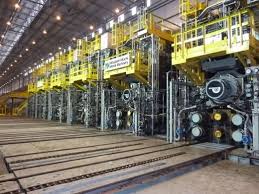
PT designs and constructs plants for its customers in the metallurgical industry, while offering significant project management expertise to determine the technologies packages best suited for each customer.


A detailed order of the CCI will follow.


****

Proposal of ISRO to transfer space-grade Li-Ion cell technology to BHEL

ISRO has transferred its indigenous technology to produce space-grade Li-Ion cells to BHEL.

In March 2018, BHEL signed the Technology Transfer Agreement with ISRO for acquiring the Li-Ion Cell production technology.  This production facility is primarily targeting to meet Li-Ion Cell requirements for ISRO and other strategic sectors.  However, BHEL can also produce and sell Li-Ion cells for meeting other national/commercial applications by suitably modifying the space-grade cell which can lead to cost reduction.

BHEL is in the process of establishing the Li-Ion production facility near Bangalore in Karnataka.  Various equipments (both indigenous and imported) for establishing this facility are procured and being commissioned.  ISRO has already provided all technical documentation for establishing the production plant as well as hands-on training in various production activities for BHEL staff at ISRO’s facilities.

As per the Technology Transfer Agreement, space-grade Li-Ion cells manufactured by BHEL are meant for meeting the national requirements only.  However, BHEL can also sell the space-grade Li-Ion cells to parties outside India after obtaining prior written consent from ISRO.

This information was provided by the Union Minister of State (Independent Charge) Development of North-Eastern Region (DoNER), MoS PMO, Personnel, Public Grievances & Pensions, Atomic Energy and Space, Dr Jitendra Singh in written reply to a question in Rajya Sabha today.


****


Urgent need to end gender discrimination’ – Vice President

The Vice President of India, Shri M. Venkaiah Naidu today called for ending the gender discrimination and ensuring safety security, and dignity of the women.

Speaking at the Silver Jubilee Celebrations of Indian Women Press Corps,  he said that it was the collective responsibility of the governments, media and civil society to ensure that women were made equal partners in the developmental process of the nation.

Referring to various reports on the Gender and pay gaps in the media sector, the Vice President called for collective efforts of news organizations, associations such as Press Council of India, IWPC and the National Broadcasters Association to work together and find out a way to address disparities based on gender within the journalistic profession.

Stating that the menace of fake or doctored stories that find a way to masses via news, internet, and messaging services have often led to chaos, confusion, and panic, Shri Naidu stressed that media has the onerous responsibility to not only provide accurate information but also educate the people on their rights and responsibilities as well.

The Vice President urged the media not color news with views and stressed the need to maintain objectivity, fairness, and accuracy in decimating information to the reader and viewer without assuming the role of the gatekeepers.

He called for collective efforts of the Press Council of India, NBA to establish a mechanism to curb the menace of fake news, propaganda and paid news.

Describing journalists as catalysts for change and media as an instrument to bring in a positive change in society, the Vice President asserted that Media professionals must strengthen democracy through their observations, suggestions, and writings.

The Vice President asked the regional and vernacular Media organizations to promote Indian languages, culture, and traditions of different states and regions through special programs along with the news. He stressed that media must lay special emphasis on matters relating to farmers, women, youth, entrepreneurs and rural India.

On the occasion, Shri Naidu also released Indian Women’s Press Corps Souvenir.

Smt. Jyoti Malhotra, President Indian Women’s Press Corps, Ms. Vinita Pandey, General Secretary Indian Women’s Press Corps and eminent journalists from several organizations were present at the event.

Following is the full text of the speech –

“Namaskar,

Let me first begin by congratulating the Indian Women’s Press

Corps (IWPC), a reputed association of women journalists on completing 25 successful years. It was set up in 1994 to support women journalists in their professional work, in enhancing their knowledge and skills and to provide a forum for networking.

I am glad that the organization has been playing a key role in creating a conducive working environment for women journalists and also working towards safeguarding their rights. This non-profit, nonpartisan, progressive, professional organization has been focusing on creating a positive change for women journalists.

With reporters, editors, producers, anchors, and cameraperson from across the print, TV and new media as its members, the organization has become an important institution and has been organizing press meets and interactions with eminent personalities from various fields.

It is commendable that women have come forward in such large numbers to join this noble profession to play their rightful role as the fourth pillar of the state.

I was informed that IWPC has been providing essential infrastructure support to women journalists by supporting them in performing their duties both on the field and at the desk.

The press and the media played a pioneering and stellar role in inspiring the masses to fight against the British during the freedom struggle and in strengthening the democratic foundations in the country since Independence.

Journalism provides citizens with the information they need to make the best possible decisions about their lives, their communities, their societies, and their governments.

The purpose of journalism is to give people the information they need to make better decisions. In other words, journalism is supposed to empower.

The media has the onerous responsibility to not only provide accurate information but also educate the people on their rights and responsibilities as well.

As we all are aware, the media landscape has transformed dramatically over the years and so have the values and ethics of journalism.

Professions such as Politics, Medicine, and journalism were considered as a mission and those who were in the job used to commit to ethics. Unfortunately, there is a decline in such commitment due to various factors including business and politics. Unfortunately, stories or reports are being mixed with views according to the management’s line of thinking.

Adding to this is the menace of fake or doctored stories that find a way to masses via news, internet, and messaging services. Such instances have often led to chaos, confusion, and panic.

I have been urging the media not color news with views and have been stressing the need to maintain objectivity, fairness, and accuracy.

The cardinal principle of journalism is to present fair, objective, accurate and balanced information to the reader and viewer without journalists assuming the role of the gatekeepers.

I am glad that many journalists follow these principles ensuring that Indian media is by and large credible.

Journalists are catalysts for change and media acts as an instrument to bring in a positive change in society. Media professionals are the watchdogs of society and strengthen democracy through their observations, suggestions, and writings.

It is unfortunate that we still come across instances of harassment of women, gender discrimination and domestic violence.  The glass ceiling limited women’s opportunities for growth is, unfortunately, still a reality in contemporary society.

According to the Global Media Monitoring Project (GMMP), as per the latest data of 2015, globally, women as news reporters were most present on radio at 41% and least in print news at 35%. (TV and Internet constituted the remaining 24%).

The report said that the global share of women reporters dropped on radio and television by four percentage points in both mediums between 2010 and 2015.

The report pointed out that between 1995 and 2015, the percentage of women media professionals rose from 17% in (Newspaper, Television, Radio) to 24%, which is a 7% rise. Men still dominate the industry with 76%.

Findings of another study, “Inside the News: Challenges and Aspirations of Women Journalists in Asia and the Pacific”, launched by UNESCO, and the UN Women and the International Federation of Journalists (IFJ) suggested that the presence of women in media has more than doubled in two decades but they constitute only 28.6 percent of the media workforce in Asia and the Pacific and men outnumber women in 4:1 ratio in India.

It pointed out that “on average across Asia and the Pacific, women make up 28.6 percent of the media workforce. The proportions are lower in decision-making roles in media organizations where women make up 17.9 percent of executive roles, 19.5 percent of senior editorial and 22.6 percent of mid-level editorial positions.”

Another recent report released by UN Women, female journalists in India “continue to be denied their fair share” at major media organizations in India. The report, “Gender Inequality in Indian Media”, pointed out that women were better represented online than in newspapers and TV.

Keeping these things in mind, collective efforts must be made by the managers of News organizations, Associations such as yours and the Press Council of India and the NBA must work together and find out a way to address disparities based on gender within the profession.

A systematic, structured approach must be put in place by the media and the government to address all the crucial matters relating to women’s safety, security, and dignity. There is an urgent need to end gender discrimination and neglect of women.

I am happy to know that the organization has been organizing regular workshops, and training sessions for its members to achieve its important goal of advancing the impact of women in the media by being a resource to members and the industry.

As you all are aware, women’s participation is extremely crucial to ensure the overall development of the nation. It is the responsibility of the governments, institutions, media and civil society to see that women are made equal partners in the developmental process of the nation.

The media must highlight the success stories of women achievers to inspire others.

As we celebrate the 25 years journey of IWPC, we must strive to set higher benchmarks and achieve excellence in the field of media.

I would like all of you to inform and educate people with well documented, research-based reports based on facts. Fearless adherence to truth should be your creed.

The rise of social media has increased competition among entities, organizations. It is important our newsrooms and professionals are trained and sensitized on flashing news and updates by exercising greater caution.

Collective efforts need to arrest sensationalism, end biased coverage and paid news. Entire Media, as a responsible institution, must contribute to strengthening democratic foundations of the country.

Here, the Press Council and Media Organizations including yours should take lead in training professionals to be more responsible in disseminating information.

You must empower the audience or readers to make informed choices.

I urge the media, especially regional and vernacular Media organizations to promote Indian languages, culture, and traditions of different states and regions through special programs along with the news.

In the end, I urge the media to focus on rural India. We must lay special emphasis on matters relating to farmers, women, youth, entrepreneurs.

I am happy to learn that IWPC has been providing important professional resources to women journalists like library, computers and enabling its members to meet newsmakers from all walks of life on a regular basis.

I am sure such support helps all the journalists, especially the young journalists to learn from their seniors during their interactions and upgrade their professional skills.

I once again convey my wishes to the Indian Women’s Press Corps (IWPC) and all its members on their contribution to the profession and the nation.

Jai Hind!”

*****