


Finally Hindus Get The Right To Worship At Entire Disputed Land And Muslims Get 5 Acre In Ayodhya

“The court does not decide title on the basis of faith or belief but on the basis of evidence…it applies settled principles of evidence to adjudicate upon which party has established a claim to the immovable property.”
– CJI Ranjan Gogoi while reading the verdict
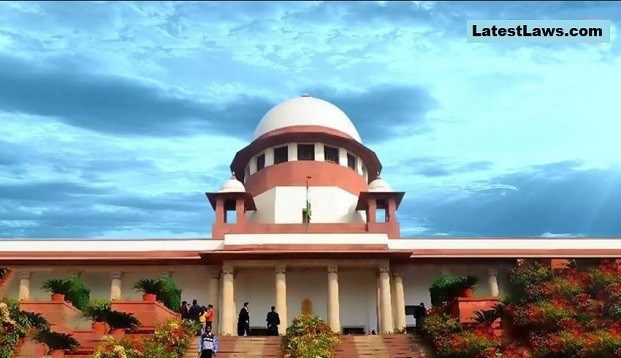
To start with, the name of the incumbent Chief Justice of India (CJI) Ranjan Gogoi who is due to retire shortly on November 17 along with the other 4 Judges – Justice Sharad Arvind Bobde who is the new designated CJI, Justice DY Chandrachud, Justice Ashok Bhushan and Justice S Abdul Nazeer who all were part of the five-Judge Bench that have put a supreme closure on the centuries-old Hindu-Muslim dispute by finally deciding it shall always be written in golden letters in the annals of history because they all have not just decided it finally but also decided it unanimously which must be applauded, admired and appreciated in no uncertain terms! Now there can be no more violence on this issue as the highest court of the country has now finally settled it once and for all which has to be accepted now by all of us most gracefully! The Ram Janambhoomi-Babri Masjid disputed land shall be handed over for the construction of a Ram temple at the entire site thus accepting Hindus claim and simultaneously also ordering that Muslims shall be allocated five acres at a prominent place in Ayodhya for a mosque. 
Needless to say, in a unanimous judgment titled M Siddiq (D) Thr Lrs. Vs. Mahant Suresh Das & Ors in Civil Appeal Nos. 10866-10867 of 2010 along with other Civil Appeals delivered just recently on November 9, a Bench headed by CJI Ranjan Gogoi has asked the Centre, which had acquired the entire 67.73 acres of land including the 2.77 acres of the disupted Ramjanambhoomi-Babri Masjid premises in 1993 to constitute a trust in three months for overseeing the construction of a temple and frame a scheme for its functioning as well as on matters pertaining to management of trust and construction of temple. For the time being, the possession of the disputed property would continue to vest with the Centre until a notification is issued by it investing the property in the trust. The Bench also directed that the Sunni Central Waqf Board should be given a five acre plot, either by the Centre from within its acquired area, or by the Uttar Pradesh government “at a suitable, prominent place in Ayodhya”. The Board would be at liberty to construct a mosque there. This should be done simultaneously with the transfer of the property to the proposed trust. 
Speaking for myself, I most politely beg to differ with Supreme Court on this as I very strongly believe that why can’t a temple and mosque coexist and why can’t Hindus and Muslims pray peacefully at any place together anywhere in India? Why can’t we be more respectful for each other? Why can’t we respect religion of those different from us just like we respect our own?
Speaking for my best friend Sageer Khan, he inspite of being a Muslim differed very strongly with me on this and said way back in 1993-94 directly to about 4 to 5 Muslims in my absence but which I overheard as I had just returned after attending my BSc classes at Sagar University which shocked me also to the hilt and which he repeated in my presence also then that, “Centre must declare Ayodhya, Kashi and Mathura as Hindu sites and not a single shrine of any other religion should ever be constructed at any of these three places. Should a temple be built in Mecca or Medina? What if Hindus also demand similarly? Will any Muslim anywhere in world agree to building of a temple anywhere in Mecca or Medina or anywhere in Saudi Arabia or any other Gulf country? Why do we then not do with others what we expect from others to do with us? Moreover, no true Muslim should offer namaz at any disputed place or by disturbing others like on roads and Hindus consider these 3 places as most sacred since lakhs of years. How can all this be overlooked? Will we become small if we accord Hindus due respect just like they respect Mecca and Medina. I don’t consider disputed site at Ayodhya as mosque because no namaz has been offered there since last many decades and moreover it is disputed where no true Muslim should ever go and Hindus have considered it always as Lord Ram’s birthplace and even Archeological Survey of India has found remains of temple at the disputed site! A very prominent Imam of Iran has also upheld Hindus strong claim on Ayodhya. We must be large hearted and accept the deepest sentiments which Hindus share with these 3 places – Ayodhya, Kashi and Mathura just like we do with Mecca and Medina. How will we feel if Hindus demand temple at these two sites? We will get mad in anger than why do we also not respect Hindus sentiments just like they respect ours? Allah never accepts prayers offered by hurting the sentiments of others. I will prefer not praying at all rather than pray by hurting my Hindu brothers! Muslims enjoy maximum freedom in India all over the world. No place can be more safe for Muslims than India where they enjoy maximum liberty. Indian Muslims are always discriminated in Pakistan which alone explains that why no Muslim from India ever wants to reside permanently in Pakistan and they are still termed as “Mohajjir”. I am proud to be an Indian and shall certainly die as an Indian. Religion are just different path to reach the common goal. God is called by different names but he is one.” There can certainly be no communal violence ever in India if all Indians always think like him! 
It is this same Sageer Khan who when I expressed to him my desire to become a Muslim like him as he always stood by me in my most difficult times took a vow from me in 1994 by placing my hand on his head with tears in his eyes saying that, “You shall never renounce your religion” as he (Sageer) felt always that, “Anything can be changed but nation, religion and parents can never be changed” and also the God Shiva in whom I believed till then but had lost faith in him shall continue worshipping him till my last breath just like he (Sageer) shall never renounce his Allah and his religion! It is this same Sageer who regularly ensured that I worshipped Lord Shiv while he used to offer namaz and it was a coincidence that whenever he took me to different temples which he did regularly from April 1993 to April 1995, the idol was always of Lord Hanuman due to which I started believing in him also fully along with Mata Durga where Sageer always bowed his head in a temple in Sagar in Madhya Pradesh for my faith to stay intact! I must acknowledge that the utmost sincerity with which he used to bow entirely in front of idols of Lord Hanuman and Mata Durga and shake his head on ground with fullest dedication when I never at that time liked to even bow down injected in me fresh lease of faith in not just Lord Shiva but also in Lord Hanuman and Mata Durga whom I never worshipped earlier for which I shall forever be indebted to him! It is again Sageer who took a vow from me that I shall never enter any mosque in my life nor bow my head ever in front of mosque as I am Hindu and should always visit only temple and bow head there only or in dargah as both Hindus and Muslims go there! 
Speaking now for Supreme Court who delivered this path breaking judgment, it was also made clear that, “In exercise of the powers vested in this Court under Article 142 of the Constitution, we direct that in the scheme to be framed by the Central Government, appropriate representation may be given in the Trust or body, to the Nirmohi Akhara in such manner as the Central Government deems fit.” Prime Minister Narendra Modi has hailed the restraint following the Supreme Court’s judgment in the Ayodhya case saying it should be seen as a message of unity which proves that the most difficult of problems can be solved within the framework of the Constitution and Courts. He very rightly tweeted saying that, “This verdict shouldn’t be seen as a win or loss for anybody. Be it Ram Bhakti or Rahim Bhakti, it is imperative that we strengthen the spirit of Rashtra Bhakti. May peace and harmony prevail!” I hail PM Modi for saying so!
It is most heartening to see that after giving the disputed land to Hindus and a separate five acres of land at a prominent place to Muslims for construction of a mosque in Ayodhya, the Supreme Court shut the door for fresh litigation to alter the status quo of religious sites such as those in Kashi and Mathura which has also seen discord over worship. I had the honour to visit Kashi in 2012 along with my advocate friend Amit Sharma and his family where we did pooja freely and I did not see any Hindu-Muslim tension at all! This clear assertion by top court must put to rest all doubts and speculations over such claims being presented at other disputed sites also by Hindus! 
It cannot be overemphasized that leaders from all parties must refrain from expressing unfounded fears on this and should recognize that the top court has itself said clearly and categorically on this which cannot be questioned by anyone! Central and state governments to follow Religious Places (Special Provision) Act, 1991, which mandates maintenance of status quo on character of the disputed sites as it existed in 1947. Only Ram Janambhoomi-Babri Masjid excluded from ambit of this law.
It is for the first time in history of Supreme Court that such a landmark decision was given on Saturday! It is also for the first time that the name of the author of judgment has not been mentioned and so it can be termed as a collective judgment even though as pointed out in Sunday Times dated November 10 that, “It was clear from the printed version of the judgment that the author was none other than Justice DY Chandrachud. It was a valid surmise. SC judges have their own styles and use distinct fonts. For those familiar with the style of Chandrachud, the matter was settled; well, almost beyond reasonable doubt.”
It is also for first time that the main judgment is accompanied by a 116-page “addenda” which was in the shape of a complete judgment and could well have been passed off as a separate, although concurring judgment which is believed to be authored by Justice Ashok Bhushan! No doubt, it is certainly remarkable and historic from all angles!
This noteworthy judgment also pulled back no punches to conclude that, “The destruction of the mosque took place in breach of the order of status quo and an assurance given to this Court. The destruction of the mosque and the obliteration of the Islamic structure was an egregious violation of the rule of law.” The court concluded that the Muslims were ousted from the 1,500 square yards of the mosque through acts of damage during communal riots in 1934, desecration in the intervening night of December 22-23 of 1949 when idols were placed inside the mosque and finally, the demolition of the mosque in 1992.” It also concluded that, “All forms of belief, worship and prayer are equal.” There can be no denying it! This landmark verdict cannot be interpreted either as victory for Hindus or defeat for Muslims! 
Zufar Faruqi of UP Sunni Central Waqf Board said that, “We welcome and humbly accept the verdict…we will not go in for any review of the apex court’s order or file any curative petition.” Maulana Tauqeer Raza Khan who is national President of Ittehad-e-Millat Council said that, “I respect the SC decision. Our faith has taught us to express gratitude to God in happiness and be patient while in sorrow. However, the verdict has ended the politics in the name of temple and will eliminate the hatred in the name of faith. I hope that the focus of politics will now be betterment of the country.” PM Modi too has already made his noble intentions clear on this and said unequivocally that, “The SC verdict has brought a new dawn. Now the next generation will build a new India! Maulana Shahbudin Razvi who is General Secretary of Tanzeem Ulama-e-Islam said that, “I welcome the decision of Supreme Court. The matter had become a major issue of contention between two communities of the country and today’s decision has ended a decades old dispute. I appeal to the people that they should maintain communal harmony in the country.” Pawan Arora who is VHP’s Divisional President also said that, “We welcome the decision which has been passed in the country’s interest.” 
To conclude, Supreme Court has accepted what many Muslims like Sageer Khan and Sufi Khan have steadily maintained that Hindus have always considered the disputed site in Ayodhya as the birth place of Lord Ram since lakhs of years and their unflinching faith in this stands vindicated by the report of Archaeological Survey of India which found proof of temple beneath the disputed site which can be considered as an expert opinion! The Apex Court conceded that Hindus and Muslims had a competing right over the disputed site but Hindus showed better evidence of their continuous worship at the disputed structure for centuries. It also maintained that no evidence produced by Muslims to indicate that their possession of disputed structure was exclusive and that offering of namaz was exclusionary of Hindus. 
It was also conceded that Muslims have never been in possession of outer courtyard. Inner courtyard has been a contested site with conflicting claims of Hindus and Muslims. But there has been no abandonment of mosque by Muslims as namaz was offered till December 1949. It held that, “The allotment of land to Muslims is necessary because though on balance of possibilities, evidence regarding claim of Hindus to the composite whole of the disputed property stands on a better footing than the evidence adduced by Muslims, but Muslims were dispossessed upon desecration of mosque on 22/23 December 1949, which was ultimately destroyed on 6 December 1992.”
Thus we see that Hindus get the entire disputed site and as a balancing act Muslims also get 5 acre of land at some prominent place in Ayodhya to be decided later! The Apex Court has thus set aside the September 30, 2010 verdict of Allahabad High Court which had divided the core disputed area into three equal parts and allotted one part each to Ram Lalla (the area under the central dome of the demolished mosque), Nirmohi Akhara (outer courtyard including Ram Chabutra and Sita Rasoi) and the rest to Sunni Waqf Board. Let’s earnestly hope now both Hindus and Muslims would be able to pray peacefully as directed by the top court!
Sanjeev Sirohi, Advocate,
s/o Col BPS Sirohi,
A 82, Defence Enclave,
Sardhana Road, Kankerkhera,
Meerut – 250001, Uttar Pradesh.

Detention For Adults?

To all those who are convinced that the non-detention policy is harming education…
Children’s apparent lack of learning becomes an issue mainly because it is easy to see that they have missed out on something. The fact that at a younger age learning is very fast and that clear milestones are available helps us perceive this – and therefore apply all kinds of expectations, tactics, at times even coercion to ‘ensure’ learning – one such being the detention system which, many believe, is needed in order to maintain ‘quality’. By making children lose a year because we couldn’t ensure their learning (and blaming them for it), we feel we can generate the fear required to make them ‘serious’ and learn.
If we are convinced about this, why should it apply only to school education? What if we could lay out clear benchmarks for adults to learn and grow – in general as well as in the work they do. Certainly it is possible to have a life-long ‘curriculum’ with two-year benchmarks (over their entire careers, and even post retirement) for educationists and curriculum developers, teachers, HMs, government officials, managers, businessmen, fathers and mothers (and grandparents), journalists, artists, municipal staff, auditors, accountants, administrators, intelligence agents and politicians. What if there was a ‘detention system’ (in terms of not being allowed to be promoted or get a pay increase or being sent back to some lower ‘grade’)? Yes, in some government jobs there is an ‘efficiency bar’ and the supposed HR policies and internal competition are expected to sort this out. But do they?
Can we as a nation claim that we have, every year, demonstrated the improvement required to declare ourselves ‘promoted’ to the next level (whatever that is)?
And what happens when police are unable to reduce crimes, leaders are unable to ensure the welfare of the poor, systems are unable to deliver basics such as electricity / water / education / health, or societies are unable to get men to have basic respect for women?

So, What Now? Knowing the 7 Myths of Highly Ineffective Education Systems, What Do We Do?

Continuing to live with these myths is to deny ourselves the opportunity to succeed, especially for those who need education the most. The first step is to accept that these notions have indeed affected our work in trying to bring about better education. Acknowledging this is not a sign of defeat but of learning.
After acknowledgement, however, come reflection – and small steps. 

Here are some small steps that all of us can take: 
  1. Discuss these ‘myths’ and related issues with as many people as you can. Question and contest them, or support them, with your experiences, facts and data from your sphere.
  2. If you are in any way connected with education – as a student, parent, teacher, CRC-BRC, official or resource person, NGO worker or decision-maker, make one small change every month which in some way empowers children or teachers or HMs. (Our team, Ignus PAHAL, will soon be producing a poster presenting a graded list of these small, doable changes at the school level.)
  3. Talk with as many stakeholders as possible and within reach (and in the limited time available) about what they would like. They might suggest things they could do – and a small beginning may be made to a partnership in bringing about improvement that is gettable. It may be a better way to help children wash their hands before the mid-day meal, or managing to start the school 10 minutes earlier so that learning time increases, or ensuring used textbooks are circulated better, or working out how you may share your expertise with children or teachers.
  4. Find something interesting you can share with children. It may be a news item (e.g. did you know that for some reason, the MHRD – and some of the other ministries of education in the country – face a problem with monkeys troubling them?), or an interesting story you’ve read or know (but no moral tales please!) or a suggestion for something they can try out (e.g. making a paper plane turn in a predicted direction) or find out (e.g. why the inner margin of a textbook page is wider than the outer margin – okay, that is too easy but you get the idea).
  5. Find a way to convert complex educational ideas into simpler forms so that a person with no background in education or no access to ‘high’ language may understand it. E.g. ‘non-detention is not the same as non-evaluation, and that by detaining children we are making them pay the price for the system’s failure and also supporting the idea that it is fear which leads to learning’. Can you find a way to make this idea easy to understand for millions of teachers, parents, SMC members and others? (You can guess why this statement was selected as the example…)
  6. Use your mobile – call up a teacher, or text her an idea or send your appreciation. With children, use the stop-watch, camera and calendar in your phone to do activities. If you know an official and have a good enough relationship, make him or her uncomfortable by reading out sections of this article (don’t get into a bitter argument – a gentle, understanding approach may be more useful!).
  7. Finally, please add to the discussion on these 7 Myths and, perhaps more importantly, to the list of suggestions.
But all these are very small things, you might say. They can’t achieve much. Well, not if many, many, many of us are doing them! Perhaps it’s a myth too that only when some large government programme is in action can change take place. This ignores local ingenuity and the sheer numbers that can make government efforts look feeble – or boost them to make them actually succeed. Towards this, your views and ideas may be more powerful than you imagine. And that’s not a myth!

550 Birth Anniversary of Guru Nanak Dev & the Golden Temple

On this date of 12
November 2019, 550 birth anniversary of Guru Nanak Dev ji is being celebrated
across the world particularly in India and Pakistan with full dedication,
devotion and gaiety.
    His sayings and messages are still relevant
and will also continue till the day human beings survive. I am quoting from one
of his sayings which has greatly influenced me, “There is but One God. His name
is Truth; He is the Creator. He fears none; he is without hate. He never dies;
He is beyond the cycle of births and death. He is self-illuminated. He is
realized by the kindness of the True Guru. He was True in the beginning; He was
True when the ages commenced and has ever been True. He is also True now”.
Another one, “Even Kings and emperors with heaps of wealth and vast dominion
cannot compare with an ant filled with the love of God”.

    Guru Nanak ji was born at present place of Nankana Sahib, near Lahore of Pakistan.
According to various literatures and beliefs, the birth and initial years of
Guru Nanakji’s life were marked with
many astonishing incidents that validated that Nanak ji was born with divine
power.
 Guru Nanak Dev ji later on settled down at Kartarpur (now in Pakistan) which was
founded by him in 1522 and spent the rest of his life there (1522-1539). Kartarpur is now great news in the world
as 3-kilometre  corridor which connects Darbar Sahib in Kartarpur with Dera Baba
Nanak shrine in Gurdaspur district of
Punjab (India) has  allowed pilgrims’
mainly Sikh pilgrims’ direct access to the historic Gurdwara Darbar Sahib in
Kartarpur
, where Guru Nanak Dev
passed away. Hope this corridor will bring peace in the region so that no
mothers have to lose their sons or children had to suffer because death of
their fathers. Guru Nanak Dev ji long ago rightly said, “Dwell in peace in the
home of your own being, and the Messenger of Death will not be able to touch
you”.       
  Although Guru Nanak ji was the founder of
Sikhism and the first of the ten Sikh Gurus but all the other Gurus had done
excellent work for human beings. In this context, the Golden Temple is a
glaring example. The Golden Temple of Amritsar (Sri Harmandir Sahib) is not only a central religious place of the
Sikhs, but also a symbol of human brotherhood and equality. Everybody
irrespective of caste, creed, religion or race can visit the place.
Regarding the Temple it
may be mentioned that, as advised by Sri Guru Amar Dass Ji (3rd Sikh Guru), Sri Guru Ram Dass Ji (4th Sikh Guru)
started the digging of Amrit Sarovar
(Holy Tank) of Sri Harmandir Sahib in
1577 A.D., which was later on brick-lined by Sri Guru Arjan Dev Ji (5th Sikh Guru) on 15 December, 1588 and he
also started the construction of Sri Harmandir
Sahib
. Sri Guru Granth Sahib
(scripture of the Sikhs) was first installed at Sri Harmandir Sahib on 16 August 1604 A.D.
     The Golden Temple (Sri Harmandir Sahib Amritsar) has a unique
Sikh architecture. Built at a level lower than the surrounding land level, the Gurudwara teaches the lesson of
egalitarianism and humility. The four entrances of this holy shrine from all
four directions signify that people belonging to every walk of life are equally
welcome. The Sikhs and others of different religions all over the world daily
visit Sri Harmandir Sahib.  
    The author had the opportunity to visit
holy Golden Temple (Sri Harmandir
Sahib) in August 2017. So the author’s first visit to Golden Temple created different
feelings in the mind and heart of the author as everywhere selfless service was
observed- whether serving of food, water, cleaning of utensils, making of roti etc. were concerned. It is
heartening to mention by quoting Hindustan Times, 19th May 2016,
epaper, that “The Golden Temple (Harmandir
Sahib) in Amritsar has been ranked number 3 in the country on the travellers’
choice landmarks list of a leading travel planning and booking site
TripAdvisor. Surrounded by a holy ‘sarovar’,
its construction was completed in 1604 and presently runs one of the largest
free kitchens in the world, which serves an average of 1,00,000 people daily”.

Dr Shankar Chatterjee
Former Professor & Head (CPME),NIRD & PR ( Govt. of India), Hyderabad,  India
Former Associate Professor, Eritrea
Former Assistant Prof, Govt. Degree College, Tripura, India
Former Senior Planning Officer, Govt of Assam, India

Interim Mandatory Injunctions Can Be Granted After Giving Opportunity Of Hearing To Opposite Side: SC

It has to be stated right at the outset before stating anything else that in a latest, landmark and laudable judgment titled Dr Syed Afzal (Dead) Through Lrs. & Ors. Vs Rubina Syed Faizuddin & Ors in Civil Appeal Nos. 8447-8449 of 2019 (Arising out of SLP (C) Nos. 25368-25370/2019), the Supreme Court has clearly and convincingly observed that the Civil Courts while considering the application seeking interim mandatory injunction in long pending cases, should grant opportunity of hearing to the opposite side. In other words, the Apex Court has sought to make it abundantly clear in this noteworthy case that interim mandatory injunctions can be granted after granting opportunity of hearing to the opposite side. Very rightly so!

While granting leave, this notable judgment delivered by a Bench of Apex Court comprising of Justice NV Ramana and Justice V Ramasubramanian on November 4, 2019, first and foremost sets the ball rolling by observing that, “Aggrieved by an interim order passed in three interlocutory applications, pending a Regular Appeal arising out of a preliminary decree for partition, the legal representatives of one of the plaintiffs in the suit have come up with the present appeals.”

To put things in perspective, the Bench then after hearing both sides says that, “We have heard Mr. Kapil Sibal, learned senior counsel appearing on behalf of the appellants and Mr. Ranjit Kumar, learned senior counsel appearing on behalf of respondent Nos. 1 to 5.” The Bench then goes on to clarify that, “Service of notice on the other respondents is not necessary as these appeals arise out of an order passed in the interlocutory applications filed before the High Court by respondent Nos. 1 to 5 alone.”

Needless to say, it is then brought out that, “The appellants herein are the legal representatives of one Dr. Syed Afzal, who along with his brother Syed Hamza, filed a suit – O.S. No. 123 of 1997 in the Court of the IX Additional Chief Judge, City Civil Court, Hyderabad for partition and separate possession of their lawful shares in the suit schedule properties. By a judgment dated 24.09.2012, the trial court granted a preliminary decree for partition.”

As it turned out, the Bench then notes that, “Aggrieved by the preliminary decree for partition, defendant Nos. 26 to 30 (respondent Nos. 1 to 5 herein) filed a Regular Appeal in CCCA No. 18 of 2013 on the file of the High Court of Judicature at Hyderabad. Initially, the High Court granted an interim stay of all further proceedings pursuant to the preliminary decree, but the same was later modified confining the stay only to the passing of final decree. The appeal is still pending and the interim order staying the passing of final decree is in force.”

To put it succinctly, it is then disclosed that, “During the pendency of the appeal, respondent Nos. 1 to 5 herein moved three interlocutory applications – I.A. Nos. 3, 4 and 5 of 2019 praying inter alia for (i) an interim mandatory injunction directing respondent Nos. 27, 35, 37 and 38 in the appeal to remove their henchmen from Item Nos. 2 and 3 of the decree schedule properties (ii) an injunction restraining the respondents in the appeal from interfering with their alleged peaceful possession of Item Nos. 1 to 7 of the decree schedule properties and (iii) a direction to grant police and to them for removing the so-called henchmen of respondent Nos. 27, 35, 37 and 38 from Item Nos. 2 and 3 of the decree schedule properties.”

To say the least, the Bench then points out that, “It appears that all the three interlocutory applications were filed on 14.10.2019 and the same were listed for hearing on 16.10.2019. According to the appellants herein, they sought time to file counter affidavits in all the three interlocutory applications. However, the High Court passed an order on 16.10.2019 granting an interim mandatory injunction as well as police aid. Therefore, contending that without granting an opportunity of hearing, an interim mandatory injunction and police aid have been granted, the appellants have approached this Court with the instant appeals.”

More importantly, it is then rightly pointed out that, “It is obvious from the impugned order that what was granted was only by way of interim measure and the interlocutory applications are not finally disposed of. We are informed that the interlocutory applications are likely to be listed before the High Court next week. Therefore, at this stage, we do not wish to enter into the merits of the dispute, as the same may prejudice either of the parties. Suffice it to say that the regular appeal pending before the High Court is of the year 2013 and the applications, out of which the present appeals arise, are of the year 2019. These applications are purportedly necessitated by the events that allegedly happened in the recent past. Therefore, this was not a case where an ad-interim mandatory injunction and police aid were required to be granted without affording an opportunity to the appellants herein to file a counter affidavit and to put forth their case.”

Most importantly, it is then very rightly observed that, “It is true that the Civil Court is not powerless to grant interim mandatory injunction, as such a power has been recognised by this Court in a long line of decisions, the important among them being Dorab Cowasji Warden vs. Coomi Sorab Warden & Ors, (1990) 2 SCC 117. But it does not mean that the same could be granted even without an opportunity to the other side, especially when the main appeal is pending for the past six years. By the impugned order, the High Court has not only granted an interim mandatory injunction, but also granted police aid, leaving all the interlocutory applications lifeless, though the applications are technically pending.”

Finally and perhaps no less importantly, it is then held that, “Therefore, we are of the considered view that the impugned order is liable to be set aside and the High Court should be allowed to decide the interlocutory applications on merits after allowing the appellants herein to file a counter affidavit. Accordingly, the appeals are allowed and the impugned order is set aside. The High Court is requested to permit the appellant herein to file a counter affidavit in all the three interlocutory applications. The High Court is further requested to hear both sides and dispose of the applications in accordance with law, preferably within a period of four weeks. In the meantime, both the parties shall maintain status quo, as it exists today, till the disposal of the interlocutory applications.”

On a concluding note, it may well be said with a considerable degree of satisfaction that the Apex Court has very rightly held that it is true that the Civil Court is not powerless to grant interim mandatory injunction as the Court has itself recognized in many cases, the most prominent being Dorab Cowasji Warden vs. Coomi Sorab Warden & Ors, (1990) 2 SCC 117. But the Court also in the same breath does not miss out in holding that it does not mean that the same could be granted even without an opportunity to the other side, especially when the main appeal is pending for the past six years. All the courts must always abide by what the Apex Court has held so clearly and convincingly in this landmark, latest and laudable judgment while adhering to what was held earlier also in similar such cases as has already been pointed out which deserves to be emulated also!

Sanjeev Sirohi, Advocate,

s/o Col BPS Sirohi,

A 82, Defence Enclave,

Sardhana Road, Kankerkhera,

Meerut – 250001, Uttar Pradesh.
HOW TO DISCUSS NATIONALISM WITH YOUR STUDENTS

Why do it
Whether on the TV or in newspapers or on social media sites – we are today surrounded everywhere by strong views on nationalism. Groups of people are getting angry and upset, calling each other names, being violent. Your students too are caught in this, though they may not fully be aware of it. They will be absorbing views from different sources, all of which may not be reliable. And they may end up adopting strong opinions (or even what you consider misguided ones) without giving them sufficient thoughts. For this reason, we have prepared a discussion guide. It is important that at this crucial time, when they might be making a choice, you, their teacher, reach out to them and help them think things through.
So here are some hints. Use them in the way they work best for you. Drop them or change them or add to them according to your need and situation.
Preliminary – setting the ground
For such a discussion, it would be best to prepare the ground gently rather than rush into it. Here are some questions you could ask.
  1. Have you been hearing or seeing the news or reading the newspapers?
  2. What are some of the big issues being discussed?
  3. What have you read or hear about the ‘nationalism debate’?

Provide background
Briefly give a background to the issue. It is possible many may not have heard it or may not have a clear idea of what happened.
Discuss the  issue
As students the following questions. Make sure you get everyone’s views, especially those who often don’t speak up. [Some hints are given in the brackets.]
  1. So what do you think it means to love your country? [taking care of the environment? Looking after those who are not able to take care of themselves? Singing patriotic songs? Joining the army? Being polite to others? What else? Especially in our daily lives, what do we do (or can do) to show our patriotism?]
  2. What are the best ways to show your love for your country? [you can use the list from the previous question to identify 2-3 of the ‘best’ or ‘most important’ ways and discuss why students think they are the best.]
  3. What are some of the things you would not do if you love your country? [e.g. spitting everywhere as it spreads disease, not dirtying or vandalizing the environment, not jumping a queue or try to take an undue advantage…]
  4. Even in a family everyone is not able to agree on everything? Have you seen any example of this? What happens in such a case?
  5. So if someone does no agree with you, is it a good idea to beat him or her up? Why?
  6. What do you think are the best ways to deal with disagreement?
  7. And what if on the issue of loving your country, someone says something you don’t find pleasant? What should you do?
  8. What are the best ways of finding out more deeply why people think the way they think? And how can you use that to help them see things differently?

Afterwards
Of course, this discussion will not end here. Give students some materials to read. Organize one or two follow up events. Suggest that the students have their own discussion group and contact you for help if needed.
All the best!

What happens when you seriously try to empower children, teachers and community through large scale education initiatives?

The pervasive notion that \’nothing has been done in education in India\’ could not be further from the truth. In fact not only has a great deal been done, but its consequences have been faced over decades. In particular, what follows applies to introducing educational designs based on local context, using the experiences and strengths of the stakeholders, creating a situation where they play an active role in determining and implementing processes.


Though obviously much must have been done over the decades till the 80s, my experience ranges from mid-80s, when I was part of a team working on such classroom practices, textbooks and educational designs from 1986 onwards. Implementation of the programme called Prashika (Prathamik Shiksha Karyakram) focused on marginalised groups, with the team living in a tribal area as well as in a rural, deprived pocket and introducing the innovation in government primary schools. The work in Prashika was pathbreaking in many, many ways (integration of 5 subjects at the primary level, incorporation of multiple local languages, a hugely localised textbook/workbook that could only be completed with each child contributing, called Khushi-Khushi – still not matched anywhere, I believe). It provided hope that much was possible despite the difficulties faced and informed many of the later efforts that followed, both in the government and the NGO sector.


Later in DPEP – particularly Kerala, Assam, Karnataka, Haryana, UP, Bihar, TN, Nagaland and later with SSA Gujarat further work was done. Localised training, contexualisable textbooks (some really brilliant stuff still not matched anywhere – and that\’s a professional opinion), teacher determined assessment system, involvement of community knowledge, children constructing local histories / local environment books, peer learning and assessments, textbooks that would be \’complete\’ only along with a set of 50 district-specific books kept in the school library…. many, many innovative and large scale measures were conceived and actually implemented using a strategically developed implementation plan. 


In each first five states we were able to see 2-3 years of implementation, development of hundreds / thousands of teachers who implemented contextualised learning, a high degree of in-class practice backed by supportive, localisable material. These states changed their position in the national achievement surveys too, with Kerala rising to the top (it had been fairly close to the bottom before this, below Bihar in the first national survey). In the case of Gujarat, field testing was done in 630 schools, researched by MSU Baroda with very encouraging findings. 


However, as long as we were not visibly successful there were no problems. When change began to be visible on some scale and a palpable sense of energy was witnessed among teachers and communities, alarm bells began to ring. in each of these states, the powers that be – especially at state level, state institutions, administrations, political parties – found that this went against the command-and-control structures conducive to them being able to assert their authority. Schools didn\’t want to be told what to teach when and how – they had their own plans. Empowered teachers / school heads / even some VECs refused to kowtow to mediocre ideas or corruption oriented bosses – leading to huge conflicts all over the place. Unfortunately these never got reported, recorded or researched. The results were mass scale transfers, cases against state project directors who encouraged this (Kerala SPD was charge sheeted, Karnataka SPD given punishment posting in North Karnataka, Assam SPD sent to conflict zone during worst riots, Bihar SPD transferred to PHED and later kept without posting), the re-casting of State Resource Groups from those selected for tested capabilities to those stocked with ex-officio positions, the emasculation of the BRC-CRC structures from genuine teacher support institutions into data collection centres (believe it or not, we did have functional BRCs CRCs at one time!), the centralisation of powers away from the VECs and re-casting into SMCs with a different function, and major shift in recruitments away from districts to states (in one state the Education Minister held a Recruitment Mela in a stadium to personally appoint 3000 para-teachers). 


Interestingly, Prashika in MP faced a similar adminstrative backlash and was closed down.


Yes, like it or not, this is what ideas of empowerment through education come up against – and they fall short not because of lack of any purity in the idea itself or absence of rigour, but because after a point when it goes into implementation an idea is something else, and not its original pure self. You might look at the actual work and find it is not \’up to the standard\’ – yet when trying to create it for those who need education the most, other aspects need to be taken into account. Basically, empowering the weak is clearly seen by the strong as disempowering them – and the empire strikes back! One of the outcomes is that a few years later, it appears as if nothing has been done, and people gear themselves up to again come up with \’innovative\’ ideas, often weaker than might already have been tried, uninformed by the past.

Do we even know what we assess when we assess learning?

‘It took me quite some time to get the little girl to let me know what was bothering her,’ said Prof. A. K. Sharma, the former Director of NCERT. The year was 2000 and he was telling me about an incident from a class 2 maths period in the model school in the NCERT campus. The teacher had just completed teaching children subtraction of two-digit numbers with ‘borrowing’, and he had found two children hesitating over the problems they had been given to solve.
The first, a girl, had made a ‘mistake’ as she had failed to borrow from the tens side. Being a grandfatherly and kindly figure, he was able to cajole the girl to speak up. Very softly, looking down and away from him all the while, she said, ‘We learnt in the moral science class that borrowing is bad.’
Reeling from this, he approached the other child, a boy, and discussed why he had not completed his work on the problem. After much exchange, the boy said, ‘But why should I borrow 1? I want to borrow 2.’
Taking part in a recent session on ‘error analysis’, I was reminded of Prof. Sharma’s advice to engage with children to understand their ‘errors’ rather than rely on their work on paper. In numerous assessment experiences since, I’ve seen children who are otherwise very competent falter because of an issue at home or a fight with a friend or because they are being bullied. In open-ended questions in language, teachers are hard put to identify if there really is an ‘error’ or if the child’s view is a valid, logical interpretation. (And asking only close-ended questions is hardly sufficient to understand children’s abilities.) It becomes even more difficult when it comes to children from marginalized backgrounds – as they encounter discrimination and even denigration (of their background, language or culture), they often resist by ‘not-learning’ or do not answer out of fear of being ‘disciplined’.
As the evaluation industry expands in the Indian context with more and more professionals taking in rigorous analysis of children’s responses and analyses of their ‘errors’, the tendency is to interpret these within the framework of the subject for which the test was conducted. But do we know what we really assess when we look closely at children’s responses? What if it’s not a maths or language issue but something else altogether?

Intenational Confernce Listing and Submission Site

A planned assembly of the people apparently related to some aspect of organisational or group function is called the meeting. They can be various principles of the meeting held can be for the better development and outcome. Thus these Business conferences 2014-2015 keep the organization on track, lead the team arrive at an agreement and affects the strategy along with shaping of an organisation’s plan over time. Business conferences 2014-2015 are the heart and soul of any organization which can lead and determine the fortune of any party. Business conferences gatherings are Powerful Business Weapon to deliver new knowledge and information, and discuss decisive issues and group projects for the benefit of organization; International meetings are the best ways to keep each other updated with work matters keeping track of individual and team work progress through a dynamic conversation. Business conferences events meetings are very essential to the success of the organization. 
Events meetings advance and strengthen good working relationship. As the Business week conferences events provide businesses with the opportunity to get out of the regular work environment for a while and meet compatible professionals in the same field and stimulates to think out of a box for the betterment in all the ways. Hence attending and sharing the thoughts at the Business week conferences events meetings will awake new thoughts and motivate to rise with more positivity and helps to pave the unproblematic way reach your destination the business field. Business conferences events meetings often the gathers interesting programmes covering different aspects of business along with the scientific events. New products and procedures are introduced at these events along with innovative International workshops. Events meetings has significant speakers attributing and they can provide interesting lectures, useful assistance and opportunities to attendee’s and consider other many more options for developing the business. These instead won’t be possible with or during the regular hectic work shifts.
New markets created by science and invention are everlasting. But Innovation is the key to “winning the future”. In an increasingly competitive economy it is the country that can bind innovation and technology that will be the most victorious economically. The innovative scientific conferences will be more fruitful if it can be shared and applied in many thoughts at events meetings in all the possible ways can be done which is promising only in groups which are brought up Business conferences events meetings organized by EDUINDEX.
Business conferences brings together Scientific Researchers, Business Entrepreneurs and Pharma, Biotech & Healthcare Industry Developers, students across the for transferring and exchanging ideas & to stay up to date in the field.
SUBMIT CONFERENCE DETAILS AT https://eindex.org/conference-indexing

The Qualities of a Change-Maker

Improving educational quality ends up being about change rather than tinkering with some elements. 

What then are the qualities of those involved in bringing about this change? 

Here are my guesses. As can be expected, this is a long wish-list! I need your help to identify which ones are really important. And suggestions, too, about how to generate these qualities in the people we work with.
A change-maker:
  1. is sharp, can quickly see what needs to be changed, and has effective ways of helping others see this too, but without getting into a conflict!
  2. can spot opportunities for introducing change
  3. does not have a sense of hierarchy; does not discriminate
  4. has a sense of humour, which gives her/him the ability to live with the difficulties and slow pace of change
  5. at the same time, s/he can take quick decisions and act fast if needed
  6. is aware that he may himself by a victim of the old ways of thinking and living; so is constantly examining himself and trying to improve himself
  7. can help a person see what is wrong without feeling bad or without that person feeling he is being disliked.
  8. has a sense of strategy – that is, of actions that will slowly, perhaps indirectly, bring about the change desired, in stages
  9. is honest and has the greatest accountability to herself, on behalf of those she works for
  10. is aware that there will be some conflicts, and has a plan and ability to deal with this; if necessary, generates conflict, though in a calibrated manner
  11. is aware that his role is that of enabling others to deliver rather than deliver on their behalf
  12. knows how long change takes, and does not give up
  13. Can work as a team member, and also get others to work as a team – for which, helps by:
  • Sharing goals

  • Sharing information

  • Recognizing, utilizing and balancing the strengths and weaknesses of the group

  • Ensuring recognition as a team


What kind of process would help develop these qualities? 
What kind of reflection, debate and conversation do you think is needed? 
And can it be done in the kind of time-frames we usually have?

Contesting Cribbing

If you\’re a person working to improve the educational system in a country like ours, here\’s something you\’ll recognize: whether it\’s journalists or academics, colleagues from NGOs or \’well-wishers\’ of children, everyone is pretty good at \’problem pointing\’. They\’re really good at telling us exactly how BAD things are. Numerous articles, speeches, social media entries, research pieces, presentations, and even protests, copiously crib about a range of ills affecting education : how the system is dysfunctional, teachers are absent, accountability is missing, children aren\’t learning, process is dated, children are oppressed, administration is rigid, policies are rich but unimplemented, how the disadvantaged continue to get a raw deal right through… Recognize it? I do, for some of this is what I do as well!


But here\’s the rub – all this elaboration on what is wrong (some of it is serious research that is credible as well), how far has it helped find exactly what to do. That is, what to do which would help us get rid of the problems being pointed out. Don\’t get me wrong, I\’m all for the growing numbers of those who are able to detail their dissatisfaction at the continued limitations of our education system. It\’s just that I\’m unable to learn enough from it to know what needs to be done.


Because when one gets down to the doing, a whole lot of other things unfold that you were not quite prepared for. Turns out dealing with diversity is not exactly easy, and most of the pat suggestions don\’t really hold in face of the actual ground realities. Turns out that poor (or even exploitative) governance is such an all-pervading reality that what we can do in / through education just pales in front of it (try sitting in a district education office for a day if you don\’t believe me). Turns out that our \’log frames\’, strategies, plans and spreadsheets capture something in our mind but all of it simply crumbles when the actual implementation takes place. It\’s often noticed that some of the best experts, especially those from the universities, are usually eager to help in the planning and the evaluation – but not the part that comes in between, i.e. the implementation!


So I\’ve come to the unfortunate conclusion that a great proportion of those involved tend to complain mainly because it is the easiest thing to do. Just like many newspaper sections talk of potholes on the roads, delayed or poor services, or lack of facilities (usually in a self-righteous tone that includes phrases such as \’even 60 years after independence\’ – you get the picture). All this in the hope that saying what is wrong will somehow make it go away. As if it really does! 


Where does all this leave us? To my mind, it leaves us with a lot of cribbing all around us. Every day we continue to read, hear, powerpoint and wordprocess an overdose of shortcomings. Such solutions as are offered are usually: 

  • trite (\’there should be accountability\’ – which is easy to say, of course) or 
  • platitudinous  (\’teachers should be dedicated to their vocation\’) or 
  • superficial (\’implement play way method!\’ – makes one\’s skin crawl) or 
  • autocratic (\’strictly monitor these damned teachers, don\’t let them get away\’ ) or 
  • misguided (\’pay teachers more / less if their students learn more / less\’ – you can see how this will favour the already advantaged, isn\’t it) or 
  • even desperate and daft (\’put a web cam in every class\’).


I\’m doing the same, of course, cribbing. But let me try to redeem myself by making a few (hopefully) concrete suggestions:


  • The first thing is to recognize the huge potential of all this cribbing. It represents an enormous and growing \’cognitive surplus\’ that can be put to better use to further what the \’cribber\’ is interested in – actual improvement.
  • Along the lines of wikipedia, bring out a collective, well-organised and evolving situational analysis to which people can keep contributing. This will help generate a more structured, well-rounded understanding that might increase the likelihood of finding effective strategies.This should include a critique of the kind of superficial solutions mentioned earlier, with case studies of the difficulties they landed in or the actual improvement they brought about. An analysis of serious efforts and the difficulties faced would help bring about a nuanced problematization.
  • Those involved in change efforts could find ways of identifying any \’cribber\’ who shows potential, and involve her/him in actual improvement processes – either the process would improve or the cribbing would be contained.
  • Publicize and set standards for the kind of writing that is deemed as being helpful. This is not easy at all – but the degree to which the social discourse on education is getting overwhelmed by this collective bemoaning (and the resultant diversion from / inability to actually address the issues) is now making it imperative that we find a way out. Any news channel / newspaper could initiate this by developing a policy paper on how to cover the social sector and then actually following it. Once an example is set, others would follow suit (simply because the initiating body would come out looking better, and therefore be likely to grab a bigger share of sensible eyeballs). 
You might feel that I\’ve totally mis-read the situation, that we need more people to actually be pointing out what is going wrong. Well, point away – but that\’s no guarantee it will make the problem go away!

When Is It GOOD To Get Angry?

Have you ever noticed that we get angry (or at least show it) only with those who we think are weaker than us? Thus it seems OK for parents or teachers to be angry with children, for officers and trainers to shout at teachers. But if children are angry with adults, even if they are in the right and the adult is in the wrong, it is considered NOT OK! And teachers, when upset with their so-called \’superiors\’ either keep quiet or make some sort of mild protest. Only occasionally does it boil over, and when it does, it is again considered NOT OK!
So what is the view we should take? Is it a good idea not to get angry at all? This is the advocated position of many. In fact there are training programmes (including those for teachers) on anger management (i.e., about managing the anger we show to those who we consider our \’inferiors\’). These include things called \’positive discipline\’ and \’emotional punishment\’ – as if it is OK to do the same old thing in another way.
 In case this is not clear, the \’same old thing\’ means the belief that it is OK for adults to have power over children, or for some to be considered \’superiors\’ of others. The \’anger management\’ and \’positive\’ approach does not question this right to discipline or punish – it only says \’do it less violently please, but do it because you have a right to do it.\’ Something wrong there, isn\’t it?
The other approach would be – get angry wherever you should! That is, if you are in the right, get angry with your boss or with the adult (if you are a child or an adolescent), if they are in the wrong. Do I hear you clicking your tongue again? Something doesn\’t sound QUITE OK about this, isn\’t it? How can those who are \’below\’ scream at those who are \’above\’? You fear it will lead to conflict, division and general breakdown of order (i.e. of who should listen to whom).
Hmm, perhaps this kind of all-round getting angry business won\’t really help. We\’re too scared of it anyway.

But it also seems there are areas where we SHOULD GET ANGRY – and we don\’t. When a child is molested or deprived or hurt or demeaned – we don\’t see much anger. When teachers who really want to teach better and teach differently are ridiculed to the extent that they give up trying to improve – we see NO anger. When a girl is brutalized (or even killed) because she refused to get married at 14, we don\’t seethe with anger! When an education system is run year after year and the children who\’ve invested their entire childhood in it, emerge without any learning to show for it – we are simply not consumed with anger!

The Tsunami We Don\’t Always See

Our hearts go out to the sufferings of people in Japan. The pictures of the tsunami rushing in and engulfing everything in sight, wreaking havoc – will stay with us. Our sympathies and support should – and will – be available to help our fellow human beings in whatever way we can.
Our horror – and the desire to do something – would obviously be even more if we saw something similar happening all around us. And in a way something similar is happening all around us, only it is not as dramatic as a physical tsunami, making it a little difficult to be noticed by most people. It is what I would call the tsunami of poor quality of education that is hitting a million schools and tens of millions of children, its impact likely to be visible over the years rather than right now, instantly, in front of our eyes.
The Tsunami Around Us
No this is not alarmist, but an effort to put across a real picture and the urgency with which it needs to be recognized and acted upon. Every day, in hundreds of thousands of locations across the country, children make their way to the school. Around a quarter of them may find their teacher not there. This number alone is staggering, ranging as it would between one and two million teachers. MILLION! And if each teacher has 30 children in his class, you can estimate the number but not really conceive how enormous it is. And it is huge not just in terms of numbers, but for each child who loses a day of learning, and does so for many days every month, it is incalculable.
Had the facilities or the teachers not been available we could have cried over our fate in terms of being an underdeveloped country. But having the infrastructure (over 98% children have a school within a kilometre, and most buildings are not bad) and teachers actually in place (though the number of vacancies is still very large) – it is horrifying to watch or at least it should be, for there doesn\’t seem to be a sense of horror, or as much of it as would shake the country into action.
However the story doesn\’t end there. It is when \’teaching\’ takes place that the impact on children is often at its greatest. Decades ago, the Yashpal Committee\’s report on The Burden of the School Bag had detailed the \’burden of incomprehension\’ a majority of children bear. And it is difficult to see if things have changed dramatically, despite changed curricula, textbooks, the use of TLM, evolving assessment patterns, new training programmes… The number of children attending school – and their diversity – too has grown in leaps and bounds, while the approach to handling their needs has remained fairly static. Hence, survey after survey shows that – despite a degree of improvement – we continue to be far from the levels of learning desired (and possible).
But it is when it comes to the process that the greatest deadening effect takes place. Rote memorization, \’explanation\’ ina language not necessarily understood by children, a disregard for the needs of children who are too poor to be able to attend regularly, (an often active) discrimination in the classroom, are the lot of a majority of our children. If you doubt this, all you have to do is visit any 10 government schools in different locations, especially those away from \’headquarters\’.
This is not to say that all government schools are bad and that the \’bad\’ is restricted to government schools. It is to point out that even if only a third of schools are like the ones described above (and the number is surely more than that), it adds up to literally hundreds of thousands of schools and tens of millions of children – a slow tsunami of poor quality education that is surely wreaking havoc on the potential of our children, our country.
Dealing With It
So after all this panic, what do we do?
As in any disaster, stay calm! First recognize that there is a problem and accept that something must be done about it.
Second, realize that you are the right person to do something about it. Anyone is, everyone is. Every small action counts. Even if you smile at a child, say an encouraging word to a teacher, raise this issue with friends, relatives and colleagues, you are doing something.
Third, if you are willing to be more proactive or are already active, please do look at the urgency of the situation. Children cannot wait for us to learn or get our act together slowly. We need to quickly:
  • Establish the minimum conditions that must obtain. These are well laid out in the RTE (Right to Education) and its rules. Raise this issue wherever you can, and directly with the school or education authorities.
  • Encourage and support the community and the school management committees (SMCs) drawn from among the community to become more active. You can help in setting them up, in record keeping, in setting the agenda, in follow up, in helping ensure that teachers take them seriously and that they in turn don\’t take an adversarial position vis-à-vis teachers. You can use your position to ensure that the educational agenda is not hijacked by the money-making or power-gaining agenda.

If you are a Head Teacher, supervisor, CRC-BRC / district level teacher educator or officer:
  • Model the kind of behaviour you want from teachers
  • Share practical steps they can take in their classes, especially in terms of activity-based teaching (see the many entries in this blog for support)
  • Encourage teachers to be innovative, support them. If they ask questions, don\’t be dismissive (pass on the questions here if you can answer them!)

If you are a planner / policy-maker / decision- maker, please start by not dismissing what you have just read here. It is real, and it is happening – and it\’s on a gargantuan scale. On any given day, the number of children who are in school and not learning is more than the population of many countries – and it is a shame. What kind of performance standards can you set in place? What kind of outcomes can you insist on? How can you prepare the institutions and the system to deliver this, monitor them effectively and enable an ongoing improvement? Once again, the many entries in this blog would be helpful – and you could always share issues you would like others to provide suggestions / inputs on.
As surely as Japan will recover from the huge earthquake and the devastating tsunami, we can deal with this too. But first we have to see it as an emergency and address it. With all our might.

The Tsunami We Don\’t Always See

Our hearts go out to the sufferings of people in Japan. The pictures of the tsunami rushing in and engulfing everything in sight, wreaking havoc – will stay with us. Our sympathies and support should – and will – be available to help our fellow human beings in whatever way we can.
Our horror – and the desire to do something – would obviously be even more if we saw something similar happening all around us. And in a way something similar is happening all around us, only it is not as dramatic as a physical tsunami, making it a little difficult to be noticed by most people. It is what I would call the tsunami of poor quality of education that is hitting a million schools and tens of millions of children, its impact likely to be visible over the years rather than right now, instantly, in front of our eyes.
The Tsunami Around Us
No this is not alarmist, but an effort to put across a real picture and the urgency with which it needs to be recognized and acted upon. Every day, in hundreds of thousands of locations across the country, children make their way to the school. Around a quarter of them may find their teacher not there. This number alone is staggering, ranging as it would between one and two million teachers. MILLION! And if each teacher has 30 children in his class, you can estimate the number but not really conceive how enormous it is. And it is huge not just in terms of numbers, but for each child who loses a day of learning, and does so for many days every month, it is incalculable.
Had the facilities or the teachers not been available we could have cried over our fate in terms of being an underdeveloped country. But having the infrastructure (over 98% children have a school within a kilometre, and most buildings are not bad) and teachers actually in place (though the number of vacancies is still very large) – it is horrifying to watch or at least it should be, for there doesn\’t seem to be a sense of horror, or as much of it as would shake the country into action.
However the story doesn\’t end there. It is when \’teaching\’ takes place that the impact on children is often at its greatest. Decades ago, the Yashpal Committee\’s report on The Burden of the School Bag had detailed the \’burden of incomprehension\’ a majority of children bear. And it is difficult to see if things have changed dramatically, despite changed curricula, textbooks, the use of TLM, evolving assessment patterns, new training programmes… The number of children attending school – and their diversity – too has grown in leaps and bounds, while the approach to handling their needs has remained fairly static. Hence, survey after survey shows that – despite a degree of improvement – we continue to be far from the levels of learning desired (and possible).
But it is when it comes to the process that the greatest deadening effect takes place. Rote memorization, \’explanation\’ ina language not necessarily understood by children, a disregard for the needs of children who are too poor to be able to attend regularly, (an often active) discrimination in the classroom, are the lot of a majority of our children. If you doubt this, all you have to do is visit any 10 government schools in different locations, especially those away from \’headquarters\’.
This is not to say that all government schools are bad and that the \’bad\’ is restricted to government schools. It is to point out that even if only a third of schools are like the ones described above (and the number is surely more than that), it adds up to literally hundreds of thousands of schools and tens of millions of children – a slow tsunami of poor quality education that is surely wreaking havoc on the potential of our children, our country.
Dealing With It
So after all this panic, what do we do?
As in any disaster, stay calm! First recognize that there is a problem and accept that something must be done about it.
Second, realize that you are the right person to do something about it. Anyone is, everyone is. Every small action counts. Even if you smile at a child, say an encouraging word to a teacher, raise this issue with friends, relatives and colleagues, you are doing something.
Third, if you are willing to be more proactive or are already active, please do look at the urgency of the situation. Children cannot wait for us to learn or get our act together slowly. We need to quickly:
  • Establish the minimum conditions that must obtain. These are well laid out in the RTE (Right to Education) and its rules. Raise this issue wherever you can, and directly with the school or education authorities.
  • Encourage and support the community and the school management committees (SMCs) drawn from among the community to become more active. You can help in setting them up, in record keeping, in setting the agenda, in follow up, in helping ensure that teachers take them seriously and that they in turn don\’t take an adversarial position vis-à-vis teachers. You can use your position to ensure that the educational agenda is not hijacked by the money-making or power-gaining agenda.

If you are a Head Teacher, supervisor, CRC-BRC / district level teacher educator or officer:
  • Model the kind of behaviour you want from teachers
  • Share practical steps they can take in their classes, especially in terms of activity-based teaching (see the many entries in this blog for support)
  • Encourage teachers to be innovative, support them. If they ask questions, don\’t be dismissive (pass on the questions here if you can answer them!)

If you are a planner / policy-maker / decision- maker, please start by not dismissing what you have just read here. It is real, and it is happening – and it\’s on a gargantuan scale. On any given day, the number of children who are in school and not learning is more than the population of many countries – and it is a shame. What kind of performance standards can you set in place? What kind of outcomes can you insist on? How can you prepare the institutions and the system to deliver this, monitor them effectively and enable an ongoing improvement? Once again, the many entries in this blog would be helpful – and you could always share issues you would like others to provide suggestions / inputs on.
As surely as Japan will recover from the huge earthquake and the devastating tsunami, we can deal with this too. But first we have to see it as an emergency and address it. With all our might.

The Tsunami We Don\’t Always See

Our hearts go out to the sufferings of people in Japan. The pictures of the tsunami rushing in and engulfing everything in sight, wreaking havoc – will stay with us. Our sympathies and support should – and will – be available to help our fellow human beings in whatever way we can.
Our horror – and the desire to do something – would obviously be even more if we saw something similar happening all around us. And in a way something similar is happening all around us, only it is not as dramatic as a physical tsunami, making it a little difficult to be noticed by most people. It is what I would call the tsunami of poor quality of education that is hitting a million schools and tens of millions of children, its impact likely to be visible over the years rather than right now, instantly, in front of our eyes.
The Tsunami Around Us
No this is not alarmist, but an effort to put across a real picture and the urgency with which it needs to be recognized and acted upon. Every day, in hundreds of thousands of locations across the country, children make their way to the school. Around a quarter of them may find their teacher not there. This number alone is staggering, ranging as it would between one and two million teachers. MILLION! And if each teacher has 30 children in his class, you can estimate the number but not really conceive how enormous it is. And it is huge not just in terms of numbers, but for each child who loses a day of learning, and does so for many days every month, it is incalculable.
Had the facilities or the teachers not been available we could have cried over our fate in terms of being an underdeveloped country. But having the infrastructure (over 98% children have a school within a kilometre, and most buildings are not bad) and teachers actually in place (though the number of vacancies is still very large) – it is horrifying to watch or at least it should be, for there doesn\’t seem to be a sense of horror, or as much of it as would shake the country into action.
However the story doesn\’t end there. It is when \’teaching\’ takes place that the impact on children is often at its greatest. Decades ago, the Yashpal Committee\’s report on The Burden of the School Bag had detailed the \’burden of incomprehension\’ a majority of children bear. And it is difficult to see if things have changed dramatically, despite changed curricula, textbooks, the use of TLM, evolving assessment patterns, new training programmes… The number of children attending school – and their diversity – too has grown in leaps and bounds, while the approach to handling their needs has remained fairly static. Hence, survey after survey shows that – despite a degree of improvement – we continue to be far from the levels of learning desired (and possible).
But it is when it comes to the process that the greatest deadening effect takes place. Rote memorization, \’explanation\’ ina language not necessarily understood by children, a disregard for the needs of children who are too poor to be able to attend regularly, (an often active) discrimination in the classroom, are the lot of a majority of our children. If you doubt this, all you have to do is visit any 10 government schools in different locations, especially those away from \’headquarters\’.
This is not to say that all government schools are bad and that the \’bad\’ is restricted to government schools. It is to point out that even if only a third of schools are like the ones described above (and the number is surely more than that), it adds up to literally hundreds of thousands of schools and tens of millions of children – a slow tsunami of poor quality education that is surely wreaking havoc on the potential of our children, our country.
Dealing With It
So after all this panic, what do we do?
As in any disaster, stay calm! First recognize that there is a problem and accept that something must be done about it.
Second, realize that you are the right person to do something about it. Anyone is, everyone is. Every small action counts. Even if you smile at a child, say an encouraging word to a teacher, raise this issue with friends, relatives and colleagues, you are doing something.
Third, if you are willing to be more proactive or are already active, please do look at the urgency of the situation. Children cannot wait for us to learn or get our act together slowly. We need to quickly:
  • Establish the minimum conditions that must obtain. These are well laid out in the RTE (Right to Education) and its rules. Raise this issue wherever you can, and directly with the school or education authorities.
  • Encourage and support the community and the school management committees (SMCs) drawn from among the community to become more active. You can help in setting them up, in record keeping, in setting the agenda, in follow up, in helping ensure that teachers take them seriously and that they in turn don\’t take an adversarial position vis-à-vis teachers. You can use your position to ensure that the educational agenda is not hijacked by the money-making or power-gaining agenda.

If you are a Head Teacher, supervisor, CRC-BRC / district level teacher educator or officer:
  • Model the kind of behaviour you want from teachers
  • Share practical steps they can take in their classes, especially in terms of activity-based teaching (see the many entries in this blog for support)
  • Encourage teachers to be innovative, support them. If they ask questions, don\’t be dismissive (pass on the questions here if you can answer them!)

If you are a planner / policy-maker / decision- maker, please start by not dismissing what you have just read here. It is real, and it is happening – and it\’s on a gargantuan scale. On any given day, the number of children who are in school and not learning is more than the population of many countries – and it is a shame. What kind of performance standards can you set in place? What kind of outcomes can you insist on? How can you prepare the institutions and the system to deliver this, monitor them effectively and enable an ongoing improvement? Once again, the many entries in this blog would be helpful – and you could always share issues you would like others to provide suggestions / inputs on.
As surely as Japan will recover from the huge earthquake and the devastating tsunami, we can deal with this too. But first we have to see it as an emergency and address it. With all our might.