How Do We Measure Change?

We repeatedly find ourselves saying that working on improving education implies change. That is because the very core of education – in terms of key relationships, processes and the critical outcomes desired – itself is expected to undergo a transformation. Some of the biggest differences expected are in terms of
  • undoing the existing hierarchy,
  • increasing accountability,
  • evolving the role of the key stakeholders such as children and community from passive to active,
  • in fact even a reversal of the notion of the \’beneficiary\’ (especially after the RTE, children and the community are the reasons why the education system exists; and teachers, educational officers and others in the system are the beneficiaries in that they get their salaries because children have a right to education)
  • preparing children for life rather than just for examinations.


Thus it is not just a case of revision in components such as curriculum or textbooks or training or assessment but bringing about much deeper changes that will then manifest themselves in the different components. Change, therefore, in the underpinnings or the foundations themselves, implies major shift in emphasis, ways of working, the means used, the technical and human / social capabilities required, and a myriad other things. All this adds up to one word: change.

Much has been said on the issue of what this change is and the different ways of bringing it about (and more will appear too). But the one unresolved question confronting us is: how will we know if real change is actually happening, and to what extent? Is there any way in which we can capture / describe and \’measure\’ such deep change? As of now, the question really has us stumped. Any suggestions? 

What happens when you seriously try to empower children, teachers and community through large scale education initiatives?

The pervasive notion that \’nothing has been done in education in India\’ could not be further from the truth. In fact not only has a great deal been done, but its consequences have been faced over decades. In particular, what follows applies to introducing educational designs based on local context, using the experiences and strengths of the stakeholders, creating a situation where they play an active role in determining and implementing processes.


Though obviously much must have been done over the decades till the 80s, my experience ranges from mid-80s, when I was part of a team working on such classroom practices, textbooks and educational designs from 1986 onwards. Implementation of the programme called Prashika (Prathamik Shiksha Karyakram) focused on marginalised groups, with the team living in a tribal area as well as in a rural, deprived pocket and introducing the innovation in government primary schools. The work in Prashika was pathbreaking in many, many ways (integration of 5 subjects at the primary level, incorporation of multiple local languages, a hugely localised textbook/workbook that could only be completed with each child contributing, called Khushi-Khushi – still not matched anywhere, I believe). It provided hope that much was possible despite the difficulties faced and informed many of the later efforts that followed, both in the government and the NGO sector.


Later in DPEP – particularly Kerala, Assam, Karnataka, Haryana, UP, Bihar, TN, Nagaland and later with SSA Gujarat further work was done. Localised training, contexualisable textbooks (some really brilliant stuff still not matched anywhere – and that\’s a professional opinion), teacher determined assessment system, involvement of community knowledge, children constructing local histories / local environment books, peer learning and assessments, textbooks that would be \’complete\’ only along with a set of 50 district-specific books kept in the school library…. many, many innovative and large scale measures were conceived and actually implemented using a strategically developed implementation plan. 


In each first five states we were able to see 2-3 years of implementation, development of hundreds / thousands of teachers who implemented contextualised learning, a high degree of in-class practice backed by supportive, localisable material. These states changed their position in the national achievement surveys too, with Kerala rising to the top (it had been fairly close to the bottom before this, below Bihar in the first national survey). In the case of Gujarat, field testing was done in 630 schools, researched by MSU Baroda with very encouraging findings. 


However, as long as we were not visibly successful there were no problems. When change began to be visible on some scale and a palpable sense of energy was witnessed among teachers and communities, alarm bells began to ring. in each of these states, the powers that be – especially at state level, state institutions, administrations, political parties – found that this went against the command-and-control structures conducive to them being able to assert their authority. Schools didn\’t want to be told what to teach when and how – they had their own plans. Empowered teachers / school heads / even some VECs refused to kowtow to mediocre ideas or corruption oriented bosses – leading to huge conflicts all over the place. Unfortunately these never got reported, recorded or researched. The results were mass scale transfers, cases against state project directors who encouraged this (Kerala SPD was charge sheeted, Karnataka SPD given punishment posting in North Karnataka, Assam SPD sent to conflict zone during worst riots, Bihar SPD transferred to PHED and later kept without posting), the re-casting of State Resource Groups from those selected for tested capabilities to those stocked with ex-officio positions, the emasculation of the BRC-CRC structures from genuine teacher support institutions into data collection centres (believe it or not, we did have functional BRCs CRCs at one time!), the centralisation of powers away from the VECs and re-casting into SMCs with a different function, and major shift in recruitments away from districts to states (in one state the Education Minister held a Recruitment Mela in a stadium to personally appoint 3000 para-teachers). 


Interestingly, Prashika in MP faced a similar adminstrative backlash and was closed down.


Yes, like it or not, this is what ideas of empowerment through education come up against – and they fall short not because of lack of any purity in the idea itself or absence of rigour, but because after a point when it goes into implementation an idea is something else, and not its original pure self. You might look at the actual work and find it is not \’up to the standard\’ – yet when trying to create it for those who need education the most, other aspects need to be taken into account. Basically, empowering the weak is clearly seen by the strong as disempowering them – and the empire strikes back! One of the outcomes is that a few years later, it appears as if nothing has been done, and people gear themselves up to again come up with \’innovative\’ ideas, often weaker than might already have been tried, uninformed by the past.

Janmejoy Patel

Yes, it is basically a question of how serious the govts are regarding implementation of RTE. Do they have required amount of political will or commitment? Are they willing to allocate adequate funds & invest in education? Once these factors are settled, there is no private school good enough to rival our schools in quality. But will the politicos do so on their own? No hope since none of them has any stake involved. Unless forced to.

How to Self Publish a Book That Earns

Want to know how to publish a book that earns big?
That’s the dream for a lot of freelancers. Right? Figure out how to self publish a book. List it on Amazon. And piles of money start rolling in.
Here’s the brutal truth about making money with your book…it usually doesn’t work like that.
There’s far too many writers with great ideas who think: “If I self-publish a book, lots of people will buy it.”
I wish it were that easy. If you want to learn how to self publish a book that earns big, a great idea and great writing are just the beginning.
When I self published my first book, I made a couple thousand dollars, and gained a small following of fans. But then something happened that helped me turn my book into a revenue-generating machine that earned $125K in one night.
Want to learn how to self publish a book that earns big? Let me pull back the curtain to show you how it’s done.

5 book-marketing strategies to earn big

When you’re ready to jump in and learn how to self publish a book, writing is the easy part for most freelancers.
After that, there’s lots of easy-to-use resources to format your book and get it on Amazon and other sites that sell books.
It’s the steps that come after publishing that can make all the difference in how much money you make.
Come up with a marketing plan that generates buzz, sells copies, and opens the door to more writing opportunities, and you can make a lot.
It’s hard work, but it’s worth it. Here’s how I did it:

1. Personally thank people who helped you

This should be part of your book…the Acknowledgements page. Thank all the people who inspired you, helped you, or played a part in the process of getting your book published (family, friends, teachers, co-workers, mentors, and your publishing team). Then:
  • Reach out with a phone call, email, or letter and personally thank each person.
  • Invite them as special guests to your book launch
  • Ask them to pre-order, and send a signed copy, or sign it in person
Note: I sold 215 books this way and earned $3,225 from pre-sales.

2. Host a book signing event

Connect with a bookstore in your area and coordinate a book signing party. The traditional book-reading and signing event works. But you could also get a little more creative. 
I hosted a catered event and sold tickets at different price points for a signed copy of the book, VIP time with me, gift bags, and hand-written thank-you notes.

3. Attend book fairs and festivals

You’ll have to adjust your schedule to make this work, but it’s worth it. You’ll sell books, meet lots of people, and keep adding to your growing list of fans. I got people to stop by my table by playing a short trailer about my book, then striking up a conversation.

4. Market your book everywhere you go

I made T-shirts with three conversation-starter messages:
  • Ask Me About My Book!
  • My BOOK is awesome!
  • Guess what? I wrote a book!
I wore them everywhere, and sold books from my back pack and the trunk of my car at the mall, gas stations, and parking lots.

5. Turn your book into a play or speaking event

If you’ve totaled my earnings from books sales so far, it’s a whopping $8,325. Not bad for a self-published novel. But those aren’t the kind of earnings that deserve a standing ovation. I wanted more.
I got sucked into reading Amazon reviews and comments about my book, Dark Clouds: A Charm City Family’s Struggle. Comments like: “You painted such a vivid picture of the characters in the book, I felt like I knew them and could see them.”
And that’s when I had the light-bulb moment to take my characters from page to stage.
This wasn’t an easy undertaking. But by the time the curtain closed, my book earned $125K in one night. Here’s how I did it:
  • Hire a consultant. I hired the godfather of urban theater, Shelly Garrett, to help me turn my book into a play. Find a writing coach or mentor you can trust, who knows the ropes, maybe has connections in your niche. It’s an investment you won’t regret.
  • Write and rewrite. I turned my 211-page novel into a 90-page script. Write a book, then consider ways to turn it into another revenue source as a class, course, play, or speaking event.
  • Use crowdfunding sites to test your idea and pre-sell tickets. 
  • Document the process. When auditions began, we documented the process in reality-TV style on YouTube to generate buzz. If you’re not producing a play, document the process you write about in your book, and share it on social platforms.
  • Buy traditional advertising time (radio and TV). Ads for the play aired on radio stations and TV stations in select cities where the play would be performed. This makes sense as long as you predict you’ll make a profit after advertising costs.
  • Coordinate radio and TV appearances. You could hire an agent to do this for you, or just get on the phone and make some calls. Put yourself out there, and see what happens.
  • Purchase billboard advertising in select cities where the play would be performed. (Same as buying traditional advertising time.)
  • Sell Tickets on Groupon and Ticketmaster. It’s one more way to get in front of more people.
  • Buy Facebook ads to promote the play to your target audience. I spent $500 on Facebook ads.
  • Sell T-shirts, books, and playbills. This was easy, because it was a lot like my book launch.
  • Sell VIP after-party tickets. Have an interesting story to tell, unique perspective, or mad skills? People will pay to spend time with you.

Marketing: The secret to earning big from self publishing

Book sales went up. And offers for interviews, TV-show appearances, and business opportunities came rolling in.
Got an idea for a book? Start there. Write and self publish. Market your book, and look for other ways to monetize it. Turn it into a play, a speaking event, a class, or a course. If I can do it, so can you.


SC Issues Slew Of Directions To Curb Air Pollution

We all know fully well that air pollution in Delhi and even adjoining regions like several districts of West UP are crossing all limits and this year even in districts adjoining Delhi like Meerut where air pollution was never felt so much as is now being felt. Delhi is obviously the worst affected and this is most concerning for our nation as it is the national capital of India. India’s reputation in containing air pollution right in the capital itself is at stake and it is high time that a host of strong steps are taken in the right direction to ensure that it is checked immediately.

It must be mentioned here that the Apex Court Bench of Justices Arun Mishra and Deepak Gupta on November 4, 2019 took up the issue of air pollution in Delhi-NCR in the wake of the Environment Pollution Control Authority (EPCA) declaring a public health emergency taking note of the severely deteriorated air quality. First and foremost, it is pointed out by the Bench that, “We have heard Mr Bhrelal who has pointed out about irrigation. We have also heard some experts from the Ministry and the IIT and learned senior counsel for the parties and Amicus Curiae.” 
Without wasting any time, the ball is then set rolling by pointing out that, “Today everyone is concerned about level of pollution in Delhi and NCR region. This is not something new, every year this kind of piquant situation arises for a substantial period. It is compounded by the fact that year to year in spite of various directions issued by High Court, other authorities including this Court, the State Governments, Government of NCT of Delhi and the corporations of Delhi and nearby States are not performing their duties as enjoined upon them. This is a shocking state of affairs in which we are put as on today. This is blatant and grave violation of right to life of the sizable population by all these actions and the scientific data which has been pointed out indicates that life span of the people is being reduced by this kind of pollution which is being created and that people are being advised not to come back to Delhi or to leave the Delhi due to severe pollution condition which has been created. There cannot be large scale exodus. People have to perform their duty in Delhi also and people cannot be evacuated from Delhi being a capital city. We are at a loss to understand why we are not able to create a situation in which this kind of pollution does not take place, that too in a routine manner every year. Obviously, it is writ large that the State Governments, Government of NCT of Delhi and civic bodies have miserably failed to discharge their liability as per the Directive Principles of State Policy which have found statutory expression, they are being made statutory mockery and also the directions of this Court and High Courts in this regard are being violated with impunity.”
Why should heavy fine not be imposed on the respective State Governments and those civic bodies who have failed utterly to discharge their liability as enshrined in the Directive Principles of State Policy? Why should they be allowed to get away freely or lightly? Why should they not be taken to task forthwith?
Without mincing any words, the Bench then goes forth to very rightly point out in simple and straight language that, “Time has come when we have to fix the accountability for this kind of situation which has arisen and is destroying right to life itself in gross violation of Article 21 of the Constitution of India. No farmer can be said to be having a right under the guise that he is not having sufficient time to use the stubble for the purpose of manure, since they have less time between two crops, cutting and sowing of next crop. As such, they cannot by burning it in their fields, put life of sizeable population in jeopardy.” Farmers too must understand their responsibility which they owe to the nation! Centre and respective State Governments too must do all that they can to ensure that the farmers are helped in every possible manner to help dispose of the remains without polluting the atmosphere! They have so far not done enough adequately in this direction!
Furthermore, it is then pointed out in the next para that, “It is apparent from the satellite images which has been produced before us for the period 30.10.2019 to 04.11.2019. The satellite image clearly indicates that in Punjab there is widespread stubble burning which has taken place as compared to Haryana, in which only in four districts it has taken place. There is some burning in Western U.P. also. It could not have taken place even in a singular district or gram panchayat area as we live in a civilized country in which such kind of activities which create such menacing pollution not only in the area concerned but to the neighbouring States also, by ill-effects of that people cannot be left to die or to suffer various ailments.”
While apportioning liability on all, it is then held by the Bench in the next para that, “Everybody has to be answerable including the top state machinery percolating down to the level of gram panchayat. The very purpose of giving administration power up to the panchayat level is that there has to be proper administration and there is no room for such activities. The action is clearly tortuous one and is clearly punishable under statutory provisions, besides the violation of the Court’s order. In the circumstances, as widespread stubble burning has taken place, we direct the States of Punjab and Haryana and adjoining State of Uttar Pradesh where there is blatant violation which has taken place, to halt it. We direct the Chief Secretaries of the States of Punjab, Haryana and Uttar Pradesh to be present in this Court on 06.11.2019 and Chief Secretary of Government of NCT of Delhi.” 
Not stopping here, it is then further added very rightly in the next para while issuing strict directions that, “We direct the Chief Secretaries of the State Governments, District Collectors, Tehsildars, Director General, IG/SP and other police officers of the area of concerned police station and the entire police machinery to ensure that not even a single incident takes place of stubble farming henceforth. If it is found that any stubble burning has been made not only that person doing it will be hauled up for the violation of the order passed by this Court but the entire administration, right from the Chief Secretary, Commissioner, Collector and all other concerned functionaries and Panchayats. Gram Pradhan/Sarpanch Panchayat are also directed to ensure that no such stubble burning takes place.” 
What’s more, it is then further strongly observed in the next para that, “Let the State Governments of Punjab, Haryana and Uttar Pradesh and officials also explain that why they should not be asked to pay the compensation for tortuous liability as they have acquiesced and due to their failure in preventing stubble burning which is in utter violation of the Public Trust doctrine, why they should not be held liable to compensate, and also the incumbents who are burning the stubble in spite of clear restrictions imposed by this Court and statutory prohibition.” In other words, the Apex Court has made it abundantly clear that it is not just the farmers who indulge in stubble burning who will be held accountable but also the State Governments of Punjab, Haryana and Uttar Pradesh will have to be held accountable for not doing enough to check air pollution in their respective states and allowing stubble burning with impunity by not taking any strict action against those indulging in it!
As if this is not enough, it is then also further added in the next para while fixing accountability that, “We also direct the Sarpanch of each and every Panchayat and SHO of the concerned area to prepare inventory of the incumbents who have burnt the stubbles in their fields. We also direct the Sarpanch, Gram Panchayat as well as the concerned police of the area and local administration including the Collector and all subordinate authorities to ensure that no further stubble burning takes place. In case, any stubble burning takes place responsible machinery from top to bottom and Sarpanch, Gram Panchayat shall be liable for tortuous act and for not complying with the order passed by this Court and let the Gram Panchayat also advise forthwith the villagers not to involve in stubble burning anymore and take appropriate action.” Very rightly so! Unless accountability is fixed and very strict action is taken against all those violating the rules, we cannot control air pollution under any circumstances no matter how much day dreaming we continue to indulge in! This was exactly what eminent and senior Supreme Court lawyer and former Solicitor General of India – Harish Salve also very rightly pointed out while talking in a news channel! 
Be it noted, the Bench then very rightly directs and underscores in the next para that, “We also direct the State Governments, Central Government as well as the Government of NCT of Delhi to take immediate steps to take care of the emergent situation due to air pollution which has taken place. No doubt about it that everybody knows the situation, let the steps be taken forthwith with the help of the experts. We direct the Government of NCT of Delhi as well as various corporations to work in tandem and to see that waste and garbage which is contributing to air pollution is tackled at war level. The efforts should be made right from today without any loss of time.”
Each and every one of us who stay in India must adhere to what the top court has said so rightly, elegantly and commendably! If we abide by what the top court has said, we would only be improving not just our own lives but also other lives and the lives of the coming generations! No time should be wasted on this score as the Apex Court has rightly emphasised!
While elaborating further, it is then pointed out by the Bench that, “Let the EPCA consider as it was suggested by Ms. Aprajita Singh, learned senior counsel and the learned Amicus Curiae that diesel vehicle should not enter the Delhi. Let the EPCA immediately take the steps in this regard as may be considered appropriate as it has the power to do the needful taking care of the emergent situation.”
Going forward, it is then envisaged that, “With respect to demolition and construction activities we direct that no demolition and construction activities take place in Delhi and NCR region. In case it is found that such activity is done, the local administration as well as the municipal authorities including the Zonal Commissioners, Deputy Zonal Commissioners shall be personally held responsible for all such activities. They have to act in furtherance of the Court’s order and to ensure that no such activity takes place.”
It must be brought out here that the Bench then adds that, “We are informed that use of coal based industries have been stopped. In case any violation of this is found the concerned person including Zonal Deputy Commissioner would be liable for violation of the order of this Court and liable to be punished for contempt of Court.”
Coming to odd/even scheme, the Bench then notes that, “It was also pointed out by Mr. Sanjiv Sen, learned senior counsel, that during odd/even scheme in Delhi more use of two wheelers has taken place and they are being plied more causing equal pollution, as such no useful purpose is being served by stopping the use of certain vehicles only on the basis of odd and even numbers. He has also pointed out that it would be appropriate to stop the use of diesel vehicle, in case it is necessitated as the diesel vehicles cause more pollution as compared to petrol and CNG vehicles. Let the Government of NCT of Delhi explain this aspect and file the data in this regard in the Court on the basis of the previous experience and whether if three wheelers and taxies are plying more on road during such restriction and relevant data be placed.” Definitely, if this is done carefully and correctly, we would come know the real picture on air pollution! 
Briefly stated, while questioning the Odd/Even Scheme sponsored by the Delhi state government, it is then mentioned in the next para that, “During Odd/Even Scheme what is the difference being caused by stopping use of four wheelers when various other contributing factors are not taken care of by Government of NCT of Delhi.”
To put things in perspective, the Bench rightly points out the reasons for air pollution that, “As per the Air Quality Inspection Construction and Demolition Activities in Delhi/NCR region causing damage in Noida, Faridabad, Gurugram, Ghaziabad as well as instances of Delhi have also been mentioned.
1. Construction and demolition.
2. There is open dumping of waste/garbage.
3. Unpaved road/pit.
4. Road dust.
5. Garbage burning.
6. Traffic congestion.
As it turned out, the Bench then holds that, “We direct that construction, demolition and activities be stopped forthwith as well as garbage burning. In case, any person is found in construction and demolition activity and garbage burning in Delhi and NCR region, he/she shall be penalized. Any person doing construction and demolition activity in violation of this order, shall be penalized with Rs. 1 Lac for such activity. For garbage burning he/she shall be penalized with Rs. 5,000/- and besides liable for violation of the order passed by this Court to be dealt with in accordance with law.”
Moving on, the Bench then further holds that, “With respect to open dumping of waste and garbage, we direct the Government of NCT of Delhi as well as the concerned Municipal Corporation to chalk out immediate plan and to ensure that waste and garbage to be removed to safe places forthwith and also to ensure that no open dumping takes place. We direct Zonal Deputy Commissioner to be responsible with other officers in this respect. Let road-maps be prepared so as to provide proper amenities in order to prevent open dumping of waste and garbage, and be placed before this Court within four weeks.” 
Now come to think of roads, the Bench on this score lays down that, “For taking care of the road dust let water sprinklers/dust suppressors be used on the roads. An IIT expert suggested about the appropriate water pressure for the sprinklers. At what pressure water should be sprinkled so as to reduce the pollution and dust so that it does not add to the pollution. Let the Corporations act on advice of the expert of the IIT. Such roads where traffic congestion is more, let traffic plan be also prepared in such a manner so that there is no extra burden on a particular road so that traffic congestion is taken care of. It is for the concerned traffic authorities to take immediate steps in this regard.”
More importantly, it is then observed in the next para that, “Since we are fixing the liability on the person responsible for inaction at the village level as well as three States in the NCR regions as well as Delhi, let the widest publicity by all means of publication i.e. Television, Media, newspapers, Radio be made. In Gram Panchayats by beat of drums also and other modes to ensure that villagers are made aware of their responsibility and liability towards the other humans so that they do not involve in such acts. Let the Gram Panchayat, police station, district and taluk levels by the concerned administration take steps in this regard. Let the State Governments also take the requisite steps to extinguish the stubbles which are burning and for that let State Level High Level Committee meet forthwith and take appropriate decision and implement it. Steps taken be informed to this Court on 06.11.2019 by the concerned Chief Secretaries of the three States and Government of NCT of Delhi.”
No less important is what is then stated in next para that, “Let the concerned authorities of EPCA meet forthwith and take a call in this regard with respect to industrial activities which are causing pollution on how to control it. We also direct all pollution control Boards of three States and Government of NCT of Delhi that polluting industries/activities against norms are put to halt forthwith.”
In addition, it is also then directed that, “It was also submitted by M/s. Sanjiv Sen and Gopal Sankaranarayanan, learned senior counsel that in certain States generators are also being used which increase pollution mainly due to cut off in the electricity supply. Generators in Delhi also add to pollution in Delhi as well as in NCR region. Let the State Governments and Government of NCT of Delhi ensure that electricity is not cut so that generators are not used and let no generators be used till next day of hearing except in emergency/healthcare services.”
Last but not the least, it is then held that, “Let the State Governments, NCT of Delhi and also the Government of India prepare a road map for preventing this kind of situation in future and be placed before this Court, within three weeks. Let the Action Taken Report be submitted within four weeks. Directions/order to be effective unless otherwise ordered.”
In conclusion, it is high time and there is no reason why Centre, Delhi government and governments of neighbouring states of Delhi like Punjab, UP and Haryana among others should not obey strictly the directions laid down by this top court in this latest, landmark and extremely laudable judgment. There is no reason why pollution of air can’t be controlled if the commendable directions laid down by the Apex Court in this noteworthy case are followed in letter and spirit. We all also must as good citizens do our best to contribute as much as possible to control air pollution as it is we ourselves who are worst affected by it! 
Sanjeev Sirohi, Advocate,
s/o Col BPS Sirohi,
A 82, Defence Enclave,
Sardhana Road, Kankerkhera,
Meerut – 250001, Uttar Pradesh.

What Do We Actually \’Celebrate\’ In Our Schools?

\’So, you\’re \’celebrating\’ again.\’
\’Yes, it\’s Independence Day tomorrow.\’
\’Oh, so another round of ritualistic speeches?\’
\’What do you mean, ritualistic speeches?\’
\’You know what I mean. The same old \’important\’ people will be called. They will be welcomed, garlanded and they will walk around, feeling even more self-important.\’
\’You\’re being very unkind, you know.\’
\’But close to the truth, isn\’t it?\’
\’I\’m not sure if this is really ritualistic…\’
\’No, it is what follows afterwards…. The same formal atmosphere will be created. Children will sit in neat rows and told not to talk too much. The LIP (or your Local Important Person) will be praised, invited to give us the benefit of his wisdom, children will be asked to shush, and then the LIP will give the same speech as every year – you are the future of the country… freedom is very important.. our great leaders were so very great… you must work hard… you must try to like the great people of the past… And all this while instead of experiencing freedom on Independence Day of India, children will be sitting bored, stiff, not allowed tomove around or talk or express themselves….\’
\’You\’re being really harsh!\’\’
\’OK, tell me, didn\’t you hear the same speeches when you were a child?\’
\’Ye-es.\’
\’Did you really enjoy those celebrations? Were they a celebration for you?\’
\’Actually, to be honest, no, not really.\’
\’Aren\’t you surprised that the same speeches are being made even now?\’
\’Yeah, now that you mention it…\’
\’And shouldn\’t children be more like the leaders of tomorrow rather than the leaders of long past. After all, every kid is not going to experience walking 17 kilometres to school!\’
\’Hmm… something to think about, there. And come to think of it, why was every great man\’s school 17 kilometres away?\’
\’See, it\’s getting you too!  And when it comes to – no, no, better not to say that.\’
\’Well you can tell me… I\’m not going to shout at you!\’
\’I know you won\’t. But I don\’t want you to feel depressed either.\’
\’Come on, I can handle it. Tell me what you were going to say.\’

\’Well, if you insist. The thing is, children attend all these functions year after year, experience the same thing over and over again. And what do they learn? They learn that they don\’t matter. Their job is to listen. Their role is to be passive, not think for themselves. And look at you – you were a child who once found these functions boring but you are organizing exactly the same kind of function again! Independence Day isn\’t quite an experience in Independence, isn\’t it? My thesis is that these National Day type of \’celebrations\’ only teach us to be slaves, to accept that we have no freedom to be different or better, to allow ourselves to be defined by the limited vision of those limited adults who were similarly made limited by the experience they went through as children themselves…. Hey, you\’re suddenly very silent now. This is not look good… come on, say something.\’
\’What do I say? I\’m feeling so…\’
\’So… what?\’
\’So depressed!\’
————————————————-
What do you think about the other \’celebrations\’ we have in our schools? Is the birthday of a child celebrated \’more\’ or differently or better than that of other children whose families are considered to be less important or not influential?
What are the festivals celebrated in schools? Whose festivals are left out? Many communities / religious groups never see their festivals even discussed in school? What do they feel about it? And what do they \’learn\’ from this?
On Sports Day, do most children have the scope to participate and gain something? Or is only the \’victory\’ of a  few celebrated again and again? And what do the rest learn from this?
And on Results Day, whose achievements stand out? And what does everyone learn from this? (Maybe CCE will make a difference here?)
Perhaps all these celebrations, in the end, make us realise that their isn\’t much about us that is worth celebrating. When I was younger I would have said that this happens even though the intention is quite different. But now, a little more battered and older, I think the intention was always this – to make you realise that only a few can be \’important\’ persons worth celebrating, not you.
————————————————-
So what should we celebrate in our schools?
For starters, children and learning. Simply the presence of every child is worth celebrating (rather than \’Oh God, another one!\’). And how to celebrate? By smiling, by welcoming, by genuinely talking with the child, giving space to her questions, by looking for ways to ensure she is comfortable, involved and engaged in an actual learning.
Children will ask unexpected questions, offer different points of view, find innovative ways of doing things, or help each other… celebrate this. Point out what they have done which is so good, and why it is so.
There will be times when those who usually \’fall behind\’ will make an effort, come up with something of their own (of course, only if you ensure they have the opportunity to do so). Celebrate their efforts, point out their good parts, and indicate what else they can do that will earn them similar \’celebration\’.
If you find a fellow teacher, a staff member, a parent, an SMC member who is doing something successfully and contributing to children and the school, that\’s worth celebrating.
And on Independence Day? Start a few days before. Discuss with children what Independence Day means to us. Ask them how they think it should be celebrated. Come up with ideas that puts the children in the front, not adults or LIPs. Maybe they make drawings and posters related to freedom. Maybe they hold a debate on what freedom means and whether we really are a free people. Maybe they decide not to do a \’function\’ in the  school at all and instead spend time with children who are unable to be in school because they are not really free…And maybe they will learn something very different from such \’celebrations\’ than we did.

What Do We Actually \’Celebrate\’ In Our Schools?

\’So, you\’re \’celebrating\’ again.\’
\’Yes, it\’s Independence Day tomorrow.\’
\’Oh, so another round of ritualistic speeches?\’
\’What do you mean, ritualistic speeches?\’
\’You know what I mean. The same old \’important\’ people will be called. They will be welcomed, garlanded and they will walk around, feeling even more self-important.\’
\’You\’re being very unkind, you know.\’
\’But close to the truth, isn\’t it?\’
\’I\’m not sure if this is really ritualistic…\’
\’No, it is what follows afterwards…. The same formal atmosphere will be created. Children will sit in neat rows and told not to talk too much. The LIP (or your Local Important Person) will be praised, invited to give us the benefit of his wisdom, children will be asked to shush, and then the LIP will give the same speech as every year – you are the future of the country… freedom is very important.. our great leaders were so very great… you must work hard… you must try to like the great people of the past… And all this while instead of experiencing freedom on Independence Day of India, children will be sitting bored, stiff, not allowed tomove around or talk or express themselves….\’
\’You\’re being really harsh!\’\’
\’OK, tell me, didn\’t you hear the same speeches when you were a child?\’
\’Ye-es.\’
\’Did you really enjoy those celebrations? Were they a celebration for you?\’
\’Actually, to be honest, no, not really.\’
\’Aren\’t you surprised that the same speeches are being made even now?\’
\’Yeah, now that you mention it…\’
\’And shouldn\’t children be more like the leaders of tomorrow rather than the leaders of long past. After all, every kid is not going to experience walking 17 kilometres to school!\’
\’Hmm… something to think about, there. And come to think of it, why was every great man\’s school 17 kilometres away?\’
\’See, it\’s getting you too!  And when it comes to – no, no, better not to say that.\’
\’Well you can tell me… I\’m not going to shout at you!\’
\’I know you won\’t. But I don\’t want you to feel depressed either.\’
\’Come on, I can handle it. Tell me what you were going to say.\’

\’Well, if you insist. The thing is, children attend all these functions year after year, experience the same thing over and over again. And what do they learn? They learn that they don\’t matter. Their job is to listen. Their role is to be passive, not think for themselves. And look at you – you were a child who once found these functions boring but you are organizing exactly the same kind of function again! Independence Day isn\’t quite an experience in Independence, isn\’t it? My thesis is that these National Day type of \’celebrations\’ only teach us to be slaves, to accept that we have no freedom to be different or better, to allow ourselves to be defined by the limited vision of those limited adults who were similarly made limited by the experience they went through as children themselves…. Hey, you\’re suddenly very silent now. This is not look good… come on, say something.\’
\’What do I say? I\’m feeling so…\’
\’So… what?\’
\’So depressed!\’
————————————————-
What do you think about the other \’celebrations\’ we have in our schools? Is the birthday of a child celebrated \’more\’ or differently or better than that of other children whose families are considered to be less important or not influential?
What are the festivals celebrated in schools? Whose festivals are left out? Many communities / religious groups never see their festivals even discussed in school? What do they feel about it? And what do they \’learn\’ from this?
On Sports Day, do most children have the scope to participate and gain something? Or is only the \’victory\’ of a  few celebrated again and again? And what do the rest learn from this?
And on Results Day, whose achievements stand out? And what does everyone learn from this? (Maybe CCE will make a difference here?)
Perhaps all these celebrations, in the end, make us realise that their isn\’t much about us that is worth celebrating. When I was younger I would have said that this happens even though the intention is quite different. But now, a little more battered and older, I think the intention was always this – to make you realise that only a few can be \’important\’ persons worth celebrating, not you.
————————————————-
So what should we celebrate in our schools?
For starters, children and learning. Simply the presence of every child is worth celebrating (rather than \’Oh God, another one!\’). And how to celebrate? By smiling, by welcoming, by genuinely talking with the child, giving space to her questions, by looking for ways to ensure she is comfortable, involved and engaged in an actual learning.
Children will ask unexpected questions, offer different points of view, find innovative ways of doing things, or help each other… celebrate this. Point out what they have done which is so good, and why it is so.
There will be times when those who usually \’fall behind\’ will make an effort, come up with something of their own (of course, only if you ensure they have the opportunity to do so). Celebrate their efforts, point out their good parts, and indicate what else they can do that will earn them similar \’celebration\’.
If you find a fellow teacher, a staff member, a parent, an SMC member who is doing something successfully and contributing to children and the school, that\’s worth celebrating.
And on Independence Day? Start a few days before. Discuss with children what Independence Day means to us. Ask them how they think it should be celebrated. Come up with ideas that puts the children in the front, not adults or LIPs. Maybe they make drawings and posters related to freedom. Maybe they hold a debate on what freedom means and whether we really are a free people. Maybe they decide not to do a \’function\’ in the  school at all and instead spend time with children who are unable to be in school because they are not really free…And maybe they will learn something very different from such \’celebrations\’ than we did.

What Do We Actually \’Celebrate\’ In Our Schools?

\’So, you\’re \’celebrating\’ again.\’
\’Yes, it\’s Independence Day tomorrow.\’
\’Oh, so another round of ritualistic speeches?\’
\’What do you mean, ritualistic speeches?\’
\’You know what I mean. The same old \’important\’ people will be called. They will be welcomed, garlanded and they will walk around, feeling even more self-important.\’
\’You\’re being very unkind, you know.\’
\’But close to the truth, isn\’t it?\’
\’I\’m not sure if this is really ritualistic…\’
\’No, it is what follows afterwards…. The same formal atmosphere will be created. Children will sit in neat rows and told not to talk too much. The LIP (or your Local Important Person) will be praised, invited to give us the benefit of his wisdom, children will be asked to shush, and then the LIP will give the same speech as every year – you are the future of the country… freedom is very important.. our great leaders were so very great… you must work hard… you must try to like the great people of the past… And all this while instead of experiencing freedom on Independence Day of India, children will be sitting bored, stiff, not allowed tomove around or talk or express themselves….\’
\’You\’re being really harsh!\’\’
\’OK, tell me, didn\’t you hear the same speeches when you were a child?\’
\’Ye-es.\’
\’Did you really enjoy those celebrations? Were they a celebration for you?\’
\’Actually, to be honest, no, not really.\’
\’Aren\’t you surprised that the same speeches are being made even now?\’
\’Yeah, now that you mention it…\’
\’And shouldn\’t children be more like the leaders of tomorrow rather than the leaders of long past. After all, every kid is not going to experience walking 17 kilometres to school!\’
\’Hmm… something to think about, there. And come to think of it, why was every great man\’s school 17 kilometres away?\’
\’See, it\’s getting you too!  And when it comes to – no, no, better not to say that.\’
\’Well you can tell me… I\’m not going to shout at you!\’
\’I know you won\’t. But I don\’t want you to feel depressed either.\’
\’Come on, I can handle it. Tell me what you were going to say.\’

\’Well, if you insist. The thing is, children attend all these functions year after year, experience the same thing over and over again. And what do they learn? They learn that they don\’t matter. Their job is to listen. Their role is to be passive, not think for themselves. And look at you – you were a child who once found these functions boring but you are organizing exactly the same kind of function again! Independence Day isn\’t quite an experience in Independence, isn\’t it? My thesis is that these National Day type of \’celebrations\’ only teach us to be slaves, to accept that we have no freedom to be different or better, to allow ourselves to be defined by the limited vision of those limited adults who were similarly made limited by the experience they went through as children themselves…. Hey, you\’re suddenly very silent now. This is not look good… come on, say something.\’
\’What do I say? I\’m feeling so…\’
\’So… what?\’
\’So depressed!\’
————————————————-
What do you think about the other \’celebrations\’ we have in our schools? Is the birthday of a child celebrated \’more\’ or differently or better than that of other children whose families are considered to be less important or not influential?
What are the festivals celebrated in schools? Whose festivals are left out? Many communities / religious groups never see their festivals even discussed in school? What do they feel about it? And what do they \’learn\’ from this?
On Sports Day, do most children have the scope to participate and gain something? Or is only the \’victory\’ of a  few celebrated again and again? And what do the rest learn from this?
And on Results Day, whose achievements stand out? And what does everyone learn from this? (Maybe CCE will make a difference here?)
Perhaps all these celebrations, in the end, make us realise that their isn\’t much about us that is worth celebrating. When I was younger I would have said that this happens even though the intention is quite different. But now, a little more battered and older, I think the intention was always this – to make you realise that only a few can be \’important\’ persons worth celebrating, not you.
————————————————-
So what should we celebrate in our schools?
For starters, children and learning. Simply the presence of every child is worth celebrating (rather than \’Oh God, another one!\’). And how to celebrate? By smiling, by welcoming, by genuinely talking with the child, giving space to her questions, by looking for ways to ensure she is comfortable, involved and engaged in an actual learning.
Children will ask unexpected questions, offer different points of view, find innovative ways of doing things, or help each other… celebrate this. Point out what they have done which is so good, and why it is so.
There will be times when those who usually \’fall behind\’ will make an effort, come up with something of their own (of course, only if you ensure they have the opportunity to do so). Celebrate their efforts, point out their good parts, and indicate what else they can do that will earn them similar \’celebration\’.
If you find a fellow teacher, a staff member, a parent, an SMC member who is doing something successfully and contributing to children and the school, that\’s worth celebrating.
And on Independence Day? Start a few days before. Discuss with children what Independence Day means to us. Ask them how they think it should be celebrated. Come up with ideas that puts the children in the front, not adults or LIPs. Maybe they make drawings and posters related to freedom. Maybe they hold a debate on what freedom means and whether we really are a free people. Maybe they decide not to do a \’function\’ in the  school at all and instead spend time with children who are unable to be in school because they are not really free…And maybe they will learn something very different from such \’celebrations\’ than we did.

Anna\’s is NOT a movement for change

Let\’s imagine for a moment that corruption vanishes – no one takes bribes any more. Which of the following do you think would now happen as a result?
  • Dalits will not face discrimination anywhere; people will stop believing in caste and elections will be around issues, not social groups. Unborn girls will not be killed, dowry will go, sexual harassment will vanish, the notion of \’minority\’ will not need to be discussed, equality and equity will be established.
  • People will start working harder, with greater commitment, be much more innovative, and therefore the economy will shoot up. Private enterprise will no more be required to shore up government efforts.
  • We will stop exploiting environmental resources in a dangerous manner, all power and energy related problems will be solved, petrol will become cheaper, our sources of water will not be polluted any more and global warming will come to a halt (at least in India).
  • All children will start attending school and learning well; teachers will transform into good teachers, all government schools will become great schools, and India\’s learning standards will be among the highest in the world. In sports too we will emerge as a world power.
  • Inflation will not affect us any more, the price of food and other essentials will come down, no matter what happens elsewhere in the world.
  • Health and nutrition levels will go up greatly, diseases of the poor (water-borne ones or those caused by malnutrition, for instance) will be vanquished.
  • Poor governance will vanish – in the absence of bribes, officials will become competent, start taking good decisions, stop representing power groups, start listening to people and actually working for their betterment.
I hope you were able to tick off quite a few!

Oscar Wild said: \’Stupidity is the only sin.\’ And in that sense, Anna&Co are great sinners. Unfortunately, those who continue to believe they\’re helping destroy the roots of our problems and bringing about real change – are even more so.

Anna\’s is NOT a movement for change

Let\’s imagine for a moment that corruption vanishes – no one takes bribes any more. Which of the following do you think would now happen as a result?
  • Dalits will not face discrimination anywhere; people will stop believing in caste and elections will be around issues, not social groups. Unborn girls will not be killed, dowry will go, sexual harassment will vanish, the notion of \’minority\’ will not need to be discussed, equality and equity will be established.
  • People will start working harder, with greater commitment, be much more innovative, and therefore the economy will shoot up. Private enterprise will no more be required to shore up government efforts.
  • We will stop exploiting environmental resources in a dangerous manner, all power and energy related problems will be solved, petrol will become cheaper, our sources of water will not be polluted any more and global warming will come to a halt (at least in India).
  • All children will start attending school and learning well; teachers will transform into good teachers, all government schools will become great schools, and India\’s learning standards will be among the highest in the world. In sports too we will emerge as a world power.
  • Inflation will not affect us any more, the price of food and other essentials will come down, no matter what happens elsewhere in the world.
  • Health and nutrition levels will go up greatly, diseases of the poor (water-borne ones or those caused by malnutrition, for instance) will be vanquished.
  • Poor governance will vanish – in the absence of bribes, officials will become competent, start taking good decisions, stop representing power groups, start listening to people and actually working for their betterment.
I hope you were able to tick off quite a few!

Oscar Wild said: \’Stupidity is the only sin.\’ And in that sense, Anna&Co are great sinners. Unfortunately, those who continue to believe they\’re helping destroy the roots of our problems and bringing about real change – are even more so.

Anna\’s is NOT a movement for change

Let\’s imagine for a moment that corruption vanishes – no one takes bribes any more. Which of the following do you think would now happen as a result?
  • Dalits will not face discrimination anywhere; people will stop believing in caste and elections will be around issues, not social groups. Unborn girls will not be killed, dowry will go, sexual harassment will vanish, the notion of \’minority\’ will not need to be discussed, equality and equity will be established.
  • People will start working harder, with greater commitment, be much more innovative, and therefore the economy will shoot up. Private enterprise will no more be required to shore up government efforts.
  • We will stop exploiting environmental resources in a dangerous manner, all power and energy related problems will be solved, petrol will become cheaper, our sources of water will not be polluted any more and global warming will come to a halt (at least in India).
  • All children will start attending school and learning well; teachers will transform into good teachers, all government schools will become great schools, and India\’s learning standards will be among the highest in the world. In sports too we will emerge as a world power.
  • Inflation will not affect us any more, the price of food and other essentials will come down, no matter what happens elsewhere in the world.
  • Health and nutrition levels will go up greatly, diseases of the poor (water-borne ones or those caused by malnutrition, for instance) will be vanquished.
  • Poor governance will vanish – in the absence of bribes, officials will become competent, start taking good decisions, stop representing power groups, start listening to people and actually working for their betterment.
I hope you were able to tick off quite a few!

Oscar Wild said: \’Stupidity is the only sin.\’ And in that sense, Anna&Co are great sinners. Unfortunately, those who continue to believe they\’re helping destroy the roots of our problems and bringing about real change – are even more so.

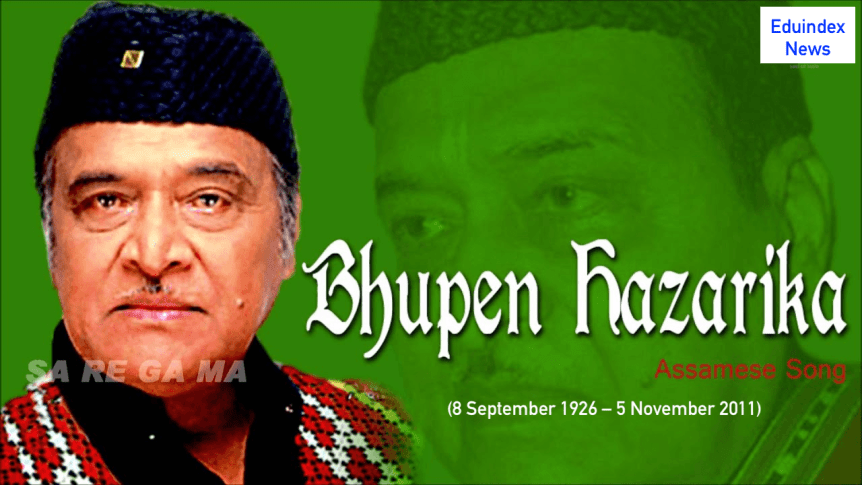
Bhupen Hazarika: A Legend in the Music World

Death of Dr. Bhupen Hazarika is a loss of music lovers of the world. His songs contained rhythm of Indian classical music vis-a-vis a lucid meaning depicting nature, Indian culture, language, unity etc. For example “Mahabahu Brahmaputra, Maha Milonor Thirtha…….. “(Assamese song -Meaning River the Brahmaputra is symbol of national integration….). Another song in Bengali explains ‘love to human being ……’ i.e. in Bengali, “Ami Bhalobasi Manuske….” 

In one of his songs, Dr Hazarika sang “Can anyone provide a person whose blood is white or any person whose blood is black. That is when colour of blood is same then why the differentiation among the human beings”. Meaning is so nice that after listening any human being will feel for others. All the songs carried specific meanings and very touchy. His songs enthralled us. 
I had the opportunity to listen him in Guwahati in many occasions at the ‘Bihu-toli’ (where Bihu functions are held normally in mid of April i.e. in Assamese New Year).I have observed he sings with core of his heart. His songs are not only popular in India but also in Bangladesh and other countries. While I was in Bangladesh many persons told about him and his songs were highly esteemed by them, because of music and meaning. During my two years stint in Eritrea, (a country located in north east Africa) I carried mainly Dr. Hazarika’s CDs and evening always used to listen his songs. My Indian, Pakistani and Eritrean friends used to visit my residence and highly charmed by his melodious songs. I was explaining meaning of the songs so they were more excited and appreciated his talent. 
Born at Sadia, in upper Assam on September 8, 1926, father Sri Nilakanta Hazarika was a high school teacher. Dr Bhupen Hazarika had his schooling in different places of Assam viz., at Dhubri, Guwahati and Tezpur. He completed his matriculation in 1940; Intermediate in Arts (IA) from Cotton College in 1942 and then joined Banaras Hindu University (UP) for higher study and subsequently completed his B.A. (1944) and M.A. (1946). The maestro rendered his services as music director in as many as 36 Assamese films, 8 Bengali films and 5 Hindi films. His activities were rightly recognized by conferring various awards. These inter alia, include Dada Saheb Phalke, Sangeet Ratna, Padma Bhusan, Asam Ratna, Srimanta Sankardev etc. He was the architect of the movement that culminated in the establishment of a film studio in Guwahati, a first full-fledged film studio in Assam. He made many films such as Era Bator Sur (1956), Mahut Bandhure (1958), Shakuntala (1961), Pratidhvani (1964), Loti Ghoti (1966), Chik Mik Bijuli (1969), Siraj (1988) and a tele- film Miri Jiori (1990), documentaries like For Whom the Sun Shines (1974), Amuthi Chaulor Kahini (1974), Rupkonwar Jyotiprasad aru Joymoti (1976), Through Melody and Rhythm (1977), Along the River Brahmaputra (1981), Satras and Namghars of Assam, Glimpses of the Misty East (1996) and The Brahmaputra, An Endless Journey (2006). Due to his endeavour ‘Sattriya dance’ (a form of dance performed at Holy places, i.e.Namghar) got national recognition. He published books for the children — Bhupen Mamar Geete-Mate, A, Aa, Ka, Kha and a transcript autobiography — Moi eti jajabor.
Although he passed away on 5th November 2011 in Mumbai but he will be remembered in this world through his melodious songs. 
Sri Tej Hazarika, only son of Dr Bhupen Hazarika performed his last rites on 9th November 2011 at the cremation ground prepared for him at Jalukbari campus of Gauhati University, Guwahati. Before the pyre was lit, Jawans of the Assam Police offered 21-gun salute. During rituals many dignitaries including Governor of Assam, Sri JB Patnaik, Chief Minister Sri Tarun Gogoi, and opposition leader of Lok Sabha Smt. Sushma Swaraj, Union Minister of State (Independent) for Development of the North East Region (DoNER) Sri Pawan Singh Ghatowar, Secretary of All India Congress Committee Sri Jaydev Jena and many ministers of Assam were present. Sri Ghatowar represented the Prime Minister, while Jena represented UPA chairperson Sonia Gandhi. In addition to the dignitaries, millions of people irrespective of caste, creed, religion, language attended to adieu Dr Hazarika which vividly reveals that he was in the heart of all sections of people. 
Dr Shankar Chatterjee
Former Professor & Head (CPME),NIRD & PR ( Govt. of India), Hyderabad,  India
Former Associate Professor, Eritrea

Former Assistant Prof, Govt. Degree College, Tripura, India
Former Senior Planning Officer, Govt of Assam, India 

International Academic Conference Alerts

Conference Listing (Eduindex Conference) is all-in-one academic conference listing & promotion platform. You can find all the details such as conference dates, venue, agenda, organizer, & their contact details for leading academic conferences, seminars, webinars, workshops & associated events on Conference Listing (Eduindex Conference). We provide leading academicians, scientists, industry peers & research fellows a platform to share the latest research & information in respective industries to alike minds.

We invite leading universities & institutions across the globe to register their upcoming conferences, seminars & webinars with us for free. Whether be it in the field of Engineering, IT, Banking & Finance, eCommerce, Marketing or Medicine, Conference Listing (Eduindex Conference) is leaving its mark with its unique services to bring modern innovators, inventors, research scholars, & analysts with complementing interests on a single table to share & expand their knowledge.

Whether be it a national conference or international conference, Conference Listing (Eduindex Conference) brings you latest & upcoming conferences across 150+ academic subjects from 130+ countries. You can even sort the conferences by date, month, & popular cities such as New York, San Jose, Delhi, Bangalore, Mumbai, Singapore, & Kuala Lumpur etc. 

Register with Conference Listing (Eduindex Conference) & get free alerts for conferences of your interest today. Happy conferencing! 
Send mail to confernce@eduindex.org 

Azad Hind Fauj/Indian National Army and Freedom Movement of India

ESTABLISHMENT OF AZAD HIND FAUJ 

Indians remember this 21 October as Great Day and it is celebrated with full gaiety in many parts of the country as on this date in 1942, the Indian National Army (INA/ Azad Hind Fauj) was formed by two stalwarts and Indians Sri Rash Behari Bose and Sri Mohan Singh (in 1942) in Southeast Asia during World War II. Its main objective was to secure Indian independence from British rule. To attain the same Azad Hind Fauj/INA formed an alliance with the Empire of Japan in the latter’s campaign in the Southeast Asian theatre of WWII ( name given to the campaigns of the Pacific War in Burma, Ceylon, India, Thailand, the Philippines, Indochina, Malaya and Singapore). 
The first INA collapsed and was disbanded in December 1942 after differences between the INA leadership and the Japanese military over its role in Japan’s war in Asia. It is pertinent to mention that the Japanese Imperial General Headquarters in October, 1942 set up the Fujiwara Kikan, or the F-kikan, in Bangkok, headed by the Major Fujiwara Iwaichi, chief of intelligence of the 15th army. As INA member, Mohan Singh had good relation with the members of Fujiwara Kikan, but he was soon disillusioned with the Japanese Army’s behaviour. It is believed that they wanted to use the Indian National Army only as a part of Japanese army to fulfil their own objectives. In meantime, Netaji Subhas Chandra Bose arrived in Japan in 1943 and INA was invigorated. More than 60,000 soldiers of Indian origin were associated with Azad Hind Fauj/Indian National Army who were prisoners of war in those days and because of initiative of Sri Mohan Singh they joined in INA/Azad Hind Fauj to fight against the British. Out of them about 26,000 soldiers sacrificed their lives so their sacrifice must be saluted. 

SUCCESS STORY OF AZAD HIND FAUZ

The INA/Azad Hind Fauj first success was capturing of Moirang of Manipur. On 18 April 1944, the suicide squads led by Col. Shaukat Malik broke through the British defence and captured Moirang. After Moirang, INA penetrated the Kohima road, creating a threat to the British positions in both Silchar (presently in Assam) and Kohima (now capital of Nagaland state). Col. Gulzara Singh’s column had entered 250 miles into India. Anyway rest is history as Azad Hind Fauj/INA could not succeed to come up to Delhi. 
But the INA’s activities influenced the decision to leave India by the British is reflected by the views of Mr. Clement Richard Attlee, who was the Prime Minister of the United Kingdom from 1945 to 1951. Mr. Attlee cited several reasons, the most important of which were the INA activities of Subhas Chandra Bose, which weakened the very foundation of the British Empire in India, and the Royal Indian Navy Mutiny which made the British realise that the support of the Indian armed forces could no longer be relied upon. In the book written by Indian army scholar, General G D Bakshi, mentioned that in 1956, Mr. Clement Attlee had come to India and stayed in Kolkata (then Calcutta) as a guest of Sri P.B. Chakraborthy then Chief Justice of the Calcutta High Court and also serving as acting Governor of West Bengal. During the course of discussion, Sri Chakraborthy asked about the contribution of Mahatma Gandhi and Subhas Chandra in independence movement. This may be quoted from the book itself, ‘Bose An Indian Samurai: Netaji and the INA A Military Assessment’, “Toward the end of our discussion I (means Sri Chakraborthy) asked Mr. Attlee what was the extent of Gandhi’s influence upon the British decision to quit India. Hearing this question, Attlee’s lips became twisted in a sarcastic smile as he slowly chewed out the word, m-i-n-i-m-a-l!” Regarding the Royal Indian Navy Mutiny it may be mentioned that it took place in the context of the Indian National Army trials (INA trials), which are also known as the Red Fort trials, took place between November 1945 and May 1946. In the first trials, INA persons were Colonel Prem Sahgal, Colonel Gurbaksh Singh Dhillon, and Major General Shah Nawaz Khan. And in the second trials the INA officials were Abdul Rashid, Shinghara Singh, Fateh Khan and Captain Munawar Khan Awan. Most of the INA soldiers were set free after cashiering and forfeiture of pay and allowance. 
No Indians can forget Azad Hind Fauj/INA’s contribution in freedom movement. While I was in abroad even many Pakistanis and Bangladesh persons told about Subhas Chandra and INA/ Azad Hind Fauj.

Dr Shankar Chatterjee
Former Professor & Head (CPME),
NIRD & PR (Govt. of India), 
Hyderabad-500091 , India
Email <shankarjagu@gmail.com>


University Bound To Provide Answer Sheets Under RTI: Madras HC

In a remarkable decision, the Madras High Court very recently on October 14, 2019 in The Tamil Nadu Dr Ambedkar Law University, Represented by its Registrar vs 1. The Tamil Nadu State Information Commission Represented by its Assistant Registrar 2. Pavan Kumar Gandhi 3. Paras Jain 4. Kumar Shanu (R-3 & R-4 impleaded via order of Court dated 14.10.2019 made in WMP No. 29201 of 2019) in WP No. 16108 of 2019 and WMP No. 15866 of 2019 has very rightly and commendably held that evaluated answer sheets are ‘information’ under the Right to Information Act, 2005 and Universities are bound to provide them to the Respondent-students. This latest, landmark and extremely laudable judgment was pronounced in response to a writ petition filed under Article 226 of the Constitution of India praying for issuance of a Writ of Certiorari, calling for the records in proceedings No. SA4393/D/2018 dated 17.12.2018 passed by the first respondent and quash the same. This historic judgment was delivered by Justice SM Subramaniam while disposing of a petition filed by the Tamil Nadu Dr Ambedkar Law University (Petitioner), through Advocate VMG Ramakkannan, lambasting the order of the Tamil Nadu State Information Commission, whereby the Petitioner that is ‘The Tamil Nadu Dr Ambedkar Law University’ was directed to supply the copies of answer-sheets sought by the Respondent-students under the RTI Act. 

To start with, the ball is set rolling in para 1 of this noteworthy judgment wherein it is observed first and foremost that, “The writ on hand is to quash the order dated 17.12.2018 issued by the first respondent in proceedings No. SA4393/D/2018 dated 17.12.2018.” It is then pointed out in para 2 that, “The writ petitioner is the Tamil Nadu Dr Ambedkar Law University.”
What we then see being pointed out in para 3 is this: “The learned counsel appearing on behalf of the writ petitioner-University states that the second respondent is the student of the writ petitioner-Law University. The second respondent filed an application under the Right to Information Act, 2005, to furnish copies of the answer scripts, which were not furnished and consequently, the second respondent approached the Tamil Nadu State Information Commission, who in turn passed an order on 17.12.2018, directing the writ petitioner-Law University to supply the copies of the answer scripts sought for by the second respondent under the provisions of the Right to Information Act, 2005.”
While presenting the version of Law University, it is then pointed out in para 4 that, “Challenging the said order, the learned counsel for the writ petitioner states that the writ petitioner-Law University has got its own Rules and Regulations for the purpose of furnishing copies of the answer scripts. The writ petitioner-Law University has to follow the procedures and under these circumstances, they have rejected the claim of the second respondent for furnishing copies of the answer scripts sought for by him.”
While continuing in the same vein, it is then stated in para 5 that, “The learned counsel for the writ petitioner-Law University states that the writ petitioner-Law University is ready and willing to furnish copies of answer scripts on payment of charges prescribed under the Rules and Regulations of the Law University. The said reply was communicated to the second respondent also. Under these circumstances, it is contended that the writ petitioner-Law University has not refused to provide copies of the answer scripts, contrarily, they have insisted the second respondent that the procedures contemplated under the University Regulations are to be followed. Thus, the writ petitioner-Law University has not rejected the claim of the second respondent, but they have insisted him to follow the procedures prescribed under the Rules and Regulations of the University.”
On the contrary, para 6 then states that, “The second respondent, appearing in person, opposed the contentions of the learned counsel for the writ petitioner-Law University, by stating that he submitted an application under the Right to Information Act, 2005. However, the writ petitioner-Law University by reply dated 23.01.2018 states that, the University Regulations are to be followed and the answer scripts will not be supplied under the provisions of the Right to Information Act, 2005. However, the fact remains that the writ petitioner-Law University expressed their willingness to supply the answer scripts in the event of following the procedures contemplated under the Rules and Regulations of the University.”
Furthermore, it is then mentioned in para 7 that, “The first respondent Tamil Nadu State Information Commission, citing the judgment of the Supreme Court, passed an order directing the writ petitioner-Law University to furnish the copy of the answer scripts to the second respondent under the provisions of the Right to Information Act, 2005.”
To be sure, it is then conceded in para 8 that, “As far as the application submitted by the second respondent under the provisions of the Right to Information Act, 2005 to the writ petitioner-Law University is concerned, it is not in dispute that the Right to Information Act is applicable. Accordingly, the second respondent is entitled to get informations under the provisions of the Right to Information Act, 2005, unless such informations are prohibited specifically under Section 8 of the Right to Information Act, 2005.” 
To put things in perspective, it is then noted in para 9 that, “Shri Paras Jain and Shri Kumar Shanu filed an impleading petition in WMP No. 29201 of 2019 and Ms. V. Chethana, learned counsel appearing on behalf of the impleading petitioners, solicited the attention of this Court that the Supreme Court has settled the issue in respect of furnishing of the answer scripts to the students, who all are submitting their applications under the Right to Information Act, 2005.”
While citing the relevant case law, it is then illustrated in para 10 that, “In the Case of CENTRAL BOARD OF SECONDARY EDUCATION (CBSE) AND ANOTHER Vs. ADITYA BANDOPADHYAY & OTHERS [(2011) 8 SCC 497], the Apex Court held that “if CBSE was required to re-evaluate the answer-books or grant inspection of answer-books or grant certified copies thereof, it would interfere with its effective and efficient functioning, and will also require huge additional staff and infrastructure. It was submitted that the entire examination system and evaluation by CBSE is done in a scientific and systemic manner designed to ensure and safeguard the high academic standards and at each level utmost care was taken to achieve the object of excellence, keeping in view the interests of the students”.”
More pertinently, it is then rightly underscored in para 11 that, “In the judgment, cited supra, the Hon’ble Supreme Court further observed in paragraph-23 that “when a candidate participates in an examination and writes his answers in an answer book and submits it to the examining body for evaluation and declaration of the result, the answer-book is a document or record. When the answer-book is evaluated by an examiner appointed by the examining body, the evaluated answer-book becomes a record containing the ‘opinion’ of the examiner. Therefore, the evaluated answer-book is also an ‘information’ under the Right to Information Act”.”
What’s more, para 12 then further narrates that, “The Apex Court of India in an unequivocal terms held that “evaluated answer is an information under the Right to Information Act”. Thus, there is no option for the writ petitioner-Law University but to supply the evaluated answer scripts to the second respondent under the provisions of the Right to Information Act, 2005. When the evaluated answer books are construed as an information, the same cannot be denied and therefore, the second respondent is entitled to get the evaluated answer scripts as per the application submitted by him under the provisions of the Right to Information Act, 2005.”
Be it noted, para 13 then holds that, “It is relevant to extract paragraphs 26 and 27 of the judgment, cited supra, which are extracted as under:-
“26. The examining bodies (Universities, Examination Boards, CBSE, etc.) are neither intelligence nor security organisations and therefore the exemption under Section 24 will not apply to them. The disclosure of information with reference to answer books does not also involve infringement of any copyright and therefore Section 9 will not apply. Resultantly, unless the examining bodies are able to demonstrate that the evaluated answer books fall under any of the categories of exempted “information” enumerated in clauses (a) to (j) of sub-section (1) of Section 8, they will be bound to provide access to the information and any applicant can either inspect the document/record, take notes, extracts or obtain certified copies thereof.
27. The examining bodies contend that the evaluated answer books are exempted from disclosure under Section 8(1)(e) of the RTI Act, as they are “information” held in its fiduciary relationship. They fairly conceded that evaluated answer books will not fall under any other exemptions in sub-section (1) of Section 8. Every examinee will have the right to access, his evaluated answer books, by either inspecting them or take certified copies thereof, unless the evaluated answer books are found to be exempted under Section 8(1)(e) of the RTI Act.”” 
While citing a recent and relevant case law, it is then elucidated in para 14 that, “In the case of Institute of Companies Secretaries of India (ICSI) vs. Paras Jain [decided on 11.04.2019 in Civil appeal No. 5665 of 2014] (the impleaded respondent in the present writ petition), the Apex Court held that “the avenue for seeking certified copies as well as inspection is provided both in the Right to Information Act as well as the statutory guidelines of the appellant”.” 
As it turned out, para 24 then enumerates that, “Under these circumstances, the writ petitioner-Law University is bound to follow the Act as well as the Rules scrupulously, while dealing with the applications submitted under the provisions of the Right to Information Act and therefore, there is no infirmity, as such, in respect of the reasonings furnished in the order impugned by the first respondent. The order of the first respondent is in consonance with the spirit of the Act and therefore, the writ petitioner-Law University is bound to follow the procedures contemplated under the Act and the Rules at the time of dealing with the applications, if any, submitted under the Right to Information Act, by the information seekers.” 
Needless to say, it is then made absolutely clear in para 25 that, “The very object of the Right to Information Act, 2005, stipulates that democracy requires an informed citizenry and transparency of information which are vital to its functioning and also to contain corruption and to hold Governments and their instrumentalities accountable to the governed. Undoubtedly, the purpose and object of the Act, is noble and to achieve the constitutional philosophy and goals. The principles of equality can be achieved only if there is a transparency in public administration. The accountability in the public administration is of paramount importance, as ‘We, the People of our Great Nation’ are sandwiched between corrupt and non-corrupt. Identification of corrupt and non-corrupt may be difficult in the event of non-transparency in public administration.”
It goes without saying what is stated clearly, correctly and convincingly in para 26 that, “Irregularities in public administration cannot be sorted out if there is no transparency in the public administration. Thus, the Right to Information Act, is a Noble Legislation, which ensures transparency in the public administration, which would be undoubtedly helpful to the citizen of our Great Nation to make the public servants accountable and responsible regarding the administrative actions.”
As a corollary, it is then further very rightly held in para 27 that, “In this context, this Court would like to emphasise that the Law University, being a Public Institution, is bound to implement the provisions of the Right to Information Act, scrupulously in its letter and spirit. The moot question is that why should any public authority shy for providing public informations to the information seekers. Undoubtedly, confidential files are protected under the provisions of the Act itself and therefore, the officials should not shy about providing all informations to the public domain, enabling the citizen to understand the manner in which the Public Institutions are administered.”
It cannot be lost on us that it is then very rightly harped upon in para 28 that, “After all, ‘We, The People of India’ solemnly resolved to constitute India into a Sovereign Socialist Secular Democratic Republic and to secure to all its citizens Justice, Liberty, Equality and Fraternity. Therefore, ‘We, The People of India’ enacted the Right to Information Act, through its Parliament, then the instrumentality of the State or the Public Institutions cannot take a stand that they will adopt their own procedure for furnishing the informations under the Right to Information Act. When the Parliament enacted the law in order to develop transparency in public administration, undoubtedly, the other procedures or regulations formulated by any other institutions, cannot prevail over the Act of Parliament and those Rules and Regulations of such individual institutions can never override the purpose and object of the Right to Information Act, 2005.”
Of course, it is then pointed out in para 29 that, “The second respondent, in person, articulated his points by stating that large number of such applications are kept pending, by citing the pendency of the present writ petition. Further, the second respondent states that all such information seekers are waiting for the answer scripts and other informations sought for in their respective applications.”
To put it succinctly, it is then envisaged in para 30 that, “Under these circumstances, the writ petitioner-Law University has not established any acceptable ground for the purpose of assailing the order impugned. Per contra, the order impugned is well reasoned and candid. Thus, the second respondent is entitled to receive the answer scripts as sought for in his application under the Right to Information Act, 2005. All such similar applications are also to be disposed of by the writ petitioner-Law University, as expeditiously as possible, without causing any undue delay, as the students would be anxious in seeing their answer scripts and on account of the pendency of the writ petition, their applications are kept pending.”
Coming to the concluding paras, para 31 holds that, “This being the factum, the writ petitioner-Law University is directed to dispose of all the RTI applications filed under the Right to Information Act, 2005, as expeditiously as possible, by following the procedures contemplated under the RTI Act as well as the Rules in force. In respect of the application submitted by the second respondent, the answer script had already been furnished to him and no further directions are required in this regard.” Lastly, it is then held in the last para 32 that, “Accordingly, the writ petition stands dismissed. However, there shall be no order as to costs. Consequently, connected miscellaneous petition is also dismissed.”
In conclusion, it is very rightly held by the Madras High Court in this notable case that an evaluated answer sheet is an information as defined under the RTI Act and so a university cannot deny access to students. This is more so true because the information sought by students does not fall under the exempted category for national security or copyright infringement. We thus see that Justice SM Subramaniam of Madras High Court dismisses a plea made by the Tamil Nadu Dr Ambedkar Law University challenging the Tamil Nadu State Information Commissioner’s order allowing students to get copies of answer scripts through RTI. Justice Subramaniam directed the University to supply the answer scripts to students who wanted them and rejected the University’s contention that it is governed by its own rules and maintained that the RTI Act overrides the University’s statute. Very rightly so! This is a commendable judgment which will certainly address the genuine grievances of students and make them see for themselves whether justice has been done with them or not actually in evaluating the answer scripts!
Sanjeev Sirohi, Advocate,
s/o Col BPS Sirohi,
A 82, Defence Enclave,
Sardhana Road, Kankerkhera,
Meerut – 250001, Uttar Pradesh.