Drugs effect on Human body

Methodology

(i) Introduction

(ii) Physical harms of drugs on body

(iii) Addiction of drugs

(iv) Conclusion

(i) Introduction– Different substance affects the body in different ways, but all psychoactive drugs have chemical effects on the human body as well. The short-term effects that occur in drug users depend on the quantity they use and also whether it is mixed with any other mind-altering substances. Drugs have serious effects on the human body. It affects the thinking, mood, energy level, and also behavior of the person and sometimes also makes the human unconscious for several days and even further.

(ii) Physical harm from drug use:- Durg use can lead to risky and or out-of-character behavior. When affected by drug:

• One is more likely to have an accident wherever you are.

• One can commit sexual assault or other violent act.

• One may find unable to sleep, think, remember and solve the problem.

Drugs can also result in long-term health problems that include:

• harm to organs and systems of our body such as throat, stomach, lungs, liver, heart, brain, pancreas, and nervous system, etc.

• May cause cancer or other serious illness.

(iii) Addiction of drugs- All drugs cocaine, marijuana affects the brain. The brain reward circuit is a part of the limbic system. Drugs target this system causing a large amount of dopamine release, this flood of dopamine cause a high intoxication in the brain again and again and also from time to time. Although initial drug use may not be voluntary drugs. But continuous intoxication of the drugs makes the human body addicted to them which may affect the health of that particular person badly. And the addition can also become a cause of murder, robbery cases, etc.

Different drugs, different effects:- The three main types are depressants, hallucinogens, and stimulants.

Depressants- It slowdowns or depress the functions of the nervous system. They slow down the massage going to and from the brain. In small quantities, depressants can cause a feel relaxed and less inhibited. In large quantities, it can cause vomiting, unconsciousness, or even death.

hallucinogens- Distort one’s sense of reality. You can see or feel or hear things that are not real, or see things in a distorted way. Other effects include emotional and psychological euphoria, panic, upset, or nausea. Keta mine, LSD, PCP, magic mushrooms, and cannabis are some examples of hallucinogens.

Stimulants- Stimulate the central nervous system. They speed up massaging to and from the brain, which makes one feel more alter and confident. This can cause an increase to heart rate, blood pressure, and body temperature.

(iv) Conclusion:- Our body executes a natural cycle. And if we disturb this cycle, then it abruptly affects the working of the body. Taking drugs may sound cool for a while, but can cause serious illness for a lifetime. It can also lead to the death of an individual. Resisting these drugs at parties and celebrations is warned. Especially youth shouldn’t engage themselves in such activities which lead to the massive destruction of the one’s precious life.
QUASAI- CONTRACT

Introduction:- There are many situations in which law, as well as justice, require that a person be required to conform to an obligation, although he has neither broken any contract nor committed any tort. Chapter V of the Indian Contract Act deals with the situations under the heading “Of certain relations resembling those created by Contract”. The chapter avoids the word “Quasi-contract” and given the clear statutory authorization, the courts in India are not hindered in allowing relief under the different sections of the Act by the theoretical considerations concerning quasi-contracts.

Conditions of quasi- contract:-

(1) A legal agreement created by the courts between two parties who did not a previous obligation to each other.

(2) A normal contract requires two parties to consent to mutually agreeable terms under a quasi-contract neither party is originally intended to create an agreement. Instead, an agreement is imposed by a judge to rectify an occurrence of unjust enrichment.

(3) Courts create quasi-contracts to protect the unjust enrichment of the parties in dispute over payments of goods and services.

Salient Features of quasi-contractual rights:-

(a) Firstly, it does not arise from any agreement of the parties concerned but is imposed by the law, and

(b) Secondly, it is a right that is available not against the entire world but a particular person or persons only.

Kinds of quasi-contractual Obligations:- Section 68 to 72 provide for 5 kinds of quasi-contractual obligations are as follows:

(1) Supply of necessaries

S.68. Claim for necessaries supplied to a person incapable of contracting, or on his account.

Persons incapable of contracting includes:

• a minor

• person of unsound mind

• person disqualified by law to which they are subjected

Illustration:- A supplies B, a lunatic, with necessaries suitable to his condition in life. A is entitled to be reimbursed from B‘s property.

(2) Payment by interested person

S.69. Reimbursement of person paying money due to another, in payment of which he is interested.

Essential requirements of section 69:

• payer must be interested in making payment

• but should not be bound to pay

• defendant should be under legal compulsion to pay

• payment should be by one to another

(3) Liability to pay for non-gratuitous acts

S.70. Obligation of person enjoying the benefit of non-gratuitous act.

Essentials:

• a person should lawfully do something for another person or deliver something to him;

• in doing the said thing or delivered the said thing he must not intend to act gratuitously;

• the other person for whom something is done or to whom something is delivered must enjoy the benefit thereof.

(4) Finder of goods

S.71. Responsibility of finder of goods.

Entitled to retain the goods until he receives the lawful charges or consequences for retaining the goods and taking care of them.

However, he cannot sue for such compensation unless a specified reward has been advertised by the owner.

Entitled to possess the goods until the true owner was found.

(5) Mistake or coercion

S.72. Liability of person to whom money is paid, or thing delivered by mistake or under coercion- A person to whom money has been paid, or anything delivered, by mistake or under coercion, must repay or return it.

Illustration: A and B jointly owe 100 rupees to C. A alone pays the amount to C, and B, not knowing this fact, pats 100 rupees over again to C. C is bound to repay the amount to B.

Sixth Schedule of the Indian Constitution: Articles 244(2)

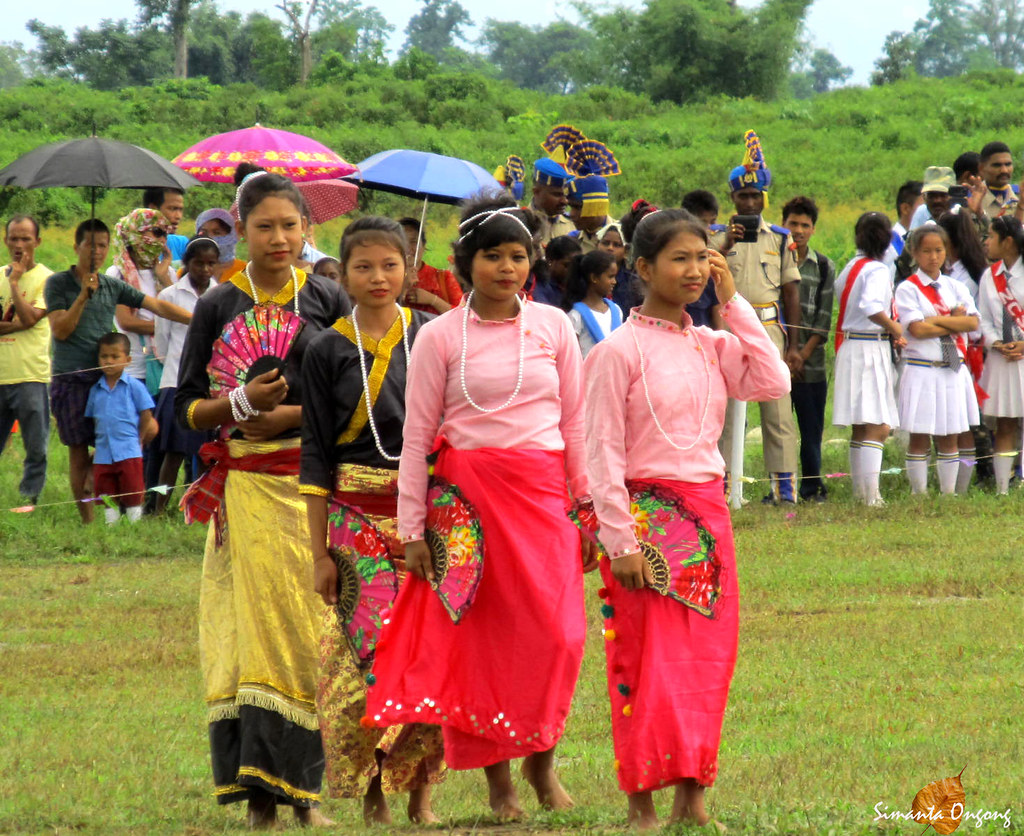
• Tribal Areas:- The tribal Areas in the States of Assam, Meghalaya, Tripura, Manipur are separately dealt with in Article 244(2), and provisions for their administration are to be found in the Sixth Schedule of the Indian Constitution.

• Sixth Schedule:- The 6th Schedule is related to the administration of the Tribal Areas in Assam, Meghalaya, Tripura, Manipur are specified in the table appended to the 6th Schedule( paragraph 20) of the Constitution, which has undergone several amendments originally. It consisted of two parts A and B. But since the creation of the State Nagaland, the table (as amended in 1972, 1984, 1988, 2003) includes 10 areas in four parts. These special provisions are provided under Article 244(2) and Article 275(1) of the Constitution.

Part I – (1) The North Cachar Hills District. (2) Karbi Anglong District. (3) Bodoland Territory Areas District.

Part II (I) – (1) Khasi Hills District. (2) Jaintia Hills District. (3) Garo Hills Districts (in Meghalaya)

Part II (A)- Tripura Tribal Areas District.

Part III – (1) The Chakma District. (2) The Mara District. (3) The Lai District

• Administration under Sixth Schedule:-

(1) Executive and Legislative powers- Under the provisions of the 6th Schedule of the Constitution of India, Autonomous District Councils can make laws, rules, and regulations in the areas like land management, water resources, forest management, agricultural, cultivation, formation of village councils, public health, sanitation, village, and town level planning, the appointment of traditional chiefs and headman, inheritance of property, marriage, and divorce, social customs, money-lending, mining and minerals.

• Judicial powers:- Autonomous District Councils have the powers to form courts to hear cases where both the parties are members of Scheduled Tribes and the maximum sentence, is less than 5years in prison. It has the power to settle certain types of civil and criminal cases also. Thus the councils under the 6th Schedule have been given more power than the local government under the 73rd and 74th Amendments of the Constitution 1992.

• Role of the Governor:- The Governor is empowered to determine areas under the administration of the councils. He has the authority to form a new Autonomous District. He can also increase or decrease the areas of any autonomous district, or district council. The act of Parliament or the State Legislature so not apply to Autonomous Districts and Autonomous Regions or apply by specified modifications and exceptions. He is also empowered to unite two or more districts or its part to carve out one autonomous district from it. The Governor can also define the boundaries or alter the name of any autonomous district.

• District Councils and Regional Councils:- Each District Council and Regional Council consists of not more than 30 members of which 4 are nominated by the Governor and the rest via elections. All of them remain in the power for a term of 5years. District Council and Regional Council under the 6th Schedule have the real power for making laws on various legislative subjects.

• Taxation Revenue:-

(1) The Regional Council and Autonomous District Councils have the powers to assess and collect revenue concerning such lands by the principles for the time being followed by the government of the State.

(2) They also have the power to levy/collect all taxes on lands, buildings, and tolls on a person resident within the area.

(3) It also has the power to levy/ collect all or any of the following taxes:

(i) Profession, trades, callings, employments.

(ii) Animals, vehicles, boats

(iii) Entry of goods into a market, and tolls on passengers, goods carried in ferries.

(iv) Maintenance of schools, dispensaries, or roads.

Fifth Schedule of the Indian Constitution: Scheduled Areas Articles-244(1)

Scheduled Areas:- The Fifth Schedule Article-244(1), being a very important provision of the Constitution deals with the control and administration of the Scheduled Areas. The Constitution makes special provisions for the administration of certain areas called Scheduled Areas in the states other than Assam, Meghalaya, Tripura, Manipur despite such areas are situated within a State or Union Territory A- 244(1), probably because of the backwardness of the people of these areas.

Criterion:-

The criteria for declaring any areas as Scheduled Areas under the Fifth Schedule are as follows :

(1) Preponderance of Tribal population in such area.

(2) Compactness and reasonable size of the area.

(3) Viable administration entity such as a district, block, or Taluk, etc.

(4) Economic backwardness of the area as compared to the neighboring areas.

Features of the 5th Schedule-

(1) Declaration of Scheduled Areas- The Constitution empowers the President to declare any areas as Scheduled Areas. He can increase or decrease or even alter the boundaries of a Scheduled Area. He can also cancel such designation after consultation with the Governor of the concerned State or can make fresh orders to redefine any Scheduled Area.

(2) Executive powers of State and Union- Subject to the provisions of this schedule the executive powers of State extend to the Scheduled Areas therein. The executive powers of the Union are limited to giving directions to the State for the administration of such areas.

(3) Tribal Advisory Council- Any state having a Scheduled Area needs to establish a Tribal Advisory Council consisting of not more than 20 members of whom about 3/4 members should be the representative of the Scheduled Tribes in the Legislative Assembly of the State.

(4) Law Applicable to Scheduled Areas– The Governor is empowered to direct that any particular Act of Parliament or the Legislature of the State, does not apply directly to a Scheduled Area and is subject to such exceptions and modifications as he may specify in the notification:

(a) Prohibit the transfer of land by or among members of the Scheduled Tribe in such areas;

(b) Regulate the allotments of land to the members of the Scheduled Tribes in such areas;

(c) Regulate the carrying out of businesses as money lenders by persons who lend money to members of the Scheduled Tribes in such areas.

• States Under Fifth Schedule:-

The Fifth Schedule designates Tribal majority areas in the ten Tribal minority States within peninsular India including:

(1) Andhra Pradesh

(2) Himachal Pradesh

(3) Madhya Pradesh

(4) Odisha

(5) Rajasthan

(6) Jharkhand

(7) Gujarat

(8) Chhattisgarh

(9) Telangana

(10) Maharashtra

Some Important points:-

(1) Tribal Advisory Council(TAC) in Scheduled Areas do not perform administrative actions directly and do not have much autonomy.

(2) Panchayat Extension to Scheduled Areas is applicable here.

(3) PRIs in non-6th Scheduled Areas are liberally funded so direct funding of the Council is done under Article 280 of the Constitution.

(4) The Council in the 5th Schedule is the creation of the State Legislature.

(5) 5th Schedule Areas have an implementation of various schemes like MGNAREGA ( Mahatma Gandhi National Rural Employment Guarantee Act) 2005.

Ethical Theories

The English word ‘Ethics’ is derived from the great word ethikos which means the “character”. And the word itself comes from the word ethos which means the ” character”, moral nature.

Theory of ethics:

  • Deontology
  • Utilitarianism
  • Virtues
  • Right
  • Relativism

(1) Deontology-

Deontology is practically duty-based, and is not affected by the consequences. It insists that people should stick to their obligations and duties when confronted in decision-making. A deontologist believes that morality is the responsibility of everyone as well as duty. For example, a man steals three loaves and a gallon of milk to feed his family, it would be supported by a deontologist because of the moral responsibilities and obligations of the man to look after his family. Sometimes deontologists are unable to determine the nature of the action.

(2) Utilitarianism

Utilitarianism is consequences-based. It is based on one’s ability to predict the consequences of an action. Utilitarianism is a moral theory that implements fair choices to ensure the least amount of harm to be done to all parties involved. The utilitarianism approach requires that you decide what course of action needs to be done and evaluate the outcome of every action. For example, Jack walks into a hostage situation, there are 20 hostages and he is told that if he shoots one hostage he will save the life of the other 19. Utilitarianism will support Jack’s killing of one of the hostages because the life of the other 19 hostages is a greater benefit, even though the cost would be one person’s life.

There are two types of Utilitarianism and are as follows:

(a) Act Utilitarianism- A person who performs the acts that benefit the most of the people, regardless of personal feeling or the societal constraints such as law.

(b) Rule Utilitarianism seeks to benefit most of the people in the fairest way and with the readiest.

(3) Virtues

The virtue ethical theory judges the person by his/her character and behavior rather than by the actions which may differ from his/her normal behavior. When observing an unethical person the virtues theory considers the person’s reputation and purpose for committing the act. If a high school student is temperate, modest, intelligent, and plagiarized on a class writing assignment the virtue theory analyzes the student’s past personality traits and interpersonal skills to determine whether the student is truly guilty.

(4) Rights

Rights are established by the society or by the government and are protected by them. Rights are considered ethical because a large number of people adhere to them.

(5) Relativism

It is a theory that deems your moral obligations and beliefs to be based on the individual environment. For example in America cannibalism is considered taboo while in other cultures the act of consuming another human flesh is accepted as sacrifice and ritual. Relativism determines morals and ethics according to the society that is being observed. Relativism argues that every society and culture believes differently thus each culture must be evaluated according to its particular patterns and influence and traditions.

Directive Principles of State Policy

Part IV of the Constitution under Article -( 36 to 51 ) contains the Directive Principles of State Policy.

Classification of the Directives-

(1) Certain ideals, particularly economic, which according to the framers of the Constitution, the State should strive for.

(2) Certain guidance to the Legislature and the Executive aimed in what counts the State should use their legislative and executive powers.

(3) Certain rights of the citizens which shall not be enforceable by the courts like the “fundamental rights”, but which the State shall nevertheless aim at securing, by regulation of its legislative and administrative policy.

Scope of the Directives– It shall be the duty of the State to follow these principles both in the matters of administration as well as in the making of laws. They embody the object of the State under the Republican Constitution, namely that it is to be a “Welfare State” and not a mere “Police State”. Most of these Directives, it will be seen, aim at the establishment of the economic and social democracy which is pledged for in the Preamble.

The 42nd Amendment- However, it should be noted that the objective of the State has been formulated to live ‘socialist’, by the amendment of the Preamble by the 42nd amendment. By the same amendment, certain other changes have also been introduced they are:

(i) Article 43A has been inserted to ensure the State provides free legal aid to the poor and to take other suitable steps to achieve equal justice for all, given by the Preamble.

(ii) It has been inserted to direct the State to ensure the participation of the workers in the management of industry and other undertakings. This is a positive step in the advancement of socialism in the sense of economic justice.

The 44th Amendment- The Janta Government sought to implement the promise of economic justice and equality of opportunity assured by the Preamble, by inserting a clause (2) in Article 38 by the 44th Amendment Act, 1978 carried– The State shall, in particular, strive to minimize the inequalities in income, and endeavor to eliminate inequalities in status, facilities, and opportunities, not only amongst individuals but also amongst groups of people residing in different areas or engaged in different vocations.

The 86th Amendment- The Constitution 86th Amendment Act, 2002 substituted Article 45 making provision for early childhood care and education to children below the six-year of age provides provision for free and compulsory education until they complete fourteen years of age.

The 97th Amendment- Article 43B in Part IV of the Constitution has been put to promote the voluntary formation of cooperative societies. Article 43B provided that: The State shall endeavor to promote voluntary formation, autonomous functioning, democratic control, and professional management of cooperative societies.

DPSP and Fundamental Rights-

The dpsp has to conform to and run as a subsidiary to the Chapter Fundamental Rights. Nevertheless, in determining the scope and ambit of the Fundamental Rights relied on by or on behalf of any person or body the court may not entirely ignore these Directive Principles of State Policy laid down in Part IV of the Constitution but should adopt the principle of harmonious construction and should attempt to give effect to both as much as possible.

Citizenship

Meaning of citizenship– Citizen are the member of the political community to which they belong. They are the people who compose the State.

Constitutional Rights and Privileges of the Citizens of India-

Citizens of India have the following rights under the Constitution: (a) Fundamental Rights mentioned under Article-15,16,19

b) Only citizens are eligible for certain offices such as those of the President, Vice-President, Judge of the Supreme Court, or a High Court, Attorney General, Governor of a State, Advocate General.

(c) The right of suffrage for election to the House of the People and the Legislative Assembly of every State and the right to become a member of Parliament and of the Legislature of a State.                                               

Person who became Citizens on 26th January, 1950:

Under Article 5-8 of the Constitution, the following persons became citizens of India at the commencement of the Constitution –

(1) who was born as well as domiciled in the “territory of India”- irrespective of the nationality of his parents A- 5(a).

(2) who are domiciled in the “territory of India”, either of whose parents was born in the territory of India- irrespective of the nationality of his parents or the place of birth of such person A- 5(b).

(3) who or whose father/mother was not born in India, but-

(a) had his domicile, in the territory of India

(b) had been ordinarily residing within the territory of India not less than 5 years soon after preceding the commencement of the Constitution.

(4) A person who had migrated from Pakistan, provided-

(a) He or either of his parents/grandparents was born in India as defined in the Government of India Act, 1935

(b) (i) if he migrated before 19 July, 1948

(ii) if he had migrated on or after 19th 1948, he further had made an application before the commencement of this Constitution for registering himself as a citizen of India by an officer appointed by the Government of India.

(5) Person who had migrated from India to Pakistan after 1 March 1947, but had subsequently returned to India under a permit issued under the authority of the Government of India.

(6) A person who, or any of whose parents/grandparents were born in India as defined in the Government of India Act, 1935 but who is ordin

Acquisition of Citizenship after 26th January 1950

The various modes of acquisition of Citizenship prescribed by the Citizenship Act, 1955 are as follows-

(a) Citizenship by birth

(b) Citizenship by descent

(c) Citizenship by registration

(d) Citizenship by naturalization

(e) Citizenship by incorporation of territory

(f) In 1985 a special provision was also added as to citizenship of persons of Indian origin covered by the Assam Accord. Under section 6A (2) two conditions are required to be satisfied –

(1) persons who are of Indian Origin came before 1 January 1966 to Assam from the specified territory

(2) have been ‘ordinarily resident ‘ in Assam as it existed in 1985 since the date of entry in Assam.

Citizenship Amendment Act, 2019- The migrants of Hindu, Sikh, Buddhist, Jain, Parsi, or Christian communities from Afghanistan, Pakistan, or Bangladesh who had entered India without valid travel documents or if the validity of their documents have been expired were regarded as illegal migrants and were ineligible to apply for Indian citizenship under section 5 and 6 of the Citizenship Act, 1955.

Philosophy of the Indian Constitution

Every Constitution has a philosophy of its own. For the philosophy under our Constitution, we must look back into history.

The Objective Resolution:

• This Constitution Assembly declares, it’s firm and solemn resolve to proclaim India as the Independent Sovereign Republic and to compose for her future Constitution.

• WHEREIN the territories that now comprise British India, the territories that now form the Indian States, and such other parts of India as are outside British India and the States as well as such other territories as are willing to be constituted into Independent Sovereign India, shall be a Union of all; and

•WHEREIN the said territories, whether with their present boundaries or such with others as may be determined by the Constituent Assembly and subsequently by accordance with the law of the Constitution, shall possess and retains the status of autonomous units, together with residual powers and exercise all powers and functions of Government and administration, save and except such powers and functions as are vested in or assigned to the Union, or as are inherent or implied in the Union or resulting therefrom; and

•WHEREIN all powers and authority of Sovereign Independent india, its constituent parts, and organs of government are derived from the people; and

•WHEREIN shall be guaranteed and secured to all people of India justice, social, economic, and political; equality of status, of opportunity, and before the law; freedom of thoughts, expression, belief, faith, worship, vocation, association, and action, subject to the law and public morality; and

• WHEREIN adequate safeguards shall be provided for minorities, backward and tribal areas, and depressed and other backward classes; and

• WHEREIN shall be maintained the integrity of the territory of the Republic and its sovereign rights on the land, sea, and air according to justice and the law of civilized nations; and

• The ancient land attains its rightful and honored place in the world and make its full and willing contribution to the addition of world peace and the welfare of mankind.

The Preamble:

WE, THE PEOPLE OF INDIA, having solemnly resolved to constitute India into a SOVEREIGN SOCIALIST SECULAR DEMOCRATIC REPUBLIC and to secure to all its citizens;

JUSTICE, social, economic, and political;

LIBERTY of thoughts, expression, belief, faith, and worship;

EQUALITY of status and opportunity; and to promote among them all;

FRATERNITY assuring the dignity of the individual and the unity and the unity and integrity of the Nation;

IN OUR CONSTITUTION ASSEMBLY this twenty-sixth day of November 1949, do HEREBY ADOPT, ENACT AND GIVE TO OURSELVES THIS CONSTITUTION.

The Preamble to our Constitution serves, two purposes –

(a) it indicates the source from which the Constitution derives its authority;

(b) it also states the objects which the Constitution seeks to establish and promote.

Important Amendment: 42nd Amendment, 1976 that the goal of the Indian polity is socialism was ensured by inserting the word “socialist” in the Preamble, by the Constitution Act, 1976. The secular objective of the States has been specifically expressed by inserting the word “secular” in the Preamble by the Constitution Act, 1976.

Effects of Global Warming

Case study : Effect of global warming on the Sundarban National Park, West Bengal.
Methodology:

  • Description of the problem.
  • Cause of the problem.
  • Analysis of the problem.
  • Control of the problem.
  • Introduction to the problem:
    The Sundarbans provide important protection against storms and flooding for cities including
    Kolkata, India, on the Bay of Bengal. But increasing global warming accelerates the sea-level
    which adversely affects the Sunderbans. This would eliminate the protection they provide
    against the region’s from the intense tropical storms.
  • Scientists project that under a high emissions scenario, relative sea-level rise is likely to
    inundate most of the Sundarbans by mid-century, and could wipe them out by the end of
    the century.
  • Mangroves of the Sundarbans prevents the damage caused by the cyclones and storms.
  • Cause of the problem:Global warming is one of the main reasons for the increased sea-level which adversely affects
  • the mangrove forests. Due to which reserved space is no longer a safe refuge for mangrove
    forests and their associated species. And other national parks also face damage due to climate
    change in the form of an increase in invasives, loss of vulnerable species, and changes in species composition. In a few cases, the biome as a whole faces extinction. Climate changes has already begun to have negative impacts on ecosystems and their families.


Analysis of the problem:

•Global Temperature Report for 2019 by Berkeley Earth:
This is the report by the Berkeley Earth (a California non-profit organization) which clearly
shows the continuous increase in temperature of earth in the past years.

•Ecosystem is a cycle which can only be run with balance. Any change in the climate causes
imbalance of the ecosystem which causes different natural disasters and global warming is one
of the biggest problems which we are facing nowadays.

Control of the problem:
The only solution to control any of the problems is to keep balance in all the things. The main
cause of the bad effects on the Sundarbans is global warming or we say continuous rise in the
temperature of the earth which causes rise in the sea-level, cyclones, flooding, storms etc..,
which adversely affects the reserved part of mangrove forests and other national parks.

Ways to prevent global warming:-

● Reduce⬇ Reuse⤴ Recycle🔄

● Power your home with renewable energy.

● Reduce excess use of water.
There is a solution for every problem. We just need to focus on the problem and prevent rise of

References:-https://www.climatehotmap.org/global-warming-locations/kolkata-west-bengal-india.html
#:~:text=Global%20warming%20compounds%20the%20dangers,in%20ground%20and%20surface%20waters

Sustainable agriculture in India

Methodology:

  • Introduction
  • Sustainable agriculture in India
  • Need for sustainable agriculture
  • Methods for sustainable agriculture

INDRODUCTION –

Sustainable agriculture simply means doing agriculture efficiently with
the limited resources present without using the future generation
resources.

Sustainability shows the balanced use of resources. The excess usage
of the resources leads to the lack of the resources for the coming
generations. So, it is important to use all the resources in the right
and in the efficient way.

Sustainable agriculture in India

SUSTAINABLE AGRICULTURE IN INDIA –

Sustainable development is the management of the resources which
means the development of all with the help of the resources we have
and to use those in such a way that the resources used will be less but
the work done will be maximum which will save the resources for
future.

India ranks second worldwide in farm outputs. India is known for its
efficiency in agriculture from the Indus Valley Civilization.
Government of India is continuously working for the sustainable
development in the agriculture as most of the people’s occupation in India is farming.

Rashtriya Krishi Vikas Yojana was launched in 2007 for the overall
state agriculture development in India which aimed for the better
coordination and to produce a good quantity of crops with lesser
resources. Krishi megh program was also introduced after the Rashtriya Krishi
Vikas Yojana its main aim was to inculcate the knowledge of doing the
agriculture in an efficient way.

Inculcating education to farmers can change the production quality as
well as the production quantity.

NEED FOR SUSTAINABLE DEVELOPMENT –

Sustainable or we say the correct use of the resource will not only
save the excess usage of the resources but will also protect us from
the ill effects of the over usage of the resources.

Let’s see how

Water – So the excess usage of water in agriculture not only wastes
the water but also highly affects the fertility of the soil. Since due to
the over water in the soil the ground soil loses its grip and the fertile
soil flows away with the flowing water.

Sustainable agriculture management

Fertilizers – Fertilizers are used for the proper growth of the crops but
its excess usage destroys the crops.

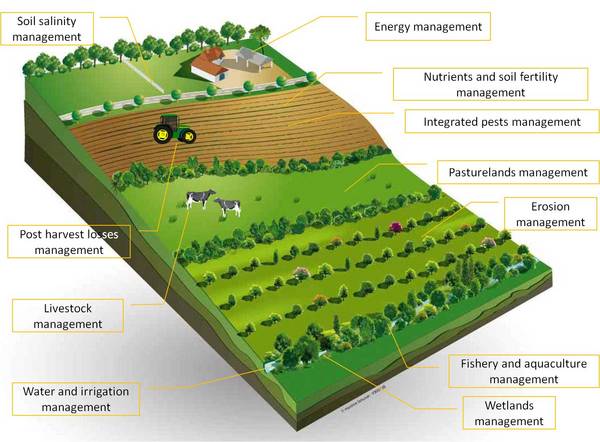
For all this the right education is necessary. Sustainable agriculture helps in the good production of crops.

METHODS FOR SUSTAINABLE AGRICULTURE –

  • Proper usage of fertilizers.
  • Inculcate education of new technologies to farmers by
    organizing webinars.
  • Agroforestry
  • Contour Ploughing
    These are some of the efficient methods which are used and
    must be used for the sustainable agriculture.
  • Drop irrigation

References

Ozone hole over Antarctica

Methodology:

  1. Description of the problem.
  2. Cause of the problem.
  3. Analysis of the problem.
  4. Control of the problem.
    Introduction to the problem:
    The stratospheric ozone layer protects life on Earth by absorbing ultraviolet light, which
    damages DNA in plants and animals (including humans) and leads to sunburns and skin
    cancer. Prior to 1979, scientists had not observed atmospheric ozone concentrations below 220
    Dobson Units. But in the early 1980s, through a combination of ground-based and satellite
    measurements, scientists began to realize that Earth’s natural sunscreen was thinning
    dramatically over the South Pole each spring. This thinning of the ozone layer over Antarctica
    came to be known as the ozone hole.

    This is Dobson’s unit of the first observation on September 17, 1979 and the most recent one
    that is on October 12, 2018. The red region is showing the size of the ozone hole. It’s clearly
    visible in the above data that how in the past years the size of the ozone hole on Antarctica
    increased. Due to this hole on the ozone layer uv rays reaches down on the region of the
    Antarctica which result in the melting of glacier and due to which the sea-level increases and
    due to the increased sea-level cyclones, flooding, storms and other natural disasters occurs
    which highly affects the human lives on the earth.

NOTE:– The measurements were made from 1979–2004 by NASA’s Total Ozone Mapping
Spectrometer (TOMS) instruments; from 2005–2011 by the Royal Netherlands Meteorological
Institute’s Ozone Monitoring Instrument (OMI) (which flies on NASA’s Aura satellite); and from
2012-2019 by the Ozone Mapping Profiler Suite (OMPS) on the NASA/NOAA Suomi NPP
satellite. Red and yellow areas indicate the ozone hole.


Cause of the problem:
The ozone hole opened the world’s eyes to the global effects of human activity on the
atmosphere. Scientists found out that chlorofluorocarbons (CFCs)—long-lived chemicals that
had been used in refrigerators and aerosol sprays since the 1930s—had a dark side. In the
layer of the atmosphere closest to Earth (the troposphere), CFCs circulated for decades without
degrading or reacting with other chemicals. When they reached the stratosphere, however, their
behavior changed. In the upper stratosphere (beyond the protection of the ozone layer),
ultraviolet light caused CFCs to break apart, releasing chlorine, a very reactive atom that
repeatedly catalyzes ozone destruction.
The global recognition of the destructive potential of CFCs led to the 1987 Montreal Protocol, a
treaty phasing out the production of ozone-depleting chemicals. Scientists estimate that about
80 percent of the chlorine (and bromine, which has a similar ozone-depleting effect) in the
stratosphere over Antarctica today comes from human, not natural, sources.
Effect of CFCs, HCFC and VOCs on the Ozone layer

•Analysis of the problem:
Serious ozone depletion has been measured every Antarctic spring since the early 80’s. This
ozone depletion is considered to be a result of photo chemical reactions and cat- alytic cycles
resulting from anthropogenic halogen containing gases. In addition, the formation of Polar
Stratospheric Clouds (PSCs) facilitates ozone loss because reac- tive halogen species are
released by heterogeneous reactions on the surface of a PSC particle. Generally, Arctic ozone
depletion is less severe and shows larger variability than Antarctic loss because of the unstable
and warmer condition. However, the Arctic stratosphere has been becoming colder during past
decades and the Arctic ozone loss in the 2011 winter was comparable to Antarctic losses.
Ozone depletion is di- rectly/indirectly linked to the climate because the absorption of UV
radiation changes the temperature field. It is therefore important to quantify the loss for future
climate prediction.
Following picture is showing the concentration of the ozone layer by Dobson’s unit.


Control of the problem:
Ways to prevent the depletion of ozone layer are as follows:-
● Avoid the consumption of gases dangerous to the ozone layer.
● Minimise the use of vehicles.
● Use of any other eco-friendly chemical as a substitution of CFCs in the refrigerators.

Air pollution grips Macedonian Capital Skopje:

Methodology: 

● Description of the problem. 

● Cause of the problem. 

● Analysis of the problem. 

● Control of the problem. 

➡ Introduction to the problem: 

According to a World Health Organisation (WHO) study, published in early 2017, Skopje, which is located at the bottom of a valley, was among ten cities in Europe with the highest concentration of fine particles. Skopje, like the four other Balkans cities listed among the 10, has an industry based on coal or lignite, used also for heating. Skopje, Sofia, Prishtina, and Sarajevo are on the list of Europe’s most polluted cities. 

According to the local media, 38% of all deaths in Tetovo and 22% at the state level are the direct result of air pollution. Yet, the problem is neglected for most of the year. Only when winter comes and thick smog suffocates the city and its inhabitants, it is revived by the media and the political opposition. Hence, VMRO-DPMNE is now blaming the ruling SDSM for the bad air quality, as if it had not ruled the country for 10 years until 2017. 

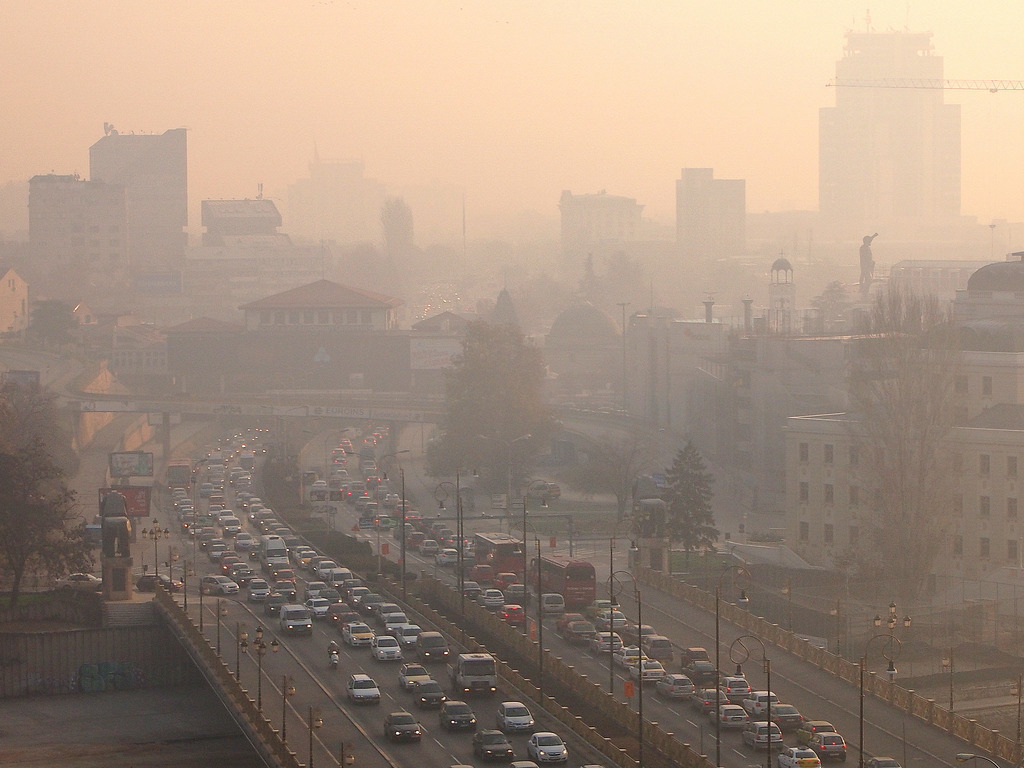
Pollution grip on the Macedonian’s capital Due to the high air pollution the whole city is not visible from the sky. By just seeing this picture we can understand what is the actual condition of the air pollution in Macedonian.

➡ Cause of the problem: 

As a consequence, in less than five years, the number of registered vehicles increased from 350,000 to 475,000 – most running on diesel, therefore with higher emission of PM particles compared to gasoline. 

Another factor is the savage urbanization of the cities. Instead of green parks, new buildings are springing up like mushrooms after rain. Apart from the main city park, there is not a single green space in Skopje that has not shrunk in the past 10-15 years. Illegal logging is endemic around cities and in the neighboring mountain areas, further deteriorating the ecosystem. Rather than addressing the problem, politicians have exploited it for electoral purposes. 

During the VMRO-DPMNE era in 2006–2017, the SDSM constantly attacked the government’s reckless ecological policies, promising a more eco-friendly approach. Excess usage of vehicles in that particular area has adversely affected the climate change in Skopje and has increased air pollution at the same time. 

➡ Analysis of the problem:

The poor air quality in the Republic of Macedonia is predominantly due to the tiny combustion particles called PM10 (10 micrometers or less in diameter) and PM2.5 (2.5 micrometers or less in diameter). 

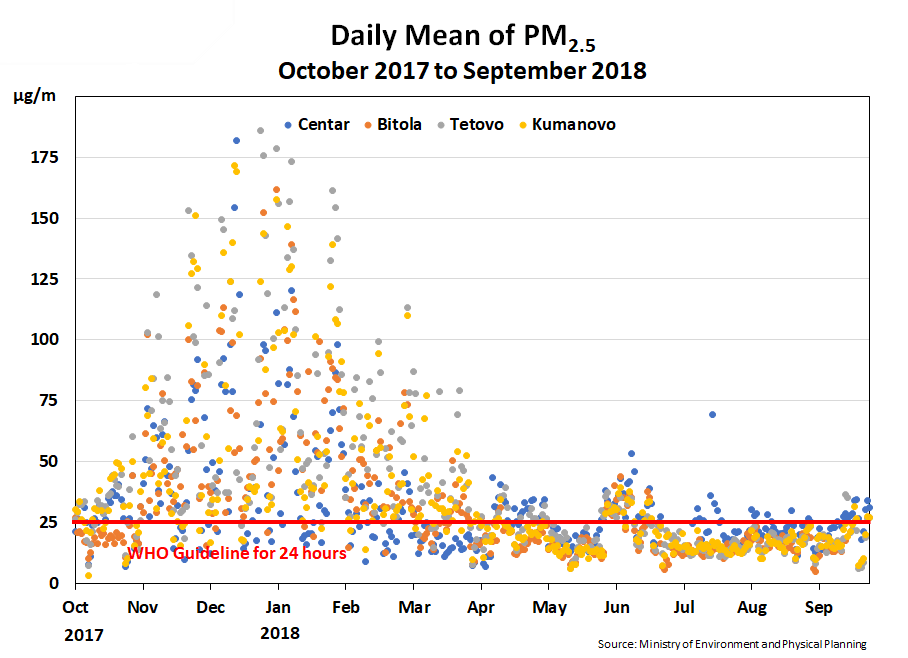
These can easily penetrate deep into the body, causing not only breathing problems, but also other dangerous health issues. According to the World Health Organization (WHO), 2,574 people die prematurely every year as a direct result of air pollution. Skopje’s annual mean for 2016 was 40 µg/m3 (40 micrograms per cubic meter), which is 4 times higher than the annual WHO guideline (10 µg/m3), and 60 percent greater than the official Macedonian target[2] and European guideline[3] (25 µg/m3). 

Graph 1 below shows the daily PM2.5 observations over the last year for Skopje (Centar), Bitola, Tetovo, and Kumanovo. All four cities regularly exceed the WHO daily guideline (25 µg/m3) with winter being the worst period. 

➡ Control of the problem: 

Quality and a healthy living environment are one of the basic preconditions for a quality life of all citizens in the Republic of Macedonia and a commitment of the Government of the Republic of Macedonia. Clean air is one of the main components, which, unfortunately, historically seen in the Republic of Macedonia, has seen high values in recent decades. 

Some ways to prevent the effect of air pollution in Macedonian Capital Skopje are: 

● The plantation of trees can reduce the increase of harmful chemical gases in the air. 

● Less use of vehicles. 

● More use of renewable energy in place of oils and fuels. 

● Use of solar panels.

The doctrine of Separation of Powers:

Introduction: – 

The concept of separation of powers is that the basic element for the governance of a democratic country. This principle endorses fairness, impartiality, and uprightness within the working of a government. Although it’s not followed within the strict sense yet, most of the democratic countries have adopted its diluted version in their respective constitution. 

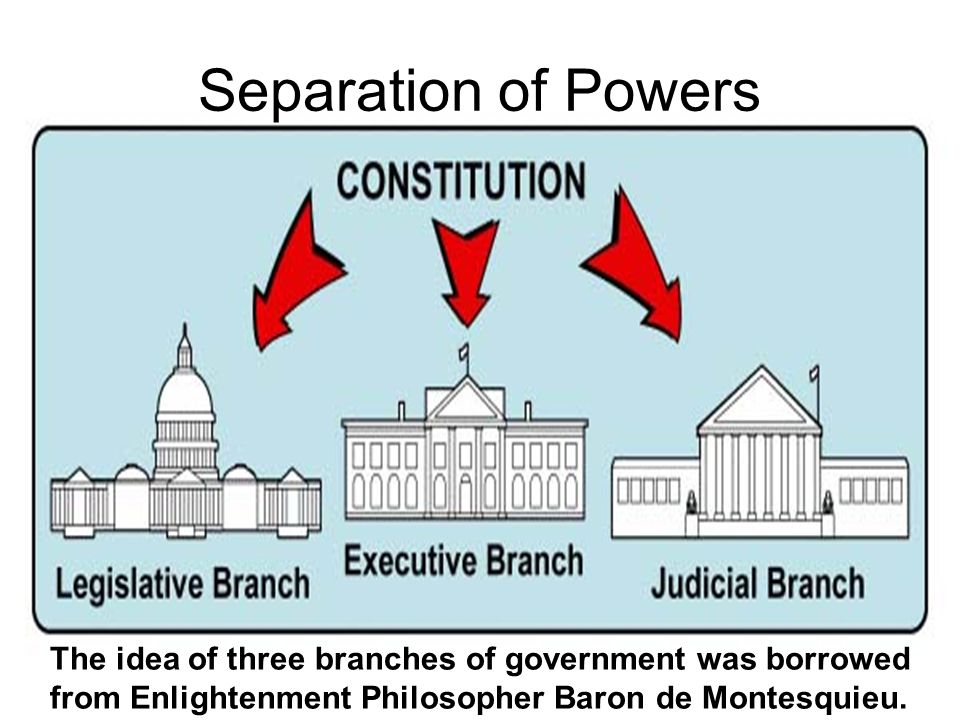
Meaning: – The term “trias politica” or ‘separation of powers’ was first coined by Montesquieu in 18th century French social and political philosopher. Under his model, the political authority of the state is split into Legislature, Executive, and Judiciary powers. 

Generally, all the powers of the govt. will be categories into these three classes: 

(1) Enactment of law created

(2) Interpretation of the enacted laws 

(3) Enforcement of the enacted laws Separation of power, therefore, refers to the division of presidency responsibilities into distinct branches to limit anybody branch from exercising the core function of another. 

Historical origin and Evolution: – 

The doctrine of separation of powers is of ancient origin. The separation of powers concept was 1st originated in Greek and has become widespread within the Roman Republic as a part of the initial constitution of the Roman Republic. The history of the origin of the doctrine traceable to Aristotle in the 16th and 17th centuries, French philosopher John Bodin and British politician Locke respectively had expounded on the doctrine of separation of powers. 

But it was Montesquieu ( a French jurist) who initially conveyed scientific evidence of separation of powers in his book “Espirit des Lois ” (The spirit of laws). Montesquieu’s view: – Montesquieu said that – ‘The accumulation of all power’s legislature, executive, and judicial within the same hand’s weather of 1, a few, or many and whether hereditary, self-appointed or elective, may justly be pronounced the very definition of tyranny. 

Aristotle(384-322BC) in his book “The politics” stated that “These are three elements in each Constitution in respect of which each serious lawgiver must explore for what’s advantageous to it; of those are well arranged, the constitution is beyond to be arranged and also the differences in constitutions are sure to correspond to the difference between each of those elements. 

The three are first the deliberative (which discuss everything of common importance), second the officials; and third the judicial element.

Objectives of separation of powers: – 

(1) It aims to eliminate arbitrariness, totalitarianism, and tyranny and promote an accountable and democratic variety of government. 

(2) It prevents the misuse of powers within the various organs of the govt.. 

(3) It keeps a check on all the branches of the govt by making them in control of themselves. 

(4) This principle allows all the branches to specialize themselves in their respective field to boost and improve the efficiency of the govt. 

Elements of Separation of powers: – 

(1) Legislative: – Legislative means involving or regarding the method of creating laws. the first function of the legislature is to form laws for the governance of the state. it’s the authority of amending the present rules and regulations furthermore. Generally, in India, the parliament holds the facility of creating rules and laws. 

(2) Executive: – The executive is that the part of the govt. exercising authority and holding responsibilities of the governance of the state. the chief executes and enforces laws made by the legislature. The president and therefore the Bureaucrats from the manager branch of the presidency. 

(3) Judiciary: – The judiciary is that the branch of authority during a state which is anxious with the law and also the system or is that the system of courts that interprets defends and applies the law within the name of the state and safeguards the rights of the individuals. It can even be thought of because of the mechanism for the resolution of disputes within the state or internationally. 

Women empowerment and child development:

Empowerment means giving power to someone to try and do something in a very country like India where the slogan originated – 

that means – Where Women are honored, divinity blossoms there, and where ever women are dishonored, all action, regardless of how noble it’s going to be, remains unfruitful. in an exceedingly country like India, the necessity for women’s empowerment may be a concern of thinking that why to try and do a nation with such great thoughts needs for the encouragement of ladies during this developing era. 

Schemes launched by the govt. of India: 

The government of India has launched many schemes for the empowerment of ladies. 

Beti Bachao, Beti Pdhao (22nd January 2015) – 

To provide education to ladies and their welfare. to stop the violation within the interest of ladies. To celebrate the birth of a lady child. 

One-Stop Centre Scheme (1st April 2015) – 

To provide support and assistance to women laid low with violence at private or at any public place, no matter caste, class, religion, region, sexual orientation, or legal status. 

UJJAWALA (December 2007) – 

For Prevention of trafficking, Rehabilitation, and Re-integration of Victims of Trafficking and Commercial Sexual Exploitation. 

Women Helpline Scheme (1st April 2015) – 

To provide 24-hour emergency and non-emergency responses to women tormented by violence including sexual offenses and harassment both within the public and personal sphere, including e family, community, workplace, etc. 

Support to Training and Employment Programme for girls (STEP) (1986-87) – 

To provide skills that give employability to women, to produce competencies and skills that enable women to become self-employed/ entrepreneurs. 

Women Empowerment and Livelihood Programme (Mid-Gangetic Plains – ‘Priyadarshini’) – 

It focuses on Women empowerment and Livelihood in Mid-Gangetic Plains. It also empowers them to deal with their political, legal, health problems.

Development of girls and youngsters in Rural Areas (DWCRA) –

To improve the socio-economic status of poor women within rural areas. By the formulation of groups of ladies for income-generating activities on a self-sustaining basis.

Many schemes have started. And still, the govt is putting its efforts into the empowerment of ladies. But somewhere, we all are lacking in our responsibilities. Still, women are afraid to travel out. 

Rapes in India:

According to the NCRB report 6,000 rape cases were reported in Rajasthan, followed by 3,065 cases in the state in 2019. 

The rape vulnerability of a lady or woman has increased up to 44 percent within the last ten years, the National Crime Records Bureau (NCRB) data shows. in line with the NCRB data, during the amount 2010-2019, a complete of three,13,289 cases were reported across India. Due to such records peoples are afraid to send their daughters, wife, mothers out. 

We all are working for the empowerment of ladies. But some people in society still follow their conservative thinking. And also, they’re taught to measure as they need the sole aim to serve their in-laws. whether or not they’re willing to try and do something, they’re blind to such forms of silly thinking. In many places of India, girls are engaged to their future husbands at a young age by their families and shortly are married to them in no time. From their childhood itself, they’re taught to measure within their limits and to not cross their boundaries. there’s nothing wrong with working with the person. Both men and ladies are equal. 

Education is that the only thing that will change the thinking of our society. We must encourage every woman to come back forward and to measure as they require to measure. Not as others want her to measure. If women are concerned, they have to be taught about their rights in society and that they must be taught to return come in this world and showcase their skills before others. there’s nothing that a lady cannot do. Some women changed the thinking of the entire world and proved to women that ladies can do the items a person does and even more efficiently.

Making of the Indian Constitution

Importunity raised for a Separate Constitution:-Mahatma Gandhi in 1922, lay down the desire for Swaraj and quoted that India’s political destiny should be defined by the Indians themselves, and it would be a deposition of India’s self-expression. The failure of the Statutory Commission and the Round table Conference led to the imposition of the Government of India Act,1935. The demand for a Constitution made by the people of India without any interference was first argued by the National Congress 1935.

Cripps Mission:- However, the demand was continuously countered by the British government. Henceforth World War II took place, the external conditions caused them to realize the necessity of figuring out the Indian Constitutional crisis. In 1940, the Coalition Government in England provided Indians to frame a new Constitution for autonomous India. In March 1942 Sir Stafford Cripps, a member of the Cabinet, with a draft statute on the proposals of the British Government, provided an agreement to the two prominent political parties ( i.e. Congress and the Muslim league) that:-

(1) The Constitution of India to be drafted by an elected Constituent Assembly of the natives.

(2) The Constitution should convey India a Dominion significance.

(3) There should be one Indian Union constituting all provinces and Indian states but,

(4) If any province or state refuses to endorse the Constitution would be free to maintain its Constitutional status.

But the two parties failed to approve and advised to divide India based on communal lines and to make an independent Muslim state. After the refusal of the Cripps proposal, the Quit India movement was launched by Congress.

Cabinet Delegation:- The Cabinet delegation refused the claim for a separate Constituent Assembly and a separate state for Muslims. Various attempts to calm the two parties were made comprising Simla Conference but nothing helped the Cabinet Delegation too failed in making the two parties enter to an agreement.

HMG’s statement of 3 June 1947:- The British Government sent Lord Mount batten to India as the Governor-General, in place of Lord Wavell. Lord Mount batten brought the Congress and the Muslim league into a factual agreement that the two provinces of the Punjab and Bengal would be split to form Hindu and Muslim preponderance regions within these provinces, the plan is known as ‘The Mount batten’s Plan’.

•The Indian Independence Act, 1947: On the 26th of July, 1947 the Governor-General declared the setting up of a separate Constituent Assembly for Pakistan. The Indian Independence Act of 1947, introduced in Parliament on 4th July 1947, received Royal assent on 18th July 1947 and came into force from the date. The act provided that from 15th August 1947 there would be two independent Dominions, to be known as India and Pakistan.

•Constituent Assembly of India:- As a sovereign, the Constituent Assembly for the dominion of India was first set up on 14th August 1947. The essentials of the scheme were:-

(1) The provinces were to elect 292 members while the Indian states were allocated 93 seats.

(2) The seats were distributed among the three main communities Muslims, Sikhs, and General in each province.

(3) Members of each Community in the provincial legislation assembly select their representatives by a single transferable vote.

•Drafting Committee:- The salient features of the proposed Constitution summarized by various committees of the Assembly such as the Union Constitutional committee, the Union Powers Committee, Committee on Fundamental Rights, and after the report of the Committee, the Assembly appointed a Drafting Committee on 29 August 1947. Dr. B.R. Ambedkar was the chairman of the Drafting Committee.