Do You Remember This Leader?

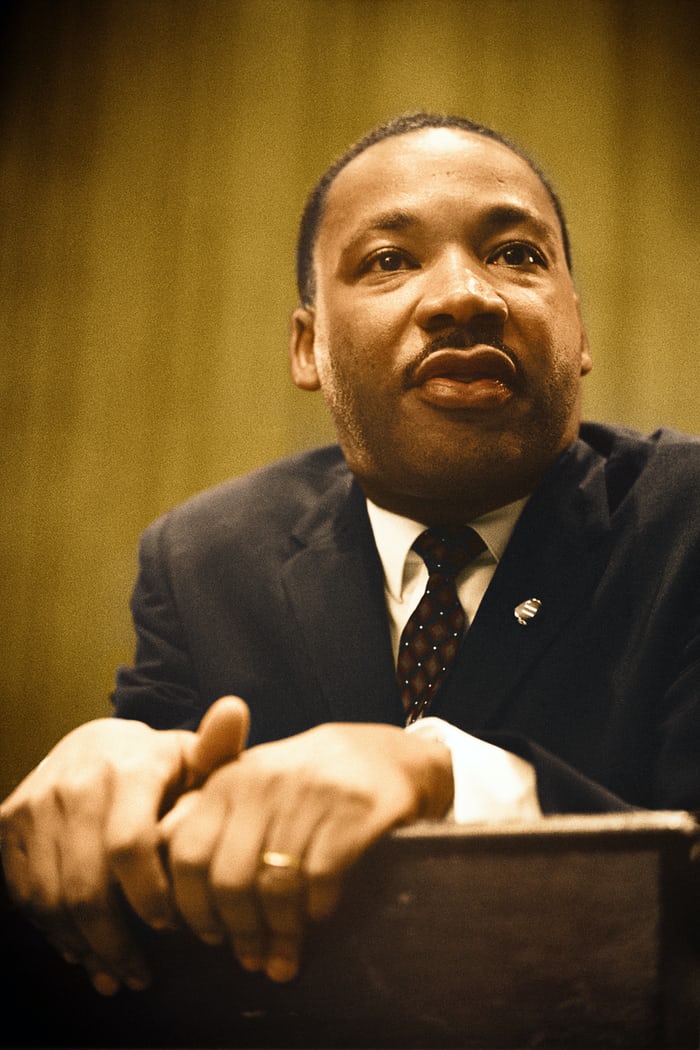
MARTIN LUTHER KING JR.
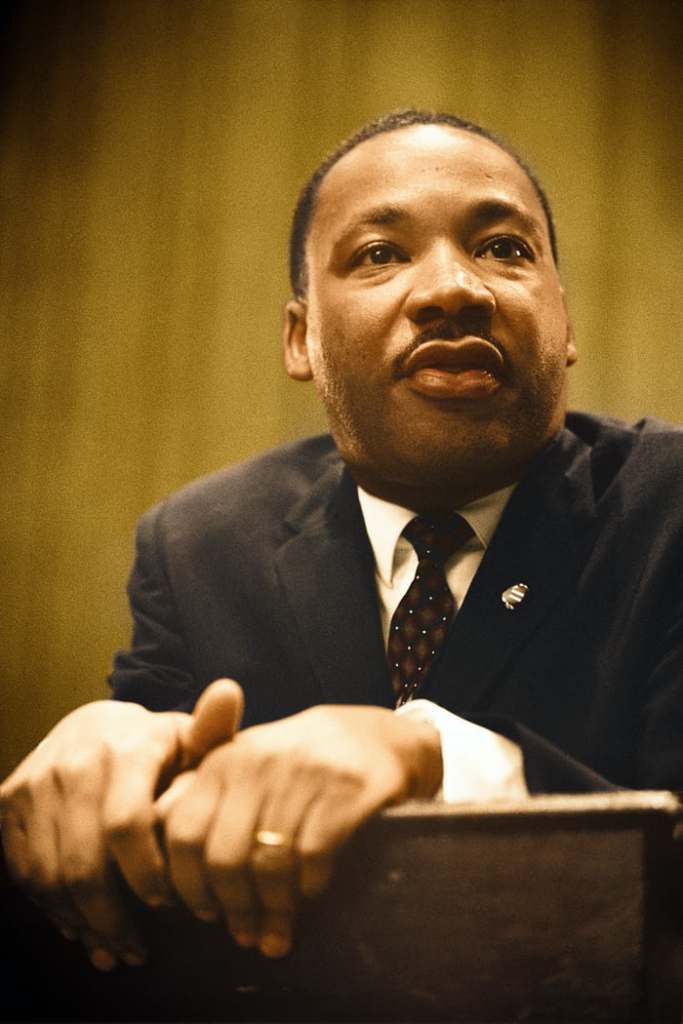
Also Known As:- MLK Jr. Michael Luther King, Jr.

Born: January 15, 1929 Atlanta Georgia

Died: April 4, 1968 Memphis Tennessee

Awards And Honors: Grammy Award (1970) Nobel Prize (1964)Notable Works: “I Have A Dream”

Occupation – Baptist, minister,activist

Known for – Civil rights movement, Peace movement

Awards – Nobel Peace Prize (1964)
Presidential Medal of Freedom (posthumously, 1977)
Congressional Gold Medal (posthumously, 2004)

About his Life:

There are people who are able to defeat the ravages of the eternal enemy-time and continue to live on in the minds of men, There are a select few who challenge the limitations of a system that fails to deliver justice. Men like Martin Luther King Jr are soldiers of God who do not care for the consequences when it comes to fighting for the truth. King was born on 15 January 1929, at Atlanta and died on 4 April 1968, at Memphis. Not a very long life, but what he achieved during this time is enviable. Few men reach such dazzling heights of spiritual success even in several lives.
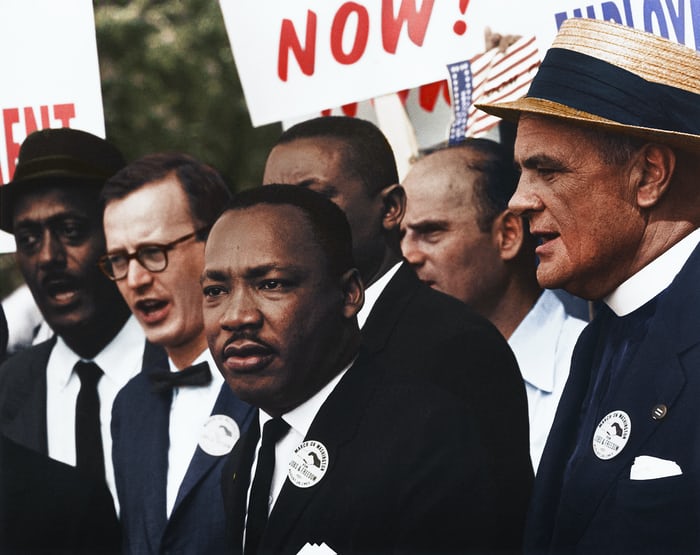
King was a US civil rights leader. The son and grandson of Baptist teachers, King was deeply influenced by the idea of non-violence while in college. The influence of Mahatma Gandhi was obvious. Ordained a Baptist minister himself in 1954, he became pastor of a church in Montgomery. University. He was elected to head the Montgomery Improvement Association whose boycott efforts eventually ended the city’s policies of racial discrimination on public transportation. 1955, he received a doctorate from Boston University. He was elected to head the Montgomery improvement association whose boycott efforts eventually ended the city’s policies of racial discrimination on public transportation.

History:

In 1957, he formed the Southern Christian Leadership Conference and began lecturing nationwide, urging active non-violence to achieve civil rights for African Americans. In 1960, he was back in Atlanta to become co-pastor of Ebenezer Baptist Church with his father.

He was arrested and jailed for protesting segregation at a lunch counter. The case drew national attention and none other than the then presidential candidate, John F Kennedy, had to intercede to obtain his release. In 1963 King helped organise the March on Washington, an assembly of more than 200,000 protestors, at which he made his famous ‘I have a dream’ speech. This powerful and moving speech celebrates humanity as one big family where being human is more important than being black or white. The march influenced the passage of the Civil Rights Act of 1964. King was awarded the 1964 Nobel Prize for Peace.

In 1965, he was criticised from within the civil-rights movement for yielding to state troopers at a march in Selma and for failing in the effort to change Chicago’s housing segregation policies. Thereafter, he broadened his advocacy, addressing the plight of the poor of all races and opposing the Vietnam War. In 1968, he went to Memphis to support a strike by sanitation workers. There, on April 4, he was assassinated by James Earl Ray. A U.S. national holiday is celebrated in King’s honour on the third Monday of January in the USA. King, like Gandhi, was a gentle yet powerful prophet of a non- violent revolution who sacrificed his life for his principles. King lives through his work and words in the hearts of millions, and his untiring zeal to achieve justice motivates individuals to keep trying. The kind of following King has today undoubtedly makes us feel, ‘when one is willing, the Gods join in’. (Aeschylus).

MK day:After years of campaigning by activists, members of Congress and Coretta Scott King, among others, in 1983 President Ronald Reagan signed a bill creating a U.S. federal holiday in honor of King.Observed on the third Monday of January, Martin Luther King Day was first celebrated in 1986.

Assassination of Martin Luther King:

The events in Selma deepened a growing rift between Martin Luther King, Jr. and young radicals who repudiated his nonviolent methods and commitment to working within the established political framework.

As more militant Black leaders such as Stokely Carmichael rose to prominence, King broadened the scope of his activism to address issues such as the Vietnam War and poverty among Americans of all races. In 1967, King and the SCLC embarked on an ambitious program known as the Poor People’s Campaign, which was to include a massive march on the capital.
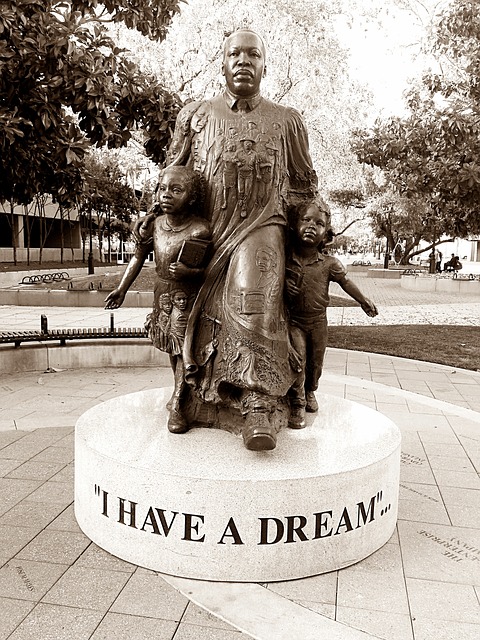
On the evening of April 4, 1968, Martin Luther King was assassinated. He was fatally shot while standing on the balcony of a motel in Memphis, where King had traveled to support a sanitation workers’ strike. In the wake of his death, a wave of riots swept major cities across the country, while President Johnson declared a national day of mourning.

James Earl Ray, an escaped convict and known racist, pleaded guilty to the murder and was sentenced to 99 years in prison. He later recanted his confession and gained some unlikely advocates, including members of the King family, before his death in 1998.

Martin Luther king Jr. Quotes:

“The ultimate measure of a man is not where he stands in moments of comfort and convenience, but where he stands at times of challenge and controversy.”

“Freedom is never voluntarily given by the oppressor; it must be demanded by the oppressed.”

“The time is always right to do what is right.”

“True peace is not merely the absence of tension; it is the presence of justice.”

“Our lives begin to end the day we become silent about things that matter.”

“Free at last, Free at last, Thank God almighty we are free at last.”

“Faith is taking the first step even when you don’t see the whole staircase.”

“In the end, we will remember not the words of our enemies, but the silence of our friends.”

“I believe that unarmed truth and unconditional love will have the final word in reality. This is why right, temporarily defeated, is stronger than evil triumphant.”

“I have decided to stick with love. Hate is too great a burden to bear.”

“Be a bush if you can’t be a tree. If you can’t be a highway, just be a trail. If you can’t be a sun, be a star. For it isn’t by size that you win or fail. Be the best of whatever you are.”


Psychological facts that you don’t know?

What are some psychological facts that people don’t know?

Research shows we are more interested in learning about psychological facts that we can use to improve our understanding of our surroundings or can relate to our every day experience. So learning an intriguing psychological fact that I can’t connect to my life, can’t understand easily or explain to my friends is something I consider less important. So here go the facts that are no way something out of the universe and people don’t know. They are rather facts that we all know but we just need to be told once again to be amused!!!

1-you dream TOO MUCH about becoming something, you may lose the motivation. This is because dreaming too much makes the destination all too familiar and achievable.

2:If girls like you, they like you even when you see them staring.

3Talking with someone for a long time increases your chances of falling in love with him.

4If the friendship lasts more than 7 years, it has a high probability of lasting a lifetime.

5Our fashion and dressing understanding is directly related to our brain. Our confidence increases when we wear nice clothes.

6.People who eat a lot of vows are more honest and loyal with their friends.

7.According to many research, children born in the month of May are heavier in weight than children born in other months.

8.Money can give happiness to a person but only to a certain extent. Studies show that when our income increases to a certain point, we feel happier. After that point money does not matter that much.

9.Research shows that we are more satisfied when we spend money on experiences (such as travel, movies, sports, etc.) rather than buying property. Spending money on experiences makes us feel more sociable and stress-free.

10.You can only remember 3-4 things at a time.

.Being alone for a long time or smoking 15 cigarettes a day, both are equally dangerous.

.When you start missing a loved one, your mind suddenly starts to become depressed.

.People who react rapidly to Stupid questions or situations are more intelligent by nature.

.Online dating companies and online shopping companies use the same type of psychological pattern.Humans think the same when choosing objects and partners.

.People who get angry very fast are under deep stress at that time and they need love and belonging immediately.

.People who talk to themselves are smart by nature.People with sharp intelligence and high IQ levels are more likely to sleep late at night.

.When people talk in groups, 80% decide that they are complaining about someone’s evil or complaint.
.Our mind feels any kind of rejections (non-acceptance) as physical pain.
.According to an American study, about two serial killers are born in November more than any other month.
.People seem more attractive when they speak with full confidence and truth.


.When people want to leave a discussion or conversation, they repeatedly move their feet back and forth, or start moving their legs around.
.When you like someone wholeheartedly, it is almost impossible to lie in front of him.
.When we sleep too much, we start sleeping more.
.When we constantly think negative things, our body starts feeling like sick.
.We keep ourselves happy by keeping ourselves busy with work. The reason is because when we are busy, our brain prevents us from thinking about the negative things in our lives.


.The addiction of eating chocolate and shopping online is also dangerous than smoking, drugs and sex addiction.
.Restaurants use red, orange and yellow colors in their branding because these colors make us feel hungry.
.People who are adept at lying are also adept at detecting the lies of others.
.Our brain does not consider those works which are too long to be completed. Our brain gives priority to the works whose time limit is above the head.
.Most people speak the truth when talking late at night because being tired, the brain does not think much and respond honestly.
.We feel relaxed and refreshed when someone hugs. When someone hugs you for more than 20 seconds, we start trusting that person more.

.To laugh at a joke our brain has to work in five different parts.

.Marrying your best friend reduces the risk of divorce by up to 70% and increases the likelihood that this marriage will last a lifetime.

.When people who speak more than one language change their language from one language to another, their gestures also change with it.

When we see something as our right, then it is more likely that we buy it.Women whose friends have more number of men are more cool and in good mood.

.If you repeatedly talk about your goals, it reduces the chances of that goal being successful.This is because you lose motivation…….Sometimes we are more happy thinking about something than doing something………People who spontaneously criticize or criticize others lack self-respect.

.As soon as people get power or power in their hands, they start ignoring other people.

.Strengths teach any human being not to care about others.

.Our brain turns a boring job into a fun job in a moment. If we really want to do that work.

.About 68% of people suffer from Phantom Vibration Syndrome. In this we feel vibrating our phone while the phone is not actually vibrating.

.The person who keeps everyone happy is usually lonely and unhappy in himself.

.You cannot remember how your dream started after trying so much.Our mind cannot see unknown faces in dreams. We have directly or indirectly experienced all the faces seen in our dreams.

.When we are happy we get less sleep.Holding the hand of a loved one can reduce our stress and make us feel more calm and happy.If a person sleeps a lot, he may feel sad and lonely.

.The kind of music we listen to, the world starts to look the same to us.

.When we do not have full confidence in anything we say, we start defending it.

.A person who pretends not to care usually cares the most.Our brain always tries to find problems because it is designed to solve them. This is the main reason why we have to face problems again and again.It is very difficult to keep your mind or mind stable or calm in one place. Our mind wanders 30% of the time.

.People who have good ability to understand humor or satire. They are also adept at reading people’s minds.It has been observed that people quickly believe a rumor more than a true incident.

.Being optimistic about the future can reduce the likelihood of future anxiety and illness.

.The length of our tongue is directly related to our sexual curiosity or sexual curiosity.

.Negative Thinking can also be the result of a zene from your parents.

.The way people treat restaurant employees reveals a lot about their personality and character

.Men are not more funny than women. Men only make more jokes, they don’t care whether someone likes jokes or not.

.Our brains prefer information written in short and interesting ways instead of long boring articles. This is why articles like Top-10 Lists, Amazing Facts quickly go viral. This post is an example of this.
.70% of the time our brain keeps trying to create a good environment with the help of nostalgia.

.Some people fall in love in just 4 minutes. This thing has been proved psychologically.
.When people say that ‘you have changed’, they mean that you no longer do the work that you need. The rest has not changed anything else in you.
.People who laugh more have more ability to bear the pain.
.We can never make our mind 100% careless. Some part of the mind is always alert to itself.

.Love is an example of chemical reactions taking place in the brain.
.Comedians and satirists are more sad and lonely than ordinary people.
.We can easily express the things or events that make us uncomfortable, by writing them to speak.
.We can cry more easily at night than during daytime.
.People with high IQ levels have difficulty falling in love with someone.


.Many studies have shown that on average women cannot keep any secret talk for more than 47 hours and 15 minutes.
.We feel calm, relaxed, and happy by listening to loud tunes and fast music.
.If you make your favorite song your alarm then you start disliking it.


.Researchers found that Phobia (fear of a particular thing or condition) can be genetic. Phobia and fear may transfer from your parents to you.
.These interesting psychological facts are not necessarily true, different people may behave differently in different situations. Psychology is a complex thing and it changes with every human mind.

Do You Remember This Legend?

‘Charlie Chaplin’ – ( Journey from rags to riches.)

(

Born – Charles Spencer Chaplin, 16 April 1889, Walworth, London, England.

Died – 25 December 1977 (aged 88), Manoir de Ban, Riviera-Pays-d’Enhaut District, Vaud, Switzerland.

Resting place – Corsier-sur-Vevey, Riviera-Pays-d’Enhaut District, Vaud, Switzerland.

Occupation – Actor, comedian, director, composer, screenwriter, producer, editor.

Years active – 1899–1976

Parent(s) – Charles Chaplin Sr.Hannah Chaplin (née Hill)

Awards – Academy Award (1973): Music (Original Dramatic Score) ,Honorary Award of the Academy of Motion Picture Arts and Sciences (1972), Special Award of the Academy of Motion Picture Arts and Sciences (1929).

Works written – My trip abroad, A Comedian Sees the World, My Autobiography etc.

About Charlie:

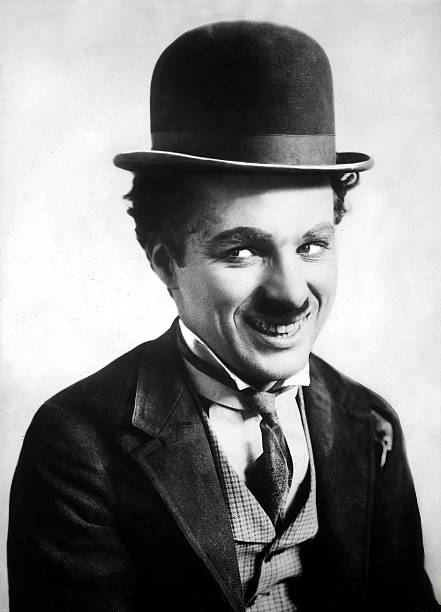
Chaplin, one of the most financially successful stars of early Hollywood, was introduced to the stage when he was five. The son of London music hall entertainers, young Chaplin was watching a show starring his mother when her voice cracked. He was quickly shuffled onto the stage to finish the act. Chaplin and his older half-brother, Sydney, roamed London, where they danced on the streets and collected pennies in a hat. They eventually went to an orphanage and joined the Eight Lancashire Lads, a children’s dance troupe. Charlie Chaplin is considered a phenomenon in the world of acting. He is worshipped, studied, and imitated by millions of wannabe stars who want to ape his comic timing.

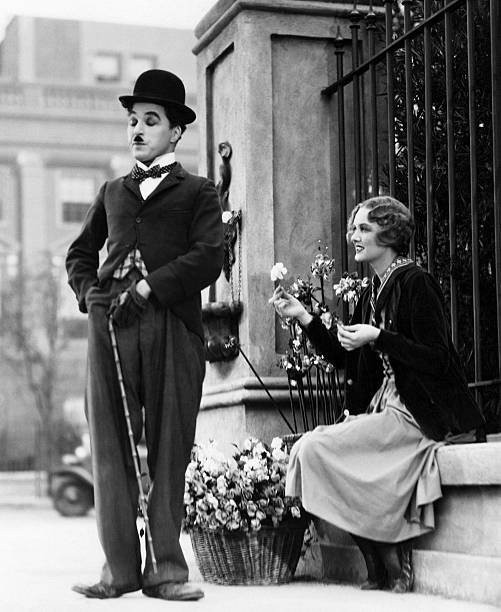
LOS ANGELES – 1931: Actors Charlie Chaplin as The Tramp and Virginia Cherrill as a blind flower seller in the film ‘City Lights’. (Photo by Donaldson Collection/Getty Images) /Getty Images)

His Life:

Charlie Chaplin had to struggle as a child. He was the son of poverty- stricken music-hall entertainers. Chaplin’s father, Charles Chaplin Sr was an alcoholic and had little contact with his son. His father died of alcoholism when Charlie was twelve. A larynx condition ended the singing career of Chaplin’s mother. After Chaplin’s mother (who went by the stage name Lilly Harley) was admitted to the Cane Hill Asylum, her son was left in the workhouse at Lambeth in South London. Charlie and his half-brother, Sydney, forged a close relationship in order to survive. They gravitated to the music hall while still very young and both of them were talented. Themes in Charlie’s films in later years would revisit the scenes of his childhood deprivation and poverty in Lambeth. A lot of his humour was rooted in pain.

On tour in New York (1913), Charlie caught the who signed him to a film contract. Unfortunately, Chaplin had considerable initial difficulty adjusting to the demands of film acting, and his performance suffered for it, but destiny gave Charlie eye of Mark Sennet another chance and there was no looking back. Chaplin’s earliest films were made for Mark Sennet’s ‘Keystone Studios’, where he developed his ‘tramp’ character and very quickly learned the art and craft of film making. Chaplin developed the costume baggy pants, derby hat, oversized shoes, and cane-that was to become the hallmark of his famous “little tramp’ character. He was soon directing his own films, and he produced, directed, and starred in such classics as The Gold Rush (1925), City Lights (1931), Modern Times (1936), The Great Dictator (1940), Monsieur Verdoux (1947) and Limelight (1952).

Chaplin never spoke more than cursorily about his film making methods, claiming that such a thing would be tantamount to a magician spoiling his own illusion. In fact, until he began making spoken dialogue films with The Great Dictator, Chaplin never shot from a completed script. The method he developed was to start from a vague premise-for example ‘Charlie enters a health club’ or ‘Charlie enters a restaurant’. Then he had sets constructed, and worked with his stock company to improvise gags around them. This is creativity at its best. Charlie Chaplin’s unique film-making techniques became known only after his death, when his rare surviving cut sequences were carefully examined in the 1983 British documentary Unknown Chaplin.

5 Things You May Not Know About Charlie Chaplin:

1.Chaplin made his stage debut as a tot – Both of Chaplin’s parents were music hall entertainers in London. In his autobiography, he described how, at age 5, his mother’s voice suddenly failed in front of a crowd of rowdy soldiers. The stage manager—or possibly his father or one of his mother’s lovers—then ushered him onstage as a replacement. Chaplin first sang a popular song called “Jack Jones,” prompting the audience to shower him with coins. He purportedly drew big laughs by announcing that he would pick up the money before continuing. More laughter ensued when he began imitating his laryngitis-addled mother. A few years later, Chaplin made his professional debut as a member of a juvenile clog-dance troupe. He followed that up with a couple of theater roles, toured with vaudeville acts and did one disastrous night of stand-up comedy in which he was booed off the stage.

2. Chaplin partly grew up in an orphanage – As the health of Chaplin’s mother deteriorated, so too did the family’s finances. It got so bad that in 1896 Chaplin and his older half-brother were sent to a public boarding school for “orphans and destitute children.” Chaplin spent about 18 months there, the longest period of continuous schooling he would ever receive. He learned to read and write, but apparently suffered quite a few indignities, including a severe caning and the shaving of his head during a bout with ringworm. Shortly thereafter, his mother was committed to a mental institution. His father, meanwhile, played very little role in his upbringing and ended up dying of alcoholism at age 37.

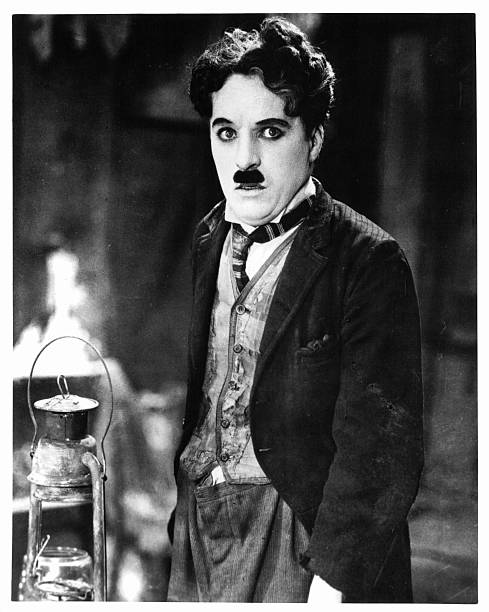
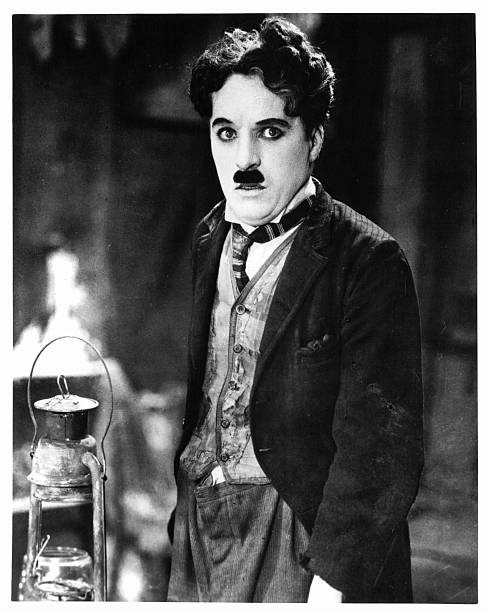
Charles Chaplin in a scene from the film ‘The Gold Rush’, 1925. (Photo by United Artists/Getty Images)

3 Chaplin loathed his first film – During Chaplin’s second vaudeville tour of the United States in 1913, Keystone Studios hired him away for $150 a week. He made his first film appearance early the following year, playing an out-of-work swindler in “Making a Living.” Wearing a handlebar moustache, top hat and monocle, he got in a few funny gags, particularly while fighting the story’s hero, a journalist who at one point interviews a man trapped under a car instead of helping him. Overall, though, Chaplin was appalled by his performance. “I was stiff,” he later said. “I took all the surprise out of the scenes by anticipating the next motion.” He also accused the director of cutting his best material out of jealousy.

4. Chaplin played thr same character in all but a few movies – Prior to his second film, Chaplin dressed up one day in baggy pants, a tight coat, big shoes, a small bowler hat and a bamboo cane. He added a small fake moustache and is said to have strutted around while his co-actors were playing pinochle. Having witnessed the scene, the head of Keystone allegedly “giggled until his body began to shake.” “Chaplin,” he exclaimed, “you do exactly what you’re doing now in your next picture. Remember to do it in that get-up.” This so-called Little Tramp character immediately took off in popularity, spawning so many imitators and marketing schemes that the press labeled it “Chaplinitis,” and would become Chaplin’s onscreen persona for the next two-and-a-half decades. In 1914 alone, he appeared in dozens of short films as the Little Tramp, most of which he directed himself.

5 .Chaplin quickly became a millionaire – For $1,250 a week, plus a $10,000 bonus, Chaplin moved in December 1914 to Essanay Studios, which touted him as “the greatest comedian in the world.” He then signed with the Mutual Film Corporation for $670,000 a year, after which he agreed to make eight comedies for First National for over $1 million. Finally, in 1919, he founded his own studio with fellow Hollywood icons Douglas Fairbanks, Mary Pickford and D.W. Griffith. “I went into the business for money, and the art grew out of it,” Chaplin once said. “If people are disillusioned by that remark, I can’t help it. It’s the truth.”

Is Happiness Linked To Success?

“Success is not the key to happiness. Happiness is the key to success. If you love what you are doing, you will be successful.” – Albert Schweitzer.

Is there a correlation between success and happiness?

We have not come here in this world by our choice nor will we leave this world by our wish. We’re all tourists in this wonderful world. No one is gonna live permanently. We ultimately experience this One supreme Power that controls this universe, maintaining us.So this thought create a feeling that we are living here temporarily in this world. Joy and sorrow are the part and parcel of life. Being optimist genrates the feeling of hope and inner peace. It helps us to motivate ourselves and overcome stress and grief. Positive attitude leads you to take better decisions finally to achieve “SUCCESS and HAPPINESS”.

Metaphorically, the sun is a daily reminder that we too can rise again from the darkness, that we too can shine our own light.” As the negative and positive thoughts are always battling with each other, trying to win over the other but when we are optimistic, a positive feeling wins the game by making us more confident, brave, calm and content. Nelson Mandela’s quote goes well with it, “The brave man is not he who does not feel afraid, but he who conquers that fear.”

The definition of happiness vary from person to person. As some are happy with less, but some with more. Although this is not the true definition of happiness.The real happiness merges from within ourselves in satisfactory appreciation with whatever we have. When we were young, we used to be happy with little things.. gradually we have set the criteria for ideal happiness that if I will have a car, big house, good job then only I will i be happy. These things become obstacles in achieving peace and happiness. If we set a condition with our happiness then we will never ever be happy in spite of having all goodness. Unconditional happiness is essential for true happiness.These are the reasons, most of the children are not happy with their parents, the reason is the they have made the condition that if I will get so and so thing then only will become happy, so we are focusing on the things about which we are sure. And waste their precious life moments, just overlooking the plenty of goodness in it because we try to see the happiness through our covered lens so we are unable to see any goodness.

As it is said’Peace begins when expectation ends’..This quote exactly fits in our day to day life. We expect too much from others but are unaware that they are also expecting the same from us. The modern society has no doubt changed completely; changing life style has distorted out mindset. The changing world is the world of new idealogy “More and More” . This has made the people selfish and self centred.

We should understand that every moment of our lives we can include happiness only if we take things in a positive manner. We shouldn’t depend on something or someone to make us happy. As it is rightly said by William James : “Human beings, by changing the inner attitudes of their minds, can change the outer aspects of their lives”.May God make us from among those who brighten up another person’s path with happiness, even when our own is clouded with darkness. But that’s the moment we feel the “True Happiness” emerging from within us.

What do you define as happiness and success in your own life?

Happiness and success are nebulous terms that get thrown around a lot in the self improvement circles. They are the ultimate goals in life. The only things that truly matter.Or so they say.But do any of us really know what we mean when we say we want these things?

How will we know once we reach our goal of becoming happy and successful? What will we do after we achieve these things? Just kick back and do nothing, waiting for death, our job as a human being now complete?How do we know we aren’t already happy and successful?

I’m not going to sit here and waste time trying to define these terms for you. Look them in a dictionary if you want a bland, sterile definition. Don’t bother doing that though. We all have some internal sense of direction towards happiness and success. With each event that occurs in our lives, we intuitively know if it is moving us closer or further away. That’s good enough for me.

The above quote is a common misconception that people have. Just find a way to make yourself happy and you will be a success. Maybe some people feel that way, but I don’t want to be the happiest homeless man begging for change on the highway off ramp. Success, defined as happiness, could even be achieved chemically through alcohol, heroin, or other destructive and non-successful indulgences.

So what’s missing? Meaning.Happiness without meaning is not success.People also make the opposite mistake. They think that once they become successful, whatever that means, then they will be happy. They put in long hours at the office. Lie, cheat, steal, kiss ass. The ends justify the means, they think. We all know the cliche of the rich man, seemingly at the top of the world, who realizes that he still isn’t happy. It is a cliche for a reason, because it teaches an important lesson that many of us are all too willing to ignore.

Material success without happiness is not true success. So a lack of happiness makes you unsuccessful. A lack of success can certainly make you unhappy. Happiness alone doesn’t make you successful. Success alone doesn’t make you happy. So what do we do?

Balance happiness and success while doing something meaningful. Meaningful is something we all have to define for ourselves as we all value different things in the world. Balance is the key here. Hedonistic pleasure seeking lacks meaning and therefore does not make us feel successful. Ruthless competition and chasing material rewards doesn’t leave room for the things that make us happy in life.

So where am I going with this? What is the magical key to success and happiness and a life of unending pleasure, meaning, and satisfaction?

I don’t know, I’m just some guy on the internet. …This is something that I think about a lot though. People seem to think of happiness and success as destinations. A goal they can someday reach if they do and think and say and believe the right things. I’ve listened to a lot of interviews with successful people and they they are asked who they think of as successful, I’ve never heard anyone mention themselves. People with success beyond our wildest dreams don’t yet think they’ve reached that elusive destination we call success. They’re still on the path towards it. The same is true for happiness.

We are all much happier and more successful than other people in the world in certain ways. Many of us are currently much happier and successful than we ourselves once were. Still we want and strive for more. I think of success and happiness as a direction rather than a destination. No matter how long I travel towards the east, I will never get to a place called “east”. This is just a metaphor, there may be a geographic point on earth where east becomes west, but don’t worry about that.

You can continue to get closer and closer to happiness and success for all eternity without reaching your destination. This is because they are moving targets, constantly redefined based upon our current position. I realize that this is where my math metaphor falls apart, but don’t worry about that.

We can and should continue striving for both, despite, or even because of, the fact that we will never actually get there. Striving after a worthy goal, typically one that increases our happiness and success, is what gives our lives meaning. The goal itself changes constantly over time. The pursuit is the constant. A life with nothing to pursue would not be very interesting at all. Find your pursuit.

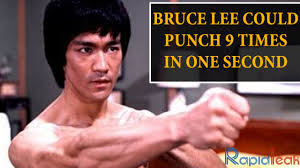
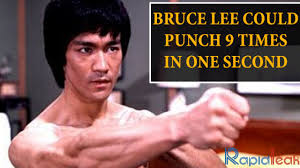
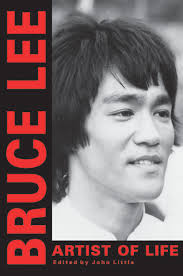
A Great Martial Artist ‘Bruce Lee’.

Born – Lee Jun-fan, November 27, 1940 ,San Francisco, California, U.S.

Died – July 20, 1973 ,(aged 32)Kowloon Tong,British Hong Kong.

Cause of death – Cerebral edema ,Resting place Lake View Cemetery, Seattle, Washington, U.S.

Other names – Bruce Lee Siu-Lung, Lee Yuen-cham, Lee Yuen-kam.

Citizenship – United StatesBritish Hong Kong

Occupation – Martial artist,philosopher, actor, director, screenwriter, producer.

Spouse(s) – Linda Emery ​(m. 1964).

About Bruce Lee:

Bruce Lee, the very name breathes enthusiasm and life euphoria in the minds of thousands of action movie lovers. When we talk about action movies today, particularly in the martial arts genre, it is impossible to forget, that Bruce Lee was the one who began it all with movies like The Big Boss (1971), Fist of Fury (1972), Way of the Dragon (1972), Enter the Dragon (1973) and The Game of Death (1978). Gone were the days when action movie lovers would be pleased with the gun fight of Clint Eastwood or the epic chariot races of Charlton Heston. Kung Fu had made its entrance in the world of entertainment, courtesy the silver screen. Bruce Lee was born on 27 November 1940. His father, Lee Hoi Chuen, was Chinese and his Catholic mother, Grace Ho, was of three-quarter Chinese and a quarter German ancestry. Lee and his parents went from the US to Hong Kong when he was three months old. Lee’s father was one of the leading Cantonese opera and film actors at the time.

At the age of thirteen, Bruce Lee took Kung Fu lessons with Yip Man. Having learnt the basics from his father, Bruce showed keen interest in the art and a year later, in 1955, had private training with the man who would later become the President of the Australian Federation of Kung Fu, William Cheung. At this time, the martial artist, Wong Shun Leung, who was consistently involved with dangerous and brutal competitions, had Bruce Lee privately train with him. Both Wong Shun Leune and William Cheung were students of Yip Man in his school at the same time as young Bruce Lee. Despite the advantages of his family’s high social status during his youth in Hong Kong, the neighbourhood where Bruce grew up was dangerous and full of gang rivalry. Bruce Lee evolved in these conditions as a dangerous street fighter. No wonder then that at the high school level at St Francis Xavier’s College in Kowloon, Lee was part of the school boxing team in inter-school tournaments.

Through his father, Bruce was introduced into films, and by the time he was 18, he had acted in 20 films. While in the United States from 1959 to 1964, Lee abandoned thoughts of a film career in favour of pursuing a career in martial arts. Destiny had different plans for him and the lightning fast moves of Bruce Lee landed him the role of Kato in the TV series The Green Hornet. This led to a host of other television serials like Iron Side (1967) and Here Come the Brides (1969). Lee’s return to Hong Kong landed him in Raymond Chow’s The Big Boss and Fist of Fury, and Lee was a big star overnight. Lee became a god of action cinema with the Warner Brothers’ production Enter the Dragon, but a cruel and inexplicable death snatched him away from his fans six days before the release of this movie.

We remember Lee today as a man who redefined action on the silver screen. We remember his high kicks, his exceptionally fast punches and the spine-chilling fight sequences. ‘Lee, pound for pound, might well have been one of the strongest men in the world, and certainly one of the quickest,’ said Chuck Norris. When a child today watches Jackie Chan or Jet Li and gets excited to throw a punch, no father fails to remind him that these are compared to the master-Bruce Lee. hing Lee has left a unique legacy in the world of sports and cinema, imitated by millions but mastered by none.

Devoted Teacher:

Lee finished high school in Edison, Washington, and subsequently enrolled as a philosophy major at the University of Washington. He also got a job teaching the Wing Chun style of martial arts that he had learned in Hong Kong to his fellow students and others. Through his teaching, Lee met Linda Emery, whom he married in 1964. By that time, Lee had opened his own martial arts school in Seattle.He and Linda soon moved to California, where Lee opened two more schools in Oakland and Los Angeles. He taught mostly a style he called Jeet Kune Do, or “The Way of the Intercepting Fist.” Lee was said to have deeply loved being an instructor and treated his students like a clan, ultimately choosing the world of cinema as a career so as not to unduly commercialize teaching.Lee and Linda also expanded their immediate family, having two children — Brandon, born in 1965, and Shannon, born in 1969.

Mysterious Death:

Most of the people said that he died under mysterious circumstances .On July 20, 1973, just one month before the premiere of Enter the Dragon, Lee died in Hong Kong, China, at the age of 32. The official cause of his sudden and utterly unexpected death was a brain edema, found in an autopsy to have been caused by a strange reaction to a prescription painkiller he was reportedly taking for a back injury. Controversy surrounded Lee’s death from the beginning, as some claimed he had been murdered. There was also the belief that he might have been cursed, a conclusion driven by Lee’s obsession with his own early death.More rumors of the so-called curse circulated in 1993, when Brandon Lee was killed under mysterious circumstances during the filming of The Crow. The 28-year-old actor was fatally shot with a gun that supposedly contained blanks but somehow had a live round lodged deep within its barrel.

Some believe in ‘KARMA’, some doesn’t.

If karma works, why are so many corrupt people successful? Why do good people have to struggle?

Karma, as a concept, was the idea of cause and effect translated through multiple lives, not just through one.

That by living a good life now and being kind and happy, you will create a positive start for whatever meets you after you pass away.In this sense, Karma isn’t something we will feel any effects of now and is something we will only come to see once we meet our next life.However, even if we do take out that concept the idea is still one of Cause and Effect.Good deeds cause good things, and bad deeds cause bad things, but it never said that we had any control as to what things we gain from what deeds.

When talking about Karma we assume that it is all one big ball of yarn.Different colored strings are so intertwined in this ball that it looks like a rainbow colored sphere where everything is connected.However, the truth may be a little different.

What if Karma did not work like we assume it does?

What if you cannot just treat others nicely and make more money because those two are not connected?

What if you actually had to pull on the money string to get money karma?

And what if, by doing well on the ‘treating others’ string you simply get others to treat you better too?

But then again, maybe that would not be Karma anymore but a very straight-forward matter of cause-and-effect. Most of us do not like this explanation because it means we cannot be as comfortable as we have been. We like the idea of being able to pull on a string that comes easiest to us to uplift our entire lives, for some things just do not come that easy to us. But maybe that is where we have been wrong in what we think Karma is all about. Maybe the successful, but corrupt people, just knew what strings to pull to get to success and have that area of life in order while the rest is crumbling around them. And maybe we do not know how to pull the strings of success so we struggle in a world of niceties and laziness.

Honestly, I do not know how Karma works or if it does. I am probably wrong about it all. Maybe we all are. Karma might just be an idea we tell ourselves to feel more justified in being nice and treating others kindly, but maybe it matters not one bit.

‘Who knows?’

The thing is that it clearly does not work as simply as we make it out to work, for we do see contradictory examples everywhere. But if we take the idea of the ball of yarn, I believe we get a lot closer to how Karma may truly work.

For if you work on your finances every day, if you are charitable and treat others at your job well while still fostering the belief that money will find its way to you, chances stand much better you do create more money for yourself. Psychology supports this concept through things such as the Confirmation Bias, Self-Fulfilling Prophecies and Selective Attention. You will likely find more opportunities and therefore more successes in this area if you do more good deeds here, which is the whole point. If you pull on the green string you will get greener results, but you may not get green results by pulling on the red string. You cannot just do good to get good things returned to you in a completely separate area of life.

Successful people, as corrupt as they may Be, often at least have something they know about success.

Some cheat their way through, others lie their way through, and others hide the truth or weasel their way through with other people, but as long as they find a way that means there has to be something they know we do not. And while we go through life being honest, nice and hard-working there is clearly something that is not leading to more success. That does not mean you have to stop being honest, nice or hard-working, but rather that it may be time to learn about success and money instead of relying on Karma to do it all for you. It’s easy to say that we could just be as corrupt as they are and then we’d be rich and famous too, but I believe it is a little more complicated than that, for there are already quite a few corrupt but unsuccessful people out and about.

Corruption is not the string that will lead to success either.

It’s easy to point the finger towards others but maybe we have to ask ourselves what the things were we did and did not do. Maybe we got the Karma, but maybe it was just by getting something we did not want to get. If you have your health, if you have people that care for you, if you have a roof over your head and clean water, then you already have more than most, which may mean your Karma is quite positive.

Whether or not I am right with my assumptions does not really matter. If I am not and Karma is supposed to work in a way where pulling one string leads to random, but positive, results, then maybe there is just something wrong with the system or maybe you did not yet pull hard enough. Either way, even then learning about success and money and taking actions that lead to results you want to have may just be more reliable way to go.

For if Karma does not exist at least this way will give you more opportunities to create the life you want to create.

I, for one, will take the route that gives me the most likely chance to create the life I want, and if that means doing extra work then so be it!

What about you?

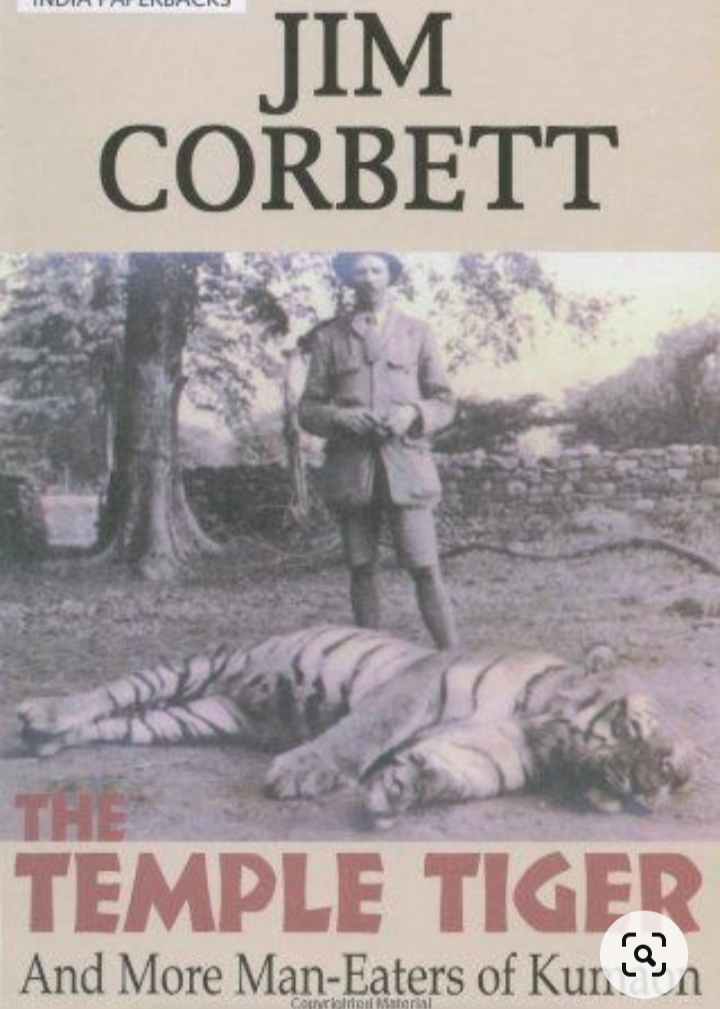
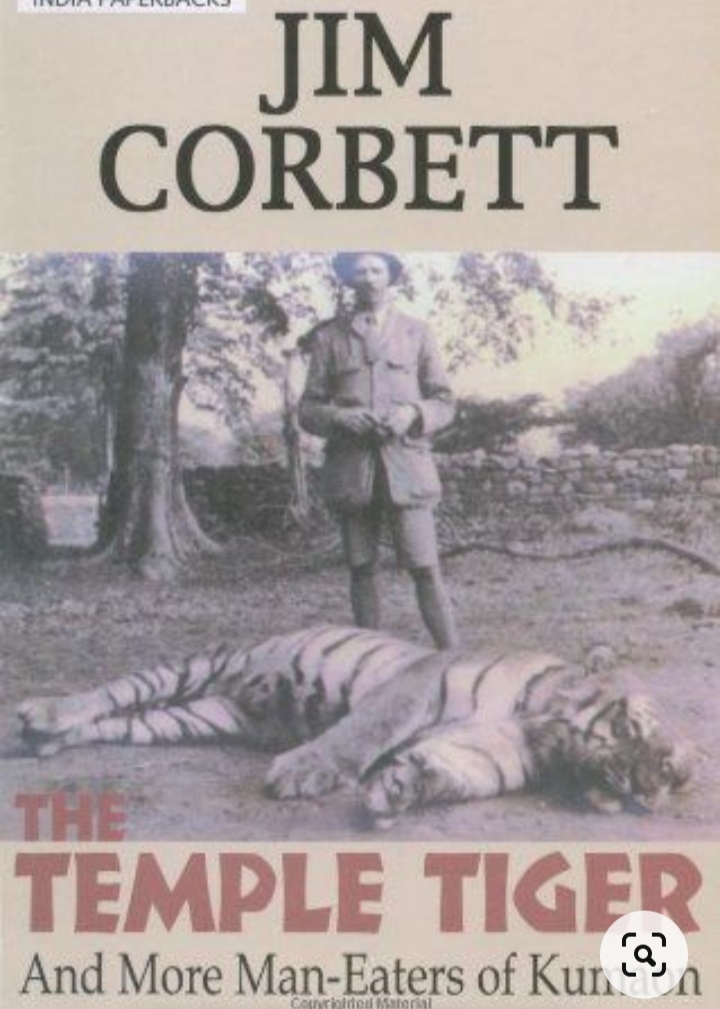
Jim Corbett’s Birth anniversary-“25 july”.


Full name – Edward James Corbett
Born – 25 July 1875 ,Nainital, (North-Western Provinces, British India
(now in Uttarakhand, India))
Died – 19 April 1955 (aged 79), Nyeri, Kenya
Nationality – Indian
Occupation – Hunter, naturalist, writer.

‘My India, about which these sketches of village life and work are written, refers to those portions of a vast land which I have known from my earliest days, and where I have worked; and the simple folk whose ways and characters I have tried to depict for you are those among whom I spent the great part of seventy years,’ -wrote Jim Corbett.

These words are not merely a description of a country by a man. These words reveal the life of a rare man who was British by blood but became an Indian at heart.

About Jim:

Edward James ‘Jim’ Corbett was born on 25 July 1875, at Nainital, United Province (now Uttarakhand) in British India. Corbett held the rank of Colonel in the British Indian Army, and worked for the Bengal and North Western Railway. Corbett was frequently called upon by the government of the United Provinces to slay man-eating tigers and leopards who had killed people in the villages of the Garhwal and Kumaon region. Corbett was able to succeed in many cases where numerous others had failed.

History:

Between 1910 and 1938, Corbett shot much-feared man-eaters such as the Champawat Tiger, the Leopard of Rudraprayag, the Tigers of Chowgarh and the Panar Leopard, who had cumulatively killed over a thousand people. His success in slaying the man-eaters earned him much respect and fame amongst the people residing in the villages of Kumaon, many of whom considered him to be a saint or sadhu because of his simple, dedicated and honest lifestyle. After his retirement, he authored The Maneaters of Kumaon, Jungle Lore, and other books recounting his hunts and experiences. Corbett’s stories became best-sellers because he narrated tales bubbling with spine-chilling reality in simple and enjoyable language.

Corbett had great admiration for tigers and photographed them avidly in his later years. His attraction towards the uncorrupted beauty of nature in the wild started in his childhood. He could identify the call of most animals and birds from a very young age, owing to his frequent visits to the wild. He never shot a tiger or a leopard unless it turned a man-eater. Corbett was a pioneer conservationist and lectured at local schools and societies to create awareness about the need to respect the wild.

A great human being who would even risk his own life for saving somebody else’s, Corbett continued to write and sound the alarm about the declining numbers of jungle cats till the last days of his life at Nueri, Kenya. He was distressed when people described the tiger as a blood-thirsty’ and ‘cruel’ beast. He refers to his childhood when a child freely roaming about the forest often ended meeting a tiger, the latter giving him a clear, ‘Hello child, what the hell are you doing here?” look and walking away.

. “”a tiger is a large-hearted gentleman with boundless courage and that when he is exterminated-as exterminated he will be unless public opinion rallies to his support-India will be the poorer, having lost the finest of her fauna,””- Jim Corbett had written. This quotation also makes it very obvious that Corbett had great respect for India and Indians. When you read his description of his experiences with men like Bala Singh in his stories or read about the manner in which he could identify the distinct grieving of an Indian wife for her husband, you know why he is still so revered. Corbett passed away on 19 April 1955. The Jim Corbett National Park in Uttarakhand is named after him.

Life of Jim corbett:

In childhood, he has a deep fascination for the forests and wildlife, and due to his interest in wildlife, he became a good tracker and hunter with time. Due to his amazing skill of tracking and hunting, he was often sought after by the then government of the united province to track and kill the tiger and leopard who becomes a man-eater. Even though he was the skilled hunter, he never killed any wild animal other than man-eaters.After many years as a celebrated hunter, he then developed a hobby of wildlife photography, especially, recording films of tigers in their natural habitat. He also used to give lectures on the rich natural heritage of India and the importance of the conservation of forests and wildlife to the school students.

He also penned his experience as a hunter and written many books on wildlife and hunting experiences. His most famous book was Man-Eaters of Kumaon that intensely portrayed his own hunting adventures. Many movies, TV episodes and documentaries have been made that are based on this critically acclaimed book.Later in his life, Jim Corbett started a movement to conserve the wild animals and forests. He strongly supported the All-India Conference for the Preservation of Wildlife and promoted the foundation of the Association for the Preservation of Game in the United Provinces. He also used his influence over the provincial government and lead the path that cleared the establishment of the first national park in India, the Hailey National Park, named after the Lord Malcolm Hailey in 1930s. The name later changed to the Jim Corbett National Park after the independence of India in 1957 in the honor of the legendary Jim Corbett.

‘Summer vacation’-Before Pandemic VS During Pandemic.

Summer vacations are the best time in a year for every student. It offers every student an opportunity to explore new stuff. It also offers a chance of taking a break from the daily routine and shift to new hobbies such as gardening, painting, singing, and dancing while having fun with friends. All of us spend summer vacation doing what we love the most. Some people like to play at home simple, while others prefer stepping out to explore new things.

How I spent my summer Vacation, before Pandemic?

One reason why we have a long summer holiday is that the weather is just too hot to study or play or do anything comfortably. Many of my school friends run away with their families to the cool comfort of the hills. Those who stay back in the city get up late, hang around with friends, sleep an hour or two in the afternoons, and watch TV or play video games in the evenings. To me this amounts to doing almost nothing. During my last summer holidays, however, I did do something!

Of course, in the first three days of my month-long break it was great to wake up at six in the morning, take a look at my watch, and go back to sleep. I woke up at six-thirty, and that extra half- hour was pure heaven. But from the fourth day onwards, there was something else on my agenda-a three-week table-tennis coaching camp for school students. It was being conducted for three hours in the morning, five days a week, in a local club. The head coach, in his playing days, had represented India. Here was an opportunity I did not want to miss at any cost. After all, I too want to play for my country some day.

Since the camp started at 8 am, I was back to getting up at six. At the camp I learnt some new ways to serve, and some new strokes like the jab. I improved my ability to handle spin. I quickened my reflexes. I also learnt how to quickly find out an opponent’s weaknesses, and attack him there. Returning home and bathing with lots and lots of water was quite a treat. In the afternoons, I studied and slept. In the evenings there was a great family reunion with all of us sitting together to watch TV. When school was on, there just wasn’t enough time for this. Before I knew it, my summer vacation was over, and I was itching to display my new-found table tennis skills in our Indoor Games Hall in school!

How I spent my summer vacation, during Pandemic?

Given the COVID-19 pandemic, summer vacations may look different this year. Thus, there are some additional considerations to assess when taking time off. Here are some tips for lawyers considering vacationing during the summer months.

The New Normal: Consider Travel Restrictions and Self-Quarantines
Before planning any trips out of state, it can be helpful to consider whether your law firm has policies on local and international travel. Many law firms have travel restrictions or other parameters restricting an attorney’s return to an office after travel. If traveling out of state, depending on the destination since some states are considered “hotspots,” you may have to observe self-quarantining requirements before returning to the office.

If a planned vacation is to a hotspot area or an area with increased levels of infection, it can be helpful to consider beforehand whether you have the capability to work from home if you cannot return to the office for 14 days after travel. Many attorneys also are confirming whether their existing plans to visit other states still make sense at this time. For example, some states are requiring people to quarantine upon arrival. Other popular vacation destinations may pose an increased risk to vacationers who were otherwise practicing social distancing and other steps to reduce risks at home. Thus, the vacationing attorney may consider where the original plan can be revised or altered to reduce ongoing risk of getting sick or of being unable to return to the office in a timely way.

Plan Ahead:-
Given that the COVID-19 pandemic has drastically changed how many of us work, it is important to consider the ramifications of the new normal and the impact of the vacationing attorney on others. As such, the vacationing attorney can plan ahead to ensure that everyone is given latitude to adjust their schedules to accommodate potential additional work or issues that may require attention.

health is prior to enjoyment so ‘Stay Home, Stay Safe’.

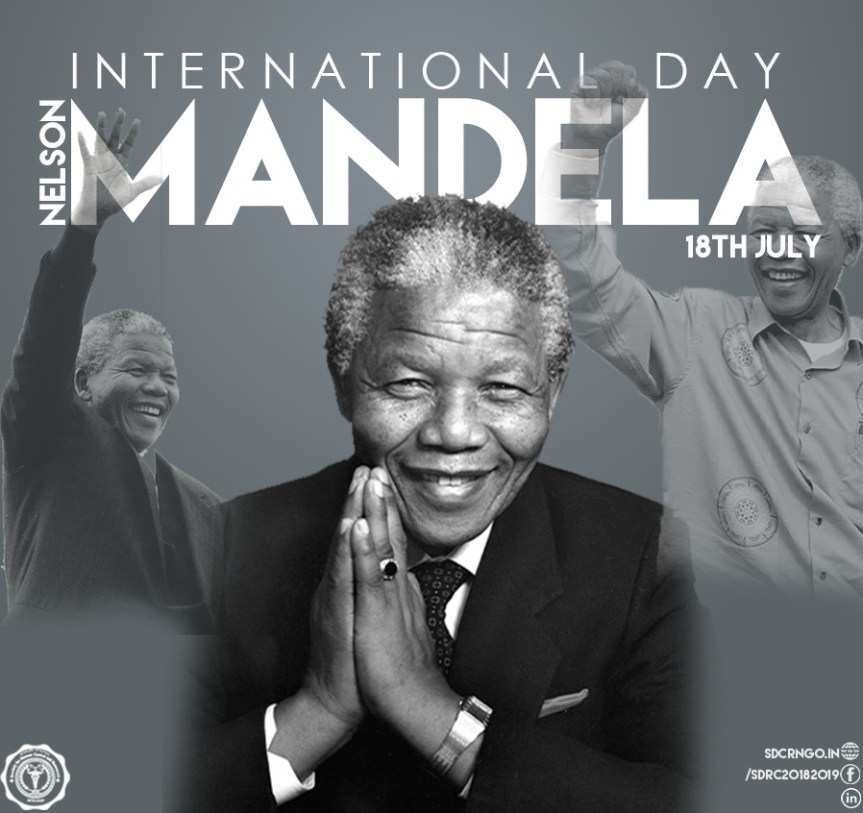
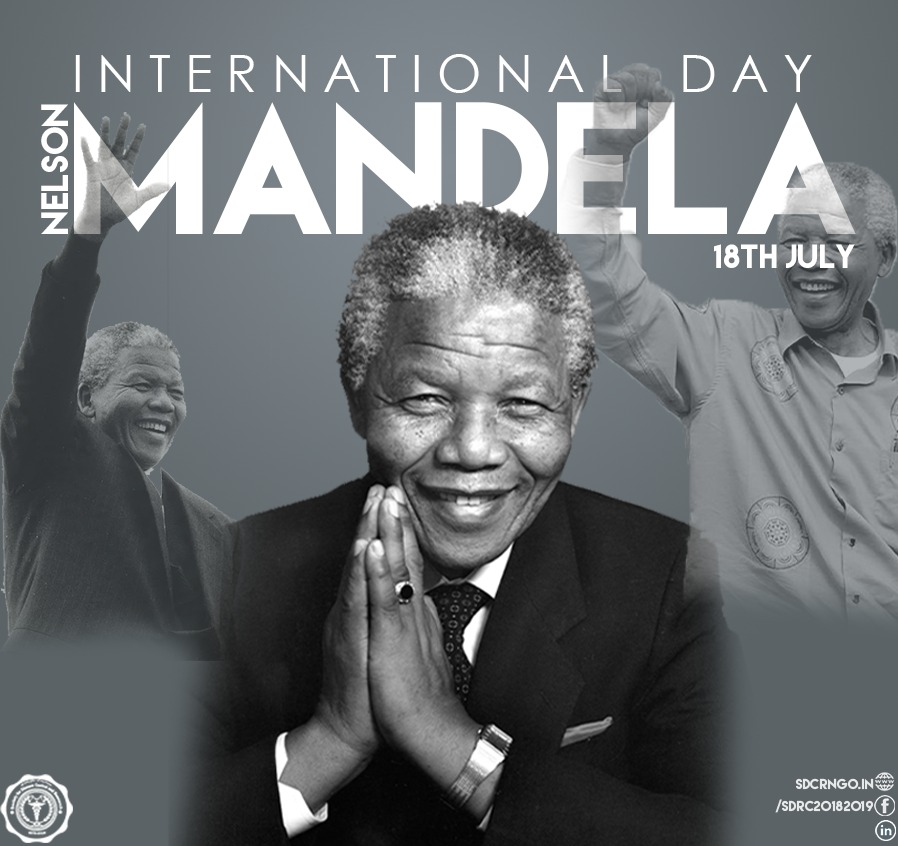
Long live ‘NELSON MANDELA’

Nelson Mandela was born on 18 July 1918, at Umtata, Cape of Good Hope in South Africa. He is an iconic figure in today’s world when it comes to fighting for one’s rights as a human being. The son of a Xhosa Chief, Mandela studied law at the University of Witwatersrand, and in 1944 joined the African National Congress (ANC), After the Sharpeville massacre (1960), he was disillusioned to the extent that he gave up his non-violent stance and became one of those who helped found the Spear of the Nation, the ANC’s military wing. Arrested in 1962, he was sentenced to life imprisonment. The South African Court convicted him on charges of sabotage as well as other crimes committed while he led the movement against apartheid.

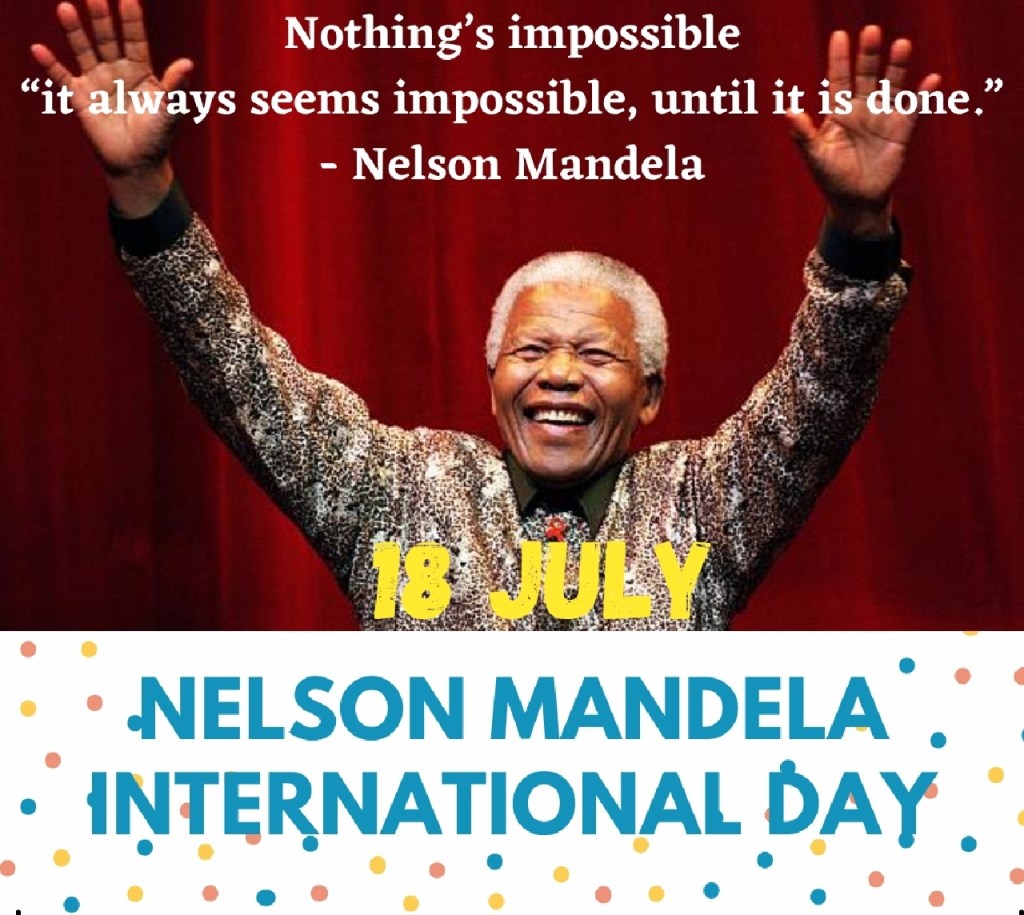
How is Nelson Mandela International Day celebrated?

Mandela provides service to others and always wants to create a better world for everyone. So, on this day if people find injustice in the neighbourhood, city, or state they do everything to alleviate the problem. Work in soup kitchens, marched with protesters, volunteer in local organisations, and work to help bring about civil liberties for everyone. Inspire change, and make every day a celebration of Mandela Day. People work for others and want to improve the lives of people around them. They will do this by volunteering or taking part in protests.

“After climbing a great hill, one only finds that there are many more hills to climb.”

This day provides a global call for people to recognise their ability and have a positive effect on others around them. People also inspire others about the values that Mandela shared like democracy, freedom, diversity, reconciliation, and respect. To promote Nelson Mandela Day, many people and organisations around the world take part in several activities. These activities are volunteering, sport, art, education, music, and culture. This day also celebrates a campaign known as “46664”, in reference to Nelson Mandela’s Robben Island prison number. The campaign was originally launched to raise awareness about HIV/AIDS. In 1995 and 1999 Children’s Fund and the Nelson Mandela Foundation were established.

“I learned that courage was not the absence of fear, but the triumph over it. The brave man is not he who does not feel afraid, but he who conquers that fear.”

His Movements And Struggles:

In accordance with the conviction, Mandela served twenty-seven years in prison. While in jail, Mandela’s reputation grew and he became widely known as the most significant black leader in South Africa. The conditions that he had to go through as a prisoner were appalling. He performed hard labour in a lime quarry. Prisoners were segregated on the basis of race, and the black prisoners received the fewest rations. Political prisoners were kept separate from ordinary criminals and received fewer privileges. Mandela himself describes how as a D-group prisoner, the lowest classification, he was allowed one visitor and one letter every six months. Letters, when they came, were often delayed for long periods and made unreadable by the prison censors. It calls for nerves of steel for a man imprisoned for life to get a degree of Bachelor in Law from the University of London through correspondence.

In February 1985, President PW Botha offered Mandela conditional release in return for renouncing armed struggle. Mandela spurned the offer, releasing a statement through his daughter Zindzi saying, ‘What freedom am I being offered while the organisation of people remains banned? Only free men can negotiate. A prisoner cannot enter into contracts.’

Throughout Mandela’s imprisonment, local and international pressure mounted on the South African Government to release him. In 1989, South Africa reached a crossroads when Botha suffered a stroke and was replaced as President by Frederik Willem de Klerk. De Klerk announced Mandela’s release in February 1990. His release from jail was broadcast live all over the world.

South Africa’s first multi-racial elections, in which full enfranchisement was granted, were held in April 1994. The ANC won 62 per cent of the votes in the election. Mandela became the first black President. As President from May 1994 to June 1999, Mandela presided over the transition from minority rule and apartheid, winning international respect for his advocacy of national and international reconciliation.

It is not surprising that Mahatma Gandhi should have inspired Mandela in his war against apartheid. The most universally respected figure of post-colonial Africa, Mandela was awarded the Nobel Peace Prize in 1993 along with De Klerk for their efforts to end apartheid and bring about the transition to non-racial democracy. Mandela remains an inspiring figure for any man in any corner of the world who becomes conscious of his rights and is willing to fight for the same.

‘ROAD ACCIDENT’

Road accidents are the order of the day in India. There is nothing unusual about innocent people losing their lives due to a combination of several factors. First and foremost is their own indifference and ignorance of traffic rules; combined with other factors like callous drivers or the absolute insensitivity shown by the transport authorities. There is no need to go for the statistical details about the exact number of deaths or serious injuries caused due to road accidents in a particular year. Such statistics do not reflect the truth under normal circumstances. The picture given below shows a man whose car has been turned over because of a collision with a truck and the man is presumably bleeding to death.

The policeman seems to have been able to nab the driver who looks more dazed than guilty, perhaps because of the impact of alcohol which is usually the driving force for drivers across India. An ambulance is in place and two men seem to be moving towards the victim with a stretcher. This is very assuring but the nature of the tragedy leaves us with considerable anxiety about the chances of the victim’s survival. Above all, the picture does not forget to show the common men who usually do not forget to play the role of either mute spectators or aggressive agitators under these circumstances. The spot is not as crowded as city areas are expected to be. Perhaps that also explains the presence of trees, clouds, and birds in the area rather than multistoried buildings and advertisement boards.

Car crash on major highway during rainfall at night. Ambulance in foreground and police car in background.

There are some serious questions that come to my mind when I look at this picture. If we contemplate the picture at a deeper level, we are bound to be confronted by certain very disturbing questions. Why are accidents so common in India? Can nothing be done to combat the menace of rash driving? Why can’t we have a more proactive approach from the police department so that a strict vigil on the roads discourages maniacs from indulging in the killing game of rash driving? The picture shows the policeman nabbing the driver and the medical team on the spot to help the wounded.

Both these incidents are utopian in the Indian context because most drivers in such cases flee the spot and reappear in the scene after a gap of about four or five months, when people have completely forgotten about this incident. Such people also take care to bribe certain dishonest policemen to stay out of legal hassles. The police are often unable to take these people to task. Moreover such is the state of medical care in our country that more often, accident victims die before they can reach the hospital and get proper medical care. Police investigation into these accident cases is such that the common man shies away from helping accident victims for fear of police harassment.

Auto accident involving two cars on a city street

There is no gainsaying the fact that this scenario needs to change. If we do not rush to the aid of an accident victim, it raises serious questions about our identity as civilised human beings. The concerned authorities and the common man should co-operate to improve the scenario with stricter traffic laws and efficient mobile health care units. But we need political will for such a thing to happen. Suppose this person is being taken to the hospital but his ambulance gets stuck in a traffic jam caused by a VIP’s transport facilities and the man dies, whom do you hold responsible? Can we depend on such individuals to make our roads and healthcare facilities better?

Scenario of Road accident in India:

India had most deaths in road accidents in 2019: Report
A total of 151,113 people were killed in 480,652 road accidents across India in 2019, an average of 414 a day or 17 an hour, according to a report by the transport A total of 151,113 people were killed in 480,652 road accidents across India in 2019, an average of 414 a day or 17 an hour, according to a report by the transport research wing of the ministry of road transport and highways.

India continued to have the most road fatalities in the world, followed by China, a distant second at 63,093 deaths in 2,12,846 road accidents in 2019, the report revealed. The United States of America (USA) reported the most road accidents at 2,211,439, and witnessed 37,461 deaths in 2019.

According to the report, speeding was the leading cause of deaths, while, in terms of vehicles, two-wheelers were involved in most road fatalities.

Across states, most road accidents were reported in Tamil Nadu (57,228), followed by Madhya Pradesh (50,669), Uttar Pradesh (42,572), Kerala (41,111) and Karnataka (40,658) accidents.

Maharashtra ranked sixth with 32,295 accidents, but saw the second-highest number of fatalities (12,788), after 22,655 in Uttar Pradesh.

Among cities, Delhi retained its first rank with 1,463 deaths, followed by Jaipur (1,283), Chennai (1,252) and Bengaluru (768).

Mumbai ranked ninth with 447 people being killed in road accidents in 2019.

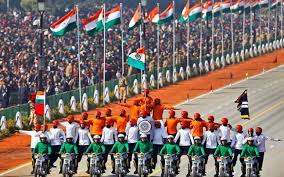
‘INDEPENDENCE DAY’ Celebration

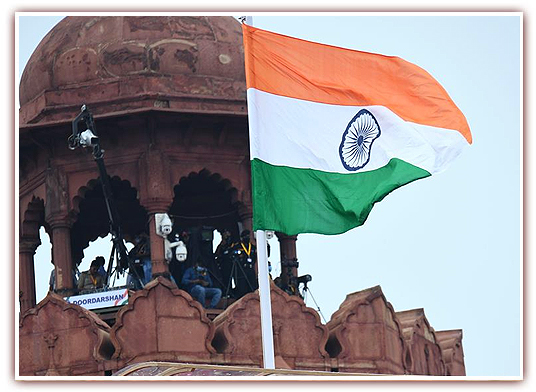
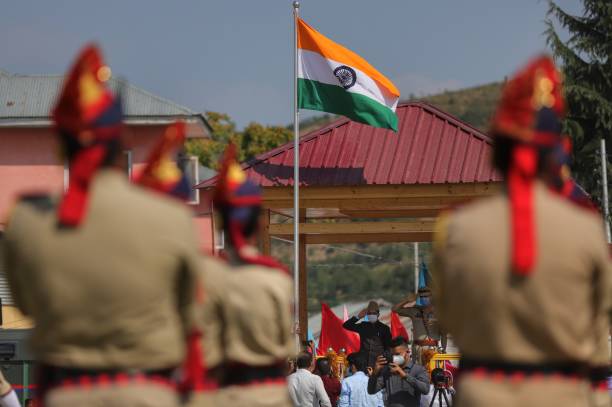
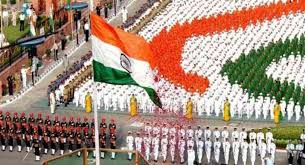
Mother India breathed the fragrance of freedom on 15 August, 1947. In the picture, we can see the hoisting of the national flag presumably by a senior and respected member of some community. This is a common sight in India where patriotic feelings are expressed at this time of the year. It is but natural that we should all feel strongly for our country, and what better time to express these feelings than on Independence Day!

However, the happy look on the faces of these people cannot hide the ugly truths that stare us in the face even after more than sixty years of independence. It is good that we celebrate our freedom with great enthusiasm as depicted in the picture. But mere smiles, celebrations and flag hoisting ceremonies are of no use unless we imbibe the spirit of Indianness in us. The spirit exhibited on this day should become a part of our very being.

CRPF and Jammu and Kashmir Police personnel takes part in the parade on India’s 74th Independence day in Baramulla, Jammu and Kashmir, India on 15 August 2020. (Photo by Nasir Kachroo/NurPhoto via Getty Images)

Generally we sing the national anthem with a lot of enthusiasm and then forget all about the relevance of the day as soon as the function is over. We throw sweet packets here and there and litter our surroundings. Moreover, in a country where more than fifty per cent of the population has a hand-to-mouth existence, the wastage of food is no less than sacrilege. If we do not respect the dignity of our people and surroundings, all the respect showered on the national anthem and the national song become meaningless

We must raise our voices in unison against the hypocritical phenomenon of paying lip-service to the concept of patriotism but stooping to grossly lackadaisical behaviour when it comes to performing our roles as Indians. Spitting or relieving ourselves in public places, not obeying the law while availing of transport facilities, disrespecting public property, joining mobs to create nuisance, calling strikes and bringing life to a halt on working days, remaining spectators to the corruption around us are all different patterns of behaviour that lower the prestige of our nation.

When we hoist the national flag, it is important that we feel clear in our conscience. One may argue that a small number of people setting the right example would not make much of a difference. This would indeed be a myopic interpretation of reality. The truth is that you may be a drop in the ocean, but the ocean is incomplete little gesture of respecting your country At least without in the true sense of the term would make a reasonable difference to the jawans on the border who risk their lives day and night to ensure that we can smile, secure in our knowledge of security when we look at the national flag fluttering high in the air.

History:

India was ruled by the Britishers for many years. The East India Company ruled India for about 100 years. It was in 1757 when the East India Company won the battle of Plassey. It was after the win went the Company started exerting power over India. Our nation had its rebellion against the foreign rule for the first time in 1957. The entire country united against British power. It was an unfortunate event as India was defeated back then but after that time. Indian rule was then passed to the British who ruled our country till India got its independence. Our nation faced a long campaign to gain independence. Britain then began to weaken after two world wars and India was finally free. India’s freedom struggle has always been an inspiration to the work as it was the most non-violent campaign in the world.

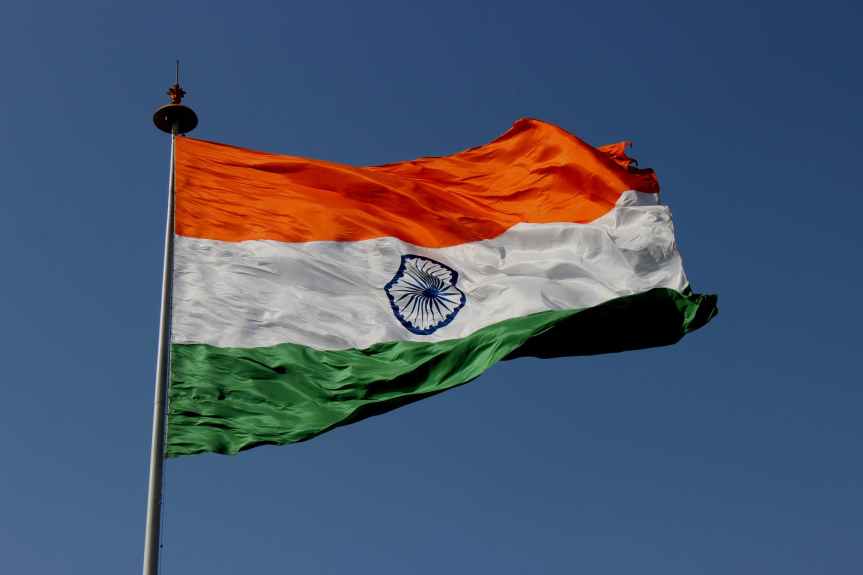
National Flag of India

Facts:

India has been independent for 73 years.

India is named after the river Indus.
India has had 14 Prime Ministers out of which one has been a female Prime Minister.
India has had 13 full-time Presidents out of which only one has been a woman.
The Indian National Flag was designed by Pingali Venkayya who was one of the freedom fighters and also an agricultural from Andhra Pradesh.
India’s national anthem was adopted three years of post-independence.
Mahatma Gandhi wasn’t able to celebrate the first Independence Day in Delhi.

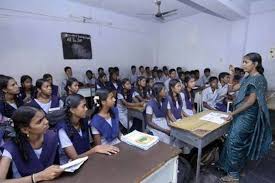
Our School Classroom ‘Scene’

The picture presents before us the familiar sight of a teacher teaching in the classroom. The first bench is paying attention to her. The second bench is busy having fun and so is the third bench. This is my classroom, and that is my class teacher, Mrs Aarti Mishra. She teaches us History and indeed, we are all ears when we listen to her, but some of my classmates do not respect her presence the way they should. Madam tries her best to get them involved in the classroom activities but they usually ignore her. Madam is tremendously talented and goes out of her way to make the class interesting, but more often than not, some students miss out on the solid content that they can learn from her. Ours is a small school where the facilities are limited. For example, we do not have internet in our school, and very few computers. Under these circumstances, the work involved in getting printouts and interesting literature from the Net from a cyber café speaks volumes about our teacher’s dedication.

History can be a very interesting subject when the teacher transforms the classroom into a storehouse of unknown and intriguing facts from the past. This is what Mishra Madam does. The most charming thing about Madam is that she never loses her temper, be it when the backbenchers in the class misbehave or when the Principal simply walks into the classroom ,and starts pulling up students for their indiscipline interrupting an interesting class being given by our teacher. We wish he had the courtesy of respecting the teacher’s presence in the class. But everything changed on that fateful day.

I remember the day clearly. Mishra Madam lost her temper a spoiled brat in our class continuously disturbed the class by whispering, laughing etc. She went and gave the menace a slap on his face and asked him to leave the class. The next day the boy’s influential father came and created a huge scene in front of the classroom. The Principal supported the father instead of our teacher. What was amazing was that the man was abusing the dignity of our school and teacher in public, and he was being allowed to get away with it! Madam left the school premises that very day, never to come back again. Our Principal was nothing more than a servile flatterer. As a peace offering he invited the man to be Chief Guest at our annual function that year. We lost a fantastic teacher, but the school gained a generous ‘friend’ who donated lavishly towards the ‘infrastructural’ development of our school.

At the end of the session, we met Madam Mishra at a neighbourhood library. She smiled cheerfully and welcomed us when we rushed towards her to explain how much we missed her and her wonderful classes. I told her that I wanted to be a teacher like her. She smiled and replied that India is no longer the land where a teacher is treated like God and teaching a religion. She added that my desire to be a teacher would make me swim against the tide. She walked with a pat of encouragement, but to this day I remember her away as a lady who stood apart as a teacher and a human being.

My school is big and has a lot of classrooms. Each classroom is different and special in its own way. For example, we have special classrooms for art, music, history and geography, chemistry, physics and biology, and history and geography. In addition to all this, we have a cabinet of Informational material and gyms.

The largest of all the classrooms for art. It is spacious and transparent and has large windows to make it anything more natural light and walls are white. Benches are placed on the circle so that all of us are sitting next to each other. In the middle of hundreds of teachers of art, as well as her easel, when it from time to time some paint or a draft to show us. On the walls of our work with classes. On Saturdays in the classroom and held an art section in which talented students are leaving and those who love to draw.

Right next to the classrooms for art’s classrooms for music. There is no dock, but only chairs with pads for writing. On the board are drawn lines and it reminds of our sheet music. In the classroom, we also have a grand piano, for which the teacher sits and plays while we sing. There are two speakers, as well as a tape recorder, through which our teacher let various compositions. On the walls are portraits of great artists, such as Mozart, Beethoven, and Vivaldi. Before or after hours, members of the choir of our school here hold their rehearsals with the teacher

In addition to this special classroom, each class has its own, but they are all quite similar. In each of the walls, bright blue curtains are white, almost translucent. Large neon lights, huge green blackboard with chalk and sponges, chair of the teacher and the bench where we sit two by two. In our classroom, we have always Serbian, math and English, and sometimes other items, especially when they are on the wrong control tasks if they have special classrooms occupied.
And finally, a favorite place of all the students, room for a physical in which we play volleyball, basketball or football, gymnastics train, and sometimes table tennis.

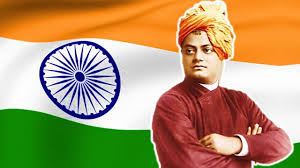
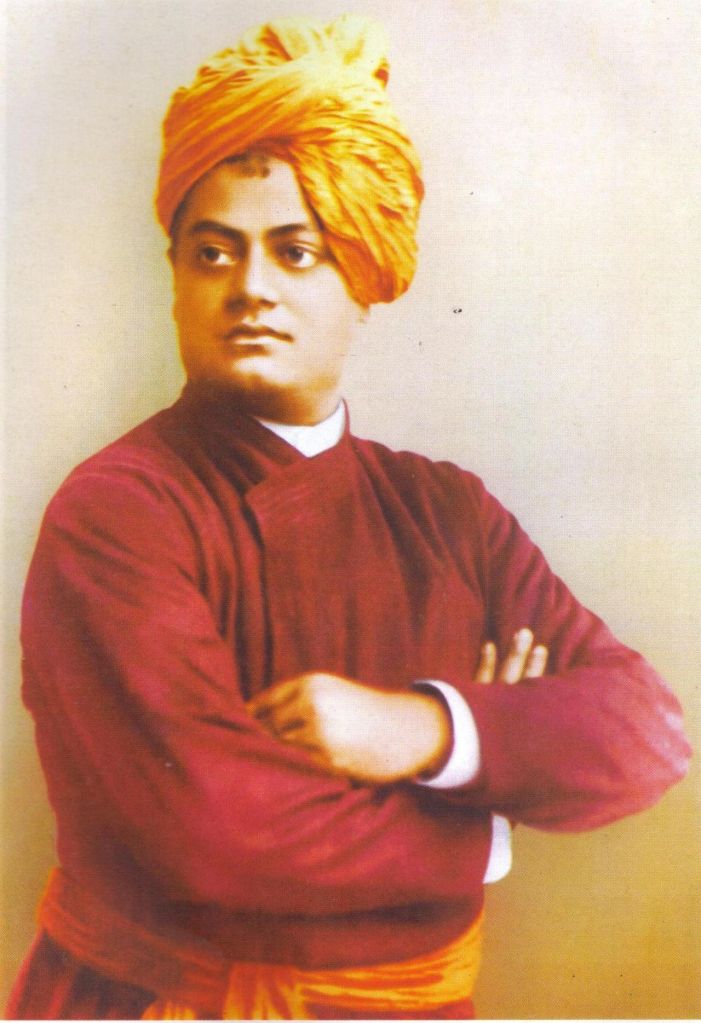
BIOGRAPHY of ‘Swami Vivekanand’

Born: 12 January, 1863

Place of Birth: Kolkata, India

Childhood Name: Narendranath Dutta

Father: Vishwanath Dutta

Mother: Bhuvaneshwari Devi

Education: Calcutta Metropolitan School; Presidency College, calcutta

Religion: Hinduism

Guru: Ramakrishna

Founder of: Ramakrishna Mission (1897), Ramakrishna Math, Vedanta Society of New York

Philosophy: Advaita Vedanta

Literary works: Raja Yoga (1896), Karma Yoga (1896), Bhakti Yoga (1896), Jnana Yoga, My Master (1901), Lectures from Colombo to Almora (1897)
Death: 4 July, 1902

Place of Death: Belur Math, Belur, Bengal

Memorial: Belur math, west bengal

About Swami Vivekanand:-

There are some rare men who leave their footprints on the sands of time, becoming a source of motivation for thousands of lost wanderers in the battlefield of life. Swami Vivekananda is one such example. “Come up, o lions and shake off the delusion that you are sheep; you are souls immortal, spirits free, blest and eternal….’ These words of stunning optimism proclaimed the arrival of a prophet- philosopher no less than Swami Vivekananda on the stage of the world. Such were his words that shook the world in the Chicago address on 19 September 1893. A young, educated man, Narendranath Dutta once walked the path of scepticism and even cynicism when it came to religion.

All the powers in the universe are already our. It is we who have put our hands before our eyes and cry that it is dark.”- –Swami Vivekananda

A visit to Ramakrishna Paramahansa changed his life. He challenged Ramakrishna’s claims of having seen God. Ramakrishna put his fingers on Naren’s heart, and in a moment of overwhelmingly powerful spiritual vision, Naren discovered God everywhere- from the rich man in his mansion to the poor rickshaw puller on the streets of Kolkata. God was no more a wishful thinking confined to the Kali temple at Ramakrishna’s Dakshineshwar. He was a living entity beyond all limitations of caste, creed, religion, language, time and space. Thus Narendranath Dutta metamorphosed into Swami Vivekananda, a disciple of Ramakrishna. This, however, was merely the beginning. The master, Ramakrishna, had told him before his passing away that he, Naren, would have to do ‘Mother’s work’, to teach mankind and be like a banyan tree, giving shelter to the tired and weary. In January 1891, he left the company of his brother monks and traversed the country from the North to the South alone with God. He wept to see the suffering and ignorance of the poor, and was disturbed at the material complacency of the affluent classes. The picture of ancient India appeared vividly before his eyes in all its grandeur and glory, and the contrast was unbearable. Swamiji set upon himself the task of rebuilding a new and rejuvenated India.

Learn everything that is good from others but bring it in, and in your own way absorb it; do not become others.” –Swami Vivekanand‘.

Be it his journey to America or the lecture at Chicago or the setting up of the Ramakrishna Mission in 1897, his main aim was service to mankind and the rebuilding of a young, vibrant and educated India. · Ramakrishna Mission today is a giant organisation which dedicates itself to the execution of extensive educational and philanthropic work in India and abroad, and expounds the profound Vedantic philosophy preached by Swamiji. The impact Swamiji had on India and across the world can be best understood by the comment made by The New York Herald about his speech at Chicago; ‘He (Swamiji) is undoubtedly the greatest figure in the Parliament of Religions. After hearing him, we see how foolish it is to send missionaries to this learned nation.

“Take up one idea. Make that one idea your life; dream of it; think of it; live on that idea. Let the brain, the body, muscles, nerves, every part of your body be full of that idea, and just leave every other idea alone. This is the way to success, and this is the way great spiritual giants are produced.”

― Swami Vivekananda

Narendranath Dutta was born on 12 January 1863, and Swam Vivekananda passed away on July 4, 1902. But the lionheart with his piercing eyes, mobile lips, swift movements, clad in yellow and orange, shining like the sun of India in the heavy atmosphere of Chicago, lives on in the memory of millions. He inspires every ma in the world to ‘arise, awake, and stop not till the goal is reached.

You have to grow from the inside out. None can teach you, none can make you spiritual. There is no other teacher but your own soul.”
― Swami Vivekananda

If anyone wants to study the origin of the Vedanta movement in America then study Swami Vivekananda travels across the US. He was a great thinker, great orator, and passionate patriot. It is not wrong to say that he was more than just a spiritual mind.

“Be the servant while leading. Be unselfish. Have infinite patience, and success is yours.”
― Swami Vivekananda

“Save Water ,Save Life”

‘Water is a driving force of all nature’- Leonardo Da Vincci.

A children holding a poster with the request SAVE WATER is actually sending across a severe warning……………

We are headed for a water crisis and a very serious one at that. Do you really think it is an issue we can dare to neglect? I do not think so.Water is very essential for all life forms to survive and grow. For any personal, commercial, industrial, or any other use the water is required.Life without water is impossible. Also, the drinkable water is quite low and if we continue to wastewater at the speed we do today, the day is not far when we will have to fight for water. But still, let me ask you one question, are we actually working in the direction of saving water? The rightful answer would be no.

Water management & conservation of resources:

The problem with these issues (water management and conservation of resources) is that there are numerous parties with vested interests that tend to play down these serious threats staring us in the face in a not so distant a future. While most authorities that are respected are unanimous in their conclusion of global warming as a serious threat, there are others who look upon the very phenomenon of global warming as a typical case of environmental Cassandras trying to hog the limelight. If you have to seriously address issues like global warming or water crisis, one leading to the other, corporate houses which depend on numerous factories that create all the filth shall have to take steps that would seriously create a big dent in their pockets. No corporate house would be eager to do this.

Therefore, they purposely overlook the fact that the sources of fresh water are limited. If you are so concerned with your immediate profit that you tend to overlook the disastrous results in the long run for all life on this earth, you are no less than plain stupid! The extent to which the corporate sector can be callous can be clearly understood from the following example:-

A proposal by South India Bottling Company Private Limited (SIBCL), a Coca-Cola franchisee, to set up a 280 million (US $ 6,500,000) soft -drinks unit in Gangaikondan village of Tirunelveli district in southern Tamil Nadu, has run into trouble. Many local residents, political parties and environmentalists have raised concerns that the water-intensive plant will deplete and contaminate groundwater and draw from Tamiraparani River, that cannot fully meet even drinking water and agricultural needs of local communities. Research by the India Resource Centre revealed a number of discrepancies and misinformation in SIBCL’s public statements regarding its water usage and daily production. We can also remember in this context that the world leaders really fight it out when something as dangerous as poisonous gas emissions bave to be curtailed. Indeed, how myopic can people be!

However, blaming corporates and factories would not be a complete part of the solution. There is the other side of the picture too. A 2006 United Nations report focuses on issues of governance as the core of the water crisis, saying There is enough water for everyone’ and “Water insufficiency is often due to mismanagement, corruption,lack of appropriate institutions, bureaucratic inertia and a shortage of investment in both human capacity and physical infrastructure.” Official data also shows a clear correlation between access to safe water and GDP per capita.

While the observation made by the UN is true, the role of climate change in aggravating a terrible water crisis around the globe is also An Inconvenient Truth as Al Gore calls it. According to a UN climate report, the Himalayan glaciers that are the sources of Asia’s biggest rivers-Ganga, Indus, Brahmaputra, Yangtze, Mekong, Salween and Yellow-could disappear by 2035 as temperatures rise. Approximately 2.4 billion people live in the drainage basin of the Himalayan Rivers. India, China, Pakistan, Bangladesh, Nepal and Myanmar could experience floods followed by droughts in coming decades. In India alone, the Ganga provides water for drinking and farming for more than 500 million people. The west coast of North America, which gets much of its water from glaciers in mountain ranges such as the Rocky Mountains and Sierra Nevada, would also be affected.

What would happen if this wastage of water is allowed to continue? News reports about the Gangotri Glacier receding have become fairly common. Can you imagine India without the Ganga? Are we going to silently bear with the progressive destruction of the most precious resource, and leave our future generations to face some bloody war for the control of water resources?

How can we Save Water?

you know there is many points you can do in your day to day life for water conservation.Each of these methods of water conservation is simple and easy and certainly things that anyone can take advantage of.

1. Turning the water off when brushing your teeth or washing your hair can save a lot of water. In fact, as much as 160 gallons of water can be conserved each month when you turn the water off.

2. Purchase water-efficient products and appliances for your home. This includes dishwashers, sink systems, bathtubs and more. These products pay for themselves in no time at all.

3. Plant you garden in the spring and you can save since water requirement levels are less during this season.

4. Do not use water to defrost foods. Although many people do use this method it requires a lot of water consumption to do this.

5. Check for leaks. This includes the toilet and the sinks in the home. Even a small leak could cause an extensive amount of extra water usage and more money added to the water bill.

6. Stop using extra water when you flush by avoiding placing anything in the toilet. This includes tissue and cigarette butts. Using this method to eliminate these items will cost you an additional 5 to 6 gallons of water per flush.

7. Insulate your pipes. This will prevent them from freezing in the winter while also helping heat water up faster, among other benefits.

8. When washing clothes, make sure that you are washing full loads of laundry only. You are wasting a lot of water washing only half of a load.

Biography of “Mahatma Gandhi”

Full name- Mohandas karamchand Gandhi

Born- 2 October, 1869 (Porbander, Gujarat)

Death- 30 January, 1948

Father- Karamchand Gandhi

Mother- Putlibai Gandhi

Nationality- Indian

Professions- Politicians, Lawyer, Writer

Wife- Kasturba Gandhi.

The name ‘Gandhi’ needs no introduction. Any part of the world that understands civilisation and humanitarian values appreciates Mahatma Gandhi (October 2, 1869-January 30, 1948). Thus it doesn’t come as a surprise that you find Gandhi fans in a diverse range-from the present American President, Barack Obama to philanthropic groups working in Rio

Movements launched by Mahatma Gandhi:

Mahatma Gandhi overcame insurmountable odds to bring the mighty British Empire to its knees. It is not merely because of the Non-cooperation Movement or the Dandi March (1931) that we know him today. It is true, of course, that these movements, along with the Quit India Movement (1942), brought the British Government to its knees. Gandhi was a man of the masses. Such was his popularity that the British went weak in their knees at the prospect of arresting him. They were afraid of making a martyr of him and thus adding to his popularity. This was no mean achievement for a man described by Winston Churchill as a ‘half- naked fakir’. Gandhi’s idea of non-violent resistance against the British rule appealed to the conscience of the Indian society groaning under the unjust rule of the British since the Battle of Plassey in 1757.

When Gandhi put Satyagraha into action for the first time in South Africa in1906 and became a success there, it didn’t take much time to recognise and hail the arrival of a great leader. But Gandhi was more than a messiah in the world of politics. He was a powerful social reformer who campaigned relentlessly to end discrimination against India’s untouchable class, whom he called the Harijans (children of God).

Mahatma Gandhi Awards:

• In 1930, Gandhi was named the Man of the Year by Time’s Magazine. • In 2011, Time magazine named Gandhi as one of the top 25 political icons of all time. • He did not receive the Nobel Peace Prize despite being nominated five times between 1937 and 1948.

• The Government of India institutionalized the annual Gandhi Peace Prize to distinguished social workers, world leaders, and citizens. Nelson Mandela, the leader of South Africa’s struggle against apartheid was a recipient of the award

About Mahatma gandhi Personality:

The spiritual strength of Gandhi’s personality has to be given due recognition. His autobiography My Experiments with Truth bears a living testimony to this. Gandhiji used his spiritual strength to overcome all opposition. He walked across the country’s villages trying to make its people realise the importance of sanitation and healthy habits. If this does not prove his sincerity, let us remember his fast-unto-death in the riot-hit Calcutta of September 1947, which brought the Hindus and Muslims together again after a terrible violence.

Would any of our leaders today dare to walk the riot-hit streets of Noakhali with only a Tagore song to give him company? It is stupid to question the courage of this man who perhaps might even have achieved the impossible task of unifying India and Pakistan again had he not been shot dead by a fanatic called Nathuram Godse on January 30, 1948.

Film on Mahatma Gandhi:

Ben Kingsley portrayed Mahatma Gandhi in the 1982 film Gandhi, which won the Academy Award for Best Picture. Therefore, Mahatma Gandhi would be remembered forever as he spread the message of non-violence, truth, faith in God, and also he fought for India’s Independence. His methods inspired various leaders, youth not only in India but also out of India. In Indian history, he is considered as a most prominent personality and as the simplest person who wears dhoti. He spread the message of swaraj and taught Indians how to become independent.