Neerja-the fearless and eternal girl!

Inside a Hijack: The Story Of Neerja Bhanot
Neerja Bhanot

Neerja Bhanot, the braveheart flight attendant was never one to run away from a crisis

Flight attendant Neerja Bhanot, an ardent Rajesh Khanna fan, often found herself dreaming up scenarios in which she played a role. For one such hypothetical situation, she asked her mother to suggest a plan of action in case of a hijack.

Her mother told her, “Agar aisa kuch hua toh bhaag jaana (If something like this ever happens, escape).”

To which a confident Neerja replied, “Mummy, tumhari jaisi maa hongi toh desh ka kya hogaMar jayungi lekin bhagungi nahin” (If all mothers think like you, then what will happen to the country? I’d rather die than run away).”

Those words came true on 5 September 1986 when Bhanot died while saving passengers on Pan Am Flight 73, which had been hijacked during a stopover in Karachi.

But, the ‘Heroine of the Hijack’ had seen her share of troubles already.

Born to Harish and Rama Bhanot on 7 September 1963 in Chandigarh, she was the darling of her family, which included two brothers, all of whom called her their ‘lado’. She studied in Chandigarh and later in Mumbai, which was where she became a model, endorsing brands like Binaca toothpaste, Forhans and Godrej. 

At the age of 19, she was married to a marine engineer and moved to Sharjah, UAE. After two months of abuse, including starvation, verbal taunts and threats, Bhanot left her husband, returned to Mumbai and decided to become a flight attendant. 

Bhanot was appointed the senior flight purser on Pan Am Flight 73 flying from Mumbai to the United States on that fateful September day. 

During its stopover in Karachi, four armed Palestinian men belonging to the Abu Nidal Organisation hijacked the aircraft, which was carrying around 380 passengers and 13 crew members. Bhanot quickly alerted the cockpit crew by using the hijack code, which allowed the American pilots to escape and thus, ground the plane.

The enraged hijackers ordered her to collect the passengers’ passports. Sensing that the hijacker’s key targets were Americans, Bhanot and her crew hid those passports under the seats and in the trash chute.

Her calming presence also, it is said, kept the passengers’ and crew members’ anxieties in control for 17 hours as she served sandwiches and beverages and tried to boost their morale, even as the terrorists killed a passenger and threw him out of the plane.

When the hijackers eventually decided they had had enough and opened fire, Bhanot worked fast to evacuate as many passengers as she could via the emergency exit. She was shot dead as she shielded three American children from the terrorists.

Out of the 44 Americans on board, 42 were saved owing to Bhanot’s presence of mind. The survivors of the attack conferred the monicker ‘Heroine of the Hijack’ upon her.

Bhanot’s legacy

Bhanot’s calm courage and quick instincts led to a slew of posthumous awards, including the Ashoka Chakra — India’s highest peacetime gallantry award. She was the first woman and youngest recipient of the award. Her citation states: “Her loyalties to the passengers of the aircraft in distress will forever be a lasting tribute to the finest qualities of the human spirit.”

Her story continues to inspire young women, and in order to commemorate her courage, Bhanot’s family used the funds from Pan Am to set up the Neerja Bhanot Pan Am Trust. The trust recognises Indian women who overcome social injustice and airline crew members who go beyond the call of duty in a crisis.

Among other honours, Bhanot was conferred with the Tamgha-e-Insaniyat award by Pakistan, and in 2004, the Indian Postal Service released a stamp in her memory.  

In 2016, Ram Madhvani directed a biopic starring Sonam Kapoor as Neerja. The biopic is a stylised thriller with a few lovely glimpses into Bhanot’s personal life, especially her relationship with her mother (played by Shabana Azmi). The film, too, won a number of awards, including the National Award for the Best Feature Film in Hindi.

reference-https://www.bbc.com/news/world-asia-35800683

Online education

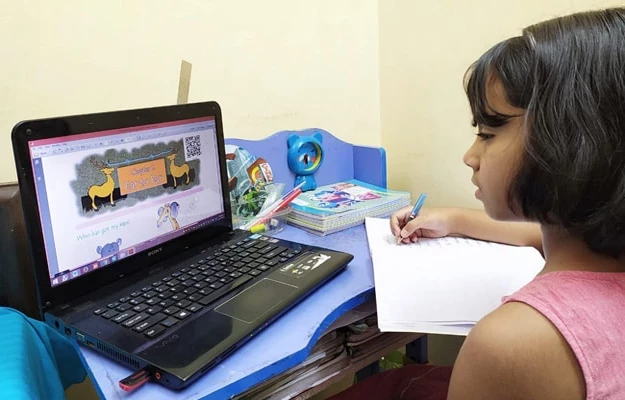
frustrating indeed!!

Online study has become a trend and more schools are opting for it with each passing day; more so, in the wake of COVID-19 lockdown.

Advantages

The online method of study has several advantages. It is very convenient as both you and your teacher can interact from the convenience of your respective homes. You can also ask questions and raise queries as you use to do in the classroom.

The online study method becomes more important in case of a natural calamity of emergency. The perfect example in this regard is the recent COVID 19 pandemic that the world is still recovering from. To date, many schools are running online classes, for the safety of students. Online study is indeed a safer alternative to school education.

Schools Have Saved Operational Costs During Lockdown; Can't Charge Students  For Unused Facilities : Supreme Court

Disadvantages

Apart from numerous advantages, the online method of the study also presents certain disadvantages. It lacks the filled with enthusiasm kind of environment presented by a classroom. The lively and joyful ambience of a classroom is usually lacking in an online session. Teachers and students interact with each other only on subject matters on one by one basis.

Moreover, overexposure to gadgets presents its own health hazards like headache, weak eyesight and lack of concentration, etc.

Conclusion

Despite the disadvantages, the online study method proved to be beneficial in certain specific conditions. When it is not advisable to leave your home, or it isn’t convenient for you, then in that case online study becomes a blessing in disguise.

reference-https://www.aplustopper.com/essay-on-online-education/

Beauty of Kashmir!

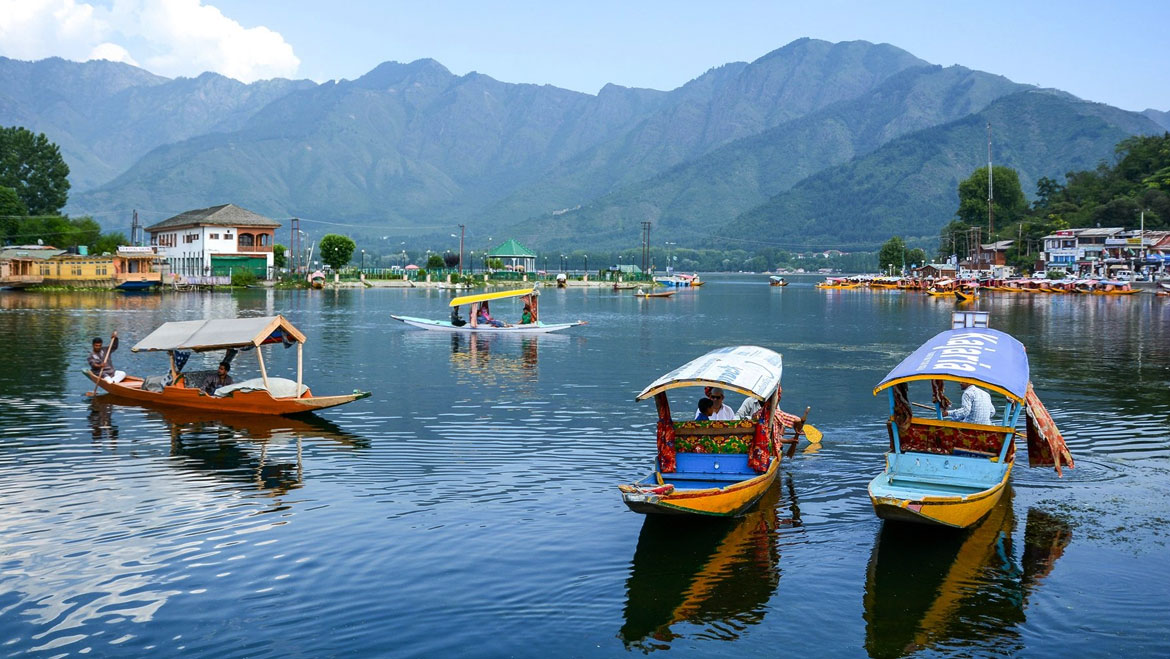
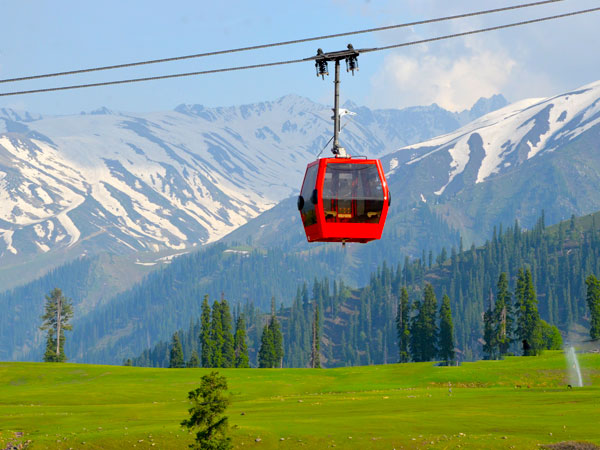
Kashmir is located on the Jhelum River in north India. It is always cold here. It is very beautiful. It is called Paradise on Earth. Its beauty seems very captivating in every season. In summer there is greenery everywhere and in winter everything is covered with snow. The red apples hanging on the apples look very beautiful. There are many tourist places to see in Kashmir like Gulmarg, Sonmarg etc. Gulmarg is called the life of Kashmir. Sarovars like Vullar add to the beauty of Kashmir.

The people of Kashmir are called Kashmiri Pandits and they are very beautiful. They are also non-vegetarians and consume kebabs etc. After eating here, it is rotated in sweets. Saffron is cultivated here. Whoever goes to this place makes sure to buy show pieces made of walnut wood, apple, Pashmina shawl and saffron. Kashmir is a matter of great dispute between India and Pakistan. Kashmir has its own flag and it has its own constitution under Section 370 of the Constitution of India. No person outside Kashmir can buy land in Kashmir.

The poet has rightly said about Kashmir that “if there is heaven on earth, it is here, it is here”. We have been fortunate enough to spend some of our holidays in Kashmir, but this happened a few years before the disturbances started in the valley. We usually visited Kashmir during our summer holidays. We took a train to Pathankot. Steal the bus from Srinagar. The last time we were there, we went to Chandan Van. A trip in the Kashmir valley is a beautiful experience. Green plains, long There are trees, lakes, springs, snow-capped mountains. Both sides of the streets are lined with Apple and Peer Orchard.

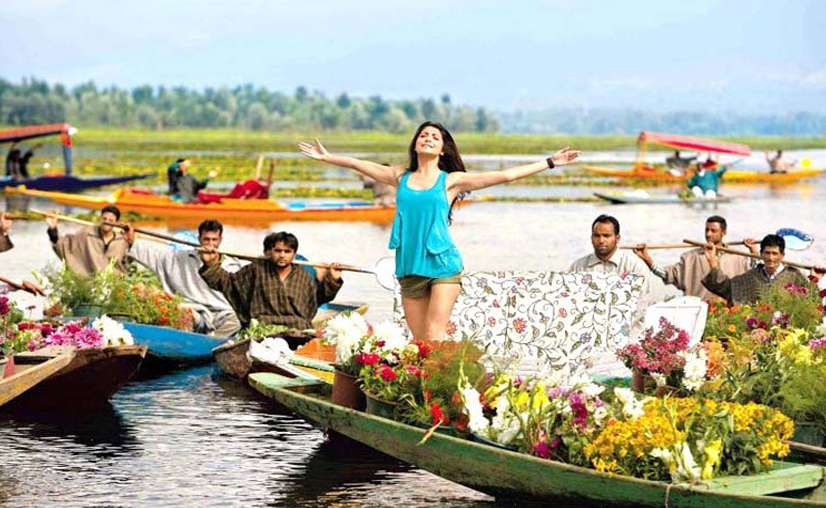
Wild strawberry grows in abundance everywhere, flowers and fragrant saffron are cultivated here. Kashmir relies on its image of being a paradise on Earth. A visit to the Shalimar and Nishat Gardens is a lake dating back to the Mughal era, when Nur Jahan’s favorite queen of Emperor Jahangir visited these gardens. There are beautiful poplar trees, flowers and fountains all over the place. Many Hindi films have been shot here. We often visited the lakes of Kashmir. Dal Lake, which is a major tourist attraction, has many home boats. Many foreigners come here and stay during their holidays. Many boats called the gazelle between these house boats and the shores of this lake. Likewise, there is the famous Wular lake, which is a large fresh water lake.

shooting of jab tak hai jaan movie, song jiya re

However, among all the lakes of Kashmir, my favorites were Evanabal and Gangarbil lakes. Mansabal Lake is situated between the mountains and the Indus River. While the Gangarbal Lake is considered the source of the Ganges. It is closed in the rocky center of Harmok, Kashmir also has many springs for their healing powers. The most famous among all is Chashma – Shahi, or Shahi Vasant. It is known for its medicinal values. There is also a sulfur lake called ‘Tatta Pani’ in Kashmir. It is believed that if all take a bath in these springs, then all types of skin diseases can be cured. Kashmir is a trekker’s paradise. There are several trails scattered all over the valley which are ideally suited for trekking. They are variously known as Gulmarg or path of flowers, Sonamarg or path of gold etc. In fact the beauty of Kashmir binds a person and does not allow him to leave the place.

reference-https://articles.pk/kashmir-land-of-heaven.html

The art of cooking

A culinary art is the art of cooking. Cooking is the process of preparing food and meals that will be eaten or the food served to other people.

The word “culinary” is defined as something related to, or connected with, cooking or kitchens. People who are working in the culinary arts are known as culinarians. A person working in restaurants is commonly known as a cook. The skillfully preparation of food and meals that are as pleasing to the palate as to the eye is the responsibility of the Culinary artist. Culinary artists require a lot of knowledge about the science of food they prepare and a good understanding of how diets and nutrition affect people in the preparation of their meals. Culinary artists work in restaurants, hospitals and other institutions where kitchen conditions vary depending on the type of business.

The culinary art is comprised of many categories. Some of which are tools, methods, combination of spices and ingredients that adds flavor to the food. It normally needs the right measurements, proper selection and accurate combination of ingredients involved to reach desired result.

The diversity of the culinary arts around the world mirrors many considerations such as Economic, Aesthetic, Nutritional, Religious and Cultural.

The dawn of fire, and the culinary arts, if not always, is associated with fire. The heat generated by fire is required to change the food’s texture, flavor, nutritional contents and even its appearance. Heating is important in the culinary arts because it disinfects the food and makes it softer. The food danger zone is between 4 to 60 degrees Celsius. Within these temperatures, the bacteria found in the found or even those that were transferred to the food can grow at a very alarming rate. Under ideal conditions bacteria can double their population every twenty minutes. Although at a glance, these foods may not appear harmful, when ingested they can be. Many people have the misconception that bacteria will die when we freeze our food or refrigerate them, but this actually does not rid the food of bacteria, merely it slows down their expansion.

One of the most famous departments in the culinary arts is probably baking. Baking is the art of cooking food using an oven in culinary arts. Through applying dry heat evenly through the oven and onto the food which then cooks the food. It is used in producing pastry based desserts such as tarts, pies and cakes. The ovens dry heat causes the starch to gelatinize, and the results to the browning or charring of the outside of the food. Some uneducated in the culinary arts might think that the charred part or the brown part is not as tasty as it sounds, but this part is actually what gives taste and flavor to the baked good, partly sealing the moisture of the food. The browning apparent in the baked good is caused by the sugar caramelizing and the chemical reaction that happens between the reduction of sugar and the amino acid (Mail-lard reaction). Moisture in the baked goody, on the other hand, is not really completely kept in time as the goody is being baked it will become drier and drier.

reference-https://www.paranetinfo.com/learn-the-importance-of-cooking-food/

Travel the World!!

Figuring out how to travel the world is no easy feat, especially when you’re trying to do it on a budget or planning world travel with a family.

There are many factors to keep in mind when evaluating your trip, including what to do before leaving and your budget. To help you get started, we’ve put together a guide on how to travel the world, including everything from how to start looking into your trip to how to save money once you’re abroad.

Get prepared

If you want to travel the world, there are some planning measures you want to take first to ensure you have durable luggage and the proper documents — a passport and possibly visas — and figuring out how much time off you’ll need.

Book travel far in advance

After all that preparation, you’re ready to book your trip around the world, which will likely be a round-the-world plane ticket, a journey by sea, or a combination of flights and ground transportation.

Avoid hidden travel and communication fees

Once you’ve started your trip, there are tips and tricks to help you travel each destination across the world on a budget. City-pass offerings vary by location, but many will give you free or discounted admission to top attractions in a city, as well as fast-track options to cut lines

Choose Restaurants Wisely

While eating food from around the world is often one of the best parts of traveling, dining out for every meal can become expensive. To save some money: stay away from restaurants located near tourist attractions, which generally have higher prices and lower quality.


Ask about free amenities on flights and at hotels

Some airlines and hotels have free perks available to guests who know to ask for them. On flights, for example, travelers can request everything from ukuleles on some Hawaiian Airlines flights to hot chocolate on Southwest Airlines. Some hotels also offer free amenities that range from night lights, chargers and curling irons

reference-https://www.thetravelmagazine.net/articles

Bhangarh-The haunted fort

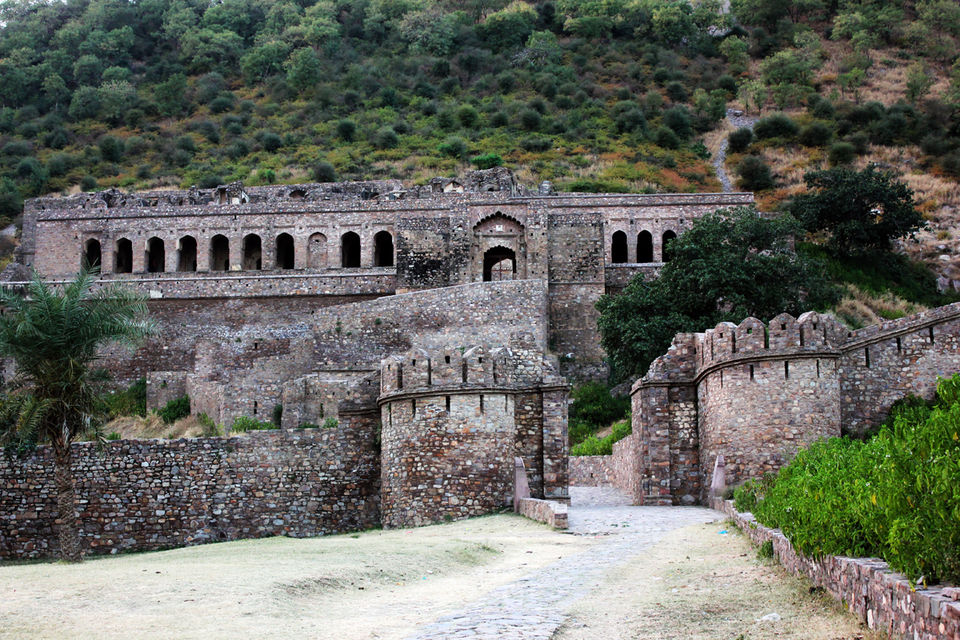
Bhangarh Fort is known as the most haunted place in India, and perhaps the greatest unsolved mystery. There is no doubting the fact that anything associated with the supernatural attracts a huge amount of attention and the deserted city of Bhangarh cashes in on that very idea. The many haunted stories of Bhangarh Fort have transformed it into a bucket list destination of sorts.

Curious travellers come in order to experience cheap thrills and while some go back disappointed, others simply cannot have enough of the suspense associated with the story of the Bhangarh Fort. If you happen to be one of those inquisitive travellers, it is imperative for you to visit this place and find out for yourself.

Is the Bhangarh Fort haunted? Here is the story of Bhangarh:

Most people are of the belief that Bhangarh Fort is haunted and there is no dearth of tales that help in amplifying the mystery that is Bhangarh. Venturing into the fort after sunset is nothing short of an act of bravery as it is supposed to be a centre for paranormal activity and the Archaelogical Survey of India therefore has prohibited people from visiting the Bhangarh Fort at night.

Of the many Bhangarh stories that the locals like to indulge in, the most popular is that of Emperor Madho Singh who built the city after attaining the approval of Guru Balu Nath, an ascetic who used to meditate there. The saint gave his approval on the condition that the shadow of the Emperor’s palace should never fall on his retreat.

If in case it did, the city would crumble into ruins. Once the construction was completed, the retreat of Guru Balu was unfortunately shadowed by the palace. Having incurred the saint’s wrath, Bhangarh immediately transformed into a cursed city and could never be rebuilt as no structures ever managed to survive in it. It is interesting to note that the tomb of Guru Balu Nath can still be found among the ruins.

Photo of Bhangarh Fort: Hauntings and Incidents 6/10 by Vishakha Srivastava
mysterious!

Another Legend of Haunted Bhangarh Fort:

Another Bhangarh Fort story pertains to Princess Ratnavati. According to legends, her beauty was nonpareil and stories of her surpassing physical attractiveness even transcended kingdoms and borders. When she turned eighteen, suitors from several states asked for her hand in marriage. Of all these suitors was a sorcerer named Singhia who was aware of the fact that he was no match for the princess. However, he decided to entice her with the magical powers he possessed.

He was lucky enough to see Princess Ratnavati’s mistress in the market and enchanted the oil she was purchasing with black magic. He was of the hope that the princess would surrender herself to him upon touching the oil. However, his attempt was futile as Ratnavati witnessed his trick and poured the oil on the ground which then morphed into a rock, rolled towards the magician and crushed him.

Photo of Bhangarh Fort: Hauntings and Incidents By Vishakha Srivastava
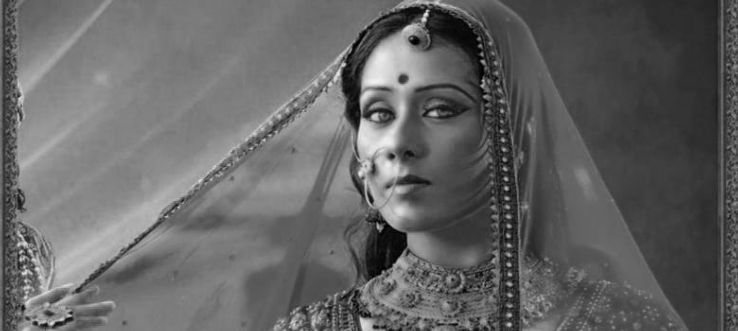
Rani Ratnavati 

Before dying, Singhia cursed the city of Bhangarh to death and as a result, it never witnessed any rebirths. Moreover, in the battle between Ajabgarh and Bhangarh, princess Ratnavati was killed, thus adding more weight to his malediction. Hopes, however, never die as several locals are of the belief that she has returned in a different form and will ultimately come back to end the unfortunate spell on Bhangarh.

While Bhangarh fort story has been rubbished by scientists, nothing stops the villagers from believing that it is a sanctuary for ghosts. People have supposedly often heard noises that are unaccounted for. The locals claim to have heard women screaming and crying, bangles breaking and strange music emerging from the fort. There have been instances where a special perfume was emanating from the Bhangarh Fort along with ghostly shadows and inexplicable lights. Some people have felt the strange sensation of being followed and even slapped by an invisible entity. It is believed that if a person enters the fort after sunset, he/she will never ever come out of it. The doors are therefore always locked after dusk and entry into the Bhangarh Fort at night is absolutely forbidden. Are all of the Bhangarh Fort stories factual or just strange pieces of fiction? Is the Bhangarh Fort really haunted? Nobody can say. Ghost hunters perhaps can.

REFERENCE-https://www.tripoto.com/rajasthan/trips/bhangarh-fort-haunted-incidents-and-stories

What do you want to do before you die?

Thinking about dying could be a scary topic to talk about but there are so many things to accomplish before death. A lot of people are on their death beds regretting what they did with their lives and have no way of going back and changing it. You have got to live a life you won’t regret 60 years from now, when your dying. You only get one life so take advantage of it, and do something great! What do I want to be by the time I die? I want to live an exciting life and achieve as much as I can. I want to be able to create, accomplish, and find so many things.

Before I die, I want to be able to create good relationships with everyone I’m close to. When I became a teen mom I lost most of my relationships with friends and family. One person that I’ve lost, that used to be really close me, was my dad. My dad is someone I can’t live without. Before I die I want to create that bond I used to have with him again. Since my dad and I don’t live in the same house, it makes it hard for us to see each other. I’d like to make a habit to go out for a walk together and talk about how I feel and how he feels about our relationship. Creating a bond with my dad is the most important to me because I used to be close to my dad and he has always been someone I truly trusted. Even though that changed over the past year, I still want my dad to know that I need him no matter what. I don’t want to die knowing I didn’t have the one special person by my side.

Before I die, I want to accomplish something that will make a change in our world. Martin Luther King Jr., for example, made a change in the world and he is still known for his greatness 49 years later. I want to be that person; 50 years from now, I want people to remember me for something great that I did. In our generation we have all these teens using drugs and drinking alcohol on a regular basis, so by the time they are 25-30 years old, they’ve become alcoholics. I want to be that person that helps them stop using drugs and drinking. Making that change in our world would be something greatly appreciated, and I can be that person who every parent thanks for helping and saving the lives of their teens. I want to be remembered so people can see me as a inspiration and do something great with their lives.

In order for me to know who I am as a person, I need to find myself. Only then will I be able to love myself and others. I’ve always been a girl to keep emotion to myself and never let anyone know how I feel. There were even times when I wouldn’t know what I felt. I’ve grown up not knowing how to handle myself or to control my feelings. I don’t know the real me because if I did, I would be able to control myself and what I feel. I need to love myself and get to know myself. I’ve put everyone first for so long, that I forgot to think about myself. I want to know myself before I die so that I know what I want to do with my life. Like I said before, we only get one life. I want to take this one life and get to know myself so I’m not lost in everything. I also want to find love, first from myself. Loving myself can make a big impact in my life. It could give me the strength to keep going in my life without hesitation. Loving myself will also help me love the people around me.

Death scares me a lot but I can’t let that fear prevent me from doing the things I want to do before I die. Thinking about all these accomplishments and goals makes me realize that death can be soon and it can happen to anyone at any time. We make all these plans and all our goals but there is only so much time we have. I plan to live my life to the fullest rather than wasting it and ending up with regrets.

Reference-https://www.lifehack.org/articles/communication/50-things-you-should-before-you-die.html

REINCARNATION-A MYSTERY

When someone dies, they can reincarnate in the same family—sometimes only a few months or years after death. The signs that a child is a loved one reborn are often apparent in the young child’s personality, quirky mannerisms, or shocking statements he or she makes about their previous life as a family member. The statements can include details of the death the family never talks about. In Return From Heaven, I describe a number of these amazing, not uncommon, cases that show the different ways parents recognize their child as a relative who had died before the child was born, someone they knew well and loved.

Now, here is a case that just came to me from a participant in one of my recent workshops. Her name is Tricia. It’s an example of how just knowing that souls can reincarnate in the same family can change a person’s perceptions about life, death, and the meaning of reincarnation.

Origin of Reincarnation

Hinduism is the origin of concept . Later reinforced by rise of Buddhism and Jainism. This put a lot of emphasis on getting out of cycle of Rebirth and attaining Moksha. Hinduism also emphasizes a lot on Worshiping and Rituals. Jainism and Buddhism focuses more on Actions by which person can improve his Karma.

HINDU MYTHOLOGY

Sati is also known as Daksyani is the Hindu goddess of marital felicity. She was the first wife of lord Shiva, other being Parvati who was her reincarnation after her death. Daksha-Prajapati refused to invite Shiva  to his yagna, sati flow into such a rage that she burnt herself in protest and disrupted the entire ceremony.

Daksha-Prajapati and his guest saw the fury and power of Shiva. After the death of Sati, she was reborn as goddess Parvati successfully. In Hindu legend both sati and Parvati successfully play the role of beginning Shiva away from ascetic isolation into creatively participation with the World. The act of Sati, in which a Hindu widow self immolates  on her husband pyre as a final and consummate act of loyalty and devotion is patterned after the dead committed by this goddess to uphold the honor of her husband.

Reincarnation is the religious or philosophical belief that the soul or spirit, after biological death, begins a new life in a new body that may be human, animal or spiritual depending on the moral quality of the previous life’s actions. The phenomenon of reincarnation is very complex. The idea was to tell and inform the major concept and circle of it.

Delhi’s Paranthe Wali Gali

Half the fun of eating at Old Delhi’s Paranthe Wali Gali, is getting there.

The other half, is of course, the food.

Slotted in the ancient narrow alleys of Delhi, India is the legendary series of restaurants serving North Indian parathas; The lane is famously known as Paranthe Wali Gali.

There are quite a few different restaurants to choose from, all claiming to be the best and the original, and all equally busy with customers (I assume they are all actually quite similar, but if you know otherwise please let me know!).

I chose Babu Ram Paranthe Wale.

Though it appeared to be packed with customers waiting in line outside, somehow they managed to cram us in at a corner table without having to wait more than a few minutes.

THE PARATHA KITCHEN

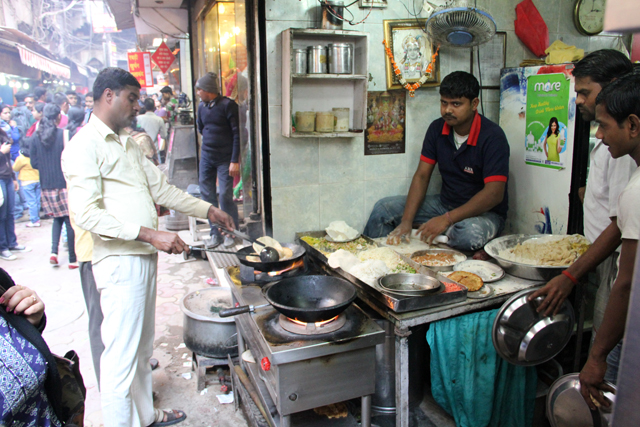
Outside, where armies of people pass by, is the kitchen, where all the action and food preparation takes place.

One man rolls out dough and fills them with topping at a mind blowing speed, while another guy fries the parathas in oil that’s so hot it looks like lava. Within just a few moments the raw dough is transformed into a crispy golden flatbread.

ARE YOU SCARED OF THE MENU?

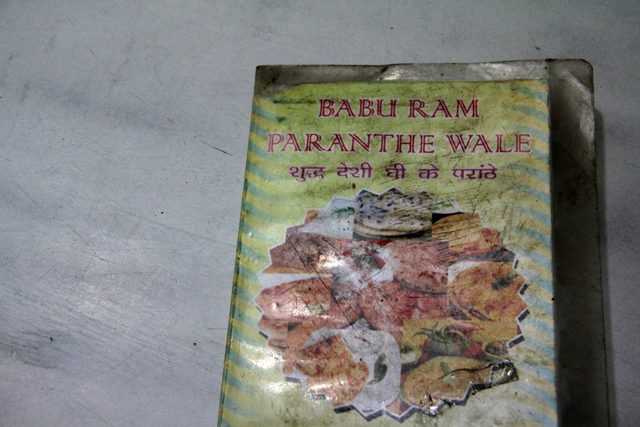
Now that, my friends, is a menu!

I’m guessing decades of greasy hands have touched that artifact, and I’m sure that if a scientist got his hands on that, he could probably find some pretty interesting things.

In my opinion, that’s always a sign of a not so healthy, yet a quality eatery!

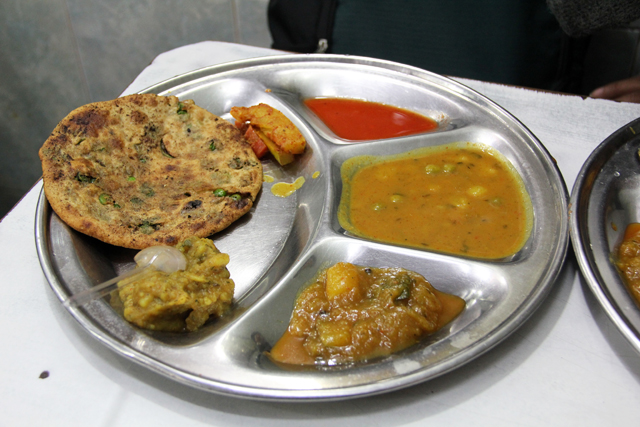
At Babu Ram Paranthe Wale there are probably about 30 different kinds to order, They came on a metal saucer with pumpkin curry, a peas curry, and a red sauce that tasted just about like the American version of Chinese sweet and sour sauce (sour tomato sauce)

While I did think the parathas were tasty and delicious, they were a little too greasy for me. I definitely couldn’t eat my fill of parathas, I’d just be too greased out. 2-3 were perfect.

Paranthe Wali Gali is the type of place people are willing to wait to eat, a food locals consider special and maybe comforting.

Sitting at the table next to us (which was actually only inches away from us) was a group of ladies who were originally from Delhi, but had been living in the United States for over 10 years – they too came to get a taste of that all familiar paratha and to savor the tasty pieces of fried dough they had remembered.

And like I mentioned at the beginning of this article, the parathas are good, but in this case the atmosphere of the chaotic maze of Chandi Chowk is part of the fun!

references-https://www.herzindagi.com/hindi/reviews/delhi-chandni-chowk-gali-paranthe-wali-food-article-7880

YOU ONLY LIVE ONCE!

Live every day as if it were your last.” I believe in this quote because life is too short to procrastinate; do the things you want now because there might not be a tomorrow. I know it might be hard to live like this, but I’m sure if you asked a group of older people if they died tomorrow, are there still a lot of unfinished goals that are yet to accomplish, most of them would say yes, and wish they would have done these goals earlier in life.

you only live once so make the best of it

I try to live by this quote as much as possible. I like to take advantage of this short life by being spontaneous and willing to try new things. Holidays and vacations are almost always a good time, so I always make sure I’m with friends and family, and take as many vacations as possible. For example last spring break three of my buddies and I decided to take a road trip to Miami. We didn’t plan anything just started driving and what ever happened from there on we didn’t have a clue. This trip turned out to be one of the best times of my life and the best part was we didn’t know what was going to happen each day. Since the trip was a huge success my buddies and I made a pact to do the same thing every spring break for as long as we know each other.

you only live once but if you do it right once is enough

I want to accomplish all my goals in life by the age of thirty five. This might be hard but if I do I will be happy knowing if I die early I know I lived life to the fullest each day and didn’t hold anything back. I would rather live a fun and spontaneous forty years than live to ninety with just an average lifestyle. In my point of view I think everyone should live on the edge and take a few risks in life. Some people need to realize you don’t get a second chance at everything, so if you get a chance to do something just do it or you may regret it for the rest of your life.

I hope this quote helps people realize the things in life they should take advantage of. You may regret bad times in the past but those bad times are gone, and what you do next is up to you. There are too many obstacles in life to dodge, and no one is perfect so take advantage of this life that we are blessed with before it’s too late.

reference-https://medium.com/the-ascent/why-yolo-but-if-you-do-it-right-once-is-enough-is-mistaken-10f0a0afc5c7

Kolkata: A city of arts, culture and cuisine

Kolkata, still commonly referred to as Calcutta, is the capital of India’s eastern state of West Bengal. It’s now known for its gentle pace of life, but back in the 18th century, the city was British India’s most important trading post and the showpiece of colonial power.

In addition to its history, the gateway to eastern India is famous for its food. Bengali cuisine has evolved over time, but Kolkata still remains an ideal place to experience the cuisine characterized in part by mustard oil and fish.

There are many very good restaurants in the city, but if you want home cooked Bengali food, then that’s possible, too. Iti Misra is one of a number of home chefs that host lunches for visitors to the city: Cooking from her kitchen, Iti dishes out authentic Bengali cuisine and gives her guests a glimpse into local life.

Home to prominent intellectuals, Kolkata is regarded as an artistic and cultural capital of India. In northern Kolkata, the oldest part of the city, you’ll find the stately mansions of famous Kolkatans such as Nobel Prize-winning poet Rabindranath Tagore.

That area of the city is also home to the busy Kumartuli clay making quarter. There, potters mold lifelike religious idols for the city’s many festivals.

Running from north to south right through the city is Hooghly River. At roughly 160 miles long, it provides the city with a supply of water and serves as a major transport system for both people and cargo. It was through the river that the East India company sailed into the region and established its trade settlement.

The waterway also provides the perfect place to experience a Kolkatan sunset. You can hire a boat to take you out on the water where you can see the iconic Howrah Bridge and the newer Vidyasagar Bridge.

For the Bengali high society, evenings in Kolkata can be spent at one of the many old colonial private members clubs such as The Saturday Club, which was founded in 1875.

Reminders of Kolkata’s colonial past can be found on every corner, but it’s the combinations of that history and modern advances that make this friendly metropolis a unique Indian experience.

bapu’s sacrifices

Mohandas Gandhi is one of the most famous leaders and champions for justice in the world. His principles and firm belief in non-violence have been followed by many other important civil rights leaders including Martin Luther King, Jr. and Nelson Mandela. His renown is such that he is mostly just referred to by the single name “Gandhi”.

Mohandas was born in Porbandar, India on October 2, 1869. He came from an upper class family and his father was a leader in the local community. As was tradition where he grew up, Mohandas’ parents arranged a marriage for him at the age of 13. Both the arranged marriage and the young age may seem strange to some of us, but it was the normal way of doing things where he grew up. Mohandas’ parents wanted him to become a barrister, which is a type of lawyer. As a result, when he was 19 years old Mohandas traveled to England where he studied law at the University College London. Three years later he returned to India and started his own law practice. Unfortunately, Mohandas’ law practice wasn’t successful, so he took a job with an Indian Law firm and moved to South Africa to work out of the South African law office. It was in South Africa where Gandhi would experience racial prejudice against Indians and would begin his work in civil rights

Once back in India, Gandhi led the fight for Indian independence from the British Empire. He organized several non-violent civil disobedience campaigns. During these campaigns, large groups of the Indian population would do things like refusing to work, sitting in the streets, boycotting the courts, and more. Each of these protests may seem small by themselves, but when most of the population does them at once, they can have an enormous impact. Gandhi was put in prison several times for organizing these protests. He would often fast (not eat) while he was in prison. The British government would eventually have to release him because the Indian people had grown to love Gandhi. The British were scared what would happen if they let him die. One of Gandhi’s most successful protests was called the Salt March. When Britain put a tax on salt, Gandhi decided to walk 241 miles to the sea in Dandi to make his own salt. Thousands of Indians joined him in his march. Gandhi also fought for civil rights and liberties among Indian people.

Gandhi was assassinated on January 30, 1948. He was shot by a terrorist while attending a prayer meeting.

His birthday is a national holiday in India. It is also the International Day of Non-Violence. He was the 1930 Time Magazine Man of the Year. Gandhi wrote a lot. The Collected Works of Mahatma Gandhi have 50,000 pages! He was nominated for the Nobel Peace Prize five times


CULTURE OF Bhutan: The World’s Happiest Country

It is hard to imagine that such a small country, the size of Indiana with the population of Alaska, tucked in the Himalaya Mountains, accessible only by two airplanes, is the “Happiest Country” in the world, the last standing Buddhist Kingdom and has one of the fastest growing GDP’s in the world. This country is Bhutan, “Land Of The Thunder Dragon.” Bhutan is located in South Asia and is landlocked between India, Tibet, China, and Nepal. In 2004, I lived in Bhutan for a month at the time the King was transitioning the government to a democracy. My father had been invited by the Chief Justice of Bhutan to help them write their judicial laws.

Bhutan is the last standing Buddhist Kingdom in the World and, until recently, has preserved much of their culture since the 17th century by avoiding globalization and staying isolated from the world. Bhutan only allows a certain number of foreigners into the country each year, and the two hundred dollars a day that must be paid by every traveler is a deterrent for many. Internet, television, and western dress were banned from the country up until ten years ago. But over the past ten years globalization has begun to change in Bhutan, but things remain perfectly balanced.

Bhutan is the only country in the world that has a ‘GNH.’ You may think GNH is just another statistically based term with no real life application, but it refers to “Gross National Happiness.” The process of measuring GNH began when Bhutan opened up to globalization. It measures people’s quality of life, and makes sure that “material and spiritual development happen together.” Bhutan has done an amazing job of finding this balance. Bhutan has continually been ranked as the happiest country in all of Asia, and the eighth Happiest Country in the world according to Business Week. In 2007, Bhutan had the second fastest growing GDP in the world, at the same time as maintaining their environment and cultural identity.

Bhutan is the only Buddhist Kingdom in the world; Mahayana Buddhism is the official religion of Bhutan. Over two thirds of the people are Buddhist, and Buddhism is supported by the government both politically and economically. The government gives subsidies to Buddhist monasteries, shrines, monks and other Buddhist programs. Buddhists also are very influential politically with a guaranteed voice in public policy. Bhutan has also made significant efforts to keep other major religions out of their country. Promoting Christianity and other major religions is not allowed in Bhutan. Even with globalization, Bhutan has been able to preserve their Buddhist traditions, and they remain the last standing Buddhist Kingdom.

Some call Bhutan the “Switzerland of Asia” because of its size, shape and location in the mountains. But as I flew into Bhutan, I realized that the mountains I saw out of the window of the tiny shaky plane were Mt. Everest and K2, the two highest mountains in the world. As soon as the plane touched down in Bhutan, the beautiful landscape overwhelmed me. Bhutan is a country of mountains and valleys, and the climate varies with elevation. The mountains are extremely cold and snowy, but it is humid and subtropical in the hills, and temperate in the valleys. Bhutan is not an easy country to travel through; traveling from one place to another usually involves passing over a mountain, on two way roads barley wide enough for one car with a thousand feet drop on both sides. Our car trips through Bhutan involved many stops for eating and site seeing, but also puking. The windy roads through the beautiful mountains and valleys were not always “beautiful.”

Bhutan has one of the stable ecosystems in the world and has virtually no environmental damage due to its long isolation. The restrictions on tourism and their protection of natural resources have let Bhutan preserve the beautiful landscape and physical country as well as their cultural identity.

In Bhutan, we were guests of the King and dinners consisted of traditional Bhutanese food, such as Yak Burgers but with a side of French Fries. One day, my mom took me to play basketball at the local court. Being the only foreigners there, we were the center of attention, but that did not stop the local boys from including us in their games. One boy who seemed to be everyone’s center of attention, who was very good at basketball, ended up making friends with me. He played basketball with us, and engaged in a friendly conversation. As we walked out the door, someone pulled us aside and told us the fellow who so kindly helped me with my basketball shot was the Prince of Bhutan. This was very telling to me – that the Prince of Bhutan would play basketball with kids at the local court, showing how Bhutan was still a small isolated world, where a Prince was safe to walk the streets and do as he pleased. And yet, it also showed how Bhutan was starting to more open to the influence of the wider world; the prince spoke perfect English and loved the American basketball.

In a world dominated by globalization, developing nations may benefit from globalization – economies made stronger, access to more advanced technology, better health care, but this all comes at a price. With globalization comes integrated western culture, loss of traditional languages, religions and ideas, and the destruction of many folk cultures worldwide. Though a developing country’s GDP might benefit from globalization, does its Gross National Happiness? In many cases, developing nations lose their cultures, origins, and way of life, languages, as well as natural resources to globalization. The society and culture, as well as the economy, become linked to the rest of the world and the ideas of the world flow into that country, often destroying culture. Is it worth giving up culture for a better economy? If all nations worldwide used a (GNH) to judge “the preservation and promotion of cultural values,” I think many people would judge globalization negatively.

Bhutan has found the perfect balance. In recent years, internet, cable television, cell phones, as well as many other modern technologies and ideas have become a part of Bhutan, but their desire to preserve of cultural values, as well as the desire to protect the environment has remained high. Bhutan’s economy and culture are growing and changing. Bhutan’s unique strategy has presented a solution to globalization. They are able to adapt to globalization, to strengthen their economy, while still preserving thousand year old traditions and culture. Bhutan is the only Buddhist Kingdom still in the world, and one where cell phones and cable television are present.

Why Do So Many Students in India End Their Lives Over Exams?

Prerna, 14, took her own life after she failed two subjects in her Class VIII half-yearly exams. She is one of thousands of Indian students who take their own lives in India every year..

According to a 2014 report from the Indian government, exam-related pressure was the largest cause of suicide in India’s youth. On this podcast you’ll hear from people who work with suicide support groups, doctors, as well as the last words of several students from their suicide notes.

India’s student suicide crisis is no new development. India has consistently reported high suicide rates. A large number of suicides were reported in the 15-29 age group.

Twenty-two students took their own lives in a week in Telangana in April 2019, because they had failed their school’s intermediate exams.

What kind of psychological pressure leads students in school, like 14-year-old Prerna, to take their own lives?

But failure to live up to expectations isn’t the only cause for student suicides. A 17-year-old from Ghaziabad took her own life after she cracked the IIT-JEE entrance examination in 2016.

In her five-page suicide note, she wrote about how she never wanted to study science or be an engineer.

Seventeen-year-old Kriti Tripathi wrote the suicide note before jumping to her death from a five-storey building in Kota on 28 April 2016.

She had scored 144 marks in the JEE Mains 2016 results declared a day before, on 27 April. But she writes….she never wanted to be an engineer. The pressure to succeed eventually leads to everything else in a student’s life being side-lined, like extra-curricular activities and other things that could lead to a more well-rounded, healthy sense of self.

reference-the quint site

sanitation in rural area

A government survey shows that 93% of rural households in India have access to a toilet and 96% of those having a toilet use them. However, critics point out contradictions between these data and micro-level assessments in different parts of India.

Water is a basic necessity, and an important resource for sustaining life. The decline in water quality endangers the health of humans as well as the ecosystem. Clean drinking water, hygiene, and sanitation play an important part in maintaining health. 

Contaminated water causes many water-borne infections like diarrhoea, and also serves as a carrier for vectors such as mosquitoes spreading epidemics. Open defecation means no sanitation. It fouls the environment, and spreads diseases. According to WHO-UNICEF report (2010), India has the highest rate of open defecation. Access to safe drinking water and good sanitation are vital for family well-being. It results in control of enteric diseases, and boosts child health. A healthy child has better learning and retaining ability. Girls avoid going to school where there are no proper sanitation measures.

Sanitation makes a positive contribution in family literacy. According to a UNICEF study, for every 10 per cent increase in female literacy, a country’s economy can grow by 0.3 per cent. Thus, sanitation contributes to social and economic development of the society. Improved sanitation also helps the environment. 

Clean drinking water and good sanitation would not prevent infections without practicing good hygiene. A simple habit of washing hands goes a long way towards preventing diseases. The stored water supply may also serve as a source of infection in the absence of hygiene. 

In India, rapid urbanisation and the increasing population has placed a major strain on the existing infrastructure. It has affected the capacity of the government to provide clean drinking water, and effective sanitation measures. Though the government has tried to overcome this problem through urban development programmes like Clean India Campaign, the total costs required for successful operations continue to mar their efforts. Hence, the contributions of corporations, and other organisations is a welcome change.