Panchayat system in India

 The Panchayat system is an integral part of India’s democratic structure. A local government is closest to the common citizens and promotes participatory democracy. Mahatma Gandhi believed that India lives in its villages. He cherished the idea of self-sustained villages with effective decentralization of economic and political power through village Panchayats. 

Panchayat means an assembly of five people chosen and accepted by the local people. Traditionally, it was used to settle disputes in the village. The roots of the Panchayat system in India are extremely old. Even during the colonial times, many developments in the direction of local governments can be traced. In 1882, Lord Rippon had established local self-government in India. 


Article 40 of our constitution states that “The state shall take steps to organize village Panchayats and endow them with such powers and authority as may be necessary to enable them to function as units of self-government.”

Several committees were set-up by the Government of India to study the implementation of self-government in rural areas;  Balwant Rai Mehta Committee (1957), Ashok Mehta Committee (1977), GVK Rao Committee (1985), LM Singhvi Committee(1986). 

73rd Amendment

 After the recommendations by a number of committees, the 73rd amendment was passed in 1992. It constitutionally strengthened the power and responsibility of the Panchayat system.  It established a three-tier system popularly known as Panchayati Raj. First was the Gram Panchayat at the village level, followed by the Block Panchayat at the intermediate level, and the district level body known as Zilla Parishad. 

The amendment provided the Panchayat with the responsibility to develop plans for economic development and social justice. The 29 functional responsibilities in the 11th schedule were transferred to the local bodies which includes; rural electrification, poverty alleviation programme, education, agriculture, social welfare, drinking water, women and child development etc. Each state can decide how many of these twenty-nine subjects would be transferred to the local government.  

Members of these bodies are elected directly by the people for a tenure of five years.The State Election Commission has the responsibility for conducting the Pachayat elections. Along with reservation for the Scheduled Caste and Scheduled Tribes, one-third of the Panchayat positions were reserved for women. 

The Gram Panchayat is headed by the Sarpanch. Other than Gram Panchayat, a Gram Sabha was also established. It was an assembly which consisted of all the voters of the village. 

The 74th amendment focussed on urban local government while the 73rd was for the rural local government. Both the amendments promoted democratic decentralization of power. 

The main objective of the Panchayat system is to strengthen the base of democracy at grass-root level. It gives an opportunity to the citizens to participate in the implementation of rural development policies. 

Yoga And Some Science-supported Benefits.


We all are familiar with Yoga and many of us even practice it on a day-to-day basis. But, do we know what does the word “Yoga” means? And what benefits of Yoga are supported by science? Well, some of us may know and some of us don’t. So, let’s dive into the questions mentioned above, and let’s learn.

The word “Yoga” is derived from the Sanskrit root “Yuj,” which means ‘to join’ or ‘to yoke or ‘to unite’. It assimilates mediation and poses composed to stimulate relaxation and reduce stress. In simple words, Yoga is an ancient practice that brings our body and mind together.

Practicing Yoga can provide a lot of benefits for both our mental and physical health. Although not all the benefits are supported by science. Mentioned below are some of the many benefits of Yoga that are supported by science:-

I) Improves Flexibility and Balance

In several studies, it has been found that practicing yoga can improve flexibility and balance. 

According to a study in 2017, a group of 26 male athletes who undertook Yoga for 10 weeks, had shown greater improvement in their flexibility levels compared to the control group. 

II) Could Promote Sleep Quality

Poor sleep quality can cause a lot of trouble for a person. Although it has been found in studies that yoga could improve sleep quality.

In a study, in 2005, 69 old patients were assigned to either practice Yoga, herbal preparation, or be a part of a control group. It has been found that the Yoga group fell asleep faster, slept longer, and felt more rested than the other groups. 

III) Can Decrease Stress

As mentioned in the above line Yoga is known for stimulating relaxation and stress. 

Many studies have also shown that it decreases the secretion of the primary stress hormone (cortisol). 

In an observation, 24 women labeled themselves emotionally distress, when completed a three-month yoga program, showed significantly lower levels of cortisol. They also had a lower level of stress, anxiety, fatigue, and depression. 

IV) Could Improve Heart Health

The health of your heart is a very essential component of your overall health. And studies have shown that yoga may help in improving heart health and in reducing factors leading to heart disease. 

A study has found that participants over 40 years of age who practiced yoga for five years had lower blood pressure and pulse rate than those who didn’t. 

V) Improves Life Quality

For many individuals, Yoga has now become an accompaniment to improve the quality of life. 

In a study, 135 elders were assigned to either practice Yoga for 6 months, walking, or join a control group. The Yoga group showed improved quality of life as well as mood, and fatigue, compared to other groups.

Though these were only a few benefits of Yoga that are supported by science, you can always go and google more. Science has also accepted the beneficiary of practicing Yoga, then you should too. Just by giving 1hr from your day to Yoga, you can improve both mentally and physically. In the end, it always depends on you.  

CHUNA : A Magical Medicine

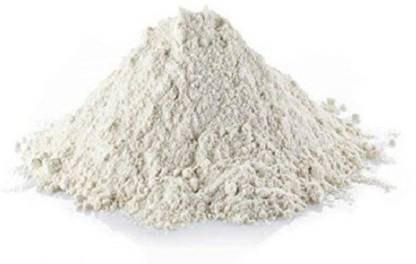
Chuna is a very familiar name also known as lime or calcium hydroxide.It is used for various purposes.But most importantly it is used to cure many health related issues.

Chuna that is used for eating is called edible chuna because it is the pure form of it. In ancient times people used to eat chuna by applying it on the beetle leaves because it has many benefits.
Benefits of Chuna

1.It is a good source of calcium
Calcium is very important for our body because it helps to strengthen our weak bones.Intake of calcium is necessary for each age group. But women above the age of 30 and old age group need more calcium for their body. So they have to take calcium supplements.Intake of chuna as calcium supplement can help to restore calcium in their body.

2.Helps to make teeth stronger
   As chuna is a good source of calcium it helps to make our teeth stronger and prevents from early falling of teeth.
3. Increases  height

One of the main problems of children is related with their height. Everyone want a good height.So if you want to increase your height take chuna regularly.

4. Periods 
Women’s who do not have their periods regular  or have very bad cramps during periods should take chuna regularly. Chuna helps to ease their problems. 
5. Helps to boost memory
 People who have problem in memorizing and tends to forget things easily,should intake chuna. It is  also very helpful for people suffering with Alzheimer disease.
6. Helps to cure jaundice
 If you are suffering from jaundice you should intake chuna by mixing it in water. It helps to cure jaundice.
7. Digestion 
Intake of chuna increases the level of gastric juices which  helps in proper digestion. Those who have the problem of constipation should intake chuna.
8.  Eyesight 

 Regular intake of chuna mixed with water helps to improve eyesight. Those who wear spectacles  should intake chuna.
9. Pregnancy

During pregnancy women body requires  an lot of calcium to strengthen her and fetus bones.So intake of chuna helps to provide calcium during this period. Regular intake of chuna helps to reduce labor pain. Take grain size amount of chuna, mix it in the pomegranate juice and drink it daily. From this pregnant women gets both calcium and iron. It also helps to prevent miscarriage.

10. Inflammation  of Joints 
People have problem of inflammation of joints due to the deficiency of calcium and vitamin D. Inclusion of chuna in the diet helps to prevent such diseases due to regular supply of calcium.

11. Anemia 
Anemia is a condition under which hemoglobin is less than the normal. Intake of chuna helps to increase hemoglobin.

12. Knee pain
 Those who have the problem of knee pain should regular intake chuna to get relief from such pain.

13. Menopause 
Women suffers with many problem when menopause starts. To have relief from such problem take  chuna regularly.

 Directions for use

Take grain size amount of chuna, mix it in the water and drink it daily. Do not take a large amount of chuna as it may result in bloating and gas.Those who have problem of kidney stones should not take chuna.

Availability of chuna
Edible chuna can be easily available at panwari shops and online stores.It has so many benefits but still its price is very low and anyone can afford it .


FLAX SEEDS: Best for Health and Longevity

Flax seeds are also known as linseed. It is a flowering plant called Linum usitatissimum.It is a food and fiber crop grown in temperate region.

Flax seeds has been used for thousand of years and they also form an essential part of our diet. It is best for health and longevity of life. It contains 800 times more lignin than any other food plant. It is one of the best vegetarian source of omega-3 found in salmon. 50 gm of flax seeds is equivalent to that found in 3-ounce of salmon serving. It also contains omega-6 and omega-9. It is a rich source of iron,calcium and protein. Amino acid found in flax seed are the one’s which human body can’t generate on its own.
Uses of Flax Seeds
According to a research, intake of omega-3 provides benefit in many diseases. By consuming flax seeds, we have the following benefits:-
1.Presence of high fiber and low carbohydrates in flax seeds helps in controlling weight as it reduce our appetite.
2.Intake of flax seeds decreases the LDL cholesterol, which reduces the chance of having heart diseases.Omega-3 fats does not allow blood vessels to get blocked. Through this omega-3 cleans our blood vessels. It helps in smooth flow of the blood. Omega-3 is very useful for the blood vessels.
3.Flax seeds have different types of antiviral properties, which protects us from frequent cold and flu ailments.
4. Omega-3 present in flax seeds does not allow clotting of blood. As blood clots increases the chances of having stroke,heart attack, etc.
5. Omega-3 fatty acids and vitamin B that are present in flax seeds help to  reduce dark marks and spots on face. It makes the skin glow and prevents pimples.
6. Flax seeds keeps are digestive system healthy. Intake of these seeds helps to cure the swelling in the stomach.Person get a better health when problems related to digestion ends.
7. Omega-3 boost the memory and concentration. It is good for the brain. Effective in Alzheimer disease.
8. Omega-3 helps to improve eyesight. Also effective in cataract and glaucoma. Use of flax seed makes  the eyesight sharp.
9. Intake of 15-20 gm flax seeds with aloevera, helps to reduce constipation.
10.Flax seeds balances women hormones so that danger of early menopause can be eliminated. Intake of flax seeds in the breakfast helps to regulate periods and eases period cramps.
11.Flax seeds are effective in high blood pressure.
12.Old age problem of knee pain can be reduced by intake of flax seeds.
13.Presence of antioxidants in flax seeds helps to cure different types of cancer.
13.Omega-3 is called feel good food as it keeps our mind and soul happy.
14.Omega -3 is very beneficial for our hair and nails.
15.Flax seeds are extremely high in soluble and insoluble fibers.
16.Flax seeds detoxifies cells.
17.It is very rich in calcium and iron.
18.It helps to prevent anemia.
19.It helps to burn fats
Dosage
Roast the flax seeds before use to get a better taste.
Take 1 tablespoon of flax seeds three times a day after every meal.

India's long road: Rural development


“The village is the cell of the national body and the cell-life must be healthy and developed for the national body to be healthy and developed.” – well alluded by SRI AUROBINDO.

India as it is said is the “land of villages.” The heart of our nation resides in the rural areas. As quoted by the father of our nation, Mahatma Gandhi, “India lives in her seven hundred thousand villages.” Although the term “Rural development” has been widely used, what constitutes it seems to have changed significantly. So, the question is what exactly is rural development. Rural development means improving the living conditions of the people living in rural areas. There are many definitions to it. The fact is that today more than half of the Indian population lives in rural areas and most of them depends upon agriculture as their primary source of income. Agriculture is an integral part of many world economies, especially the developing ones, and hence plays a significant role in the rural development. The strength and prosperity of our nation depends upon the strength and prosperity of rural areas. Therefore, it is important to free the rural India from poverty.

Our government is trying its best to bring rapid growth and development in the villages. We derive major contributions to GDP from rural workers. Upwelling schemes for rural electrification, open defecation free villages, skill development, Prime Minister rural housing mission, Prime Minister Gram Sadak Yojana, Deen Dayal Upadhyaya Grameen Kaushalya Yojana, National Rural Livelihood Mission, National Rural Employment Guarantee Act, Sampoorna Grameen Rozgar Yojana, Sarv Siksha Abhiyan, Sansad Adarsh Gram Yojana, National Social Assistance Programme etc., has modified the doddering face of Indian villages.

Empowering rural economy through digitalization schemes, regeneration of traditional industries schemes, entrepreneurship schemes, water conservation schemes, MGNREGS, has further added to the rural development and has brought direct benefit transfer. Achieving hygiene and sanitation through government initiatives like SWACHH BHARAT MISSION has further added to the list.

According to the World Bank, “Rural development as a strategy designed to improve the economic and social life of a specific group of people – The rural (people) poor. It involves extending the benefits of development to the poorer among those who seek a livelihood in rural areas. The group includes small-scale farmers, tenants and the landless.” Rural development is a strategy that encompasses all the aspects and factors to achieve an overall spectrum of development and growth. This development is needed to benefit the poor and weaker sections of the society. Rural development seeks to transform all the sectors of rural economy – the primary sector, the secondary sector and the tertiary sector. It is concerned with the improvement of the standard of living of the rural people through the provision of health and medical facilities, employment opportunities including vocational training, educational facilities, etc. It brings about significant improvement in the socio-economic conditions of the scheduled castes, scheduled tribes, the landless agricultural labourers and the marginal and small farmers.

The village land of India is adorned with lush green land, protected livestock and unexplored pool of species which needs special attention of the government. The recent extent of India from the Regional Comprehensive Economic Partnership (RCEP) did mark the promise of self-sustained indigenous production of India. The decision was to safeguard the interests of industries like agriculture and dairy.

Rural development should include social, economic and overall development of a rural area. It should be an all- round project. Employment creation is the main component of rural development. Therefore, to generate employment opportunities in villages, there is a need to strengthen agriculture sector and also set up other industries. A digital platform should be built for active labourers to check the process of employment generation. Integrated and organic farming methods should be promoted. Economic models like Gig’s – economy must be brought in action to counter seasonal as well as disguised unemployment from rural economy. Better planning must be done by the government, to boost up local economy of a village. Better roads connectivity should be put in the major plan of action. Basic amenities should be made available.

“Education is the most powerful weapon which you can use to change the world”, well said by Nelson Mandela. Six Indian states account for about 70per cent of all illiterates in India. India currently has the largest population of illiterate adults in the world with 287 million people, with major proportion in the rural India. While India’s literacy rate rose from 48 per cent in 1991 to 63 per cent in 2006, “population growth cancelled the gains so there was no change in the number of illiterate adults”, says the UNESCO report.

Thus, education is the most important tool which can pave the way for the development of every other factors. The government has been trying to come up with schemes to strengthen education and integrated skill development of youth of rural India. Primary education has been made free and compulsory for the rural people so that the maximum number of the villages may be literate. Schemes like Beti Bachao Beti Padhao, has been proved effective. Women in rural India are still devoid of their ‘fare-share’ in the field of agriculture and labour. Strengthening of service sector has emerged as a boon for women. The problem of the ownership of the land should be resolved. The cottage industries should be established to further accelerate the growth. The villages should be in sync with the urban areas.

Another matter of concern is the crime rate which has increased in rural areas and specially against the marginalized sections of society. The death rates in rural areas due to domestic violence has also not seen any change. Banning of liquor consumption in states like Bihar has provided to be an effective step. People should be made aware and educated about the rights and wrongs. Proper healthcare facilities should also be provided with adequate number of doctors and nurses. Other robust steps should be adopted towards rural development.

It is often felt that the migration of people from rural to urban, in search of employment or better lifestyle, is putting severe pressure on urban amenities. The low wage migrants are thus left with no other option than to live in unhygienic condition. There is a need to make rural economy stronger and create employment opportunities in rural India. This will help in reducing the disparity in per capita income of rural and urban which has always remained high.  A significant growth is required in rural area. Non farming activities should also be encouraged.

The development of rural India is of utmost importance for the development of the country. If India needs to become the next superpower in the world, it needs to tap into the potential of rural India. Given its size and population, no business house can afford to neglect the consumer spending power of rural India. India has many heroes that rural population should look up, like M.S. Swaminathan, the father of the green revolution in India, Varghese Kurien, the father of the white revolution in India. The progress of a nation depends upon the progress of its villages. We can say that the rural areas are the backbone of a nation.

Our rural areas have undergone major changes since independence. We should try to keep in mind the Sustainable Development Goals (SDGs) while trying to achieve the rural development goal. We need to join our hands with the government in embellishing its goal of the development of rural India.


rapid growing industry

BY: NEHA SHAHAB 
The concept of e-commerce first formally came forth in 1991, a time when internet practically did not even exist in India. Even worldwide, very few could fathom that the act of buying and selling goods and services over the internet, would be as widely accepted a practice, as it is today. By the late ’90s, people became aware of this thing called the internet, but for a majority of them, it remained a luxury they did not particularly need. In a truly Indian manner, it was only in 2002, when the IRCTC introduced an online reservation system, that the public widely accepted the internet as something fruitful, by which time a company named Amazon, was already beginning to create a few murmurs in the US.
Many people are also unaware that Rediff had been trying to capture the Indian market since the year 1999 and that IRCTC was the first company to create a successful portal.
Investments/ Developments
Some of the major developments in the Indian e-commerce sector are as follows:
In May 2021, Amazon introduced a video streaming service within its shopping app called MiniTV for users in India. MiniTV features web series, comedy shows and content on tech news, food, beauty and fashion.
In May 2021, Flipkart strengthened its grocery infrastructure to cater to customer safety and demand across India. In this quarter, it is planning to further expand its fulfilment centre capacity for grocery by over 8 lakh square feet across Delhi, Kolkata, Chennai, Coimbatore and Hyderabad.
In May 2021, Flipkart announced that it is in talks with sovereign funds, private equity majors and other investors to raise up to US$ 2 billion at a valuation of US$ 30 billion.
In April 2021, Flipkart announced a commercial alliance with Adani Group to improve the company’s logistics and data centre capabilities and create about 2,500 direct jobs.
In April 2021, Flipkart announced to acquire Cleartrip, an online travel technology firm. Flipkart announced to purchase 100% shareholding of Cleartrip as the company expands its investments to broaden its digital commerce offerings for customers.
In April 2021, Kirana commerce platform ElasticRun raised US$ 75 million in a round led by existing investors—Avataar Venture Partners and Prosus Ventures.
In March 2021, Amazon acquired Bengaluru-based retail tech start-up Perpule for Rs. 107.6 crore (US$ 14.5 million).
In March 2021, Purplle, an online beauty store, raised US$ 45 million from Sequoia Capital India, Verlinvest, Blume Ventures and JSW Ventures.
In March 2021, Captain Fresh, a B2B marketplace for seafood, raised US$ 3 million in seed capital led by Matrix Partners India and Ankur Capital.
In March 2021, the Confederation of All India Traders (CAIT), which represents 80 million traders and 40,000 trader associations, announced the launch of a mobile app for its e-commerce portal, ‘Bharat E-market’. The association aims to get more small traders to sell online easily through smartphones.
In February 2021, Flipkart partnered with Maharashtra State Khadi & Village Industries Board and Maharashtra Small Scale Industries Development Corporation to bring local artisans and small and medium businesses into the e-commerce ecosystem.
In February 2021, Zomato entered into an agreement with the Ministry of Housing and Urban Affairs (MoHUA) to introduce 300 street food vendors on its portal.
In February 2021, Flipkart Wholesale, the digital B2B marketplace of Flipkart Group will offer grocery on its app with an aim to provide kiranas and small retailers one-stop access to a wide selection of products.
In February 2021, Udaan, a B2B e-commerce firm, announced to expand its warehouse capacity (by 5x) to 50 million sq. ft. across several states in the next 7-8 years.
In January 2021, Flipkart introduced SuperCoin Pay to strengthen its SuperCoin rewards programme by allowing customers to pay through SuperCoins at >5,000 retail outlets across the country.
In January 2021, The Khadi and Village Industries Commission (KVIC) unveiled eKhadiIndia.com, an e-commerce portal, which will comprise >50,000 products, ranging from apparel to home décor.
In January 2021, the B2B e-commerce platform, Udaan raised US$ 280 million (Rs. 2,048 crore) in additional financing from new investors—Octahedron Capital and Moonstone Capital. Prior to this, in October 2019, the company raised US$ 585 million (Rs. 4,280 crore) from Tencent, Altimeter, Footpath Ventures, Hillhouse, GGV Capital and Citi Ventures. It is likely to deploy the latest fund towards continued market creation of B2B e-commerce in India and digitise more small businesses across the country.

women suffer in lockdown

                 WOMEN SUFFER IN LOCKDOWN 
BY : NEHA SHAHAB 
DUE TO COVID 19 PANDEMIC MANY COUNTRY IMPOSED LOCKDOWN WORLDWIDE AS WELL AS IN INDIA.  THE LOCKDOWN AFFECTED WOMEN ALOT. ACCORDING TO THE SURVEY THAT IT WAS WELL DOCUMENTED THAT DOMESTIC VIOLENCE HAS BEEN INCREASED IN MANY COUNTRIES DURING THE LOCKDOWN.
BUT IN INDIA A NUMBER OF CASES OF DOMESTIC VIOLENCE IS REPORTED DURING THE LOCKDOWN. A REPORT PUBLISHED BY WHO THAT MORE THAN 80,000 WOMEN KILLED IN 2012 AND MOST OF THEM WERE VIOLATED BY INTIMATE OR FAMILY MEMBERS. 
AS THE LOCKDOWN IMPOSED NATION WIDE THE DOMESTIC VIOLENCE CASES INCREASED EXTENSIVELY. IT WAS WELL DEMARCATED THAT THE RATES OF DOMESTIC VIOLENCE HAVE INCREASED AFTER LOCKDOWN IN INDIA.
AT THE BEGINNING OF THE LOCKDOWN SOMEWHERE IN MARCH IN 2020 THERE 247 CASES REPORTED OF DOMESTIC VIOLENCE.
ACCORDING TO THE NATIONAL COMMISSION FOR WOMEN CHAIRPERSON REPORT THAT HIGHEST NUMBER OF CASES REPORTED FROM PUNJAB DURING THE LOCKDOWN.
DOMESTIC VIOLENCE DUE TO LOCKDOWN IN INDIA AS WELL AS ALL OVER THE WORLD HAS EMERGED AS A BIG PUBLIC HEALTH THREATS. 
THE EFFECT OF DOMESTIC VIOLENCE IS MORE DANGEROUS THAN PHYSICAL EFFECT. IT BRINGS DEPRESSION,  EATING PROBLEMS,  NIGHTMARES. EVEN IN THESE WORSE SITUATIONS WOMEN THOUGHTS OF DOING SUICUDE. 
PEOPLE SHOULD UNDERSTAND WHAT THEY ARE DOING WITH THERE WOMEN , THEY MUST BE A ORGANIZATION TO TAKE URGENT ACTIONS FOR THE WOMEN WHO ARE SUFFERING WITH THIS AND TAKE THEM OUT OF IT URGENT ACTION ARE REQUIRED TO OVERCOME THESE LONG LASTING 
SOCIAL PROBLEMS.

tour of space

                       TOUR OF SPACE 
BY : NEHA SHAHAB 

THE WORLD RICHEST MAN AND FOUNDER OF AMAZON RECENTLY WENT TO SPACE AND BACK ON BLUE ORIGIN CAPSULE.  

HE WENT WITH HIS TEAM HIS BROTHER MARK BEZOS , WALLY FUNK A 82 YEAR OLD WOMEN PILOT WHO EARLIER TRAINED TO GO TO SPACE BUT NEVER GOT A CHANCE. ALONG WITH THEM THERE IS 18 YEARS OLD BOY OLIVER DAEMEN. HE TOLD BEZOS THAT HE NEVER PURCHASED ANYTHING FROM AMAZON. DAEMAN GOT THE SEAT AFTER AN ONLINE AUCTION FOR THE SEAT BACKED UP. HE SAID HE DIDN’T PAYED ANYTHING CLOSE TO $ 28 MILLION BUT HE TOLD THAT THEY CHOOSE ME BECAUSE I WAS A YOUNGEST ONE , I WAS A PILOT AND I KNEW QUITE A LOT ABOUT IT ALREADY . 

SOON AFTER BEZOS CAME BACK FROM THE SPACE FLIGHT HE TOLD REPORTERS THAT EVERY AMAZON EMPLOYEES , EVERY CUSTOMERS YOU GUYS PAID FOR ALL THIS AND THANK YOU FROM THE BOTTOM OF MY HEART. IT’S VERY APPRECIATED.

" TOP BOOKS REVIEWS"

                  RICH DAD AND POOR DAD

About author :Rich Dad Poor Dad is about Robert Kiyosaki and his two dads—his real father (poor dad) and the father of his best friend (rich dad)—and the ways in which both men shaped his thoughts about money and investing. You don’t need to earn a high income to be rich. Rich people make money work for them.

Short note about book : Rich Dad Poor Dad has sold over 32 million copies in more than 51 languages across more than 109 countries, been on the New York Times bestsellers list for over six years, launched a series of books and related products; and received positive reviews from some critics.

          It advocates the importantes of financial literacy,financial independence and building wealth through investing in assets,real estate Ingesting,starting owning business as well as increasing one’s financial intelligence.


Traditional and Online School

 It sounded pretty weird when we thought about attending school from our bed back in 2019, but now when we look at it, it has become a new normal.

THE NEW NORMAL 

It started back in March 2020, when the complete lockdown was imposed by the Prime Minister of India due to increasing cases of Covid-19, and all the educational institutions along with everything else was shut down. The mode of classes was switched to online and all the students were directed to cope with the teachers in the online lectures. 

As time passed by and the situation grew even worse, and the mode of online education became normal like any traditional method of education. Online classes didn’t even mold the schedule of students but gave them a better chance to interact with teachers. It’s not that there aren’t any drawbacks to it, they’re present in almost everything like students finding a distraction during the time of classes and a rush to be highly self-motivated, which often leads to students getting misguided and wasting their time.

TRADITIONAL VS ONLINE CLASSES

Both traditional and online classes have their own pros and cons- it’s up to the students how they utilize the opportunities provided to them. 

FLEXIBILITY: Where traditional classes have fixed schedules and demand the particular time of the student, on the other hand, online classes provide students flexibility and a schedule that they can fix on their own. It lets students stay focused and give suitable time to their other commitments. 

SELF DISCIPLINE AND MOTIVATION: When it comes to discipline and motivation traditional classes do have an advantage for it holds a structured schedule and provides students on-campus interactive sessions, whereas in online classes students need to stay motivated and save themselves from distractions that might disrupt their schedule.

SOCIAL INTERACTION: The interaction in the online classes is so much more efficient than those in traditional because not only provides scheduled doubt lectures but gives access to students of recorded lectures that help them deal with their queries, while the traditional classes fail to thrive because of the lack in regularity due to distance and several other factors.

BLENDED EDUCATION

The curriculum is designed in such a way that it can be studied through both- online and in-person learning. It’s up to the individual on how they take the medium and learn to be productive by any means. 
There might be a minimal difference between the two- likewise timing, accessibility, and place, but both the sources implement the best of themselves for the education of students and hence it’s up to the students to decide what they want in the future, as per the present circumstances there might be a day where students will have to choose between the two options of education, that is- online and traditional.
CONCLUSION
Most of it comes to personal preferences of how one learns more efficiently, hence there ain’t no right or wrong in traditional versus online school. These learning methods can be very effective or of no use at all, all that depends on that particular individual for they take apply it on their personal style of learning.