In today’s fast-paced digital world, staying updated with the latest educational trends, research developments, and academic opportunities is crucial for students, educators, and researchers. Eduindex.org is your one-stop destination for all things education, offering timely and relevant news across various domains. Here’s why you should make it a habit to visit Eduindex News daily and follow our WhatsApp channel for instant updates.
1. Comprehensive Coverage of Educational News
Eduindex News provides a wide range of educational updates, including:
Latest research findings and academic papers.
University admissions, scholarships, and funding opportunities.
Government policies related to education.
Online learning resources and technology trends in education.
Interviews with top educators and scholars.
2. Timely and Reliable Information
We ensure that the news published on Eduindex.org is well-researched and verified from credible sources. Whether you are looking for information on faculty development programs, peer-reviewed journals, or eBook publications, you can trust our platform to provide accurate and up-to-date information.
3. Opportunities for Researchers and Scholars
For academicians and researchers, Eduindex News offers exclusive insights into research publication opportunities, edited book proposals, and call for papers from reputed journals like the International Journal of Research (IJR). Our platform also highlights discounted publication offers for scholars from developing countries and NGOs.
4. Daily Updates via WhatsApp Channel
To ensure you never miss an important update, Eduindex News has launched an exclusive WhatsApp channel. By subscribing, you will:
Receive daily educational news directly on your phone.
Get notified about upcoming academic conferences and workshops.
Access publication discounts and research funding alerts.
Stay ahead with the latest trends in online education and eBook publishing.
5. User-Friendly and Ad-Free Experience
Unlike many news portals cluttered with ads, Eduindex.org ensures a clean and user-friendly reading experience. Our website is optimized for easy navigation, making it convenient for readers to access educational content anytime, anywhere.
How to Join Our WhatsApp Channel?
Following our WhatsApp channel is simple and free! Click the link below and subscribe to get educational news delivered instantly to your device.
If you are passionate about education and want to stay informed about academic opportunities, Eduindex.org is the ultimate platform for you. Make it a habit to visit our website daily and subscribe to our WhatsApp channel to stay updated with the latest in the world of education.
Eduindex can boost educational news by leveraging its platform to enhance visibility, credibility, and engagement. Here’s how:
Content Aggregation & Curation Eduindex can compile the latest educational news from verified sources, ensuring that educators, students, and policymakers get a one-stop destination for updates.
SEO & Digital Reach Optimizing articles for search engines can improve rankings, making educational news more accessible to a wider audience. Using targeted keywords and meta descriptions can ensure that the right people find relevant content.
Multi-Platform Distribution Sharing content across social media platforms, newsletters, and mobile apps can increase readership. Collaborations with influencers in education can further amplify reach.
User-Generated Content & Expert Contributions Encouraging educators, researchers, and students to contribute articles can bring diverse perspectives. Featuring interviews with education experts can add authority and credibility.
Engaging Multimedia Content Adding infographics, videos, and podcasts can make educational news more engaging and easier to consume. Live discussions or webinars on trending education topics can attract interactive audiences.
Community Engagement & Discussion Forums Hosting discussion forums for teachers, students, and education professionals can enhance interaction and exchange of ideas. Polls and surveys can gather feedback and insights on key educational topics.
Timely Updates & Alerts Push notifications and email alerts for breaking educational news can keep the audience informed instantly.
Integration with Research & Academia Linking educational news with academic journals, research papers, and policy analysis can provide deeper insights. Partnering with universities and institutions can help disseminate valuable knowledge.
Daily writing prompt
Describe the most ambitious DIY project you’ve ever taken on.
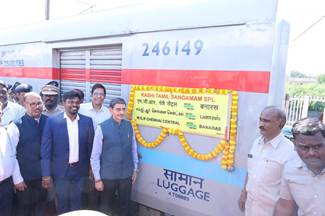
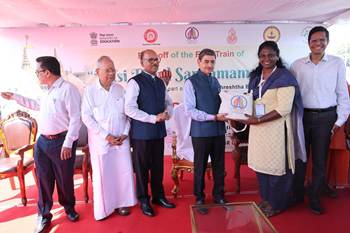
The Governor of Tamil Nadu, Thiru R.N. Ravi, flagged off the train carrying the first batch of Kashi Tamil Sangamam 3.0 delegates—including students, teachers, and writers—today at Dr. MGR Central Railway Station, Chennai. This 10-day-long event is scheduled to take place from 15th to 24th February 2025. Director of the Indian Institute of Technology Madras, Prof. V. Kamakoti and other dignitaries were also present at the event.
The Union Minister for Education, Shri Dharmendra Pradhan, in a social media message, welcomed everyone to embrace the spirit of ‘Ek Bharat, Shreshtha Bharat’ at Kashi Tamil Sangamam 3.0. He emphasized that the event serves to cherish, celebrate, and strengthen the deep-rooted bonds between Kashi and Tamil Nadu—two enduring centers of culture, civilization, and knowledge.
The central theme of this edition of KTS will be Maharishi Agasthyar and Mahakumbh and Shri Ayodhya Dham will be the backdrop. The event will offer a divine experience and bring Tamil Nadu and Kashi—the two timeless centres of our civilisation and culture, more closer.
An exhibition on the different facets of Sage Agasthyar and his contributions to world of Health, Philosophy, Science, Linguistics, Literature, Polity, Culture, Art, particularly to Tamil and Tamil Nadu, etc. and seminars, workshops, book release, etc. will be organised at Kashi during KTS 3.0.
This year, the government has decided to bring around 1000 delegates from Tamil Nadu under five categories/groups: (i) Students, Teachers, and Writers; (ii) Farmers and Artisans (Vishwakarma Categories); (iii) Professionals and Small Entrepreneurs; (iv) Women (SHG, Mudra Loan beneficiaries, DBHPS Pracharaks); and (v) Start-up, Innovation, Edu-Tech, Research. This year, an additional group of around 200 students of Tamil origin studying in various CUs will be a part of this event to enliven the bond between Kashi and Tamil Nadu. Participation of youth in all categories has been encouraged this year. The duration of the tour for the delegates will be 8 days (4 for travel, 4 at site). The first group left Tamil Nadu today and the last group will return to Tamil Nadu on 26th February 2025.
The objective of the Kashi Tamil Sangamam is to rediscover, reaffirm, and celebrate the age-old links between Tamil Nadu and Kashi—two of the country’s most important and ancient seats of learning.
Kashi Tamil Sangamam is being organized by the Ministry of Education, Govt. of India in collaboration with other ministries including Culture, Textiles, Railways, Tourism, Food Processing, I&B etc. and the Govt. of UP. The programme aims to provide an opportunity for scholars, students, philosophers, traders, artisans, artists and people from other walks of life from the two regions to come together, share their knowledge, culture and best practices and learn from each other’s experience. It also aims to make the youth aware and experience cultural oneness. The endeavour is in sync with NEP 2020’s emphasis on integrating the wealth of Indian Knowledge Systems with modern systems of knowledge. IIT Madras and BHU are the two implementing agencies for the programme.
The Government has so far celebrated the Kashi Tamil Sangamam on two occasions earlier; i.e., for one month in 2022 and for a fortnight in 2023 and around 4000 delegates from Tamil Nadu have been a part of this event. In both the editions of KTS, there were overwhelming responses from people of Tamil Nadu and Uttar Pradesh. IIT Madras will be the sender institution and BHU the receiving institution, as in the earlier editions.
Union Minister for Education, Shri Dharmendra Pradhan, launched the registration portal for KTS 3.0 on 15th January 2025. The portal for registration was open till 1st February 2025.
KTS 2.0 was inaugurated by Prime Minister Shri Narendra Modi at Varanasi on 17th December, 2023, with the first-ever real-time, app-based translation of a part of the Prime Minister’s speech in Tamil for the benefit of visiting Tamil delegates.
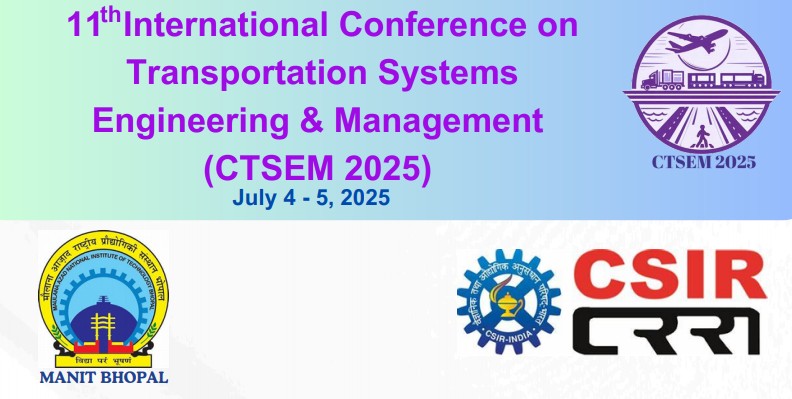
Bhopal, India – Maulana Azad National Institute of Technology (MANIT) Bhopal, in collaboration with CSIR-Central Road Research Institute (CRRI), New Delhi, is set to host the 11th International Conference on Transportation Systems Engineering & Management (CTSEM 2025) on July 4-5, 2025. The conference aims to bring together researchers, academicians, scientists, and transportation professionals to discuss emerging challenges and advancements in transportation engineering and management.
Conference Leadership
Chief Patron: Dr. Manoranjan Parida, Director, CSIR-CRRI, New Delhi
Conference Chairperson: Dr. P.K. Agarwal, MANIT Bhopal
Conference Secretaries:
Dr. Siddhartha Rokade, MANIT Bhopal
Dr. Pritikana Das, MANIT Bhopal
Dr. Bivina G.R., MANIT Bhopal
Conference Highlights
CTSEM 2025 will provide a platform for experts to discuss key issues related to transportation systems, including:
Sustainable and Intelligent Transportation Solutions
Traffic Management and Congestion Mitigation
Road Safety and Infrastructure Development
AI, Big Data, and IoT in Transportation
Public Transport Planning & Management
Urban Mobility and Non-Motorized Transport (NMT)
Freight Transport and Logistics
The event will feature pre-conference workshops, networking sessions, technical visits, and best paper awards, making it a valuable gathering for professionals in the field.
Paper Submission and Publication Opportunities
Authors are invited to submit their full papers via the MSCMT platform by April 15, 2025, with final acceptance notifications to be sent by June 1, 2025. Selected high-quality papers will be published in SCOPUS-indexed conference proceedings by Springer, and some outstanding papers will be considered for publication in the Journal of Traffic and Transportation Engineering (JTTE) by Elsevier.
Sponsorship Opportunities
CTSEM 2025 welcomes industry sponsors to participate, with sponsorship categories ranging from Platinum (INR 3 lakhs) to Bronze (INR 0.5 lakh). Sponsors will receive branding and promotional benefits, exhibition space, and recognition during the conference.
About MANIT Bhopal and CSIR-CRRI
MANIT Bhopal, one of India’s premier technical institutions, has been at the forefront of engineering education and research. The Civil Engineering Department is a key center for academic excellence, fostering innovative solutions for urban and rural transportation challenges. CSIR-CRRI, a leading research institute, is known for its contributions to road and transportation planning, playing a crucial role in shaping India’s infrastructure.
Venue and Connectivity
The conference will be held at MANIT Bhopal, located in the heart of Bhopal City, known as the City of Lakes. Bhopal is well-connected by air, rail, and road, with the campus just 20 km from the airport and 8 km from the railway station.
Contact Information
CTSEM 2025 Organizing Committee Transportation Engineering Division, Civil Engineering Department Maulana Azad National Institute of Technology (MANIT), Bhopal, India Email:ctsem2025manit@gmail.com Website:CTSEM 2025
With a rich history of successful editions hosted by reputed institutions across India, CTSEM 2025 at MANIT Bhopal promises to be an enriching event for professionals in the transportation sector. Don’t miss the opportunity to be part of this significant international conference!
Date: 12th February 2025 Venue: Vivekanand Conference Hall, MANIT Bhopal
Bhopal, 12th February 2025 – An interactive session between the Director, esteemed experts, and PhD scholars of MANIT was conducted at the Vivekanand Conference Hall. The session focused on providing guidance on crucial aspects of research, including research metrics, journal selection, societal and industrial relevance of research, and the importance of timely completion of PhD programs.
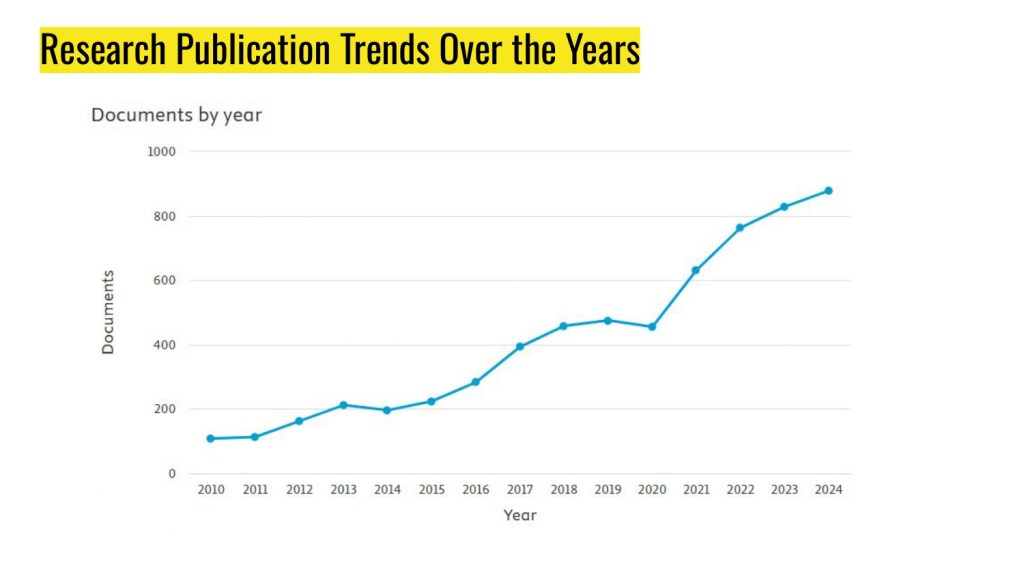
Fig. Research Publication Trends of MANIT indexed in Scopus
The session began with a discussion on the basics of research metrics, where the significance of impact factor, h-index, citation index, and other evaluation parameters was highlighted. Scholars were advised to focus on the quality and novelty of their research rather than solely on numerical metrics. Following this, scholars presented their research progress and received constructive feedback from the experts. The importance of structured research planning and setting regular milestones was emphasized to ensure timely completion.
Experts then provided guidance on selecting reputable journals based on indexing, peer-review standards, and relevance to the research domain. Scholars were encouraged to avoid predatory journals and aim for Scopus, Web of Science, and UGC-CARE-listed journals. The discussion also underscored the need to align research with real-world problems and societal needs. Opportunities for collaboration with industries and governmental bodies were explored to enhance practical applications, and scholars were encouraged to explore patents, technology transfers, and start-up ideas arising from their research.
One of the key concerns addressed was the timely completion of PhD programs and avoiding the ‘slow poison’ of prolonged stipend dependency. The adverse effects of extended PhD durations and over-reliance on stipends were highlighted, and scholars were motivated to complete their research within the stipulated timeframe to contribute effectively to academia, industry, or policy-making. The importance of skill development and networking for post-PhD career opportunities was also stressed.
The session was highly interactive and insightful, offering scholars valuable perspectives from the Director and experts. The discussion reinforced the importance of quality research, timely completion, and the broader impact of scholarly work on society and industry. Scholars were encouraged to remain dedicated, innovative, and socially responsible in their research endeavors.
The Annual Status of Education Report (ASER) 2024 is a nationwide rural household survey that reached 649,491 children in 17,997 villages across 605 rural districts in India. Further, ASER surveyors visited 15,728 government schools with primary sections. 8,504 were primary schools and 7,224 were schools which also had upper primary or higher grades.
Key Findings for Pre-primary (age group 3-5 years)
Enrollment in pre-primary institutions
Among children aged 3-5 years, enrollment in some type of pre-primary institution (Anganwadi centre, government pre-primary class, or private LKG/UKG) has improved steadily between 2018 and 2024.
Among 3-year-olds, enrollment in pre-primary institutions increased from 68.1% in 2018 to 77.4% in 2024. Gujarat, Maharashtra, Odisha, and Telangana have achieved near-universal enrollment for this age group.
Among 4-year-olds, the all-India figure for enrollment in pre-primary institutions increased from 76% in 2018 to 83.3% in 2024. In 2024, enrollment rates in pre-primary for this age exceed 95% in states like Gujarat, Maharashtra, Karnataka, Tamil Nadu, and Odisha.
Among 5-year-olds, this figure also showed big increases, rising from 58.5% in 2018 to 71.4% in 2024. The states with enrollment exceeding 90% in pre-primary institutions for this age include Karnataka, Gujarat, Maharashtra, Kerala, and Nagaland.
Type of pre-primary institution
Anganwadi centres continue to be the biggest provider of services in pre-primary age group in India.
Approximately one-third of all 5-year-olds attend a private school or pre-school in 2024. This figure was 37.3% in 2018, fell to 30.8% in 2022, and returned to 37.5% in 2024.
Age of entry to Standard (Std) I
The proportion of children who are “underage” (age 5 or below) is decreasing over time. In 2018, this figure was 25.6%, in 2022 it stood at 22.7%, and in 2024, nationally the percentage of underage children in Std I was at its lowest ever at 16.7%. On average, this proportion has either declined or remained stable across all states in India.
Key Findings for Elementary (age group 6-14 years)
Enrollment
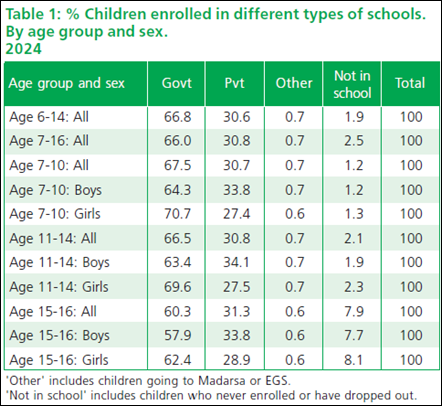
Overall school enrollment rates among the 6-14 age group have exceeded 95% for close to 20 years. This proportion has stayed almost the same, from 98.4% in 2022 to 98.1% in 2024. Across all states, enrollment in this age group is above 95% in 2024.
In 2018, 65.5% of children in the 6-14 age group in India were enrolled in government schools. By 2024, the all-India figure increased to 66.8%.
Reading
Std III: The percentage of Std III children able to read Std II level text was 20.9% in 2018. This figure increased to 23.4% in 2024. The improvement in government schools is higher than the corresponding recovery for private schools. Following a decline in Std III reading levels in government schools in most states in 2022, all states haveshown a recovery in 2024. States with more than a 10-percentage point increase in this proportion between 2022 and 2024 in government schools include Himachal Pradesh, Uttarakhand, Kerala, Uttar Pradesh, Haryana, Odisha, and Maharashtra.
Std V: Reading levels improved substantially among Std V children, especially for those who are enrolled in government schools. The proportion of Std V children in government schools who can read a Std II level text fell from 44.2% in 2018 to 38.5% in 2022 and then recovered to 44.8% in 2024. In 2024, Mizoram (64.9%) and Himachal Pradesh (64.8%) had the highest proportions of Std V children in government schools able to read Std II level text. States with over a 10-percentage point increase in this proportion in government schools include Uttarakhand, Uttar Pradesh, Gujarat, and Tamil Nadu.
Std VIII: Reading levels increased among children enrolled in Std VIII in government schools, which fell from 69% in 2018 to 66.2% in 2022 but then rose to 67.5% in 2024. Government schools in states such as Gujarat, Uttar Pradesh, and Sikkim show notable improvements.
Arithmetic
Std III: The all-India figure for children in Std III who are able to do a numerical subtraction problem was 28.2%. This figure has increased to 33.7% in 2024. Among government school students, this figure went from 20.9% in 2018 to 27.6% in 2024. For private school students, this number showed a smaller improvement since 2022. Government schools across most states have shown gains since 2022, with over 15-percentage point increases recorded in states like Tamil Nadu and Himachal Pradesh.
Std V: At the all-India level, the proportion of children in Std V who can do a numerical division problem has also improved. This figure was 27.9% in 2018 and then rose to 30.7% in 2024. This change is also driven mainly by government schools. States with the showing most improvement (more than 10-percentage points) in government schools include Punjab and Uttarakhand.
Std VIII: The performance of Std VIII students in basic arithmetic remains similar to earlier levels, going from 44.1% in 2018 to 45.8% in 2024.
Key Findings for Older children (age group 15-16 years)
Enrollment
The proportion of 15-16-year-old children who are not enrolled in school dropped sharply from 13.1% in 2018 to 7.9% in 2024 at the all-India level.
Digital literacy
Access to smartphones is close to universal among the 14-16 age group. Almost 90% of both girls and boys report having a smartphone at home. More than 80% report knowing how to use a smartphone.
Of the children who could use a smartphone, 27% of 14-year-olds and 37.8% of 16-year-olds reported having their own phone.
82.2% of all children in the 14-16 age group reported knowing how to use a smartphone. Of these, 57% reported using it for an educational activity in the preceding week while 76% said that they had used it for social media during the same period. While the use of a smartphone for educational activities was similar among girls and boys, girls were less likely than boys to report using social media (78.8% of boys as compared to 73.4% of girls). Kerala stands out in this respect, with over 80% children who reported that they used the smartphone for educational activity and over 90% using it for social media.
Among children who used social media, knowledge of basic ways to protect themselves online was relatively high. 62% knew how to block or report a profile, 55.2% knew how to make a profile private, and 57.7% knew how to change a password.
Key Findings of School Observations
Foundational Literacy and Numeracy (FLN) activities
Over 80% of schools had received a directive from the government to implement Foundational Literacy and Numeracy (FLN) activities with Std I-II/III, both in the previous as well as in the current academic year. A similar proportion had at least one teacher who had received in-person training on FLN.
More than 75% schools had received Teaching Learning Material (TLM) and/or funds to make or purchase TLM for FLN activities.
More than 75% schools reported implementing a school readiness program for students prior to entering Std I, in both the previous and the current academic year.
More than 95% schools reported having distributed textbooks to all grades in the school, a substantial increase over 2022 levels.
Student and teacher attendance
Student and teacher attendance in government primary schools show small but consistent improvements since 2018. Average student attendanceincreased from 72.4% in 2018 to 75.9% in 2024.
Average teacher attendanceincreased from 85.1% in 2018 to 87.5% in 2024. This trend is largely driven by changes in teacher and student attendance in Uttar Pradesh.
Small schools and multigrade classrooms
The proportion of government primary schools with less than 60 students enrolled shows a sharp increase, rising from 44% in 2022 to 52.1% in 2024. More than 80% primary schools in these states are small schools: Jammu and Kashmir, Himachal Pradesh, Uttarakhand, Nagaland, and Karnataka.Himachal Pradesh has the highest proportion of small Upper primary schools at 75%.
Two-thirds of Std I and Std II classrooms in primary schools were multigrade, with students from more than one grade sitting together.
School facilities
Nationally, all Right to Education-related indicators included in ASER have shown small improvements between 2018 and 2024 levels. For example, the fraction of schools with useable girls’ toilets increased from 66.4% in 2018 to 72% in 2024.
The proportion of schools with drinking water available increased from 74.8% to 77.7%, and the proportion of schools with books other than textbooks being used by students increased from 36.9% to 51.3% over the same period.
Sports-related indicatorsremain at close to the levels observed in 2018. For example, in 2024, 66.2% schools have a playground, similar to 66.5% in 2018.
On 10th February 2025, Prime Minister Shri Narendra Modi interacted with students at Sunder Nursery, New Delhi, during the first episode of the 8th edition of Pariksha Pe Charcha (PPC). In this informal yet insightful session, the Prime Minister engaged with students from across the country, discussing a variety of topics. The 36 students present learned from the Prime Minister valuable lessons on Nutrition and Wellness; Mastering Pressure; Challenging Oneself; The Art of Leadership; Beyond Books – 360º Growth; Finding Positives and more. This interactive session provided students with valuable insights and practical strategies to navigate academic challenges with confidence and a growth mind set.
Today, renowned actor and mental health champion Deepika Padukone participated in the second episode of the 8th edition of Pariksha Pe Charcha. Around 60 students attended the interactive session.
Deepika shared how addressing mental health challenges can be empowering and spoke about the valuable lessons she learned from her own struggles. Sharing her stress management strategies, she emphasized the importance of getting enough sleep, spending time outdoors in natural sunlight and fresh air, and maintaining a healthy daily routine to effectively reduce stress. She further emphasized that self-confidence and a positive mind set are key to success. Encouraging students to see failures as learning opportunities, she inspired them to keep moving forward with determination.
Reiterating Prime Minister Shri Narendra Modi’s message—”Express, Never Suppress”—Deepika stressed the importance of seeking help when needed. She engaged with students in an interactive activity, where they wrote down their strengths and pinned them on a board on the stage, reinforcing the significance of self-awareness and recognizing one’s strengths. She conducted a live grounding session through an activity called 54321, demonstrating a technique to improve concentration during exams.
Students physically present at the program posed their queries, and Deepika responded by drawing from her personal experiences, offering valuable insights and practical advice. Additionally, a student from an international CBSE school also had the opportunity to ask a question, further enriching the discussion with a wider perspective.
The 8th edition of PPC had set a new benchmark. With over 5 crore participation, this year’s program exemplifies its status as a Jan Andolan, inspiring collective celebration of learning. For the episode with the Prime Minister, 36 students from all State and UT were selected from State/UT Board Government schools, Kendriya Vidyalaya, Sainik School, Eklavya Model Residential School, CBSE and Navodaya Vidyalaya. Pariksha Pe Charcha 2025 will feature additional six insightful episodes, bringing together renowned personalities from diverse fields to guide students on essential aspects of life and learning. Each episode will address key themes:
Union Minister for Education Shri Dharmendra Pradhan lauded the Budget 2025-26, emphasizing it as a budget that takes everyone together and prioritizes welfare, well-being, and empowerment of all citizens while firmly placing India on the path to achieving the goal of developed India by 2047. The Minister expressed his gratitude to the Prime Minister Shri Narendra Modi and Finance Minister Smt. Nirmala Sitharaman for a visionary and futuristic Budget.
Shri Dharmendra Pradhan said that this Budget is aiming to cater to the comprehensive requirements, right from childhood to youth, who would be leading from the front in realizing the Viksit Bharat agenda in 2047 and beyond.
He further stated that the Budget announcements encompass today’s entire youth demographic, who will lead the nation for the next 25 years. This will strengthen the Bhartiya Gyan Parampara within our education system and foster a global community, he added.
The Minister highlighted that the Budget 2025-26 emphasizes investing in people and facilitating all-round development of India’s human capital. He noted that with “Gareeb, Yuva, Annadata, and Naari” as the pillars, this budget would uplift sentiments of the poor and middle class, accelerate spending, catalyze investments, and spur growth. He emphasized that it would remove regional imbalances, build rural prosperity, nurture research, innovation and entrepreneurship, invigorate the education and skilling landscape, and lead to employment-led development.
The Minister expressed gratitude for continuing with bigger and bolder investments in education, skilling, research, and innovation, stating that this budget represents another big leap towards empowering India’s population with more opportunities for world-class education and building capacities of human capital.
The Minister informed that the total budget allocation for the Ministry of Education has reached ₹128,650 crore, marking a 6.22% increase over BE 2024-25.
Union Education Minister informed that Fifty thousand Atal Tinkering Labs (ATL) will be set up in Government schools in next 5 years to cultivate the spirit of curiosity and innovation, and foster a scientific temper among young minds. With this, students of all Government secondary schools will have access to ATL. The Union Budget also proposes to provide Broadband connectivity to all Government secondary schools and primary health centres in rural areas under the BharatNet project, he added.
Shri Pradhan informed that the total number of students in 23 IITs has increased 100 per cent from 65,000 to 1.35 lakh in the past 10 years. Additional infrastructure will be created in the 5 IITs started after 2014 to facilitate education for 6,500 more students. Hostel and other infrastructure capacity at IIT, Patna will also be expanded, he further added.
Shri Pradhan said that with the aim to help students understand their subjects better, it is proposed to implement a Bharatiya Bhasha Pustak Scheme to provide digital-form Indian language books for school and higher education.
The Union Minister also informed that five National Centres of Excellence for skilling will be set up with global expertise and partnerships to equip youth with the skills required for “Make for India, Make for the World” manufacturing. The partnerships will cover curriculum design, training of trainers, a skills certification framework, and periodic reviews.
Shri Pradhan highlighted that the fourth AI Centre of Excellence in Education, envisioned in the Budget 2025-26, aims to revolutionize India’s educational system from pre-primary to professional and research levels. By harnessing artificial intelligence, it seeks to address disparities and inefficiencies, ensuring equitable and high-quality education across the nation. This Centre of Excellence in Artificial Intelligence for Education will be established with a total outlay of ₹500 crore, he added
The Minister informed the allocation of Rs 20,000 crore to implement private sector driven Research, Development and Innovation. In the next five years, under the PM Research Fellowship scheme, provision of ten thousand fellowships for technological research in IITs and IISc with enhanced financial support is also proposed in the Budget, he added.
The Minister informed that a Gyan Bharatam Mission for survey, documentation and conservation of our manuscript heritage with academic institutions, museums, libraries and private collectors will be undertaken to cover more than 1 crore manuscripts. A National Digital Repository of Indian knowledge systems for knowledge sharing will also be set up.
D/o School Education & Literacy
The Budget Allocation for the FY 2025-26 of ₹ 78572 Cr is the highest ever for the Department of School Education & Literacy.
There has been an overall increase of ₹ 5074 Cr (7%) in the Budget Allocation of Department of School Education and Literacy in the FY 2025-26 from BE 2024-25. As compared to RE of FY 2024-25, there has been an increase of ₹ 11,000 Cr (16.28 %).
The highest ever Budget Allocation may be seen in the Autonomous Body of Kendriya Vidyalaya Sangathan (KVS) at Rs. 9,503 Cr. Allocation in KVS has increased by ₹ 201.17 Cr as compared to Budget allocation of FY 2024-25. There has been an increase of ₹ 776 Cr (9%) as compared to RE of FY 2024-25.
Budget Allocation of FY 2025-26 in Flagship Schemes have increased i.e Samagra Shiksha (by ₹ 3750 Cr), PM-POSHAN (by ₹ 32 Cr) and PM-SHRI (by ₹ 1450 Cr) with respect to Budget Allocation (BE) of FY 2024-25. As compared to RE 2024-25, allocation in Samagra Shiksha has increased by ₹ 4240 Cr (11%), allocation in PM-POSHAN has increased by ₹ 2500 Cr (25 %) and allocation in PM-SHRI has increased by ₹ 3000 Cr (66%).
Out of the overall Budget Allocation in FY 2025-26 of ₹ 78,572 Cr, the Scheme allocation is ₹ 63,089 Cr and Non-Scheme Allocation is ₹ 15,483 Cr.
Increase in Scheme Allocation in BE 2025-26 is ₹ 5284 Cr (9.14 %) as compared to BE 2024-25. As compared to RE 24-25, increase in Scheme Allocation is ₹ 10248 Cr (19%) and non-Scheme allocation has increased by ₹ 752 Cr (5%) in BE 2025-26.
Fifty thousand (50,000) Atal Tinkering Labs (ALT) will be set up in Government schools in next five years to cultivate the spirit of curiosity and innovation, and foster a scientific temper among young minds.
Broadband connectivity will be provided to all Government secondary schools under BharatNet project in the next three years.
Department of Higher Education, Ministry of Education
The overall Budget Allocation in FY 2025-26 is Rs. 50077.95 Cr out of which Scheme allocation is Rs. 6990.88 Cr and Non- Scheme allocation is Rs. 43087.07 cr.
There has been an overall increase of Rs. 2458.18 Cr (5.16%) in the Budget Allocation of Department of Higher Education in the FY 2025-26 with respect to FY 2024-25.
Allocations to Major Autonomous Bodies under Higher Education
The total Allocation of Autonomous Bodies in 2025-26 increased to Rs. 42732 Cr from Rs. 39777.40 in 2024-25. There is increase of 7.42%
Allocation in Central Universities has been kept at Rs. 16691.31 Cr, against Rs. 15928 Cr in 2024-25 which is Rs 763.31 Cr more i.e. 4.79 % increase.
UGC has been allocated Rs.3335.97 Cr in 2025-26, against Rs. 2500 Cr in 2024-25 which is Rs. 835.97 Cr more i.e. 33.44 % increase.
IITs have been allocated Rs. 11349.00 Cr in 2025-26, against Rs. 10324.50 Cr in 2024-25 which is Rs. 1024.50 Cr more i.e. 9.92% increase.
For NITs, Rs.5687.47 Cr has been allocated in FY 2025-26, against Rs.5040 Cr in 2024-25 increasing the allocation by Rs. 647.47 Cr i.e. 12.85% increase.
Deemed Universities have been allocated Rs.604 Cr in 2025-26, against Rs.596 Cr in 2024-25 increasing the allocation by Rs. 8 Cr i.e. 1.34% increase.
IIMs have been allocated Rs.251.89 Cr in 2025-26, against Rs. 212.21 Cr in 2024-25 increasing the allocation by Rs. 39.68 Cr i.e. 18.70% increase.
IIITs have been allocated Rs.407.00 Cr in 2025-26, against Rs.315.91 Cr in 2024-25 increasing the allocation by Rs. 91.09 Cr i.e 28.83 % increase.
Grants for Promotion of Indian Languages have been allocated Rs.347.03 Cr in 2025-26, against Rs.310.10 Cr in 2024-25 increasing the allocation by Rs. 36.93 Cr i.e. 11.91% increase.
Education is not only the foundation upon which our civilization has been built, but it is also the architect of humanity’s future.”
~Prime Minister Shri Narendra Modi
Education has always been a key priority for the government and with the vision to make India a global education hub, the Union Budget 2025-26 introduces innovative initiatives. Focused on expanding medical seats, enhancing skilling infrastructure and growing IITs, these measures aim to provide more opportunities and equip youth with essential skills for the future.
Announcements for a Smarter, Inclusive India
Bharatiya Bhasha Pustak Scheme: To provide digital-form Indian language books for school and higher education. This aims to help students understand their subjects better.
National Centres of Excellence for Skilling: Building on the July 2024 Budget, five National Centres of Excellence for skilling will be established with global partnerships to equip youth with skills. These centres will focus on curriculum design, trainer training, skills certification, and regular reviews.
Expansion of Capacity in IITs: Additional infrastructure will be created in the 5 IITs started after 2014 to facilitate education for 6,500 more students. Hostel and other infrastructure capacity at IIT, Patna will also be expanded. Total number of students in 23 IITs has increased 100 per cent from 65,000 to 1.35 lakh in the past 10 years.
Centre of Excellence in AI for Education: A Centre of Excellence in Artificial Intelligence for education will be set up with a total outlay of 500 crore.
Expansion of Medical Education: The government had added almost 1.1 lakh UG and PG medical education seats in ten years, an increase of 130 per cent. In the next year, 10,000 additional seats will be added in medical colleges and hospitals, towards the goal of adding 75,000 seats in the next 5 years.
Inside India’s Education System
The Indian education system has undergone significant transformation over the years. Serving 24.8 crore students across 14.72 lakh schools, it is supported by a dedicated workforce of 98 lakh teachers, as reported by the UDISE+ (Unified District Information System for Education Plus 2023-24). Government schools form the backbone of the system, comprising 69% of the total, enrolling 50% of students and employing 51% of teachers. On the other hand, private schools make up 22.5% of institutions, catering to 32.6% of students and employing 38% of teachers. This growing structure reflects the dynamic changes in the Indian education landscape, paving the way for continuous improvements in enrollment and access over the years.
Enrollment Trends in India
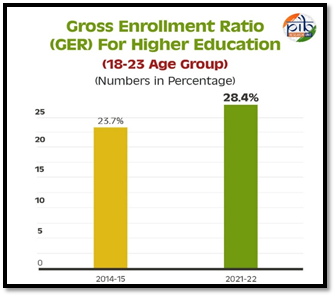
The NEP 2020 aims for a 100% Gross Enrollment Ratio (GER) by 2030. The GER is near universal at the primary (93 %) and the efforts are underway to bridge the gaps at the secondary (77.4 %) and higher secondary level (56.2 %), driving the nation closer to its vision of inclusive and equitable education for all. In the realm of higher education, India has seen a dramatic rise in student enrollment. The total number of students enrolled in higher education reached 4.33 crore in 2021-22, a 26.5% increase from 3.42 crore in 2014-15. The Gross Enrollment Ratio (GER) for the 18-23 age group also rose from 23.7% to 28.4% in the same period.
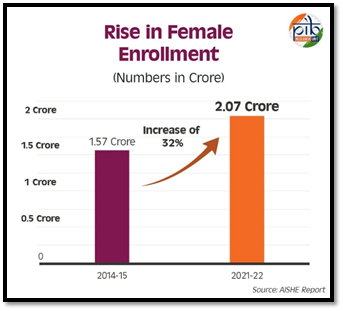
Women’s participation in higher education has also witnessed significant growth, with female enrollment rising from 1.57 crore in 2014-15 to 2.07 crore in 2021-22, marking a 32% increase. This progress is especially evident in fields like Medical Science, Social Science, and Arts, where women are now leading the charge in enrollment.
Decline in Dropout Rate
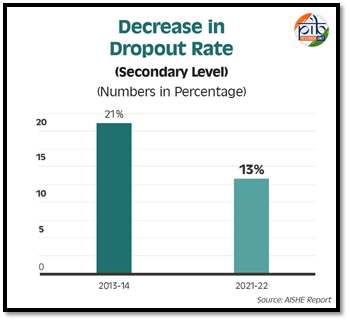
However, challenges still persist and the dropout rate remains a critical concern. While there has been a steady decline in dropout rates. School dropout rates have steadily declined in recent years, standing at 1.9 per cent for primary, 5.2 per cent for upper primary and 14.1 per cent for secondary levels. According to AISHE report the dropout rate at the secondary level has also decreased significantly from 21% in 2013-14 to 13% in 2021-22.
Transforming India’s Education Landscape
Over the years, India has seen a remarkable transformation in its higher education ecosystem. The number of Higher Education Institutions (HEIs) has grown significantly, increasing by 13.8% from 51,534 in 2014-15 to 58,643 in 2022-23. This expansion reflects the country’s commitment to making higher education more accessible and diverse.
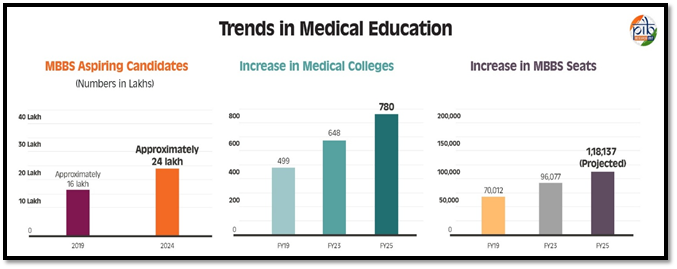
Growth in Medical Education and Workforce: Medical Colleges grew from 499 in FY19 to 780 in FY25.
Candidates aspiring to study MBBS increased from 16 lakh in 2019 to 24 lakh in 2024.
MBBS Seats increased from 70,012 in FY19 to 1,18,137 in FY25.
Postgraduate Medical Seats grew from 39,583 in FY19 to 73,157 in FY25.
Doctors Available: 13.86 lakh registered practitioners as of July 2024, with a current ratio of 1:1263 per person. The WHO norm of 1:1000 could be met by 2030 with an annual increase of 50,000 doctors.
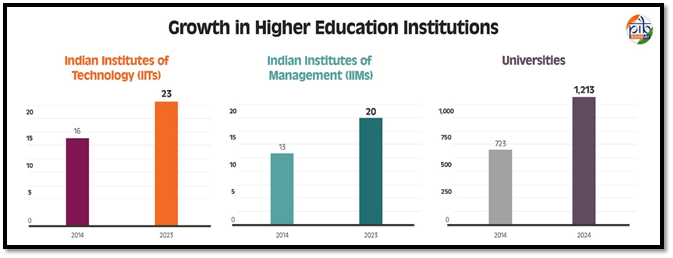
Growth of Indian Institutes of Technology (IITs): The number of IITs increased from 16 in 2014 to 23 in 2023.
Growth of Indian Institutes of Management (IIMs):The number of IIMs grew from 13 in 2014 to 20 in 2023.
Expansion of Universities:The number of Universities grew from 723 in 2014 to 1,213 in 2024, marking a 59.6% increase.
Increase in Higher Education Institutions (HEIs): Total HEIs increased by 13.8%, from 51,534 in 2014-15 to 58,643 in 2022-23.
Progress in Basic Facilities
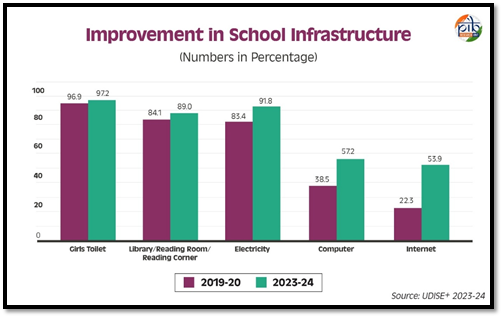
Education infrastructure has significantly improved, with a rise in the number of higher education institutions. Key areas like medical check-ups, sanitation, and ICT availability have also seen substantial upgrades, highlighting positive progress in school facilities to enhance the quality of education. From 2019-20 to 2023-24, there have been notable improvements in school infrastructure. The percentage of schools with girls’ toilets increased slightly from 96.9% to 97.2%, while access to libraries/reading rooms rose from 84.1% to 89%. The availability of electricity improved from 83.4% to 91.8%, and computers in schools increased from 38.5% to 57.2%. Additionally, internet access grew significantly from 22.3% to 53.9%, marking a positive shift toward better-equipped schools.
Conclusion
The education sector in India is being strengthened through various government initiatives aligned with NEP 2020. Programs like Samagra Shiksha Abhiyan, PM SHRI (Pradhan Mantri Schools for Rising India) and PM POSHAN (Pradhan Mantri Poshan Shakti Nirman) are driving improvements in infrastructure, teacher training and learning outcomes. The Economic Survey highlights the progress and the government’s commitment to making education more inclusive and accessible.
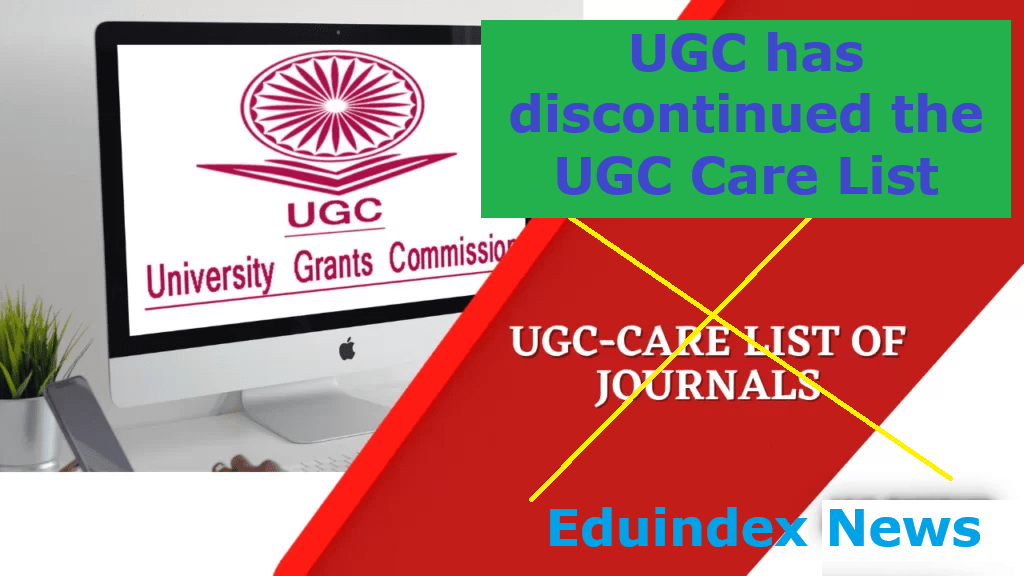
The University Grants Commission (UGC) has officially announced the discontinuation of its UGC-Consortium for Academic and Research Ethics (CARE) journal listing. This significant shift marks a transition toward a more decentralized and flexible framework for evaluating academic journals.
Introduction of Suggestive Parameters for Journal Selection
In lieu of the UGC-CARE list, the UGC has developed a set of suggestive parameters aimed at guiding faculty members and students in selecting credible and peer-reviewed academic journals for research and publication. These parameters were meticulously crafted by a panel of experts and academicians and have now been made publicly available for feedback. Stakeholders, including Higher Educational Institutions (HEIs) and faculty members, are invited to share their opinions by February 25, 2025, via email at journal@ugc.gov.in.
This decision follows the recommendations made by an expert committee and was formalized during the UGC’s 584th meeting on October 3, 2024. The new guidelines are intended to replace the previous CARE system outlined in the Public Notice dated November 28, 2018.
Focus on High-Quality Research and Institutional Review Mechanisms
To foster high-quality research, HEIs are encouraged to adopt these suggestive parameters and customize them based on their academic requirements. The UGC recommends that institutions establish internal review committees to ensure compliance with these evolving quality benchmarks. This move aims to empower institutions to take ownership of journal evaluation processes while promoting scholarly excellence.
Rationale Behind Discontinuing the UGC-CARE List
Mamidala Jagadesh Kumar, Chairman of the UGC, explained that the UGC-CARE list was initially introduced in 2018 to address concerns over the proliferation of predatory journals and to ensure that only reputable publications were recognized for faculty selections, promotions, and research funding applications. However, the system faced numerous challenges, including:
Over-centralization and bureaucratic delays in updating the journal list.
Lack of transparency in decision-making processes.
Exclusion of respected journals, particularly those in Indian languages, while less credible ones were included.
Pressure on researchers to publish exclusively in UGC-CARE listed journals.
NEP 2020 and the Shift Toward Decentralization
The National Education Policy (NEP) 2020 highlighted the need to reduce heavy regulation in academic publishing. In response, the UGC formed an expert committee in December 2023 to review the UGC-CARE scheme. Based on its recommendations, the UGC decided to discontinue the central list and encourage HEIs to develop their own robust mechanisms for evaluating journals.
“This new approach provides institutions with greater flexibility,” stated Prof. Kumar. “It allows them to develop models that align with academic norms and the specific needs of various disciplines. Researchers will no longer be bound by a centralized list of journals.”
Combating Predatory Journals and Protecting Academic Standards
Under the new system, HEIs will bear the responsibility for combating predatory journals by establishing credible evaluation mechanisms. This will help protect the academic reputation of institutions and maintain scholarly integrity. Experienced faculty members are expected to mentor younger researchers in identifying legitimate journals and avoiding predatory ones.
A Step Toward Academic Freedom and Autonomy
The discontinuation of the UGC-CARE list is seen as a step toward restoring academic freedom and institutional autonomy. “By transferring the responsibility for journal evaluation back to HEIs, the UGC has empowered institutions and researchers to make publication choices that best suit their disciplines and target audiences,” Prof. Kumar emphasized.
HEIs will also need to accommodate emerging and interdisciplinary fields by creating dynamic evaluation models that recognize journals beyond traditional indexing frameworks. This adaptability is crucial to addressing the rapidly evolving landscape of academic publishing.
Stakeholder Engagement and Feedback
The UGC encourages stakeholders to carefully review the proposed parameters and provide their feedback before the deadline. This inclusive approach aims to foster a collaborative environment for enhancing academic publishing standards.
For further information, stakeholders are advised to refer to the UGC’s official communications and actively participate in shaping the future of academic journal evaluation in India.
In recent years, herbal remedies have gained widespread attention for their potential health benefits. Kratom, a tree native to Southeast Asia, has become a popular alternative in this category. Known for its stimulant-like and pain-relieving properties, Kratom has raised both interest and concern.
But, how exactly does Kratom work in the body? Can it offer real health benefits, or is it just a passing trend? In this blog, we will explore the science behind Kratom, its uses, and its potential effects on health.
What Is Kratom?
Kratom is a tropical tree found in Southeast Asia. It belongs to the coffee family and is used for its leaves. These leaves contain compounds that can have effects on the brain. People often consume Kratom in powder or capsule form.
The main compounds in Kratom are called alkaloids. Two important alkaloids are mitragynine and 7-hydroxymitragynine. These compounds interact with receptors in the brain. This interaction can help with pain, mood, and energy.
How Does Kratom Work in the Body?
Kratom affects the body by binding to opioid receptors. It can create effects similar to those of opioids but is not an opioid. When consumed, Kratom may produce mild pain relief and energy boosts.
Depending on the dose, Kratom can have either stimulant or sedative effects. At low doses, Kratom can increase alertness and focus. At higher doses, it may cause relaxation and pain relief. Kratom’s potential effects make it an appealing alternative for many people.
Health Benefits of Kratom
Kratom has several reported health benefits. Some people use it for pain relief. Others claim it helps reduce anxiety and depression. Kratom may also provide an energy boost, helping with daily tasks. There is evidence that Kratom can improve mood and boost motivation.
While these benefits are reported by users, more research is needed. Some people also combine Kratom with other herbal remedies like kava. A kratom + kava shot is sometimes used for a more balanced effect.
Risks and Side Effects of Kratom
Despite its benefits, Kratom also comes with risks. Some people experience nausea, dizziness, or constipation when using it. In higher doses, Kratom can lead to sedation and confusion.
Additionally, Kratom’s long-term effects are not fully understood. There have been reports of dependence and withdrawal symptoms. It is crucial to be cautious when using Kratom, especially in high doses. Always consult a healthcare provider before adding Kratom to your routine.
Is Kratom Safe to Use?
Kratom’s safety remains a topic of debate. While some users report positive experiences, others may face health issues. Its use can lead to side effects, particularly when not used correctly.
Kratom’s potential for addiction also raises concerns. Currently, the FDA does not regulate Kratom, which makes safety a concern. Some regions have banned Kratom due to safety worries. It is important to stay informed and cautious about Kratom use.
Understand Kratom and Its Uses
Kratom is an herbal remedy that shows both promise and risk. Its ability to offer pain relief and energy makes it appealing to many people. However, its safety is still uncertain, and more research is needed.
Using Kratom responsibly and understanding its potential effects is important. Before starting Kratom, consult with a healthcare provider to ensure it’s right for you.
Always remember to explore other articles on the blog for more insights on various topics!
Picture this – you’re steering a ship in the middle of a storm. The winds are howling, the waves are unpredictable, and your crew looks to you for direction. In today’s volatile business environment, managers are facing a similar challenge. Economic fluctuations, rapid technological advancements, and evolving customer expectations have made traditional management styles obsolete. To survive and thrive, leaders must move beyond managing tasks – they must become visionaries who anticipate change, inspire innovation, and drive transformation.
So, how does one make this leap from manager to visionary? What skills and mindset shifts are required to navigate uncertain times successfully? This article explores the key strategies that can help leaders transform businesses while ensuring stability and long-term growth.
1. Shift From Being Reactive to Being Proactive
Traditional managers are often reactive – responding to challenges as they arise. Visionary leaders, on the other hand, anticipate change before it happens. They don’t just solve problems; they look ahead, identify opportunities, and shape the future. Here’s how you can be a visionary leader:
Embrace Scenario Planning: The most successful leaders don’t wait for crises; they prepare for them. Companies like Amazon and Tesla thrive because their leaders think five to ten years ahead. Regularly conducting “what-if” analyses can help businesses stay ahead of disruptions.
Encourage a Culture of Innovation: Visionary leaders foster environments where employees feel empowered to experiment and challenge the status quo.
Stay Ahead of Industry Trends: Subscribe to reports, attend conferences, and network with thought leaders to predict industry shifts before they happen.
2. Adapt to Digital Transformation
Technology is the biggest disruptor in today’s business landscape. AI, automation, and big data are not just buzzwords; they are fundamentally reshaping industries. Managers who resist digital transformation risk becoming obsolete, while visionary leaders harness these tools to drive efficiency, enhance decision-making, and create new revenue streams. Steps to lead this digital transformation:
Invest in Digital Literacy: Even if you’re not in a tech-heavy industry, understanding AI, blockchain, and data analytics is crucial. Many executives enroll in a general management course to strengthen their ability to integrate technology into business strategy. You can consider enrolling in a general management programme to learn these skills.
Leverage AI for Smarter Decision-Making: Companies like Netflix use AI-driven analytics to predict customer preferences and enhance user experience. Could your business use AI to forecast market trends or optimize supply chain management?
Adopt Agile Practices: Traditional business models follow rigid hierarchies. Visionary leaders embrace agility, enabling their teams to pivot quickly in response to change.
3. Lead with Purpose
A manager manages teams; a visionary inspires movements. To lead transformation in uncertain times, leaders must establish a clear purpose that resonates with employees, customers, and stakeholders. You need to build a compelling vision.
Define Your ‘Why’: What impact does your company want to create? Visionary leaders, like Steve Jobs and Elon Musk, built companies with missions that were larger than profits.
Communicate with Clarity: A vision is useless if your team doesn’t understand it. Every decision, project, and strategy should align with the company’s broader purpose.
Lead by Example: Employees look to leadership for cues. If you want your organization to embrace transformation, demonstrate adaptability and forward-thinking in your own actions.
4. Build Resilience
In uncertain times, resilience is the most important trait a leader can cultivate. Visionary leaders don’t fear failure; they see it as a learning opportunity. How to build organizational resilience:
Encourage a Growth Mindset: Visionary leaders foster a culture where employees feel safe to take risks and innovate.
Develop Strong Crisis Management Skills: Leaders must be prepared to respond to market downturns, supply chain disruptions, or workforce challenges without losing momentum.
Strengthen Financial Agility: Businesses that survived the COVID-19 crisis were those that quickly adapted their financial strategies. Maintaining healthy cash reserves and diversifying revenue streams can be game-changers.
5. Embrace People-Centric Leadership
At the heart of every transformation is people. The best strategies and technologies mean nothing if employees are disengaged or resistant to change. Visionary leaders prioritize people over processes, ensuring that teams remain motivated, aligned, and prepared for the future.
Empower Teams with Autonomy: Employees perform better when they have ownership over their work. Autonomy fosters creativity and innovation.
Prioritize Employee Well-Being: Burnout is a major challenge for organizations undergoing transformation. Companies with strong well-being programs see higher productivity and retention rates.
Develop Future-Ready Skills: A general management course can help leaders refine their skills in change management, strategic thinking, and employee engagement.
6. Make Bold, Data-Driven Decisions
In uncertain times, relying on intuition alone can be risky. Visionary leaders combine data-driven insights with bold decision-making to navigate uncertainty with confidence.
Leverage Predictive Analytics: AI-driven analytics can help forecast customer behavior, market trends, and operational risks.
Test and Iterate: The best leaders experiment with new strategies, analyze results, and pivot quickly if needed.
Balance Logic with Instinct: While data is powerful, gut feeling and experience also play a role in high-stakes decisions.
Final Thoughts
The leap from manager to visionary isn’t about a title change – it’s about adopting a mindset that embraces change, inspires innovation, and leads with clarity and purpose. As the business world grows increasingly complex, the most successful leaders will be those who:
Anticipate and adapt to change
Leverage technology for transformation
Lead with vision and inspire their teams
Prioritize resilience and agility
Make bold, data-driven decisions
For managers looking to step into visionary leadership roles, investing in executive education, like IIM General Management Program, which can provide the strategic insights, leadership skills, and digital expertise needed to lead successfully in an era of uncertainty.
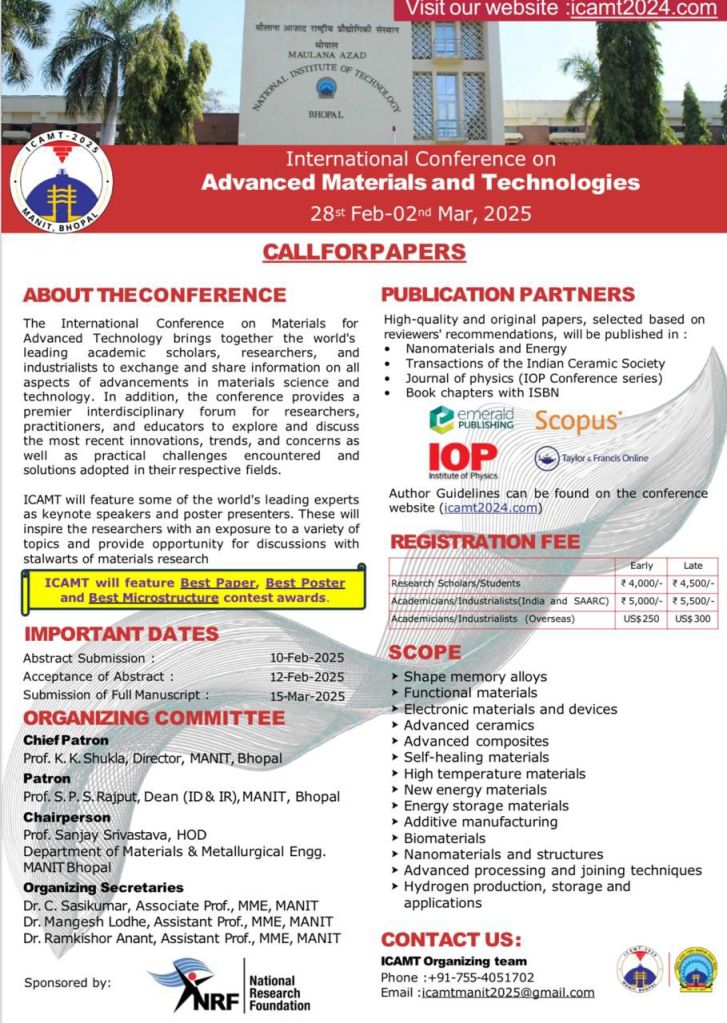
International Conference on Advanced Materials and Technologies (ICAMT-2025) – Call for Papers
Bhopal, India – Maulana Azad National Institute of Technology (MANIT), Bhopal, is set to host the International Conference on Advanced Materials and Technologies (ICAMT-2025) from February 28 to March 2, 2025. This conference will bring together leading scholars, researchers, and industrialists to discuss the latest advancements in materials science and technology.
About the Conference
ICAMT-2025 serves as a premier interdisciplinary platform for researchers, practitioners, and educators to present and discuss emerging trends, challenges, and solutions in the field of advanced materials. The event will feature keynote speakers, poster presentations, and Best Paper, Best Poster, and Best Microstructure awards.
Call for Papers & Publication Opportunities
Researchers are invited to submit original and high-quality papers for presentation. Selected papers will be published in reputed journals, including:
Nanomaterials and Energy
Transactions of the Indian Ceramic Society
IOP Conference Series (Journal of Physics)
Book chapters with ISBN
Important Dates
Abstract Submission Deadline: February 12, 2025
Abstract Acceptance Notification: February 15, 2025
Full Manuscript Submission: March 15, 2025
Registration Details
Research Scholars/Students: ₹4,000 (Early) | ₹4,500 (Late)
The conference will cover a broad range of topics, including: ✅ Shape memory alloys ✅ Functional materials ✅ Electronic materials and devices ✅ Advanced ceramics and composites ✅ Biomaterials and nanomaterials ✅ Hydrogen production and storage
National Seminar on “Cybersecurity in the Age of AI & ML” – Call for Papers
Ranchi, India – The Department of Computer Science & Engineering, Central University of Jharkhand (CUJ), in collaboration with the Computer Society of India (CSI), is organizing a Two-Day National Seminar on “Cybersecurity in the Age of AI & ML”. The seminar will take place on 27th – 28th February 2025 at CUJ, Ranchi.
This seminar aims to bring together academicians, researchers, and students to discuss the evolving challenges and advancements in cybersecurity, particularly in the context of Artificial Intelligence (AI) and Machine Learning (ML).
Call for Papers
The organizing committee invites well-researched, original papers from academia, research scholars, and students for presentation in both offline and online modes. Accepted papers will be presented during the seminar, and selected participants will receive the Best Presentation Award Certificate.
This is a great opportunity for researchers and students to showcase their work, engage in insightful discussions, and network with experts in the field.
For more details, visit CUJ’s official website or contact the seminar coordinators.
Indian Air Force (IAF) is working to harness the potential of indigenous defence industry through Govt policies under the umbrella of Atmanirbharta by continuously engaging with the Industry Partners. Considerable success has been achieved in the indigenisation and innovation of spares and sustenance of equipment. The efforts are now being focused towards complex futuristic technologies, weapon systems and space domain.
Aero India being one of the premier aerospace and defence exhibition, serves as a global platform for showcasing cutting-edge technologies, innovations, and products in the field of aviation. IAF has been at the forefront of embracing the vision of ‘Make in India‘ by actively supporting indigenous defence development and manufacturing. IAF is the biggest stakeholder in aerospace domain and a major participant in leading the drive towards Atmanirbhata.
In pursuit of futuristic technologies and to highlight the drive towards self-reliance, lAF is conducting a seminar on the theme ‘NAVACHAR UTKRISHTAM BHAVISYAM’ (innovation is the Path to better Future). The Hon’ble Raksha Mantri Shri Rajnath Singh has been invited as the Chief Guest for the event with Chief of the Air Staff in attendance.
The seminar is planned on 11 Feb 25, from 1400-1630 Hr, at Hall No 1, Air Force Station Yelahanka, Bengaluru. The seminar is expected to have attendance from senior officers of Armed Forces, Govt officials, Industry leaders from aviation and aerospace domain, reps from Defence Public Sector Units (DPSUs), MSMEs, Start-ups, Innovators and the Academia. The seminar aims to inspire collaboration between defence forces, industry and R&D agencies, fostering a robust ecosystem for innovation. During this seminar, the following are planned to be released /launched by Hon’ble Raksha Mantri:- a publication titled ‘IAF Compendium (Samarthya Margdarshika) of Challenges and Opportunities for Indian Industry‘, for the Indian industries, Micro Small Medium Enterprises (MSMEs), Start-ups and individual innovators, encompassing current and future requirements of IAF; Declaration of the winners of Mehar Baba-ll Competition (MBC). The MBC-II was launched for the Indian Industries in the year 2022. This competition harnessed exceptional talent of Indian industry in swarm drone technology and showcased their capabilities in realising solutions to specific problem statements. In addition, MBC-III ‘Collaborative Drone Based Surveillance Radars‘ will be launched to develop an unmanned capability similar to an Airborne Warning and Control System.
Towards bolstering the ‘Digital India’ drive, IAF will be launching ‘VAYU VITT‘ digital portal for placing orders, certification and payments between lAF and HAL. This is aimed towards enhancing digitisation along with improved efficiency and transparency.
Additionally, a panel discussion on ‘Manned Unmanned Teaming- From Concept to Targeting‘ is planned with eminent experts from the aerospace domain including scientists, industrialists, certification agencies and end users. The panel discussion is intended towards underscoring the pivotal role of Indian Industry in driving indigenous solutions for futuristic technologies to meet the evolving defence and security needs of our Nation.
























 Eduindex News
You must be logged in to post a comment.