Author: Admin
EFFECTIVE DECISION-MAKING
Effective Decision-Making
THE POWER OF FEEDBACK: CONSTRUCTIVE COMMUNICATION
Pradhan Mantri Uchchatar Siksha Protsahan (PM-USP) Yojana
– Shashikant Nishant Sharma
1.
Objective
To provide financial assistance to meritorious students from poor
families to meet a part of their
day-to-day expenses while pursuing
higher studies.
2.
Scope
The scholarships are awarded by Ministry of Education, Government of
India on the basis of results of
Higher Secondary / Class XII Board Examination. A maximum of 82,000 fresh scholarships per annum are provided for pursuing graduate
/ postgraduate degree in
colleges and universities and for professional courses, such as Medical,
Engineering etc.
3.
Allocation of Scholarship
The total number of scholarships are divided amongst the State Education
Boards based on the State’s
population in the age group of 18-25 years, after segregating share of CBSE and ICSE on the basis of
number of students passing out from various Boards
in the country. 50% of the
scholarships are earmarked for girls. Out
of the total scholarship slots
earmarked for UTs of Jammu & Kashmir and Ladakh, 3% slots shall be earmarked
for the students from the UT of Ladakh. The number of scholarships allotted
to a State Education Board is distributed amongst pass outs of the Humanities, Science and Commerce
streams in the ratio of 3:3:1. In case of shortfall
in the number of applications, the scholarship slots shall be interoperable among categories (Gen, OBC, SC & ST),
gender (Female, Male) and State Quota to maximize
use of slots for fresh scholarships with effect from academic year 2022-23, subject
to the condition that guidelines of Ministry of Finance
and NITI Aayog regarding SC/ST fund allocation of the
schemes are adhered to.
4.
Eligibility for Scholarship
i.
Students who are above 80th percentile of
successful candidates in the relevant stream
from the respective Board of Examination in Class XII of 10+2 pattern or equivalent;
ii.
Pursuing regular degree courses and not
correspondence or distance
mode or pursuing Diploma courses;
iii.
Pursuing courses at colleges/institutions recognized by All India Council for Technical Education and respective Regulatory Bodies concerned;
iv.
Not availing benefit
of any other scholarship schemes
including State run scholarship schemes/
fee waiver & reimbursement scheme;
v.
Students with gross parental/family income upto Rs. 4.5 lakh per annum are eligible for scholarship under the scheme.
Income certificate will be required only for the fresh applicants;
vi.
Student changing his/ her college/institute of study will be allowed
to continue/renew the
scholarship provided the course of study and the institution is having valid AISHE Code; The AISHE code can be checked in the portal https://aishe.gov.in/aishe/aisheCode
vii.
Students who missed to apply for renewal of
application online on NSP will be allowed
to apply for renewal of scholarship for subsequent year on NSP, if he/she fulfils
eligibility condition for renewal;
viii.
For renewal of scholarship in each year of study,
besides getting at least 50% marks in
the Annual Examination, maintenance of adequate attendance of at least 75%, will also be the criteria. Complaints
against the student regarding any in disciplined
or criminal behaviour including any complaints of having indulged in ragging,
will lead to forfeiture of scholarship;
ix.
Beneficiaries/ Applicants under the scheme must apply
online in the National Scholarships
Portal (www.scholarships.gov.in) for the fresh/ renewal scholarships. Fresh/Renewal applications sent directly
to the Ministry of Education shall not be accepted.
5.
Reservation
Students belonging to reserved categories/weaker sections /minorities
etc. are eligible to get benefit of reservation on the basis of merit, subject to Central
Reservation Policy [i.e. 15% seats
are earmarked for SCs, 7.5% for STs and 27 % for OBCs and 5% horizontal
reservation for Persons with Disabilities (PwDs) in all the categories]. The Central Reservation Policy will be
applicable in filling the slots against each
year’s target. If slots under a specific group is not filled after
considering all the States/UTs, the
vacant slots will be allocated to other categories so that maximum number
of eligible students
can get the benefit, subject to overall ceiling of slots.
6.
Procedure for Application
i.
The applications are received online only. Verification of credentials of the students
like caste, educational qualifications etc. are done through DIGILOCKER facility of the MeITY, Govt. of India.
ii.
National Scholarships Portal (NSP)
(www.scholarships.gov.in) will provide the timelines
for opening & closing of the portal.
iii.
The Guidelines for application, verification, selection and disbursement of scholarship will be as per the NSP.
iv.
Selection list would be generated/displayed on NSP.
v.
Online applications will be verified at two levels i.e
by the Institute, where the student is studying and thereafter by the concerned
State Higher Education
Department or any other Agency/ Official nominated by the State as State
Nodal Agency (both for fresh and
renewal applicants).
vi.
Latest guideline on Timelines
will be made available on NSP.
vii.
Students will not be permanently debarred for
scholarships due to delay to renew or
verification. However, students will have to submit renewal applications within a cut-off date. Renewal for that year will
not be allowed if an applicant misses this
deadline.
7. Rate and Duration
of Scholarship (from financial year 2022-23)
The rate of scholarship is Rs.12,000/-per annum at Graduation level for
first three years of College and University courses
and Rs.20,000/-per annum at Post- Graduation
level. Students pursuing professional
courses, in case, where the duration of course
is five (5) years/Integrated course
will get Rs. 20,000/-per annum in the 4th
and 5th year. However,
students pursuing technical
courses such as B.Tech, B.Engg.
will get scholarship up to graduation level only i.e. Rs. 12,000
p.a. for 1st, 2nd and 3rd year and Rs. 20,000 in the 4th year.
Note: The rate of scholarship
is Rs.10,000/-per annum for first three years of fresh/ renewal scholarships with respect to academic year 2021-22, even
if the actual release happens in FY
2022-23.
8. Payment of Scholarship
Students are required to have the bank accounts opened, especially, in
their name for availing the benefits
under the scheme. The scholarship will be disbursed directly into the savings bank accounts of the beneficiaries through Direct Benefit Transfer (DBT)
mode. The student can track
their payment status from the template “Know Your Payment” in the
Public
Financial Management System
(PFMS)
portal
[ https://pfms.nic.in/Users/LoginDetails/Login.aspx%5D either by indicating Aadhaar number or bank
account number or NSP
Application ID.
9. For Colleges/Universities
College and Universities will apprise the students about the “PM-USP
CSSS” during admission. Aadhaar based authentication of Institute Nodal Officer (INO)/ State Nodal Officer (SNO) is mandatory for every Institution/State before verification of the applications. INO/SNO should be a regular employee.
10. For State Government/State Boards
Adequate publicity of the scheme may be initiated through the Schools/
Colleges/ Institutions to create
awareness and to facilitate/ assist the applicants in rural area to apply for
scholarship online on NSP.
11.
Grievance Redressal
In case of any grievances/complaint regarding
the above scheme,
the same may be registered to the following link:
http://pgportal.gov.in/grievancenew.aspx
other than to
the Nodal Officer whose email is available on NSP portal (Services Tab).
Section Officer
National Scholarship Division
Department of Higher Education,
Ministry of Education, West Block 1, 2nd Floor, Wing 6, Room No. 6,
R. K. Puram, Sector 1, New Delhi 110066.
Tele: 011- 20862360
E-mail: es3.edu@nic.in
LINK TO APPLY NOW
******
How Internships Help You Excel in Your Profession
Introduction:
contemporary, fiercely competitive realm of employment, securing that coveted
job fresh out of college often poses a formidable challenge. It is a
well-trodden trajectory for many of us: years devoted to accumulating erudition
within the venerable corridors of academia, only to discover that practical
application necessitates an entirely distinct skill repertoire. This is where
internships emerge as the bridge between theory and praxis. In the forthcoming
discourse, we shall delve into the metamorphic influence of internships,
drawing upon personal perspectives and encounters to elucidate how they can be
the catalyst you require to shine in your chosen vocation.
The
Significance of Tangible Exposure
- An Authentic Theater of Reality
Picture
yourself as an engineering scholar who has excelled in all your pursuits about thermodynamics and fluid dynamics. You have conscientiously
absorbed the theoretical tenets, but how do you fare when confronted with a
malfunctioning apparatus in an industrial setting? An internship metamorphoses
your theoretical expertise into tangible competence. It serves as the
quintessential theater where you behold concepts from textbooks spring to life,
accompanied by the resonant hum of machinery and the rhythmic pulse of assembly
lines in full operation.
- Honing
Expertise
Expertise
Irrespective
of your chosen domain – whether it be software engineering, marketing, graphic
design, or any other sphere – internships function as the crucible in which
your innate talents are tempered into refined instruments. While you may have
perused numerous tomes on programming or attended lectures on market analysis,
it is the hands-on involvement that transmutes you into a consummate
practitioner.
Fostering
Connections: Networking Prospects
- Weaving
Relationships
Relationships
Internships
encompass not only the acquisition of procedural knowledge but Re the
creation of an intricate web of connections that can fortify your prospective
career. During your tenure, you will have the opportunity to interact with
seasoned experts who can evolve into invaluable mentors. These connections
frequently transcend the confines of the internship period, evolving into
enduring associations that steer your vocational voyage.
- The Prospect of Gainful Employment
scenario: You have been an exceptional intern, consistently surpassing
expectations. Your commitment and competencies have not eluded the discerning
eyes of the organization. As your internship draws to its culmination, an
exquisite opportunity graces your path – an offer of permanent employment. Such
a juncture is far from a sporadic event. Countless corporations are inclined towards
recruiting interns who have exemplified their prowess, thereby sparing them the
ordeals of an extended quest for post-graduation vocations.
Exploring
Passion: Insights Gleaned from Internships
- Pioneering
Your Interests
Your Interests
Internships
function as a vessel of exploration sailing upon the sea of your chosen
occupation. They grant you the means to test the waters, to ascertain whether
your fervor genuinely aligns with the quotidian realities of the profession. It
is akin to donning a professional persona to gauge its suitability.
- Sculpting Career Aspirations
Through
internships, the nebulous haze surrounding your long-term Tee objectives
begins to dissipate. You may unearth a niche within your field that resonates
with you more profoundly than others. Such discernment is invaluable in shaping
the trajectory of your career.
Embracing
Authentic Challenges
- Proficiency in Problem Solving
In the actual
professional realm, practitioners grapple with bona fide Re – not
neatly packaged textbook scenarios. Internships immerse you in this milieu,
honing your problem-solving acumen. You learn to adapt and conceive innovative
solutions, competencies that transcend any occupational path.
- Flourishing Amidst Intensity
Work
environments frequently operate amidst the relentless cadence of deadlines and
the weighty burden of responsibilities. Internships impart the expertise to
thrive under such duress, enabling efficient time management and the delivery
of results even when the stakes are at their zenith.
Comprehending
Industry Dynamics
- Staying Apprised of Paradigm Shifts
Industries
are dynamic, ever-evolving entities. To excel, one must remain at the vanguard.
Internships keep you abreast of the latest trends, technologies, and market
fluctuations, bestowing upon you a competitive edge.
Industry-Tailored
Acumen
While educational
institutions provide a robust theoretical foundation, internships complement
this with industry-specific sagacity. This pragmatic wisdom is often
unattainable within the precincts of a classroom but is utterly indispensable
for professional eminence.
In
Conclusion
To
summarize, internships constitute more than just another item to check off on
your educational voyage; they represent a pivotal stepping stone toward
professional distinction. They furnish you with an authentic arena of learning,
opportunities to cultivate invaluable associations, and a deeper comprehension
of your passions. Through internships, you refine your aptitudes, unlock
prospects, and amass insights that firmly position you on the pathway to
triumph.
Frequently
Asked Questions
- How can I
discern the ideal internship for my career aspirations?
The pursuit
of the perfect internship necessitates a blend of meticulous research and
networking. Seek out enterprises or organizations congruent with your field of
interest, participate in career expos, and do not hesitate to solicit counsel
from academic advisors who can provide invaluable guidance.
- Should I
contemplate unpaid internships?
While unpaid
internships can enrich your experiential reservoir, it is prudent to factor in
your financial circumstances. Whenever feasible, prioritize remunerated
internships to support yourself during your internship tenure.
- What
measures can I undertake to optimize my internship experience?
To extract
the maximum benefit from your internship, exhibit proactiveness, pose pertinent
inquiries, actively seek constructive feedback, and be prepared to shoulder
additional responsibilities when warranted. Cultivating connections with
colleagues and supervisors can also pave the way for future opportunities.
- Is it
imperative to amass multiple internships?
Although
accumulating multiple internships can offer a broader perspective, it is not an
unconditional requisite. Quality often eclipses quantity. Concentrate on
procuring meaningful experiences within your chosen sphere rather than
accumulating an abundance of internships.
- How can I
strike a balance between academics and my internship?
Effectively
managing the equilibrium between academics and an internship entails adept time
management. Construct a meticulously structured schedule that allocates
dedicated intervals to both pursuits. Sustain open lines of communication with
your professors and internship mentors to efficiently navigate your workload.
Track2Traning NGO Social Pages
OPTIMIZING CUSTOMER RELATIONS: CRM PRO – TIPS
Optimizing Customer Relations: CRM Pro – Tips
THE CRUCIAL ROLE OF RISK MANAGEMENT IN BUSINESS
THE ART OF DELEGATION (BALANCING CONTROL AND EMPOWERMENT)
EFFECTIVE STRATEGIES FOR SOCIAL MEDIA MARKETING
FINANCIAL PLANNING FOR START-UPS
Financial Planning for Start-ups
By-Aditi Chhetri
Starting a new business venture is an exhilarating journey filled with endless possibilities. However, it’s also a path fraught with financial challenges that can make or break a startup. To navigate these waters successfully, a robust financial plan is essential. In this blog post, we’ll explore the importance of financial planning for startups and provide a comprehensive guide to help you create one.
1.The Significance of Financial Planning:
Financial planning is the process of outlining how your startup will manage its finances to achieve its goals. It’s not just about tracking expenses and revenue; it involves setting clear financial objectives, creating budgets, and anticipating potential financial roadblocks. Here’s why it’s crucial:
(a) Resource Allocation: A well-structured financial plan helps you allocate your limited resources (money, time, and manpower) efficiently. It ensures that every dollar you spend is contributing to your business’s growth.
(b) Risk Mitigation: Startups are inherently risky, and financial planning helps identify potential risks and devise strategies to mitigate them. Whether it’s market volatility or unexpected expenses, a good financial plan is your safety net.
(c) Attracting Investors: If you plan to seek external funding, investors will want to see a detailed financial plan. It demonstrates that you have a clear vision for your business and are committed to managing finances responsibly.
2.Components of Financial Planning for Startups:
Now, let’s break down the key components of a financial plan for startups:
(a) Budgeting: Create a comprehensive budget that outlines your projected revenue and expenses. Be realistic and conservative in your estimates, accounting for unexpected costs.
(b) Cash Flow Management: Track your cash flow meticulously. Knowing when money is coming in and going out helps you avoid cash shortages that can cripple a startup.
(c) Revenue Projections: Develop a clear understanding of your revenue streams. How do you plan to generate income? What are your pricing strategies? What’s your sales forecast?
(d) Expense Management: Identify and categorize your expenses. This includes fixed costs like rent and salaries and variable costs like marketing and inventory. Keep an eye on cost-cutting opportunities.
(e) Funding Strategy: Determine how you’ll fund your startup. Will you rely on personal savings, loans, or seek external investors? Each option has its implications for ownership and control.
(f) Financial Metrics: Define key performance indicators (KPIs) to track your startup’s financial health. Common metrics include burn rate, gross margin, and customer acquisition cost.
(g) Risk Analysis: Identify potential financial risks and develop contingency plans. What will you do if sales are lower than expected? How will you handle a sudden increase in expenses?
(h) Financial Projections: Create financial projections for the next 3-5 years. These should include income statements, balance sheets, and cash flow statements.
(i) Tax Planning: Stay compliant with tax regulations. Consider consulting a tax professional to optimize your tax strategy.
(j) Legal and Regulatory Compliance: Ensure that your financial practices align with legal and regulatory requirements in your industry and jurisdiction.
Financial planning is the compass that guides your startup through the tumultuous seas of entrepreneurship. It provides clarity, helps you make informed decisions, and increases your chances of success. Remember that your financial plan is not set in stone; it should be revisited and adjusted regularly as your startup evolves. In the end, the key to financial planning for startups is diligence and adaptability. Stay committed to your financial goals, but also be prepared to pivot when necessary. With a solid financial plan in place, you’ll be better equipped to navigate the challenges and seize the opportunities that come your way on the path to startup success.
THE ROLE OF ARTIFICIAL INTELLIGENCE IN AUTONOMOUS VEHICLES & THE FUTURE OF TRANSPORTATION
The Role of Artificial Intelligence in Autonomous Vehicles & the Future of Transportation
By- Aditi Chhetri
Over the past few years, AI has become a disruptive force for many different sectors and one of its most promising applications is self-driving cars. We are experiencing a transformation of thinking about mobility and the future of transportation as technology converges with AI. We will look at the key role played by artificial intelligence within autonomous vehicles and its effects for the future here.
1.The Foundation of Autonomous Vehicles:
Autonomous vehicles, often referred to as self-driving cars, are vehicles capable of navigating and operating without human intervention. While the concept of autonomous vehicles has been around for decades, it’s the advancements in AI that have brought us closer to realizing this vision. The key components that make autonomous vehicles possible are sensors, data processing, and decision-making algorithms, all powered by AI.
2.Sensors and Perception:
At the heart of every autonomous vehicle are a multitude of sensors, including LiDAR, radar, cameras, and ultrasonic sensors. These sensors provide real-time data about the vehicle’s surroundings, helping it perceive the environment. AI plays a pivotal role in processing the vast amount of data generated by these sensors, allowing the vehicle to make sense of its surroundings. This enables the vehicle to detect other vehicles, pedestrians, road signs, and traffic lights, ensuring safe navigation.
3.Machine Learning and Decision Making:
Machine learning, a subset of AI, is essential for the decision-making process in autonomous vehicles. Through the collection and analysis of data from various sensors, machine learning algorithms can predict the behaviour of other road users, identify potential hazards, and make split-second decisions. This capability is crucial for ensuring the safety of both passengers and pedestrians.
4.Mapping and Localization:
AI is also instrumental in creating high-definition maps that are essential for autonomous vehicles’ precise localization. These maps are far more detailed than conventional GPS maps and include information about road lanes, traffic signals, and even the curvature of the road. AI algorithms use this map data to determine the vehicle’s exact position, allowing for accurate navigation
5.Challenges and Ethical Considerations:
While the promise of autonomous vehicles is exciting, it comes with its fair share of challenges and ethical considerations. One of the primary challenges is the need for robust AI algorithms that can handle complex and unpredictable real-world scenarios. Autonomous vehicles must be prepared to make difficult decisions, such as how to react in emergency situations, which raises ethical questions about prioritizing human safety.
Additionally, there are concerns about job displacement in industries like trucking and taxi services, which could see a significant impact if autonomous vehicles become widespread. It is crucial to address these challenges and establish regulations and standards to ensure the safe and responsible deployment of autonomous vehicles.
6.The Future of Transportation:
The widespread adoption of autonomous vehicles has the potential to revolutionize transportation as we know it. Here are some key ways in which AI-powered autonomous vehicles could shape the future:
(a) Improved Safety: Autonomous vehicles have the potential to significantly reduce accidents caused by human error, making roads safer for everyone.
(b) Reduced Traffic Congestion: AI can optimize traffic flow and reduce congestion, leading to shorter commute times and reduced fuel consumption.
(c) Greater Accessibility: Autonomous vehicles could provide mobility solutions for the elderly and people with disabilities, improving their quality of life.
(d) Environmental Benefits: AI can optimize driving patterns to reduce fuel consumption and emissions, contributing to a greener environment.
(e) New Business Models: The rise of autonomous ride-sharing services could change the way people think about car ownership and transportation, leading to new business opportunities.
The role of artificial intelligence in autonomous vehicles is pivotal for realizing the future of transportation. AI-powered sensors, machine learning algorithms, and advanced mapping technologies are at the core of autonomous vehicle development. While there are challenges and ethical considerations to address, the potential benefits, including improved safety, reduced congestion, and greater accessibility, make it clear that AI-driven autonomous vehicles have the potential to reshape the way we move from place to place, offering a safer, more efficient, and more accessible future of transportation.
EFFECTIVE TIME MANAGEMENT STRATEGIES FOR INCREASED PRODUCTIVITY
Divya Kala Mela begins at Town Hall, Maidagin, Varanasi
Union Minister of State for Social Justice and Empowerment, Shri A Narayan Swamy, while assuring all possible assistance to the disabled, said that the role of the disabled is very important in building a self-reliant India. CMD NDFDC Naveen Shah ji said that Prime Minister Shri Narendra Modi ji changed the thinking of people in the society by giving the word ‘Divyang’ to these people for the first time.
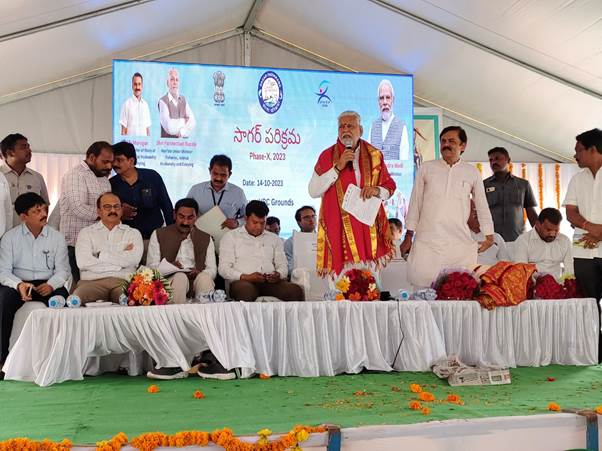
Union Minister of State for Social Justice and Empowerment Shri A. Narayan Swami ji said that the Central Government has prepared several schemes to promote entrepreneurship and craftsmanship especially among the disabled. He said that these schemes are implemented to provide training, skills and finance to the disabled brothers and sisters. The Central Government has increased the categories of disabled people from 7 to 21. Along with this, he said that reservation for disabled people in government jobs has been increased from 3% to 4% and reservation for disabled people in government educational institutions has been increased from 3% to 5%.

The government is providing financial assistance to disabled people through various schemes at low interest rates to make them self-reliant. On this occasion, DDG Disabled Empowerment Department Shri Kishore Babu Rao Surwade ji said that we are organizing divine art fairs in every major city of the country. Till now, a total of six fairs have been successfully completed. This fair is the seventh fair. On this occasion, loan approval letters were distributed to the disabled beneficiaries by Gramin Bank. To encourage the disabled people, assistive devices were distributed in the form of tokens by ALIMCO, an organization of the Government of India, in the Divya Kala Mela.
Baroda UP Gramin Bank has sanctioned Rs 25.75 lakh for 29 disabled persons. During the program, loan sanction letters were distributed as tokens to 5 disabled people. ‘Divya Kala Mela’ has been organized by the Department of Empowerment of Persons with Disabilities, Ministry of Social Justice and Empowerment at Town Hall, Maidagin, Varanasi, Uttar Pradesh from 15 September to 24 September 2023 to showcase the products and craftsmanship of entrepreneurs/artisans with disabilities. In this fair, artisans from different parts of the country including Jammu & Kashmir, North Eastern States will showcase their wonderful and attractive products like handicrafts, handlooms, embroidery works and packaged foods etc. which will also be available for sale.

This is a unique initiative towards the economic empowerment of disabled people. The Divya Kala Mela presents a great platform for marketing and showcasing the products and skills of persons with disabilities. Divya Kala Mela, Varanasi is the seventh fair in the series starting from 2022. Earlier this fair was organized in Delhi, Mumbai, Bhopal, Indore, Guwahati and Jaipur. The Department of Empowerment of Persons with Disabilities has selected National Disabled Finance and Development Corporation as the nodal agency for organizing this fair.
Around 100 disabled artisans/artists and entrepreneurs from around 20 States/Union Territories are showcasing their products and skills in the Divya Kala Mela. This fair is proving to be a powerful medium to spread the concept of ‘Vocal for Local’ to the masses in which the display and sale of products made by disabled artisans is encouraged by providing a suitable platform across the country.
This ten-day divine art fair can be enjoyed from 10.00 am to 10.00 pm. Apart from this, cultural programs by well-known artists of the country and famous food stalls from different states of the country are the special attractions of this fair. Many attractive selfie points have been made for the people at the fair.
***
Swachhata Hi Seva 2023
The Union Minister for Jal Shakti, Shri Gajendra Singh Shekhawat today launched the pan-India Swachhata Pakhwada – Swachhata Hi Seva (SHS) 2023 campaign virtually from Jaipur, Rajasthan today. The campaign has been launched in line with the vision of ‘Swachh Bharat’ or Clean India, as envisioned by Prime Minister, Shri Narendra Modi, whose clarion call for Swachhata has rallied the entire nation towards this noble cause. The campaign was launched jointly along with Union Minister of Panchayati Raj & Rural Development, Shri Giriraj Singh and the Union Minister of Housing and Urban Affairs, Shri Hardeep Singh Puri through a virtual program.
The fortnight of activities will galvanize action around swachhata, focusing on mobilizing citizen action through ‘sharamdaan’ and strengthen commitment towards building a ‘Garbage Free India’ which is the theme of the campaign. The Union Ministers also presided over a Samvaad with Sarpanches, Block Pramukhs, Mayors, CEOs-ZP, DM/DCs and other officials of rural and urban local bodies. The Union Minister also launched a special SHS Portal for monitoring and documentation of the on ground SHS activities. For the first time, the actual man hours of ‘shramdaan’ will be calculated on the portal, while capturing the number of activities and number of people participating in the activities. The second edition of the Indian Swachhata League was also launched.

The Union Minister for Jal Shakti, Shri Gajendra Singh Shekhawat, in his address urged everyone to work towards source segregation of waste, removing legacy waste and increase awareness about Swachhata. Shri Shekhawat said this pakhwada is an opportunity in this direction and to identify and replicate best Swachhata practices from various regions across the nation. He laid emphasis on quantifying and assessing legacy waste and to set up short and long term goals which can then be addressed in a time bound and result oriented manner. He also urged everyone to pledge to revive various water bodies that may have been choked due to legacy waste and to ensure that these water bodies are rejuvenated both in urban and rural areas. He further said that during the Pakhwada, targeted & result oriented activities should be undertaken and work allocation should be done properly to get the best results.

Shri Shekhawat further stated that the problems of waste management in urban and rural areas can be tackled simultaneously as cities have excess capacity but lack space while rural areas lack capacity but have ample space. Union Minister asked the secretary of the department of Drinking Water and Sanitation to work out a long-term plan in collaboration with the Secretary, MoHUA for ensuring maximum convergence and setting up a robust mechanism to accomplish this objective. He added that he looked forward to active participation and cooperation from all to make this campaign a grand success.

SBM-Grameen and SBM-Urban have both partnered with key Ministries and Departments to amplify participation and community mobilization in SHS 2023 themed Garbage Free India, with a focus on visible cleanliness and the welfare of SafaiMitras, the spirit being that of voluntarism i.e. shramdaan and actual cleaning drive/activities as in the previous years. It is a massive community mobilization drive for cleaning up of legacy waste and activities for solid waste management. As part of this annual campaign, States will organise activities with the objectives of (i) ensuring community mobilization and participation, a “jan andolan” towards Open Defecation Free (ODF)Plus villages (ii) reinforcing the concept of “Sanitation as everyone’s business” and (iii) commemorating Swachh Bharat Diwas (2nd October) at the village level. This paves way for local bodies to conduct Swachhata drives at public places of high footfall such as bus stands, railway stations, beaches, tourist spots, zoos, national parks, Govt offices in both rural and urban areas of the States/UTs. The activities will include removal of garbage from locations, clearing of legacy waste, repairing, painting, cleaning, and branding of all sanitation assets such as litter bins, public toilets, garbage points, waste transportation vehicles etc.

The second edition of India Swachhata League is all set to take the nation by a storm. Led by the youth, the season 2 of ISL promises to be even more exciting and fun-filled cleanliness league. The ISL aims to mobilize youth groups at scale to take sustained ownership for swachhata across beaches, hills and tourist spots. The swachhata league will act as a catalyst for triggering action by the youth of the city towards the vision of garbage free cities under the Swachh Bharat Mission.
As part of the Swachhata Pakhwada fortnight of celebrations, SafaiMitra Suraksha Shivir will be organized by various cities across the nation 17th September, 2023 onwards. These Shivirs (camps) are aimed at saturating welfare schemes for sanitation workers and their dependents and to improve their well-being and quality of life. The objective of the shivir is to target all sanitation workers in Solid Waste Management (SWM) & Used Water Management (UWM). The key activities will focus on mass awareness, preventive health checkups, yoga shivirs and extending entitlement of various welfare benefits of central & State Schemes in convergence with various ministries.
In her welcome address, Secretary, Department of Drinking Water and Sanitation, Ministry of Jal Shakti, Ms. Vini Mahajan spoke about the objectives of SHS 2023 and urged the State & UT machinery of Swachh Bharat Mission, both Rural & Urban to make joint and concerted effort to make the fortnight a roaring success. She added, “SBMG having achieved nearly 75% ODF Plus villages, through the fortnight is aiming to achieve 90% ODF Plus villages. The SBM Mission Directors have been urged to focus on community mobilization and voluntary efforts for cleaning drives in villages, blocks and districts.
The fortnight of celebrations will culminate on 2nd October with Swachhata Diwas. As a part of the massive cleanliness drives, all Government of India Ministries, PSUs and State govt and local bodies will come together to conduct cleanliness at various locations. The planned inter-sectoral activities include cleaning high footfall tourist spots/ pilgrim sites under Tourism Ministry, Har Pathri Saaf Suthari activities by Railways, Dept of higher Education & School Education can involve universities, School students engaging them in SHS activities, Two bins & public toilet cleanliness under the Petroleum & Natural Gas Ministry, Prioritizing cleanliness of zoos/parks under MoEFCC and Cleanliness drives across highways & adjacent areas under MoRTH.
*******


You must be logged in to post a comment.