Government fostering a conducive business environment and accelerating growth in Indian Auto sector

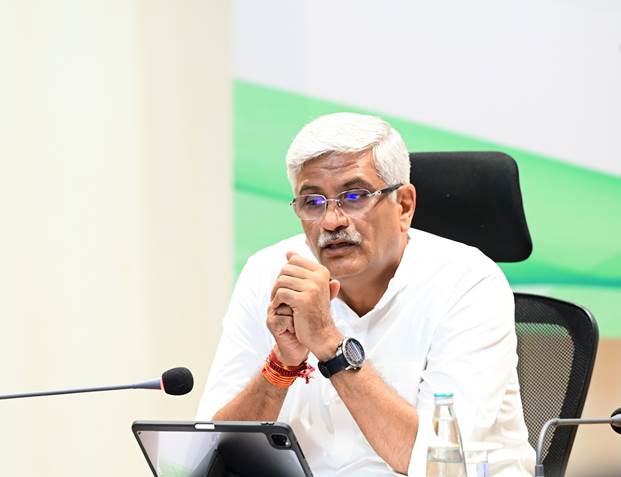
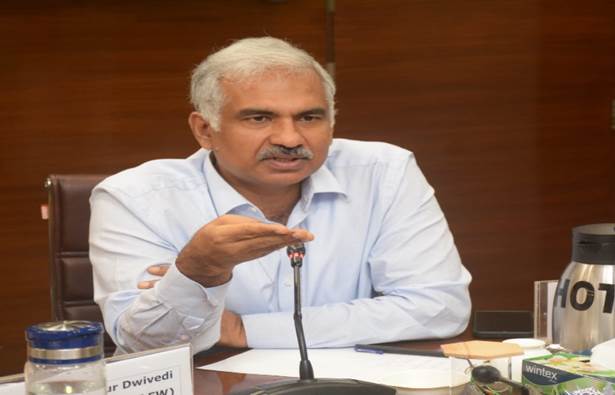
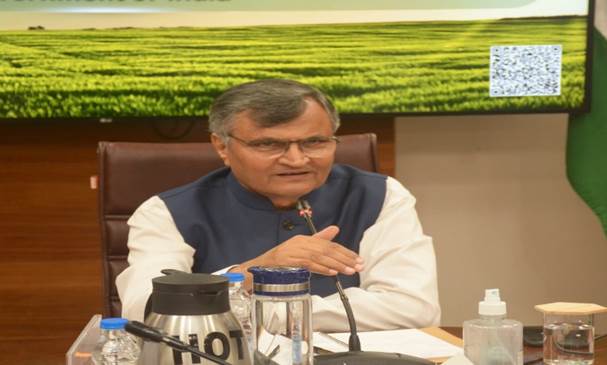
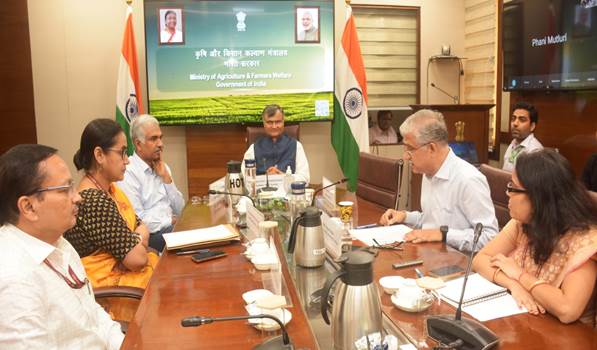
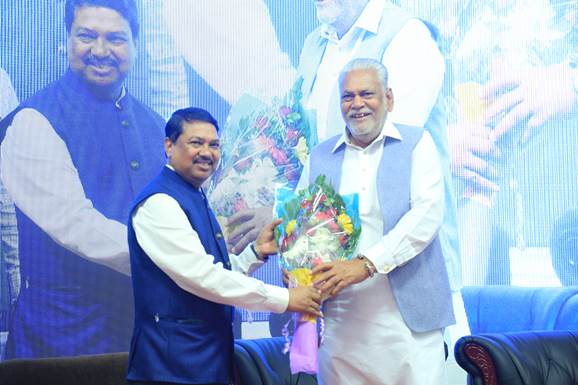
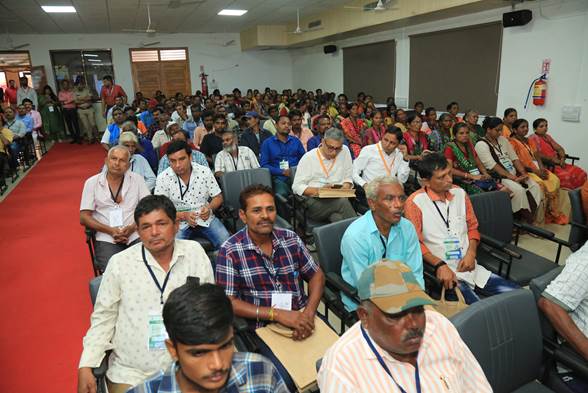
 Ministry of Heavy Industries (MHI) organised a meeting for “Review of PLI-AUTO Scheme” under the Chairmanship of  Union Minister for Heavy Industries Dr. Mahendra Nath Pandey, here today. The objective of the meeting  was to ascertain the problem or difficulties faced by OEMs and component companies under the PLI-AUTO scheme. Industry leaders  were encouraged to come forward and share their problems and views. The meeting  was organised in line with the vision of the  Prime Minister, Shri Narendra Modi, to make India a global hub for manufacturing. Minister of State for Heavy Industries, Shri Krishan Pal Gurjar, Secretary, MHI,   Shri Kamran Rizvi, Addl. Secretary, MHI and other senior officials were present in the meeting.

The event witnessed participation from approved applicants under the scheme, officials from MHI, NITI Aayog, IFCI (Project Management Agency for the Scheme), Testing Agencies of MHI viz. ARAI, ICAT, GARC & NATRAX, Automobile Associations viz. SIAM & ACMA and media professionals.

MHI has taken various initiatives to promote Cleaner Mobility and to develop an ecosystem of Innovation and Technology. The Production Linked Incentive Scheme for Automobile and Auto Component Industry (PLI-AUTO) with an outlay of ₹25,938 crore is a key initiative to drive the supply chain of Advanced Automotive Technology (AAT) products.


Delivering the keynote address at the event, Dr. Pandey called for  industry’s feedback and collaborative engagement to shape the policies, procedures and effectiveness of the PLI scheme. He  said that the government is committed to fostering a conducive business environment and accelerating growth in the Indian Automotive sector.

 The Minister mentioned that the PLI-AUTO scheme incentivizes only those eligible AAT products for which minimum 50% Domestic Value Addition (DVA) is achieved and has been certified by Testing Agencies (TAs) of MHI. This criterion shall reduce imports, facilitate deep localization for AAT products and enable creation of domestic as well as global supply chain.


  Speaking on the occasion, Shri Krishan pal Gurjar said that  Auto Industry  contributes 7% to country’s GDP and PLI scheme will further enhance the competitiveness of the sector and will create more employment opportunities.

In his address, Secretary, MHI,   Shri Kamran Rizvi said that automotive industry is a major economic contributor in India. The PLI-AUTO scheme will make the Indian automotive industry more competitive and will enhance globalization of the Indian automotive sector and incentivize emergence of global supply chain for Advanced Automotive Technologies (AAT) in India. He further stated that the scheme  will herald a new age in higher technology, more efficient and green automotive manufacturing, he added.

Attendees included giants of automotive sector such as Tata Motors, Mahindra & Mahindra, OLA electric, Ashok Leyland, Hyundai Motor, Bosch, Toyota Kirloskar Auto Parts, Minda Industries, Delphi-TVS, among others. Their presence ensured a diverse range of perspectives and fostered an environment of knowledge-sharing and networking. Key executives from these companies, along with government officials were actively involved in a collaborative open discussion and Q&A sessions throughout the event.

A comprehensive presentation highlighting the progress and performance under the PLI scheme was made. The investment as reported by the applicants (till 30th June 2023) is ₹ 10,755 crore. To facilitate ease of doing business (EODB) in the scheme, MHI published Standard Operating Procedure (SOP) for DVA certification on 27th April 2023. Thereafter, two applicants namely Tata Motors and Mahindra & Mahindra have received DVA certification, and four more applicants have applied for DVA certification. Further, another 23 applicants are expected to apply for DVA certification by the end of September 2023. A detailed SOP is being framed for verification and processing incentive claims and stakeholder consultations for the same shall be initiated shortly.

                                                         ***

Sagar Parikrama Phase VIII in Southern Districts of Tamil Nadu

 Union Minister for Fisheries, Animal Husbandry and Dairying Shri Parshottam Rupala and Minister of State Dr L Murugan will jointly launch Sagar Parikrama Phase-VIII on 31st August in Thengapattanam Fishing harbour in Kanyakumari district. This phase of Sagar Parikrama will be covering four coastal districts of Tamil Nadu including Kanyakumari, Tirunelveli, Thoothukudi, and Ramanathapuram.

The Tamil Nadu leg of Sagar Parikrama will begin on the 31st and will end on the second of September with the foundation laying stone of the Integrated Seaweed Park at Valamavur in Thondi, Ramanathapuram district. A Tamil song on Sagar Parikrama will also be launched during the event.

Sagar Parikrama Yatra is an outreach program intended to reach out fisher community across the coastal belt. The initiative has been launched to better understand the issues, experiences, and aspirations of fishermen, as well as to examine the scope of seafood exports and popularise programs available to fishermen in coastal areas.

Union Fisheries Ministers Shri Purushottam Rupala along with Minister of State Dr L. Murugan along with the State fisheries Department Tamilnadu, District officials and Senior officials from Department of Fisheries, Government of India and from State Government, National Fisheries Development Board, Indian Coast Guard, Fishery Survey of India, National Institute of Fisheries Post Harvest Technology and Training, Central Institute of Fisheries Nautical & Engineering Training and fishermen will participate in the Sagar Parikrama awareness campaign for three days.

Fishermen representatives, fish-farmers, entrepreneurs, fishermen cooperative society leaders, professionals, scientists, and other stakeholders in the four districts of Tamil Nadu will participate in the events.

Tamil Nadu has 1,076 km long coastline, which is the second largest in the country. The state is enriched with marine, brackish water and inland fisheries resources amenable for capture and culture fisheries. Marine fish production (2021-22) of the State stood at 5.95 lakh MT, of which 1.14 lakh MT, valued at Rs.6,559.64 crore was exported. The fisheries industry supports the livelihood of 10.48 lakh marine fishers through 5,830 mechanised and 45,685 traditional fishing crafts which are actively engaged in fishing and 4,41,977 marine fisherfolk enrolled in Tamil Nadu Fishermen welfare Board.

The rich fisheries biodiversity of Tamil Nadu provides livelihood opportunities to more than a million people directly and in the ancillary activities. During the year 2021-22, the sector’s contribution to the State agriculture GDP is 5.78%. The State’s contribution from fisheries sector in the foreign exchange is Rs.6,559.64 crore by exporting 1.14 lakh metric tonnes of fish and fishery products during the year 2021-22.

During the Sagar Parikrama journey across four coastal district of Tamil Nadu, Certificates/sanctions relating to the Pradhan Mantri Matsya Sampada Yojana (PMMSY), Fisheries and Aquaculture Infrastructure Development Fund (FIDF), Kisan Credit Card (KCC), and State Schemes shall be distributed to progressive fishermen, particularly coastal fishermen and fish farmers, young fisheries entrepreneurs. Literature on the PMMSY scheme, State schemes, e-shram, FIDF, KCC, will be widely disseminated through print media, electronic media, videos, and a digital campaign using jingles among fishermen to promote the schemes for their awareness and benefits.

The first seven phases of Sagar Parikrama has covered 3600 km in 8 Western Coastal states/UTs including Gujarat, Diu & Daman, Maharashtra, Goa, Karnataka, Kerala, Puducherry, and Andaman & Nicobar. The journey signifies an evolutionary initiative of the Government of India demonstrating solidarity with fisher folk, fish farmers, and other concerned stakeholders across the coastal belt. Aiming to resolve the challenges faced by the fishing community and facilitate their economic upliftment through various fisheries schemes and programs implemented by the government, such as the Pradhan Mantri Matsya Sampada Yojana (PMMSY) and the Kisan Credit Card (KCC) and to disseminate information about various fisheries related schemes and programs, promoting responsible fisheries with a focus on sustainable balance, and protection of marine ecosystems.

***

Animal Husbandry and Dairying

 Minister of Fisheries, Animal Husbandry and Dairying, Shri Parshottam Rupala chaired the 2nd National Advisory Committee meeting for Animal Husbandry and Dairying formed under the Department of Animal Husbandry and Dairying. Minister of State, FAHD, Dr. Sanjeev Kumar Balyan, Secretary DAHD, Smt. Alka Upadhyaya, and distinguished members of National Advisory Committee were also present in the meeting.

The Minister, FAHD took stock of the decision taken during 1st National Advisory Meeting and highlighted that the Ministry is committed to work with all stakeholders for creating rural Entrepreneurship and help in creating better livelihood opportunity for unemployed youth and livestock farmers in the Cattle, Dairy, poultry, sheep, goat, piggery, feed and fodder sector paving the way towards AtmaNirbhar Bharat. MoS, FAHD Dr. Sanjeev Kumar Balyan emphasised that the realigned schemes will bring a sharp focus on entrepreneurship development and breed improvement in rural poultry, sheep, goat and piggery including feed and fodder development. The Government is implementing various schemes/programmes to enhance poultry productivity, milk and meat production, for attaining nutritional security, employment generation and economic prosperity for the country.

At the outset, Secretary, DAHD, Smt. Alka Upadhyaya welcomed all members of the committee and explained the purport of the constituted committee for animal husbandry and Dairying. Minister, FAHD invited suggestions from Stakeholders in respect of the existing Policies/Programme/Schemes/Acts/ Rules/SoPs so that the same could be revised/modified based on ground realities.

In the meeting, key discussions were held on various aspects of animal husbandry. Dr. Mukul Anand emphasized strategies for promoting goat milk farms and ensuring the long-term sustainability of commercial goat farms under NLM. Shri Prabhakar Babu G addressed the importance of quality fodder seeds. Vaccination concerns for sheep and goat populations were raised by Shri Vinayak Narawade. Several members discussed topics such as animal welfare, PCA act amendments, and feed industries. The meeting covered a broad spectrum, including breeding technologies, disease surveillance, and entrepreneurship, aiming to advance the animal husbandry sector.

Formed in July, 2022, the National Advisory Committees serve as a platform for all stakeholders to come together and deliberate and discuss on key issues pertaining to Animal Husbandry and dairying. The first meeting of National Advisory Committee under the Chairmanship of Minister of State for Fisheries, Animal Husbandry and Dairying, Dr. Sanjeev Kumar Balyan was held on 28 October 2022 in New Delhi. Setting the context, Secretary DAHD, Smt. Alka Upadhyaya highlighted that Livestock Sector grew at a Compound Annual Growth Rate (CAGR) of 7.67% (at constant prices) from 2014-15 to 2021-22. The contribution of livestock in total agriculture and allied sector Gross value added (GVA)(at constant prices) has increased from 24.32 per cent (2014-15) to 30.47 per cent (2021-22). Livestock sector contributed 4.75 per cent of total GVA in 2021-22 (at constant price).

***

Warehousing Development Regulatory Authority (WDRA)

 The Warehousing Development and Regulatory Authority (WDRA) under the Department of Food and Public Distribution, Government of India organized an outreach programme on “registration of warehouses with WDRA” on 28.08.2023 at Baba Jitto Kisan Kendra, Directorate of Agriculture, Gole Pully, Talab Tillo, Jammu to promote registration of warehouses with WDRA.

Shri Arun Kumar Shrivastava, Member, WDRA highlighted that the produce stored in WDRA registered warehouses has greater security compared with unregistered warehouses. He said that electronic negotiable warehouse receipt is safer compared with paper receipts especially as chances of fraud against paper receipts are very high. e-NWR is a negotiable instrument backed by the WDRA Act 2007. He also outlined the benefits of WDRA registered warehouses including various insurances, periodic inspections, scientific storage with SOP, etc. to safeguard the interest of depositors and bankers.

He further said that Govt bodies such as FCI, NAFED and National Horticulture Board have already issued guidelines that Central Pool Stock should be kept in WDRA registered warehouses. Elaborating on the value chain of WDRA registered warehouse eco-system, he said that the direct beneficiaries of the WDRA ecosystem are farmers/warehouseman/ traders and requested participant specially owners of warehouses to register their warehouses with WDRA.

During Open House significant suggestions were made in further improving the registration process and pledge finance system of WDRA.

Shri Vikas Sharma, Director, Horticulture Planning and Marketing, Jammu & Kashmir in his welcome address appreciated the unique role of WDRA in ensuring scientific storage of food grains and pledge finance to the farmers through e-NWR ecosystem. Shri H K Dabas, Under Secretary, WDRA briefed about the Warehousing Act and Rules. Shri Brijendra Pratap Yadav, Assistant Director, WDRA explained about the registration process of WDRA for warehouseman and warehouses.

Representatives from NABARD, FCI, Department of Food, Civil Supplies Consumer Affairs, Industries and Commerce, SIDCO, SICOP, various banks, department of Agriculture and Horticulture, Jammu,  J & K Agro Corporation, President CA  Stores Association Kashmir, Maajid Wafai and various CA Stores owners, owners of warehouses, Farmers, FPOs etc. attended the conference.  

****

Different Between H-Index and Impact Factor

 The h-index and impact factor are two measures of research quality. The h-index evaluates a researcher’s or an author’s scientific productivity based on the number of published research papers and their citations. The impact factor evaluates the total number of articles cited within the Journal during the previous two years1. The h-index is the largest number h, so h articles have at least h citations each. It has been argued that the H index outperforms the impact factor for evaluation purposes.

That’s a very interesting question. The journal impact factor and h index are different in their fundamental design: The former is used to measure journal prestige, while the latter is used to measure researcher impact. Therefore, the two cannot be compared. Let me explain.

The journal impact factor measures the average number of citations received by articles published within a journal over a two-year period. It can be a reliable measure of journal reputation but does not measure the impact of individual articles or researchers.

On the other hand, the h index is designed to measure the scientific output of a researcher by considering a combination of the number of papers the researcher has published and the number of citations those papers have received. Thus it measures both your publication record and its impact.

Do you now see how the impact factor and h index cannot be compared because they serve different purposes?

Your colleagues are right though. As a researcher, it is more useful for you to calculate your h index than to use the journal impact factor as a measure of prestige. The h index can especially work to your advantage if you have published many papers. I understand that it is troublesome and time consuming to calculate your h index because it requires you to maintain a record of all your published papers and the citations they have received through timely searches on multiple databases. But this would be time and effort well spent because the h index is gaining popularity and is increasingly being considered by grant and tenure committees.

However, like the journal impact factor, even the h index has its limitations, and it is advisable for you to mention a combination of citation metrics—the impact factor of journals in which you have published, your h index, and other article-level metrics—on your grant applications or statements of purpose, so as to give people a holistic view of your impact as a researcher. 

USAID Youth Well-Being Prize Competition (Up-to $5,000 Grants)

USAID Youth Well-Being Prize Competition (Up-to $5,000 Grants)

Are you a young person between the ages of 10 and 29 with an idea of how digital tools can be used to help improve other young people’s well-being? Do you have ideas about how we could creatively use technology to increase young people’s knowledge around issues that impact them? The United States Agency for International Development (USAID) is looking for creative innovators with solutions to pressing issues around well-being. Is this you? If so, apply today for the Youth Well-Being Prize Competition!

The Youth Well-Being Prize Competition aims to increase young people’s access to information and ensure their leadership and engagement in creating information campaigns and awareness products around the issues that affect their well-being.

The Youth Well-Being Prize Competition is looking for young change makers with innovative ideas for protecting young people’s well-being, keeping youth safe, and making a positive impact on the lives and communities of themselves and their peers.

USAID is seeking solutions created by young people, for young people, and these solutions should recognize the diverse identities of young people in the areas of mental health, digital harm, safeguarding, gender-based violence, and climate change:

  • Mental health: Ideas that focus on the mental health of children and youth. Competitors interested in mental health, personalized care, psychotherapy, or any interventions that help reduce stress and improve the lives of young people should apply here. The innovation should aim to enhance individual, interpersonal, and/or overall well-being for youth.
  • Digital Harm: Innovations in this category should relate to use of digital platforms (such as social media) and safety. Competitors interested in reducing digital harm as caused by online platforms and/or digital use, including digital harm done offline for children and youth should apply in this category. Digital harm can include any of the following: hate speech, cyberbullying, doxing, deep fakes of people without their consent, nonconsensual explicit content, misinformation and disinformation, etc.
  • Safeguarding: Innovations in this category should relate to prevention and/or response to child and/or youth abuse, exploitation, neglect, and violence including prevention and/or response to sexual exploitation, abuse, and violence. Competitors interested in protection from and elimination of all forms of violence against children and young people should apply in this category.
  • Gender-Based Violence: Innovations in this category should work against harmful actions or threats that target individuals or groups based on their actual or perceived sex, gender, gender identity, gender expression, sex characteristics, sexual orientation, or how they challenge traditional ideas of masculinity and femininity. Competitors interested in gender equality, equity, and preventing, mitigating, and responding to gender-based violence should apply in this category.
  • Climate Change: Innovations in this category should relate to building climate awareness, improving climate education, promoting sustainable lifestyles, conserving nature, supporting renewable energy, adopting environmentally friendly practices, and/or implementing climate adaptation and mitigation projects. Those interested in youth-led and children-led climate mitigation efforts and reduction in high levels of climate anxiety and grief among children and young people should apply in this category.
Prize Details
  • Total cash prizes: $50,000
  • Prizes will be awarded to 1st, 2nd, and 3rd place winners in the categories of digital harm, mental health, safeguarding, gender-based violence, and climate change for a total of 15 prizes.
    • Digital Harm
      • 1st Place: $5,000
      • 2nd Place: $3,000
      • 3rd Place: $2,000
    • Mental Health
      • 1st Place: $5,000
      • 2nd Place: $3,000
      • 3rd Place: $2,000
    • Safeguarding
      • 1st Place: $5,000
      • 2nd Place: $3,000
      • 3rd Place: $2,000
    • Gender-Based Violence
      • 1st Place: $5,000
      • 2nd Place: $3,000
      • 3rd Place: $2,000
    • Climate
      • 1st Place: $5,000
      • 2nd Place: $3,000
      • 3rd Place: $2,000
Eligibility Requirements
  • To enter the Youth Well-Being Prize Competition, please see the below eligibility requirements:
    • You must be between the ages of 10 and 29 and/or be a youth-led organization.
    • You have an idea to improve youth well-being in mental health, digital harm, safeguarding, gender-based violence, or climate change.
    • This is a global call for solutions.
    • No prior professional or academic experience in any particular field or topic is necessary.

Application Deadline: 29-Sep-23

Click Here to Apply

Export of Basmati rice to prevent exports of Non-Basmati white rice

 To check the domestic prices and to ensure domestic food security, the Government has been taking measures to restrict export of rice from India. The export of non-basmati white rice was prohibited on 20th July 2023.

It has been noticed that despite restriction on certain varieties, rice exports have been high during the current year. Up to 17th August 2023, total exports of rice (other than broken rice, export of which is prohibited) were 7.33 MMT compared to 6.37 MMT during the corresponding period of previous year, registering an increase of 15.06%. There has been a spurt in the export of parboiled rice and Basmati rice; both of these varieties did not have any restriction on exports. While the export of parboiled rice has grown by 21.18% (3.29 MMT during the current year compared to 2.72 MMT during previous year), export of Basmati rice has increased by 9.35% (1.86 MMT during the current year compared to 1.70 MMT during previous year). Export of non-basmati white rice, which had an export duty of 20% since 9th September 2022 and has been prohibited w.e.f. 20th July 2023, has also registered an increase of 4.36% (1.97 MMT compared to 1.89 MMT during previous year). On the other hand, as per third Advanced Estimate of Department of Agriculture & Farmers Welfare, during the Rabi Season 2022-23, the production was only 158.95 LMT against 184.71 LMT during Rabi Season of 2021-22 i.e., there was a decline of 13.84%.

Internationally, due to strong demand from Asian buyers, production disruptions registered in 2022/23 in some major producing countries like Thailand, and fears of possible adverse effect of the onset of El Nino, international rice prices have also been rising continuously since last year. The FAO Rice Price Index reached 129.7 points in July 2023; its highest value since September 2011, registering an increase of 19.7% over past year levels. As the prices of Indian rice are still cheaper than the international prices, there has been a strong demand for Indian rice, resulting in record exports during 2021-22 and 2022-23. 

The Government has received credible field reports regarding misclassification and illegal export of non-basmati white rice, export of which has been prohibited with effect from 20th July 2023. It has been reported that non-basmati white rice is being exported under the HS codes of parboiled rice and Basmati rice.

As the Agricultural & Processed Food Products Export Development Authority (APEDA) is responsible for regulation of export of Basmati rice and already has a web-based system in place for the purpose, the Government has issued following instructions to APEDA to introduce additional safeguards to prevent the possible illegal exports of white non-basmati rice in the garb of Basmati rice:

  1. Contracts for Basmati exports with the value of USD 1200 per MT only and above should be registered for issue of Registration – cum – Allocation Certificate (RCAC).
  2. Contracts with the value of below USD 1200 per MT may be kept in abeyance and may be evaluated by a committee to be set up by the Chairman, APEDA, for understanding the variation in prices and use of this route for export of non-Basmati white rice. It has been noted that there has been large variation in the contract price of Basmati being exported with lowest contract price being USD 359 Per MT in backdrop of average export price of USD 1214 per MT during the current month. The Committee should submit its report within a period of one month, whereafter a decision on lower price exports of Basmati planned by industry can be taken appropriately.
  3. APEDA should hold consultations with trade to sensitize them about the matter and work with them to discourage any use of this window for export of non-basmati white rice.

***

MSDE organizes a workshop with sending organizations to expand Japan Operations

 To facilitate a comprehensive dialogue and promote knowledge sharing amongst the stakeholders responsible for mobility of skilled candidates to Japan under Technical Intern Training Program (TITP) and Specified Skill Workers (SSW) program, the Ministry of Skill Development and Entrepreneurship (MSDE), organized a brainstorming workshop with Sending Organizations (SOs), empaneled by National Skill Development Corporation (NSDC).The workshop was chaired by Shri Atul Kumar Tiwari, Secretary, MSDE. Additional Secretary, MEA, Shri Anurag Bhushan also participated in the workshop along with other senior ministry officials.

The workshop provided a platform to the stakeholders to identify and address challenges faced by Sending Organizations and students, share on-ground experiences related to the respective programs, explore effective student monitoring practices, and engage in solution driven discussions.

Shri Atul Kumar Tiwari, Secretary, Ministry of Skill Development and Entrepreneurship said the TITP and SSW programs play a pivotal role in forwarding Prime Minister, Shri Narendra Modi’s vision of making India the Skill Capital of the World. India and Japan share age old cultural and religious connect and collaboration as such between the two countries further help promote international cooperation and strengthen the bond between the two countries.

He further said that organizing workshops like these are important for sharing of relevant insights that help to create effective roadmaps for the future. The discussion today has been extremely fruitful in terms of the inputs shared by everyone. He hoped that the next steps will further solidify MSDE’s efforts towards training the segment of the Indian workforce as per the demands of the job market in Japan.

Shri Anurag Bhushan, Additional Secretary, Ministry of External Affairs said that the emigration, spanning decades, has evolved into a powerful catalyst, enriching skill development, bolstering soft power and fostering livelihood opportunities. As our diaspora grows, it not only fuels remittances but also serves as a conduit for knowledge transfer, technology, and skill acquisition that immensely benefit Indian companies to leverage global exposure for their growth. It can be leveraged through the convergence of demography, democracy and diversity that propels emigration. It is evident in strategic agreements like comprehensive Migration Motivating Partnership Agreement with Germany and Mauritius. In the realm of Japanese market, a nuanced approach is paramount to tap into the opportunities. Equipping the workforce with the necessary linguistic skills, building robust language training frameworks, strengthening immigration policy ecosystem, and embracing digital advancements can help in utilizing the talent of young workforce, he added.

The workshop was successful in generating valuable insights from the sending organizations and basis these inputs, National Skill Development Corporation International (NSDCI) under the aegis of the Ministry and Skill Development and Entrepreneurship would align their efforts towards creating a framework that links MSDE, MEA and other ministries, which in turn, will enhance the effectiveness of workforce mobility under the two programs, between the two countries. From an implementation perspective, it was deemed important for creating a larger pool of high skilled Japanese language trainers in the country, while expanding the learning facilities with the help of concerned Ministries and incentivizing the Skill India International Centres. Further, collaborating with companies in Japan and companies from Japan in India would be a necessary step for demand aggregation and alignment of skill training in the respective sectors basis the knowledge of the demand.

*****

Student Scientist Connect Program Event


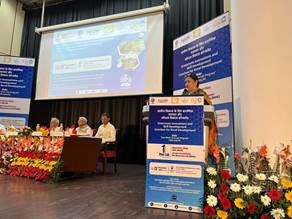
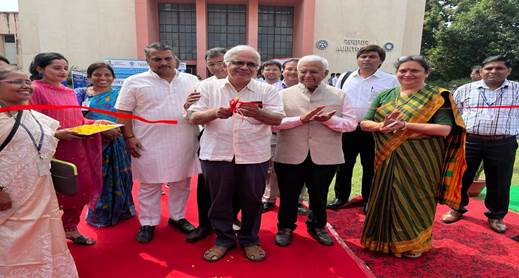
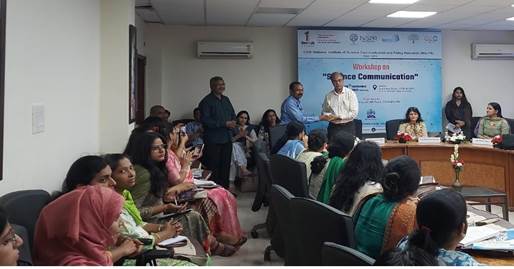
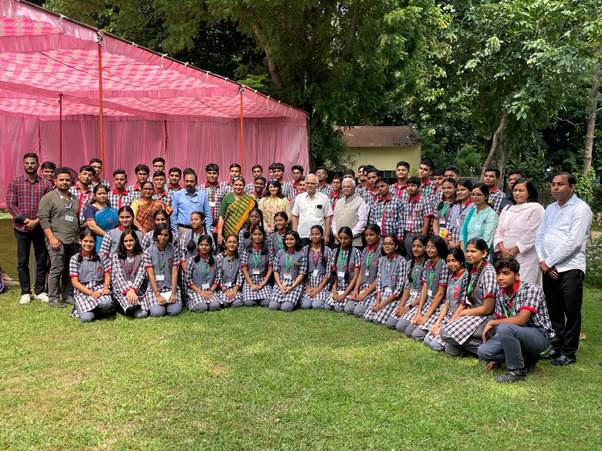
Under the “One Week One Lab” Campaign CSIR-Central Glass and Ceramic Research Institute (CGCRI), Kolkata conducted a school connect programme on 25th August, 2023. It was intended to promote scientific temper among school students and encourage them to pursue research in different scientific domains. Dr S.K. Mishra, Director CSIR-CGCRI welcomed the participants. The Chief Guest Dr. K. J. SreeramDirector of CSIR-Central Leather Research Institute highlighted the role of CSIR in nation-building activities, and the Guest of Honour Dr. Arun Bandyopadhyay, Director of CSIR – Indian Institute of Chemical Biology inspired the students to pursue science for the best interest of the nation. This event was attended by around 295 students and 28 teachers from 7 schools. Participant schools included Kendriya Vidyalaya, Dumdum, St. Xaviers Institution, Laxmipat Singhania School, Silver Point School, Mukul Bose Memorial School, Jadavpur High School, and The Summit School. The school participants in this program enjoyed different scientific activities, including popular lectures, live interactive sessions, different product demonstrations of CSIR-CGCRI, scientific Quizzes, virtual lab platforms, and many more. Scientists working in different fields showcased CGCRI’s various advanced technologies.

Legend (clockwise from left): Lighting of the lamp; dignitaries on the dais; the audience during the popular lecture session; group photo with dignitaries and team

****

ANRF signifies a higher level of priority & commitment to research and innovation

 Anusandhan National Research Foundation (ANRF) signifies a higher level of priority and commitment to research and innovation at the highest level in the government, said Dr Akhilesh Gupta, Secretary of SERB and Advisor, DST at a talk on Anusandhan National Research Foundation hosted by the National Centre for Biological Sciences.

“The challenge of ANRF is to introduce changes so that research makes a tangible impact on society and prioritise quality and relevance over quantity, rather than the current focus on generating research output,” Dr Gupta said at the online talk titled Changing Landscape of Research Funding in India: Anusandhan National Research Foundation: India’s vision to Achieve Global Leadership. 

He added that the foundation will encourage translation research in all universities beyond Technology Readiness Level (TRL) 3, indicating a commitment to taking research outcomes from the lab to practical applications. 


Dr Gupta pointed out that while the funds for NRF will be sourced from various avenues, including contributions from industry, philanthropic foundations, international organisations, and other stakeholders, a novel model has been proposed for the foundation which emphasises industry-led initiatives with government support. “The involvement of the industry is crucial in ensuring that research outcomes are aligned with real-world needs and can be effectively implemented,” he stressed.

He underlined that while Science and Engineering Research Board’s (SERB) transition to NRF represents a significant shift in priority of research funding in India, several significant initiatives like doubling private sector R&D investment, increasing the number of full-time researchers, promoting women’s participation, and National repository of STI Data are under consideration to foster innovation and research in the country.

Professor LS Shashidhara, Director, National Centre for Biological Sciences (NCBS) as well as several scientists from NCBS and other scientific institutions all over the country participated in the interactive session.

20th Atma Ram Memorial Lecture delivered by Dr N. Kalaiselvi

 The One Week One Lab programme of CSIR-Central Glass and Ceramic Research Institute (CGCRI), Kolkata concluded with the 73rd Institute Foundation Day celebration on 26.08.2023. This occasion was marked with the 20th Atma Ram Memorial Lecture delivered by Dr (Mrs) N. Kalaiselvi, Secretary DSIR and Director General, CSIR, who was the Chief Guest. She spoke on “SDGs and S&T Opportunities”, wherein she touched upon the alignment of CSIR themes with the SDGs vis-a-vis national mission programmes; the challenges in their implementation and the road ahead for achieving the same. The programme was also associated with felicitating institute staff members / divisions for their performance. Dr S.K. Mishra, Director CSIR-CGCRI welcomed the participants while Dr Debashis Bhattacharjee, Vice President (Technology and R&D) of Tata Steel was present as Guest of Honour besides other dignitaries. Dr Kalaiselvi also opened the Atma Ram Memorial Museum & Archives to public. The museum envisages tracing the technological evolution of ceramics from historic period; and the journey of CSIR and CSIR-CGCRI since inception.

Legends to photos (clockwise from left): lighting of the lamp during invocation; Dr Kalaiselvi delivering the Atma Ram Memorial Lecture; audience during the lecture; and opening the Atma Ram Memorial Museum & Archives to public by DG, CSIR.  

***

National Zoological Park celebrates the first birthday of white tigress SITA's twin cubs, Avni and Vyom

 National Zoological Park joyously celebrated the first birthday of the adorable white tigress SITA’s twin cubs, Avni and Vyom,today. Shri Chandra Prakash Goyal, DG & SS, MoEFCC as the Chief Guestand Dr. S.K. Shukla Member Secretary, Central Zoo Authority as the Special Guest were present on the occasion.The highlight of the celebration was the cake-cutting ceremony, symbolizing the cubs’ significance to connect between the citizens and wildlife.


Students of 11th grade were invited to partake in the festivities. The event provided a unique educational opportunity for the students to learn about tigers and their vital role in biodiversity preservation.

National Zoological Park demonstrated its commitment to environmental sustainability by gifting each attending student a plant sapling. This gesture aimed not only to express gratitude for their participation but also to instill a sense of responsibility for the environment among the future generations.


The celebration of Avni and Vyom’s first birthday stands as a testament to the zoo’s dedication to fostering a harmonious coexistence between humans and nature.


At present National Zoological Park have 12 numbers of tigers of 02 varieties, and among these there are 7 normal coloured Royal Bengal Tigers (Panthera tigris tigris) and 5 White Tigers (Panthera tigris tigris color_mutation ).

***

CONCLAVE-CUM-SYMPOSIUM ON SELF RELIANCE IN MISSILE TECHNOLOGY HELD AT VISAKHAPATNAM

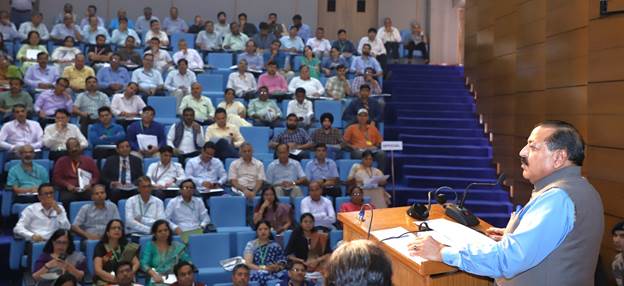
 The Missile Technology Conclave-cum-Symposium themed ‘Aatmanirbharta in Missile Repairs & Indigenisation Technologies (AMRIT-2023)’, was organised by INS Kalinga at Samudrika Auditorium, Naval Base, Visakhapatnam on 23 Aug 23. The event was inaugurated by Vice Admiral Sameer Saxena, AVSM, NM, Chief of Staff, Eastern Naval Command. Dr Y Srinivas Rao, DS, DG NS&M and Shri GA Srinivasa Murthy, DS, Director DRDL delivered special address during inaugural session. Papers were presented and technical talks were held by personnel from varied organisations leading to an effervescent exchange of ideas. Academia partners from Military Institute of Technology, Pune and National Research and Development Corporation (NRDC), also actively engaged in the discussions, drawing vital inputs for their work.

           
The Symposium received an overwhelming response from viz. DRDO, PSUs, DPSUs, Indian Private Defence industries, MSMEs/ Start-ups, representatives from State Government and Society of Indian Defence Manufacturers (SIDM). Exhibition stalls were also set-up during the event, wherein the DRDO labs, DPSUs and private defence firms showcased their expertise and capabilities in Missile Repairs and Indigenisation.
           
The seminar provided and fostered a symbiotic environment for all stakeholders viz. Indian Public & Private Industries, DRDO Labs, Academia and Indian Navy in line with the Government of India’s initiative – ‘Aatmanirbhar Bharat’ mission. Going forward it is envisaged to benefit the Indian Navy in particular and the Armed Forces in general to minimise dependence on Foreign OEMs and also strengthen the core competencies of our Defence Industry and ultimately lead the nation towards Aatmanirbharta.
 
The Chief Guest congratulated all the participating agencies to have partnered in the journey towards ‘Aatmanirbhar Bharat’ and in making AMRIT-23 a grand success. Cmde CS Nayar, Commanding Officer, INS Kalinga delivered the vote of thanks. The exhibition stalls were also visited by naval personnel, Subject Matter Experts, local firms, technical institutes and engineering colleges.
***
CGR/VM/JSN

Team ISRO on success of Chandrayaan-3

 The Prime Minister, Shri Narendra Modi visited the ISRO Telemetry Tracking and Command Network (ISTRAC) in Bengaluru after his arrival from Greece and addressed Team ISRO on the success of Chandrayaan-3. The Prime Minister met and interacted with ISRO scientists involved in the Chandrayaan-3 mission where he was also briefed about the findings and progress in the Chandrayaan-3 Mission.

Addressing the scientists, the Prime Minister expressed great delight in being present at the ISRO Telemetry Tracking and Command Network (ISTRAC) in Bengaluru and said that such an occasion is extremely rare when the body and mind get filled with such happiness. Referring to the few special moments in everyone’s lives when impatience starts to dominate, the Prime Minister noted that he experienced the exact same emotions during his tour to South Africa and  Greece and said that his mind was focussed on the Chandrayaan 3 Mission at all times. Observing the inconvenience caused to the scientists at ISRO due to his impromptu plans to visit the ISTRAC, a visibly emotional  Prime Minister said that he was eager to visit and salute the scientists for their diligence, dedication, courage, devotion and passion. 

The Prime Minister said that this is not a simple success. He said this achievement heralds India’s scientific power in infinite space. An elated Prime Minister exclaimed, “India is on the Moon, We have our national pride placed on the Moon”. Highlighting this unprecedented achievement, the Prime Minister said “This is today’s India that is fearless and relentless. This is an India that thinks new and in a novel way, the one that goes to the dark zone and spreads light in the world. This India will provide solutions to the big problems of the world in the 21st century.”
The Prime Minister said that the moment of the touchdown has become immortal in the consciousness of the nation. “The moment of touchdown is one of the most inspiring moments of this century. Every Indian took it as his or her own victory ”, he said. The Prime Minister credited the scientists for this grand success. 
The Prime Minister, describing the photographs of the strong footings of the Moon lander said, “Our ‘Moon Lander’ has firmly set its foot on the Moon like ‘Angad… On the one side is the valor of Vikram then there is bravery of Pragyan on the other”. He said these are pictures of the never seen parts of the moon and this has been done by India. “Entire world recognizes India’s scientific spirit, technology and temperament,” said Shri Modi.  

“The success of Chandrayaan 3 is not just India’s alone but it belongs to all of humanity”, the Prime Minister remarked and underlined that the explorations of the mission will open new doors of possibilities for moon missions of every country. He stated that the mission would not only unravel the secrets of the moon but also contribute to overcoming the challenges on Earth. The Prime Minister once again congratulated every scientist, technician, engineer and all members associated with Chandrayaan 3 Mission. 

The Prime Minister announced, “The point where the moon lander of Chandrayaan-3 landed will now be known as ‘Shiv Shakti’”. “In Shiv, there is resolution for the welfare of humanity and Shakti gives us strength to fulfil those resolutions. This Shiv Shakti Point of the moon also gives a sense of connection with Himalaya to Kanyakumari”, he added. 
Emphasizing the welfare core of the pursuit of science, the Prime Minister said that these pious resolutions need the blessings of Shakti and that Shakti is our Nari Shakti. In the success of Chandrayaan-3 lunar mission, our women scientists, the country’s Nari Shakti have played a big role, he emphasized. Shri Modi remarked. “Shiv Shakti Point of the Moon will bear witness to this scientific and philosophical thinking of India”, he added. 

The Prime Minister stated that the point where Chandrayaan 2 left its footprints will now be called ‘Tiranga’. This point, the Prime Minister said, will serve as an inspiration for every effort that India makes and remind us that failure is not the end. “Success is a guarantee where there is strong will power”,  he said. 

Emphasizing that India has become only the 4th nation to have a successful touchdown on the surface of the Moon, the Prime Minister said that the feat becomes more immense when we consider the humble beginnings of India’s space program. He recalled the times when India was considered a third-world country and did not have the required technology and support. Today, the Prime Minister said, India has become the 5th largest economy in the world and it is now among the first-world countries be it trees or technology. “In the journey from ‘third row’ to ‘first row’, institutions like our ‘ISRO’ have played a huge role”, the Prime Minister exclaimed as he highlighted its contributions and said that they have taken Make In India to the Moon today. 

The Prime Minister took the occasion to convey the hard work of ISRO to the countrymen. “From Southern India to the South of the Moon, this was not an easy journey,” the Prime Minister said and informed that ISRO even created an artificial moon in its research facility. The Prime Minister credited the zeal for innovation and science among the youth of India to the successes of such space missions. “Successes of Mangalyaan and Chandrayaan and preparation for Gaganyaan have given a new attitude to the young generation of the country. Your big achievement is awakening a generation of Indians and energizing that”, Shri Modi said. Today, the name of Chandrayaan is resonating among children of India. Every child is seeing his or her future in the scientists, he said. 

The Prime Minister declared that 23rd August, the day of the soft landing of Chandrayaan 3 on the Moon will be commemorated as ‘National Space Day’. He said that National Space Day will celebrate the spirit of Science, Technology and Innovation, and inspire us for an eternity. 

The Prime Minister noted that the capabilities of the space sector are not limited to launching satellites and space explorations, and its strength can be seen in Ease of Living and Ease of Governance. He recalled the workshop that was organized for the Joint Secretary level officers in the central government with ISRO during the initial years of his Prime Ministership. He mentioned the tremendous progress made to link the space applications with  Governance. He mentioned the role of Space technology in Swachh Bharat Abhiyan;  education, communication and health services to far flung areas; tele-medicine and tele-education.  He also talked about the role of the NAVIC system and support during natural calamities. “Space technology is also the basis of our PM Gatishakti National Master Plan. This is helping a lot in the planning, execution and monitoring of projects. This scope of space application, which is increasing with time, is also increasing opportunities for our youth”, the Prime Minister added.  

The Prime Minister requested ISRO to organize national hackathons on ‘Space Technology in Governance’ in collaboration with various departments of center and state governments.  “I am confident that this National Hackathon will make our governance more effective and provide modern solutions to the countrymen”, he said. 

The Prime Minister also gave a task to the young generation of the country. He said “I want the new generation to come forward to scientifically prove the astronomical formulas in the scriptures of India, to study them anew. It is also important for our heritage and also important for science. In a way, this is a double responsibility for the students of schools, colleges and universities today. The treasure of scientific knowledge that India has, has been buried, hidden during the long period of slavery. In this Azadi ka Amrit Kaal, we have to explore this treasure too, do research on it and also tell the world about it.” 

The  Prime Minister referred to the estimates of the experts that India’s space industry will reach 16 billion dollars from 8 billion dollars in the next few years. While the government is working relentlessly for space sector reforms, the youth of the country is also making efforts as, during the last 4 years, the number of space-related startups has gone up from 4 to about 150. The Prime Minister also urged students across the country to take part in a huge quiz competition on Chandrayaan mission organized by MyGov from 1st September.  

Emphasizing the importance of taking the lead in science and technology in this period of the 21st century, the Prime Minister said that India has become the youngest talent factory in the world. “From the depths of the ocean to the heights of the sky, to the depths of space, there’s a lot for the young generations to do”, the Prime Minister said as he highlighted opportunities ranging from ‘Deep Earth’ to ‘DeepSea’,  and the next generation computer to genetic engineering. “New opportunities are constantly opening up for you in India”, he added. 

The Prime Minister underlined that guidance for future generations is a necessity and it is them who will further the important missions of today. He said that scientists are their role models and their research and years of hard work have proved that anything can be accomplished if you set your mind to it. Concluding the address, the Prime Minister said that the people of the country have faith in the scientists, and when the blessings of the people are bestowed, India will become a global leader in science and technology with the dedication shown towards the country. “Our same spirit of innovation will make the dream of a developed India come true in 2047”, Shri Modi said. 

***