VARIOUS DANCE FORMS OF INDIA

Dances reflect the mood and feelings of human beings through expression and body movements. India is known for many dance forms each of which is originated from its state. However, only six classical dance forms such as Bharatanatyam, Kuchipudi, Kathak, Kathakali, Odissi, and Manipuri are nationally recognized. Apart from this, many dance forms have their origin from India. Indian dance arts are not only about body movements and gestures. It is one of the ancient ways of showing devotion to God. It shows the inseparable connectivity with the Indian culture. Here, in this article, some of the famous dance forms of India would be discussed briefly.

BHARATANATYAM

Being one of the most famous classical dances of the world, Bharatanatyam owns its origin from Tamil Nādu, one of the southern states of India. Bharatanatyam was performed for the divine Carnatic music by women in temples in the ancient period. The movements and gestures of this dance form are called mudras and the dancer uses mudras and facial expressions to show the Navarasa (9 emotions). It is one of the most honourable art and is still learned by many women in the south.

KATHAK

Kathak is an Indian dance form that has its origin from the northern state, Uttar Pradesh. The word Kathak is derived from the term ‘Katha’ which means story. This dance is performed in a way to narrate a story with the dance movements. Both male and female dancers perform together. The ankle movement is the most important one which is done by wearing the Ghungroos (Ankle bells). 

KATHAKALI

Kathakali is another traditional dance form that is related to storytelling. It is originated from The Land of Spices of India, Kerala. The tales performed are Ramayana and Shiva stories. It includes heavy makeup, costumes, and face masks that are bright and colourful. The dance depicts both evil and good through facial expressions and gestures.

KUCHIPUDI

Kuchipudi, belonging to the southern state Andhra Pradesh is said to be the toughest dance form. It includes singing along with dancing. Hence it requires more skill and dedication compared to other forms. It was performed by male dancers, especially the brahmins in temples in ancient times. However, as time flew it became common and is performed even by women nowadays.

ODISSI

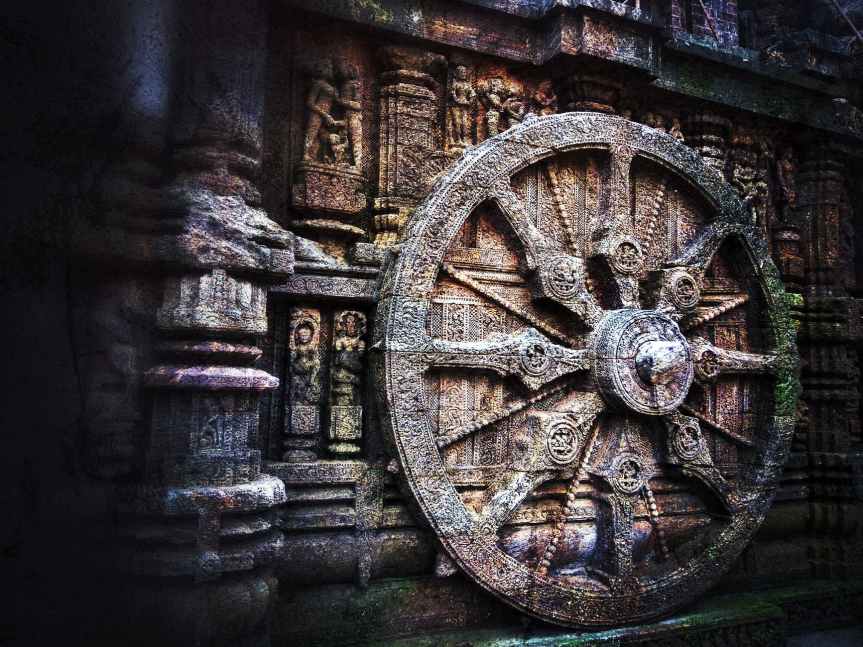
Odissi is the oldest dance form from the eastern state of India, Odisha. It narrates the stories of the Gods Shiva and Surya which are given in the form of poems. These poems are played as songs and the dancers express them through more than 50 intriguing mudras. These mudras are sculpted in the Hindu temples of India. It is preserved by practicing and making its survivance till today.

MANIPURI

Manipuri stands as a symbol to represent the rich traditions of the north-eastern state, Manipur. It narrates the romantic relationship between Lord Krishna and Radha, which is called Raas Leela. It is performed to the music of classical instruments by wearing the traditional Manipuri costumes and makeup to showcase the tale of the two gods. 

Bhangra, Garba, Bihu, Mohiniyattam, Ghoomar, Lavani, Rouf, Karagattam, etc. are the other well-known dance forms of India. 

B+ TREES

The B+ tree is almost identical to the binary search tree. It is a balanced tree where the search is directed through internal nodes. The data entries are present in the leaf nodes of the B+ tree. B+ trees support both random and sequential access since the leaf nodes are interconnected with each other through links.

STRUCTURE OF B+ TREE

The general node structure of B+ node is as follows 

  • It contains up to n – 1 search-key values K1, K2, . . ., Kn-1, and n pointers P1, P2, . . ., Pn.
  • The search-key values within a node are kept in sorted order; thus, if i < j, then Ki < Kj.
  • To retrieve all the leaf pages efficiently we have to link them using page pointers. 
  • The sequence of leaf pages is also called a sequence set.
  • In a B+ tree, the tree structure tends to grow on the insertion of new records and shrinks on the deletion of existing records. Hence it is called a dynamic tree.

CHARACTERISTICS OF B+ TREE

The following are the characteristics of the B+ tree:

  • The B+ tree is a balanced tree and the operations such as insertion and deletion keep the tree balanced.
  • Each node, except for the root node, must be compulsorily occupied with at least 50%.
  • Searching becomes so simple because traversing from the root to the relevant leaf nodes results in the record.

INSERTION OPERATION

Algorithm for Insertion:

Step 1: Find correct leaf L.

Step 2: Put data entry onto L.

  • If L has enough space, done!
  • If there is no space, split L (into L and a new node L2)
  • Allocate a new node
  • Redistribute entries evenly
  • Copy up the middle key.
  • Insert index entry such that it points to L2 into the parent of L.

Step 3: This can happen recursively. To split the index node, redistribute entries evenly, but push up the middle key. (Contrast with leaf splits).

Step 4: Splits “grow” tree; splitting the root increases the height. The tree grows either wider or one level taller at the top.

DELETION OPERATION

Algorithm for deletion:

Step 1: Start from the root to find the leaf node L with the entry.

Step 2: Remove the entry,

  • If L is at least half-full, done!
  • If L has only d-1 entries,
  • Try the redistribution technique by borrowing keys from the adjacent node (sibling) with the same parent node as L.
  • If a failure occurs when tried to re-distribute, merge L and sibling.

Step 3: Whenever a merge occurs, entry (pointing to L or sibling) must be deleted from the parent of L.

Step 4: Merge could pass the entries to the root, reducing the height of the tree.

MERITS OF B+ INDEX TREE STRUCTURE

1. In the B+ tree the data is stored in the leaf node so searching of any data requires scanning only of leaf node alone.

2. Data is ordered in the linked list.

3. Any record can be fetched in an equal number of disk accesses.

4. Since the leaf nodes are linked, performing range queries is easy.

5. Since keys are used for indexing, the height of the tree is less.

6. Supports both random and sequential access.

DEMERITS OF B+ INDEX TREE STRUCTURE

1. Extra insertion of non-leaf nodes.

2. There is space overhead.

SWOT Analysis

SWOT is an acronym for Strengths, Weaknesses, Opportunities, and Threats. SWOT Analysis is a planning and brainstorming tool for analyzing a person’s or an organization’s strengths, weaknesses, opportunities, and strengths. It considers the internal factors and the external factors that can positively or negatively affect our ability to achieve our goals. It also helps us to focus on the strengths, minimize the threats and make use of the opportunities to the fullest. It is a much-needed one to develop plans for future growth.

S – STRENGTHS

Strengths describe what an organization or a person excels at. They are internal, positive attributes of a person or a company. These attributes could be handled by oneself and kept within one’s control.

W – WEAKNESSES

Weaknesses stop an organization or a person from giving their best at its optimum level. They are negative factors that detract from your strengths. These are things that one might need to improve on to be competitive.

O – OPPORTUNITIES

Opportunities are openings or chances that help one for something positive to happen. They are external factors in your business environment or career that are likely to contribute to your success.

T – THREATS

Threats are anything that can negatively affect your business or career from the outside. They are external factors that you have no control over. You may want to consider having a plan B for dealing with them if they occur.

EXAMPLE SWOT OF A POPULAR PERSONALITY 

I would like to explain SWOT analysis more clearly by citing the SWOT of a famous personality. It will become easier to analyse the self SWOT if we read a few real-life examples. So, here is one such example – the SWOT of Mr. Ritesh Agarwal, Founder, and CEO of OYO. He is a great inspiration for many, especially for the younger generation. Being a college dropout, this young entrepreneur never fails to motivate the youth through his untiring attitude. Below are a few of his strengths, weaknesses, opportunities, and threats that he analysed as he emerged as a budding entrepreneur.

STRENGTHS

  • He had big dreams of starting a business since childhood as he was not interested to take over the family business or work as an employer of any company.
  • He had a great interest in Computer Programming and developed the efficiency of creating a web application by himself.
  • He had the perseverance of doing what he dreamt of despite not having family support.
  • Self-efficacy – He believed in himself and his capabilities more than anything.
  • Being committed and passionate about work.

WEAKNESSES

  • He had no confidence in his studies.
  • Lack of innovation for improving the growth.
  • Concentrating on space rather than improvising the brand.
  • Lack of conceptual clarity.
  • Over hiring of employers.

OPPORTUNITIES

  • His young age and popularity gained him attention and opportunities.
  • His unique approach that gained him success.
  • Growing demand and no international competitors at that time.
  • His idea of providing budget accommodation to people.

THREATS

  • Convincing Venture Capitalists to start the initial investments.
  • He kept the parent company at stake which he might have lost in case of failures.
  • Growing concerns about safe stay at OYO rooms and hotels especially, for the women.
  • Increasing competition in the flouring market.

Whatever may be the strengths and weaknesses, the ability to convert the threats to opportunities determines the real strength of a person. 

SUMMARY

  • Take advantage of the Opportunities through its Strengths.
  • Stay strong against the Threats through its Strengths.
  • Improve Weaknesses by taking advantage of Opportunities.
  • Work to eliminate Weaknesses to avoid Threats.

VEDANGAS – THE LIMBS OF THE VEDAS

Vedangas are the six forms i.e., the six auxiliary disciples of Vedas. It is said to be the six limbs of the Purusha called Veda. 

  1. Shiksha (Education) – Nose 
  2. Kalpa (Ritual) – Arms
  3. Vyakarana (Grammar) – Mouth 
  4. Nirukta (Etymology) – Ears 
  5. Chhanda (Metrics) – Feet 
  6. Jyotisha (Astronomy) – Eyes 

SHIKSHA

It is referred to as the nose of the body. Shiksha is related to giving instructions through recitation. It consists of instructions for correct pronunciation and accent of the Samhita texts. It mainly focuses on phonetics and gives the rules for the sound of syllables and pronunciation. Phonetics decides the sound changes while recitation and hence becomes very important for Vedic language. The aim is to attain 

  • Akshara suddhi – syllable purity
  • Swara suddhi – tone and pitch purity
  • Maatraa suddhi – durational purity
  • Balam – the force of articulation
  • Samam – evenness
  • Santana – continuity

KALPA

Kalpa is the arm of the Vedas. It speaks about rules for the right method of performing the rituals. These rules are followed in ceremonies such as weddings, naming functions, and other ceremonies. It has its origin from the brahmana texts of the Veda. These are written in sutra style, referring to sacrifices. Kalpa sutras are divided into 

  • Srautasutras – contains rules for performing different sacrifices and rituals.
  • Smarthasutras – further partitioned into 
    • Grihyasutras – gives domestic rites and rituals for the three castes namely – Brahmins, Kshatriyas, Vaisyas, and the responsibilities for the household life.
    • Dharmasutras – gives rules for behaviour and talks about the four stages of life

VYAKARANA

Vyakarana is called the grammar for the Vedas. It is essential for the formation of sentences, phrases, and words. It is the mouth of the Vedas. It is necessary for understanding the Vedas. It is related to the next Vedanga, Nirukta. It is written by scholars named Panini and Yaska. It consists of 4000 sutras which belong to the four padas of the eight chapters. The four divisions are 

  • Siva sutras – deals with phonetics and intonation
  • Ashtadhyayi – deals with sentence structure and construction
  • Dhatupadha – deals with root words
  • Ganapadha – deals with a group of nouns and phrases

NIRUKTA

Nirukta is the ear of the Veda purusha. It means etymology and tells why a word is chosen for the context and the meaning of the used word. It is generally called the Kosa or the dictionary. It deals with the interpretation of obscure and difficult words and provides insights into the hidden meaning delivered in the content. Hence, the study of Nirukta becomes essential to understand the concealed meaning and linguistic significance of the texts.

CHHANDA

It is regarded as the feet of the Veda Purusha. The word Chhanda is derived from the term Chad meaning to cover. It deals with the metrics to be used in the Vedic hymns. A sloka generally consists of four quarters called paadas. Based on the number of syllables in each paada, there are different meters.

  • Gayatri – 8 syllables
  • Trishtup – 11 syllables
  • Jagati – 12 syllables

JYOTISHA

Jyotisha is the eyes of the Vedas and it means astronomy or astrology. It gives knowledge about auspicious dates and times for the ceremonies and rituals to be performed. This is determined based on the position of the sun, the moon, the planets, and other heavenly bodies. It is believed that the rituals succeed when performed under the influence of a particular graha, nakshatra, or thithi. This is calculated using some mathematical calculations and hence mathematics forms an integral part of it.

VEDAS

The word Veda means Knowledge. Vedas are the earliest piece of literature that was written in the Sanskrit language. These were handed down from one generation to the other orally by the pandits who learned this from their ancestors. Even if there were no facilities to preserve the Vedas through the art of writing, it is preserved by transmitting to the generations orally. In Hindu culture, Vedas are considered spiritual and everlasting revelations. Vedas come under Shruti which means what is being heard. There are four Vedas, each of which was composed of different ages. However, it is believed that it always existed and sages chanted this in their deep meditative states. The four Vedas are – Rig Veda, Yajur Veda, Sama Veda and Atharva Veda.

RIG VEDA

The earliest of Vedas is the Rig Veda. It is a set of 1028 hymns in Vedic Sanskrit. Many of those are beautiful descriptions of nature. The prayers in this seek prosperity and well developed and cultured society. It is believed that these compositions are the natural outburst of Vedic rishis when they went through the mental transcendental stage. Some of the prominent rishis of this period are Vasistha, Gautama, Gritasamada, Vamadeva, Vishvamitra and Atri. Indra, Agni, Varun, Rudra, Aditya, Vayu, Aditi, and Ashwini twins are the eminent gods of this Veda whereas Usha (the goddess of dawn), Vak (the goddess of speech), and Prithvi (the goddess of earth) are the notable goddess of the Rig Veda. Do you know that the majority of the hymns spoke of universally recognized higher values of life like truthfulness, honesty, dedication, sacrifice, politeness, and culture? Rig Veda also provides knowledge about the social, political, and financial conditions of ancient India apart from religion.

YAJUR VEDA

The word Yajur means sacrifice or veneration. This Veda is mostly related to Rites and mantras of different sacrifices. It tells the directions and ways to conduct the yajnas. It is a mixture of both prose and poetry. Being a treatise on rituals, it’s the foremost popular of the four Vedas. Yajur Veda has two main divisions called Shukla and Krishna Yajur Veda i.e., Vajasaneyi Samhita and Taitriya Samhita. This mainly talks about the social and religious aspects of India at that time.

SAMA VEDA 

The term Sama means melody or songs. This contains the tunes for the recitation of Hymns. Sama Veda is mainly of 16,000 ragas and raginis which means musical notes. Only 75 verses out of 1875 verses are original and others belong to the Rig Veda. However, the Sama Veda gives the tunes for the recitation of the hymns of the Rig Veda. It may be called the book of Chants (Saman). This book stands as evidence of Indian music during this era.

ATHARVA VEDA

The Atharva Veda is also called the Brahma Veda. It talks about the treatment for ninety-nine diseases. This Veda is originated from the 2 rishis called Atharvah and Angiras. The Atharva Veda is of immense value because it represents the religious ideas at an early period of civilization. It consists of two main branches namely, Paipaddala and Saunaka. This book gives detailed information about the family, social and political life of the later Vedic period. To know the Vedas, it becomes mandatory to know the Vedangas, the limbs of the Vedas. The Vedangas talk about Siksha (education), Vyakarana (grammar), Kalpa (rituals), Nirukta (etymology), Chhanda (metrics), and Jyotisha (astronomy). 

Each Veda is composed of 4 parts: The Mantra-Samhitas or hymns, The Brahmanas or explanations of Mantras or rituals, Aranyakas, and Upanishads. The division of the Vedas into four parts is to suit the four stages during a man’s life.

ESSENCE OF INDIAN TRADITION

HERITAGE

The word heritage is defined as “Anything transmitted from ancestors or past ages”. The Indian heritage is often best appreciated concerning different historical periods. We are the inheritors of a cultural and non-secular tradition stretching over 4000 years.

CULTURE AND CIVILIZATION

The word ‘culture’ and ‘civilization’ are often used as the same. However, they have their own clearly defined meanings which differentiate them.

CIVILIZATION

‘Civilization’ means making better ways of living and making use of nature to satisfy daily needs. Civilization includes developing societies into politically well-defined groups that work together for improved conditions of life in terms of food, dress, and communication.

CULTURE

The English word ‘Culture’ is coined from the Latin word ‘cult or cultus’ which means tilling, or cultivating or refining and worship. ‘Culture’ refers to the inner self, a refinement of mind, soul, and heart. Culture includes various art forms and sciences, music and dance, and several higher activities of human life which also are classified as cultural activities. On the whole, it is cultivating and refining a thing to an extent such that its outcome evokes our admiration and esteem. This is often practically an equivalent as ‘Sanskriti’ of the Sanskrit language.

CHARACTERISTICS OF CULTURE

 • Culture is learned and purchased

 • Culture is shared by a cluster of individuals

 • Culture is cumulative

 • Culture changes

 • Culture is dynamic

 • Culture gives us a variety of permissible behaviour patterns

 • Culture is diverse

 • Culture is ideational

CULTURAL HERITAGE

Cultural development may be a historical process. Cultural heritage includes all those aspects or values of culture transmitted to citizenry by their ancestors from generation to generation. They’re cherished, protected, and maintained by them with unbroken continuity, and that they feel pleased with it. Architectural works like monuments, material artifacts, the intellectually achieved properties, philosophy, treasures of data, scientific inventions, and discoveries also are a part of heritage.

TRADITIONAL KNOWLEDGE

Traditional knowledge or ‘local knowledge’ may be a record of human achievement in comprehending the complexities of life and survival in often unfriendly environments. Traditional knowledge, which can be technical, social, organizational, or cultural was obtained as a part of the good human experiment of survival and development. We have to analyse, evaluate conserve, and revive the normal Knowledge Systems for the economic betterment of the planet in a holistic manner. It is that the knowledge system possessed by various communities across the world. Such knowledge has been accumulated, used, and has been bequeathed through several generations. It’s usually regarding the natural surroundings of the community and includes agricultural knowledge like manner of cultivation, environmental knowledge, and knowledge of natural medicines.

TYPES OF TRADITIONAL KNOWLEDGE

 • Cultural knowledge

 • Artistic knowledge

 • Biodiversity or natural resources

 • Agricultural knowledge

 • Sacred knowledge

CHARACTERISTICS OF TRADITIONAL KNOWLEDGE

 • It has been handed on from generation to generation.

 • In many cases, it’s transmitted orally for generations from person to person.

 • It is being considered by the communities as a gift of God and not as personal property.

 • This knowledge generally distinguishes one community from another community.

 • It is typically impossible to spot the first creator of the knowledge.

 • It is learned by observing continuously, experiencing, and practicing it.

 • It is inseparable a part of the communal and cultural life of its holders.

 • It is typically related to biological resources.

NEED FOR SHIELDING TRADITIONAL KNOWLEDGE

 • Lack of proper legal policy framework for the protection of traditions.

 • Exploitation of traditional knowledge and indigenous resources.

 • Patenting the medicinal plants and their derivatives.

 • Commercial interests violate indigenous property rights.

WAYS TO IMPROVE SPEAKING SKILLS

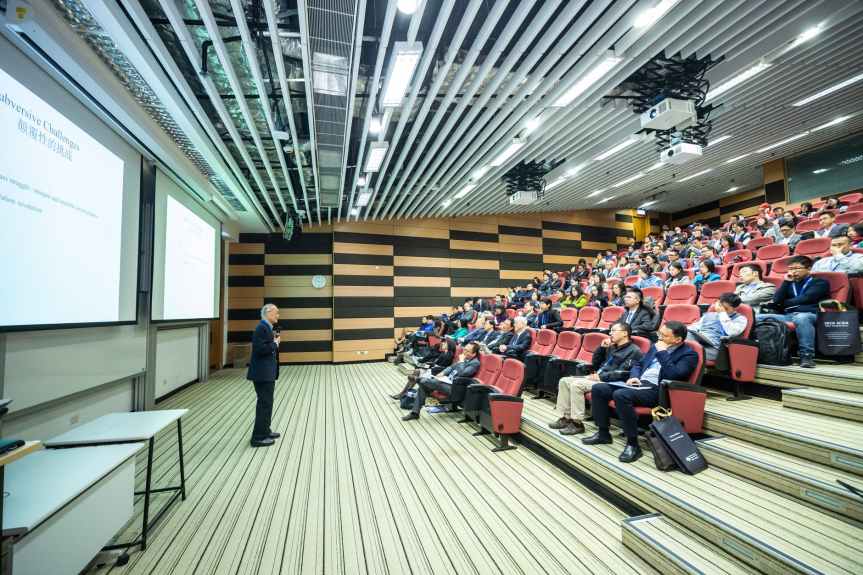
Speaking is the art of conveying thoughts and feelings vocally through language. It may be an informal speech or a formal one. Informal speech is the casual conversations that you have in our day-to-day life. Formal speech is the conversations that you have in official meetings, schools, and colleges. It is one of the communication skills that are necessary to maintain good relationships in the work environment. This skill gives the ability to speak with others effectively. Here are few tips that will help you to improve your verbal skills.

  • EXPAND YOUR VOCABULARY

Learning new words and phrases every day can widen your vocabulary. Have a target to learn few words per day and follow that throughout the year. For example, if you learn one word per day then you should have learned 365 new words in one year. These targets help you to have gradual increments daily. While you are learning be specific in what you are learning. Analyze what terms you require and learn accordingly.

  • CONCENTRATE ON YOUR PRONUNCIATION

You might know a lot of words, but do you pronounce them all correctly? You may or may not. When you are learning words have the habit of learning them with the right pronunciation. You may also need to learn how to use the word, intonation, and stress. Try to use a particular accent throughout your speech and don’t mix up different accents. This will showcase your speaking efficiency.

  • SPEECH SHADOWING

Shadowing helps to improve your language fluency. Shadowing is the technique of repeating a speaker right after him. It is like giving an echo to the speaker’s speech. Take a video of a good speaker and listen to it. Shadow the speaker with subtitles first, then try without transcripts. Start from simple videos, practice until you speak them perfectly, and move on to the next higher-level video.

  • IMITATE GOOD SPEAKERS

This is an effective way of improving your style and proficiency by listening to others. Listen to many good speakers and try to imitate them. Here, copying is not wrong rather it is good to do so as it helps in betterment your style and outlook. First, listen, observe then imitate. While you imitate record yourself to compare with the original one. You can repeat to listen as many times as you need until you are ready.

  • PRACTICE DAILY

Have a good practice of speaking the language. You may practice by speaking with your friends, colleagues or even with your family members. Start your practice from normal conversations and improve it gradually. You may also attend online classes to practice and speak along with a teacher to guide you. Practice by seeing yourself in the mirror. This self-talk enables you to know your expressions and body language. Record yourself when you practice and listen to it to correct your mistakes. Always speak with confidence in yourself. This shows your speech up. Try to keep the natural flow of the language. Use shortened forms and learn to use the word stress correctly. Participate in public events and competitions without hesitation. This will be a great learning for anyone because you gain confidence and lose fear as you do it in front of an audience.

These are some of the points that you could follow if you want to improve your speaking skills. Always keep in mind that even the best speakers emerged from the worst. So, practice hard until you master the skill. HAPPY LEARNING😊.

HOW TO ENHANCE COMMUNICATION SKILLS?

Communication is the mode of exchanging our feelings and ideas with others. It paves the way for the listener to understand and for the speaker to express their thoughts. Everyone can communicate with others but whether it is effective or not is decided by the way you convey messages. This requires communication skills. It is the ability to express and share thoughts and feelings effectively. It is one of the main soft skills that are very much essential to maintain a good rapport in the workplace. Communication may be of any form – spoken, written, visual, or even non-verbal communications like body actions. In general, it is a combination of all these. Here are few ways to upgrade your communication skills.

  • PRACTICE ACTIVE LISTENING 

Good communicator is always a good listener too. Try to listen to what others are saying so that you can communicate with those developed points and answer the questions raised as well. Don’t avoid listening or get distracted to think about what you have to respond to next. When you start paying close attention to others you become an active listener and this quality is very important to improve the skill.  

  • KEEP IT SIMPLE

Use simple words and sentences to convey your essence. Don’t show off your vocabulary and use complex words. It will not reach everyone as every listener may not be as skilled as you. Make sure that everyone understands what you are trying to convey. Try to engage the audience by asking questions and feedback to them. A mount hill of emotions or a vague expression will not get your attention. So, manage your emotions while you deliver something.

  • MAINTAIN COHERENCE

While communicating ensure that you start and end with the key points and gist. Maintain the coherent sequence of ideas from start till end. Don’t make it a mess by mixing up all the points. Be clear and precise in what you are delivering. Add short stories in the middle to have the attention of the audience throughout the session. Don’t be so spontaneous, pause in between. Stick on to the timing. Don’t finish it very soon or drag it so long. 

  • NON-VERBAL COMMUNICATION

Non-verbal communication is equally important as verbal communication. Your audience is going to judge you and your skills mostly based on this. Your body language conveys almost 50% of your ideations. So, try to have good postures and gestures. Make eye contact with the audience. This means that have eye contact with every person at least once when you communicate. Don’t be specific to a particular place, utilize most of the space provided to you.

  • OTHER FACTORS
    • Friendliness – This quality shows your positive attitude and drags others towards you to listen.
    • Confidence – Have full faith in what you do. It becomes difficult to make others understand when you are not confident enough.
    • Clarity – Use a clear tone of voice and volume to express the feelings more effectively. This is essential as it gives life to your speech.
    • Empathy – Be empathetic towards others and try to understand their emotions. Respect others’ opinions and views and give equal concern to them.

These are the few tips to enhance your communication skills. Practice this in your daily presentations and become an expert. Happy learning😊.

HOW TO IMPROVE WRITING SKILLS?

Writing is an art and not everybody could become an expert without practice. Maybe, everyone can write generally like blogging and things. But professional writing needs certain steps to be followed and practiced. It is not an inborn quality for anyone, it lies in the person’s interest to learn and master it. To stand unique from others and gain appreciation, the person should have a passion for writing from the heart. Here are few steps one could take and follow while writing.

  • HAVE THE HABIT OF READING

Read articles, blogs, and other kinds of stuff as much as you can. The more you read the more you get the ideas and intuitions to write properly. You will also get some inputs before writing. You can notice that it is easier to write after gaining inputs. Reading also helps to improve your vocabulary. One can start the practice of reading from the newspaper. When you read the newspaper, you could get to know at least 5 new words every day. 

  • BRUSH UP YOUR BASICS

Before starting to write, revise the rules in English grammar and writing. Although you don’t need to complete a course on grammar, the basics are required. Build a strong basement with the basics of spelling and grammar. Grammar is very important while writing although it is not paid attention to while speaking.

  • RESEARCH WELL

Ensure you have made the necessary research on the topic. Reach out to the available resources of that topic, make a thorough study and note the key points that are required. This will make you more knowledgeable and you could write easily with a flow. Unless you know more about a topic, you couldn’t expand your ideas and write well.

  • PRACTICE WRITING

To improve your writing, do as much practice as you can. It is the only helper to mould you in the right shape. Learn to frame paragraphs and sentences. Try to bring a coherent sequence of sentences. When you write never doubt yourself or your skills. Don’t do it as a practice, think of it as your job and give your best every time you write. Take up workshops and internships until you feel confident and have become a passionate writer.

  • REVIEW AND EDIT

When you are writing, always start with the rough draft. Read what you have written and make the required changes to make it a better one. Check for spellings and grammatical errors. Edit the rough draft, remove unnecessary words, proofread and frame a fair copy. Try to deliver the content with simple words so that anyone who reads could understand it. Finally, check for plagiarism from the available online tools. This is essential to ensure that your work is not copied from other sources and is unique.

  • HAVE SOMEONE TO READ WHAT YOU’VE WRITTEN

Try to have a person by your side to read, guide, and organize you. The person may be your teacher, colleague, friend, or anyone with enough knowledge in grammar and the language to suggest and give a true opinion on your work. 

These are some of the tips to become a better writer. Nothing comes without effort and so as any language. “Practice makes a man perfect” – so practice more and become a perfect writer. Start simple, make gradual increments and then master the art. Happy learning😊.

HEADACHE

Headache is a common problem that does not allow us to concentrate on our work. Nothing can take away the throbbing pain that headache causes. It may be caused due to injury, stress, eye strain, anxiety, or other medical conditions. Headache is called Cephalgia in medical terms. Many people suffer this discomfort frequently and don’t pay attention to it. But this simple headache may cause serious illnesses if left untreated. 

WHAT HAPPENS DURING A HEADACHE?

Our brain can recognize pain in various parts of the body. A headache is caused by the swelling of the blood vessels present in and around the brain. Most headaches occur in the nerves and muscles of the head and neck region. These nerves and muscles generate signals and send them to the brain which makes us feel the pain.

TYPES OF HEADACHES

Headaches are of two types – Primary headache and Secondary headache.

PRIMARY HEADACHE

There are types of primary headaches. However, some common types include

  1. Tension headache – It is the most common type which is caused due to stress and tension in the muscles of the head. It may start with a slow onset of moderate pain. It usually hurts on or around both sides of the head, in the back neck, and head. It usually goes away on its own but sometimes may need a pain reliever. For prolonged pain and chronic conditions, a doctor’s advice is required.
  2. Migraine – Migraine headaches are associated with throbbing pain along with some symptoms like nausea or vomiting, sensitivity and can last for several hours to few days. It may be caused also due to genetic reasons. Rescue medicine is prescribed by doctors to get immediate relief from the pain and preventive medicines to prevent future occurrences.
  3. Clustered headache – It is least common when compared with the other two types. It is characterized by sudden pain in any one side of the head and face. It occurs multiple times in a day and stays for 1-3 hours each time. It may be caused due to alcohol intake or tobacco usage. Treatment includes lifestyle changes and prescribed medication by the doctor.

SECONDARY HEADACHE

Secondary headaches occur because of any underlying issue or mental condition. It must be diagnosed and treated as soon as possible as it may create life-threatening situations at times. It may be caused due to bleeding of the blood vessels in the brain, tumors, abscesses, or high blood pressure. Symptoms include pain during changing postures, chewing food, etc. There are many subtypes of this headache according to the affected area and symptoms. It must be given at most care to avoid worsening of the condition.

SITUATIONS THAT NEED IMMEDIATE HELP

Sometimes headaches may be a symptom of a serious issue and occur to warn us of the disorder. If it is accompanied by drowsiness, seizures or fits, changes in vision, etc. then immediate consultation of a physician is mandatory.

CARE AND CURE

  • A healthy balanced diet of fruits and vegetables may help to stay fit and reduce the intensity.
  • Stress management relaxations and lifestyle changes can bring betterment.
  • Some counter medicines could be taken and soothing herbs such as peppermint, eucalyptus, flax seeds reduce pain as they have pain-relieving properties.

FEVER

Fever is the sudden rise in body temperature. It is a signal that our body gives us that something bad is happening inside our body. It is a normal reaction or response of our immune system. Whenever a foreign particle enters our body and infects the cells, our antibodies fight against it. It is our body’s way of giving alerts by increasing the normal temperature. Fever is also called Pyrexia or Controlled Hyperthermia. When the body temperature goes to 100o F (38o C) or more, we consider it as a significant temperature rise. If it persists for more than 24 hours, the causes of it should be suspected, diagnosed, and treated. 

WHEN SHOULD WE TAKE IT SERIOUSLY?

Fever is just a normal function of our body that lets us know the correct response against an infection. But it should be taken care of especially in children or infants if there are symptoms like

  • Temperature is 102o F or more and if it continues for more than 36 hours.
  • Cold, cough, and loss of appetite.
  • Chills and night sweats.
  • Fever accompanied by vomiting and diarrhea.
  • Weakness, dizziness, body ache, or fatigue.
  • Having seizures or fits with high temperature.
  • Cough, sore throat, mucus accumulation, and chest tightness.
  • Inability to swallow foods even liquids.
  • Fever recurring after particular hours.

TYPES OF FEVER AND VARIATIONS

There are many kinds and causes of fever. Most commonly it may be due to viral or bacterial infections. Viral fevers usually stay for 1-3 days but the recurrent fever may persist for almost 14 days or more. A person with viral infections may experience nausea, coughing, running nose, body pain, etc. Not all viral fevers are contagious but most of them appear to be contagious. For example, common cold, influenza, malaria, dengue, HIV, covid-19, etc. are contagious and may spread from person to person by various means. Bacterial infections are similar to viral infections and there is no major difference in symptoms. It persists for few days or until treated with an antibiotic. Bacterial fever does not subside by itself and it is higher than a viral fever. It worsens day after day instead of showing better improvement.

Other than the common infections, fever may occur also due to other less common causes like hepatitis, sinusitis, gastroenteritis, tuberculosis, urinary tract infections, etc. Body temperature also varies with age and physical activities. It may be lower in the mornings and higher in late noon or after heavy workout sessions and hot showers.

WHERE TO TAKE THE TEMPERATURE?

There are four ways to measure the rise in body temperature.

  1. Rectal method – It is the most accurate way of measuring temperature, especially for children. It is taken by inserting the thermometer in the rectum or bum.
  2. Tympanic method – It is the next accurate method where the temperature is taken by keeping the thermometer into the ear canal.
  3. Axillary method – This temperature which is taken from the underarms is considered to be less accurate when compared with tympanic and rectal methods.
  4. Oral method – It is the least accurate method of all where the temperature is taken by keeping the thermometer under the tongue. But it is the most common method of reading the temperature.

THE BOTTOM LINE

Fever can be controlled by following some home remedies or by taking antipyretics which can only reduce the temperature but doesn’t treat the reasons. Few antipyretics or fever-reducing drugs are paracetamol, aspirin, or Anacin. These drugs can be taken rarely, however consuming them too often may cause unwanted side effects.

FRIENDSHIP – THE PRICELESS BOND

“Good friends are hard to find, harder to leave, and impossible to forget.”

Friends and friendship cannot be defined in words. It is the soulful attachment between individuals. Friends are persons who are very close to one’s heart. They are the only souls who expect nothing and don’t do something for a sake. There are no responsibilities, commitments, ego, and rules between friends. Endless gossips, sharing and caring, silly fights, memories, and trust, loyalty, love without expectation is what is present between true friends. There are no formalities and awkwardness in friendship. It is a pure bond that can never be forgotten but will be cherished forever. The relationship that brings joy and tears at the same time is friendship next to motherhood. In fact, it is as divine as motherhood. This special thing about this companionship is that there is no privacy or secrets between friends. One can never keep a secret between friends how hard they try as friends can always find that. It is such a transparent and lucid bond where the person can share every little thing without hesitation even if it is not worthy of sharing. 

Friendship is being there for each other anytime. The understanding in this relationship cannot be compared with other relationships. We don’t need to explain something to make them understand. They can automatically understand it from our eyes and behaviour. Even if we are not close to each other, it is a soul-to-soul link that remains forever and keeps us connected. No distance could weaken the strength of friendship. There is no need for daily calls or meets to sustain a true friendship. It indeed doesn’t vanish at any cost. No matter how long we didn’t meet them or we meet them after so long, the bond doesn’t even change a bit. We will always feel the same warmth and comfort that we share with each other. We may be far apart in distance but never in heart. 

Friends are God’s gift to us. They give the sweet memories that we rejoice throughout our lives. We must feel blessed and lucky to have a true friend. We always have their unconditional support in everything whether it is right or wrong. They guide us when we choose the wrong path but will never leave us alone. They are the only creatures who will be ready to listen to our 2 AM tantrums. Even if our family fails to support us, friends never leave us unattended. They are lifetime companions who are born to love as well as torture us. From showing unlimited love and care to making the worst mockery out of us, friends always have our back. They will be with us even if the universe is against us. God thought that he couldn’t be with everyone all the time. So, he sent our friends to be with us forever. Also, as we couldn’t choose our family, God gave all of us the opportunity to find and make our own close circle. We made use of the best opportunity in our lives to choose our friends and made them our family.

“There are friends, there is family, and there are friends that become family.”

HAPPY FRIENDSHIP DAY!!!

TYPES OF 3D PRINTING

3D PRINTING

3D printing is the process of producing a 3D object by the successive addition of layers one above the other. It is also called additive manufacturing. To know more about 3D printing, check out my article on 3D printing. There are seven different types and technologies involved in 3D printing. 

TYPES OF 3D PRINTING

  1. Sintering

Sintering is a technology where the material to be used for 3D printing is heated but not to the melting point. Metal powders are used for selective laser sintering whereas thermoplastic powders are used for direct laser metal sintering. Laser is used for fusing the layers of the final object. Each layer is formed and the laser traces the parts formed and fuses the next layer on the top until the complete object is made.

2. Melting Methods

The melting methods include

  • Power bed fusion – Uses a thermal source such as laser to melt the materials. The layers are fused and consolidated to form the object. It combines sintering and melting processes.
  • Electron beam melting – Uses a high-power electron beam that can generate heat to melt the material in the vacuum. It ensures no residue and a clean environment.
  • Direct energy deposition – Uses electric arcs or beams to melt the substrate material. It is used to add parts to the existing object.

3. Binder Jetting

Binder jetting is a method where the powdered material is deposited on the bed and adhesive is added to bind the particles to form one layer of the object. Sand, metals, and ceramics are the most commonly used materials. The process is repeated until the complete object is formed.

4. Fused Deposition Modeling

In this, the thermoplastic filament is heated to its melting point and shaped layer-by-layer to form a solid object. It is a cost-effective method where the material softens and sets in the shape and then becomes ready to add the next layer. It is also called material extrusion.

5. Material Jetting

It is similar to inkjet printing where the liquid material is jetted from the nozzle and a layer of the object is formed. After the layer solidifies, the next layer is added on the top. The layers are cured using UV rays for a smooth finish. It is the most expensive method in 3D printing.

6. Sheet Lamination

This process is made by superimposing the layers one above the other and then joining them using ultrasound for metals or adhesive for cardboards and plastic. Once the layers are combined, it is cut and refined to get the desired shape. This method is not widely used as the other methods. Ultrasonic Additive Manufacturing (UAM) and Laminated Object Manufacturing (LOM) are the two sub-types in this method.

7. VAT polymerization

It uses the method of photopolymerization where liquids are turned into solids by exposing UV light to them. It is one of the most commonly used 3D printing methods that include

  • Stereolithography – Stereolithography uses photopolymerization technique where a single point laser or UV beam is used to cure and solidify the object.
  • Digital light processing – It also creates objects from liquids like resin where the image of each layer is flashed onto the surface.

3D PRINTING – AN OVERVIEW

3D printing, also called Digital fabrication technology or Additive manufacturing is the process of making 3-dimensional solid structures or models from the geometric representation by successive addition of materials. The layers of the printed object are a thinly sliced cross-section of the object. 3D printing is an emerging technology that enables us to produce objects with fewer materials than traditional manufacturing methods. 

The process of 3D printing involves 3 major steps.

  • MODELING AND SLICING

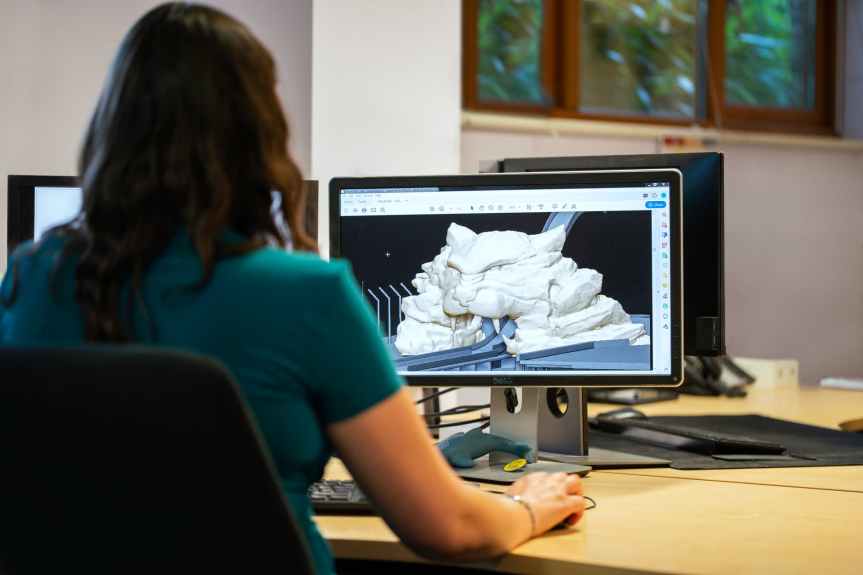
It is the first step in the process of 3D printing. Here, even the tiniest detail of the objects is given. The geometric representation of the object is created using software tools called slicing software. The process of building the structure using this software is called slicing as it slices the object to create many layers. The work of this software is to convert the geometry of the object into instructions for the 3D printer. It will tell the printer how to create the layers of the object. In addition, the instructions can also be provided through STL files. STL is a simple, portable object file that is used for designing computer-aided design CAD systems to model the solid geometry of the objects. These STL files are used as the input information for the 3D printers to produce the object. The object is produced by forming layers of the printing material as per the geometric measurements provided. The materials used differ for different technologies.

  • PRINTING

When the modeling and slicing get over, the 3D printer starts its work. Assuming that there is no error in the model, the printer begins to print. It dispenses the material layer-by-layer waiting for one layer to get dried so that it could add the next layers. The bottom-most layer is formed first followed by the next highest layers. The model is printed by adding hundreds and thousands of 2D prints on top of one another to make a 3D model. Although many materials are used for 3D printing, thermoplastic is the most widely used one. 

  • FINISHING

This is the final and post-printing step in manufacturing a 3D object or model. Once the object is printed and dried completely, a finishing touch is given to remove small damages that occur during the printing and refine the parts. It is done to give a smooth surface finish to the object. Solvents are added to remove the superficial imperfections in the model. There are various methods followed in finishing such as polishing, sanding, etc.

The time taken to complete printing may depend on the size, details, and quality of the object created as higher quality objects take more time comparatively. 3D printing can take some minutes or hours or weeks or even more. For example, it takes almost a few hours to create a simple model like boxes and balls and takes weeks to produce more large and complex structures with more details like buildings and houses. The larger the size and geometry of the object, the longer will be the time spent to create the object. So, 3D printing is useful at the same time, it is a time-consuming process.

MOTHER SENTIMENT SONGS – Part 2

There is no life without a mother. She is a precious soul who is completely selfless when it comes to her child. This article is a continuation of part 1 of this article. This is a tribute to all the mothers out there and a realization post for all the sons and daughters through the best mom songs in Kollywood.

  • Song: Kalli kaatil  

Movie: Thenmerku paruvakaatru

Singer: Vijay Prakash

Lyricist: Vairamuthu

Composer: NR Raghunanthan

“Kalli kaatil pirantha thaaye enna kall odachi valartha neeye”

        This harmonious melody is a realization song for the children. It describes the hardships faced by a mother to raise her son. Everyone will realize the value of a mother in listening to this song. 

  • Song: Aararo aariraro 

Movie: Siruthai

Singer: Srivardhini 

Lyricist: Arivumathi

Composer: Vidyasagar

This song is a thallatu (lullaby) that a mother beautifully sings for her daughter. The song appears in a situation where a small girl listens to her mother’s song before sleep on a recorder as her mother is no more. Such a soothing lullaby that shows how her mother fosters her daughter.

  • Song: Kangal neeye 

Movie: Muppozhuthum un karpanaigal

Singer: Sithara

Lyricist: Thamarai

Composer: GV Prakash

It is the best mother song in recent times. It describes that a child is every single thing for a mother. This song comes in a scenario where a widow raises her son who cannot walk by carrying him on her shoulders. She works day and night to give treatment for her son to make him walk. Every single line in this song is a gem that expresses a mother’s heart for her child.

  • Song: Nooru saamigal irunthalum 

Movie: Pichaikkaran

Singer: Vijay Antony

Lyricist: Eknath Raj

Composer: Vijay Antony

This song expresses a child’s love for his/her mother. The movie revolves around a rich son who becomes a beggar and leaves all the luxury he has for some days just because to save his mother who was on the death bed. “Nooru saamigal irunthalum amma unnai pol aagiduma” meaning There may be 100s of gods but can they replace you, oh mother? This line is enough to know the worth.

  • Song: Amma amma 

Movie: Velai illa Pattadhari (VIP)

Singer: Dhanush, S. Janaki

Lyricist: Dhanush

Composer: Anirudh Ravichander

A melancholy that narrates the grief of a son on losing his mother. The situation is that the hero’s mother dies suddenly out of cardiac arrest. His mother tries calling him over the phone when she gets the attack. But he fails to pick the call. Maybe, he could’ve saved his mother if he had attended that call. This guilt and grief surround him and there goes this song. How would it feel when your mother who is our whole world, suddenly leaves you all alone?

  • Song: Ellu vaya pookalaye 

Movie: Asuran

Singer: Saindhavi

Lyricist: Yugabharathi

Composer: GV Prakash

An extremely sad song that comes when a son dies and that is not acceptable for his mother. Each word describes the grief of losing a child. No one can hear this song without tears in your eyes. Such a painful song that melts even a stone-heartened person.

So, these are some of the legendary mother sentiment songs that rule everyone’s playlist. Don’t miss to check its part-1.