5 tips to improve your personality

Do you remember someone from a party long back who had an everlasting impression on you because of their charismatic presence? It might happen at times that you meet people with great personalities and persona. This might want you to leave a similar impact on the people around you as well. It is always great to develop your personality and attitude which makes you more likeable. This is also why we keep looking for tips and ideas to keep improving our personality. Developing your personality means improving your behaviour and other personal traits, which makes people want to be with you. Personality should not be confused with looking beautiful or handsome, instead its the way you carry yourself and the impact you make in a room full of people. Wherever you go, be it to any competition or interview or even a social event, your personality plays a very important role in your success and growth. This is why brushing up your personality is important. While there also are a lot of personality development courses available, following these tips might help you develop your personality yourself-

  1. Dress well –

The way you carry yourself is very important in making a mark on the people you are around. Would you want to be around someone who wears un-ironed, shabby unclean clothes? That makes the person in front of you feel that you have taken no effort to look presentable. Dressing well is very important to make that first impression count.

2. Communication skills –

Talk politely, yet be interesting. Being able to engage the other person in the conversation while keeping it flowing is important. Keep brushing up your knowledge to help you be well-equipped with all the information required to keep conversations meaningful. 

3. Self-belief –

Self-belief is a very important factor determining one’s personality. You will only interest another person or make a mark on them when they remember you as someone who is strong-headed and trusts their actions. Having self-belief is extremely essential, it gives off an intoxicating aura. That captivates others and want them to be around you.

4. Not fearing change –

Remember change is the only constant. Sticking to something just because you are comfortable and you fear change will never let you grow. Embrace the change, because only when things change do they improve too. Remember you are the author of your life, and you have the power to carve for yourself the personality that you aspire to be. Do not fear and be open to changes in life.

5. Be confident and positive –

Be confident – as that makes you ready for all challenges in life and also the other spheres of life. It makes you reach your full potential, as you do not question your abilities. Have a confident attitude and positive mindset and that will reflect in the way you look at things, be it the most difficult problems. This mindset will surely have a positive impact on your body language and the way you tackle your problems, enhancing your personality.

Should smoking be prohibited?

Smoking is one of the greatest killers of mankind in the present day world. It causes various diseases like asthma, lung cancer, bronchitis and leads to millions of untimely deaths annually all over the world. But still people become its slave. To create awareness of its harmful effects, statutory warnings like “Smoking is injurious to health” is displayed in every cigarette packet and hoarding advertising for cigarettes.

The problem of smoking has to be viewed from different angles. Banning of smoking by legislation will not only remove this potential source of health hazard but also result in useful monetary savings to the consumers. But this will have an adverse effect on the economy. The entire tobacco industry will have to be closed down, throwing large number of people into unemployment. Government also will lose substantially in excise revenues.

The situation creates a vicious circle in which millions of people are killed by an industry that supports another few millions for their economic survival. But life is certainly more precious. Attempt should, therefore, be made to ban smoking in stages. People dependent on tobacco industry for their livelihood are to be provided with alternative means for economic support.

Pride and Prejudice Novel by Jane Austen – Book Review

   A novel that is relevant at all the times is “pride and prejudice ” . This novel was written by Jane Austen in 1813. 

You might have read this book at some point in your life time because this book has constantly appeared in the top lists of the famous novels. It is one of the most popular novels in English literature  with 29 million copies sold The very  first line in this book is very catchy line and it had has inspired many people.” It is a truth universally acknowledged, that a single man in possession of a good fortune, must be in want of wife”. And, of course, a single woman in search of good fortune must equally be in want of a husband. These lines were true for all the characters in this book. Once if you read this book , you left with nothing but  a new out look on life , prejudicing  someone is results in great destruction and you could understand what true love means.  

  The story in this novel is beautifully written.  This is a romantic novel.  Though it is a romantic novel, the knowledge or the theme that we gained from this novel is more. The plot of the story is marrying for love, not for money or social prestige.   

   The author also focuses on the social problems. The plot of this novel is the development of relationship between Elizabeth Bennet and Mr.Darcy. Mr.Bennet was the owner of Longburn state. He didnot have sons to inherit his property,  so the property will directly goes to his cousin William Collins. Mr.and Mr.Bennets main motive is to get married to their five adolescent daughters. He wanted atleast one of his daughters to marry well , so that one can support others if his father is no more. There came Mr.Bingley, the new tennant of Netherfield Park arrived with his two sisters and his friend, Mr. Darcy. After knowing this, Mrs.Bennet wanted one of his daughters to get married to the  wealthy men. People found that two friends personalities are quiet different. Bingley is a  good- tempered and kind man where as Darcy is unfriendly and  unapproachable. Bingley loves Jane and loves to dance with her but Darcy on the other have who looks all the women with disdain and said that he doesn’t Elizabeth is  pretty enough to dance with him. There was a misunderstanding happened between them. The excessive pride of  one and the  prejudice of other certainly splitted them apart. At the end, Darcy won all the readers heart.   

This story also reverses the statement ‘first impression is the best’.Though this book contains an element of humor,  they also deals with an issue that the author’s contemporaries  would have seen as of significance. The simple  plot and the dissimilar characters makes the book even more attractive.    

There  are few  flims  based on this novel pride and prejudice and won few awards. If you didn’t read the book or not interested in reading books just watch the flim based on this novel. This is the one of the bestest  novels that I have read.The way she used the words to express their love towards each other is alluring.

M Ananda Krishnan – Former Vice-Chancellor of Anna University is no more

Munirathna Anandakrishnan

     M.Ananda krishnan, an eminent educationist and former vice chancellor of Anna university died on Saturday morning. He was affected by covid-19 and underwent treatment in a private hospital in Chennai. He was 92.

   He was an Indian Civil engineer, chair man of IIT kanpur and also former vice chancellor of Anna university.  He headed the Tamilnadu curriculum revision committee in 2017 to  revise the Tamilnadu state board syllabus from classes 1 to X11.He served as vice chancellor of Anna university from  1990 to 1996.  He was the one who introduced  semester exams in colleges. He was also the vice chairman of  Tamilnadu State Council for Higher Education.  After his retirement, he actively involved himself with many organizations and colleges. He was also served as former  chairman of university grants commission and headed AICTE. He also appointed as the advisor to the chief Minister of Tamilnadu on the matters related to IT and e-commerce.  He was the one who adopted single  window admission system which means counseling method for the admissions of engineering course across the state. He played major role in educational reforms for the past 3 decades. Though he retired from his work , he actively involved with the government to improve the standards of state education.

   He boldly raised his voice against the state government for the corruption in the appointment of vice-chancellor chancellor. Because of the request from a committee headed by him,the government scrapped the  entrance exams to the professional courses in 2006.

  Former vice-chancellor of Anna University said that ”  It is the great loss for technical education in Tamilnadu and the  country. We have lost an academician with highest calibre  and integrity.  He was fighting against corruption in higher education and criticised the corrupt  practices in the appointment of vice-chancellors. As a vice chancellor of Anna university,  he introduced single window admission system  for engineering courses in Tamilnadu “.

     Munirathna   Ananda krishnan was born at vamiyambadi on  July 12,1928. He completed his UG degree Civil engineering in the college of engineering in Guindy. He did his PG Master Degree (MS) and PhD (civil engineering)in University of Minnesota. He started his career as Grade 1 senior scientific officer  at Central Road Research Institute  in Delhi for a year and appointed as one of the member of faculty of civil engineering  at IIT kanpur. He joined as the chief of New technologies at the office of science and technology in United Nations commission on science and Technology for Development  till his retirement  from UN service in 1989.

      He had written a book and also an editor on educational and technical aspects of engineering. He was also credited with over 100 articles, in peer reviewed national and international journals.

     He received several awards including, padma shri in 2002 ,the fourth highest Indian civilian award and winner of the National order of scientific Merit  from the president of Brazil in 1996.He was honored by the International Institute of Tamil studies in 1999.

    The guiding head for education and academician in this world is no more.

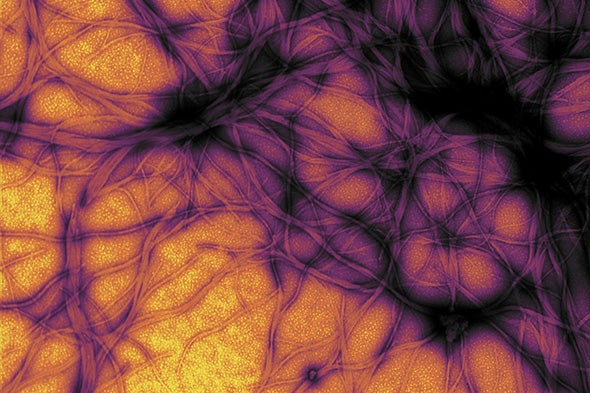
Prions: The most fatal disease-causing agent of all.

What Is a Prion? - Scientific American

We have all heard of viruses, bacteria, fungal and protozoan induced infection. Most of them curable under proper diagnosis, some very common to us and while others are more feared diseases like AIDS and cancer. However, these diseases also have some sort of medication and care which can be given to patients for their recovery. But today let’s talk about the lesser known but most dangerous kind of infectious particle known to humans. Its name is prions and scientists hardly know anything about it.

It all started in 1982, when Stanley Prusiner discovered a particle which had no DNA or RNA, the basis of every living organism in the world. These particles were just proteins and couldn’t even be classed as living or dead. The particles were infectious agents and were given the name prions. Some scientist resisted the fact that prions exists because it disrupts the universal rule that proteins are formed from transcription and translation of nucleic acid.

Our brain is the most complex organ of our body. Much of things about the functions of the brain is unknow to us till now. There is a protein present in the cytoplasmic membrane of the cells in our brain, known as prp. The exact functionality of the protein is unknown to us but is speculated that it’s associated with then normal functioning of the brain. The sequence of amino acid in PrP allows the protein to fold into two stable tertiary structures: The typical cellular PrP (C-PrP) functional structure has multiple α-helices, whereas β-pleated sheets are the disease-causing forms of prion prp (P-PrP). Just like the saying goes: one rotten apple spoils the lot, in the same way one disease causing prp causes the other normally functioning prp to transform into its disease-causing form, in a process known as templating. The neurons stop functioning correctly and finally die as prion prP aggregates spread all over the brain. This gives rise to a disease known as bovine spongiform encephalopathy. The disease causes degenerate a person’s life within months. It causes amnesia, mental retardation, paralysis and death. The zoonotic epidemic in Europe which caused the cows to behave unusually, and die was also cause by prions and is known as the mad cow disease. It affects a variety of animals, and its form of transmission is through foods which have been infected with prions. It causes scrapie in sheep, and chronic wasting disease in deer. Prions are associated with Alzheimer’s, Parkinson’s, Creutzfeldt–Jakob disease and even cancer.

The thing that makes prions most dangerous is the fact that once you have been infected with a prion disease, it is 99% of the times, going to kill you. There are no cures for prion diseases. Cooking doesn’t kill prions, nor does our standard sterilization method, practised worldwide. In other words, alcohol, soaps, detergents, acid, even fire does not kill it. After a number of research, we found that it takes much more than rapid and intense heat treatment, at 482 degrees Celsius continuously for 4 hours to finally deactivate it.

So why isn’t prion, which is such a dangerous particle, not the leading cause of disease in the world? Well, lucky for us there are number of reasons why prions aren’t seen that commonly in the world. Firstly, its primary mode of transmission through different species is through ingestion. Food can be retracted from the market in case of an outbreak and food transmission is not as dangerous as airborne transmission of other diseases. Secondly, Human PrP only mishaps if it contains 129th amino acid as methionine. About 40% of human beings are now prion sensitive leaving 60% of the population immune to prions. This disease is mostly seen in tribal people who have the tradition of cannibalism, and in families which have had a history of prion diseases in their ancestry. The sporadic form of the disease is seen rarely.   Prion problems are enigmatic as always as it is not known that the specific physicochemical nature of the agent is essentially a black box. It is also necessary to understand the exact mechanisms driving the transmissible protein states. The origin of different prion strains complicates the treatment. There is hence a need for more study to create adequate diagnostic tools to help create new therapy strategies to treat prion illnesses.

Covishield Gap reduced for Keralites going abroad

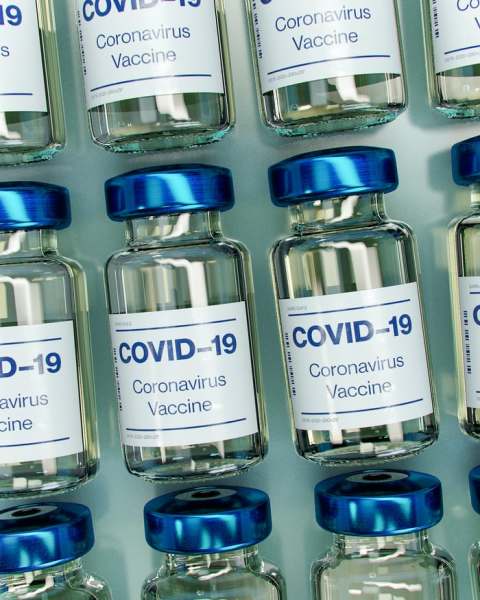
Kerala government had recently informed the Centre about the issues being faced by people who are travelling to foreign countries and later stated that they require certificates with passport numbers as many nations are only accepting the certificate of Oxford-AstraZeneca vaccine: Kerala government made a decision on Friday regarding those who need to travel abroad for some important purpose such as jobs, education etc. Kerala government decided to issue a covid 19 vaccination certificate with passports for such people. As per the order, person who took a jab of Covishield and wants to get travel clearance will be eligible for second dose after about four to six weeks.

Earlier the gap between the doses was about four to six weeks but later the government changed it. The central government increased the gap between two jabs and set it to twelve to sixteen weeks. The state government gave a statement related to it “A person who took Covishield jab and wants to get travel clearance will be eligible for second dose of Covishield after 4 to 6 weeks. Since currently Covid-19 portal does not permit to administer the second dose of Covishield within a period of less than 12 weeks, this is to be recorded separately by the districts,“.

The order declared the District Medical officer as an authorised person who would issue certificate of vaccination in a proper prescribed format. “Since the World Health Organisation (WHO) has already cleared Covishield vaccine, the same may be given as preference to people travelling abroad. Covishield vaccine will be provided from the vaccine procured by the State,” said the Kerala government. For ensuring that vaccines are being given to eligible person other documents could be used such as live visa, admission document for students, job confirmation letter/work permit for employees.

In a letter by the state government led by Pinarayi Vijayan to central government, they informed them about the situation Indians are facing while travelling abroad for education or job purposes. They stated that travelers are requiring proper certificate with their passport numbers as many nations are only accepting certificate by Oxford – AstraZeneca vaccine. And the Indian manufactured covishield vaccine is developed by Oxford University – AstraZeneca and is manufactured by Pune based – Serum Institute of India (SII) .

In the order, a statement was released by Kerala health department “All the issues were brought into the notice of Government of India to make provisions in CoWIN for permission to include passport details in CoWIN. It was also requested to give permission to the State Government to issue vaccination certificate with changes till provisions are made available in CoWIN. Further, it was requested to permit beneficiaries going abroad to take Covishield as per the previous schedule of 4–6 weeks and to make provisions in the CoWIN portal to document such vaccination given at 4 -6 weeks. However, no orders/letters are received from Government of India so far. In the above circumstances, Government has issued these directions.” Now the central government is expected to take any action on that.


Indian Indie

This article is my appreciation for the Indian Indie artist and their music which has healing powers like no other. Great lyrics are the main asset in these songs, these lyrics have a deeper meaning and so you have to listen to them carefully to get the most surreal experience. The music might only contain a guitar or a ukulele or a piano at a time instead of the whole group of musicians but once you hear the songs you would surely listen to them on loop because it soothes your soul and calms your mind.

As these artists work independently, they are free to be as creative with their art as they want and so their art reflects their creativity which sometimes can get suppressed in Bollywood music

Here are a few songs I’d want everybody to listen. (There are many other great songs of the same caliber that I could not mention in this list.)

  • Yahaan Koi Nahi (Punit Singh):  If you’re an introvert you should give this song a listen. This song has a major feel-good vibe but you must listen to the lyrics carefully because that’s where the essence of the song is. After listening to this song you would be assured that you are not the only one who feels lonely.
  • Khud Se (Osho Jain): This song will pluck the strings of your heart one by one. This song will make you realize that maybe it’s you who does not love yourself enough and that is why you think that others do not love you.
  • Waqt ki Baatein (Dream Note): Dream Note has done marvelous work to get you through the hard phase of your life, it gives you hope that everything will get better if you give it time, time heals every wound.
  • Musafir (Arjit Anand): Musafir is a song that asks you to take a pause and enjoy the present moment and the little joys of life. The voice and the music are soulful and soothing.                                                                  
  • Shaayad (Taba Chake): This song will lift your mood instantly. His voice and the music work their ways through your heart and for 3 minutes you will believe that no setback can stop you from achieving your goals.
  • Tum Jab Paas (Prateek Kuhad): There are many beautiful songs by Kuhad but this one transfers you into Utopia with your loved one. Imagine camping, bonfire, fairy lights, this is where you’ll be mentally while listening to this song.
  • Dil Mere (The Local Train): This Hindi Rock Band has released great songs and this is one of them. Dil Mere has great music and vocals and one could instantly fall in love with this song.

Indian Indie artists and their music should get much more appreciation than it gets now because these artists have the ability to connect with their audience emotionally. Listen to these songs and explore others like them, listening to these songs could have a therapeutic effect on your mind.

Protest’s surfacing in Lakshadweep after new Govt.laws

Located in the Arabian sea, Lakshadweep Island is the only part of India where nature has been existing in its purest form, with no traces of exploitation.
The archipelago is a collection of 36 islands, of which 10 are inhabited. Located on the southwestern coast of the Indian peninsula the island has just a population of 65,000 people, thus being the smallest among Union Territories(UT).

Amid the beautiful wilderness, harmony among the people, and well-balanced ecology, resentments among the people due to the introduction of new laws have been surfacing lately.
Protests of the hashtag “Save Lakshadweep” are echoing on social media.

A Brief Backdrop:


Lakshadweep politically has no Legislative Assembly or a Chief Minister. The entire administration of the island is divided into 3 levels-
* Lok Sabha has 1 Member of Parliament
* Local self-government: Panchayats
* The President of India appoints an Administrator for governance.

The administrators of Lakshadweep have always been bureaucrats. In 2020, it was Dineshwar Sharma, an IPS officer.
Unfortunately, on 4 December 2020, he passed away.
This was the time when entanglement started in the affairs.
After the death of Dineshwar Sharma, no bureaucrat was appointed as the administrator, rather the strings of the governance were passed to the hands of a politician. This person was Praful Khoda Patel, a right-wing politician of the running Bharatiya Janata Party (BJP) government.

The Resentment:


Since the new administrator came to the seat, Patel put forward a maverick set of laws without consulting the locally elected representatives of this Muslim-majority island. These laws have shattered the tranquility of the island and immersed it under protests and chaos.
The new algorithm of laws is being widely agitated upon. People claim that these laws endanger their livelihoods, land ownership, culture, and even the biodiversity of the tropical islands.

Typically the administrators of the island maintain their relationships with the local leaders for smooth governance. However, in the past few months, the people have raised voices against this new authoritarian administrator.

The Authoritarian approaches of Praful Khoda Patel:

Land Grab-


The administrator Praful Khoda Patel introduced the Lakshadweep Development Authority Regulation 2021, where the government is empowered to take over the lands from the residents for constructing highways, railways, or infrastructure.
The islanders view this as a land grab by giant corporates. This would also put a huge strain on the ecology and biodiversity of the area.

Weakened the democratic voting rights-


It is an old dream of the Lakshadweep inhabitants to have statehood and a Chief Minister like Goa.
They even do not have the right to elect their administrator.
keeping these besides, the poor islanders just have the shaky right to elect their MP and officials only at the Panchayat level.

Things do not stop here, the new administration under Praful Khoda Patel intruded in the local government and drained powers of the Panchayat from 5 different areas, namely- education, healthcare, agriculture, animal husbandry, and fisheries.

Further, Panchayat election regulation has been introduced declaring people having more than 2 children ineligible to contest elections.

Covid threat:


When the country was struggling hard from the Covid spell, Lakshadweep was the only Union Territory to be free of Covid. This was because until December Standard Operating Procedure to prevent COVID-19 was being strictly followed. Under this SOP, people coming from outside were mandated to have a negative RT-PCR test followed by a 14-day quarantine. People supported it and that is why Lakshadweep was Covid free.
Unfortunately, the first Covid case was reported on 18 January, 8 days after the SOP was removed by the new administrator.
The cases skyrocketed due to the island’s small area and dense population along with a not-so-modern healthcare system.

Unjustified laws:


Patel’s Anti-Social Activities Regulation Bill 2021 or Goonda Act further created discontentment among the inhabitants. This act empowers to detain anyone without public disclosure for up to a year.

This law would not be a fight against criminals because Lakshadweep already has the lowest crime rate in India. Rather it is the clear manifestation of authoritarian rule and sharply against the law of natural justice.
The application of this unjust law would be used to brand anyone who protested as a criminal.
The islanders allege that this law would be used by their administrator against those who criticize his decisions and protest his rule.

Liquor permit and beef ban:


Liquor and alcohol were banned in the inhabited resorts of Lakshadweep for a long time due to the Muslim majority and was allowed only at resorts on the uninhabited island. Praful K. Patel reversed the situation. He lifted the ban and permitted opening bars and shops, claiming this will boost tourism on the island.

Lakshadweep Animal Preservation and Regulation 2021 further aggravated people’s anger.
Praful K. Patel imposed a strict ban on the sale, or buy of beef or beef products in any form anywhere in the Muslim-majority islands. Anyone found violating the law would be imprisoned for up to 10 years.

The people of the island are Muslim majority and have a Malayali culture where beef consumption is followed traditionally and imposing something opposite of their culture is an intrusion.

Neighbouring Kerala state’s Chief Minister Pinarayi Vijayan and KC Venugopal, a Congress member of parliament, have also opposed Patel’s decisions. Vijayan says “Patel’s actions pose a grave threat to the life and culture of the people of Lakshadweep”.

National Educational policy -2020

The National Educational policy is to promote the standards of Indian education system.This policy was approved by the Union cabinet minister of India on 29th, July 2020. This policy replaces the policy of 1986. A committee was formed under the former cabinet secretary T.S.R Subramanian to consult the process of new National Educational policy . New draft NEP was submitted in 2019 by ISRO former chief krishnaswamy katurirangan which was later released by minister of Human Resources Department. There were over 2 lakhs of suggestions about the new National Educational policy from the people. The main vision is to provide high quality of education to all the people. It’s main aim is to increase the state expenditure on education from 3% to 6% of GDP.

          Now we will see what is New Education policy and it’s main objectives.

School Education:

   1.  This policy gives importance to the regional languages and mother tongue by making it compulsory till class 5 . Sanskrit and other foreign languages  will also be given emphasis.

There will be few changes in the curriculum structure. The 10+2 model will be replaced as 5+3+3+4 . The new policy has categorized the curriculum based on their age .

       The students from the age 3 to 5 will be categorised under the foundational stage in which it is further divided into two classes; the pre-school which is followed by the primary school where the method of learning will be activity learning.

classes from 3 to 5 will come under preparatory stage. Here they will get basic knowledge about the subjects like maths, science, social science and they will start to learn, write and read.

In the middle stage (class 6 to 8) the will read indepth concepts in the basic subjects like maths , science and social science.

       In the secondary stage (class 9 to 12)where they will start studying the multidisciplinary study and start to think critically.

     3. Instead of conducting academic exams for all the classes,there will be exams only for classes 2,5 and 8 .

    4. For the secondary classes , the board exams will be conducted on the basis of PARAKH ( performance, Assessment, Review and Analysis of knowledge for Holistic Development). The exams will be conducted twice in a year and both objective and descriptive type questions will be asked.

  5. Coding will be introduced in class 6 and along with midday meals breakfast also will be provided.

Higher Education:

      1.There will be 4 years of multidisciplinary bachelor degree in UG and one can discontinue whenever they needed and they will be provided with the degree certificate based on their qualification.

     2. The PG degree should not be discontinued to align the degree education.

     3.This policy proposes an internationalise education in India .

     4. All the institutions will be governed by single regulatory except medical and law colleges.

    5. The fees structure for both private and government universities will be fixed by the government.

     6. All the entrance exams for getting admissions in college including NEET, JEE will be conducted by NTA.

Teachers qualification:

     The minimum qualification for the teachers must be the completion of 4 years bachelor degree. The National Council for Teachers Education will frame a new curriculum for teachers education by 2021. This policy is to provide good education to the students by the highly knowledged and qualified teachers.

     These are all the policies that comes under the NEP 2020.Now you all can understand easily what is meant by NEP 2020 and why people are against this new policy.

Lesser known uses of coconut oil

Coconut oil is gaining a lot of popularity nowadays, because of its numerous health benefits. Coconut oil is produced from the kernel of mature coconuts and is one of the healthiest choices available for cooking. It is antibacterial and has moisturising and cleansing benefits. Widely used for cooking purposes, coconut oil also has a lot of benefits for the skin and hair. Cooking with coconut oil has many benefits like boosting heart health, managing weight, boosting immunity, and many more. Let’s find out the lesser know but great uses of coconut oil and how we can use it in our daily life –

  1. Oil pulling with coconut oil (Gandusha in Ayurveda) – Oil pulling is an ancient Ayurvedic technique of holding the coconut oil inside your mouth and swishing it in between your teeth for 15-20 mins daily. It is best done preferably in the morning. Oil pulling is considered to be very effective for people dealing with gum and teeth issues. It can help prevent tooth decay, gum bleeding, and other diseases of the mouth, thus helping maintain oral hygiene. Start with taking one tablespoon of oil in your mouth after waking up in the morning, swish it around, and spit it around after 15-20 mins. Rinse and brush as you would normally do. Do not swallow the oil and spit it out as it does contain the bacteria of the mouth.
  2. Make-up remover – The micellar waters and other makeup removers that we get in the market do have alcohol and other ingredients that end up making our skin dry and bumpy. Instead, we can switch to coconut oil as it helps in breaking down the makeup and also moisturises the skin at the same time. A little bit of coconut oil on a cotton pad goes a long way, try this the next time you have a full face of makeup and feel the difference.
  3. Hair-care – Applying coconut oil to your tresses makes them smooth, frizz-free, and conditioned. Leaving- it in overnight helps lock moisture in the hair and prevents flaky scalp and dandruff. Add this oiling once a week to your regime to tame frizz and get shiny hair.
  4. Lubricate locks and hinges – If the lock or hinges at your home have become rusty or making a squeaky sound, a thin layer of coconut oil can be used to lubricate them to make it all smooth and fix squeaky hinges.
  5. As a wood-furniture polish – This is one of the popular household uses of coconut oil. Using coconut oil mixed with lemon juice as a natural booster for wood furniture is much cheaper than the average polish available. The coconut oil helps moisturise the wood and bring out its normal colours. 
  6. Polish for leather shoes – Taking a little coconut oil on a microfibre cloth and wipe it on the shoes to make them clear, moisturised, and weather-resistant.
  7. Remove crayon marks – Coconut oil can be used to lift crayon marks – take some oil on a cloth and wipe the area away to remove the marks.

Value of Newspaper

The primary object of a newspaper is to supply news. Man, being basically curious by nature, want to know what is happening around him in the wide world. The newspaper is the best medium to meet this curiosity. The newspaper has a great educative value also.

Modern newspaper deal with a wide range of subjects—political and commercial news, library and scientific matters, entertainment, the stock market, etc; and thus it caters for the interest of all. The editorials and letters to the editor help the growth of public opinion and keep the government informed of it.

Newspaper keeps people abreast of the current events from all over the world and widen our mental horizon. It educates the people in all matters of public interest and teaches them to form opinions on the burning questions of the day. The newspaper is also the best medium of advertisement giving the most effective and widest publicity of different items.

Newspaper bear comments of diverse nature and interests. People should not be blindly guided by these comments but should keep an open mind and form our independent opinion on the problems discussed.

India signs a three-year work program for cooperation in Agriculture with Israel

On 24th May 2021, India signed a three-year work program agreement with a vision for the development of Agriculture cooperation with Israel. “INDO-ISRAEL Agricultural Project Centres of Excellence” and “INDO-ISRAEL Villages of Excellence” are also implemented by India and Israel.

The work program aims to improve existing Centres of Excellence, build new centres, increase CoE’s value chain, bring the Centres of Excellence into the self-sufficient mode, and encourage private sector companies and collaboration.

This programme will help boost the bilateral relationships among both governments. Cooperation between the two countries in the field of agriculture will benefit the farming community. India and Israel have had bilateral relations since 1993 in the agricultural sector. It is the 5th IIAP(Indo-Israel Agriculture Action Plan).

India has 29 operational Centres of Excellence (COEs) across India in 12 States. Centres of excellence implement Advanced-Intensive agriculture farms with Israeli Agro-Technology suitable to local conditions.

The Centres of Excellence helps to impart knowledge, demonstrate best practices and train farmers. Every year, these COEs produce more than 25 million quality vegetable seedlings, more than 387 thousand quality fruit plants and train more than 1.2 lakh farmers regarding the latest technology in horticulture.

INDO-ISRAEL Villages of Excellence(IIVOE) aims at creating a model ecosystem in agriculture across eight states, alongside 13 Centers of Excellence within 75 villages. It has the vision to incorporate a large-scale and complete value chain approach based on the principles of Israeli novel technologies and methodologies dissemination of the CoE’s, tailored to local conditions. IIVOE will focus on Modern Agriculture infrastructure, Capacity Building, Market linkage.

“So far, we have successfully completed 4 action plans. This new work programme will further strengthen the bilateral relations and mutual cooperation between the two countries in the field of agriculture for the benefit of the farming community. The COEs established under these Israeli-based action plans are playing an important role in doubling farmers’ income. The exchange of technology between India and Israel will greatly improve the productivity and quality of horticulture, thereby increasing the income of farmers” were the words of Shri Narendra Singh Tomar, Minister of Agriculture & Farmers Welfare.

Shri Sanjay Agarwal, Secretary, Department of Agriculture, Cooperation & Farmers Welfare said, “These Centers of Excellence established under Indo-Israel Agriculture Action Plan (IIAP) have become epicentres of transformation in the horticulture sector. Our focus during the new work programme will be to convert the villages surrounding these COEs into Villages of Excellence through massive outreach programmes”.

Ambassador Dr Ron Malka said, “The three-year work program (2021-2023) reflects the strength of our growing partnership and will benefit local farmers both through the Centers of Excellence and the Villages of Excellence”.

The work program signing ceremony was also attended by Union Minister of State for Agriculture and Farmers’ Welfare Shri Parshottam Rupala and Shri Kailash Choudhary along with Senior officers of the Israeli Ministry of Foreign Affairs, Ministry of External Affairs, Government of India and Ministry of Agriculture & Farmer’s Welfare, Government of India.

Cholera the infection and related pandemics.

Cholera is considered as a gastro-intestinal disease. An acute, secretory diarrhea caused by infection with Vibrio cholerae of the O1 and O139 serogroups. This bacterium is transmitted via contaminated food or water that has come in contact with fecal matter of the infected person. In some severe form, cholera can be a very terrifying illness in which profuse painless watery diarrhea and copious effortless vomiting may lead to hypovolemic shock and death in less than 24 hours, if untreated. Management of patient with cholera include aggressive fluid replacement, antibiotics. Prevention include safe water and good sanitary conditions. Two oral vaccines are available. Researchers have estimated that each year there are approximately 1.3 million to 4.0 million cases of cholera, and 21 000 to 143 000 deaths occurring in world due to cholera. Total of seven cholera pandemics have occurred in the past 200 years. The first pandemic originated in India.

Morphology and Identification

A. Typical Organisms V.cholerae is a gram negative, comma-shaped, curved rod 2–4 μm long. It is actively motile shows presence of polar flagellum.

(Vibrio cholerae, the bacterium that causes cholera)

B. Cultural characteristics and Plating media.

V.cholera are strongly aerobic. They grow well at 37°C on many kinds of media, including defined media containing mineral salts and asparagine as sources of carbon and nitrogen. On Mac Conkeys agar the colonies are colorless at first then become pink on prolonged incubation due to slow fermentation of lactose. V.cholerae grows on thiosulfate-citrate-bile-sucrose (TCBS) agar, a media selective for vibrio’s, on which it gives yellow-colored colonies that are readily visible against the dark-green background of the agar. Monsur’s gelatin taurocholate trypticase tellurite agar (GTTA) medium is also used. They produce small, translucent colonies with a greyish black Centre and a turbid halo. Most Vibrio species are halotolerant, and NaCl often enhances their growth. Some vibrios are halophilic, requiring the presence of high concentration of NaCl to grow. Vibrio species are susceptible to the compound O/129 (2,4-diamino-6,7di-isopropylpteridine phosphate)

C. Holding or Transport Media. Cary-Blair medium is used as a transport medium, it is a buffered solution of sodium chloride, calcium chloride, sodium thioglycolate, disodium phosphate at pH 8.4. Venkatraman-Ramakrishnan (VR) medium, in this the organisms do not multiply but remain viable for few weeks. It is dispended in screw capped bottles in 10-15 ml amounts. About 1-3 ml of stool is added to each bottle. Autoclaved sea water can also be used as a holding medium.

D. Biochemical Reactions. V.cholerae shows following features: It is catalase positive and oxidase positive. V.cholerae ferments sugars with production of acid only no gas formation. It ferments glucose, sucrose, maltose, mannitol, and mannose. It is a late lactose fermenter ferments lactose on incubation for several days. It does not ferment arabinose, inositol, and dulcitol. It forms indole and reduces nitrates to nitrites. It gives methyl red positive and urease test negative. It liquefies gelatin and decarboxylates lysine and ornithine, but not arginine. A positive oxidase test is a basic step in the identification of V.cholerae and other vibrios.

E. Antigenic Structure and Biologic Classification. Many vibrio’s possess a single heat-labile flagellar H antigen. They are classified as Group A vibrio’s, and the rest as Group B. Based on major somatic O antigen, Group A vibrio were further classified into subgroups or serovars also called as serogroups. Antibodies to the H antigen are not involved in the protection of susceptible hosts. V.cholerae contain an O lipopolysaccharide that confer serologic specificity. There is a minimum of 206 O antigen groups. V.cholerae strains of O group 1 and O group 139 that cause classic cholera; non-O1/non-O139 V.cholerae causes cholera-like disease. The V.cholerae serogroup O1 antigen has determinants that make further typing possible; the serotypes are Ogawa, Inaba, and Hikojima. V. cholerae O139 is similar to V.cholerae O1 El Tor biotype. V.cholerae O139 does not produce the O1 lipopolysaccharide and is incapable of making this antigen. V.cholerae O139 produce a polysaccharide capsule, but V.cholerae O1 does not produce a capsule.

Virulence factor and Resistance. Virulence factor of V.cholerae include cholera toxin, adhesin factor, toxin regulated pilus, siderophores, hemagglutination-protease, neurotransmidase and some others also. They produce a heat labile enterotoxin. Which consists of subunits A and B. Ganglioside GM1 act as the mucosal receptor for subunit B, which promotes entry of subunit A inside the cell. Activation of subunit A1 yields increased levels of intracellular cyclic adenosine monophosphate (cAMP) and results in hypersecretion of water and electrolytes. Electrolyte-rich diarrhea occurs—as much as 20–30 L/day—which results in dehydration, shock, acidosis, and death. The genes for V.cholerae enterotoxin are present on the bacterial chromosome. Cholera enterotoxin can stimulate the production of neutralizing antibodies. Toxin regulated pilus, helps in adherence to mucosal cells of intestine. Hemagglutination- protease, splits mucus and fibronectin and cholera toxin. Thereby inducing intestinal inflammation and helps in releasing free vibrios from bound mucosa to the intestinal lumen. Neuraminidase, destroys muramic acid and increases toxin receptors for V. cholerae. Siderophores is responsible for sequestration of iron. These organisms are susceptible to heat, drying and acids, but resist high alkalinity. Survival in water is influenced by pH, temperature, salinity and organic pollutants.

Immunity and Pathogenesis. After ingestion of V.cholerae, the majority are killed by gastric acid. Specific IgA antibodies are found in the lumen of the intestine. Similar antibodies in serum develop after infection but last only for few months. Vibriocidal antibodies in serum are associated with protection against colonization.

The pathogenesis of cholera and of diarrhea caused by enterotoxigenic bacteria other than V.cholerae 01 comprises three main stages: (1) bacterial colonization; (2) production and delivery of enterotoxins; and (3) toxin action and intestinal fluid secretion. (Ananthanarayan and Paniker, 1948;)

The structure and function of cholera toxin (CT) and its effects on fluid transport processes have been particularly well elucidated. It is believed that colonization may involve, sequentially: (1) chemotactic attraction of the bacteria to the surface of the mucus gel; (2) penetration of the mucus gel;'(3) adhesion to the epithelial cell surface; and (4) multiplication of mucus gel- and mucosa-associated bacteria. The bacterial cell surface receptor for CTXφ is the toxin-co-regulated pilus, which is itself encoded within a genomic island, vibrio pathogenicity island (VPI-1). Evolution of virulence in V.cholerae involves sequential acquisition of VPI-1 followed by CTXφ. Under normal conditions, V.cholerae is pathogenic only for humans. A person with normal gastric acid secretion may have to ingest as many as 1010 or more V.cholerae to become infected. When the medium is food, as few as 102–104 organisms are necessary because of the buffering capacity of food. Any medication that decreases stomach acidity makes a person more susceptible to infection with V cholerae. The organisms do not invade the bloodstream but remain within the intestinal tract. Pathogenic V cholerae organisms attach to the microvilli of epithelial cells. They multiply and secrete cholera toxin and also mucinases and endotoxin.

Laboratory Diagnosis.

  1. Specimens

Fresh stool specimen collected before administration of antibiotics is the specimen of choice. 

  1. Microscopy 

Dark field microscopy and phase contrast microscopy is preferred to check out motility and inhibition by antisera. Direct immunofluorescence is another rapid method used for detection of vibrios in the stool sample. 

  1. Culture 

The specimen collected in holding media is inoculated in enrichment media for 6-8 hrs., before inoculating on selective and general-purpose media. The specimen collected in transport media are incubated for 6-8 hrs. The inoculated plates are incubated at 37oC for a period of 24 hrs.

4. Specific Tests

V.cholerae organisms are also identified by slide agglutination tests using anti-O group 1 or group 139 antisera and also by biochemical reaction patterns. The diagnosis of cholera under field conditions has been reported to be facilitated by a sensitive and specific immunochromatographic dipstick test.

(Antisera to the O1 serogroup of V. cholerae will agglutinate homologous organisms (left). A normal serum or saline control (right) does not show agglutination)

Transmission.

Both contaminated water and contaminated food can serve as medium for the transmission of cholera. In Bangladesh and India, water appears to play a major role. In other areas, such as the South Pacific islands, foodborne outbreaks have occurred. In situations where water is the medium, it need not only be drinking-water that is responsible, since contaminated water may be consumed in other forms. In addition, contaminated water may inoculate food, leading to foodborne cholera. The role of fomites, fingers, bed linen, or other soiled objects in the transmission of cholera remains unclear. Type of transmission more often when there is overcrowding and hygiene is very poor. Children who acquire nosocomial cholera may be more susceptible than normal children because of their underlying illness.

Diagnosis and Treatment.

Physicians in endemic areas diagnose cholera based on its manifestations, particularly so-called “rice-water stool,” which is watery, colorless, odorless, and flecked with mucus, which looks like bits of rice. The necessary and immediate part of therapy consists of water and electrolyte replacement to correct the severe dehydration and salt depletion. Oral tetracycline and doxycycline tend to decrease stool output in cholera and shorten the period of excretion of vibrios. In some areas, tetracycline resistance of V.cholerae has emerged; the genes are carried by plasmids. In children and pregnant women, alternatives to the tetracyclines are erythromycin and furazolidone.

Epidemiology, Prevention and control. 

In endemic regions, the major cases occur among children below 5 years of age and in reproductive-age women. In some countries like Bangladesh and India, cholera infections occur every year. It is found that environmental factors such as climate, temperature, and salinity play a major role in cholera transmission. Reoccurrence of epidemic cholera has also been related to population density, urbanization, and overcrowding. For the prevention and control of cholera, it is necessary to understand the factors that are responsible for initiation and transmission of cholera in a community. Measures for the preventing cholera include provision of clean water, hygienic food and proper sanitary conditions to the cholera-endemic communities. Health education regarding personal hygiene and food safety should be provided. Media, community leaders, and religious leaders should participate in health education and social mobilization campaigns. Today, there are two oral cholera vaccines, namely Dukoral and Shanchol. Dukoral is made up of killed whole cell vaccine including V. cholerae O1 serogroup and recombinant B subunit of cholera toxin. This vaccine can be given to children above 2 years and to adults. Shanchol is a killed bivalent whole‐cell vaccine suspension. It can be dosed to 1 year of age and above. he primary methodologies for cholera control are suitable administration of cholera cases; fortifying research centers; preparing and limit working of medical care laborers; and accessibility of sufficient clinical supplies for the executives. Likewise, admittance to safe water, legitimate disinfection, suitable waste administration; individual cleanliness and food cleanliness rehearses; improved correspondence and public data are required for the control of cholera episodes.

Pandemics. 

Despite the fact that cholera has been around for a long time, the illness came to conspicuousness in the nineteenth century, when a deadly flare-up happened in India. There have since been various flare-ups and seven worldwide pandemics of cholera. Every year, cholera taints 1.3 to 4 million individuals around the globe, slaughtering 21,000 to 143,000 individuals. The primary cholera pandemic rose out of the Ganges Delta with a flare-up in Jessore, India, in 1817, coming from polluted rice. The infection immediately spread all through the majority of India. The pandemic ceased to exist 6 years after it started. The second cholera pandemic started around 1829. The pandemic would vanish and reappear all through various nations for almost twenty years until it died down around 1851. Six resulting pandemics executed huge number of individuals over all mainland. The seventh pandemic began in South Asia in 1961, and arrived at Africa in 1971 and the Americas in 1991. Cholera is presently endemic in numerous nations.

Twitter blames government for threatening free speech

Twitter started putting allegations on government for threatening free speech, Government counters it is defying Indian laws: On Thursday, amid the tensions between social media platform and government due to new guidelines, Twitter putted some serious allegations on government of “dangerous overreach that is inconsistent with open, democratic principles, ” and further also said that it is being forced to withhold portions of “legitimate free speech” over fears around the employees safety and some threats of financial penalties.

Sources are indicating that these were majorly related to the government’s request to pull down tweets related to farmer protests, as it was believed that these were peddling an anti-India sentiment and was an attempt to ruin India’s image globally and initiate some riots, as well as it is also related due to incidents during corona pandemic. The B1.617.2 variant which was initially found in India was being labelled as Indian variant in this social media platform and this was also ruining image of India globally.

A spokesperson of this giant social media platform gave an statement that, “We maintain that the content reported in the original order constitutes protected, legitimate free speech, under Indian and international law, and we have formally communicated this to the government… Yet, due to the law’s limited scope under Section 69A (of the IT Act) which gives limited room to an intermediary to defend the content, we have been compelled to withhold (block in India) in response to a non-compliance notice. Not doing so poses penal consequences with many risks for Twitter employees.

However, the spokesperson also added and defended himself that Twitter does not take any action on any verified accounts that consist of news media entities, journalists, activists, and politicians in keeping with our principles of defending protected speech and freedom of expression . The statement given by him came one day after the social media platform was deemed to be non-compliant with the new social media intermediary norms under which it is now required to appoint some designated officers to deal with the grievances and compliance apart from having a mechanism for pulling down content where there are maligned individuals or there is any sexually explicit matter.

Twitter said that there were some concerns over “intimidation tactics” by police and was bit critical of the new IT rules. The big social media platform also expressed its displeasure over the new rules taking which according to them is weakening the immunity of social media platforms such as Twitter, Facebook, and Instagram over third-party content. It is making them liable for criminal and civil action.

Just after few hours of allegations imposed by Twitter on Indian government the government replied charging the company with deliberately subverting the law of the land and also trying to “dictate” its terms even while using the term “opaque policies” to “arbitrarily” suspend user accounts and delete tweets without any proper explanation. The government asked the American company to stop beating around the bush and said that “the only instance of scuttling free speech on Twitter is Twitter itself and its opaque policies, as a result of which people’s accounts are suspended and tweets deleted arbitrarily without recourse“. The government further added that “law-making and policy formulation is the sole prerogative of the sovereign and Twitter is just a social media platform, and it has no locus in dictating what should India’s legal policy framework should be” and thus slammed Twitter.