Self love

Self love is a popular term used these days in many normal conversations .Infact some of the self love directives like “You have to love yourself more” ,”Why don’t you love yourself?”, “If only you love yourself ,this wouldn’t have happened to you”, “You can’t love other person until you love yourself first” are either suggested to us or we give to others to more living fulfillment.As most people of this world still ignore self-love. That’s why they still go out in need of others to fulfill themselves and feel like being love. And because of that, most people wind up with unhealthy relationships that destroy their lives. Just because they lack self-love or simply can’t understand the meaning of self-love they believe their lives are incomplete without someone

So now lets talk about what exactly self love or loving yourself means?

Self-love involves getting a strong regard for one’s own well-being and happiness. This implies taking care of one’s own needs and not compromising oneself to please anyone.Its not something you can obtain from beauty makeover or a new set of clothes or having pizza or coming in new relationship, you cant grow self love through these type of activities.

Self love is not only a condition of feeling pleasant but a state of self-esteem. 

Self-love is complex, it evolves by actions that matures us. Self-love allows us to recognize our shortcomings positively and encourage us to improve through them.This would make us more caring, more self-centered about our intent and ideals in life, and in our actions achieve true satisfaction. Self-love is so essential to our lives. This affects us and makes us create meaningful decisions for ourselves.

So now lets learn about how to practice self love:

1So the very first thing you have to do is start every day by saying something really positive like how beautiful you look today, your proud moment, etc., anything that makes you smile.

2.Always preserve your wellbeing proper by consuming and drinking nutritious food that nourishes the body.

3.Fall in love with your skin and you wont notice any weaknesses .You can’t escape your way into accepting yourself

4Stop overthinking, and don’t trust everything you see, as the inner critic in us will would also like to keep us tiny and secure. That would also deter us from enjoying fully our lives. 

5Surround yourself with people who tell you how good and caring you are. 

6.End all unhealthy relationships, particularly someone that makes you feel less than good, doesn’t deserve a part of your life.

7. Learn to enjoy your victories, no matter how big or tiny, and be confident of what you’ve done. 

8.Try focusing on something new from your comfort zone. It’s a very great feeling, particularly after you’ve done something you didn’t expect from what you were good at.

9.Its okay to have unique and different choice because thats what makes you special.

10.Make sometime to calm your mind by doing meditation.

11.Trying doing things that excites you but scares you at the same time and follow your passion.

12.Find something to be grateful for everyday.This will be very helpful especially when you are going through tough days in your life, this grateful thoughts will make you feel better.

13.Its okay to say no.Saying no doesn’t make you bad infant makes you wise.

14.Forgive yourself. You can’t fix anything about the past, however you can control the future. That’s because it’s time to let go and trust about transformation. 

15.Be realistic. There’s no happier person in this universe every single day. Well, why? Since we are all people and all of us have feelings (good or bad) and it’s okay.

16. Find your perfect spot, where you feel good, peaceful, relaxed, relaxed. Think about it, how it tastes, how it sounds, how it appears..

17.Get in touch with your inner dialogue.If its anything that treats you less than amazing encouraging and supportive then its time to change.Treat yourself the same you treat your best friend ,sister or any loved ones.

18. So have fun, go out there and do stuff that spark your passion. Love them, love being you, appreciate your amazing existence.

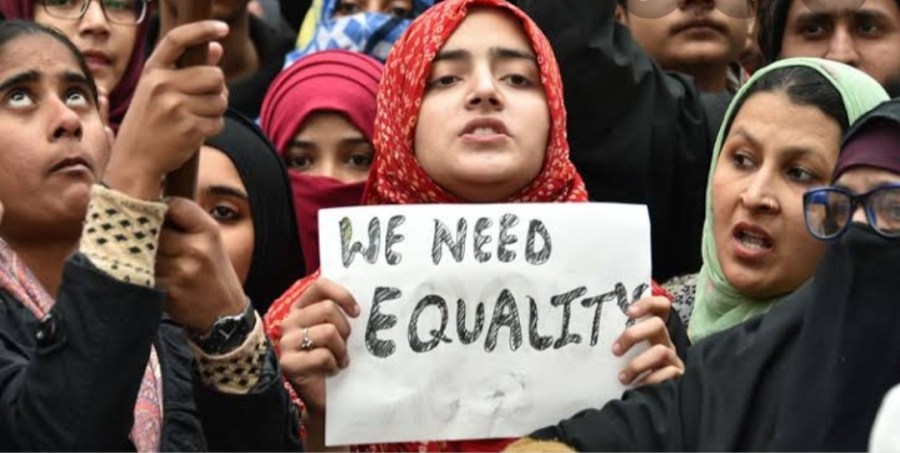
Citizenship law could do ‘irreversible damage’ to India’s secular fabric

The newly amended law provides for granting of Indian citizenship to Hindus, Sikhs, Jains, Buddhists, Parsis and Christians from Pakistan, Bangladesh and Afghanistan who came to India on or before December 31, 2014.

The law will not be extended to Rohingya Muslims persecuted in Myanmar; Shia and Ahmadiyya Muslims in Pakistan; Hazaras, Tajiks and Uzbeks in Afghanistan; Tamils in Sri Lanka; and atheists in Bangladesh.

The CAA, combined with the proposed nationwide NRC, risks disenfranchising Muslims across the country as it provides a pathway to citizenship for non-Muslims but has no remedies for Muslims caught up in NRC processes .This new citizenship law violates the fundamental right under Article 14 of the Indian constitution that guarantees equal protection of laws, even to the aliens, in the territory of India.

BJP, the ruling party in India, has a stated goal of Hindutva

The ideological body of the BJP is Rashtriya Swayamsevak Sangh, or RSS, which derives a lot of its inspiration from Nazi Germany. The RSS believes in Hindu supremacy. It believes that, after the partition of India, if Pakistan was created for Muslims, then Muslims should be treated as second-class citizens and the concept of secularism should be removed from the Indian Constitution. So, ever since this government has come to power, it has been taking decisions to appease the Hindu majority. Everybody’s been calling the Citizenship Amendment bill a distraction from the economic failures. It is not. It is basically a project of Modi’s fascism. The “Hindu Rashtra” (Hindu Nation) is basically a country which will be for Hindus where Hindus will have the first take to all the resources in the country.If the government of the day is indeed concerned about the persecuted minorities in neighboring countries, why is it that only Muslims have been singled out to not be given citizenship? Myanmar is also a neighboring country, where we have persecuted Rohingya community, and the Indian government has called Rohingyas a security threat to the to the idea of India.

If the government of the day is indeed concerned about the persecuted minorities in neighboring countries, why is it that only Muslims have been singled out to not be given citizenship? Myanmar is also a neighboring country, where we have persecuted Rohingya community, and the Indian government has called Rohingyas a security threat to the to the idea of India.

It feels like a nightmare to be a Muslim in India because every day since Mr. Modi assumed power in 2014 is an attack on the Muslim identity in this country. 

Conclusion

There has been 80% rise in hate crimes against Muslims between 2014 and 2020, when Muslims were lynched on suspicion of eating beef, Muslims were lynched on suspicion of marrying a Hindu girl. So, every day there is an attack on their religious identity. So it’s become difficult to live as a Muslim, as a self-respecting Muslim, in the Indian democracy ever since Narendra Modi has come to power. Even the educational institutions, Jamia and AMU were not debarred from their dirty politics. Police entered illegally in University premises and brutally tortured and beaten up the students with stun grenades and expired tear gas shells on 15th December 2019.

India has for long been known as a vibrant land that set flawless examples in the cherished values of pluralism and unity in diversity, but a controversial Citizenship Amendment Act (CAA) ,introduced by the Narendra Modi government reeks of a narrow agenda aimed at marginalising the country’s 200 million Muslims.

India’s Caste Based Reservation, is it actually helping Indians?

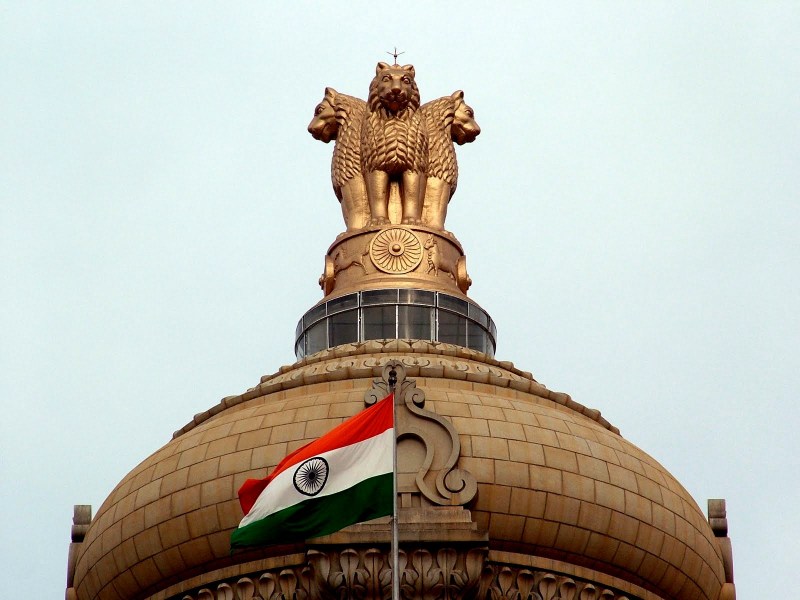
The national emblem of the Republic of India

Does caste based reservation in India violates the constitutional and fundamental right of equality?

This is an obvious question that arises whenever we think of caste based reservation in India. Whether we agree or disagree, truth cannot be denied that reservations had slowed the progress of India and its people. Obviously the implementation of reservation act in the early 1950’s was to uplift the suppressed castes of India and it was indeed for a Nobel cause, in the end India’s citizens should be called as just Indians. This is what constitution refers to when it starts with ‘we the people of India’, isn’t it?

Was it just India having caste based discrimination among people of society? Actually it’s not the case. There have been so many countries facing this issue among its society, where people terribly discriminate towards a certain group of community.

Discrimination is in the genes of Humans, specifically on the grounds of superior and inferior. In today’s modernization this isn’t required when already there have been a class of rich and poor, we need no more classes of people. With distinctive efforts worldwide, many countries could stop it, close to zero. But India as nation couldn’t stop it, people tend to discriminate and when certain group or family of people are classified as lower class, the things start getting difficult. The plan India took to solve this issue, doesn’t seem to be helping. In the past seven decades of Independent India all it did was increasing the gap between general caste (termed as upper) and the reserved castes of Dalits, SC,ST and OBCs. With certain strict implementation of reservations in schools, government colleges, Jobs and promotions too and all this with no economic status consideration leads to divided society of India. The poor dalits who sincerely need these reservations would rarely get these benefits when rich and already uplifted dalits/SCs/STs get them. The Honourable supreme court of India had time to time stated and also ruled the decision to implement creamy layer concept in the reservations for the SCs and ST (acronym for Scheduled castes and scheduled tribes of India). The creamy layer in relation to reservations means if certain community who enjoys the benefit of reservations would not get these benefits, if crossed a certain limit of annual income. Reserved communities falling below that specified annual income fall into non-creamy layer. This concept is already implemented for OBC (other backward castes) reservations in India.

Discrimination in other countries

United States of America (USA)

Protester during the protest for George Floyd’s Murder by US Police

Discrimination of race among:

  • Black & White
  • Native Americans (Tribal Americans) and Modern Americans (British descended)

Racism in the United States has existed since the colonial era, and involved laws, practices and action that discriminated or otherwise adversely impacted various groups based on their race or ethnicity, while most white Americans enjoyed legally or socially sanctioned privileges and rights which were denied to other races and communities of African Americans.

The recent killing of Black American namely George Floyd by the US state police is a pure example of still existing racial discrimination in USA.

Japan

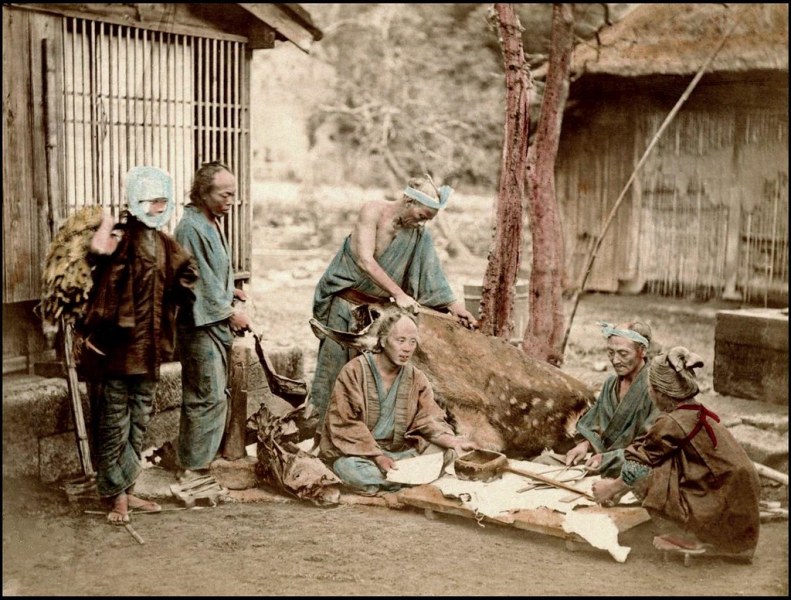
The untouchable of Japan, Burakumin caste

The Burakumin caste in japan faces huge amount of discrimination, even in today’s extremely modernised Japan. The Burakumin (from the words buraku, meaning community or hamlet and min, meaning people) are not an ethnic minority, but rather a caste- or descent-based group. They therefore share with other Japanese the same language, religion, customs and physical appearances.

Burakumin caste originates from a now-defunct caste system that existed in the Edo Period (1603-1867). At the bottom of the hierarchy was a cohort of outcasts consigned to jobs stigmatized by death, such as executions or animal slaughter. Hence their derogatory class categories, including eta (filthy mass) or hinin (nonhuman). The burakumin are the modern-day descendants of these feudal age pariahs.

The caste system came to an end in tandem with Japan’s breakneck shift to modernization at the outset of the Meiji Era (1868-1912), with the government ostensibly declaring the outcasts “emancipated” in 1871.

But the burakumin remained largely segregated from society and stuck in ghettos. Even today, discrimination against people from these hamlets, or buraku, runs deep, activists say, despite efforts by the government in the late 1990s to encourage their assimilation into mainstream society.

What could be the possible solution?

Providing special reservations and status above than the general segment of the society could work for uplifting the supressed communities but it’s definitely not an ideal solution. This would never help in bridging the gaps among different segments of society. This is how caste based reservation in India was initially implemented and the founder of Indian constitution B.R. Ambedkar himself said that this reservation system should be abrogated in few years. Unfortunately, this could never happen due to deeply engraved caste and religion based politics of India. Governments one after another could not dare to upset certain parts of society and used them as their vote banks. In return to continuous renewing of reservation duration (set for 10 years in the Indian constitution), governments in India formed NO effective policies which could actually solve India’s poverty crisis and kept on getting votes just by luring people of India by reservations. In reality, reservations are hollowing India’s strength and calibre, reducing technological advancements and increasing India’s dependency over rest of the world.

In many developed nations reservations were implemented in a manner that it expired on its own. One such example is by providing reservations only on the basis of financial income and if provided towards a certain community, it should be for only one generation because it is obvious and natural to understand that if one generation is uplifted then their next generation would get all the benefits of early education and other privileges to sustain an earnings or to get a job on their own.

NGT directive to Ministry of Environment on banning RO purifiers.

By Udbhav Bhargava

The NGT ordered the Ministry of Environment and Forests to issue a notification banning RO purifiers within two months in which total dissolved solids (TDS) in water are below 500 milligrams per liter (mg/l). The bench, led by NGT Chairman of Justice Adarsh Kumar Goel, said the delay in compliance with the order is causing harm to human health and the environment, and it shall be promptly complied with.
In an attempt to control the use of RO purifiers, the NGT had issued directions to the government to ban them where total dissolved solids (TDS) in water are below 500 mg/l, and to spread public awareness of the negative effects of demineralized water. The tribunal also directed the authorities for mandatorily implement norms for recovery more than 60 percent of the water wherever RO is allowed throughout the country.
The order came after a report from an advisory group that said that if TDS is less than 500 milligrams per liter, a RO device would not be useful, but will contribute to the removal of essential minerals as well as causing undue wastage of water. This well-planned step was an appropriate response to the plea filed by an NGO Friends seeking to protect drinking water by avoiding its wastage due to excessive use of RO systems. The issued directive will have multifaceted implications on potable water resources, physical health of the masses, and the Indian water purifier industry worth 34 billion (INR).

Demineralized water and associated risks

As a result of distillation, deionization, membrane filtration (reverse osmosis or Nanofiltration), electro-dialysis, or other technology, the treated water is almost or completely free of dissolved minerals. This is demineralized water. In such water, the total dissolved solids (TDS) may vary but TDS could be as low as 1mg/l (As per WHO).
TDS is composed of both inorganic salts and small amounts of organic matter. According to a WHO report, concentrations of TDS below 300 mg/l are considered outstanding, whereas 900 mg/l is said to be bad and over 1200 mg/l is unacceptable. Reverse Osmosis (RO) is a water purification process that uses pressure to drive molecules through a semipermeable membrane to extract contaminants from water.

Demineralized water that has not been re-mineralized, or water with low mineral content – in the absence or substantial lack of essential minerals in it – is not considered ideal drinking water, and therefore, its regular consumption may not provide adequate levels of certain beneficial nutrients. It is considered to be an extreme case of low-mineral or soft water because it contains only small amounts of dissolved minerals such as calcium and magnesium, which are the major contributors to hardness.
• Minimized intake of low-mineral water calcium and magnesium.
• High intake of some essential elements and microelements from high-mineral water.
• Possible increased intake of toxic metals into the diet.
• Water is more susceptible to bacterial contamination.

In the Indian context, demineralization takes place in the homes through purifiers, further eliminating the scope of re-mineralization. Furthermore, according to various sources, to get a liter of RO-treated water, 3 liters of water is wasted by the purifier. India’s water problem is also attributed to a lack of state planning, increased privatization of companies, industrial and human waste, and corruption by governments. However, water scarcity is expected to intensify in India as the population overall is estimated to rise to 1.6 billion by 2050. To a certain end, it is predicted that global water shortages will become a leading cause of mainstream political conflict in the future, and the prognosis for India is no different.

Hence, active and stringent implementation from the ministry is needed in the long-term ahead. It is an inherent demand of this directive, since, both public health and water resources of the country are at stake. Any degradation or deterioration in any of them will have intensified repercussions on the human resources, living standards, the economy, and in turn on the GDP of the country (taking a larger timeframe into consideration).

Career development

Starting a career is not an easy task, career is a path to a new life, to start you need perfect planning, First, you need good research about the upcoming technologies, and recent trends, career development is essential because it’s the first step to a career plan, without planning there is no good cause, for planning you need support like mentors who guide in a professional manner and make a successful career, learning is the first step for starting the career, How much you learn? That much your career will be, there is no stopping for learning until you get the right future, and then you need to choose the right path which leads you to a brighter future, you need a goal like a dream because a dream is a fuel which makes the man move, and to go for the destiny, then you need good time management which is the key is to a man success, without the time management there is no word called a success, patience is the next important in beginning a career you need to wait for a right opportunity, you need support for building a career because without the pillars a build a can’t stand and without the perfect partner or friend you can’t stand, you need to have some basics skills like technical writing, programming language., etc 

Starting a career is not an easy task, career is a path to a new life, to start you need perfect planning, First, you need good research about the upcoming technologies, and recent trends, career development is essential because it’s the first step to a career plan, without planning there is no good cause, for planning you need support like mentors who guide in a professional manner and make a successful career, learning is the first step for starting the career, How much you learn? That much your career will be, there is no stopping for learning until you get the right future, and then you need to choose the right path which leads you to a brighter future, you need a goal like a dream because a dream is a fuel which makes the man move, and to go for the destiny, then you need good time management which is the key is to a man success, without the time management there is no word called a success, patience is the next important in beginning a career you need to wait for a right opportunity, you need support for building a career because without the pillars a build a can’t stand and without the perfect partner or friend you can’t stand, you need to have some basics skills like technical writing, programming language., etc 

Responsibility towards Organisation of HR

In the organisation , there are various roles and responsibilities towards organisations. HR has many responsibilities in the company from planning to controlling of any project or work. The role of HR specialist has also typically been associated with administrative duties, such as gathering, filing and storing paperwork, and they have traditionally worked in establishing and enforcing company responsibilities. In the part, this is because the human resource role frequently originated from administrative or finance departments. This is logical as responsibilities such as payroll, hiring and benefits lie in the scope of those business unit.

HR has the responsibility of employees towards their securities and other responsibility of the employee. HR has hire new employees according to the need of company and HR has known about the human resources in the organisation are needed in future . HR has responsibilities to retain their employees and motivated employees to work effectively in the organisation to achieve the organisational goals and objectives. HR main function is maximum utilisation of human resources . HR is the traditional approach of managing people in the organisation.

Modern HR professionals are leaders in their organisation. The specialist sponsor the organisational mission, vision, values and goals among staff members, and they monitor and adjust organisational activities to ensure that success of various initiatives. HR specialists contribute to enterprises by managing the most important asset of any organisation the people who compete the daily tasks that result in productive outcomes. This work aids in the global success of their organisations.

In the HR responsibilities, there are the some HR functions are which perform by HR towards employees’ work cycle:

Resource Planning:

working with other departments together manpower requirements, performing job analysis and formulating Job description.

Recruitment:

Right from hunting for right candidates, screening , interviewing and finally hiring them.

Onboarding / Induction:

Inductung new hires/ lateral movers to their role/ company culture and processes.

Employee Engagement:

Organizing events, team outings , team building activities, town hall , open discussion etc.

performance appraisal:

Deciding on the key performance indicators , documenting them, tracking their progress and finally evaluating their status with line managers at the end of the year. This can determine bonus/ rating/ growth of employees in the organisation.

Compensation and benefits:

Designing compensation and perks in accordance with prevailing laws of the country, the key motivation of the employee , the nature of the job and prevailing iindustry rates.

:career management

Chalking out the progression, promotion path of employees according to their potential performance and aspirations

Succession Planning :

Identify high potential employees or high performers and preparing them for leadership , planning their coaching , mentoring etc.

Training and Development:

This function encompasses identifying the learning needs of the teams / individuals , organising the session.

Retention:

In this system , potential employee are not leaving the organisation due to any reason and retain them.

Exit:

conducting exit interview, exit formalities , using feedback to bellerin workplace

so depending on how the organisation has been shaped, HR functions can overlap with finance, sales and administration etc.

Being different

Starting to start that has not been started before is a great start. Have guts to innovate something. Being different isn’t doing something that exists already. Create something on your own and work on it. Don’t work on something that is something to someone. Work on something that makes you feel something.

Do it because it’s not done. Doing the undone isn’t that easy. But regular work towards something makes you feel it’s essence. Have a great thought and have a good start. Great things take time but when you are in the process of making it, the time flies. Don’t work if you feel uninterested for the next day. Have a feel to have a feel the very next day. Lead a happy life because money isn’t something that you remember. Have a happy life and do something different if you feel doing different makes you happy. Following is very easy but to gain followers is tougher. Don’t nake your life simple and easy because that’s too boring. Go and experience the unexpected and have a unimaginable life.

Being different is not that easy. The toughest time is to survive the rest. Have a faith, if you can’t believe you then why do you hope for someone to have a belief in you. You must be able to push yourself to the extent where you can be able to push others. Have confidence to gain some others confidence. Have a great thought and have a great zeal to explore the possibility of making something great.

Remember that no one remembers you when it’s time to remember someone. So make something big to have a big name. Being someone is the same thing that every one does. Dieing in downtown is so easy. Make sure to have a great life not a great day. Getting a good job might make your day a good one. Have guts to feel your gut feeling. Feel to have a great feel everyday because that’s something you will have the rest of your life. Life isn’t something you can learn in a lifetime. You have to study the new chapters that were never taught by any of the teachers. You don’t know when the syllabus changes. You have to change your colleges all of sudden. You have to play a game with yourself. If you go for a wrong move there are great chances that you end up by keeping checkmate to yourself. Life is something similar to chess. You will die the very moment you lose. Surviving there as long as you make some fixings with your opponent is how the game is played. If you go for man to man, you end up soon before your start.

Being different is so different because it’s difficult. Easy is so easy because it’s tend to be easy. Dare enough to make a dare move in your life. You will end up dieing whether you play safe or make a dare. Daring to die is better than living like a slave. Change your life because you can. Live a life that was never lived before. Loosing is easy but accepting the fact is so difficult. Die as a gentleman , if you can’t atleast try. Don’t kive just to survive. If you have a chance to create an impression of your life, then try for it. Go for something big because if you fail, there’s nothing to loose. Keep in trying, never quit. Have a different and difficult life. Anyways you will forget all the pain you had and all the gain you had, so better to have a tough one. Believe you are not that easy.

Advertisement

We see that there is a great competition now in every field of life. To reach the prospective buyers there is a need of some type of approach. But contact with individual is impossible.
This has made advertisements very much important.  
Businessmen and manufacturers are the most beneficiary of advertisements. Advertisement makes people able to know about which articles being manufactured are on the sale in the market.
If there is no advertisement people will not be able to know about various excellent products in the market. This is the reason for the huge investment on advertisement.
There are various ways for advertisement, but the cheapest and the most popular is newspaper publicity.
TV, radio, cinema slides, hoard­ings, posters etc. are other different sources of advertisement. Small documentary films are also prepared by some manufacturers for their products as a means of advertisement.
But newspaper plays an important role for non-product advertise­ment. If a firm wants to fill any vacancy in his establishment he will go for an advertisement in a newspaper to fill that vacancy.

The Positive Effects of Advertisement

There are many positive effects of advertising both for the company and the consumers. And some of those positive effects are mentioned below.

  1. Social Benefits

There are many social benefits which advertisements can provide. For example, advertisements can highlight various social issues and promote free speech in nations where it might still be suppressed. This is a very important effect of advertisement. It is also important to remember that it is the freedom of speech and advertising-supported content which are the promoters of various social changes.

  1. Economic Benefits

According to research, advertisements can make companies and businesses compete to provide higher quality products and services. This ensures that more high-quality products and services are available in the markets which are able to meet the needs and requirements of all customers. This is a very important positive effect of advertisement.

The Negative Effects of Advertisement

In this last section, readers will be able to learn about the negative effects of advertisements. And some of those negative effects of advertisements are mentioned below.

  1. Misrepresentation

All advertisements tend to display the products and services in the best possible light. And many advertisements often tend to cross the line of a little exaggeration to utterly falsely representing the product or the service. There are many government organization which charges hefty fines for misrepresentation.

  1. False Image

Advertisements tend to invade all possible spheres and because of that one can often develop a false image. This false image also often tends to make an individual feel bad about himself or herself. This is also one of the negative effects of advertising to children.

Advertising is a form of marketing communication through which a business or an organization informs the target audience about its products and services. There are two major types of advertisements. And those are positive and negative advertisements. There are also many forms of advertisements. There are also many negative and positive effects of advertisements like the unrealistic expectations, false image, and the social and economic benefits of advertisements.

The Connected Apple family

Apple’s ecosystem is huge. Nearly one billion people use more than one billion Apple devices. Or as sales for the iPhone decline, Apple brings tens of millions of young people into its ecosystem every year. However, we are getting to the point where it is wise to start thinking about what user growth means to Apple.

Number of users

Estimating the number of Apple users is a straightforward task. Last January, Apple revealed that there are more than 900 million iPhones in the wild. Given that iPhones are not routinely shared, Apple’s revelation revealed that there are nearly 900 million people using iPhones. With the actual number of iPhones in the wild probably now over 925 million, there is an aggressive room for that number of 900 million users in the rare cases of people using more than one iPhone.

Apple also revealed that there are eighteen billion active devices (1.4 billion) on the foundations installed since January 2019. The number has grown by 100 million devices in the last 12 months and has even increased by 400 million devices over the past three years. This tells us that there are 500 million Apple devices in use other than iPhones. Most of those devices are 500 million iPads. The Mac represents another 110 million devices, and a collection of home textiles and accessories make up the remaining devices.
Apple’s production apps such as Pages, Numbers and Keynotes are powerful ways to use Microsoft Office suite and now supporting integration with iCloud makes sharing files easier and easier.

Group FaceTime is also a great addition because it can support multi-user interactions with Apple devices which can indicate headaches than third-party teleconferencing apps and there is a Message that lets you reply to conversations on all your devices.

My main app is Notes now as it supports sharing and collaboration, it’s easy enough to share things like lists or combine all folders to share with others, be it work or hobbies.

The negative trend is probably the need for everyone to be in the ecosystem and unlike Google or Microsoft, you can’t deny that Apple is a crossroads.

Also, most iOS apps are available on other platforms so in the event that, like most workplaces, you work with people with a variety of devices, there are still ways for everyone to work collaboratively from where they are, regardless of their hardware.
Apple has an excellent ecosystem for all electronic retailers. There is no question. No other player in the technology industry does both software and software at least not on all platforms, and Apple creates both Hardware and software for phones, tablets, computers, TVs. You call it the apple ecosystem. This gives Apple some great benefits when it comes to their programs such as amazing upgrades to iOS and MacOS, and greater security, services, etc, but it also means their ecosystem is compatible. It just works, The apple devices integration with apple devices develops the best apple experience to the user.

FINITE SECULARISM?

INTRODUCTION

The word ‘secular’ is derived from the Latin word ‘saeculum’ which means a generation or an age or span of a century. The term arose from the European context of politics and derived from the attempt to prohibit the State and its property from the control of Church. A religious element was embedded in the meaning of word secular. In the Europe and other regions, secularism was closely related to the theory of progress. Over time the meaning of secularism has evolved and now the term secular means being ‘separate’ from religion, or having no religious bias. For many years the word ‘secular’ or ‘secularism’ was nowhere to be found in India (even though all the religions co-existed in harmony since ancient times). The foundation of Indian morality has been core unity, forbearance and even inter-weaving of religion. It is a definite fact that large population of Indians is associated to diverse religion lived in compassion. Slogans like – “Hindu Muslim Sikh Isaai, aapas mein hai bhai bhai(Hindus Muslims Sikhs and Christians all are brothers) are resonated down on the streets of India and binds us to moments of fraternity. This slogan expresses the essence of ‘secularism’. In year 1976 (after independence) the word ‘secular’ was added in the Preamble of the Constitution by 42nd Amendment Act. When the hon’ble Supreme Court declared the preamble as the basic structure of the Constitution of India, the word ‘secularism’ acquired a whole new status. Hence the Indian constitution stands for a secular state (there is no official religion of our country).

What is Secularism?                                                         

Secularism is a normative doctrine which seeks to realise a secular society. It is free from inter-religious and intra religious domination. It promotes freedom to practice their religion and equality between religions as well as within religions. As secularism is opposed to all forms of institutionalized religious domination, it challenges not merely interreligious but also intra-religious domination. The idea of secularism possesses a normative doctrine which seeks to realise a secular society, i.e., one devoid of either inter-religious or intra-religious domination. Put positively, it promotes freedom within religions, and equality between, as well as within, religions.[1]

CONTEMPORARY SECULARISM

Secularism is something which is argued since past and persist. Due to its direct relation with religion it is prevalent, pervasive and persuasive in community and human life. Society and culture of country evolves creating new issues and

Current Situation in India

The idea of Secularism assumes an essential job in India. Secularism here binds every one of the nexus following religion. Indian secularism remarks the connotation of godly and devout sentiment in life of human. It expects and hopes that no other religion has the confining or constraining framework of reflective knowledge; it allows all religions to discharge their scope under their true words.

The Constitution of India explicitly recognized Hindus, Muslims, Christians, Sikhs, and Parsis as different societies each with individual and free culture, pious activities and special laws. Treating the acknowledged religious societies as equals meant that they would enjoy more or less the same level of religious liberty. While religious practices and activities of religious societies were subject to few limits, it was said that the religious liberty of each of these societies would be equally conserved and defended.

India is known for its multiculturality as for its language and religion. The Indian subcontinent is the birthplace of four major world religions—Hinduism, Buddhism, Sikhism, and Jainism. According to reported 2011 census data, 79.80% of the population of India is Hindu, 14.23% Muslim, 2.30% Christian, 1.72% Sikh, 0.70% Buddhist, and 0.37% Jain.[2] Hereby, Hindus (inclusive of Sikhs, Jains and Buddhists) establish the majority and Muslims create a minority.

IS SECULARISM LIMITED TO HINDU-MUSLIM!?

Hindu- Muslim fights has taken place during historic period in India and are still continuing (Communal riots due to Aurangzeb’s religious policy in 17th Century and now the riots and protests against Citizenship Ammendment Act). Some major ones such as Bombay riots of 1993 and Gujarat riots of 2002 has led to death of 1500+ people across the country. 

Extensive issue between both the religions has always been Babri Masjid in Ayodhya, in 1992 which was claimed by Hindus that the mosque was erected over the birthplace of the archaic god Rama. Tens of Thousands people were evicted from their homes and there was tremendous annihilation of lives and casualties in the country due to this before the Supreme Court passed a neutral and satisfactory judgement in November 2019 in the case: M. Siddiq (D) Thr Lrs v. Mahant Suresh Das & Ors.

Today, considerable controversy on secularism is Anti CAA protests and riots in several states of the country. This Act seeks to grant Indian Citizenship to persons affiliated to Hindu, Sikh, Buddhist, Jain, Parsi and Christian communities on the ground of religious minorities persecution in states of Pakistan, Afghanistan and Bangladesh. As these countries have Muslim majority, they weren’t given citizenship under the Act. The enactment of such law of government was criticised by many and led to bisection of society on the basis of religion. Also the protests have led to the deaths of quite a few rioters, casualty to protesters and police personnel, harm and loss to public and private property, the confinement of hundreds of people, and termination of local internet and phone connectivity in specified areas. The Central Government in a preliminary affidavit point by-point replied to the criticism against the Citizenship Amendment Act (CAA) and pronounced India is constitutionally secular, and also notified the Supreme Court that the CAA does not infringe any fundamental right and provisions of the constitution and therefore, the query of infringement of constitutional morality does not have to originate.

Both of these religions has been and are engaged in a vicious cycle of gaining advantage or predominance over the other. In other words, both Hindus and Muslims have developed animosity and hostility against each other which is leading to antagonistic behaviour of people. Therefore, in order to maintain better circumstances in the religion based society of ours, further steps are taken such as proscription of practices of both the religions (untouchability, triple talaq, beef ban, proselytization etc.) which is a hefty secular normative attack on both the religions.

Indian secularism has two distinct and conflicting aspects, one is complete detachment between government and religion and the other that strongly appeal government to treat each religion without discrimination. Rajeev Bhargava has explained what secularism in the Indian setting calls for is the maintenance of a “principled distance” between state and religion. This does not mean that the state cannot intervene in religion and its affairs, but that any intervention should be within the limitations prescribed by the Constitution. Sometimes this might even call for differential treatment across religions, which would be valid so long as such differentiation, as Mr. Bhargava explains, can be justified on the grounds that it “promotes freedom, equality, or any other value integral to secularism.” But Indian state i.e. government has total intervention into the matters of religion through communal politics. In other words, vote bank politics is followed by the government and the political parties in the race to form the government. Even this has led to inundation of discrete political bodies for Hindu and Muslim community, be it Bhartiya Janta Party, Aam Aadmi Party, Indian National Congress etc. whoever is instigating the idea of ‘hindutva’ and so on.

CONCLUSION

Indian secularism is the by-product of a whole civilization, as a senior literary figure, Nayantara Sahgal, remarked recently: “We are unique in the world that we are enriched by so many cultures, religions. Now they want to squash us into one culture. So it is a dangerous time. We do not want to lose our richness. We do not want to lose anything . . . all that Islam has brought us, what Christianity has brought us, what Sikhism has brought us. Why should we lose all this? We are not all Hindus but we are all Hindustani.” As mentioned above it is important for us to understand that we all are Indians and not just only a Hindu, Muslim or Christian. A sense of brotherhood is important to ensure development and growth of our country. Otherwise if religious violence continues then for sure our country will be doomed.


[1]https://indianexpress.com/article/cities/mumbai/nayantara-sahgal-we-should-not-lose-our-hindustaniyat-5560427/


[1] https://www.thehindu.com/opinion/lead/the-secular-condition/article22347527.ece


WORK FROM HOME; the New Reality

Work from home sounds familiar right? After all that’s what most of us have been up to for the past four months. Before this pandemic, work from home used to be a delight for many. It used almost feel like a day off. There was no need of waking up early, getting ready and most importantly travelling in the peak hour traffic. It was indeed a something that office goers looked forward to. Not anymore though. We have had enough in these four months that we don’t want to work from home for at least a year now. So many things that we took for granted during the normal times we realise now. Waking up early, having a routine, cursing the traffic on the way to and back from work, those hour long meetings, coffee breaks in between with your office gang, just waiting for Friday and making crazy weekend plans that would probably not happen. These are just a few things that we hated then but now we really miss these times. Working from home is not exciting anymore. We have lost a sense of routine and social life. And the workload seems to have multiplied a hundred times more. Working alone with no one that you could ask suggestions from or clear a doubt immediately. Of course we can text or call but having someone right next to you feels different. You feel that you’re not alone, there is someone right next to you going through something similar and handling the same kind of pressure, it gives you a sense of confidence. Also working from home does not provide you a favourable atmosphere. Office atmosphere makes you more productive and in the mood to get work done. But at home you tend to feel more lazy and unproductive. There are also a whole lot of distractions. You are also staring at the digital screens more which is not good for your eyes. Zoom call after zoom call, clearing your inbox, working around projects is just too much for your eyes to handle. And most of us go on social media for a break or watch a movie on Netflix. This is not healthy for us. For the name of it we are working from home and with our family but we are more distant from them.

However in these unprecedented times, not much is in our own hands now. We have to make the most of what we can. Try to have a daily routine; this really helps bring a sense of normalcy. Have a fixed sleep schedule. Make sure to follow a good and healthy diet. Don’t forget to exercise because keeping your body and mind fit is very important. Do give your eyes some break form the screens it will be of great help. Try to find hobbies that you like and pursue something instead of bingeing shows or going on social media. Try your best to make something productive and worthy of your free time and boredom. Finally, we might not get a chance like this in the future so make the most of what you’ve got folks.

HAPPINESS IS THE SECRET OF HEALTHY LIFE!!!!

“Happiness is the which means and the motive of life, the whole aim and end of human existence.”

Happiness is a broad term that describes the celebration of advantageous emotions, which include joy, peace, and satisfaction.

Emerging studies indicate that being happier doesn’t just make you feel higher — it certainly brings a bunch of capability fitness benefits.

This article explores how being glad may additionally make you healthier.

Health and Happiness

Studies display that a person’s health is one of the most powerful predictors of happiness. But the link between health and happiness is complex. Research suggests little correlation among a person’s objective health — as described by way of medical assessment — and happiness. It’s our subjective health — how we view our fitness — that affects our well-being. So is happiness all on your head?

Not necessarily. For example, adverse modifications in health do hurt happiness stages, at the least temporarily. Poor health can significantly affect almost every aspect of your lifestyles: your independence, your self-image, your non-public relationships, your ability to work and perform basic each day activities. So it is no surprise that once your fitness takes a hit, your happiness does as nicely.

But people are resilient. We turn out to be acquainted with new lifestyle circumstances, proper or bad. We adapt. Within a month or of an adverse health event, most people have gravitated again in the direction of the level of happiness they enjoyed before their fitness took a flip for the worse.

What You Can Do

Do all that you may to keep a healthy lifestyle and you’ll be properly on your manner to a long existence rich in happiness.

Be your healthiest and happiest by consuming a balanced weight loss plan with masses of fruit and veggies, maintaining strain stages to a minimum, getting regular checkups, wearing sunscreen, guffawing often, moderating alcohol intake, getting plenty of exercise, and now not smoking. Your RealAge Plan will offer extra personalized detail on this.

And if you think you will be living with a temper disorder, get it treated. An appropriate remedy can assist lessen your symptoms, grow your experience of nicely-being, and get you back on the right track to a happy lifestyle.

Social Side Up

Developing your social side is essential for properly-being. Studies show that socially active folks, who are compassionate, and who’re emotionally beneficiant have better levels of happiness and live longer than people who lead an extra solitary existence.

Research also suggests that human beings who have robust interpersonal abilities rank in the highest degrees of happiness, and people who are socially remoted have extensively decrease levels of properly-being.

Social skills are just one part of this happiness factor, even though. People who hold exact personal relationships additionally fare higher than folks who are socially inactive. Open, trusting, intimate relationships are important building blocks for a satisfied life.

And it isn’t the most effective receiving guide that makes us glad; it is being capable of giving a guide to others as nicely.

Happiness and the Meaningful Life

According to the founding father of effective psychology, Martin Seligman, a glad existence is one this is pleasurable, enticing, and significant. And the greater engaging and meaningful, the better. Seligman indicates that individuals who cognizance their energies on main an engaged and meaningful existence are extra a success at achieving lifelong happiness than individuals who awareness at the transitory sense-goods of pleasure.

What You Can Do

Spend greater time doing what you love. Engaging in activities which can be consistent with your values and pastimes can improve your experience of nicely-being. If you experience as though you’ve got lost contact with what the ones sports might be, think about what captivates you so entirely which you lose yourself within the moment and forget approximately your stress.

It’s possible to be something you’re desirable at that also presents you with a piece of an undertaking or a few sort of emotional reward. Some examples are probably gardening, writing, painting, surfing, cycling, volunteering, or playing a musical instrument.

As you focus on bringing meaning to your lifestyles, be sure to set realistic, attainable goals. People who do so file being happier than people who recognition on grandiose long-time period dreams. Being capable of realizing desires that reflect your values and interests can assist improve your sense of autonomy, cause, and achievement. This has been proven to contribute drastically to overall nicely-being.

criminal justice system

CHALLENGES OF INDIAN CRIMINAL JUSTICE SYSTEM
The country has been facing various loggerheads when it comes to the Indian justice system
in India. Sometimes, we can even see that peoples right of life and personal liberty which is
guaranteed by constitution is being deprived off. In enormous number of cases among which
recent one is Unnao rape case where we can see that how politicians has superseded existing
criminal law. The brief facts of this case are a teenage girl accused MLA of Unnao of raping
her year in 2017 she also tried to fire out herself outside la residence . the allegations also say
he had planned a accident which led which led death of her family members . so the judiciary
at various stages had come to the front and tried to solve the case and punish the accused by
having day to day hearing so we can see that how the executive is not able to implement the
criminal justice system properly. Various challenges of the current justice system which is
prevailing in India are as follows :
 Scarcity of judges: if we talk about data there are 19 judge per 10 lakh people in our
country which is less as compared to the other countries as in USA 127 judge per 1
million people are there. it’s a big challenge to our judiciary as 37% of the sanctioned
judge’s seat are vacant in the high courts of the country.
 Pendency of cases: the vidhi center for legal policy in its legal report has found that
nearly 70% of cases in Delhi high court has been decided by giving more than 3
adjournments which is against the provision of CRPC which says that a case it to be
decided in not more than three adjournments there are 43.55 lakhs case pending in
high court in which 8.5 lakhs are case which are 10-year-old. there are 1.59 lakhs case
pending in supreme court
 Lack of transparency: judiciary does not come under ambit of RTI act also there is no
transparency in appointment of judges
 Lack of synergy between police prosecution and judiciary: there is lack of
cooperation between the three elements without which one can’t attain an established
and fair judicial pattern of justice
 Hardships of under trail in India where are there is roughly 4.25 lakhs prisoners are
undertrials which is world largest number of undertrial prisoners that not because they
have been found guilty but they had been prosecuted in charges that are non- bailable
and also bail is tough task for them
 Lack of use of technology: a good technology helps to reduce the huge amount of
paper work involved there is need for better technology for recording the statement
and also CCTVs can be installed which can be used for recoveries and other related
process
 Lack of fund : the central government is not taking up seriously about the current
situation of the courts throughout the countries the courts are facing shortage of basic
things such as clean water electrification, sitting arrangements, waiting area etc.
NEED OF INQUISTORIAL SYSTEM
The years old adversarial system should must be replaced by the inquisitorial system. The old
British time system of delivering justice is still being followed the accused feels safer than
that of victim who has to prove himself the guilt of accused as the accused is to be presumed
an innocent person. in adversarial system truth is supposed to be emerge from respective
versions of facts presented by the prosecution and the defense before a neutral judge. parties

in the adversarial system enjoys freedom of proof widely. However, the system needs to be
changed according to the need of masses as it has many drawbacks:
It focuses on strict ignorance of procedural law which has created very less space for state to
be biased against the accused. It focuses and favors mainly to the accused and victim role is
limited of being a witness.
An inquisitorial system is an organised process where part of the court, if not the entire court,
is actively work in an inquiry of the findings of a case. It is different from an adversarial
system where the role of the court is to be an impartial third person who only observes , or
make decisions while listening to parties .
The trial judges become inquisitors who passionately take part in public inquiries by
questioning prosecutors, and defendants. These judges can even order specific items of
evidence be examined if they feel that the presentation by any party in the case is not up to
the mark . however there are advantages of adopting an inquisitorial system :

 4 It lowers the advantages of wealth inside the justice system.
in Indian societies there exist huge no of cases which are pending. This can be
ascertained to many factors. One such factor can be that there exist a huge gap
between the rich and poor. We’ve seen number of cases where rich gets bail easier as
they are able to afford good and expensive lawyers. This inquisitorial system will
eliminate such gap .
 It reduces decisions against people which are driven be emotions.
According to Pacific Standard Magazine report published in year 2013 , jurors who
faces moral outrage any level during a case are more likely to convict a defendant if
we tally to those who do not witness this emotional reaction. Under an adversarial
system of justice, the aim of the prosecutor is to elicit this response when they present
a case because it increases the likelihood of a successful results. With an this system
of justice, there is another line of defence against this emotional decision-making
process. The judge can help to determine the facts of a case so that decisions are
based on logical understandings instead of emotions.
 It lowers bias within the system of justice.
when many people are engaged in a legal proceedings various perspectives that are
bring down to review the situation that took place. Here chances of unintentional bias
is not present like adversarial system but in the inquisitorial system each of the parties
share and contribute their opinions and the facts decide what actually occurs instead
of biased opinion.
 It is a system which does not leave anyone.
in the inquisitorial system it aims that each person should be treated equally. This
system allows no exemptions same questions is asked to everyone when there is any
case presented. And the reality of each answer is then after verified through rigorous
work that what actually happened .
 It is a system which indicates independent review.
each wing will work upon each issues independently which is unique features itself .
there can be co-operation between the various individuals working a case, they are
separate teams working toward an outcome by themselves instead of together as a
4 Pros and cons of inquisitorial system available at: https://connectusfund.org/19-big-pros-and-cons-of-
inquisitorial-system

group. Some systems may needs full agreement in the results from all of the teams
working on a case before a case proceeds thereafter.
 It must resolve all factual uncertainties before coming to a resolution.
This is a mechanism of continuous investigation that is conducted firstly by police
then after magistrate or the judge who serves as the lead investigator in many
systems. Because the judge(s) are placed in this role, they are tasked by the
government to exhaust every effort to settle any factual uncertainties which may exist
in a case. There must be sufficient evidence of guilt to proceed. Although in some
cases this need may lead to pressure on the defendant to confess, this system seeks to
minimize manipulation to create specific outcomes.
 It allows the judicial system to play a substantial role in the proceedings.
One of the most important benefits s of the inquisitorial system is that the court
moves from being an impartial observer to an active participant. Instead of trying to
weigh the validity of both arguments or place the issue in the hands of a jury alone,
the focus is on achieving a justifiable outcome that fits the facts of the case. Even if
there are minor procedural errors which occur during the case, they can be ignored if
the purpose of achieving justice is the final outcome.
 It grants freedom to defendants to tell their story.
defendants in inquisitorial gets full right to represent their case and story as system
does not degrade character of the defendants as compared to the adversarial system

Fiscal federalism

Fiscal Federalism refers to the division of responsibilities with regards to public expenditure and taxation between the different levels of the government. The Government of India Act 1919 and 1935 formalized the tenets of fiscal federalism and revenue sharing between the Centre and the states. It allows the government to optimize their costs on economies. The Constitution has provided provisions which enable the Union and the States to work in coordination and to levy and collect these taxes through systematic arrangements, provisions like-

  1. Taxes levied and collected by the Centre but assigned to the States.
  2. Taxes levied by the Centre but collected and kept by the States.

Like in other countries, the fiscal dimensions of federalism are a reflection of the political federal structure in India. The traditional subjects of concern of fiscal federalism, such as the assignment of taxes and responsibilities as well as the correction of vertical and horizontal imbalances, continue to remain important in India. Devolution of taxes and duties still constitutes the most significant dimension of fiscal federalism in India (Krishna, 2004). Fiscal federalism in India unlike in many rich countries has to satisfy the competing demands to deliver a number of essential and basic socio-economic services. As a paramount objective, fiscal federalism is expected to enable the national and sub-national governments to operate in such a way that leads to efficiency in the use of resources – not only in terms of the quality of services provided by the various levels of government but also in terms of creating the environment in which all economic agents use resources efficiently. Political environment is important in determining contours of fiscal federalism. After Independence, there was a single and same party rule at the Centre and in almost all states for many decades. There are now telltale signs that India is moving away from an era of cooperative federalism towards competitive federalism, due to multi-party polity, and predominance of regional parties at the state level, and coalition governments at the centre. The existence of competition brings-in the importance of transaction cost of coordinating policies and their implementation
(a) vertically between different levels of government and (b) horizontally between different units within each of the levels.


Many challenges, therefore, lie ahead for fiscal federalism in the country. Bulk of literature on federalism in India had focused on economic aspects of fiscal federalism. There is a little work done in the area of environmental policy and its influence on intergovernmental financial relations in India. Within the context of Indian Federalism, what remains important is to take into account the social diversity in a general sense and the diverse ways in which each member state is able to relate to the federal system as a whole and to other member states (Thornton, 1995). The existing cultural, economic, social, environmental and political factors combining to produce asymmetrical variations in the country, if not handled properly, have the potential to affect harmony within the federal structure of the country.


EVOLUTION OF FISCAL FEDERALISM

The history of fiscal federalism in modern India goes back to the government of India Acts of 1919 and 1935. While the Act of 1919 provided for a separation of revenue heads between the Center and the provinces, the 1935 Act allowed for the sharing of Center’s revenues and for the provision of grants-in-aid to provinces. The salient features of Government of India Acts of 1919 and 1935.
After independence, the Indian Constitution that came into existence in 1950 is widely known as basically ‘federal’ in nature, but with striking ‘unitary’ features, owing to the circumstances of the times when ‘unity and integrity’ of the country was of prime concern (Basu, 1980). Fiscal relations in India had evolved over time through political, institutional and functional changes within the ambit of the provisions of Indian Constitution. The Finance Commission had played an important role in this evolving structure because resource sharing, based on constitutional division of functions and finances between the Centre and states, is a critical element in the Indian federal system (Rangarajan, 2004). The Indian Constitution has not only provided a frame work for social and political development but also established the national ideals and, laid down the manner in which they were to be pursued. The members of the Constituent Assembly “skillfully selected and modified the provisions they borrowed” and “applied to their task two concepts – ‘accommodation’ and ‘consensus’. Accommodation was applied to the principles to be embodied in the Constitution. Consensus was the aim of the decision making process, the single most important source of the constituent Assembly effectiveness” (Granville, 1966). While the spirit of accommodation has been evident not only in the finalization of the provisions of Constitution but also in the manner in which Indian union and the constituent states have discharged their responsibilities of serving an ever increasing population within the democratic framework of governance. The profile of Federal India has undergone significant changes over the last six decades, with the population increasing from 36.10 million 1951 to 1027 million in 2001, and with the number of states emerging in 1956 in a major way and at subsequent points of time in a minor way. What has been significant is the remarkable continuity even while political and institutional changes had taken place in India.
Division of functions and resource asymmetry The Indian Constitution has, under Article 246 and Seventh Schedule, distributed powers and allotted subjects to the Union and the states with a threefold classification of subjects: (i) List I invests the Union with all functions of national importance such as defence, external affairs, communications, constitution, organization of the supreme court and the High courts, elections etc


(ii) List II invests the states with a number of important functions touching on the life and welfare of the people such as public order, police, local government, public health, agriculture, water land etc.

(iii) List III is the Concurrent list, which includes administration of justice (excluding Supreme Court and High Courts), economic and social planning, trade and commerce, etc. It is of interest to note that higher education; forests and population control were all added to this list in 1977 during the emergency when it was felt that the states were not doing justice to these subjects of national importance. Accordingly, the Parliament has exclusive powers to make laws regarding matters enumerated in List I. On the other hand, the Legislature of any state has exclusive power to make laws for that state regarding any of the matters enumerated in List II, subject to other clauses of Article 246. With regard to List III, both the Parliament and State Legislature can make laws but in case of any conflict, the law made by Parliament will prevail (Article 254). The residuary functions, that is, those not included in either lists I or II, vest with the Union. The Union and State lists include the powers of taxation as well. The enumeration of taxation powers placed in the Union List includes: tax on income other than agricultural income, excise duties, customs and corporate tax. Recently service tax had been included in view of diminishing importance of customs. The State List contains land revenue, excise on alcoholic liquor, tax on agricultural income, estate duty, tax on sale or purchase of goods, tax on vehicles, tax on professions, luxuries, entertainment, stamp duties etc. However, due to political reasons, none of the states had imposed tax on agriculture income. The Concurrent List does not include any tax power. The distribution of revenues between the Union and the States and approaches for determining grants as per various Articles of the Indian Constitution is given at Box – 3.3. Distribution of resources between the Centre and the states together with the perceived mismatch between the functional responsibilities and revenue raising powers assigned by the Constitution to the two layers of Governments i.e., Centre and states, has been the subject of considerable discussion and debate in the relevant literature. Two points have been made in this regard: (i) that there is mismatch between the functions allocated to the centre and to the states, their powers of taxation and (ii) that the more buoyant tax areas have been assigned to the centre. But, it has also been pointed out that “the Constitution recognizes that the division of resources and functions between the Union and the states was such that there would be imbalance between them” and that “the Finance Commission periodically corrects the imbalance bringing about an alignment between them” A moot point is whether relative responsibilities of the Centre and states could be defined and worked out in financial terms. The Indian Constitution had given a workable solution that has been able to sustain the federal spirit and provide the framework for many years to come. Many scholars are of the view that in the context of the changes in a growing economy, it is good that they did not freeze the financial relations in a tight frame; they rather chose to provide an institutional mechanism like the Finance Commission to be appointed every five years with powers to make recommendations for statutory devolution and grants.


Vertical and horizontal imbalances


Adequacy and elasticity are the essential elements of federal finance. Adequacy implies sufficient resources for discharging constitutional responsibilities and elasticity implies an expansion of resources in response to the growing needs of Government. The practical effect of the division of tax powers has been to deny both these characteristics in the case of states in India . A vertical imbalance between the Centre and states is built into the Constitution by the provisions relating to powers of taxation. This arises, not out of any consideration of making the centre stronger, but out of the desire to build a common economic space in the country and out of an apprehension that with more powers the states may put up ‘barriers’ within this space. The vertical imbalance is further accentuated by the assignment of several responsibilities involving the public expenditure to the states on the grounds that tiers of government nearer to the people would be more sensitive to their needs and thus be better able to discharge such responsibilities. Since states differ in their resource endowments, levels of development and standards of delivery of public services, there are sharp horizontal imbalances among the states in India.


Inter-governmental transfers

In order to correct built-in vertical and horizontal imbalances for an even and equitable development of the entire country, the main instrument for achieving this is fiscal transfers from the Centre to states through different channels and the mechanisms as provided in the Constitution). Fiscal transfers to the third tier of government through subsequent Constitutional Amendments (73rd and 74th) had also been envisaged in India. Accordingly, there are both mandatory and enabling provisions facilitating a wide ranging transfer of resources from Union to states, arranged in a systematic manner as given in.


CONSTITUTIONAL PROVISIONS FOR DISTRIBUTION OF REVENUES BETWEEN THE UNION AND THE STATES IN INDIA


Article 268: Duties levied by the Union but collected and appropriated by the States.
Article 268 (A): Taxes on services shall be levied by the GoI and such tax can be
collected and appropriated by GoI and the States. (88th Amendment) Article 269: Taxes levied and collected by the Union but assigned to the States. Article 270: Taxes levied and collected by the Union and distributed between the Union and the States.


Article 271: Surcharge on certain duties and taxes for purposes of the Union.


Article 272: Taxes which are levied and collected by the Union and may be distributed between the Union and the States.

Article 275: Grants from the Union to certain States. Article 276: Taxes on professions, trades, callings and employments.


APPROACHES FOR DETERMINING GRANTS


Article 280 (3) (b): Finance Commission to make recommendations as to the “principles” which should govern such grants in aid.

Article 275 (1): Specific “sums” to be paid to the states which are assessed to be in “need of assistance”.


The Indian Constitution, having provided for a certain division of the powers of taxation between the Union and states, also gives the states a share in the resources available to the Centre as contained in Articles in part XII of the Constitution. Any amendment to the List from which the Union and the states erive their power of taxation is covered by the proviso to Article 368. This requires ratification by the Legislatures of not less than one-half of the states. On the other hand, if any of provisions of part XII are to be amended, this can be done under Article 268(2) which requires the approval of only half of the members of each house of Parliament. This means that the share of the Union resources that the states are entitled to, can be altered by Parliament by its powers of amendment.


Mechanism of Transfers


Over the last six decades, an overarching institutional framework had emerged to deal with Centre-state financial relations in India. The main pillars of this frame work are:


(a) Finance Commission appointed periodically as per Article 280 of the Constitution of India, intended to address the vertical imbalance in financial resources between the centre and states and to address the horizontal distribution of resources among the states.
(b) Planning Commission set up by a Resolution of the Government of India dated 15th March 1950 to make an assessment of the material, capital and human resources of the country, and to formulate a plan for effective and balanced utilization of the country’s resources.

(c) National Development Council set up in August 1952 to strengthen and mobilize the effort and resources of the nation in support of the Five year plans. The financial provisions of the Constitution are in accordance with what experts would consider acceptable principles for a federal constitution and a desirable attribute of inter-governmental tax power assignment (Bagchi, 2001). However, it is the actual working of the scheme that has revealed deficiencies that seriously detract from much of its supposed merits. Bagchi (2001) cites the under utilization of Article 269 by the Union Government, the abridgement of the scope of Article 275, and, consequently, the extensive use of Article 282 by the Union to make extensive grants to the states as examples of the original constitutional scheme being distorted in actual practice over the years. It is the combination of all three agencies, namely, the Finance Commission, Planning Commission and the various Ministries of Government of India, that has taken, over several years, qualitatively significant and quantitatively demanding decisions resulting in an increasing level of transfer of resources from the Centre to states. Federal transfers to the states in India, are made in three streams, as (1) Devolution of states share in Central Taxes (2) Grants from Central to the states (classified as statutory or non statutory; and plan as well as non-plan) covering (i) Non-Plan grants, comprising – i. Statutory grants recommended by the Finance Commission to cover gap in revenue; ii. Assistance for relief measures after natural calamities (ii) Non Statutory grants, comprising – i. Plan grants- (a) State plan schemes
(b) Central plan schemes (c) Centrally sponsored schemes (d) Special schemes for North Eastern council etc (3) Loans from Centre a. Plan loans b. Non Plan loans including Ways and Means Advance.

So that was it about fiscal federalism.

Consistency

Consistent involves reflecting on the present moment and at the same time having a long-term view of the future.And preserving consistency before we achieve our target is important unless and unless we really choose to see a major difference in our lives.

That simply ensures that you maintain a commitment to yourself and others that you are doing what you are continually seeking out for yourself before the time is accomplished. Consistency allows one a firm belief that a aim is not too distant. This requires appreciation and confidence for the role and insists that you be loyal to yourself for long-term sustainable practice.

Consistency keeps us consistent, responsible for your ambitions, aspirations, expectations and decisions. It’s all about creating small motivational routines and behaviors that hold us concentrated on your greatest goals and objectives every day. So through this daily routine, we’ll be able to identify our mistakes or failures and have ample energy to reflect through them and better ourselves.

Maybe the strongest aspect about the consistency is the disappointment when you keep positive the longer you realize how much you’ve come. Because if you’re not clear with the improvements that you’re making, then maybe you’ve been lacking anything or not positive for a long time. Yes, it’s very challenging to be concentrated or stable for a very long time, because the purpose you ‘re failing to be successful is: You are focused on outcome rather than process:

Most people strive just for success or outcomes. The more we fix our attention on the consequence, the more it acts against us..Most of us are so anxious about our outcomes that they shift their focus from their plans to directly to what their outcomes will be.And this won’t be achieved unless without handwork and sacrifice over long period of time.Without going through certain processes that help us to achieve our goal and those where most of us are unable to achieve the result.

If you want to achieve you must build consistency in your plan and for that you need to define your plan:

Plan can be defined in four parts:

  1. Identify your desired outcome
  2. Identify your big ‘WHY’ behind your desired outcome
  3. Start setting goals that will help you to get you towards your desired outcome
  4. And now start working on the processes to accomplish these goals.

 So to make sure that that you follow the right path and willing to follow consistency for long time here are some tips to work for on:

How to develop more consistency:

1. Use morning ritual:

This the most important advice that has actually taught me to maintain my consistencySet an early morning ritual to do as soon as you get up. Because if you continue the day with enthusiasm and something you enjoy, then that also provides a tone for the majority of the day to follow. And as people, we’ve been consistent about what we’ve done before. And that’s one major explanation why bad start always contributes to bad start and good start often leads to good day.

2. Do things even if you don’t feel like it:

Often we don’t like the path that we have to pursue to accomplish our target, or often we feel exhausted or demotivated, but even though events like that happen, we will try to do so to retain our commitment even though we don’t feel like doing it sometime.

3. Stay focused and take the responsibility for yourself not the potential results:

If you concentrate on the plan, you can feel more confident and focused when working on it, rather than desperately looking at potential outcomes that will never arrive as easily as you want.

4.Start loving your process:

If you start enjoying your everyday routine of achieving your target, you will never know the discomfort or commitment of your handwork, and your success will come to you very quickly.

5.Find an accountability partner:

It means that you dont need to broadcast your plans or intentions to the whole world to be accountable.Select one or two trusted friends to share your goal.Give them your timeline and ask them to be accountable.With their support na motivation too you will be helped to remain consistent.