These days the age-old quote might makes right, rings true throughout the world. In every nation, the vile fruit of corruption has ripened. We have recently seen, protests about the massive misuse of power police have done in the US. However, it is not the case in just America, but rather every country in the world. But simply implying that the police have excessive power, cannot be true as the problem runs way deeper. Various cases of misuse of power arise due to the lack of accountability. None go more unchecked than when the political party has more influence than the opposition.
Like the case in India, where BJP has nigh invulnerability when it comes to misuse of power. Due to their opposition either being weak, or having lost the trust of the people, the BJP of today has seen a tremendous rise in power. And with a charismatic leader like Narendra Modi to lead them is just cherry on top. This makes it easier for the member of affiliates of the party to misuse their power for their own gain or to silence their enemies. Even the news that should be holding them accountable is either bought or silenced. The few who do report on them, a majority of them have ties outside of India and have been known to have worked against India in the past. All of this has put our motherland in a vulnerable situation right now. Thus, here we see that a single party gaining major influence can be a deterrent for a well-functioning democracy. Modi as been termed as borderline tyrannical by many a foreign news experts. However, this is not just the case in India, even in other nations such situations and problems have arisen. Take the example of USA, now a republican dominant country. Ever since Trump came into office with his motto of make America great again, many within the country feel like it has been anything but so. Many a times we have seen Trump blatantly showing his racist, misogynistic and overall apathic side, but due to less accountability he has had a free rein since the start of his term. He has often been seen slamming his opponents the way bullies do, name calling and spitting false facts. In fact, should a group or a person be in Trump’s good books, he has been seen going to any lengths to take their side. He has repeatedly referred to the charlotsville racists as “good people”, even defending people who have done reprehensible deeds just because they were associated with his image. He even goes as far as concocting conspiracy theories around people who stand up against him. The conspiracy theory actually makes a lot of sense once you delete your sense of empathy and humanity. Once you view your political opponents as soulless automata whose only purpose and motivation is to damage your personal agenda, you can easily believe that they’re going to risk death just to damage your political position. It’s just a more extreme version of an authority figure seeing a civilian’s every movement as a threat — once you stop viewing people as other humans with lives and aspirations and concerns and ONLY as opponents whose prime agenda is to hurt you, you will believe they will seize any opportunity to attack you, even at hopeless detriment of themselves. If you view their lives as not valuable, then you’re willing to believe they will unthinkingly trade that low value life for the privilege of threatening you. That’s how prejudice works. The same has also been seen in case of India’s ruling party
With an ease of economic crisis over the past few years, startups and new businesses seems to be flourishing with time. We have heard about several startups dying without an utterance. But these 2020’s startups has put their best foot forward to help people across the nation.
WOW
Wow! Momo, founded in 2008 is a popular food chain that has evolved so much that it has taken over several other food chains catering momos. Wow! provides their speciality in burgers and unique Tibetan food. It’s total funding rounds to $470 Million.
Zomato
Zomato just like other successful startups has become a synonym for food in general. It’s overall funding rounds to $755.6 Million.
The Minimalist
If you want to look forward to meeting a top design and consulting agency, then Minimalist is the one to run to. It is one of the most sought-after agencies that help brands accelerate their growth strategy, design, and communication. Founded very recent, Minimalist has carved a niche in creative inventions.
Ola Cabs
Ola Cabs has taken over the roads with turns of swiftness. We cannot imagine travelling without ola cabs. Its total funding is around $3.8 Billion.
Nykaa
Nykaa is the perfect destination for women whose beauty needs stop right here.
POPxo
POPxo is a widely known digital media venture. They deal with everything from fashion to lifestyle for women. They have outgrown themselves and are constantly on the radar to boost women’s confidence and their overall facade.
Season 3 of Netflix’s Dark is releasing on 27th June, and the anticipation is rising. The time-bending series dropped an explosive cliffhanger at the end of season 2, which left us with a whole lot of questions. Considering how confusing the show is anyway, adding an alternate dimension was just icing on the cake. There are some theories which will leave us with more questions than answers floating around about what happens in the final season – check it out.
1. Winden will be removed from the timeline entirely.
Considering this is the final cycle, and the intangible knot of timelines has gotten far beyond anyone’s control, something drastic is required. Some people have posited that the town of Winden, which is at the centre of this unholy mess, will be obliterated entirely.
2.The world that alternate Martha comes from is the ‘world without time’ that Adam has been trying to create.
We don’t exactly know everything that Adam has been up to during his timeline, only the bits and pieces that we get during other people’s interactions with him. Mainly, we know he wants to create a world without time . If Adam succeeds in a part of his timeline we haven’t seen yet, then this other world would already exist, because it exists outside of time. This might be where alternate Martha comes from.
3. Helge Doppler has an injured eye in the new trailer, meaning it’s probably him from the alternate dimension.
In the dimension we’re familiar with, Helge has a ear injury (due to Ulrich, If I remember correctly). However, in the new trailer, there’s a shot of Helge with an injured eye , meaning it’s definitely alt-Helge, from the new Martha’s world.
4. Martha is Jonas’ replacement in the other world, as he does not even exist there. There’s even a shot of her wearing Jonas’ yellow coat.
According to Old Claudia, she’s seen the world without Jonas, which means he was probably never born in the alternate world. In that world, Martha lives Jonas’ life.
5. The shot of Stranger/Jonas working on a God Particle in the past could mean he’s accepted his role in founding Sic Mundus and ultimately becoming Adam.
The Stranger, from the post-apocalypse version is shown in the trailer working on a God Particle machine in the distant past under the church.
This could mean he’s decided to follow the path to becoming Adam.
6. The pendant Jonas found near the lake in 2019 belonged to Hannah , who was drowned there by someone while stuck in the 1950s.
In a photo of the filming of 3 season, Hannah has a pendant around her neck, which Jonas found on the lake in 2019. Bartoz spoke of the legend of a dead woman on the lake that grabs people by the legs. It is possible that Katharina, wanting revenge, murdered Hannah while they were both in the 50s.
7. It is theorised that the new trio seen in the trailer is made up of the real Aleksander Tiedemann, or an alt-world Mads Nielsen.
The kid who plays Mads and the child seen in the trailer, burning shit up like a pro, bear a striking resemblance. Similarly, the resemblance between Aleksander and the character seen is also quite notable. Considering his strange and unexplained history in the show, it’s a possibility.
8. Time moves backwards in the alternate world, and everything there goes in reverse.
There are 2 examples of this in the trailer – one is where Jonas is running backwards, and another is of Martha crying and tears going up her eyes. However, that is quite an impractical scenario, so let’s see.
If there’s one thing I’ve learned though, it’s that this show is always ready to surprise you, no matter how many theories you read online. So let’s wait and watch!
These markets have caused mayhem and a word of caution has been spread across the whole world in relation to them, they have been in the picture for a long time and also have become a host to the world’s deadliest pandemic.But their eradication can lead to a cultural and an economic crisis as well.
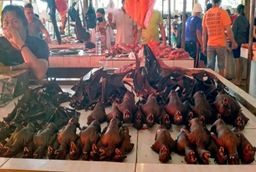
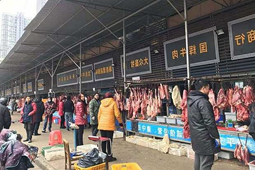
Wet market is a type of market which sells putrescible goods which includes a diversity of meats from sea food to poultry, the price ranges are overwhelming, one can find the rarest of meats and it’s definitely a jaw dropping sight to behold.
As we spread our raging voices over social media, through protests and education over animal rights and preserving and protecting endangered species and animal conservation, there will always be a component which we will be unable to change, and in this case it’s the wet markets.
It’s a million dollar business, the merchants, dealers and middle men earn thousands in a day under this trivial and disturbing business. It contributes greatly to any economy and is one of the important factors when it comes to the export and import in case of businesses as it can escalates both imports and exports and lead to an extraordinary rise in the market economy. The existence of wet markets is not a new trend but rather a very old one and they have been a part of the society from ages and continue to expand.
Most of Southeast Asia has wet markets all over the counties be it China, Malaysia, Indonesia or Japan etc. and even in certain parts of India .These wet markets are host to selling meat from all kinds of animals be it wild or even endangered animals such as bears, pangolin, bats, dogs, snakes, exotic bird species, diverse sea animals and even monkeys.
These wet markets which are lurking with unique meats and other items can be eye opening for many of us who have heard or seen them for the first time and can also come as a shock when we hear about the items being sold inside the market, but for many southeast Asians these are a common sight, these markets have consumers coming on a regular basis to buy fresh produce, besides meat they also do sell unusual herbs as well. And one can actually find fresh produce at whole sale prices most of the times.
People who buy from the wet markets generally buy products in bulk and hence majority of the consumer who are regular visitors completely depend on these markets. As most of the people living in towns and tiny villages and cities are everyday visitors of these markets, they are part of the community and hold a strong connection with the people.
Most of the restaurant and hotel owners buy their fresh ingredients for some of their extravagant delicacies from wet markets, hence the value which wet markets hold is quite high and eradicating them completely from the picture would put millions of lives at stake as not only will the regular consumers be effected but even the merchants along with the economy will also be affected.
It’s the wet markets which have been blamed for the spread of the current pandemic which has engulfed the world with chaos and has been blamed for the life changing calamity, these markets are not well kept they are crowded and there is hardly any space to walk around in the compact area of these markets, when it comes to hygiene maintenance its very low and the meat being sold has a very low shelf life hence have to be displayed in certain manner, which makes them a host to numerous faults and they have the capacity to start many epidemics. These markets don’t even meet the demands which a regulated and inspected market should have. But China along with many other countries is not ready to put a permanent lock on this business as it will disrupt the financial system of their countries.
Many have signed petitions to put an end to these markets forever but looking at the consequences which affect the population and economy people are not willing to wipe them completely from the picture.
According to help guide, emotional intelligence is the ability to understand, use, and manage your own emotions in positive and healthy ways to relieve stress, communicate effectively, empathize with others, overcome challenges and defuse conflict. Emotional intelligence helps you into building stronger relationships, succeed at school and work, and achieve your career and personal goals.
Emotional intelligence (EQ) is commonly defined by four characteristics:
Self-Awareness – Self-awareness is being aware of your emotional feelings and how they affect your mood and behaviour. Also, being aware of your strengths and weaknesses.
Self-Management – Managing and balancing your feelings, emotions and behaviours in healthy ways is known as self-management
Social Awareness – Social awareness is having empathy towards others and understanding their emotions and needs.
Relationship Management – Maintaining good relationships with people around you by minimising conflict, communicating clearly and inspiring others to work well is called relationship management.
“Well, if I talk about the scenario related to emotional intelligence I would like to share how a friend of mine became my personal diary when I was suffering from personal family issues. I was in grade 7th and the situation of the family was not really good as we were having a major financial crisis. My dad was the sole earner for the whole family and it was pretty difficult for us to survive as the business faced a huge loss that year. I was not able to be vocal about this to anyone. I had been feeling anxious and low all time which was pretty visible over my face and my activities. I couldn’t focus on my studies and other stuff. Also, my mental peace was unhealthy at that time and I used to feel broken from inside as we were helpless. My family asked help from people but no one came forward. However, I had a friend in my class who was really kind and generous. She actually talked to me about it and gave me a safe space where I could put my thoughts forward. So, I was literally comfortable with her and told her about everything that me and my family had been facing. So, she tried to console me and helped me to get out of the trauma that I was living in. So, here she helped me to get aware of my own self and helped me with every possible thing she could at that time. This was one of the best experiences where I could find the emotional intelligence of an individual. Also, I think this was both a positive and a negative experience for me. As, I faced both the sides of the coin. However, the result was pretty cool and we managed to get out of the trauma and issues that we were facing.”
This was the story of a friend of mine who had shared his experience with me. I am sure there must be people around you who don’t have anyone to share their thoughts or problems. Try talking to someone who might seem a little upset. Even if you don’t solve their issue, listening to them might just make a change. If these thoughts are left inside to build up, they might cause mental illnesses like depression, anxiety, bipolar etc. It’s a tough world out there, so the least we all can do is be there for each other and try to make a change. Mental health is just as important, if not more important than physical well being.
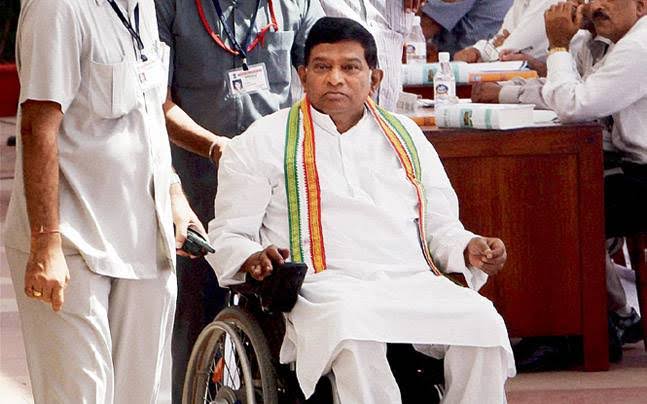
Ajit Promod Kumar Jogi (April 29, 1947- May 29, 2020) was the first Chief Minister of the state of Chhattisgarh India, soon after the new state of Chhattisgarh was carved out( 1 Nov 2000) from Madhya Pradesh. As a CM he served from 1 November 2000 to 7 December 2003, a total duration of 3 years and 34 days. He has been a part of the Indian National Congress till 6 June 2016. He gave a boosting start as a CM of the state. He was known as one of the most intellectual politicians due to his education as well as amazing communication skills in Hindi, English, Chhattisgarhi.
In 1968 he achieved a gold medal in Mechanical Engineering from Maulana Azad College of Technology, Bhopal. (NIT Bhopal ). Simultaneously, he worked as a lecturer for one year (1967-68) at Government Engineering College Raipur, Chhattisgarh. He later got a degree of law from Delhi University and cleared Civil Services and became an IPS. He didn’t stop till then, after a span of one and a half years he was chosen as an IAS officer. Jogi administered and set a record of the longest-serving Collector/District Magistrate for over 12 years at Sidhi, Shahdol, Raipur and Indore districts of Madhya Pradesh from 1974 to 1986. While serving as a DM of Indore, he got a call from the Prime Minister of that time ie Rajiv Gandhi, and offered him to join politics(not confirmed, some reports also say it was Arjun Singh’s proposal to join politics ) and then his journey as a political leader began.
Political career. 1986-Jogi started up his political career in 1986 when he came to be a member of the All India Congress Committee (AICC) on the interest of scheduled castes and scheduled tribes. 1987-He was elected as General Secretary, Pradesh Congress Committee, Madhya Pradesh. 1998-Elected as a Member of Parliament (MP) to the 12th Lok Sabha for the Raigarh community in Chhattisgarh. 1998–2000-Spokesman, AICC, Whip, Congress Parliamentary Party, Working President, Madhya Pradesh Congress Committee. 2000–2003-Chief Minister of Chhattisgarh. After 2003 congress was defeated by the BJP and led to the end of his journey as a CM. 2004-He was elected as MP in the 14th Lok Sabha for Mahasamund, Chhattisgarh. 2008-Elected as a Member of the Legislative Assembly of Chhattisgarh, symbolizing the Marwahi constituency. 2009-Jogi confirmed as a Lok Sabha member Chhattisgarh’s Mahasamund constituency after getting chosen in 2009 Lok Sabha Elections. Jogi, however, failed to retain his seat in the 2014 LS polls and lost to BJP’s Chandu Lal Sahu by 133 votes. https://www.oneindia.com/politicians/ajit-jogi-58161.html 2016- He established a new political outfit Chhattisgarh Janata Congress. What led to the formation of a new party in 2016? In 2016, Ajit Jogi and his son Amit Jogi were expelled from Indian National Congress for anti-party activities and destroying by-polls in Antagarh, Chhattisgarh. His son Amit was eliminated from the Congress party for 6 years. This is considered as the main reason for shifting his assistance to a newly formed party.
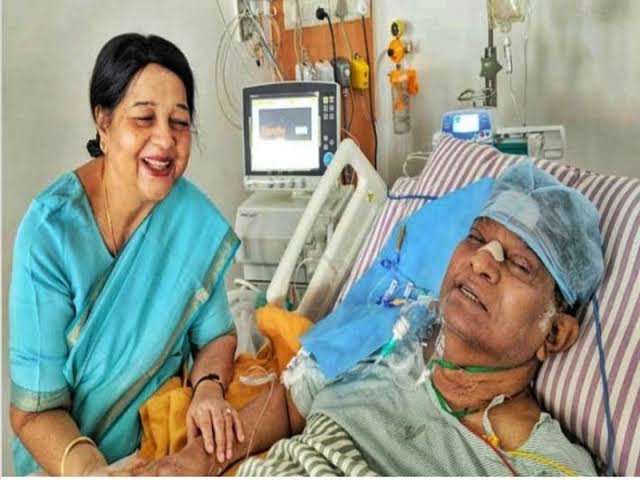
Health and death. In 2004, a year after his defeat from BJP, he met with a terrible accident which resulted in leaving him partially disabled, though he never gave up! On May 9, 2020, he suffered a cardiac arrest and hurried to Sri Narayana Hospital in Raipur, Chhattisgarh. He was in a coma and put on a ventilator. After battling for 20 days, he expired to multiple heart attacks and breathed his last on 29 May 2020.
He is truly an inspiration from achieving a gold medal then serving as an IAS, and thereafter performing his duties as the first Chief Minister of Chattisgarh!
Progress of India towards self-reliance is governed by certain pressing issues and their timely solution to achieve self-reliance. India has succeeded in keeping the rate of spread of Coronavirus which has caused a lot of injury to the social and emotional status of the society and created obstacles for India in achieving the aim of becoming self-reliant and seek self-sustenance.
If we look back to the days when economic reforms were introduced in the 1990s that gradually brought improved result in bringing the economy on the right track and resulted in improvement in the living standards of the people. However, we could have put in more thrust on technological and related advancements. This lacuna surfaced because of the trade policy on import and export of the goods.
The Central Government is now focusing more on development of infrastructure, usage of technology to optimum, upliftment of human resources. This is the right time when India can revive the economy by bringing about some major changes in the usage of available resources with the help of penning down new methodologies.
Issues that have caused hindrance for India’s progress towards self-reliance are; keeping away from full open markets that aligned with globalization, rate of production and manufacture, China playing an indispensable role in the Indian economy, Centre-State face off in concurrent sectors particularly agriculture.
If we shift our focus towards the solutions available to us viz. the availability of trained and skilled workforce for self-sustenance, shifting the dependence of manufacturing from China to India. India has a considerable young population strength that can be trained to attract new investments from global manufacturing giants. Optimum utilization of Indian human resource can set a new trend in the global economy. India is a ground for development and also a market with a huge potential for finished goods.
India possesses relevant aspects for generating the demand and consumption of the supply which can boost Indian self-sustenance. At the same time, while striking the balance between opening more areas for investment, India needs to seek healthy competition among the local and regional level. An opportunity to recognize the scattered local expertise of the Indian people in creating hand made useful things.
Policies can be framed to give more inclination towards local innovative crafts and skills so that they survive capitalism. Increasing control over agricultural products, defence sector, public health system and developing an indigenous chain of supply will enhance the self-sustenance. Increasing transparency in government purchase system adopting global procurement standards can enhance the rate of provision of material for expecting real-time growth.
India can focus on areas where it can shoulder the leadership and invite the investors. Usage of technology for the growth of Indian subcontinent is still underexplored. The world has turned virtual and advancement towards artificial intelligence and automation is the need of the hour. Hence, it can be summed up that framing real-time policies that focus more on meeting the results and adequate pumping of resources for proper development of education sector, health sector and catering for training the human resources will take India a step closer to achieve self-reliance.
Ideas, commerce, science, culture, productivity thrive at cities. More than half of the world’s population lives in urban areas. By 2020 two thirds of the world’s population (6.5 billion) will be urban. The increasing shift of rural to urban population because of various factors like job opportunities is called as urbanization.[1] However the development of cities comes with its own share of challenges. Cities which occupy only 2-3 % of earths land accounts for earths land account for around 60 -80 percent of energy consumption. The increasing number of slums has become a significant feature of urbanization. Over 1 billion people currently live in slums, with the number of slum dwellers only expected to grow in the coming decades. The less developed countries or developing which have grater rates of urbanization are host to majority of the slums.[2] The growth rate of urban areas in the developing countries are 2 % while it is 0.5 % in the developing countries.[3] Most of these countries however has failed to develop adequate infrastructure for these growing urban population. The number of slum dwellers is projected to increase to 2 billion by 2030 and to 3 billion by 2050 if current trends persist (UN-Habitat, 2010).[4] The presence of slums has regional and global implications, impacting areas such as education, health and child mortality, and political and social exclusion, among many other things.[5] This necessitates efficient urban planning and management and culturally inspiring cities and inclusive green cities for future. There is a need for a rapid shift to a sustainable way in the process of creation of our urban spaces. Jobs and opportunities should be created without burdening available land and resources.
The UN explains:” The challenges cities face can be overcome in ways that allow them to continue to thrive and grow, while improving resource use and reducing pollution and poverty. The future we want includes cities of opportunities for all, with access to basic services, energy, housing, transportation and more.”
SDG 11 in Indian Context
India, which will be third largest economy just behind china and U.S.A by 2025 is one of the fastest growing economies of the world.[6] India has witnessed a very high increase in its urban population. According to 2011 census, the urban population in India is around 31 % while it was at 11% according to 1911 census. Various statistics points to the fact Indians urban population has increased by 91 million between 2001 and 2011. Most of the Indian cities like Delhi and Mumbai faces the problem of congestion. Also this goals holds great importance in Indian context as Mumbai is home to one the world’s largest slum, Dharavi which expands over an area of 2.1 square kilometers and has a population of about 700,000. 17% percent of urban population in India lives in slums, Delhi being the most polluted capital of the world again this year again and more alarmingly India is home to 21 of the of the 30 cities in the world, there are repeated instances of floods in Chennai .Further there are numerous cases of repeated prosecution of Bangladeshi immigrants in Kolkata.
Migrants who come to cities from villages looking for better jobs and opportunities end up homeless due to various reasons like financial problems, unemployment, natural calamities etc. They end up living in small huts made of straws, plastic, polythene etc. Majority of them live in very deplorable conditions without even basic necessities like toilet food and clothes.[7] 13 % percent of the urban households doesn’t even have basic sanitary toilets.[8]
Efficient management of slums is essential towards this SDG as growth of slums has harmful ramifications on both humans and environment which are interlinked and not severable. Slum dwellers are vulnerable to threats like natural calamities and manmade disaster and these have direct impact on them[9].Their weak economic status makes it nearly impossible or extremely difficult for them to recover from the natural calamities. On the other hand, slum residents themselves can impact their environment due to lack of basic services, which results in contaminated soil and polluted air and waterways. This results in a perpetuated cycle of decline for both slum dwellers and the environment.[10]
This can be ascribed to the fact that the capacity of slum dwellers to recover from disasters are very low compared to formal communities.[11] Hence, increase in number of slums can be a serious challenge to sustainable development and we need efficient urban governance to combat this.
Conclusion
The challenge and responsibilities of achieving the Sustainable Development Goal 11 are domineering in India. Urbanization must usher in a process of inclusive economic growth and counter the trends in inter and intra-urban inequalities that have grown at an alarming rate. It is expected that the Goal will be achieved through an urban development strategy, which allows all stakeholders, especially the currently marginalized and excluded sections to participate actively in social and economic life. Govt’s policies, programmes and schemes need to ensure that there is universal access to safe and affordable housing, basic amenities and open green spaces. The strategy must include components aimed at upgradation of slums, improvements in urban planning and management practices to make them participatory and inclusive, safeguarding the heritage and protecting the citizenry against natural disasters.
Despite the fact that India has done well on many sustainable development goals and climate goals, much is yet desired to achieve sustainable development in the real sense. First and foremost is the need for a clear road map to implement the policies to achieve with identified roles for the state governments, and a monitoring mechanism to measure progress. It also needs to draw up a quick plan to overcome the want for quality data. Public education and awareness are second to none in terms invoking agency of people in achievement of sustainable cities and communities. The goal is more complex than to be achieved by the policies and government programmes alone. We thus need to harness energy, understand and involve participation of all stakeholders including the NGOs to make sustainable development a reality.
[8] McGranahan, Gordon, and David Satterthwaite. Urbanisation Concepts and Trends. International Institute for Environment and Development, 2014, http://www.jstor.org/stable/resrep01297. Accessed 7 Apr. 2020.
I FEAR THE DAY WHEN TECHNOLOGY WILL SURPASS OUR HUMAN INTERACTION. THE WORLD WILL HAVE A GENERATION OF IDIOTS
~ALBERT EINSTEIN
Our era has come to see the vital importance of digital technology in our daily lives. It allows us to unlock a huge collection of information and communication data. Each kind of task, be it a regular task or a job specific task requires digital proficiency or literacy. Digital literacy can be defined as “the ability to use digital technology, communications tools, and or networks to access, manage, integrate, evaluate, and create information in order to function in a knowledge society.
The utilization of digital devices such as computers, TV, mobile phones and video game has escalated substantially over the past few years globally. Technology has helped humanity get things done faster and there is no doubt or shortage of recognition of these increased benefits to mankind.
How far both Digital media and social media have become integrated in the lives of most of the global population is shown here as at 31st March 2011, with the exception of some third world countries such as Liberia and Ethiopia. At the other end of the scale Asia has the largest percentage of internet user at 44% of all users globally from its population of 3.8 billion, a penetration of 24%. China is by far the highest population of users at 485 million and India at 100 million.
We live in a digital environment ; just short of being pixelated or virtual ourselves, the things around us continue to get smarter, faster, more accurate and the connection becoming increasingly more digital. Customer relationships are digital; Business channels are digital; Our conversations are digital, and our social interactions are slowly being affected by this digital world. With the existing of new and emerging technologies through the past decade, it is an undeniable fact that digital technologies have made a significant contribution to improvements in our lives. It has made our lives effortless, placing more of our daily activities to the online web and being able to communicate across long distances. For example, currently being on exchange has allowed me to connect with my family back home via FaceTime an online video application.
Computer systems and the Internet have altered human interactions arguably in the most critical ways when compared to non-computer technological systems that have been developed in the last few centuries. The alterations in how humans communicate with each other in the modern day – which is largely via smart apps, through the Internet/WiFi – has both good and bad consequences. The wide availability of Internet-capable smart devices means that it is now possible for loved-ones to be in close contact wherever they are on earth
While technology-
has helped bridging a global gap by connecting people via the digital world, This bridge has allowed multitudes to learn about the world, and connect with others, in ways that were previously impossible
The Internet has also provided endless source of resources, educational materials, and learning systems for people to learn or work from their own home, without interacting with anyone
Additionally, for social interactions, people often meet friends or dates using apps, from the convenience and comfort of their own home. This is contrasted with a previous age of meeting friends and dates via day-to-day mingling outside of one’s own home.
As technology are becoming more prevalent in everyday life, the assessment of technology’s presence in relationships and its impact on how humans interact with one another is an emerging area of study. There are diff outlooks on the relationship between technology and human interactions and relationships. It is purported that the integration of technologies in everyday life can have intense effects on human relationships.
Nevertheless, the downsides of technologies cannot be ignored; which is why I will be discussing the negative implications that the digital technology can bring into the social face-to-face interactions of our relationships today.
Humans are made to form relationships since we have an innate longing to share our lives with family, friends and partners. This social interaction is important but often intricate as people take in face to face communication in different ways. The nature of social interaction has changed as technological advances have provided new methods of contact. Consider the evolution from in-person contact and letter writing to the telegraph and telephone and, most recently, to ever more individualized and electronic forms of contact such as cell phones, video calls and social media (e.g., Facebook). We know very little about how different forms of communication influence social relations, health, and well-being. However today, instead of spending time in person with friends, we are consistently choosing to communicate via online mechanisms such as applications like Facebook, IMessage, Snapchat and Instagram. These four are only some of the new ways that offer ways of interaction and engagement allowing us to be as physically close to one another as possible in a virtual world
Technology has both eliminated a gap and created one. Virtual distance is the phenomenon where people are physically together but detached from each other due to being completely absorbed with their technological device. This is called Virtual Distance. Additionally, modern Technology is often linked to an over exposure to EMFs, and is linked to excessive blue light exposure, while developing children not only face possible cognitive changes due to constant exposure to the above factors, but often grow up in a possibly more isolated manner due to constantly being “wired” to their smart devices instead of physically spending time with friends.
However, the biggest difference: conversations that happen over technology lack content. You never really know when someone is being sarcastic, funny, or serious. Misunderstandings, miscommunication and assumptions impact how we view others, and happen very often when there is no face-to-face communication. Online contact still falls short and fails to deliver personal touch despite all these advances
Conversations that now happen through social media and have taken the place of traditional interactions is causing people to leave their houses less and less since they do not need to leave to communicate with others. This can lead to social isolation.
High level of usage of Digital Technologies are associated with decline in communication within family members.
Domestication of Digital Technologies in household & technologisation of childhood has led to a bedroom culture & digital divide in a negative way
There is an individualism & privatization within a household regarding digital technologies
It is not uncommon for people to prefer texting instead of actually meeting, or at the very least, calling and thus hearing another human voice. It is also not uncommon for people to walk around, or even sit with others, head bowed to their digital device without saying a word or even noticing anything about anyone else. Human interactions and relationships have thus largely decreased, while intimacy and human-to-human interactions have been replaced with human-to-machine interactions. Technology has helped to modify human behavior by creating a gap between people and reducing intimacy. In an age where robots and AI are slowly replacing humans within the workplace, this interaction between humans and machines is only set to increase.
One of the main areas of interaction that has been impacted by Virtual Distance and technology besides parenting is dating. With the advent of popular dating apps like Tinder, people do not utilize social skills to meet potential mates, but simply swipe through a “catalog” of people. Additionally, ghosting (simply disappearing from the digital world when one is no longer interested) is often very prevalent, which results from a lack of social skills – or courage – to end a relationship in the old fashioned way. Thus, virtual distance directly results in the reduction of refined social skills that was previously universal.
CONNECTIVITY REALLY MEANS DISCONNECTION
Though technology has helped to bridge global gaps, devices and social media/messaging apps, for instance, have largely helped to create a larger disconnect between people. Increased isolation, decrease in social interaction and social skills, and increased human-to-machine interactions are all a result of an excessive use of technology, which has created a wall between many people globally
Microbiology is the study of microbes i.e. the organisms which we can’t see with the naked eyes. Although many microorganisms are beneficial for the human use, some are pathogenic also which causes diseases. Clinical Microbiological Laboratory is concerned with finding of those infectious, pathogenic microbes.
MATERIALS USED IN MICROBIOLOGY LAB Laminar flow hood, Incubator, Autoclave, Refrigerator, Bunsen Burner, Wire loop, Petri plates, Glass slides, Weighing balance, Media plates, Sensitivity disks, Staining rack, Microscope, Bio safety Cabinet, Centrifuge etc.
INTRODUCTION TO DIFFERENT MEDIA Some of the media used in the microbiology lab are :
MacCONKEY AGAR : It is the selective and differential media used for the isolation of Gram-negative Bacteria. This media can be used for differentiating Lactose fermenting and Non-lactose fermenting bacteria.
BLOOD AGAR : It is the enriched media for the growth of bacteria such as streptococci.
CHOCOLATE AGAR : It is the lysed Blood Agar. The only difference in blood agar and chocolate agar is that in blood agar RBCs are lysed. This enriched media is suitable for the growth of bacteria that are unable to grow on Blood Agar.
THIOSULFATE CITRATE BILE SALT AGAR (TCBS) : It is the selective as well as differential media for the growth of vibrio cholerae , a causative organism for cholera.
GRAM STAINING Gram staining is the process for differentiating Gram positive and Gram negative bacteria. When the whole procedure of gram stain is followed and the slide is observed under the microscope, Gram positive bacteria appear Violet in color and Gram negative bacteria appear Pink in color. For the gram staining we need Glass slide, Normal Saline, Inoculating loop, Bunsen burner, Crystal Violet, Gram’s Iodine, Acetone, Safranine.
PROCESS :
The isolated colony of the microorganism is taken and in the drop of normal saline on the glass slide the colony is mixed with the help of inoculating loop to make a smear. The prepared smear is heat fixed.
A staining rack is taken and on the smear, Crystal Violet is added. After 1 minute, the stain was removed by washing the slide in running water.
After that, Gram’s Iodine is added on the smear as a decolorizing agent which is again washed after 1 minute under the running tap water.
The next step is to add Acetone on the smear which is added in the hand to hand process.
After the decolorisation is done, Safranine is added on the smear which is also washed after 1 minute.
The glass slide is then air dried and observed under the microscope.
RESULTS : It was observed under the microscope that the Gram positive bacteria appear Violet in color due to Crystal Violet stain whereas Gram negative bacteria appear Pink in color due to safranine.
TESTS ANALYZED The tests analyzed in the microbiology section of the laboratory are basically the culture and sensitivities tests of urine, stool, sputum, pus swab etc. The basic procedure of performing all the tests are :
First of all, all the tests are performed inside the laminar flow hood.
The samples collected from the patients and the media plates are kept inside the laminar flow.
The inoculating wire loop is heat sterilized and with the help of it, the samples are cultured or streaked on the media plates.
After inoculation, the cultured media plates are incubated for 24 hours (48 hours if necessary) for allowing the growth of bacteria.
After the growth, staining is done or sensitivities are checked according to the requirement by the doctor.
Although we are developing in the other sectors but our education system is still not developing. And if we talk about the future of education system, it totally depends on how we are developing our education system at present. If we see our way of teaching and our institution both are lacking in fulfilling student’s needs.
As we know and many psychologists had also proven that good learning depends on how much the child is satisfied with their basic needs and their surrounding environment. But if we look at the facilities present in government and public school, the facility is very poor. Schools don’t have proper drinking water, toilets which lead to droupout of many students especially girls when they start menstruating. Some schools even don’t have proper desks and fans in school. We can sit for even an hour without fan, cooler or AC so, how can we expect these children to study in these conditions.
Apart from that if we talk about the teaching style and the curriculum, there are many things which are lacking in these. In our schools, education means making our children learn or we can se memorize theories and facts so that they can clear exams. Teacher teach them by giving stimulus and the children only have to respond. They condition students to behave in a certain way, where there is no use of mind. So in our schools, children (humans) are taught to memorize and write exams and taught in the same way as animals are taught to do stunts in circus i.e., they just have to imitate. In our schools, the whole focus is on result, teacher don’t even thought about what the child learned and how much he/she improved. There are no spaces where the child can explore, think in his/her own way of responding, doing experimentation, finding reasons and so on.
There is no inclusion in our education system and curriculum. Our education system is very much class or society centred i.e., working for a particular class or society. The languages we use in our classes i.e., Hindi and English are the standardized language which is very difficult for children coming from other background. There is no space for mother tongues in schools. The homework in small classes are usually those in which children need parent’s help or sometime the major or full work is done by parents only. So it creates a lot of difficulty for first generation learner.
Our education system is just like the race in which you have to complete this in a given period of time and there is no space for mistakes.
In this kind of education system, the children who can afford other facilities such as tutors, you tube videos, and whose parents are educated doesn’t find any problem but what about the child who is the first generation learner, who can’t afford other ways of learning, who can’t get exposure to our so called standard language i.e., English or Hindi, since childhood. These differences present in the school lead to droupout of these children from school.
So if our present education system continue to be like this, we never able to ‘educate’ our children. We will only able to make machines who can receive stimulus and give response. These are also only some children, because other children do not even included in our education system.
If we really want to educate our students and make our education system better in future we should try to improve our education i.e.,both our education institutions and our way to teaching. It is necessary that education should be provided in the sake of building a knowledgeable and better future leaders, not in the sake of making money. The real focus should be on what the students are learning not on the results. It is necessary to critically and honestly think about our education system and the problems present. Essential steps should be taken to improve our technique and infrastructure so that we are able to make our education system better in future, otherwise without a good education we are not able to develop in any sector.
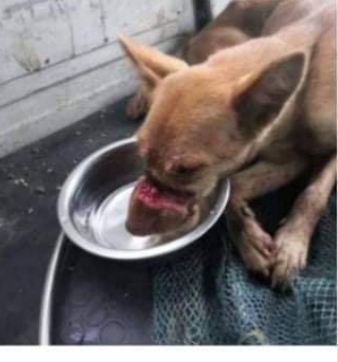
A dog found with a tight tape on his mouth in Thrissur, Kerala
In Kerala once again a animal harassment case found in which a stray dog found with a tight tape on his mouth. The tape on his mouth may be from two weeks. This case is found in Thrissur district of Kerala.
Rescue Team found the dog nearby a village in Thrissur. They told that tape was tied with his mouth from almost two weeks. This type of act really shows the cruelty and sick mindness of the people there. They not tried to kill the dog only, it’s like they tried to kill the humanity.
Earlier the case of Elephant also remind us about how the mind of people are now changing. This type of thinking can really be dangerous not only for animals, although for humans too. The local Police of that area are now searching the people who are involved in this.
After removing the tape, he drinks almost 2 litres of water
This type of cases are very shameful for all of us. It shows the lack of humanity there. The people who are behind this. They must be punished hardly through which the more people of this type of thinking, they should be in terror. And we all have to aware ourself whenever see this type of activity, just take the stand.
The queries about University examinations, re-opening of schools, CBSE exams and results have been answered by Union Human Resource Minister, Dr Ramesh Pokhariyal Nishank. The minister gave clarity regarding the education sector of India.
Board exam at home centres: The minister said that since there is a problem in travelling and reaching the centres of CBSE Board, the students may inform their schools about their location which in turn would be informed to the Board by the school. Thus a child would not have to travel in this tensed atmosphere and reach the centres that are nearest to them to appear for the boards that are to be conducted in July.
Safety of students giving exams in July: When asked if it would be safe to conduct the exams in July as it would be the peak of COVID 19, the minister said that the government will see, observe and then continue the conduct of exams, As of now the Board dates have been decided from July 1 which would be conducted. The guidelines issued by MHA and health ministry would be followed very strictly by the Education ministry.
Entrance Exams delayed: The students are under a lot of pressure on their entrance exams being delayed. The HRD Minister said the government is trying its best to ensure that the students do not lose a year over the pandemic and thus have decided to conduct entrance exams maintaining all social distancing norms at the centres. Although the number of students is high yet the authorities would maintain the safety of students at all times ad centres have been increased to deal with such problems.
Reopening Schools: The minister was asked about school reopening safety and social distancing issues. He said that it is quite evident that the parents would be worried about their wards but it would be primarily important for the students to be protected and study in a sanitized way for the government too. He is in talks with state education ministers regularly. The schools in the states would have to follow all guidelines issued by the MHA.
NCERT, UGC Taskforce in place: The minister said that since the student population is more than 33 crore in India the UGC and NCERT task force is very helpful. Shifting to the online mode of teaching has been very fruitful in conducting classes as per the minister. He talked about Diksha, E Pathshala, SWAYAM, etc which are helpful platforms.
We could have complete, transparent, participatory knowledge accessible to all, audited at every level of understanding, and protect privacy for everyone. Local governance could be both informed and autonomous and we could collaborate with a speed and accuracy that might just give us a chance to solve the problems we are facing before it is too late. Everyone would have the equal ability to make informed choices at their chosen level of understanding. We could have a universal reality, informed by information from all sources, and we could make decisions free of state and corporate coercion.
The authenticity of Information has become a longstanding issue affecting businesses and society, both for printed and digital media. On social networks, the reach and effects of information spread occur at such a fast pace and so amplified that distorted, inaccurate or false information acquires a tremendous potential to cause real world impacts, within minutes, for millions of users. Recently, several public concerns about this problem and some approaches to mitigate the problem were expressed. In this paper, we discuss the problem by presenting the proposals into categories: content based, source based and diffusion based. We describe two opposite approaches and propose an algorithmic solution that synthesizes the main concerns. We conclude the paper by raising awareness about concerns and opportunities for businesses that are currently on the quest to help automatically detecting fake news by providing web services, but who will most certainly, on the long term, profit from their massive usage.
Fake news,” broadly defined as false or misleading information masquerading as legitimate news, is frequently asserted to be pervasive online with serious consequences for democracy. Using a unique multimode dataset that comprises a nationally representative sample of mobile, desktop, and television consumption, we refute this conventional wisdom on three levels.
Lots of things you read online especially in your social media feeds may appear to be true, often is not. False information is news, stories or hoaxes created to deliberately misinform or deceive readers. Usually, these stories are created to either influence people’s views, push a political agenda or cause confusion and can often be a profitable business for online publishers. False information can deceive people by looking like trusted websites or using similar names and web addresses to reputable news organisations.
According to Martina Chapman (Media Literacy Expert), there are three elements to fake news; ‘Mistrust, misinformation and manipulation’.
The Rise of False Information False information is not new, however it has become a hot topic since 2017. Traditionally we got our news from trusted sources, journalists and media outlets that are required to follow strict codes of practice. However, the internet has enabled a whole new way to publish, share and consume information and news with very little regulation or editorial standards.
Many people now get news from social media sites and networks and often it can be difficult to tell whether stories are credible or not. Information overload and a general lack of understanding about how the internet works by people has also contributed to an increase in fake news or hoax stories. Social media sites can play a big part in increasing the reach of these type of stories.
The economics of social media favour gossip, novelty, speed and “shareability”’.
Types of False Information There are differing opinions when it comes to identifying types of false information. However, when it comes to evaluating content online there are various types of false or misleading news we need to be aware of. These include:
Clickbait These are stories that are deliberately fabricated to gain more website visitors and increase advertising revenue for websites. Clickbait stories use sensationalist headlines to grab attention and drive click-throughs to the publisher website, normally at the expense of truth or accuracy.
2. Propaganda Stories that are created to deliberately mislead audiences, promote a biased point of view or particular political cause or agenda.
3. Sloppy Journalism Sometimes reporters or journalists may publish a story with unreliable information or without checking all of the facts which can mislead audiences. For example, during the U.S. elections, fashion retailer Urban Outfitters published an Election Day Guide, the guide contained incorrect information telling voters that they needed a ‘voter registration card’. This is not required by any state in the U.S. for voting.
4. Misleading Headings Stories that are not completely false can be distorted using misleading or sensationalist headlines. These types of news can spread quickly on social media sites where only headlines and small snippets of the full article are displayed on audience newsfeeds.
The internet and social media have made it very easy for anyone to publish content on a website, blog or social media profile and potentially reach large audiences. With so many people now getting news from social media sites, many content creators/publishers have used this to their advantage.
False information can be a profitable business, generating large sums of advertising revenue for publishers who create and publish stories that go viral. The more clicks a story gets, the more money online publishers make through advertising revenue and for many publishers social media is an ideal platform to share content and drive web traffic.
Google and Facebook have announced new measures to tackle fake news with the introduction of reporting and flagging tools. Media organisations like the BBC and Channel 4 have also established fact checking sites While these are welcome developments, digital media literacy and developing skills to critically evaluate information are essential skills for anyone navigating the internet and especially for young people.
The vast amount of information available online and rise in fake news highlights the need for critical thinking. Children need to develop critical thinking from an early age. This is a key skill for young people to develop as they enter into third level education and prepare themselves for the workplace.
How to spot False Information? There are a number of things to watch out for when evaluating content online.
Take a closer look Check the source of the story, do you recognise the website? Is it a credible/reliable source? If you are unfamiliar with the site, look in the about section or find out more information about the author. Look beyond the headline Check the entire article, many fake news stories use sensationalist or shocking headlines to grab attention. Often the headlines of fake new stories are in all caps and use exclamation points. Check other sources Are other reputable news/media outlets reporting on the story? Are there any sources in the story? If so, check they are reliable or if they even exist! Check the facts Stories with false information often contain incorrect dates or altered timelines. It is also a good idea to check when the article was published, is it current or an old news story? Check your biases Are your own views or beliefs affecting your judgement of a news feature or report? Is it a joke? Satirical sites are popular online and sometimes it is not always clear whether a story is just a joke or parody… Check the website, is it known for satire or creating funny stories?
Nature and its power is above the ability of humans to understand. Nature has shown it’s divine power at regular intervals of time and shown how helpless man becomes at a point of such calamities. Man has been destroying nature for its own good, cutting trees, polluting water and air, cutting down mountains and a number of endless tasks which has led our earth down and the quality of lifestyle in it. To make a balance and have an apt quality of the environment, nature has also stepped up in a number of ways, and who’s after effects have not always been in the favour of mankind. In present scenario also,we have encountered a natural pandemic which has challenged the mankind and has brought in the lifestyle of humans. This natural pandemic is “Covid-19”.This started around Nov-19 and is still in action with affecting the life of people all around the world.
But the main question which surely comes to the mind of each individual is that “how would be the life of normal people after this pandemic gets over, how will this transform their life and what mere changes should probably we would encounter in our life”.
So there are pros and cons of each and every thing which do exist on this planet. We might be blaming this pandemic as the way it has affected our life, but surely after this time period positive changes or some changes would definitely be seen in human lifestyle.
So the positive changes which could be seen in the day today routine of man could be :
More investment would be done in the health sector, so as to fight such kind of pandemic in future.
More buildings especially for hospitals and colleges of medical would be seen , thus would increase the employability but not initially.
More R&D would be conducted in the field of medical science and better and efficient medical equipment would be seen.
A new work culture would be seen, like from home. This could definitely be better as people would be free to work at their own flexibility and also pollution would seem to reduce.
Harm to animals will surely seem to decrease and such awareness campaigns , highlighting care of every living being would definitely bring out the harmony between people.
Many more facilities and positive outcomes would be available to see after this pandemic gets totally over.
But with the good, accompany bad, so bad outcomes of this could be:
Initial loss to the economy, which may take time to recover.
People may not be able to get over this fact psychologically and will impact their way of interaction with others.
Loss of jobs of many individuals around the globe would be seen significantly.
Tourism and other industries related to these would definitely see a downfall.
“So there would be harder times, and people would have to face hardships, but they still need to believe in humanity and fight against such pandemic in future with hand in hand and not against each other but with the essence of togetherness, brotherhood , empathy and compassion”.




 Eduindex
You must be logged in to post a comment.