INDIA PAID TRIBUTE TO THE VALIANT MARTYRS OF PULWAMA ATTACK

It’s been two years since the Pulwama terror attack which took the lives of 40 Indian soldiers happened. The 14th of February leaves a deep sigh in the hearts of every patriotic Indian. It is one of the worst hit attacks and is remembered as a ‘ black day’ in the history of India. While paying his tributes to the Pulwama martyrs on the occasion of the second anniversary of the attack, Prime minister Narendra Modi said: “No Indian can forget this day. Two years ago, the PulwamaAttack happened. We pay homage to all the martyrs we lost in that attack. We are proud of our security forces. Their bravery will continue to inspire generations”.

The gruesome incident which shook the whole nation took place on 14th February 2019 after the security convoy of 78 buses carrying around 2500 military personnels of the Indian Army was rammed by an IED-laden vehicle while traveling from Jammu to Srinagar. Investigations have revealed that the car which rammed the convoy was driven by a 22 year old suicide bomber Adil Ahmad Dar and carried nearly 300 Kgs of explosives including 80 Kgs of RDX and ammonium nitrate. The attack which took the lives of 40 CRPF jawans was later claimed by the Pakistan based terrorist group named Jaish-e-Mohammed (JeM). Even though the investigation agency was able to confirm the identity of the suicide bomber through DNA samples, they are yet to trace the source of the explosives used. 

Along with the Prime Minister, many Senior officers of the various armed forces of the country also participated in the remembrance and paid tribute to the valiant heroes of the nation. “Did not Forgive, will not Forget: Salute to our brothers who made the supreme sacrifice for the nation in #PulwamaAttack. Indebted, we stand with the families of our valiant Bravehearts,” the force said in a Twitter post.

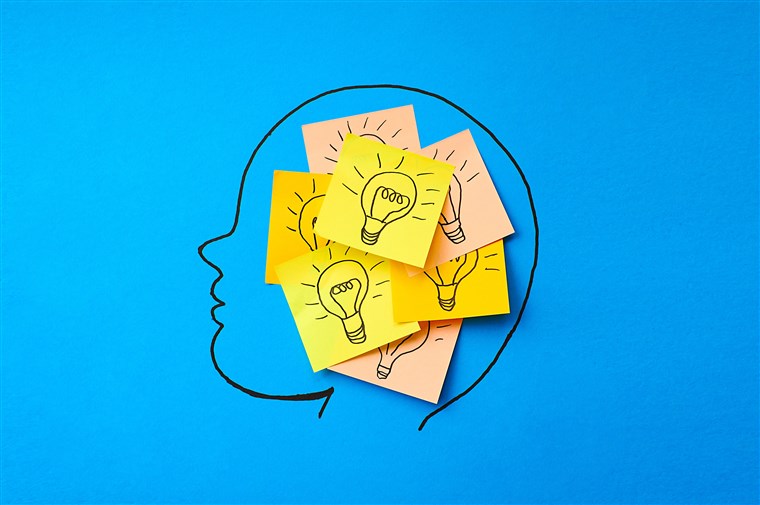
Memories- Are they real or is your brain playing tricks on you?

All of us are aware of the tricks our memory plays on us in our lives. Like the time when you spend the whole night before exam cramming information from your textbooks and when you try to remember your mind goes blank. Or when you remember the most embarrassing event that happened to you but nobody else remembers it. Some people remember the smallest things that happened in the past while the others cannot remember any of those things. Ever had an argument with a friend when they forgot your birthday, when you never fail to wish them every year. Well it’s not all their fault. Our memory is partly at fault.

The study of memory is a fascinating field and researchers have reported many new phenomena which show the dynamic nature of human memory. Here are some interesting types of memories-

False memories-

Did you know that you cannot trust all of memories? False memory is an interesting phenomenon that is induced by powerful imagination of an event that did not even take place at all. Research suggests that memory can be induced and implanted through inflation of imagination.

Flashbulb memories-

There are memories of some events that are very surprising. Such memories are very detailed, they are like a photo from a camera that are stored in our brain and you can take a look at it whenever you want. They are like images tied to a particular time, place and date.

Autobiographical memories-

These are personal memories. Kind of like our Facebook timeline, they are not evenly spread across our lives. Some periods of our lives produce more memories than others. For e.g. In early childhood especially during the first 4-5 years, we have no memories related to those years, it is also known as childhood amnesia. After that there is a dramatic increase in the frequency of the memories i.e. during the twenties. Around 30 years of age, there is a decline in certain kinds of memories.

Implicit Memories-

This is the kind of memory that a person is not aware of. It is a memory that is stored automatically. For e.g. One interesting example of implicit memory comes from typing, if someone knows typing that means they also knows the particular letters on the keyboards.

Repressed memories-

Some individuals undergo traumatic experiences. Memories of those events are hurtful, such memories are repressed into the unconscious. It is a kind of repression- painful, threatening and embarrassing memories are held out of consciousness.

Forgetfulness or loss of memories under stress and high anxiety is not uncommon.

But we can still improve our memories by using some techniques such as chunking (learning in several small chunks that are combined to form large chunks) and by deeply analyzing a particular piece of information makes it easier to remember it.

Science > Commerce >>> Arts ? ( A typical Indian society’s thinking )

Do you know approximately 16 lakhs people apply for the NEET every year and more than 9 lakhs apply for the JEE ?

Well , this huge amount shows the craziness of Indian teens for the two prestigious exams of the country .

But do you know that India has a huge amount of unemployed engineers ? Or do you know that India has lack of specialized doctors ?

Why the things are like that ?

Ohk, let’s not talk about these things now. Let me ask you a simple question,”What subject did you opt in 11th & Why ?” Just try to find out the reason behind this “Why”. Was it because you wanted to be ‘something’ or because you liked ‘the subject’ or was it because others gave you the suggestion to opt ‘ that subject ‘ ? Or was it because you wanted to prove someone your intelligence or brilliance ? Or because of the reason that you scored the percentage of marks that fall in the category of the subject ?

Well , as much I observed ; I think most of you must have opted ‘the subject ‘ because of the reasons other than the first two.

Normally , high secondary students aren’t mature enough to decide what they actually want from the life. So they may ended up opting a subject , they don’t like.

In most of the cases , students opt for the science , not because they love it , but because they fall in the so called ” category of 90+”. Many students opt for science because of the respect the science students get. Ohk ohk , before you think more about this ‘ respect portion ‘, I think I should explain it to you.

Just observe the facial expressions of people , when you tell them that you belong to the arts stream.

Well , exceptions are always there. But it’s a typical Indian society’s thinking that arts students aren’t intelligent or science students are among the most intelligent creatures of the Earth. Well , commerce students act as the bridge between the two streams.

Ohk , let’s not talk about other categories. Let me pay my all attention to that typical “90+ or 10 cgpa” student. Students from this category get a lot of respect after their so called achievement in class 10th. So they can’t compromise with that ‘respect portion’. And the parents or relatives of these achievement holders have lot of expectations from them. And as everyone knows these ’90+’ students are made up for the science stream. They may or may not interested in science. They may or may not want to become a doctor or an engineer. But off course they don’t have any other option. Believe me , respect matters a lot. So these students ended up opting the pcm/pcb.

And then these students pack their luggage for the Kota or they enroll themselves in a local coaching. These ’90+’ are confident enough and see the dreams from the eyes of society. They prepare for the NEET or for the JEE. Many out of these get selected in first attempt , many require more than one attempt. Many of these don’t get selected , so they ended up choosing a private college or many decide to go with the BSc. Degree. Many out of these just realise at this moment about their dreams & change their graduation stream to Arts or Commerce.

But sadly , a lot of students commit suicide after not getting selected in these exams.

And a lot more who get selected in a government college or those who decide to graduate in technical field from private colleges ended up regretting. Well , such things are also valid for the ‘MBBS’ students. But let me talk about engineering students.

Just ask this question to an engineering student , that how much she/he is interested in her/his branch or field. You”ll get the answer, “why so many of them are unemployed.” And that’s the reason why you”ll find most of them engaged in non-technical activites. Off course there’re other reasons behind the ‘unemployment in engineering’. But , yes this is one out of those reasons.

Off course you”ll find this ’90+’ category students among the toppers in many prestigious exams , like CAT , or CSE. And most of them are from engineering background.

And off course many people blame them, ” why they did engineering if they don’t want to pursue it as a career.” If you’re also one of these people , then blame the society , not the students.

The society needs to restructure its thinking about science>commerce>>>arts

There should be stream counselling & career counselling sessions for the high school students.

Never opt for the subject or degree you don’t like. Choose your subjects wisely.

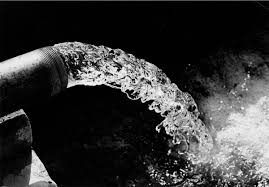
More than 20% of India’s underground water found contaminated with arsenic: IIT Kharagpur

More than 25 crore people of our nation are being forced to drink water contaminated with arsenic.

In a study carried out by IIT Kharagpur using an AI (Artificial Intelligence) based inference model it was found that the poisonous substance arsenic was present in more than 20% of the country’s underground water.

According to the estimates made by a few government and non-government organizations it was found that a large percent of the total population is being affected by the contamination. With the increasing water pollution, we need to take strict measures when it comes to collecting water samples from different regions and studying it for more chemical contamination.

According to the Assistant Professor Abhijit Mukherjee of IIT Kharagpur, it was reported that these high arsenic zones are present mostly along the Indus Ganga-Brahmaputra river basin and in the peninsular areas.

Health Effects- According to the World Health Organization, arsenic is highly toxic in inorganic form. Prolonged exposure to consuming contaminated water can cause cancer, skin lesions and other diseases when it reaches the body. It has also been associated with cardiovascular disease and diabetes. Early childhood exposure has been linked to negative impacts on cognitive development and increased deaths in young adults.

Sources of Exposure-

Arsenic is a natural component of the earth’s crust and is widely distributed throughout the environment in the air, water and land. People are exposed to high levels of inorganic arsenic through drinking contaminated water, using contaminated water in food preparation and irrigation of food crops, industrial processes, eating contaminated food.

Dietary Sources– Seafood, Poultry and dairy products contain arsenic although the amount is very low in comparison and arsenic is present in its less toxic organic form.

Industrial Processes– Arsenic is used widely in industries as an alloying agent, in processing of glass, pigments, paper, wood etc., and also in a limited extent in making pesticides and pharmaceuticals.

Smoking tobacco– Tobacco plants can take up arsenic naturally present in soil so people who smoke tobacco are exposed to natural inorganic arsenic.

Prevention and control

  • Substituting high arsenic sources such as groundwater, with low arsenic sources such as rain water and treated surface water.
  • Install arsenic removal systems and ensure the appropriate disposal of the removed arsenic. Technologies for removal of arsenic include oxidation, coagulation-precipitation, absorption, ion exchange, and membrane techniques. The most important action in affected communities is the prevention of further exposure to arsenic of a safe water supply.
  • Discriminate between high-arsenic and low-arsenic levels and paint tube wells or hand pumps with different colours.

Arsenic is one of WHO’s 10 chemicals of major public health concerns. WHO’s work to reduce arsenic exposure includes setting guideline values, reviewing evidence, and providing risk management recommendations.

Educating others about the dangers and necessities of this problem is crucial and community engagement is important for ensuring successful interventions. There is a need for community members to understand the risks of high arsenic exposure and the sources of arsenic exposure, including the intake of arsenic by crops (e.g. rice) from irrigation water and the intake of arsenic into food from cooking water.

SLEEP DEPRIVATION CAUSED BY THE UNHEALTHY USE OF GADGETS

It is said that “Sleep deprivation will kill you more quickly than food deprivation.” A good night’s sleep is one of the basic necessities of the human body for its active metabolism and better productivity. An average adult human requires 8 hours of continuous sleep each day. Any interference in the natural regular sleeping patterns can have a tremendous impact on one’s health: mentally as well as physically. Nowadays, people tend to sleep less than they did in the past and their quality of sleep has also faced a downturn.

We live in the middle of a world full of technologies and are surrounded by screens of smartphones, laptops, tablets, e.t.c. Though these gadgets make our lives easy and fast, we are least bothered about its negative effects on our lives. The overuse of technology causes eye strain, musculoskeletal health issues, sleep deprivation, etc. not only in adults but also in teens and kids. According to the American Optometric Association (AOA), prolonged use of computers, tablets, and cellphones can lead to digital eye strain which results in blurred vision, dry eyes, headaches, due to screen glare, bad lighting, and improper viewing distance. The unnatural way of holding the smartphones induces a lot of stress on the neck, shoulder and spine. Initially, these physical strains might seem negligible but can cause severe health impacts in the long run. 

Technology in the bedroom can interfere with sleep in a number of ways. Studies have found that 90% of US citizens use screening devices in the hour before going to bed, which can cause immense psychological and physiological impacts, capable enough to disrupt one’s sleep. Scientifically speaking, the blue light emitted from the gadgets suppress the sleep-inducing hormones like melatonin disturbing the biological clock. Lack of sleep causes stress, increased blood pressure, memory issues, weakened immunity, increased risk of heart diseases etc, thus dramatically decreasing our quality of life. Studies reveal that the increasing number of depression and anxiety among people, especially youth, has a correlation with the overuse of gadgets and social networks. Kids who are exposed to television, video games, mobile phones, and tech toys beyond the recommended time limit is seen to have retarded brain growth than other kids. They too experience sleep problems in addition to behavioural and social problems. 

From buying groceries to attending online classes, from consulting a distant doctor virtually to paying bills and dues, technology and gadgets plays an intangible role in making our lives smooth and less hectic. The technologies which we depend on for our comforts should never be the reason for our own distress. For that, we should always make sure to keep a balance between technology and healthy lifestyle.

Celebrating Indian Women Scientists on International Women Scientist’s Day

The United Nations celebrates International Women’s Scientific Day on 11 February every year. The aim is to encourage women and girls to take up the field of STEM i.e. Science, Technology, Engineering and Mathematics.

This time the theme is laid out by leading lady scientist in the struggle against Covid-19.

According to the Ministry of Science and Technology, approximately 20% percent of women in 2019-20 are directly involved in research and development (R&D) in the country.

Females in technology education

According to the United Nations, 43% of students in STEM are studying in India. India ranks first on the list of 17 countries in this case. Russia ranks second in this list, while America is ninth with 34%. Among 2.80 lakh scientists, engineers and technologists working in India only 14% of them are women.

Women had significant involvement in the fight against Corona. From treatment and testing, women were ahead in drug discovery and patient care. Dr. Soumya Swaminathan of the country is working as a Chief Scientist in the World Health Organization to carry out the fight against the epidemic.

According to UNESCO, there are only 33% of women researchers worldwide. The percentage of women taking admission to Bachelors or Masters under STEM is 45 and 55 percent. Approximately 70% of women are in the field of health and social work but they are given 11 percent less salary than men. Hopefully as we advance into the future we will see more women achieving greater heights in Science and Technology.

Here are some of the female scientists of India who inspire us with their achievements in the field of STEM-

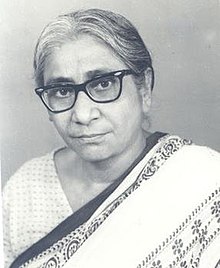
  • Asima Chatterjee

First Indian women to earn a doctorate in science, her research concentrated on natural products chemistry and resulted in anti-convulsive, anti-malarial, and chemotherapy drugs. She also discovered anti-epileptic activity which led to the development of an epilepsy drug called Ayush-56 and several anti-malarial drugs.

She won the C.V Ramen award, P.C Ray Award, and the S.S Bhatnagar award.

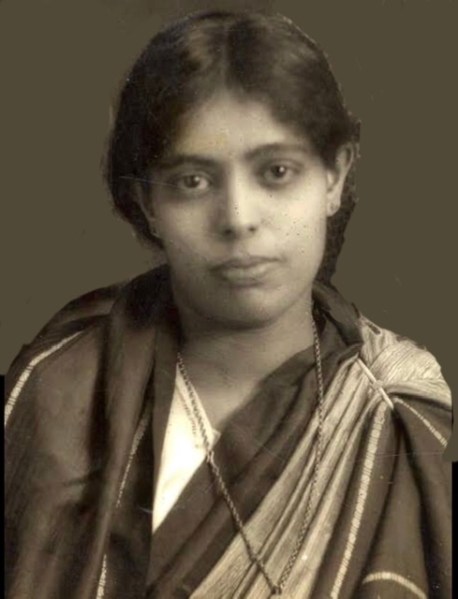
  • Janaki Ammal

an Indian botanist who worked on plant breeding, cytogenetics and phytogeography. Her most notable work involved studies on sugarcane and the eggplant and co-authored the Chromosome Atlas of Cultivated Plants (1945) with C.D. Darlington. She was awarded a Padma Shri by the Indian government in 1977. The University of Michigan conferred an honorary LL.D. on her in 1956 in recognition of her contributions to botany and cytogenetics.

  • Rohini Godbole

Prof. Godbole is part of the International Detector Advisory Group (IDAG) for the International Linear Collider in the European research lab, CERN. She is the Chair of the Panel for Women in Science initiative of the Indian Academy of Sciences.

She received Padma Shri for her contributions in science and technology (2019).

  • Tessy Thomas

Tessy Thomas joined DRDO in 1988, where she worked on the design and development of the new generation ballistic missile, Agni. She was appointed by Dr. APJ Abdul Kalam for the Agni Project. In addition, Tessy was the associate project director of the 3,000 km range Agni-III missile project. She was the project director for mission Agni IV which was successfully tested in 2011. Later, Tessy was appointed as the project director of the 5,000 km range Agni-V in 2009, which was successfully tested on 19 April 2012.

In 2018, she became the Director-General, Aeronautical Systems of DRDO

Thomas received the Lal Bahadur Shastri National Award for her contribution for making India self-reliant in the field of missile technology.

  • Ritu Karidhal

Dr. Ritu Karidhal Srivastava is an aerospace engineer, working with the Indian Space Research Organisation (ISRO). She was a Deputy Operations Director to India’s Mars orbital mission, Mangalyaan. She has been referred to as a “Rocket Woman” of India.

Karidhal received the ISRO Young Scientist Award in 2007 from A. P. J. Abdul Kalam, then president of India

  • Anna Mani

The only woman scientist to work with C.V. Raman, is well known for her work in atmospheric physics and instrumentation. She contributed to the study of radiation, ozone and atmospheric electricity, both on the surface and in the upper air using special sounding techniques. Joining the India Meteorological Department in 1948 she rose to become the Deputy Director General of Observatories in Delhi.

  • Soumya Swaminathan

Soumya Swaminathan is an Indian pediatrician and clinical scientist known for her research on tuberculosis and HIV Since March 2019, Swaminathan has served as the Chief Scientist at the WHO. Previously, from October 2017 to March 2019, she was the Deputy Director General of Programmes (DDP) at the WHO. In March 2019, Swaminathan became Chief Scientist of the World Health Organization, where she participated in regular bi-weekly press briefings on the COVID-19 Pandemic.

  • Sudha Murty

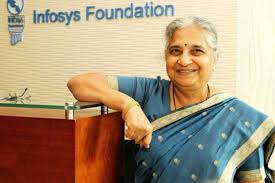
Sudha Murthy became the first female engineer hired at India’s largest auto manufacturer TATA Engineering and Locomotive Company (TELCO). She joined the company as a Development Engineer in Pune.

In 1996, she started Infosys Foundation & till date has been the Trustee of Infosys Foundation and a Visiting Professor at the PG Center of Bangalore University. She has written and published many books.

She won India’s fourth highest civilian award Padma Shri.

Food Waste – The Social , Economical and Environmental Issue

Do you know that more than 40% of food produced in India is wasted ?

Inspite of adequate food production , India’s ranking is 103 in global hunger index. According to UN approximately 190 million Indians remain undernourished. Estimated value of food wastage in India is ₹ 92,000 crore per annum.

Why the data seems so much scarious ? Do you know how much you contribute to this wastage of food ?

Well , next time if you go to a wedding , or a party , or function , just observe everyone around you , you yourself”ll get the answers of these questions. Just observe people in restaurants or observe everyone in your house.

And if you want to see the dark side of India , then just move out of your house , & observe people around the bins. There’re a lot who just eat food from the dustbins. Can you just imagine about them ?

For some it’s waste , for some a day’s Meal

There’s a lot of leftover but edible food which can be provided to those who need this. Many NGOs work in this direction. They collect the leftover edible food from restaurants , households , weddings & from other sources & provide them to the needy.

It’s not always like that , one can also leave some food in their plates when it’s simply not edible or when she/he isn’t feeling good.

And this leftover food from your plates then go to dustbins & then it decompose in landfills. This leads to the emission of green house gases like CO2 & CH4 .

The impacts of food waste on the global scale are huge. According to the World Resources Institute, if food waste was a country, it would be the world’s third largest carbon emitter after the USA and China.

Food waste rotting in landfills produce millions of tonnes of methane in CO2 equivalents , a measure that directly compares the global warming potential of pollutants.

But do you know that wasted food can be used effectively ?

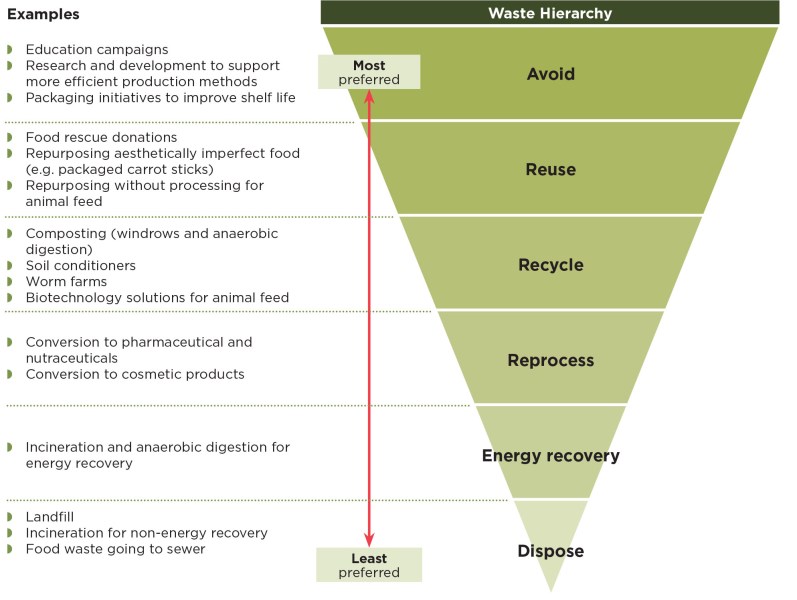
Yes , food waste can be transformed into valuable resources. It can be used as fertilizer , can be transformed into energy , & can be transformed into a bunch of innovative products , from pharmaceuticals to building materials.

Food waste can be recycled to produce nutrient rich fertilisers. Household composting recycles food waste in an environment where lot of oxygen is available. Fungi and bacteria break down the proteins, fats and carbohydrates in the waste into compost and CO2. The CO2 released from the breakdown of organic materials returns to the atmosphere , which is then captured by the plants. So it’s a carbon-neutral process.

Food waste can generate sustainable energy through waste-to-energy processes , where organic waste is used to generate electricity or heat. It is categorised as renewable energy. Various technologies are available to generate such energy ,although they do produce greenhouse gases like CO2, methane and nitrous oxide, so measures should be taken to reduce these emissions.

Extractions from the food waste can be used in production of biofuels like biodiesel & bioethanol.

Fruits and vegetables have the highest wastage rates of any food products. The Food and Agriculture Organization of the United Nations  estimates that globally, 45 per cent of fruits and vegetables are wasted along the supply chain. But these scrapped by-products can be reprocessed into functional and valuable products.

There are researches investigating how mango seeds could be used to make surfboard wax & fibres in root vegetables could be used in super strong concrete. Rice husks have variety of applications , such as cement, insulators, adsorbents and various construction material.They can also be ground with glass to create lightweight bricks that are resistant to fire and termites.

Discarded parts of fruits & vegetables are often rich in bioactive phytochemicals. These extracts can be used in pharmaceuticals , dietary supplements & food preservatives. Extracts & oils derived from food waste also be used in cosmetics.

The essential chemicals needed to create bioplastics include various carbs, fats and cellulose fibre that can be extracted from food waste using methods like freeze drying and hydrodynamic shockwave technology. Bioplastics ,are plastics produced from renewable sources and can be used for packaging, coatings and adhesives.Turning food waste into bioplastics can reduce food and plastic waste. It could also minimize the emissions associated with plastic production.

There’s need to reliase that this waste is not only causing social & economical problem but is also a cause of green house gases emissions, & thus is a harm for the environment.

Obviously , we should think of alternate ways to transform the waste into resource but our first priority should be to minimize the waste.

Avoid wastage of food. Provide the leftover edible food to those who need this instead of throwing this out. Use the leftover food as fertilizer


Love & Food are meant for sharing not for wasting
🙂 Don’t waste Food 🙂

Ice Volcanoes ~ Nature never fails to amaze us

Recently a 45 feets tall ice volcano was seen in the Almaty region of Kazakhstan . Yes , you read it right , it’s a ice volcano.

This volcano is formed over an underground hot spring , which is in Almaty region of the country , between the villages Kegan & Shrganak.

The volcano is a cone- shaped frozen structure which was formed by the spouting water of spring. As the hot water spouts out from the spring it freezes almost instantly due to the extreme cold weather.The volcano also sprays water from the top vent.

Last year also , a small ice volcano was observed here. But the recent one is more organised. Ice volcanoes were also witnessed at the Oval Beach in Saugatuck, Michigan in February 2020. 

An ice volcano is a conical mound of ice formed over a terrestrial lake via the eruption of water and slush through an ice shelf. The formation process is wave-driven , & the wind is energy provider for the waves to cut through ice & form the volcanoes.It may take hours or days for the formation. Their formation is temporary , frequently destroyed by the storms & warm weather. It requires precise conditions for the formation of these volcanoes.

Such ice volcanoes are often observed along the southern coast of Lake Erie and Lake Ontario in North America during specific conditions.

Ways to Be a True Friend

“Don’t wait for people to be friendly. Show them how. ”~ Unknown

One night I called my old friend with whom I had spoken for a while. While we were catching up, sharing stories, and laughing at secret jokes that might sound silly when the phone rang, I wondered why I was letting so much time go by because I had last called him.

We don’t live close to each other, so taking a drink or hitting a yoga class is not an option. But really communicating with him, sharing the pieces of my life and accepting the pieces he wants to give, does not require a certain geography.

We can become close friends with each other, no matter how far away, if we choose to put forth effort. If we remember to be punctual, we can have such wholesome, satisfying conversations that make us feel recognized, understood, appreciated, and supported.

Then I started to think about all the times I had been busy and lost contact with friends who lived right on the street – times when I was caught up in everything that happened in my life and forgot to grow my relationships.

We need meaningful communication with other people.

Not everyone should be a close friend, but it is associated with our happiness that we show people who we really are, let ourselves know them, and remind each other of actions — small or large — that we care about them.

We do not have to be alone or feel alone in this world, but it is up to us to create and allow opportunities to be together, enjoy each other, and consult one another. It is up to us to make our relationship better.

With this in mind, I recently asked on Facebook, “What does it mean to be a true friend?”

I have included some ideas that have touched me deeply (some of which have been described in detail or slightly modified to make it easier to read).

Here is what some young Buddhist scholars say:

  1. Stay calm, even in peace.
  2. Be kind and listen. Be fun and simple. Be serious, loving, and forgiving.
  3. Don’t be afraid to tell the truth, no matter how difficult it may be.
  4. Communicate to each other in times of need with your honest opinions.
  5. A true friend is one who is always listening and genuinely interested in right and wrong, and someone who calls or just writes a greeting.
  6. Be honest and ethical, stay open and invite you to share your concerns, and be honest even if you don’t agree with it.
  7. A true friend will do his best to please you when you are upset and make you feel special.
  8. Try and improve their health despite your friendship.
  9. Be what you really are, be at risk, give someone else space, security and the choice to do the same.
  10. Be truly happy when they find, discover, or accomplish something that they truly desire. (Heather Tucker)
  11. Share the truth in your heart, without fear of disagreement.
  12. Be honest and forgiving but above all: love and respect.
  13. Accept the person as he or she is, as an individual, unconditionally. And, since it is important that you are there to help them, sometimes you have to be willing to make them available for you.
  14. Stay with friends despite a person’s choices in life and do not bail them out if they are not what you want them to be.
  15. A true friend always supports the person but does not feel compelled to support the situation. A true friend knows how and how to say company, “No.”
  16. Help yourself and your loved ones grow. Life means growing up, and a true friend is someone who can honestly say that he helped you to describe himself as a person.
  17. Celebrate the win and be there to support the loss. Keep your word and admit it if you don’t.
  18. Go to a friend’s help when others are out.
  19. Do not hold a grudge against a minor disagreement.
  20. Veza! You can pretend to be tired but you can’t pretend to appear.

And I will add the last one: share with honesty every opportunity you get.

I don’t know you all, but I know very few. To all the wonderful, inspiring people who come here and share their pieces, thank you for being you and for taking me, as I am.

Koo App – An Indian Alternative to Twitter

Koo , an Indian alternative of twitter is gaining a lot of attention from the netizens as the government ministers & ministries are switching to the app.

Koo’s rise comes as Twitter is currently engaged in a standoff with the Indian government over the blocking and unblocking of accounts linked to the farmer protests. The Koo a made-in-India app is now seen as a prospective competitor to Twitter in the backdrop of the government’s disagreement with Twitter.

Union minister Piyush Goyal, who is quite active on Twitter,announced on Tuesday that he has also opened an account on Koo. Electronics and IT minister Ravi Shankar Prasad has already joined the platform and has a verified handle. Several government departments, including the ministry of Electronics and IT , India Post have verified handles on this platform. Former cricketer Anil Kumble & Sadhguru are among the personalities who have joined the Koo.

Koo is a microblogging app just like Twitter where you can post opinions publicly & follow others. The character limit for a ‘Koo post’ is 400 while it’s 280 on twitter.Users can share audio, video & can create the post polls just like twitter.Users also have option of linking their Facebook , LinkedIn , Youtube & Twitter feed to their Koo profile. It is available as a website and on ios and Google Play Store.

Koo , a Swadeshi app was launched in March 2020. It had also won the Aatmanirbhar App Innovation Challenge along with other Indian apps like Zoho and Chingari. The Koo app was created by Bombinate Technologies Private Limited which is a Bangalore-based private company incorporated in 2015. Aparameya Radhakrishna and Mayank Bidawatka are the co-founders.

Prime Minister Narendra Modi had, in one of his Mann Ki Baat encouraged Indians to use the app.

The app is available in several languages, including Hindi, Telugu, Kannada, Bengali, Tamil, Malayalam, Gujarati, Marathi, Punjabi, Odiya and Assamese.

The Koo website notes that only 10 per cent of India speaks English and “almost 1 billion people in India don’t know English.Instead they speak one of India’s 100s of languages.” The website adds that the “majority of the internet has been in English. Koo is an attempt to make the voice of these Indians heard. They can now participate on the internet in their mother tongue by listening to the views of some of the sharpest Indian minds and also speak their mind by sharing their thoughts.”

Social media and Eating Disorders- does it have a connection?

Eating disorder describes conditions in which individuals engage in disordered eating. Eating disorders are not simply poor eating habits but are recognized mental health disorders in which emotional issues manifest in harmful eating habits. Eating problems in childhood and adolescence are very common.

It usually starts to be a problem in teenage years. It is not known for certain what causes them, but many factors could play a part such as Social pressure, particularly caused by the social media idealizing being thin, losing weight can make us feel good and in control, others include puberty, family problems, trauma, bullying, depression and low self-esteem.

The messages people get from society about how they should look, how much they should weigh especially western culture (particularly, the social media) promotes extreme thinness as the epitome of body perfection, success and happiness. Bullying others when they fail to be perfect since bullying others over the internet is easier due to anonymity so people do it without feeling guilty without worrying about the consequences. This leads people to become dissatisfied with their own bodies, their self-esteem suffers and they turn to dieting as they feel the pressure to be thin.

Our generation has become so obsessed with taking picture perfect selfies, having the perfect body and weight just like they see on the internet and thinking a person can only be happy if they have large number of followers and likes on social media that they fail to realize that social media only shows the good side of a person’s life and nobody knows what goes on the inside.

A lot of effort goes into becoming like those people or what we call “influencers” and not everything we see or hear on the internet is the truth and as the saying goes “comparison kills the joy” we see them and get disappointed with what we have when we compare ourselves to them. A lot of people start taking shortcuts just achieve those unrealistic goals like excessive dieting or starving and in turn ruining their overall health. Sometimes it leads into developing an eating disorder.

Eating disorders can develop from the desperation to live up to unrealistic cultural expectations, strained relationships within the family, other pressures arising from school or in the work place. Some people eat to curb their loneliness, anxieties and sometimes even to pass the time. A lot of people with eating disorders do not have other effective coping strategies, so, they turn to their eating disorder to help them cope and without even realizing it, many of these individuals actually end up harming their health and the quality of their lives.

The most common types of eating disorders are anorexia nervosa, bulimia nervosa, and binge eating disorder.

There are a lot of causes of eating disorders including stress from a variety of external factors such as some sort of crisis or disappointment to the individual. The loss of a loved one or life changes, lack of communication as people who are unable to communicate clearly and effectively often prefer to hold in their emotions, sometimes described as “swallowing” their emotions, many individuals choose to remain silent but express their feelings and frustrations in other ways, including through abnormal eating disorders.

Signs of Eating Disorders vary, but here are some of the signs and symptoms to look out for an eating disorder are only eating certain types of food, using the bathroom immediately after eating, making excuses not to eat at meal times, obsession with body weight/being overweight.

Anorexia Nervosa

Anorexia nervosa is an eating disorder in which an individual becomes so afraid of gaining weight and/or having body fat that they severely limit the amount of food that they eat or they exercise excessively in an attempt to burn off the calories that they do eat so that they will not gain any extra weight. Self-induced vomiting, the misuse of diet pills, diuretics, or laxatives is often found in them.

There are many health risks of Anorexia such as if weight becomes dangerously low, there is the risk of vital organs shutting down and anorexia nervosa has the highest death rate. Others include malnutrition and dehydration, anemia, amenorrhea.

Bulimia Nervosa

Bulimia nervosa, which is more commonly known as bulimia, is an eating disorder marked by binges and then purges. During a binge a bulimic will eat a great amount of food in one sitting, then purge by either inducing vomiting or taking a laxative or diuretic to expel the food. For bulimics, bingeing and purging becomes a cycle but they may never lose or gain enough weight to make it obvious that they have an eating disorder.

Damage to the digestive tract, mouth, teeth, and salivary glands is common among bulimics and the constant bingeing and purging mean that bulimics rarely keep in enough vitamins and minerals to remain healthy. Others include changes in body chemistry, erosion of tooth enamel due to vomiting and, in extreme cases, stomach rupture and death.

People suffering with bulimia are often of a normal weight so it may go undetected for many years, with those close to them often having no idea they have the disease or that their health is suffering.

Binge Eating Disorder

Binge eating disorder is a common eating disorder in which an individual regularly consumes a large amount of food in one sitting, or “grazes” constantly even when they are not hungry or become physically uncomfortable from consuming so much food.

Binge eaters do not purge after over-eating, nor do they routinely exercise excessively in an attempt to burn off the calories.

Binge eating disorder can occur in individuals of any gender, race, age and because binge eaters often become overweight or clinically obese, they put themselves at risk for a wide variety of health conditions such as high blood pressure, diabetes, heart disease, gallbladder disease, kidney disease, fertility problems, high cholesterol, and some types of cancer.

Treatment for Eating Disorders

The type of eating disorder treatment that is most appropriate will depend on the severity and type of eating disorder and the length of time it has continued, as well as, the patient’s individual preferences about the type of treatment they would like.

Getting professional help is a good idea. Various therapies are available, including psychotherapy, family counselling, group therapy, and self-help groups, in which patients can explore their issues with food and learn to develop healthy eating habits. They might suffer relapses once eating disorder treatment has begun, but early treatment makes a far greater chance of recovering successfully.

Coping with Stress

Developing efficient coping skills may prevent the development of an eating disorder. Some of the simple coping skills include:

-Accepting that life brings disappointments

-Avoiding stressful situations. If reading fashion magazines makes people feel bad about themselves, then, they should stop looking at them and focus on another activity instead.

-Scheduling time for hobbies that are enjoyable and relaxing.

-Building a support system of friends and family who support their hopes and dreams, and accept them for who they are.

Family and friends can help individuals stay strong and prevent an eating disorder by praising an individual’s talents and strengths, listening to and discussing an individual’s thoughts, feelings, and fears, supporting an individual’s hopes and dreams, reminding an individual that a healthy body, not necessarily a slim body, is most important, barring unrealistic and unhealthy diets and excessive exercise regimes.

Overuse of social media can become an addiction which might lead to anxieties, damage to eyesight after staring at the screen for long periods of time, unhealthy sleep patterns leading to insomnia and other health problems so we should always keep a check on the content and the amount of our usage of social media. If it goes out of hand and you feel like its impacting you negatively you can always quit it, since you are in control of what should be a part of your life, take a social media detox. And always know that in whatever form and whenever you need help it is always available.


51st @tiger reserve

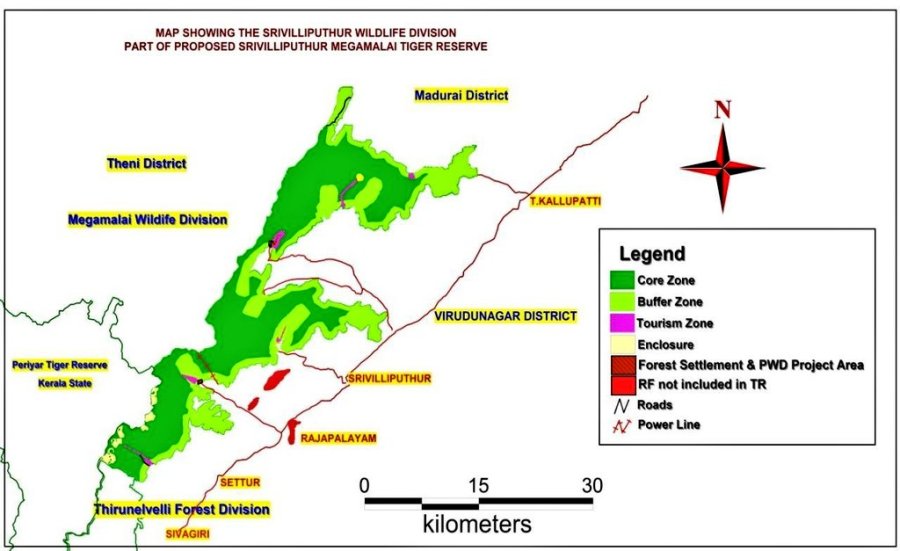
Indian government recently approved a new tiger reserve .Srivilliputhur Megamalai Tiger Reserve in Tamil Nadu is the latest addition. It’s 51st tiger reserve in the country & 5th in the state of Tamil Nadu. The 50th tiger reserve was Kamlang , which was the first & only tiger reserve of Arunachal Pradesh, & was approved 6 years ago.

The land encompassing the Meghamalai Wildlife Sanctuary (spread across the districts of Theni and Madurai) and Srivilliputhur Grizzled Squirrel Wildlife Sanctuary, which adjoins Kerala’s Periyar Tiger Reserve and Tirunelveli’s Kalakkad Mundanthurai Tiger Reserve is declared as the 51st tiger reserve of the country.

This land is habitat of 63 mammal species & 323 bird species.

Meghamalai Wildlife Sanctuary hosts ungulates (hoofed mammals), spotted deers, Indian gaurs, wild boars and other carnivores.Srivilliputhur on the other hand,  is habitat of grizzled giant squirrels, flying squirrels, leopards, Nilgiri tahrs, jungle cats, Sambars, elephants and many species of birds, including the lion-tailed macaque.

This new tiger reserve is spread over 1,016,57 sq km (core area – 641.86 sq km, buffer area – 374.70 sq km) with the potential to provide much needed habitat for tigers dispersing from neighbouring Periyar Tiger Reserve & Anamalai Tiger Reserve.

This new tiger reserve will act as a boost in direction of restoration of the health of forests & wildlife.

As a tiger reserve, illegal entry into the area becomes a punishable offence, with five years of imprisonment & it also gets a better team of dedicated officers , researchers & guards.

Conservationists believe that by declaring the Meghamalai Srivilliputhur Tiger reserve, there are great chances for the Vaigai River rejuvenation.

As per latest estimation , the number of tigers in India is 2,967 (range 2,603 to 3,346). And the largest tiger reserve of the country is Nagarjunsagar Srisailam Tiger Reserve which covers 5 districts of the states of Andhra Pradesh & Telangana.

BIO-TERRORISM AND CLIMATE GETTING WORSE- TWO MORE PANDEMICS WAITING FOR US IN THE FUTURE

In 2015, when Bill Gates warned us about a possible global pandemic occurring in the future, which could kill above 10 million people, he predicted that it would not be because of a nuclear war but it would come in the form of a deadly virus. He warned us that we are not prepared enough to face the pandemic head-on and our unpreparedness will result into very adverse outcomes.

Looking back at it, he was right wasn’t he. We remained unprepared ignoring the warnings and then coronavirus hit us, and it hit us so bad that even developed countries like China, Italy, USA and UK took a serious blow and the death toll is still increasing. Vaccines are being developed but we still have a long way to go.

And while we are still recovering, we are facing the danger of two more pandemics which are- Bio-terrorism and Climate change. In his recent interview, Bill Gates talked about these issues, he warned about increasing death toll in future due to changing climate and spread of biological weapons in form of infectious bacteria and viruses with the intention to cause damage globally. Many physical impacts of climate change are already visible, including extreme weather events, glacier retreat, increase in level of sea water, drought and wildfires etc. And he also suggested us the ways in which we could better prepare ourselves to fight effectively against these future pandemics, they are-

  1. Field based activity- Appointing a team of epidemiologists so that they could go to the affected locations and collect data about the problems and difficulties they are facing because vaccine research begins only after a careful assessment of public health priorities. Work conducted in the basic research laboratory forms the scientific foundation for all subsequent investigation.
  2. R&D activity- Investing more in the Research and development for the solutions to the pandemics, like in case of an infectious virus developing mRNA vaccines and developing warning systems using technology.
  3. Contact Tracing- Contact tracers use clear protocols to notify, interview, and advise close contacts to patients with confirmed or probable infections . Jurisdictions can use the following steps and considerations as a framework when developing a protocol for the tracing of close contacts.

To prevent climate change we have to take some important steps ourselves to save our environment and sustain our resources by-

  1. Planting more trees & Stop deforestation
  2. Using resources like water and fuels responsibly
  3. Using energy efficiently and minimizing wastage
  4. Using natural resources like solar power to generate electricity.
  5. Recycling and using renewable resources
  6. Informing and educating others of these dangers and ways to fight against it

Twinkle Twinkle little star – Now I wonder why so far

You must have read & recited the poem ‘Twinkle Twinkle Little Star’ in your childhood days. Kids still read & recite the poem. But there’s a difference in their recitation.While we used to recite it in starry nights, they just watch twinkling stars in a youtube video.What else can they do ?

Those starry nights are no longer visible. Even in a small town , there are only a few stars you can see by naked eyes. Future generations will see the starry nights only in pictures.

Now you can’t just point out your finger in the north to show someone the pole star.

Now the question is why ? Why the night sky is vanishing ? Why the Milky Way is fading ? Why the stars are no longer visible ?

Well , the reason is light pollution. With the advancement of more & more LEDs , the milky way is now no longer visible to more than a third population of the world. Those thousands of stars have just turned into hundreds.

Buildings’ lights , residents’ lights , street lights, vehicles’ lights , neon signs. Well , this much amount of light is creating a permanent ‘skyglow’ at night,which is obscuring that beautiful sight.

Is it only about the stars ? No , excessive lighting at night has other adverse consequences too –

1. It can disrupt our sleep , or in long run can cause stress.

2. It is waste of energy , not all the lights you see in cities at night , are needed. A lot of buildings or streets just glow for the sake of beauty.Thus , a lot of energy get wasted.

3. It’s not good for animals , birds & ecosystem. Migratory birds often get bewildered by lighting buildings , sea turtles lose their ability to navigate in ocean due to the confusion lighting from coastal create. There’re evidences that artificial lighting make it harder for the zooplankton to eat harmful algae in lakes , thus degrades the water quality.

And of course this one consequence is also there , from which I started the blog. Future generation will not be able to see the milky way without a telescope , thus it”ll lessen their interest in astronomy. It”ll lessen their sense about vastness of Universe.

Of course , the street lighting is necessary , but not for the show off. Unnecessary lighting can be avoided. Street lights can be replaced by more focused LEDs which only send light downward rather than those lights which scatter the lights in all directions. There can be other ways to reduce the light pollution. As it is said “Where there’s a will , there’s a way”.

Rajasthan or The Dowry Sthan

I’m just confused from where should I start. But ok , let me start from the rates, the rates of bridegroom. Ohh yes , you read it right.

10 lakhs for a government third grade teacher , 15 lakhs for a cleark or constable , 20 lakhs for a patwari , 30 lakhs for a college profesor or minimum 50-60 lakhs for income tax officer , more than a crore for an IAS , IPS or for a doctor. I’m not so familiar about conditions of other states , so let’s only talk about Rajasthan & its neighbors. Rates may vary ( T & C applied ) . I’m not a trader friends , I just wrote down some rates I’ve heard or seen. Yes , it’s what you people call dowry.

Rajasthan , the braveland , has such a bad condition , in this matter. This is the place where dowry is like the Saat Feras , compulsory element of marriage ( relax, exceptions are always there ). It’s not only about Rajasthan , but this tradition is followed on equal basis in the states of M.P. , Bihar & U.P. .Well , I only know about eastern Rajasthan.

I know it’s hard to believe. But you’ve to believe. The rates actually varies directly with the government job , the power & with the amount of money the groom can earn. Like a patwari & constable will get more money than a teacher. And this principle tells us why an income tax officer , a doctor , an IAS , an IPS or an IRS are pro in this game. They fall in the upper most category.

And yes , these marriages happen on a large scale , but you may not be able to find about such marriages as there’s no one complains about these. Why will people register complain when they know that their girls can only get married to the one whom they can pay. Or you can say , no one forces the other. This dowry doesn’t stop here , this continues in an indirect manner , even after the marriage. Middle class people often take years just to pay the loan , they take for their daughter’s marriage.

This kind of direct or indirect dowry , or this kind of rate system can’t be stopped by any law because no one will complain against this. It’s not like that people like this , but they just accept it.

Like a frog in a well , people have accepted their fate. They are stuck in a well which is called as society , so they can’t even think of getting out from it.

The only way to stop this is to change the thinking of society. Only equally provided real education can do this.