TRAVEL INDUSTRY IN COVID-19

From the beginning of the year, the situation around the world is grave. The rise of the newly formed virus had made everyone to stay caution about every little thing. The behavior of population across the globe had changed in an instant. Major industries and firms had faced hard hit from this crisis and suffers a huge loss of turnover and profits. One such sector which is neglected completely altogether from the starting of lock down is travel and tourism. From the commencement of the pandemic had made many people to travel and reach their hometown safely, but lately this industry got completely shut, following a loss in transportation sector as well.

America’s travel industry is among the hardest hit. The U.S. travel associations projects a loss of 4.6 million jobs through May, a figure likely to increase. U.S. weekly jobless claims doubling in a week and by far the biggest spike in half a century. Tourism decline is a driving reason for job losses in states including Nevada, where Las Vegas casinos and jumbo hotels have gone dark.

To improve this situation and employment, the hotel chain has launched their project ‘We Care’ in South Asia which will focus on enhanced technology, sanitation and security efforts to fight the virus spread. “Social distancing will continue and hotels will have to gear up for the day to day operations. With corporate groups, for instance, it is expected that they will split it up into smaller regional events with 3-4 events spread out as opposed to larger events earlier. Self drive car rental company Zoom car has been focused on working with essential service providers in this time and predicts city-based travel to take off sooner. “There will certainly be a bias towards in-city trips compared to outstation ones. Also, we see a stronger focus on shorter term subscriptions. We expect 90% to be in-city rentals and 10% outstation during the post COVID time,” highlights Greg Moran, co-founder & CEO, Zoom car.

Recovery will happen, albeit at its own pace. And with travel taking its own course in a post lock down world, wanderlust will just have to take the road less traveled.

Black Panther actor Chadwick Boseman is no more

Chadwick Boseman, who played the iconic role of Black Panther in Marvel Cinematic Universe, died on Friday because of cancer. He was diagnosed with colon cancer four years ago, his family stated. He was just 43 when he left the world.

Chadwick was born in South Carolina, United States and was graduated from Howard University in year 2000. Boseman got his first television role in 2003, in an episode of Third Watch. That same year, he portrayed Reggie Montgomery in the daytime soap opera All My Children, but stated that he was fired after voicing concerns to producers about racist stereotypes in the script.

In year 2008, he moved to Los Angeles to pursue acting as a career. In the same year, he played recurring role in the television series Lincoln Heights. He had his first starring role in 2013 film 42. After that, he did many films and played many different characters in them. But the fame he got the most was because of the character of Black Panther/T’Challa, which was first seen in 2016 movie Captain America: Civil War. He headlined Black Panther in 2018 which was focused on his character and his home country Wakanda. He was then visible in the movies Avengers: Infinity War and Avengers: Endgame portraying the same character, which were released in 2018 and 2019 respectively. Both films were the highest grossing of the year they were released, with Endgame going on to become the highest-grossing film of all time. The sequel of the film Black Panther was also announced to be released next year.

Because of his epic role in these movies, Boseman has a huge fan following from all over the world. Many of his fans are from India who are feeling sorrow for the dismissal of one of their favourite characters and are giving condolences to his family and friends for the same.

Ways to Deal with Hunger During Weight Loss Journey

Image Retrieved from healthline.com

During our weight loss journey, when we workout, we tend to feel hunger pangs and how we deal with those will decide how well our journey will be and how we will be able to continue our work-outs. There are many people who are in the category of feeling unabated hunger right after workout and many studies prove that it happens because of improper diet schedule and lack of nutrition in our diet. Not drinking enough fluids also leads to dehydration which depletes our glycogen stores.

We should not ignore our hunger pangs and need to substitute our regular food habits with healthier food habits. As unmindful and unhealthy snacking or food habits will destroy all the hard work we have done earlier. The food we eat after exercise or hard work should contain proteins, complex carbs and healthy fats which can be incorporated in our diet by including, fresh fruits, seeds, nuts and fat-free milk.

Some other food options we can include in our diet are: Multigrain toast, scrambled egg and toast, mashed sweet potato and sprouts bowl, yogurt and peanut butter. We should pre-prepare our meal which we want to munch on after work out as pre-preparation can save us from overeating due to hunger and manages our mindful eating as well.

Final Year Exams Mandatory for Promotion of Students: Supreme Court

The verdict which every final year student was waiting for since days came out today. The bench of judges- Justice Ashok Bhushan, R Subhash Reddy, M R Shah gave the ruling. The Supreme Court had announced that final year students could not be promoted without exams but the State/Union Territory Government could demand for extension of the deadline from UGC (University Grants Commission) for the commencement of examinations.

This came into view when many students and organizations went against UGC’s regulation of July 6 in the wake of the prevalent pandemic. One of the petitioners was a COVID-19 patient himself. Along with then Shiv Sena’s youth wing Yuva Sena also joined the hands against the UGC guidelines. They have been demanding full scrapping of final year exams online or offline, both and also the declaration of results based on previous academic performances or internal assessment. 

On April 29, UGC had published regulations for universities and colleges to follow to hold exams by July, 2020. It was regulated by an expert committee headed by Chairperson of Central University of Haryana, R C Kuhad. According to the guideline’s universities had the authorization of administering exams either in online or offline mode by following social-distancing measures.

As COVID-19 was not abating, UGC issued a new guideline in June, reassessing it by holding an expert’s meeting again and in the fresh guideline issued on July 6, it was mentioned that examinations should be commenced by the end of September. States where the COVID situation was worse, their universities took a step of not conducting examinations, which were – Delhi, Maharashtra, Odisha, Punjab, Haryana and Madhya Pradesh. The Disaster Management Act of 2005 was invoked by Delhi and Maharashtra governments to cancel the exams as they didn’t see it fit for students to undertake examinations. This law renders central and state governments to act and take stronger actions to attenuate disaster situations.    

Keep healthy

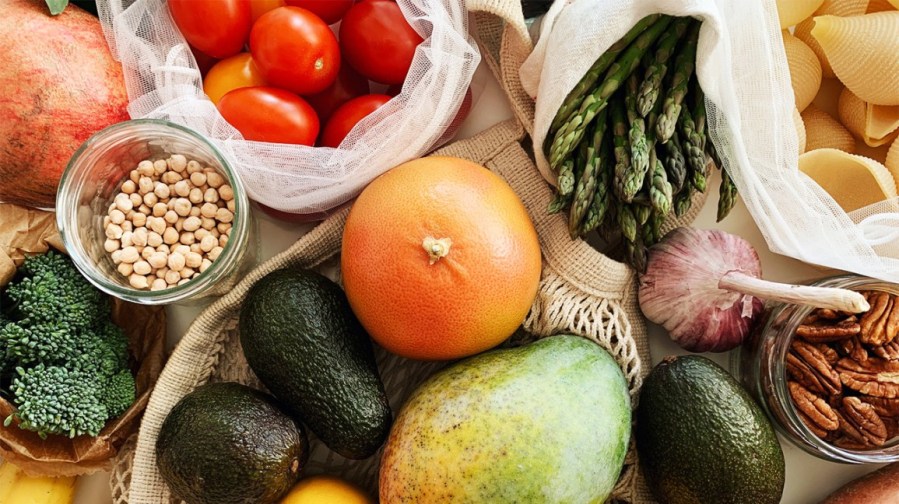
The cells in our body get affected when there is nutritional deficiency and infection. Along with that free radicals also pose a threat by affecting the youth of the skin. The antioxidants present naturally in our body help reduce this effect. But there are also many fruits which have antioxidant qualities which make us immune. Antioxidants are the molecules which prevent oxidation from other molecules. These are found in good quantity in fresh fruits and vegetables. Antioxidants are also known as scavenger because they help diminish the free radicals from our body and clean the blood.

Some fruits and vegetables which contain antioxidants are carrots, tomato, berries, garlic, red grapes, and cauliflower. Carrots contain beta carotene which is a very strong antioxidant. This is also present in sweet potatoes and turnips. Tomatoes have lycopene. This protects our lungs, heart and breasts from cancer. Berries, plum and raspberry have proanthocyanidin antioxidant which is very good for our heart and skin. Garlic fights free radicals, stops blood clot to protect our heart. Dry fruits and fish also have antioxidants in plenty. Red grapes have resveratrol and quercetin which prevent platelets from sticking to each other. They help in keeping blood vessels open. It also lessens the threat of Cancer, gastric ulcer and stroke. Broccoli, cauliflower and cabbage have indole carbonell which protects from many types of cancers.

COST

Cost refers to the expenditure incurred by a producer on factor as well as non-factor inputs for given output of a commodity. It can be categorized into explicit ( Opportunity cost of hiring inputs from the market, measured in cash payments that firm make to others.) and implicit costs. ( Opportunity cost of using self-owned inputs, measured in terms of imputed costs of self owned resources.). It is also termed as selling ( expenditure caused due to promote sale of good.) and production costs ( expenditure on inputs to produce an output.)

Fixed costs are costs related to use of fixed factor of production in short period like, machines, license fee, land expenditure, etc. They do not change with change in output. Variable costs on other hand refer to expenditure by producer on use of variable factors of production like, costs of raw material, wages of workers, wear and tear expense, etc. They increase with increase in output and vice-versa. Graphical representation is given by-

Cost Behavior

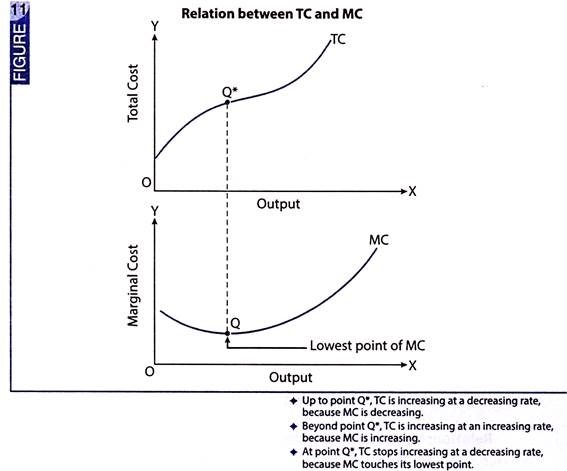
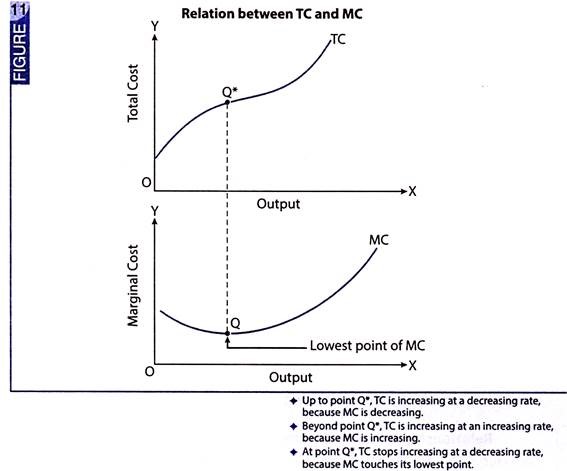
Total cost is defined as sum of variable and fixed costs. Since total variable cost tends to increase at diminishing rate initially, meaning that less and less of additional cost is incurred in every additional output. This happens due to increasing return to a factor and eventually TVC increases at an increasing rate.

Relationship between TVC and MC:

i) Marginal cost is estimated as the difference between total costs of two successive units of output. Thus,

MCn = TCn – TCn-1

(ii) When MC is diminishing, TC increases at a diminishing rate.

(iii) When MC is rising, TC increases at an increasing rate.

(iv) When MC reaches its lowest point (point Q in Fig. 11), TC stops increasing at a decreasing rate (point Q* in Fig. 11).

Briefly, MC is the rate of TC.

A break from social media

How often do you use social media? Are you spending too much time on Facebook and losing out time for doing something worthwhile? If yes, then you are not alone in this case. According to reports, an average user spends 2 hours and 24 minutes per day on social media in 2020.
  Social media has become an inseparable part of our everyday life. It is always there with us right from the moment we wake up until the moment we fall asleep. Social media has both it’s share of advantages and disadvantages. Facebook at one hand helps bring the community closer and let’s one find new friends and connect instantly while on the other side social media at times affect one’s mental health easily when people start comparing their lives with others and land up being depressed.
  A break from social media at times, therefore, becomes a necessity to get back your sanity and most importantly to break free from its spell. Some of the ways to snooze social media can be the following.
1) Put down your phone- when you are with your friends you should make it a point to not check your phone every now and then and enjoy being with them at the present. Living in the present and enjoying the moments should be more important for you than being there just for the sake of posting stories on social media. While being with your friends keep your phone upside down so that you won’t check it often.
2) Schedule “social media free days” –
Take a day off or two from social media. Decide on a day or maybe choose the weekends to not waste your time scrolling Facebook or Instagram but instead try to invest your time on learning new skills or doing something productive. Get back to your long lost hobbies. Enjoy your weekend by spending quality time with your family or meet new people offline.
3) Turn off notification – you can turn off notifications of the apps where you know you waste excessive time than required without even knowing. Set alarms or download any app that would restrict your screen time and limit your access to social media, ultimately helping you get rid of its addiction.
4) Respond offline- try staying in touch with your friends offline. If you get any birthday notifications on Facebook, or if you see your friends getting married than instead of writing congratulations on their posts, better make a phone call and congratulate them. This would have a greater impact on your friendship.
5) Deactivate social media altogether- well, this could look like an impossible task for many, but you can at least give it a try for a week. Challenge yourself to take a break from social media for a week and see the amount of time you have saved from getting wasted on scrolling the screen looking at memes, viewing people’s stories and feeling miserable about not having such an adventurous or romantic life like most people try to show on their social media platforms of living a perfectly happy life.
So readers, try doing the above-mentioned steps, if you truly value your time and if you think you can utilise it on doing certain other productive activities. We all have to live in the real world in the end, so socialising with people in reality than socialising more online would help you grow better in life. Go ahead and try taking a break from social media, today. You won’t regret it, for sure!

Oxford COVID-19 vaccine: 3 more get Covishield shot, no side-effects so far, says doctor

The phases II trial of COVID-19 vaccinedeveloped by the University of Oxford started in India this week. Three volunteers were given the vaccine on Thursday at Bharti Vidyapeeth’s Medical College and Hospital in Pune. British-Swedish drugmaker AstraZeneca signed a deal with Serum Institute of India to manufacture Oxford’s COVID-19 vaccinecandidate.

Pune-based vaccine maker shortlisted 17 sites in India for the Phase II clinical trial of COVID-19 vaccine. At least 1,600 candidates aged between 18 to 55, will participate in the trial.

“On Thursday afternoon, three more volunteers — two females and a male — were administered the vaccine candidate after their reports of RT-PCR test for COVID-19 and antibody test came negative,” said Dr Sunita Palkar, in-charge of the research cell at the medical college.

Two volunteers were given the first shot of Covishield on Thursday. The vital health parameters of the those two are normal, the medical facility’s deputy medical director Dr Jitendra Oswal said

Since yesterday, our medical team is in touch with the two volunteers and both are fine. They do not have any pain, fever, injection-side reaction or systemic illness post-vaccination,” he said.

“They have been given all the necessary emergency numbers (to contact in case of need) and our medical team is also conducting follow-ups with them,” he added. The vaccine dose will be repeated on both the volunteers after one month.

Each participant will administer two doses in a gap of four weeks. First dose will be given on day one and second dose will be scheduled on day 29,” according to the study design by Serum Institute of India.
Phase 2/3 clinical trial will be observer-blind, randomised, controlled study to determine the safety and immunogenicity of Covishield (COVID-19 vaccine) in healthy Indian adults,” the study design mentioned.

“After the completion of phase II trial, reports will be submitted to the Data Safety Monitoring Board, then to the Central Drugs Standard Control Organization for stage 3 of the trial,” Dr Hemant Deshmukh, King Edward Memorial Hospital said.

KEM Hospital, another facility chosen for the vaccine’s clinical trials in the country, is also scheduled to conduct a trial on some persons on Thursday, a senior doctor from the medical facility said.

FREUDIAN PERSONALITY ANALYSIS

Human Personality is a complex combination of wide ranging emotions and traits.The development of human being is lifelong and hence personality development too is lifelong.Thus the personality of human beings is neither static nor simple to understand.Various Psychologists have come up with their own theories to explain Personalities ranging from Humanistic to Cognitive perspectives.

Sigmund Freud is considered as the father of psychology and he proposed the controversial Freudian Psychoanalytic Theory of personality.The analysis is accepted and criticized with the same fervour. So lets look deep into Freudian Personality Analysis.

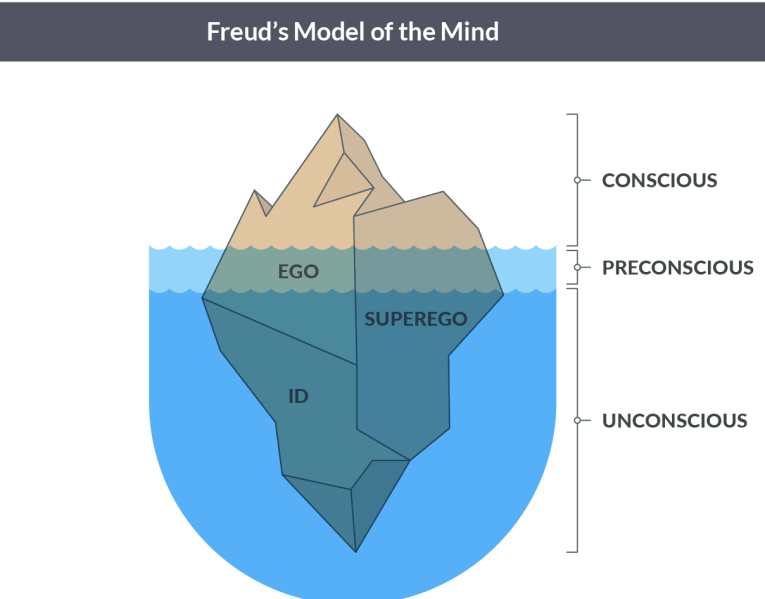
According to Sigmund Freud, human personality is complex and has more than a single component. According to Freud,Childhood traumas play a major role in personality development.In his famous psychoanalytic theory, Freud states that personality is composed of three elements known as the id, the ego, and the superego. These elements work together to create complex human behaviors.Each component adds its own unique contribution to personality and the three interact in ways that have a powerful influence on an individual. Each element of personality emerges at different points in life.

1.ID:The id is driven by the pleasure principle, which strives for immediate gratification of all desires, wants, and needs. If these needs are not satisfied immediately, the result is a state anxiety or tension. For example, an increase in hunger should produce an immediate attempt to eat .It is the unconscious aspect of thinking.

2.EGO:The ego operates based on the reality principle, which strives to satisfy the id’s desires in realistic and socially appropriate ways. The reality principle weighs the costs and benefits of an action before deciding to act upon or abandon impulses.In many cases, the id’s impulses can be satisfied through a process of delayed gratification—the ego will eventually allow the behavior, but only in the appropriate time and place.

3.SUPEREGO:The superego has two parts: The conscience which includes information about things that are viewed as bad by parents and society. These behaviors are often forbidden and lead to bad consequences, punishments, or feelings of guilt and remorse And the Second Part,The Ego ideal which includes the rules and standards for behaviors that the ego aspires to.Basically The superego tries to perfect and civilize our behavior. It works to suppress all unacceptable urges of the id and struggles to make the ego act upon idealistic standards rather that upon realistic principles. The superego is present in the conscious, pre conscious, and unconscious.

So,According to Freud, the key to a healthy personality is a balance between the id, the ego, and the superego.If the ego is able to adequately moderate between the demands of reality, the id, and the superego, a healthy and well-adjusted personality emerges. Freud believed that an imbalance would lead to a maladaptive personality.

Freud basically studies the interaction between Id,Ego and Super Ego using five Psychosexual stages of development where in the individual’s personality develops in a particular stage only if there is a balance between the three elements.The Freudian Psychosexual Stages of Development are as follows:

  • Oral (0 – 2years of age): Fixation on all things oral. If not satisfactorily met there is the likelihood of developing negative oral habits or behaviors.
  • Anal (2 to 3 years of age): As indicated this stage is primarily related to developing healthy toilet training habits.
  • Phallic (3 – 5 year of age): The development of healthy substitutes for the sexual attraction boys and girls have toward a parent of the opposite gender.
  • Latency (5 – 12 years of age): The development of healthy dormant sexual feelings for the opposite sex.
  • Genital (12 – adulthood): All tasks from the previous four stages are integrated into the mind allowing for the onset of healthy sexual feelings and behaviors.

Thus due to the sexualization of Personality Theory,Freud was highly criticized.Some Neo Freudians like Erikson and Adler came up with new and more realistic personality theories.This does not apply to everyone.It is just one of the way of studying the personality of a human being.

Non Conventional Career Options:Science Stream

Medical and Engineering are most sought after courses after 12th Science in India.Parents and the society are the major contributors to this mentality in our country. Thousands of students flock examination centers to write prestigious NEET/JEE irrespective of whether they are interested or not.

Does this mean these are the only options available to students choosing the Science Stream?The Answer is NO.In Today’s advanced world there are plethora of career and course options for students to pursue and achieve success.In this blog we look at some of the prominent and promising non conventional career options in science stream.Lets get started!

1)PSYCHOLOGY

Psychologists study the complex ways that people think, behave, feel, communicate, and perceive the world around them. Some psychologists focus on clinical work with patients, while others devote themselves to researching the nuances of psychological behavior; in any case, psychology is a vast discipline, with numerous career options to choose from. Students who complete graduate-level psychology degrees have great job opportunities. An MSc degree may lead to jobs as research and clinical assistants, while a doctorate is a necessity for those who wants to work with patients in a clinical setting and also to move into a research or an academic position. Many degree programs allow students to focus on a specialty area, including child development, abnormal psychology, counseling, social psychology, and cognition.The opportunities in research under this field are limitless.Psychology is a hot subject in developed nations like The United States and The United Kingdom where this course is sought after and valued.

2)FORENSIC SCIENCE

Forensic science is the application of scientific knowledge and methodology to criminal investigations and legal problems. Forensic Science is a multidisciplinary subject, it encompasses various fields of science such as chemistry, biology, physics, geology, psychology, social science, engineering, etc.Forensic science is used every around the world to protect public and society, to enforce criminal laws and regulations and to resolve civil problems.Various universities in India offer certificate, bachelor and master courses in Forensic Science. After the master degree is successfully completed , then the student can even go for a Doctoral Degree course in Forensic Sciences.Jobs are offered in government as well as private sectors.

3)Agricultural SCIENCES

Agriculture as a field is not just about the traditional aspects related to farming and irrigation. The focus is now shifted to various other dimensions like Horticulture, Poultry Farming, Pisciculture, Dairy Farming, Agricultural Biotechnology,Agronomy etc. Agriculture is also being commercialized as proper attention is being paid to the marketing, distribution, and packaging of its output. It’s possible to pursue a postgraduate degree programme in agriculture related subject which will broaden the scope such as specializing in agronomy, soil sciences, horticulture, plant breeding and genetics, entomology, plant pathology, animal sciences, plant biochemistry, agriculture economics, biotechnology etc. Masters in various above listed Agriculture programs is a 2-year course.This course can be taken up by a candidate who holds a BSc degree in agriculture/ horticulture/ forestry from a recognized university with some qualifying marks.Job opportunities are available both in Government as well as Private Sectors.

4)Aviation industry

The aviation sector is one of the most attractive and best-paid sectors in the economy. In India, The civil aviation industry is a larges domestic market in the economy.The commercial pilot is one the most glamorous and most rewarding job in the Aviation industry. Apart from the theoretical knowledge, a candidate must have practical knowledge to become a commercial pilot. A Commercial pilot must train to get a Commercial Pilot license in order to secure a job in the aviation sector. A commercial pilot or Ferry Pilot will have many chances of getting placed in both Governments and Private Airlines & chattered flights.The interested candidate must be fluent in English,medically fit and must have learnt Maths and Physics in High School.

5)Visual communication

Visual Communication is a combination of illustration and graphic design from a marketing perspective with great emphasis on screen-based workmanship.It involves digital marketing and business identity design , logos, animation, photography, web design, illustration, packaging design, art direction, and most degrees will also have a theory dissertation. It contains all the information to help one become a Graphic Designer, with a scope that allows to to specialize with more flexibility than a degree in design.In short, visual communication is an amazing field with unlimited growth potential. They get hefty pay.Further, with experience, your earnings are bound to increase.

These are just a few options listed from a sea of options.The aim of this blog is to make readers aware that the bucks do not stop at Engineering or Medicine.There are umpty number of career options to choose from and succeed.Everyone can not find happiness within the conventional options imposed by the society.Times are changing and so should our mentality.Students should be encouraged to follow their passion and pursue courses they want.Sky is the limit!

Do like the blog,if you all found it to be useful!

Thankyou!

Stay Happy~

The Big Day Tomorrow for Students

Retrieved from theprint.in

The verdict on different petitions filed by students against UGC in demand to scrape off final year/terminal semester university examinations in the wake of COVID-19 pandemic will be pronounced tomorrow by the Supreme Court. It will be presided over by a 3-judge bench whose head will be Justice Ashok Bhushan, who will be ruling the verdict at 10:30 in the morning. UGC (University Grants Commission) had in its July 6 regulation had asked the universities to commence final year exams by the end of September. 

As soon as the guideline came into view, many students and organizations went against it in the wake of the prevalent pandemic. One of the petitioners was a COVID-19 patient himself. Along with then Shiv Sena’s youth wing Yuva Sena also joined the hands against the UGC guidelines. They have been demanding full scrapping of final year exams online or offline, both and also the declaration of results based on previous academic performances or internal assessment. 

On April 29, UGC had published regulations for universities and colleges to follow to hold exams by July, 2020. It was regulated by an expert committee headed by Chairperson of Central University of Haryana, R C Kuhad. According to the guideline’s universities had the authorization of administering exams either in online or offline mode by following social-distancing measures.

As COVID-19 is not abating, UGC issued a new guideline in June, reassessing it by holding an expert’s meeting again and in the fresh guideline issued on July 6, it was mentioned that examinations should be commenced by the end of September. States where the COVID situation was worse, their universities took a step of not conducting examinations, which were – Delhi, Maharashtra, Odisha, Punjab, Haryana and Madhya Pradesh. The Disaster Management Act of 2005 was invoked by Delhi and Maharashtra governments to cancel the exams as they didn’t see it fit for students to undertake examinations. This law renders central and state governments to act and take stronger actions to attenuate disaster situations.    

On the other hand, UGC advocated that final year exams are necessary steps. It implied that “Final-year/ terminal semester examinations are important because the learning process of a dynamic interaction where the only way to figure out what the students know is to seek evidence of their knowledge. Academic evaluation of final-year students is, therefore, a very important milestone in any education system.” So, it is utmost necessary for students to go through exams as degrees cannot be granted without it and to go for exams or not is the power vested to UGC only, state governments don’t have a say in this. The Ministry of Home Affairs backed UGC on this matter and filed an affidavit before Apex Court asserting that educational institutions will be opening for holding final year exams only.

5 reasons to start meditation today

Meditation simply refers to the practice of shifting your focus on the way you are breathing, relaxing your body and becoming one with your mind. The pursuit of meditation gradually helps an individual to know oneself better. Following are the 5 reasons expressing why meditation should be on your list of learning news hobbies from now onwards.
1) Mindfulness and awareness -meditation makes you confront your own thought process and helps you to refocus on your present life instead of wandering in past conflicts or worrying about the future. It helps in clearing your mind and make yourself aware of your inner self, once you reach that heightened level of awareness. You learn to start observing your thoughts rationally.
2) Stress buster- Meditation acts as a stress buster for individuals, as it helps eliminate stress and make one feel happier and fulfilled in life. Regular practice of meditation keeps anxiety and depression at bay. It helps one to calm their mind and find their peace of mind.
3) Help keep emotions under control- humans naturally have the tendency to express their feelings freely when they are happy, sad or driven by anger, but most of the times our minds get controlled over by our emotions, this is where we overreact and behave irrationally. A regular habit of meditating for a longer time helps keep emotions under our control, as we slowly learn to watch our own thoughts and understand our psyche better.
4) Helps you take better life decisions – With time and practice as you start becoming more aware of your thoughts, emotions and actions, you can now take better life decisions, being more rational than ever. After a prolonged duration, you will notice that instead of merely reacting to adverse situations you are obtaining a more comprehensive idea of what goes on in your mind and how our mind tricks us to react in a certain way.
5) Become a better version of yourself- the best outcome of meditation is you will become the best version of yourself. Learning to master your mind and keep emotions and thoughts under check would assist you in the overall development of your personality. You will change for the better. Moreover, you will become a balanced person in life, untouched by any negativity.
Meditation thus can help an individual grow in life both spiritually and intellectually, and help find happiness and contentment in life. It not only makes one experience a fulfilling life but also helps in getting connected to the world better than ever before. So, what are you waiting for? Begin your first mediation session today, make it a habit and change your life for the better.

Screening Tuberculosis Patients for COVID-19 Necessary.

Union Ministry of Health and Family Welfare has announced that all the tuberculosis patients have to be screened for COVID-19 and vice-versa according to the new guidelines. People having ILI (Influenza Like Illness) or Severe Acute Respiratory Infections (SARI) will be screened for Tuberculosis and COVID-19 as these two diseases share common symptoms mentioned above. 

The guidelines came in the view that since COVID-19 came into existence an overall decline by 26 percent in Tuberculosis was seen as compared to previous year. There have been many studies which indicate that COVID-19 patients showed significant symptoms of Tuberculosis in them which ranges between 0.37- 4.47 percent. There were some studies which showed that there was activity of Tuberculosis symptoms in the patients which is really a twofold risk factor for the patients. 

Now, the patients who are diagnosed with Tuberculosis and COVID-19, will undergo two treatments at a time. The ministry has also asked the governments to facilitate the centers where a patient can go undergo medication for both for better management of patients. 

Eco-Friendly Lifestyle 101

Leading an eco-friendly (ecological/environment-friendly) lifestyle is imperative for healthy and sustainable living in the current extreme climatic conditions and environmental degradation and pollution. All this leads to life-threatening atmosphere because of poisonous air, water and soil, global warming, scarcity of resources, man-made disasters and increased intensity and risks of natural disasters.

Apart from industrial and organizational initiatives towards eco-friendly operations, individual and collective household acts and changes in personal lifestyle choices and living practices of common citizens contribute to sustainable and healthy living.

Environmental friendly living is not that difficult. It can even prove to improve mental health along with physical health and environmental health. Let’s learn about some easy eco-friendly practices.

  1. Resource management: The baby steps. The easiest and the ones which we learned when we were kids, but forget to apply.
    • Limit and manage your water, electricity and fuel usage. Do not make unnecessary usage.
    • Eliminate any kind of wastage. Do not forget to switch off lights and fans when not in use.
    • Bath in shower or use bucket and mug instead of bathtubs.
    • Reuse water. For example- Reuse the water used to wash food items for watering the plants, instead of pouring it into the sink.
    • Brush your teeth with a glass of water. Do not use the tap water.
  2. Resource conservation:
    • Practice rainwater harvesting. We can use this water for bathing and washing clothes, utensils, etc. It is easy to install rainwater harvesting system. Look at these multiple ways to do it.
    • Use solar energy and solar panels if affordable for water heating, cooking, electricity supply, etc.
    • Buy a limited amount of food. Do not depend entirely on refrigeration. Switch it off when not needed, mostly in winters, when food items do not stale for many hours even when kept outside.
  3. Buying essentials:
    • Install LED lights instead of incandescent lighting.
    • Practice biogas cooking, use solar cookers, biogas stoves, etc. You can either buy or build a biogas plant at home easily. See the benefits of biogas here.
    • Use a car fueled with CNG or use battery vehicles. Go on foot, or ride a bicycle to reach nearby places.
    • Use desert coolers or eco- friendly air coolers and do not install air conditioners.
    • Use eco-friendly paper/tree-free paper and buy refilling pens instead of single use pens.
    • Eliminate plastic materials and storage boxes. We can easily live without plastic. There are many alternatives to daily-life plastic materials. Use and carry aluminium bottles and refill them instead of buying plastic water bottles. Use glass containers for microwave and storage.
    • Buy products only from those companies which use eco-friendly methods to manufacture. There are many such alternatives out there. You just need to search the net.
  4. Materialism:
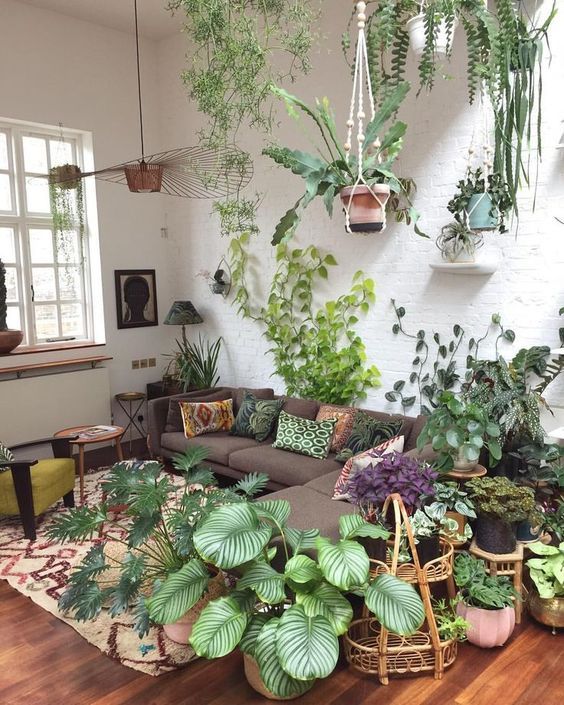
    • Decorate your home with indoor plants, beautiful mud or clay lamps, eco-friendly handicrafts, glass decorative, etc.
    • Install indoor plants which purify the air. Use loads of them.
    • Build a terrace garden or porch garden.
    • Stop the air, water and sound pollution in the name of festivities. Instead, go out on festivals to plant trees in wastelands, empty lands, barren lands, schools, boundaries of roads.
    • Donate to and plant trees and saplings with old-age homes, special schools, orphanages, etc. It will bring happiness to you and to those people too. Do not use firecrackers, river dumpings, etc.
    • Do not buy chemical based beauty, body care and healthcare products. Shift to Ayurved or organic and eo-friendly products. They are healthier, more effective, and have no side effects.

Indoor plant decorations

Image source: ipinimg.com

5. Eating habits:

  • Plant-based diet- Industries which process animal-based products, take-up thousands of more gallons of water and KW of energy for processing. It leads to water wastage, ozone depletion, global warming, etc. There are many health risks involved with an animal-based diet. If not eliminate, try reducing and limiting the intake.
  • Separate and store plastic waste and organic waste. Plastic waste includes milk packets, medicine packets, chocolate and biscuit wrappers, etc. Use the organic waste (vegetable peels, animal waste, food leftovers, etc.) as manure for plants and ingredient for biogas.
  • Shift to Ayurvedic medicine and treatment rather than allopathy.

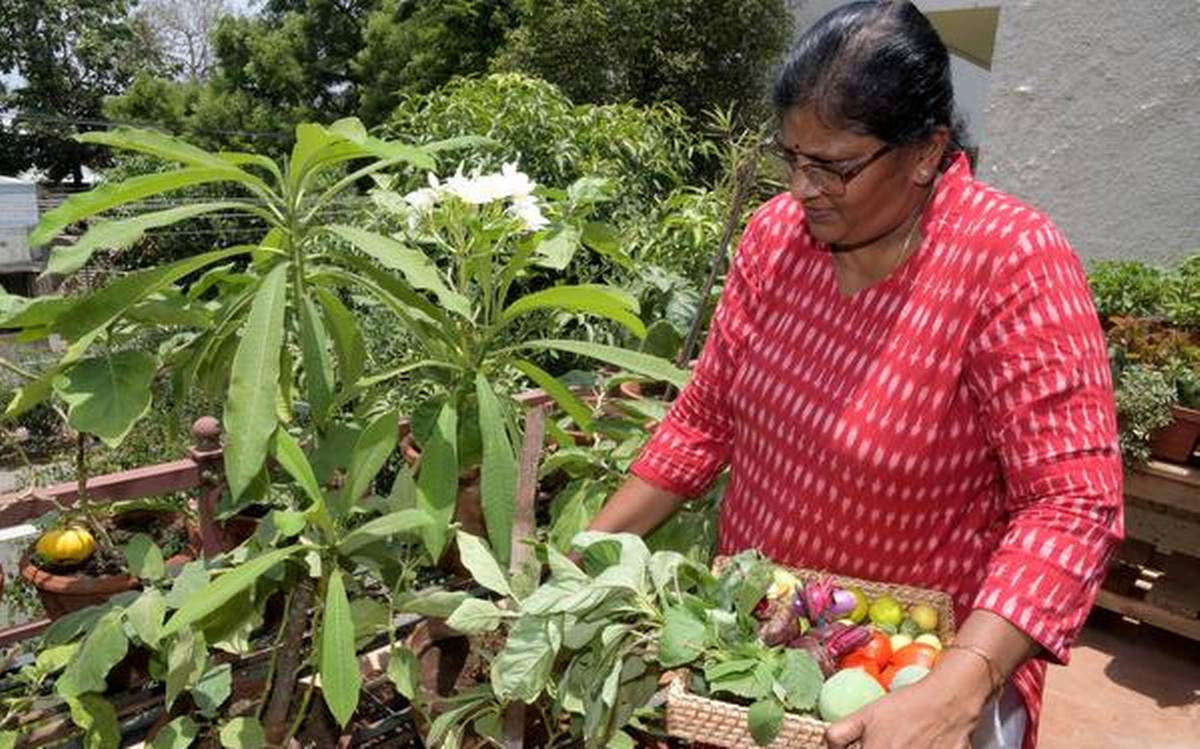
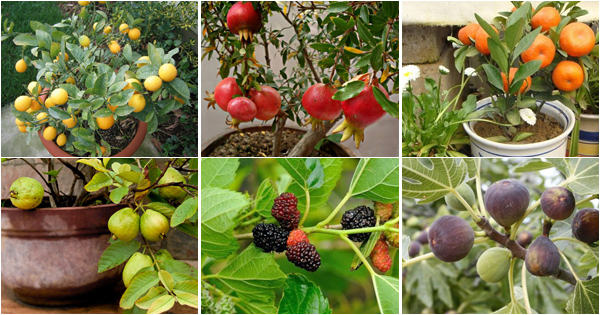
Start small scale organic farming at home. It is very easy and does take much time and effort. It can be installed in small spaces like a balcony, roof, porch, veranda, and even in a well lit room. Know more about organic home farming here.

Vegetable, spices, and fruits grown at home.

Picture source: The Hindu, Nursery live, Gardening know how and Balcony garden web.

All this may take some amount of time and effort, but it is worth it. You will experience a positive difference in your life. You can even inspire the people around you. We can start many of these living practices within a village, colony, township or a society to improve effectiveness with collective efforts. Such as rainwater harvesting, solar energy, biogas energy, farming, etc. Take one step at a time and you will find your motivation.

Karnataka: Colleges are set to reopen from 1st October

After over six months in lockdown doors of colleges could open up once again in Karnataka this October.
Ever since the lockdown began in Karnataka in the month of March, students, parents and teachers have pondered over the question, when will schools and colleges reopen?

Well, it looks like the date is near, as the state govt has decided that the academic year for degree courses will commence from the 1st of September. Initially, it will only be online classes, however, from the 1st of October, the state plans to open the doors of the colleges for offline classes as well. While the state has begun making preparations in this regard as per UGC guidelines, the Deputy Chief Minister Dr Ashwath Narayan has clarified that they will wait for a green signal & guidelines form the central government for the same.

“The academic year for degree colleges will commence from the 1st of September via online classes. Offline classes will begin in October. In accordance with the current UGC guidelines, we have already made comprehensive preparations for starting classes. The state government will follow any additional directions from the central government as they come,” the Deputy Chief Minister said.