India’s Olympic Wins

The first modern Olympics were held in Athens, Greece, in 1896 and it took India only four years before seeing their first representation at the Summer Olympic Games. It all started for India in 1900 when they sent the athlete Norman Pritchard to Paris where he won two medals in Men’s 200 meters and Men’s 200 meter hurdles. Till date, India has participated in every Summer Games since 1900, sending their first Olympic team in 1920 comprising four athletes and two wrestlers. It was, however, not till 1928 that India saw its next medal, after which there have been several Olympic medals obtained. Today India holds a total of 28 Olympic medals and seems to be improving its performance at the Olympics.

Hockey

The Indian hockey team dominated the Olympics from 1928 for decades to come, winning an unprecedented 3 gold medal titles. The dominance of India’s hockey team started in 1928 in Amsterdam, when Dhyan Chand scored a hat-trick against the Netherlands in the final. Major Dhyan Chand is revered today as one of the greatest sportsman in India, and also the greatest player in the history of hockey. By the Berlin Olympics in 1936, the gold medals had piled up for India and London 1948 was the first gold medal post-independence for India. The Indian team kept winning until 1960 when the gold streak was finally broken.

Boxing

In Beijing 2008, Vijender Singh became the first Indian boxer in history to win an Olympic medal. Then in London 2012, India’s newfound love for boxing saw Mary Kom winning a bronze medal for the country. With her win, Mary Kom had become, and remains to be a role model for Indian women wanting to get involved in sports.

Shooting

Rajyavardhan Singh Rathore was the first shooter to help India get a medal at the Athens Olympics in 2004, and inspired an entire generation to take up the sport. Following his footsteps, Abhinav Bindra won the gold medal in Men’s 10m Air Rifle at the 2008 Beijing Olympics. He remains the only individual Olympic gold medalist in India and perhaps the most notable among the Indian Olympic winners.

Tennis

India had gone without a medal of any sort for four straight editions before Leander Paes won a bronze medal in 1996. After losing to Andre Agassi in the semi-final, Paes went on to beat Fernando Meligani in the bronze medal match. The medal was a huge achievement for India as they had returned without a medal for many years before Paes won in Atlanta.  

Weightlifting

Breaking the norm of only men fetching Olympic medals for the nation, India saw Andhra Pradesh’s Karnam Malleswari clinching the bronze medal in the 54kg category at Sydney 2000, becoming the first woman in doing so. She had created history, and after her many female athletes would follow to win medals for India.

Wrestling

In 1952, Khashaba Dadasaheb Jadhav had created history by becoming the first Indian to win an Olympic medal in an individual sport at the Helsinki Olympics. The sport was wrestling, and he had won a bronze medal for it. After that in 2008, Sushil Kumar clinched a bronze medal in wrestling after a great deal of struggle and effort. Furthermore, in a traditionally male-dominated sport, Sakshi Malik became the first Indian woman wrestler to win an Olympic medal with her bronze medal finish in the Women’s freestyle 58 kg category at the 2016 Rio Olympics.

Badminton

In London 2012, Saina Nehwal became the first Indian badminton player to win an Olympic medal when her opponent, China’s Wang Xin, was forced to retire hurt during the match in the semi-final. She was the first Indian athlete to win an Olympic bronze medal in the women’s badminton singles. In the following 2016 Rio Olympics, the nation witnessed PV Sindhu take one step closer to gold by becoming the first Indian shuttler to reach an Olympic final in the 2016 Games. She was not able to clinch the victory but won a silver medal in the Olympics. She was also the youngest Indian (21 years old) to achieve this feat.

Conclusion

Every single Indian medal winner may not be mentioned in this Article, but it is important to highlight that every single person who has won a medal for India must be respected, whether that medal is bronze, silver or gold. The Olympics are a worldwide event with the highest level of competition possible, so we should be proud of those who have won for India.
The Tiananmen Square Protests

What was it?

Tiananmen square is a city square in Beijing, China. In 1989, there were student-led protests and demonstrations calling for democracy, free speech and free press in China that culminated in this square. The pro-democracy student protestors had marched through Beijing to Tiananmen Square following the death of Hu Yao bang, a former communist party leader who had worked to introduce democratic reform in China. In mourning Hu, the students called for a more open, democratic government and also demanded the resignations of Chinese Communist Party leaders who were deemed repressive and inadequate. For nearly three weeks, the protesters kept up daily vigils, marched and chanted. The event drew around one million participants and was being captured and reported on by news channels all over the world. It had become a global event, but one which would have a terrifying ending.

The Tiananmen Square Massacre

The government had considered negotiating with the demonstrators and offering concessions. However, many in power were opposed to this and decided that to avoid anarchy, the protests needed to be suppressed forcibly. To this end, martial law was declared in Beijing, and army troops were stationed around the city. Initially, attempts by the troops to reach Tiananmen Square were thwarted by the citizens of Beijing who flooded the streets and blocked their way. Eventually however, the Chinese government decided to crack down on the protestors in Tiananmen square with all their might. They sent soldiers and security police that stormed through Tiananmen Square, firing indiscriminately into the crowds of protesters. Tanks and heavily armed troops advanced toward Tiananmen Square, opening fire on or crushing those who tried to block their way.

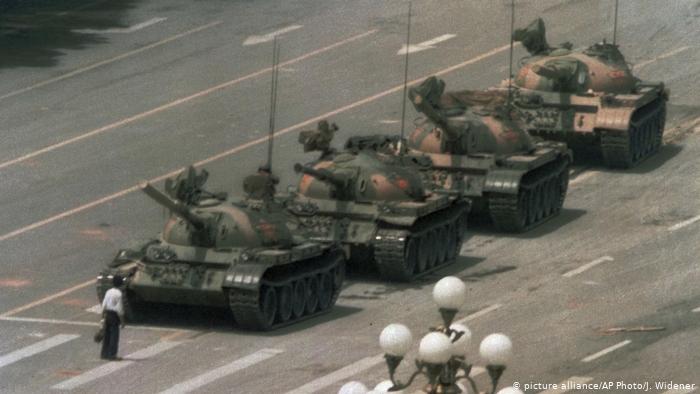
Hence, carnage ensued as tens of thousands of the young students tried to escape the terrorizing Chinese forces. Other protesters fought back, stoning the attacking troops and overturning and setting fire to military vehicles. Once the soldiers reached the square, a number of the few thousand remaining demonstrators chose to leave rather than face a continuation of the confrontation. By morning the area had been cleared of protesters, though sporadic shootings occurred throughout the day. By June 5, the military had secured complete control, though during the day there was a notable, widely reported incident involving a lone protester momentarily facing down a column of tanks as it advanced on him near the square. This incident is now a famous picture that serves as a representation of what happened at Tiananmen (featured image of the article).

The Aftermath

In the aftermath of the massacre and crackdown, the United States instituted economic and diplomatic sanctions on China for a time, and many other foreign governments criticized China’s handling of the protesters. Leaders and governments worldwide condemned the Chinese government’s military actions. Still, the Chinese government arrested thousands of individuals who were suspected to have been involved in the protests, and many of them received prison.

From the outset of the incident, the Chinese government’s official stance was to rationalize their actions, calling the protesters ‘counterrevolutionaries’ and minimizing the extent of the military actions. The government’s count of those killed was 241 (including soldiers), with some 7,000 wounded. However, most other estimates have put the death toll much higher. In the years since the incident, the government has attempted to suppress all references to it, and public commemoration of the incident is officially banned. However, the residents of Hong Kong have held an annual vigil on the anniversary of the crackdown, even after Hong Kong reverted to Chinese administration. It remains a sensitive topic to date in China, and there is little to no discussion or debate about in Chinese public forums. Regardless, everyone in China and in the world knows and remembers the tragic events that occurred in Tiananmen square and the protestors that died while wishing for a better China.

Why Indians are Shorter on Average

Indians are among the shortest people in the world on average. Despite impressive rates of economic growth in India over the past decade or two, India remains one of the worst performing countries worldwide in terms of height, among both children and adults. This is unusual because data and research has shown that over time people become progressively taller as living standards improve. There has, however, been an increase in average height in India itself as the standards of living have increased. Between 1914 and 2014, the average height of Indian men increased by about 3cm to become 165 cm, while women grew taller by about 5cm to become 153 cm. Also, it seems that children in India today are much taller than their parents were at their age, according to studies conducted into the matter. But why are Indians still shorter than the global average while Most countries have shown an increase in height over the past century or so?

Some Factors

Genes contribute to only a small portion of a person’s height, and so most scholars around the world have disregarded the hypothesis that genetic factors are of prime importance in explaining the small stature among Indians relative to international standards. Instead, it has been identified that environmental factors such as the mother’s health, infant and child nutrition, sanitation and environmental pollution are the major reasons for smaller heights in India. Nutrition here not only implies that there is malnutrition in the country, but also the fact that India has a very large vegetarian population. This means that many people are not gaining nutrition from a very good source: meat. Protein obtained through meat is great for growing height. Though vegetarians can get protein from dal or soybean, they are not nearly as good sources of protein, and the best quality of protein comes from animal sources. Apart from this, the low status of women in Indian society, high rates of gastro-intestinal infections spread by the widespread practice of open defecation (especially in rural areas), and certain eating habits are said to contribute to height.

Furthermore, research has shown that forward caste men are the tallest in India, and scheduled caste and scheduled tribe men are the shortest. This is proof of the fact that better living conditions and nutrition helps in height growth. Thus, there is decreased importance of genetic factors in explaining the disappointing growth performance of Indians, and it is more of the socioeconomic and environmental factors prevailing in India. This is evidenced by the fact that ethnic Indian adults in England are much taller than in India, because of their standard of living and environment.

Conclusion

Today in India, children are definitely much healthier and better-fed than they used to be, and adults are gradually getting taller than their previous generation. However, Indians are still much shorter than Americans or Europeans, and it is estimated that the height difference will take around 250 years to eliminate at the British growth rate. And the reason behind all this is not Indian genetics, but rather things like malnutrition and poverty in the country. Today, nearly 40 percent of Indian kids today are short enough to be classed as stunted by international standards. Furthermore, it is mostly Indian men that we see gradually growing in height to meet the international average, while women are growing taller at less than a third of the rate at which Indian men are growing taller. This matches the pattern of discrimination that we often see in India, which is a mostly patriarchal country. Hence, we will only be able to increase in average height if we are able to raise the standard of living for everyone in the country and aim for equitable treatment of all.

Genghis Khan: The Universal Ruler

Genghis Khan, originally known as Temujin, is known today as the man who established the largest land empire known in history. He had united the various nomadic tribes in Mongolia, and then went on to conquer huge parts of central Asia and China. Even after his death, his descendants expanded the empire to much greater lengths up to places like Poland, Vietnam, Syria and Korea. At their peak, the Mongols controlled around 12 million square miles of land. This is an area around the size of Africa, all controlled by a single empire. In contrast, the Roman empire was only about half the size of the USA. Hence, it is evident that Genghis Khan was a legendary ruler and is remembered well by history, but he is also regarded as the very avatar of savagery and barbarism. 

The Rise of Genghis Khan

Temujin, later Genghis Khan, was born around 1162 near the border of Mongolia and Siberia. At that time, many nomadic tribes in the central Asian steppes were constantly fighting and killing each other, and life for Temujin was violent and unpredictable. Before turning even 10 years of age, his father was poisoned to death by an enemy clan and his own clan had deserted him and his family. Following this, Temujin killed his older half-brother and took over the reins as the head of his abandoned and poverty-stricken family. He soon began making alliances, building a reputation as a warrior and attracting a growing number of followers. Most of what we know about Genghis Khan’s childhood comes from “The Secret History of the Mongols,” the oldest known work of Mongolian history and literature. Going against custom, Temujin preferred to put competent allies rather than relatives in important positions in his tribe. He also executed the leaders of enemy tribes, and incorporated the remaining members into his clan. By 1205, Temujin had vanquished all his rivals.

The Establishment of an Empire

Temujin thereby became the leader of a Mongol confederation consisting of all the tribes and territories that he had united. He established a nation similar in size to modern Mongolia, and was also proclaimed Chinggis Khan, which roughly translates to ‘Universal Ruler,’ a name that has now become bastardized to be known as Genghis Khan. After this, he started his conquests outside of Mongolia and garnered his brutal reputation through continuous invasions. Genghis Khan’s first campaign outside of Mongolia took place against the Xi Xia kingdom of north-western China, after which went to war against the Khwarazm Empire in present-day Turkmenistan, Uzbekistan, Afghanistan and Iran. He gradually expanded the borders of the Mongol Empire over the years of his reign, and many surrounding empires had started becoming wary of the Mongol threat. Genghis Khan also had an extensive network of spies which used to detect his enemy’s weaknesses, and made use of advanced military equipment like catapults and mangonels while attacking large cities. By 1227, the Khan had conquered much of Central Asia and made incursions into Eastern Europe, Persia, and India.

It is important to highlight here that it was not only because of his aggressive invasions and warfare that he was successful, but also because of his administrative capabilities. For example, he forbade the selling and kidnapping of women, banned enslavement and torture, and made livestock theft punishable by death. Moreover, he ordered the adoption of a writing system, conducted a regular census, granted diplomatic immunity to foreign ambassadors and allowed freedom of religion and protection within his empire.

The Fall of Genghis Khan

Genghis Khan eventually died in 1227, at the age of 65. But there is a lot of mystery and uncertainty surrounding his death. Some stories suggest that he died from injuries sustained after falling from his horse, while others suggest it was while he was trying to put down a rebellion in China. Furthermore, the final resting place of the Khan is unknown, as he wanted his death to be a secret.

Regardless, Genghis Khan conquered more than twice as much land as any other person in history, bringing Eastern and Western civilizations into contact in the process. Though he has a unfavourable reputation because of all the killing, plunder and rape he had caused, one cannot deny that he is among the greatest, if not the greatest conqueror in history.

The Pomodoro Technique

We all have trouble concentrating in our lives. Many of us have to sit and study/work for hours on end, especially after the COVID-19 pandemic which locked everyone inside their homes. However, most of us find it very hard to concentrate very long on our work or studies, and we lose focus or start procrastinating after a short while. The result of this is that we complete minimal work, and end up being unproductive for most of the day because of our loss of concentration. However, there is one simple method, called the Pomodoro Technique, which helps improve productivity and focus.

What is it?

The Pomodoro method is very simple. It requires you to work/study for 25 minutes, and then take a 5-minute break. The reason this method works is also simple: evolutionary biology. The human brain is not designed to focus for extended periods of time on singular task, and is made to consider many different things in our lives. This is a result of survival instincts that have developed within us. To protect us from looming threats, the brain is in a constant state of alertness. This makes focusing on one thing for a long time very hard for your brain. So, adhering to this basic instinct, the Pomodoro method makes it possible for us to work in short bursts of time with full concentration, and then take a few minutes to relax or focus on something else so as to not tire ourselves out. This can be repeated for hours on end and helps retain focus, especially if studying for an exam or completing some work.

Also, this technique has been known to increase the quality of your work. When you take a break, you force yourself to take a few seconds to revaluate and rethink certain things. Sometimes, you find that you have to adjust your work to increase the quality of it. In contrast, when you work on a task without a break, it is easy to lose focus and get lost in the work. That is why the 5-minute breaks are equally important as the 25 minutes of work. You must take your breaks seriously and see them as a reward.

What makes it effective?

  • It makes it easy to get your work started: We may often find it uncomfortable to start a big task or project, and try to avoid doing it as much as possible until the last minute. The most effective way to break out of this avoidance cycle is to just simply start the work, even if it is with a small step. This procrastination-busting strategy is exactly what the Pomodoro technique asks you to do: break down your big tasks or projects into something you only have to do for the next 25 minutes.
  • Helps combat distractions: As mentioned earlier, it very easy to get distracted while doing your work and most of us can’t focus on the task at hand for long periods of time continuously. The Pomodoro Technique helps you resist all of those self-interruptions and re-train your brains to focus.
  • Makes us more aware of time: When most of us are planning out our work, we usually underestimate the time needed to complete the tasks, even when we know similar tasks have taken longer in the past. The Pomodoro technique can be a valuable weapon against this problem, as working in short, timed sessions is not an abstract concept but a concrete event that helps keep track of the time.
  • It is easy to do: The Pomodoro technique is an accessible technique for everyone as it is more about consistency than perfection. Each session is a fresh start to revaluate your goals, challenge yourself to focus, and limit distractions. You can make the system work for you.

Hence, in case you are having trouble with staying focused and productive, give the Pomodoro technique a try to see if it helps you, just as it as helps so many people.

A Discussion About Our Mobile Phones

A mobile phone, also known as a cell phone, is something that all of us are familiar with and own. When the mobile phone was initially introduced, it was used primarily for phone calls and messaging. Today, phones have a computing speed greater than even some larger technological devices like a computer or television, and are so technologically advanced that we do not have to bother with most physical actions that take up time and effort. All of it can be done through the phone and the internet available on it, whether it be banking, paying bills, ordering something, etc. Furthermore, we can stay connected through phones with friends and family on the other side of the globe, through means such as video calling and multimedia messaging. A world of social media has opened through the phone that helps us connect with people all over the planet. However, like every other device, the mobile phone also has its own disadvantages.

The Good and the Bad

Possibly the biggest advantage of the mobile phone is that it has helped us stay connected to the people in our lives. This has occurred not only in the form of voice calling, but now also through video calling and social media contacts. It makes day-to-day life so easy and efficient, and has a range of tools that are accessible to us. For example, we can check the weather, the route to our destination, and use a calculator; all on our phones. Furthermore, it is perhaps the biggest source of entertainment in today’s day and age, with a multitude of games and mass media all available on it. Apart from these, the access of internet through our phones has meant that we can perform all our functions and meet all our life’s requirements through this simple device. It acts as a source of a large amount of information about the world, access to things like YouTube and Twitter, and allows to conduct monetary transactions all through the touch of a finger. In this sense, it is an amazing multipurpose, all-in-one device which is a necessary in our lives.

However, the mobile phone can also be the source of distress and disadvantage in one’s life. People are prone to addiction to their mobile phones, and end up using them for hours on end. This means that there is a lack of real-life communication and interaction, as people get sucked into the online world of their phones. Perhaps the most pressing concern today, especially among teenagers, is social media addiction. People get addicted to social media which has wide-ranging effects on their personal health, both mental and physical. Mobile phones also may cause health hazards, as they emit blue light and radiation which can damage brain cells. Furthermore, the mobile phone has also been the primary cause for lack of privacy in today’s world, as all our personal information is available for everyone to see. It is easy to get pulled into the world inside our phones and waste countless hours of our time on it. The phones almost become our lives, and this means that losing our phones is almost equal to losing our lives.

Conclusion

The mobile phone is a fantastic and necessary invention, but we must keep in mind that it comes with its own curses. How the mobile phone affects our lives depends on how much importance we give to it and how much we use it. It is all about finding a middle-ground in such a case, where you are not addicted or living in in your phone, but also not completely neglecting it and how it can enrich your life and make it more convenient. Regardless of its shortcomings, it is impressive to see how far our society has come through the invention of the mobile phone. Now we have everything within the reach of our hands, and the mobile phone has brought about a revolution in the lives of people in this century.

The Bermuda Triangle

The Bermuda Triangle is a region in the north-western part of the Atlantic Ocean, near the USA. It is also called the ‘Devil’s Triangle’, because of all the disappearances and supernatural activity that is associated with it. Till date, around 50 ships and 20 airplanes have gone missing in the Bermuda triangle, never to be heard of again. Not even the wreckage or debris of any vessel has been found. One such case was in 1945, when a squadron of US Navy bombers became disoriented while flying over the area and thereafter disappeared, never to be found again. Even the rescue plane sent after them disappeared with no trace. No one knows what happens to the vessels, or the people inside them after entering the Bermuda triangle. Oftentimes the boats and planes have vanished without even sending out a distress call or signal, and planes have been known to go off the radar in this region of the ocean.

What are the possible explanations?

Many people like to suggest supernatural or other-worldly causes as possible explanations, like alien abductions or some mythical sea creature. However, it is more likely to have a scientific explanation, with geophysical and environmental factors at play. One such factor is that the agonic line (imaginary line connecting the earth’s north and south magnetic poles) passes through this area, which pilots may fail to account for. This may have caused discrepancies in interpreting the magnetic compass and thereby led to significant navigational error, resulting in catastrophe. Another scientific explanation is that the region often has massive rogue waves passing through it (reaching up to 100 feet) which are enough to carry away and engulf any evidence of a ship or airplane, which is why none has been found. Since multiple storms may converge in the Bermuda triangle, and hurricanes often sweep by in that area, it is possible to form massive waves and winds that destroy, carry away, and leave no sign of any vessels.

Furthermore, the National Oceanic and Atmospheric Administration of America has said that “There is no evidence that mysterious disappearances occur with any greater frequency in the Bermuda Triangle than in any other large, well-travelled area of the ocean,” This means that though there have been mysterious disappearances, a larger number of ships and airplanes have travelled through the region, and continue to do so today, without any incident. So, the few cases in which disappearances did occur might have been due to certain unfortunate circumstances and events.

Conclusion

There is a lot of mystery and fantasy involved when talking about the Bermuda triangle, but this is because human minds are drawn towards things that are bizarre and memorable, and we are more likely to remember things that seem exceptional in nature. In this process, however, we often disregard the ordinary things that offer a more realistic view. We prefer to think about a mysteriously disappearing ship rather than a ship that simply sank in a hurricane. This leads to something known as the ‘frequency illusion’ where once we’re introduced to something, we tend to notice it more often in our lives. This makes us believe that that thing is more common and frequent than it really is. Hence, the world may suffer from a frequency illusion that makes us want to think that the Bermuda triangle keeps swallowing up vessels very often, when in reality it has been a select few cases. In fact, mysterious disappearances happen in every part of the world, and not just the Bermuda triangle. The classic example of this being Malaysia Airlines flight 370.

Regardless, the Bermuda triangle has managed to capture human imagination with the unexplained disappearances in its area, and has also been referenced in may pop-culture pieces of media like the Gulliver’s Travels and Percy Jackson movies. This shows the impact that any strange phenomenon can have on human minds, and its ability to impress us. Today the Bermuda triangle is a safe destination that even tourists can visit to see for themselves, without any risk of disappearing.

Living Life Intentionally

People, especially those in young adulthood or in their middle ages, often find themselves questioning their life and purpose. You might find yourself wondering, what am I doing? Or, what should I do? The answer to these questions differs from person to person, and what it means to live intentionally also varies depending on the person. In case an individual is not able to find an answer to these, there can be a certain discomfort or disappointment as they feel lost and without purpose. However, there is a basic framework that can be adhered to which helps everyone one of us live intentionally.

Some important qualities

Firstly, we must learn to nurture wisdom in ourselves. Wisdom means that we are able to recognise what is good for us, what is bad for us, and what we are indifferent to. It is easy to understand what is good for you, like honesty, kindness, empathy, and what is bad for you like, dishonesty, greed, jealousy. In the indifferent category come the things that are not completely good or bad, like money, success, possessions, etc. You should not be too worried about whether you have a lot of these things or not, as they do not define your life’s worth.

Next there is temperance, which includes things like self-restraint, self-discipline and self-control. It is about balancing the short-term gains with the things that are good for us in the long-term. It also means that there should be moderation in all things, whether that be eating, watching TV or even working. Learning to exhibit self-control in your life and work towards things that provide long-term rewards rather than instant gratification will work wonders in your life. The classic example of this is exercise, which does not have any immediate results unless we are disciplined and stick to it, and after a while the hard work will show.

Following this is courage, which is not the elimination of fear or anxiety, but rather feeling the fear and anxiety and still acting in the right way. Courage is perhaps one of the most important qualities in life in general. When we are afraid of something, we should try to deal with that fear directly by leaning into it rather than running away from it. This is a display of courage. For example, if someone is scared of jumping in the water, the best way to overcome this fear is to simply jump without thinking about it too much. It is the same in case we have to make a difficult decision in life, but we are afraid of making it. Being courageous means we make the decision despite the fear behind it.

Lastly there is the virtue of justice. This is not to mean justice like in our legal system or jurisprudence. Rather it means our duty to the society and to our fellow man. So, if we want to live intentionally, we also have to live in ways that are beneficial to other people. This implies being caring and considerate of people around us. Justice also means doing the right things whenever we can, which is called being righteous. Righteousness helps us in living fulfilling and happy lives, free from feelings of greed or anger. An example for this could be if you see someone drop money, would you act in service of yourself and be greedy (pick it up and take it) or be righteous and just (pick it up and return it). The latter should be the one to aim for.

Conclusion

Hence, it can be concluded that living life intentionally may mean different things to different people, but there are certain qualities we can follow to help in our search for meaning. It is important to highlight here that there is a difference between happiness and meaning. Happiness occurs at points in our life for short periods, while meaning enlightens our whole life and gives us direction. Every person’s meaning in life may be different, but it serves the same purpose, which is to give us purpose. So, finding meaning in our lives will help us to live intentionally, and will also help us to become overall better people.

A Brief Understanding of Schizophrenia

Schizophrenia is a chronic and severe mental disorder that affects the way a person thinks, behaves, expresses emotions and perceives reality. It affects around 20 million people worldwide, so it is not as common as other mental illnesses like depression or anxiety disorder. However, it is perhaps the most chronic and disabling one. It is quite evident when people are suffering from schizophrenia, as they act very abnormally and differently. This is why schizophrenics often have problems doing well in society, school, work or in their personal relationships, as they appear to have lost touch with reality and do not know how to behave like a normal, sociable people. Hence, schizophrenia is associated with considerable disability and greatly affects educational and occupational performance.

Causes

Till today, the exact causes of schizophrenia are still unknown. Research conducted on the topic suggests that it may be a combination of genetic, physical, psychological and environmental factors that cause it. So the causes may range from genetic inheritance, chemical imbalances in the brain, and the use of certain drugs and medication, to external environmental factors like trauma, excessive stress, etc.

Symptoms

As mentioned before, schizophrenia causes a wide range of symptoms on a mental, behavioural and emotional level. These symptoms may vary in number and degree from one schizophrenic to another, but there are some commonly seen symptoms among all of them;

  • Hallucinations – Seeing or hearing things in their heads, which are not there in reality. A hallucinating schizophrenic may see or hear something that do not exist, but they fully believe that it is a real experience.
  • Delusions – These are false or fictitious beliefs that schizophrenics have which are not real. Such delusions could be that someone is constantly following them when no one is, or delusions of grandeur where the schizophrenic feels as if he/she is some great, famous person.
  • Disorganized Thinking (Speech) – This means that schizophrenics lack proper communication skills and do not have much interactive capability. They may only half answer questions or not respond at all, and their speech might be meaningless and incomprehensible.
  • Disorganized Motor Behavior – Even their body movements and postures are often abnormal. The behavior may be childlike and unpredictable, and often is not focused on performing any task. They may even require help to perform daily life functions like brushing teeth, eating, etc.
  • Negative Symptoms – This generally refers to their lack of ability to function like a normal human being. They may lack hygiene and care for themselves. They may also lack emotion, or express emotions at wrong times, like showing happiness at a funeral.

Treatment

Since schizophrenia is chronic, even treatment for it is lifelong. Unfortunately, schizophrenia cannot be cured, but it can be controlled. Treatment can help the afflicted person manage the symptoms of the illness and avoid hospitalization. There is no blanket treatment plan and doctors will often tailor it to suit the individual persons. The cornerstone of schizophrenia treatment is medication. Schizophrenics will most commonly be given antipsychotic drugs to keep control of the mental disabilities and allow the person to think and function somewhat normally. Along with this, even psychosocial support from family members and in the form of counselling can help a person develop coping skills in life. This is especially important because schizophrenics often have suicidal thoughts and tendencies, and having a social support system helps them in averting these thoughts and gives them hope.

It is important to highlight here that there is a stigma, and discrimination against people with schizophrenia is common nowadays. They are also often abandoned by their families or relatives thinking that they are beyond saving. We must learn as a society that such people are not as fortunate as us, and suffer from inflictions that we cannot even imagine. Society must be educated on the fact that they are not dangerous or scary people, and must be encouraged to seek help. Hence, we must do all we can to support schizophrenics and provide them with the best help we can.

Why do Volcanoes Erupt?

You may have heard about the eruptions of volcanoes like Mount Vesuvius and Mount Tambora that devastated the land surrounding them and killed thousands of people living in their vicinity. However, not many of us stop to question why or how a volcano erupts in the first place. It is indeed not only an interesting, but also a useful bit of knowledge to have about one of the most fascinating natural phenomena that occur in our world.

What is the process?

We know that deep within the earth, the temperatures are extremely high. In fact, it is so hot that some rocks gradually start melting and become a thick flowing substance called magma. This melting takes place in the layer of the earth’s interior called the ‘mantle’. The mantle is the layer between the dense, superheated core and thin outer crust of the earth. The immense heat from the core melts the earth’s mantle and this melted rock (magma) begins its journey to the surface. The melting may happen where tectonic plates are pulling apart or when one plate is pushed down under another.

Magma being a lighter and more viscous substance than the rock surrounding it, starts rising to the top and collecting in areas known as magma chambers. As the magma rises, bubbles of gas also form inside it. Eventually, some of the runnier magma charges through any vents or fissures in the earth’s crust and gets released onto the surface as lava. Hence, magma that is released through volcanoes are then called lava, which flow in every direction away from the volcano to surrounding areas.

For the magma that is thicker in nature, the gas bubbles are not able to escape easily and the pressure starts building as the magma rises. When the pressure that is building reaches a point where it is too high for the earth’s surface to handle, an explosive eruption happens from the volcano. Such eruptions may also occur suddenly if the rocky surface above the magma has eroded over time, allowing the pressurized magma to easily burst through. Explosive eruptions are what often cause mass death and destruction, as the lava flows with much greater force and heat intensity. It can melt anything in its path, and most human creations will succumb to its natural power. The aforementioned bubbles, which are of undissolved water and sulphur, then burst with the intensity of a gunshot and release plumes of ash into the atmosphere. This ash can suffocate plants, animals and humans.

Another way eruptions happen is when water underneath the earth’s surface happens to come in contact with hot magma and creates steam. This may happen when ocean water is able to slip into the earth’s mantle and mingle with the magma. Over time, the rock strength of earth’s surface decreases as the pressure builds, and the steam can gradually build enough pressure to cause an explosion through the volcano.

It is important to highlight that some volcanic eruptions are explosive while others are not. As explained, it depends on the composition of the magma. If it is runny and gas is able to escape easily, lava will simply flow out. This is easy for people to avoid as it flows slowly and gives them time to move away. However, if magma is thick and gas cannot escape easily, pressure builds up until there is a violent explosion for it to escape. Magma blasts into the air, and lava flows at a greater speed for a greater distance. This is often unexpected and harder to escape from.

What is the role of Climate Change?

Geological studies have shown that human-induced climate change will most likely cause an increase in volcanic activity around the world. This is primarily because climate change has caused melting of glaciers in the earth’s crust. These glaciers have an impact on the flow of magma to the surface, and so melting glaciers may cause more magma eruptions. Basically, after glaciers are removed, the surface pressure decreases and the magma can more easily propagate to the surface and thereby erupt.

A team of researchers in the UK found that with the advancement of glaciers over time, there was diminishing volcanic activity. In turn, the team found that as the climate warmed up due to global warming and glaciers melted, there were more frequent and bigger eruptions. It has been found that even relatively minor climate changes may have an influence on this. Hence, it can be concluded that today’s global warming could mean more frequent, and even greater volcanic eruptions.

The Spanish Inquisition: A Turbulent Time

What was the Spanish Inquisition?

The Spanish inquisition was a judicial institution that prevailed in Spain from 1478 to 1834. It was set up through the Catholic church to root out and punish any heresy (religious beliefs that differed from those prevailing at the time, in this instance Catholicism) being practiced in the country. In each region of Spain, tribunals comprising of Catholic officials were set up to perform the functions of the inquisition. This system was aimed at consolidating power and establishing control in the country, but today the reputation of the inquisition is that it was an extremely brutal and turbulent time in Spanish society.

What happened during this time?

The Spanish inquisition is a well-known historical event but for reasons that should not be praised. It marked a period of violence and intolerance. The people working for inquisitions were called inquisitors. They would arrive in a town, and announce their presence to all the townspeople. Any heretics present in the town would be given a chance to confess, and thereby receive punishment which ranged from whipping to pilgrimage and repentance. Any person who was accused of being a heretic was forced to admit to it, and in case they did not voluntarily confess, they would be subject to violent torture and even execution. More often than not, people were victims of false allegations of being a heretic, but there was no formal court procedure or trial and the mere suspicion of being a heretic was enough to enforce severe punishment. Once a person was accused, even if falsely, there was no escaping either torture, imprisonment, or death. So, many people would end up confessing early on, even if they weren’t actual heretics, to say themselves from any severe consequences later on. This shows how much fear and tyranny was present in society at that time.

This period also represented one of xenophobia and parochialism. When the inquisition began, Spain was a very diverse country, both ethically and religiously. Many different communities like the Jews, Muslims and Christians all lived in harmony in the same regions. The objective of the inquisition was to eradicate such people from Spain who did not identify with the Catholic church and its beliefs. For more than 350 years, people who were not Catholics were subject to torture and exile from Spain.

We can clearly draw a comparison here to Nazi Germany under Hitler’s dictatorship, where only white people of the Aryan race were allowed to live in the country while others were deported or killed in cold blood. In both cases the victims were subject to inhumane torture and suffering. Also, the Jewish people were the major victims in both situations. Under the inquisition, Spanish Jews were forced to either convert to Catholicism or leave Spain entirely. Even those who converted, called the ‘Conversos’ were not safe as they were constantly under suspicion of secretly practicing Judaism while using Catholicism as a disguise. Eventually focus shifted to Muslims converting to Christianity to save themselves, called the ‘Moriscos’. In 1609 they were all ordered to leave Spain entirely.

Any punishments to be given were done so in public for everyone to see, and they were called ‘acts of faith’. It was meant to show the public what it means to defy the Catholic church and their beliefs, and why they should not follow any other ideology. In the worst of cases, where there were unrepentant heretics, they would even burn them alive at the stake for all of the public to witness.

Conclusion

Eventually in 1834, the inquisition was put to an end and the Catholic church’s power diminished in Spain. However, we cannot disregard the damage that had been caused in the 350 odd years. Thousands of people were tortured, killed or exiled from their homes in Spain. They were stripped of their land and wealth, and left homeless and poor. Many religious minorities had to flee from Spain, leaving behind their home land and all that they knew, while those that remained faced discrimination and suffering at the hands of the inquisitors. Not only mainland Spain, but even the Spanish territories like those in America had their own smaller inquisitions that took their own tolls (Mexico, Peru). However, as time progressed, so did political thinking, and Spain realized its mistake in introducing such a violent system and removed it. Today, Spain is a tolerant and accepting country with diverse groups of people all living in harmony.

The Imposter Syndrome

What is Imposter Syndrome?

Imposter syndrome basically refers to internal feelings of insecurity or inadequacy that make you believe you are not as competent as people perceive you to be. Basically, it is when we feel like we are frauds, and that anything we have achieved in our lives has been because of pure luck or chance. While in some cases such feelings may cause people to start working harder and meet their own standards of competency, most often they serve as a constant source of anxiety. You may start overworking yourself and spending countless hours trying to get better to make sure no one ‘finds out’ about you.

Especially people who are highly skilled or who have achieved a lot and become successful in a particular field may begin to garner feelings of insecurity and feel that other people are just as skilled, if not even more skilled than them. They start to feel as if they don’t deserve their achievements and success, and that someone more qualified should have got them. Even some of the great people in history like Albert Einstein suffered from this syndrome. He believed himself to be an ‘involuntary swindler’ who did not deserve the recognition his work got. This shows how pervasive and powerful imposter syndrome is, where even a man like Albert Einstein who we now revere as a great scientist that contributed so much to the world, thought of himself as mediocre and undeserving of recognition or praise. This also shows there is no threshold of achievement that puts feelings of inadequacy at rest.

However, it is important to highlight feelings of imposterism are not only felt by highly skilled individuals. Everyone is susceptible to a phenomenon known as ‘Pluralistic Ignorance’ where we each doubt ourselves privately, but think we are alone in thinking that way because no one openly voices their self-doubt. Imposter syndrome is not necessarily a disease or an abnormality, and neither is it always tied to any mental illness like depression or anxiety. Every single person is prone to imposter syndrome, regardless of their race, gender, occupation or mental/physical health. The base cause of this is that we know ourselves from the inside, but we know others only from the outside, so we do not realise that everyone is flawed in some way, not only us. We know all our own shortcomings and weaknesses, but all we know about others is what they tell us, which is far narrower and edited. So we make the mistake of concluding that we have a lot more flaws than others do.

How to deal with Imposter Syndrome?

Perhaps the easiest and most common way to deal with imposter syndrome is to simply talk about it more. We slowly learn that many people around us suffer from the same problem, and become comforted by the fact that we are not alone in such ways of thinking. Once we have this awareness of the syndrome, we can combat it by collecting and revisiting positive feedback and reassuring ourselves of our competence. It also helps us understand that it is simply a negative way of thinking and is not always true.

Apart from this, we must also look inwards and start dealing with it on an internal level as well. This includes things like separating fact from fiction, where we must recognize that even though we have these feelings, they are not objectively true and that we are unreasonably doubting ourselves. We must also stop comparing ourselves with others and try to focus on our own standards of success, not everyone else’s. This is especially important in today’s age of social media, which is the primary cause nowadays for imposter syndrome. We must learn that social media is not real life and that we shouldn’t compare ourselves to what we see on it.

Still, it may be hard to completely eradicate these feelings, but having open conversations about it and self-reflecting and introspection definitely helps us in keeping them controlled. It highlights to us how common these experiences are and that we should not burden ourselves with them. This process of humanizing the world makes us understand that everyone is like us, with their own flaws and problems, and that we all deserve success and fulfilment.   

The Adivasis of India

India is a largely populated country with many different kinds of people. There are variations in culture, traditions, language, food, etc. But more importantly, there are people with different origins and roots. Some such people are the ‘Adivasis’ who we more commonly refer to as the ‘Tribes’ or ‘Tribal People’ of India. The word Adivasi comes from the Sanskrit term meaning ‘original inhabitants’ (Adi= original/from the beginning, Vasi= inhabitant/resident). Therefore, when we use the term Adivasi or categorize a group as Adivasis, it is generally understood to mean that they are the inhabitants of that area from the very beginning. It is a blanket term used to refer to the indigenous people and groups of India, and helps forge a sense of identity for them. Sometimes you may hear the term ‘Scheduled Tribes’ being used in a legal or constitutional sense, but this differs from State to State and may exclude some groups which may be considered indigenous.

Background

Adivasis make up a substantial minority of the Indian population, comprising about 8% of the total population. They are of great numbers especially in the states like Maharashtra, Madhya Pradesh, Jharkhand, Odisha and Andhra Pradesh. They are said to have arrived in India during the great human migration from Africa, and are believed to have been living in India from as early as 2000 BCE.  As the name suggest, their presence pre-dates even the Dravidians and Aryans in our country, and they were the original hunter-gatherer, foragers and agriculturists of these lands. But today, they hold little to no political power and most of them are below the poverty line. They have seen a relegation of their status in the country, with a loss of land, wealth and political presence and representation. The Adivasis have been conferred a classification of tribes or tribal communities under Article 366 (25) of the Indian constitution, the criteria for this being ‘geographical isolation, backwardness, and having a distinct culture, religion and ‘shyness of contact’.

Examples of Adivasis or tribes in India are communities like the Bhil, Chenchu, Korwa, Lodha, and Bonda. Perhaps the most well-known tribes are those of the Andaman and Nicobar Islands, like the Jarawa, Onge and Sentinels, who have remained mostly untouched by modern civilization and continue to live like primitive tribes.

Modern Day Situation

Most of us today when we hear the word ‘Adivasi’ do not think of the people who first populated Indian territories and who possess ancient cultures and traditions tied to these lands. Instead, we think of those people living in rural and underdeveloped areas, living in poverty and struggling to make ends meet. While larger and more prominent tribal groups may survive as result of numbers, the destruction of their environmental and economic base will not allow them to continue their traditional way of life and may result in their cultural extinction. The primary reason for the Adivasis socioeconomic problems is that they have gradually been displaced from all their land and are constantly being denied land ownership. Today they are in a constant battle just to retain their economic and social identity. Today’s India is all about modernization and progress, and even government schemes only aim at integrating these tribes into normal society rather than allowing them to continue living by their distinctive way of life. Attempt are constantly being made to bring these tribes into mainstream Indian culture and integrate them into the national identity, disregarding their own unique and age-old cultures. Although they have been given schemes for reservation, the impact of the quota system upon Adivasis has remained negligible up until now. Also, many smaller tribal groups are quite sensitive to ecological degradation caused by modernization, and so government policies on forest reservation have also affected Adivasis profoundly. The 2006 Forest Rights Act (FRA) was enacted to secure the rights of Adivasis to their customary lands and forests, but they are still subject to encroachments on forest area.

Conclusion

It can be concluded that the Adivasis or tribal people of India represent an important cultural group of our country, but their modern-day situation is not good and not respected. The tribes in India are now under the impact of ‘mobility and change’. They have been subject to things like the caste system, and religions like Christianity and Hinduism which have transformed them completely. They have basically joined the ranks of peasantry in modern times, and have become wage-laborer’s in industries, plantations and mining. Hence, they are at the lowest point of the socioeconomic indicator, and are also subject to prejudice and oppression in mainstream Indian society. Furthermore, their issues are generally under reported, neglected or trivialized. We must try to change this situation for their betterment, and we as citizens must educate ourselves on who these people are and what they represent. 

Book Review: Atomic Habits by James Clear

There are very few books in your life that you will read and think “Wow, this was life-changing”. You may enjoy reading books, and may even be a fan of a certain series of books like Harry Potter or Game of Thrones. However, these are generally limited to serving entertainment purposes only and are not the kind of books that will give you deep insights into life or help you reflect on yourself. Having said all this, I do believe the book “Atomic Habits’ that I am going to discuss in this article is the type of self-help book that will change or give you a new perspective on habits and lifestyle choices in general.

General Idea

The general idea of the book is this: small changes or habits you incorporate in your life will compound into much greater results in the long-run. Hence the use of the word ‘atomic’. The author is trying to explain that even small habits materialize into major results if we keep at them. This is a fairly new idea being introduced in this book, as we are often told if we want to change our lives, we have to take drastic steps like moving to a new place or quitting our jobs. This book replaces this notion with a new and improved one: change can occur even through miniscule habits and can provide life-altering results. You do not have to take drastic steps to create change, in fact you are probably better off starting at something very small and sticking with that. The process of building and sustaining these tiny habits, while also stopping or breaking free from bad ones, will help create the positive change we require.

Key Insights

  • The 1% rule – This relates to ‘compounding’ as mentioned before. It works in a similar way to compound interest. As we leave something to develop for a long period of time, eventually the net growth is massive. In this way, if we try to better our lives by even just 1% everyday, then we will be a 37% better version of ourselves after a year. The author provides a very insightful quote “Habits are the compound interest of self-improvement”. We should be careful though, as it also works the other way and even bad habits can compound to make us worse. So, we should focus on the self-beneficial ones while trying to limit or remove the harmful ones.
  • Focus on ‘Systems’ not ‘Goals’ – An important idea stressed upon in the book is on building ‘habits’ and not focusing on ‘goals.’ Our behavior should be such that it becomes repetitive and compelling, and not completely goal-oriented. If we become goal-oriented, we may become disappointed if we don’t meet our goals, but if our sole focus is on building a habit which we will maintain for the rest of our lives, there will be a much greater positive impact. For example, if your goal is to lose 5 kgs in one month, you will become disappointed if you don’t. Even if you do, it is only a temporary achievement and you may gain weight again after that. Instead, you should build the habit of exercising routinely to sustainably lose weight and stay fit.
  • Identity is the north star of habit change – This basically means that we should not solve problems based on their outcomes and results, as this means we only solve them temporarily. To solve problems for the long-term, we need to change our identity itself. This ties into the previous point in essence. For example, instead of saying you want to eat less junk food to lose weight, you should change your identity to a person who likes eating healthy and wants to build a good diet. To quote the book; “The ultimate form of intrinsic motivation is when habits become part of our identity.”
  • How to build a habit – There is a basic 4 step process for building habits: cue, craving, response, reward. Cue triggers the brain to perform an action, Craving provides the motivational force to perform it, Response is the habit/action that we perform and Reward is the end result. So, we should build habits that we want to incorporate into our lives through this process, by making the habit obvious, attractive, easy to perform and satisfying. In case all these are adhered to, the process of habit formation becomes rather easy.

Conclusion

As mentioned earlier, the book really is life-changing for anyone struggling to build a habit or break an old one. The aim should be to build long-lasting and sustainable habits (systems), however small, and to not focus on achieving some set goals in life. It is hard for many of us, in this world of instant gratification, to stick to habits that will show outcomes only after a long time and through a process of compounding, However, this book helps us with this and guides us on how we can build habits in and easy and efficient manner, and also explains the benefit this may have on our lives if we are just able to stay discipled and stick to them. Tiny changes, remarkable results.

Bangladesh: From Basket Case to Economic Success

Bangladesh, a country since its inception known as one of the poorest and most overly populated nations, is now gradually seeing economic improvement to an even greater degree than its contemporaries: India and Pakistan. At one point, Bangladesh was included in the list of Least Developed Countries (LDC) enumerated by the UN; but now it has been estimated that by 2024 it will break free from this categorization as it has seen a drastic increase in standard of living, fertility rates, and lowered infant mortality rates.

A Rough Start

Bangladesh got its independence from Pakistan in the year 1971 with the help of India. However, this independence was achieved through a lot of violence and struggle, so the Bangladeshi administration was not able to fulfil even some of the basic needs of its people due to the damage it had suffered, both economical and physical. Following this, there was even a major famine which killed nearly 15 lakh people in the country. This, along with political instability and constant military coups made it very difficult for any growth to take place in the country.    

The Basket Case

After its independence, the foreign secretary of USA at the time, Alexis Johnson, called Bangladesh an ‘International Basket Case’. A basket case means a country burdened by economic strife and which falls into severe debt in order to cope with its financial crises. Such countries are those that struggle to maintain a self-sufficient and autonomous economy. Other newspapers would also predict that Independent Bangladesh will be an economic failure. Such predictions at the time were made due to the fact that Bangladesh was overburdened by a very dense populations, leading to severe problems like food shortage. It was also not a country rich in natural resources which would allow it to bolster its economy, so the general view was it would become an underdeveloped state and become economically dependent on other countries. This became true in the 1980s, when Bangladesh heavily relied on foreign aid to stay afloat and meets its needs.

How did Bangladesh become a well-performing economy?

Firstly, there is the well-known fact of the cheap labor or low-skill manufacturing that Bangladesh provides. After China, you are most likely to see a ‘Made in Bangladesh’ tag on the clothes bought in even the most expensive and high-end shopping areas in the world. This is because international clothing and apparel companies look to countries like Bangladesh for cheap labor and manufacturing so as to make greater profits on their products. This industry has provided major employment in the country, and has contributed up to 10% of its GDP at times, helping the country a lot in its growth.

Furthermore, around 80% of the workforce in these factories are women, which is an indicator of high employment for women and their empowerment. In a country where women are generally limited to being homemakers, the employment of women has led to fruitful advancements. Many reports have shown that as more and more women employed in factories, their educational attainment, age of marriage, and general welfare has increased. This is due to the fact that they have become economically independent and have seen an increase in income, thereby allowing expenses to be made on girl child’s education and not making marriage for money a necessity. Today, even the male-female wage gap is slowly decreasing in Bangladesh.

Then there is also the role of NGOs in Bangladesh. International and national NGOs got involved in the improvement of Bangladesh’s socioeconomic situations, with the building of schools and advancement of medical infrastructure. NGOs have played a unique role in Bangladesh’s improvement, as generally such welfare measures should be taken by the government so as to gain public trust. However, the Bangladesh government has given much leeway to the NGOs, and has encouraged to work together with them so as to promote growth in the country. This attitude has led to significant improvements, and other governments hesitant to work with NGOs for fear of it affecting their public image should look to Bangladesh as an example of its benefits.

Finally, and perhaps most important, is the balanced foreign policy of Bangladesh. They have created such a foreign policy that they have received foreign aid from many different countries, even those that have opposed their independence like the USA. Also, the scheme of remittances (money transferred by Bangladeshi citizens working in foreign countries to their home) in the foreign policy has contributed greatly to the GDP of the country. Overall, the foreign policy has allowed for products and services from Bangladesh to be bought and sold in foreign, richer countries, thereby helping income.

Conclusion

Hence, in this way Bangladesh has seen much economic success especially in the last decade or so. What remains to be seen is how the country will move forward in the years to come. Will their dependence on the clothing and garment industry be dangerous? Will international trade regulations become stricter as the country is economically improving? Only time will tell us the answer to these but for now, Bangladesh can celebrate how far it has come.