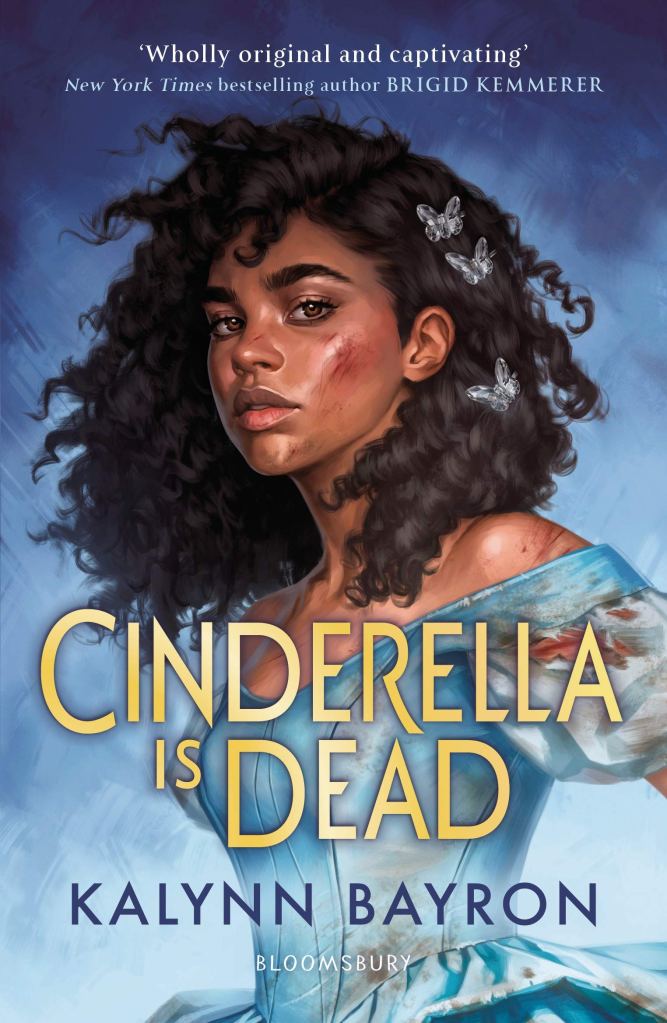
The story takes place 200 yrs after Cinderella story took place . It’s revolves around Sophia who is a lesbian and tries to rebel against the cruel king . The king has made rules that each year a ball will be held and the men will choose the women they want to marry through the ball , even if the women disagres she has to get married no matter what . Sophia doesn’t want to attend by the ball as she likes someone else. The story continues as Sophia tries to reveal the real story of Cinderella and Stop the reign of the king
I first thought this book was about Cinderella but it turned out different . I was disappointed with the way the book was written because I thought it became boring at points but it was a very different story and I liked it’s uniqueness. Even though the nature of Prince Charming’s characters was shown cruel which I don’t like. I really had q nice time reading it but definitely could have a lot more better
Spoiler alert
The fact that Fairy godmother was Charming’s mother was something I really do dint like along with the weird ending . The killing scene of king manford could have been more interesting .I liked the part that the stepsisters were shown as good characters
I would not completely recommend this book but if you are willing to try a new kind of story then this is a good read
China and Japan India and Byzantium traveling culture and history vector geisha and samurai men and women Taj Mahal and torii gate capitol building and Great wall landmarks and heritage nationalities.
Culture and history is the main building block of our lifes
The Culture is the characteristics and knowledge of a particular group of people, encompassing language, religion, cuisine, social habits, music and arts.
The word “culture” derives from a French term, which in turn derives from the Latin “colere,” which means to tend to the earth and grow, or cultivation and nurture
History is the study of life in society in the past, in all its aspect, in relation to present developments and future hopes. It is the story of man in time, an inquiry into the past based on evidence.
As with any scholarly approach that boasts of being “new” when it bursts onto the scene, new cultural history was fairly well established as one among many ways of thinking about history by the twenty-first century. This is not to say that new cultural historians enjoyed the unanimous esteem of their more traditional colleagues, for the field still managed to draw the fire of critics from the left and the right who believed that after twenty years this approach still represented a mere “trend.” One could agree with Peter Novick that this attests to the fragmentation of the historical profession into a plethora of specializations that no longer cohered around shared principles and whose denizens had little common ground for discussion. Yet much has changed in cultural history since its heyday in the 1980s.
When new cultural history was actually “new” it provided innovations both in terms of the topics considered worthy of historical attention and in terms of the ways of theorizing such topics within their respective contexts. It is nevertheless apparent that a good portion of what was marketed in 2000 as “cultural history” reflected more of the topical rather than theoretical innovations entailed by this approach. In fact, some of these works even read more like conventional social histories with a few obligatory nods to one of many privileged theorists.
To some extent this state of affairs reflects the success of this approach in the academy and the willingness of historians to combine methodologies in a creative and eclectic manner. On the other hand, though, one might argue that cultural history lost much of its edge by becoming subsumed into a more or less nonreflective historical establishment. Some historians see less fragmentation than the cooptation of erstwhile radical approaches back into a surprisingly resilient mainstream.
“Whatever possibilities become evident,” notes Patrick Joyce, “something is needed to shake the hold of a history which continually reproduces itself, in the process sucking the erstwhile heterodox into its consensus, in much the way that ‘cultural history’ is slowly but surely becoming routinized as more methodology, yet one more subdiscipline in the house of history.” Joyce’s observation is astute, yet one wonders whether a historical approach that could successfully resist such cooptation is possible and, even if it were, whether it would still merit the name “history.” It seems evident that what makes history “history” has little to do with methodologies and innovations that are unique to it, and perhaps a more thoroughgoing interdisciplinarity would discourage the domestication of future innovations into mere additions to the mansion of conventional history.
A job is something you simply do for the money. Usually, jobs have a small impact on future resumes because they aren’t typically related to what your career is or will be. Also, jobs usually offer less networking opportunities because your coworkers often won’t be continuing on to the same field as you in your future career.
Most jobs consist of hourly wages, are more short-term, and focus on getting a task done.
What is a career ?
A career is all about building up skills through various employment opportunities, giving you the ability to move on to higher paying and more prestigious ones. Careers provide a foundation of experiences that help fuel your professional life for many years.
Careers are more long-term and are about learning, gaining experience, building connections, and putting yourself in the right position for promotions and raises. Also, careers tend to be more salary based, as opposed to hourly based like jobs, and often include benefits such as paid time off and healthcare.
While more education is often required for a career, you don’t need to spend the rest of your life in school just to get ahead. South College offers many associate degree programs that can be completed in just two years, getting you started on your new career before you know it.
If you’re interested in finding out what your future career should be or in getting the right education to put you there, contact us today!
That’s not to say that jobs aren’t valuable. Jobs show your work ethic, which is important to future employers, and money pays the bills! Jobs can help prepare you for a career by providing you with valuable skills like time management and communication.
DIFFERENCE
A job is more short-term oriented and tends to focus purely on earning money. On the other hand, a career is a series of related employment in one field that provides experience for your future and helps you earn a better paycheck and living status
7 Strategies to Build A Successful Career
Identify with Your Goals. Before even considering following a career route, you must get to know yourself. …
Writing has helped me to become better at thinking, speaking, and making decisions. And I’ve used books about writing to improve myself.
I firmly believe that anything worthwhile in your career should start with writing.
From creating resumes to business plans. If you don’t start with writing, you often lack clarity in your messaging.
And that was also the story of my life. In fact, it still is. Most people never think about it, but it’s damned hard to express yourself. Do you have a clear answer to questions like:
What’s the number one priority in your career?
Why did you apply for this job?
What does your business exactly do?
Often, we just come up with the first thing that pops up in our mind.
And after a barrage of meaningless words, we think, “what on earth did I just say?”
I’ve made a list of the best books I’ve read on writing. I must say that I don’t consider myself a writer first. Above everything else, I’m an entrepreneur. I like to share stories.
That’s why this list is more geared towards people who want to write better blogs, non-fiction, emails, cover letters, about pages, etc. Not people who want to write the next The Great Gatsby. I hope you find a book that’s relevant to you.
Stephen King is one hell of a thinker and writer. And the man churns out books like it’s nothing. Only that fact makes you want to read more about how his mind works.
If you write, and you haven’t read On Writing, it’s time to stop everything you do and get that book. My favorite Stephen King quote?
Probably this:
“The scariest moment is always just before you start. After that, things can only get better.”
If you want to do something, don’t be such a weasel. Just start already.
A solid book with solid advice about writing non-fiction. When you start reading this book, you immediately can tell the man knows his business. And he knows it well.
Zinsser, a respected writer, and teacher, talks about the principles and methods of writing in this book. But he also shares tips about different writing forms such as memoirs, sports, business, and humor.
This is a valuable book for all people who want to improve their writing and messaging.
I like the simplicity of this book. It’s short, simple, and to the point. This is more of a technical book with style suggestions about the English language.
In this little book, Strunk and White do a great job of demonstrating the most common style errors.
Style is such a complicated thing that I try to refer to this book often. One of my favorite pieces of advice from this book is this:
Pressfield is one of my favorite writers. The War Of Art is a classic.
In this book, he talks about why no one cares about your shit. If you’re trying to write and no one’s reading it, read this book.
Pressfield has a background in advertising. And you can tell. He knows how to sell his shit without being annoying.
We live in a world where everyone is trying to sell us all kinds of things. And it’s annoying. This book is essential if you want to stand out in an information-flooded world.
The Writers Journey is the most in-depth book on this list. It’s also the most comprehensive book I’ve read on storytelling. It’s also a very practical book.
It’s more like a textbook that you want to take notes on. Vogler, a story consultant for major Hollywood film companies, talks about the relationship between mythology and storytelling in this book.
It’s a classic for screenwriters and playwrights. After reading this book, you’ll truly understand the art of storytelling.
However, putting this stuff into practice is another story. That takes a lot of practice.
In life, everything is business. And so is writing. If you don’t know how to sell your writing, no one will ever read it.
And one of the best books you can read about copywriting, selling, and advertising is Confessions Of An Advertising Man. Ogilvy doesn’t need an introduction.
The man is a legend. And this book is definitely worth your time.
Studying vs. Doing
I hope you pick up one of these books and read them, or maybe reread them. However, never read too much about writing.
Because writing is not something you study, it’s something you do.
A sequel to the brilliant thriller “Reviver” by Seth Patrick, Lost Souls picks up where it left off with a bang. It develops on the established conflict between the revivers and the antilifers in way that is not expected. After the clash between Jonah Miller the best reviver and the antagonist, Jonah thinks the clash is finally over but he’s soon proven wrong by a series of events. The Afterlifers have nearly doubled their efforts to stop revival with better funding and a stronger resolve, they’ve started to play to the publics fears and reel them in.
After the ordeal faced in the last novel thinking everything is dandy, Jonah gets back to his job as a forensic reviver. He talks to the recently deceased to get some answers and bring some closure to the ones they left behind. Jonah is called up for a revival that doesn’t go as planned. The victim seems to be the latest target of a serial killer, the mystery still remains as Jonah is not allowed to proceed with the revival as the afterlifers get their hands on the case and do everything in their hands to stop the revival. He begins to think if it’s the time to retire from the FRS and get into private revival. Jonah thinks about the mutilated series of corpses and has a feeling that everything’s not as it seems.
Annabel Harker is investigating Michael Andreas and trying to balance her new relationship with Jonah. She comes across some more secrets about Andreas and baseline. Jonah and Annabel are drifting apart due to her giving more importance to finding Andreas and less time to their own lives, Jonah the ever hopeful keeps trying to hold on but finds himself hurting more and more. Despite their differences they have to come together to each others aid when Michael Andreas seemingly back from the dead announces his arrival to the world. Jonah knows something is wrong, he knows Andreas is not who he claims to be. Jonah, Never and Annabel go on the run in an attempt to stay safe and find all they can about Andreas.
The trio of Jonah, Annabel and Never start to dig deeper even when on the run and come face to face with a series of revelations that point to an incoming apocalypse. They soon find out the depth to which Andreas and the afterlifers are rooted to. This makes it difficult for them to trust anyone but themselves, because one mistake could end up being their last. Having to deal with such situations on top of being practically marked for death makes them question the science and dive into the myths. The saying knowledge is power cannot be any more perfect, knowledge of what they are dealing with will be the tool they need in the fight. After countless hours of research they find out the true motives and identity of the entity masquerading as Michael Andreas. They have to fight to save the world.
In conclusion the thrilling novel “Lost Souls” lives up to its predecessor and ramps up the intrigue and action in the novel. Sure to keep you from putting the book down is its complex story that is sure to make you think. The character development from the first novel is amazing, it keeps the qualities that define the character and adds to it. The novel sets up the final part with a warning to our heroes and an incentive for the readers. For me this novel was a blast and would heartily recommend anyone fond of a good thriller. So, stay tuned for my review on the final part of this trilogy.
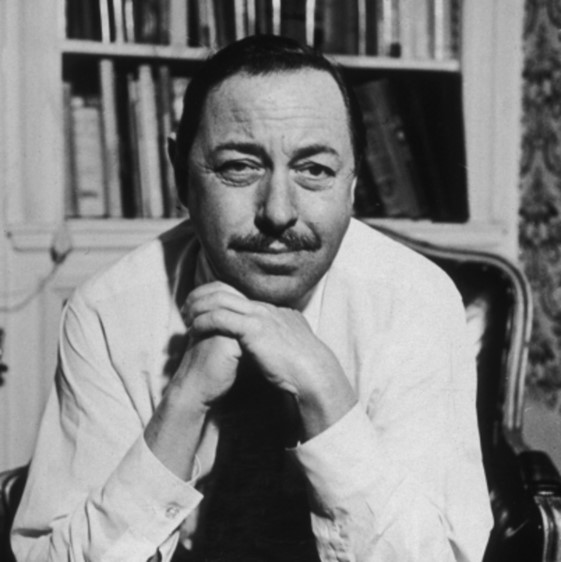
Tennessee Williams is an American playwright hailing from the southern state of Mississippi. For him, writing was an outlet through which he explored the mores of Southern life and the eccentricities and complexities of his own family. His most notable works include The Glass Menagerie (1944) which was considered to be a turning point in his career, A Streetcar Named Desire (1947) and Cat on a Hot Tin Roof (1955) both of which received Pulitzers, Summer and Smoke (1948), Orpheus Descending (1957) etc. Although he wrote throughout his life, his subsequent works never achieved the high acclaim of his earlier works.
Williams as a Southern writer shared a love-hate relationship with the south which provided for dramatic conflicts and excitements. Most of his work reflected traditional topics like agrarianism vs urbanism, New South vs antebellum South, chevalier vs the upstart and so on. For example, his play The Streetcar Named Desire represents the fallen aristocracy with the ethnic denizens a new industrial order, and his play Cat on a Hot Tin Roof represents the different family dynamics of the neo-rich. He drew upon the full resources of language to convey their pictures of culture based on moral absolutes. His characters are portrayed in a way in which they are unable to escape the burdens of their regional histories. Most often, the weight of the southern history the power of racial and social divisions, his rituals and taboos often make self-determination and moral choice unachievable for the characters. In his world, any defiance of this code results in personal destruction.
One of Williams’ most prominent southern trait is the very theatrical display of emotions, dysfunctional characters and unalterable sociological circumstances. He deconstructs the magical appeal of the southern culture and portrays the tension between their dream of an idyllic life and the reality of living it. He also provides constant allusions to plantations like Belle Reve in The Streetcar Named Desire. He also adheres to certain stereotypes of small-town life like gossipy neighbours, fear of scandal, aristocratic families who are deferentially treated by the rest of the community etc.
The usual southern hero is usually almost like an epic figure who embodies the ideals of the society and performs chivalric behaviour which is distinctly different from northern protagonists. A typical southern hero is the leader of men, honest, compassionate, a defender of the faith. They are usually heterosexual, while being protective of the women. But no such southern character exists in Williams’ work. But instead of abandoning the concept of a hero, he has adapted it to the world which has been hopelessly corrupted. He questions the paternalistic order of old South, the enslavement of the black men, the subjugation of the female, the corrupting power of wealth, and the obsession with keeping up appearances. He instead shows guilt caused by the acknowledgement of one sexuality, and the guilt of black subjugation in an antebellum society. Williams attributes perversion and distortions of human behavior to the rigid gender stereotypes that he uncovers in the southern landscape. Certain characters like Brick, who is Blanche’s husband, are unable to cope with the extreme need for masculinity in men. He also questions hypocrisy of a society that denies a woman’s sexuality. Although he does cling to prevailing and romantic point of view past offered luxury and that the present forces the individual to accept barest realities.
“Williams understands human needs and aspirations and is supremely aware of the artist’s role in illuminating urgent personal and social issues; yet his consistent exposure of hypocrisy and his off-beat is reverent sense of humor never hides his deep compassion for those who fear the truth.”
-Kimball King
On one hand, he appreciates the elegance of the past, while on the other, he considers its denial of plurality sufficient cause for its demise. This reflects the love-hate relation that he shares with the South. He does not set out to explain the South and its effects on his characters, but he understands the South and presents characters as real people. He’s a regional writer who does not exploit the peculiarities of his region, and his exploration of the southern value system and conflicts has influenced several later dramatists. To quote Kimball King, “Williams understands human needs and aspirations and is supremely aware of the artist’s role in illuminating urgent personal and social issues; yet his consistent exposure of hypocrisy and his off-beat is reverent sense of humor never hides his deep compassion for those who fear the truth.”
Chetan Bhagat is the author of nine bestselling novels which have sold over twelve million copied and have been translated into more than twenty languages worldwide.
The New York Times has called him ” the biggest selling author in India’s history”. Time magazine named him as one of the 100 most influential people in the world, and Fast Company USA named him as one of the 100 most creative people on business worldwide.
Chetan went to college at IIT Delhi and IIM Ahmedabad, after which he worked in investment banking for a decade before quitting his job to become a full-time writer.
Analysis of the book
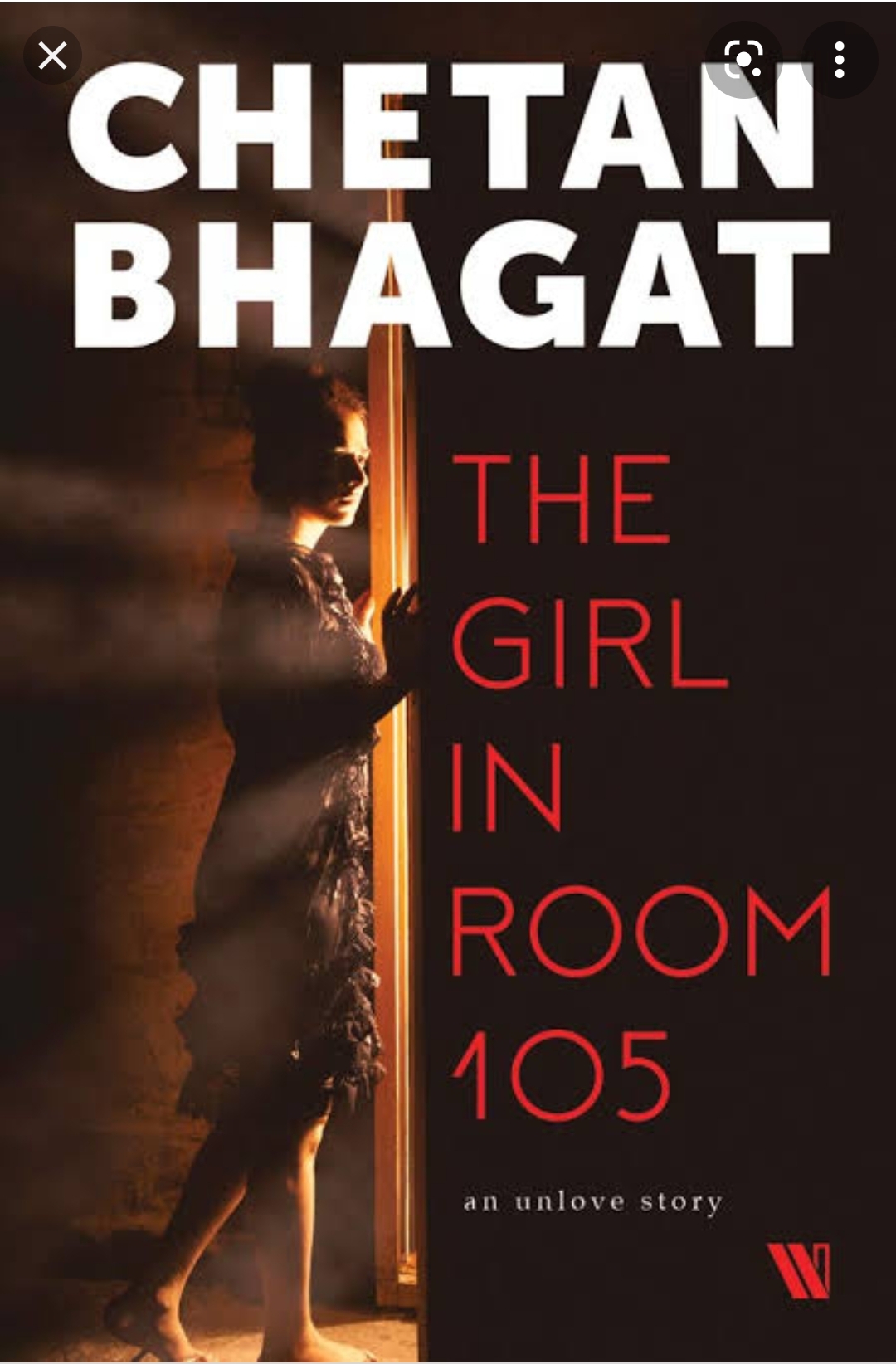
The Girl In Room 105 is the eighth novel and the tenth book overall written by the Indian author Chetan Bhagat. The book became a bestseller based on the prearranged sales alone.
It tells about a IIT coaching class tutor who goes to wishes ex-girlfriend in her birthday and finds her murdered. The rest of the story is his journey after her death to find justice.
The book also addresses the stereotypes and political issues we face in India.
“When people say ‘I quote’ and pause, they come across as scary-level intellectuals. Let’s face it, nobody wants to mess with the ‘I quote’ types.”
The novel opens up with a conversation of the author of the book, Chetan Bhagat with a fellow passenger on a midnight IndiGo flight from Hyderabad to Delhi. After an initial conversation, Chetan agrees to listen to the story of the fellow passenger.
Summary of the story
Keshav, a former IITian, works in a coaching centre for the JEE. He is a part of an orthodox family. His mother is a homemaker and his father is a part of the RSS. He had a love story with a Kashmiri Muslim girl named Zara, during his college days but their relationship was not accepted by their families because of the religious feuds.
But he never stopped loving her. He got to know Zara was going to marry Raghu, their classmate. Saurabh is Keshav’s best friend. One day around 3a.m., on Zara’s birthday, Keshav received a message from her asking him why he didn’t wish her and asked him to meet her in her hostel room.
“When you lose something, don’t think of it as a loss. Accept it as a gift that gets you on the path you were meant to travel on.”
When Keshav arrived there, he got to know that Zara was lying dead on her bed. He called Saurabh and then decided that he won’t run away he informed the police and Zara’s parents. Soon the investigation started and Keshav along with Saurabh continues investigation by digging deeper, with the help of the inspector Vikas Rana.
“The ‘let life not hold you back’ kinds, statements that sound profound but actually mean nothing.”
First the Watchman of the hotel was arrested for the missing CCTV footage. Then Prof. Saxena was arrested because he used to harass Zara. But both of them were later found innocent. After seeking information from Zara’s brother, Keshav and Saurabh went to meet Sikander, Zara’s stepbrother who used to work in a terrorist group in Kashmir.
Keshav suspects him but Sikander tells him that he wasn’t the murderer but Keshav forced him and because of which Sikander commited suicide because he said that if he lives then this will become a problem for his terrorist group. After a little more digging, Keshav got to know that Zara got expensive jewelleries by Captain Faiz Khan,as a gift. He was Zara’s childhood friend.
He finds out gun powder and pregnancy kits in Zara’s drawers and the same things in Faiz’s house too. So he decided to reveal the murderer infront of everyone on Zara’s 100th day of her death.
Conclusion
Before revealing the murderer,Keshav went to Hyderabad for a short trip alone. Finally it was revealed that the murderer was Raghu with whom Zara was going to get married because he got to know that Zara and Faiz were having an affair and probably Zara was pregnant with Faiz’s baby. Thus,Raghu was arrested by the cops.
But Keshav finally realised that Zara never really loved Keshav. Though Keshav became happy initially when he got the messages from her, but he realised that it was not from her actually. Those were sent by Raghu.
“Thank you. For showing me what love is all about. And thank you for also teaching me to never love someone too much.”
“WHOLE UNIVERSE BOWS TO LORD SHIVA, I BOWS TO LORD SHIVA”
BOOK 1: THE IMMORTALS OF MELUHA- One of the most fascinating book when it comes to read through mythological genre. The dream to see Shiva as a human comes into reality. A mixture of thriller, romance, action, and comedy. An complete package to know deeply the cultural roots of India. Exploring and defining the minute details to paint the most imaginative of landscapes, structures and people gives him the upper hand over the contemporary writings in India. he language used makes certain that the story could reach to the average Indian and besides a few instances, there is very little that you’ll have to concentrate hard on to understand. It proves to be the best starting of journey closer to Lord Shiva.
BOOK 2: THE SECRETS OF NAGAS- It reveals many mystries still some are left, the entry of Ganesh and Kali, the real faces of nagas are discovered. The journey of Kartik growing up, much secrets of pasts everything seems to fit as a perfect piece on the puzzle. The secrets of secrets is exposed! Many thrillers and suspense are beautifully presented. More curiosity had risen in minds of people. The book will definitely fulfill your expectations of the sequel book. It’s also the acceptance of the books, which nonetheless invades the privacy of religious monotone scriptures, but at the same time, shines a torch on it, proves the plot strength of our religious books and shows the readiness of people to help grow the literary scene of our country.
BOOK 3: THE OATH OF VAYUPUTRAS- Amish had done a great sum up of the story. The evil is exposed and many hidden secrets had come into light. Shiva takes it upon himself to fight against the fiercest of warriors, thereby leading the people away from what they believed to be good. And then, well, you can guess how it all ends! The journey is well depicted even at the end. Ending is not marked as great as one expect but it shows the real life destiny of one’s life. Indeed the book proved to be a nice conclusive one. It also brings to light certain key topics like loyalty, companionship and the battle to banish evil from our minds.
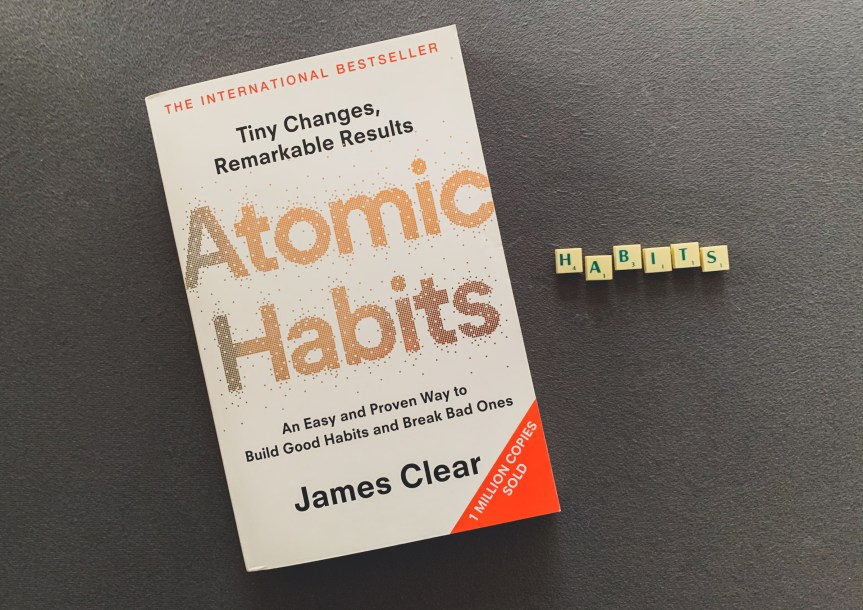
There are very few books in your life that you will read and think “Wow, this was life-changing”. You may enjoy reading books, and may even be a fan of a certain series of books like Harry Potter or Game of Thrones. However, these are generally limited to serving entertainment purposes only and are not the kind of books that will give you deep insights into life or help you reflect on yourself. Having said all this, I do believe the book “Atomic Habits’ that I am going to discuss in this article is the type of self-help book that will change or give you a new perspective on habits and lifestyle choices in general.
General Idea
The general idea of the book is this: small changes or habits you incorporate in your life will compound into much greater results in the long-run. Hence the use of the word ‘atomic’. The author is trying to explain that even small habits materialize into major results if we keep at them. This is a fairly new idea being introduced in this book, as we are often told if we want to change our lives, we have to take drastic steps like moving to a new place or quitting our jobs. This book replaces this notion with a new and improved one: change can occur even through miniscule habits and can provide life-altering results. You do not have to take drastic steps to create change, in fact you are probably better off starting at something very small and sticking with that. The process of building and sustaining these tiny habits, while also stopping or breaking free from bad ones, will help create the positive change we require.
Key Insights
The 1% rule – This relates to ‘compounding’ as mentioned before. It works in a similar way to compound interest. As we leave something to develop for a long period of time, eventually the net growth is massive. In this way, if we try to better our lives by even just 1% everyday, then we will be a 37% better version of ourselves after a year. The author provides a very insightful quote “Habits are the compound interest of self-improvement”. We should be careful though, as it also works the other way and even bad habits can compound to make us worse. So, we should focus on the self-beneficial ones while trying to limit or remove the harmful ones.
Focus on ‘Systems’ not ‘Goals’ – An important idea stressed upon in the book is on building ‘habits’ and not focusing on ‘goals.’ Our behavior should be such that it becomes repetitive and compelling, and not completely goal-oriented. If we become goal-oriented, we may become disappointed if we don’t meet our goals, but if our sole focus is on building a habit which we will maintain for the rest of our lives, there will be a much greater positive impact. For example, if your goal is to lose 5 kgs in one month, you will become disappointed if you don’t. Even if you do, it is only a temporary achievement and you may gain weight again after that. Instead, you should build the habit of exercising routinely to sustainably lose weight and stay fit.
Identity is the north star of habit change – This basically means that we should not solve problems based on their outcomes and results, as this means we only solve them temporarily. To solve problems for the long-term, we need to change our identity itself. This ties into the previous point in essence. For example, instead of saying you want to eat less junk food to lose weight, you should change your identity to a person who likes eating healthy and wants to build a good diet. To quote the book; “The ultimate form of intrinsic motivation is when habits become part of our identity.”
How to build a habit – There is a basic 4 step process for building habits: cue, craving, response, reward. Cue triggers the brain to perform an action, Craving provides the motivational force to perform it, Response is the habit/action that we perform and Reward is the end result. So, we should build habits that we want to incorporate into our lives through this process, by making the habit obvious, attractive, easy to perform and satisfying. In case all these are adhered to, the process of habit formation becomes rather easy.
Conclusion
As mentioned earlier, the book really is life-changing for anyone struggling to build a habit or break an old one. The aim should be to build long-lasting and sustainable habits (systems), however small, and to not focus on achieving some set goals in life. It is hard for many of us, in this world of instant gratification, to stick to habits that will show outcomes only after a long time and through a process of compounding, However, this book helps us with this and guides us on how we can build habits in and easy and efficient manner, and also explains the benefit this may have on our lives if we are just able to stay discipled and stick to them. Tiny changes, remarkable results.
Self help and personality development is a weapon for us
The spirit of self help creates many good qualities in a person. … These people work more harder than a person who is reliable on others for their work. This leads to help them obtain strong will- power and determination.
Self-help or self-improvement is a self-guided improvement—economically, intellectually, or emotionally—often with a substantial psychological basis. … Many different self-help group programs exist, each with its own focus, techniques, associated beliefs, proponents and in some cases, leaders
The following are common examples of self-improvement.
Self-Awareness. A process of introspection to understand your own character, behavior, fears and ambitions.
Awareness. A process of extrospection to understand the world around you.
Health. …
Physical Fitness. …
Time Management. …
Productivity. …
Performance. …
Know-How
Here’s a look at some ways to build self-improvement into your daily routine and let go of negative thoughts about yourself.
Cultivate gratitude. …
Greet everyone you meet. …
Try a digital detox. …
Use positive self-talk. …
Practice random acts of kindness. …
Eat at least one meal mindfully. …
Get enough sleep. …
Breathe consciously.
Personality development refers to how the organized patterns of behavior that make up each person’s unique personality emerge over time. Many factors go into influencing personality, including genetics, environment, parenting, and societal variables.
Personality development helps you gain recognition and acceptance from the society as well as people around. Personality development plays an essential role not only in an individual’s professional but also personal lives. It makes an individual disciplined, punctual and an asset for his/her organization.
Here are great ways to improve your personality:
Be a better listener. …
Read more and expand your interests. …
Be a good conversationalist. …
Have an Opinion. …
Meet New People. …
Be yourself. …
Have a positive outlook and attitude. …
Be fun and see the humorous side of life.
The four personality types are: Driver, Expressive, Amiable, and Analytical. There are two variables to identify any personality: Are they better at facts & data or relationships? And are they introverted or extroverted. Note: Most people will have major and minor type.
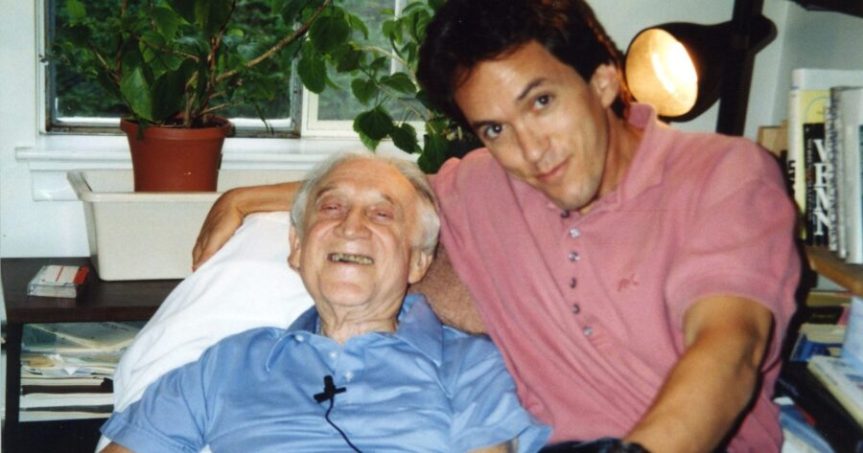
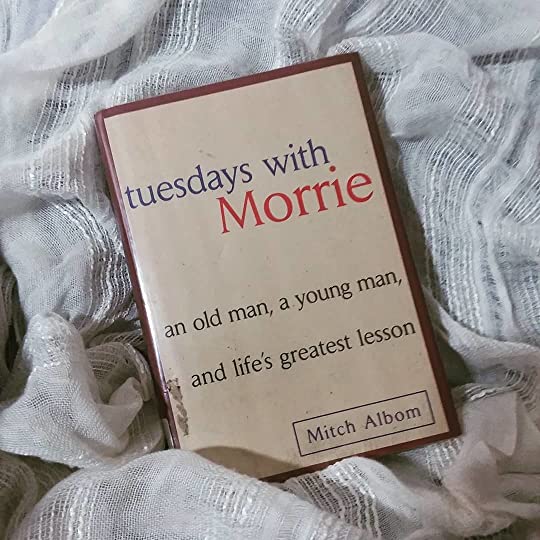
One should never underestimate the power of a good book. Books have the ability to help you discover your inner self. If you like books that force you to think about life and yourself, Tuesdays with Morrie is the book for you. Tuesdays with Morrie is my absolute favorite book. It is a memoir written by author Mitch Albom describing what his sociology professor, Morrie Schwartz taught him while he was slowly dying of ALS.
Here is a list of all the lessons I learnt from the book for which I will be forever grateful:
Stop feeling sorry for yourself: There are moments in our lives when everything seems to be out of control. During these moments we think about everything we have lost. However, Morrie taught me that it is okay to feel sorry for yourself but you must not focus on the bad part only. You should be grateful for everything good in your life especially during those low moments. Self-pity and loathing can rob you of everything good that’s going on.
Regrets: Regrets are a bigger part of our life than we admit. Spending your days thinking that if you did something differently your life would have been better now. These regrets have the capacity to eat you alive. If you stay hung up on the past mistakes, how will you ever have a better future. We are taught about forgiving others all our lives but why is forgiving so hard when it comes to forgiving ourselves. You must not torture yourself for a decision that could have gone either way. We cannot change our past because somethings are just out of our control. The healthy thing to do is move on and hope for a better future.
Death: “Learn how to die, and you learn how to live”, haven’t heard more accurate words. No one appreciates life like a person who is on their deathbed. They appreciate the little things in life that people generally take for granted.
Feel your emotions: Many a times we have these emotions that we aren’t able to let go. What I learnt is you should give yourself the freedom to feel them and have a good cry about it. Don’t let your emotions control you. As Morrie said, “Turn on the faucet. Wash yourself with emotions”.
Learn to Detach: This lesson is a bit complicated. It is about letting go and more. Morrie said that in order to let go of something, first you need to fully accept it. You need to let that experience, that emotion penetrate you and them you can detach yourself from it. If you don’t let yourself feel, you would never be able to let go because you would be nothing but afraid. Once you have felt it all, you would know that you need to detach yourself from that fear. Just step away.
Greed for Money: Since childhood we are taught that money cannot buy happiness but as we grow up we have learnt that buying things can bring you happiness but there is a catch. The happiness you feel is temporary. You use money to compensate for the love you never received. There is a difference between what we need and what we want. We must learn to separate the two. How much ever money you spend, you would never be able to receive the satisfaction you want because you would find yourself wanting more and more. And to be perfectly honest it is not entirely our fault because this is what we have been taught, “More is good”. In the words of Morrie, “Money is not a substitute for tenderness”. You must devote yourself to helping other people that is what would bring you real joy because only a life lived for someone is a life lived worthwhile.
Love: They say that people are never really gone, they stay alive in our hearts and it is absolutely true. Love is what keeps them alive always and forever.
Forgiveness: Forgiveness is tough. Whether it’s forgiving others or your own self, sometimes you just can’t gather the strength to wipe the slate clean. And yes I wrote ‘strength’. It takes a lot of courage to be the bigger man, to forget every exploitation and to move on. Morrie narrated a story where he and his friend had a falling out and how he regretted not giving him another chance before he died of cancer. Vengeance and pride can destroy you. These emotions are too heavy to be carried throughout your life. You need to make peace with everyone around you and then forgive yourself for everything you did wrong and everything you regret you didn’t do at all. Forgive those who hurt you and have the peace of mind you longed for before it’s too late.
One book, so many extraordinary lessons. Using any kind of adjective to describe this book would be an understatement. These kinds of books must be read, they must be felt and must be carried throughout life. That is the power of an exceptional book. I suggest you hurry and buy yourself a copy today.
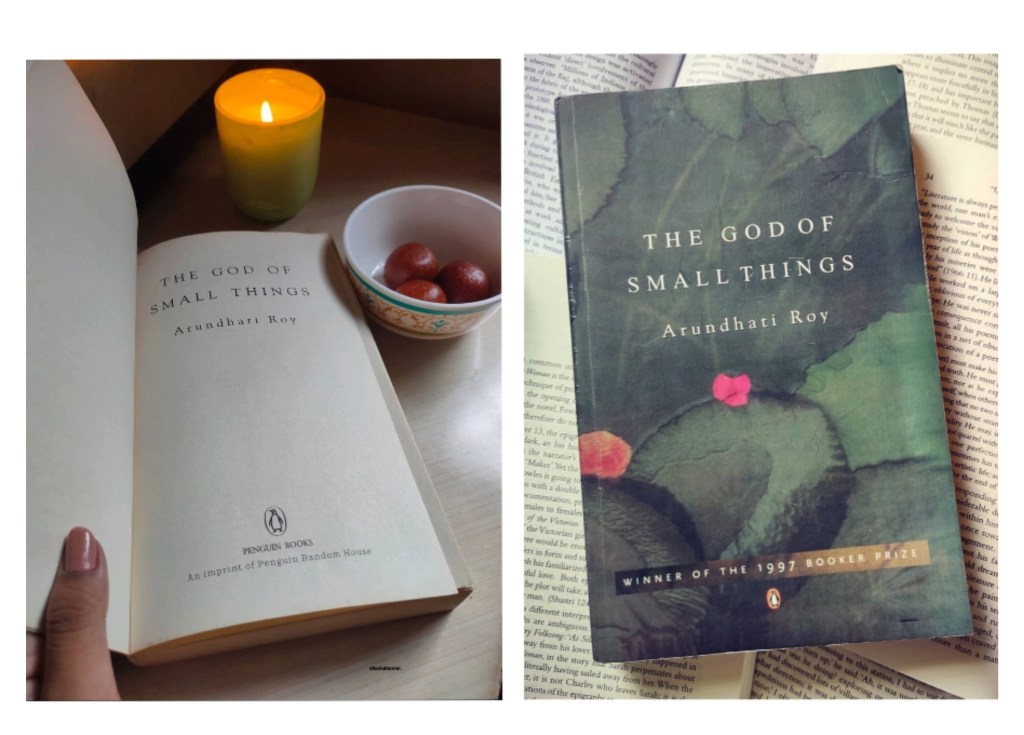
“They all crossed into forbidden territory. They all tampered with the laws that lay down who should be loved and how. And how much.” Arundhati Roy – God of small things.
This book was published and won the man booker prize in the year 1997.
A story about three generations of one broken family made up of flawed and broken individuals. It deals with themes of class and caste, love and sexuality, family and politics, and other little things. The God of Small Things is more than a novel. It’s an immersion of senses into a world, a language, a society, a culture that leaves you shattered. Arundhati Roy has crafted a world within the sleepy little town of Ayemenem. The way she has written is almost as if she invented her own language. The prose is so distinct and poetic that I’ve never read anything like it. At its heart, this is a story of family struggle (and everything that entails), but the trauma and division are beautifully balanced with lush descriptions of Kerala life.
‘May in Ayemenem is a hot, brooding month. The days are long and humid. The river shrinks and black crows gorge on bright mangoes in still, dustgreen trees. Red bananas ripen. Jackfruits burst. Dissolute bluebottles hum vacuously in the fruity air. Then they stun themselves against clear windowpanes and die, fatly baffled in the sun.’
Estha and Rahel, two-egg twins have met after years of staying apart. Set in the backwaters of Kerala during the height of Marxist influence, the book moves back-and-forth in time to establish the twins’ lives, and also that of their family – their parents, uncle, grandmother, and grandaunt. One tragic evening unravels any semblance of balance in their lives and leaves the family broken.
Arundhati Roy
“Perhaps it’s true that things can change in a day. That a few dozen hours can affect the outcome of whole lifetimes. And that when they do, those few dozen hours, like the salvaged remains of a burned house—the charred clock, the singed photograph, the scorched furniture—must be resurrected from the ruins and examined. Preserved. Accounted for. Little events, ordinary things, smashed and reconstituted. Imbued with new meaning. Suddenly they become the bleached bones of a story.”
Through the eyes of the twins, Estha and Rahel, she’s pointed out the hypocrisy, dejection, and sadness that is in the world. Specifically related to Love. About who should be loved and how much. Neither the questions asked, nor the answers given are easy. I can only imagine what her process might have been while writing this masterpiece. It is one of the finest pieces of literature I’ve ever read. The beautiful prose makes rain soaked, pickled flavour, cast ridden, left leaning Kerala come alive.
But what really bothered me is the constant repetition and lack of setting and description. The story goes back and forth in time and and is filled with rich metaphors so it demands more attention. If I have to describe it in a sentence I would say – It’s a lesson in sociology baked in prose poetry.
Pick this book up when your brain isn’t too scrambled.
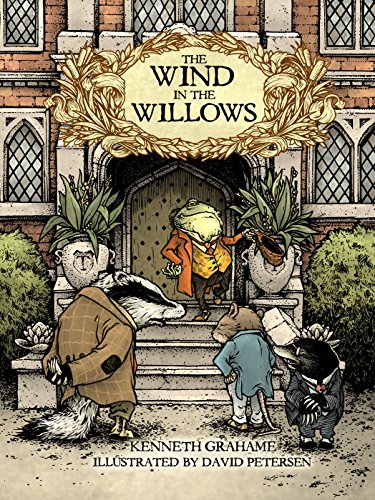
Kenneth Grahame`s ‘ The Wind in the willows’ is a novel aimed at youngsters. The plot, itself is not American humor, but that of great britian. in terms of sarcasm, and british related jokes. The novel illustrates a fair mix of the relationships between the human life animals and wildlife. The narraative acts as an important milestone in post- victorian children literature.
The characters featured in this book are Mole, Rat, Toad, Badges and otter. Toad showing big headed and childlike traits. Mole shows traits of reasoning and sensible behavior patterns. Badger shows traits of kindness and hospitality. Otter possesses traits of intelligence. All these characters participate equally in the narrative of both thrilling and neo-noir.
BODY
One of the problems with the toad is that he enjoys crashing motoe vehicles. As a result, rat tries to talk some sense into him. though, this doesn’t work. Toad is illustrated as a child stuck in an adult’s body. Furthermore, rat always renforces the act of growing up onto toad, and not to be careless for others.
As a result of Toads motorcar crimes, he is sent to a deepest, darkest dungeon to play for his crimes. ” Toad hall….. is an eligible self- contained gentleman’s residence replete with every modern convenince”. Toad, being the character showing the most affluence owns his own manner house. Having regained his big headedness. During his sentence, he started to boast about his mansion and great wealth. While being chained to a black weight.
“Now then, follow me! Mole first, ‘cos I’m very pleased with him; Rat next; Toad last”. Badger starts an invasion, Toad’s behavior illustrates the opposite of Mole. His ordeal is going back to the dungeon, like a child being anxious about going to their bedroom for misbehaving.
” For it has roused a longing in me that is a pain”. While in search of a missing infant otter, rat becomes faced with noise coming from a piper. The quote focuses on the main idea of author’s intension in writing the novel. The focuses being: The reasons which cause life to be worthwhile. The sounds travel through rat likes blades. With this in mind, the focus is intended to be answered between the lines.
CONCLUSION
The characters having a variety of different personalities and views of the world. Their human-like features are included with their animal-like traits. In terms of mole has a good sense of smell. The book is aimed at showing animals living british lifr, in the summer-time. The animals have a justice system, hence toad was sent to play for his motor-car crimes. The mansion was invaded by the other animals while toad was imprisioned and during his escape. Toad’s behaviour is terrible and affects the rest of the animals.
The stroy plays an important part in historical children literature. In modern-day, it is still read by children. The story, features human-like animals who all have their own ordeals. Mole and Rat being the kindest animal featured in the story, as Toad being the most immature and self-observed.
A question that has probably existed since the dawn of man himself “What happens after death ?”. This is question that Seth Patrick tries to address in his novel “Reviver”. It tells the tale of a world with special people that can temporary revive the dead and have a conversation with them. This process is even accepted by the law as the testimony of the recently departed it is a complete process where a licensed reviver asks questions to the departed about their demise and this entire conversation is recorded and presented in the court of law if required.
The story follows Jonah Miller a top reviver of the Forensic Revival Service on a seemingly normal day out to try and revive a murder victim Alice Decker. What seems to be a routine revival turns out to be a complex one as the deceased is scared of something and nothing Jonah does helps calm her down. After coaxing allice to answer his questions he lets her go but not before receiving an ominous message “Someone’s Coming” he lets her go immediately. When he’s just about to leave the corpse seemingly speaks only to him in a malicious voice “We See You..”. As this isn’t witnessed by anyone but Jonah it’s chalked up to stress and fatigue but Jonah has a feeling this isn’t all it seems.
A new day rolls around and with it sadly a new murder. A little girl is murdered and Jonah is called up to do the revival and get some answers to the cops and closure to the family. Though anxious Jonah completes the revival with no issues at all and the girl even gets to say goodbye to her distraught parents. Satisfied about a job well done Jonah leaves the girls house but is suddenly washed over with feelings of anger towards a man he feels like he knows, he then proceeds to attack the man saying “you killed me” and passes out. This is again chalked up to stress and Jonah being overworked as revivers have a rest period and he is one of the revivers with the smallest tail as it was termed.
Then Daniel Harker the man credited with the discovery of a reviver is found dead and to solve the mystery of his death FRS calls upon their finest reviver Jonah again. The reason for calling upon Jonah is simple Harker is a complex case and another top reviver Pru Dryden failed at the revival. Jonah starts the long revival attempt feeling all the pain Harker felt while dying of thirst he almost fails but still manages to establish a connection with Harker. He has a conversation with Harker and is able to get enough answers out of him but sadly isn’t able to let Harker have a last conversation with his daughter Annabel. After the revival Jonah starts seeing Harker who seemingly let go of his own body but didn’t let go Jonah.
The revival points the police to a group know as Afterlifers who oppose revival on predominantly religious beliefs. Jonah still coming to terms with having Harker in his head decides to investigate the murder himself and bring justice to Harker. He works with Annabel and his best friend Never Geary to try and solve the mystery but is sucked into a whirlpool of mysteries and ends up with having to search his own past for the answers. He slowly discovers the reality of the defunct organisation known as Baseline which experimented and promoted revivers funded by the aging business tycoon Michael Andreas.
In conclusion the novel heavily leans on the fact that being right or wrong differs from the perspective from which its being viewed from. It is a really great novel that is part of a trilogy which is really intriguing and amazing to read. It really is gripping story that has elements of both Sci-Fi and horror. The novel plays on the concept of the world facing utter annihilation or conservation depending on who you ask. Stay tuned for a review on the next 2 parts of the trilogy too.
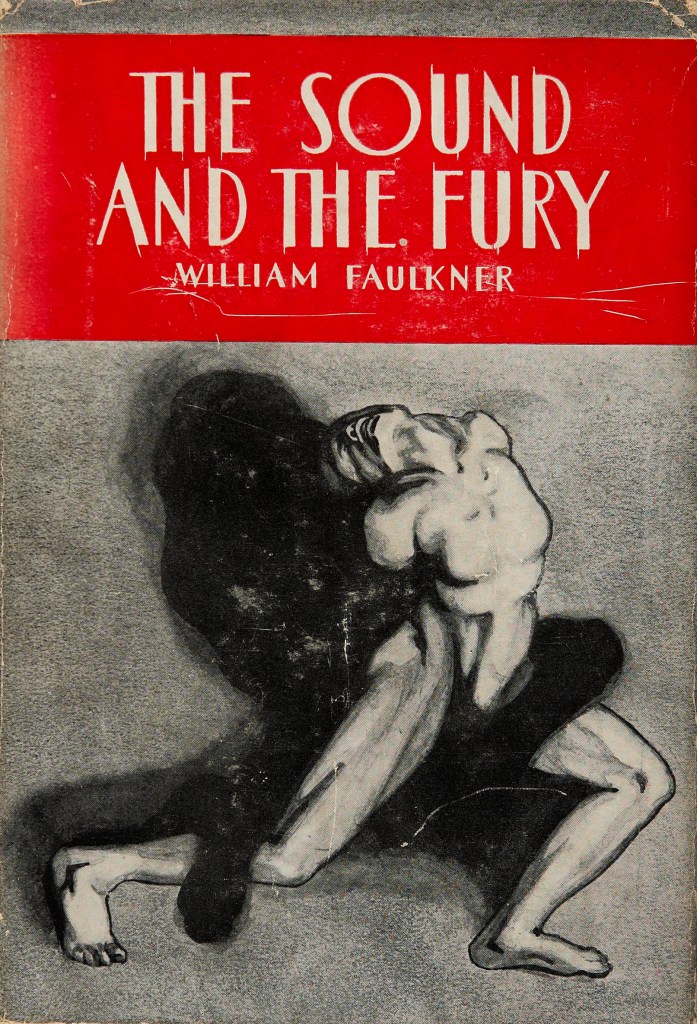
The Sound and the Fury is 1929 novel by the American author William Faulkner. Faulkner is widely renowned for his experimentation of the narrative technique called ‘stream of consciousness’. William James in his Principles of Psychology describes it as ‘the unbroken flow of perceptions, memories, thoughts and feelings in the waking mind’. In this narrative technique, the narrator seemingly rants about thoughts and introspections that flows through their mind. The novel is a true testament to this narrative.
The book follows the story of the Compson family who are slowly losing their way in the an postbellum (post-war) American South. The Composn family used to be wealthy and mighty in their olden days, but unlike their ancestors, the current members of the family cannot seem to command the power they once held. The story is divided into four parts. The first part takes place on April seventh 1928 and is narrated by Benjy Compson, the mentally challenged youngest son of the family. The second part takes place eighteen years prior on June second, 1910. It is narrated by the oldest son Quentin who is a student at Harvard. The third part takes place a day before the first part, on April sixth 1928. It is narrated by the headstrong third son Jason Compson. The final part takes place a day after the first part, on April eighth 1928. It is narrated by a seemingly omniscient narrator who records the observations of Dilsey, the family’s loyal black servant.
“Clocks slay time… time is dead as long as it is being clicked off by little wheels; only when the clock stops does time come to life.”
– William Faulkner
The story is fragmented and is narrated in a non-chronological manner. Most of the story has been uncovered based on audience’s interpretation to try and form a coherent narrative of the same. The story narrates the three Compson brothers’ seeming obsession over their sister Caddy, who surprisingly does not narrate any portion of the novel. Despite not having her own narrative, it is clear that Caddy has influenced her brothers and holds a strong presence throughout the novel. Growing up with an incompetent and absent-minded father, Caddy assumes charge of her brothers. This sense of control continues to grow and she proves that she is capable of making her own way in life. Her family disapproves of her promiscuity and banishes her after she gets pregnant out of wedlock.
The first part, narrated by Benjy is the most convoluted of all. It gives a glimpse of what his thoughts and records his accounts on how people around him treat him. His memories are interconnected and they create a domino effect as they are triggered by senses like smell or touch. For instance, a sensation that he experiences in the present triggers a memory of similar sensation in the past. Caddy is the only one who treated Benjy as a normal being and he misses her. They both share a strong emotional bond and lot of his memories are associated to her. The second narrator Quentin has a similar strong bond with Caddy. Being the older brother, he is overprotective of her and even hints of incestual jealousy over her. Quentin is also deeply disturbed by his sister’s promiscuity which is unlike the ‘Southern morals’. He is intelligent and his narration is crudely interspersed with philosophy and existential questioning. The narrator of the third part Jason is strongly against Caddy. He is petty and resentful and blames everyone else around him for his misfortunes. He blames Caddy for the loss of his job which was promised to him by her ex-husband. He is headstrong and clings desperately to the old power that the Compson family once held. He obtains this feeling by controlling his family including Caddy’s child. The narrator of the fourth part Dilsey is the only objective narrator in the family. Despite being a black woman in a post-slavery abolishment era, she serves the Compson family loyally and seems to be the only one holding the family together. Although the family bosses her around, she’s content and dedicated to the work she does and is the only ‘sane’ one among the rest.
The Sound and the Fury is definitely worth a read to understand the complexities of a non-chronological narrative. It is impossible to be explained through a conventional synopsis as it only scratches the surface of the true depth of the novel. It is riddled with symbolisms and open-ended plotlines that motivates the readers to think for themselves. The realistic aspect of the novel also makes the characters more endearing to the readers. It is easily one of Faulkner’s best.













 Eduindex
You must be logged in to post a comment.