Fast-moving consumer goods (FMCG).

\KEY TAKEAWAYS

  • Fast-moving consumers goods are non-durable products that sell quickly at relatively low cost.
  • FMCGs have low-profit margins.
  • Examples of FMCGs are Milk, gum, fruit and vegetables, toilet paper, soda, beer, and over-the-counter drugs like paracetamol and digene.

What are Fast-moving consumer goods (FMCG)?

The products that are always in demand, easy to buy, and sold quickly are called Fast-moving consumer goods (FMCG). FMCG products principally have meager profit margins, but they do wonders in the business sectors due to their higher demand. FMCGs generally spend less time on the shelves of the stores mainly due to two reasons firstly, higher in requests and secondly quick putrefaction. All the items in your nearby supermarket fall in the FMCGs sector.

Some common Fast-moving consumer goods are:

Fruits and vegetables, eggs, fish and meat, soft drinks, Dairy products, toiletries, bread, other baked items, grooming products, and some of the medications are some of the Fast-moving consumer goods.

Most of the time, FMCGs are sold in massive proportions at low prices. If the prices are set higher, FMCGs like fruits and vegetables, fish, meats, or dairy products can remain unsold as they forfeit their freshness shortly.

HOW DOES FMCG RUN?

FMCG category has a powerful present and future as this sector provides relief to people’s daily necessities effortlessly at affordable prices. For illustration, the office employees who have to rush in the morning prefer ready to make food or packed food to avoid delay reaching their offices. Likewise, the industry makes itself capable of providing medicines, personal grooming commodities, and many other daily requirements effortlessly. FMCGs require a dominant distribution system as this industry promises not to let the shelves of the marts be vacated. 

Practically, the distribution system consists of two parts. The marketing happens between the manufacturers and consumers and where manufacturers trade the products through some third party.

CLASSIFICATIONS OF FMCG.

1.Durable products.

Durable products last on the shelves for a long time, i.e., for at least 3-4 years. Some of these products are home appliances, electronics items, furniture, tools, and stationery.

2. Non-durable products.

Non-durable products last on the shelves for a short duration, i.e., less than a year from their manufacturing date. Some of these products are food, beverages, cosmetics, and drugs.

STRUGGLES FOR FMCG COMPANIES.

FMCG products have low-profit margins and limited shelf existence. So to maintain fluency in the market, FMCG companies have to sell a large number of products with intelligent marketing and keeping high-quality products at a lower cost to gain permanent consumers.

Other struggles for FMCG are:

  • Delaying the expiration of perishable products (meats and dairy products). 
  • Keeping a pocket-friendly price because consumers are becoming price-sensitive due to the increase of E-Commerce.
  • Producing products and packaging that are favorable to the environment.

TOP 5 FMCG COMPANIES IN INDIA.

1. Hindustan Unilever Limited.

According to a survey, HUL products are found in almost every household. Assimilated on 17th October 1993, HUL is India’s largest FMCG company because of its substantial brand value and quality. Top brands like Clinic plus, Glow and lovely, Surf Excel, Rin, Pond’s, and Vaseline are produced by Hindustan Unilever Limited.

Corporate Office: Mumbai, Maharashtra.

Employees: 17,000+

Turnover: 4.2 Billion dollars.

2. Colgate-Palmolive.

Colgate-Palmolive is solely based on health care products. Top brands like Colgate toothpaste, Halo shampoo, Palmolive Natural Soap, Colgate Plax active Salt Mouthwash, and many more are produced by Colgate-Palmolive. 

Corporate Office: New York, USA.

Employees: 38000+

Turnover: 17.5 Billion dollars.

3. ITC Limited.

It is one of the broadest FMCG companies in India. Popular products like Savlon, Yippee noodles, Classmate, Bingo, Sunfeast, Fiama, Ashirvaad lie under ITC Limited. Varying from Hotels, Agri businesses, Packaged foods, and confectionery to Safety Matches and Tabacco products, ITC has a varied brand portfolio.

Corporate Office: Kolkata, West Bengal.

Employees: 29000+

Turnover: 7.2 Billion Dollars.

4. Nestle India Limited.

Nestle is India’s most famous FMCG company, producing Milk and nutrition, prepared food, chocolates, Infant cereals, Pasta, and Noodles. Nestle India Ltd. has top brands like Maggi, Milkybar, Kit Kat and Nescafe.

Corporate Office: Vevey, Switzerland.

Employees: 330000+

Turnover: 87.2 Billion Dollars.

5. Parle Agro India Limited.

Solely based in India since 1985, Parle agro India Ltd. is India’s vastest beverage company. Top brands like Frooti, Appy Fizz, Appy Bailey, and Bailey soda are produced by Parle Agro India Ltd.

Corporate Office: Mumbai, Maharashtra.

Employees: 2700+

Turnover: 1 Billion Dollars.

HOW CAN SOMEONE JOIN THE FMCG SECTOR?

FMCG has good career opportunities. Some of the jobs one can pursue in FMCG companies are-

A. Product control executive.

B. Sales executive.

C. Procurement Assistant.

WHAT ARE THE MAJOR SKILLS FOR A CAREER IN FMCG SALES?

People willing to work in this sector should be good travelers. Why? Meeting existing customers and making new customers is the primary goal required. They will need to know about the product’s data in detail to convince their clients with ease. To be recognized in this sector, one has to be optimistic, generous, and have excellent communication and presentation skills.

However, one should be aware of fake job calls that claim to be from India’s top companies. 

FMCGs AND E-COMMERCE.

Nowadays, people are rapidly shifting from offline stores to online stores because of the price-sensitive offers and door-to-door delivery. Even offline stores give incredible suggestions to bring the consumers to their stores to compete with the online stores. 

FMCG PRODUCTS.

  • Toiletries.
  • Food products.
  • Self-care products.
  • Herbal products.
  • Dairy products.
  • Home Appliances.
  • Electrical products.
  • Stationery.
  • Ayurvedic Products.

FMCGs can be divided into various categories, including-

  • Processed foods: Cheese products, cereals, and boxed pasta
  • Prepared meals : Ready-to-eat meals.
  • Beverages : Bottled water, energy drinks, and juices
  • Baked goods: Cookies, croissants, and bagels
  • Fresh, frozen foods, and dry goods: Fruits, vegetables, frozen peas and carrots, and raisins and nuts
  • Medicines: Aspirin, pain relievers, and other medication that are bought without doctor’s consultants.
  • Cleaning products : Baking soda, oven cleaner, and window and glass cleaner
  • Cosmetics and toiletries: Haircare products, concealers, toothpaste, and soap
  • Office supplies : Pens, pencils, staplers, and other products.

Thanks for reading.

www.instagram.com/thetorturedstories

How to be a great leader

How can you describe a great leader? Great leaders aren’t always found with title CEO or manager on their business card.

Anyone can demonstrate leadership qualities.

It’s not about winning a popularity contest. You don’t have to be liked to be respected. It’s about serving and influencing others regardless of their job title in the effort to achieve a certain goal. More than anything, it’s about creating harmony in an environment where people want to work together.

In one study, leadership qualities such as assertiveness, adaptability, intelligence, and conscientiousness were cited as the most important. Transformational leaders are positive, empowering, and inspiring. They value followers and inspire them to perform better. So what can you do to embrace these valued leadership qualities and become a stronger and more effective leader?

Transformational leadership are usually described as enthusiastic, passionate, genuine and energetic. These leaders are not just concerned about helping the group achieve its goals; they also care about helping each member of the group reach his or her full potential. 

Leadership can be a struggle to develop, as there are intrinsic qualities that are tough to cultivate.

But if you’re willing to face the challenge, and follow these guidelines, then you’ll be on the right path to becoming the leader your business needs to succeed.

Encourage Creativity

Intellectual stimulation is one of the leadership qualities that define transformational leadership. Followers need to be encouraged to express their creativity. Effective leaders should offer new challenges with ample support to achieve these goals.

Serve as a Role Model

Idealized influence is another of the four key components of transformational leadership. Transformational leaders exemplify the behaviors and characteristics that they encourage in their followers. They walk the walk and talk the talk. As a result, group members admire these leaders and work to emulate these behaviors.

Be Passionate

You can develop this leadership quality by thinking of different ways that you can express your zeal. Let people know that you care about their progress. When one person shares something with the rest of the group, be sure to tell them how much you appreciate such contributions.

Listen and Communicate Effectively

By keeping the lines of communication open, these leaders can ensure that group members feel able to make contributions and receive recognition for their achievements.

Have a Positive Attitude

Even when things look bleak and your followers start to feel disheartened, try to stay positive. This does not mean viewing things through rose-colored glasses. It simply means maintaining a sense of optimism and hope in the face of challenges.

ELON MUSK

ELON MUSK, the famous and most successful person in the tech world, who played many roles and faced many struggles to become what he is today. Elon Musk was born and raised in South Africa.

We all know him as an entrepreneur, businessman, CEO of Tesla and spacex, but he is also a skilled investor, software developer, designer, inventor, rocket scientist, actor, film producer, one of the richest man in the world.

During his school days, he was a victim of severe bullying. At the age of 12, he created a video game(blaster) and sold it to a computer magazine. Elon Musk is the founder of X.com (later it became paypal), spacex, Tesla motors.

Recently Elon Musk turned 50, over the past decades Musk managed to become CEO of Tesla and spacex, founder of the boring company, co-founder of OpenAI, Neuralink. He also played a vital role in space rockets, electric cars, solar batteries.

“”Failure is a option here, if things are not failing then you are not innovative enough.””.                 – Elon Musk

“” I think it’s possible for ordinary people to choose to be extraordinary.””                                                                   –Elon Musk

Digital marketing

Digital marketing the world become digitalizing day to day.

Every things we can do with digital, we are become digital life’s.

Marketing is main source for improve companies, on before digital life’s there was we have person to person and posters to expose their products and services  

Now , we are in surviving digital life’s . every things will get on internet so the bases of internet ,we  have recognised by Digital marketing .

The digital marketing  it is  high level, digital marketing refers to advertising delivered through digital channels such as search engines, websites, social media, email, and mobile apps.

by help of  these online media channels, digital marketing is the method by which companies endorse goods, brands and services.

On these digital marketing we have a wide range of digital marketing jobs out there meaning there are a huge variety of career options.

  • Video/audio production.
  • Interactive technology (such as AI)
  • Mobile marketing.
  • Search engine optimization (SEO)
  • Search engine marketing (SEM)
  • Social media.
  • E-commerce.
  • Email marketing.

Scopes for digital marketing

The scope of digital marketing is quite good. Anyone who is looking  to learning digital marketing  would surely get a good benefit from it. There are also huge of job opportunities available in the field .

How can you start

There we have many web sites and blogs, start learning digital marketing help of reading books or blogs, enrolling in courses, watching videos on YouTube, listening to podcasts, watching webinars, and more.

Does Business Require Competition?

“Competition is a good thing; it forces us to do our best.”

  • Nancy Pearcey

Since every aspect in life has two angles, competition too can be considered in the positive as well as the negative sense. Mostly, competition is used in the negative sense which is the reason most of the businesses end on a short note. Thus, we will be learning a positive sense of this word in today’s article.

The term becomes negative when you resolve to imitating the procedures followed by your competition. As discussed in earlier articles, a business needs to stand out for which uniqueness is quintessential. Thus, blindly following the footsteps of your competition isn’t going to help. Also, focussing merely on your competition and their profits isn’t the right move because that diverts your attention from the possible surplus you could generate. In short, avoid opening up an encyclopaedia of services offered by your competition just so as to match their ability because that isn’t possible. All have different capabilities and varied ways of thinking. Perhaps you could do better than the competition and in order to believe yourself, lay aside continuous inspection of the competition. Let us understand this better.

For instance, a company selling electrical appliances and will of course have competition because one can’t possibly come up with a business extremely alien to all, owing to the desires of the mob. Thus, competition persists because we need to consider the needs of the population on this planet and arrange for such services that would benefit. Uniqueness must come in the way we exhibit or present those services.

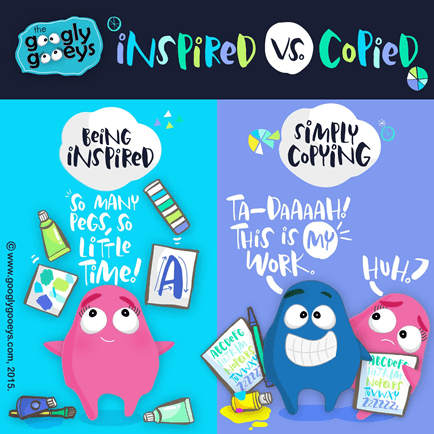
Getting back to the story, you are receiving good deal traffic but are occupied in considering the competition. You’re trying to get into their good books so as to know more about their ways of introducing and presenting the services. However, while you are busy understanding your competition, you failed to comprehend over the fact that you could understand the psychology of the customers and list their desires thereby coming up with a unique form of exhibition of your services. In short, you lose access to creativity when you are busy imitating which certain businessmen term as ‘taking inspiration’. A point to be noted is, that inspiration means simply learning from the competition and coming up with your own unique form of services while imitation is looking up services provided by the competition that seem to best appeal to the mob and trying out the same! Most businessmen resort to the latter but coin their efforts as former!

Yes, there is a possibility of better inclining towards the latter because we feel that more customers would be attracted to us as well, as they do to the competition. But a point that we miss out on is, that if the customers have already tried that way out, why would they be interested in yet another company offering the same format with no particular speciality or uniqueness in its services? Also, customers remain glued to the same company for ages owing to the trust and genuineness they feel towards that brand which is the reason, they wouldn’t actually be interested in trying out a new brand with the same level of services. Why take the risk and opt for a new brand with same manner of exhibition of services when the old one does the trick? That is when uniqueness comes into the picture because your aim shouldn’t be to snatch the customers of your competition which is a tedious task and may gain no possible results. Instead, your aim should be to gain a new set of enthusiastic customers for yourself. Don’t go for Renaissance in business that is rebirth or revival of your competition. Go for something unique that people would be excited enough to try out owing to the way it functions.

Thus, competition should be taken in a positive sense. Take inspiration from them. Capture some of their bonus points that help them and develop your business with creativity on the basis of that structure. In short, use your competition as stepping stones to success! Also, competition can help you grow vividly because it helps understand updates of market trends which keep changing and are visible in your competition. By closely observing the same, you could flourish your business and step by step, move further than your competition not by imitating them but by personal creativity. The competition would neither blame you for stealing their ideas nor would you feel guilty of being a copy cat! So, be yourself and unique in business to ensure additional bonuses in the future!

Thank You For Reading!

Everything you should know about SEBI

Securities and Exchange Board of India (SEBI) is a statutory regulatory body entrusted with the responsibility to regulate the Indian capital markets. It monitors and regulates the securities market and protects the interests of the investors by enforcing certain rules and regulations.

SEBI was founded on April 12, 1992 under the SEBI Act, 1992. Headquartered in Mumbai, SEBI has regional offices in New Delhi, Chennai, Kolkata and Ahmedabad along with other local regional offices across prominent cities in India.

The objective of SEBI is to ensure that the Indian capital market works in a systematic manner and provide investors with a transparent environment for their investment. To put it simply, the primary objective of setting up SEBI is the creation of such an environment that helps in effective mobilization as well as the allocation of resources with the help of securities market of India.

Objectives

SEBI has many objectives and is meant for the betterment of each participant in the market, be it investors, intermediaries or the issuers of securities. Some of these objectives are-

  1. Provide protection: It guides and educates people who are willing to invest their money in the securities market. This is done in order to protect their interests.
  2. Preventing malpractices: It aims at prohibiting of all kinds of malpractices which are prevalent in the trading market.
  3. Professional and Competitive environment: SEBI has the objective to develop a code of conduct through which it can easily regulate the activities of the intermediaries. Brokers, merchant bankers are some of the intermediaries. The main objective of SEBI is to make these intermediaries professional and competitive.
  4. Orderly Functioning: SEBI has been entrusted with the duty of promoting the functioning of the securities industry and stock exchanges in an orderly manner.
  5. Establishing balance: SEBI also maintains a balance between the regulations provided by various statutes and the regulations made by the securities industry.

Functions of SEBI

SEBI is entitled to fulfil various functions, which can be divided into the following three parts:

  • Developmental functions
  • Protective functions
  • Regulatory functions

These broad functions can be subdivided into various other functions. Some of them are as follows:

DEVELOPMENTAL FUNCTIONS

There are various developmental functions of SEBI. Some of them are as follows:

  • Promoting fair trade: SEBI has made underwriting optional in order to achieve the goal of promotion of fair trade.
  • Research: SEBI also makes a publication of the data and information which is necessary for various participants of the market in order to conduct effective research.
  • Training of brokers: Intermediaries of the securities market are trained to promote the efficiency of the market.

PROTECTIVE FUNCTIONS

There are various protective functions of SEBI. Some of them are as follows:

  • Prevention of various Fraudulent and Unfair Trade Practices: Price ragging and purchase or sale of securities with the help of several misleading statements are some of instances of Fraudulent and Unfair Trade Practices. SEBI aims at prohibiting such practices.
  • Prohibition of Insider Trading: Promoters, directors and other key managerial personnel of the companies take advantage of the possession of the unpublished price sensitive information for making profits by trading into securities. SEBI aims at preventing such insiders to trade.
  • Educates Investors: SEBI organizes various campaigns in to order to promote awareness amongst the investors. This is done to protect them, from various fraudulent activities prevalent in the securities market.
  • Promotion of Fair Practices: SEBI is also responsible for the promotion of code of conduct and other fair practices in the market of securities in India. For instance, SEBI regularly keeps a check on the interests of debenture holders with respect to any midterm revision of rates of interest and many more.

REGULATORY FUNCTIONS

  • Notifications of various Rules and Regulations: SEBI is empowered to issue various rules and regulations to make the functioning of all the intermediaries existing in the securities market smooth.
  • Levying of Fees: If any of the players of the market contravenes any order or direction passed by it, SEBI has the power to levy penalties, fees and other charges for the same.
  • Registration of Agents and Brokers: For the purpose of making a safe market place for trading into the securities, it is mandatory for all the transfer agents, brokers, merchant banks, sub-brokers and so on to register themselves.
  • Regulator of Investment Schemes: It has made the registration of mutual funds and collective investment schemes mandatory in order to regulate them.
  • Exercising and Performing Powers: SEBI has been delegated various powers under the Securities Contracts (Regulation) Act 1956 by the Government of India. SEBI exercises and performs all such powers.
  • Enquiries and Inspection: SEBI conducts various inspections and undertakes audits and enquiries of stock exchanges of India.

Asset Bubble

What Is a Bubble?

A bubble is an economic cycle that is characterized by the rapid escalation of market value, particularly in the price of assets. This fast inflation is followed by a quick decrease in value, or a contraction, that is sometimes referred to as a “crash” or a “bubble burst. Typically, a bubble is created by a surge in asset prices that is driven by exuberant market behavior. During a bubble, assets typically trade at a price, or within a price range, that greatly exceeds the asset’s intrinsic value (the price does not align with the fundamentals of the asset).The cause of bubbles is disputed by economists; some economists even disagree that bubbles occur at all (on the basis that asset prices frequently deviate from their intrinsic value). However, bubbles are usually only identified and studied in retrospect, after a massive drop in prices occurs.

How a Bubble Works

An economic bubble occurs any time that the price of a good rises far above the item’s real value. Bubbles are typically attributed to a change in investor behavior, although what causes this change in behavior is debated. Bubbles in equities markets and economies cause resources to be transferred to areas of rapid growth. At the end of a bubble, resources are moved again, causing prices to deflate.

The Japanese economy experienced a bubble in the 1980s after the country’s banks were partially deregulated. This caused a huge surge in the prices of real estate and stock prices. The dot-com boom, also called the dot-com bubble, was a stock market bubble in the late 1990s. It was characterized by excessive speculation in Internet-related companies. During the dot-com boom, people bought technology stocks at high prices—believing they could sell them at a higher price—until confidence was lost and a large market correction occurred.

The research of American economist Hyman P. Minsky helps to explain the development of financial instability and provides one explanation of the characteristics of financial crises. Through his research, Minsky identified five stages in a typical credit cycle. While his theories went largely under-the-radar for many decades, the subprime mortgage crisis of 2008 renewed interest in his formulations, which also help to explain some of the patterns of a bubble.

Displacement

This stage takes place when investors start to notice a new paradigm, like a new product or technology, or historically low interest rates. This can be basically anything that gets their attention. 

Boom

Prices start to rise. Then, they get even more momentum as more investors enter the market. This sets up the stage for the boom. There is an overall sense of failing to jump in, causing even more people to start buying assets. 

Euphoria

When euphoria hits and asset prices skyrocket, it could be said that caution on the part of investors is mostly thrown out the window. 

Profit-Taking

Figuring out when the bubble will burst isn’t easy; once a bubble has burst, it will not inflate again. But anyone who can identify the early warning signs will make money by selling off positions. 

Panic

Asset prices change course and drop (sometimes as rapidly as they rose). Investors want to liquidate them at any price. Asset prices decline as supply outshines demand. 

Ambani – The Indian tycoon

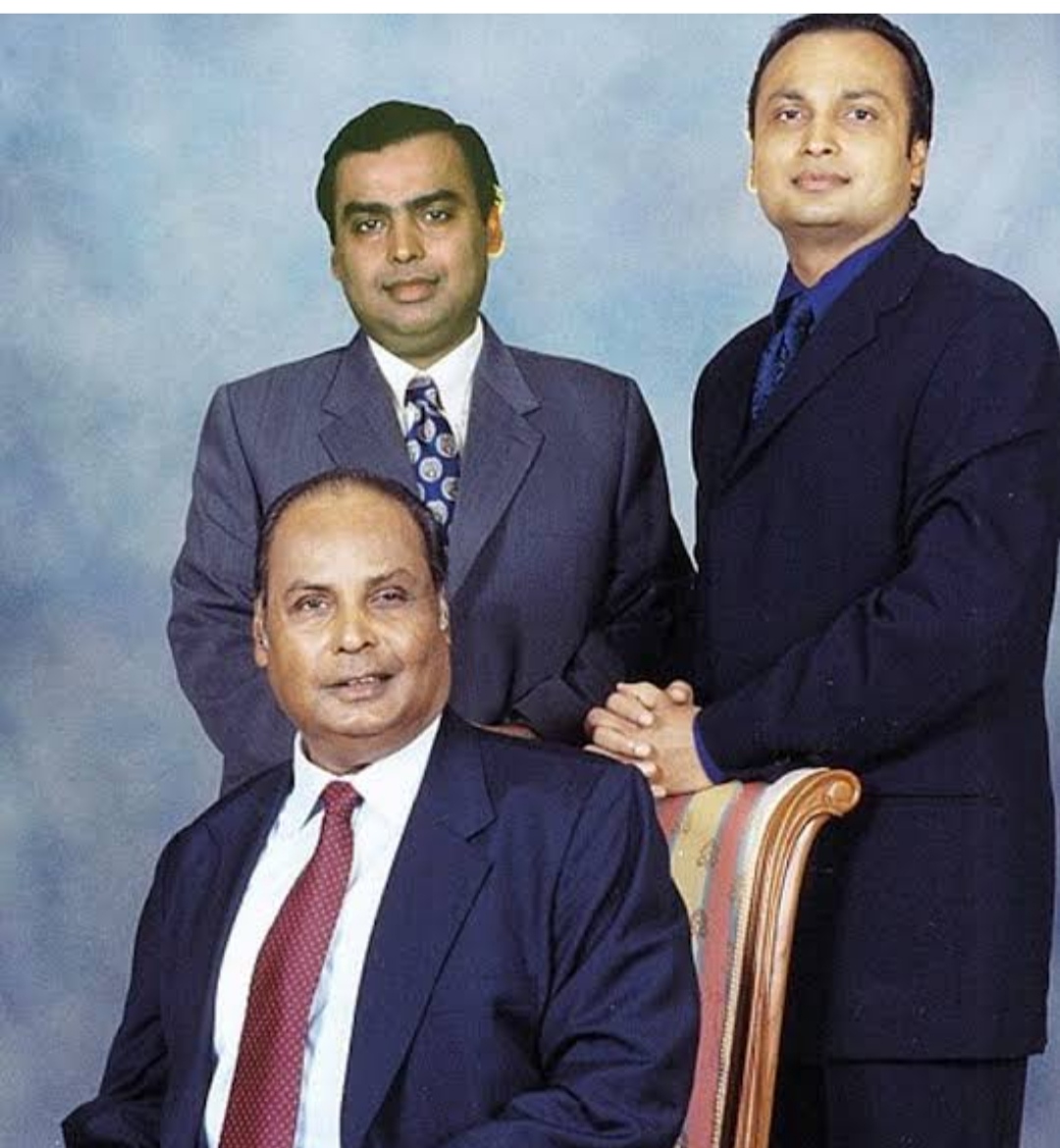
Dhirajlal Hirachand Ambani, popularly known as Dhirubhai Ambani. He is the father of Mukesh Ambani and Anil Ambani

Dhirubhai Ambani was a successful Indian business tycoon who founded Reliance Industries.

Dhirubhai Ambani,Indian industrialist,the founder of Reliance Industries, a giant petrochemicals, communications, power, and textiles.

Reliance is the biggest exporter in India and the first privately owned Indian company.

Dhirubhai Ambani passed away in 2002, before his death itself in 1980’s he handover the reliance corporation to his sons Mukesh Ambani and Anil Ambani.

Reliance Power Limited (R-power), formerly known as Reliance Energy Generation Limited (REGL) is a part of the reliance Anil Ambani Group. It was established to develop, construct, operate and maintain power projects in the Indian and international markets.

Mukesh Ambani runs Reliance industries which has interests in petrochemicals, oil and gas, telecom and retail.

Reliance industries limited, diverse businesses include petrochemicals, natural gas,retail, telecommunications,mass media and textiles. Reliance is one of the most profitable companies in India.

Reliance’s Mukesh Ambani and Nita Ambani are the owners of the second most expensive home in the World, ANTILIA, Mumbai.

The Story of the Best Selling Video Game of all time: Tetris

Tetris has its origin in the Dorodnitsyn Computing Centre (Research Lab). It was one of the foremost research institutes of the Russian Academy of Sciences, located in St Petersburg, Soviet Union (Now Russia). Created by software researcher Alexey Pajitnov in 1984, Tetris is a simple tile-matching game that took the world by storm upon it’s release.

It was developed for Electronika 60, which was a computer, made in the Soviet Union. This period was the final stage of the Cold war Era and computers were becoming more popular as well.

The game wasn’t intended as a commercial product just like the creation of the music record. But it was to be distributed freely among academic institutions around the Soviet Union and the economic bloc of countries aligned with the USSR in Eurasia, Africa, and the Americas that demonstrated use cases for the software.

As USSR was a communist state, so Pajitnov did not technically own the program as the game was under the ownership of the state. Pajitnov along with the help of a colleague, Dmitry Pavlovsky, and a teen computer programmer, Vadim Gerasimov continued to work on the game project even though commercializing it would have been a risky move under the Soviet government. Gerasimov further ported the game from the old and bulky Elektronika 60 to the more widely used (IBM) compatible PCs.

As Elektronika 60 had no graphics output, the individual blocks in the game were made of different text, but with the port in PC, they were able to support color graphics. This brought the game to life.

Pajitnov and Gerasimov had started distributing Tetris for (PC) in 1985 among their friends and colleagues in various math or computer conventions. Soon the sharing spread and the game was smuggled outside USSR to Hungary. During mid-80s U.S and Japan had a more prevalent console market whereas, in Europe, gaming was primarily done on computers. There was a non-existent software market in Russia and most software was usually copied in floppy disks.

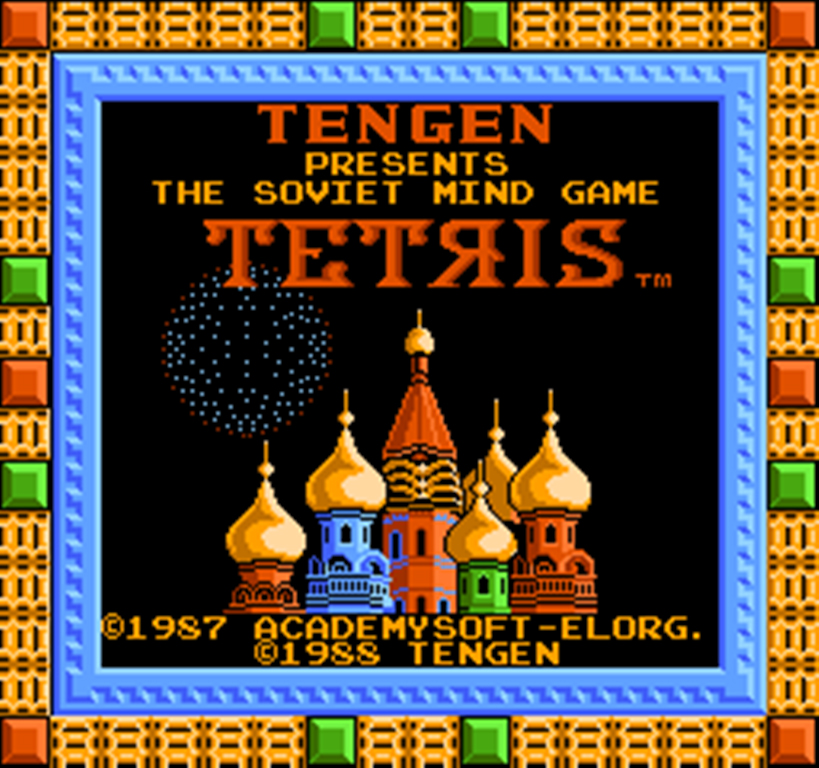
Welcome screen of 1987 version of Tetris

In 1986 Robert Stein, a salesman from the UK-based software company Andromeda spotted Tetris at Hungary’s Institute of Computer Science. He was convinced by the potential of the software and he struck an agreement with Pajitnov to sell the games internationally. But legally Tetris was still under the ownership of the Soviet government.  There was one problem, the agreement was only for the PC and not for any other platform and Stein has struck a deal with Sega to launch the game on their platform. Later Henk Rogers, another salesman from the Netherlands wanted to find a good launch game for the Nintendo’s new Game Boy handheld. The Soviet government was not happy with the Stein deal. But Rogers convinced the Soviet government and they agreed and he also formed a good relationship with Pajitnov. Later Andromeda’s license of Tetris was deemed illegal. Nintendo was given the right to launch the game on its console. The GameBoy was a platform to showcase one of the first video games exported from Russia. The game was a commercial hit and it has been ported to the most number platforms to date. The game also holds the record as the best-selling game of all time. In 1996, Pajitnov was able to reclaim the ownership of the rights and formed the Tetris Company, along with Henk Rogers. Even though he missed collecting the potential royalties for Tetris which were over hundreds of millions, he was still able to secure the future royalties.

References:

Global research on coronavirus disease (COVID-19)

WHO is bringing the world’s scientists and global health professionals together to accelerate the research and development process, and develop new norms and standards to contain the spread of the coronavirus pandemic and help care for those affected.

The R&D Blueprint has been activated to accelerate diagnostics, vaccines and therapeutics for this novel coronavirus.

The solidarity of all countries will be essential to ensure equitable access to COVID-19 health products.

Global research database

WHO is gathering the latest international multilingual scientific findings and knowledge on COVID-19. The global literature cited in the WHO COVID-19 database is updated daily (Monday through Friday) from searches of bibliographic databases, hand searching, and the addition of other expert-referred scientific articles. This database represents a comprehensive multilingual source of current literature on the topic. While it may not be exhaustive, new research is added regularly.

The WHO evidence retrieval sub-group has begun collaboration with key partners to enrich the citations and build a more comprehensive database with inclusion of other content. The database is built by BIREME, the Specialized Center of PAHO/AMRO and part of the Regional Office’s Department of Evidence and Intelligence for Action in Health.

For further information or questions, please contact the WHO Library via email.

Disclaimer: the designations employed and the presentation of the material in publications listed in this database does not imply the expression of any opinion whatsoever on the part of WHO concerning the legal status of any country, territory, city or area or of its authorities, or concerning the delimitation of its frontiers or boundaries. Dotted and dashed lines on maps represent approximate border lines for which there may not yet be full agreement.

The mention of specific companies or of certain manufacturers’ products in publications listed in the database does not imply that they are endorsed or recommended by WHO in preference to others of a similar nature that are not mentioned. Errors and omissions excepted, the names of proprietary products are distinguished by initial capital letters.

By listing publications in this database and providing links to external sites does not mean that WHO endorses or recommends those publications or sites, or has verified the content contained within them. The database has been compiled without warranty of any kind, either expressed or implied. The responsibility for the interpretation and use of publications included in this database lies with the reader. In no event shall WHO be liable for damages arising from its use.

Email marketing

Email marketing is the act of sending a commercial message, typically to a group of people, using email. In its broadest sense, every email sent to a potential or current customer could be considered email marketing. It involves using email to send advertisements, request business, or solicit sales or donations.

Benefits of email marketing: spread sheet use, customization draft, option of subscribe and unsubscribe, track links, provide list categories, personification feature, save time. Businesses and organizations who send a high volume of emails can use an ESP (email service provider) to gather information about the behavior of the recipients. The insights provided by consumer response to email marketing help businesses and organizations understand and make use of consumer behavior. Words that can help in increasing the chance of opening an email by your customer- free, discount, specials, reminder,customer name; link with such words can help.

A/B testing- test many things via email. It is a method of comparing two versions of a web page or app against each other to determine which one performs better. AB testing is essentially an experiment where two or more variants of a page are shown to users at random, and statistical analysis is used to determine which variation performs better for a given conversion goal.


Email analytics tools can help to manage the business via email and lessen the burden for checking and keeping track thousands of emails. Many email analytics platforms are geared toward email marketers, who have a more pressing need and a bigger budget, rather than office workers trying to improve their own productivity – or office managers trying to improve the productivity of their team members. The majority of apps focusing on improving productivity add some functionality that makes workers faster or more efficient, rather than getting to the heart of the problem with objective data analysis. Some tools which can help- sortd, email analytics powered by google, ActiveInbox, The Email Game, Todoist, and many more.

India’s Foreign Trade Policy

Foreign Trade Policy is a set of guidelines for the import and export of goods and services of the country. In India, it is formulated by the Directorate General of Foreign Trade (DGFT) under the Ministry of Commerce and Industry. DGFT is a body formed for promotion and facilitation of exports and imports. The policy is formulated every five years for the next five years.

India’s first foreign trade policy was formulated in the year 1985 with the aim of boosting exports (by finding opportunities and encouraging exporters by making industry-friendly policies), generating employment and improving competitiveness of the local market and the quality of the products. With 2020 coming to an end, it was announced that the 2015-2020 policy has been extended till September 2021. Let’s take a look at the highlights of 2015-2020 policy and the new 2021-2026 policy.

2015-2020 Highlights

  • Policies were simplified and new export incentives were introduced for the following categories- Merchandise Export of India (MEIS) and Service Export of India (SEIS). Under these schemes, countries have been categorized into 3 groups and the rewards vary from 2-5% under MEIS and 3-5% under SEIS.
  • Main focus was on Skill Development and Make in India to increase value-addition.
  • It encouraged ‘ease of doing business’ by promoting E-documentation and Digitalisation.
  • It facilitated and encouraged exports.
  • Export Obligation has been reduced to 75% under Export Promotion Capital Goods scheme (EPCG).
  • It also focused on giving a boost to Defence Exports- Tanks, Helicopters, Aircraft etc.
  • New duty exemptions on certain items.
  • Addressal of quality complaints and improvement.
  • Manufacturers labelled as “status holders” (certified by DGFT for their major contribution leading to growth of India’s exports) to self-certify their goods as a product originated from India. This helps them qualify for preferential treatment under various bilateral and regional trade agreements.
  • Construction of three additional ports (to improve connectivity) which is still in progress. These ports are being constructed in Kerala, Gujarat and Andhra Pradesh.
  • Introduction of duty-free schemes for reduction in tariffs
  • Development of additional export excellence zones. Moreover, fast track clearance facility, permitting inter unit transfer of goods and services and permitting warehouses set ups near ports for businesses located in 100% EOU (Export Oriented Units)/EHTP (Export Hardware Technology Park)/STPI (Software Technology Parks of India).

2021-2026 Highlights

Due to the ongoing pandemic, the new policy mainly revolves around ‘ease of doing business’ and digitalisation to promote and support export business in these tough times. It is an extension of 2015-2020 policy as it was extended till September 2021.

The main highlights of the 2021-2026 policy-

  • Digitalisation of business
  • Simplification of export-import procedures- Making documents accessible in digital form.
  • Ease of business by providing easy access to credit and self-certification.
  • Increasing Export awareness: Many exporters and manufacturers are not aware of the duty exemptions and schemes they can benefit from.
  • Help districts reach their potential as an Export Hub. Commerce department will ensure implementation with the help of the State Governments and Union Territories.
  • Improve infrastructure for domestic manufacturing sector to correct the trade imbalance.

Insight on International Trade

Introduction

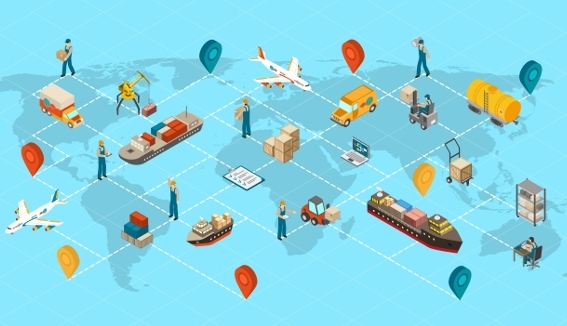
International trade is an exchange involving a good or service conducted between at least two different countries. The exchanges can be imports or exportsImports and ExportsImports are the goods and services that are purchased from the rest of the world by a country’s residents, rather than buying domestically. In many countries this trade represents a significant share of their gross domestic product (GDP).

History

While international trade has existed throughout history (for example the Silk Road, Amber Road, Trans Atlantic Slave trade, Salt Roads), its economic, social, and political importance has been on the rise in recent centuries. International trade has a rich history starting with barter system being replaced by Mercantilism in the 16th and 17th Centuries. The 18th Century saw the shift towards liberalism. The First World War changed the entire course of the world trade and countries built walls around themselves with wartime controls. Post world war, as many as five years went into dismantling of the wartime measures and getting back trade to normalcy

Differences with Domestic Trade

1)International trade is, on paper, not different from domestic trade as the motivation and the behavior of parties involved in a trade do not change fundamentally regardless of whether the trade is cross border or not.

2)However, in practical terms, carrying out trade at an international level is usually a more complex process than domestic trade. The main difference is that international trade is typically more costly than domestic trade.

3)This is due to the fact that a border typically imposes additional costs such as tariffs(an excise that is paid on the sale of imported goods), time costs due to border delays, and costs associated with country differences such as language, the legal system, or culture.

Most Traded export products

They are Crude Oil followed by Cars, Processed Petroleum Oils, Phone systems, Integrated Circuits, Autombile parts, Gold, Computers, Aircraft, Diamonds etc.

Top Traded commodities by value – Exports

  1. Mineral Fuels, Distillation products
  2. Electronics
  3. Nuclear Reactors
  4. Machinery
  5. Vehicles
  6. Plastics
  7. Optical Photo
  8. Medical apparatus
  9. Pharma products
  10. Pearls, Precious Stones.

Largest Countries by International Trade

  • European Union
  • United States
  • China
  • Germany
  • UK
  • Japan
  • France
  • Netherlands
  • Hong Kong
  • South Korea
  • Italy
  • Canada
  • Belgium
  • India
  • Singapore
  • Mexico

Audacity and controversy after its new privacy policy

Audacity is free and open-source software that is available for Linux, Windows, macOS, and other UNIX operating systems. The project was started by Dominic Mazzoni and Roger Dannenberg in the fall of 1999 at Carnegie Mellon University, Pennsylvania. The software was officially released on May 28, 2000. It is a digital audio and recording application. It is one of the most popular free and open-source software with over 100 million downloads.

In July 2021, the software was acquired by the Muse Group. The acquisition has brought several changes in the privacy policy of the software. Audacity is very popular software in the audio editing space and is being used by beginner podcasters and musicians to professionals.  The recent changes in the privacy policy under the new ownership have led to accusations that it is spyware now. The new policy states that alongside collecting user data for “app analytics” and “improving our app”, which is not unusual. But further in the policy statement, it’s mentioned that the data collected will also be used for “Legal enforcement”.

The policy is a little unclear and it states:

“It may share personal data with “any competent law enforcement body, regulatory, the government agency, court, or other third parties where we believe disclosure is necessary.”

https://www.audacityteam.org/about/desktop-privacy-notice/

The language used quite vague but roughly it can be interpreted that Audacity will share data if requested by the law enforcement or court order. But they can also transfer more data if there is a potential buyer or merger in the future.

Another concerning change is the banning of under 13 years old users which was not a case earlier. This also violates the license under which the software is currently distributed.

It has been a concern for many users of the program. But this also raises a bigger question about data collection. This also hints at the intention of the purchase. The software already has a user base of millions and the potential of data collection is rather high. The policy to further distribute the data to third parties is a decision that is being bet with the most criticism. Another thing to understand is that Audacity is a small lightweight piece of open-source standalone software. But with this new policy, the software might no longer remain offline software. But these are still speculations.

Some years back similar instance occurred when Oracle Corporation had acquired a very popular office suite: Open Office. As users and contributors were not happy with the changes under the new ownership of Open Office, a new fork of Open Office was created. Contribution for this new Open Office alternative, Libre Office had increased in a very short period of time and it emerged as a viable successor of Open Office. Soon Libre Office also replaced Open Office in most of the future Linux distributions. There is already a new fork of Audacity and it is being actively worked on.

But we can also interpret it as a case of incorrectly drafted writing. There can be a possibility that the language used in the new policy changes was understood differently and things got overblown.

References:

OTT ; THE NEW PLAYGROUND!

Image source

Likewise, the 90s and early 2000s kids and teens were always found playing various sports on the grounds be it in the scrounching heat of summer Or the rainy days. The Gen Z today, are always found sitting in the corner of their rooms, binge watching several movies and series. Now as we got the reference to the title. Let’s take a look at some proofs of it;

According to Deadline’s september 2020 report, “NETFLIX has thrived during COVID-19, adding about 26 million global subscribers in the first half of the year to reach a total of 193 million. The streaming giant has fended off competition from a handful of multi-billion-dollar services coming to market over the past year, including Disney+, Apple TV+ and HBO Max.

According to Omdia (which excludes subscriptions from bundled offers), as of December 2020, Disney+ Hotstar had 18.69 million subscribers, a big jump from 5.36 million in 2019. Amazon Prime Video had 5.83 million subscribers — up from 4.34 million in 2019. The subscriber count of Zee5 and SonyLiv stood at 2.7 million (up from 1.99 million) and 1.81 million (up from 6.5 lakh), respectively, in 2020.

Are you a contributor to these numbers too?. Mostly yes right. OTT platforms, the numerous released web series and the movies has been the biggest buzz of year 2020. While not being permitted to move out of their homes, continue to work Or study properly due to closure of everything, all what people seemed to be left with to entertain themselves was their smartphones, laptops, TVs etc. Some considered this free time, sitting home and watching movies as freedom. Others saw them out of their boredom. Meanwhile the lack of fresh and entertaining content on TV due to lockdown, the slowly growing trends of OTT took a leap up to tremendous success all at once. And thereby arrived a wave of opportunities for the VOD Providers. Each and every every app started collaborating with makers to spruce up their libraries with better shows than competitors and gain as much paid subscribers as possible, leading to a terrific kick start to a era of Digital media. Not only are the platforms realising the need for more and better content but also the demand for the originals hit the grounds due to heavy competition. Netflix, which is the most premium OTT platform in India, charging Rs 499 per month, invested Rs 3,000 crore on Indian originals in 2019-2020. The time spent by each user on these shows increased rapidly, which made every app to double the efforts for attracting more and more rush their way.

Image source

Are These Investments Worth It?

According to reports and speculations future of OTT only seems to get better with time. As all the individuals be it kids, teens or adults with access to high connectivity, smartphones and other smart electronic devices and especially thousands of options of releases to watch everyday are only expected to get more and more addicted to this digital media. Being known to western culture, youngsters today are more into the concepts of privacy, space and being happy by themselves. Rather, than playing outdoor games with friends and being active around. And of course the lockdown restrictions and smartphone fever is hidden from none, which has contributed to growth of desirability of audience towards OTT. Along with that curbing of Theatre releases, also influenced bigger production houses to find their way to exploring VoD platforms. Another important feature here is unavailability of Censore board for OTT yet, which gives users the absolute right to choose what kind of creatives they want to watch. Having options of so many different platforms, with a vast choice of seamless content available on every platform, at reasonable prices, on any device of your choice within comfort of home or at every possible place and at any point of time in the day is and will be all what a person, especially the ones trapped in lockdowns could ask for.

Thus, Current scenarios indicate the most wide range of upcoming opportunities to both foreign and local VoD providers, proving it to become a long term market trend. While the maitained leadership to be expected from the platforms providing the most user friendly features in their apps and sites along with the best content as per the viewers’ personal choices.