Digitization with a human touch

A couple of days back, I was experiencing a bit of headache due to such long hours of online classes and so I decided to buy a pair of spectacles. During an online session, I just casually mentioned my intention when my friend suggested me to schedule an online appointment in Lenskart. I was a bit surprised that I failed to think about that in the first place, so I said I will check that out. So booked an appointment today and waiting for their response.

Now one might think that this is so weird because this method of digital appointment and 3D trying existed for such a long time and that’s true, no doubt. But what’s surprising is that, may people, including me, who looked for things in offline mode, they are now resorting to try out even the rarest of things in the online mode. We are constantly being surrounded by technology and all kinds of buzzwords “WFH”, “webinar”, ‘zoom’, ‘virtual coffee break’ and so are constantly bugging our life. We are progressing towards ‘humanized technology’ where technology, especially Artificial Intelligence, is completely integrated with a normal human life.

That being said, technology also needs to adapt to human life, meaning that the technology should also be human-friendly. Just engineering a technology to do human-like work will not help, rather it should also be capable enough to assist the humans in every possible way. Multiple reasons exist as to why such integration or amalgamation between technology and human is necessary. Firstly, for convenience. Human being are such generations who need specific information in the fastest and efficient way possible. So technology should be streamlined in a way to alleviate the situation. Presently, Microsoft and Google are looking out for such avenues. Second, is the simplification. We always look up to technology when we face any complex situation because we have always known technology to reduce the complexities of our lives. Since we are dealing with apps and software all the time, organizations should pay heed to the situation so that we, human being can find it easy to search and asses the information. Thirdly, emotional quotient factor. Technology is in fact great when it comes to assess human beings, especially during performance appraisal process, to provide the ratings. Now since we have converted our homes to cubicles, it is imperative that surveys which previously used to work, will fail. Technology should be leveraged to use emoticons and mood sensors to understand the non-verbal cues as well as which emoticons they use to respond to certain events. Fourth, and last but not the least, which is the most important is inclusion. Not all of us are tech-savvy. Many are trying to learn and grasp the technical way outs. It is very important that technology creates an inclusion environment so as to make them relevant in the workforce.

To summarize, we might be progressing rapidly towards the digitization phase, but we should not forget the human aspect to bring about this change. Both has to exist concurrently.

Without the other, one cannot exist.

Source: Self

Best low-risk Investments in 2020

Due to the Corona Virus Global Pandemic 2020, our economy has faced unprecedented challenges. With businesses shutting down and stocks facing a fall, INVESTORS are looking for stability in their returns by opting for low-risk investment options. Low-risk investments earn only modest or meager returns; and inflation can erode the purchasing power of money stashed in low-risk investments. But it all depends on what your economic requirement is and how much risk you are willing to accept.

Photo by Pixabay on Pexels.com

Lets dive into the top low-risk Investments in the year 2020.

  • High YEILD Savings Accounts.

Savings accounts offer a modest return on your money. A savings account is completely safe in the sense that you’ll never lose money. Most accounts are Government insured up to certain limits, so you’ll be compensated even if the financial institution fails.

  • Saving Bonds

Scrictly speaking rather than investments these bonds are more like saving instruments. Bond is a good choice for protection against inflation because you get a fixed rate and an inflation rate added to that every six months.

  • Certificate of Deposits

With a CD, the bank promises to pay you a set rate of interest over a specified term if you leave the Certificate of deposits intact until the term ends. Some savings accounts pay higher rates of interest than some CDs, but those so-called high-yield accounts may require a large deposit.

  • Money Market Funds

Unlike a CD, a Money market fund is liquid, which means you typically can take out your funds at any time without being penalized. Money market funds usually are pretty safe. The bank tells you what rate you’ll get, and its goal is that the value per share won’t be less than $1.

  • Corporate Bonds

Companies also issue bonds, which can come in relatively low-risk varieties (issued by large profitable companies) down to very risky ones. The lowest of the low are known as “junk bonds.” When you buy a corporate bond, you’re loaning money to the company. In return, you receive periodic interest payments until the bond matures and your principal investment is returned.

  • Dividend paying stocks

A dividend is a portion of a company’s profits paid out to the company’s shareholders. When a company makes a profit, it can choose to reinvest that profit back into the business, but sometimes it pays a percentage of it back out to shareholders. Not every company pays dividends, but those that do often have slow, reliable growth.

  • Preferred Stocks

Preferred stock is more like a lower-grade bond than it is a stock. Still, it may fluctuate substantially if the market falls. Like a bond, preferred stock makes a regular cash payout. But, unusually, preferred stock may be able to suspend this dividend in some circumstances, though often it has to make up any missed payments.

Building an investment portfolio that has at least some less-risky assets can be useful in helping you ride out the volatility in the market, and there’s been no shortage of that this year.

New Domestic Cleaning Technologies That Help Save Water

Technology has always aimed in making our lives better – be it the automatic machines or smart devices- appliances have long brought convenience to our lives. 

But in the World of Climate Change and Environment preservation, we need technology to focus on Sustainability in order to save resources for the future generations.

CLEAN WASHING, LESS WATER

Washing Machines and Dish Washers have gained popularity across various parts the country due to their efficiency and convenience. But are they also water efficient?

The advertisements for various washing machines now have started to show how one can save more than two buckets of water when the clothes are washed in the machine as compared to when they are washed by hand. Dishwashers nowadays use ultrasonic technology to reduce consumption of water while making sure there is no reduction in the efficiency of cleaning. Due to technology we have been able to invent appliances that help in deeper cleaning and use less water.

DAILY ROUTINE, WATER WASTAGE

Right from brushing our teeth to taking a shower we use water that very conveniently reaches our house in pipes and showerheads

But not to worry about saving water anymore as the latest achievement in the field of technology is OPTIMIZED showerheads designed to maintain the flow pressure while drastically reducing the water consumption. One can research and purchase the one which best suits your showering needs and also saves water.

FLUSHING ACTION, SMART SOLUTION

Technologists have been continuously working towards designing a flush system to produce an alternative which is more hygienic and water-efficient in its operation. 

Apart from standard improvements, there are new water treatment systems being developed which could help recycle sink water to flush toilets in Indian homes in the near future. Such a system would save gallons of water, while making the required amount available for comprehensive and hygienic flushing action.

SUSTAINABILITY BEGINS AT HOME

The simplest method for conserving water is to turn off the tap whenever possible.

Running the water when you’re brushing your teeth, for example, wastes at least a quart of water. That may not seem like much, but it can really add up over time: a family of four could save at least 60 gallons of water a month by simply turning off the faucet.

FLOWING FAUCETS

New faucets utilize several different kinds of aerators, but all conserve water without sacrificing pressure. Older faucets use three to seven gallons of water per minute, while newer ones can cut that to around two gallons per minute, or even less.

WASTING WATER FOR WASHING WASTE

New low-flow toilets use 1.6 gallons per flush. They work as well as the older types but use considerably less water. Homeowners can also consider using dual-flush toilets, which offer two settings, depending on the type of waste in the bowl.

WATER HEATER, PRESERVE DROPS

A small pump that runs on minimal electricity can be attached to your hot water system and can help keep hot water circulating when it’s not in use. This prevents waste of up to 10 gallons of water while waiting for the shower to heat up. Tank less water heaters offer the same convenience, but cost more; a recirculation system can be sometimes be installed for as little as $300.

FIX LEAKS, SAVE GALLONS

Have water leaks in your home fixed right away. Even a tiny leak can quickly add up to a huge amount of wasted water. A faucet leak of just one drip per second can waste more than 2,000 gallons of water in a year, according to the U.S. Geological Survey.

These are some of the latest technologies that have brought the twin objectives of more hygienic homes and water conservations to the fore. As more manufacturers innovate, such technologies are projected to become standard in all Indian homes. Helping create cleaner homes at the cost of less water is also a mission of MODERN TECHNOLOGY AND SCIENCE, a movement dedicated to creating a more sustainable future for our water resources. You can also support such initiatives they’ve undertaken and join in to help conserve water for a healthier tomorrow.

MOST LOW-PRICE & AFFORDABLE INTERNET IN THE WORLD

Internet has become the most essential virtual commodity due to the Global Pandemic 2020. Its demand has reached a peak now more than ever. It has been declared as the basic necessity along with Food, Clothing, Shelter and Education.

In most Countries, schools and colleges are functioning through digitalized classrooms which require high speed data. 75% of office goers are working from home and the servers that connects the employers to the employees is kept alive on internet connections.

How can everybody afford the Internet? A recent report by Visual Capitalist reveals how much 1GB of mobile data costs in every country. Let’s have a look at what it costs to stay virtually connected in many Countries of the World:


1) India:

The Visual Capitalist report states that India has the most-affordable mobile data plans worldwide. India offers 1GB mobile data for just under Rs. 7, which is the cheapest in the world.

 Why is data so cheap in India? A significant factor is the country’s intense market competition, driven by Reliance Jio—a telecom company owned by Reliance Industries, one of the largest conglomerates in India. Reliance Jio launched in 2016, offering customers free trial periods and plans for less than a $1 a month. This forced other providers to drop their pricing, driving down the overall cost of data in the region.


2)  Sri Lanka:

Mobile internet in India’s southern neighbouring country, Sri Lanka, costs roughly Rs 38 per 1GB data. Some of the biggest Telcos in the country are Dialog, Airtel Lanka, SLT Mobitel, etc.


3)  Russian Federation:

1GB of mobile data plan in Russia costs roughly Rs 39. This makes Russia the ninth most-affordable country for cheap mobile data plans. Some of the biggest telecoms in the country, which is the fourth biggest smartphone market, are Mobile TeleSystems (MTS), Beeline, MegaFon, etc.


4)  Vietnam:

Mobile Internet in Vietnam costs roughly Rs 43, which according to the latest data, ranks 10th in the list of countries that offer the most affordable 1GB data plan. The biggest telecom operators in the Asian country are Viettel, MobiFone, Vinaphone.


5)  Italy:

Italy ranks fourth in the list of countries that offer the most affordable data plans worldwide. In Italy, 1GB of mobile data Rs.32.


6)  Israel:

 1GB of mobile data in Israel costs roughly Rs 8, making it the second most-affordable nation for internet usage.


7)  Ukraine:

Ukraine shares a similar per GB mobile data tariff cost as Kazakhstan, where 1GB mobile data costs Rs 34.


8)  Somalia:

1GB mobile data in Somalia costs roughly Rs 38, slightly cheaper than Sri Lanka’s per GB cost. The biggest telecom operators in the African country are Hormuud, Telecom Somalia, etc.


There has been a significant surge in the number of internet users over the last few years, which has led to telecom service providers competing against each other and lure consumers with the most value-for-money packs. the internet in India is quite affordable if you compare it with the rest of the world. 

Jack Ma’s Ant Group chooses Hong Kong and Shanghai for its Mega IPO

One of China’s biggest tech firms has chosen to stay home for its blockbuster IPO, shunning Wall Street where Chinese companies are facing heightened Scrutiny because of rising geopolitical tensions.

Ant Group announced on Monday that it is planning “a concurrent initial public offering” in Hong Kong and on Shanghai’s Star Market, China’s answer to the Nasdaq extending a series of mega tech listings amid the fallout in US-China trade relations.

Ant Group, previously known as Ant Financial, is an affiliate of Alibaba Group Holding, the owner of the South China Morning Post.

Ant is affiliated with E-commerce giant Alibaba, which raised a record $25 billion when it debuted on Wall Street in 2014 still the world’s second largest IPO to date. Ant owns Alipay, one of the most popular payment apps in China, and also offers online financial services such as loans, investments and credit scoring systems.

While the provider of the Alipay service is still discussing the size and timing of the share sale, the outcome is likely to be one of the largest initial public offerings in years. Stock analysts are valuing Ant at more than US$200 billion, higher than state-owned China Construction Bank and just shy of Bank of America’s market capitalisation.

Alibaba received a 33 per cent equity interest in Ant Financial in September last year under a restructuring that also ended a profit-sharing arrangement between them, according to its prospectus in November. While Alibaba does not control Ant Group, its co-founder and China’s richest man Jack Ma effectively controls about 50 per cent of the voting interest in Ant Group, according to its annual report.

The public listing will enable Ant, which operates the Alipay wallet used across Alibaba’s e-commerce networks, to work toward several goals: digitize China’s service industry, such as getting mom and pop shops in far-flung regions to use its payments service; drive domestic demands, such as being a conduit of government-issued coupons for consumers amid coronavirus pandemic; expand globally through its e-wallet partners in nine countries; and finally, invest in new technologies.

Bankers are valuing Ant at a staggering $200 billion, according to sources from Reuters. The company declined to comment on its valuation. If Ant sells 10% of the company in the IPO, it would generate $20 billion in proceeds, which would place it third in terms of the largest IPO deals ever, just behind Alibaba’s $22 billion IPO and Saudi Aramco’s $25 billion IPO.

TIPS TO FIND YOUR PASSION

Some people are born understanding their passions, but others have to work to find them— and it is overwhelming to consider how to begin. The first step is to start. Below are five tips to help you on your journey to finding work and hobbies you are truly passionate about:

1. WHAT DO YOU DO WELL?

This question helps you uncover that unique talent that sets you apart from others. Perhaps you’re good at public speaking or motivating others. Or maybe you’re good at finding computer bugs or supporting your friends through tough times. Whether you have a hard or soft skill, knowing what you do well will put you on your way to using your talent in your purpose.

2.   WHAT DO THE PEOPLE AROUND YOU SAY ABOUT YOUR SKILLS?

Unfortunately, it can be hard to recognize your own talent. When something comes naturally, it doesn’t always seem special. To get some help, ask your family or friends what they think you’re good at doing. This question gets to the heart of recognition “Most of us are not self-aware,” says Maxwell. “We all have blind spots, but you can ask others to help you identify your talents. “Ask several people, suggests Maxwell. When you start to hear certain talents over again, you’ve identified an area of strength.

3.   IF YOU COULD DO OR BE ANYTHING, WHAT WOULD YOU DO OR BE?

This question taps into your internal desires, and can help you identify your purpose. A good way to answer this question is to consider those things you like to do in your free time or the projects at work you volunteer for or seek out. You can also think about the spots in the day when time seems to fly—what are you doing when you get lost or immersed in a project?

These things should also align with your talent, and it’s important to not confuse purpose with passion, says Maxwell. “Sometimes your passion is something you’re not any good at,” he says. “If you’re passionate about something you’re not good at, you can make it a hobby, not a career.”

4.  WHAT GIVES YOU RESULTS WHEN YOU DO SOMETHING?

Your purpose will give you a return, and this question helps you identify the things you do that generate results. For example, if your talent is sales, you likely hit your goals every month. Or if you are good at innovative thinking, you might share ideas at work that prompt new projects. Pay attention to the tasks you do that get you accolades and awards.

Strengths and purpose are more than knowledge, says Maxwell. “Knowledge is overrated,” he says. “I can ask Siri, and she’ll tell me what I need to know. But what value is something if you know it but don’t use it? The result of knowing or learning is action application.”

5.   HOW CAN YOU GET BETTER?

Once you identify your uniqueness, you need to fine-tune and work harder at it to set yourself apart. While having talent helps make you special, developing it further can make you strong. “Your growth potential is connected to your strengths,” says Maxwell. “In your weak areas, your growth potential is low, but when you’re working to improve your strength, you have a higher capacity.”

Mark Twain once said the two greatest days in a person’s life are the day they’re born and the day they discover why. Deep? Definitely. But let’s be honest: the first day is a somewhat passive experience. The second day, however, can feel like a lot of pressure. While some of us can quickly identify our purpose (in our careers, or otherwise), others may struggle to answer the question “Why am I here?”

No one has ever been successful doing something that they didn’t like, and no one has ever been successful doing something they can’t do well, says Maxwell. “I see millions of people every day doing something they don’t like doing and wondering why they’re not a success,” he says. “Success is knowing your purpose in life and having a growth plan to help you reach your maximum potential.”


The New Consumer Protection Act,2019 in India is an upper hand and an added advantage for the consumers in manifold ways

The Consumers can now cheer as the Consumer Protection Act, 2019 has recently replaced the three decade old Consumer Protection Act, 1986. The Consumer Protection Act, 2019 which came into effect on Monday (July 20) has replaced the earlier Consumer Protection Act, 1986.

The new Act as per the Experts say that “it gives more power to the consumers”. It seeks to revamp the process of administration and settlement of consumer disputes, with strict penalties, including jail term for adulteration and misleading ads by firms.

On July 20, 2020 certain provisions of the Consumer Protection Act, 2019 came into force as notified by the Central Government. Following the the key features of the relevant provisions:-

Key features of the Consumer Protection Act, 2019 which came into effect on July 20, 2020:-

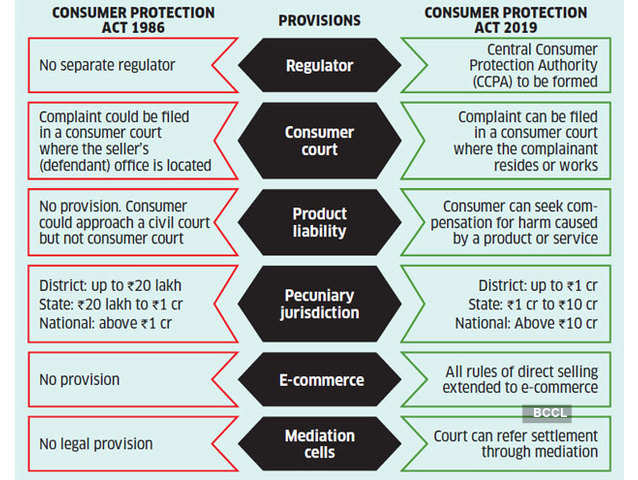
1) Consumers can now institute a complaint from where they reside or work for gain.

2) The original pecuniary jurisdiction of the District Commissions has increased upto ₹1 crore from ₹20 lakh earlier.

3) The Pecuniary jurisdiction of State Commissions has been increased from ₹1 crore to Rs. 10 crore.

4) The National Commission can hear cases above ₹10 crore when compared to above ₹1 crore earlier.

5) While the provisions relating to e-commerce are not yet notified, a section relating to electronic service provider (covering software services, electronic payments) is notified.

6) The opposite party needs to deposit 50% of the amount ordered by the District Commission before filing an appeal before the State Commission. Earlier, the ceiling was a maximum of ₹25,000, which has been removed.

7) The limitation period for filing of appeals to the State Commission has been increased from 30 days to 45 days.

8) The Parties can be allowed to settle the disputes through mediation.

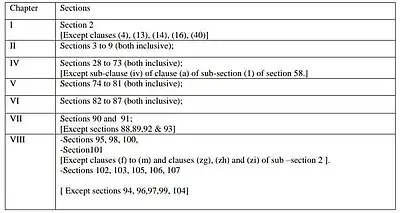
Following are the Sections which came into force:

Consumer Protection Act 2019- Sections to come into force from July 20,2020

Above mentioned provisions pertain to the Consumer Protection Councils, Consumer Disputes Redressal Forum, Mediation, Product Liability, punishment for manufacturing, selling, distributing etc spurious good or products which contain adulterant.

As per the rules, the e-commerce players will have to display the total ‘price’ of goods and services offered for sale along with break-up of other charges. Only a few certain miscellaneous provisions with regards and respect to the powers of the Central and State Government to make the rules and regulations have also been enforced.

On misleading advertisements there is provision for jail term and fine for manufacturers. There is no provision for jail for celebrities but they could be banned for endorsing products if it is found to be misleading.

For the first time there will be an exclusive law dealing with Product Liability. A manufacturer or product service provider or product seller will now be responsible to compensate for an injury or damage caused by the defective product or deficiency in services.

The Act has also defined an “e-commerce” as the buying or selling of goods or services including the digital products over digital or electronic networks. The existing definition of e-commerce has been adopted from India’s FDI Guidelines on e-commerce.

The definition of ‘e-commerce Entity’ as provided under the FDI Guidelines includes inventory and market place models.

There is also a provision for class action law suit for ensuring that rights of consumers are not infringed upon. The authority will have power to impose a penalty on a manufacturer or an endorser of up to 10 lakh rupees and imprisonment for up to two years for a false or misleading advertisement.

WEBSITES REFERRED

1)https://consumeraffairs.nic.in/acts-and-rules/consumer-protection

2)https://www.barandbench.com/news/law-policy/provisions-under-consumer-protection-act-2019-to-come-into-force-on-july-20-2020-centre-notifies

3)https://www.google.com/amp/s/www.thehindu.com/news/national/tamil-nadu/new-consumer-protection-act-gives-more-power-to-consumers-experts-say/article32135908.ece/amp/

4)https://www.google.com/amp/s/www.livemint.com/news/india/consumer-protection-act-rules-for-e-retailers-to-be-effective-by-this-weekend/amp-11595291549084.html

5)https://www.google.com/amp/s/zeenews.india.com/economy/new-consumer-protection-act-2019-comes-into-force-today-know-how-it-will-benefit-you-2297012.html/amp

6)https://www.google.com/amp/s/m.economictimes.com/wealth/spend/heres-how-consumers-will-benefit-under-the-new-consumer-protection-act/amp_articleshow/70711304.cms

7)https://www.google.com/search?q=consumer+protection+act%2C2019&tbm=isch&ved=2ahUKEwjOhv7-sN7qAhVIH3IKHTOCBfMQ2-cCegQIABAC&oq=Consumer&gs_lcp=ChJtb2JpbGUtZ3dzLXdpei1pbWcQARgAMgQIIxAnMgUIABCxAzIFCAAQsQMyBQgAELEDMgUIABCxAzoHCCMQ6gIQJzoCCAA6BwgAELEDEEM6BAgAEENQ0xRYzipg1jBoAnAAeACAAZABiAGHCJIBAzAuOJgBAKABAbABBcABAQ&sclient=mobile-gws-wiz-img&ei=e-QWX47dJsi-yAOzhJaYDw&bih=682&biw=393&prmd=ivn#imgrc=eILduqMFjleJaM

8)https://www.vecteezy.com/free-vector/consumer

9)https://www.google.com/amp/s/www.livelaw.in/amp/news-updates/most-provisions-of-consumer-protection-act-to-come-into-force-160003

Key to being Financially Independent in India

We all work right from graduating till retirement for five days a week -sometimes six days – only to spend what we have earned. In the midst of this daily hustle, how much time do we actually devote to plan for financial independence? Hardly any! Is financial independence a plan only for retirement? The answer is NO.

Photo by RODNAE Productions on Pexels.com

The first step towards financial independence is to not procrastinate it. A single drop of penny today will contribute to an ocean of financial resource. Then comes the below mentioned road map to a start of a great solo journey of life.

  • Financial planning – First, define clear and realistic financial goals like child’s education or a comfortable retired life. It is critical to factor in inflation while drawing up your financial plan. If you are planning your child’s education, you should be aware that a professional degree that costs Rs.4 lakhs today, is likely to cost around Rs.20 lakhs, 10 years from now.
  • Personal research – While a qualified financial planner can give you investment advice, the importance of doing your own research cannot be undermined. You can rely on credible websites to understand the pros and cons of each financial instrument.
  • Personalized financial plan – A common mistake is to opt for a particular plan simply because others are doing so. An investment plan must be customized according to personal factors such as your risk appetite, financial goals and life-stage needs.
  • Adequate time horizon – It is necessary to align the investment plan and the expected time frame for getting returns out of it. It is irrational to expect immediate returns from long term products like insurance, PPF etc.
  • Risk diversification – A smart investor would always ensure that the risk is distributed over a variety of instruments. A high risk instrument such as, an equity should ideally be balanced with a stable one such as bonds. Your investment portfolio should be a judicious mix of equity, debt, life insurance, real estate etc.
  • Planning for unforeseen events – Along with the current assessment of your future needs, risk of unexpected events must also be factored in. As a woman, it is crucial to be financially prepared to deal with unfortunate events like death, divorce etc.
  • Regularly track your investment – It is common to become complacent and expect the returns to flow in, once the investments are done. However, it is every investor`s responsibility to keep a tab on the performance of their portfolio.
  • Proper paperwork – There have been several instances where an investor is unable to claim returns from a bona fide investment simply because of misplaced or wrongly-filled documents. Proper documentation is a must to safeguard your investments. Also, ensure that someone other than yourself is fully aware of all your investments.
  • Securing your future: As a working member of the family, it is crucial for you to have adequate insurance to ensure that in your absence, your family does not go through any financial stress. Investing in a simple term insurance plan will ensure financial continuity.
  • Plan and execute – Last, but most important is to begin planning for all your financial needs from an early stage. The cost of postponement will weigh heavily on you in the later years when investing will become a compulsion rather than a choice.

In this world of instant gratification, have patience and watch as your pot fills with money one sweat and hard work at a time. Kudos to being financially independent!

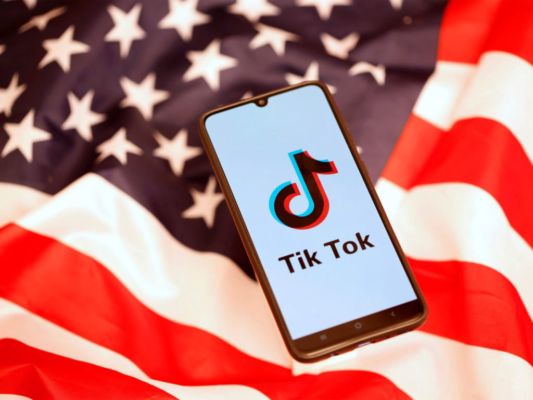
The US may impose ban on TikTok along with other Chinese apps after India.

Mike Pompeo, the U.S. Secretary of State, has said that the country is contemplating to ban Chinese apps which include the majorly popular app, TikTok. Having said that, he also has mentioned how TikTok has caused security breaches by sharing information with the Chinese government. The app has experienced massive growth all over the world and now this statement by the Secretary of State could cause a major blow to the app.

On being asked a question which was on the lines of recommending users to download TikTok, Mike Pompeo replied saying, ‘ Only if you want your private information in the hands of the Chinese Communist Party. ‘

This is definitely not the first time the TikTok has received a backlash on how this particular app is responsible for relaying information of a particular country back to China, India too has made the same allegations recently.

The ban may be seen in coming week after India had raised questions against The Chinese apps for sharing information with other servers located outside India. This can be huge blow to TikTok company after its ban in India.Now, U.S. lawmakers are also of the same opinion that the app definitely has some serious security concerns that should not be overlooked at any cost. Chinese laws also need domestic companies ‘to support and cooperate with intelligence work controlled by the Chinese Communist Party.’ The U.S government has now made it very clear that the citizens of the country should be wary of the app.

The Chinese based app, which is owned by ByteDance, was asked to clarify the statements that stated the security concerns, to which it had completely denied the same. ‘We have no higher priority than promoting a safe and secure app experience for our users. We have never provided user data to the Chinese government, nor would we do so if asked,’ TikTok has mentioned in the email it has sent.

It has now created a safe distance from its Chinese roots hoping to calm the global uproar it has created. In the case of the U.S., it is still unclear if the sole reason behind the thought of banning this app is purely based on security concerns.

The Concept of Crisis and its way of management.

There are innumerable number of definitions for a crisis. Basically the term crises can be defined as a significant threat to operations which further leads to the negative results if not handled properly. Some crisis like products harm and industrial crisis can result in injuries and even loss of lives. The most common cause of a Crisis situation is the financial losses by disrupting the operations of any industry, corporate house or in any organization may it be from the government or private sectors. Crisis creates a loss of market share/purchase intentions or spawning lawsuits . It can be defined as an unpredictable major threat that usually have a negative impact on the organisations, stakeholders or industries. It has three vital features:-

  • A crisis can only be expected and can never be protected (one cannot say exactly when it will occur) .
  • It creates a major threat and has the potential to hamper organisational operations in someway or other.
  • It may happen as a result of product tampering, researchersresearchers have written that a crisis is a disruption that occurs physically . Since a crisis threaten the industry, so it may also happen as a result of an accident and because of the negligence or criminal behavior of an individual or organisation.

The crisis runs the following risks :-

  • Escalating in industry.
  • Falling under close media or government scrutiny.
  • Interfering with the normal dealings of business.
  • Hampers the positive image enjoyed by a company and its officers.
  • Damaging a company’s bottom line.

There are various categories of corporate crisis which includes- Technological Crisis, Natural Disaster, Confrontation Crisis, Rumors, Crisis due to Workplace Violence, Crisis of Malevolence, Crisis of Organisation misdeeds etc. and in order to overcome or manage these all crisis situations, a corporate developmental strategy has been designeddesigned namely termed as Crisis Management Strategy (CMS) which functions in the synthesis of strategic management and primarily aims to prevent crisis for follows up company’s advancement. It includes projection of the future based on ongoing, monitoring of a business internal and external environment, as well as selection and implementation of crisis prevention strategy and operating management. The strategy of crisis management is divided in three prominent stages- Pre crisis, Response and Post crisis situations. Among these three, the last stage is the most vital one i.e. it creates a post-mortem kind of situation to scrap out what exactly went wrong, which helps them to think of the ways better prepare for the next crisis.

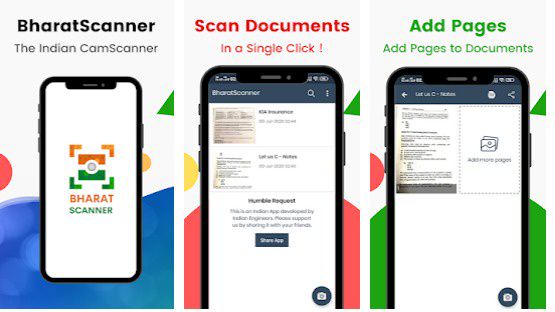
Indian option of CamScanner launched with name BharatScanner.

The BharatScanner mobile app, an Indian alternative to cam scanners, has been launched. In this app, users have got the facility from scanning documents to creating PDFs. The special thing is that this app is completely free and users will not have to pay a separate charge to use any feature.

Rating of 4.4 points found on Google Play Store

Bharat Scanner app is available on Google Play Store for users. This app has downloaded more than 10 thousand users so far and it has got a rating of 4.4 points on the Google Play-Store. At the same time, this app size is 36 MB. .

Features of BharatScanner .

Some current features of BharatScanner are as follows: .

  • Users can scan documents easily.
  • Filters have been supported in this app.
  • Users can keep their documents as PDF.
  • Users have got the facility to share documents in this app on mail and Whatsapp.

Indian government imposes ban on Chinese mobile app .

Under Section 69A of the Information Technology Act, the Government of India decided to block 59 apps as these apps were a threat to India’s sovereignty and integrity, defense of India, security of the state and public order. The government had received many complaints about these apps from various sources, including about the misuse of many mobile apps. These apps were stealing data from both iPhone and Android users.

  • लॉन्च हुआ CamScanner का भारतीय विकल्प Bharat Scanner, जानें इसकी खासियतें

Ban on these Chinese apps

Tiktok, CamScanner, Shareit, Kwai, UC Browser, Baidu Map, Shein, Clash of Kings, DU Battery Saver, Helo, Likee, YouCam makeup, Mi Community, CM Browers, Virus Cleaner, APUS Browser, ROMWE, Club Factory, Newsdog these 59 apps are banned, including BeutryPlus, WeChat, UC News, QQ Mail.

Government concerned over return of large number of Indian students from US due F1 visa issues.

The US order of July 7 stating that F1 visas will not be renewed for students if they are attending only online- lectures in the US is a concerning mater for India since the highest number of foreign students in the US are from India. The US government has announced those F-1 and M-1 (non-academic and vocational students) visa holders attending only online classes will not be allowed to remain in the US.

US Noted India's Concerns Regarding F-1 Visa Issue: Centre

India on Thursday said it has reported its concerns to the US govt about the new rule on F1 visa and urged to keep in mind the role education have played in the developing relationship between the two countries.

The concerns were expressed during the virtual foreign office consultations between Foreign Secretary Harsh Vardhan Shringla and US political affairs secretary David Hale on Tuesday. Ministry of External Affairs’ spokesperson Anurag Srivastava said that the US government has looked into the concern regarding the new rule.

During virtual meeting, Srivastava said that India is concerned about the possibility of the return of a large number of Indian students studying in the US due to new rules in visa.

The Immigration and Customs Enforcement (ICE), an agency of the US Department of Homeland Security (DHS) on Monday said that the foreign students pursuing courses in the US must return to their country if their institutes are conducting only online course due to covid-19 pandemic.

Horrors of Remote Work

Before the pandemic hit the world, working at remote locations or rather work from home was supposedly believed to give a sense of joy. But now, work from home has become the new normal with the trend hitting most of the multinational corporations. But as we are trying to combat the virus by confining ourselves to our homes, some data theft ‘viruses’ are lurking outside our homes. With most of us using the setups outside the security layers of office, data thieves are trying to tap on those setups to maximize their wealth.

Remote work might be enjoyable in all aspects, but it also possesses certain downsides which can be horrifying both the recipient and the sender of the network. Looking at various perspectives as well experiencing some, I would like to highlight a few such instances:

  1. Public Wi-Fi network. Usage of public Wi-Fi internet connection to do office work can be very unsecure owing to the malicious parties trying to tap the internet traffic to collect confidential information. Potential malwares such as Trojan horse, virus, worms, spyware, rootkits etc. can very easily damage your service with irreparable effects.
  2. Unlocked device. When working in a public location or at home, sometimes we have the tendency to just leave it and get up to do some chore or to even just get a glass of water. In the meantime the confidential data such as office website, servers or mails gets exposed to the stranger or children at home, which can lead to data leakage, thus compromising the security.
  3. Use of personal devices and networks. Most companies have started this policy where you can use your personal setups such as laptop or desktop at your home. Usually the IT Department configures all the required software in your personal device and you can use it for professional reasons. Issue arises when you are using the same device for your personal work such as installing an app or browsing in such websites which can have malicious content and thus your system, data and majorly, your confidential office data gets compromised. But then the question arises, who is to be blamed here? Is it the organization who allowed the associate to compromise company’s data with the personal setup without enough security firewall? Or is the associate who should have taken care while using it for personal uses?
  4. Wary of VPN. Many a times, the remote workers are over-confident about the confidential data-security and since VPN can make the internet connection a bit slower, people tend to just overlook it. But what they forget in the meantime is that Virtual Private Network (VPN) can restrict the flow of information or data to the intended recipient as well as encrypt the data.
  5. Exposure of home router. It’s a human habit to either go for very weak password or avoid password altogether, lest one might forget. And such a habit can easily throw us into the devil’s mouth.
  6. Opening ‘all’ kinds of e-mails. Hackers and phishers wait for the opportunity to bask in glory when they send us a very catchy and a ‘congratulatory’ kind of mail and wait for our ‘one-click’ on that mail. And after that, everything becomes a history.
  7. Device always switched-on. If we get a notification on our setup asking to restart the system in order to install the updates, we tend to reschedule it to the point when we can avoid it altogether. Non-updated device are the most-prone device to each and every kind of threat.

Just a heads up, these are some, but not exhaustive, lists of threats and danger one can face from remote work. Nevertheless, these also have their own solution but it demands a chunk of our attention and intervention. So from the next time, when you sit down and switch on your system to work, always remember there is an extra pair of eyes looking upon you.

Abort the virus, inside and outside.

Till then, stay safe.

Institutionalization of 360-Degree Feedback

One of the most dreaded times of a financial year in an organization is the Performance Appraisal time. Traditional way of conducting performance appraisal is to hold it once, usually at the end of financial year with feedback coming in from the higher levels of management that is the team lead and the reporting manager. This method works well if one is at the lower levels of the hierarchy. But this traditional method of performance appraisal is now replaced by a more flexible method by integrating feedback throughout the year or in frequent intervals, without reserving it for the special occasion.

As an associate goes up the levels of hierarchy, his or her pay component also changes. That is, the base or the fixed component decreases and the variable pay which is linked to the performance of his or her team increases. And that is where the concept of 360-Degree Feedback kicks in. 360-Degree Feedback is the process by which surveys are used to gather and analyse feedback about the performance of a particular employee (usually at a higher-grade) from about 10 or 20 people which includes colleagues, managers, vendor, customers, suppliers, supervisor, peers and other stakeholders, who have an experience working with that employee either directly or indirectly. So to sum up, a higher grade associate is usually rated on the performance as depicted by the people he or she is interacting with.

10 Benefits Of 360 Degree Feedback - Edge Training Systems
360-Degree Feedback

The mail goal of 360-Degree Feedback is to convert the intangible qualities into the strengths and deficits, which can be used as a report, thus carving out a path with highlighted points which require definite action for improvement. 360-Degree Feedback has a lot of other advantages too, some of which are:

  1. Provides deeper insight into the mode of doing a particular job, in terms of collaboration, communication and promotion of innovation.
  2. Provides an interesting contrast in how the participants view themselves and how the others see them.
  3. Gives rich data for statistical analysis and provide ratings, based on actual data, thus eliminating subjectivity.

360-Degree feedback is highly valuable and is receiving a lot of positive responses due to its objective nature, is very much candid owing to the fact that the feedback from the peers will be anonymous and is highly compelling in nature. If one analyses the very purpose of such a feedback, benefits can be reaped from the administrative perspective as well as from the personal perspective too. From the administrative perspective, the results of the feedback is used for performance appraisal and thus for performance rating which ultimately affects the compensation. For executives at higher grade, a small increase in compensation without much analysis usually has a tumultuous effect on the bottom line of the company. And from the personal perspective, the feedback, which was provided anonymously can provide the strengths and the pain points, which can be used as reference by the associate for improvement.

360-Degree Feedback works very well for the executives at higher grades because in that way, their performance is very much linked to the performance of his or her peers and direct interacts. So in one way, it can be a great tool to improve or to remove someone if that associate is unable to perform the expected. But it has to be used with great care. Not only there is a distrust regarding the results of the 360-Degree Feedback, but also sometimes the outcomes generates more questions than answers. So this mode of feedback should be handled with utmost care and with proper control.

But in one way, 360-Degree Feedback means – “Once I knew the problem, I could fix it and I had a game plan.”

Source: https://qulture.rocks/en/blog/360-degree-feedback-what-is-it-and-how-does-it-work/

Are Indian industries ready to be weaned away from China?

“Boycott China”, this is something we all have been hearing frequently since the last few weeks. This started after the dispute between China and India regarding the Himalyan border region of Ladakh. Due to this lives were lost, both Indian and Chinese soldiers died. Many Indian groups who supported Swadeshi came forward and appealed the citizens to cease the purchase of Chinese products. The idea is to effect the Chinese economy, making them realize that they can not just keep harming us while earning from us through goods and products. On 29th June the Indian government took a strong step against China by banning it’s 59 application. Some of the biggest names among them are TikTok, Shareit, Shein, UC Browser, We Chat, UC Browser etc. This didn’t end here, Indian citizens started raising their voice on boycotting Chinese products. Now people are not buying Made in China Products, there have been videos where people are seen destroying Chinese smartphones and other electronic devices.

This has led to the beginning of a war, between India and China. Large number of people are supporting this but this will also have an impact on India. Boycotting China will have impact on various sectors, be it goods, raw materials, import and export. This has to be thought practically. Do we have enough resources? Do we have enough manpower? Do we have that high technology? India imports more from China as compared to what it exports. From a small machine to a big tv, from toys to automobiles, from needle to hot water bottles, China controls majority of market as it provides the products in cheaper rate as compared to the India producers. So, why would a consumer buy the expensive product? Because of this China has control over majority of the market.

Let’s have a look at one of the sectors. Consumer durable goods, these are the goods which have a longer time span mostly 3 years, such as, Home Appliances, Consumer electronics etc. When we talk about smartphone industry the top brands in the market are Xiaomi, Oppo, Vivo, realme, controlling 72% of the market. Also, if we talk about Home Appliances, the product is made locally but the dependency on China for essential components varies from 25-70%. This is just one example but there are many others sectors which in one way or another are dependent on China.

Unless and until we develop an ecosystem for components it is impossible to reduce dependency on China overnight. It will take time and we will have to find an alternative which is available globally.

Thus initiating a trade war when Indian manufacturing ability is limited won’t help.