What Is Fast Fashion?

Clothes shopping used to be an occasional event—something that happened a few times a year when the seasons changed or when we outgrew what we had. But about 20 years ago, something changed. Clothes became cheaper, trend cycles sped up, and shopping became a hobby. Enter fast fashion and the global chains that now dominate our high streets and online shopping. But what is fast fashion? And how does it impact people, the planet, and animals?

It was all too good to be true. All these stores selling cool, trendy clothing you could buy with your loose change, wear a handful of times, and then throw away. Suddenly everyone could afford to dress like their favourite celebrity or wear the latest trends fresh from the catwalk.

Then in 2013, the world had a reality check when the Rana Plaza clothing manufacturing complex in Bangladesh collapsed, killing over 1,000 workers. That’s when consumers really started questioning fast fashion and wondering at the true cost of those affordable t-shirts. If you’re reading this article, you might already be aware of fast fashion’s dark side, but it’s worth exploring how the industry got to this point—and how we can help to change it.

What is fast fashion?

Fast fashion can be defined as cheap, trendy clothing that samples ideas from the catwalk or celebrity culture and turns them into garments in high street stores at breakneck speed to meet consumer demand. The idea is to get the newest styles on the market as fast as possible, so shoppers can snap them up while they are still at the height of their popularity and then, sadly, discard them after a few wears. It plays into the idea that outfit repeating is a fashion faux pas and that if you want to stay relevant, you have to sport the latest looks as they happen. It forms a key part of the toxic system of overproduction and consumption that has made fashion one of the world’s largest polluters. Before we can go about changing it, let’s take a look at the history.

How did fast fashion happen?

To understand how fast fashion came to be, we need to rewind a bit. Before the 1800s, fashion was slow. You had to source your own materials like wool or leather, prepare them, weave them, and then make the clothes.The Industrial Revolution introduced new technology—like the sewing machine. Clothes became easier, quicker, and cheaper to make. Dressmaking shops emerged to cater to the middle classes.

Many of these dressmaking shops used teams of garment workers or home workers. Around this time, sweatshops emerged, along with some familiar safety issues. The first significant garment factory disaster was when a fire broke out in New York’s Triangle Shirtwaist Factory in 1911. It claimed the lives of 146 garment workers, many of whom were young female immigrants. By the 1960s and 70s, young people were creating new trends, and clothing became a form of personal expression, but there was still a distinction between high fashion and high street.

In the late 1990s and 2000s, low-cost fashion reached its zenith. Online shopping took off, and fast-fashion retailers like H&M, Zara, and Topshop took over the high street. These brands took the looks and design elements from the top fashion houses and reproduced them quickly and cheaply. With everyone now able to shop for on-trend clothes whenever they wanted, it’s easy to understand how the phenomenon caught on.

How to spot a fast fashion brand

Some key factors are common to fast fashion brands:

  • Thousands of styles, which touch on all the latest trends.
  • Extremely short turnaround time between when a trend or garment is seen on the catwalk or in celebrity media and when it hits the shelves.
  • Offshore manufacturing where labour is the cheapest, with the use of workers on low wages without adequate rights or safety and complex supply chains with poor visibility beyond the first tier.
  • A limited quantity of a particular garment—this is an idea pioneered by Zara. With new stock arriving in store every few days, shoppers know if they don’t buy something they like, they’ll probably miss their chance.
  • Cheap, low quality materials like polyester, causing clothes to degrade after just a few wears and get thrown away.

What’s the impact of fast fashion?

On the planet: Fast fashion’s impact on the planet is immense. The pressure to reduce costs and speed up production time means that environmental corners are more likely to be cut. Fast fashion’s negative impact includes its use of cheap, toxic textile dyes—making the fashion industry the second largest polluter of clean water globally after agriculture. That’s why Greenpeace has been pressuring brands to remove dangerous chemicals from their supply chains through its detoxing fashion campaigns through the years.

Cheap textiles also increase fast fashion’s impact. Polyester is one of the most popular fabrics. It is derived from fossil fuels, contributes to global warming, and can shed microfibers that add to the increasing levels of plastic in our oceans when washed. But even ‘natural fabrics’ can be a problem at the scale fast fashion demands. Conventional cotton requires enormous quantities of water and pesticides in developing countries. This results in drought risks and creates extreme stress on water basins and competition for resources between companies and local communities.

The constant speed and demand mean increased stress on other environmental areas such as land clearing, biodiversity, and soil quality. The processing of leather also impacts the environment, with 300kg of cehmicals added to every 900kg of animal hides tanned. The speed at which garments are produced also means that more and more clothes are disposed of by consumers, creating massive textile waste. In Australia alone, more than 500 million kilos of unwanted clothing ends up in landfill every year.

On workers: As well as the environmental cost of fast fashion, there’s a human cost. Fast fashion impacts garments workers who work in dangerous environments, for low wages, and without fundamental human rights. Further down the supply chain, the farmers may work with toxic chemicals and brutal practices that can have devastating impacts on their physical and mental health, a plight highlighted by the documentary The True Cost.

On animals: Animals are also impacted by fast fashion. In the wild, the toxic dyes and microfibres released in waterways are ingested by land and marine life alike through the food chain to devastating effect. And when animal products such as leather, fur, and even wool are used in fashion directly, animal welfare is put at risk. As an example, numerous scandals reveal that real fur, including cat and dog fur, is often being passed off as a faux fur to unknowing shoppers. The truth is that there is so much real fur being produced under terrible conditions in fur farms that it’s become cheaper to produce and buy than faux fur!

On consumers: Finally, fast fashion can impact consumers themselves, encouraging a ‘throw-away’ culture because of both the built-in obsolescence of the products and the speed at which trends emerge. Fast fashion makes us believe we need to shop more and more to stay on top of trends, creating a constant sense of need and ultimate dissatisfaction. The trend has also been criticized on intellectual property grounds, with some designers alleging that retailers have illegally mass-produced their designs.
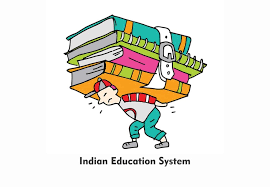

Indian Education System

Education plays an important role in the development of an individual and making him a knowledgeable citizen. It is the education that makes an individual self-reliant, helps to suppress the social evils and contribute towards the development of the society and nation as a whole. Education helps in unravelling the mystery of nature. It enables us to understand and improve the working of our society. It creates conditions for a better life. Education brings out the capabilities to fight injustice happening in society. Every individual has the right to education. 

Indian Education is one of the largest and complex education systems in the world along with China. India is committed to providing basic education to its citizens, the framework of which is defined in the National Policy of Education. Elementary education is now compulsory in India. At the time of Independence, only 14% of India’s population was literate. Now after so many decades since Independence, the number of literates has increased by fivefold.

History of Education System

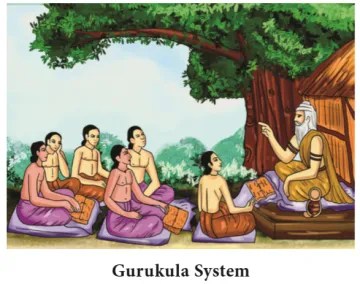
The history of Indian education system comes from the times of Ramayana and Mahabharata. The historic Indian education system is also called the Gurukula system. There were gurus then who are now known as teachers and shishyas who are called students now. The gurus and the shishyas lived together under one roof in Gurukula until the completion of their education. The shishyas were expected to help the guru in all the daily chores as part of their learning. The children belonging to higher strata of the society were taught all the subjects from Sanskrit to Holy Scriptures and mathematics to metaphysics by the gurus. The Gurukulas during those times focused on the practical aspects of life. The students were taught in the open classroom in the surrounding area of nature. This early system of education in India continued for many years until the modern education system came into the picture in the nineteenth century.

In the early 19th century, during the British period, the modern education system was brought into our country by Lord Thomas Babington Macaulay. The basic strength of this modernized education system was the examinations and a well-defined curriculum, which gave importance to subjects like science and mathematics and subjects like philosophy, metaphysics were given a back seat. The brick and mortar classrooms replaced the open classrooms in the Gurukulas. The essence of the guru shishya bond was taken over by a more formal relationship between the teacher and the student. To understand the progress of any student, examinations were conducted at frequent intervals. The focus of the education system shifted from learning to memorizing of the concepts to score good marks in the examinations.

Problems of Indian Education System

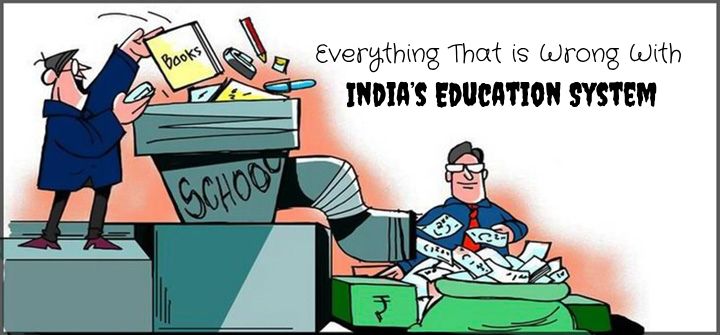
Over a period of time, it has been observed that there are many loopholes in the system of education in India. Instead of understanding the concepts, students started cramming and memorizing the lessons. Knowledge is given a backseat and scoring in high rankings takes importance. The modern parents have tuned their mindsets accordingly and their goal is to ensure that their children score good marks instead of acquiring knowledge right from the primary level. 

Private schools and colleges have been rapidly increasing in the country but the results produced by them are far beyond satisfactory. It has also been observed that the quality of teachers deteriorated with the passing of time. Our examination system is responsible for the wide skill gap. India is producing lakhs of engineers and professionals every year but only a fraction of this number is actually getting employed. This is because the Indian examination system focuses more on scoring good percentages rather than the actual continuous comprehensive evaluation. 

Research and development, which should be the cornerstone of our system, are given the least importance. The private schools and colleges focus on the admission of more students and are least interested in the quality of their education. This is the major reason why the faculties and the teachers lack skills and specialization. This is quite evident from the fact that a single professor is assigned to teach multiple subjects. 

How Can We Improve the Indian Education System?

First and most importantly we should improve the grading system. Rote learning should be discouraged completely. Teachers and faculties should focus more on the analytical skills of the students and grade them accordingly. There should be more focus on comprehensive evaluation instead of scoring only good marks. Workshops must be organized for teachers on a regular basis to keep them updated about the latest developments in the sector of education. At the same time, the curriculum should be reframed according to the present needs of education in India. 

The payroll structure of the teachers and the faculties especially in the government institutions should be improved. This step will help in motivating the teachers to develop their skills and they will take a keen interest in grooming or shaping up a student’s life and career. The government and other entities who are associated with the education sector, need to understand the importance of quality of education. Education should be a holistic process that must focus on the overall development of the physical, emotional, social and cognitive skills of a child. It needs to be a slow and cyclic process and must take place gradually to help the child develop into an autonomous, independent and knowledgeable individual.

Conclusion

An educated individual is an individual who should be able to contribute towards the betterment of the economic and social development of the society as well as the country. The true goal of education must exceed awarding the degrees and certificates to the students. Education is not a tool to earn livelihood but it is a way to liberate the mind and soul of an individual. 

International Workers Day

“Without labour nothing prospers.”

Labour Day or International Workers Day is celebrated annually on 1 May to celebrate the working class and labourers across the world. Socialist and labour unions celebrate this day by organising programmes to improve wages and working conditions of the workforce. In more than 80 countries Labour Day is a national holiday.

Before a formal Labour Day came into place, deaths, injuries and dangerous working conditions were very common among the working class globally. During the rise of industrialisation, the U.S. exploited the working class during the nineteenth century and made them work upto 15 hours a day under rigorous conditions. The rising death of the workforce in industries forced the working class to raise their voices for their safety. After efforts made by the workers and socialists, eight hours was declared as the legal time for the workers in the late nineteenth century by the American Federation of Labour.

The origin of Labour Day goes back to an incident in Chicago on May 4, 1886 known as the Haymarket Affair. On this day workers assembled as part of a peaceful rally in a strike demanding an eight hour work day. An unknown person threw a dynamite bomb at the police as they acted to disperse the meeting, and the bomb blast and ensuing gunfire resulted in the deaths of seven police officers and atleast four civilians; dozens of others were wounded. The Chicago protests led to many countries and at last they got the proper labour rights.

So, they had a long repression from the society. So, now the time has come to live respectfully and safe. Without labour no country can prosper. They are the ones who make a way towards country’s development. Their hardwork, dedication cherishes the path of development of country. So, respect them and provide safe working conditions to them. The below mentioned lives are aptly quoted;” A worker is a creator and a great asset to every nation”.

New Forms of Punishment

Section 53 prescribes five types of punishments to be meted out to a person convicted of a crime under the Code, depending on the nature and gravity of the offence,viz .:

(i) Death; (ii) Imprisonment for life; (iii) Imprisonment, rigorous with hard labour, or simple; (iv) Forfeiture of property; and (v) Fine.

It is suggested to add five new forms of punishment to the existing ones in section 53, IPC with a view to deter particular types of criminals. Such punishments will have more psychological, social and moral impact on the criminals and will go a long way in curbing crimes. The proposed punishments are: (i) Externment, (ii) Compensation to victims of crime, (iii) Public Censure, (iv) Community service, and (v) Disqualification from holding public office.

(i) Externment: Externment or banishment is a form of punishment in which an accused is sent out of the place of his residence to another place for a specified period of time as mentioned in the order issued by the court. This is done to deprive the accused of the company of his family members, friends and associates so that he or she may not indulge in criminal activities. Externment is resorted to primarily in case of anti-social, hardened and habitual criminals.

(ii) Compensation to victims of crime: Unfortunately, the victims of crime in our country do not attract the attention of law makers. Of late, Civil Procedure Code, 1973 in section 357 has empowered the court to award compensation to the victims of crime in very limited cases at the time of passing the judgment. No doubt, the higher judiciary has on times provided compensation to the victims of crime of custodial violence, sexual assault, rape, illegal detention by invoking Article 21 of Constitution, but such instance will not serve the plight of helpless victims.

(iii) Public Censure: Public Censure or social censure is one of the methods of punishment prescribed in some of the countries, such as Russia, Columbia etc., in respect of certain offences of anti-social nature, such as white-collar crimes, tax crimes, food adulteration, etc. In ancient India, public censure was considered suitable punishment for certain class of criminals.

(iv) Community Service: Community service or corrective labour is a form of punishment in which the convict is not deprived of his liberty. Corrective labour is the standard penalty given in those cases where it is considered that the accused need not to be isolated from the society. The period ranges between one month to one year in such cases. This system is used in Soviet Russia with good results. An important feature of this type of punishment is that the accused is not deprived of his liberty and he may go home after the day’s work.

(v) Disqualification from holding public office and contest elections: Disqualification to hold public office and contest election of legislature and local bodies as a form of punishment will have the adequate and desired deterrent sanction, if sincerely implemented. Representation of the People Act, 1951 disqualifies a person convicted for a period of two years or more to contest election for a period of six years. But the provisions are very limited in scope and are being abused with impunity.

Theories of Punishment in Indian Penal Code,1860

Introduction

Punishment is the sanction imposed on an accused for the infringement of the established rules and norms of the society.

Objective

The object of punishment is to protect society from mischievous and undesirable elements by deterring potential offenders, by preventing the actual offenders from committing further offences and by reforming and turning them into law abiding citizens.

Types of Theories

  1. Deterrent Theory
  2. Preventive Theory
  3. Retributive Theory
  4. Reformative Theory
  5. Multi Approach Theory

a) Deterrent Theory: According to this theory, the object of punishment is not only to prevent the wrong-doer from doing a wrong second time, but also to make him an example to others who have criminal tendencies. Salmond considers deterrent aspects of criminal justice to be most important for control of crime. Deterrent punishment is likely to harden the criminal instead of creating in his mind a fear of law. Hardened criminals are not afraid of imprisonment.

b) Preventive Theory: According to Paton:’The theory concentrates on the prisoner and seeks to prevent him from offending again in the future. The death penalty and exile serve the same purpose of disabling the offender’. Critics point out that preventive punishment has the undesirable effect of hardening first offenders, or juvenile offenders, when imprisonment is the punishment, by putting them in association of hardened criminals.

c) Retributive Theory: In primitive society punishment was mainly retributive. The person wronged was allowed to have revenge against the wrong-doer. The principle of ‘an eye for an eye’, ‘a tooth for tooth’, was the basis of criminal administration. According to Justice Holmes: ‘It is commonly known that the early forms of legal procedure were grounded in vengeance’. The advocates of this theory plead that the criminal deserves to suffer.

d) Reformative Theory: According to this theory, the object of punishment is reformation of criminals. The object of the punishment should be to reform the offender. The criminal must be educated and taught some art and craft or industry during his term of imprisonment, so that he may be able to lead a good life and become a responsible and respectable citizen after release from jail.

e) Multi Approach Theory: In fact, a perfect system of criminal justice could never be based on any single theory of justice. Every theory has its own merits and every effort should be made to extract the good points of each and integrate it so that best of all could be achieved. Punishment should be proportionate to the nature and gravity of the crime. The object of any concession given to an offender should be to convince him that normal and free life is better than life in jail.

SCIENCE AND TECHNOLOGY

Science and Technology have now become crucial parts of our life and our life has many luxuries and we are able to utilize them because of science and technology. It has helped us to do all these in short time because of the advancement in science and technology. Every day new technologies get introduced in the field of science and technology which makes human life easier and comfortable. And now it is difficult to imagine our loves without science and technology. Because of this we are now living in modern civilization and our evolution has occurred. This development in the field of Science and Technology is present in every aspect of our life and has great contributions in it.

There have been many new inventions in the field of Science and Technology which has changed the overall perspective of humans towards life and helps in modernizing the human civilization. Hence, people get the chance to enjoy the lives more comfortably and make it more pleasurable. In other days, humans now have a simple life because of science and technology. It has now expanded its wings into the fields of medical, education, manufacturing and many other areas.

WHAT IS SCIENCE ?

Science is the consists of systematic study of the behavior and structure of physical and natural world through observation, experiment and technology with the application of scientific knowledge for practical purposes. And Like everything, Science also has a journey and it has long lasting impact on the humans. Science has large contributions in the evolution of human.

WHAT IS TECHNOLOGY ?

“Technology” is the application of this scientific knowledge for practical purposes. Thee mobile, laptop etc. have now become the essential parts of our life and make use of connectivity or communication or smart technology for doing our activities. From the machines used in industries to the robots created, all fall under technological invention. So, in simpler words we can say that technology has made our lives comfortable.

Science and Technology: India

Ever since British rule, India was famous for many things and after gaining independence, science and technology, played a great role in shaping the present and future of India. Now, it has emerged as an essential source of creative and scientific developments all over the worlds. All these advancements have led to the improvement of Indian economy and assisted development in various fields including Space Technology, Mathematics, Space Technology and many more. Some of the prominent examples of these developments are railway system, smart phones etc. Such advancements only helped in launching Chadrayaan 2 and helped India earn critical acclaim from all over the world.

In conclusion, we must admit that science and technology have led human civilization to achieve perfection in living. However, we must utilize everything in wise perspectives and to limited extents. Misuse of science and technology can produce harmful consequences. Therefore, we must monitor the use and be wise in our actions.

Advancement in science and technology has changed the modern culture and the way we live our daily life.

PERFUME ‘THE STORY OF A MURDERER’BY-Patrick Süskind

Awards: 15 wins & 17 nominations given to the movie made on the story of this Novel.

7.5/10 From 189,052 Users

It has been nearly one year since I have first heard of Patrick Süskind’s literary sensation, Perfume, The Story of a Murderer. I initially thought that it was a biographical work but upon learning it was a fictional work, I was quick to add it to my growing TBR list. Basically, I bought this book for my college assignment. So how do I describe the experience? Was the anticipation worth it? It was both worth it and not I guess. I was expecting so much more and it did, on many levels, lived up to them. I guess the story was a little too short, the story ended too soon. I was so engaged that when the book ended, I was filled with pangs of regret. Lastly, my major takeaway from the story was greediness for something is always injurious.

The screenplay, by Tykwer, Andrew Birkin and Bernd Eichinger, is based on Patrick Süskind’s 1985 novel Perfume. This movie was one of his best known internationally directed thriller films.


In the slums of 18th-century Paris, a baby is born. Jean-Baptiste Grenouille clings to life. The story begins with the sentencing of Jean-Baptiste Grenouille, a notorious murderer. Between the reading of the sentence and the execution, the story of his life is told in flashback, beginning with his abandonment at birth in a French fish market. Raised in an orphanage, Grenouille grows into a strangely detached boy with a superhuman sense of smell.
After growing to maturity as a tanner’s apprentice, he makes his first delivery to Paris, where he revels in all the new scents. He focuses on a redheaded girl selling yellow plums, following her and repeatedly attempting to sniff her, but startles her with his behaviour. To prevent her from crying out, he covers the girl’s mouth and unintentionally suffocates her. After realizing that she is dead, he strips her body naked and smells her all over,
becoming distraught when her scent fades. Afterwards, Grenouille is haunted by the desire to recreate the girl’s aroma. After making a delivery to a perfume shop, Grenouille amazes the Italian owner, Giuseppe Baldini, with his ability to identify and create fragrances. He revitalizes the perfumer’s career with new formulas, demanding only that Baldini teach him how to preserve scents. Baldini explains that all perfumes are harmonies of twelve individual scents, and may contain a theoretical thirteenth scent. Grenouille continues working for Baldini but is saddened when he learns that Baldini’s method of distillation will not capture the scents of all objects. Baldini informs Grenouille of another method that can be learned in Grasse and agrees to help him by providing the journeyman papers he requires in exchange for 100 new perfume formulas. Right after Grenouille departs, Baldini dies when the shaky building, along with his studio, collapses. En route to Grasse, Grenouille decides to exile himself from society, taking refuge in a cave. During this time, he discovers that he lacks any personal scent himself, and believes this is why he is perceived as strange or disturbing by others. Deciding to continue his quest, he leaves his cave and continues to Grasse. Upon arrival in Grasse, Grenouille catches the scent of Laura Richis, the beautiful, redheaded daughter of the wealthy Antoine Richis and decides that she will be his “thirteenth scent”, the linchpin of his perfume. Grenouille finds a job in Grasse under Madame Arnulfi and learns the method of enfleurage. He kills a young lavender picker and attempts to extract her scent using the method of hot enfleurage, which fails. After this, he attempts the method of cold enfleurage on a prostitute he hired, but she becomes alarmed and tries to throw him out.
He murders her and successfully preserves the scent of the woman. Grenouille embarks on a killing spree, targeting beautiful young women and capturing their scents using his perfected method. He dumps the women’s naked corpses around the city, creating panic. After preserving the first twelve scents, Grenouille plans his attack on Laura. In church, after the Bishop of Grasse declares that the murderer has been excommunicated, it is announced that a man has confessed to the murders. Richis remains unconvinced and secretly flees the city with his daughter, telling no one their destination. Grenouille tracks her scent to a roadside inn and sneaks into her room that night, murdering her. Soldiers capture Grenouille moments after he finishes preparing his perfume. On the day of his execution, he applies the perfume on himself, forcing the jailers to release him. The executioner and the crowd in attendance are speechless at the beauty of the perfume; they declare Grenouille is innocent before falling into a massive orgy. Richis, still convinced of Grenouille’s guilt, threatens him with his sword, but he is then overwhelmed by the scent and embraces Grenouille as his “son.” Walking out of Grasse unscathed,
Grenouille has enough perfume to rule the world but has discovered that it will not allow him to love or be loved like a normal person. Disenchanted by his aimless quest, he returns to the Parisian fish market where he was born and pours the remaining perfume over his head. Overcome by the scent and in the belief that Grenouille is an angel, the nearby crowd devours him. The next morning, all that is left are his clothes and the empty bottle, from which one final drop of perfume falls. In this novel, the central theme of the story was how greediness can be harmful and led you to wrong paths and sometimes it can be deadly. The rating of this novel is good with a score of 7.5 out of 10. And was very successful at the time it got released and now also people love to read this novel. The story of the novel was so fantastic that a movie was made on this novel named PERFUME ‘THE STORY OF A MURDERER’ released on [2006] recently Netflix has launched a web series on this theme. If you like thrillers, Suspense, and horror stories then you must read this novel for sure. You can watch this movie on Various OTT platforms like Netflix, Amazon Prime and even on various other sites.

FRIENDSHIP – THE PRICELESS BOND

“Good friends are hard to find, harder to leave, and impossible to forget.”

Friends and friendship cannot be defined in words. It is the soulful attachment between individuals. Friends are persons who are very close to one’s heart. They are the only souls who expect nothing and don’t do something for a sake. There are no responsibilities, commitments, ego, and rules between friends. Endless gossips, sharing and caring, silly fights, memories, and trust, loyalty, love without expectation is what is present between true friends. There are no formalities and awkwardness in friendship. It is a pure bond that can never be forgotten but will be cherished forever. The relationship that brings joy and tears at the same time is friendship next to motherhood. In fact, it is as divine as motherhood. This special thing about this companionship is that there is no privacy or secrets between friends. One can never keep a secret between friends how hard they try as friends can always find that. It is such a transparent and lucid bond where the person can share every little thing without hesitation even if it is not worthy of sharing. 

Friendship is being there for each other anytime. The understanding in this relationship cannot be compared with other relationships. We don’t need to explain something to make them understand. They can automatically understand it from our eyes and behaviour. Even if we are not close to each other, it is a soul-to-soul link that remains forever and keeps us connected. No distance could weaken the strength of friendship. There is no need for daily calls or meets to sustain a true friendship. It indeed doesn’t vanish at any cost. No matter how long we didn’t meet them or we meet them after so long, the bond doesn’t even change a bit. We will always feel the same warmth and comfort that we share with each other. We may be far apart in distance but never in heart. 

Friends are God’s gift to us. They give the sweet memories that we rejoice throughout our lives. We must feel blessed and lucky to have a true friend. We always have their unconditional support in everything whether it is right or wrong. They guide us when we choose the wrong path but will never leave us alone. They are the only creatures who will be ready to listen to our 2 AM tantrums. Even if our family fails to support us, friends never leave us unattended. They are lifetime companions who are born to love as well as torture us. From showing unlimited love and care to making the worst mockery out of us, friends always have our back. They will be with us even if the universe is against us. God thought that he couldn’t be with everyone all the time. So, he sent our friends to be with us forever. Also, as we couldn’t choose our family, God gave all of us the opportunity to find and make our own close circle. We made use of the best opportunity in our lives to choose our friends and made them our family.

“There are friends, there is family, and there are friends that become family.”

HAPPY FRIENDSHIP DAY!!!

LEARNING FROM THE CLEANEST CITY OF INDIA: INDORE

“A journey of a thousand miles begins with a single step. “

Indore has been awarded as the “Cleanest City” of India for fourth time in a row and the most important reason behind this success is the combined efforts of the public, public representatives, government officials and other stakeholders engaged in this process. The journey made by the city is inspiring and as of now there are many other cities of the country and globe who are following the strategies for becoming cleanest city.

INDIAN SCENARIO: TRASH EMERGENCY

According to the Annual Report of the Ministry of Housing and Urban Affairs, in year 2016-17, India generated approximately 1,50,000 tones of solid waste per day. According to World Bank by 2050, it is estimated that India will generate nearly 3.5 times (over 5,43,200 tones) of solid waste per day. It has also been estimated that local bodies collect nearly 90% of this waste, out of which nearly 80% is dumped in dumping sites or landfill site without getting treated. Under Article 21, it is provided that Clean Environment is (the) Fundamental Right of every citizen and it is the responsibility of the urban local bodies and the State to ensure that clean and hygienic environment is provided to the citizens which preserves their health. In case of Indian cities, it is very important to learn from the best practices and techniques applied in different urban areas for efficiently dealing with the solid wastes.

THE JOURNEY TO CLEANEST CITY

HOW IT STARTED

The journey of Indore for becoming the cleanest city started from 2016 and it faced many challenges.

Some of technical challenges were:

  1. Inefficient infrastructures, systems and processes for Municipal Waste Management.
  2. Absence of infrastructures for material recovery, transfer stations and processing unites and non – operational composting facilities.
  3. Inefficient door to door waste collection system with no scope of source segregation practice.
  4. Unorganized trenching grounds with nearly 13 lakh tons of waste which caused methane induced fire, bad odor and increased the chances of diseases.
  5. Unorganized and inefficient waste collection, transportation and dumping.

In addition to all these technical issues, there were various non – technical challenges like:

  1. Cooperation and support of citizens,
  2. Unorganized municipal workers
  3. Lack of mechanism to monitor and reviews all the processes being involved
  4. Inefficient citizen grievance redressal system.
  5. Lack of political awareness to achieve the cleanliness goals
  6. Lack of awareness about solid waste management process among citizens, local media, administrations and Resident Welfare Associations (RWA).

THE PROCESS

Indore had to implement many strategies in each and every step associated with solid waste management. Along with these strategies the Indore Municipal Corporation (IMC) had partnered with private bodies, NGOs etc. for boosting the entire [process and empowered the citizens regarding their roles and responsibilities as citizens of the city for making Indore a clean city.

Waste Collection, Segregation and Transportation :

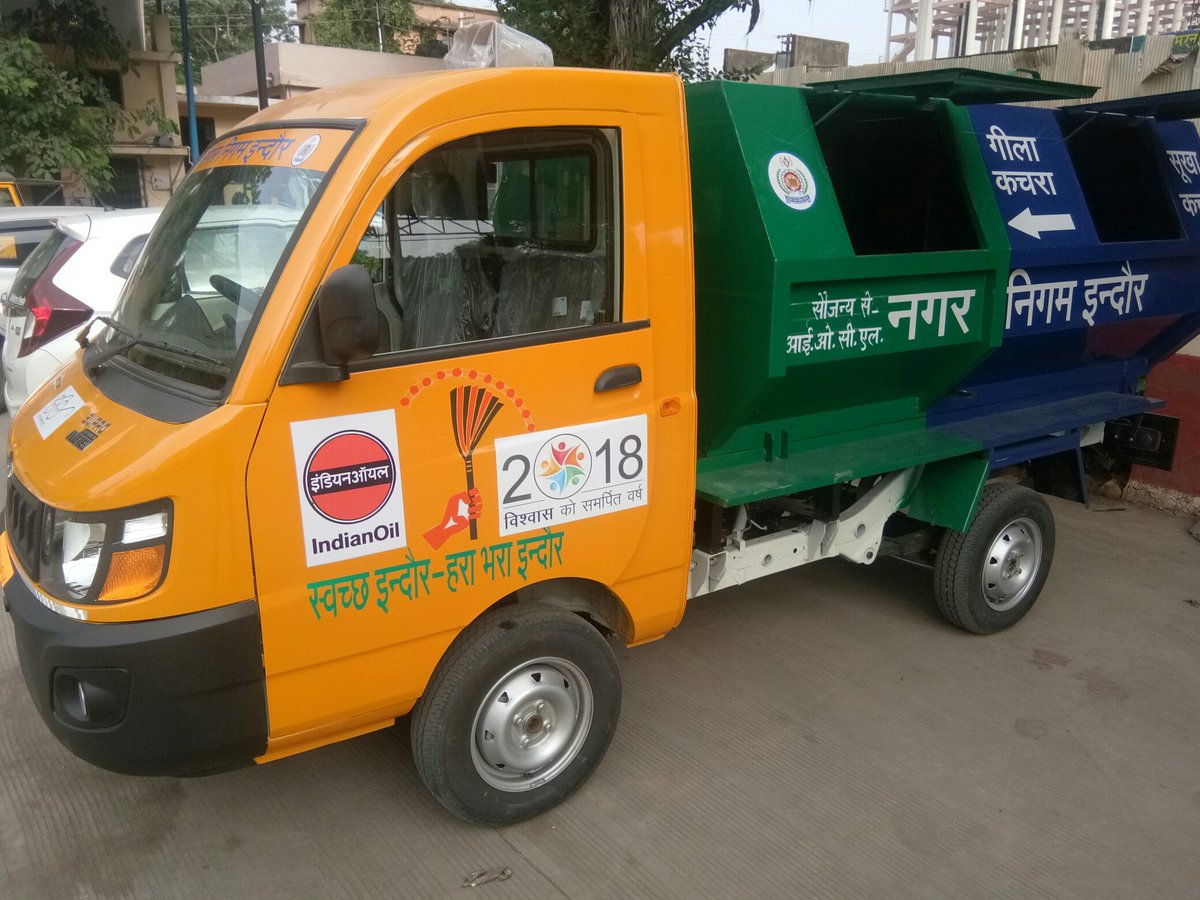
Vehicles having different compartments for waste collection

IMC started the process of waste collection from households on daily basis from 2016 and at the same time it also started asking and motivating the citizens to segregate their waste. Some of the strategies undertaken for increasing the efficiency of waste collection were :

  1. Collecting the wastes from household on regular basis and studying the lifestyle of different localities to finding the most suitable for waste collection.
  2. Explaining the people about the need of waste segregation and on repeated disposal of unsegregated wastes, households had to pay the fine as decided by the Supervisors of IMC.
  3. Tracking the routes of the garbage vans and vehicles that collect the wastes from door to door and monitoring it.

Some of the steps undertaken for creating awareness among citizens were :

  • Visiting of different localities and colonies by Municipal officials to persuade and create awareness among citizens regarding waste segregation.
  • Providing common platforms were religious leaders created awareness among people, on the basis of importance of cleanliness as mentioned in the religious texts, schools etc. and organizing oath taking ceremonies for children pledging a clean city and conduction of mass road sweeping exercise at different areas of the city.
  • Involving 850 Self Help Groups, comprising almost 8500 women for spreading awareness for waste segregation and conducting mass campaigns.
  • Campaigns for zero waste localities and markets.
  • Creating awareness regarding home composting, as a result of which nearly 50,000 households started doing home composting.

Involvement of Private Bodies and NGOs for Boosting the process

The IMC partnered with non-governmental organizations for creating awareness campaigns to change the attitude and behavior of citizens, to facilitate the functioning of solid waste management systems, use of proper technologies for increasing efficiency and improved capacity for ensuring proper implementation of all strategies and actions decided for being clean.

Waste Management System

The city adopted the strategy of processing the waste near the source. For example: All food outlets separate food waste and transport it to the small garden inside a traffic triangle at one end of the street. This strategy is more cheaper, hygienic and sustainable way for processing the wastes. The responsibility of waste composting is given to an NGO named Swaha and this organization uses a machine which simple and easy to handle. Most the waste generated from Indian cities contain higher proportion of organic wastes and are generally wet, which makes the waste more difficult to handle. These machines work efficiently even if the material is not organic with minimum spillage, minimum human contact with waste and has mechanism which can easily lift heavy trash cans.

Waste to Fuel

For processing of organic wastes, a Biomethanation facility is provided which converts the organic waste into methane. The city produces nearly 20 tones of waste everyday and this waste is converted into 750 – 800 kg of bio compressed natural gas (bioCNG). This task is assigned Mahindra Waste to Energy Solutions Ltd. The gas produced is used to run city buses, and sold as cooking fuel to hotels and the Indian Institute of Management, at a subsidized rate. Waste from the flower market is kept separately (1-2 tons a day), and mixed with slurry to produce compost.

Street Sweeping

For the purpose of street sweeping machines are used. Every night 800 km of main roads are swept using machines and water mist are used for cleaning footpaths and road dividers. For the cleanliness of roads nearly 400 liters of water is used every night and most of these are recycled water which are derived from the three sewage treatment plants. In case of internal roads which are 2200 km, the wastes are swept and are collected in gunny bags, collected by vans and transported to waste processing facility.

Clean Streets of Indore

CURRENT SCENARIO

Before and After images of Indore

As of now, 100% of household wastes are segregated at source and are processed. Ten ultra modern mechanized transfer stations are used for final processing and disposal. The city makes use of ICT based devices and Weighbridge mechanism for sustainable integrated solid waste management systems. For road sweeping purpose, Ultra modern mechanized road sweeping machines are used, which clean the bypasses, super corridors and bridges.

The city uses a collection and transportation app which is fully digital in nature for monitoring entire process, from door to door segregation to final disposal of waste. The wat wastes are processed and are used in public transports and today 15 city buses operate on this bioCNG gas. Similarly, construction and demolition wastes are reused for making non-structural concrete, paving blocks, lower layers of road pavements etc.

Through the process of bio-remediation, 100% of wastes has been remediated and 100 acres of land has been reclaimed. The dumping yard or landfill site had been converted into green belt. There is a proposal to develop this land into a golf course and city forest.

The entire journey of Indore has been based on more that 3Rs- reduce, reuse and recycle. These include Food Bank, disposable free events, Bartan Bank, art and crafts made out of wastes etc. All these initiative have ensured sustainability of the city.

Other than all these technical strategies, the city also took many social media initiatives and Information, Education and Communication (IEC) techniques for ensuring community Engagement. The song, “HO Halla” by Indian singer Shann became the Swachhta Anthem of the city in 2017 and motivated the citizens to keep doing their part of work towards this Swacchta mission. The song also has many new versions.

CONCLUSION

Since 2016, Indore went through a commendable journey for providing its citizen the urban environment which will protect their health. The IMC took strategies which are the most efficient and using them, it eliminated garbage dumps, 100% household waste collection and segregation, reusing all the wastes etc. The success of Indore’s solid waste management shows that other Indian cities can also clean the entire area and make it more hygienic and sanitized for the people by engaging NGOs, private bodies and citizens.

Thus, trust between all the stakeholders being involved in the process is the major pre-requisite for achieving the goal.

Is youth forming a new culture?

Today’s Youth is tomorrow’s future and these words matters a lot when we talk about the youth of any country. The way next generation is brought up, what they understand, what they learn and receive from the previous generation is important. As far as the question “is youth forming a new culture” is concerned it is true.
It is observed that the older generation is always quiet concerned about the next generation so they try to bring them up well and try to understand their mindset, thought, ideas and concerns. Well, the youth today is already facing many problem which may have existed in previous generation but, avoided. This generation is experiencing so many changes ups and down in life the older ones often address them as broken and depressed ones. But, this is not the whole truth if the new generation is considered depressed and insecure but, they are also talented, smart and decision makers.
There is a possibility that even the elderly people judge us because the other side says today’s youth is engaged into bad habits like alcohol, drug addiction etc but, it is important to focus on positive aspect where the young people are aware, know what is right and what is wrong and who stand against the injustice. The young people are serving in military and working in NGO, they are building start-ups, they are trying to open up, entertain and working hard to achieve what they want. All the negative part are just the distractions or wrong influence which is due to the bad elements of the society which have always existed be it any generation.
Every new generation brings with it something unique like if we talk about history, we have revolutionaries, leaders change makers because at that time the agenda was different it was about freedom struggle and developing nation free from colonisation. After that, came people who were capable of bringing change in their country for the benefit of people for a new start. Similarly, modern agendas which are focused on modern problems is what the youth is trying to find a solution of modern-day problems which are not as big as a freedom revolution but, closely associated to physical and mental wellbeing. The hectic schedules, balancing between personal and professional life, it is about adapting to new changes and accepting it. Some of the top issues are – body positivity, mental health, adulthood, peace of mind etc and many upcoming issues, the youth is taking part actively and contributing their share in nation development, they know how to take stand and raise their voice in a crowd.
They are definitely bringing up a new culture and the future will see it, It is bright and beautiful.

Education System In India…

Education is critical in the growth of a person and the formation of an informed citizen. Education empowers individuals, aids in the suppression of societal ills, and contributes to the overall development of society and nation. Education aids in the unravelling of nature’s mysteries. It helps us to comprehend and enhance the functioning of our civilization. It lays the groundwork for a better existence. Education develops the skills needed to combat social injustice. Every person has the right to an education.

Along with China, India has one of the world’s largest and most complicated educational systems. The National Policy of Education defines the basis for India’s commitment to delivering basic education to its inhabitants. In India, elementary schooling is now required. Only 14 percent of India’s population was literate at the time of independence. After so many decades since independence, the number of literates has more than fivefold grown.

History of Education System:

The history of Indian education may be traced back to the Ramayana and Mahabharata. The Gurukula system is another name for the traditional Indian schooling system. There were gurus back then, who are now known as instructors, and shishyas, who are now known as pupils. Gurus and shishyas lived together in Gurukula under one roof till they finished their study. As part of their education, the shishyas were required to assist the guru with all everyday duties. Gurus taught all topics to youngsters from upper social classes, ranging from Sanskrit to Holy Scriptures and mathematics to philosophy. During that period, the Gurukulas concentrated on the practical parts of life. The children were taught in an open classroom in a natural setting. This early school system in India lasted for many years until the modern education system arrived in the nineteenth century.

Lord Thomas Babington Macaulay introduced the modern education system to our country in the early nineteenth century, during the British period. The primary basis of this updated education system was tests and a well-defined curriculum that prioritised topics like science and mathematics while pushing subjects like philosophy and metaphysics to the sidelines. The open classrooms of the Gurukulas were replaced by brick and mortar classrooms. A more formal relationship between the instructor and the learner replaced the core of the guru shishya tie. Examinations were held at regular intervals to assess each student’s progress. The emphasis of the educational system moved from studying to remembering topics in order to achieve high scores in tests.

Problems of Indian Education System:

Over time, it has been discovered that there are several flaws in India’s educational system. Instead of comprehending the principles, pupils began cramming and memorizing them. Knowledge takes a second seat as high ranks take precedence. Modern parents have modified their mentality appropriately, and their objective is to guarantee that their children get high grades rather than learning from the ground up.

Private schools and universities are quickly expanding in the country, but the outcomes they generate are far from adequate. It has also been noticed that the quality of teachers has worsened with time. Our examination system is to blame for the large skill disparity. Every year, thousands of engineers and professionals are produced in India, yet only a portion of this number is employed. This is due to the Indian test system’s emphasis on high percentages rather than ongoing comprehensive review.

Research and development, which should be the foundation of our system, are given the least attention. Private schools and colleges are more concerned with the number of students admitted than with the quality of their education. This is the primary reason for the faculty’s and instructors’ lack of skills and expertise. The fact that a single professor is assigned to teach numerous courses demonstrates this.

How Can We Improve the Indian Education System?

First and foremost, we must reform the grading system. Rote learning should be avoided at all costs. Teachers and professors should pay greater attention to students’ analytical skills and evaluate them properly. Instead than just getting excellent grades, there should be a greater emphasis on complete evaluation. Workshops for teachers should be held on a regular basis to keep them up to speed on the newest advancements in the education field. Simultaneously, the curriculum should be restructured in accordance with India’s current educational demands.

The payroll structure of the teachers and the faculties especially in the government institutions should be improved. This step will help in motivating the teachers to develop their skills and they will take a keen interest in grooming or shaping up a student’s life and career. The government and other entities who are associated with the education sector, need to understand the importance of quality of education. Education should be a holistic process that must focus on the overall development of the physical, emotional, social and cognitive skills of a child. It needs to be a slow and cyclic process and must take place gradually to help the child develop into an autonomous, independent and knowledgeable individual.

Conclusion:

An educated person is one who can contribute to the advancement of the economic and social growth of the society as well as the country. The actual purpose of education must go beyond simply providing degrees and certificates to pupils. Education is not a means of earning a living; rather, it is a means of liberating one’s mind and spirit.

Superstition in India

Superstition refers to any belief or practice that is caused by supernatural causality, and which contradicts modern science. Superstitious beliefs and practices often vary from one person to another or from one culture to another.

Common examples of superstitious beliefs in India include: a black cat crossing the road symbolizes bad luck, a crow cawing indicates that guests are arriving, drinking milk after eating fish causes skin diseases, seeing a mongoose symbolizes to be very lucky, and itchy palms mean that money is coming your way.

Hindus believe that cutting nails and hair on Saturdays brings bad luck.

Hindus believe that it’s inauspicious to cut hair and nails on Saturday because it angers planet Saturn (shani), which then brings bad luck. However, ask people who cut their hair and nails on Saturdays, and we bet they’ll tell you their hair looked better and their nails neater, and no planet hovered above them with bad luck.

If a black cat crosses your path, then your tasks get delayed or postponed.

Poor black cats. They are blamed just for being black (no racist joke here). It’s a popular belief in the west too that, if a black cat crosses your path, it’s a bad omen. For the west, the origin of this superstition came from Egypt. Egyptian culture believed that black cats were evil creatures, whereas the Indian explanation is that black represents Shani and therefore brings bad luck. It is said that if a black cat crosses your path, then your day’s tasks get delayed or postponed.

Curse of 8

According to numerology, the number eight is ruled by the planet Shani (again Shani!) and therefore if you’re ruled by the number eight then there shall be lots of obstructions, limitations and frustrations in your way.

Keeping onions and knives under your bed will drive away bad dreams.

An onion and a knife is kept under a newborn child’s bed to drive away bad dreams. It is also believed that placing an onion under your pillow while you sleep will bring you great insight when dreaming about who your future partner in life will be.

Indian Classical Dances

Dance is an ancient and prominent cultural tradition in India. Folk dances abound all across the country, and huge crowds of people can be found dancing at festivals and weddings. Dance and song feature heavily in Indian cinema (so-called “Bollywood” films), too. But where does Indian dance draw its roots from? There are six of the most important classical dance forms of India including many folk dances.

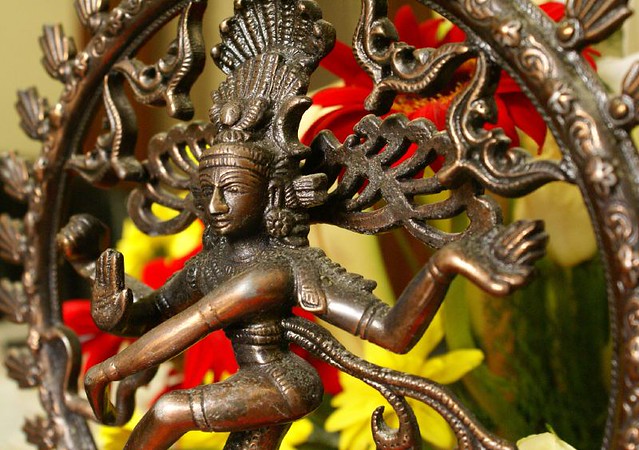
India has an old tradition of thousands of years regarding fine arts and classical and folk music and dances. Some of the world-famous dance forms that originated and evolved in India are: Bharatnatyam, Kathak, Kathakali, Kuchipudi, Manipuri, Mohiniattam, and Odissi.

(1) Bharatnatyam: Bharatnatyam is one of the most popular classical Indian dances. Bharatnatyam is more popular in South India states of Tamil Nadu and Karnataka. The music accompanying this dance is Carnatic music. It evolved out of the devadasi system of South Indian Temples. Famous dancers associated with Bharatnatyam are E Krishna Iyer, Rukmini Devi Arundale, and Anna Pavlova.

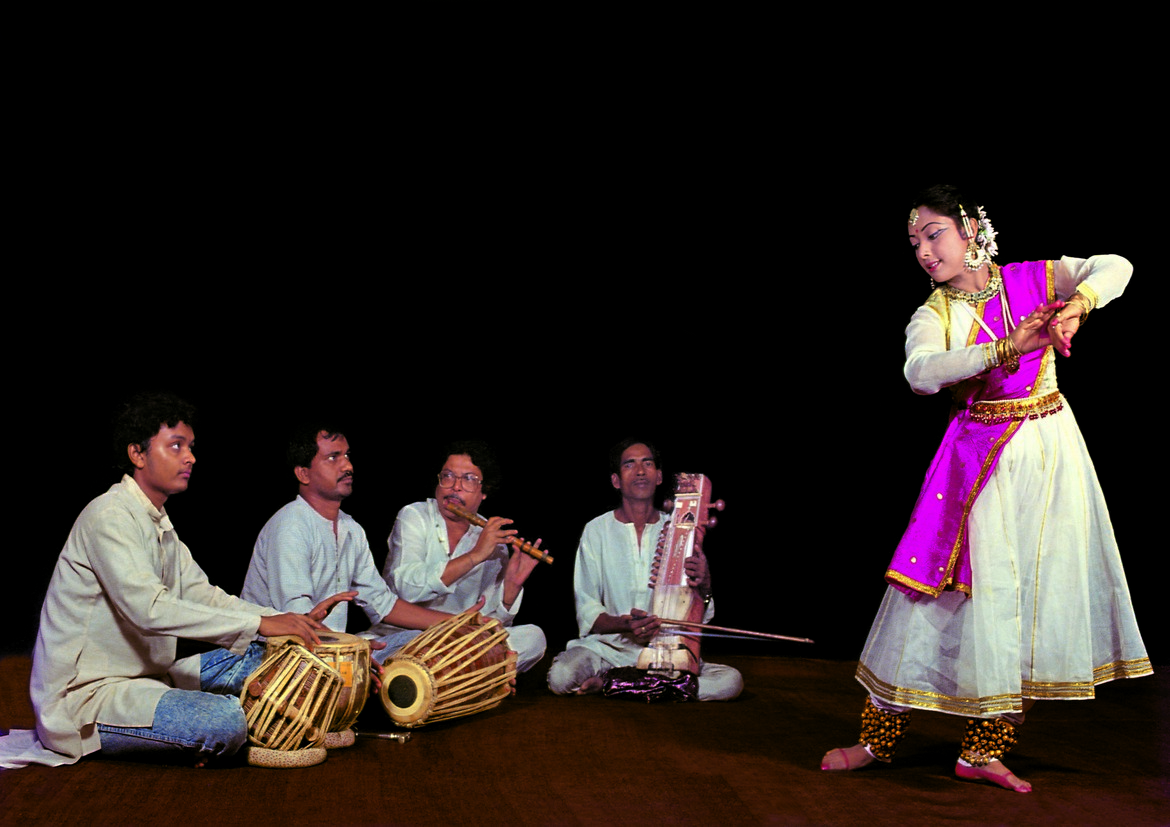
(2) Kathak: Kathak is also one of the most important classical dances of India. Kathak is said to be derived from the word Katha, meaning the art of storytelling. Famous centers are Lucknow and Jaipur. Lucknow school depicts Mughal Court etiquette while the Jaipur school depicts stories of Rajput kings and Gods. Famous exponents are Sitara Devi, Sambhu Maharaj, Uma Sharma Shovana Narayan, etc.

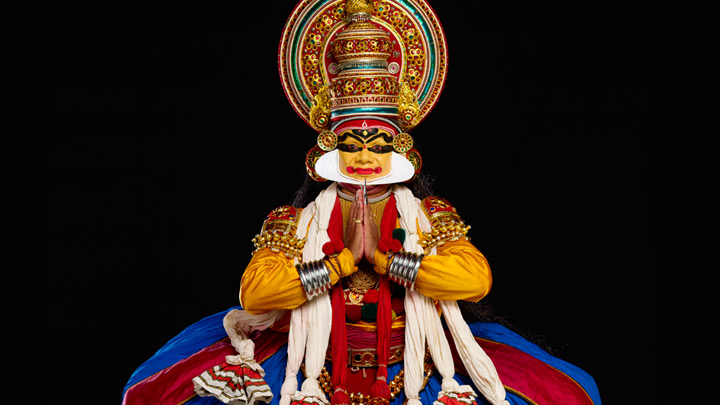
(3) Kathakali: Kathakali is the classical dance form of Kerala. The word Kathakali means the story play. Kathakali is considered one of the most magnificent theatres of imagination and creativity. Famous exponents of Kathakali are Vallathol Narayan Menon, Kunju Kurup, Guru Gopinath, etc.

(4) Kuchipudi: Kuchipudi is one of the classical dance forms of South India. Kuchipudi exhibits scenes from Hindu epics, legends, and mythological tales. Famous exponents of Kuchipudi are Lakshmi Narayan Shashtri, Raja and Radha Reddy, Swapana Sundari and Yamini Krishnamurti.

(5) Manipuri: Manipur is one of the six major classical dances of India. The most striking part of Manipuri dance is its colorful decoration, lightness of dancing feet, the delicacy of abhinaya (drama), lilting music, and poetic charm. Manipuri dance is not only a medium of worship and delight but also essential for all socio-cultural ceremonies of the Manipur people. Popular exponents are the Javeri sisters, Rita Devi, Nirmala Mehta, Guru Bipin Singh, etc.

(6) Mohiniattam: Mohiniattam from Kerala is a solo female dance and is known for its rhythmic and unbroken flow of body movements. Mohiniattam has the grace and elegance of Bharatnatyam and the vigor of Kathakali. Famous exponents of this dance form are Kalyani Amma, Vaijayanthimala, Bharati Shivaji, and Hema Malini.

(7) Odissi: Odissi is one of the well-known classical Indian dances from Odisha state. It is a graceful, elegant, and sensuous dance style and involved the tribhanga (three bends) posture. The three bends symbolize the means to escape the limitations of the body. Famous dancers of Odissi are as follows: Indrani Rehman, Sonal Mansingh, Kiran Sengal, Rani Karan, Sharon Lowen, and Myrta Barvie.

What is a short story?

A short story may be defined as a story that can be read in a single sitting. Edgar Allan Poe considered the short story as a prose narrative ‘requiring from half an hour to one or two horse in its perusal. Thus brevity is one of the essential characteristics of a short story. However, a short story is not Merely a novel on a reduced scale. the short story has a distinct, well-marked organizational structure different from that of a novel.

Theme of a short story:

Firstly, the theme of a short story must be one that can efficiently be developed within the prescribed limits. The story should impress the reader as clear in outline and well proportioned. It should not give the impression of crowding. This does not mean that the story must necessarily be confined to a single incident. It only means that even when the story covers a wide field of time and a large sequence of events, it should give a concentration of interest. Most of the stories of Maupassant and Washington Irving’s famous story “Rip Van Winkle” illustrate this point.

Unities of short stories:

Secondly, a short story should have unity which means unity of purpose, motive, action, and impression. a short story should contain only one informing idea and it should be worked out with singleness of purpose. No scattering of attention is allowed in a short story as it may be allowed in a novel.

Opinions of various authors:

Writers and critics hold different opinions on the art of the short story. Edgar Allan Poe thought that the short story should present only a ‘slice of life’ suggestively. it should have neither a beginning nor an end. However, the modern story writer and novelist Somerset Maugham thinks that ‘a short story should be a finished product of art with the beginning, middle, and end. another critic compares the short story with the horse race in which the start and the finish count most. Such contradictory definitions are more or less reconciled in what Hugh Walpole says “a short story should be a story, a record of things happening, full of instance an accident, Swift movement, unexpected development reacting through a suspense to a climax and satisfying denouement.”

Famous works:

A short story may deal with any motive and material. Poe’s story “Gold bug” turns on a puzzle whereas Stockton’s ‘The lady and the Tiger” is contrived to give a dramatic surprise at the end. Most stories of O’ Henry are interesting because of their unexpected surprise endings. Short stories of Chekhov, Maupassant, Tolstoy, and Hemingway illustrate the wide variety of themes and motives that can be successfully employed by a short story writer. WH Hudson says “a dramatic incident or situation; a telling scene; a closely coordinated series of events; a phase of character; a bit of experience; an aspect of life; a moral problem any of these, and innumerable other motives which might be added to the list, maybe made the nucleus of a thoroughly satisfactory story.

Conclusion:

R.L Stephenson speaks of three kinds of short stories – the story of the plot, the story of character, and the story of impression. however, to most story writers, the idea of a story comes as something like an abstract thought or impression and later they work it up into the shape of a story inventing the required plot, character, and incidents.

Traits of an Epic

The social novel

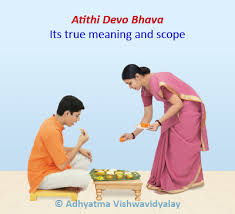
“ATITHI DEVO BHAVA” – Part 2.

Some points prepared by the Ministry of Tourism & Government of India, Part – 2:

The Seven Point of Atithi Devo Bhavah Programme:

Atithi Devo Bhavah is a programme of hospitality and training. Sensitization- sensitize various sections of the tourism industry about how each of them has to contribute for the growth of the tourism industry and how they will benefit from the programme .

Training and Induction- explaining to them the needs and expectations of the tourist, how they should respond and behave in order to satisfy the needs and expectations of the tourist.

Motivation- must be generated to participate in this programme through various measures e.g. Awards for the best worker in the segment. An enthused worker can do wonders. Certification to ensure standards at various stages.

Feedback- Feedback must be obtained from tourists about the service they have received and the experience they have had, in order to improve the training programme on a continuous basis.

General Awareness- The mass media communication campaign must be undertaken to create general among the public about the necessity and the benefits of the Atithi Devo Bhavah Programme.

Ownership-The Atithi Devo Bhavah programme is a movement which will urge all segments of the Indian society to adopt, and look upon it as their own.

The Charter of the Programme:

Hygiene and Cleanliness: Hygiene and Cleanliness shall cover the areas of product, for example, vehicles like taxies, hotel rooms, restaurants, shops, etc., personal hygiene and cleanliness of the person providing the service and cleanliness of the monuments / places of tourist interest.

Conduct and Behaviour: The person concerned, for e.g. the taxi driver / hotel employee shall behave in a courteous and polite manner towards tourists.

Integrity and Honesty: The person providing service to the foreign tourists should display honesty and integrity.

Safety and Security: The safety and security of the tourists shall be ensured.

PR Road Shows : Besides training, PR Road shows are also undertaken with the tourism trade in order to generate active participation and create an ownership of the Atithi Devo Bhavah programme. Right now the contact programmes are being conducted in several cities.

Mass Media Communication : Communication in newspapers, TV, cinema and outdoors is also carried out to create general awareness about the Atithi Devo Bhavah programme and to communicate to key stakeholders as to how it is in their own interest that foreign tourists be treated well so that they will go back happily carrying fond memories.

Courtesy : Ministry of Tourism Government of India 2004, webmaster@incredibleindia.org

Image Source -google.

ECO TOURISM “

Eco tourism means responsible travel to natural areas conserving the environment and improving the well being of local people.

The Ecotourism Society of India is dedicated to the promotion of sustainable development in tourism and to develop responsible practices in and among the tourism fraternity. It works towards continuous identification of new ecotourism destinations, strengthening ecotourism and making India a preferred ecotourism destination. Its objectives are : –

Make strategy for ensuring long-term (perpetual) sustenance of the environment. Work with empowered bodies to establish carrying capacity and sustainable tourism practices which include conservation of nature and wildlife, and allow ENS local communities to benefit from tourism. To balance tourists and visitors’ numbers and ensure good tourism practices that would allow nature to re-generate itself. To work with government bodies to develop policies and code of conduct for promotion of sustainable tourism, and help implement the same. To work towards certification of tourism service providers. To act as watchdog for excessive consumption of natural resources and any negative impact in the tourism sector. To support research in tourism environment related areas.

Work with service providers to enhance quality of their product and eco-friendly services. Encourage use of appropriate local practices, materials, art, craft, architecture, food. Encourage minimal conspicuous consumption and prevent excessive consumption of energy. Encourage energy saving practices, water harvesting, use of solar and other natural energy sources. Encourage good waste management practices especially non-biodegradable materials. Encourage low pollution-generating practices to minimize carbon footprint. Organise training and other activities to create awareness on ecotourism, sustainable and responsible tourism. To collaborate with like-minded bodies and implement ecotourism objectives all over the world.