Things to learn from the Japanese

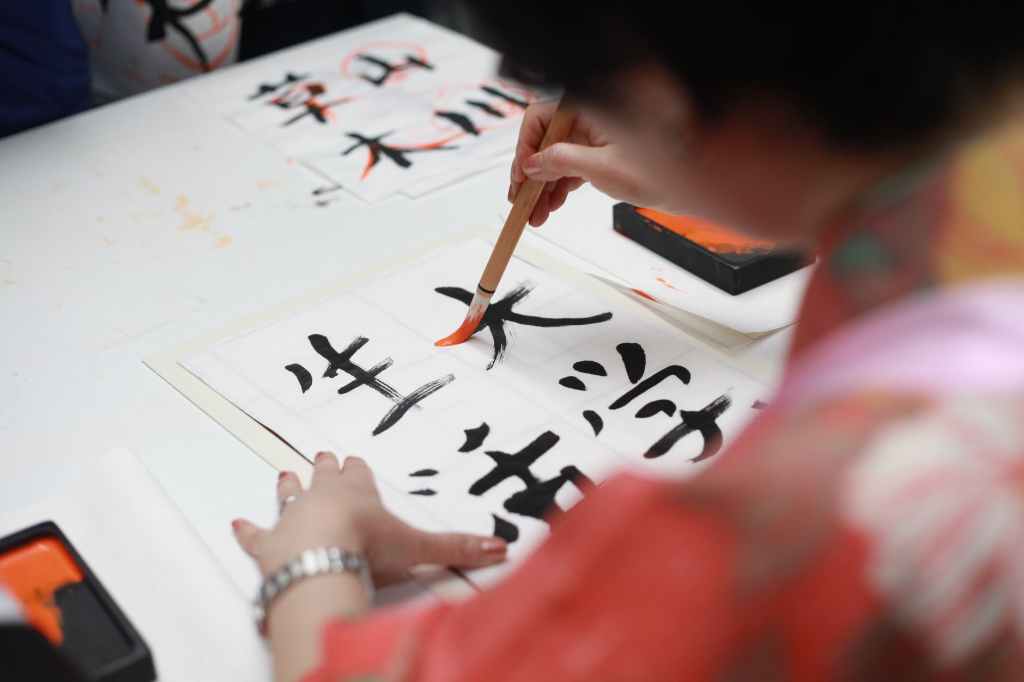
Photo by Engin Akyurt on Pexels.com

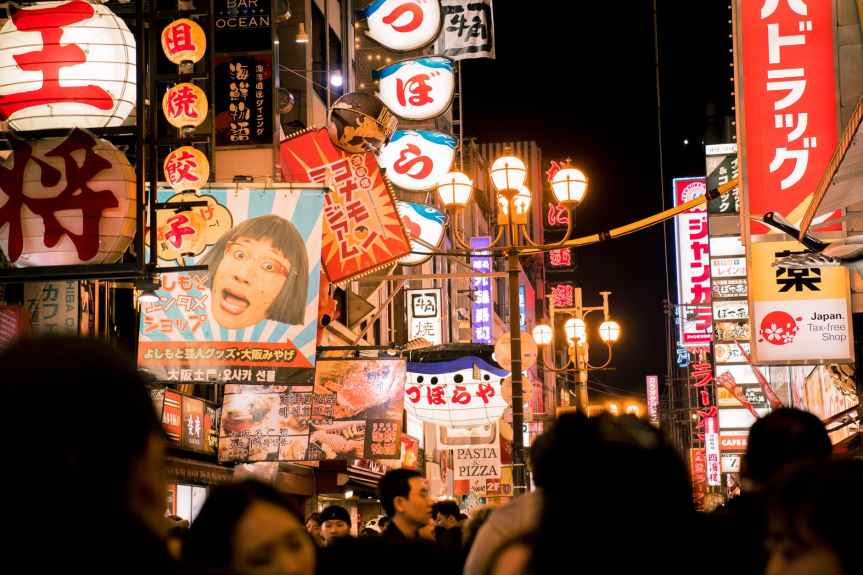
Japanese people have a unique way of living that provides many lessons for people willing to open their minds and understand their incredible culture. Japan boasts a nation of people who are incredibly kind, good-natured and polite.

The few things I learnt from them are :

REVERENCE TO PEOPLE

Japanese are masters of showing respect. Whether it’s the way they greet people they don’t know or their incredible attention to detail when it comes to developing relationships. The Japanese are mindful of respect at all times.

HARDWORK TO ACHIEVE GOALS

They work extremely hard to achieve their goals. Its for this reason that they’re one of the most pioneering, forward thinking nations on the planet! They work really hard in their careers, so they can support their families and work on self-growth.

VISIONARIES

Japan has some of the most pioneering technology companies on the planet, including Toyota, Nippon and Honda. The country has propelled its technological advancements to the forefront of human history. We must learn to believe in our vision, even if no one has achieved that.

DISCIPLINED LIFE

Discipline is akin to respect in Japan. To be disciplined is not to give in to your urges but to live a life that is respectable and based on profound will to do good for people.

CLEALINESS

In Japan, there is a general obsessiveness with cleanliness that starts in the home and extends to public spaces like parks and schools. It certainly makes the country an extremely pleasant place to be.

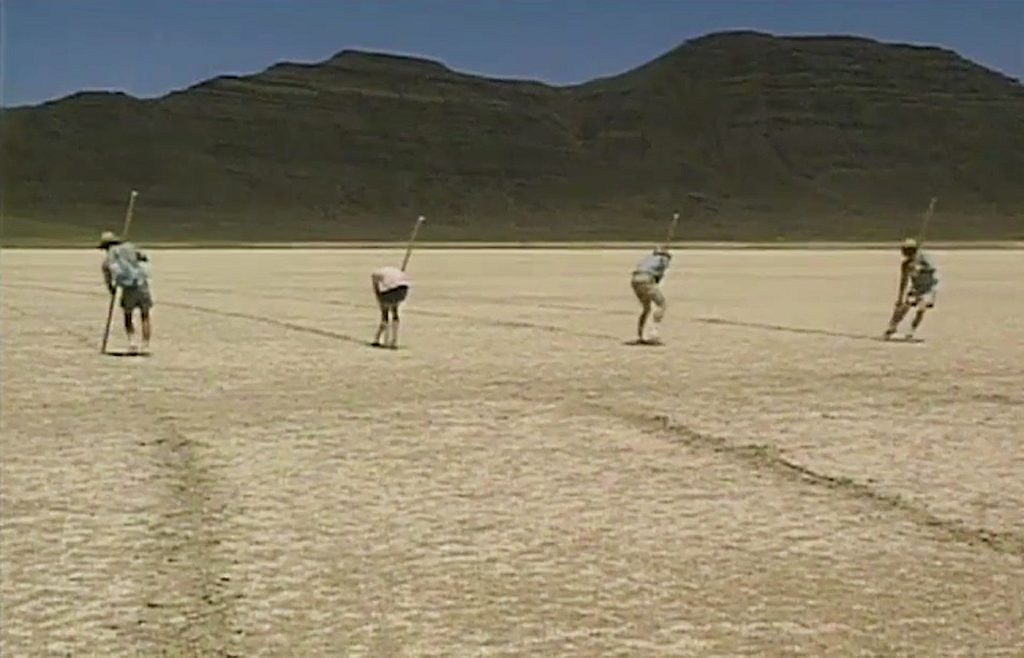
MYSTERY OF SRI YANTRA DESIGN ON OREGON LAKE BED

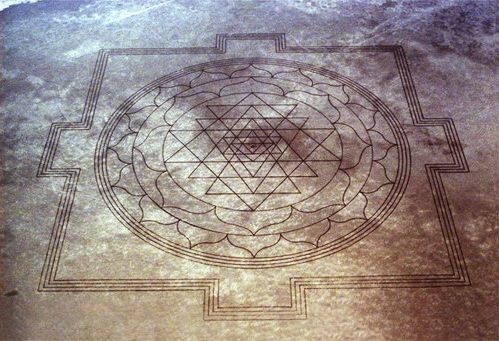
The Sri Yantra is a Mystical diagram, where the word “Sri” is known as “wealth” and the word “Yantra” is known as an “instrument”. This diagram is formed by nine interlocking triangles that are surrounded and radiated out from the Central (Bindu) point. The Two-dimensional Sri Yantra, when it is projected into three- dimensions is called a Maha Meru. In Hindu Vedas it is believed that worship of Sri Yantra creates a numerous positive effects. In simple words Sri Yantra is the symbol of Hinduism, which is purely based on the Hindu philosophy of vedas. In todays article I’m going to explain about a mystery on Sri Yantra which was found in Oregon, USA at 1990.

In the year of 1990 on august 10th an Air National Guard pilot Bill Miller noticed a strange formation on an Oregon dry lake bed that the Air National Guard frequently flew over on training missions. He noticed that massive formation is a quarter mile wide and is located 70 miles southeast of Burns, Oregon. Later they found that strange formation on lake bed as a Sri Yantra which occupied 13 miles in length and width. 

Most of the officials suspected that mysterious formation took thousands of dollars and a lot of man power to complete along with high tech equipment and lasers and some people, including professors and researchers in USA believed that it was done by aliens and a team also assigned for searching clues about its formation.

For some time this event was treated with the head scratching bewilderment that accompanies crop formations. On the ground investigations revealed no tell tale signs of vehicles or human intervention. Word spread fast that it was an extra terrestrial event. People were intrigued and fascinated but got stuck on the how? And the wow! The event was debated for some time.

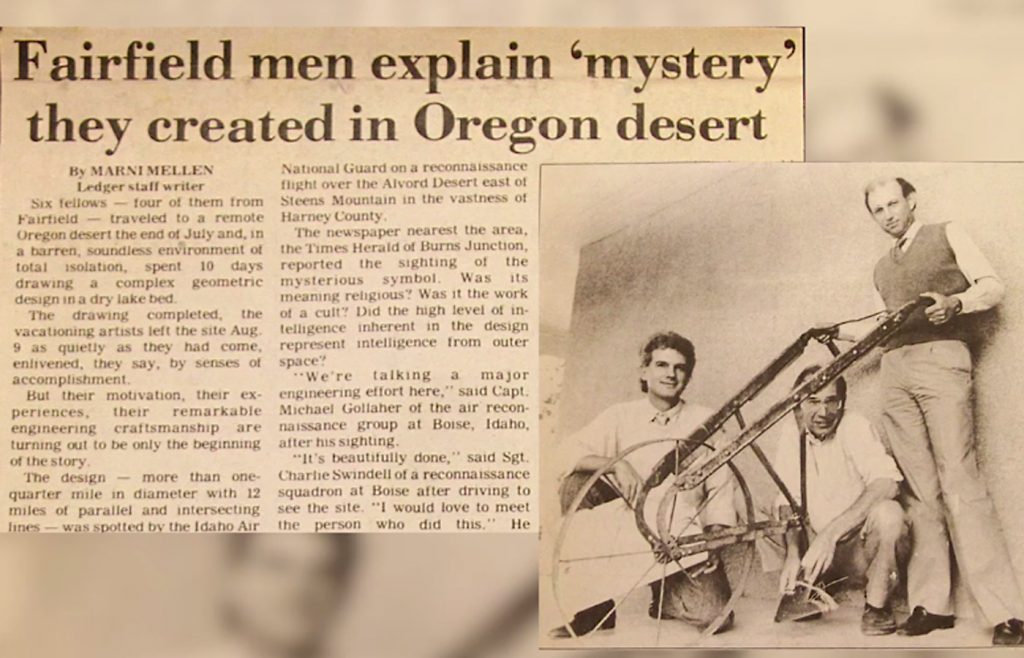
Suddenly everyone got surprised when an artist named as Bill Witerspoon from Iowa and his friends came into the picture of investigation by saying that, the mysterious formation of Sri Yantra on Oregon lake bed was done by them with the use of sticks, wires, 12 miles of string and a basic plow but most of the people doesn’t accepted with their statement on Sri Yantra formation. After a detailed interview with Bill witerspoon and his friends on this matter they said about the following matter

” In the year of 1990 on summer, Bill Witerspoon along with his group of friends went to a remote alkali lake bed in the high desert of southeast Oregon to inscribe a large Sri Yantra in the earth and they were also decided to live in the large central point that contain in Sri Yantra. For drawing the massive art form they chosen that site because of its beauty and remoteness. Almost no one, except a few ranchers, ever went there and they also felt that inscribing lines in the alkali surface would not disturb any vegetation and it would be a transitory event which eventually disappears back into the surface through the natural action of wind and the occasional water that floods the lake bed every few years. They also said that drawing of that art form took almost ten days for it’s completion.

After the completion of the art work they lived in the nine-foot central circle of the Sri Yantra for almost three weeks. During that period of their stay in that central circle they observed remarkable changes in the workings of Nature within the design and in the valley where it was situated.”

The art form that was drawn on that landscape subjected to change of the “feeling” within the valley which was eventually noted by ranchers and other people who have known the area for a long time. People reported experiencing qualities of energetic peacefulness, harmony with nature and enhanced intuition when they were in the design and valley. Another influence was a radical change in the quality of meditation that would repeatedly occur if individuals moved a few feet out of the central circle into the innermost triangle of the design or vice versa.

Changes in the environment were also observed vastly within the design, which had been inscribed in highly alkaline silt, incapable of supporting any kind of vegetation, there were remarkable changes in the direction of increased fertility. So, Guys this is the mystery behind the formation of SRI YANTRA on Oregon lake bed and there is no doubt in saying that people near Oregon lake bed had experienced the favourable changes only because of the Sri Yantra design on that landscape.

ARE WE ‘DECEPTIVE’ IN NATURE ?

“A lie that is half-truth is the darkest of all lies.”
― Alfred Tennyson

In true sense, the word deception implies ‘make believe’, that is, convincing a person that something exists whereas, in reality, it does not exist. Deception is a simple tool for enticing people and trapping them to believe in something unbelievable. This is an evil that has subsisted among human beings since time immemorial in literature and history we come across several uses of deceptive methods; even in our contemporary world, deception is rampant. In fact, such is the enormity of deception that it is often difficult to distinguish the real from the fake. Consequently, even today we come across reports of how many large corporations, especially related to chit funds, dupe their investors through unrealistic schemes. As a result of their ‘get-rich-quickly schemes lakhs of innocent investors lose their lifelong savings because they are shown the dream of coming out of their miseries but are pushed to the brink of perishing.

Deception is also a major tool used in forging currency notes and other negotiable instruments like cheques and drafts. Governments across the world have introduced many new techniques to ensure that their markets are not flooded by fake currency notes or negotiable instruments but, so far, there has been no fool-proof methodology to prevent the menace. Master criminals always manage to deceive by preparing exact copies of the originals. The same applies for important documents like passports and visas.

With the dawn of online shopping, fraudsters have had a free-run as it is practically easy to dupe people and escape without leaving a trace. People end up paying money for products bought online but never actually receive the goods on many occasions, or even if they do, such goods are either defective or elaborately wrapped empty boxes are provided. Consequently, tracking cyber-criminals is very difficult and the number to solved cases is low.

However, like everything else, even deception is a double-edged weapon: it can be used against a deceitful enemy and so serves as an important military tactic, especially in guerrilla warfare. We have read how Babur, the first Mughal Emperor enticed Ibrahim Lodhi to charge headlong and then fall into the covered trenches on the battlefield or how Chhatrapati Shivaji, the great Maratha warrior, used deception to kill Afzal Khan and harass Aurangzeb. Nobody can ever forget the deception carried out by Mark Antony in inciting the Romans from the Forum to rebel against the conspirators who killed Julius Caesar.

In present day military tactics, elaborate plans are drawn out to combat the enemy. The best-known methodology is to plant spies among them so that delicate information can be easily retrieved and the opponent’s actions can be monitored.

The Great Emu War

The ‘Emu War’, also known widely as the Great Emu War, was a nuisance wildlife management military operation undertaken in Australia in the later part of 1932 to address public concern over the number of Emus that were said to be running amok in the Campion district of Western Australia. The unsuccessful attempts to curb the population of emus, employed soldiers armed with Lewis guns, a World War 1 era light machine gun, making the local media to adopt the name “Emu War” when referring to the incident. 

While a number of emus were killed, the emu population persisted and continued to wreak havoc by crop destruction.

Background

Discharged Australian WW1 veterans were given lands to take up farming by the Australian government within Western Australia. The difficulties farmers were already facing increased by the arrival of as many as 20,000 emus. Emus regularly migrate after their breeding season, heading to the coast from the inland regions. With the lands cleared and additional water supplies being made available for the livestock by the Western Australian farmers, the Emus found that the cultivated lands were a good habitat for them, and began to intrude into farm territory. The veteran farmers began taking up arms against the birds.

The War

Military involvement was due to begin in October 1932. The “war” was conducted under the command of Major G. Meredith of the Seventh Heavy Battery of the Royal Australian Artillery. They moved in formation behind the birds, and the birds answered their organised assault with inspired chaos, scattering themselves in all directions to minimize the casualties. The army tried gunning them down in moving trucks, but found they could not aim properly at their speedy foes.

A second campaign was mounted by Major Meredith on 13 November 1932, killing 40 emus. Two days later, barely any, but about a month later its was reported that 100 emus were being killed every week. The commanding officer found that it took 10 bullets to bring down every one emu, which was a pretty dismal effort. He was recalled the Great Emu War had finally come to an end.

Aftermath

Despite the problems encountered with the culling of the emus, the farmers once again requested military assistance in 1934, 1943, and 1948, only to be turned down by the Australian government. Instead, the bounty system that had been initiated in 1923 was continued, which proved to be effective as 57,034 bounties were claimed over a six-month period in 1934 alone.

https://blogs.scientificamerican.com/running-ponies/the-great-emu-war-in-which-some-large-flightless-birds-unwittingly-foiled-the-australian-army/

https://www.atlasobscura.com/articles/the-great-emu-war

Environmental laws in india

Either Stable burning in various states accrued the air pollution in Delhi and created a gas chamber around NCR ; SC came upon a committee to observe scenario , Or 4 industries inflicting stream pollution were shut down by Maharashtra pollution board . Everybody has responsive to environmental problems as higher than . The key solution for resilience to environmental issues are provided by government in various legislations , enactments and provisions on environment laws .


In republic of India environmental law is concern with the policy and law for protection of the environment . It aims for achieving carbon free economy through taking measures for reducing climate change. All the acts under this laws are safeguards in ensuring effective management of the environment and its multiple ecosystems . It provides for preventing environmental damage .


Natural resources in the earth were unscathed from millions of years. It were remain pure until the industrialized started . After the industrialization this resources have been exploited in Spain of 100 years only . From 19th century, the environment (air , water and land ) is directly exploited by rapidly growing population at alarming-rates.


environment includes water, air and land and the inter-relationship which exists among and between water, air and land, and human beings, other living creatures, plants, microorganisms and property , as mentioned in section 2 of environmental protection Act of 1986 . Environment is a wide sphere , it consists of social, economically , political , religious dimensions .


Addressed area of environmental laws in India :

1. Quality of water : For the prevention and control of water pollution and to maintain or restore wholesomeness of water in the country the water act of 1974 was enacted. It further provides for the establishment of Boards ( CPCB and SPCB ) for the prevention and control of water pollution with a view to carry out the aforesaid purposes. This act prohibits the discharge of pollutants into water bodies beyond a given standard, it also lays down fine and penalties for non-compliance.

2. Reduction of air pollution and maintaining air quality : The Air (Prevention and Control of Pollution) Act, 1981 (the “Air Act”) is an act to provide for the prevention , protection and abatement of air pollution .It provides for establishment of Boards at the Central and State levels with a view to carrying out the aforesaid purposes.

3. Hazardous Waste management : legislations that directly or indirectly deal with hazardous waste management are the Factories Act, 1948, the Public Liability Insurance Act, 1991, the National Environment Tribunal Act, 1995 and rules and notifications under the Environmental Act.

4. Containment cleanup, damage mitigation : preventing future damage to the environment is undeniably the primary objective of environmental law, mitigating and reducing existing damage is also important. This area most often deals with issues like toxic leaks and oil spills. The central objective of this branch of environmental law is deciding liability, planning an appropriate response, and also determining the best process of investigation and monitoring in the overall clean up process. This area also concerns itself with the study and assessment of risk in the long term, to better mitigate any future accidents and risks.

5. Sustainability of resources : United Nations has put great emphasis on ensuring the sustainability of resources. For this vision , it has advocated the formation of various legal principles and legislation. In this regards concept of environmental impact assessment introduced .

Noble legislations and enactments on environment law in India :


Laws on Forest and wild life protection:
• The Indian Forest Act, 1927 ; The Wildlife Protection Act, 1972; The Forest (Conservation) Act, 1980 ; The Environment (Protection) Act, 1986; The National Green Tribunal Act, 2010.


Laws on Water pollution :
• The Water (Prevention and Control of Pollution) Act, 1974.


Laws on air pollution :
• The Air (Prevention and Control of Pollution) Act, 1981 (the “Air Act”)


Laws on hazardous waste management :
• Biomedical Waste (Management and Handling) Rules, 1998 ; Municipal Solid Wastes (Management and Handling) Rules, 2000 ; Batteries (Management & Handling) Rules, 2001 ; Hazardous Wastes (Management, Handling and Transboundary) Rules, 2008 ; E – Waste (Management and Handling) Rules, 2011 .
Laws on wetlands


Ramsar convention (1971) : This convention was initiated to push for greater conservation and sustainable use of wetlands ; Wetlands (Conservation and Management) Rules, 2017.
Constitutional provisions on environment laws


Part IVA (Art 51A-Fundamental Duties) of the constitution casts a duty on every citizen of India to protect and improve the natural environment including forests, lakes, rivers and wildlife, and to have compassion for living creatures.


• the Constitution of India under Part IV (Art 48A-Directive Principles of State Policies) stipulates that the State shall endeavour to protect and improve the environment and to safeguard the forests and wildlife of the country.

environment makes human life possible, and our cultural environment helps define who we are. It is therefore essential that our population and economic growth are environmentally sustainable.

OBESITY

Difference Between Obesity and Morbid Obesity | Difference Between

Nowadays, obesity has become an enormous as well as fatal health problems. This problem not only in India but in other countries also. Even in United States of America, one out in three adults and one out of five children and teenagers are facing the problems of obesity. In India also, we are sailing in the same boat. Most of the people since childhood fall prey to obesity is most of the countries of the world . In fact, ‘obesity is that condition of the body in which the amount of fat increases at extreme level.’ In other words, obesity can be defined as ‘the condition when an individual weighs 20 per cent or more than the ideal weight. ‘ A child weighing around 30 pounds (approximately 13.600 kg ) or more than the ideal body weight is usually considered an obese. In the state of obesity, the body weight of the individual is always more in comparison to height . Due to a number of health risks of obesity , it has been declared a disease . It has been observed that obese persons usually fall prey to diabetes, hypertension, cardiovascular diseases, cancer, arthritis , osteoarthritis, flat foot, respiratory problems , varicose veins , liver malfunctions , etc .

Generally , the questions arises : What should be the ideal body weight of an individual ? Who is obese and who is not? Different methods are used in various countries to know the obesity of an individual .According to the first method , after having a glance over the shape of the body it can be observed whether he/she is obese or not . But this method cannot be called an appropriate method to know about obesity of an individual because the approval of a society about body shape changes with the passage of time . For example , plump females used to be liked by society in yester century in India . According to the second method , if an individual’s body weight is more than in proportion to height (according to height and weight chart) , the individual will be obese . But this method cannot be accepted as the best method. The third method is a more scientific method . In this method , the body fat percentage is calculated . If the body fat percentage of a person is more than the requirement , he/she will be an obese . This is the most accurate method to know the obesity but it is not easy to apply this method . In comparison to other methods , the weight and height chart is still preferred to know one’s obesity because it is easily available , cheap and easy to use . Another method to know the obesity is BMI (or Body Mass Index ). If you want to know your body mass index , then divide your body weight in kg by your height in meter square viz .

Obesity - Lompoc Valley Medical Center

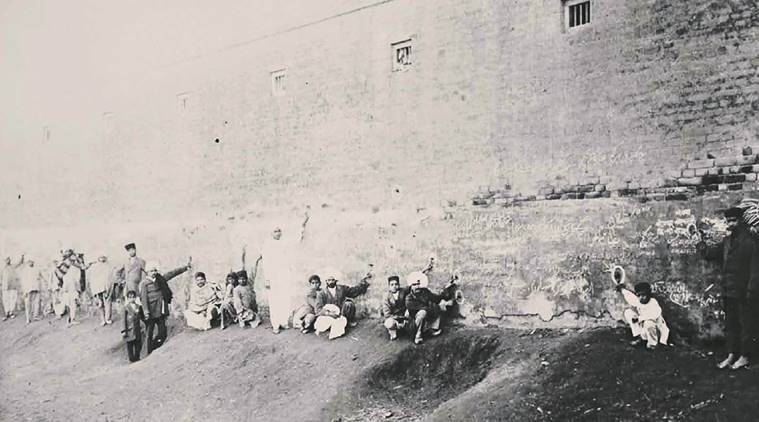
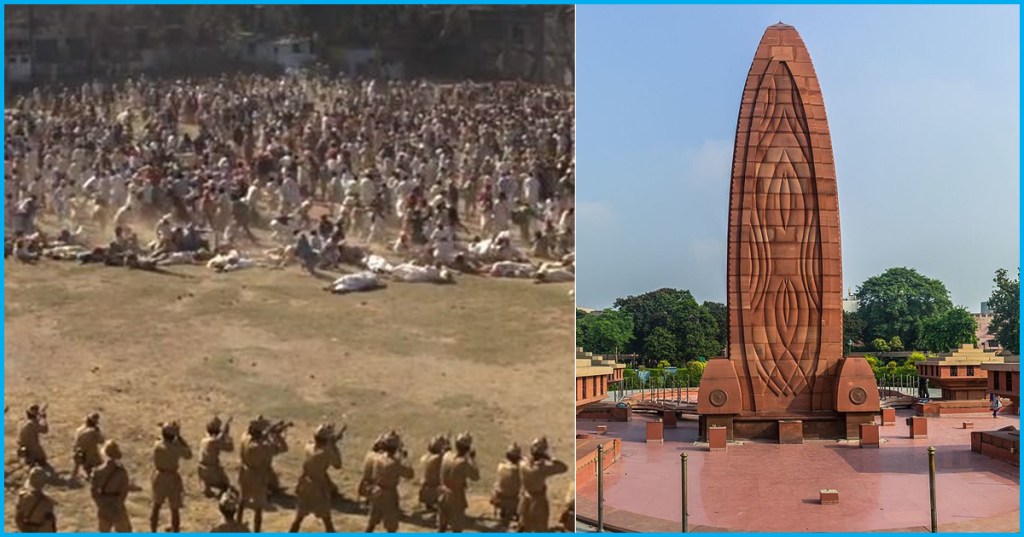
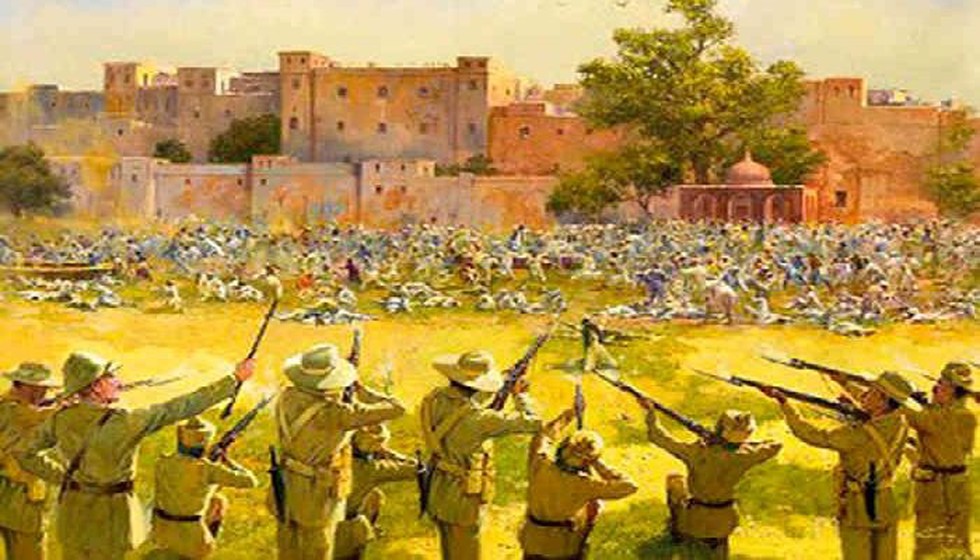
THE JALLIANWALA BAGH MASSACRE

The Jallianwala Bagh Massacre took place on 13th April 1919. It was one of the most brutal and heart-wrenching chapters in India’s freedom struggle.

Baisakhi- The festival of harvests, the beginning of a new year, an auspicious day which Punjab celebrates wholeheartedly. About a hundred years ago, the Baisakhi celebrations were somewhat similar at the Jallianwala Bagh. Nearly a century ago, with the efforts of Mahatma Gandhi and other revolutionary leaders, India was starting to unite many regional movements into one national movement. The British government continued the repression of nationalists, but in March of 1919, they went one step ahead. Through the Anarchical and Revolutionary Crimes Act,1919, popularly known as the Rowlatt Act, the government gave themselves power to shut down all the political campaigns, meetings and rallies. Merely on suspicion, the police could detain anyone for a period of two years without a trial or appeal. Despite fierce opposition from every Indian member this gruesome act was passed.

Indians felt humiliated and angry at the same time. Against this backdrop, Mahatma Gandhi issued a clarion call for a nationwide civil disobedience hartal on 6th of April. In Punjab, people answered the call for hartal or strike, with unprecedented enthusiasm. It became a platform for voicing their anguish against the prevalent issues. Popular and beloved Gandhian leaders, Dr.Satyapal and Dr.Saifuddin Kitchlew led the Rowlatt Satyagraha here. At this time, the relation between the Hindu and Muslim communities was at it’s peak and the protest against the British government were a sight to behold which happened on 9th April, 1919 in Amritsar.

The British government foresaw the seeds of a large-scale organized movement in it’s unity and decided to end it at it’s nascent stage. On 10th April,1919 the authorities deceitfully arrested and deported Dr.Satyapal and Dr.Kitchlew. This outraged the people of Amritsar. They took to the streets to protest against this unlawful detention, during which the police fired upon a peaceful procession, provoking attacks on railway station, banks and government offices by the protesters. Both sides suffered the casualties and severe injuries.

To crush the voices of revolution and terrorize people into submission, the British brought in Brigadier-General Reginald Dyer. He imposed Martial Law and deployed airplanes to survey gatherings across the city. Martial law restricted civil liberties such as freedom of meetings and associations. Gatherings of more than four people were prohibited. Nearly twenty thousand people gathered at the Jallianwala Bagh to celebrate Baisakhi, and to demand the release of Dr.Satyapal and Dr.Kitchlew. The shooting had started without any warning, under the order of Brigadier-General Reginald Dyer and continued till the troops ran out of ammunition. More than 1000 people had died and 1500 had been injured. Many people out of panic jumped into the well because the doors were locked so that no one was able to escape from there.

The news of the Massacre spread like wildfire across the country. It encouraged many more to participate in the struggle for India’s freedom. Rabindranath Tagore renounced his knighthood award by British, Mahatma Gandhi returned his Kaisar-i-Hind Medal in the wake of this incident.

TRAVELLING…

In simple words, Travelling can be defined a transporting or moving from one place to another. Travelling can be an awesome source of education as if enhances the exposure of people to different places, different types of environment, surrounding and people etc. Travelling provides away by which people can share their knowledge and can also be a source of income and an individual can learn many things from travelling.

LEARNING DIFFERNT LANGUAGE: Travelling provides a way to connect with others and visit different places. By commuting to other places and communicating with the native citizens provides an awesome opportunity to learn their language and the interest of the travelers to do so also increases, as they get a chance to interact and enjoy more. Learning a new language helps the travelers to understand them better and make new friends in different areas. Learning a new language gives you an opportunity to learn something new and different and helps you to be creative. Learning the native language can help in a number of ways while traveling. It makes helps in connecting with the local people and helps you to be confident with the help of proper lingual skills and interact with the people smartly.

LEARN HISTORY : Every city or place has its own history and culture which makes it unique from other places and this identity is inherited. A person gets to know about that place and its history by travelling. People get to know about the stories, amazing tales etc. related to that place from the locals which makes the experience more thrilling.

INCREASE YOUR FRIEND CIRCLE: Making new friends is the best part of travelling and make the journey even more enjoyable and interesting. You can make new friends, hang out with them, spend quality time and learn many new things. The current advancement in digital media and communication helps to stay in touch with them. It helps people to understand people of different personalities, nature and behavior. This will help in exploring their places and can also be your guide and can make the tour really effortless and easy.

LEARN NEW SKILLS : Travelling helps in providing new skills by increasing your experience and exposure to different areas and cities. All these new skills and exposure will help you in long run.

ENJOY NATURE : Travelling shows different sides of nature and its beauty. It increases your exposure to beautiful natural spots and places. The world is full of amazing places and excitements. Different places show different sides of nature. There are lot of things that you have not seen yet and travelling helps to explore and find the beauty of nature.

UNDERSTNADING PEOPLE : After living for a few days will help in finding few people who will like you and will be friends. In this way you will be able to learn a lot and understand people of different regions.

There are number of reasons to travel… Travel can be a real fun and can be a source of education and business. On the basis of someone’s financial situations, travelling can be planned.

Types Of Marriages In India

Marriage ceremonies in India are especially spectacular because of the colour, festivity, traditions, and cuisine. People from all over the world travel to see Indian weddings. The vast variety of Indian wedding rites is what makes them so unique. The rituals followed in the northern portion of India differ from those followed in the southern part of India; the east and west have various types of weddings. In India, there are several sorts of weddings, and it is this diversity that we will focus on in this essay.

History Of Marriages In India

If we are going to talk about the many forms of weddings in India, we must first look at the history of marriages in India. India is a country that has traditionally emphasized arranged weddings, a tradition that is now practised in every Indian group, regardless of religion, caste, or status. Previously, two families agreed on the match, and couples were generally married in their youth so that they could adjust better. Mohandas Karamchand Gandhi married Kasturba Gandhi when he was 13 years old, and they were married for 62 years.

The practise of child marriage did not exist in ancient India, but it began later when there were invasions and patriarchy began to rear its ugly head. In reality, in India, rulers organised Swayamvars for their daughters so that they may marry from among the best, ostensibly giving a woman the option. Although author Chitra Banerjee Divakaruni makes it clear in her book The Palace of Illusions that Draupadi was in love with Karna and would have garlanded him if she had the choice, she was forced to tell him that he was not a Kshatriya and could not participate in the Swayamvar because she had to serve her destiny, which was with the Pandavas.

How Many Types Of Marriages Are There In India?

It is difficult to specify the whole range of marriage ceremonies in India. Because there is so much variety within the scope of Hindu marriage. Needless to mention, several sorts of marriage rituals exist in India. Despite the fact that they are all Hindu weddings, a Bengali wedding is not the same as a South Indian or a Maharashtrian wedding. Although the faith is the same and the mantras spoken are identical, the ceremonies, time of wedding, and dress are all extremely different. If we are talking about sorts of weddings in India, we can state that there are nine forms of marriages in our nation.

  1. Hindu Marriage

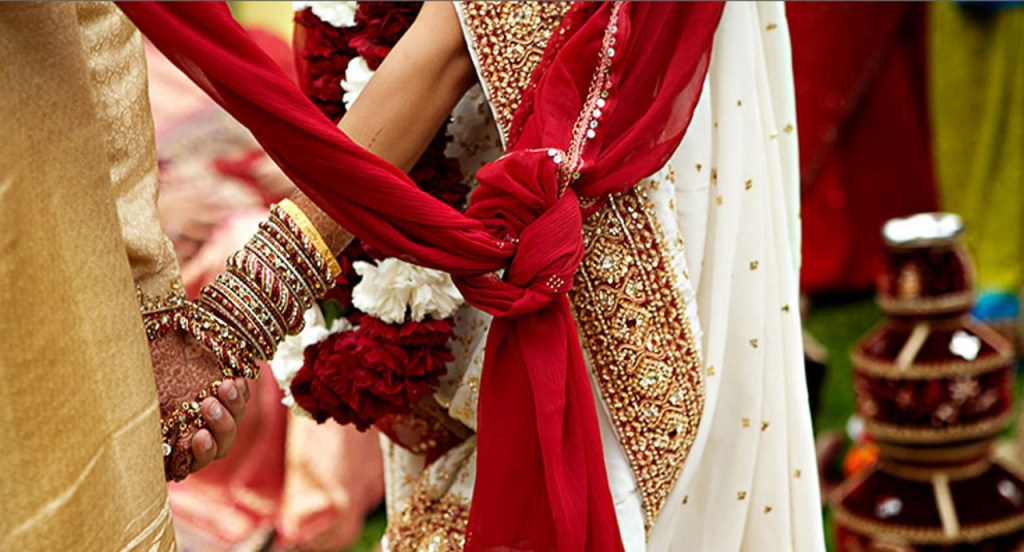
The Hindu marriage ceremony adheres to Vedic customs, including the three primary rituals of Kanyadaan, Panigrahana, and Saptapadi. The first involves the father giving the bride away, the second has the bride and groom linking hands in front of the fire, and the third involves completing seven circuits around the fire. However, not all rites are observed at every Hindu wedding. Different groups in Kerala and Tamil Nadu, for example, do not have a technique of lighting a fire, and their weddings often begin early in the morning and end by midday. Some rites, such as turmeric ceremony, take place in the morning in Bengal, while the major wedding ceremony takes place in the evening, according to the auspicious hour stated in the Almanac.

North India has the most elaborate wedding rites, which begin with the sagai (engagement) and can last for days when garlands are exchanged, a havan is performed, and the woman is forced to wear the Mangal Sutra. The application of vermillion is more important in East India, and the Lakshmi Narayan Puja is very important in Maharashtra.

All Hindu marriages are registered under the Hindu Marriage Act, 1955 or the Special Marriage Act, 1954.

2. Christian Marriage

Christian weddings are performed in a church by a minister or a priest under the Indian Christian Marriage Act of 1872. The beauty of Christian marriage in India is that a bride frequently chooses to wear the clothing of her culture rather than a gown. So, in Christian marriages in India, the bride wears traditional dress such as sarees, mekhlas, and traditional sarongs, while the groom often wears traditional attire with his best men. Among the types of marriages in India it is a Christian marriage that is a happy amalgam of Indian and Western cultures. The tradition of the feast, the toast and the bouquet are all followed sprinkled with indigenous traditions.

3. Sikh Marriage

Sikh weddings were formerly recorded under the Hindu Marriage Act, but are now registered under the Punjab Sikh Anand Karaj Marriage Act 2018. The Sikh wedding ceremony is basic. It is held in the Gurudwara. Before that, a ceremony called milni is held in which the bride’s and groom’s family meet. The bride and groom then take pheras around Guru Granth Sahib after reciting four short stanzas from their religious texts (Holy Scripture). The bride and groom dress up in extravagant traditional costume, and delicious food is served throughout the ceremonies.

4. Muslim Marriage

A Muslim marriage is governed by the Muslim Personal Law (Shariat) Application Act of 1937. In India, Muslim marriages adhere to Islamic customs. The bride and groom may choose to wear traditional Indian clothes, however the religious ceremony is typically carefully adhered to Islamic standards. The Maulavi performs the wedding ceremony known as the Nikah. Kanydan is also present during a Muslim wedding, followed by the reading of the Koran, the groom’s proposal, and the bride’s acceptance. Biriyani is a traditional wedding dish among Indian Muslims.

5. Parsi Marriage

The Parsi Marriage and Divorce Act of 1936 governs the legalisation and registration of Parsi marriages. Some of the traditions included in a Parsi marriage include the exchanging of silver coins between the bride’s and groom’s family. Following this ritual, the woman assumes the husband’s name. Three days before the wedding, the festivities continue, and on the fourth day, a wedding procession arrives to the bride’s residence, where the marriage is solemnised.

Following the wedding, the couple must eat from the same plate to symbolize their unity.

6. Buddhist Marriage

A Buddhist marriage is most likely the simplest kind of marriage in India. The Special Marriage Act of 1954 governs Buddhist marriages. There are no rigidly prescribed rites or elaborate ceremonies to be observed. True to its religious precepts, a Buddhist marriage stresses spirituality and the fulfilment of vows. A monk or Rinpoche generally performs the engagement solo. On the wedding day, the bride and groom, along with their respective families, attend the temple before the wedding ceremony, which is held in a different location.

A Buddhist wedding is a modest gathering to which only a few close friends and family are invited.

7. Jain Marriage

Buddhists and Jain can register their marriages under the Hindu Marriage Act of 1955 or the Special Marriage Act of 1954. These are two sorts of marriage acts that individuals of many religions might employ. Jain marriages have numerous rites that are comparable to Hindu nuptials, such as pheras and kanyavaran, but they also include a variety of Pujas and aarti.

The most significant tradition is that after the wedding, the bride and groom travel to a Jain Temple with their family members and feed the destitute there.

8. Court Marriage

Inter-caste and inter-faith marriages are a common occurrence in India. Many people who wish to skip religious rites choose judicial marriage under the Special Marriage Act of 1954. A 30-day notice is provided to the registrar, along with the bride and groom’s residence and birth information. Then, on the appointed day, they must appear at the registrar’s office with three witnesses to sign the legal paperwork and read the vows.

9. Mixed marriages

Many brides and grooms follow the rites of both faiths to solemnise their weddings in the case of inter-faith marriages. These marriages are governed by the Special Marriage Act of 1954, although it is customary to have a church wedding in the morning followed by a havan in the evening.

In a country with as diverse customs as India, mind-boggling rituals and traditional rites are unavoidable. However, there are primarily nine sorts of weddings that are widely solemnised in modern India, about which we just reported extensively.


UNIFORM CIVIL CODE

In areas like as marriage, divorce, inheritance, and adoption, the Uniform Civil Code (UCC) advocates for the creation of a single law for India that would apply to all religious sects. The law is based on Article 44 of the Constitution, which states that the state must work to ensure that citizens throughout India have access to a uniform civil code.

For over a century, the subject has been at the forefront of political discourse and discussion, and it is a top priority for the Bharatiya Janata Party (BJP), which has been pressing for legislation in Parliament. The saffron party was the first to vow that if it wins power, it will adopt UCC, and the subject was included in its Lok Sabha election program for 2019.

The central family law acts were extended to Jammu and Kashmir when Article 370 was repealed. Although this is another step toward adopting UCC across India, there is still a long way to go in this endeavor. 

Human rights and the values of equality, fairness and justice all support the creation of a standard civil code. Article 44 of the Indian constitution’s directive principle is important because its goal is combat discrimination against vulnerable groups and to bring disparate cultural groupings together across the country. While drafting the Constitution, the father of our constitution “Dr. B R Ambedkar” stated that while a UCC is desirable, it should remain voluntary for the time being, and so Article 35 of the draft Constitution was added as part of the Directive Principles of State Policy in Part IV of the Constitution of India as Article 44. It was included into the Constitution as a condition that would be met when the nation was ready to embrace it and the UCC could gain societal acceptability.

The UCC aims to provide the following:-

  1. Protection of Vulnerable Portions of Society: The UCC strives to safeguard vulnerable sections of society, like women and religious minorities, as envisioned by Ambedkar, while simultaneously encouraging nationalistic ardour via unity.
  2. Rules will be simplified: The code will make the complicated laws of marriage ceremonies, inheritance, succession, and adoptions more accessible to everyone. All citizens, regardless of their faith, shall be subject to the same civil law. When passed, the code would strive to simplify laws that are now divided based on religious views, such as the Hindu code bill, Sharia law, and other similar legislation.
  3. Secularism: A goal established in the Preamble, and a secular republic requires a single law for all people rather than differentiating regulations based on religious customs.
  4. Gender justice: Each religion in India has its own set of personal rules covering weddings, divorce, succession, adoption, and maintenance. Women’s rights, however, are typically restricted by religious legislation, whether Hindu or Muslim. A famous example is the practice of triple talaq which is now been held unconstitutional.

All personal laws will be abolished if an unified civil code is established. 

Therefore, the people’ fundamental rights to equality before the law and equal protection under the law, as guaranteed by the Constitution, need a comparable response throughout these regions. Article 44, which requires the state to make reasonable efforts to ensure that citizens have access to an unified civil code across India, has the same effect.

What Is Ikigai?

Ikigai (ee-key-guy) is a Japanese notion that combines the words iki, which means “alive” or “life,” and gai, which means “benefit” or “value.” When these phrases are combined, they indicate something which provides your life value, significance, or goal.

The notion of ikigai is claimed to have originated from traditional Japanese medicine’s core health and wellness concepts. According to this medical tradition, one’s physiological well-being is influenced by one’s mental wellbeing and perception of meaning in life

Explanations of ikigai are frequently associated with components of social identity, such as job and family life, but it is also explained as something more. It is the concept of finding meaning in all you are doing in life. Interests, relationships, public service and traveling all contribute to your ikigai.

Ikigai is frequently connected with a Venn diagram depicting the points where the following elements overlap:

  • What you love
  • What you are good at
  • What the world needs
  • What you can be paid for

THE DIFFERENT SPHERES OF IKIGAI

WHAT YOU LOVE

This sphere contains everything we do or encounter in life that offers us the most joy and helps us feel the most lively and satisfied. What matters is that we give ourselves permission to think very carefully as to what we enjoy, without regard for whether we are excellent at it, whether the world needs it, or if we can be paid to do it.

WHAT ARE YOU GOOD AT

This sphere contains whatever you are exceptionally great at, such as abilities you’ve learned, interests you’ve pursued, talents you’ve demonstrated since a young age, and so on. It’s possible that you’re excellent at something. This category includes skills or capabilities, regardless of if you are passionate about them, if the world needs them, or if you can be compensated for them.

WHAT THE WORLD NEEDS

The “world” here could refer to mankind overall, a local group with whom you are in contact, or somewhere in between. Whatever the world requires may be established based on your perceptions or the requirements voiced by others. Outside one’s own needs, this area of ikigai links most directly with other people and doing good for others.

WHAT YOU CAN BE PAID FOR

This domain of the diagram also alludes to the world or society as a whole, because it involves what somebody else is prepared to pay you for. Whether you can get compensated for your interests or skills is determined by circumstances such as the condition of the economy, the demand for your passions/talents, and so on.

A “balance point” in this ikigai diagram would thus include something that you are passionate about, are also skilled at, that perhaps the world really needs currently, and for which you will get paid.

IN PURSUIT OF A PURPOSE

Everybody, according to the Japanese culture, possesses ikigai. It denotes the worth that one discovers in their life or the things which make one feel as though their life is worthwhile. It pertains to both mental and spiritual situations that give one the impression that their existence has meaning.

What particularly appeals to me about ikigai is its interchangeability. It is unique to each individual and recognises that the concept of “happy” is really rather complex. Ikigai, as an idea, can grow alongside you. If one route of purpose is no longer available, you may adapt, shift, and follow other pursuits with purpose. This is accommodated by Ikigai.

Even though the present really doesn’t seem right, if you do not feel genuinely valued in your current condition but have a great desire to strive towards, you will have discovered your ikigai.

We frequently measure ourselves to everyone else, and when people around us appear to be doing better than us, we might feel like losers We soon overlook what we’re aiming for and we reject our current journey. This is where I believe ikigai may truly help. When we follow the concepts of ikigai, we are brought back to ourselves, towards our own purposes, and to the road we are taking to get there. Ikigai is just as much about adjustments, difficulties, and blunders as it is about achieving the “ideal” goal of a contented existence.

The concept in itself is not innovative or revolutionary, but it’s worth remembering.

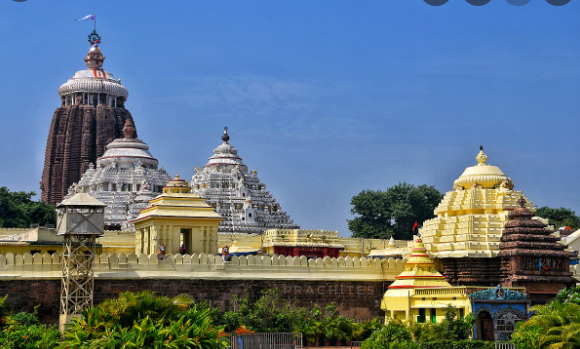
Most intriguing facts of Jagannath Puri

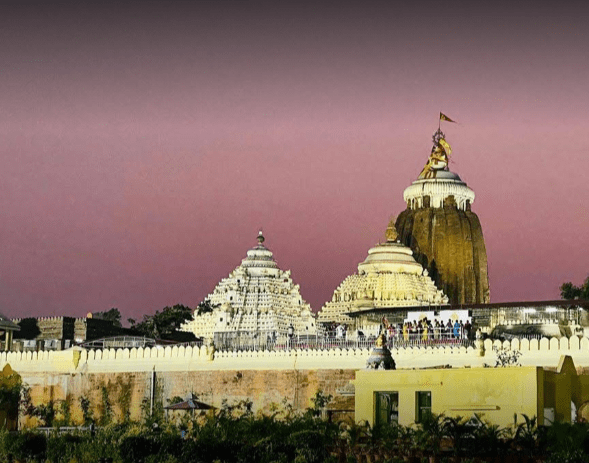
Shri Jagannath’s Temple in Puri has uttermost importance for the Hindu devotees as it is one of the Char-Dham pilgrimages i.e. Puri, Dwaraka, Badrinath, and Rameshwar. This temple is famous for its annual Rath Yatra, but that’s not the sole reason people worship Lord Jagannath and Devi Subhadra and elder brother Lord Balabhadra.

Jagannath Puri is also famous for the mysteries and undefinable facts that catch the traveler’s eye worldwide. Devotees believe that all these are blessings of Lord Jagannath, and people who consider these as myths should visit the place themselves and find themselves dumbfounded. So, here are some most intriguing facts about Jagannath Puri.

No birds, no planes fly above the Lord

They say no one’s above God, so nothing flies above it. It’ll leave you surprised to encounter such a divine miracle that no birds, no planes fly above the temple. This is a rare contrast compared to other temples, as we have always seen birds resting on the top of temples are other entities. The temple is considered as a no-fly zone, not by any state government orders but by the Lord himself. And this phenomenon apparently has no scientific explanation.

Flag defying the power of wind

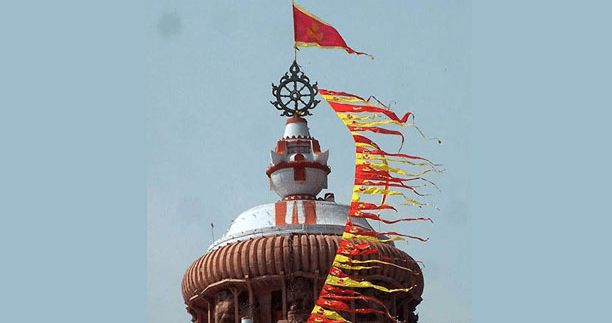
All of us know that any cloth flows towards wind direction, be it the sails of ship or the kites we flew in our childhoods. But here, the flag that flies atop of the Jagannath temple is an exception to this common principle. No scientific explanations reason the flag flow in the opposite direction of wind.

Mute oceans

Odisha Tourism : Puri Beach
As soon as you step inside the main door, i.e. Singha Dwara entrance of the temple, you can’t hear the burble of water. And this phenomenon is more prominent in the evenings. But once you step out the audibility of water returns. It’s said that Devi Subhadra wished for serenity inside the temple walls and by this her wish was duly fulfilled.

Neela Chakra at the pinnacle

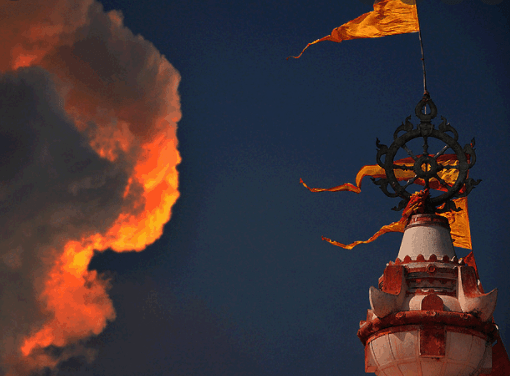
The riddle of Neela Chakra (Blue wheel) has still been unsolved. First, just think about the fact, how did the wheel made of 8 different alloys and a 36 feet circumference get up there at the pinnacle with just a human force of that century. Second, the view of this wheel doesn’t really depend on the direction that we look at it from. It’s like it was designed to look the same from all directions.

The temple casts no shadows

Every small object/thing/ peoples have shadows. But ever wondered what if something doesn’t have a shadow? The temple Jagannath Puri doesn’t cast any shadow on any part of the day under sunlight. If this is not a miracle, what would it be; just an unexplained phenomenon with no scientific reason to back up.

The magical techniques to cook

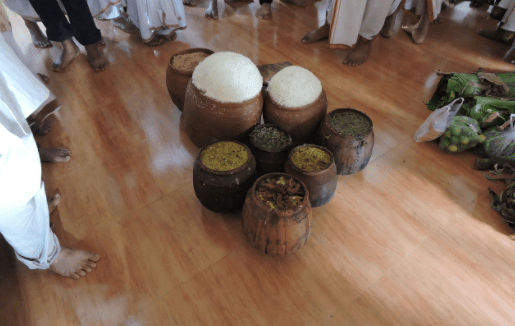
The traditional methods for cooking the mahaprasadam have been preserved here from the start. They place exactly 7 pots, one above the other on the firewood. Enchantingly, the upper pot gets cooked first, followed by the rest in order.

Mahaprasad never goes vain here

In India, wasting food is considered as a bad sign; the temple crew lives by this same. So, here at Jagannath temple the food is never futile, even if the crowd of devotees may vary from 2,000 to 2,00,000. Miraculously, the Parsadam prepared every day is never wasted, not even a bite. Could this be an effective management or the Lord’s will?

After reading such celestial facts, you might want to see them yourself. So, do not forget to check these facts on your next trip to Odisha and share your experience with me.

Do You Remember This Legend?

‘Charlie Chaplin’ – ( Journey from rags to riches.)

(

Born – Charles Spencer Chaplin, 16 April 1889, Walworth, London, England.

Died – 25 December 1977 (aged 88), Manoir de Ban, Riviera-Pays-d’Enhaut District, Vaud, Switzerland.

Resting place – Corsier-sur-Vevey, Riviera-Pays-d’Enhaut District, Vaud, Switzerland.

Occupation – Actor, comedian, director, composer, screenwriter, producer, editor.

Years active – 1899–1976

Parent(s) – Charles Chaplin Sr.Hannah Chaplin (née Hill)

Awards – Academy Award (1973): Music (Original Dramatic Score) ,Honorary Award of the Academy of Motion Picture Arts and Sciences (1972), Special Award of the Academy of Motion Picture Arts and Sciences (1929).

Works written – My trip abroad, A Comedian Sees the World, My Autobiography etc.

About Charlie:

Chaplin, one of the most financially successful stars of early Hollywood, was introduced to the stage when he was five. The son of London music hall entertainers, young Chaplin was watching a show starring his mother when her voice cracked. He was quickly shuffled onto the stage to finish the act. Chaplin and his older half-brother, Sydney, roamed London, where they danced on the streets and collected pennies in a hat. They eventually went to an orphanage and joined the Eight Lancashire Lads, a children’s dance troupe. Charlie Chaplin is considered a phenomenon in the world of acting. He is worshipped, studied, and imitated by millions of wannabe stars who want to ape his comic timing.

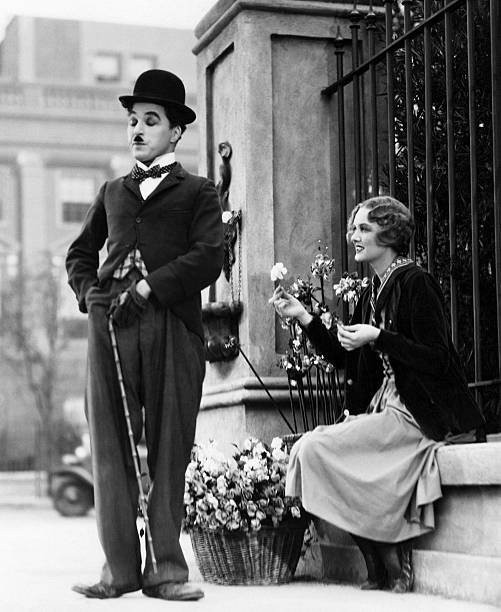
LOS ANGELES – 1931: Actors Charlie Chaplin as The Tramp and Virginia Cherrill as a blind flower seller in the film ‘City Lights’. (Photo by Donaldson Collection/Getty Images) /Getty Images)

His Life:

Charlie Chaplin had to struggle as a child. He was the son of poverty- stricken music-hall entertainers. Chaplin’s father, Charles Chaplin Sr was an alcoholic and had little contact with his son. His father died of alcoholism when Charlie was twelve. A larynx condition ended the singing career of Chaplin’s mother. After Chaplin’s mother (who went by the stage name Lilly Harley) was admitted to the Cane Hill Asylum, her son was left in the workhouse at Lambeth in South London. Charlie and his half-brother, Sydney, forged a close relationship in order to survive. They gravitated to the music hall while still very young and both of them were talented. Themes in Charlie’s films in later years would revisit the scenes of his childhood deprivation and poverty in Lambeth. A lot of his humour was rooted in pain.

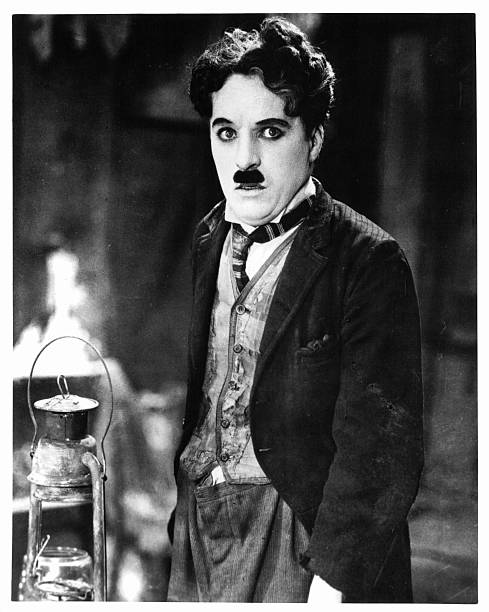
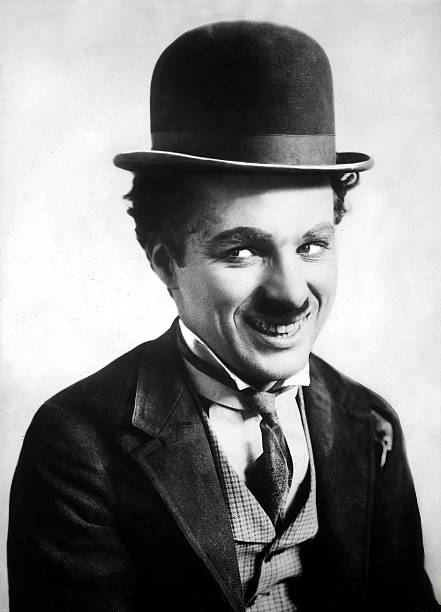
On tour in New York (1913), Charlie caught the who signed him to a film contract. Unfortunately, Chaplin had considerable initial difficulty adjusting to the demands of film acting, and his performance suffered for it, but destiny gave Charlie eye of Mark Sennet another chance and there was no looking back. Chaplin’s earliest films were made for Mark Sennet’s ‘Keystone Studios’, where he developed his ‘tramp’ character and very quickly learned the art and craft of film making. Chaplin developed the costume baggy pants, derby hat, oversized shoes, and cane-that was to become the hallmark of his famous “little tramp’ character. He was soon directing his own films, and he produced, directed, and starred in such classics as The Gold Rush (1925), City Lights (1931), Modern Times (1936), The Great Dictator (1940), Monsieur Verdoux (1947) and Limelight (1952).

Chaplin never spoke more than cursorily about his film making methods, claiming that such a thing would be tantamount to a magician spoiling his own illusion. In fact, until he began making spoken dialogue films with The Great Dictator, Chaplin never shot from a completed script. The method he developed was to start from a vague premise-for example ‘Charlie enters a health club’ or ‘Charlie enters a restaurant’. Then he had sets constructed, and worked with his stock company to improvise gags around them. This is creativity at its best. Charlie Chaplin’s unique film-making techniques became known only after his death, when his rare surviving cut sequences were carefully examined in the 1983 British documentary Unknown Chaplin.

5 Things You May Not Know About Charlie Chaplin:

1.Chaplin made his stage debut as a tot – Both of Chaplin’s parents were music hall entertainers in London. In his autobiography, he described how, at age 5, his mother’s voice suddenly failed in front of a crowd of rowdy soldiers. The stage manager—or possibly his father or one of his mother’s lovers—then ushered him onstage as a replacement. Chaplin first sang a popular song called “Jack Jones,” prompting the audience to shower him with coins. He purportedly drew big laughs by announcing that he would pick up the money before continuing. More laughter ensued when he began imitating his laryngitis-addled mother. A few years later, Chaplin made his professional debut as a member of a juvenile clog-dance troupe. He followed that up with a couple of theater roles, toured with vaudeville acts and did one disastrous night of stand-up comedy in which he was booed off the stage.

2. Chaplin partly grew up in an orphanage – As the health of Chaplin’s mother deteriorated, so too did the family’s finances. It got so bad that in 1896 Chaplin and his older half-brother were sent to a public boarding school for “orphans and destitute children.” Chaplin spent about 18 months there, the longest period of continuous schooling he would ever receive. He learned to read and write, but apparently suffered quite a few indignities, including a severe caning and the shaving of his head during a bout with ringworm. Shortly thereafter, his mother was committed to a mental institution. His father, meanwhile, played very little role in his upbringing and ended up dying of alcoholism at age 37.

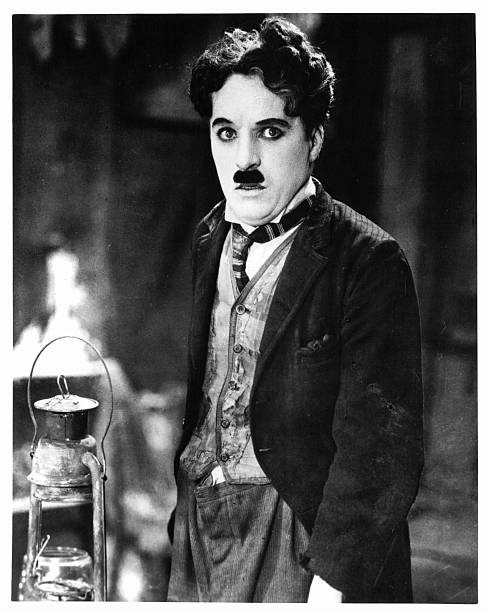
Charles Chaplin in a scene from the film ‘The Gold Rush’, 1925. (Photo by United Artists/Getty Images)

3 Chaplin loathed his first film – During Chaplin’s second vaudeville tour of the United States in 1913, Keystone Studios hired him away for $150 a week. He made his first film appearance early the following year, playing an out-of-work swindler in “Making a Living.” Wearing a handlebar moustache, top hat and monocle, he got in a few funny gags, particularly while fighting the story’s hero, a journalist who at one point interviews a man trapped under a car instead of helping him. Overall, though, Chaplin was appalled by his performance. “I was stiff,” he later said. “I took all the surprise out of the scenes by anticipating the next motion.” He also accused the director of cutting his best material out of jealousy.

4. Chaplin played thr same character in all but a few movies – Prior to his second film, Chaplin dressed up one day in baggy pants, a tight coat, big shoes, a small bowler hat and a bamboo cane. He added a small fake moustache and is said to have strutted around while his co-actors were playing pinochle. Having witnessed the scene, the head of Keystone allegedly “giggled until his body began to shake.” “Chaplin,” he exclaimed, “you do exactly what you’re doing now in your next picture. Remember to do it in that get-up.” This so-called Little Tramp character immediately took off in popularity, spawning so many imitators and marketing schemes that the press labeled it “Chaplinitis,” and would become Chaplin’s onscreen persona for the next two-and-a-half decades. In 1914 alone, he appeared in dozens of short films as the Little Tramp, most of which he directed himself.

5 .Chaplin quickly became a millionaire – For $1,250 a week, plus a $10,000 bonus, Chaplin moved in December 1914 to Essanay Studios, which touted him as “the greatest comedian in the world.” He then signed with the Mutual Film Corporation for $670,000 a year, after which he agreed to make eight comedies for First National for over $1 million. Finally, in 1919, he founded his own studio with fellow Hollywood icons Douglas Fairbanks, Mary Pickford and D.W. Griffith. “I went into the business for money, and the art grew out of it,” Chaplin once said. “If people are disillusioned by that remark, I can’t help it. It’s the truth.”

EID-AL-ADHA

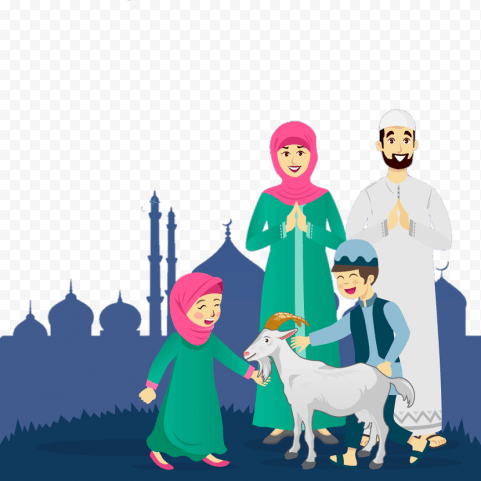
Eid al-Adha is a Muslim religious holiday. In Islam, there are two major Eids: Eid-ul-Fitr, which marks the end of the Holy Month of Ramadan, and Eid-ul-Adha, which marks the end of the yearly Hajj journey during the time of Qurbani means ‘sacrifice’. It is celebrated by Muslims all around the world and might span several days depending on where you live. 

The Festival of Sacrifice is also known as Eid al-Adha. It commemorates the narrative of Ibrahim, a prophet who attempted to show his faith in Allah by sacrificing his son Ishamel. He made the decision to obey Allah’s word. Despite several obstacles, he was on the verge of sacrificing his kid. At that very time of sacrifice, Ishamel had been replaced with a ram by Allah because Ibrahim had demonstrated his loyalty to Allah without any question.

Therefore, Muslims commemorate Ibrahim’s steadfastness and allegiance to Allah above everything else.

Although Eid-ul-Adha has no direct link to the Hajj Pilgrimage, it occurs just a day after the Hajj is completed and so has historical significance. The tenth day of the last (twelfth) month of the Islamic Lunar Calendar, Dhu-al-Hijjah, is Eid-ul-Adha. The date of the celebration is determined by a valid sighting of the moon after the yearly Holy Pilgrimage of Hajj, which is a requirement for all Muslims who meet certain conditions and is one of Islam’s fundamental Five Pillars. 

It usually lasts two to four days. Following the Eid Salaah (Eid Prayers), which are done in congregation at the closest Mosque on the morning of Eid, the act of Qurbani (sacrifice) is performed. The act of Qurbani consists of slaughtering an animal be it sheep, goat, cow, bull, camel as a sacrifice to commemorate Prophet Ibrahim’s sacrifice for Allah on this special date. Udhiya is another name for this. From the 10th to the 12th of Dhu-al-Hijjah, three days of animal sacrifice are observed. The animal should be slaughtered in a “halal” friendly, Islamic manner, and the animal must be in excellent health and beyond a particular age. 

The Qurbani meat can then be divided into three equal parts each share: one-third for you and your family, one-third for friends, and the last third for charity.

The day is traditionally spent celebrating with family, friends, and loved ones, typically by dressing new or finest outfits and exchanging gifts. But however in today’s time, keeping in mind the pandemic situation and social distancing many of these gatherings may not be possible. Some festivities may be held only with intimate relatives or may be held entirely online.

Usually, When Eid al-Adha begins, some Muslims attend Hajj a pilgrimage in Saudi Arabia. They hurl pebbles at three massive stone pillars in Mina’s city. Muslims say that this is where Ibrahim flung pebbles at the devil to chase him away. But, The event has been reduced back this year due to social distance. Only 60,000 persons in Saudi Arabia who have been inoculated with vaccines will be authorised to conduct the procedure

Raksha Bandhan

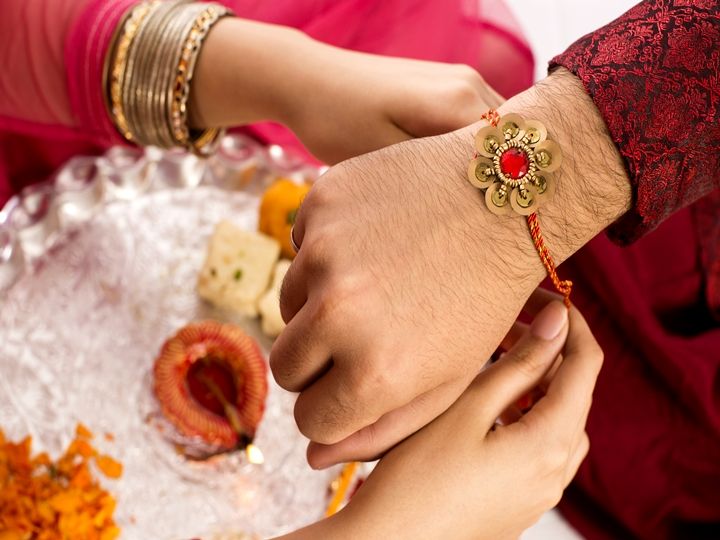
Rakhi Purnima, known as Raksha Bandhan, is a famous festival observed by the Hindu community. On this auspicious day, the brothers traditionally consolidate their oath to protect their sisters from any obstacle. The sisters worship their brothers, tie a holy bracelet on their wrist, and receive gifts and money from their elders.

Rakhi is the symbol of love and unity, but if we study Hindu mythology, it is concluded that rakhi was not performed traditionally by siblings in ancient times. The wives conducted their rites on their husbands. In the legendary tale of Lord Indra Dev and his wife Sachi, Lord Indra went on a fierce battle with a powerful demonic king Bali. Fearing the threatened life of Lord Indra, his wife Sachi tied a pious bracelet to her husband’s wrist that was given to by Lord Vishnu. Thus, in ancient times the tying of thread has become a tradition for married couples, but in the present time, it has extended from brothers and sisters to every kind of relationship.

Raksha Bandhan is a festival which celebrates the bond of a brother and sister. This festival is celebrated in the Hindu religion. It is one of their most important festivals. In addition, sisters and brothers wait eagerly for it all round the year. People celebrate it with abundant zeal and enthusiasm in India.

Similarly, it does not matter if you are a kid or an adult. Brothers and sisters of all ages celebrate Raksha Bandhan. Furthermore, it strengthens the bond between them as well. ‘Raksha’ translates to the protection and ‘Bandhan’ translates to bond. Thus, this explains the meaning of this festival.

Raksha Bandhan is celebrated following the Hindu calendar. It falls in the month of Saawan and people celebrate it on the last day of the month. This auspicious festival usually falls around August only.

Importance of Raksha Bandhan

As we all know, siblings carry a special place in our hearts. However, the particular bond of a brother and sister is very unique. The care they have for each other knows no bounds. The love they share is beyond compare.

No matter how much they fight with one another, they always stand behind them in support. Brothers and sisters fight with each other over trivial matters. In other words, they share a bond which is full of teasing and love.

Brothers and sisters help us grow. At every stage of our lives, the bond between them grows stronger. They stand with each other through thick and thin. The elder brothers are very protective of their sisters. Similarly, elder sisters care a lot for their younger brothers. The younger ones look up to their elder siblings.

Raksha Bandhan is all about celebrating this bond. It is a symbolism of the unique and special relationship shared by the two. This day has been rightly recognized to have a good time and focus on this beautiful bond. It serves as a symbol of their love, togetherness, and confidence in each other.

Occasion of Raksha BandhanRaksha Bandhan is a time for pampering for the sisters. On this auspicious occasion, the sisters tie a sacred thread i.e. rakhi, on their brother’s wrist. It is done so with the intent to wish good health and long life.On the other hand, the brothers, in turn, bless their sisters and pledge to protect them and care for them all their lives. The sisters receive a lot of love and pampering on this day. It is in the form of chocolates, gifts, money, dresses and more.

The family members dress up for this occasion, usually in ethnic wear. We see the markets flooded with colorful rakhis and gifts. Every year, fashionable and trendiest rakhis do the rounds of the market. Women shop for the perfect rakhis for their brothers and the men go out to buy gifts for their sisters.In conclusion, Raksha Bandhan is one of the most enjoyable festivals. It gives the brother and sister to strengthen their bond. Nowadays, even sisters who do not have brothers celebrate Raksha Bandhan with their sisters. The essence of the festival remains the same nonetheless.