INTERNSHIPS

The internship is the main source for a college student to improve and prove his/her knowledge.

Every college student has composed placements and off compose placements.

At the time of placements in a different company, we have to submit our Resume. That resume gives our real appearance to interview. If we have done any internships and any skill development that will help for our desired company placements.

Lets more about internships

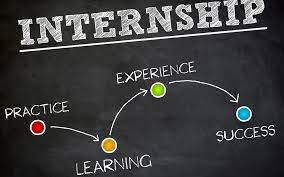
Internships is the training and real-time project to the confidence of our skills for real-world understanding

 The internship is an opportunity offered by an employer to potential employees, as an intern, to work at a firm for a fixed period of time. Interns are usually likes undergraduates or students, and most internships period last between a month and three months. … An internship can be either paid or voluntary.

Which internships we have done?

Internships are based on your desired knowledge, department and day by day improved courses

Things to consider when choosing an internship

  • Which sector are you interested? …
  • What will be your responsibilities? …
  • What will you will get ? …
  • Where you have to do? …
  • What’s the environment like is it comfortable ? …
  • Will you get the opportunity to more network? …
  • What are the skills will you learn? …
  • What are your qualifications for ?

Let specific directions for your internships

There are some websites for internships that may have offline and online internships :

  • Linkedin
  • Glassdoor
  • Google
  • Internshala
  • Internship.com
  • Internmatch.com
  • Youturn
  • Idealist
  • Global Experience
  • Coolworks

Go for these websites you will find “updated(your name) version.0”

Supply Chain Challenges for Covid-19 Vaccine Delivery in India

1. Logistics and Management

As of today, there are 154 candidate vaccines in pre-clinical trials, 21 in Phase-1 trials (Small-scalesafety trials), 12 in Phase-2 trials (Expanded safety-trials) and 11 in the path of approval across the globe. Not to forget, Russia’s first registered vaccine against the virus – Sputnik V. Even India has over a dozen of companies working on the vaccines out of which Covaxin developed by Bharat Biotech in collaboration with ICMR, is in its final stages and is highly anticipated. With so many possibilities, pharmaceutical manufacturers and distributors need to ensure continuity in vaccine development and delivery to meet the market demand. The following table talks about the potential vaccines being manufactured in India.

2. Availability and Affordability

Once the vaccine is launched, availability and affordability will be a key challenge. We must consider
the possibility of a private-public partnership to move this further, like in the case of polio vaccines.
There could be possible problems of irregular access to the vaccines, shortage in the supply, theft and
robbery, spike in pricing etc. which must be thought of beforehand. The vaccines must be suitably and
fairly priced for the lower income groups to be able to afford.

3. Manufacture and Production outreach

India has an upper hand in this criterion, since it has been manufacturing and exporting a significant
amount of vaccines and medicines of different kinds, globally. However, on the arrival of a potential
vaccine, manufacture and production has to be given a clear priority and must be upscaled, in order to
be prepared for the challenges of shortages like in the case of N95 masks.

4. Education and Outreach

Although vaccines are primarily important, it is not vital that everyone must be vaccinated at one
time. People with good immunity, free of ailments and high resilience are not particularly required to
be vaccinated. Healthcare workers, Senior citizens, people with health problems like diabetes, asthma,
coronary diseases etc. must be given first priority over the healthy population of the country, which
can be vaccinated at a later stage, if necessary.

The Pandemic Panic

The year 2020, has been an exceptionally unusual year for India, particularly from the economic point
of view. From the extended lockdowns due to the global pandemic, the departure and disturbing plight
of the migrant laborers, the agitated protests by the healthcare workers over the non-payment of
salaries, laying off employed workers in the workplace and to the recent protests over agricultural
bills passed by the government; all these upheavals have led to a high economic distress and a spike in
the rates of unemployment within the country. I dare say that, the pandemic will be remembered more
for its financial distress, rather than the morbidity rate. COVID -19 has left over 1 lakh dead in India,
and several others with elaborate hospital bills. With the possibility of a prospective vaccine, expected
at the end of this year or the early beginning of next year, another imperative challenge that India is
yet to face is, the manufacture and supply of affordable vaccines to its 1.3 billion citizens.

To meet the global demand of urgency in the production of vaccines, countries including India must
encourage self-reliance in order to decrease the production costs. Governments must ensure proper
planning and implementation to meet the suitable needs of their citizens. With the decrease in the
surfacing of the daily cases and an increase in the recovery rate, we still have a long way to go, but we
are in the right direction of approach.

Budding entrepreneurship amidst the youth

For many the word entrepreneurship sounds like an intricate term, which we think that are associated only with people doing large businesses, world wide. But it is the concept of developing, managing and promoting a business platform which could be relevant to the field of interest that one has in line to gain profit. There is a major misconception that a business investment deals with more money. But the young entrepreneurs come up with impalpable investments which can remarkably attribute to the growth of a business like innovation, skills, creative thinking, time management, energy and of course monetary sources also take an integral part but not a major part. Especially in this pandemic many of the young people have made their venture into businesses through the digital platform which turned into a good of source of income for many. Youth entrepreneurship has a huge impact on the social and economic progress of the society. It is regarded as a promising alternative and help sustain growing economies and lead to a viable development. At one point, every individual after the completion of their studies would be striving hard discovering for opportunities to get a job in the government or a corporate sector thinking that their life would be settled and if they don’t acquire so, they would be distressed about their career. So one of the major challenges faced by most of the countries is unemployment. But now the tables have turned and individuals pursuing their studies on one hand have also started framing opportunities for themselves in accordance with the field that fascinates them, which could be on a small scale. Working towards Youth Entrepreneurship programs can aid solving problems that are currently challenged by the countries and could pave way for a better future.

In the mean time the hobbies have evolved into professions. For instance if a person is good at artistic works and drawing portraits he gets into the sphere of vending personalized gifts through online platform. The teenage girls who have been doing henna designs for their set of family for various get togethers are now online providing their work for many brides out for marriages. There are many blooming fashion designers who have been just designing costumes for themselves before, but then through the help of digital platforms and social media have started their own clothing line. Blogging, publishing own books, teaching online courses, launching podcasts, handmade goods, thrift stores, freelancing, web development, baking & selling pastry items and we can just bundle up examples about the several establishments of the budding young entrepreneurs.

Inspiration has nothing to do with the age factor. People who do quality and consistent work can inspire many and here are such inspirational young entrepreneurs who have given rise to very successful and engrossing start ups .

Ritesh Agarwal is a smart young man behind the OYO rooms and he is the founder and the CEO of the same. He is the world’s second youngest billionaire in 2021.

Sreelakshmi Suresh is a web designer holding the titles of World’s Youngest CEO and World’s youngest web designer. She started meddling with computers at the age of 3, started designing at 4, and came up with her first website at the age of 6.

Tilak Mehta , a 15 year old boy founder of Paper n Parcel is the World’s Youngest entrepreneur who made Digital Courier company with the help of ‘Mumbai Dabbawala’ and he was awarded Global Child Prodigy 2020.

Trishneet Arora is the founder and CEO of TAC security, a cyber security company. He has written books on cyber security, ethical hacking and web defence. He started his own company at the age of 19.

Akhilendra Sahu is a young serial entrepreneur form India. He is the founder and CEO of ASTNT technologies Pvt Ltd., He was 17 years old when he started his career as a freelancer. He ranked on India’s top 10 young Indian entrepreneur $ top 10 young digital influencers.

Aditi Gupta is an Indian author and co-founder of Menstrupedia Comic. Menstrupedia provides a user-friendly guide to menstruation, hygiene and puberty and break myths associated to them.

Entrepreneurs are the cluster of individuals who are reluctant to be one among all and frames out some innovative roadmaps to stand out form others, who defy to stick to the conservative thinking and wants to be out of the box. The three important keys that a budding entrepreneur should know are, PROMOTE NEW IDEAS, ACCELERATE ENTREPRENEURSHIP AND INVEST IN STARTUPS USING YOUR INGENUITY. Technology has enabled progress in all fields. The digital platform plays a very pivotal role in the upliftment of the young entrepreneurs and boosts the inner entrepreneurship in us. The world is been swamped with countless possibilities and opportunities. When you become certain about what you need you get a step closer to success and cling on to both hard work and smart work. To become a successful entrepreneur be hungry and ambitious on your goals. To persist in the same domain willpower, assertiveness and perseverance are very vital because every field is indulged with risks. Never halt in the career with the same mindset you started with, evolve with time. Aspire to inspire people!!!

OPEC

Organization of the Petroleum Exporting
Countries (OPEC):

• A permanent Intergovernmental Organization ofb14-oil exporting developing nations.

• Created in 1960 at the Baghdad conference by
Iran, Iraq, Kuwait, Saudi Arabia and Venezuela.

• The other members of OPEC include Algeria,NAngola, Congo, Ecuador, Equatorial Guinea, Gabon, Libya, Nigeria, and United Arab Emirates.

• Qatar which was a member, left OPEC on
January 2019.

• Other oil exporting nations join OPEC meetings as

observers.

• Mission:
 To ensure that they remain stable so that there is an efficient, economic and
regular supply of petroleum, to the consumers.
 To ensure steady income to the oil producers. It will also ensure the business interests of the investors in the petroleum industry.

• Headquartered at Vienna, Austria.

• The OPEC Secretariat – executive organ:
located in Vienna.

• Releases the publication called the ‘World Oil
Outlook’. OPEC+ :

• A group of 24 oil-producing nations: 14 members of the OPEC; and 10 other non-OPEC members, including Russia.

• Born in 2017 with a deal to coordinate oil production among the countries in a bid to the stabilize prices of oil.

• Reached deals for members to voluntarily cut and ramp-up production in response to changes in global oil prices.

• Members collectively agree on how much oil to produce.

Huge spike in fuels prices

Huge spike in fuels prices

• Four factors influencing rise in prices:
 Crude oil, freight and processing charges to the dealer.
 Excise duty charged by the
government.
 Dealer commission to the gas station.
 Value Added Tax levied by the state government.

Impacts of taxes on fuel price hike

• Increasing central and state taxes on fuel – key
reason for high fuel prices.

• 2020: Centre hiked the excise duty on petrol and
diesel by Rs. 13 and 16 per litre.
 To shore up revenues.

• Example: In Delhi, central and state taxes – 57 % of
pump prices of petrol and is about 51.4 % for diesel.

• Central government has not cut central taxes – taxes
on auto fuels should be cut to curb inflation.

Fuel price hike and inflation

• When fuel prices rise, so does inflation.

• Higher the inflation – lower will be the inflation-adjusted returns.

• India’s retail inflation became 6.3% in May 2021- breached the upper
limit of RBI (6%).

Way forward

• ICRA: government may cut cess levies on retail prices
of petrol and diesel to ease prices.

• Petrol consumption is estimated to grow 14% and diesel 10% year-on-year in FY22.
 Reason: Recovering economic activities and mobility – easing of curbs and accelerating Covid19 vaccinations.

• Higher consumption of fuels – support a rise in the
indirect taxes levied on them. • Growth in consumption would result in Rs. 40,000 crore of extra cess collections.

• Existing fuel price can be cut by ₹4.50 per litre for
petrol and diesel.

DIGNITY OF LABOUR

“No work is insignificant. All labor that uplifts humanity has dignity.” Martin Luther King, Jr.

EVERY WORK MUST BE GIVEN HONOUR

The word ‘dignity’ means the ‘quality of being worthy of honour or respect So the expression ‘dignity of labour’ means honour or respect’ received through or for hard work. That is why it is said that ‘work is worship’. Every type of work need labour, physical or intellectual. But the word labour’ is generally used in the sense of physical labour which is as important as intellectual labour. The production of cereals, construction of buildings and the other constructive work require physical labour. Man cannot do without hard labour. So, he should do all types of work.

WRONG NOTION ABOUT MANUAL LABOUR

But the attitude of the educated and the gentlemen towards manual labour is wrong. They are of the opinion that manual work is fit for the illiterate men only. But they are mistaken. All intellectual work involves some sort of physical labour. Even a student has to labour hard to pass the examination. All artists, scientists and writers whose work is intellectual have to spend hours with patience. The manual work too needs the exercise of intellect. A carpenter, an ironsmith, a goldsmith, a barber, etc. whose work is physical have to exercise intellect to improve the quality of their work.

MANUAL LABOUR: THE ROOT OF ALL PROGRESS

And it is the manual labour which is at the root of all progress. It is rightly said that true labour never goes in vain. Labour has its own importance. Nothing can be achieved in the world without labour. The prosperity of a country depends on its agricultural products. So, there is no humiliation in the cultivation of land. The people of the West do their work themselves. They look upon labour as something honourable and sacred. Such is the importance of labour that its dignity is recognised by all. It is the source of health and happiness.

Economic survey 2020-21

Bare Necessities:

Access to “the bare necessities” such as housing, water, sanitation, electricity and clean cooking fuel are a
sine qua non to live a decent life.
This chapter examines the progress made in providing access to “the bare necessities” by constructing a
Bare Necessities Index (BNI) at the rural, urban and all India level. BNI summarises 26 indicators on five
dimensions viz, Water, Sanitation, Housing, Micro-environment, Other facilities.

Key findings related to bare necessities: Access to the ‘bare necessities’ has improved across all States in the country in 2018 as compared to 2012. It is highest in States such as Kerala, Punjab, Haryana and Gujarat while lowest in Odisha, Jharkhand, West Bengal and Tripura Inter-State disparities declined across rural and urban areas.
Improved access to the ‘bare necessities’ has led to improvements in health indicators such as IMR and
also correlates with future improvements in education indicators. Schemes such as Jal Jeevan Mission, SBM-G, PMAY-G, etc. may design appropriate strategy to reduce the gaps.

  • GDP growth is a critical variable for decision-making by investors as well as policymakers. Therefore, the recent debate about whether India’s GDP is correctly estimated following the revision in estimation methodology in 2011 is extremely significant.
  • The survey highlighted the need to invest in ramping up India’s statistical infrastructure is undoubted. It also said that India has made impressive improvements in several social development indicators.

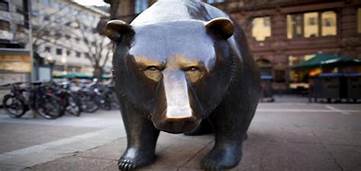
Bear Market

What Is a Bear Market?

A bear market is when a market experiences prolonged price declines. It typically describes a condition in which securities prices fall 20% or more from recent highs amid widespread pessimism and negative investor sentiment.

Bear markets are often associated with declines in an overall market,  but individual securities or commodities can also be considered to be in a bear market if they experience a decline of 20% or more over a sustained period of time—typically two months or more. Bear markets also may accompany general economic downturns such as a recession. Bear markets may be contrasted with upward-trending bull markets.

Understanding Bear Markets

Stock prices generally reflect future expectations of cash flows and profits from companies. As growth prospects wane, and expectations are dashed, prices of stocks can decline. Herd behavior, fear, and a rush to protect downside losses can lead to prolonged periods of depressed asset prices.

One definition of a bear market says markets are in bear territory when stocks, on average, fall at least 20% off their high. But 20% is an arbitrary number, just as a 10% decline is an arbitrary benchmark for a correction. Another definition of a bear market is when investors are more risk-averse than risk-seeking. This kind of bear market can last for months or years as investors shun speculation in favor of boring, sure bets.

The causes of a bear market often vary, but in general, a weak or slowing or sluggish economy will bring with it a bear market. The signs of a weak or slowing economy are typically low employment, low disposable income, weak productivity, and a drop in business profits. In addition, any intervention by the government in the economy can also trigger a bear market.

For example, changes in the tax rate or in the federal funds rate can lead to a bear market. Similarly, a drop in investor confidence may also signal the onset of a bear market. When investors believe something is about to happen, they will take action—in this case, selling off shares to avoid losses. 

Bear markets can last for multiple years or just several weeks. A secular bear market can last anywhere from 10 to 20 years and is characterized by below-average returns on a sustained basis. There may be rallies within secular bear markets where stocks or indexes rally for a period, but the gains are not sustained, and prices revert to lower levels. A cyclical bear market, on the other hand, can last anywhere from a few weeks to several months.

The U.S. major market indexes were close to bear market territory on December 24, 2018, falling just shy of a 20% drawdown. More recently, major indexes including the S&P 500 and Dow Jones Industrial Average fell sharply into bear market territory between March 11 and March 12, 2020. Prior to that, the last prolonged bear market in the United States occurred between 2007 and 2009 during the Financial crisis and lasted for roughly 17 months. The S&P 500 lost 50% of its value during that time.

In February 2020, global stocks entered a sudden bear market in the wake of the global coronavirus pandemic, sending the DJIA down 38% from its all-time high on February 12 (29,568.77) to a low on March 23 (18,213.65) in just over one month. However, both the S&P 500 and the Nasdaq 100 made new highs by August 2020.

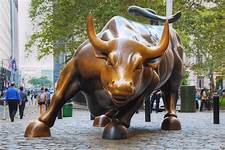
Bull Market

What is a Bull Market?

A bull market is the condition of a financial market in which prices are rising or are expected to rise. The term “bull market” is most often used to refer to the stock market but can be applied to anything that is traded, such as bonds, real estate, currencies, and commodities.

Because prices of securities rise and fall essentially continuously during trading, the term “bull market” is typically reserved for extended periods in which a large portion of security prices are rising. Bull markets tend to last for months or even years.

Understanding Bull Markets

Bull markets are characterized by optimism, investor confidence, and expectations that strong results should continue for an extended period of time. It is difficult to predict consistently when the trends in the market might change. Part of the difficulty is that psychological effects and speculation may sometimes play a large role in the markets.

There is no specific and universal metric used to identify a bull market. Nonetheless, perhaps the most common definition of a bull market is a situation in which stock prices rise by 20%, usually after a drop of 20% and before a second 20% decline. Since bull markets are difficult to predict, analysts can typically only recognize this phenomenon after it has happened. A notable bull market in recent history was the period between 2003 and 2007. During this time, the S&P 500 increased by a significant margin after a previous decline; as the 2008 financial crisis took effect, major declines occurred again after the bull market run.

Characteristics of a Bull Market

Bull markets generally take place when the economy is strengthening or when it is already strong. They tend to happen in line with strong Gross Domestic Product (GDP),and a drop in unemployment and will often coincide with a rise in corporate profits. Investor confidence will also tend to climb throughout a bull market period. The overall demand for stocks will be positive, along with the overall tone of the market. In addition, there will be a general increase in the amount of IPO activity during bull markets.

Notably, some of the factors above are more easily quantifiable than others. While corporate profits and unemployment are quantifiable, it can be more difficult to gauge the general tone of market commentary, for instance. Supply and demand for securities will seesaw: supply will be weak while demand will be strong. Investors will be eager to buy securities, while few will be willing to sell. In a bull market, investors are more willing to take part in the (stock) market in order to gain profits.

Bull vs. Bear Markets

The opposite of a bull market is a bear market, which is characterized by falling prices and typically shrouded in pessimism. The commonly held belief about the origin of these terms suggests that the use of “bull” and “bear” to describe markets comes from the way the animals attack their opponents. A bull thrusts its horns up into the air, while a bear swipes its paws downward. These actions are metaphors for the movement of a market. If the trend is up, it’s a bull market. If the trend is down, it’s a bear market.

Bull and bear markets often coincide with the economic cycle, which consists of four phases: expansion, peak, contraction, and trough. he onset of a bull market is often a leading indicator of economic expansion. Because public sentiment about future economic conditions drives stock prices, the market frequently rises even before broader economic measures, such as gross domestic product (GDP) growth, begin to tick up. Likewise, bear markets usually set in before economic contraction takes hold. A look back at a typical U.S. recession reveals a falling stock market several months ahead of GDP decline.

How to Take Advantage of a Bull Market

Investors who want to benefit from a bull market should buy early in order to take advantage of rising prices and sell them when they’ve reached their peak. Although it is hard to determine when the bottom and peak will take place, most losses will be minimal and are usually temporary. Below, we’ll explore several prominent strategies investors utilize during bull market periods. However, because it is difficult to assess the state of the market as it exists currently, these strategies involve at least some degree of risk as well.

Buy and Hold

One of the most basic strategies in investing is the process of buying a particular security and holding onto it, potentially to sell it at a later date. This strategy necessarily involves confidence on the part of the investor: why hold onto a security unless you expect its price to rise? For this reason, the optimism that comes along with bull markets helps to fuel the buy and hold approach.

Increased Buy and Hold

Increased buy and hold is a variation on the straightforward buy and hold strategy, and it involves additional risk. The premise behind the increased buy and hold approach is that an investor will continue to add to his or her holdings in a particular security so long as it continues to increase in price. One common method for increasing holdings suggests that an investor will buy an additional fixed quantity of shares for every increase in stock price of a pre-set amount.

Retracement Additions

A retracement is a brief period in which the general trend in a security’s price is reversed. Even during a bull market, it’s unlikely that stock prices will only ascend. Rather, there are likely to be shorter periods of time in which small dips occur as well, even as the general trend continues upward. Some investors watch for retracements within a bull market and move to buy during these periods. The thinking behind this strategy is that, presuming that the bull market continues, the price of the security in question will quickly move back up, retroactively providing the investor with a discounted purchase price.

Full Swing Trading

Perhaps the most aggressive way of attempting to capitalize on a bull market is the process known as full swing trading. Investors utilizing this strategy will take very active roles, using short-selling and other techniques to attempt to squeeze out maximum gains as shifts occur within the context of a larger bull market.


Monetary and Fiscal Policy

Monetary and fiscal policy refer to the policies of the government aimed to solve the economic problems in a country.
A monetary policy is a credit control measure adopted by the central bank of an economy. It deals with the demand and supply of money.
Fiscal policy refers to the use of taxation and public expenditure by the government to stabilise the economy.
A monetary policy aims at achieving full employment. Unemployment leads to wastage of potential and resources. Price stability is another goal of monetary policy. Changes in price levels lead to uncertainty in the economy. Achieving economic growth and maintaining a favourable balance of payments are some of the objectives of this policy.
A fiscal policy aims at achieving full employment, stabilizing the price levels and growth rate of the economy, maintaining equilibrium in the balance of payments. It uses taxation to affect national income, output, prices etc.
Monetary policy uses various instruments to achieve it’s goals. Open market operations, bank rate policy, selective credit controls, changes in reserve ratios are some of the instruments of monetary policy. Open Market Operations refers to sale and purchase of securities in money market by the central bank. Bank rate is the minimum lending rate of the central bank. When there is rise in prices, the central bank raises the bank rate and vice versa. Selective Credit Controls are used to influence specific types of credit for specific purposes.
A monetary policy can be classified as an expansionary or a contractionary policy. In the former case, monetary policy is used to overcome a recession or deflationary gap. It generally happens when there is a reduction in demand for consumer goods or investment goods. To control this central bank starts an expansionary monetary policy that reduces credit market conditions and leads to upward shift in demand. In the later case, monetary policy is used to curtail aggregate demand. When the economy faces inflationary gap due to rise in demand for consumer goods and increase in business investment, the central bank increases the cost of bank credit. This is often done by selling government securities, rising discount rate etc.
Similarly, fiscal policy can be classified as neutral, expansionary and contractionary. Neutral policy is usually undertaken when an economy is in equilibrium. In this instance, government spending is fully funded by tax revenue, which has a neutral effect on the level of economic activity. Expansionary policy is usually undertaken during recessions to increase the level of economic activity. In this instance, the government spends more money than it collects in taxes. Contractionary type of policy is undertaken to pay down government debt and to cap inflation. In this case, government spending is lower than tax revenue.
Monetary and Fiscal policy both have their own advantages and disadvantages. Fiscal policy may sometimes result in a domino effect causing one problem to make another and repeat. Fiscal policy can also have issues with time lags. Although monetary policy is not very effective in a recession, it is flexible and works well to slow down the economy. Most people however, prefer fiscal over monetary because its brings low taxes and low interest rates.
https://www.ukessays.com/essays/economics/fiscal-and-monetary-policy-economics-essay.php


https://courses.lumenlearning.com/boundless-economics/chapter/introduction-to-fiscal-policy/

The World of Nepotism

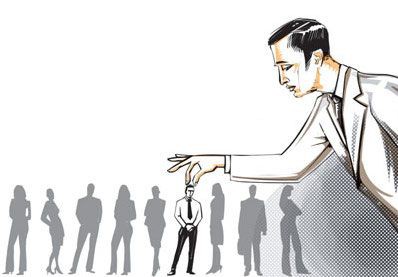
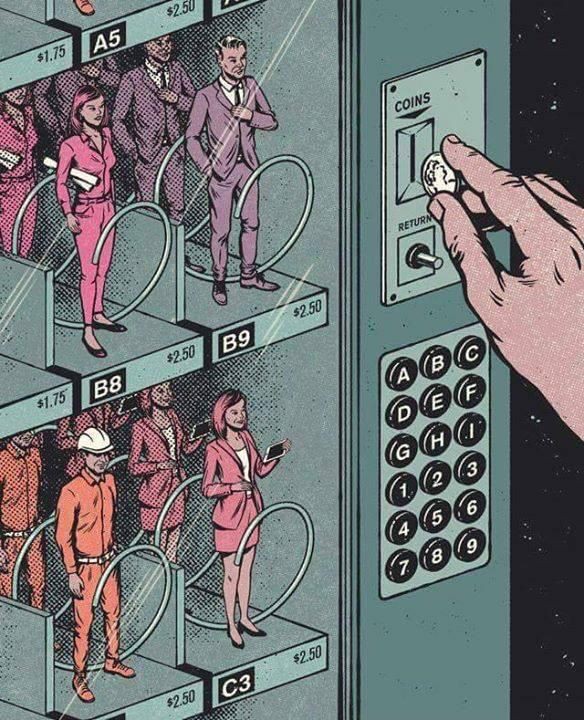
Welcome to the anti-meritocratic world, this world. What are you going to do about it? Will you stand back and watch while cronyism, nepotism, the old school tie, the private club, the right university, the right accent, the right background, the right secret society, the right religion, the right family, destroy merit so that their chosen ones can prosper at your expense. It’s time to smash the conspiracy. Break up all the mechanisms that allow privileged groups within society to rig the system in their favour and penalise anyone who doesn’t belong to their insidious cliques.

Michael Faust, The Meritocracy Party

Well , Its a very complicated questions . In the world, where one’s knowledge didn’t get recognition .

What would you do , when you get acknowledged not on the basis of your knowledge but on the basis of your relation with the owner ?

What would you do , if you don’t get promoted because you are not his /her relative ?

Do you ignore the fact that you are not the one , whom your boss approves?

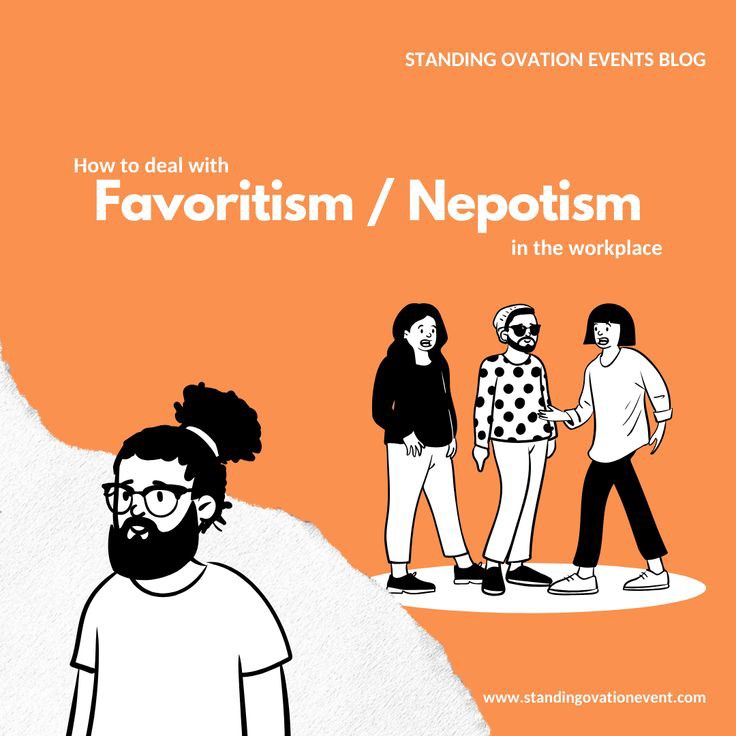
Well , if you think it’s favouritism than you are absolutely correct . You may also come accross the word NEPOTISM and if you don’t than start reading the passage . (I did as well )

This 8 letter word is destroying everyone in today’s world. And who is responsible for creating such a hypocrite. We the people have to repose this curse and make sure to control it with our coming generations, else it will destroy the whole world. And there’ll be no humanity left in this world” –

Ikramul Hannah.

Introduction

Nepotism is a the practice among those with power or influence of favouring relatives or friends, especially by giving them jobs.

Nepotism is generally defined as “the bestowal of patronage by public officers in appointing others to positions because of blood or marital relationship”.

Nepotism is found in almost all the fields but it is practiced most in business, politics, sports and entertainment sectors. It has been in practice since time immemorial, but some special cases have made it to the limelight in the past few decades.

Nepotism in India :

India has it’s fair share in the field of NEPOTISM . Well , have you ever expected that . I say , YES . Because being one of the largest country , people might become more thirsty for power . “When constantly reaching out for more, you forget what you have” Christine Szymanski.

Nepotism can be characterized as ‘the demonstration of utilizing force or impact to get out of line preferences for individuals from one’s family’.

You must be conflicted , why does nepotism exist even today ? We are living in 21st century , than why we have such orthodox thinking ? Who says no one can define what is going on in one’s mind ( well I say , isn’t is obvious ) .

From the politics to the Entertainment , from the owner to the customer, from the Bollywood to the Judiciary ; Nepotism is everywhere .

Like in OJO -MOJO , After the submission of writing competition , OJO’s class teacher asked him who wrote better . Is it MOJO or OLLY , what do you think whom he would choose . MOJO thinks OJO will choose OLLY because he likes her . But when the result announced MOJO was astounded because OJO choose MOJO’s writing . So , what do you think is it nepotism or not . Think and you will know the answer .

Bias has become the first qualification to join a party, and extreme bias the virtue to become a leader.

Link

Globalization

Introduction

Globalization is the process of interaction and integration among people, companies, and governments worldwide. It is used to describe the growing interdependence of world’s economies, cultures, and populations, brought about by cross-border trade in goods and services, technology, flow of investment, people, and information. Countries have built economic partnerships to facilitate these movements over many centuries and years. Globalization has accelerated since the 18th century due to advances in transportation and communication technology. The term gained popularity after the Cold War in the early 1990s, precisely after the fall of the Soviet Union, as these cooperative arrangements shaped the modern daily life.

Importance

This increase in global interactions has caused a growth in international trade and the exchange of ideas, beliefs, and culture. The wide-ranging effects of globalization are complex and politically charged. Economically, globalization involves goods, services, data, technology, and the economic resources of capital. Advances in transportation, like the steam locomotion, steamship, jet engine, and container ships, and developments in telecommunication infrastructure, like the telegraph, Internet, and mobile phones, have been major factors in globalization and have generated further interdependence of economic and cultural activities around the globe. Globalizing processes affect and are affected by business and work organization, economics, socio-cultural resources, and the natural environment. Academic literature commonly divides globalization into three major areas: economic globalization, cultural globalization, and political globalization

Negative Effects

Despite its benefits, the economic growth driven by globalization has not been done without awakening criticism. The consequences of globalization are far from homogeneous: income inequalities, disproportional wealth and trades that benefit parties differently. In the end, one of the criticisms is that some actors (countries, companies, individuals) benefit more from the phenomena of globalization, while others are sometimes perceived as the losers of globalization. 

https://youmatter.world/en/definition/definitions-globalization-definition-benefits-effects-examples/

Today’s Kalam Foundation

Today’s Kalam Foundation was started in the year 2016 in Hyderabad, by a group of intellectuals inspired by Dr. A.P.J.Abdul Kalam, with the main objective of creating more Kalams to lead the way forward.

Mission

  • To impart quality education and enhance employability
  • To improve lives by effective health management
  • To empower women to stand on their own feet
  • To inspire and bring together intellectuals to contribute in community development

Vision

A reformed society, contributing to national development.

Activities

As of today, 15 Kalam Centers have been set up with over 450 children attending every day. Important national festivals like Independence Day, Republic Day etc are celebrated with gusto.

Currently, Today’s Kalam Foundation is focusing on expanding its activities to reach out to more underprivileged children in the Old City and reduce the consequences of lack of education. They plan to set up 50 more Kalam Centers which will touch the lives of over 1500 deprived children and give them access to education and life skills. Towards this, we are seeking volunteers based out of Hyderabad, trainers who could train volunteers and individual as well as corporate sponsorship

Become a Volunteer Today

Volunteer to teach children in our Kalam centers – Spoken English, Computers, Art & Craft. You can also be a part of the health camps and awareness sessions we conduct.

If you wish to help the poor please donate at

https://milaap.org/fundraisers/GSanjay

Please Support. Even 1 Rupee could bring a change.

100% of your contribution will go for this cause.

Today’s Kalam Foundation has been running Kalam Centers for Slum Children since 2017 and benefitting 450 children on daily basis.
Kalam Center :
TKF volunteers go to slums and choose a group of students who study in Govt. schools or who don’t go to schools. From the same slum a Mentor is employed and a “Kalam center” is established either in the nearby community hall/school premises/rented place. Generally, the Mentors are under/postgraduates. In these centers, the respective Mentors provide after – school support to the students for 2 hours per day.
Kalam Centers aims towards the holistic development of children, hailing from an under-resourced section of the society. The project covers various aspects viz., academic education, vocational training, personality development, health tips, hygiene & nutrition awareness, career counseling, and extra curriculum activities.
We are run Centers in Riyasatnagar,Hussainialam,Dabeerpura,N.M.Guda, MM Pahadi,Farath nagar,Edi Bazaar,Falaknama,Kanchanbagh,Moinbagh,  Bapu nagar,Talabkatta& Babanagar.
Background of Children:
Most of the Children parents are Daily wagers men go for civil works,auto,road side shops ..etc.Few mothers go for Bangle Making and embroidary works or as servants to other houses.
Effect of Corona 2nd Wave:

In the Corona 2nd wave we have seen lot of positive cases in our Kalam Center Children families and as the family is dependant on elders and their income was affected .We have decided to support Corona Positive families with Sustenance  Kits.
Our Work:

We have good wrapo with the families of Kalam Center Children from 2 years and can understand their pain.So we have decided to be with them during these hard times and decided to support Ration required for Corona Affected Families.

Request:

Sustenance Kit Rs 1000Home Isolation Kit Rs 800
For more details you can check our website http://www.todayskalam.org

Thank You

100% of your contribution will go for this cause.  

Bandwagon Effect

What Is the Bandwagon Effect?

The bandwagon effect is a psychological phenomenon in which people do something primarily because other people are doing it, regardless of their own beliefs, which they may ignore or override. This tendency of people to align their beliefs and behaviors with those of a group is also called a herd mentality. The term “bandwagon effect” originates from politics but has wide implications commonly seen in consumer behavior and investment activities. This phenomenon can be seen during bull markets and the growth of asset bubbles.

Understanding the Bandwagon Effect

The bandwagon effect arises from psychological, sociological, and, to some extent, economic factors. People like to be on the winning team and they like to signal their social identity. Economically, some amount of bandwagon effect can make sense, in that it allows people to economize on the costs of gathering information by relying on the knowledge and opinions of others. The bandwagon effect permeates many aspects of life, from stock markets to clothing trends to sports fandom.

Politics

In politics, the bandwagon effect might cause citizens to vote for the person who appears to have more popular support because they want to belong to the majority. The term “bandwagon” refers to a wagon that carries a band through a parade. During the 19th century, an entertainer named Dan Rice traveled the country campaigning for President Zachary Taylor. Rice’s bandwagon was the centerpiece of his campaign events, and he encouraged those in the crowd to “jump on the bandwagon” and support Taylor. By the early 20th century, bandwagons were commonplace in political campaigns, and “jump on the bandwagon” had become a derogatory term used to describe the social phenomenon of wanting to be part of the majority, even when it means going against one’s principles or beliefs.

Consumer Behavior

Consumers often economize on the cost of gathering information and evaluating the quality of consumer goods by relying on the opinions and purchasing behavior of other consumers. To some extent, this is a beneficial and useful tendency; if other people’s preferences are similar, their consumption decisions are rational, and they have accurate information about the relative quality of available consumer goods, then it makes perfect sense to follow their lead and effectively outsource the cost of gathering information to someone else.

However, this kind of bandwagon effect can create a problem in that it gives every consumer an incentive to free ride on the information and preferences of other consumers. To the extent that it leads to a situation where information regarding consumer products might be underproduced, or produced solely or mostly by marketers, it can be criticized. For example, people might buy a new electronic item because of its popularity, regardless of whether they need it, can afford it, or even really want it.

Bandwagon effects in consumption can also be related to conspicuous consumption, where consumers buy expensive products as a signal of economic status. 

Investment and Finance

Investing and financial markets can be especially vulnerable to bandwagon effects because not only will the same kind of social, psychological, and information-economizing factors occur, but additionally the prices of assets tend to rise as more people jump on the bandwagon. This can create a positive feedback loop of rising prices and increased demand for an asset, related to George Soros’ concept of reflexivity.

For example, during the dotcom bubble of the late 1990s, dozens of tech startups emerged that had no viable business plans, no products or services ready to bring to market, and in many cases, nothing more than a name (usually something tech-sounding with “.com” or “.net” as a suffix). Despite lacking in vision and scope, these companies attracted millions of investment dollars in large part due to the bandwagon effect.