• A relaxation of government restrictions in the areas of social, political and economic policies.
• Economic policy – lessening of government regulations and restrictions for greater participation by private entities in order to encourage economic development.
Economic liberalization
• Initiated in 1991 .
• Goal – making the economy more market-oriented.
• Aim – Expanding the role of private and foreign investment in a manner that ensured an adequate flow of benefits to the poor .
Situation – Prior Reforms.
• Control system in the Indian Economy – rigid and restricted entrepreneurship. Private sector was not allowed to invest in a number of sectors Imports were more strictly controlled Import of technology was controlled and Foreign Direct Investment was discouraged.
• 1991 reforms – P.V. Narasimha Rao-Manmohan Singh duo Evolution of the economy .
• Full benefits took time to materialize – the final results were striking.
• Example: GDP growth averaged 7% – 1992 to 2017 Average of 5% in the preceding ten years 4% in the preceding 20 years.
• Increase in economic growth – poverty gradually began to decline. • In-adequate recognition – Sectors like health, education and environmental concerns • Pending reforms – Areas such as labour and land.
• India’s decision – Regional Comprehensive Economic Partnership. Need to enhance its competitiveness. Unfair competition from China – imposing anti-dumping duties on China instead of raising import duties across the board Geopolitics – reducing their dependence on China. India can expect to become a major player in non-China-dominated supply chains. RCEP membership – Reassuring partners that trade policy will not be arbitrarily changed. • Free trade agreements – agreements with important groups bilaterally • Requires – more give and take policy
Pandemic – collapse in employment.
• National Income – GDP contracted by 7.3% in 2020-21.
• Priority – vaccination coverage expanded as soon as possible Creates conditions conducive to a return to normalcy.
• Achieving the 2019-20 level economic recovery.
• India’s decision – Regional Comprehensive Economic Partnership. Need to enhance its competitiveness. Unfair competition from China – imposing anti-dumping duties on China instead of raising import duties across the board Geopolitics – reducing their dependence on China. India can expect to become a major player in non-China-dominated supply chains. RCEP membership – Reassuring partners that trade policy will not be arbitrarily changed. • Free trade agreements – agreements with important groups bilaterally .
• Requires – more give and take policy Pandemic – collapse in employment.
• National Income – GDP contracted by 7.3% in 2020-21.
• Priority – vaccination coverage expanded as soon as possible Creates conditions conducive to a return to normalcy.
• Achieving the 2019-20 level economic recovery.
• Analyse the grounds that caused the slowdown before the pandemic.
• Mutually supportive policies – higher growth and higher employment with a target for post-pandemic growth.
“E-commerce” and “online shopping” are often used interchangeably, but the scope of e-commerce is much broader: it embodies the concept of doing business on the Internet, for example, it includes many different services. Make online payments, book flights, etc. Buying and selling goods or services electronically via the Internet is called e-commerce.
Courierdelivery model Traditional order fulfillment model
E–commerce
Including network marketing, also known as online marketing. Internet marketing is the process of using tools that help generate potential customers and sales to promote a company or brand and its products or services on the Internet.
Content marketing Content marketing aims at Your personal brand and your target audience Keywords and research. Focus and content commitment. What will you create? How often do you post? Where will you post? You need to define these basics to create consistent and qualitycontent. Content Creation Content Promotion
SEO (Search Engine Optimization)
The process of maximizing the number of visitors to a given website by placing the websiteat the top of the search engine results list. SEO stands for search engine optimization, which means increasing the quantity and quality of website traffic through regular search results.
SEM (Search Engine Marketing)
Search Engine Marketing(SEM) is one of the most effective ways to develop business in an increasingly competitive market. Online advertising is important to millions of businesses, and search marketing is the most effective way to promote your products and grow your business.
Email marketing
Email marketing is an efficient digital marketing strategy for sending emails to potential customers and customers. Effective marketing emails turn potential customers into customers and long-termcustomers into loyal and enthusiastic followers.
Cultural history brings to life a past time and place. In this search, cultural historians study beliefs and ideas, much as intellectual historians do. In addition to the writings of intellectual elites, they consider the notions (sometimes unwritten) of the less privileged and less educated. These are reflected in the products of deliberately artistic culture, but also include the objects and experiences of everyday life, such as clothing or cuisine. “Culture” can also imply everyday attitudes, values, assumptions and prejudices, and the rituals and practices that express them, from magical beliefs to gender roles and racial hierarchies. In this sense, our instincts, thoughts, and acts have an ancestry which cultural history can illuminate and examine critically. Historians of culture at Yale study all these aspects of the past in their global interconnectedness, and explore how they relate to our many understandings of our varied presents.Cultural history is an effort to inhabit the minds of the people of different worlds. This journey is, like great literature, thrilling in itself. It is also invaluable for rethinking our own historical moment. Like the air we breathe, the cultural context that shapes our understanding of the world is often invisible for those who are surrounded by it; cultural history allows us to take a step back, and recognize that some of what we take for granted is remarkable, and that some of what we have thought immutable and natural is contingent and open to change. Studying how mental categories have shifted inspires us to think how our own cultures and societies can evolve, and to ask what we can do as individuals to shape that process.
5 Fascinating Culture and History Topics to Explore Today:-
If you’re absolutely in love with the experience of reading and learning, then it only stands to reason that you’ve read your share of non-fiction books over the years. It’s not hard to see why, either. Non-fiction literature on topics like history, culture, and people are so much more than just collections of information. They’re also part of our collective story as human beings. That said, if regional interest reading material isn’t on your radar yet, it definitely should be. Local interest books are a wonderful way to explore a wide range of different topics from unique points of view that you might not have the chance to experience otherwise. The following are just a few options to consider the next time you’re looking for something new to explore.
1. Business and Entrepreneurship:-
Thanks to modern technology and the Internet, more people than ever before are exploring the wide, wonderful world of going into business for themselves. Topics like economics, business management, and product development are no longer just topics of interest for CEOs and company managers. These days, just about everyone is interested in what makes businesses of all types tick.Thanks to modern technology and the Internet, more people than ever before are exploring the wide, wonderful world of going into business for themselves. Topics like economics, business management, and product development are no longer just topics of interest for CEOs and company managers. These days, just about everyone is interested in what makes businesses of all types tick.
2. Ethnic Studies and Immigrants:-
Many people tend to think of America as not having much of a culture of its own. However, it would be more accurate to say that it’s a perfect patchwork of all the cultural influences that have made it what it is today. Our country would quite simply not be the same wonderful place without the immigrants that have called it home over the years.Exploring regional interest books on various communities and ethnic groups in America is a wonderful way to discover the amazing backstories of American immigrants and minorities through the ages. Learn how the contributions of immigrant Japanese, Italians, Irish, Chinese, and more helped shape their communities throughout history. Enrich your understanding of notable African American communities from all over the nation. Explore the many cultural influences as they relate to your own hometown’s backstory.
3. Food, Drink, and Restaurants:-
Food and drink is another incredibly hot topic these days. Just about everyone is exploring the possibilities offered by farm to table dining, food truck culture, craft brewing, or fusion cuisine. Local interest literature offers you the opportunity to dig even deeper and get to know your favorite culinary topics on an entirely new level.Explore the origins and influences behind the local cuisine in your hometown or in regards to your favorite vacation spots. Discover the rich traditions behind Cajun cuisine or learn all about how food trucks came to be considered such an essential Los Angeles staple. Explore the backstories behind individual eateries, farms, and local ingredients throughout history.
4. Hauntings and Paranormal:-
You’d be hard-pressed to find anyone who doesn’t appreciate a well-told ghost story. Stories of hauntings, paranormal phenomena, and unexplained happenings only become more fascinating when they’re rooted in history and based on real-life accounts.Regional interest literature is perhaps one of the best, most detailed ways to explore the history of hauntings and paranormal phenomena in America. Devour fascinating volumes devoted to some of America’s most infamously haunted cities, like Nashville, Boston, Charleston, and New Orleans. Even Reno and Las Vegas come alongside their own chilling tales of historic hauntings rooted in a fascinating past.
5. American Sports History:-
It’s hard to think of anything more American than sports. Whether you’re into baseball, football, hockey, or golf, the chances are excellent that you’ve been following your favorite teams in one capacity or another since childhood. However, there’s a lot more to being an avid sports enthusiast than stats and averages.Local interest history allows you a rivetingly intimate look at your favorite sports as they relate to American culture throughout history. Absorb the personal backstories of local legends that influenced the way sports are played forever. Learn more about the nation’s finest, most noteworthy college teams. Delve into the histories of famous venues, techniques, and strategies.With Arcadia Publishing’s robust collection of regional and local interest literature in your corner, the possibilities are wide open as far as all you can discover and learn. Start exploring today, and get to know all of your favorite topics, cities, and points of interest on an intimate new level.
Globalization is the word used to describe the growing interdependence of the world’s economies, cultures, and populations, brought about by cross-border trade in goods and services, technology, and flows of investment, people, and information.
Globalization is driven by the convergence of political, cultural and economic systems that ultimately promote — and often necessitate — increased interaction, integration and dependency amongst nations.
The more that disparate regions of the world become intertwined politically, culturally and economically, the more globalized the world becomes.
These international interactions and dependencies are enabled and accelerated by advances in technology, especially in transportation and telecommunications. In general, money, technology, materials and even people flow more swiftly across national boundaries today than they ever have in the past. The flow of knowledge, ideas and cultures is expediated through Internet communications.
There are three types of globalization:
1. Economic globalization. This type focuses on the unification and integration of international financial markets, as well as multinational corporations that have a significant influence on international markets. 2. Political globalization. This type deals mainly with policies designed to facilitate international trade and commerce. It also deals with the institutions that implement these policies, which can include national governments as well as international institutions, such as the International Monetary Fund and the World Trade Organization. 3. Cultural globalization. This type focuses on the social factors that cause cultures to converge — such as increased ease of communication and transportation, brought about by technology.
Karsan bhai khodidas patel is an Indian industrialist who is the founder of a Rs.42,500 crore nirma group, a company which majorly deals with detergents, cements and cosmetics. Karsan bhai patel was born in 1945 into a farmer family from Ruppur village, Mehsana, Gujarat. Karsan bhai completed his B.Sc in chemistry and he initially joined in a cotten mill as a lab technician in Ahmedabad later served for the state government.
He has an abaundant knowledge on chemicals and in 1969, he started manufacturing phosphate free detergent for domestic usage in his backyard. He named that detergent powder as “NIRMA” . He dedicated his time after the office hours to prepare and market the detergent. At initial stage this business was purely one-man-company.
Karsan bhai used to sell his handmade detergent packets door to door using his cycle. The hand made detergent packets were sold at Rs.3 per kg, which was one third of least priced compared to popular detergents at that time. This least price making strategy gave him instant success. At that time domestic detergent market was limited and mostly controlled by the top most MNC companies only but with entry of karsan bhai’s market strategy, nirma created a revolution in domestic detergent sector.
It made the best and environment friendly detergent than other brands and occupied the top most shares in the market with its innovative methods. With in a short span of time Nirma became the largest selling detergent company in India. Since, the industry was labour intensive nirma also builded a large scale of employment.
Now, the company was recognized as the 9th among the top FMCG brands in India as per the year 2002. In the year of 2010 Karshan bhai received “PADMA SRI AWARD” and in 2019 karsan bhai ranked with #30 by forbes magazine for the list of Indias richest persons.
CONCLUSION:
Finally, we can understand karsan bhai’s success story as a good source for marketing strategy because he understood the need and demand of the domestic detergents perfectly and he applied his innovative marketing formula strictly in his business and also he focused on the new technologies to develop his business as well and worked consistently to bag the success.
” SUCCESSFULL PEOPLE ARE NOT GIFTED BUT THEY DO HARD WORK TO ACHIEVE SUCCESS ON A PURPOSE “
Hello guys, today’s topic is going to be very informative.
“Start up ” have you ever heard of this Word before? Even if you have never heard of the word start up many of us actually heard about those startups which are doing fantastic .
Start ups are the newly established business,by one or more entrepreneurs.These entrepreneurs set up business by taking financial risks .
Start ups are actually initiated by its founders based on an idea which has a potential to become successful and bring profits to the company .
Even though startups gives wings to an individual’s dreams it is not easy to create an impact with an startup during this tough competition era.
And while setting up an start up the individual needs to have necessary funds so mostly the start ups are setup by taking loans,or borrowing money from families,friends.
So generally startup are built around one main idea which can change the whole picture,which can create an impact in the industry.
Startups can become successful only when the foundations that is the base on which the company is started should be rock solid,their main aim should not change even though some alterations can be done .
As the company grows the more the need of funds increases so especially the risk of setting up a startup should be taken very seriously and the decision must taken carefully.
There are many thing that you need such as impressive idea,funds and trusted partners and sacrifice your time,health for the wellbeing of the startup.
Start ups basis is believe ,the belief you have in your own self,your idea which is projected outside.
Entrepreneurs should have certain qualities that is needed for a successful startup so many institutions and universities are providing training for those who dream of starting their own company.
But in reality many startups that don’t stand a chance in the competition lack those qualities,they have the idea but cannot put into action,they cannot manage work as they have very little experience in this industry,they get swayed by others words and forget their whole main aim .
Mock startups are those programs where a student gets to experience the simulation of the real world.
Even the government entrepreneurship programs ,non profit entrepreneurship programs support many start ups They give guidance and even support them if the idea shows a potential .
Intellectual advisors ,hardworking staff ,investors who don’t mind to try risks for profits ,mentors who can guide you ,and great Teamwork makes the dream work that is it accelerates the growth rate of that start up.
Every start up has their own ups and downs but what is important is to never lose faith in yourselves and always hope for the best by putting out your best .
Startups don't have a instant success they to grow step by step and the more impact it has on the business industry the more it grows.
Some of the successful startups are
Ola
Swiggy
Zomato
Oyo
Flipkart
Every succesful company at present is a startup in the past and lessons should be learnt from those experiences
So always dream big ,work hard ,have faith,never lose hope ,never give up, and
“Learning from failures , paves the way to success.”
* Gender – Are there male jobs & female jobs? – A useful debate which can get heated. The statutory guidance states that you must promote equality of opportunity so care must be taken when guiding this debate.
* Jobs of the future – What jobs will exist in 5, 10, 20 years that don’t exist now?
* What effects are robotic workers having on the job market? Will robots be able to do jobs like journalism & legal work (yes they will, computerised copy writing and contract checking are already a reality) or will automation only affect ‘physical’ jobs?
* Transferable skills – what are they and why do we need them? – Useful question to elicit knowledge of transferable skills – you may find this definition useful in order to help your students decide which skills are transferable “Transferable skills are general skills you can use in many jobs. You gain these skills from previous jobs, projects, voluntary work, sport, your home life, hobbies, and interests. They enable you to be adaptable and flexible in case you need to change your job”
* What skills & qualities do employers want when they employ a person straight out of school/college/university?
* Employers are frequently reported as saying school leavers are not workplace ready. A discussion around what skills are needed and what they are can be structured using the following frequently cited skills:-Understanding of business world; Teamwork; Communication; Negotiation skills; Problem Solving; Leadership; Organisation; Perseverance/motivation; Ability to work under pressure; Confidence
* Why do some people try and dissuade people from taking certain jobs? – An ideal opportunity to explore the motivation behind advice from various sources. E.g. university & school leaver recruitment staff. Teachers who have been instructed to recruit for the school 6th Parents who would like to see their children achieve their parent’s dream etc.
* Can you turn a hobby into a career? – Students may wish to pursue a hobby such as photography or sport as a careers. What considerations might they need to have when doing this? E.g. need to be self-employed; the effect of training 7 days a week on enjoyment of the sport etc.
* Can work be fun? What makes work fun? Can it always be fun? What is fun?
* How many types of job can I expect to do over my lifetime? – A discussion about career paths. Not just changing jobs but changing types of job and progression. The role of lifelong learning, retraining, transferable skills. Using a story about somebody’s career journey is a good prompt for this discussion.
* What’s the difference between a job and a career?
* Is a job just to pay the bills and a career something you’re interested in?
Jobs:-
INTRODUCTION:-
God rebukes Job’s three friends and orders them to make a sacrifice. Job prays for God’s forgiveness of them and God accepts his prayer. At the end of the book, God gives Job twice as much wealth as he had before, along with seven sons and three daughters. After that, Job lived 140 more years.
A job, employment, work or occupation, is a person’s role in society. More specifically, a job is an activity, often regular and often performed in exchange for payment (“for a living”). Many people have multiple jobs (e.g., parent, homemaker, and employee). A person can begin a job by becoming an employee, volunteering, starting a business, or becoming a parent. The duration of a job may range from temporary (e.g., hourly odd jobs) to a lifetime (e.g., judges).
An activity that requires a person’s mental or physical effort is work (as in “a day’s work”). If a person is trained for a certain type of job, they may have a profession. Typically, a job would be a subset of someone’s career. The two may differ in that one usually retires from their career, versus resignation or termination from a job.
Jobs for people:-
Most people spend up to forty or more hours each week in paid employment. Some exceptions are children, retirees, and people with disabilities; however, within these groups, many will work part-time, volunteer, or work as a homemaker. From the age of 5 or so, many children’s primary role in society (and therefore their “job”) is to learn and study as a student.
Types of jobs:-
Jobs can be categorized by intensity (hours per week), by payment status, or by the level of experience required. The types of job stemming from intensity are categorized as full-time or part-time. They can also be classified into temporary, odd jobs, seasonal, self-employment, consulting, or contract employment. Regarding payment status, jobs are categorized as paid or unpaid. Examples of unpaid jobs include volunteer, homemaker, mentor, student, and sometimes intern. Finally, according to the level of experience required, jobs are usually grouped as entry level, intern, and co-op.
Some jobs require specific training or an academic degree.
Those without paid full-time employment may be categorized as unemployed or underemployed if they are seeking a full-time paid job.
A side job, also called a side hustle, side gig or moonlighting, is an additional job or jobs to supplement one’s income. A person with a side job may have little time left for sleep or leisure activities.
The Office for National Statistics in the United Kingdom lists 27,966 different job titles, within a website published 2015.
Day job:-
The expression day job is often used for a job one works in order to make ends meet rather than working in their preferred vocation. Archetypal examples of this are the actor who works as a waiter (the day job) while looking for roles, and the professional athlete who works as a laborer in the offseason because the athlete’s professional or semi-professional team does not pay a full living. The term is also applied to those who maintain a steady occupation while working as a day trader.
While many people do hold a full-time occupation, “day job” specifically refers to those who hold the position solely to pay living expenses so they can pursue the job they really want (which may also be during the day). The phrase strongly implies that the day job would be quit, if only the real vocation paid a living wage.
The phrase “don’t quit your day job” is a humorous response to a poor or mediocre performance not up to professional caliber. The phrase implies that the performer is not talented enough in that activity to be able to make a career out of it.
Getting a job:-
Further information: Job hunting and Employment
Getting a first job is an important rite of passage in many cultures. The youth may start by doing household work, odd jobs, or working for a family business. In many countries, school children get summer jobs during the longer summer vacation. Students enrolled in higher education can apply for internships or coops to further enhance the probability of securing an entry level job upon graduation.
Résumés summarize a person’s education and job experience for potential employers. Employers read job candidate résumés to decide whom to interview for an open position.
Use of the word:-
Workers often talk of “getting a job”, or “having a job”. This conceptual metaphor of a “job” as a possession has led to its use in slogans such as “money for jobs, not bombs”. Similar conceptions are that of “land” as a possession (real estate) or intellectual rights as a possession (intellectual property).
Occupation and life expectancy:-
Historically, manual work has seemed to contribute to shortening one’s lifespan.High rank(a higher position at the pecking order) has a positive effect. Professions that cause anxiety have a direct negative impact on health and lifespan.Some data is more complex to interpret due to the various reasons of long life expectancy; thus skilled professionals, employees with secure jobs and low anxiety occupants may live a long life for variant reasons.The more positive characteristics one’s job is, the more likely he or she will have a longer lifespan.Gender, country, and statistically confirmed danger are also notable parameters.
See also:-
Career and Life Planning Education
International Standard Classification of Occupations
Job analysis
Job guarantee
Job interview
Job performance
Job satisfaction
Job stress
Labour economics
Refusal of work
Unemployment
Wage labor
References:-
Citations:-
“FOI Request: List of all the occupations noted in the UK”. Office for National Statistics. The Crown. 2015. Retrieved December 6, 2015.
Newberry, Jon (October 2000). “Night Moves: Be a day trader after hours and keep your day job, too”. ABA Journal. 86 (10): 86. Retrieved 19 September 2020.
Womack, Sarah (24 October 2007). “Why accountants live longer than builders”. The Telegraph. Archived from the original on 29 August 2018. Retrieved 4 April 2018.
“Living Longer, Working Longer: The Changing Landscape of the Aging Workforce – A MetLife Study” (PDF). MetLife Mature Market Institute. April 2006. Archived from the original (PDF) on 2015-10-02.
“The Most Stressful Jobs of 2014”. CareerCast.com. Archived from the original on 2016-02-20. Retrieved 2016-02-12.
Lyte, Brittany (18 March 2015). “5 Jobs Proven to Make You Live Longer”. Wise Bread. Archived from the original on 16 February 2016. Retrieved 12 February 2016.
Lees, John (11 November 2014). “Personality test: what job would make you happiest?”. the Guardian. Archived from the original on 9 December 2016. Retrieved 11 December 2016.
“Whistling While You Work: The 10 Most Satisfying Careers”. CareerCast.com. Archived from the original on 2016-02-04. Retrieved 2016-02-12.
“Find out how your gender and job may affect your life expectancy”. the Guardian. 21 October 2015. Archived from the original on 2 February 2017. Retrieved 11 December 2016.
Sources:-
Davis, Steven; Haltiwanger, John; Schuh, Scott (1998), Job Creation and Destruction, MIT Press, ISBN 978-0-262-54093-3
Graeber, David (2018). Bullshit Jobs: A Theory. Simon & Schuster. ISBN 978-1501143311.
Granovetter, Mark (1995), Getting a Job: A Study of Contacts and Careers, University of Chicago Press, ISBN 978-0-226-30581-3
Joshel, Sandra (1992), Work, Identity, and Legal Status at Rome: A Study of the Occupational Inscriptions, University of Oklahoma Press, ISBN 978-0-8061-2444-5
Kranzberg, Melvin; Gies, Joseph (1986), By the Sweat of Thy Brow: Work in the Western World, Greenwood Press, ISBN 978-0-313-25323-2
Miller, Ann Ratner; Treiman, Donald; Cain, Pamela; Roos, Pamela (1980), Work, Jobs, and Occupations: a critical review of the Dictionary of Occupational Titles, National Academy Press
Orr, Julian Edgerton (1996), Talking about Machines: An Ethnography of a Modern Job, Cornell University Press, ISBN 978-0-8014-8390-5
Robinson, Tony; Willcock, David (2005), The Worst Jobs in History: Two Thousand Years of Miserable Employment, Pan Macmillan, ISBN 978-0-330-43857-5
Roebuck, Carl (1969), The Muses at Work: arts, crafts, and professions in ancient Greece and Rome, MIT Press
Morse, Nancy; Weiss, Robert (1955). “The Function and Meaning of Work and the Job”. American Sociological Review. 20 (2): 191–198. doi:10.2307/2088325. JSTOR 2088325.
career:-
INTRODUCTION:-
Career development is now a lifelong process, rather than a lifelong job, and involves moving laterally or upwards within an organisation or between organisations. It is the combination of your life experience, learning, and all work experience.
What is a career?
The past, the present and the future
The past:-
A typical career path in the past involved almost guaranteed job security. You obtained a “job for life” and you could expect steady progression up an organisation’s structure.
The present:-
Factors such as technological growth and consumer demand have changed the world of work. Career development is now a lifelong process, rather than a lifelong job, and involves moving laterally or upwards within an organisation or between organisations. It is the combination of your life experience, learning, and all work experience. These days, you are responsible for your own career and you have to continuously reflect on where you are, where you want to be and how you will prepare for further career opportunities.
The future:-
Change is everywhere. The world of work is constantly changing and we must rely on ourselves much more for stability and direction. In order to do this, we need to be aware of the changes that are occurring in the current world of work.
What is the world of work like?
Have I got the right information?
It’s important to make sure that your career decisions are informed by a realistic assessment of the information available rather than relying on assumptions that you or others may have.
Some of these assumptions may have gained credibility over time, especially if they have been reinforced by the media and people whose opinion you value.
The exercise below will give you the opportunity to test your own career assumptions.
Myths and realities quiz
This mini quiz gives you the opportunity to become aware of any career myths you may have accepted as realities and to possibly challenge these assumptions. Being aware of career myths that have influenced your career planning so far may open up new possibilities for exploration that you may not have considered.
Unmistakeable trends
Change is everywhere. There are no longer short periods of change followed by long periods of stability. We have to learn to live and prosper in a world of constantly changing demands and possibilities. Some of these changes include technological change, globally competitive markets, new patterns of work and higher educational requirements.
Whatever the reason, there has been a series of unmistakable trends, particularly in the world of work. These trends include:
changing social contracts between employers and labourers;
increasing contract work;
globalisation;
an increased competition for employment;
technology and its impact on all industries;
the creation of new industries;
an ageing population.
In South Africa, we are still grappling with high youth unemployment, unequal access to further education opportunities, and a widening income gap.
The results of these changes and trends are now having a major impact on our lives and we must rely on ourselves much more for stability and direction. We are constantly being reminded that we need to operate as a “company of one” and be flexible enough to respond quickly in this ever-changing environment.
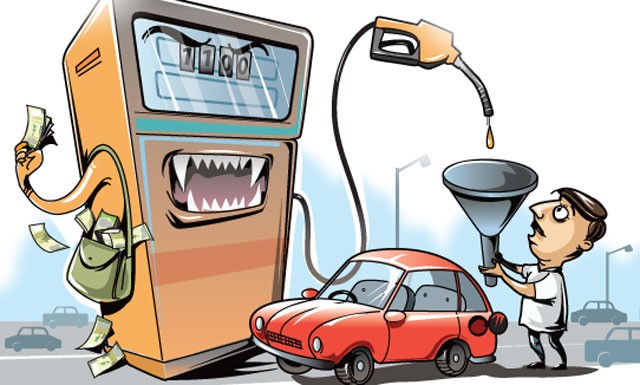
Fuel is at the center of our lives and we revolve around it. It plays a pivotal role in our daily life without which our life would be unfeasible and become intricate. It is one of the widely used sources of energy in the world. It has its prevalence in various spheres from the domestic field of life to dealing with worldwide business, fuel is very essential. Beyond fuel in the tank, it is used to make everyday objects, because fuels like petrol are not only concerned with transportation and vehicles, it has lot more to deal with like in the medical field, toiletries, paint, electronics etc. It takes an indispensable part in our livelihood and irrespective of fuel life would be strenuous. It is like a key ingredient in the products that we use everyday and is an integral part of our life. Fuel is a universal need but the fuel prices are sky rocketing and when there is a continuous price hike, enormous amount of people especially those who toil for their daily being and many major sectors like transportation, manufacturing would be greatly affected. So eventually it will leave a huge devastating impact on us and the economy which could paralyze various fields all over world.
Fuel price hike crisis:
Hike in price of petroleum products in India has been a boiling issue since two decades. Petrol and diesel rates in the country have sharply climbed after the latest round of fuel price hike by oil marketing companies. When fuel price increased in 2000 there was a huge impact on the transport sector. Within three years petrol price has increased ten times and still counting. Petrol is now retailing above Rs.90 per liter in all major cities. It has already hit century in some spheres. A recent report indicated that some folks in Bihar’s Araria and Krishnaganj region are crossing the borders to smuggle petrol from Nepal. Both oil and petroleum are scarce commodities. Therefore both demand and supply are less elastic. The supply of the foreign currency reduces thus appreciating the value of the foreign currency and depreciating the value of the local currency which in turn increases the prices of imports. In 1990 the petrol was available to the consumers at Rs.9.8, if we compare the historical and the present prices the consumer will notice that the price has increased 9 times.
Cascading effect of the price hike:
There are many ways in which the people would be affected by the rising fuel crisis. Initially the impact would be felt by the owners of vehicles where two wheelers provide mobility to the aspiring people of the middle class. And many people agree that the price hike is having a great impact on their monthly budget. Petrol price hike directly and subsequently affects many major sectors like transportation, textiles, manufacturing, automotive sector etc. This affects the prices of daily essential commodities which are transported on a daily basis. Banking sector is also expected to suffer due to high inflation level. Increase in fuel price will also make an increase in food price. This will have a more severe effect on poor people who toil day and night for one or two meals a day. It is a like chain reaction which is interconnected with many other domain. If there is an increase in petrol price it will obviously increase the transportation cost which in turn will increase the price of goods and gradually it would push people into poverty. This will hit the common man so hard who is striving arduously to meet ends, because the business class would shift the burden to the customers. It also destructs the balance of trade of the country.
Proposals in framing alternatives:
We cant pin the blame on just one entity. It is not just one factor that causes fuel price hike ,it is a combination of things and even we are liable for the same. So each one of us are solely responsible for the betterment of the situation.
The initial thing to contribute to the alternatives is using the public transport for travelling places which can save fuel eventually.
Developing alternate sources of energy like solar and alternate fuel forms like hydrogen, natural gas, biodiesel, propane, waste derived oils, electricity etc.
Constantly accelerating and braking only wastes fuel and reduces the fuel consumption so coast when possible and avoid burning excess fuel.
For every 100 pounds of weight in the vehicle, the car’s fuel economy decreases by about 1 or 2%. So we can get rid of the unnecessary weight adding to the trunk of the car.
The Government can take initiatives which can help in the long run by allocating funds for the alternative sources of energy.
We all know fuel is a non-renewable energy and limited in nature. It is our responsibility to use it prudently and bequeath the future generation with this legacy and thus lead to sustainable development!!!
Bangladesh, a country since its inception known as one of the poorest and most overly populated nations, is now gradually seeing economic improvement to an even greater degree than its contemporaries: India and Pakistan. At one point, Bangladesh was included in the list of Least Developed Countries (LDC) enumerated by the UN; but now it has been estimated that by 2024 it will break free from this categorization as it has seen a drastic increase in standard of living, fertility rates, and lowered infant mortality rates.
A Rough Start
Bangladesh got its independence from Pakistan in the year 1971 with the help of India. However, this independence was achieved through a lot of violence and struggle, so the Bangladeshi administration was not able to fulfil even some of the basic needs of its people due to the damage it had suffered, both economical and physical. Following this, there was even a major famine which killed nearly 15 lakh people in the country. This, along with political instability and constant military coups made it very difficult for any growth to take place in the country.
The Basket Case
After its independence, the foreign secretary of USA at the time, Alexis Johnson, called Bangladesh an ‘International Basket Case’. A basket case means a country burdened by economic strife and which falls into severe debt in order to cope with its financial crises. Such countries are those that struggle to maintain a self-sufficient and autonomous economy. Other newspapers would also predict that Independent Bangladesh will be an economic failure. Such predictions at the time were made due to the fact that Bangladesh was overburdened by a very dense populations, leading to severe problems like food shortage. It was also not a country rich in natural resources which would allow it to bolster its economy, so the general view was it would become an underdeveloped state and become economically dependent on other countries. This became true in the 1980s, when Bangladesh heavily relied on foreign aid to stay afloat and meets its needs.
How did Bangladesh become a well-performing economy?
Firstly, there is the well-known fact of the cheap labor or low-skill manufacturing that Bangladesh provides. After China, you are most likely to see a ‘Made in Bangladesh’ tag on the clothes bought in even the most expensive and high-end shopping areas in the world. This is because international clothing and apparel companies look to countries like Bangladesh for cheap labor and manufacturing so as to make greater profits on their products. This industry has provided major employment in the country, and has contributed up to 10% of its GDP at times, helping the country a lot in its growth.
Furthermore, around 80% of the workforce in these factories are women, which is an indicator of high employment for women and their empowerment. In a country where women are generally limited to being homemakers, the employment of women has led to fruitful advancements. Many reports have shown that as more and more women employed in factories, their educational attainment, age of marriage, and general welfare has increased. This is due to the fact that they have become economically independent and have seen an increase in income, thereby allowing expenses to be made on girl child’s education and not making marriage for money a necessity. Today, even the male-female wage gap is slowly decreasing in Bangladesh.
Then there is also the role of NGOs in Bangladesh. International and national NGOs got involved in the improvement of Bangladesh’s socioeconomic situations, with the building of schools and advancement of medical infrastructure. NGOs have played a unique role in Bangladesh’s improvement, as generally such welfare measures should be taken by the government so as to gain public trust. However, the Bangladesh government has given much leeway to the NGOs, and has encouraged to work together with them so as to promote growth in the country. This attitude has led to significant improvements, and other governments hesitant to work with NGOs for fear of it affecting their public image should look to Bangladesh as an example of its benefits.
Finally, and perhaps most important, is the balanced foreign policy of Bangladesh. They have created such a foreign policy that they have received foreign aid from many different countries, even those that have opposed their independence like the USA. Also, the scheme of remittances (money transferred by Bangladeshi citizens working in foreign countries to their home) in the foreign policy has contributed greatly to the GDP of the country. Overall, the foreign policy has allowed for products and services from Bangladesh to be bought and sold in foreign, richer countries, thereby helping income.
Conclusion
Hence, in this way Bangladesh has seen much economic success especially in the last decade or so. What remains to be seen is how the country will move forward in the years to come. Will their dependence on the clothing and garment industry be dangerous? Will international trade regulations become stricter as the country is economically improving? Only time will tell us the answer to these but for now, Bangladesh can celebrate how far it has come.
This covid19 has burdened us with many challenges and obstacles. The word corona by itself poses as a very pessimistic thing that we have ever faced which has completely toppled our lives and brought the world to a grinding halt. Contemplating on the cons, meaning it is more than a drawback or a snag, because on a personal standard many of the families have lost their loved ones and there were many lonely departures without the final adieu. The world has dissipated many doctors, healthcare & welfare workers, police officers who toiled dawn and dusk for the well being of all and many innocent people. Despite the unemployment factor already being a serious issue in the country, especially in this pandemic some had to lose their jobs and many with no or a less source of income.
The education system has also taken a back seat in the pandemic refraining students from gaining practical knowledge. The digital medium cant make a replica of the interpersonal interactions that the school facilitates by having the young generation together from diverse backgrounds and culture. The peer group interaction between the class hours, promotes communication skills to their holistic development. Moreover the students in the rural are more prone to the drawback of online classes because they might not have an elasticity to E-learning. Even the developed countries faced many obstacles to deliver quality education to students during the pandemic.
It made many people idle and we were left stranded with a big question that when are we going to get out this woeful situation. The house confinement and the lack of exposure to school, work place, sports and leisure activities had increased the occurrence of mental illness and distress. The constant subjection to cell phone, computer and other electronic devices makes people at the high risk of obesity, eyesight problems and other related issues. Besides covid19 being a public health crisis, it has also severely affected the global economy leading to significant reductions in the income, mitigated productivity, business closures, disruptions in the transportation, service and other manufacturing industries. Amidst some people saying that the lockdown renders more mental depression imagine the plight of the families who have lost their own people. So in this crisis we were burdened with many things happening around us. All these things were making life unfeasible and intricate. This has left us with a stream of dejections, tears and unreliability. It made us uncertain of many factors in the near future.
On the other hand with schools, workplaces and universities shut down, a feeling that the clocks don’t work anymore and a unified distress within us, we were able to connect to the other part of life, the world opened us a new window. Before we would be awaiting for holidays to stay home and spend some quality time with our loved ones, even though we didn’t have a really great time in the lockdown it made us to think out of the box, to think of something other than the regular consistent work, made children to think out of the school curriculum. We became open to many things that we weren’t exposed to before because of some hectic scheduled stuffs. The current delay gave us more time to formulate a better roadmap for the future. People made their venture into online businesses which later became a good source of income for them. Kids started relishing non-curriculum books, creating art and exploring many things. With the flexibility of time in my peer group we started trying out new courses and internships which will help us in the long run rather than merely sticking to the subjects. For some people, the restrictions laid for covid19 gave some relaxations to develop their physical and mental health, to focus over fitness, home workout and activities like yoga with the feasibility of time. Which place could be more enjoyable than burning calories from the comfort of your home. Mothers had a pause form the tiring household chores with the children and other family members sharing the burden of house works. It has granted us ample of time to focus on our health, a sound sleep, to promote discipline and hygiene etc.
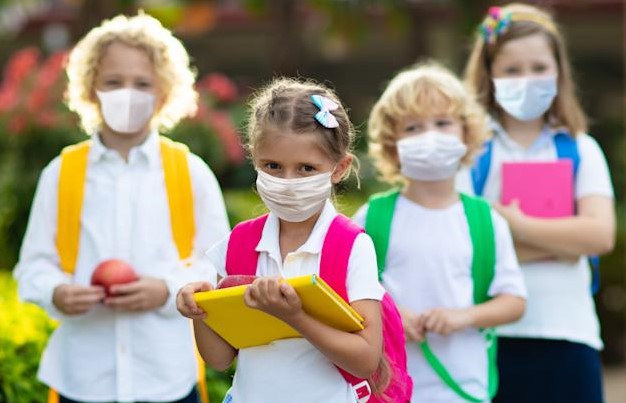
We have to be strong, resilient, stick to the necessary protocols laid by the government, be mentally and physically fit to get the rid of the crisis and for the betterment of the situation. We have fought against plenty of factors during many hardships like flood times and cyclones so we are going to do the same, fight against covid19 together but with social distancing and the masks up. Get vaccinated. Stay indoors and stay safe!!
A computer is a machine that performs tasks and calculations according to a series of instructions or program operations (circuits, etc.) and software (OS, the underlying software that controls the hardware when the user issues instructions).
Programming
You don’t need a car, its function is the same as a jukebox that keeps playing tracks. For example, they want to tell the music box to play different music every time. They want to program the music box so that it can play different music. This part of the history of computers is called “the history of programmable machines.” “This is a concise sentence in the history of machines. When I speak their language, I can order to do different things.”
The role of computers in daily life
Today’s computers are fast, small and small. Powerful. Computers can save money, time and labor; otherwise it would take months or years to complete in a few seconds with computers. Launch satellites using a simple application on our desktop. According to the requirements, the storage capacity and speed of the computer will be different. For example, NASA and other companies that use high-speed supercomputers, because speed is an important part of your business. Computers are cheaper than smart phones. The essence is in hand. At home, computers provide opportunities to access social networks, read books, or work from home.In the office, they are the most important because they are the most important form of work. Although computers can help with almost everything from shopping to work to taking notes or playing games, people rely heavily on computers for almost everything. Computers make life easier and faster than ever. Large storage rooms are of great help to today’s business. The data received from different systems is stored on the computer for later use. In addition, previous shopping, reading, work, arithmetic, calling appointments and events or activating alarms all occurred in different places. Now everything can be done with our smart phone. If the book is bulky, it would be great to bring ten books. Now; millions of books are within reach. There is no need to check calendars anymore, because they have been replaced by reminders that automatically remind us of important events and clocks that only need to be activated once. These are some basic tasks that are performed daily, and it is difficult to work without a computer. Computers are no longer a luxury, they can be used in different forms on different platforms, for example as smart phones. Computers are also very helpful in medicine and have undergone extensive development in the past decade. Addictive.All in all, we can say that computers have profoundly affected our lives, and changes are no longer associated with ease, habit, and popularity.
The above is a small example of computers, but as far as modern technology is concerned, computers have changed our way of life. Computers are not only used for arithmetic but are now active in teaching, industrial purposes, automated processes, data management, analysis, personal and group entertainment, Music synthesis, professional photo and video editing, hardcore games, research goals, creating new software and applications to make life easier, shopping, banking, marketing, and even participating in the artificial creation of intelligent creatures with deep learning concepts and machine learning.
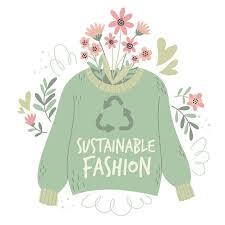
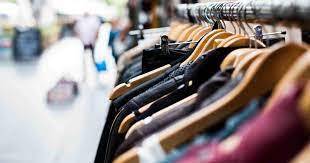
Have you ever wondered how you contributed to sabotaging the environment? If not it’s high time to dig deeper into the treasure, which is a greener Earth. You know what I’m speaking about. Yes, it’s about the fashion industry and the need for sustainable fashion. The fashion industry is one of the top industrial sectors in the world, with a value of 3 trillion dollars and produces 2% of the global GDP according to global fashion industry statistics. Accordingly, 1 in 6 people work in fashion or related industry Furthermore moving closer, the Indian fashion and apparel industry produces 1586 dollars in GDP per capita and enabled 45 million recruitments within the country. It is presently the second-largest employer within the country. Hence proving to be one of the top industries carrying out Apparel manufacturing process involving Product Design, Fabric Selection and Inspection, Patternmaking, Grading, Marking, Spreading, Cutting, Bundling, Sewing, Pressing or Folding, Finishing and Detailing, Dyeing and Washing, QC etc. 100 billion items of clothing are produced annually.
Adding onto the positives, there are many drawbacks to the very fortunate industry. It had been and is still on the top list of the contaminating industries in the world. Say, the textile industry is the second largest pollutant in the economy. The facts that had been put into due negligence till now is being brought to the limelight by Brands and fashion enthusiasts.
Blights of the fast fashion
1.Savagery towards animals
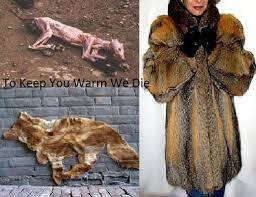
It is not a new fact to us that animals are manipulated to produce clothes or apparel items that seems to be a top trend. Most items produced from fur, leather, wool, feathers are obtained from the mass pestering of innocent animals. Sumanthran tigers and American alligators in the endangered category were still poached for cloth production.
2. Unfair wages and working conditions
As to the latest protests and struggles to achieve a full-fledged fashion revolution, we see the campaigns with people holding placards written ‘who made my clothes’ and ‘i made your clothes’. It wasn’t any happy day speech, they are the behind the scene labour workers under hardships produce all the commodities as to the recent demands. We often tend to forget them blindsided by the white-collar workers.it had been brought to the mainframe that blue-collar workers of Bangladesh, India, China, Indonesia, Vietnam, etc had minimal protection towards worker’s rights. Under prevailing pandemic conditions, these marginal workers were reported losing jobs, being underpaid, cancelled from orders or being not even adequately paid in which they suffered meeting even the food demands of their family. On the other hand, it has become a custom to exploit farmers to the company and middle-men needs.
3. Customer attitude
The next crucial factor towards non-circular fashion is the growing needs of customers for top quality, yet cheap and mind-blowing colourful garments. consumers are well aware of the upcoming trends and glams of the industry, leading to the fast adoption of these newbies. Speaking of which is a necessary evil. It is brought to the view that one in every three young women restricts herself from wearing a cloth multiple times. As to its blitzscaling, fashion companies are compelled to showcase more attire than the actual need.
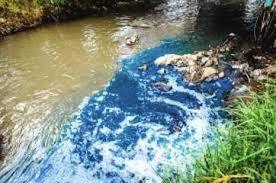
We have come to the major part of the discussion on fast fashion. It is every living being’s responsibility to safeguard the natural resources and pass on the same to the forthcoming generations. Water consumption of the textile industry had met its way beyond the danger zone. It takes 2720 litres of water to manufacture one cotton shirt and 7000 litres to make a pair of jeans. The pollution made to the water bodies doesn’t end there, the chemicals used for the mass production of the garments are disposed of directly or indirectly to the same. It is estimated that one-third of microplastics prolonging in the oceans is the impact of synthetic textiles. These are more deadly as the tiny they are, wouldn’t pass through the filters. The Aral sea, renowned as the world’s fourth-largest lake, has almost dried up as a result of the nearby cotton cultivation. The Kitex industry was recently accused of dumping excessive waste into the nearby waterbody.
5. Excessive carbon emissions
It is said to be true that the fashion industry is responsible for 8-10% of the total greenhouse gas emissions in the atmosphere. The major cause of this is the extensive use of synthetic fabrics like polyester, nylon and acrylic, spandex, faux fur, rayon, etc. Polyester ranks top on the intake of crude oil compared to all others by 70 million barrels annually. Transportation is the other means of carbon ejaculation contributed by the global distribution strategies.
6. Textile waste
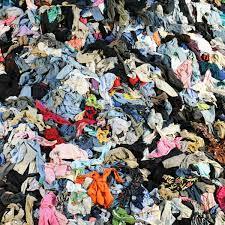
It is said that one garbage truck of textile waste is disposed of every second. This breathtaking fact does prove the intensity of the issue we are dealing with. This directly points out the rising rage for unsustainable fashion culture. For example, polyester is made from the polymerization of petroleum-derived ethylene glycol and purified terephthalic acid, which meltdown to produce polyethylene terephthalate (PET). As such many synthetic fibres are either termed plastic or made out of non-renewable substitutes that concern the ecology.
How can changes be made? How would fashion statements or the industry as a whole regain its fortune? Is the zero-waste fashion possible? Would buyers change their outlook on fashion?
It is time to join hands on the fashion revolutions put forth by fashion creators and promoters on ideas like sustainability, circular economy, zero waste fashion and so on. The idea of the fashion economy sabotaging ecology is given a better view as a result in modern days. Brands now are looking into logical practices to ensure sustainability and restrain themselves from misfortune. Let’s get to know the efforts taken by the industry dignitaries to achieve a stable eco-friendly fashion culture.
Overhaul to fad fashion
1. Sustainable brands
Brands that prove accountable to safeguard bionomics, sacrificing the trend sets should be promoted. Brands those prioritise natural fibres, work with local artisans and so on to gain environmental, economic and social well being. These companies tend to visualise customers as creatives. For example Reff jeans and Girlfriend collective
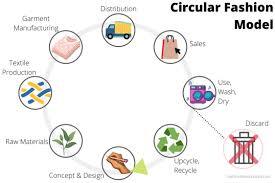
2. Circular fashion
‘Circular fashion’ can be defined as clothes, shoes or accessories that are designed, sourced, produced and provided with the intention to be used and circulate responsibly and effectively in society for as long as possible in their most valuable form, and hereafter return safely to the biosphere when no longer of human use. (Anna Brismar, Green Strategy, 2017). This is the basic idea of the longevity of any garment cycle.
“The circular economy refers to an industrial economy that is restorative by intention; aims to rely on renewable energy; minimize, tracks and eliminates the use of toxic chemicals; and eradicates waste through careful design.” (Ellen MacArthur Foundation)
3. Zero waste fashion
It is the concept of reducing the waste produced with the garment during its life cycle. Furthermore, it is divided into two categories, pre-consumer zero-waste fashion and post-consumer zero-waste fashion. Pre-consumer zero-waste fashion is a holistic approach towards the removal of waste during the manufacture of garments. post-consumer zero waste fashion, on the other hand, is the approach towards post-consumer garments, what more the garment could be used for.
4. Natural dyeing
These are the ancestral dyeing methods using degradable and natural materials like plant sources like roots, fruits, etc. yet the wide-ranging possibilities of this are still in doubt. Whereas a bit of sacrifice towards betterment wouldn’t hurt.
5. Mutating customer attitude
Nowadays customers are more aware of the rising issues on the planet and do agree to take responsive mutation to the outbreaking situations. Social media has had a great influence in making this change possible. When buying an outfit, consumers should ask themselves questions like how is this made, is it a need, how long it would stand, and what to do after. Renting and swapping is too given better focus
6. Personal style
Rather than buying all the so-called latest trends, customers should be aware of their personal style. Personal style does mean the unique way you dress, determining what suits you well, colours favouring, vulgar eliminating, defining yourself and gives you much confidence.
7. Recycling commodities
Brands have come up with the idea of accepting their old products in store. Moreover, specific recycling methods are being conducted and succeeded to a certain level that includes unbinding the fibres to yarns and reforming them to new ones so the focus centralises virgin fibres. As of now, only 13% of clothing and footwear is recycled but in the near future, this is to be a big number. And take care the brands don’t blindside you with mere greenwashing recycling programs.
8. Aquatic treatment
Brands now maintain a ‘water budget’ to not exceed the water demands. It is also noted that natural fibres take in less water for manufacture. There are more ethical ways to dye clothes without the use of water is a plus. Whereas to solve the issue of microplastics, using guppy friend washing bags and installing Girlfriend Collectives microfibre filters in laundry machines is recommended.
9. Ban on poaching
This year London fashion week has been announced prohibiting animal fur due to the rising concerns and brands like Burberry, Gucci and Versace guaranteed to go fur-free. At the same time, Adidas and G-Star RAW introduced apparel produced of ocean plastic. Companies now are developing materials that substitute animal-based leather to the ones made with grape and orange skins which are more laboratory-made.
10. Reducing carbon outrush
The profound carbon emissions are put to a stop by altering synthetic fabrics made of crude oil to natural ones like peach palm fabrics. Transportation caused pollution could be eliminated by procuring and sourcing local resources and employing local artisans.
11. Neat and intact employment
Sustainability couldn’t be possible without fair wages, constant job opportunities with regular and stable working hours. Meanwhile, farmers and blue collars should ensure a safe environment with right protecting laws and policies from the government. So that they could be self honoured with at least meeting the daily living standards which every person of the democracy should enjoy.
12. Minimalism
This isn’t a very pleasing method compared to others on the list. Yet leading a simplistic life could make a big change. Demand is directly proportional to supply. So when demand decreases supply decreases and so will production. Less production leads to the concentration of ones being produced and existing ones, this is where the difference would be visible.
Source: Department of Consumer Affairs, Hunger Watch
• Impacts of Covid-19 pandemic, lockdown – on personal income and food consumption.
• Hunger watch report analysed to provide important information. Income drop.
• In October 2020 – compared to pre lockdown level 27% of respondents lost their income due to the national lockdown 24% of its respondents record that they lost 50% of their income 6% responded that their income did not change despite the lockdown Source: Department of Consumer Affairs, Hunger Watch
Retail inflation
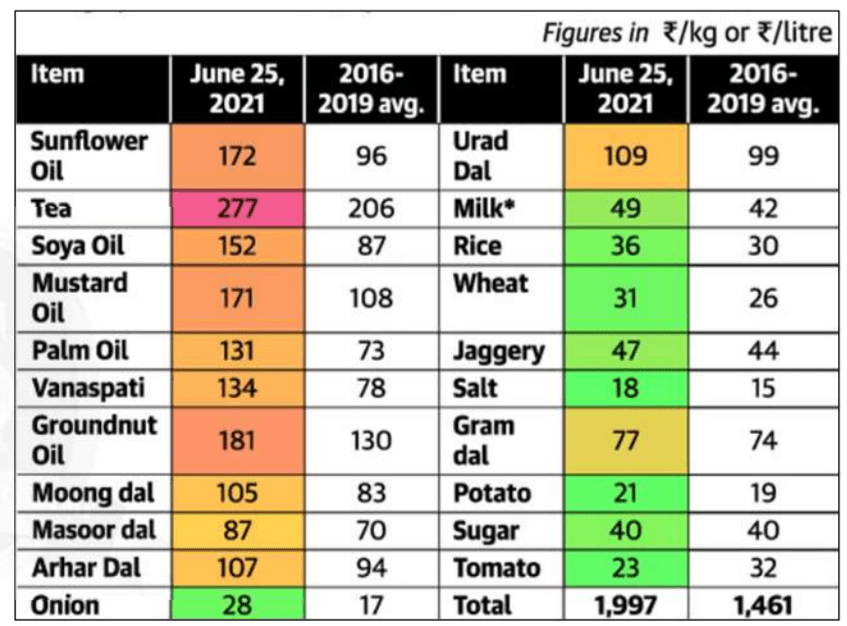
• In June 2021 – the prices of edible oil and pulses are increasing significantly .
• retail price analysis of 21 essential items across India.
• In June 2021- a Consumer – to buy a kg of essential item – has to spend rs.500 more compared to average cost between the year 2016 and 2019 .
• table given – indicates the retail price difference in various occasions .
• with retail inflation – the drop in income level has burdened the consumers.
hold Consumption of Commodities
• the impact of income factor and inflation factor can be seen from the change in consumption level data of October 2020 is compared with March 2020.
• Report – level of household consumption of all commodities listed have decreased.
• In October 2020 – 38% of households reported that the consumption of vegetables decreased a lot.
• consumption of egg/meat commodities have also decreased – another problem in ensuring nutrient security.
Conclusion
adequate policy responses are the need of the hour to address both food and nutrition security in the country.
Learning lessons of management from business books is not the only option to gain knowledge about business but we can gain similar knowledge by exploring our Indian street markets where we encounter a wide variety of businesses and street vendors. We can learn something new point from every interaction on streets.
WHY INDIAN UNORGANIZED SECTOR GOT THAT MUCH POPULARITY IN MAKING ECONOMY?
The street markets (or) small businesses comes under unorganized or non-corporated sector. This sector has loin share in national income, manufacturing activities, employment, forex earnings etc.. Only unorganized sector itself comprises 92 percent of Indian workforce.
Street vendors every day thrive through many difficulties. The environment where they operate is dynamic and constantly changing. They used to adopt different strategies to sell their limited sources to the customers. Most of the small businesses or street vendors do not have permanent shops. Street vendors should set up shops every day and close them by evening.
For Example: When we come across a street markets, we can observe the prices of commodities cheaper when compared to the marts. This is because, they do not have to pay rent or electricity bills or fees to the government and there will be a large number of shops which sell the same goods. If some trader charge high on a particular commodity then people would move to the other shop where they can get same commodity under low price or where the buyer can bargain and bring the price down.
The above stated example shows us the scenario of the street markets and make us to understand the hectic competetive situation of the vendors.
THE TECHNIQUES THAT WE CAN LEARN FROM THE STREET VENDORS ARE:
1) Most of the street vendors “work with limited resources” . They doesn’t any office setup to sell their products. They only look about how to sell their products using less resources.
2) Street vendors used to be customer centric: Yes, most of the street vendors truly apply the fact that ” customer is the king”. They take the initiative step to interact with the customers instead of waiting for the customers. Not only that most of the street vendors like to set up their shop where they can get the potential customers to sell their products.
3) Discipline and Consistency: Street vendors used to be focused to wards their work. They have to wake up early in the morning in order to get the stocks for that day and will return to their stay after every one has gone. They should maintain the same routine through out the year. This shows that discipline and consistency are the virtues that should be possessed by every entrepreneur in order to see profits in their business.
4) Symbiotic co-existence with customers : Street vendors possess a good collaborative skills with their competitors also. Though they sit next to each other and sell the same products also they used to help each other. This is one of the best thing that we can learn from vendors.
5)Adaptive nature: Street vendors used adapt different strategies to sell their goods as per the demand. At the same time they used to manage their business by changing the products to sell according to the season and demand.
CONCLUSTION:
Finally, when we start understanding the street markets or small businesses they teach us the other side of the coin. The one, who really want to get succeed as an entrepreneur (or) who want to learn tactics of the business then try to visit your local market places where you can learn many new principles that you can’t even get from your academics to execute your business wisely.
” THE KEY TO LEARN SOMETHING NEW IS TO OBSERVE THE THINGS AROUND YOU “
The 2019 Nobel Prize in Economic Sciences was awarded to Abhijit Banerjee and Esther Duflo, who currently work at the Massachusetts Institute of Technology, and Michael Kremer of Harvard University. The Prize committee noted that these economists “introduced a new approach to obtaining reliable answers about the best ways to fight global poverty.” The new Nobel laureates are considered to be instrumental in using randomised controlled trials to test the effectiveness of various policy interventions to alleviate poverty.
So what is randomised control trial?
A randomised controlled trial is an experiment that is designed to isolate the influence that a certain intervention or variable has on an outcome or event. A social science researcher who wants to find the effect that employing more teachers in schools has on children’s learning outcomes, for instance, can conduct a randomised controlled trial to find the answer. The use of randomised controlled trials as a research tool was largely limited to fields such as biomedical sciences where the effectiveness of various drugs was gauged using this technique. Mr. Banerjee, Ms. Duflo and Mr. Kremer, however, applied RCT to the field of economics beginning in the 1990s. Mr. Kremer first used the technique to study the impact that free meals and books had on learning in Kenyan schools. Mr. Banerjee and Ms. Duflo later conducted similar experiments in India.
Why is randomised controlled trial so popular?
At any point in time, there are multiple factors that work in tandem to influence various social events. RCTs allow economists and other social science researchers to isolate the individual impact that a certain factor alone has on the overall event. For instance, to measure the impact that hiring more teachers can have on children’s learning, researchers must control for the effect that other factors such as intelligence, nutrition, climate, economic and social status etc., which may also influence learning outcomes to various degrees, have on the final event.Randomised controlled trials promise to overcome this problem through the use of randomly picked samples. Using these random samples researchers can then conduct experiments by carefully varying appropriate variables to find out the impact of these individual variables on the final event.
What are some criticisms of randomised controlled trials?
A popular critic of randomised controlled trials is economist Angus Deaton, who won the economics Nobel Prize in 2015. Mr. Deaton has contended in his works, including a paper titled “Understanding and misunderstanding randomised control trials” that simply choosing samples for an RCT experiment in a random manner does not really make these samples identical in their many characteristics.
While two randomly chosen samples might turn out to be similar in some cases, he argued, there are greater chances that most samples are not really similar to each other. Other economists have also contended that randomised controlled trials are more suited for research in the physical sciences where it may be easier to carry out controlled experiments. They argue that social science research, including research in the field of development economics, may be inherently unsuited for such controlled research since it may be humanly impossible to control for multiple factors that may influence social events.




















 Eduindex
You must be logged in to post a comment.