
10 Daily Items the Apple Air tag can track.

Keys

Everyone misplaces their keys from time to time. AirTags are the perfect tracking device for lost keys especially using the official keyring accessory that apple is selling in their store would be a great choice. Keyrings aren’t cheap, of course. An Apple leather key ring costs $35.

Gadget Cases

Whether you have a camera, a gaming console or a Kindle, you can insert an AirTag into any gadget’s case. If you have an Apple laptop, it’s already got Find My, so you can track that, but if the battery runs out, or if it’s shut off, an AirTag may help you find it. AirTag batteries last about a year.

Backpack

You can also put an Air Tag in a backpack’s inside pocket or a loop holder.
Luggage

If you travel often, you can simply place the AirTag along with your clothes in your luggage as well because lost luggage can be a real headache. However, bear in mind that you can only use 16 AirTags with a single Apple ID, so if you want to protect luggage for your entire family, plus keys, purses, etc., you may need to share the AirTags among the Apple IDs in your family.

An Umbrella

Afraid of losing your favourite Umbrella? An airtag can help you keep a track of it.

Wallet

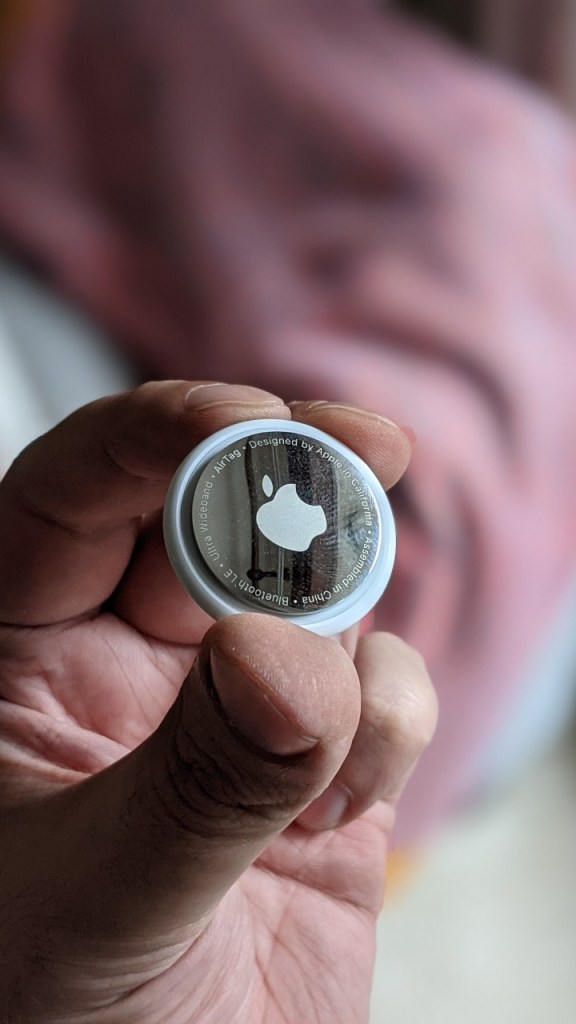
Due to its small size, an AirTag can easily fit in your wallet. AirTag may be a bit thick as the thickness is around 8mm. To have an idea of what 8mm is, it’s about the thickness of an iPhone 11 or 12.

A remote

You can tape an AirTag to a remote that you lose often, but it would be a bit clunky; remember, it’s 8mm thick. It’s a shame that the new Siri remote, for the Apple TV, doesn’t use Find My. (Meanwhile, Apple’s rival Roku just released its Voice Remote Pro which has remote-finder functionality.

Musical instrument cases

Similar to luggage and other items you carry around, if you’re a musician, it’s a great idea to stick one in your instrument case. In most cases, you’ll be able to hide the AirTag, and if it goes missing, or anyone just stole it you’ll really be grateful to be able to track it down, especially if you have a gig about to start soon.

Your child’s favourite toy

Everyone with young children knows that kids have favourite toys, often stuffed animals, and it’s easy to misplace them or leave them behind when you’re out. Slip one inside the toy, stitch it up, and you might save some tears. It will be a good option to use these tags.

How to Improve Concentration?

“Concentrate all your thoughts upon the work at hand. The sun’s rays do not burn until brought to a focus”

– Alexander Graham Bell

Introduction

The definition of concentration is exclusive attention to one object. Concentration means focused attention and it is very important. It helps in studying, allows faster comprehension, improves memory, helps in focusing on a task, allows to ignore unwanted thoughts. It is also helpful in meditation. It is very common to be reading a paragraph when you realize you zoned out and then having to go back and read the whole paragraph just to be zoned out again and repeating the cycle. This happens because of a lack of focus or concentration. This article aims to discuss ways to improve concentration.

Train your brain

Results from a study show that spending 15 minutes a day for 5 days a week on training your brain has a huge impact on your power of concentration. You can train your brain by playing games such as sudoku, crossword puzzles, chess, jigsaw puzzle, scrambles, and memory games. These games can also help in developing short-term memory and will also teach you problem-solving skills. In kids, even colouring improves concentration.

Get your game on

Some new research shows that playing video games can also help in boosting concentration. It says that playing video games for an hour can help in improving visual selective attention (VSA), which is the ability to focus on some tasks while ignoring distractions. Note that this research has been done on a very small level so it is not conclusive yet.

Improve sleep

Sleep is a very important part of our day as getting enough of it helps in a lot of areas of our day. Sleep deprivation easily disrupts our concentration and other functions like memory and attention. Not getting enough sleep on a regular basis can result in affecting your mood and performance at tasks, it can also slow down your reflexes. With enough sleep, you have enough energy to focus on your task without getting sleepy.

Make time for exercise

A 2018 study shows that physical activity helps in improving concentration and attention. Regular exercise has many benefits like increased concentration. In older adults, it shows that moderate physical activity for a year can help in stopping or reversing memory loss. Any type of exercise can work, the point is to get your heart rate up, it can be a walk for half an hour, a morning jog, walk to whatever place you have to go to or bike.

Spend time in nature

Getting outside in nature for even 15 to 20 minutes will help in boosting your concentration. Research from 2014 found evidence which says that including plants in office spaces has helped employees with their productivity, adding to that, it also increases the air quality. It can be any kind of exposure to nature, going for a walk in the park, or even just sitting in your backyard.

Listen to music

According to research, playing music, nature sounds, or even white noise to cover up background noise can help in improving concentration and other brain functions.

Conclusion

Having the power to focus and concentrate will make a huge change in your life. It lets you be more productive as you will be able to focus on your tasks without distractions, and when there are no distractions, things get done faster. Once you start concentrating, you will realize how much time you were wasting normally.

References

How to Increase Productivity? (For Students)

“The key is not to prioritize what’s on your schedule, but to schedule your priorities.”

– Stephen Covey

Introduction

Productivity isn’t only for working people, it is equally if not more important for students. As a student you are learning a lot of new things at the same time, it might even become overwhelming. You can be in school or college, you will still need productivity and organization. It is important to stay on track, achieve your goals, be it short-term or long-term. Life as a student can be very distracting, there are too many things begging for attention, such as sports, friends, a social life, partying. At the same time, you are absorbing a lot of new information from everywhere, and to be on top of all your work will help in not feeling overwhelmed. This article aims to discuss how to increase productivity as a student.

Make a To-Do List

Now, this might sound a little stupid but To-Do Lists help a lot, speaking from personal experience. It will be ideal to make the list before sleeping, that way you will not have to waste some time of the day in making the list, and it will also help you in understanding how much you need to get done and you will wake up prepared for it. The very basic way is to just list down the tasks you have for the day but if you want to go a level up, you can schedule your tasks by the hour, that is make a timetable for the day which will include your daily activities as well. For Example:

7:30 – Wake up

8:00 – Attend Family Law Class

10:40 – Have breakfast

11:15 – Do research for Memo

1:00 – Have lunch

Understand Your Learning Style

Everyone has a different style of learning:

Visual learning – learning things by looking at things like graphs, charts, and infographics. Learning things by looking at them.

Kinesthetic learning – learning things through a practical approach like experiments.

Auditory learning – learning things by hearing them said aloud.

Reading and Writing Learner – learning things by writing them and then revising from them.

Once you figure out your learning style, you should try to follow it as that is the best-suited one for you and will help you in understanding better and quicker.

Take Breaks

Studies show that your productivity stays intact when you take short breaks after studying for some time. This gives your brain time to stay focused and motivated. If you keep pushing your brain beyond its capability, you are creating stress and you start getting tired.

Reduce Social Media time

It is a well-known fact that social media is the biggest distraction for everyone. Asking to quit also may sound absurd but all of it depends on your self-control. Personally, I am good at staying away from it when needed so I have never had to quit it temporarily, but if you know you do not have good self-control, you should try to quit it for some time. If that sounds like too much to you, you can try to set time slots when you get to check social media and keep it away when doing a task. Remember that developing self-control is very important.

Reward Yourself

It is important to understand that the practice of rewarding yourself will only work if you have a good sense of self-control. Once you achieve your goal, you can reward yourself with little things like watching a movie, an episode of your favourite series or going out with your friend. This way you have something to look forward to after finishing your work.

Conclusion

Productivity is best accompanied by time management, they both go hand-in-hand. You can only become more productive if you have learnt to manage your time properly. These tips should help with increasing productivity but you should take efforts to increase your self-control as it is a huge part of everything in our life.

References

A day without a phone.

We have become a society that is totally dependent on communication devices to make our world go round. The cell phone, has completely changed the way our world lives and is no longer a novelty. So, have we ever wondered “what would one day be like without our cell phone?”

The morning will start off pretty rough considering that we had to wake up to a traditional alarm clock blaring into our ears instead of melodious alarm. After that if we want to call someone we would not be able to call them.
Since I use my phone for music and playing games, I will have to stay one day without listening to songs and playing my favourite game. While I’ll be doing my important daily stuff I’ll not be able to focus on my work and will be kept on thinking what were the things I was missing on facebook & Instagram or important things my friends would send in text. I would also miss my favourite shows that I use to watch on Netflix, Amazon Prime, and other OTT Platform.

So at the end it opened my eyes to see how dependent our society truly is on cell phones because we can’t survive without mobile phones or our life without a cell phone would be like slow and hard, boring as it allows us to do numerous stuff, source of entertainment and even make our life easier. Living without a phone is similar to living without a hand or leg. Imagine the lives of people whose phones have stopped working, need immediate service or broke!

Feels so horrifying!!!!!!isn’t it.

Reservation- requisite or not

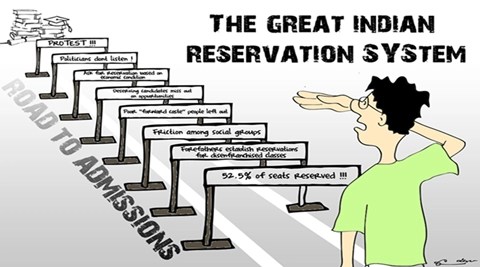
Reservation is a system of affirmative action in India which facilitates historically disadvantaged group of people to be represented in education, employment, politics etc. It was framed with a reason to uplift certain castes who were subjugated to atrocities, social and economic backwardness due to the prevalence of dominance of caste system in the society. Based on the amenities in the Indian constitution, it allows the Indian Government to set reserved seats which de-escalates some of the qualifications needed in employment, education, exams etc. for socially and economically backward citizens.

There are points both in the favor and against of the reservation system. Why some argue in favor of such a system ? Caste based reservation became a necessity in India because of historical negligence and injustice caused to the backward communities. Meritocracy is prominent for the better construction of a society as it is the idea that people get ahead based on their own accomplishments and abilities but it becomes meaning less without equality. The caste based reservation systems bridges the gap between upper and lower castes as every human being has the right to education, employment and other factors irrespective of their culture, background, race, sex etc. It provides a level playing field as it is strenuous for the backward sections who were historically deprived of education, skills and economic mobility to cope up with those who had access to those means for centuries. This has been a ray of hope for the backward sections to aspire of diverse professions and achieve an eminent position in life. It has encouraged and aided people to attain higher posts or services in the public sector and in the private as well. This system has mitigated the process of the forward becoming more richer and backward to a more pathetic level.

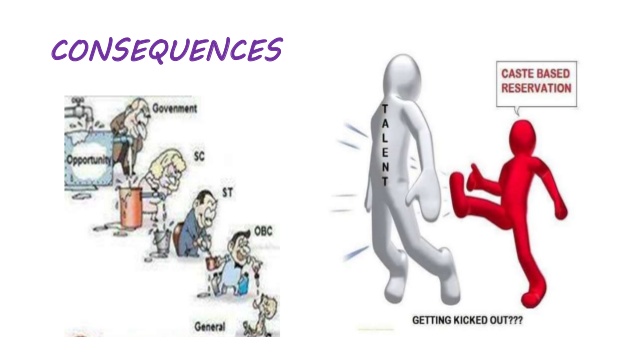
The caste discriminations were prevalent many years ago and now the lower castes have stepped up the social ladder and their is prevailing equity among all for the accessibility to education and employment so there is no more need for reservation. The road to success for the backward communities becomes easy these days but for others it is filled with hurdles and barriers. Although the reservation system plays a crucial role in the empowerment and upliftment of the socially and economically backward communities, to a large extent it degrades the quality of candidates and workers. Because in the competitive exams, entrance exams or for the job openings such people are limited to just a medium level of score to get qualified for the field and toil lesser which automatically impairs the quality of candidates. Imagine the plight of the candidates who travail more to reach the maximum marks framed for them just because they belong to the general class. The situation becomes vice versa again by disadvantaging and discriminating a group of people and fails to eliminate the notion. There are many who are impoverished in the general class but their hard work are underrated and not seriously taken into account as they belong to such class. Many upper class are still poverty- stricken and illiterates. Reservation is a weapon to address social and educational backwardness but it is not the complete solution to all the social indispositions. The government can provide platforms to enhance the knowledge and cognition of such classes to ace in the exams or jobs by facilitating courses to make them qualified rather than minimizing the scores to be obtained and making it a challenge for the other classes. It also brings down the economic growth of the country as it lowers the efficacy of labor.

Everyone should be equally offered with opportunities, that should be the crux of equality but it should be left in their hands how to utilize it and come up in life.

The largest individual flower on Earth-Rafflesia Arnoldii

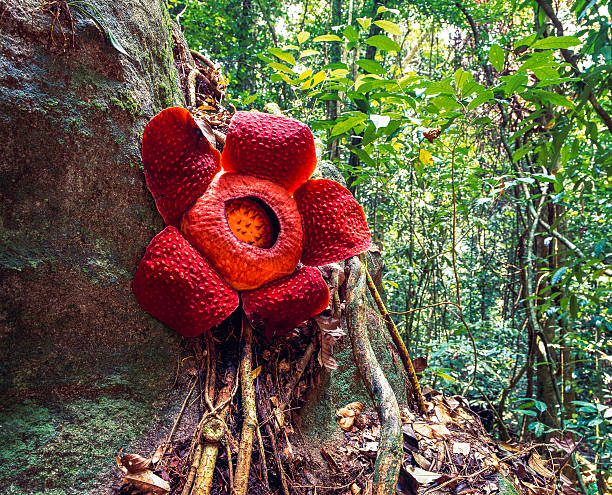
Rafflesia Arnoldii is a species of flowering plant in the parasitic genus Rafflesia. It is noted for producing the largest individual flower on Earth. It has a strong and unpleasant odor of decaying flesh. It is native to the rainforests of Sumatra and Borneo. Although there are some plants with larger flowering organs like the titan arum (Amorphophallus titanum) and talipot palm (Corypha umbraculifera), those are technically clusters of many flowers.

Rafflesia Arnoldii is one of the three national flowers in Indonesia, where it is known locally as the puspa langka or Padma paksasa. The other two being the white jasmine (Jasminum sambac) and moon orchid (Phalaenopsis amabilis). The first person to discover Rafflesia was the ill-fated French explorer Louis Auguste Deschamps in Java between 1791 and 1794, but his notes and illustrations were seized by the British in 1803 and were not available to western science until 1861.

Thailand, Rafflesia can be seen in Khao Sok National Park where the flowers are numbered and monitored by the park rangers. The regional name of Rafflesia Arnoldii is kerubut in Sumatra, cendawan biriang in the Minangkabau language in kecamatan (‘district’) of Pandam Gadang and “corpse flower” by the local people.

Antique illustration of Rafflesia Arnoldii

Although Rafflesia is a vascular plant, it lacks any observable leaves, stems or even roots, and does not have chlorophyll properties. It lives as a holoparasite on vines of the genus Tetrastigma. Similar to fungi, individuals grow as a mass of thread-like strands of tissue completely embedded within and in intimate contact with surrounding host cells from which nutrients and water are obtained. It can only be seen outside the host plant when it is ready to reproduce; the only part of Rafflesia that is identifiable as distinctly plant-like are the flowers, though even these are unusual since they attain massive proportions, have a reddish-brown colouration, and stink of rotting flesh. The flower of Rafflesia Arnoldii grows to a diameter of around one meter (3.3 feet), weighing up to 11 kilograms. These flowers emerge from very large, cabbage-like, maroon or dark brown buds typically about 30 cm (12 in) wide, but the largest flower bud ever recorded found at Mount Sago, Sumatra in May 1956 was 43 cm (17 in) in diameter. Indonesian researchers often refer to the bud as a ‘knop’ (knob).

Corpse flower, Rafflesia arnoldii, West Sumatra, Indonesia.

Rafflesia Arnoldii is found in both secondary and primary rainforests. The only host plant species of Rafflesia Arnoldii is Tetrastigma leucostaphylum in West Sumatra. Tetrastigma are themselves parasites of a sort, using the strength and upright growth of other surrounding plants to reach the light. The trees that Tetrastigma uses to climb up to light, are relatively limited in number of species, although they are generally the closest tree to the vine. The buds take many months to develop and the flower lasts for just a few days. The flowers are gonochorous – either male or female, thus both flowers are needed for successful pollination.

When Rafflesia is ready to reproduce, a tiny bud forms outside the root or stem of its host and develops over a period of a year. The cabbage-like head that develops eventually opens to reveal the flower. The stigmas or stamens are attached to a spiked disk inside the flower. A foul smell of rotting meat attracts flies and beetles. To pollinate successfully, the flies and beetles must visit both the male and female plants, in that order. The fruit produced are round berries filled with numerous minute seeds.

The flies like Drosophila colorata, Chrysomya megacephala and Sarcophaga haemorrhoidalis visit the late flowers. Black ants of the genus Euprenolepis may feed on the developing flower buds, perhaps killing them.

It’s conservation has not been assessed for the IUCN Red List. Ecotourism is thought to be a main threat to the species, at locations which are regularly visited by tourists the number of flower buds produced per year has decreased.

Jobs for the Future

There are two reasons why students are interested in sustainable management studies.

Photo by Magnetme on Pexels.com

Youngsters are now facing the impact of climate change themselves. Many of them have experienced-led disasters such as floods and cyclones, more than their previous generation did.

Second, there is growing awareness on the regulatory requirement and the investor’s demand, said Jagdish Ratnani, a Professor.

Nevertheless, the fact is that many jobs of the future will require hordes of managerial talent who understand ESG. Its a great career opportunity, Aditya Shelar, a student at IIM Lucknow, thinks that business in future will think beyond numbers and they would need people who under- stand a range of issues.

The transition to electric vehicles, higher solar power adoption, green practices in real-estate as well as carbon neutral policies will all require manpower that drive these shifts.

Environment and sustainability will have to be embedded in both corporate thought and actions. Its a requirement for branding, for raising funds, and to capture young and aware consumers. Institutions will increasingly adopt that in the classroom and beyond. It was said by Gopal Sarangi of TERI Institute of Advance Studies.

Photo by Angela Roma on Pexels.com

Some firms want to evaluate if their manpower is conscious about ethical business strategies. Some firms want to evaluate if their manpower is conscious about ethical sourcing, environment reservation, SGD goals like equality at workspace, the side effects of child labour and fair wage.

All this will fuel demand for more courses in B- Schools.

Reference

http://www.intershala.com

http://www.timesofindia.com

Journalism of Empathy

Humans often dissociate themselves from animals by immersing themselves in their differences. But sometimes these differences are not consequential and just like us animals also habituate themselves to expressing their emotions. Lions are perceived as the most social animal in wildlife. They live in large groups called “prides” which strengthens their kinship. Cubs stay with their mothers until they learn to live for their survival. Human beings are considered to be social animals, who need love, communication and belongingness to stay alive.  Love and the necessitation of receiving love is a basic and primal being instinct. It is claimed that the strongest instinct in a man is considered to be of survival which is closely accompanied by a drive to protect those he cares about like a shield. Throughout human existence love remains critically important it transforms and evolves through out the course of relationships.

It is strenuous to emphasize what role family plays in my life. They taught me the true meaning of selfless love. My family was my first school who taught me morals and values. They always stood by me when I lost faith in myself. Whenever I was hard to love they always have more love to give without any expectations. The epitome of establishing any relationship is communication and trust which I’ve learnt from my family. They are my strength and my powerful voice. Everything that I am today is solely because of them. I thank my stars to be blessed with what I have. They always made things accessible to me which were far from being mine. There are times when situations are thrown at us and our bond with our families become unstable that is the time when we learn what patience is, holding onto people who matter and not giving up on them irrespective of the scenarios. My true definition of love is defined by my family, where there are no if’s or but’s just giving all, you have for the people that you feel affectionate and loved towards.

Nowadays Receiving real love is a scarce commodity so its value is highlighted and holds immense amount of importance. No matter how far you go in search of peace or your desires the only place you will feel a sense of belongingness and togetherness will be your family- your home. My chosen family which are my friends who are my ultimate source of happiness. These are the people who I have chosen to grow with for the rest of my life. Undoubtedly, they have contributed in molding the person that I am today, made a point to never make me feel alone or defeated. Every friendship goes through a rough patch but it all comes down to accepting each other’s flaws and insecurities and not leaving each other’s sides because that is all that matters when you look back. Valuing the small things in life, being happy without any worries, experiencing first encounters of mid-adulthood are all what friendship signifies for me, it taught me that people can be loved differently.

What makes life worth living is our family and friends. They possess the power to add value into our lives. At the end of the day, when we look back our established relationships which have contributed in building our personalities and in which we have invested our time and efforts become our pride which gives us supreme satisfaction and a purpose to live. They teach us the true meaning of belongingness, love and empathy.

Skills of the Future

The new world order, brought on by the fourth Industrial Revolution, demands that today’s children acquire skills that will serve them well in the future.

Photo by Andrea Piacquadio on Pexels.com

The world we live in will change so fundamentally that students who come out of school by 2030 will make careers in fields that we have no idea about in the present.

As all of these trends happen, the winners will be those who are able to participate fully in innovation-driven ecosystems by providing new ideas, business models, products, and services, rather than those who can offer only low-skilled labor or ordinary capital, points out Klaus Schwab, founder and executive chairman of the World Economic Forum, in his seminal work, the Fourth Industrial Revolution.

This view is supported by other experts.

According to David Deming, associate professor of education and economics at Harvard University, Soft Skills like sharing and negotiating will be crucial. Modern workplace, where people move different roles and projects, closely resembles pre- school classrooms where we learn social skills such as empathy and cooperation. =

In effect, the skills and traits that must be inculcated in our children include : Social Intelligence

Photo by Polina Zimmerman on Pexels.com

This set of skill include empathy or the awareness of self and others perspective collaboration, negotiations and conflicts resolution, persuasive communication that can change minds and hearts.

A sense of service mindedness, trustworthiness and transparency.

Reference

http://www.timesofindia.com

http://www.wikipedia.com

World Hepatitis Day 2021

Introduction

Every year on July 28th, World Hepatitis Day is observed. The goal is to raise awareness about viral hepatitis. Hepatitis is a medical condition in which the liver is in an inflammatory condition. The theme for this year is “Hepatitis Can’t Wait”, magnifying the urgency of putting efforts to eliminate hepatitis as a public health threat by 2030.

History

July 28th was chosen as the date for World Hepatitis Day because it is the birthday of Nobel-prize-winning scientist Dr. Baruch Blumberg, the scientist who discovered the Hepatitis B virus (HBV) and also developed a diagnostic test and vaccine for the same virus.

Dr. Baruch Samuel Blumberg was born on July 28, 1925, and died on April 5, 2011. He was an American physician, geneticist, and co-recipient of the 1976 Nobel Prize in Physiology or Medicine with Daniel Carleton Gajdusek. He was president of the American Philosophical Society from 2005 to his death. He served as a U.S. Navy deck officer during World War 2. He received his MD in 1951 from Columbia University and his D. Phil in 1957 from the University of Oxford. While studying yellow jaundice in 1964, he discovered a surface antigen for hepatitis B in the blood of an Australian aborigine, which is the reason it was initially called “Australian antigen”.

About Hepatitis

It is referred to as an inflammatory condition of the liver. It is usually caused by a viral infection but it can also be caused by other things. It can include autoimmune hepatitis and also hepatitis which can occur because of medication, drugs, toxins, and alcohol. There are five types of hepatitis based on different viruses. 
Hepatitis A is caused by an infection with hepatitis A virus (HAV), this is mostly transmitted by consuming food or water which is contaminated by feces from a person infected by HAV. 

Hepatitis B is transmitted through contact with infectious body fluids like blood, vaginal secretions, or semen. It can be transmitted by injection drug use, having sex with an infected partner, or sharing razors with an infected person. 

Hepatitis C is caused by the hepatitis C virus (HCV). It can also be transmitted through direct contact with infected body fluids, especially through used injections and sexual contact. 

Hepatitis D is also known as delta hepatitis, it causes a serious liver disease by hepatitis D virus (HDV). It is caused by coming in direct contact with infected blood, it is rare as it only occurs with hepatitis B because it cannot multiply without the presence of hepatitis B. 

Hepatitis E is waterborne and is caused by hepatitis E virus (HEV), it can usually be found in areas with poor sanitation and from ingesting fecal matter that has contaminated the water supply. 

Facts and Figures

  • 1,100,000 deaths per year are caused by Hepatitis B and C.
  • 9,400,000 people are receiving treatment for chronic HCV.
  • 10% of people with chronic HBV are diagnosed and 22% of those receive treatment.
  • 42% of children have access to the birth dose of HBV vaccine.
  • According to WHO, 325 million people around the world have HBV or HCV.
  • Hepatitis isn’t just an STD, there are other ways of getting it as well.

Conclusion

With the figures of infection and death around the world, it is clear that we can’t just sit and wait around for them to decrease. It is important to make people aware of it, teach them the way to avoid it, and reach a stage where the vaccine can be provided to everyone. As common citizens, we can’t help in the production and reach of the vaccine but we can help in raising awareness and taking steps towards sanitation.

References

World Nature Conservation Day 2021

“Only if we understand, will we care. Only if we care, will we help. Only if we help, shall all be saved.”

– Jane Goodall

Introduction

Every year July 28th is celebrated as World Nature Conservation Day. This is to raise awareness to protect the planet we live on, our Mother Earth. The meaning of conservation is carefully using valuable natural substances that exist in limited amounts to make certain that they will be available for as long a time as possible. The practice of not using resources carefully has also led to the extinction of many species. Conservation will help in the growth of biological, economic, cultural, and recreational values. Non-conservation for so many years has also resulted in Climate change which we know is affecting the planet in many negative ways.

Significance

It is important to recognize that we need nature for our survival, if we let that go, it will disturb the environment which will then disturb the climate harming the harvests and the well-being of all humans. Not just that, we also need nature for all the non-renewable resources we keep using for our industries. Celebration of this day recognizes the importance of a healthy environment which is the foundation of a stable and productive society, it ensures the well-being of present and future generations. The aim of this day is to introspect on how we Homo sapiens are exploiting nature and the effects we are facing because of it, such as global warming, natural disaster, increased temperature, and various diseases. 

Theme for this year

The theme for this year’s World Nature Conservation Day is “Forests and Livelihoods: Sustaining People and Planet”. This theme highlights the importance of co-existing with nature.

Forests are often underestimated and looked upon as just a source of wood, but it is important to know their importance. We greatly depend on forests for our survival, be it the air we breathe or the wood we use. Forests provide habitat for animals and also a livelihood for humans, it also offers watershed protection. Forests help in preventing soil erosion and help in the mitigation of climate change. Over 2 billion people rely on forests for shelter, livelihoods, water, food, and fuel security. Forests are home to over 80% of the world’s terrestrial biodiversity and 60 million indigenous people. Forests provide jobs for more than 13 million people across the world. They are the second-largest storehouses of carbon which is very important to solve the issue of global warming and to reach the goals described in the Paris Agreement.

Things to do to Conserve Nature

Cut Down on plastic use – Although the use of plastic is convenient for us, it is non-biodegradable and leaves its trace for a very long time, it not only stays in the environment but also impacts other species, like choking animals and birds because of plastic.

Save Electricity – Electricity is produced by using non-renewable resources. If we control how much electricity we use, and don’t waste it, less non-renewable resources will be used. The creation of electricity produces extra carbon waste which increases global warming. 

Save Water – Wasting water is resulting in decreasing levels of drinking water. Not only that but it also creates a lot of energy to treat, pump, and heat water. We should use water judiciously. 

Recycle-Reuse – Following the practice of recycling and reusing will help in reducing the amount of waste we create.

Conclusion

We have learnt about the importance of nature and its conservation above. It is high time to realize the importance of following this practice as we are in deep waters already. This summer the world has experienced nature’s wrath all across, floods in China and Europe, high temperatures in Canada, the US, and the UK. The last few years have seen a rise in forest fires and if this isn’t warning enough of the damage we have caused, then we’re just waiting for a big disaster to hit us.

References

The Man you admire most- M.K. Gandhi

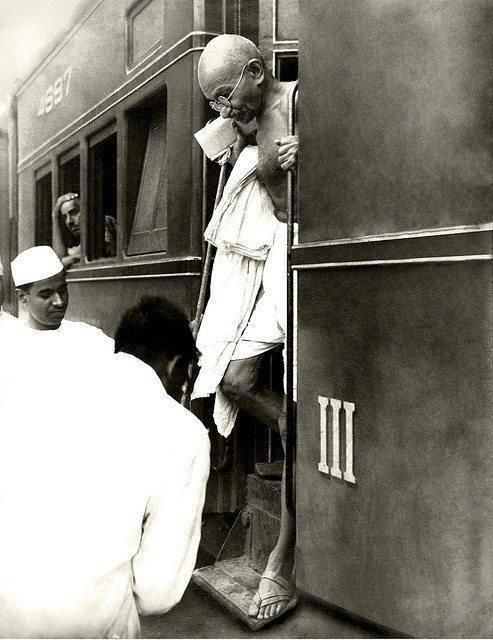
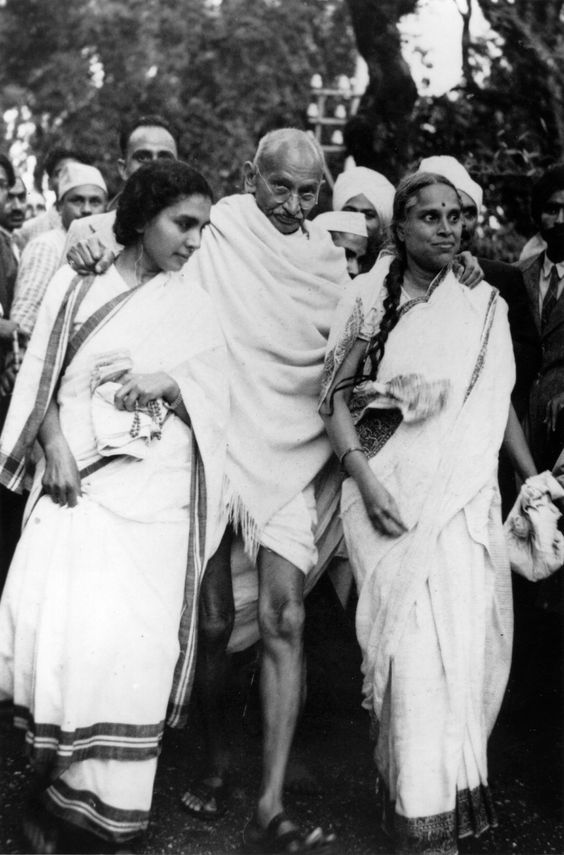
The man I admire most is M. K. Gandhi. His full name is Mohandas Karamchand Gandhi. He was attributed ‘Mahatma’ for his glorious life. He was born at Porebandar in Gujarat (India) on 2 October, 1869. His father, Karamchand Uttamchand Gandhi (1822–1885), served as the diwan of Porbandar state. Gandhi’s mother name was Putlibai. In May 1883, the 13-year-old Mohandas was married to 14-year-old Kasturbai Makhanji Kapadia (her first name was usually shortened to “Kasturba”), in an arranged marriage, according to the custom of the region at that time. His wedding was a joint event, where his brother and cousin were also married. Recalling the day of their marriage, he once said, “As we didn’t know much about marriage, for us it meant only wearing new clothes, eating sweets and playing with relatives.” As was prevailing tradition, the adolescent bride was to spend much time at her parents’ house, and away from her husband.

In an interview Gandhi said about his lustful feelings he felt for his young bride” even at school I used to think of her, and the thought of nightfall and our subsequent meeting was ever haunting me. He later recalled feeling jealous and possessive of her, such as when she would visit a temple with her girlfriends, and being sexually lustful in his feelings for her.”

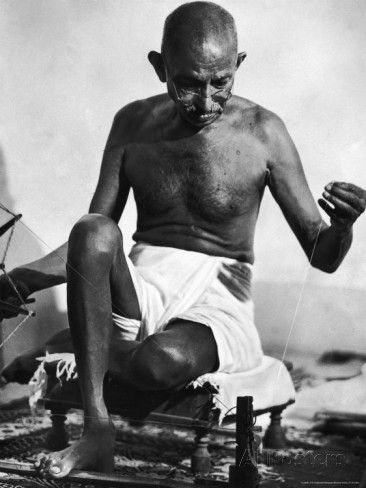
In 1921, Gandhi adopted the use of an Indian dhoti and a shawl (in the winter) and only (dhoti in the summer) woven with yarn hand-spun on a traditional Indian spinning wheel (charkha) as a sign of identification with India’s rural poor.

After completing education in India he went to England in order to study Law. He obtained the degree in Law and returned to India and began to practise in Mumbai High court at first and then in South Africa. While he was there, he started a new era of non-violence movement to reduce the oppression of the Europeans against the natives of South Africa. The movement became famous as Satyagraha and when he came to India again he used this method against the British rule. It was strengthened in Non-cooperation Movement in 1921 and Quit India Movement in 1942. He became the leader of the people giving his clarion call-“Do or die’. After a long struggle under his leadership India won her independence on 15 August in 1947.

Gandhi did many experiment like experiment with food, non-violence, and the freedom fight but the experiment which has made him a villain in everyone’s eye was “The experiment of Gandhi’s Brahmacharya” which was criticised by various senior leaders like- Jawaharlal Nehru, Sardar Vallabhbhai Patel had called it a “terrible blunder”, and had asked him to stop it.

Gandhi tried to test and prove to himself his brahmacharya. The experiments began some time after the death of his wife in February 1944. At the start of his experiment, he had women sleep in the same room but in different beds. He later slept with women in the same bed but clothed, and finally, he slept naked with women. In April 1945, Gandhi referenced being naked with several “women or girls” in a letter to Birla as part of the experiments.

According to Gandhi he asked his grandniece Manu when she was 18 years old if she wanted to help him with his experiments to test their “purity”, for which she readily accepted. Gandhi slept naked in the same bed with Manu with the bedroom doors open all night. Manu stated that the experiment had no “ill effect” on her. Gandhi also shared his bed with 18-year-old Abha, wife of his grandnephew Kanu. Gandhi would sleep with both Manu and Abha at the same time. None of the women who participated in the brahmachari experiments of Gandhi indicated that they had sex or that Gandhi behaved in any sexual way. Those who went public said they felt as though they were sleeping with their aging mother.

He was shot dead on 30 January, 1948 by a derailed young man named Nathuram Godse. But his life and message are still the source of inspiration not only in the national field, but also in the international field.

Mountains- A history (Part-2)- Tectonic plates

Photo by ROMAN ODINTSOV on Pexels.com

Now, before going any further with our mountains, let us first see the various types of interactions possible between our 2 types of tectonic plates- The Oceanic crust and the Continental crust: The 3 basic interactions are converging boundaries, diverging boundaries and transform boundaries.

  • Converging- It is defined as the two plates moving towards each other, colliding in the process. Now, there are 3 possibilities-
  1. Continental-continental collision- Here, two continental landmasses( eg.- The North American plate or the Eurasian plate or collision of Australia, South America and New Zealand (It formed the Great Australian Dividing range)) collide and the two plates fold over one another and lead to the formation of fold mountains. Try using a paper bringing it closer from the opposite ends. The raised structure represents the fold mountains. They have no volcanic activity (though earthquakes are possible). Examples are the Urals, the Atlas, The Rockies, the Alps, the Himalayas
  2. Oceanic- Oceanic Collision- In these types of collision, the heavier oceanic plate subducts under the lighter oceanic plate(forming trenches- eg. Mariana Trench). Due to subduction, it reaches the area of high pressure and temperature in the mantle and thus melts converting to magma. This magma later rises and when it finds an opening (like the one created by the diverging limbs) in the oceanic crust, it comes out. It, hence, forms oceanic volcanoes, ridges and later volcanic islands like those of Indonesia and the Phillipines.
  3. Continental Oceanic Collision- When a continental and an oceanic plate collide, it leads to the formation of either fold mountains(Rockies) or trenches(Philippines Trench) or both(Andes and the Peru- Chile Trench).
  • Diverging- When two plates or landmasses move away from each other ,in the opposite directions, it is known as diverging. Even here, there are 2 possibilities-
  1. Continental continental diversion- When two continental plates move away from each other, it leads to the formation of rift valleys and plateaus. Examples are- The east African rift valley (formed due to the drifting apart of Arabian peninsular plate from African plate- they were connected millions of years ago).
  2. Oceanic oceanic diversion- It occurs when two oceanic plates move away from each other, creating a ridge in its wake. The Atlantic ocean is divides by a ridge known as the Mid oceanic ridge (named so because it passes through the middle of Atlantic ocean). Here, the plate boundaries of Africa, Eurasia, North America , South America diverge from each other. The Pacific and the Indian ocean are the other two oceans that have ridges.
  • Transform – When one tectonic plate moves past another, it forms transform plate boundary. These plate movements most commonly produce earthquakes as during movements the plates experience friction and intermolecular force of attraction due to which one plate might find itself bounded to another plate. Then, when the plates move past one another it requires a lot of energy and produces heat and waves. Example- the boundary between Pacific plate and North American plate in Western California.

Now, that we know about tectonic plates, studying the formation of mountains becomes a lot easier. Stay tuned for the 3rd part where we will look into the formation of various mountains and the tectonic plates and movements involved . Till then, take care (a smiley emoji).

MAGIC IN A CUP OF TEA!!!

Every morning won’t be complete without a cup tea right? Many people can’t do their work without a cup pf tea. Tea gives us refreshness and make us active. Though many like coffee, there are people who love tea too. The reason for me to talk about tea is nothing but today’s topic revolves around tea. Let me tell you an essay written by Eric Arthur Blair about a cup of tea.

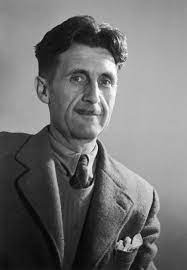
Eric Arthur Blair, known by his pename George Orwell, was an English Novelist, journalist and a critic. He opposed totalitarianism and supported democratic socialism. He is best known for the Allegorical novella ‘Animal farm” and the dystopian novel “Nineteen Eighty Four”. He wrote an essay about ‘A nice cup of tea’ and it was published in London Evening Standards in 1946. It is about the discussion of the art of making tea. He states ten rules to be followed while making tea. Let me tell you about his essay.

Eric Arthur Blair (George Orwell)

The author said that there are no cookery books that has the preparation of tea as a recepie. Countries like Eire, NewZealand and Australia which has tea as a part of civilization. He says that Chinese tea has virtues but there is no much stimulation in it. So the author prefers Indian or Ceylonese tea.

  • The first rule is that one should prefer Indian or Ceylonese tea. One does not feel wiser or more optimistic after drinking it. ‘A nice cup of tea’ literally means Indian tea.
  • Second rule is that tea should be made in small quantities in a tea pot. The teapot should be made of China or earthenware. Silver and birtannia ware tea pots produce inferior tea and enamel parts are worse. In the army, the tea is made in a big cauldron, tastes of grease and whitewash.
  • Thirdly, the pot should be warmed beforehand rather than placing it with water in it.
  • Fourthly, the tea should be strong. He states that one strong cup of tea is better than twenty weak ones. All tea lovers not only love a strong tea but like it a little longer with each year that passes.
  • Fifthly, the tea should be put straight into the pot. Don’t use strainers or muslin bags to imprison the tea. One can swallow tea-leaves in considerable quantities without ill effect and if the tea is not loose in the pot it never infuses properly.
  • Sixthly, one should take teapot to the kettle and no other way about. The water should be boiling at the time, one should keep it on the flame while pouring it.
  • Seventhly, after making the tea, one should stir it, or better give it a good shake allowing the leaves to settle.
  • Eighthly, one should drink it out in a cylindrical type of cup rather than a shallow type of cup. The shallow cup will have the tea half cold before one starts, drinking it.
  • Ninthly, one should pour the cream off the milk before using it for tea. Milk with cream gives a sickly taste.
  • Tenthly, one should pour tea into the cup first and then add milk. By pouring the tea first, one can regulate the amount of milk to be added to the tea. He also says that one should drink tea without adding sugar. Adding sugar, destroys the taste of the tea. He also asks the question to the tea lovers, How can you call yourself a tea lover if you destroy the flavour of your tea by adding sugar into it? He also says that adding sugar is similar to drinking a hot water.

The points said by him are quite controversiable. But try to drink a cup of tea without sugar for a fortnight, and you will never ruin your tea by adding sugar to it. Think about yourself guys. This essay is quite interesting. I like this essay and how about you guys?

Read more;

Mountains- A history(Part-1)

Photo by Sam Kolder on Pexels.com

We have all seen mountains or hope to see them, after all they are a very famous holiday destination. All of us certainly have a wonderful mountain destination in our bucket list- be it the Himalayas, The Rockies, The Alps, Mt. Fuji or the Swiss Alps. But have you ever wondered how these mountains came into being? How is it that a flat piece of earth rose so high, almost touching the sky? Well, if you have, then here is the answer. And if you haven’t, even then a little extra knowledge never hurts anybody, right?

So, the mountains were formed millions and even billions of year ago (the oldest one-the Barberton Greenstone Belt in South Africa, is 3.6 billion year old) when the continents were being formed. The most widely accepted theory, currently, believes that the earth’s mantle(the astenosphere layer- a semi-solid) has convection current flowing through them(a result of differential heating- the lighter material rises whereas the denser material sinks ). This current belt in the astenosphere moves with it the lithosphere(continental crust, oceanic crust and the top-most part of mantle(upper mantle)). These movements in the lithosphere are the movements of continents and oceans that lead to earthquakes , volcanoes, tsunamis and the formation of volcanic islands, plateaus (all these for some other day) and fold mountains as well as volcanic mountains.

These convection currents move with them large pieces of land, ocean or both and these large pieces are termed as tectonic plates. There are currently 7 major and some minor tectonic plates. The major tectonic plates are-

  1. Indo-Australian plate
  2. North American plate
  3. South American plate
  4. Pacific plate
  5. Antarctic plate
  6. Eurasian plate
  7. African plate

The minor plates are-

  1. Fillipino plate
  2. Nazca plate
  3. Scotia plate
  4. Caribbean plate
  5. Indian plate
  6. Arabian plate
  7. Cocos plate
  8. Juan-de-fuca plate

Let us first see the types of mountains. There are 4 types of mountains-

  1. Fold mountains- These mountains are formed when one tectonic plate folds over the other, due to collision of two plate boundaries. The plates need not be continental as is in the case of the Alps , the Atlas and the Himalayas. An oceanic and a continental plate boundary collision can also form a fold mountain. The examples of such fold mountains are the Rockies and the Andes
  2. Block mountains- These mountains are formed due to the diverging plate boundaries. When two boundaries diverge, it creates a crack on the surface between them known as a rift. Later, the surrounding raised plate undergoes erosion and takes the shape of a mountain. Examples are The East African Rift Valley, The Rhine Valley, The Vindhyas and Satpuras .
  3. Volcanic mountains- Mountains formed due to fissures in the earth’s surface, that lead to release of magma. The examples are Mt. Fuji, Mt. Mayon. Also, they are known as mountains of accumulation.
  4. Residual mountains- Mountains that are either formed due to the erosion of existing mountains (denudation) or plateaus(dissection) by agents such as rivers, winds, glaciers. Examples are Mt. Manodnock (The Appalachians) , Highlands of Scotland, Scandinavia and Deccan Plateau.

The movement of the tectonic plates creates one of the above or even a combination of the above kind of mountains. Stay tuned for the next part to know how are many of the world mountains created and where are they located? Is there something common about their location? What is the reason for exceptions?