
Social network and its contemporary flow of language phraseology

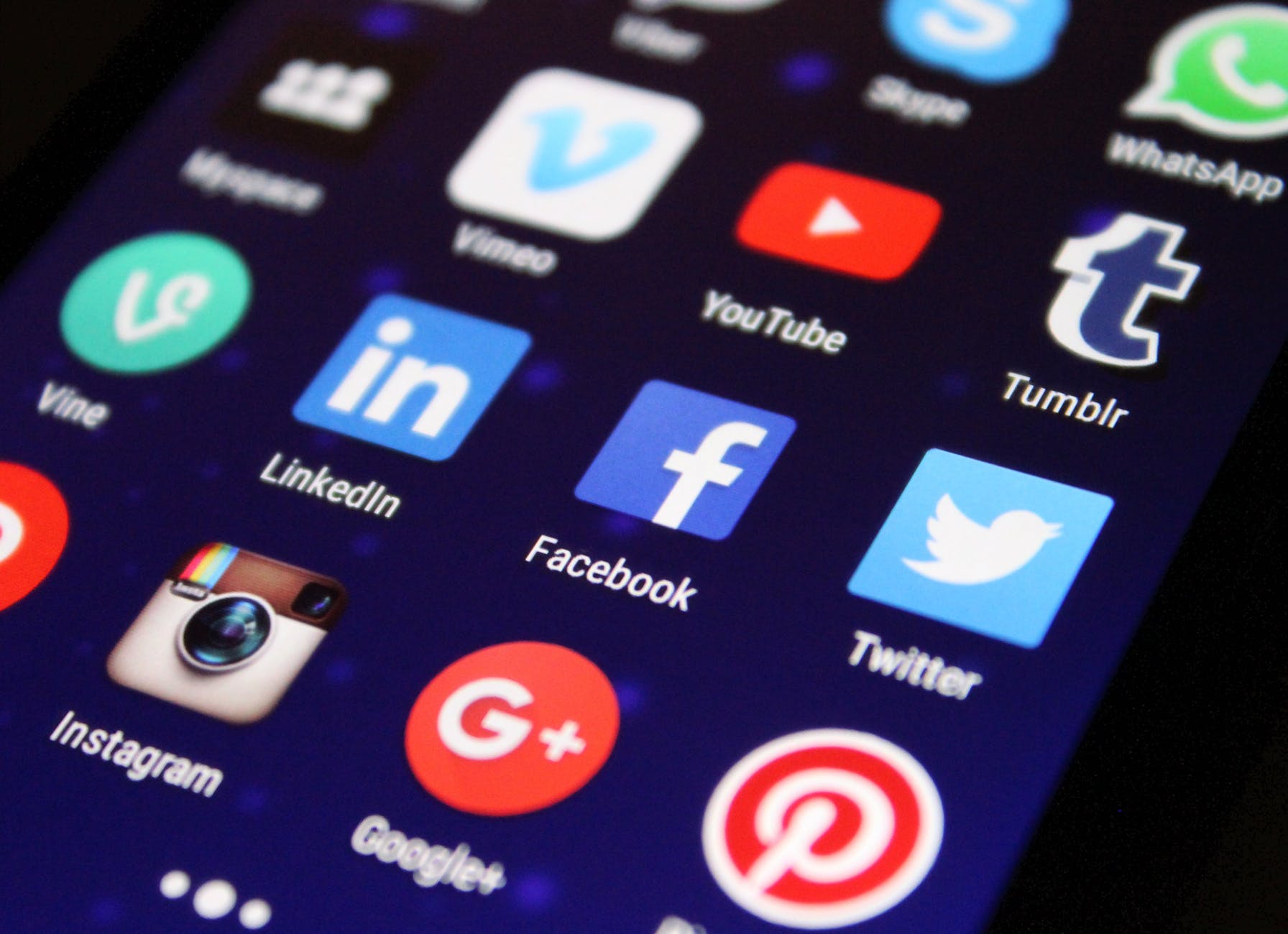
Photo by cottonbro on Pexels.com

With the rapid growth in the usage of social networks worldwide, uploading and sharing of generated content, both text and visual, has become increasingly prevalent.

Today, social media refers to a wide range of Web sites and Internet-based services that allow users to create content and interact with other users. Language is an evolving thing. It’s naive to think that the language of social media isn’t affecting the way we use English in day-to-day life. It’s more appropriate to consider just how much of an effect it’s having on the way we communicate. A whole host of words originating from social media and the wider Internet have become so commonplace that they’ve now slipped into popular usage, and we don’t even realize it.

 Just a few interesting words that have their origins in technology are blogosphere (the collective word for personal websites called blogs), troll (someone who creates conflict online by starting arguments or upsetting people)

Modern companies (like Adidas, mad over marketing or even celebrities) use their presence on social media platforms for diverse business goals. Social media present a new and unique way for direct interaction between the company and different users, right down to the customer as well. While most social media platforms offer some way to measure user engagement, many focus on customer conversion, rather than content.

The emphasis on linguistics and user-generated keywords on social sites

Multilingualism:

 As of now, and according to the data of http://www.internetworldstats.com, the Internet has eight-hundred fifty million English-speaking users out of one billion five hundred million total users. This means that the market for the English language is more or less than one-third of the total market. All this means that there is an enormous body of information being constantly generated which is also being constantly lost behind language usage this proves language diversity in Internet ecology is of paramount importance.

We consider linguistic features in two classes: variations of English, including spelling, and differences in emotive and personal language, including pronouns, interrogatives, and exclamations but emotive language, and personal informal language are used more frequently than the formal tone.

Variation in Lexical Conventions Tweets in the social chats are more likely to contain apostrophes commas and full stop  (such as “can’t”), with missing apostrophes (such as “cant” and “didn’t”) or abbreviations (e.g., “u” for “you” or “k” for “ok”)

Emotive and Personal Language The two collections also show striking differences in tone and the degree to which posts describe personal experiences or opinions. The social community collection has more instances of exclamations and questions, and more non-standard strings of exclamation and question marks. The abundance of exclamations suggests the messages are more likely to be strongly emotive.

Emotions of one kind are also suggested by the number of messages containing any of several dozen grammatically incorrect or swear words or and those all in upper case. Pronouns too are much more prominent in tweets that include the first-person pronoun, and sometimes include the abundance of “ and ” as a word is partly due because we treated “&” as a word boundary.

The infrequent use of the second person pronoun indicates people are not as involved in discussions. Users in this collection also make much greater use of Twitter hashtags to label their posts. We believe this points to more careful use of the posts and a curatorial intent, where hashtags serve to direct a tweet or post to the right audience when the two individuals do not know each other.

There are also instances of online brands becoming so powerful that words have crept into the English language based on them. ‘Google’ is the world’s leading search engine and it has become so universal in its usage that the phrase ‘Google it’ has virtually replaced the phrase  ‘search for it’ in common speech. There are examples of this lifted directly from social media too;  ‘tweet it’ refers to writing a message using Twitter, but has essentially come to mean ‘share it’

Colors are also being widely used to indicate the source of topics: Topics triggered by the page owners on Instagram or Twitter are highlighted through a light blue color. All data is available in an all-time overview.

To summarise, not all social media language is the same. In our collection, talk in the science or work arena is more formal, with more care taken to address an audience, and more concerned with passing on non-personal information, while the tweets or posts in the social environment are more on a personal note, expressing emotions, describing experiences and asking more questions. This mirrors what could be the equivalent genres in other media: a conversation, on the one hand, scientific writing on the other

The not so scientific techniques of language phrasing on social sites

 Some of these tools, such as multi-party chats, discussion forums, blogs, and online reviews, have been a focus of “natural language processing (NLP) research for quite some time now. But within the last decade, NLP work has expanded rapidly to cover an immense variety of new social media content—microblogs such as Twitter, social networks such as Facebook, comments on news articles, captions on user-contributed images such as on Instagram, and forums dedicated to specialized topics and needs (e.g., health and online education)”. Simultaneously, many other research communities are carrying out work using social media data information science, social science, psychology, and linguistics.

Today, a large number of businesses are also centered on or benefit from, analytics and language usage performed on social media. Given these vast research and commercial interests in the social media domain, we are at a time where we should seek to clearly understand what role language has in the field of social media analysis, both in terms of the key and interesting language questions, as well as contributions NLP had made to the research carried out in other fields.

Identifying patterns of usage:

People use the same language for different purposes; most of the time similar content or language used receives millions of views over a week or a course of few hours( likely because of the language which probably have been making the headlines) timing as well play a major role in deciding how fast that particular language or a keyword is being transferred across a particular location for example if there’s a news related to examination during the pandemic chances are the search engines related to that particular news topic will continue to be on the topmost chart among students on a wider range thus making these words ‘lockdown’, ‘online exams’, and covid, etc a specific headlines on Google or social media sites.

Social network and language impact on Cultural awareness

People using social media primarily collect cultural and language examinations through their own experiences and general mobility: by traveling, working, and studying. Nevertheless, they can also gain additional knowledge on languages, cultures, and cultural awareness through social media itself and through other collaborative virtual communities in which they participate.

From unfriend to selfies, social media is having an impact on language and cultural changes. As someone who writes about social media, I’m aware of not only how fast these online platforms change, but also of how they influence the language in which a person writes.

But how much can we trust different categories of social media, such as Instagram for example? The quality and certainty of available materials remain an open question. For that reason, Many researchers suggest the use of authorized materials already available over the Web and in different virtual communities, but not necessarily social media

Most social media users use social media tools for information gaining or cultural acknowledgment particularly through knowing the names of foods consumed by various people over the world, places or the type of clothes worn by people of different cultures and the everyday experiences of populations,  (e.g, cottage cheese which is a generic  term used around the world is known by a specific name in other world countries like Feta in Greece, Ricotta in Italy, and paneer in India so on )

Conclusion

What social media has done is enable us to communicate with a much larger number of people on a global scale in a way that we only really used to be able to do on a local level. It is a rich playground for experimenting, creating new words, and repurposing old ones; it also provides a platform for people who aren’t consumed by grammatical rules and syntax, giving the freedom to flout the usual maxims of conventional English Language and be innovative, creative and forward-thinking. Language is and always has been ever-evolving. Although the developments and trends we witness in language over time are significant, the foundation of the English language remains as strong and infallible as it always has been.

Psychological Disorders Part 10

Introduction

The Psychological Disorders Part 9 discussed Schizophrenia. It is a lifelong disorder but the intensity and the effect of it can be controlled with the help of planned treatment and various medicines prescribed by the psychologists. This article will discuss Personality Disorders.

Personality Disorders

Personality disorders involve a pattern of maladaptive thoughts, feelings and behaviours that cause serious detriment to various areas of life.

Antisocial Personality Disorder is also known as sociopathy. It is a mental disorder wherein a person continuously shows zero regard for what is right and wrong, in doing so the person also ignores the rights and feelings of other people. People with this disorder have a tendency of antagonizing, manipulating and treating others in a harsh manner. They also tend to show no guilt. The people with this disorder often end up violating the law and hence become criminals. Some of the symptoms are persistent lying, exploiting others, disregard for right and wrong, using wit to manipulate others for personal gain, being cynical, disrespecting others, arrogance, repeatedly violating the rights of others through dishonesty, criminal behaviour, being impulsive, lack of empathy, lack of remorse, aggression, violence, abusive relationships, dangerous behaviour, persistent irresponsibility, not considering negative consequences of their behaviour. Adults with this disorder usually start showing signs by the age of 15. This is a lifelong disorder.

Avoidant Personality Disorder (APD) is a mental disorder in which the person has a pattern of extreme shyness, they feel inadequate and are excessively sensitive to rejection. Symptoms of this personality disorder include fear of rejection, criticism, embarrassment, disapproval, intimate relationships, getting to know new people and fear of being ridiculed. People with this disorder might also have trouble believing someone likes them.

Borderline Personality Disorder is a mental disorder that impacts the way a person thinks and feels about themselves and others. It includes self-image issues and difficulty managing emotions. A person with this disorder will have an intense fear of abandonment or instability, which would make being alone difficult for them. This disorder usually begins by early adulthood. Some of the symptoms are intense fear of abandonment, pattern of unstable intense relationships, periods of stress-related paranoia, rapid changes in self-image, suicidal threats in response to fear of rejection, extreme mood swings, intense anger and an ongoing feeling of emptiness.

Dependent Personality Disorder involves being anxious about being left alone, that is, the inability to be alone. Some of the symptoms are behaving submissively, needing repeated reassurance, relying on others for making decisions, easily being hurt by disapproval, feeling nervous when alone, tendency to be naïve, fear of abandonment and fearing rejection.

Histrionic Personality Disorder involves people having a distorted image of themselves. They base their self-esteem on other’s approval. Some of the symptoms are uncomfortable in situations where they are not the center of attention, display of rapidly shifting emotions, interaction with others involving inappropriate seductive behaviour, consistently using physical attention to get others focus and showcasing exaggerated expression of emotions.

Narcissistic Personality Disorder is a mental disorder in which people have an inflated sense of importance, they need a lot of attention and admiration. They also have a lack of empathy. Some of the symptoms are having a sense of entitlement, expecting to be recognized as superior, exaggerating achievements and talents, belittling others, expecting special favours, arrogance, boastful and insisting on having the best of everything.

Obsessive-Compulsive Personality Disorder involves a person wanting extreme perfectionism, neatness and order. People with this disorder feel the need to impose their standards on others. Some of the symptoms are perfectionism to a point that it is difficult to finish tasks, rigid mannerisms, extreme attention to detail, overwhelming need to be punctual, fixation with lists, hoarding useless items, sense of righteousness and rigid adherence to ethical codes.

Paranoid Personality Disorder involves people being extremely suspicious of other people. Some of the symptoms are believing that people have hidden motives, trouble working with others, quickly becoming hostile, having trouble relaxing, socially isolated, defensive and doubting loyalty of others.

Schizoid Personality Disorder is when people avoid social activities and continuously shy away from interacting with others. They tend to have a limited range of emotional expression. Some of the symptoms are preferring being alone, not enjoying close relationships, feeling like can’t experience pleasure, appearing to lack motivation, feeling no desire for sexual relationships and may seem emotionally cold.

Schizotypal Personality Disorder is a disorder in which people are often described as odd and have very few close relationships. Some of the symptoms are being a loner, flat emotions, excessive social anxiety, belief in special powers, peculiar style of speech and dressing.

Conclusion

There are many kinds of personalities which brings many kinds of personality disorders as well. Personality is known to be fluid but the reason of these disorders includes brain chemistry and genetics because of which they remain permanent. These disorders are very harmful for the people themselves and their loved ones, which makes it important to consult a psychologist to get treatment and reduce the symptoms.

References

Note: this is the last part of the Psychological Disorders series.

The need to save the ocean

To paraphrase a line from Ron Burgundy, the ocean is a big thing. Big enough for scientists to point out that the term “Earth” is a misnomer. Water may be a more accurate name for a world that is nearly 3/4 covered in water, with marine plants contributing a whopping 50 percent or more of the oxygen we breathe. With all of that stated, it’s past time (high tide?) for us to band together to save the resource that has been depleted.

Photo by Kellie Churchman on Pexels.com

The state of the ocean is not good

The bad news is that human activity is wreaking havoc on the environment. The good news is that there are several things we can do to help stop (and even reverse!) those detrimental behaviors, which is why this is a message about hope and empowerment rather than doom and gloom.

Plastic pollution is destroying the ocean

A non-profit that works to protect the ocean Every year, 17.6 billion pounds of plastic is estimated to escape into the ocean from land-based sources, according to Oceana. Every 60 seconds, a garbage truck full of plastic is dumped into our waterways. The world’s most renowned (and largest) rubbish dump is located in the ocean.

The Great Pacific Garbage Patch covers 1.6 million square kilometres and contains 1.8 trillion bits of plastic in an estimated 80,000 metric tonne landfill. Plastic garbage in the ocean is believed to kill over one million sea animals each year, including sea turtles, sharks, and coral reef (yes, coral reef is an animal!).

Plastics in the ocean will surpass fish in the ocean (!?) by 2050, according to research, and 99 percent of seabirds will have plastics in their GI tract. Plastic pollution is not only destructive to the ocean; there is also evidence that it is harmful to humans.

Acidification in the ocean

Carbon dioxide emissions absorbed by the oceans over decades have changed the underlying chemistry of our ocean, resulting in an increase in acidity. Acidification causes small decreases in shell density in small creatures, which support entire ecosystems despite their small size.

As the world’s seas warm, species are moving in large numbers to new locations, posing new challenges or simply failing to develop as they should, while millions of people rely on fish as their primary source of nutrition. It’s also causing the Great Barrier Reef to perish. Coral reefs require all of the protection we can provide, given the disastrous effects of climate change.

Because it has the potential to cause the most apparent and immediate human misery, sea-level rise may be the most well-known of these concerns. Low-lying areas such as Miami and the South Pacific islands are growing increasingly vulnerable; 10% of the world’s population lives on the low-lying coast.

Meanwhile, deoxygenation, which is most typically caused by algal blooms fed by nutrient-rich fertilizer run-off, is causing enormous dead zones and suffocating marine life.

Overfishing

Fishing techniques that are illegal, uncontrolled, and unreported are common. Humans have already brought the giant grouper, several skates and rays, and a dozen or more other sturgeon species to the brink of extinction through fishing.

Bluefin tuna is one of the fish species whose populations may never recover as a result of unsustainable fishing techniques. Other apex predators, such as sharks, are among the most endangered.

Places like Monterey Bay National Marine Sanctuary have shown how impactful policy changes can be in helping species rebound.

Ocean conservation isn’t just a hobby for those who enjoy the water. You might not be a scuba diver, a fisherman, or a seaside dweller. Perhaps you have a seafood allergy and despise surfers! Even so, chances are you still breathe air and enjoy life when there is less human suffering.

Plants and trees are oxygen-producing powerhouses. But wait till you see what oceanic greens can accomplish! (Hint: it’s not just trees.)  More than half of the oxygen on the earth is produced by marine plants. 

Thoughts famous people have about ocean

Jacques Cousteau: “The sea, once it casts its spell, holds one in its net of wonder forever.”

Beyoncé Knowles: “I’m always happy when I’m surrounded by water, I think I’m a mermaid or I was a mermaid. The ocean makes me feel really small and it makes me put my whole life into perspective… it humbles you and makes you feel almost like you’ve been baptized. I feel born again when I get out of the ocean.”

William Wordsworth: “The ocean is a mighty harmonist.”

John F. Kennedy: “We are tied to the ocean. And when we go back to the sea, whether it is to sail or to watch, we are going back from whence we came.”

Photo by Emiliano Arano on Pexels.com

Ways in which you can help save the ocean

  1. EDUCATE YOURSELF

Step 1: Land and sea are far more intertwined than most people think, and activities taken on land have substantial consequences in the ocean. The good news is that there are a plethora of tools available—Pinterest offers a plethora of ocean-saving categorieS.

2. Opt for Ocean and Earth-Friendly Products

Oceana’s is to demand plastic-free alternatives to items such as plastic water bottles, straws, plastic cutlery, coffee cups, bags, balloons, plastic-wrapped produce, and take-out food containers.

References

http://www.growensemble.com

http://www.wikipedia.com

Hustle culture

More people need to make their own well being a priority.

To some people self care means face masks, bubble baths, and a glass of malbec. To others it means spending more quality time with your family, friends, or pets.

But one thing seems universal: the need to spend less time grinding and more time enjoying.

How do we do this when we are told to idolize “the hustle?” Told to follow the grind wherever it leads us? Told that we are only successful if we put everything we have into our work?

Over the last few years we have fallen victim to what is now being called “hustle culture.” 

Hustle culture does not sleep. Hustle culture does not take lunch breaks. Hustle culture is waking up Saturday morning and making spreadsheets instead of pancakes.

Hustle culture does not take into account what your goals in life really are.

If you have a goal in mind, you need to put your foot on the gas and strategize how you’ll achieve it A S A P., Or else it’s just an idea and a waste of time.

The idea is that we find our value and sense of self in our output or how much work we can get done. So much so that we glamorize the idea of being a “workaholic” and are obsessed with Hyperproductivity.

The bottom line becomes, if you’re not constantly delivering something of perceived value, you’re doing it wrong.

People often admire the “hustle.” “Don’t knock on the hustle,” they say. True enough, in some instances having a hustle culture is a good thing, in a workplace environment the opposite is generally true. Especially in today’s highly competitive and fast-paced lifestyle, hustle culture is becoming the norm for more and more people in the workforce today.

Millennials in particular — especially fresh graduates and singles — are particularly keen on the kind of workaholism that hustle culture perpetuates. It’s all about how “busy” they are, how many million things they’re juggling at the same time. Hustle culture has become the standard for many to gauge things like productivity and performance.

The thing is, hustle culture isn’t really as great as it’s made out to be. It’s dangerous, both to individuals and to a workplace environment in general. It may seem like a good thing on paper, but in practice, there is a lot to at least be extremely cautious about.

In a nutshell, hustle culture (as the name also implies) means constant working. It means devoting as much of your day as possible working — hustling. There is no time out or time in at work. Work is done in the office, outside the office, at home, at coffee shops — anywhere. And in a world constantly on the go and equipped with the tools to achieve that, working constantly on the go is very possible.

Hustle culture is the societal standard that you can only succeed by exerting yourself at max capacity professionally. Everyday.

Hustle Culture pushes the idea that you are only valuable, worthy, or capable of success if you are performing at your maximum capacity at all times.

And it’s a mindset, a philosophy and a life embraced by many, both by individuals and even companies. When you talk of hustle culture, the more you work, the more celebrated you are. Never mind that you miss meals, sleep, and other important events. In hustle culture, taking a break is for the weak. Your brain becomes trained to always be active and always churning out idea after idea after idea.

SCHOOL LIFE!!!!

I think everyone have the memories of your school life which never fades. The most cherished and enjoyed part of our life would definitely be our school life, right? Though, we go to college or job but the happiness might not be equal to the happiness in school life. Am I right guys? But the children these days do not know the happiness of this school life. This would be a great regret in their life. This pandemic has affected our daily lives. This affected our life greatly. Due to this, the children miss their school life and focussed on the online classes which is the greatest regret of the parents these days. The usage of mobile phone in such a young age may develop the habit of laziness in children. They may have eye problems. Let me tell you about school life now and then. Yes, I will share you how I enjoyed my school life. We were the last batch to complete school life before the pandemic started. We feel lucky for that.

School Life - children off the 60s
School days before Covid-19

As I said, the most unforgettable part in our life is our school days. Yes, school makes one built their character and knowledge of life. The most things can be learnt only in school days. This is a palce where every student tries to be the best in his work and want to use the school life the most to be a successful person. There they learnt to be disciplined and how punctuality matters a lot. Punished for being late teaches them to be a punctual person and this can be applied wherever he goes. Schools shape our character, mold our mental attitudes and fashion the basic principles of life. Most of us would have spent the most happiest days in school only. Think about it.

Are school days the best days of our life? - Quora

The children fight among themselves to prove they are the best in the class. The attention of students towards teachers are very high those days. Though they didn’t do their homework or didn’t work hard, during the time when examination dates are announced they show their strength to the fullest. Yes, the competition to be the first is always a fire in their mind. School teaches us how to respect others and befriendly with everyone. School is the place where we first identify our talents. There were many competitions which encourage them to prove themselves. This brings out dancing ability, singing, etc. Some children are interested in sports and teachers help them to be the best in their sports. To say bluntly, teachers are the pillars of school life.

How Teachers can Help Students Set and Achieve Personal Goals
The best companion of School life

The loyal and life long friends can be made only in your school life. Yes, the school friends are the ones who befriend with you without any expectations. Everyone can’t be able to forget the attrocities done with your friend right? At times, getting punishments together or making your friend a scapegoat and these cannot be forgotten. Sharing food and snacks are the best parts. This teaches us to be friendly and generous to the people around us. In every class, there will always be a group of gang and fight between them for silly things are unforgettable. Possesiveness over your friend and ego clashes between them are the most enjoyable things in school life. But the children these days miss the school days and this pandemic has made the situation worst.

Group Of School Friends Holding Hands With Rear View On White.. Stock  Photo, Picture And Royalty Free Image. Image 79586669.
Friends

Days goes, trend changes. This pandemic has made things difficult for children. They have become lazy and didn’t know about their school at all. They are studing through online class. Will it cultivate all the good habits ? No, puntuality and other things can only be taught in school. They are sure to miss this. Attending classes online may bring health issues and eye problem etc., But we should adjust this and be safe for now. I hope the pandemic will end soon and the children will be able to attend their live classes and cultivate their character. Doctor advices children to hear the online classes rather than seeing the mobile or laptop for the full day.

Education now

Read more;

https://www.iaspaper.net/school-life-short-essay-children/


God Save Ganges- from us!

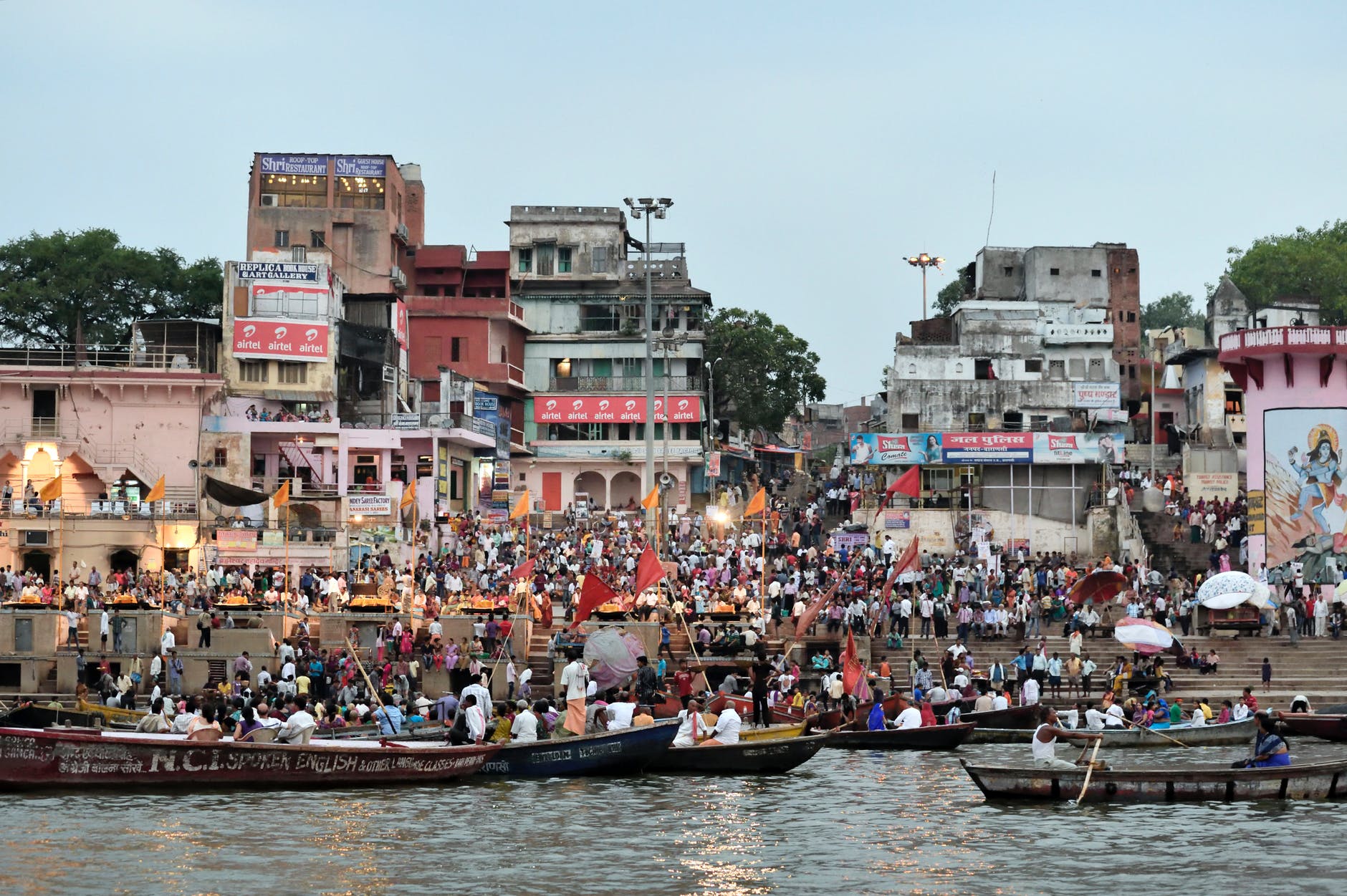
Photo by Roxanne Shewchuk on Pexels.com

The Ganges River, or the Ganga as we call it, starts from high above in the Himalayas(Bhagirathi flows out of Gangotri glacier from the state of Uttarakhand) and drain into the Bay of Bengal, though before draining into the Bay of Bengal, it creates the world’s largest delta- The Ganges Delta. This delta is extremely fertile, spreading over a very large area and home to a large number of people. The river is known as Ganga from the region where the two rivers of Bhagirathi and Alaknanda meet ,i.e., Devprayag and flows onto the Indo-Gangetic plain. It thus forms a very large part of northern an eastern part of India and also Pakistan, Nepal and Bangladesh. It is the longest river of India and flows over a distance of 2,525, km. on it way downstream, it passes through the cities of Kolkata, Mirzapur, and Varanasi. The river Ganges is the holiest river of the Hindus and many people visit the region of Varanasi where the Ganges flows as it is considered the holiest of all those cities. According to our 2001 census, the Ganga basin alone supports 43 percent of our population. It has the largest drainage area in the whole world. Its tributaries originate from Bangladesh, China (Tibet) and Nepal.

So, now that we understand What is Ganga? Where does it originate? Where does it drain? Let us have a brief look at its importance, not that we need to, because we have been exploiting it since time immemorial. We, of course, know its importance better and its uses.

  1. With its basin spread across 11 north Indian states, it is the primary source of fresh water to people of many of those states.
  2. Not only does it provide water, it is a very important source of livelihood as people settle near its banks and depend on its water as well as fertile plains, producing  rice, wheat, potato, etc. that are important cash crops.
  3. It also provides space for animal husbandry and fisheries, river based trade and transport.
  4. It is home to many unique fauna species- eg. Ganga River Dolphin- our National Aquatic Animal, the endangered turtle and crocodilian species and so many more.
  5. River Ganges holds a very sacred place for the Hindus. The sandy banks are also the burial ground for their loved ones.
  6. Many industries are developed along the banks of the river. It acts as their dumping grounds. Not only for industries, it also acts as the dumping grounds for the nearby population.

But now, this lifeline to the country is the 5th most populated river in the world whose water is not deemed unfit to drink(without treating). (Source: Wikipedia). A recent report by a Delhi based NGO (http://toxicslink.org/docs/Quantitative%20analysis%20of%20Microplastics%20along%20River%20Ganga.pdf) found that the mighty Ganga is heavily polluted with microplastics, especially concentrated in Varanasi and Kanpur, followed by Haridwar. What’s even more shocking is their composition-  industrial and secondary broken-down plastics from articles of everyday use and, of course, religious offerings wrapped in non- degradable plastic. The days are coming when the glory of the Ganges will be a thing of the past. Is this how we treat something we respect, worship and adore? And if this is, as it definitely seems, then all the other natural bodies and organisms beware- Any of you might be our next target for the time of Ganga might come to an end.

Psychological Disorders Part 9

Introduction

The Psychological Disorders Part 8 discussed Neurocognitive and Obsessive-Compulsive Disorders. Both types of disorders need consultation from psychologists to control, monitor, and limit the effects they have on daily life. This article will discuss Schizophrenia.

Schizophrenia

This is a serious mental disorder in which people interpret reality in an abnormal way. People with this disorder require lifelong treatment. The DSM-5 says a person has schizophrenia if they show two or more of the following, each present for a significant portion of time during a 1-month period. At least one of the following must be delusions, hallucinations, or disorganized speech. The level of functioning in a major area such as work or self-care should be below the level achieved before the onset for a significant portion. And the signs of the disturbance must persist for at least 6 months. The symptoms of schizophrenia are:

  • Delusions – these are false beliefs that are not based on reality. For example, thinking you are famous, someone is harming you, a major catastrophe is about to take place.
  • Hallucinations – these involve seeing or hearing things that do not exist. For the person having them, it seems extremely real. The most common is hearing voices. For example, hearing someone whispering about a murder, or seeing aliens in the back alley.
  • Disorganized thinking – disorganized thinking and disorganized speech are linked. The person might start answering questions with things partially or completely unrelated. At times it is possible for them to make a sentence by mixing two or more words that do not make sense, this is known as word salad. For example, run desk making dinner sunglasses menu.
  • Abnormal motor behaviour – this can be in many ways such as childlike silliness, resistance to instructions, bizarre posture, and unpredictable agitation.
  • Catatonia – is a group of symptoms that includes a lack of movement and communication. For example, a person will sit silently in one position for very long stretches.
  • Negative symptoms – this includes lack of ability to function normally such as, a person neglecting personal hygiene, appear to be lacking emotions, the person may lose interest in daily activities.
  • Avolition – it is a lack of motivation to do activities that have an end goal such as paying bills.

The symptoms of schizophrenia in teenagers are similar to the ones in adults but they become difficult to recognize because of the similarity to a normal teenage behaviour, some of these symptoms are withdrawal from friends and family, trouble in sleeping, lack of motivation, a drop in performance at school, irritability and depressed mood. Although teenagers have a less chance of having delusions, they have a higher chance of visual hallucinations as compared to adults getting hearing hallucinations.

People with this disorder often have suicidal thoughts and behaviours. The cause of this disorder is not known but it is believed by the researchers that it is a combination of genetics, brain chemistry, and environmental factors. Some naturally occurring neurotransmitters known as dopamine and glutamate might be playing a role. Neuroimaging studies have learnt that there is a difference in the brain structure and central nervous system of the people with schizophrenia.

Conclusion

Schizophrenia is a lifelong disorder but the effect and symptoms can be managed with proper guidance and medication. Following the treatment plan is important to reduce these symptoms.

References

Note: this is just the Part 9 of the Psychological Disorders series.

An Adventure in a ‘FOREST’.

My father’s ancestral village of Rampur, on the left bank of the Ganga at the Himalayan foothills, has a long stretch of forest which has not been afflicted by deforestation yet. Without exception, my vacations here have always been very exciting.

One cold December, my kid brother went missing. My father was at his wit’s end trying to get someone to accompany him to the forest.The village elders were divided in their opinion on the course of action. My mother was too shocked to speak. He was last seen playing near the trees at the end of the field in front of our house. Then some local boys saw him disappearing further into the area which had denser growth. It had been more than an hour since he had vanished. Nobody could have imagined such audacity from an eight year old who had been strictly instructed not to go beyond the field.

Ten of us left for the forest at three in the afternoon. My mother was most unwilling to let me go. While I managed to convince my mother, some elders were not too happy with my presence, but nothing discouraged my optimistic father. As we kept walking into the denser zones of the forest, ominous visions began to cloud our imagination. Calling out my brother’s name loudly had been futile.

The silence of the forest was punctuated by the shrill notes of various insects and distant growls. The approaching darkness was waking them up. Though we had both fire and torches along with guns, the village elders were becoming sceptical about proceeding further without more help. My father, though nervous by this time, refused to give up.

We had reached a small stream. Suddenly one of the elders asked us to stand still. The approaching dusk forced us to follow his example, and we witnessed a herd of elephants crossing the stream. The leader, to our horror, suddenly stopped and raised his trunk in the air, trying to locate us, I presumed! My father was sweating. Mahato, the shooter, was getting his gun into position almost without any obvious movement. For a moment I thought the leader of the herd was staring at me, but thankfully, they moved on and we heaved a sigh of relief.

Suddenly the shrill cry of a child pierced our ears along with the growl of some wild beast. Fearing the obvious fatal end, we rushed towards that direction. In about seven minutes, we reached an open area to find Ratan standing at a distance of barely five feet from a tigress. Handsomely built, the sinewy and powerful beast seemed to be more interested in sniffing my brother. My brother was speechless and was not even aware of our presence behind him. Before Mahato could get ready, the tigress, aware of and disturbed by our presence, snarled and disappeared into the deep forest.

My father rushed towards Ratan, who fainted at his mere touch. The tigress, perhaps a mother, had spared my brother. I hope, we men too, spare the tigresses.

So, this is my Adventurous experience in forest. Because you know what , Forests are essential for life on Earth. Three hundred million people worldwide live in forests and 1.6 billion depend directly on them for their livelihoods. Forests also provide habitat for a vast array of plants and animals, many of which are still undiscovered. They inspire wonder and provide places for recreation. They supply the oxygen we need to survive. They provide the timber for products we use every day.

Photo taken in Rockerville, United States

Forest conservation act:
Forests are an important resource that nature can bestow upon mankind. Therefore, it is the duty of every citizen to preserve the ecosystems of forests. But due to rapid deforestation, the cycle of nature is itself being disrupted. Therefore, the need to bring about a law to ensure the preservation of forest was needed.

One of the first legal drafts to protect forest tracts was the Indian Forest Act, 1865 replaced by a 1927 version of the same act. However, it was more geared towards protecting the commercial interests of the British Empire in India.

The act gave authority to the British to restrict tribal activities by levying taxes on timber and forest services. In other words, it mainly regulated the cutting of timber and flow of raw materials rather than protecting forests.

Upon independence, the President of India enforced the Forest (Conservation) Ordinance in 1980 which was later repealed by virtue of Section 5 of the Forest (Conservation) Act, 1980. Under the 1980 Act, the restriction was made on the use of the forests for non-forest purposes.

How I Spend An Evening?

“Evening time” is the end of the day, And at this time we try to relax our body and mind, and every individual has a different way of relaxing oneself. Every person has a different way of greeting others. The Internet and mobile phones change our life completely. In the past few months, we have spent most of our time with friends and families more, but Today we use mobile phones all day and night. In other words, Today we can not live without a mobile phone; not only that, since social media has come, every person likes chatting in social media instead of talking to each other.

It’s impossible to even imagine how our life would be if there were no various tasty snacks. Most of us get back home, or complete our work by evening and relax with a cup of tea or coffee with something to munch on. The time where you have the deepest conversation or maybe end up overthinking. Snack is loved by people of all ages because it brings us a good taste, good mood and helps us heal from harms. Good food always brings good mood.

We face hard times! I am an optimistic and happy-go-lucky student of Class VIII who has firm faith in the good life, but my parents want me to stay ahead of everybody in this competitive world. There was a time when coming back after school meant joy to me. Four- thirty in the afternoon was good food, and seven in the evening meant time for studies. There was the beautiful period from four- thirty to seven in the evening when it was either cricket or football for me! How times have changed!

Ever since I reached high school, tuitions have been encroaching on my life like a desert encroaches upon a green pasture to destroy it. Well, it is not that tuitions are not important. Nor can I complain of a lack of dedication in my tuition teachers, but what I fail to comprehend is my parents’ obsession to ensure that this giant python called tuitions should develop a crush for me (pun intended!).

If I tell my dad that I am being made to take tuitions when I am quite comfortable with the subject, he gives a mature smile which betrays his being intrigued at my attempts to reason. He is perhaps under the impression that evolution is yet to catch with me. The final result is that he ensures that I meekly visit the concerned tutorial. up Thus my first tuition begins at 5 o’clock. From then to 6.30, I cram the concepts of organic and inorganic Chemistry. I leave this coaching sharp at 6.35 pm to reach another tutorial located 2 kilometres away before 7 pm. There begins my struggle with Shakespeare. It is not that I do not enjoy Shakespeare, but I do not have much stamina left by the time I reach the English tuition.

Image Source – google

My parents fail to recognise that the best part of a student’s waking hours is spent in school. And after that if I am sent to continuous tuition classes, when do I study myself? Moreover, we are taught to play for good health. If a boy does his schooling from ten to four and then does his tuitions from five to nine, when does he play to maintain good health? Yes, one may definitely expect destiny to play with my health. Thus, till 9 pm I struggle to stay awake in my English tuition and then I complete my projects, courtesy the Internet, for an hour after I reach home at about nine-thirty in the night!

I have dinner at ten-thirty which is when I also surf the television channels to locate some interesting entertainment. When I finally go to sleep at about eleven, I browse through some interesting book. My teachers always stress that reading builds character. I agree! But I can’t read for long! Although my school begins at ten am although I have Geography tuitions from 7.30 am to 9.00 am. Ah! So much for the sweet happiness of childhood!

Psychological Disorders Part 8

Introduction

In Psychological Disorders Part 7, Depressive and Substance-Related disorders were discussed. They are both very serious disorders that need immediate help. Both can be dealt with by consulting a psychologist and taking the proper medication needed. This article will discuss Neurocognitive and Obsessive-Compulsive Disorders.

Neurocognitive Disorders

These disorders are accompanied by deficits in cognitive functioning. These are different from the disorders of impaired cognition present at birth.

Delirium is a serious disorder concerning disturbance in mental abilities that results in confused thinking and reduced awareness of the surrounding environment. Delirium is usually very rapid; it starts within hours or a few days. It usually arises because of contributing factors such as a chronic illness, changes in metabolic balance, medication, infection, surgery, or intoxication. It is important to note that delirium and dementia look very similar but are different. Symptoms for reduced awareness of the environment are the inability to stay focused or continuously switching topics, getting easily distracted by useless things, getting stuck on one idea, and being withdrawn. Symptoms for poor thinking skills are disorientation, poor memory, difficulty in speaking or recalling words, trouble understanding speech, rambling, and difficulty in reading or writing. Some of the behavioural changes are hallucinations, calling out or moaning, lethargy, disturbed sleep habits, agitation, being withdrawn, and reversal of the night-day cycle. Some of the emotional disturbances experienced are depression, euphoria, apathy, anxiety, paranoia, anger, unpredictable moods, and personality changes.

Neurocognitive Disorders used to be known as Organic brain syndrome. It is a group of conditions that leads to impaired mental function. These disorders usually occur in older people but that does not mean they cannot affect young adults. It includes problems with memory, changes in behaviour, trouble performing daily activities, and difficulty understanding language. These symptoms may be caused because of a neurodegenerative condition like Alzheimer’s disease or dementia. Neurodegenerative diseases result in the brain and nerves deteriorating over time which then causes loss of neurological function. Neurocognitive disorders can be a result of brain trauma or substance abuse. Symptoms for this are memory loss, confusion, anxiety, headaches, inability to focus, short-term memory loss, trouble performing normal tasks, changes in vision, and difficulty in walking and balancing. Some of the neurodegenerative diseases that cause this disorder are Alzheimer’s disease, Huntington’s disease, Parkinson’s disease, prion disease, dementia, and multiple sclerosis.

Obsessive-Compulsive Disorders

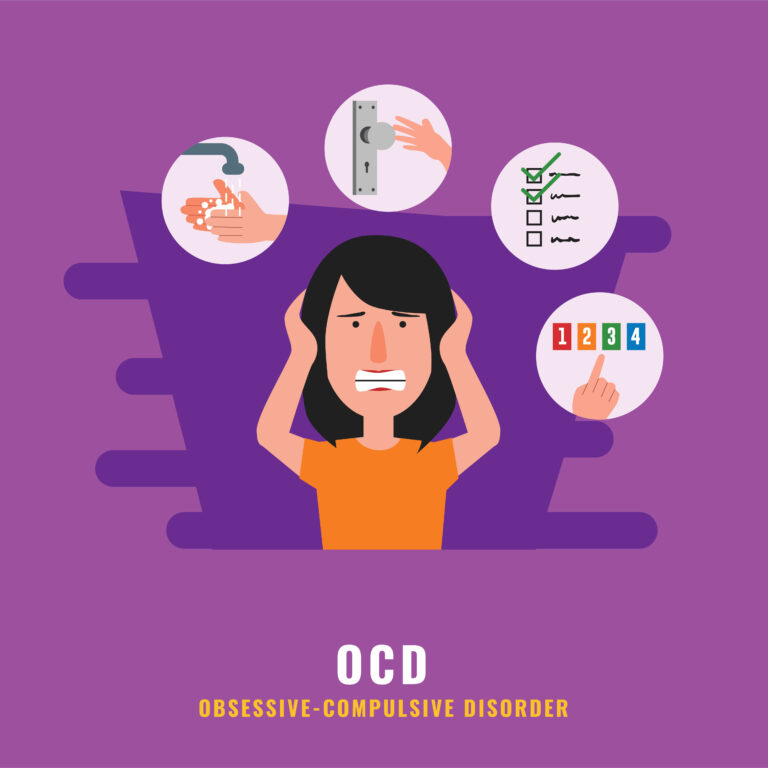
This is a category of psychiatric condition that includes obsessive-compulsive disorder (OCD), body-dysmorphic disorder, hoarding disorder, trichotillomania (hair-pulling disorder), excoriation disorder (skin picking), substance-induced OCD, and OCD because of a medical condition.

Obsessive-Compulsive Disorder is a pattern of unwanted fear (obsessions) which leads to doing repetitive behaviours (compulsions). This starts interfering in the daily activities. When a person tries to ignore the obsessions, the anxiety keeps increasing hence making the urge to do the compulsions stronger, and this is how the cycle of OCD is created. Obsessions usually have a theme such as fear of contamination, having difficulty tolerating uncertainty, needing things to be symmetrical, having horrific thoughts about losing control, and unwanted thoughts on religion or sexual subjects. Symptoms of obsession are fear of touching people because of contamination, doubts whether you have locked the door or turned off the stove, images of driving into a crowd of people, unpleasant sexual images, excessive stress when objects are not placed orderly, thoughts about acting inappropriately in public and avoiding situations that might trigger obsessions. Symptoms of compulsion are washing hands till the skin becomes raw, checking doors repeatedly, checking the stove repeatedly, counting in a pattern, silently repeating a word or phrase, and arranging things in a particular order.

Conclusion

Neurocognitive disorders remain chronic but they can be controlled and monitored by medication and therapy. There is no exact way to prevent OCD but it can be treated by consulting a psychologist and learning how to deal with the fears that lead to the compulsions.

References

Note: this is just Part 8 of the Psychological Disorders series.

Climate change| Are we finally going to compensate for the damage we did?

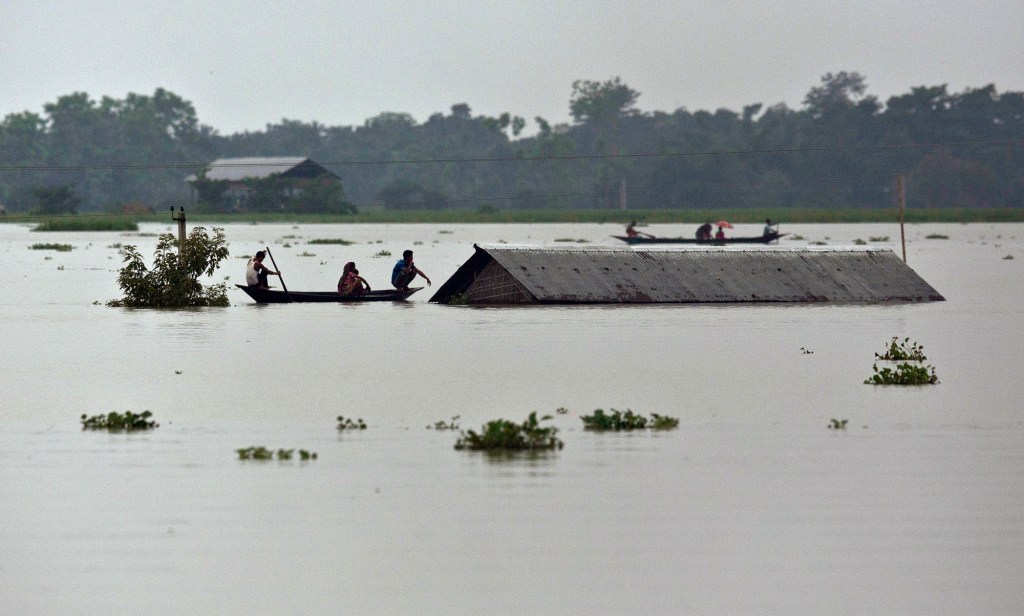
Death dolls due to floods in Italy, China, Germany and India keep rising. “Airpocalypse” in Siberia to forest fire, “Bootleg fire” in Oregon, flash floods in Southwest, Southeast and Northwestern Europe.

(AP Photo/Anupam Nath)

Climate change – When there’s a significant change in weather in a given area over a period.

Intense climate change can occur due to external as well as internal factors. External factors including change in solar emission, change in global energy balance due to change in the Earth’s orbit around the Sun, and volcanic activity.

Internal factors are human induced which leads to Greenhouse Effect.

The classical period used for describing a climate is 30 years, as defined by the World Meteorological Organization (WMO).

Floods:

A flood is an overflow of water that submerges land that is usually dry. In the sense of “flowing water”, the word may also be applied to the inflow of the tide.

NEWS:

China’s central Henan province received its heaviest rainfall which led to massive floods, killing over two dozen people. Many dams have breached and it  flooded the highly populated downstream areas. Scientists have said many factors contribute to flooding, but a warming atmosphere caused by climate change made extreme rainfall (Cloudburst) more likely.

The People’s Republic of China is the world’s leading annual emitter of greenhouse gases and mercury.

High levels of air pollution in China’s cities caused to 350,000–400,000 premature deaths.

In India, Himachal Pradesh experienced torrential rain, cloudburst, and putting in many lives and environment. Floods and landslides has caused mayhem in more than 4 states in India.

Of the 30 most polluted cities in the world, 21 were in India in 2019.

Germany has taken a terrifying hit; causalities cross 160. Angela Merkel, Chancellor of Germany, has demanded to take faster climate action as the casualties keep on climbing.

Every News channel now covers how terrifying rainfall has caused havoc over the world. Will it take more causalities, economic damages in rich nations to take a significant step to heal our world? To find ways to cut down their harmful amount of chemicals? To see past their greed for money, power, and status, and adhere to the environmental damage?

We are human. Everything we have is all due to nature, all due to the abode we call Earth. If Earth doesn’t remain the same, if there is no land or adhering to our selfish intent let’s say, fertile land left, we would be constantly fighting to even have a pure drop of water or food for us to fetch.

Reality is far from movie. It is not going to be like 2012 (Movie) or the Earth isn’t going to go for full apocalypses mode wherein humanity can start over. It is the feeble attempt to believe we can start over. What if cloudbursts never stop, the land we polluted probably will merge with the oceans rivers we polluted. There won’t be any quality of life not only for us humans but also for other living beings who have done nothing but trying to maintain the ecosystem.

There are many things to ponder upon. Why do we take climate change so lightly? Why are people who strive to heal nature met with false notices and hopes?

Greta Thunberg, 18 years old Swedish activist, is known for challenging world leaders to take immediate action for climate change mitigation. We are surely proud of her and many more environmentalists. She is very vocal and dedicated to spreading awareness about the climate crisis, taking steps herself to let us see ways to protect our Earth, and target those in the power of controlling carbon emission to take steps.

But, I feel we let her and many down in many ways. If you recall, she pushed Siemens to make the “only right decision regarding projects such as Adani Group’s Carmichael thermal coal project. It has been a focus of environmentalists since 2010. The voices went unheard, But, a cartoon of her getting assaulted spread, all due to just voicing her concerns enraged and disgusted lakhs.

EVERY PROBLEM HAS A SOLUTION. WE ARE JUST NOT LOOKING HARD ENOUGH (INTENTIONALLY AND CONSCIOUSLY).

I believe that we need to come together, to use our success in the scientific field, to use our intellectuality, and to actively come up with eco-friendly alternatives. We can encourage environmentalists and environmental engineers to go on with their endeavors and lend strength to deal with things that pose a great risk to nature.

  • To make plantation drives a mandatory event in schools.
  • To encourage beach, ocean, and any water bodies clean-ups.
  • To teach basic greener alternatives.
  • To learn why we need to fight against climate change.

Let our voices, actions come together despite our conflicts and work to give back to Mother Earth.

Web Development

Top Web Development Companies in Hyderabad | WebHopers

Web Development Roadmaps

WEB…. The world using websites to take , give informations and converted to its useful

Let we learn about Web development

Front-End Roadmap

STEP 1

•       Learn the Basics

•       Every Web Developer must have a basic understanding of    HTML, CSS, and JavaScript.

•       Responsive Web Design is used in all types of modern web development.

•       ECMAScript 5 (JavaScript 5) is supported in all modern browsers. Take a good look at it, especially the new array functions.

•       HTML     

•       HTMLHTTP /  XHR

•       CSS

•       CSSCSS Responsive

•       JavaScript

•       JavaScriptECMAScript 5

STEP 2
Dig Deeper

When you feel comfortable with HTML and CSS, it is time to dig deeper.

You should learn how to use Maps, Fonts and Icons in HTML.

On the JavaScript side, you should learn how to access the HTML DOM.

You should also learn how to use AJAX and JSON for making server requests.

HTML

HTML DOMGoogle MapsGoogle FontsGoogle Charts

CSS

CSS Icons

JavaScript

XMLJSONAJAX

  • STEP 3
    Choose Frameworks
  • Now it is time to look at some Frameworks.
  • On the CSS side you should choose a framework for reponsive web design:
  • Bootstrap  /  Material Design  /  W3.CSS
  • On the JavaScript side you should learn at least one modern framework:
  • React.js  /  Angular.js  /  Vue.js   /  W3.JS
  • Maybe the popularity of jQuery has passed the top, but it is still the most used JavaScript framework.
  • CSS
  • BootstrapW3.CSS
  • JavaScript
  • jQueryAngularJSVue.jsW3.JS
  • XML
  • XSLTXPathXQuery

Back-End Roadmaps

  • STEP 4
    Back-End Roadmaps
  • Fullstack
  • SQLPHPASPPython
  • Fullstack JS
  • SQLNode.jsMySQLMongo.db

Web Development

Web Development Roadmaps

WEB…. The world using websites to take , give informations and converted to its useful

Let we learn about Web development

Front-End Roadmap

STEP 1

•       Learn the Basics

•       Every Web Developer must have a basic understanding of    HTML, CSS, and JavaScript.

•       Responsive Web Design is used in all types of modern web development.

•       ECMAScript 5 (JavaScript 5) is supported in all modern browsers. Take a good look at it, especially the new array functions.

•       HTML     

•       HTMLHTTP /  XHR

•       CSS

•       CSSCSS Responsive

•       JavaScript

•       JavaScriptECMAScript 5

STEP 2
Dig Deeper

When you feel comfortable with HTML and CSS, it is time to dig deeper.

You should learn how to use Maps, Fonts and Icons in HTML.

On the JavaScript side, you should learn how to access the HTML DOM.

You should also learn how to use AJAX and JSON for making server requests.

HTML

HTML DOMGoogle MapsGoogle FontsGoogle Charts

CSS

CSS Icons

JavaScript

XMLJSONAJAX

  • STEP 3
    Choose Frameworks
  • Now it is time to look at some Frameworks.
  • On the CSS side you should choose a framework for reponsive web design:
  • Bootstrap  /  Material Design  /  W3.CSS
  • On the JavaScript side you should learn at least one modern framework:
  • React.js  /  Angular.js  /  Vue.js   /  W3.JS
  • Maybe the popularity of jQuery has passed the top, but it is still the most used JavaScript framework.
  • CSS
  • BootstrapW3.CSS
  • JavaScript
  • jQueryAngularJSVue.jsW3.JS
  • XML
  • XSLTXPathXQuery

Back-End Roadmaps

  • STEP 4
    Back-End Roadmaps
  • Fullstack
  • SQLPHPASPPython
  • Fullstack JS
  • SQLNode.jsMySQLMongo.db

Big Data and Social Media

Photo by Pixabay on Pexels.com

Living in an internet governed world with a pandemic hanging over our heads, all of our work has gone online. With thousands of texts, e-mails, pictures, videos, receipts, searches, video-calls and so much more sent daily, we are now generating an incredible 2.5 quintillion bytes of data every day. With 1 quintillion having 18 zeroes, that’s quite a lot of data and it is very difficult for traditional computing systems to handle. This ever-increasing amount of data is known as BIG DATA.
With facebook, instagram, telegram, twitter, sharechat and so many more social media applications coming up and the rising number of social media users with a single user having accounts across multiple social media apps, the amount of big data is increasing and the impact of big data on social media is undeniable. 

Photo by Pixabay on Pexels.com

When-ever you input any data in any social media platform, whether sending a message to your friend discussing about a new car that was recently launched, or making a check-in at a hotel, it gets stored in the form of big data. Various commercial websites let you sign up using your social media accounts asking you to let them access your data. Now, this big data is used by these platforms to suggest you the various products you have either searched or mentioned.
All of our activities spread over these platforms provide for a very reliable source of market study as it is dynamic and changes quickly with the change in demand of consumers. It helps producers keep a track of the consumers’ requirements and initiate necessary changes to meet them.
The big data available help marketers target a specific audience according to their interests, age, gender, education, etc. Various surveys conducted across various social media platforms that appear as per your preferences, requesting information about the products- whether you like it, ways to improve the product or what brand you prefer that makes getting reviews and improving products easier. 
Big data helps analyze what is the trending topic among the mass during some period of time. It helps influencers use it to their benefit to steer public opinions in support of or against various personalities, especially political personalities.
When such amount of our personal data is stored somewhere, that is accessible by others, even after we are, a lot of time, unwilling to share it, it is a significant threat to our privacy. Although, various social media platforms are now trying and so is our government to protect our sensitive data from breach.

That being said, if used judiciously, big data will be a boon owing to its benefits of ease in the field of marketing and research, as the world is increasingly moving online with 59.5 percent of the world population being active internet users as of January, 2021. So, if our sensitive data is protected, or rather, made volatile, big data will definitely continue to revolutionize the world of social media, marketing and research as it does today but without the public worry of data leaks.

Reference links: https://medium.com/dative-io/how-is-big-data-impacting-social-media-df31aa3f66f6 https://en.wikipedia.org/wiki/Big_data

Thin line between pride and arrogance | Are people just envious of my success?

Am I really arrogant or am I just confident? How to deal with people calling me over-ambitious or arrogant when I am just working towards my dream?

Let’s first dive into difference between pride i.e., self-confidence and arrogance.

As we discuss previously, pride is having satisfaction over our abilities and our accomplishments.

Previous article: https://eduindex.org/2021/07/22/pride-prejudice-and-aggression/

Arrogance is having excessive pride over one’s or a particular group’s accomplishment to an extent wherein we believe that our abilities are nothing compared to others and the success would have come sooner if I had done it alone.

In psychological context, there are two kinds of pride. 

  • Authentic pride- Positive feeling about ourselves, loved one’s success, our actions after successfully coming out from comfort.
  • Hubristic pride- It usually involves ego coupled with arrogance. Has an exaggerated self-concept.

PRIDE

  1. Any act that boosts our self-esteem, building trust about what we are capable of, and recognizes it, accepts our flaws. It pushes you to perfect your talent and bring forth a blooming personality.
  2. You accept the potential of those working with you and try to form a group that will put in collective work to achieve your collective goal.
  3. Values other’s input and doesn’t hesitate to ask for guidance.
  4. Accepts constructive criticisms, filters their work to make it more productive.
  5. Never slacks off.
  6. Is aware of strengths, weaknesses, and areas which can be improved.
  7. Keeps striving better (Knows that knowledge is boundless).

ARROGANCE

  1. Believes that I have everything I need and that my gifts are beyond immeasurable.
  2. Believes that I have no flaws and cannot make a mistake or create complications from my actions.
  3. Every bad outcome is due to the people affiliated with my work.
  4. Looks for external validations.
  5. Thinks that there is no need to practice or attend meetings because I can win no matter in the end.
  6. Is okay to not follow moral rules (Legal ways) to achieve my needs.
  7. Other’s input is worthless (but will take others’ great ideas making it own saying you got this idea from me) and find them distracting.
  8. Works alone even though being a part of a group activity.

SELF-REFLECTION

If you need to know, whether you really are being arrogant due to impatience or intentionally or people are envious of your success, potential; self-reflecting on your actions, thoughts, and intention will help you resolve your doubts and get back on track with change in yourself or environment.

Self-reflection: Ability to witness and evaluate our own cognitive, emotional, and behavioral processes. To give an objective thought about your behaviors, thoughts, attitudes, and desires.

You work hard, burn the midnight oil, respect everyone and their opinions, and achieve success. But in the end, you get judged as an overachiever, arrogant and rude. Those judgements try to bring your down, make you doubt yourself.

 Well, let me just highlight that it is okay. These doubts usually arise because you care about how you respect not only yours but others’ effort that goes into bringing about results which is beneficial for everyone.

Look at few differences I have mentioned above and reflect.

Are you dismissive of your colleagues’ efforts? Do you assure them to implement their ideas but you end up doing completely different without informing them? Do you go late to meetings and displace your external anger on their capabilities?

Few more points to take note of:

  1. Not being honest about their work, where you want improvements, and blaming entire failure on their recklessness. (This is concerning leadership).
  2. Thinking you are superior and forcing rules obnoxiously while you try to put them down.
  3. Seeking constant validation.
  4. Yes, you have achieved great things, burnt that midnight oil but boasting about it is not going to change the outcome of your efforts. You have to keep learning and communicate and inculcate views of your colleagues to bring the best out of them and to bring about a team with the same goals and motivation.

Negative critics/members with less motivation, insecurity and less self-esteem may see you with the lens blurred with their issues.

Reach out, write a diary, and find out ways to bring out the best in you. People will usually have prejudices regarding your ethnicity, your way of leading, the cause of your goals, gender, religion, race, color, and everything that has nothing to do with you or your work but everything about themselves.

Do not give up because just like supporters exist, people against you will try to affect you. Believe in yourself, your teammates, reflect occasionally, and keep moving forward with your head held high.

Psychological Disorders Part 7

Introduction

In Psychological Disorders Part 6, Disruptive Disorders were discussed. They are rare and chronic but can be controlled with the help of medication and therapy, so if you think you have any, you should consult a psychologist. This article will discuss Depressive and Substance-Related Disorders.

Depressive Disorders

Depression is a mood disorder that involves a persistent feeling of sadness and a loss of interest. It is also called a major depressive disorder or clinical depression. This can cause trouble in doing daily activities. It is also important to remember that you cannot just snap out of it and it takes time but medication and therapy can help with it. Symptoms for depression are:

  • Feeling of sadness, hopelessness, or emptiness
  • Frustration and angry outbursts
  • Loss of interest in normal activities
  • Sleep disturbance like insomnia or hyposomnia
  • Reduced appetite or increased appetite
  • Lack of energy
  • Slowed thinking
  • Anxiety or restlessness
  • Unexplained physical problems like headache and backache
  • Trouble concentrating and remembering things
  • Suicidal thoughts
  • Feeling worthless

Although there are different types of depressive disorders based on the duration and timing:

Disruptive mood dysregulation disorder is a childhood condition in which the child has extreme anger and irritability.

Major depressive disorder is when the person feels a loss of interest in activities.

Persistent depressive disorder (dysthymia) is chronic depression.

Unspecified depressive disorder is when the case cannot be categorized into one particular category.

Premenstrual dysphoric disorder is a type of premenstrual syndrome (PMS) wherein the person feels depression, anxiety, and irritability before a week or two of the menstruation date.

Substance depressive disorder is when the person experiences the symptoms of depression while using alcohol or any other such substance.

Depressive disorder due to medical condition is when the person is going through depression because of another medical condition.

The cause for this is firstly, biological, people with depression have physical changes in their brains, secondly, brain chemistry, difference in the functioning of neurotransmitters, thirdly, hormones, change in the level of hormones can also cause depression like after delivery which is known as postpartum, and lastly, inherited traits, you are more likely to have depression if someone in your family has or had it.

Substance-Related Disorders

These are the disorders that involve the use of alcohol and drugs. Examples of this disorder are:

Alcohol-related disorders involve consuming alcohol wherein the person has a problem controlling the alcohol consumption. Symptoms include being unable to limit alcohol consumption, wanting to cut down the consumption but being unable to, spending a lot of time drinking or recovering from the use of it, craving alcohol, failing to fulfill major obligations because of the consumption, continuing to drink knowing the problem it is causing, giving up on work and hobbies, developing a tolerance for alcohol resulting into consuming more, experiencing withdrawal symptoms like nausea and using alcohol in unsafe situations like driving.

Drug-related disorders involve the inability to control the use of legal or illegal drugs or medication which affect the person’s brain and behaviour. Symptoms are the same as alcohol-related disorders, the only difference is of the substance being used.

It is important to note that substance-related disorders negatively affect the health and immunity of the person.

Conclusion

Depressive and Substance-related disorders are very common and serious. The way to deal with both of them is to approach psychologists and doctors. It is important to note that these two disorders can often be related, meaning that a person starts abusing alcohol because of depression and a person suffering from depression because of alcohol-related disorder. Depression is a very serious disorder, please consult a psychologist immediately if you think you are suffering from it.

References

Note: this is just Part 7 of the Psychological Disorders series.