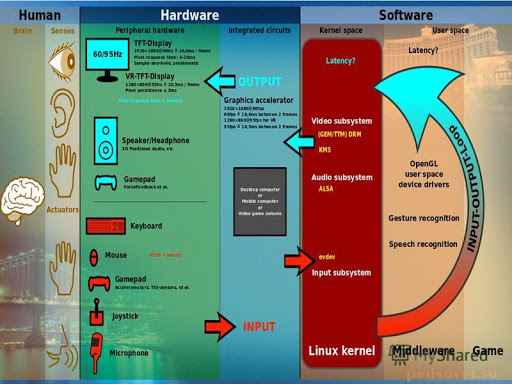
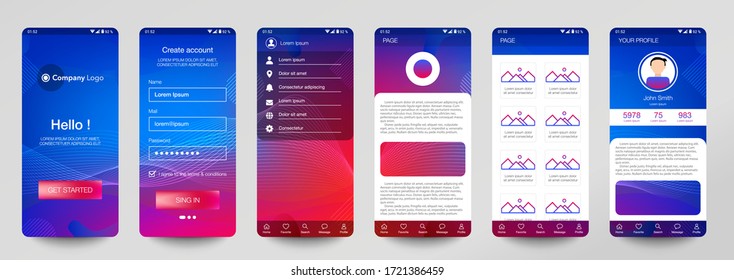
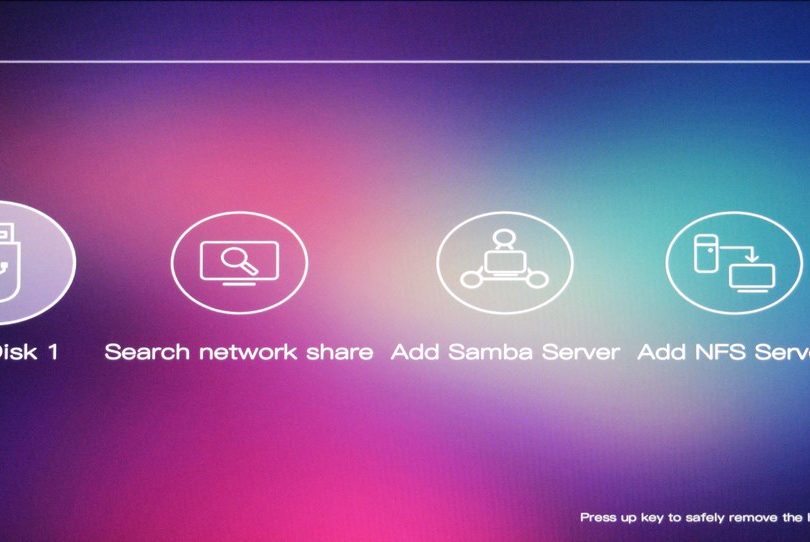
GUI is a Graphical Interface that is a visual representation of communication presented to the user for easy interaction with the machine. GUI means Graphical User Interface. It is the common user Interface that includes Graphical representation like buttons and icons, and communication can be performed by interacting with these icons rather than the usual text-based or command-based communication.
Example of GUI
Need of GUI
The graphical user interface (GUI; sometimes pronounced “gooey”) is used by most commercially popular computer operating systems and software programs today. It’s the kind of interface that allows users to manipulate elements on the screen using a mouse, a stylus, or even a finger. This kind of interface allows word processing or web design programs, for example, to offer WYSIWYG (what you see is what you get) options. Before GUI systems became popular, command line interface (CLI) systems were the norm. As you might imagine, GUI systems have made computers far more user-friendly than CLI systems.
How does it Works ?(InShort)
The graphical user interface is a form of user interface that allows users to interact with electronic devices through graphical icons and audio indicator such as primary notation, instead of text-based user interfaces, typed command labels or text navigation.
The first worldwide organization to maintain peace was formed in 1920 and was names as The League of Nations. However it failed to fulfill its purpose. Later United Nations (UN) was formed in 1945 with the aim of preventing another world war. It is the world’s largest and most powerful international organization. Just when it was founded it had 51 members but now there are over 193 countries in it. UN has six principal organs: the General Assembly; the Security Council, the Economic and Social Council (ECOSOC), the Trusteeship Council, the International Court of Justice, and the UN Secretariat. Furthermore it has various agencies:
UNICEF:
United Nations Children’s Fund is responsible for the welfare of the children worldwide which include various activities like immunization, disease preventing, providing nutrition etc. Earlier it was known as United Nations Children’s Emergency Fund because it was used to provide funds only during an emergence but now it is functional throughout.
UNESCO:
The United Nations Educational, Scientific and Cultural Organization aims at providing education for all, preserve regional and cultural history, and promote cultural diversity. Its headquarter is at the World Heritage Centre in Paris, France.
WHO:
The World Health Organization is responsible for international public health. The WHO was established on 7 April 1948, which is commemorated as World Health Day. It is actively providing support against various diseases like Corona Virus. Its headquarter is at Geneva, Switzerland.
ILO:
The International Labour Organization was initially an agency of Leagues Of Nations and was formed in 1919 and became a part of UN after the LON got disintegrated. It aims at providing support to the people who are indulged in labour. Its headquarters are in Geneva, Switzerland.
WBG:
World Bank Group is the the largest and most well-known development bank in the world. It consists of 5 international organizations. It aims at ending poverty and building shared prosperity. Its five organizations are the International Bank for Reconstruction and Development (IBRD), the International Development Association (IDA), the International Finance Corporation (IFC), the Multilateral Investment Guarantee Agency (MIGA) and the International Centre for Settlement of Investment Disputes (ICSID).
Technical skills are the abilities and knowledge needed to perform specific tasks. They are practical, and often relate to mechanical, information technology, mathematical, or scientific tasks. Some examples include knowledge of programming languages, design programs, mechanical equipment, or tools.
Some of the very famous tech. Skills:
1. Project Management. Being able to effectively coordinate resources, people and budgets as a project manager is one of the best technical skills that you can have. 2. Analysis of Big Data and Business 3.Intelligence. 4. Information Security. 5. Designer. 6. Marketing Assistant. 7. Writer. And many more…
Create a dedicated Technical Skills section for the resume.
If they’re heavily emphasized in the job description, then your Technical Skills section should be at the top of your resume, just below your introduction, and above your professional experience. A bulleted list will make it easy to read.
These are some of the basic tech. Skills:
* Word Processing Skills. * Spreadsheets Skills. * Database Skills. * Electronic Presentation Skills. * Web Navigation Skills. * Web Site Design Skills. * E-Mail Management Skills. * Digital Cameras
How can you improve your technical skills? So, here are the steps to improves ones technical skill.
1. Enroll in Technical Classes or Workshops. 2. Get Technical Books. 3. Volunteer for Technical Projects. 4. Subscribe to Technical Sites and Magazines. 5. Develop Knowledge of a Second Language. 6. Practice What You Learned.
Madagascar is the fourth biggest island in the world, situated in the Indian Ocean. The island country is deemed as ‘Megadiverse’ by Conservation International with more than 250,000 species of plants and animals most of which do not exist anywhere else. Almost 90% of the species found on the island are endemic. The island of 28 million people is one of the poorest countries in the world and has been ravaged by many natural and human-induced hazards.
So we can confidently say that the country is extremely rich and unique biodiversity. On the eastern coast of Madagascar the Rainforests of Atsinanana comprising of six national parks with an endemic rate of species touching almost 80%. This area has also been added to the World Heritage List since 2007. The area is considered important to both ecological and biological processes and it also supports the rare species of Lemurs and many other primates.
Deforestation has been a major issue in Madagascar and this has also threatened the Lemurs and them and many endemic species of the island heavily rely on these forests. Madagascar witnessed rapid deforestation for long a time and this only accelerated by the end of the 19th century due to French Colonization. The forested areas were gradually converted into coffee fields and the country lost its original forest cover by almost 80%. As of today, the primary forest cover stands a little over 10 percent.
Deforestation has not only affected the ecology of the country but has also affected the soil quality and increased soil degradation. Subsistence agriculture is quite common among the inhabitants of the islands. Slash and burn is another method that has affected the forest cover of the island as these methods are not beneficial after a certain population cluster. Another big reason for the rapid deforestation is illegal logging and this benefits private entities and large corporations. The country has also seen a rapid growth in its population which currently is estimated at 26 million, up from 2.2 million in 1900. This has increased the requirement for more land for cultivation.
Currently, Madagascar is going through a very severe drought and deforestation can partly be a reason for this phenomenon. But there are other issues of cause too. Due to climate change, Madagascar has also suffered the consequence of the increased frequency of extreme weather events. It’s the worst drought in 40 years and has taken grip of the Southern part of the island. Due to low rainfall various streams, rivers and small dams built for irrigation dried up last year. The majority of the people in the south of the country rely on rain-fed, small-scale agriculture to survive. With no rainfall and non-existent agriculture output, there has been an emergency in the country with severe food scarcity. Many people in the region have resorted to eating insects, wild roots.
According to experts’ deforestation, drier soils and higher temperatures due to climate change are the likely cause of droughts.
Climate experts
The island is already suffering from the covid-19 virus combined with the pressure of droughts and famines have caused strain to the poor country. Food and other aids are being provided to the affected areas of the country but supply is still not aligning with the current demand. A long-term solution will be required to tackle this situation as this problem is only going to get more serious in the future.
Positivity is a fad all around the place. Instagram, Twitter, the daily newsletters and what not – all have only one single message to convey – stay positive. Is that a bad message now? Bad enough to have an article against it? Well, no. And well, yes.
Positivity is important. Being hopeful is important. They are important to have the strength to move on. They are important to have the strength to carry forth with what lies at hand. If a person loses hope, then there is seldom a lot that can be done. This idea is quite agreed upon by psychologists as well as general health experts. But then what does the topic of this article convey? Positivity is something that drives a person forward. Then there is a situation where positivity becomes the only emotion a person knows. And most of the human race would agree that they are pushed into this state. If any other emotion – sad, angry, aghast or tired – tries to come, the person is told to let go of it and stay positive, to try to be happy about what lies with him or her or them. This is toxic, say many psychologists. The person is forced to accept positivity even when he/she/they are trying to cry, trying to be angry or trying to express any other emotion.
Expression is very important for mental health. There is no tool as strong as expression for the human mind. That expression can be verbal, through music, art, dance or in any other physical or art form – as long as it does no harm to another being, that expression is good and, important.
Toxic positivity can lead to the locking of emotions, mental degeneracy or probably depression, anxiety and a host of other issues. Psychologists argue that no emotion is ever fully suppressed. Suppressing of emotions locks those emotions deep in the brain, only to come out stronger and probably more harmful in situations of trauma or a sudden exposure to a stimulating environment.
In the present, all of us are struck in a nowhere – a world of our own in our houses or offices or work spaces with limited human contact. This has statistically led to an increase in cases of extreme isolation, anxiety and depression and a host of other mental health problems. This is certainly not a time to be positive all the time. And certainly not a time to try to do something positive. The important thing is to strike the balance. Give all your emotions a moment. And yet, try to do something positive each day. It is alright if you cannot. The contentment is to understand that you tried.
Stay positive and away from becoming toxic positive. (image courtesy : Women’s health magazine)
Before directly going into the SEO techniques I would like to make you understand about the concept of digital marketing easily with a simple example that we encounter in our daily routine. ” Most of us use Gmail almost everyday for various purposes. When ever we open our Gmail we observe different sections holding different mails in it especially when we open “Promotions” section in our mail box, we used to see different mails from various websites which are offering discounts on their products or courses.” These mails are the strategic implementations of the websites in order to increase their marketing on the internet to get profits. This type promotions in Gmail sections leave a foot print of ” DIGITAL MARKETING”.
DIGITAL MARKETING:
Digital marketing is a platform that is widely used for marketing with help internet connected devices. It uses latest digital technologies to reach people. Now a days digital marketing is crucial for the entrepreneurs to share their idea, promote their products and build their audience.
SEARCH ENGINE OPTIMIZATION(SEO):
When we search for a content through search engines like google, then that particular search engine shows a random websites for our search as an answer. This random gathering of information by search engines is possible with the help of search engine optimization which helps search engines to show the best available content for the given query.
SEO is an effective way to improve the rank of websites in search engines in order to increase the visibility of websites. SEO is a technique to optimize the website with the suitable key words. Let’s see some latest SEO hacks to improve the ranking of page which helps in increasing your websites market.
LATEST TRENDS OF SEO:
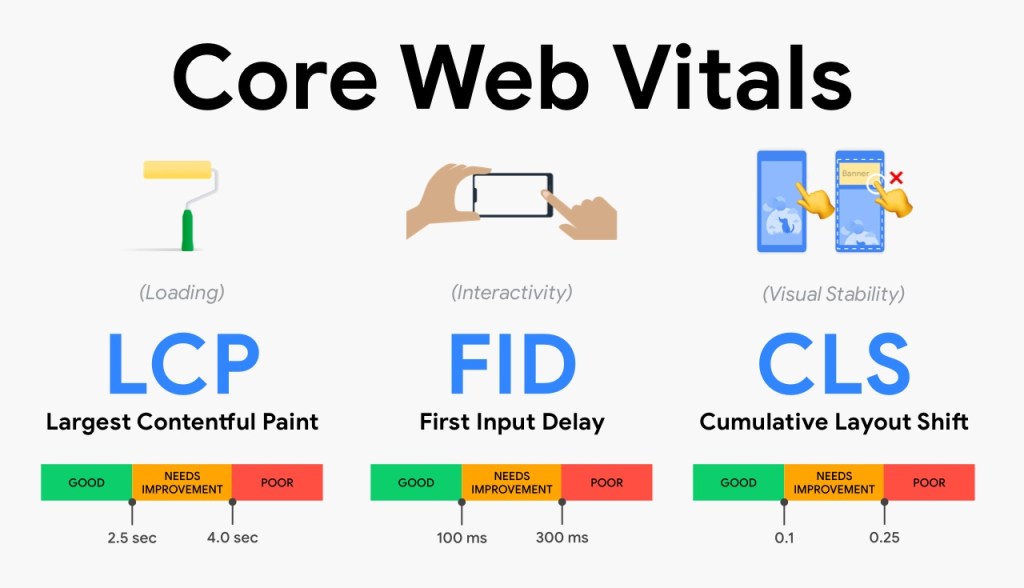
UNDERSTAND CORE WEB VITALS OF THE SITE: Google has recently announced that core web vitals will become the new ranking signals by combining previous UX related signals also. Core web vitals is a new term that haven’t heard in previous years but it plays a crucial role in 2021 because google has developed a new algorithm to measure the page experience based on the score off core web vitals.
To make you understand better, core web vitals are the measurement capabilities of the content in a website. These measurements are depended upon page speed, page responsiveness and page visual stability which are known as LCP(Largest contentful paint), FID(First input delay), CLS(Cumulative layout shift). These measurement speeds are shown in the following picture.
AI PLAYS A LARGE ROLE IN SEO: AI is changing the interaction methods of people with online content. Google has unveiled an algorithm a few years back which is called as “RankBrain”. This algorithm paly’s a crucial role in ranking the pages with the help of “SERP’s ” results. Experts believe that user experience signals are the primary for ranking the page, so by using this algorithm search engine like google can easily captivate the rate of time that has spent on the website by readers which gives the better feedback on the content quality of website.
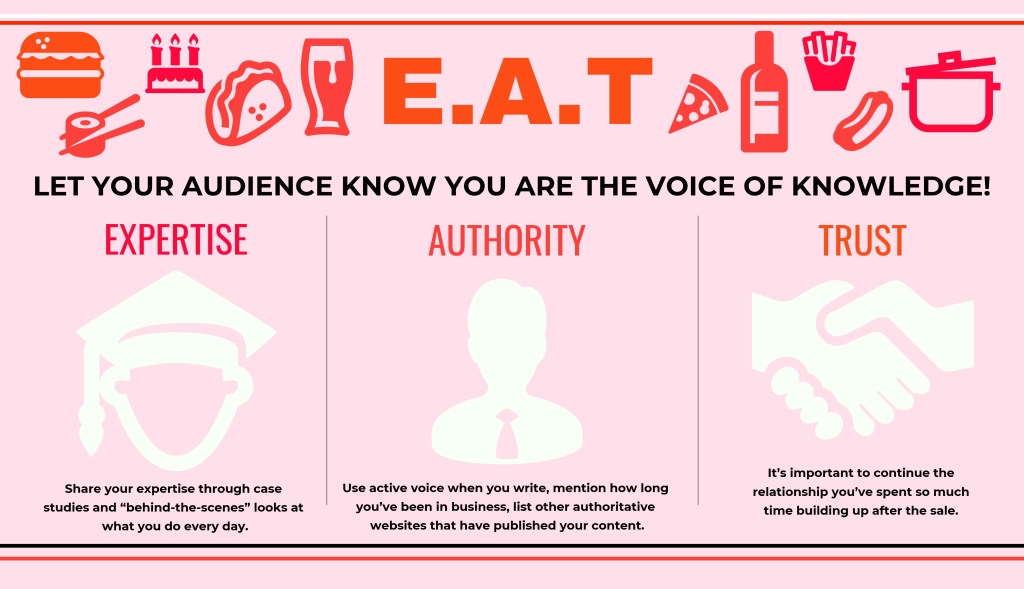
USE “EAT” PRINCIPLE: EAT principle helps website optimizer to master a long term SEO success, despite of Google’s constantly changing algorithms. EAT stands for Expertise, Authority and Trustworthiness. These three principles are essential to measure the brand of websites on the web. In order to establish your brand’s authority, trustworthiness and reputation then you have to follow these rules:
Try to engage with customers in a better way and request them to provide reviews and feed back to your work.
Try to insert high quality links in you site.
Follow EAT principles on your website through testimonials, case studies and other forms of social proof.
Along with the above discussed principles we should also follow the below stated tips to improve the traffic to your website:
Create new content and try to update the old.
Give first priority to the user experience.
Improve featured snippets to make your content more prominent.
Improve mobile friendly content to improve search rankings.
Support long tail key words and optimize the images that you place in your content and don’t forget to keep effective back links on your site.
Finally, The content designers of websites should keep in mind that , Relevant & Optimized content wins every time in the ranking of page on search engines and also the core of SEO is about figuring out what works for the site or client and then changing it when it stops working. Always keep a close eye on your competitors and follow the best practices to thrive best in marketing.
Since its founding in 1949, Public Administration and Development (PAD) has been reviewing and assessing the practice of public administration at the local, regional, national and international levels where it is directed to managing development processes in low and medium income countries.
The role of public administration in bringing about development?
On the role of public administration, it will address such areas as sustained economic growth, the promotion of social development, facilitating infrastructure development and protecting the environment, promoting public- private partnerships, managing development programmes and maintaining a legal framework for
ROLE OF PUBLIC ADMINISTRATION IN DEVELOPMENT TO BE CONSIDERED AT RESUMED GENERAL ASSEMBLY SESSION 15-19 APRIL
19960412 Background Release The crucial role of public administration in development, particularly in developing countries and economies in transition, will be the subject of a one-week resumed session of the General Assembly, beginning on Monday, 15 April. The resumed session represents the first time the Assembly will meet specifically to consider that issue.
The aim of the resumed session of the General Assembly is to explore themes contained in two distinct categories: the role of public administration, and capacity-building for effective administration. Thirteen specific topics were identified within those categories.
On the role of public administration, it will address such areas as sustained economic growth, the promotion of social development, facilitating infrastructure development and protecting the environment, promoting public- private partnerships, managing development programmes and maintaining a legal framework for development.
With respect to capacity-building, the Assembly will discuss improving civil service systems, organizational strengthening, the enhancement of policy-development capacity, strengthening financial management for development, human resource development for the public sector and the development of administrative capacities for post-conflict and crisis conditions.
In deciding to hold the resumed session, the Assembly recognized the important role that governments and public administrations can play in promoting sustained economic growth and sustainable development (resolution 49/136). It also recognized the need for strengthened public administrative and financial management capacities in order to ensure a civil service that is responsive to the needs of the people.
As a stimulant to its discussion, the Assembly will have before it a report of the Secretary-General containing a series of recommendations on strengthening the role of the United Nations in public administration and development, including recommendations for national governments (document A/50/847-E/1996/7).
Recommendations in Secretary-General’s Report
The report of the Secretary-General contains recommendations on the role of policy-making for public administration and development, the focus of the United Nations programme on that subject, the coordination of relevant activities within the United Nations system and support of donors. It also includes recommendations for national governments and United Nations responses.
On the role of policy-making, the Secretary-General recommends that the issue of public administration and development be included as a regular item on the agenda of the General Assembly and the Economic and Social Council and that the Group of Experts on Public Administration and Finance be redesignated the Committee on Public Administration and Development, which would report to the Council. Likewise, the United Nations programme in public administration and finance should be renamed the United Nations programme in public administration and development.
The United Nations programme in public administration and development should enhance its role as the central depository for materials, reports and non-print media on public administration and development worldwide, the report recommends. Using the latest technology, it should become the clearing-house for all materials on the subject, to serve as a catalyst for a network of international, regional and national institutions and organizations involved in those issues. The programme’s focus should be on action-oriented, practical research on effective systems and procedures in public adminstration.
Tied to its research and clearing-house functions is the assistance the United Nations can provide to individual governments, at their request, in helping them improve their governmental machinery and public management systems for development. To that end, the United Nations programme should be strengthened in the areas of advisory services, needs assessment, diagnostics and substantive support to projects. It is recommended that the United Nations assist governments, when requested, in translating the recommendations of global conferences into detailed programmes for implementation.
The report recommends that the United Nations programme assist in all the phases of the restoration of public administration institutions in countries recovering from conflict and crises, and that it actively assist developing countries and countries with economies in transition.
On coordination of public administration and development activities within the United Nations system, the Secretary-General recommends that a consultative group on the matter will meet once a year, under the auspices of the Department for Development Support and Management Services. It will focus on closer collaboration in the planning and implementation of global
– 3 – Press Release GA/9056 12 April 1996
programmes of information exchange, research, preparation of guidelines, and organizations of seminars and workshops. It will also provide a forum for mobilizing international assistance.
With regard to donor issues, the report recommends that the donor community recognize the significance of public administration in development and provide adequate resources to improve such structures in developing countries and those with economies in transition. Particular consideration should be given to the loan of expertise to carry out practical research and advisory missions. To that end, the Secretary-General recommends the establishment of a trust fund for United Nations activities in public administration and development.
The Secretary-General highlights a number of recommendations for governments made by the Group of Experts on Public Administration and Finance, which held its twelfth meeting from 31 July to 11 August 1995. Following each recommendation is a projected United Nations response (document A/50/525- E/1995/122, annex).
The Group states that national governments should strengthen the policy, advisory and administrative capacity in critical areas, while the United Nations programme can organize professional exchanges, arrange professional training programmes and prepare case studies on policy matters for dissemination.
According to the Group, in the process of restructuring public administration, government institutions should be encouraged to develop strategic plans and monitor their performance, while the United Nations would continue to undertake comparative studies on restructuring and disseminate them on a regular basis.
Leaders should invest in people, upgrading the capacity of national training institutions to develop a core group of professional trainers, the report states. The United Nations would seek to create and sustain momentum for a global exchange of information on human resource development.
Governments are asked to establish clear goals, encourage operational flexibility, measure results impartially and develop appropriate incentives, while the United Nations would continue offering advisory services in areas including the management of change, performance management and measurement, and information technology.
Public administration services should be provided to reflect ever- changing needs of the citizens they serve, the Group states. The United Nations can assist in developing state-of-the-art technological communication networks.
– 4 – Press Release GA/9056 12 April 1996
Furthermore, governments should encourage financial management at the grass-roots level, the Group states. For its part, the United Nations would assist governments in creating and strengthening national capacities in fiscal policy analysis and economic management, and in promoting a proper environment for capital flows for investment, private sector development, transparency and accountability.
According to the Group, governments should seek objective evaluations of their privatization programmes to establish the appropriate place and timing of privatization in structural adjustment programmes; they should also pay greater attention to performance improvement in parastatals. For its part, the United Nations shall, at the request of the government, arrange for such evaluations, assisting governments in defining the role and scope of their public, private and combined sectors.
While governments should provide an encouraging environment for small and medium-sized enterprises, the report states, the United Nations would assist countries by operating an information clearing-house, developing case studies of successes and failures and providing technical support.
National governments should assume the responsibility for establishing environmental standards for all infrastructure policies, the Group states. The United Nations would assist governments in administrative capacity- building and infrastructure management. Codification of laws must be undertaken to facilitate access to legal guarantees, with the United Nations assisting governments to organize a legal framework of public administration and strengthen judicial supervision of public administration.
For countries recovering from crisis and conflict, the development of both immediate and transitional or long-term strategies is recommended. The United Nations would provide special assistance to countries in post-conflict situations and to collapsed States, to help restore effective public administration.
Governments should promote the use of aid as a stimulant for development and economic growth in civil society, the Group states. The United Nations would provide technical assistance to strengthen institutional machinery capable of evaluating the consistency between development project outcomes and such macro-objectives as growth, employment and income distribution.
Related Meetings, Activities
A number of activities are also being carried out in connection with the resumed session. Among these, Cabinet ministers and other high-ranking officials from each of the major regions will hold an executive session to discuss their experiences in restructuring governments. An International Technical Forum was held on 11 and 12 April at Headquarters, the site of a
– 5 – Press Release GA/9056 12 April 1996
related Internet Exposition until 19 April. (For more information, see Note to Correspondents No. 5329, of 10 April.)
In the lead-up to the resumed session, regional meetings were held in Africa, Asia, Latin America and the Caribbean, and Central and Eastern Europe. The impetus for the session arose from the June 1994 Tangier Declaration of the Pan-African Conference of Ministers of the Civil Service, which called for the convening of a global conference on public administration and development.
OTT stands for over the top media , which offers media services to the viewers directly through the internet by passing the cables, broadcast, sattellite television platforms and the distributors or controllers of the entertainment content.
Cinema is basically the art or technique of making motion pictures of bringing the stories made by the creative minds to life with the help of the camera. it is immensely popular in India with over 1800 films releasing in many Indian languages per year with Mumbai, Chennai, Bangalore, Kolkata, Kochi, Bhubaneshwar-Cuttack and Guwahati being the main centers of the film production. Cinema in India not only serves a purpose of being a platform for showcasing art and providing entertainment to the masses but also it is an emotion. Whenever there has to be a celebration in the Indian households people do it by going to the theatres enjoying their time out relishing the feel of the reel stories with their favorite beverages in their hands. When we are happy or sad we watch movies, the choice of the films we watch represents our mood.
Indian Cinema over the years
Over the years, the cinema has transformed from giving classic deliveries over the daily situations of the lives, to the typical action packed romance films where a poor boy goes against all the odds to marry her rich girl or vice versa to the films depicting the importance of family to the films depicting social issues which are lesser known and require our immediate attention to the real life inspirations. Over the past half century and more there has been a rapid change in the dynamics of what film industry used to be and people’s perception about it.
We see ourselves in the character and derive joy from it and maybe learn things also from them . The vilian on the screen automatically was our definition of a bad guy. The iconic DDLJ’s “Tujhko dekha hai toh jana sanam “ song which was shot in the mustard feel continues to rein people’s heart over almost every generation even today 25 years after its release. This is what is about the movies, it takes us for a moment away from this hectic world.
The contribution of OTT platforms
With the covid-19 pandemic engulfing the world in its dreadness, everyone is locked in their homes with the theatres which since many decades have played home to hosting the movies on the big screen being closed. Though nothing comes close to the feeling of watching a story which sometimes consists of your dreams, unfold on the big screen, OTT platforms are what which came to our rescue in these times.
While the OTT platforms like Amazon Prime video, Netflix, zee5 are there since years now , but its the pandemic which had made people watch these. With the introduction of OTT came web series, a mid version of serials and movies. While a movie has to wrap up in 3 hours maximum and a tv serial goes on till infinity , web series are slightly longer than the 3 hour duration and are finite with the content i.e. there is no pressure to extend the content till infinity for the sake of TRPs. The content which includes these web series are the one which is too long to be caged within the 3 hours of the movie. And this has led to some serious changes in what Indian cinema is now.
Gone is the time of showcasing a damsel in distress who needs her Knight in shinning armor to save her, it is the time of equality and this is what the majority of content on OTT serves today. Not just the web series but the films which are releasing on these OTT platforms now showcase the need for change in today’s time. With people idolising the cinema and its actors, it is very helpful if those actors help drive an important message home.
Also, it has given an opportunity for the actors to showcase their skills and the ones who were once underrated are a household name now. Moreover, the OTT platforms are available at the lower rates with a subscription for an entire year in many Indian languages, it is just like the theatres shifting to the comfort of your homes with more valuable content . This helps people in watching end number of series and films over that platform in the amount of money that they would have spent on just one movie in the theatres. The reason for this cost reduction be the removal of distributors and many others who played an important role in the release of a film.
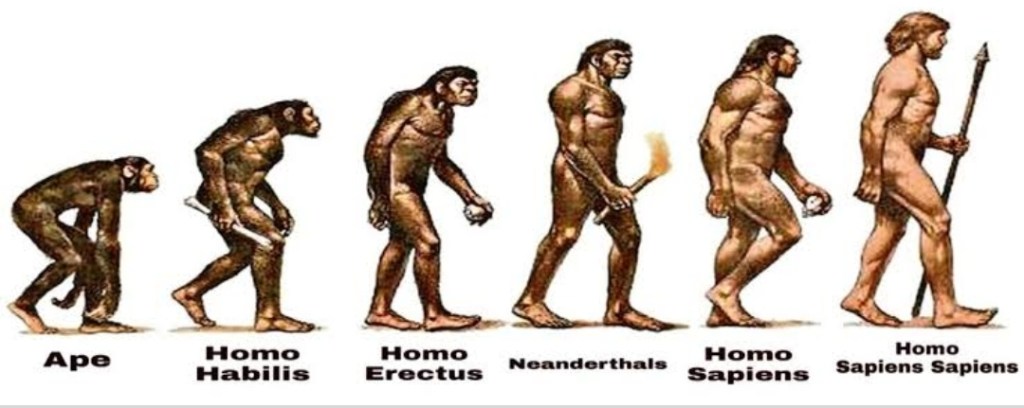
About 15mya, primates called Dryopithecus and Ramapithecus were existing. They were hairy and walked like gorillas and chimpanzees.
Ramapithecus was more man-like while Dryopithecus was more ape-like. Few fossils of man-like bones have been discovered in Ethiopia and Tanzania.
These revealed hominid features leading to the belief that about 3-4mya, man-like primates walked in eastern Africa. They were probably not taller than 4 feet but walked up right.
Two mya, Australopithecus probably lived in East African grasslands. Evidence shows they hunter with stone weapons but essentially ate fruit.
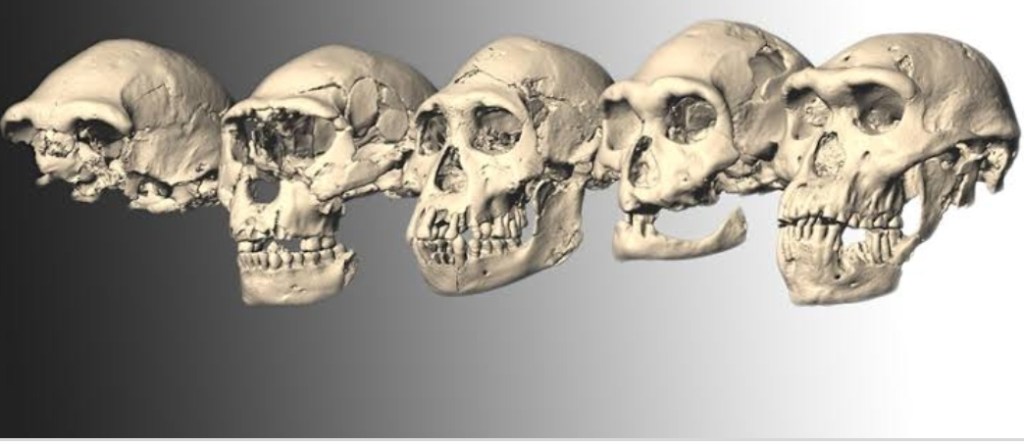
Some of the bones among the bones discovered were different. This creature was called the first human-like being the hominid and was called Homo habilis.
The brain capacities were between 650-800cc. They probably did not eat meat. Fossils discovered in Java in 1891 revealed the next stage, i.e., Homo erectus about 1.5mya.
” Homo erectus had a large brain around 900cc. Homo erectus probably ate meat. The Neanderthal man with a brain size of 1400cc lived in near East and Central Asia between 1,00,000-40,000 years back. They used hides to protect their body and buried their dead.”
Homo sapiens arose in Africa and moved across continents and developed into distinct races. During ice age between 75,000-10,000 years ago modern Homo sapiens arose.
Pre-historic cave art developed about 18,000 years ago. Agriculture came around 10,000 years back and human settlements started. The rest of what happened is part of human history of growth and decline of civilisations.
There is a paradigm shift witnessed in the education sector in India for last two months. Schools and teachers have been forced to adapt to e-learning leaving the traditional way of teaching. The adaption of technology was reluctant for many teachers and schools.
That new technology added a competitive edge to the e-learning sector. The ed-tech firms strike gold in the pandemic as both private and government schools ensure education through e-platforms. In India, online tutorials including Coursera, Collpoll and many more are gaining immense popularity during this crisis.
Lockdown changed the perspective of schools. With schools closed for months, e-learning came to the forefront, across the world. Even in developed countries, students have been the primary movers of this initiative. Teachers followed the new trend, hoping to return to the classrooms soon.
However, such expectations are unlikely to materialise any time soon. When schools re-open, they have to operate with reduced classroom strength, to ensure social distancing. It means the scope for classroom education will remain curtailed and e-learning has to fill the gap in the education sector. With blended learning as potential solutions for schools, e-learning will continue to dominate the sector for a longer period.
11 July is observed as world population day every year. It’s main focus is on the various problems arising due to surging population. Growing population is a major concern for developing countries and india is also having the same concerns. With population around 1.39 billion approximately India is inching towards overtaking china as most populous country.
China had adopted one child policy to control it’s growing population but due to demographical reasons it ended this policy in 2015. Aging population was the reason presented,but decline in fertility rate was another reason. China’s communist government is very strict in implementing it’s policies and citizens also abide by the rules.
India’s five year plans gave emphasis to population control. Ministry of health and family welfare covers the population control policy. Main strategy is to persuade people to accept the small family norm by way of various advertisment and educational efforts.
A scene from web series ‘panchayat’ depicting slogan
In 2019, ‘Population Control Bill’ was introduced into Rajya sabha and was signed by 125 MP’s. This bill was about imposing penalties for couples not adhering to the two-child policy.
A Postage stamp issued by the Indian government
Later, in 2020 ‘Constitution Amendment Bill’ was introduced into Lok sabha. It’s main objective was to amend the Article 47A of the Constitution of India. This amendment was to introduce a two-child policy per couple and provide incentives like tax, educational benefits etc.
Two-child policy in Indian states
States of Assam and Uttar Pradesh have initiated to bring in two-child policies, this will limit government benefits to people with only two children. people with more than two children are barred from contesting elections in Gujarat, Rajasthan,Maharashtra, Uttarakhand, Odisha, Telangana and Andhra Pradesh.
Few more States are eyeing to bring these type of policies in upcoming future for betterment of the citizens. Government and few NGO’s are working towards educating people about these policies. Task ahead is tough,but not impossible.
Dou you like sports? Sports are the act as a very much key role in our daily life. If you play the sports in daily it can improves our mental stability and physical stability.
Cricket
Cricket is the most famous game in the world compared to the others game.
History Of cricket
The history of cricket to 1725 traces the sports development from its perceived origine to the stage where it become a major sport in England and had been introduced to the other countries. The Earliest definite reference to cricket course in 1598 and makes clear that the sport was being placed c. 1550, but it true origin is mystery.
Concept and rules of cricket
Concept
Cricket is played with two teams of 11 players each. Each team takes turns batting and playing the field, as in baseball. In cricket, the batter is a batsman and the pitcher is a bowler. The bowler tries to knock down the bail of the wicket. A batsman tries to prevent the bowler from hitting the wicket by hitting the ball. Two batsmen are on the pitch at the same time.
Scoring
The batters can run after the ball is hit. A run is scored each time they change places on the pitch. The team with the highest number of runs (typically in the hundreds) wins the match.
6 runs: A ball hit out of the field on a fly.
4 runs: A ball hit out of the field on a bounce.
Outs
Bowled out: Bowler knocks over (breaks) the wicket with a bowl.
Caught out: Fielder catches a batted ball on the fly
Run out: Fielder catches ground ball and throws it at the wicket, knocking it down before the batsman gets there.
Leg before wicket: Batsman’s body interferes with a bowled ball that would hit the wicket
Rules
Cricket is played between two teams each made up of eleven players. (Sometime in junior competitions you will find 8 player teams).
Games comprise of at least one innings where each team will take turns in batting and fielding/bowling.
The fielding team will have a bowler bowl the ball to the batsman who tries to hit the ball with their bat.
The fielding team tries to get the batsmen out by…
Hitting the wickets with the ball when bowling
Catching a batsman’s shot on the full
Hitting the batsman’s leg in front of the wicket (LBW)
Or hitting the wickets before the batsmen can run to the other end of the pitch
The batmen try to score as many runs as possible before getting out by…
Hitting the ball and running between the wickets and making it to the other end before the fielders can hit the wickets with the ball. Each time you run one full length of the pitch it equals 1 run.
Hitting the ball to the boundary along the ground is 4 runs.
Hitting the ball over the boundary on the full equals 6 runs.
The fielding team must get 10 batsmen out before they can change over and start batting.
The aim of the game is to score as many runs as possible before the fielding team takes 10 wickets. The team with the most runs wins.
Important of cricket
As well as physical health benefits, cricket can also bring other benefits and opportunities such as: Team skills. Social skills such as cooperation, communication and learning how to cope with winning and losing. Social interaction – it’s a great way to meet new people and make new friends.
“When people throw stones at you, you turn them into milestones.”– Sachin Tendulkar
The God of cricket speaks to you. He asks you to turn the negative vibes directed at you, into the incense of calm and spirit of achievement. Sachin’s struggle is widely acknowledged. He is a legend and nobody can deny.
Vedanta Philosophy is one of the Indian Orthodox Schools of Philosophy that is primarily based on Upanishads, Bhagavadgita and Brahmasutras (Prasthanatraya). The Vedanta system, with the course of time has branched off into 3 categories: Advaita, Visistadvaita and Dvaita. The Visistadvaita which is mainly taught to have been originated from Ramanuja, is in reality much older than him. Ramanuja has taken the ancient teachings of the Prasthanatraya and has given it a definite shape like others. However, since Ramanujan was the best exponent due to his excellent work, Visistadvaita rightly gets its second name from him; Ramanuja Darsana. After the death of Ramanujan, his followers were divided into Vaḍagalais and Teṅgalais which literally translates to followers of the northern schools and followers of the southern schools respectively.
Visistadvaita is essentially a philosophy of religion. In it, reason and faith combine together to become ‘reasoned faith’. Epistemology: Visistadvaita accepts mainly 3 sources of knowledge, Pratyaksha, Anumana and Testimony of scriptures (Agama or Sabda). The three main principles of Visistadvaita are as followed:
1. Dharmabhūtajñāna – refers to the consciousness of the individual as its attribute. It is through this consciousness that one comes to know the nature of the external world, self and Brahman. This consciousness is all-pervading, however since it is bounded by Karma, it fails to recognize this.
2. Logical rule of aprthak-siddha-visesana – states that a quality resides in its qualified substance and is inseparable from it. They are separate but inseparable. E.g., Rationality is inseparable from man but rationality is not man.
3. Grammatical rule of sāmānādhikaraṇya – It means the application of two terms to a single entity through connotation of its 2 modes. (implicitly)
Visistadvaita accepts the satkaryavada (effect pre-existing in the cause) theory of Samkhya Philosophy. Visistadvaita believes that the world is a transformation of the Brahman and thus is real and not illusory. (Advaita)
Ontology:
Visistadvaita accepts three entities: Brahman, Jiva and Prakriti as the ultimate realities. They are aka ‘tattvatraya’. However, only Brahman is an independent reality and the other two are dependent realities. Therefore Visist (specific) Advaita (non-dualism) is a philosophy that accepts only one Reality, but with attributes or modes.
1. Brahman (Ishavara) Brahman of Visistadvaita is the absolute of philosophy as well as the God of religion. Truth, knowledge, infinity and bliss are its attributes. He is the whole and Jiva and Prakriti are its parts. (saguna brahman?) He is also free from imperfections and any defects. According to Visitadvaita, Brahman enjoys the play of creation. It creates the universe from its cit and acit portions and remains unaffected by it. Since Brahman creates in accordance to the past deeds (Karma) hence he is impartial and good-hearted.
2. Jiva (Cit) The Jivas are countless but they are identical in form and nature. Each Jiva is separate from its constituent attributes such as buddhi, body, mind etc. Jiva is a part of Brahman and is controlled by it. Jiva is the knower of knowledge, doer of actions, and experiencer of their results. The jivas are further divided into 3 groupss.
(i) Bound – the jiva that has not attained moksha and is still bound to Prakriti.
(ii) liberated – the jiva which was previously bound but attained moksha
(iii) eternally free- the Jivas that are always free from samsara and any attachments.
3. Prakriti The Prakriti id insentient (devoid of feeling and consciousness) and through it is the material universe formed. Prakriti is ever-changing hence it can never be the substratum for knowledge. Just as skin, flesh, seed, colour, taste and smell can all exist in the same mango simultaneously, so also cit (jiva) and acit (prakriti) can exist in Brahman.
Means of Liberation:
The means of liberation, is five-fold: karma(deeds), jñāna(knowledge), bhakti (devotion), prapatti (self-surrender), and ācāryābhimāna (strong faith in guru and his affectionate attachment to disciple. Prapatii is self-surrender and is for those who can’t follow the path of Karma, Jnana or bhakti. Its main characteristics are: to conceive what is in conformity with the will of God; to reject what is disagreeable to him; to seek him alone as the protector; and to surrender one’s self to him in all meekness.
State of Liberation:
The liberated soul has a direct vision of Brahman and is absorbed in the eternal bliss of union with him. To him, the pluralistic world remains however his pluralistic views abolishes. The distinction between him and Brahman still remains and the personality still remains. But the liberated soul forever enjoys the state of bliss by serving Brahman.
Suffering is part of the core teachings of Buddhism. In Buddhism, to study, understand and eliminate suffering is considered to be the ultimate goal of human life.
It is said that when Buddha attained enlightenment and started his altruistic sermons, he stated the following;
“O Monks, two things I only teach, dukkha and the cessation of dukkha” Buddha could see suffering at each stages of human life. He understood that from the moment of birth till the state of death, suffering was part of human life.
Hence, we have the 4 Noble Truths given by Buddha that deal with sufferings in Buddhism:
1. The truth of suffering (dukkha)
2. The truth of the cause of suffering (samudaya)
3. The truth of the end of suffering (nirhodha)
4. The truth of the path that frees us from suffering (magga)
Collectively, these principles explain why humans hurt and how they can overcome suffering. Furthermore, Buddha taught that there are three kinds of sufferings. The first type of dukkha is the physical and mental pain from inevitable events like sickness, old age and death. The second type of dukkha occurs when we fail to get what we desire or to lose something that we hold dear. This type of dukkha appears due to impermanence and change.
The third type of Dukkha is the suffering that arises due to man’s conditioned state of existence. In other words, it’s a kind of existential suffering arising due to the angst of being human, the very state of our existence and being subject to rebirth.
Buddha, in his 2nd Noble truth explains the reason why humans are subject to suffering. Buddha says that suffering is part of a universal causal link. Universal causal link is a link that is a cycle of cause and effect. It states that for every effect to come into existence, there lies a cause of its origination. Hence suffering is a part of this cycle of causal link. From this causal link Buddha extracts 3 main reasons for humans to be subject to suffering.
1. Birth According to Buddha, existence leads to suffering. i.e. From the moment we take birth we are bound to experience suffering in our lives.
2. Attachments and Desires Buddha believes that the root cause of suffering is attachments and desires. When we attach ourselves to materialistic things or desires that cannot always be fulfilled, we are afflicted with pain and suffering. Buddha says that man has a sense of ‘I’, the belief that his existence is individualistic in nature. This belief leads him to feel the obligation to achieve all his desires. What we fail to understand in this belief is that these desires are temporary and momentary, thus we cannot always satisfy our desires and needs. In addition to this Buddha also says that there is no end to human desires, hence one cannot always achieve the things that he or she wishes or desires.
3. Ignorance According to Buddha this is the ultimate cause of suffering in human lives. Due to ignorance humans fail to gain knowledge about suffering and remain ignorant to reality.
Ignorance also leads to the creation of the false sense of ‘I’. Thus, ignorance increases our infinite desires and attachments that later cause us suffering in our lives.
HOW TO END THIS SUFFERING?
In his 3rd Noble Truth Buddha affirms that suffering can be ended. And in his 4th Noble Truth Buddha gives us the path to attain this end to suffering.
Nirvana in Buddhism is a state of freedom from suffering. It is said that when one attains Nirvana, he or she is left with no desires, no attachments and no ignorance.
Nirvana is a state where one feels ultimate happiness and peace. However, Nirvana is not always a static life but can also be an active life. Thus, there are two types of Nirvana
1. Jivan Mukti – You attain Nirvana when you are alive. Example: Gautama Buddha
2. Videh Mukti – You attain Nirvana after your death. Example: End of Rebirth
Since Buddhism accepts Karma and rebirth to be the main causes for humans to take birth and experience suffering, hence Nirvana is also a state where all Karma is annihilated and rebirth comes to an end.
To attain Nirvana, or to attain freedom from suffering Buddha further gives a middle path, i.e. an 8-fold path that advocates neither extreme self-indulgence nor extreme self-denial. It’s a middle path of these two extremes.
THE 8-FOLD-PATH TO ATTAIN FREEDOM FROM SUFFERING
In no particular order, the Eightfold Path of Buddhism teaches the following ideals for ethical conduct, mental disciple and achieving wisdom:
1. Right views Buddha said that in order to attain freedom, one needs to acquire right knowledge. Since ignorance is the ultimate cause of suffering, by attaining right knowledge about the 4 Noble Truths it will eventually help an individual to eliminate suffering.
2. Right resolve Right resolve refers to the act in accordance with right knowledge. An individual needs to have the right determination to make the right choices in life.
3. Right speech Right Speech advises individual to not use harsh or abusive languages. It advises to refrain from cussing, cursing or hurting other people by using abusive words.
4. Right conduct This talks about the behaviour of an individual. Right conduct is further explained using 5 ways.
i. Non-Violence (Ahimsa) To not practice violence in any form; physical, mental or emotional.
ii. Truth (Satyam) To always speak truth and never lie, no matter what condition one may be in.
iii. Not Steal (Asteya) To never steal or shoplift no matter how much pleasure or happiness one gets from doing so.
iv. Contentment (Aparigrah) This talks about how one should be satisfied with what he or she has and teaches to be grateful for the things one is blessed with.
v. Celibacy (Brahmacharya) Celibacy here does not refer to an ascetic life but rather talks about how an individual should learn to control his/her emotions and desires.
5. Right Livelihood Right Livelihood encourages an individual to earn their wages or living expenses by following a moral path. That is, by working hard instead of stealing, murdering or any immoral acts.
6. Right Effort Right effort majorly talks about making an effort to develop and retain good thoughts, to remove existing evil thoughts (negative thoughts) and to prevent evil thoughts from entering the mind.
7. Right Mindfulness Mindfulness talks about retaining the good energy in our mind and encourages to constantly remember good things.
8. Right Concentration This talks about analysing our sufferings and finding the root cause of it. It encourages individuals to concentrate in discovering our own selves and to detach from any unnecessary desires or attachments.
Hence it is only after following this 8-fold-path can one achieve liberation from suffering.
Though most religions make it a point to claim their teachings have been consistent since the dawn of time (whenever that was), spiritual traditions have appeared and disappeared throughout the ages with the same regularity as empires. And if such ancient faiths as Manichaeism, Mithraism, and Tengriism are all but gone, a few of the oldest religions and practices are still around today. Find out what they are below.
Hinduism (founded around the 15th – 5th century BCE)
Hinduism may not be a unified religion per se, or organized into a distinctive belief system, but Hindus (as they have been identifying themselves for centuries, the result of opposition with other religions) roughly follow the same central traditions, understandable to all the religion’s multifarious adherents. The first and foremost of these is a belief in the Vedas – four texts compiled between the 15th and 5th centuries BCE on the Indian subcontinent, and the faith’s oldest scriptures – which make Hinduism without doubt the oldest religion in existence. It has since evolved into a diverse and flexible tradition, notable, as the scholar Wendy Doniger puts it, for its ability to ‘absorb potentially schismatic developments.’ There are close to one billion Hindus in the world today.
Zoroastrianism (10th – 5th century BCE)
The ancient Indo-Iranian religion of Zoroastrianism (known to natives as Mazdayasna) – said to date back to the 2nd millennium BCE – emerged in its current version from the teachings of the reforming prophet Zoroaster (Zarathustra), who historians contend lived at some point between the 10th and 6th centuries BCE (they disagree somewhat). Extremely influential over the development of the Abrahamic tradition, it was the state religion of various Persian empires until the Muslim conquest of the 7th century CE, and survives in parts of Iran, India, and Iraq to this day, reportedly followed by some 200,000 people.
Yazdânism: Interestingly enough, three particular Kurdish religious variants (practiced among the Yazidis, Goran, and Ishik Alevis), grouped together under the umbrella neologism Yazdânism (Cult of Angels), have evolved from a mix of Islam and a Hurrian precursor to the Zoroastrian faith. They reconcile the existence of Abrahamic prophets with a doctrine of reincarnation, and the belief that the world is defended from evil by seven ‘angels’. This may make these creeds as old, if not older, as Zoroastrianism.
Judaism (9th – 5th century BCE)
The foundation for all other Abrahamic religions, and the oldest monotheism still around (though by no means the first – that is alleged to be a variation on ancient Egyptian faith called Atenism, which disappeared in the 14th century BCE), Judaism originated in the kingdoms of Israel and Judah, which first appeared in the Levant around the 9th century BCE. The religion morphed into its current form in the 6th century BCE, evolving from the worship of a state god based in a polytheistic worldview into that of a one ‘true’ God, codified in the Bible. If it is today followed by an estimated 11–14 million people, its two successor faiths – Christianity (1st century CE) and Islam (7th century CE) – are the world’s most popular, with a combined 3.8 billion adherents.
Jainism (8th – 2nd century BCE)
Once a dominant religion on the Indian subcontinent (before the rise of reform Hinduism in the 7th century CE), Jainism has fairly obscure origins. Its followers believe in the tirthankaras, omniscient preachers of the Jain path, whose defining characteristics are marked by asceticism and self-discipline. The last two tirthankaras are known historical figures: Parshvanatha (8th century BCE) and Mahavira (599 – 527 BCE). Yet archeological evidence proving the existence of Jainism only dates back to the second century BCE. Jains are said to number six to seven million worldwide.
Confucianism (6th – 5th century BCE)
If, like Buddhism, Confucianism must invariably be traced to one man – in this case, the Chinese politician, teacher, and philosopher Confucius (551 – 479 BCE) – it is worth noting that he himself maintained he was part of a scholarly tradition dating back to an earlier golden age.
Though the most humanistic and least spiritual creed on this list, Confucianism does provide for a supernatural worldview (it incorporates Heaven, the Lord on High, and divination) influenced by Chinese folk tradition. Since the teachings were first compiled in the Analects a generation or two after Confucius’s death, the tradition has gone through various periods of popularity and unpopularity in China, and remains one of the leading influences on modern Chinese folk religion. Strict Confucianists are said to number about six million.
Buddhism (6th – 5th century BCE)
Unlike most other religions on this list, Buddhism has a fairly clear history: it begins with one man, Siddhartha Gautama, known otherwise as Buddha. Based in the northernmost regions of the Indian subcontinent (most likely in present-day Nepal) roughly between the 6th and 5th centuries BCE, he was the founder and leader of his own monastic order, one of many sects (known as Śramana) that existed across the region at the time. His teachings began to be codified shortly after his death, and continue to be followed one way or another (and with major discrepancies) by at least 400 million people to this day.
Taoism (6th – 4th century BCE)
Taoism can be traced with some certainty to a work attributed to the mythical Laozi (said to have been a contemporary of Confucius), the Tao Te Ching, whose oldest recorded edition dates back to the 4th century BCE. The religion evolved from a strand of traditional Chinese folk religion, and makes mention of masters and teachings from long before it was codified, including the god-like Yellow Emperor, said to have reigned from 2697 – 2597 BCE, and the I Ching, a divination system dating back to 1150 BCE. Today, an estimated 170 million Chinese claim some affiliation with Taoism, with 12 million following it strictly.
Shintoism (3rd century BCE – 8th century CE)
Though not codified until 712 CE in response to contact with mainland religions (namely, Confucianism, Buddhism, and Taoism), Shintoism is a direct descendant of the animistic folk religion of the Yayoi, whose culture spread from the north of Kyushu to the rest of Japan from the 3rd century BCE onward. Today, the faith is a unified account of ancient Japanese mythology, marked strongly by Buddhist influences, and followed by the vast majority of the country’s population (though only a small minority identify it as an organized religion).
A note on methodology:
Before getting into it, it is worth mentioning that determining a religion’s age depends entirely on how one defines what a religion is. All spiritual systems have roots in beliefs dating back millennia – meaning that the main differences between each are found elsewhere: in their codification and general uniformity, and the age of their wider precepts.
Not included, then, are the various animistic and shamanistic traditions (counting the Chinese folk religion, which lacks consistency and is partly constructed on Taoist and Confucian beliefs), as well as the modern revival of ancient religions such as Neopaganism or Mexicayotl (both traditions that were for a long time eradicated, and may differ in important ways from their original conception).
Likewise omitted is atheism, which, despite its natural rejection of organization, is known to have existed at least since the 6th century BCE (though we suspect it’s as old as the first stirrings of religious thoughts).


















 Eduindex
You must be logged in to post a comment.