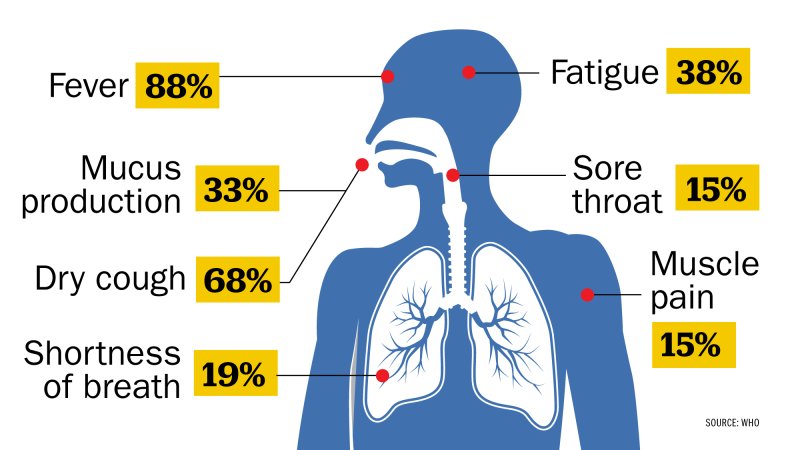
Day to Day Signs and Symptoms of Coronavirus DAY TO DAY SYMPTOMS OF COVID-19 Before proceeding, please note that this general overview is compiled for initial self-assessment only and should vary for each individual. If you are not feeling well, you ought to immediately consult a medical man to possess an accurate diagnosis and proper treatment of COVID-19. The typical daily symptoms are concluded from the study of 138 patients at Zhongnan Hospital of Wuhan University and another study involving 135 patients from Jinyintan Hospital and 56 patients from Wuhan Pulmonary Hospital.
These symptoms are broken down into:
DAY 1 to DAY 2 the start symptoms are almost like the cold with a light pharyngitis and neither having a fever nor feeling tired. Patients can still consume food and drink as was common .
DAY 3 The patient’s throats start to feel a touch painful. Body temperature reads at around 36.5° celsius. Although it’s uncommon, other symptoms like mild nausea, vomiting or mild diarrhea are possible to set in.
DAY 4 Throat pain becomes more serious. Other symptoms like feeling weak and joint pain start to manifest. The patient may show a temperature reading between 36.5° to 37° celsius.
DAY 5 to DAY 6 Mild fever starts. The patients show a temperature reading above 37.2° celsius. The second most common symptom, dry cough, also appears. Dyspnea or breathing difficulty may occur occasionally. Most patients during this stage are easily feeling tired. Other symptoms remain about the same. These four symptoms are among the top five key indications of COVID-19 according to the final report of the initial outbreak conducted by the joint mission of China and WHO.
DAY 7 get more serious coughs and breathing difficulty. Fever can get higher up to 38° celsius. Patients may develop further headache and body pain or worsening diarrhea if there’s any. Many patients are admitted to the hospital at this stage.
DAY 8 to DAY 9 On the 8th day, the symptoms are likely to be worsened for the patient who has coexisting medical conditions. Severe shortness of breath becomes more frequent. Temperature reading goes well above 38°.
DAY 9 is that the average time when Sepsis starts to affect 40% of the patients.
DAY 10 to DAY 11 Doctors are ordering imaging tests like chest x-ray to capture the severity of respiratory distress in patients. Patients are having loss of appetite and should be facing abdominal pain. The condition also needs immediate treatment in ICU.
DAY 12 to DAY 14 For the survivors, the symptoms can be well-managed at this point. Fever tends to urge better and breathing difficulties may start to cease on day 13. But Some patients should be suffering from mild cough even after hospital discharge.
DAY 15 to DAY 16 Day 15 is the opposite condition for the rest of the minority patients. The fragile group must prepare for the possibility of acute cardiac injury or kidney injury.
DAY 17 to DAY 19 COVID-19 fatality cases happen at around day 18. Before the time, vulnerable patients may develop a secondary infection caused by a new pathogen in the lower respiratory tract. The severe condition may then lead to blood coagulation and ischemia. DAY 20 to DAY 22 The surviving patients are recovered completely from the disease and are discharged from the hospital.
Intelligence, it is what set us apart from our primate ancestors. Human evolution led to the emergence of anatomically modern humans, beginning with the evolutionary history of primates—in particular genus Homo—and leading to the emergence of Homo sapiens as a distinct species of the hominid family, the great apes. Now since intelligence is a major factor in the distinction of humans from all other animals, we must understand what intelligence is. Intelligence has been defined in many ways: the capacity for logic, understanding, self-awareness, learning, emotional knowledge, reasoning, planning, creativity, critical thinking, and problem-solving. And in order to measure a person’s intelligence we need a method to scientifically determine the amount of intelligence factor a person has which is usually measured in terms of IQ.
In 1905, psychologists Alfred Binet and Théodore Simon designed a test for children who were struggling in school in France. Designed to determine which children required individualized attention, their method formed the basis of the modern IQ test. Beginning in the late 19th century, researchers hypothesized that cognitive abilities like verbal reasoning, working memory and visual-spatial skills reflected an underlying general intelligence or g factor. So, Simone and Binet designed a battery of tests to measure each of these abilities, and combine the results for a single score. Questions were made for each age group and a child’s score reflected how they performed relative to others in the same age group. Today a score of 100 is the average of a sample population, with 68% scoring within a 15-point radius. However, both then and now there is no single agreed upon definition of general intelligence. Which left the door open for people to use the test in service of their own preconceived assumptions about intelligence. What started as a way to identify those who needed academic help, soon became a tool to sort people in other ways, often in service of deeply flawed ideologies. One of the first large scale implementations occurred in the US during WWI when the military used IQ tests to sort recruits and screen them for officer training. However, that time people believed in Eugenics, the idea that desirable and undesirable genetic traits could and should be controlled in humans through selective breeding. This was a deeply flawed idea as it linked intelligence as not only fixed and inherited but linked to a certain race. This belief and results from IQ tests gave forth a wrong theory that certain races were superior than others, thus creating an erroneous intelligence hierarchy of ethnic groups. This not only influenced science but also policies in many countries. In 1924 Virginia ordered forced sterilization of anyone with low IQ scores, a decision that the supreme court of US upheld. We all know what happened in Nazi Germany due to such prevalent ideals, authorization of murder of children based on low IQ scores. Following the Holocaust and the Civil rights movement, the discriminatory usage of IQ tests was questioned on moral and scientific grounds. Scientists began gathering evidence as to how our environment impacts our IQ.
Today, IQ tests employ many similar design elements and types of questions as the early tests, though there are better techniques to identify potential bias in the tests. And due to many failed applications in the past they are no longer used to diagnose psychiatric conditions. And psychologists still use IQ tests to identify intellectual disability which can be used to determine educational support, job training and assisted living. As Alan Alda said “Be as smart as you can, but remember that it is always better to be wise than to be smart”.
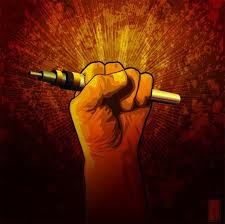
Ideas have an impact far more powerful than we imagine. We all wish to express our ideas, and it is the ‘power of the pen’ which helps us express. Who could think that such a small instrument would take such a big space of human life?
When a child, a teacher, a book and a pen come together, they change the world. The teacher using the book directs the child towards self-discovery. A pen gives his innocent dreams the wings and these dreams, hence, see the light of the day. A writer gets to write a new chapter. For him, this pen is everything. He pours all his emotions via a pen on a blank page. This pen becomes the tongue of his mind. A painter gives colours to his imagination. His perspective is serenely painted on a canvas. Anyone who sees it is mesmerized.
In the giant game of construction, some bravely choose a pen. What they create reflects the victory of man’s genius. An architect impeccable shapes homes, giving shelter to many. Cities are constructed based on plans penned by developers.
A hero’s dying wish is that people acknowledge his bravery; not concoct stories which never existed. His pen conveys his heroics. This pen reflected his power. People now know how he served his nation.
In this era, one must learn to protect oneself with the pen, not with the gun. We have journalists who do this for us. They protect our interest when they lift their pen. They give us news with their pen. They keep us updated with the happenings in the world.
In the hands of a doctor, a pen prescribes medicine and saves someone’s life.
Life is given to words with the power of the pen where the spoken words have no place, the written one’s triumph.
The declaration of our independence and its sovereignty was written using a pen without which there would be none of its existence. An actor lifts his pen for an autograph. Design created by this object gives his name value.
Swords are short and sharp, but a pen, the pen is sharper.
The pen is so powerful that if it goes in the hands of a liar, he will not only tongue the false but also deceive by writing.
For some, a pen is as important as a beak is to hen.
A teacher finds it magical for it is she who sees the textures and tone that a mere pen point produces in an exam paper. Lives are created and destroyed in that examination hall. If the pen works you pass and if it doesn’t you fail the test.
This is the ‘Power of Pen’. Let us embrace it and shape a better world together.
We have so many students studying in so many educational institutions but is everyone receiving a quality education? It we are striving for excellence; we must define it clearly. It means different things to different people. One can say that creating, imparting and disseminating knowledge to generations with increasing quality implies excellence. The quality of education in any school has to be useful, but India is far from that school. We always talk about private schools. There are more than 70% of students in government school s, and the need is to get trained teachers to educate them. Several students are full of passion, and they have aspirations. There are so many issues that prevail in government schools.
Underprivileged students go there, and they complain that teachers don’t come and infrastructure is miserable. The number of toilets is increasing, but the number of functional toilets is still poor. Same goes for drinkable water as well- taps are increased but not functioning correctly. These children dwell in rural areas and are not from well-to-do families. To progress in life, they somehow do self-study, manage to get a tutor who teaches for a paltry sum and somehow clears class 10. The poor’s children get enrolled late, and even after that, they do not develop an understanding of subjects. A need for bridge course is felt in all schools to see that all gaps are filled regarding subject knowledge. We must understand that even though private schools are in a better education providing position today, excellence can exist anywhere, and we hear about success stories from government ones as well.
Even the poor now want to send children to private school. They believe that if they are in a private school or can learn English then, that gets them the passport to a bright future. Our government introduced the quota system in private schools to address this issue, but it is clear that it is not a solution. Do we need to bridge the gap between private and government schools, or do we privatise education completely? A private school, if it has the significant infrastructure, must accommodate such children and be fit for them in terms of imparting education according to their level. In private schools, many emphases are given on exam result, which is essential, but they need to put equal focus on other skills too. They are looking at skill development also as conceptual education isn’t enough nowadays, but the centre must increase more. Sports, technological advancement, globalised conduct and other curricular develop a child entirely and make for a true representative of modern India.
Even for private schools, there is an issue of access to high-quality education. Only a person studying in topmost school or college will be exposed to that excellent knowledge; while students of their schools, who are not enrolled in that top place don’t have access to it. Unfortunately, our school curriculum is hopelessly outdated. Had the schools been teaching how to study through cell phones and laptops ore, the information provided by top schools would be in their hands. If a student feels like learning something today, he should have access to that particular piece of information that he seeks. Technology is that classrooms create a big difference. If excellence is available somewhere, then through technology, we must bring it to students.
Let us not forget that teachers play the most critical role in bringing excellence; in reality, not every teacher joins this profession out of love and passion; circumstances to have a force on people. Still, every teacher must stay committed to ensure excellence in their work and students. There is undoubtedly a disconnect between industry and education. No matter how conceptually strong a student is, once he goes to the industry, employers require to train him according to their needs. We need a system which prepares us for work-life as well. The education system must cater to the real-life challenges and demands of life. Only a few get into top institutions, and how can the system meet the challenge of creating a platform for more students? Investment in education is critical as we need more quality institutions to meet the demands of rising population. We need to ensure that as we grow more institutions, we also maintain high quality.
Moreover, India needs its best students to compete with the world’s best with cutting edge knowledge. We must produce role models and become magnets for outsiders. We boast of having Indians as the best minds of the world; they are heads of big companies in the world. Ironically, there is no electricity or internet in many villages. So many Indians can make India a superpower if only they would get a fundamental requirement of education and the internet will play a massive role in shaping a bright rural India. The government must ensure that these should reach the common man in all the parts of rural India. If there is a successful model available anywhere, then that has to be emulated. We must take advantage of technology as today the learning process is undergoing tremendous change. If the students have access to quality education, then the students will contribute more to society, and everyone will prosper.
Any training on a person adds various skills. Some people want the central government must consider this proposal seriously and implement it in educational institutions. Many children are unable to decide what to pursue in life, and when they experience the hardships on military turf, this idea will be clear. Minimum military training is essential and broadens the mindset and toughens it. In a way, it is vocational training. India may get potential officers while will strengthen the armed forces in future. The defence of the country is left alone in the able arms of troops, and with this compulsion, we can also participate in it. The education improves national morale, health, builds up character and even the ability to face hardships.
People who serve in the army stay away from family for a very long time. When the children of their country join them in the training arena, they will get a morale boost. It will be an incredible feeling when so many children come and are with you. At a place, so many children from different backgrounds will share common space and air. This will bring Indian closer, and the walls of difference will get lower. The children need patriotic reinforcement, and this idea will also foster discipline in them. They will be more team spirit, orderliness and respect for one another when exposed to the adventures of training. Once a student receives basic training and wishes to volunteer, the military will get a trained volunteer. Indian girls will develop defensive skills and become stronger physically.
However, the Indian military is not equipped with the necessary infrastructure and number of officers to take on a significant population of a school child. Even if training institutions and academics are established, it will take much time for them actually to take place. They will require much money for maintenance and upkeep. Even if a decision in favour of this is made, it should be done for students above the age of 18 years and not for school-going children. The rigours of training may be too much for a school going child to handle, and also the mind is better prepared for this at a decent age of 18 years. The government has checked the feasibility, affordability and practicality of it. This is practically impossible for now. We do not have resources which are adequate to fulfil wants of everyone, and now we are asking for a further hole in the pocket of the government. India is a democratic set-up; people are free to choose their professions. Compulsion is respect for military training; it is felt, will go against the democratic ethos.[1] The anticipated benefits of imparting military training to all the youth will not be commensurate with the expenditure involved in such an effort. This would translate into unmanageable figure and will also be a significant drain on the limited resources of a developing country.
We are not prepared for it at the moment, but we can always inculcate the knowledge on a curriculum or introduce it as a separate course.
I know, I can, if I do, but I don’t know why I don’t give a try to do it. I am escaping from trying and proudly expressing it. How shameful must I be to admit such a fact. Why do I even give a push to myself when I am capable of doing it. If I am not capable, atleast I should give a try to be capable enough. I am capable of doing it but incapable of trying it. Knowing that makes me feel insecure about me. I know about it and behave as though I am I never knew.
Atleast I should be true to myself. Betraying me and trying to hide myself from me is the worst thing that I can do to myself. I know it and I still do nothing. Telling lies to others is not that offensive but trying to be someone to yourself is not good. I know that I can but I push myself either by knowing it or by can’t doing it. Either way I dont do it.
Doing for doing is not at all a doing. Enjoy the doing and make it done else undo it and do some other thing that makes you do and will make you go through doing and make it happen as a done. Do it by enjoying else quit it by undoing. The only thing that we remember is the process of doing. We will forget the result of doing. Enjoy the doing till it’s done. Do with joy and enjoy the feeling of joy.
I know I should do what I should but I must do only the things which make me happy. Happiness is not measurement, it is a sudden process. Happiness is a temporary process which can bring people, the permanent happiness. The way we feel for the things tells us the way we love the process. Live tour work, if you can’t love it then leave it. The work must make you feel the feel that lasts till the work got completely completed.
Behave truly to yourself. You should not feel regret about yourself. The only thing that matters to you is you. Atleast be true and behave accordingly. The last suggestion about your decision you make is made by you either it’s regarding your death. Your life or death is both in your hands. The decision you take is the decision you make.
I think there is an art to it it’s a craft, the negotiating training this morning in the office and the reason, negotiating it be is because it’s the one area of the deal where people need me the most and they need me the most they think I have the most confidence and the confidence that I have going to the deal comes from experience and it comes from honestly – practice practice practice because no matter what you’re selling you’re selling. Two different people you’ve got a seller and a buyer and in every negotiation you’ve got price you’ve got pressure and you’ve got persistence those are the three P’s remember that is it can be a nice little instructional.
An iPhone cost to make now you’re not going to negotiate the price of an iPhone because there’s too strong demand but let’s say there wasn’t strong demand then you can negotiate or you can find a retailer who’s going to sell it to you for cheaper because it doesn’t cost nearly as much to make that phone. As it does for you to buy it real estate is the same way a deal that’s listed from 10 8 down to 10 so 10 million bucks the offer originally came in at 8 million dollars okay that seems like it’s way too far apart. If I go to the seller he’s going to say you got to come up they’re going to say oh no this is my offer so what do you do what do you do you remember the price you want to try to get – which in this instance was around 8 and a half that’s where we thought we’d get a deal done and the legacy price what the seller paid seller paid six point five. So, even at our low terrible awful offer that sellers making money that’s a good thing to remember and to consistently remind each side and then you let time saturate the emotions of the deal and you use repetition you only paid six five even if this bullshit offer you’re making money.
There are clients who are losing million and they use pressure right the fear of a falling market and the fear of missing out every seller fears they’re not going to get their price going forward because maybe the market could change every buyer has a little fear that they’re going to lose it a little fear they’re going to miss out and then you’re trying to find the price in the middle where both sides will say we came to that number because that’s the max or the minimum that I’m willing to go to get this deal done.
If a woman can bring me into this Earth, if a woman can bear the labour of raising and guiding me, then certainly a woman can be my boss at work.
Times have indeed changed, and myths have been effaced where other than the ‘exotic’ not much came to mind when thought about Indian women. Indian women are becoming increasingly visible and thriving in the professional and public sphere.
Whether it is Barkha Dutt, who has become an idol for several journalists, Arundhati Roy, a Booker prize winner and a social activist, the industry bigwig and a magnate Indra Nooyi, or Kiran Mazumdar Shaw, who become the wealthiest Indian women after the initial public offering of her company Biocon, worth over $1.1 billion. All herald the advent of Indian professional woman.
During 1987-93, the role of women worldwide underwent a dramatic change. Women today share the podium with men in almost all fields, be it kitchen or office. They have now entrenched themselves as an integral part of the workforce.
After 1991, the increased role of the private sector and spurt in the number of MNCs facilitated a slow but definite rise in the number of women managers and entrepreneurs as against some abysmal figures two decades ago.
MNCs in the previous decade has witnessed quite a volatile environment with numerous challenges calling for the multitalented and experts. Many executives have emerged and are recognised by their expertise, organisational contribution and leadership despite these corporate vicissitudes. India has not by serendipity but by destiny witnessed the proliferation of women who have spurred and fostered growth in the economy and marked themselves as stellar performers. Women have time and again contrived to leave a good mark here.
I will not call it unfortunate rather consequential that we see only a handful of companies headed by women or women at the helm of strategic departments. Till the corner of the new century, women have not been welcomed to hold and glorify the top positions of a slew of corporate houses. Society had its stereotypes and biases against women in management where the male trains had higher perceived value than female traits. Innumerable myths had clouded this society and deemed women in control as anachronistic. Stymied with the straightjacket of envy and as a result male chauvinism, female employees confronted barriers while climbing up the corporate ladder. The perceived notion was that women are ruled by the heart and not head; they are more personal than professional/ the fallacious idea was deduced from their parallel profession, as an employee and as a mother.
Following are some of the myths perceived by society-
Women switch jobs more frequently than men.
They are not willing to travel extensively for the organisation.
They fall apart in a crisis.
They only work because their economic reasons force them to do so.
They are too concerned with the social aspects of the jobs and cannot be entrusted with important matters
Furthermore, women have to deal with the complexities of a dual role as working women and mother. Unfortunately, they were thought of as less committed and tenacious. Lastly, they have inner battles as well likely mainly getting scupper by their apathy, which they need to fight and overcome by developing confidence, appropriate skills and attitude.
Male chauvinists, in particular, have denounced them with such shoddy treatment in mentoring, training and development at work, there was bound to be resentment. Fortuitously, our genial women didn’t resort to vandalism but charted their way into the corporate turf, competing for head to head with males. Today globally, women are the 10% senior managers in fortune 500 companies. Having said this, aspirations will never foil, and women are here to stay.
Today the beautiful part of women manager is that she is very good at juggling around tasks. One of their most persuasive skills is her ability at multitasking. Researchers have developed reports which state that women managers see things laterally, intuitively and differently. They can handle more contradictions, can tolerate more and can deliver much more than men. The reality is that women have a different value system, which they bring to the organisation. Management studies on gender initiatives have three findings:
Some companies like female workers to be ‘boys’, wanting them to play golf, do things like men; they even commend them but sarcastically complement after doing a task efficiently- ‘She is the man’, citing male chauvinism again.
Some companies recognise that females do the same work but require different incentives.
Others recognise that women bring them a different approach and attitude to the workplace.
This doesn’t revamp the gender equality inherent in the system, which requires a paradigm shift in its perspective. A qualification of being a male and not a female doesn’t guarantee organisational excellence. Therefore, women in corporate India are aware of the various constraints they work under and are trying to make the best of the bargain. And when they do reach the managerial level, they bring with them the silver lining. For instance, employers today exhibit a preference to employ more women in Human Resources as compared to men and also in the retail and service sector. Hence, they are no longer damsels in distress.
The statistics say that 1/3rd of employees at Indian software companies today is a woman; which were stereotyped as abstract, obsessive and unsuitable for them. NASSCOM puts this figure at 38% higher than their western counterparts. Let me now give you a glimpse of the Indian corporate divas- Vidya Mahan Chhabria, the chairperson of the $2billion Jumbo Group and Naina Lal Kidwai, vice-chairperson and MD of HSBC securities and capital markets, are the two Indian women to feature of the list of the 50 most powerful women in International business by The Fortune magazine. There are several others like Sullaija Firozi Motwani heading Kinetic Group and Mallika Srinivasan leading Chennai- based Tractor Making Co. name TAFE, who are prominent figures in the burgeoning automotive sector and other who successfully manage family-run businesses. Shahnaz Hussain of Shahnaz Group, Renu Karnad of HDFC. Schuana, Alisha and Nadia Chouhan managing Parle Argo are the epitomai of the phenomenal works done by the Indian corporate women. In a country where sex ration is on the decline, where the representation of women in the Parliament has remained at an abysmal low of less than 7% since independence, the emergence of leading ladies, even if it just a few, In India’s corporate sector is hopefully only a precursor for more. In India, women can achieve greatness if their path is clear.
To trounce men in this sector is afar away but not inconceivable for it took men millenniums to dominate this society and now having witnessed women shake this supercilious pillar in the last two decades, it won’t be long before these emerging flairs vociferously exorcise this notion as they are getting empowered.
WHAT IS PLANNING????? Planning is a common term which focuses on pre deciding the things which we have to do later. Not only deciding the things but also planning includes thinking of the ways by which we can complete a particular plan successfully. It is an important parameter of the management and we need to plan things in the every sphere of life so that we can go on accordingly. Planning is the combination of creativity and innovation. Planning is done to perform any task effectively and efficiently so that there is no hurdle between the complete process of the task which we wish to perform. In the business world, it is said that planning acts as a bridge to reach the position where we wish to reach. STEPS OF PLANNING Planning is not an easy task rather it is a combination of several steps. The complete process of planning has been divided into 7 different steps which are mentioned below –
To set objectives i.e. to decide where we aim to reach. It is basically aiming the destination. Every organization has some targets and thus has to complete them so setting objectives is the first and important step of the planning process.
To develop premises i.e. to set assumptions. No work is completed without a risk and assuming things. So premises are basically assuming what can be done. So making those assumptions is the next step.
To identify alternative courses of action is the third step i.e. once the objective has been set and assumptions have been made, then it is the time to identify and think the proper course of actions which must be performed to reach that particular aim.
To evaluate alternative course i.e. to think of the advantages and disadvantages of each course of action and to find what alternative can work for it if that would not happen.
The next step is to select the best alternative which would be suitable according to our aim. The best plan is adapted and implemented.
The next step is to implement the actual plan which has been thought of yet. This is the step where actually planned course of actions take place and where actually the work is done by the individuals.
The next and final step of the process of planning is to follow-up the actions. In this step all the validation and verification occurs that whether the planned process is going on with the same flow or not. Also it is seen that whether the plan needs any change or it should go on like that only.
IMPORTANCE OF PLANNING
Planning tends to reduce the uncertainty of occurring a process.
It is very essential to provide a proper direction to the plan.
Planning helps to promote innovative ideas and thus the planned work is done more efficiently.
Planning helps in decision-making and dividing the equal amount of work to each individual of the group or team.
Planning reduces confusion at any level of the process.
Planning helps in setting some goals and thus an organization does better work.
PTFE was accidentally discovered in 1938 by Roy J. Plunkett while he was working in New Jersey for DuPont. Teflon is the trade name for a plastic material called polytetrafluoroethylene (PTFE), which was discovered by researchers working for the DuPont chemical company in 1938.
There are thousands of uses for Teflon, and some are relatively unexpected. In fact, one of the first major applications to use the advancements brought on by the development of Teflon was the Atomic Bomb! Teflon’s high resistance to corrosion allowed scientist to use it as a barrier in the gaskets that held the uranium within the bomb.By 1948, DuPont, which founded Kinetic Chemicals in partnership with General Motors, was producing over two million pounds (900 tons) of Teflon brand PTFE per year in Parkersburg, West Virginia. An early use was in the Manhattan Project (Atomic Program that led to Hiroshima & Nagasaki Nuclear Bombings) as a material to coat valves and seals in the pipes holding highly reactive uranium hexafluoride at the vast K-25 uranium enrichment plant.
Teflon’s Toxic Legacy: 3M and DuPont covered up the health risks of C8 in 20th Century.
It all began in 1945, when DuPont, renamed DowDuPont following its 2017 merger with Dow Chemical, began manufacturing Teflon, a product best known for its use in non-stick cookware, but also widely used in a variety of other consumer products, including waterproof clothing and furniture, food packaging, self-cleaning ovens, airplanes and cars.
One of the key ingredients in DuPont’s Teflon was C8, a toxic, man-made chemical created by Minnesota Mining and Manufacturing Company, better known as 3M, to make Scotchgard. The chemical, also known as PFOS or PFOA, is what gave Teflon its non-stick properties.
Both 3M and DuPont were well aware of the health hazards associated with C8. But that didn’t stop DuPont from dumping the toxic chemical into local waterways, where it made its way into public drinking water and subsequently sickened thousands of people, and ultimately killing many of them.
Stories from a number of people who were affected by DuPont’s Teflon, including DuPont employees, children and adults in the surrounding community, as well as pets, livestock and wildlife.
One of those stories is that of Sue Bailey, a former DuPont employee who gave birth to a son with severe deformities. Her son, William Bailey, aka Bucky, was born with half of a nose, one nostril, a serrated eyelid and a keyhole pupil where his iris and retina were detached.
Sue’s work for DuPont required her to come in direct contact with C8. Her job involved working in a large room with huge cylinders filled with C8. The cylinders would bubble over like an out-of-control bubble bath, according to the film. The Teflon production process left behind a discharge of water. It was Sue’s job to pump it out back, where it would flow directly into the river.
DuPont tried to blame Sue for her son’s birth defects. But she wasn’t buying it. On her first day back to work, she heard her co-workers talking about another DuPont employee who had given birth to a baby with deformities very similar to Bucky’s.
DuPont knew exposure to C8 could harm human health and cause birth defects. Both DuPont and 3M had been studying the chemical since the 1960s. One study on the chemical led by 3M, determined that the chemical could potentially cause birth defects in the eyes of rat fetuses.
Studies link Teflon chemical to six human diseases
Ken Wamsley, a former DuPont employee who worked for the company for 40 years. He said the first time he heard C8 was dangerous was from a supervisor who said it might hurt pregnant women. DuPont sent all the women home, but insisted the men were not at risk.
That turned out to be a bold-faced lie.
Today, we know that exposure to C8 in drinking water is linked to six different diseases: kidney cancer, testicular cancer, ulcerative colitis, thyroid disease, preeclampsia and high cholesterol.
Evidence shows that DuPont knew for decades that exposure to C8 could cause long-term health effects in humans. DuPont started conducting cancer studies in 1988. The company’s own studies showed that exposure to C8 killed rats, dogs and monkeys, by causing testicular cancer, liver disease and pancreatic disease.
Teflon chemical is in the blood of 99 percent of Americans and soon will be in Indians too as the hazardous chemical PFA, is still unregulated in India.
Not only did DuPont continue to manufacture Teflon, but it also continued to dump the chemical into waterways.
In 2001, a class-action lawsuit was brought against DuPont by residents of the Ohio River Valley who had been exposed to C8 in their drinking water. DuPont agreed to settle the suit, offering the plaintiffs $343 million.
C8 contamination is so widespread that, according to this article in the Intercept, 99 percent of Americans have the chemical in their blood. It’s also been found in the blood of people from all parts of the world. The main sources of exposure are still somewhat of a mystery. The likely culprits, though, are industrial waste and the consumer products that shed C8 over time.
PFAS are still unregulated in India and will cause diseases like cancer in upcoming times.
As far as India is concerned, the situation is worse as PFAs are unregulated, states the 2019 India PFAS situation Report, published by IPEN, a Sweden-based non-profit organisation.
The report clearly states that India joined as a party to the Stockholm Convention in 2006 and in turn, the Convention included India’s name to the PFA global restriction list in 2009. But, India has not accepted this amendment till now.
Yes, No PFAS substances are regulated in the country. India became a Party to the Stockholm Convention in 2006 and the treaty added PFOS to its global restriction list in 2009. However, India has not accepted the amendment listing this substance and it is unregulated, along with other PFAS.
IPEN researchers also conducted a small case study in Delhi. They found that non-stick cookware were sold under two categories: one was PFOA-coated and the other was PFOA-free cookware. PFOA is Perfluorooctanoic Acid and is known as an emerging health concern.
“Brands which sell PFOA-free cookware, usually label the product. But this label is not completely fool-proof and it is likely that many of these manufacturers are simply using fluoropolymers made without using PFOA,” state the researchers.
Fluorine-free alternatives include silicone-, ceramic- or enamel-based coatings. More research is required to be done in India to establish the constitution and shifts in the coated cookware market, states the report.
Breast milk is contaminated with PFAS substances A 2008 study found significant PFAS levels for PFOS, PFOA, PFHxS, and PFBS in women from Chidambaram, Kolkata, and Chennai.
Overall, average PFOS levels in Indian breast milk averaged 46 ppt – more than 2 times higher than the drinking water health advisory limit of 20 ppt for PFOA, PFOS, PFHxS, PFHpA and PFNA combined in the US State of Vermont. The highest level of PFOA exposure in Indian breast milk was more than 16 times higher than this drinking water limit!
PFAS pollutes river, groundwater, and drinking water, a 2016 study found 15 PFAS in one or more locations in Ganges River surface water with levels ranging from 1.3 – 15.9 ppt. Short-chain PFAS (C5 – C8) were found more frequently and the authors indicate that this is likely due to ongoing substitution by industry.
The study calculated the mean cumulative PFOS and PFOA discharges to the whole Ganges catchment area to be 240 g/day for PFOS and 210 g/day for PFOA. This area covers a population of approximately 400 million people. PFOS could not be detected at the River’s origin in Rishikesh, but levels gradually increased downstream and elevated at the confluence with the Yamuna River in Allahabad. The study also found PFAS in groundwater – which is used for drinking water as well as irrigation purposes in most of the Ganges basin.
Fourteen PFAS were frequently detected and PFHxA and PFHpA were detected in all samples. The highest intakes per kg body weight were observed for children. Another study found that the Noyyal River contains significant levels of PFOA at 93 ppt and PFOS at 29 ppt. The authors note that this could be due to extensive industrial activity in this area including textile factories that dump directly into the river. PFOS has been found in the Cooum River (3.91 ppt) and in untreated sewage (12 ppt). Tap water samples from Goa, Coimbatore, and Chennai did not contain PFOS or PFOA – but shorter chain PFAS such as PFHxS (81 ppt) instead. Note that this is four time higher than the health advisory limit in US State of Vermont which sets a drinking water health advisory limit of 20 ppt for PFOA, PFOS, PFHxS, PFHpA and PFNA combined.
What can you do about it and how can you avoid PFAs Chemical exposure?
Avoid buying fabrics treated with nonstick chemicals such as:
Teflon.
Scotchgard.
Stainmaster.
Polartec.
Gore-tex.
Use stainless steel and cast iron cookware.
Skip optional stain-repellant treatment on new carpets and furniture.
Eat less fast food and skip the microwave popcorn.
Where are PFAS Chemicals Found?
1.Drinking Water
EWG’s Tap Water Database, based on tests by almost 5,000 utilities nationwide, shows that the drinking water supply of at least 16 million Americans in 33 states is contaminated with one or more nonstick chemicals. Many more people were not told that their drinking water contains harmful levels of PFAS, because the test information was not made public. From what EWG has been able learn about this secret data, we estimate that 110 million Americans’ drinking water is contaminated with PFAS.
If PFAS chemicals have been detected in your water, reverse osmosis and activated carbon filters may be effective for reducing or removing the contaminants.
2.Food Packaging
PFAS chemicals are widely used to coat paper and cardboard wrappers for fast food and bakery goods.
To avoid them, skip pre-cooked, packaged foods. Cut back on fast food and greasy carryout food and cook at home instead. Pop popcorn the old-fashioned way – on the stovetop. The inside of microwaveable popcorn bags is nearly always coated with PFAS chemicals. And check out EWG’s 2017 report showing that nearly all major brands use PFAS-treated wrappers.
3. Cosmetics
Dozens of personal care products, including dental floss, contain PFAS ingredients. Choose personal care products without “PTFE” or “fluoro” ingredients.
4.Cookware
The most prominent sources of PTFE, the chemical name for Teflon, are nonstick pans and utensils.
Avoid these products by choosing stainless steel and cast iron cookware instead.
5.Clothing
Textile products labeled Teflon, Scotchgard, Stainmaster or Gore-Tex, and clothes labeled stain- or water-repellent, usually contain PFAS chemicals. Although many responsible clothing companies are seeking safer alternatives, few of these options have made it to market so far.
6. Home Goods
PFAS chemicals nearly always lurk in stain-resistant furniture and carpets, as well as in spray treatments for leather and fabric protection. Avoid the coated products when possible and skip optional stain-repellant treatments.
The Earth is dying. This fact is hidden from no one anymore. A better and clearer way to say it is that the Earth is being slowly and torturously choked by the plastic that is being consumed and then left to rot by the humans. All of us know that plastic is dangerous for our environment. It is, in a way, killing us. Nature is figuratively and literally grasping at straws, pleading humans to save it. Most of us want to save the environment but we do not know the alternatives for all this plastic that we are consuming so rapidly. And this brings to light an important product that most of us use almost every day without even realizing the harm it’s been causing the whole while – Plastic Straws.
It is the most common use of plastic these days. Billions of plastic straws are used every day and then discarded away carelessly and thoughtlessly. Well, to counter this tremendous waste being generated, there is now a solution for us to try – straws made from one of the green industry’s favorite products, bamboo.
Bamboo straws are actually whole pieces of young bamboo cut into various shapes and sizes according to the needs of the users. They have a fun and quirky appearance, giving you a sense of novelty while drinking the drink of your choice in style and panache. Here are a few reasons why you should replace your plastic straws with the bamboo straws immediately.
Healthier alternative
When you drink hot beverages from plastic straws, the toxins leach from the plastic, entering your body, and disrupting your hormones. They are famous for causing health problems like obesity, early-onset puberty, and sometimes even cancer. A bamboo straw, on the other hand, is free from any such chemicals, eliminating the potential for ingesting any toxin. Bamboo will act like a natural filter making your drink taste plastic-free. You can easily drink any hot or cold beverage whenever you like, without having to think twice about the damage to your health (unless the damage is being caused by the drink directly, that is).
Environmentally friendly
Plastic and acrylic drinking straws are trashing the environment every day, the vast majority of which can’t be recycled. Instead, they end up being thrown into the landfills, or worse, the ocean. Plastic straws are one of the top 5 items found in the coastal clean-ups worldwide, harming marine life. Bamboo straws, on the other hand, are biodegradable and a safe and reusable alternative to plastic straws any day. They are also cheaper than their steel counterparts.
Fun and Decorative
Apart from being non-toxic, bamboo straws have a style quotient attached to them. To alleviate the damage to the environment, more and more people are using bamboo straws in their cocktail parties, kids’ summer parties, and even for homemade beverages like hot chocolate. Bamboo straws are the new alternative to spice up your Instagram with your unique and sustainable style. They could also be used for decorative purposes, finding use in the do-it-yourself craft items.
So, what are you waiting for? Go and grab yourselves a bamboo straw and do your little bit for your Earth.
Education is an important tool which is very useful in everybody’s life. Education is what differentiates us from other living beings on earth. It makes man the smartest creature on earth. It empowers humans and gets them ready to face challenges of life efficiently. With that being said, education still remains a luxury and not a necessity in our country. Educational awareness needs to be spread through the country to make education accessible. But, this remains incomplete without first analyzing the importance of education. Only when the people realize what significance it holds, can they consider it a necessity for a good life.
Importance of Education
Education is the most significant tool in eliminating poverty and unemplyloment . Moreover, it enhances the commercial scenario and benefits the country overall. So, the higher the level of education in a country, the better the chances of development are. In addition, this education also benefits an individual in various ways. It helps a person take a better and informed decision with the use of their knowledge. This increases the success rate of a person in life. Subsequently, education is also responsible for providing with an enhanced lifestyle. It gives you career opportunities that can increase your quality of life. Similarly, education also helps in making a person independent. When one is educated enough, they won’t have to depend on anyone else for their livelihood. They will be self-sufficient to earn for themselves and lead a good life.
Above all, education also enhances the self-confidence of a person and makes them certain of things in life. When we talk from the countriesviewpoint, even then education plays a significant role. Educated people vote for the better candidate of the country. This ensures the development and growth of a nation.
Doorway to Success
To say that education is your doorway to success would be an understatement. It serves as the key which will unlock numerous doors that will lead to success. This will, in turn, help you build a better life for yourself.An educated person has a lot of job opportunities waiting for them on the other side of the door. They can choose from a variety of options and not be obligated to do something they dislike. Most importantly, education impacts our perception positively. It helps us choose the right path and look at things from various viewpoints rather than just one With education, you can enhance your productivity and complete a task better in comparison to an uneducated person. However, one must always ensure that education solely does not ensure success. It is a doorway to success which requires hard work, dedication and more after which can you open it successfully. All of these things together will make you successful in life.
In conclusion, education makes you a better person and teaches you various skills. It enhances your intellect and the ability to make rational decisions. It enhances the individual growth of a person. Education also improves the economic growth of country . Above all, it aids in building a better society for the citizens of a country. It helps to destroy the darkness of ignorance and bring light to the world
Education is an effort of the senior people to transfer their knowledge to the younger members.Hence an institution, plays a vital role in integrating an individual with the society and in maintaining the culture.The influence exercised by the adult generation upon those who are not yet ready for adult life.Society can survive only if there exists among its members a sufficient degree of homogeneity. A child through education learns basic rules, regulations, norms and values of society.Education thus is an essential prerequisite of modernization. It enables people to know the world beyond their own surroundings. It also transforms them to become rationalist or humanist in outlook and world view.
The traditional education system of India was quite different from the contemporary one. In traditional Indian society, the number of educational institutions were too small and the content of education was esoteric and essentially related with religion, philosophy, metaphysics and scriptural subjects.The education was confined to the ‘twice-born’ castes and the upper classes.The lower castes, particularly the scheduled castes, were denied education. Shisha Mandirs also have religion and tradition as parts of curriculum.
Modern education is exoteric, open and liberal. The world-view is scientific-rational; the theme consists of freedom, equality, humanism and denial of faith in dogma and superstitions. Science and technology, grammar and literature, history and culture, geography and ecology comprise the vast range of subjects which are taught in schools, colleges and universities.The modern education lays emphasis on the subjects like freedom, nationality, law, human rights, democracy. The other parts of education are the co-curricular and extra-curricular activities, which are often organized for total personality development of an individual.
The modern education is change-oriented and courses are modified time and again corresponding to the changes taking place in society with the needs of the changing situations in the wake of fast-changing industrial society.The present industrial society has opened up a multiplicity of occupations and professions and each one of them is associated with scientific knowledge and skills.The modern education fulfills needs of the industrial economy. A vast range of subjects like medicine, health, engineering, management etc, have become hot areas of professionalization and specialization at present.
The life of most of the working people basically revolves around their office and work. We go to huge buildings, sit at our desks all day, immerse ourselves in those laptops, and try to work relentlessly. Even when we reach home, all we can think about is the deadlines and targets that we have to achieve at work and what steps we are going to follow the next day to complete the tasks. Since most of us spend the majority of our time at work, it is given that the workplace environment plays an important role in both, our physical health as well as our mental health.
A healthy workplace is identified as the one where individuals feel valued and heard; a place that provides a positive workspace, and shows respect for all its members. As an employee, a manager, or even a CEO, you never should feel the toxicity oozing out of the place you have made your second home. Whereas a negative working environment is generally associated with depression and anxiety, harassment, and bullying among people in their prime years.
Risks to Mental Health at Workplace
Workplace Stress – Workplace stress is caused due to rigid working hours. It could also be when the employees are unclear about the organizational goals they have to achieve and the tasks they have to accomplish or there is limited participation of employees in the decision – making and they have little or no control over their area of work.
Lack of support – Colleagues often don’t support each other in decision making, there is poor communication between them. Even unproductive management practices and leadership qualities affect the employees in an organization.
Inadequate health and safety policies – Managers and leaders often neglect the health and safety of their employees by overlooking the provision of necessary health policies.
Can we create a Mentally Healthy Workspace Environment?
In reality, creating a mentally healthy workspace environment is not as difficult as it seems. Good mental health is the key requirement for workplace wellness.
Mental health should be promoted; there should be awareness and employees and employers should be able to talk freely about it.
Employees should be provided with a clean, functional, and well-lit space and have a good working relationship with all staff. Employees should feel respected, appreciated, incentivized, and rewarded. Signs of intimidation, bullying, sexual harassment, and fear should be immediately checked out and necessary action taken.
If a person has taken some measures to improve his mental health, others should support him. They could even take inspiration from him, and work on their own mental health.
Counseling sessions could be organized for the employees letting them know where they could find help if required.
There should be a provision of a comprehensive health insurance plan including smoking-cessation, weight-loss, and substance abuse programs.
It takes two to make a healthy workplace. Employees should be in a position to be held accountable for their actions. They should come with a “can-do” attitude and be willing to support each other as well as management.
Attitude is a huge thing and small part of Attitude is EGO, Example if Attitude is a Continent then Ego is just a small country in it Attitude can be divided into two parts first Right attitude and Second is Wrong attitude people get confuse between ego and attitude because ego is the part of wrong attitude but the best part is that you can be a good attitude person without having an ego. Likewise, Every Indian is an Asian, but every Asian will be an Indian is not compulsory similarly,
“every Egoistic person will for sure have Attitude, but person who has Attitude doesn’t have Ego”.
Hence even you should be a person who has attitude you shouldn’t be a person who is egoistic or who has a bad attitude (wrong attitude) Now let’s talk about definition, Attitude shows what we think about other things How we feel and how we respond in any situation whereas Ego always allow us to think about our self-esteem and self-importance for example, person who has a Good Attitude will say No matter what happens I will win whereas an Egoistic person will say, that no matter what happens no one can beat me Good attitude person will live life as if he is the king of the world. Whereas bad attitude person lives a life as if everyone is their slave and everyone should always obey them.
Now let’s talk about today’s Book summary which is related to this Topic Author Ryan has accomplished huge successes in a very young age he was only 19 years when he became the youngest executive in the Talent Management Agency who later did signing of big rock bands, and also did consulting for many books which was sold in millions at the age of 21 he was the marketing director of an amazing Company AMERICAN PAREL. At the age of 25 he was also the best selling author everything was so perfect, but suddenly one day time changed and everything changed in his life he lost everything, he started failing in his life, he made a tattoo in his hand, he tattooed the most important reason of his failure in his hand so that he never forget that and should never repeat that same mistake in his life and can avoid such failure again.
The tattoo which he made in his hand was “EGO IS THE ENEMY” because his ego was the main and the most important reason for his failure and that reason he never wanted to forget Ryan defines Ego as an unhealthy belief which make us obsessed about self-importance. Ryan says that ego is “something which converts our Confidence to Arrogance Ego is that dangerous thing which ruins or destroys our long term goals by just giving us short term satisfaction, and by making us feel; superior from others for just for short time and such ego is not at all right”. Author says that every person in their lives always stays in one stage out of three first stage is ASPIRING, second is SUCCEEDING and third is FAILING:
Either person is aspiring, means working on something in order to achieve something in his life wanted to become something in his life.
Either person has already achieved in his life, means he already faced success.
Either person is failing in his life, he is not able to achieve anything huge in his life.
Now the biggest obstacle which stands firm in front of us during all three stages to defeat us is nothing but our OWN EGO. Now let’s see how EGO Comes between all three stages to destroy our goals:
1.Aspiring, Rohit has seen a video related to body building he loved that video, hence he decided that he will for sure become a bodybuilder no matter what happens after deciding. On first day he started posting workout pictures on social media pages by NO PAIN NO GAIN #WORKINGONMYDREAMS with this he started showing off more than his actions, he do less and show more after few days his entire motivation goes down, and he return to his normal life. Well this happens to many people and the reason for this is EGO Our Ego always makes us think what others are thinking about us therefore instead of taking maximum action for our goal completion. We started doing easy things to impress others such has we started talking more, we start uploading pictures on social media pages which in reality nor impress others not even allow us to complete our goals because in show off and talking same resources are required which is needed to complete our actual goals, which is our time, mental physical health /energy and our will power and mostly we use all these and finish it just by showing off and talking. Hence it will be best if you avoid wasting your energy on talking and in thinking about it all day, start using that same energy in taking action and in completing your goals.
2.Succeeding, at age 18 Howard Hughes took the biggest decision. He gave money to his relatives and bought 100 percent shares of his family business and became owner of that company. It was an Oil drill bit company this was the very bold decision because he wasn’t much aware about the business but still it proved to be the most brilliant move of his, Hughes shifted that company from 1 million dollar to 1 billion dollar he became very successful. His overconfidence or can say his Ego destroyed his success his ego made his career the most embarrassing the most dishonest and waste career in the history. The first huge Success of Hughes made him believe the he is very talented and he can be successful in any business, hence he get into Aviation field, film making and in stock market, and in every field he faced a huge loss in fact a biographer has shown Hughes end life in his book like he was sitting in his favorite chair naked, without taking care of his health, without bathing he was fighting with lawyers with investigators, investors by hiding his every wrong doings. So, that he doesn’t lose his everything Hughes Ego was the reason for his embarrassing end even after getting success he failed miserably most of the time when people get success, then their ego shift them from humble and learning person to overconfident person about their capabilities therefore they failed to maintain their success and hence they lose everything in their lives.
3.Failing, after many scandals and 300 million loss, company gave two options to American Apparel Founder Dove Chaney, first option to resign as a CEO from the company and to work as Creative Consultant and for that he will get a good pay or salary, and second to resign and completely leave the company at that Time Dove rejected both options and chose the third and the worst option which was to FIGHT. He filed a case against his company, he sue his company, instead of searching a better CEO for a company. He made that company to reach to bankruptcy his ego didn’t allow him to think better for his company instead he destroyed his company as well as himself because after that case his life was so devastated that he used to sleep on his friend couch because he was bankrupt, had no money. Ego is something which never allow us to understand our own shortcomings and faults just like an alcoholic who feels the whole world is doing wrong with him. He himself does the worst for himself, without realising that he is the biggest enemy of himself. Similarly, when we fail to achieve something, at that time instead of taking responsibility our ego starts making excuses starts blaming world and others our ego blames and make excuses so that our respect doesn’t decrease hence we do everything but never realize our mistakes and shortcomings because of which we fail to overcome it and fail to get success and achievements in our lives.













 Bamboo straws are actually whole pieces of young bamboo cut into various shapes and sizes according to the needs of the users. They have a fun and quirky appearance, giving you a sense of novelty while drinking the drink of your choice in style and panache. Here are a few reasons why you should replace your plastic straws with the bamboo straws immediately.
 Apart from being non-toxic, bamboo straws have a style quotient attached to them. To alleviate the damage to the environment, more and more people are using bamboo straws in their cocktail parties, kids’ summer parties, and even for homemade beverages like hot chocolate. Bamboo straws are the new alternative to spice up your Instagram with your unique and sustainable style. They could also be used for decorative purposes, finding use in the do-it-yourself craft items.

 A healthy workplace is identified as the one where individuals feel valued and heard; a place that provides a positive workspace, and shows respect for all its members. As an employee, a manager, or even a CEO, you never should feel the toxicity oozing out of the place you have made your second home. Whereas a negative working environment is generally associated with depression and anxiety, harassment, and bullying among people in their prime years.
 Employees should be provided with a clean, functional, and well-lit space and have a good working relationship with all staff. Employees should feel respected, appreciated, incentivized, and rewarded. Signs of intimidation, bullying, sexual harassment, and fear should be immediately checked out and necessary action taken.

 Eduindex
You must be logged in to post a comment.