This is probably the most easy way to get a laugh from the audience without much time to spend on it! You just have to do your homework, search for the quotes and its not necessary it should be from famous people but only remember it should make other people laugh.
2. VIDEOS AND PHOTOS
Use videos and photos which you find funny or has a bit of humour in it, tell stories connected with them, tell them what happened exactly, by doing this you will take off the pressure from yourself to be funny.
3. ANECDOTES, OBSERVATION AND PERSONAL STORIES
Try to remember an incident from your pasty where you find humor and if you find it funny then it will definitely put a smile on other people faces too. But remember don’t try to get the big laughter you just need a smile and that’s it!
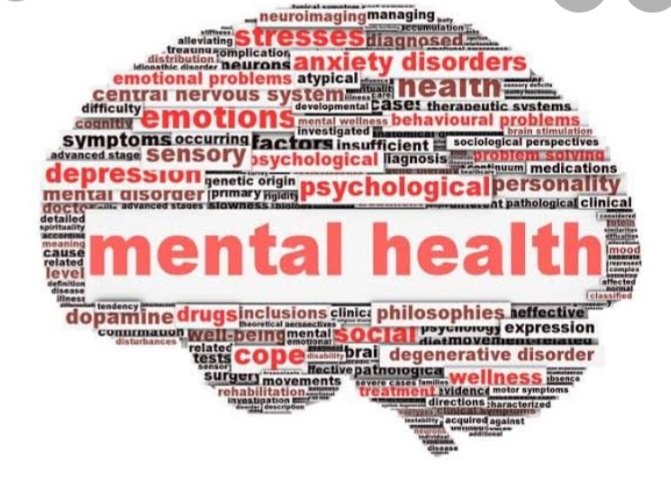
We human beings often tend to pay less attention to our mental health than our physical one, but we all should understand its heavy importance and admit the fact that they can be equally or even more dangerous than the physical issues so one should take immediate help of doctor or councilor in case some abnormalities or issues arises.
Importance of mental health :
Mental and physical health are equally important components of overall health. Mental illness, especially depression, increases the risk for many types of physical health problems, particularly long lasting conditions like stroke, type 2 diabetes and heart disease. Similarly, the presence of chronic conditions can increase the risk for mental illness.
Some mental illnesses :
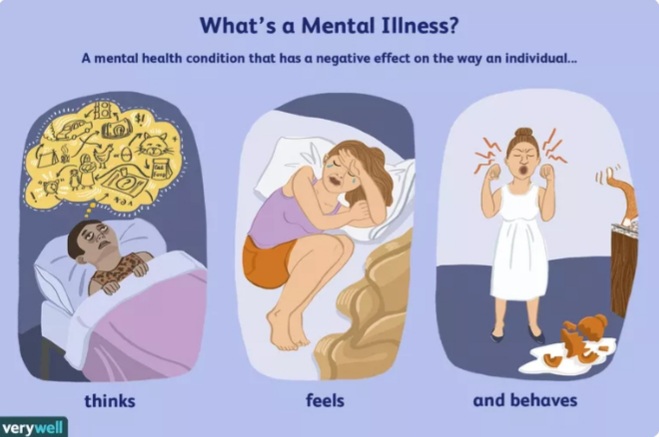
Mental illnesses are among the most common health conditions in the united states.
* More than 50% will be diagnosed with a mental illness or disorder at some point in their lifetime.
* 1 in 5 children,either currently or at some point during their life, have had a seriously debilitating mental illness.
Causes of mental illness :
There is no single cause for mental illness. A number of factors can contribute to risk for mental illness, such as
* Early adverse life experiences such as trauma or a history of abuse.
* Experiences related to other ongoing medical condition, such as cancer or diabetes
* Biological factors, such as genes or chemical imbalances in the brain.
* use of alcohol or recreational drugs.
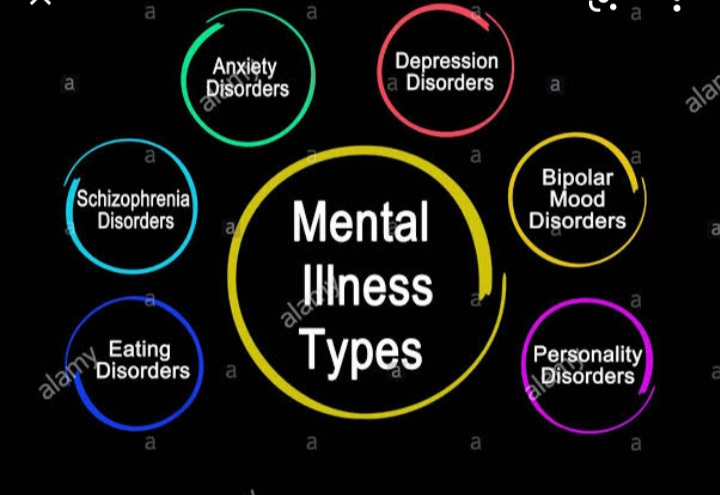
Types of mental illness :
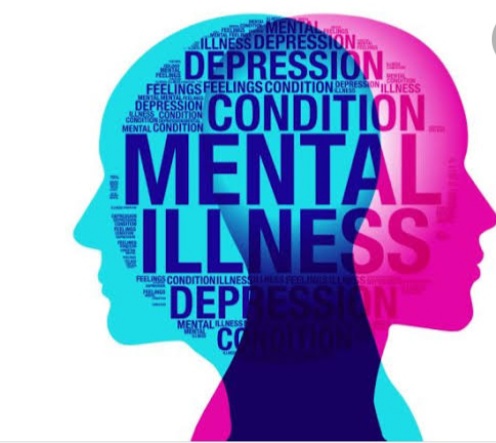
People can experience different types of mental illnesses or disorder and they can often occur at the same time.Mental illness can occur over a short period of time or be episodic. This means that the mental illness comes and goes with discrete beginnings and ends. Mental illness can also ongoing or long term.
There are more than 200 classified types of mental illness. Some of the main types of mental illness and disorders are listed below; however; this list is not exhaustive.
Anxiety Disorders :
People with anxiety disorders respond to certain objects or situations with fear and dread or terror. Anxiety disorders include generalized anxiety disorder, social anxiety, panic disorders and phobias.
Hyperactivity Disorder :
It is one of the most common childhood mental disorders. It can continue through adolescence and adulthood. People diagnosed with ADHD may have trouble paying attention, controlling impulsive behaviors or be overly active.
Disruptive Behavioral Disorders :
It involves a pattern of disruptive behaviors in children that last for atleast 6 months can cause problems in school, at home and in social sitauations.Behavioral symptoms can also continue into adulthood.
Depression and other mood disorders :
While bad moods are common and usually pass in a short period, people suffering from mood disorders live with more constant and severe symptoms. People living with this mental illness find that their mood impacts both mental and psychological well- being, nearly evry day and often for much of the day.
Eating Disorders :
Eating disorders involve obsessive and sometimes distressing thoughts and behaviors including
* Reduction of food intake
* overeating
* Feelings of depression or distress
* concern about weight, body shape, poor self image
Personality Disorders :
People with personality disorders have extreme and inflexible personality traits that cause problems in work, school or social realtionships. Personality disorders include antisocial personality disorder and borederline personality disorder
Substance use Disorders :
Substance use disorders occur when frequent or repeated use of alochol and or drugs causes significant impairment, such as health problems, disability, and failure to meet major responsibilities at work, school, or home. Substance use problems can be fatal to the user or others. Exsmples include drunk driving fatalities and drug overdoses.
In this busy world our brain gets a lot stressed and its very important that we should take due care of it, some of the practices which will help us to do better with our mental health are:
Yoga plays a great role in keeping our mind calm and also helps us to focus and concentrate on things. It also helps us deal with tough situations and gives us the strength to stay away from negativity.
Exercising regularly is a key to healthy body and we all know that a healthy body and a healthy mind goes hand in hand, so we must ensure that we exercise daily to keep ourselves fit.
The environment that we stay in also the company with which we spend time also plays a major role we should be extremely aware while selecting our company and in case we are not able to adjust we should walk away.
Food is the fuel and is of immense importance we should ensure that we are not nutrient deficient also we should ensure that we intake enough amount of water daily.
World’s Second Richest Person and an Ideal For Many
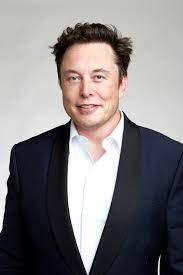
Elon Musk
Elon Musk or Elon Reeve Musk is an entrepreneur business magnate in today’s world who has totally evolved the technological terms of today . He is the founder, CEO, and Chief Engineer at SpaceX early stage investor CEO and Product Architect of Tesla, Inc. He was born in Pretoria, South Africa. He got his Bachelor’s degree in physics and economics from University of Pennsylvania. He started his career by co-founding the web software company Zip2. This startup was acquired by Compaq for $307 million in 1999. After this Musk co-founded online bank X.com that same year, which merged with Confinity in 2000 to form PayPal. The company was bought by eBay in 2002 for $1.5 billion.
SpaceX
Then In 2002, Musk founded SpaceX, an aerospace manufacturer and space transport services company, of which he is CEO and CTO. This rocket firm SpaceX, works on building reusable rockets and aspires to land humans on Mars .
Tesla
Then after this in 2004, he joined electric vehicle manufacturer Tesla Motors, Inc. (now Tesla, Inc.) as a chairman and product architect and became its CEO in 2008. Tesla produces super modern cars that run on lithium batteries and are luxurious and have an auto pilot mode which sounds really impossible to normal ears.
Solar City
In 2006, he helped create SolarCity, a solar energy services company that was later acquired by Tesla and became Tesla Energy. This company Solar City develops solar panels and solar roof tiles and aims at making this world to use the purest and cleanest fuels that are highly renewable so that even their infinite use does not exhaust them.
Neuralink
Neuralink is a startup which develops ultra high bandwidth brain machine interfaces to connect human brains to computers to help cure nervous system problems. The company was launched in 2016 and was first publicly reported in March 2017.
Failure
All this was not always as smooth as it looks. The biggest success of PayPal today was once awarded with “World’s worst business concept of the year”. Elon Musk is a person who has experienced some very adverse situations in terms of his personal life. After all, he went through a very public and long divorce process with his previous wife. He stated that this period was consumed by deep depression. As if that wasn’t enough when the 2008 recession depleted the profitability of Space X and Tesla. Elon was almost broke again and facing a decision to axe one of these two companies. In the end, Elon decided to split any remaining funds between the two companies and later that year. He received word that NASA were committing $6 billion to Space X. Needless to say, both companies survived the storm and Elon even married again just a few years later.
Where most people leave , Elon leaned in and poured is money , sweat, blood, tears in making his companies successful and his passion for design, engineering and the future would have him succeed on both the fronts.
Learning
The main thing to learn is that with the acquisition of PayPal his net-worth rose to 123 Million USD and he could have retired early and rode off into sunset and live happily after ” BUT THAT’S NOT HOW LEGENDS ARE MADE” . Instead he took a gamble and invested his newfound millions into his two separate companies – SpaceX and Tesla .
Adenosine 5′-triphosphate, or ATP, is the principal molecule for storing and transferring energy in cells. It is often referred to as the energy currency of the cell and can be compared to storing money in a bank. ATP can be used to store energy for future reactions or be withdrawn to pay for reactions when energy is required by the cell. Animals store the energy obtained from the breakdown of food as ATP. Likewise, plants capture and store the energy they derive from light during photosynthesis in ATP molecules. ATP is a nucleotide consisting of an adenine base attached to a ribose sugar, which is attached to three phosphate groups. These three phosphate groups are linked to one another by two high-energy bonds called phosphoanhydride bonds. When one phosphate group is removed by breaking a phosphoanhydride bond in a process called hydrolysis, energy is released, and ATP is converted to adenosine diphosphate (ADP). Likewise, energy is also released when phosphate is removed from ADP to form adenosine monophosphate (AMP). This free energy can be transferred to other molecules to make unfavourable reactions in a cell favourable. AMP can then be recycled into ADP or ATP by forming new phosphoanhydride bonds to store energy once again. In the cell, AMP, ADP, and ATP are constantly interconverted as they participate in biological reactions.
The first law of thermodynamics deals with the total amount of energy in the universe. It states that this total amount of energy is constant. In other words, there has always been, and always will be, exactly the same amount of energy in the universe. Energy exists in many different forms. According to the first law of thermodynamics, energy may be transferred from place to place or transformed into different forms, but it cannot be created or destroyed. The transfers and transformations of energy take place around us all the time. Light bulbs transform electrical energy into light energy. Gas stoves transform chemical energy from natural gas into heat energy. Plants perform one of the most biologically useful energy transformations on earth: that of converting the energy of sunlight into the chemical energy stored within organic molecules.
The challenge for all living organisms is to obtain energy from their surroundings in forms that they can transfer or transform into usable energy to do work. Living cells have evolved to meet this challenge very well. Chemical energy stored within organic molecules such as sugars and fats is transformed through a series of cellular chemical reactions into energy within molecules of ATP. Energy in ATP molecules is easily accessible to do work. Examples of the types of work that cells need to do include building complex molecules, transporting materials, powering the beating motion of cilia or flagella, contracting muscle fibers to create movement, and reproduction.
The Second Law of Thermodynamics
A living cell’s primary tasks of obtaining, transforming, and using energy to do work may seem simple. However, the second law of thermodynamics explains why these tasks are harder than they appear. None of the energy transfers we’ve discussed, along with all energy transfers and transformations in the universe, is completely efficient. In every energy transfer, some amount of energy is lost in a form that is unusable. In most cases, this form is heat energy. Thermodynamically, heat energy is defined as the energy transferred from one system to another that is not doing work. For example, when an airplane flies through the air, some of the energy of the flying plane is lost as heat energy due to friction with the surrounding air. This friction actually heats the air by temporarily increasing the speed of air molecules. Likewise, some energy is lost as heat energy during cellular metabolic reactions. This is good for warm-blooded creatures like us, because heat energy helps to maintain our body temperature. Strictly speaking, no energy transfer is completely efficient, because some energy is lost in an unusable form.
An important concept in physical systems is that of order and disorder (also known as randomness). The more energy that is lost by a system to its surroundings, the less ordered and more random the system is. Scientists refer to the measure of randomness or disorder within a system as entropy. High entropy means high disorder and low energy (Figure 2). To better understand entropy, think of a student’s bedroom. If no energy or work were put into it, the room would quickly become messy. It would exist in a very disordered state, one of high entropy. Energy must be put into the system, in the form of the student doing work and putting everything away, in order to bring the room back to a state of cleanliness and order. This state is one of low entropy. Similarly, a car or house must be constantly maintained with work in order to keep it in an ordered state. Left alone, the entropy of the house or car gradually increases through rust and degradation. Molecules and chemical reactions have varying amounts of entropy as well. For example, as chemical reactions reach a state of equilibrium, entropy increases, and as molecules at a high concentration in one place diffuse and spread out, entropy also increases.
Based on composition, there are two types of proteins as follows:
Simple Proteins: These proteins are made up of only amino acids e.g., albumins, globulins, glutelin.
Conjugated proteins: These are formed by the binding of a simple protein with a non-protein called the prosthetic group. Depending upon the type of prosthetic group, conjugated proteins are of several types few of which are mentioned below:
Based on shape, proteins are classified into two types:
1.Fibrous proteins: They are thread-like structural proteins that may occur singly or in groups. Fibrous proteins generally possess secondary structures and are insoluble in water. The common example of fibrous proteins is collagen of connective tissue, actin and myosin of muscles, keratin of scales, feathers, hair, claws, nails, horns and hoofs, the silk of spider web. Fibrinogen is also a fibrous protein but soluble in blood plasma. It forms insoluble fibrin during the clotting of blood.
2.Globular proteins: They are spherical in shape and are involved in metabolic activities. They have a tertiary or quaternary structure. Smaller globular proteins are usually soluble in water and are not coagulated by heat, e.g., histones. Egg albumin, serum globulins and glutelin (wheat, rice) are examples of large globular proteins, which get coagulated by heat.
Role/ Functions of proteins
Proteins perform several functions in organisms. The main functions of proteins are as follows:
1.Structural Proteins: Many proteins serve as a building material of cells and tissues. They take part in the formation of a colloidal complex of protoplast, cell membranes, organelles, extracellular matrices and fibres. Some proteins form supporting structures, e.g., elastin of ligaments, collagen of tendons, cartilages, bone and connective tissue. Keratin is the major constituent of the external protective structure of animals like hair, feathers, horny layer of skin, nails, claws, hoofs etc.
2.Enzymes: Many proteins function as enzymes to catalyse biochemical reactions that occur in the living world. Enzymes play a key role in metabolism. Every enzyme is specific in action. E.g., Amylase, protease, RUBISCO etc. RUBISCO (Ribulose Bisphosphate Carboxylase Oxygenase) is the most abundant enzyme found in plants. It the principal enzyme involved in photosynthesis.
3.Carrier Proteins (Transport proteins): Some proteins act as carriers that bind and transport specific molecules across a membrane or in a body fluid. Hemoglobin of RBCs transports oxygen in the body. RBCs contain haemoglobin (Hb) which is made up of 4 polypeptide chains and contains an iron ion. Iron has a strong affinity for oxygen. In the lungs, oxygen combines with haemoglobin to produce oxyhemoglobins. In body cells, oxygen is released and can diffuse into a body cell. Other examples include proteins such as the myoglobin of muscles that store oxygen. α-globulin of blood carries thyroxine and bilirubin, β-globulin transport vitamins A, D and K, cholesterol and ions in the blood.
4.Receptor Proteins: Several proteins present on the external surface of the cell membrane act as receptor molecules. A receptor protein molecule receives chemical signals from outside a cell. When such chemical signals bind to a receptor, they cause some form of cellular/tissue response. For example, when insulin is released in the blood, the receptor proteins present on the cell membrane bind with this insulin. This binding changes the permeability of the cell membrane and glucose can enter the cell through glucose channels.
5.Hormones: Some hormones are proteinaceous, e.g., insulin(sugar metabolism regulating hormone} parathyroid (calcium and phosphate transport regulating hormones). Hormones play a key role in the regulation of metabolism.
6.Contractile Proteins: Myosin and actin make the muscle fibres contractile to bring about movements and locomotion. The contractile system is made up of protein actin but association with myosin is essential for contraction.
7.Defensive proteins: Some proteins act as antibodies (immunoglobulins) that participate in the defence mechanism of the body.
8.Storage Proteins: These occur in milk, eggs and seeds to nourish the young ones. They include casein of milk, albumin of egg white and glutelin in cereals.
“GOOD GOVERNANCE SHOULD BE LIKE AIR. IT’S EXISTENCE NEED NOT BE DISCUSSED BUT IT’S ABSENCE WOULD MAKE A HUGE DIFFERENCE”
Nowadays the terms “Governance” and “Good Governance” are being used widely. Major reforms, actions, changes and even donations and institutional activities are basing all their rules and regulations which will help achieve “good governance”.
WHAT IS GOVERNANCE ?
Governance is the process or system by which entities are administered or directed and controlled. It is the process of decision making and the process of deciding the actors who will be involved in the decision making process and implementation of decisions.
The concept of “governance” has been used from past many years and can be used in several contexts such as international or national governance, corporate governance, local governance etc. One of the major actor of governance is “government” and other actors involved in the process of governance are NGOs, private bodies, landlords, research institutes, religious leaders, political parties, military etc.
GOOD GOVERNANCE
The term “Good Governance” originated from the report entitled ” Governance and Development” which was published by World Bank in year 1992. The World Bank defined Good Governance as “the manner in which power is exercised in the management of a country’s economic and social resources for development”.
Thus, good governance is an approach which aims in creating a system which finds justice and peace and ensures the protection of individual’s human rights and liberties. Good Governance is measured by 8 characteristics : Participation, Rule of Law, Transparency, Responsiveness, Consensus Oriented, Equity and Inclusiveness, Effectiveness and Efficiency, and Accountability.
Good Governance is a process of governance that considers the views of minorities and vulnerable groups of society and minimizes corruption while taking decisions thereby boosting the economy.
REFERENCES OF GOOD GOVERNANCE
The importance of Governance is clearly highlighted and explained in Indian Constitution which is based on – Sovereign, Socialist, Secular and Democratic Republic for attaining democracy, rule of law and welfare of people.
The Sustainable Development Goal q6 also describes the linkage between improvement of governance, inclusivity, participation, rights and security.
The Bhagavad Gita also provides numerous indications of good governance, leadership, dutifulness and self realization.
According to former United Nations Secretary-General Kofi Annan, “Good governance is ensuring respect for human rights and the rule of law; strengthening democracy; promoting transparency and capacity in public administration.” He also said that “Good Governance is perhaps the single most important factor in eradicating poverty and promoting development”.
PRINCIPLES OF GOOD GOVERNANCE
Principles of Good Governance
Participation: Participation by each section of the society irrespective of their gender, social class, caste, income etc. The participation of the individuals can be through direct or indirect (through other institutions or representatives) mediums. Participation is an crucial part of governance because it brings forward the major concerns of the society, the issues as well as in identification of potentials of the area.
Rule of Law: It ensures fair and legal frameworks and methods being used in the governance and enforces impartially. This requires full protection of human rights, especially of the weaker sections and vulnerable groups of the society. For this the law needs to be impartial, uncorrupted and judicial.
Transparency : Transparency in a process or system or governance ensures that all the decisions, actions and enforcements are taken only after considering the governing rules or laws or regulations. It signifies the availability of information’s to all the stakeholders and the people who will be affected by the actions or enforcements.
Responsiveness: Good Governance requires timely actions and processes and tries to serve all the stakeholders within a reasonable time frame or specified time frame.
Consensus Oriented: Good Governance requires different interests to sum up into a broad consensus to show the best interest for the community and society. It is necessary for developing sustainable human development and the only way by which cultural, social and historical diversity can be preserved.
Equity and Inclusiveness: Equity and Inclusivity ensures that all the members of the community or society are feeling free to put forward their concern and idea. Nobody should feel excluded. Equity and Inclusivity is highly important for minor or vulnerable groups because it is very important to give them the opportunities to express their issues and ideas for improving and maintaining their well being.
Effectiveness and Efficiency: The results or outcomes of the processes should satisfy the needs of the society and should make the best use of available resources, without exploiting them. It is necessary to identify the potentials and weaknesses of the society or community or area before coming up or implementing any solution. All the outcomes and results should within desirable time frame and should be the best decisions for the welfare of the society.
Accountability: It is one of the most vital requirements of good governance as it ensures that all the stakeholders (government bodies or private institutions or civil organizations or NGOs etc) are accountable to the public. Who is accountable to whom depends on the actions or decisions which are taken in the organization.
What makes Good Governance different from Bad Governance
CONCLUSION
From the above discussion it is clear that “Good Governance” is the most ideal form of governance but it requires transperancy, accountability and intelligent form of governance which makes it more difficult to achieve. For achieving good governance, a system much be uncorrupted, bias free and free from prejudices.
Thus, there is a need to reform and reformulate strategies for restoring good governance. The government should focus on the principle of : “Sabka Saath, Sabka Vikas and Sabka Vishwas” which will guide the way to achieve inclusive and sustainable development.
Self- confidence is a feelung of trust in one’s abilities, qualities, and judgment.children with a healthy sennsr of self-confidence are able to feel good about themselves and knoe that they deserve respect from others. Confidence can be a tough thing to build up. We’ve put together some handy tips to help you put.
TIPS FOR BUILDING SELF – CONFIDENCE :
There are number of things you can do to build your confidence. Some of them arejust small changes to your frame of mind; others you’ ll have to work on fora big longer to make them familiar habits.
1.LOOK AT WHAT YOU’VE ALEADY ACHIEVED:
It is easy to lose confidence if you believe you haven’t achieved anythkng. Make a list of all the things you’ re proud of in your life, whegger it’s getting a good mark on an exam or learning to surf. Keep the list close by and add to it whenever you do something you’ re proud of. When you’re low in confidence,pull out the list a use it to remind yourself if all the awesome stuff you’ ve done.
2.SET SOME GOALS :
Set some goals and set out the steps you need to take to achieve them. They don’t have to be big goals; they can even be things like baking a cake or planning a nighy out with friends. Just aim for some achievements that you can tick off a list to hrlp you again confidence in your ability to get stuff done.
3.THINK OF THINGS YOU’RE GOOD AT :
Everyone has strengths and talents. What are yours? Recoginising what you’re good at,and trying to build on those things,will help you to build confidence in your own abilities.
4.TALK YOURSELF UP :
You’re never going to feel confident if you have negative commentary running through your mind telling you that you’re no good. Think about your self- talk and how that might be affecting your self- confidence. Treat yourself like would your bestfriend and cheer yourself on.
5.GET A HOBBY :
Try to find something that you’re really passionate about. It could be photography, sport, knitting or anything else! When you’ve workef out your passion, commit yourself to giving it a go.chances are, if you’re intetested or passionate about a certain activity, you’re more likely to be motivated and you’ll build skills more quickly.
Confidence helps us feel ready for life’s experiences. When we’re confident, we’re more likely to move forward with people and opportunities no back away from them. And if things don’t work out at fisrt , confidence helps us try again. It is the opposite when confidence is low.
Self- confidence is a feeling of trust in one’s abilities, qualities, and judgement. Some of the many causes of low self- esteem may include. Unhappy childhood where parents were extremly critical. Poor academic performance in school resulting in a lack of confidence.
“Sundar Pichai” is the current CEO of Google Inc. He was born on July 12, 1972 in Madurai Tamil Nadu India his father’s name was Regunadha pichai and mother’s name was Lakshmi Pichai. His father worked at an electrical engineer and mother used to be a stenographer before having children. He has one brother Pichai grew up in a middle class home and was a bright student.
He excelled academically at his school, Padma Seshadri Bala Bhavan, and earned a seat in the Indian institute of technology in Kharagpur, one of the most prestigious engineering institutions. In India he did his B tech in metallurgical engineering from IIT Kharagpur and then won a scholarship to study materials science and semiconductor physics from Standard University from where he eventually earned his M.S. He is very good at remembering numbers and could remember every telephone number he dialed when he was young. He initially planned to pursue a ph.D. from Stanford and embark on an academic career. However, he dropped out and joined Applied Materials-a Silicon Valley semiconductor maker as an engineer and product manager he did not work there for long he went on to complete his MBA from the Wharton School of the University of Pennsylvania 2002. Where he was named a Siebel scholar and palmer scholar. Following the completion of his MBA he was appointed as a management consultant at McKinsey & Company. He joined Google in 2004 initially he worked on Google search toolbar as a part of the small team. The toolbar gave users of Internet Explorer and Firefox easy access to Google search. He also worked on other Google products like Google gears and Google pack. The success of Google toolbar gave Pichai the idea that Google should develop its own browser he discussed his idea with his seniors and faced an objection from then CEO Eric Schmidt, who thought that developing a browser would be too expensive affair however Pichai perserved and convinced the co-founders of Google, Larry Page and Sergey. Brin, to launch Google’s own browser. Pichai played a pivotal role in the ultimate launch of the browser, Google Chrome in 2008 Chrome proved to be a great success as it allowed the users to directly access Google search engine.
Pichai played a pivotal role in the ultimate launch of the browser, Google Chrome in 2008, Chrome proved to be a great success as it allowed the users to directly access Google search engine. Pichai became a internationally known figure following the phenomenal success after Chrome which eventually become the number one browser in the world surpassing competitors such as Internet Explorer and Firefox the Chrome also paved the way for a series of other important products like Chrome OS chromebooks and Chromecast. In 2008, Pichai was promoted to vice president of product development in this position he started appearing more often Google presentation and continued rising up the ranks in Google by 2012, he had become the senior Vice President of Chrome and apps in 2013, Andy Rubin the creator of Android left to work on a different project Larry Page then made picture in charge of Android as well his influence continued to increase and he was made the product Chief in October 2014. In 2015, Google formed a company alphabet Inc to serve as a holding company and conglomerate to own the subsidiaries that were previously owned by Google, including a new slimmed down version of Google itself on 10 August 2015 Sundar Pichai was named the CEO of Google. In February 2016 he was awarded 273 328 shares of Google’s holding company alphabet. Which led to a rise in his net worth. These shares were worth $199 million, and this took his holding up to $650 million. He married to Anjali Pichai and they have to kids ” WEAR YOUR FAILURE AS A BADGE OF HONOR”.
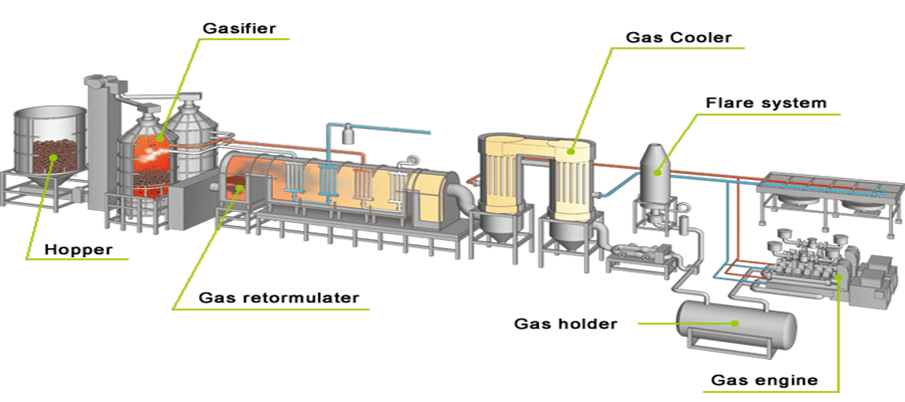
Biomass is waste material from plants or animals that is not used for food or feed; it can be waste from farming (like wheat stalks) or horticulture (yard waste), food processing (like corn cobs), animal farming (manure), or human waste from sewage plants.
Electricity generated by Biomass
Power Generation
In a direct combustion system, biomass is burned in a combustor or furnace to generate hot gas, which is fed into a boiler to generate steam, which is expanded through a steam turbine or steam engine to produce mechanical or electrical energy. Biomass is the boiler fuel that produces steam to operate a steam turbine and generator to make electricity. Several components required like furnace , boiler , pumps , fans , steams , turbines , generator, condenser, cooling tower .
Scope
India produces a huge quantity of biomass material in its agricultural, agro-industrial, and forestry operations. Over 500 million tonnes of agricultural and agro-industrial residue alone is generated every year. This quantity, in terms of heat content, is equivalent to about 175 million tonnes of oil. This quantity of biomass is sufficient to generate 15 000–25 000 MW of electrical power. Electricity can also be generated from biomass grown on wastelands, road and rail track side plantations, etc. The total electricity generation potential from biomass could reach a figure of about 100 000 MW.
Advantages
Renewable
Carbon Neutrality : Biomass reduces this because the fuel is a natural part of the carbon cycle, unlike oil and other fossil fuels. The only carbon that is released into the atmosphere from biomass fuels is what was absorbed by the plants during their lifecycles.
Less Dependency on Fossil Fuels
Low Cost in Comparison To Fossil Fuels
It Reduces Waste
Availability : Much like with the sun and water, they can be found practically anywhere on the planet.
The aim of education should be building of character and not merely injecting of information.
– Pranab Mukherjee.
Education is a learning process that enables students and adults in a school community to understand, care about and act on core ethical values.
Learn the value of respect, justice, civic virtue and citizenship, and responsibility for not only themselves but also for others.
Education gives us the knowledge we need to know what dangers in society are and how to deal with them properly.
Intelligence plus character – that is the goal of true education. The complete education gives one not only power of concentration but worthy objectives upon which to concentrate.
– Martin Luther King Jr
Important aim of teaching should be producing students with good moral and skills for life.
Confidence and resilience are two character traits that are essential for success in the workplace.
As we all know, we faces various challenges after school life. We do not comfort with our good grade but we feel comfort with the character traits like confidence and resilience.
People with Confidence deals with well interview and prospect the more responsibility the within a job or any role.
People with resilience character, deals with failure rejection and various unseen obstacles in life. They face problems rather than wasting time on worrying about Minor failures. They always try to keep growing.
Education is the key to build characters
Producing students with good grades are not enough for them to face various kinds of challenges in their life. Good grapes are not going to help them for their fruitful life. But preparing students with good ethics, good Morals, social skills and life skills are really going to help them for their future challenges.
In today’s world the schools are focusing on student and forces them for good grades in academic. Parents also want their child to gain good grades in academics. but in future only good return are not going to work anymore. A person with with good grades and without any social or soft skills or ethics they faces competitions only.
Thus, focusing on building character is also very important for us.
Biodiversity describes the whole range of the different varieties of living things and systems of this earth. Biodiversity can be found everywhere – it includes animal species, plant species, genes, ecosystems and landscapes. Biodiversity is what allows ecosystems to work and flourish. Over millions of years many different species of plants and animals have come to live in the same habitats. Over time they balance each other and hold the ecosystem together. And this biodiversity has been facing a constant decline and adversity. As humans become greedier, we forget our roots and the sole source that keeps us alive and goes on exploiting all the resources available to us in order to gain large profits.
For billions of years the loss of biological diversity has been caused by gradual natural occurrences such as glaciation or extreme events such as volcanic eruptions. However, for the last few thousand years the main cause has been the growth of human population and the enormous pressure we exert on the planet. We transform our natural ecosystems into agricultural fields and urban areas, we release pollutants, CO2 and invasive species into the environment which damages our ecosystems. Our economic pursuits have led to the extinction of many animal and plant species. When a species is removed (biodiversity is reduced) the ecosystem can lose its balance, causing it to break down. One iconic example of this is sea otters in kelp forests along the California coast. Sea otters feed on sea urchins and sea urchins feed on kelp. If sea otters are removed sea urchins multiply, eating large portions of the kelp forest, destroying the habitat and eventually leading to the death of other animals that live there. The whole ecosystem falls apart. The loss of biodiversity is therefore compromising the quality of our lives. The grave importance and impact that our biodiversity has on us has been described in the previous answer. Biodiversity acts as our main base for ecological balance in the world. If this balance is destroyed, there’s no doubts that destruction will be upon us.
Therefore, if we ignore our responsibilities in protecting the biodiversity we will inevitably end up destroying our future. Thus, it is important for us to conserve our biodiversity. Biodiversity conservation refers to the protection, upliftment, and management of biodiversity in order to derive sustainable benefits for present and future generations. Here are some ways that we can conserve biodiversity.
(1) Government legislation – Governments have the power to control what is done to the habitats within their country. Legislation that protects natural habitats by outlawing development, harvesting of natural resources, or other human exploitation has a huge impact on maintaining natural biodiversity. Protecting habitats before they have been altered is the best form on biodiversity conservation and is most successfully implemented by government regulations.
(2) Plant local flowers, fruits and vegetables – Research the plants and vegetables that are local to your area and grow a variety. Each plant and vegetable helps to protect biodiversity and supports the wider ecosystem of your local area.
(3) Conserve Your Water Use – Fresh bodies of water are essential to biodiversity. Reducing the amount of water you use, by having a 5-minute shower or not running the water when washing up the dishes, can help protect vital wetlands. Plant scientists are also working to help conserve by developing crop varieties that use less water.
(4) Reducing amount of invasive species – Invasive species are sometimes introduced to an area on purpose, but also sometimes by accident. To limit the number of invasive species moved by accident planes, ships, and cargo must be thoroughly checked before it is offloaded in a new country. Additionally, people should not bring new species of animals or plants to an area without consulting ecologists knowledgeable on the region.
(5) Reduce, Reuse and Recycle – Recycling lessens pollution by decreasing energy, electricity, and water consumption and the need for landfills. Not only can you recycle bottles and cans, but your local recycling centre will usually allow you to recycle clothes, electrical goods and batteries. (6) Support Farmers – Farmers play a key role in conserving biodiversity. With the help of biotechnology and plant science, farmers can grow more food on the same amount of land. This takes the pressure off the need to convert natural habitats into farmland.
(7) Maintenance of Wetlands – Maintain wetlands by conserving water and reducing irrigation. Avoid draining water bodies on your property. (8) In-situ conservation methods – The most effective way for us to conserve biodiversity with our present knowledge is probably in-situ conservation, that is the conservation of species within their natural habitats. Sometimes direct measures can be taken to protect a species or ecosystem, like creating a wildlife refuge or bird sanctuary.
(9) Ex-situ conservation methods – In some situations, though ex-situ conservation methods are essential. That is, the conservation of biological diversity outside of the natural habitats. We are all familiar with efforts to save the last members of endangered species by capturing them from the wild and transporting them to a zoo where many of their natural threats are removed, their health can be monitored and breeding efforts made. The goal is to grow the population and reintroduce them to their natural habitat. Some plants that can no longer survive in nature unaided are candidates for ex-situ conservation. These are generally maintained in botanical gardens. In addition to plant tissue, microbial cultures are collected and saved.
(10) Purchase of environmental-friendly products – Use environmentally friendly products. Dispose of hazardous material safely. Chemicals that enter the sewer system can contaminate freshwater and ocean ecosystems.
(11) Take a Walk – Climate change can have devastating consequences for biodiversity. Reducing your carbon footprint by taking the bus or walking can help protect it. Plant scientists are also working to combat climate change every day. One example is through innovative developments in conservation till age, which uses less fuel and therefore reduces the emission of greenhouse gases.
(12) Educate Yourself and Those Around You – Learn as much as you can about nature and share your knowledge with others. Educating people about the importance of biodiversity conservation increases public awareness of the issue. Visit ecological interpretation centres, natural history museums, and native fish hatcheries to study local ecosystems. Volunteer at an organization that focuses on conservation or restoration of habitat.
Biodiversity is the utmost gift that we are blessed with and it is our duty to preserve it and let our future generations enjoy the benefits of it as much as we did. As E.O. Wilson rightly said, we should learn to use our biodiversity in the right manner, understand its connect with humanity and learn its importance because it is the most priceless possession we can ever have.
Buddha, the founder of Buddhism, is credited for the four noble truths. The Four Noble Truths contain the essence of Buddha’s teachings and principles that he gained after enlightenment.
The Four Noble Truths are as followed:
The truth of suffering
The truth of the cause of suffering
The truth of the end of suffering
The truth of the path that leads to the end of suffering
The First Truth talks about the identification and acceptance of the presence of suffering. Buddha says that life is not ideal as it often fails to live up to our expectations. The only things that are certain and unavoidable are old age, sickness and death.
Buddhism encourages its followers to view the world with a pragmatic approach and see the world as it is. Free from any illusions or enchantments.
The Second Truth, seeks to determine the cause of suffering. Buddhism says that the root-cause of all sufferings is desire and ignorance. This comes in three forms known as the Three Roots of Evil, or The Three Fires or The Three Poisons.
Buddha says that these three roots of evil are
Greed and desire
Ignorance or delusion
Hatred and destructive urges
Buddha explains that desire is the craving for pleasure, material goods and immortality and all these are wants that can never be satisfied. Therefore, desiring them can only bring sufferings. Although he does clarify that there are positive desires like the desire for enlightenment, good wishes for others, desire to learn, teach etc.
About Ignorance, Buddha says that ignorance is not being able to see the world as it actually is. He argues that, without the capacity for mental concentration and insight, one’s mind is left undeveloped, making it unable to grasp the true nature of things and leading to vices such as envy, hatred, anger and greed.
The Third Noble Truth, the truth of the end of suffering, talks about the possibility of liberation from suffering. Buddha taught that the way to extinguish desire (the root-cause of all sufferings), is to liberate oneself from attachment.
The Third Nobel Truth also has a dual meaning suggesting,
Either the end of suffering in this life, on earth or
In the spiritual life, through achieving Nirvana (after death)
Buddha was the living example of the former.
The Fourth Noble Truth, prescribes the method for attaining the end of suffering. This prescription is known as the Noble Eightfold Path, which is as followed.
Right Understanding
Right Thought
Right Speech
Right Action
Right Livelihood
Right Effort
Right Mindfulness
Right Concentration
These eightfold paths are further divided into 3 themes.
Good Moral Conduct (Understanding, Thought< Speech)
Mediation and Mental Development (Action, Livelihood, Effort)
Wisdom or insight (Mindfulness and Concentration)
My View on the four noble truths
I do agree to some extent that one should pursue to reduce sufferings in life. However, concentrating only on the elimination of suffering is not the ultimate goal of life, because this will deprive us from seeing the other beauties of life. When we consider pleasure and happiness as a desire that we should aim to extinguish, I believe that one would not really be able to live their life to the fullest. Life for me, is the combination of sad, happy, boring and all other moments, that challenge us to grow into a better person.
Apart from this, the fourth noble truth, the eightfold path, is an extremely difficult thing to stick to. In our ordinary lives we as humans tend to make mistakes, tend to do wrong things and learn from them. The eightfold path requires us to be all good which is an extremely difficult command and requires one to be fully devoted to the Buddhism Teachings. This makes it extremely difficult to attain enlightenment, which is why, after Buddha, there have not been many people who were able to truly attain enlightenment in their lives.
Growing mentally and growing physically are two completely different things. Growing mentally refers to a person’s psychological growth the way we think and deal with different situations, and by what methods we develop and disseminate information. Growing up physically refers to a person’s physical growth like increased height, strength, and health. It can also refer to the development of your brain. ” The key to success is to keep growing in all areas of life mental emotional, spiritual as well as physical.” A healthy body can help your mind stay strong.when your body isn’t fit, it’s tougher to make challenging decisions. Some of the tips will help you to improve both simultaneously.
ENRICH YOUR MIND :
keep challenging yourself to learn new things. By doing this, will gain more knowledge about things around you, and you will learn how to utilize things in a better way. Don’t let yourself get stuck in one place, either mentally or physically. Be proactive, curious, conscious and informed about the world.
Use your brain more often by doing brain exercises:
Exercising your brain means using it more. Generally the brain takes part in everything we do, but there are some types of activities which are specifically exercise our brains. Activities like doing puzzles, playing games like chess or scrabble, solving numerical problems, studying difficult topics and changing your dexterity, spatial reasoning and logic. Doing these mental exercises daily can sharpen your mind , and it can be an excellent way to strengthens neural links in your brain.
CONSUME NUTRIENTS THAT ARE GOOD FOR BRAIN:
Take in nutrients which are good for your brain. Foods that have antioxidants like vitamin c,e,b etc are good for the brain.consuming almonds and apple juice is also good for sharpening the brain.
THINK CRITICALLY :
when we hear, read or work on something, It is very important than we question everything and pay attention to details.such an approach can improve our thinking ability because it requires more brain work than mere observations.
DO PHYSICAL EXERCISES :
A healthy body means a healthy mind; regular exercise has a positive influence our brains function. The brain takes in nutrients from the blood, which makes the brain healthier. Physical exercise is essential for enhancing mental power .
EAT HEALTHY FOODS :
spend some time to examine which kinds of food bring you up and which foods bring down. Creating a diet plan can make you feel good, and gives you a sense of self-development. This will boost your sense of success.
GET BETTER SLEEP AND TAKE NAPS:
Get as much sleep as you need, around Seven or eight hours, every night. While sleeping well does not guarantee good health, it does help you to maintain many vital functions. Perhaps most importantly sleep helps you recover from the wear and tear of daily life. Major healing functions in the body such as tissue repair, music and mental growth occur almost exclusively during sleep.
SPEED TIME WITH PEOPLE :
Build a good support system with the people around you. Whether it’s your family, friends, or something else, find a group of people who are willing to support you in any circumstances. This increases flexibility and helps to provide perspective in the midst of stress and discomfort.
STAY AWAY FROM DRUGS AND ALCOHOL : using cigarettes, alcohol, and illegal drugs damage your mental and physical health. Decreasing mental and physical stability produces” false” emotions.
FIND A GOOD LISTENER :
Find someone who is eager to listen to you, who you can talk to openly and freely. This can help you in relieving stress and anger and can heal you mentally, which ultimately has an impact on your physical health.
LAUGH MORE :
Laughter is the best medicine for human health. Human increases dopamine, and it improves memory and health.
GET RID OF BAD HABITS THAT HURT YOUR CONFIDENCE :
If you have a habit of smoking too much, drinking alcohol too much, spending too much time online, or a different habit that’s hurting your confidence, take steps to eradicate them. Study books, watch good films, play games, watch dances, and listen to songs; do the things that make you feel relaxed. Many studies suggest that watching TV and using a computer late at night is bad for your health.
STAR YOUR DAY BY THINKING ABOUT ONE GOOD THING YOU CAN DO :
Generally, it’s just a matter of deciding to do something good. Develop the habit of finding a good deed to do each day. Set aims and goals and follow through with them to attain them. By setting goals and gradually working to attain them , you will grow mentally.
Introduction: There are many definitions of existence but the most simple and understandable one would be that Existence is the state of being alive or being real. For example, you and your friend disagree about the existence of demons if you think it’s real and your friend doesn’t. Both of these arguments or acceptance about something is valid. Some things just exist in this world and not everyone has to be aware of it. Even if it’s not accepted, it’s existence doesn’t vanish. It mostly deals with being alive or just simply “being”. It’s about existing, creating an impact or not but just being there is called existing. You can exist with or without having an impact or being a change in others lives. The fact that you’re aware of your surroundings is a sign that you exist and it may or may not stop until your death. The main purpose of existing is to gain information, learn new things, be productive, useful, to help people who are in need and gain new experiences. When you exist, being nice to others and helping their existence go smoothly so yours won’t be too difficult on you is important. To make sure you live your life to the fullest, be happy, spread happiness and being resourceful can make you more happier.
Some of many synonyms of existence are actuality and reality. As the name suggests, actuality is basically talking about facts, about why things happen which also tells us that everything that happens, happens for a reason. Throughout our entire existence we would have experienced different kinds of situations where we would have stopped to think about what’s happening, why is it happening and that “thinking” is what gives our existence meaning.
There is no exact definition of existence but Existence is the ability to interact with physical or mental reality. Reality is completely based on truth, it’s an “at the moment” kind of thing, it’s about our surroundings and how it affects us or how we react to it when we exist, we can also call it the real deal. Reality is what’s happening right now and how we choose to gain from it. Being aware of your surroundings, taking mental notes about what’s happening around you, trying to learn new things and showing interest in objects and even trying to find happiness in the smallest of things is a sign of your existence.
Aristotle developed a comprehensive theory of being, according to which only individual things, called substances, fully have to be, but other things such as relations, quantity, time, and place have a derivative kind of being, dependent on individual things.
At first, people thought that existence is just being there but as time passed people learnt more about life and the meaning behind existing and realised it is all about how we spend our time, how well me make use of our resources and how much our existence has mattered to us and other people.
Conclusion: Every existing being is important, every being is important in it’s own way and it’s our duty as fellow existing beings to respect each and every being.




























 Eduindex
You must be logged in to post a comment.