WHO : Astrazeneca leading in Covid-19 vaccine race, Moderna not far behind

The WHO is in talks with multiple Chinese manufacturers, including Sinovac, on potential vaccines

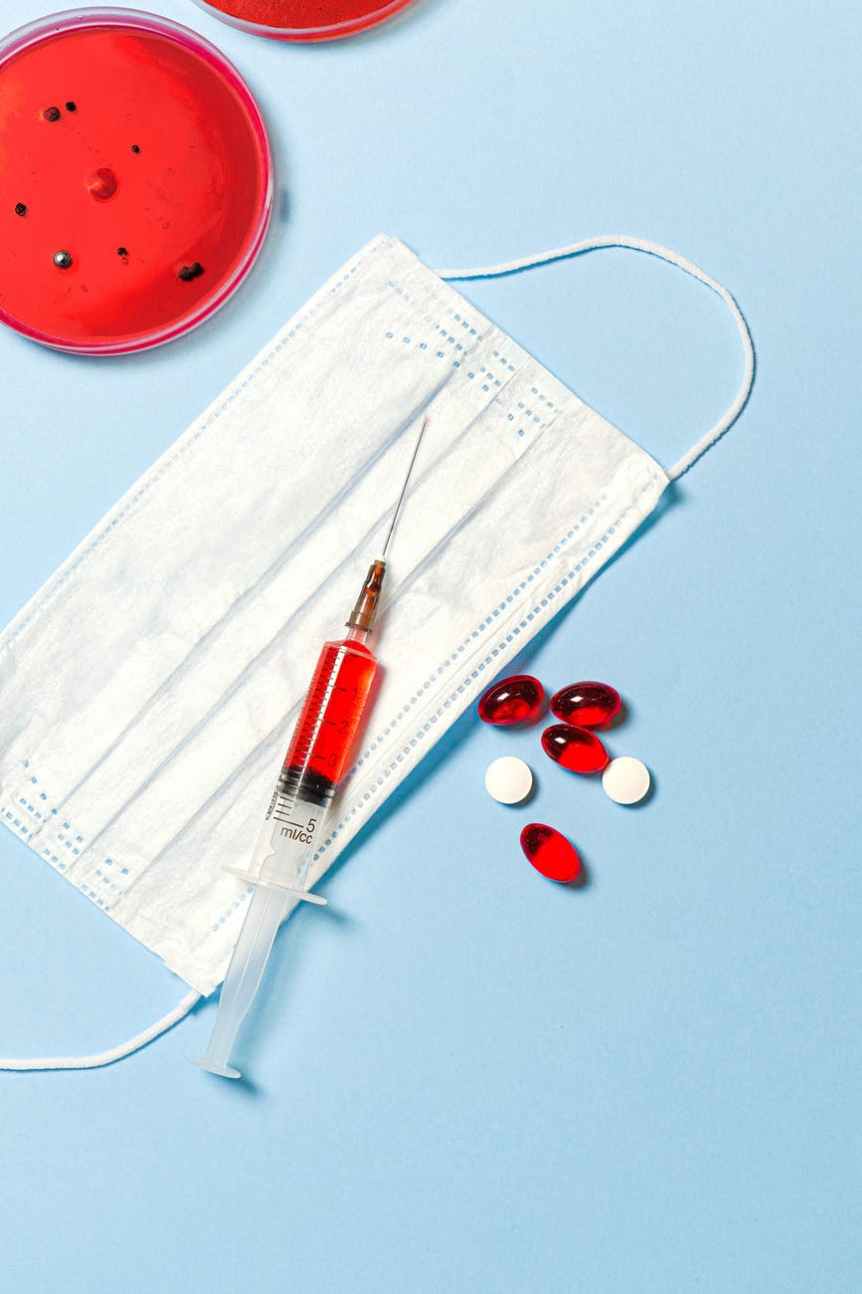
syringe and pills on blue background
Photo by Anna Shvets on Pexels.com

AstraZeneca’s experimental Covid-19 vaccine is probably the world’s leading candidate and most advanced in terms of development, the World Health Organization’s (WHO) chief scientist said on Friday.

The British drugmaker has already begun large-scale, mid-stage human trials of the vaccine, which was developed by researchers at University of Oxford.

This week, AstraZeneca signed its tenth supply-and-manufacturing deal.

“Certainly in terms of how advanced they are, the stage at which they are, they are I think probably the leading candidate,” WHO chief scientist Soumya Swaminathan told a news conference.

“So it’s possible they will have results quite early.”

Swaminathan said Moderna’s Covid-19 vaccine candidate was “not far behind” AstraZeneca’s, among more than 200 candidates, 15 of which have entered clinical trials.

ALSO READ: Coronavirus LIVE: Vaccine tests need over $30 bn in 12 months, says WHO

“We do know that Moderna’s vaccine is also going to go into phase three clinical trials, probably from the middle of July, and so that vaccine candidate is not far behind,” she said.

“But I think AstraZeneca certainly has a more global scope at the moment in terms of where they are doing and planning their vaccine trials.”

The WHO is in talks with multiple Chinese manufacturers, including Sinovac, on potential vaccines, as well as with Indian researchers, Swaminathan said.

She called for drugmakers to consider collaborating on Covid-19 vaccine trials, similar to the WHO’s ongoing Solidarity trial for drugs. A WHO-led coalition fighting the pandemic on Friday asked government and private sector donors to help raise $31.3 billion in the next 12 months to develop and deliver tests, treatments and vaccines for the disease. The initiative is called the ACT-Accelerator.

Andrew Witty, Special Envoy for the ACT-Accelerator, said it was important to consider a “portfolio of research efforts” for vaccines.

“It’s still very early days in this journey, we may be super lucky – which would be terrific – and have an early win,” Witty said. “Even if it takes 12 to 18 months that would be without precedent, the world’s fast development of vaccine.”


Intrinsic factors affecting the growth of microorganisms in food

There are various types of interactions between microorganisms and other living organisms. These interactions are natural, constant and also play a significant role in maintaining the ecological balance and stability of the biogeochemical cycle of the nature. Mostly, the food products we consume are obtained from plants and animals and also these foods are rich in variety of microorganisms which may or may not be pathogenic to humans. Growth of microorganisms in food depends on various different parameters which can be broadly classified as INTRINSIC and EXTRINSIC factors.
INTRINSIC FACTORS –
These are the factors that are present in the food substance in which the microorganism is growing, or it may be said as the internal factors of that particular food substrate. Various intrinsic factors are-

  1. Hydrogen Ion Concentration – All the microorganisms have minimal, maximal, or optimal pH for their growth and survival. Thus, the growth of microorganisms in food is affected by the pH of the food material. Foods may be classified as low pH or high pH foods. Most fruits, fermented foods come under high acid foods whereas most vegetables, meat, fish and milk are low acid foods. pH range of different microorganisms are :
    • Molds – 1.5-9.0
    • Yeasts – 2.0-8.5
    • Gram-positive bacteria – 4.0-8.5
    • Gram-negative bacteria – 4.5-9.0
  2. Water activity or moisture content – Water activity can be defined as the measure of availability of water present in any substance which can be used for biological functions and it also gives an idea of free water present in any food product. Water is an excellent requirement for microorganism for their growth. It has been observed and noted that the water activity of fresh food substances is 0.99. Also bacteria require more water activity i.e. free water in any food substrate for their growth than molds and yeasts. If specifically studied, it will be observed that gram-negative bacteria have relatively higher water requirements than gram-positive bacteria. Free water in any food substance is an essential requirement for the growth of microorganisms. Water activity of any food can be reduced by various absorption techniques to reduce the affect of spoilage by microorganisms.
  3. Redox Potential – Redox potential can be defined as the reducing and oxidizing power of food and it also greatly influences the growth of microorganisms in food. The concentration of oxygen present in any food sample determines the type of microorganism that will grow in it. Like, aerobic microbes require the oxygen whereas anaerobic microbes can also grow in lack of oxygen. So, it can be said aerobes grow at positive O-R potential whereas anaerobes grow at negative O-R potential.
  4. Composition of nutrients – Food composition is also an another intrinsic factor which influences the growth of microorganisms in food. There are 5 major nutrients group which are counted i.e. carbohydrates, proteins, lipids, vitamins and minerals, amount of each varies with the type of food and so the type and growth of microorganisms. Bacteria require the most nutrient requirement than yeasts and molds. Microorganisms utilize large complex nutrient molecules and convert them into smaller molecules. For e.g. there are some proteolytic bacteria which acts on proteins and hydrolyze it. Also some microbes convert lipids into glycerol with the help of an enzyme lipase. Some microorganisms which require vitamins for their growth are called as fastidious microorganisms.
  5. Inhibitory substances – There are a number of inhibitory substances that are present in foods by their origin which naturally prevent the growth of microorganisms in them. For e.g. some plants contain essential oils possessing antimicrobial properties. Milk also contains several antimicrobials like lactoferrin, conglutinin, etc.
  6. Biological structures – The natural structure of some foods have the remarkable excellence in controlling the entry as well as the growth of microorganisms in or on them. It can be noted as the natural covering of some foods which prevents the entry of microbes. So, the inner parts of the healthy tissues are sterile and possess very less microbial count. For e.g. skin of egg, rind on fruits, etc.

Motivational Tips for Depression – 6 Ways to Feel Better

Depression can strike anytime to anyone. It doesn’t spare its victims, and has no boundaries. Depression may be a serious illness and will never be taken lightly. Depression is sadness, hopelessness, a loss of interest in your daily living, crying, feelings of loss and thoughts of suicide are abundantly present.

There can be many causes for depression:

Life Changes
Worry
Chronic Pain
Drug and alcohol abuse
Holidays
A break-up
A death
When you start to feel depressed, or when things are beginning to compile , here are 6 ways for you to feel better and obtain yourself motivated and possibly slip away from the misery of depression.

  1. Get up and Move

Get out of bed no matter how demanding it is. Achieving physical activity when depressed is difficult. However once up, make yourself do minor things to elevate your energy. You can always go back to bed later for a nap.

Make your bed. Brush your teeth. Do the dishes. Get the mail. Read the newspaper. Feed your cat. Sit on the porch. Call people you know. Go on the computer. There are numerous minor things to settle on from. Do them all or just one or two. Of course, if you have to go to work or school then you are way ahead of the game.

  1. Get in the Shower

Taking a hot shower will wake you up and cause you to feel refreshed and clean.

Get out of your pajamas or night attire and into something you are not ashamed of wearing outside your home. When you look pleasantly, you feel worthwhile, and when you feel worthwhile, it is a self-esteem boost.

Someone once told me when you’re depressed, take a shower, and wash your troubles away. So I go with that. On many occasions, I even have hauled myself literally crying to the shower, trying to scrub away depression. There is something about crying your sadness away within the shower that creates you are feeling somewhat revived.

  1. Put On A Happy Face

Put on some make-up, fix your hair up, shave that stubble off. Sometimes, with depression, we don’t take beneficial care of ourselves as we normally would. When you feel clean, refreshed, and polished, it’s harder to think less of yourself.

By doing my hair, I add the gel and blow dry it for a moment , and that i am good to travel . My hair is wild usually. Which is fine. If it is clean, I feel better. So get going and placed on that happy face.

  1. Tidy Up

Clean up and organize you living area. When our surroundings are dark, dirty, or messy, you start to reflect that atmosphere, falling deeper into depression.

Keeping your work and lebensraum clean, well-lit, and maintained, causes you to feel good about accomplishing something.

Keep the curtains open, let the sunshine through. It’s a good way of getting your daily dose of vitamin D. I rarely shut my curtains. I have a glass slider and a bedroom window. So, whatever sun I can get i’m optimistic. So vacuum, dust, and start cleaning your house or apartment.

  1. Listen to Music

Crank up the radio, or put on a DVD and dance. Strut around the house footloose and fancy free. There are all kinds of music that will get you moving if you just motivate yourself. Irish, Latin, Salsa, Reggae and more. Find something that you can move to, something up-beat and cheerful. Something that gets you moving and motivated. Let the music guide you into a better place.

  1. No Procrastinating

Tackle something you’ve been putting off doing. Even small accomplishments start your day by giving your self-confidence the increase it needs. If you are a writer and you like to write an essay or paper, write.

Take pictures, knit, clean out the attic you’ve got been aiming to do. If I can get one article done each day , I even have accomplished something. I attempt to get a 4 page article finished a minimum of four days week. TRY being the main word. Accomplishing one activity, one day at a time.

Working Through Depression

These things are not going to work without a concentrated effort. For the steps to work you must take an active role in your depression.

Sleeping is one of the safest activities to do when you are depressed. And at times, that is all you can do. But at one point, you’re going to have to come out from under the covers and find the light. So next time you feel like you are moving into the darkness try to motivate yourself to do at least one activity to keep your mind from falling even further into the pit of darkness.


Anatomy of eyes.

Eyes are one of the most important parts of our body. They work very similar to camera. Eyes basically convert light into electric signal. Light enters into eyes through cornea. Eyes have pupil which control the amount of light entering our eye. Light then passes through lens which forms an image on retina. Retina has rods and cons cell which convert image into electric signal. Naturally we ought to take best care of this sensitive part of our body. Our senses are the input mechanisms for us to perceive the world and act. Eyes are perhaps the most important of our five senses. They are most sensitive organ. Eyes are perhaps the most favorite body part of poets, they are said to reflect emotions of the being. We rest with our eyes closed, we are said to have closed eyes when we die.

Structure and Working of Eyes and its function

Human eyes are basically designed in two parts- front part, which comprises of lens, cornea and iris; and the interior part which comprises of vitreous, retina and veins.Cornea is the transparent structure found in front of our eyes. Light enters into our eyes through cornea which focuses most of the light. Then light passes through lens and gets further focused.  Behind the cornea is iris. It is a colored, ring shaped membrane. The iris has a circular opening called pupil. Pupil can expand or retract to control the amount of eyes entering our eyes. The pupil may take some time to react to light- that is why eyes take time to adjust to low light.The lens is surrounded by muscles which keep the lens in place. These muscles can relax to flatten the lens or contract to thicken the lens. The lens in our eyes is a convex lens- the surrounding muscles make it of variable focus length. When lens is flattened the focus length is high thus we are able to see far away, and when the lens is thickened, the focus length is small and we can see closer objects.

 The interior chamber of eyeball is filled with vitreous humor. After the light crosses lens, it passes through vitreous humor to reach retina. Retina is like the film in camera. It acts as screen for the image formation. Interesting thing to note here is that the image formed is inverted! This happens because of the convex lens in our eye. And only real image formed in a convex lens are always inverted. It is the magic of our brain that interprets the things right way up.Retina has three tissue layers. The first layer is called sclera which gives eye most of its white color [2]. The middle layer is called choroid which contains blood vessels that supply the retina with nutrients and oxygen and remove its waste products. Retina has millions of light sensing nerves. These nerves are called rods and cones because of their shape. Cones are concentrated in the center of the retina. Cones work more in bright light. They provide clear, sharp central vision and detect colors and fine details. Rods and cones convert light in electric signals. This signal is sent to brain via optical nerves which interprets the signal. Rods are located outside the center of retina. They extend all the way to the outer edge of the retina. They provide peripheral or side vision. Rods also allow the eyes to detect motion and help us see in dim light and at night.

Record recoveries in India,  highest new cases in 24 hours

Total coronavirus cases in India crossed 4.9 lakh

The number of active coronavirus cases in India stands at 189463 while 285636 people have recovered

The death toll has risen to 15,301

The total number of coronavirus cases in India jumped to 4,90,401 after 17,296 new cases were reported in 24 hours. This is the highest number of new cases reported in 24 hours. According to health ministry’s numbers released today morning, the number of active cases stands at 1,89,463 while 2,85,636 people have recovered and one patient has migrated. A record total of 13,940 COVID-19 patients were declared cured in a single day. The recovery rate has improved to 58.24%.

Covid-related deaths rose to 15,301 after 407 fatalities were reported in 24 hours.

Coronavirus testing facilities have been ramped up across the country with 1,007 diagnostic labs currently offering covid diagnostic facilities, the government said.

Medical research body ICMR has said that a total of 77.76 lakh samples have been tested up to June 25. And on Thursday over 2.15 lakh samples were tested.

According to figures released by the government on Thursday, coronavirus cases per lakh in India stand at 33.39 against the world’s average of 120.21 cases/lakh. Also, death/lakh in the country is currently amongst the lowest in the world with 1.06 deaths/lakh against the world average of 6.24 deaths/lakh, the government said.

A team from Union Ministry of Health and Family Welfare will visit Gujarat, Maharashtra and Telangana this weekend to interact with the state officials and coordinate with them to strengthen ongoing efforts for management of Covid-19.

Maharashtra, the worst affected state, has reported over 1,47,741 cases and 6,931 fatalities. Among other states, Delhi has reported 73,780 cases, Tamil Nadu 70,977 and Gujarat 29,520.

Globally, total coronavirus cases moved past 95 lakh while the death toll has crossed 4.8 lakh. US on Thursday reported record number of 37,000 cases in a day, taking its overall count to over 24 lakh. The country has reported over 1.24 lakh coronavirus-related fatalities.


Can People Spread the Coronavirus If They Don’t Have Symptoms? 5 Questions

Screening for symptoms of COVID-19 and self-quarantine are good at preventing sick people from spreading the coronavirus. But more and more evidence is suggesting that people without symptoms are spreading the virus too. Monica Gandhi, an infectious diseases physician and researcher at the University of California, San Francisco, explains what is known about asymptomatic spread and why she thinks it may be a big part of what is driving the pandemic.

What does it mean to be asymptomatic?


SARS-CoV-2 – the virus that causes COVID-19 – can produce a range of clinical manifestations.Some people who are infected never develop any symptoms at all. These patients are considered true asymptomatic cases.

When people do get sick from the coronavirus, it takes on average five days and as many as two weeks to develop symptoms that can range from very mild to extremely dangerous. The time between initial infection and the first symptoms is called the pre-symptomatic phase. As an infectious disease physician, when I hear about asymptomatic spread of SARS-CoV-2, I think of a person who doesn’t have symptoms at the moment they give the virus to someone else. It doesn’t matter whether they are a true asymptomatic case or just pre-symptomatic; the public health risk is the same.

How many people are asymptomatic?

Estimates of the proportion of true asymptomatic cases – those who are infected and never develop symptoms – range from 18% to over 80%. The reasons for the huge range in estimates are still unclear, but some studies are better than others.

The most accurate way to determine the rate of asymptomatic cases is to test people regardless of whether or not they have symptoms – an approach called universal mass testing – and track them over time to see if they develop symptoms later. A recent mass testing campaign in San Francisco found that 53% of infected patients were asymptomatic when first tested and 42% stayed asymptomatic over the next two weeks. Another recent paper compared the evidence from 16 studies and estimated the overall rate of asymptomatic infection to be 40%-45%. This is in line with the San Francisco finding, but the studies sampled were of various quality and size and likely include some pre-symptomatic cases. Though none of these studies is perfect, a lot of evidence supports a true asymptomatic rate of around 40%, plus some addition fraction of patients who are pre-symptomatic.

How can asymptomatic people spread the coronavirus?

Compared to most other viral infections, SARS-CoV-2 produces an unusually high level of viral particles in the upper respiratory tract – specifically the nose and mouth. When those viral particles escape into the environment, that is called viral shedding.

Researchers have found that pre-symptomatic people shed the virus at an extremely high rate, similar to the seasonal flu. But people with the flu don’t normally shed virus until they have symptoms.

The location of the shedding is also important. SARS-CoV – the virus that caused the SARS epidemic in 2003 – does not shed very much from the nose and mouth. It replicates deep in the lungs. Since SARS-CoV-2 is present in high numbers in a person’s nose and mouth, it is that much easier for the virus to escape into the environment.

When people cough or talk, they spray droplets of saliva and mucus into the air. Since SARS-CoV-2 sheds so heavily in the nose and mouth, these droplets are likely how people without symptoms are spreading the virus.


How much asymptomatic spread is happening?


Public health experts don’t know exactly how much spread is caused by asymptomatic or pre-symptomatic patients. But there are some telling hints that it is a major driver of this pandemic. An early modeling estimate suggested that 80% of infections could be attributed to spread from undocumented cases. Presumably the undocumented patients were asymptomatic or had only extremely mild symptoms. Though interesting, the researchers made a lot of assumptions in that model so it is hard to judge the accuracy of that prediction.

A study looking at outbreaks in Ningbo, China, found that people without symptoms spread the virus as easily as those with symptoms. If half of all infected people are without symptoms at any point in time, and those people can transmit SARS-CoV-2 as easily as symptomatic patients, it is safe to assume a huge percentage of spread comes from people without symptoms.

Even without knowing the exact numbers, the Centers for Disease Control and Prevention believes that transmission from people without symptoms is a major contributor to the rapid spread of SARS-CoV-2 around the world.


What can we do to limit asymptomatic spread?


Any time a virus can be spread by people without symptoms, you have to turn to preventative measures. Social distancing measures and lockdowns work, but have large economic and social repercussions. These were necessary when epidemiologists didn’t know how the virus was spreading, but now we know it sheds at high quantities from the upper respiratory tract.

This means that universal mask wearing is best tool to limit transmission, and there is evidence to back that idea up.

On April 3, the CDC recommended that all members of the public wear facial coverings when outside of the house and around others. The World Health Organization finally followed suit and recommended universal public masking on June 5.

At this point, no one knows exactly how many cases of COVID-19 are from asymptomatic spread. But I and many other infectious diseases researchers are convinced that it is playing a major role in this pandemic. Wearing a mask and practicing social distancing can prevent asymptomatic spread and help reduce the harm from this dangerous virus until we get a vaccine.

This article is republished from The Conversation.

Can We Sustain?: The environmental challenge Towards Human Existence

Picture Courtesy: Google

In this emerging world crisis what we need to worry about the environment. Biodiversity is being hampered with the living habits of humans. As a part of the environment, We must pay heed to the development of the environment in a right and progressive way. We must know what we are leaving for the next generation. Due to the indifferent nature of human towards the environment and destructive behavior towards nature have called up a pandemic situation like Covid-19. The rising temperature, the growth of the disease, the major wild forests destruction, climatic imbalances all are results of human extravaganza. Our existential security depends on the earth’s existence. So, whenever we are talking about development we have to take the earth under consideration as well. The Hinduism sacred literature talks about ‘Mahabhuta’ which says about the exploitation of the five elements of nature, earth, water, fire, air,  space. Due to the convergence of technology we are running behind the development without thinking who to sustain it.

There are many things we should be worried about. There are many species which are either got extinct or in the way of extinct. Deforestation is one of the main causes of environmental grievance. Reports say nearly 27,000 trees are shot down each day to manufacture toilet paper. Nearly 1 million sea creatures are killed due to plastic pollution. Death of a huge number of animals in ecology, not only push the species towards extinction but also create a disruption in ecosystems and the ecological food chain. Unrestricted fishing can be another cause of the crisis in aquaculture. In this environment, every creature has its own role to play. The popularity of insects is higher than any other living creature on the planet. Due to agricultural safety, many friendly insects are killed. It says female insects travel much comparatively to male insects because they are in the process of pollination. Here if the pollination doesn’t happen, it can lead the human existence to cease. With the spike of the world population( nearly 83 million per year) and carbon footprint sensitizing the consequences like food crisis, economic crises, water problems, climatic changes, and so on. A report says the growing temperature can lead people to kill themselves. 1°C rise in temperature has given a 0.7% rise in the suicidal cases in countries like the US, Mexico. According to a report of WWF, a new disease can arise which will be higher than ever. It will make wreak havoc in the economy, health, and more. Arbitrary wild trade is another resource of ecological imbalance. Expensive release of greenhouse gas from the use of burning fuel like oil and others has indecently increased the rate of pollution, temperature, and other environmental issues.

A report called ‘The Global Tree Restoration Potential’ has remarked tree restoration as one of the efficient strategies to prevent the environmental crisis. Human and environmental development have to be proportional to each other. We can conquer the destruction by choosing sustainable development as a weapon. We are not allowed to perceive the natural beauty apparently as a part of impressionism but we are bound to be careful about securing the existence the beauty so that the next generation also can sense and experience the beauty in the same way.

16 Year Old Tik-Tok Star Siya Kakkar Commits Suicide.

The year 2020 has been a devastating and shocking year for everyone around the world. When it comes to the entertainment platform which mainly includes acting and dancing there had been many shocking up comings in this year which includes the death of the famous bollywood star sushant singh rajput due to poor mental health and depression. When everyone had not gotten over the death of sushant singh rajput there has been another incident where a famous tik-tok star has committed suicide in Delhi. The 16 year old had caught the eye of the audience with her brilliant set of dancing skills. It has been reported that the 16 year old lived with her family and was found dead around 9 pm the previous night. As per the police reports there has been no suicide note found.

It has been come to light that the star had around 11 lakh followers on tik-tok and her last post was 6 days prior to the incident. The news of the stars death was confirmed by her manager who reportedly said “This must be due to something personal…work wise she was doing well.I had a word with her last night for a new project and she sounded normal. Me and my company Fame Experts manage lots of artist and Siya was a bright Talent. I am heading to her home in Preet Vihar.” she said.

It is absolutely shocking that children of such age can take such a drastic step in their life and put an end to everything. It is the parents that have to suffer for the rest of their lives in guilt that they could not save their child irrespective of the situation. The digital world of movie stars and all sorts of actors and dancers have come under the spotlight as what kind of mental and peer pressure they tend to face in their lives.

Effective Leadership


Leadership is a process by which a person influences others to accomplish an objective and directs the organization in a way that makes it more cohesive and coherent. Leaders help their team and organization make progress and act in the right way. They can be found at many levels in our communities, businesses, organizations, and in homes across the world. Good leaders should build a vision, set clear goals and directions, and map a dynamic path forward for their team or group. True leadership can be determined, observed and measured by others desire to follow. Leadership means that leaders work with their followers to achieve objectives that they all share. Establishing shared objectives that leaders and followers can consolidate is difficult but worth the effort. Leaders who are willing to expend time and effort in determining appropriate goals will find these goals achieved more effectively and easily if followers and leaders work together. Leader-imposed goals are generally harder and less effectively achieved than goals developed together. Also leadership tends to operate in groups. It is about influencing a group of people who are engaged in a common goal or purpose and works towards achieving their goals. Therefore, leadership is about directing a group of people toward the accomplishment of a task by working skillfully.

Leaders exert influence on the environment through the goals and performance standards they establish, the values they establish for the organization and the business and people concepts they establish. People want to be guided by leaders they respect and who have a clear sense of direction. Hence effective leadership requires certain important characteristics. These include:

1.To be an effective leader, you need to roll up your sleeves and take charge. They must have strong self-confidence and must be confident enough to ensure others follow him. This includes being confident enough to lead, knowing that your plans and vision are not only viable for the team but the absolute best decision possible.

2.If you’re in a leadership role, good communication skills are absolutely crucial. Being able to express yourself openly and build empathy with other people is the foundation of effective leadership. Good communication will increase the rate of work.

3.Integrity is a set of values about which we must never compromise, no matter the circumstances. \We must have a strong handle on those values is critical to the basis of trust and loyalty, and allows people to identify whether or not we are someone they want to follow. An honest leader succeeds when they stick to their word, live by their core values, lead by example, and follow-through. Without integrity, no real success if possible.

4.A good leader must be an excellent innovator. He must display a creative attitude in his work. Most noteworthy, innovation is a guarantee of survival of a group or innovation. Without creative thinking, progress is not possible.

5.Great leadership styles focus on problem-solving and team dynamics much more than self-promotion. A great leader will never be effective if they’re more concerned with themselves than with the well-being of their team. Being humble and vulnerable with their team members will make a leader much more relatable and effective.

Good leaders are made not born. If we have the desire and willpower, we can become an effective leader.

“Soap VS Sanitizer – What Experts Believe?”

Today’s is a time when we humans are living with a pandemic which is growing all over the world. People are getting infected and dying in numbers and it’s count seeing no end. This virus has been named as Corona or Covid-19. This virus infects a person leading him/ her to high fever, cough and lack in breathing. This surely affects the respiratory system of humans, and thus spreads. Since we know that these viruses do require a host to survive, and when they get so, they just multiply. This is a virus which can spread through touch, so mostly advise to maintain a distance of 1 metre or more while talking with a person. But What doctors are so concerned with is the fact that these viruses are going through mutations and are mutating as they spread from one person to another. This surely is a sign of concern, this not only changes the DNA of the virus but also can make it difficult to track  the presence of the virus, since the technique must not be able to catch the virus, as it has evolved, thus the virus may be present even if any individual test negative. So what can be done to prohibit and remain safe from this deadliest virus. 

Doctors advise to maintain a distance of 1 metre or more while talking, use a handkerchief while sneezing or coughing and frequently wash hands with soap or sanitizer. But one of the frequently asked questions by patients and other individuals is which is better Soap or Sanitizer

So to test  and investigate the effectiveness of these  two and figure out which is better, did an experiment. They included and worked on  two scenarios. 

  1. Washing hands with sanitizer 
  2. Washing hands with the soap. 

Doctors in the microbiology lab experimented the effectiveness of E. Coli bacteria. They rubbed their hands with the bacteria and then  hands were runned on the plates, thus leaving hand impacts which were filled with bacteria. Then they washed their hands with the sanitizer but a very small quantity. Then again with a new simple but with a heavy quantity of sanitizer and the same results were recorded. The second scenario was to rub hands in E. Coli and wash hands with soap. Similar experiment was done, first washing hands for merely 10 seconds and second time for more than 30 seconds.The plates were then set to rest for 24 hours and then results were recorded. 

The results were really amazing, hand sanitizer with much of a quantity removed almost all the bacteria than with the little quantity. Same was the case with the soap, the time period of rubbing hands for. More than 30 seconds helped remove more of the bacteria than just running and washing away. But the interesting fact to record was that sanitizer is able to remove almost all the bacteria and clean our hands as compared to soap which helps some of bacteria still intact with the patch. 

“So sanitizer as per experts, doctors and scientists are much more effective as compared to soaps. It’s better to use sanitizer anyway since every drop of it remains untouched and pure and thus is an effective way out to stay away from bacteria and virus and thus stay safe

Spread the Flowers of Happiness

“Never become someone’s happiness, instead add happiness into their lives”. You must be a teenager, an adult or maybe a 70 year oldie, but do you really know what happiness means, what things gives you the spark of happiness or what all things make the butterflies dance in your stomach. We human beings tend to find happiness at every step of our lives, be it our crush, our pets, cooking or be it any other thing, we always think of being happy at every stage of our lives. Now the thing which I am talking about is different, it’s not about being happy it’s about spreading happiness, making the others happy and contibuting something to the society. Money is a materialistic and perishable which will not stay with us forever and which can only make us happy for a short period of time, but happiness is immortal, we will remember the moments of happiness till the last breath of our lives and it will always add a spark in us. In the same way if we follow the ” give and take” rule, contribute happiness to the society, we can master the art of living, we can live with a happy heart and hence look at the society with a different perspective.

freepik.com

If you are busy or confused about how to spread happiness follow these steps to enlighten your lives with different colours.

1.Be happy inorder to make someone happy: First step starts with changing yourself because if we will change ourselves, we will be able to change the others. Be happy, find happiness in small things, have patience in every situation and do not lose hope. This will give you the power to fight with every obstacle and will help you to overcome it.

2.Smile: The best mantra to be happy and to spread happiness. Don’t wait to be happy, think of the moments that make you smile, watch shows that will make you happy and just turn your rough day into a happy happy day.

3.Appreciate others: If your wife makes tasteless food with extra salt, don’t scold her or taunt her, she had put in extra efforts and gave her precious time just to make food for you, appreciate her, infact make another dish for her and spend a lovely happy time. This will not only bring a smile on her face but will also show a sign that you love her and care for her.

4.Be a good listener: There are endless problems going on in everyone’s family these days but what can we do is become a good listener and listen to their problems patiently, guide them, give them a solution or else just tell them that their problems will end soon, you just have to be happy and never lose hope in the situation of crisis.

5.Be a hero for the others: Wish everyone with a smiley face and turn their dark sad days into happy days. This will help you to relieve their pain and bring a sigh of relief in their lives.

6.Feed the stray animals or help the poor: Lat but not the least, the most important part of being happy is by feeding others, is by never letting them sleep with empty stomach and always helping them as a saviour.

As you know that these are the days are of pain and suffering where people are surrounded with endless problems, depression, anxiety and other things and in this time we as a human being can help them by sharing their burden, by always telling them that no matter what happens we are like the pillars of happiness who will never leave you alone. Follow this for once and you will see the difference.

The best way to cheer yourself is to cheer someone else up- Mark Twain

CHEESE- introduction and production

Cheese is a most commonly used dairy product which is a product derived from milk. Cheese is available in the market in various textures, forms and flavors. It is basically the product of coagulation of milk protein, casein. Cheese is said to be a concentrated form of two major products i.e. Milk protein (casein) and Milk fat. Combination of these two results in the production of cheese which is very much liked by everyone nowadays.
The other ingredients of cheese besides milk are a particular, selective strain of a bacterium, a milk clotting agent and some amount of sodium chloride (to give a salty flavor).
Various types of cheese are present in the market which is basically due to the variation in its basic constituents. No new ingredient is actually added in forming the new type of cheese. Just a basic variation in the already present ingredients can help. Sometimes there is a need to add new additional ingredients which give rise to completely different variety of cheese. It has also been observed and noted that the change in any environmental conditions surrounding the manufacture and subsequent ripening of cheese also affects its manufacturing and thus type.
BASIC CHEESE MANUFACTURING PROCESS –
The basic cheese manufacturing process consists of 3 main stages – Curdling, Curd processing and ripening. All different varieties of cheese can be manufactured at different levels of manufacturing means some cheese can be made in the first step while some needs all the 3 steps to completely occur.

  1. CURDLING –
    It is the first and the most important step in the production of cheese. In this step, there is a separation of milk into solid curds and liquid whey. Usually, this step is achieved by the addition of acidifying (souring) agent in milk and adding the enzyme RENNET. The acidification can also be achieved by directly adding some acidic agent such as vinegar. But most commonly for this acidification purpose, a starter bacteria is used which converts milk sugars into lactic acid and without even the addition of any acidic substance, the acidification is achieved. The common starter bacteria which are used are from Lactococcus, Lactobacillus, or Streptococcus families. Swiss cheese requires the addition of Propionibacter Sherman, which is used to produce Carbon dioxide bubbles during ageing resulting in the hole like structure of Swiss cheese.
    Some fresh cheeses are curdled only the acidification process, but most cheeses require the addition of enzyme, rennet which sets the cheese as strong and rubbery. It also allows the curdling step at low acidity.
  2. CURD PROCESSING
    Till this step, the cheese has now set into a very moist gel. Some soft types of cheeses are essentially complete in the first step. They are just drained, salted and packaged. But from other cheeses, which are not been prepared in the single step, the curd is cut into small cubes which allows the remaining water to drain off from the individual pieces of curd itself.
    Some harder cheeses are then heated at a normal temperature which deliberately forces out the whey from the cut curds. This step changes the taste and flavor of the cheese. Apart from providing a salty flavor to cheese, salting has some other benefits also like it prevents cheese from spoiling, it drains out moisture and also it is used in firming he cheese’s texture in an interaction with its proteins. Different cheeses have different processes of getting texture.
  3. RIPENING
    Most of the cheeses are already prepared in the last step, some of which are not prepared yet are of harder varieties and more rubbery in texture which is completely attained in this step. In this step, the cheeses are left to rest under controlled conditions. This step is also known as AGING. This step may take several years to complete. As a cheese ages, the microbes and the enzymes secreted by them transform its texture and also intensify the flavor. This transformation is more of a result of the breakdown of casein proteins and milk fat into a complex mixture of amino acids, amines and fatty acids.

Class 12 boy handles bodies of coronavirus patients

Introduction

The spread of Corona Virus has resulted in World-wide lockdown and India too has implemented lock down in all its states for last few months. This led to closing of the major industries like automobiles, infrastructure, tourism, manufacturing etc. which are biggest stakeholders of organized and unorganized sectors in India. Most of the people working in these sectors are daily age workers who do not have fixed income or benefits but solely relies on everyday wages. The closure of all these sectors has led to one of the biggest crisis which we will face in future. Here’s an article on class 12 boy handling bodies of coronavirus patients to earn living.

About

In a hunger for job to ease living, 12 class boy haunted a dangerous job of handling bodies of corona patients. A class 12 student, wants  to study medicine, to supply for his siblings’ school fees and his mother’s treatment he is doing this job. Chand Mohammad’s mother suffers from a thyroid disorder and needs her medicines urgently, but the family doesn’t have enough means for the treatment. They are barely making their ends for living . As his elder brother lost his job at a merchandise store in Krishna Nagar market during the lockdown. Chand Mohammad is from Seelampur in Northeast Delhi. He and his family has been surviving on ration provided by neighbors. And whatever his brother could earn doing odd jobs. 

Where Chand joined for work?

 A week ago, Chand joined a corporation as a sweeper at the Lok Nayak Jai Prakash Narayan Hospital in New Delhi. The job requires him to handle bodies of corona patients. The shift is from 12 noon to eight pm. He took this work after he got exhausted from all options to seek out work. Though this is a dangerous job, as he is at a better risk of getting engaged with the infection, but he want the work and earn. His family, including three sisters, two brothers and fogeys, is struggling for living. Right now, they had food and medicines for my mother. On many days, they cooked food only once. There’s an opportunity that they may fight the virus, but they cannot run away from hunger. Chand’s three sisters are still in school. He, himself is in 12 standard and have to pay the varsity fee. They need money to study. He hopes that his first salary will set things right to a particular extent. He read namaz before he exits his home for work. He even have faith within the almighty. God will look after  him and will surely show him the way. 

How he is handling bodies of coronavirus patients?

 Chand, who wants to study medicine, says But what bothers the youngster is that employees like him who are into high-risk jobs don’t get any insurance from the private companies employing them. “The most dangerous job within the world immediately handling bodies of corona patients  pays around Rs 17,000 per month. Every day, Chand handles around two to three bodies along side another sweeper. They are required to place the bodies inside the ambulance, take it to the crematorium and put it down on a stretcher once they reach the crematorium.They also have to remove all wearing the private protection equipment, which is extremely heavy. It limits movement and suffocates an individual. During this heat, one can finish up bathing in their own sweat. 

An incident he shared with media

 On Tuesday evening, Chand handled a body on his own. There was no helper with him, So, it took him a while. He gathered his breath at the top when he heard, a doctor saying the body had been lying within the mortuary for a month which nobody claimed it. Once he tried taking the body down from the ambulance, the duvet came off and a few liquid spilled on his thighs. As he is desperate to get some money, Chand has approached people giving money on low interest rates and he took his Aadhaar card and voter card, hoping to urge some money on low interest rates. His family is worried about his safety. Perhaps they also know that this is the only way for them to survive at the present. His parents inquire about his work daily. They pray for his safety. His mother cries tons daily, but he make her understand. Chand takes a shower as soon as he reaches home and keeps a distance from his family members. He is taking all precautions.For now, he would like some help in order that the family remains afloat. But we may never know what is in our destiny! 

Conclusion

 As this pandemic has made many people to suffer a lot. They are unable to have one time meal. Many don’t have money, they have migrated.We should help poor and needy as much as we can. This boy Chand Mohammad has to opt this job in which he is handling bodies of coronavirus patients. Just because he don’t have enough money he is doing this dangerous job.

Dealing with Social Anxiety

Social anxiety is one of the most common anxiety disorders. It is a chronic mental condition where people have  intense fear of social interactions, making it hard to go out, make friends, or interact with others. People with social anxiety tend to fear and avoid social situations. They are very concerned that they will do something embarrassing, or that others will judge them. It is normal to feel anxious in social situations from time to time. For example, most people feel anxious when they have to speak in front of a large group. Social anxiety becomes a problem when it becomes quite distressing and starts getting in the way of your ability to function and enjoy life. Trivial tasks such as filling in a form with people around and eating in public places or with friends may become highly stressful for somebody with social anxiety.

Social anxiety can affect daily tasks, including school life, work, and other activities. Behavioral and emotional signs and symptoms include : fear of situations in which you may be judged, worrying about embarrassing or humiliating yourself, intense fear of interacting or talking with strangers, fear that others will notice that you look anxious, fear of physical symptoms that may cause you embarrassment, such as blushing, sweating, trembling or having a shaky voice, avoiding doing things or speaking to people out of fear of embarrassment, avoiding situations where you might be the center of attention, having anxiety in anticipation of a feared activity or event, enduring a social situation with intense fear or anxiety, spending time after a social situation analyzing your performance and identifying flaws in your interactions, expecting the worst possible consequences from a negative experience during a social situation etc. The physical symptoms include: trembling, sweating , feeling nauseous , trouble catching your breath, avoiding eye contact, feeling dizzy , weeping, tantrums, clinging to parents, or isolation in children

In order to deal with social anxiety, we need to change the way we think, and change what we do. Methods to overcome social anxiety include:

  1. Social anxiety becomes a medical condition when everyday social interactions cause excessive fear, self-consciousness, and embarrassment. Anxiety can be harder to treat if you wait. Hence its important to get help. Medications and psychotherapy can help us gain confidence and improve our ability to interact with others.
  2. An important first step in learning to manage social anxiety involves better understanding your social anxiety. Take a couple of weeks to notice which situations cause you anxiety and what you experience physically when you are in those situations. Keep a journal or a list to keep track. It is a lot easier to manage your anxiety when you have a better understanding .
  3. When we’re in a social situation with a group of people, our focus of attention becomes totally caught up in our own thoughts and feeling. Hence, it is important to learn how to change our focus of attention and take more control over how we react to thoughts . We can learn to just notice the thoughts, acknowledge them, then let them pass and turn your focus of attention to something else.

YOGURT- a fermented milk product

Yogurt is a basic fermented milk product that usually contains the basic bacterial starter cultures of Lactobacillus bulgaricus and Streptococcus thermophillus.
Although the composition of different types of yogurts changes but there is some fixed composition of fats present in them. It is important to note that all yogurts must contain at least 8.25% of solid which is not fat. The fat composition changes with the type of yogurt like full fat yogurt must contain not less than 3.25% of milk fat whereas low fat yogurt must not contain more than 2% milk fat. Also there is a category of non fat yogurt where the fat composition is even less than 0.5%.
The yogurt is basically a mixture of milk and cream which is then fermented by using a culture of Lactic acid producing bacteria. The types of milk which can be used are whole, reduced-fat, low-fat or non-fat depending on which the type of yogurt is decided. The lactic acid produced by the starter culture bacteria is basically responsible for lowering the pH of the yogurt making it acidic and tart. This finally causes the milk protein to thicken. These bacteria ferment the milk which results in the production of yogurt leads to partial digestion of the milk making it more easily digestible. In addition, these bacteria also act as a beneficial microorganisms for the human body as they act as oral-antibiotic therapy and helps in eliminating the pathogenic-bacteria from the gut and replenishing the non-pathogenic bacteria.


Ingredients of yogurt
Milk
Cream
Sweeteners (e.g. sugar, honey, aspartame, etc)
Flavorings (e.g. vanilla, coffee, etc)
Other ingredients (e.g. fruits, preserves, stabilizers such as gelatin)

Types of yogurt –

  1. Set yogurt – This type of yogurt has a jelly-like structure and texture and is incubated and cooled in a final package.
  2. Stirred yogurt – This type is less firm than set yogurt. It is incubated in a tank and final coagulum is broken by stirring before cooling.
  3. Drinking yogurt – It also has coagulum broken before cooling though very little reformation of coagulum will occur.
  4. Frozen yogurt – This type of yogurt is incubated in the same way the stirred yogurt is incubated. It has an ice-cream like texture.
  5. Flavored yogurt – In this type of yogurt, flavors are added just before yogurt is poured into pots and the sugar content present in this type of yogurt is about 50%.

General processing of yogurt

  1. Adjusting milk composition and blending all the ingredients
  2. Pasteurization of milk (at 85 degrees celcius for 85 minutes)
  3. Homogenization of milk (2000-2500psi)
  4. Cooling of milk to 42 degree celcius
  5. Inoculation with bacterial starter cultures into the cooled milk
  6. pH reduction by waiting for sometime
  7. Again cooling to 7 degree celcius
  8. Addition of fruits and flavors
  9. Packaging of prepared yogurt.

Health benefits of yogurt:
• Yogurt is comparably easier to digest than milk.
• It is rich in variety of vitamins.
• It is a rich source of protein.
• As it is source of protein, it may help in losing weight and gain muscles.
• It acts as a booster for immune system
• It is also important and useful for digestive system. It destroys the pathogenic microorganisms from the gut.
• It is good for bones especially for kids and elderly
• It may also be useful in lowering the blood pressure.