India’s Freedom struggle and Different school of thoughts

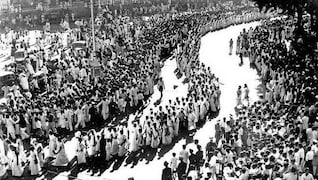
Quit India Movement: How August Movement became a watershed moment in India's  freedom struggle-India News , Firstpost

As commoners say every action can be viewed from more then one perspective. Similarly, India’s struggle for independence was interpreted in different ways by many historians who lived during that period. For some it was a worthless act by jobless people whereas for others it was their prime motive of life. Many viewed British rule over India as a means for civilising the uncivilised, poor people in India and for some others British rule was the symbol of exploitation.

In this seventy fifth year of independence, we could Look back to these thoughts and could identify the reality from the facts available before us. Let us look into some of these school of thoughts:

  1. Colonial Approach is influenced by the colonial ideology of domination. It focuses on criticism of indigenous society and culture, and praises the Western culture and values. James Mill, Vincent Smith etc., followed this approach.
  • Nationalist Approach evolved as a response to and in confrontation with the colonial approach. Before independence, this school dealt with the ancient and medieval periods of Indian history, and not the modern period. After independence this school focused on modern India. R.C. Majumdar and Tara Chand belonged to this school.
  • Marxist Approach focuses on the primary contradiction between the interests of the colonial masters and the native subjects. It also takes notice of the inner contradictions between the different sections of Indian society. R.P. Dutt and A.R. Desai were noted Marxist historians of India.
  • Subaltern Approach takes the position that the entire tradition of Indian historiography has an elitist bias and the role of the common masses has been neglected. Ranajit Guha belonged to this school.
  • Communalist Approach views Hindus and Muslims as permanently hostile groups whose interests are mutually different and antagonistic to each other.
  • Cambridge School envisages Indian nationalism as a product of conflicts among the Indians themselves for getting the benefits from the British rulers. For them Indian nationalist leaders were inspired by the greed of power and material benefits.
  • Liberal and Neo-liberal Interpretations imply that the economic exploitation of the colonies was not beneficial to the people of Britain as it delayed the development of the ‘new’ industries in Britain.
  • Feminist Historiography focuses on areas of research that analyse colonial structures, such as the legal structure, which affected women’s lives. It also focuses on women’s vulnerability due to the denial of ownership of productive resources.

When we closely examine these thoughts, we could find some of these extremely different from reality. It also symbolizes different ideologies that prevailed during the period. Even if bring it to discussion today, people may find it difficult to reach to an opinion accepted by all the people. It is because even today many stands with colonial thinkers and many are with nationalists.

Even though it is the case when we closely examine the historical text from ancient and medieval ages India was a civilised nation with rich historical background rooted in Indus valley civilisation and such golden ages. The present position of India as the torch bearer of world democracy also makes it clear that India never required an external intervention to be civilised. The people of India were capable of building a strong nation then, now and in future.

So, we could conclude that most of the thinkers who tried to give a communalist, colonial or any such face to this great struggle were mistaken. It was India’s struggle to reach its uncontrollable destiny and on fifteenth of august in 1947, it made its tryst with destiny.
Don’t Ignore Methane

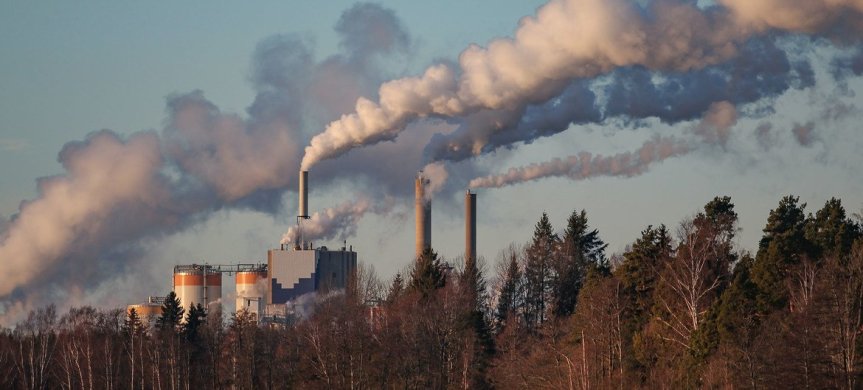
Credit: UN News

Introduction

Methane is a rapidly accelerating part of the climate problem. It is the primary component of natural gas, and it warms the planet more than 80 times as quickly as a comparable volume of atmospheric CO2 over a comparable amount of time

Methane receives much less attention than carbon dioxide, but it’s recently been in the news due to the conflict in Ukraine and due to new research on leakage of the gas in the Permian Basin — a fossil fuel-rich part of the United States (US).

Although methane is rising in the atmosphere, there’s no consensus among scientists on how much methane is coming from various sources.

Why is Methane More Harmful?

  • Methane is an invisible gas that can significantly exacerbate the climate crisis. It is a hydrocarbon that is a major constituent of natural gas used as fuel to run stoves, heat homes, and also to power industries.
  • Methane can be thought of as a thicker blanket than carbon dioxide — one that is capable of warming the planet to a greater extent in a shorter period.
    • It has an immediate effect on warming the planet. However, unlike carbon dioxide which remains in the atmosphere for hundreds of years, methane exerts its warming effects for roughly a decade.
  • Methane pollution, which is a primary component of ground-level ozone and emitted alongside toxic chemicals such as benzene, has been linked to heart disease, birth defects, asthma and other adverse health impacts.

What are the Sources of Methane?

  • Biological Sources: There are biological sources of methane – it is made from some organic compounds by methane-generating microbes known as methanogens.
    • Methanogens are found in various natural environments where little or no oxygen is present.
      • Such environments include wetlands, landfills that are not well vented, and submerged paddy fields.
  • Agriculture: Agriculture is the predominant source of global methane emissions. Livestock emissions – from manure and gastroenteric releases – account for roughly 32% of human-caused methane emissions. Cows also belch out methane.
    • Paddy rice cultivation – in which flooded fields prevent oxygen from penetrating the soil, creating ideal conditions for methane-emitting bacteria – accounts for another 8% of human-linked emissions.
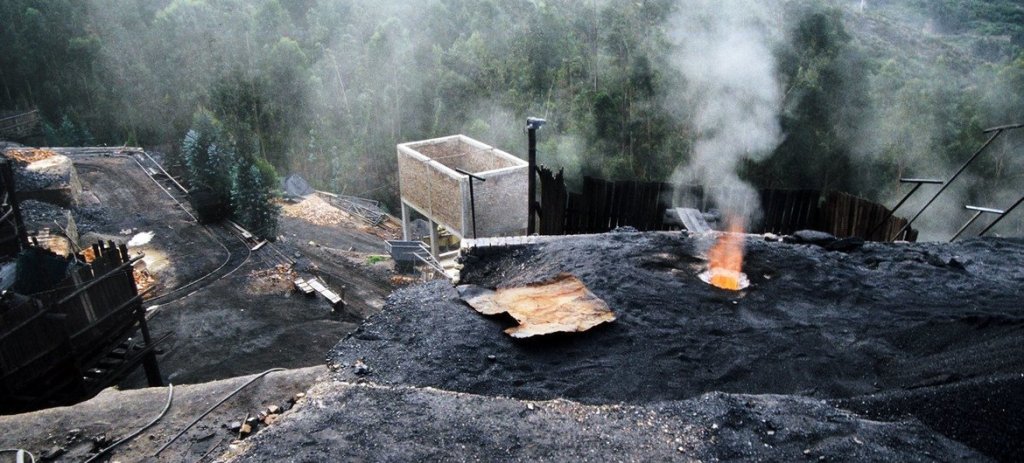
  • Emissions from Fuel and Industries: Fugitive emissions of methane from gas, coal, and oil sites are contributing to the climate crisis, but the extent of leakage of this potent greenhouse gas has been difficult to determine.
    • Methane leakage occurs at every stage of the supply chain from extraction and transport to use in homes and industries.
    • Much of the methane being released is due to “ultra-emitters”, which spew out copious amounts of the gas.

What has been Done to Curb Methane Emissions?

  • COP 26 Pledges: At COP26 in Glasgow, over 100 countries signed an agreement to cut methane emissions by 30% by 2030 as methane might be easier to deal with than carbon dioxide (which is more deeply embedded in the global economy).
    • Ahead of this agreement, the US President announced the Global Methane Pledge, which is an US-EU led effort to cut methane emissions by a third by the end of this decade.
  • MethaneSAT: Controlling methane emissions will require further scrutiny of its sources. To this end, satellites that will track methane leakage such as MethaneSAT have been planned to launch.
    • MethaneSAT is a planned American-New Zealand space mission scheduled for launch later in 2022.
    • It will be an Earth observation satellite that will monitor and study global methane emissions in order to combat climate change.
  • UN Initiatives: The UN Food Systems Summit in September 2021 was also aimed at helping make farming and food production more environmentally friendly.
    • The UN’s Koronivia Joint Work on Agriculture initiative is supporting the transformation of agricultural and food systems, focusing on how to maintain productivity amid a changing climate.
  • India’s Initiative: Central Salt & Marine Chemical Research Institute (CSMCRI) in collaboration with the country’s three leading institutes developed a seaweed-based animal feed additive formulation that aims to reduce methane emissions from cattle and also boost immunity of cattle and poultry.

What Measures can be taken Further to Reduce Methane Emissions?

  • In the Energy Sector: Methane emissions occur along the entire oil and gas supply chain, but especially from fugitive emissions from leaking equipment, system upsets, and deliberate flaring and venting.
    • Existing cost-effective solutions can help reduce emissions, including initiating leak detection and repair programs, implementing better technologies and operating practices, and capturing and utilizing  methane that would otherwise be wasted.
  • In Agriculture: The farmers can provide animals with more nutritious feed so that they are larger, healthier and more productive, effectively producing more with less.
    • Indian Council of Agricultural Research (ICAR) has developed an anti-methanogenic feed supplement ‘Harit Dhara’ (HD), which can cut down cattle methane emissions by 17-20% and can also result in higher milk production.
    • When it comes to staple crops like paddy rice, experts recommend alternate wetting and drying approaches that could halve emissions.
      • Rather than allowing the continuous flooding of fields, paddies could be irrigated and drained two to three times throughout the growing season, limiting methane production without impacting yield.
        • That process would also require one-third less water, making it more economical.
  • In the Waste Sector: The waste sector accounts for around 20% of global human-caused methane emissions.
    • The cost-effective mitigation solutions with the greatest potential related to separating organics and recycling also have the potential of creating new jobs.
      • Upstream avoidance of food loss and waste is also key.
    • Additionally, capturing landfill gas and generating energy will reduce methane emissions, displace other forms of fuels and create new streams of revenue.
  • Role of Government: The Government of India should envision a food system transition policy to help its people grow and consume food differently.
    • Instead of working in silos, the government must develop a comprehensive policy that moves farmers to sustainable modes of plant-based food production, diverts subsidies from industrial livestock production and its associated inputs, and looks at job creation, social justice, poverty reduction, animal protection and better public health as multiple aspects of a single solution.

The Bhoodan movement-  A Bloodless Revolution

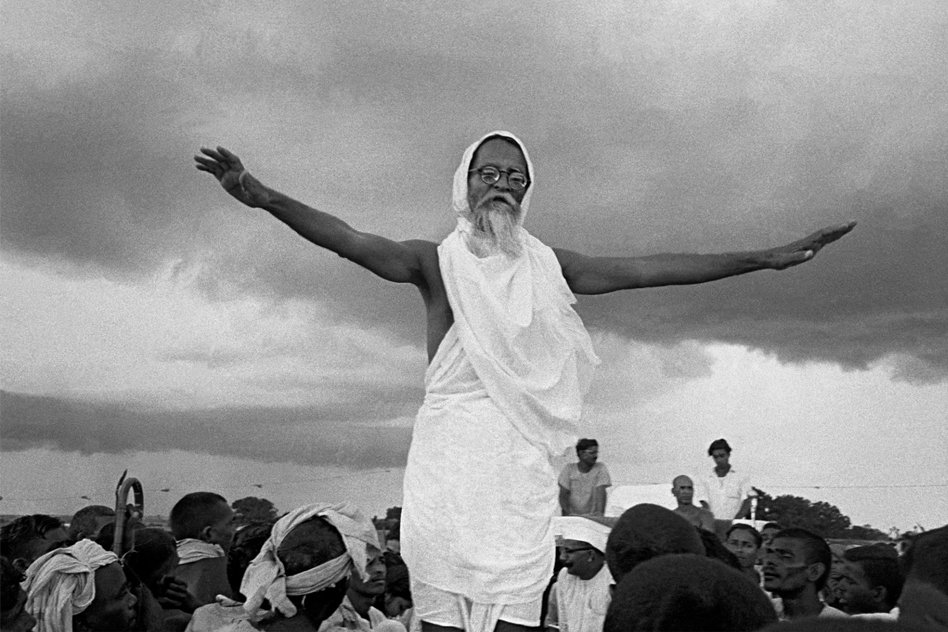
Vinoba Bhave was born in Gagode village, Raigad, Maharashtra. A keen follower of Mahatma Gandhi, Vinoba Bhave took part in the freedom struggle and started the Bhoodan movement in 1951. He was an avid social reformer throughout his life. Vinoba Bhave, a humble spiritual leader, the first non-violent resister to the Britishers and reformer of Independent India started what we know as the Bhoodan movement – a landmark in Indian history where its mission was to persuade wealthy landowners to willingly give a small share of their land to the landless people .About four years later after india gained independence, Vinoba Bhave carried out a unique movement of his own. He travelled across all of India to convince the wealthy land-owners or land-lords to share a small area of their land with their poor and downtrodden neighbours with the condition that they can’t sell the land. Over a span of 20 years, a total of 4 million acres of land was shared across the country through this movement. Bhoodan literally means a donation of land. As implied by the name, in this movement, landlords voluntarily give up land to be distributed to landless labourers, who would then cultivate the land..

How it started

Bhoodan or Land Gift movement began with Acharya Vinoba Bhave in 1951 in Telangana. An inspirational icon, Vinoba Bhave’s work & dedication impacted people all across the country. He vowed to life-long celibacy as well as selfless service for others when he was as young as 10 years old. As it is said about him, “Perhaps none of Gandhi’s followers have created so many worshippers of Truth & Non-violence, so many genuine workers as has Vinoba Bhave.” It all began on April 18th 1951, which we now know as the historic day this movement began. Vinoba Bhave stepped into the Nalgonda district, which was the epicenter of communist activity in the region. He stayed at Pochampalli, a village with about 700 families who have him a hearty welcome. He visited the ‘untouchables’ or Harijan colony, where they asked for 80 acres of land for 40 families. As documented in history, while the discussion was going on, Ram Chandra Reddy who was the local landlord, got up and exclaimed, “I will give you 100 acres for these people.” This made Vinoba come up with an idea, that this may have the solution for possibly resolving land issues across the country. Soon, this movement led to become the Gramdan or village-gift movement and went through many levels of allied programmes and initiatives. In October 1951 rose a demand for fifty million acres of land for the landless in the whole of India by 1957, thus turning a small goal into a mass-scale movement. The success lasted till 1957, post which it slowly faded.

Outcomes

It gained a lot of success, especially in Northern India in UP and Bihar. Over 4.5million acres of land in India was given as a donation by 1957. The core belief of land being a gift of earth which belonged to everyone made its way into minds of everyone. With time, many problems seeped into the movement later such as slow progress, bribery, donating bogus land, greed to get more land or incorrect implementation in some regions. The movement soon failed due to increasing misuse of a voluntary movement for self-serving purposes by a few.

To conclude taking an overall view it cannot be gainsaid that the Bhoodan – Gramdan Movement, despite all its real & apparent limitations, it would ever be deemed as a glorious attempt for a peaceful & non-violent solution of the basic land problem of Indian society & through it for a non-violent reconstruction of the Sarvodaya socio-economic-politico order of universal relevance & significance

https://thelogicalindian.com/story-feed/get-inspired/vinoba-bhaves-bhoodan-movement/

ELECTIONS AND COMMON MAN

Kerala Assembly Election 2021: Voting begins, fate of 957 candidates to be  decided today

“The elections are the greatest symbol of participation and political reform”

                                                -Mohammad Khatami (former president of Iran)

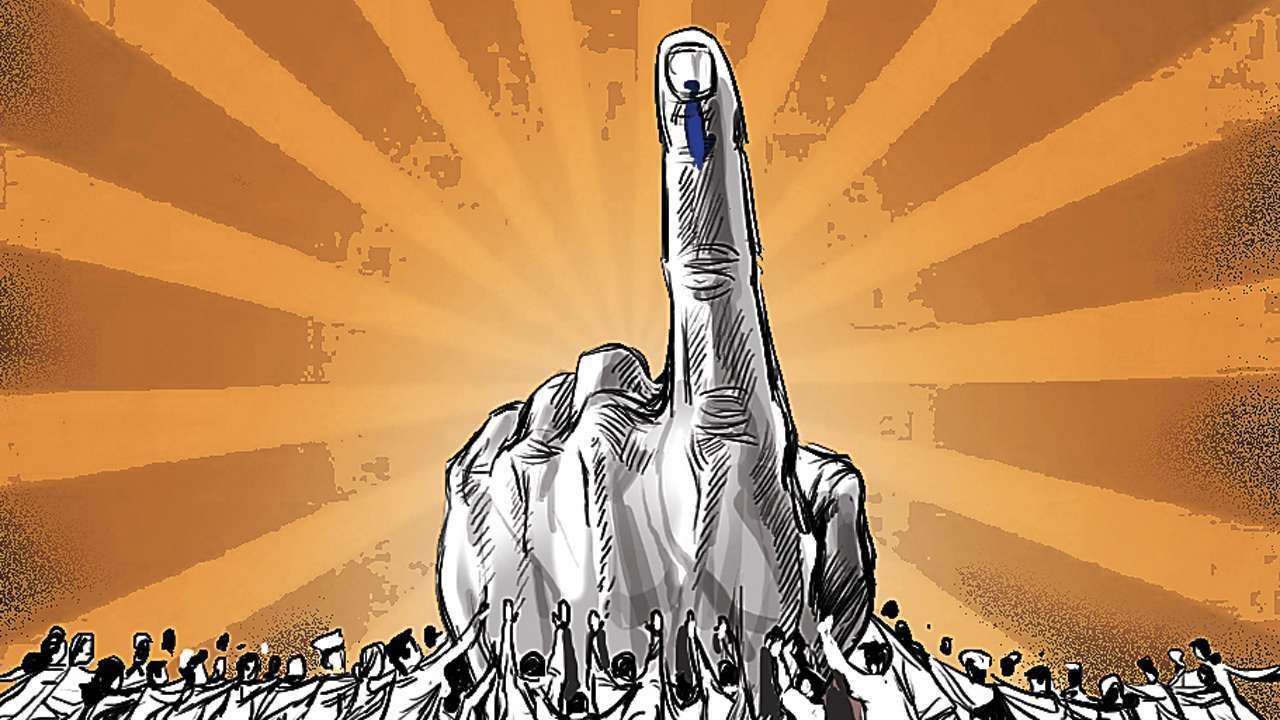
An election is a process by which the citizens of a democratic nation, irrespective of their caste and creed, decide who should take decisions on behalf of them. These have been the common mechanism for the functioning of representative democracies since the seventeenth century. The elections could be either direct elections or indirect elections. In direct elections, people could directly take part in the election process, whereas in indirect elections one individual is entitled to vote on behalf of a representative group. India being the largest democracy in the world considers elections as the “festivals of democracy” in which we celebrate the powers of common man.

            In India elections held once in five years normally. Representatives are elected on the basis of universal adult franchise. As per the conditions laid down by the makers of Indian constitution any citizen who has attained the age of 18 could cast their vote irrespective of their religion, economic and social status. Similarly, Indian constitution also enables any citizen to contest in elections without any discrimination. In order to monitor the equal participation in elections the constitution has also setup an independent body named “election commission”. Thus, elections in India are an inclusive process where common man is pivotal point.

            Indian democracy is the one in which all voters are considered equal thus, the contestants in elections are forced to treat each and every voter of his constituency with same importance at least at the time of elections. The truth is that, it is only during elections that the politicians will listen to the demands of common man. The elections instill a special power in the common man, who constitute a major portion of the society. Even the richest contestant is at the mercy of common man at times of election. It provides each and every individual an opportunity to shape the future of their nation regardless of their socio- economic conditions. Elections are the easiest way in which a citizen can express their discontent towards an existing government. Apart from this electoral system also lay down certain provisions by which common man could contest in elections and thereby contribute towards nation building directly. But many citizens are still unaware of this immense power.

            The voting percentages of elections make it evident that people are still reluctant towards casting their vote. Despite of providing holidays and several other measures to encourage people to vote, many people are not ready to play their role in nation building. Low literacy rates, apathy, unprincipled politics, lack of concrete effort on the part of the political parties in motivating the voters and local conditions in some part of the country can also be sited as the reason for lower public participation in elections. The corrupt, divisive, dishonest and exploitative practices might have decreased the confidence of people in this process. Increase in the use of money power, reliance on money power during elections, inciting communal and caste prejudice in the voters and the misuse of official machinery have shaken the foundations of the electoral process. The only remedy in these circumstances lies in bringing about systematic changes in the polity and elections.

 As John f Kennedy rightly quoted, “The ignorance of one voter in a democracy impairs the security of all”. It is necessary to make the voters aware of their rights and duties. The voters should be encouraged to cast their votes in an informed manner. The political system should take efforts to educate voters and bring back the trust in democratic system. The children should be taught about the need and worth of elections from a younger age. Above all, people should develop a feeling of obligation towards voting and should keep in mind that voting is their duty towards their nation.

By making proper use of the right to vote a common man could contribute immensely towards building their nation. On the whole as Roald Dahl said “Somewhere inside all of us is the power to change the world”. Elections are one the easiest way for a common man to contribute towards this change.

FINANCIAL INCLUSION

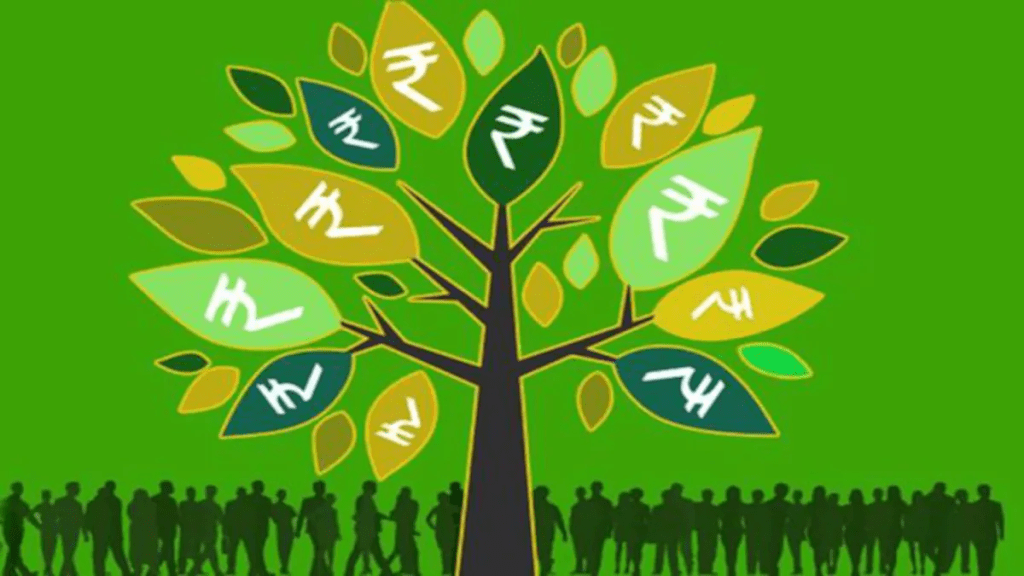
Financial inclusion may be defined as the process of ensuring access to financial services and timely and adequate credit where needed by vulnerable groups such as weaker sections and lower income groups at an affordable cost. Financial inclusion, broadly defined, refers to universal access to a wide range of financial services at reasonable cost. These not only include banking products, but also other financial services such as insurance and equity products.

INDICATORS OF FINANCIAL INCLUSION

As per the general laid down standards following are the key indicators of financial inclusion:

 · Formal banking system

This refers to the existence and usage of banking services which are regulated by formal mechanism.

· Formal credit

The usage of formal or recognized credit providers indicates the presence of an inclusive financial system.

· Insurance

Apart from formal lending and depositing the citizens will also have access to proper insurance providers in a well inclusive financial system.

· Savings options

 An inclusive financial system should provide attractive options to deposit the saved funds irrespective of the customer background.

 · Modern banking

Each and every user should have access to modern banking services like electronic banking, mobile banking, internet banking, etc.

FACTORS AFFECTING FINANCIAL INCLUSION

Access to financial services have been recognized as an important aspect of development and more emphasis is given to extending financial services to low-income households. The lack of financial services limits the range of financial services and 7 credits for households. There are multiple factors which have affected the access to financial services, like

· Place of living

 The area of operation of banks are limited to some specific geographical areas which leaves a significant portion of the rural population unbanked.

 · Absence of legal identity and gender biasness

 Due to lack of financial independence and unemployment there exists a bias on the basis of gender in having access to formal financial services.

· Limited knowledge of financial services

 Illiteracy and lack of proper knowledge about banking system has led to reluctance towards formal banking practices among deprived classes.

· Level of income and bank charges

 The charges and fines levied by banks make them less attractive for some classes of society.

 · Rigid terms and conditions

Since formal banking system is subject to strict rules and regulations, many finds it difficult.

 NEED FOR FINANCIAL INCLUSION

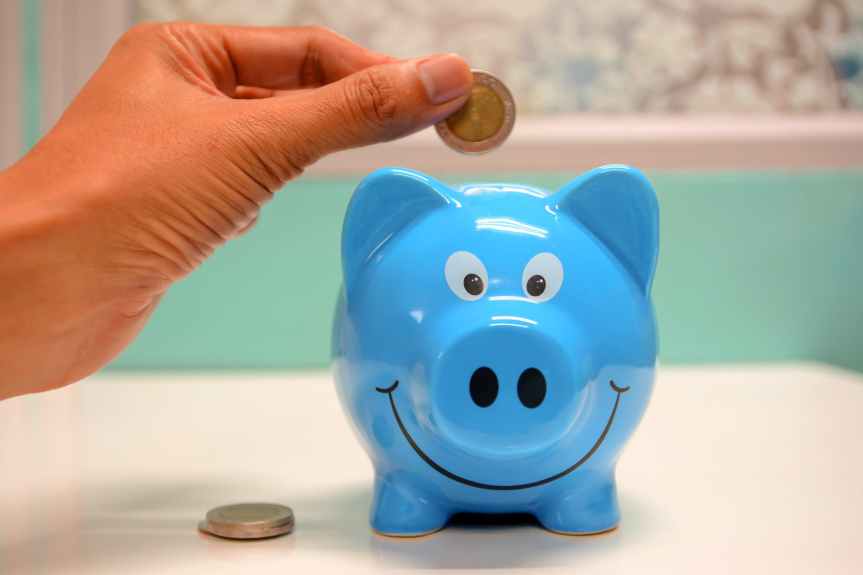
 Financial inclusion broadens the resource base of the financial system by developing a culture of savings among large segment of rural population and plays its own role in the process of economic development. Further by bringing low -income groups within the perimeter of formal banking sector, financial inclusion protects their financial wealth and other resources. Financial inclusion also mitigates the exploitation of vulnerable sections by the usurious money lenders by facilitating easy access to formal credit.

India is a nation with a major chunk of the population living under vulnerable conditions. So, it is the duty each and every privileged section to lift the conditions of the underprivileged. Financial inclusion will pave a path of uplifting the society and empowering the people.

Top 5 Summer fruits to beat the heat

Photo by Bruno Scramgnon on Pexels.com

With the temperature gradually rising, it is very important to keep ourselves hydrated at all times. Due to dehydrating summer, the body loses water and henceforth we must replenish our body with vital nutrients.
Here are a list of 5 summer fruits we can consume to keep our body cool –

1) Watermelon

Watermelons are mostly made up of water and contains electrolytes that helps in dehydration. Further, they are also rich sources of Vitamin A and are good for the eye muscles.

2) Papaya
Papaya has multiple uses. It contaims an enzyme names “Papain” which helps in digestion. Further, it is also rich source of potassium that strengthens our immune system. Papaya can also be applied externally for healthy and glowing skin. It reduces tan and helps with sunburn.

3) Citrus Fruits

Citrus fruits like oranges, mosambi and lemons are rich sources of Vitamin C that helps with collagen production for healthier skin and hair. They also have antioxidants and flavonoids that are good for healing peptic ulcers and boosts our immune system. Fruit juices are an excellent alternative ti carbonated beverages and will keep our body cool and restore all the essential vitamins and minerals.

4) Cucumber
Cucumbers contains 95 percent water and are very hydrating. They contain fibre and helps with digestion and constipation. The anti flammatory properties help in flushing out toxins from our body. When outdoors and water is hard to obtain, one can eat a cucumber to restore the water defeciency.

5) Plums
Plums are packed with nutrients. They keep our heart healthy my maintaining blood pressure levels. Further, they are rich in dietary fibre and helps with constipation and other digestive problems as well.

India’s democracy and the social reformers of India

Enough is enough: Take a stand for equality and inclusiveness - Tricentis

India is the largest democracy in the world. The country is known for the multiplicity of culture. In the words of Jawaharlal Nehru, India is the land of unity in diversity. But when we look back, we could identify several aspects were Indian culture lacked humanity and compassion.

People around the world are coming to India to experience and study the rich culture of the nation. But when we look back, we could identify several aspects which faced severe criticisms from humanitarians around the globe. So, how did this change happen?

The paradigm shift in the culture and practices are a result of combined efforts of the social reformers in the pre independent India.

Let us check some social reform movements during the independence struggle:

  • Prathana samaj

Prarthana Samaj or “Prayer Society” in Sanskrit, was a movement for religious and social reform in Bombay, India, based on earlier reform movements. Prarthana Samaj was founded by Atmaram Pandurang in 31 March 1867. The movement was started as a movement for religious and social reform in Maharashtra and can be seen much more alike Brahmo Samaj.

  • Brahmo samaj

It was one of the most influential religious movements in India and made a significant contribution to the making of modern India.[2] It was started at Calcutta on 20 August 1828 by Raja Ram Mohan Roy and Dwarkanath Tagore as reformation of the prevailing Brahmanism of the time (specifically Kulin practices) and began the Bengal Renaissance of the 19th century pioneering all religious, social and educational advance of the Hindu community in the 19th century.

  • Atmiya sabha

Atmiya Sabha was a philosophical discussion circle in India. The association was started by Ram Mohan Roy in 1815 in Kolkata (then Calcutta). They used to conduct debate and discussion sessions on philosophical topics, and also used to promote free and collective thinking and social reform. The foundation of Atmiya Sabha in 1815 is considered as the beginning of the modern age in Kolkata. In 1823, the association became defunct.

  • Satyashodhak Samaj

Satyashodhak Samaj (Truth-seekers’ Society) was a social reform society founded by Jyotiba Phule in Pune, Maharashtra, on 24 September 1873. It espoused a mission of education and increased social rights and political access for underprivileged groups, focused especially on women, Shudras, and Dalits, in Maharashtra. Jyotirao’s wife Savitribai was the head of women’s section of the society.

  • Young Bengal movement

The Young Bengal was a group of Bengali free thinkers emerging from Hindu College, Calcutta. They were also known as Derozians, after their firebrand teacher at Hindu College, Henry Louis Vivian Derozio.

  • Tattwabodhini sabha

The Tattwabodhini sabha was a group founded in Calcutta on 6 October 1839 as a splinter group of the Brahmo Samaj, reformers of Hinduism and Indian Society. The founding member was Debendranath Tagore, previously of the Brahmo Samaj, eldest son of influential entrepreneur Dwarkanath Tagore, and eventually father to renowned polymath Rabindranath Tagore. In 1859, the Tattwabodhini sabha were dissolved back into the Brahmo samaj by Debendranath Tagore.

As a result of the concerted efforts, there were several changes in Indian society. The abolishment of Sati, promotion of widow remarriage, education of women several other changes were the result of these activities.

Last two centuries were not only the period of independence struggle but was also the phase of Indian renaissance. There were many reformers who fought against the social evils and acted as the eye openers for the general public. These values have also contributed towards the framing of constitution.

Let us uphold the values shared by these great people.

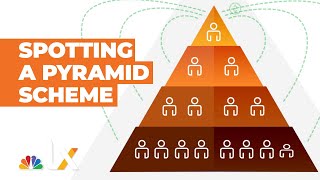
How to spot a pyramid scheme. 

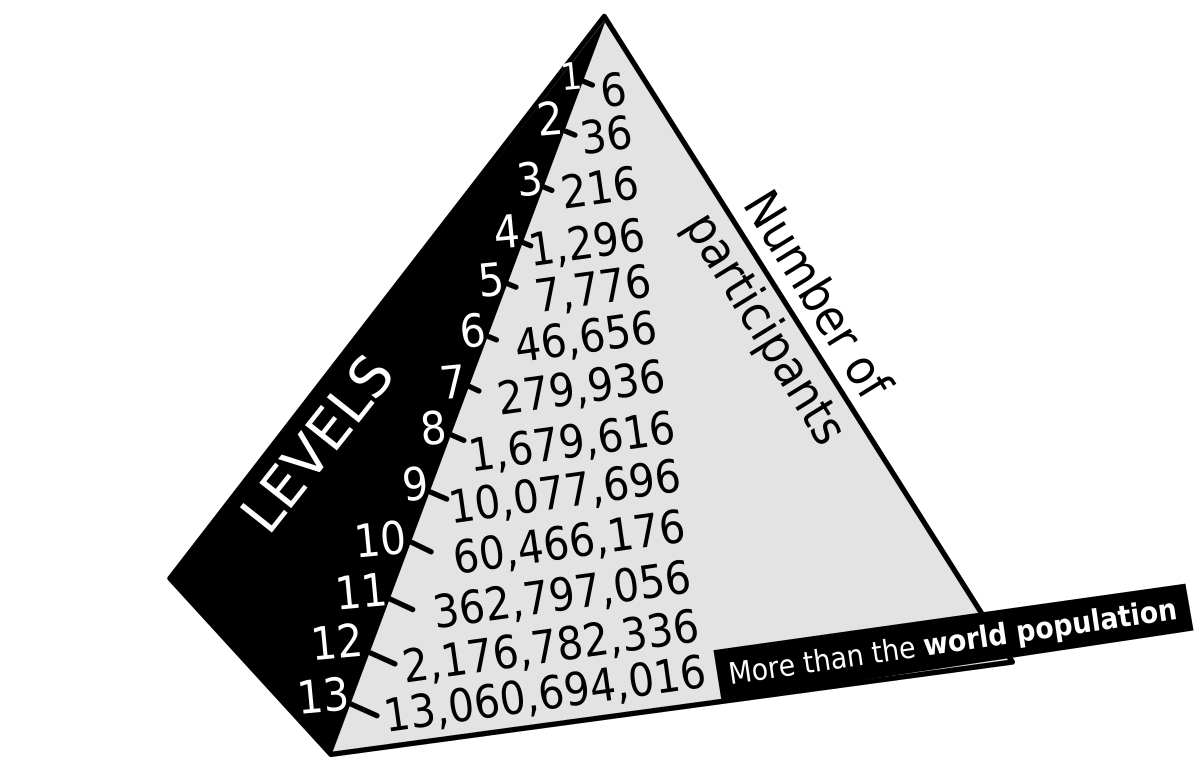
A pyramid scheme is a fraudulent system of making money based on recruiting an ever-increasing number of “investors.”  The initial promoters recruit investors, who in turn recruit more investors, and so on. The scheme is called a “pyramid” because at each level, the number of investors increases. The small group of initial promoters at the top require a large base of later investors to support the scheme by providing profits to the earlier investors.

Let’s assume the following: Founder Mike sits alone at the top of the heap, represented by the number “one.” Assume Mike recruits 10 second-tier people to the level directly below him, where each newbie must issue him a cash payment for the privilege of joining. Not only do those buy-in fees funnel directly into Mike’s pocket, but each of the 10 new members must then recruit 10 tier-three members of their own (totaling 100), who must pay fees to the tier-two recruiters, who must send a percentage of their takes back up to Mike. According to the hard-sell pitches made at recruitment events, those bold enough to take the pyramid plunge will theoretically receive substantial cash from the recruits below them. But in practice, the prospective member pools tend to dry up over time. And by the time a pyramid scheme invariably shuts down, the top-level operatives walk away with loads of cash, while the majority of lower-level members leave empty-handed. It should be noted that because pyramid schemes heavily rely on fees from new recruits, the vast majority do not involve the sale of actual products or services with any intrinsic value.

Unfortunately, these types of scams sometimes prey on people who need income quickly. For example, if you lost your job and are having a hard time finding a new job, you might be more willing to look into an opportunity that offers a fast return. But avoid the temptation to overlook the feeling that something is too good to be true. Instead, take a moment to calm yourself so you can make a legitimate plan after losing your job. Go over your budget—or create one for the first time—so you can manage your money in the best way possible while you try to increase your income.

How to Spot a Pyramid Scheme

Pyramid schemes and MLM sound a bit alike, don’t they? Here are some signs of a pyramid scheme, provided by the US Securities and Exchange Commission, to help you understand whether you’re considering a scam or a legitimate MLM opportunity:

  • You’re not selling something real. Legitimate MLMs sell tangible goods—many times there’s a ready-made market for them.
  • Get-rich-quick promises. If you’re being offered overnight success, get-rich-quick guarantees, or passive income promises, it’s probably too good to be true. People who make money with legitimate MLMs put a lot of time and effort into their businesses.
  • The company can’t prove it generates retail income. If the business can’t show you financial statements that demonstrate income from the sale of product, it could be generating all its income from recruiting people into the pyramid.
  • Strange or unnecessarily complex commission processes. Legitimate MLMs have easy-to-understand, product-based commissions.

The Bottom Line

Pyramid schemes are illegal in many countries. The model of profiting by using the network effect often traps individuals into recruiting their acquaintances, which can feel slimy for everyone involved and can ultimately strain relationships. Some people may shoot their shot each time and invest in multiple schemes losing money each time. Victims of pyramid schemes are often embrassed into silence and keep blaming themselves for not being tenacious enough to earn the promised returns, when in truth it’s the system that is faulty. Get rich quick schmes never work and will allways have some strings attached to it that can put people into legal trouble. Vigilance and knowledge about where your money goes are important factors that people must know, preventing them from falling pray for traps like the pyramid scheme.

sources – https://www.investopedia.com/insights/what-is-a-pyramid-scheme/ https://www.credit.com/blog/what-is-a-pyramid-scheme/

All you need to know about an Economic Recession.

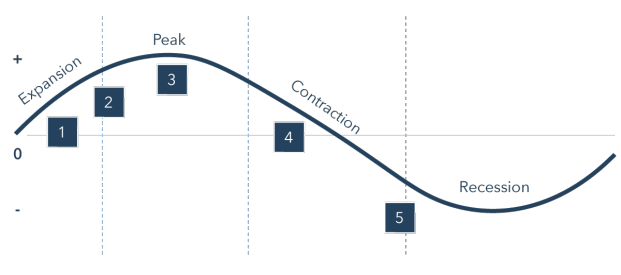
The National Bureau of Economic Research (NBER) defines a recession as “a significant decline in activity spread across the economy, lasting more than a few months, visible in industrial production, employment, real income, and wholesale-retail trade.” A recession is also believed to be signalled when businesses cease to expand, the GDP diminishes for two consecutive quarters, and the unemployment rate rises. The nature and causes of recessions are simultaneously evident and uncertain. Recessions are, in essence, a cluster of business failures being realized simultaneously. Firms are forced to reallocate resources, scale back production, limit losses, and, usually, lay off employees. Those are the clear and visible causes of recessions. There are several different ways to explain what causes a general cluster of business failures, why they are suddenly realized simultaneously, and how they can be avoided.

What Causes a Recession?

Some recessions can be traced to a clearly-defined cause. For instance, the recession of 1973-1975 began as a result of the 1973 oil crisis. However, most recessions are caused by a complex combination of factors, including high interest rates, low consumer confidence, and stagnant wages or reduced real income in the labour market. Other examples of recession causes include bank runs and asset bubbles.

Psychological Factors of a Recession

Psychological factors are frequently cited by economists for their contribution to recessions also. The excessive exuberance of investors during the boom years brings the economy to its peak. The reciprocal doom-and-gloom pessimism that sets in after a market crash at a minimum amplifies the effects of real economic and financial factors as the market swings. Moreover, because all economic actions and decisions are always to some degree forward-looking, the subjective expectations of investors, businesses, and consumers are often involved in the inception and spread of an economic downturn.

Economic Factors of a Recession

Real changes in economic fundamentals, beyond financial accounts and investor psychology, also make critical contributions to a recession. Some economists explain recessions solely due to fundamental economic shocks, such as disruptions in supply chains, and the damage they can cause to a wide range of businesses. Shocks that impact vital industries such as energy or transportation can have such widespread effects that they cause many companies across the economy to retrench and cancel investment and hiring plans simultaneously, with ripple effects on workers, consumers, and the stock market. There are economic factors that can also be tied back into financial markets. Market interest rates represent the cost of financial liquidity for businesses and the time preferences of consumers, savers, and investors for present versus future consumption. In addition, a central bank’s artificial suppression of interest rates during the boom years before a recession distorts financial markets and business and consumption decisions.

What Are the Indicators of a Recession?

Economists determine whether an economy is in recession by looking at a variety of statistics and trends. Factors that indicate a recession include:

  • Rising in unemployment
  • Rises in bankruptcies, defaults, or foreclosures
  • Falling interest rates
  • Lower consumer spending and consumer confidence
  • Falling asset prices, including the cost of homes and dips in the stock market

All of these factors can lead to an overall reduction in the Gross Domestic Product (GDP). The European Union and the United Kingdom define a recession as two or more consecutive quarters of negative real GDP growth.

Impact of Covid-19 Pandemic on the Economy

In February 2020, the National Bureau of Economic Research (NBER) announced that according to their data, the U.S. was in a recession due to the economic shock of the widespread disruption of global and domestic supply chains and direct damage to businesses across all industries. These events were caused by the COVID-19 epidemic and the public health response. Some of the underlying causes of the two-month recession (and economic hardship) in 2020 were the overextension of supply chains, razor-thin inventories, and fragile business models. The pandemic-related recession, according to NBER, ended in April 2020, but the financial hardship caused by the pandemic is still impacting Americans.

For simpler understanding-

https://www.youtube.com/watch?v=SwaCg7Gwtzw: All you need to know about an Economic Recession.

Defining tourism in modern world

Career in Travel and Tourism- Top 6 Jobs Around the World - Leverage Edu

Tourism is one among those economic activities that existed since the ancient times. During ancient and medieval era people travelled to experience the cultural differences. Over the time tourism has also evolved and has become a significant contributor to the national income of many countries. There are many nooks and corners of the world which solely depends on tourism and its allied activities for their living.

Earlier the main motive behind visiting places were to see and experience their culture along with enjoying the natural beauty of the area. But, in this era of globalization the scope of tourism has widened and many nations are trying to gain a competitive edge in this industry. Let us take a look at various types of tourism now prevailing around us:

Cultural tourism

Cultural tourism is a type of tourism that allows the tourist to participate in local cultural activities, like festivals and rituals. As a result, the tourist can enjoy a genuine cultural exchange with the locals.

Religious tourism

Religious tourism, spiritual tourism, sacred tourism, or faith tourism, is a type of tourism with two main subtypes: pilgrimage, meaning travel for religious or spiritual purposes, and the viewing of religious monuments and artefacts, a branch of sightseeing.

Environmental tourism

Environmental tourism typically defined as travel to destinations where the flora, fauna, and cultural heritage are the primary attractions. Responsible ecotourism includes programs that minimize the adverse effects of traditional tourism on the natural environment, and enhance the cultural integrity of local people.

Health tourism

Health tourism is a form of tourism that consists of patients traveling to other countries to get medical treatment or assistance. It comprises all the services associated with tourism like transport, accommodation, and hospitality.

Culinary tourism

Culinary tourism is the focus on food as an attraction for exploration and a destination for tourism. Although food has always been a part of hospitality services for tourists, it was not emphasized by the tourism industry until the late 1990s.

Adventure tourism

Adventure tourism is defined as the movement of the people from one to another place outside their comfort zone for exploration or travel to remote areas, exotic and possibly hostile areas.

Enotourism

Enotourism, oenotourism, wine tourism, or vinitourism refers to tourism whose purpose is or includes the tasting, consumption or purchase of wine, often at or near the source.

Rural tourism

Rural tourism focuses on actively participating in a rural lifestyle. It can be a variant of ecotourism. Many villages can facilitate tourism because many villagers are hospitable and eager to welcome (and sometime even host) visitors. Agriculture is becoming highly mechanized and therefore, requires less manual labor.

Sports tourism

Sports tourism refers to travel which involves either observing or participating in a sporting event while staying apart from the tourists’ usual environment. Sport tourism is a fast-growing sector of the global travel industry and equates to $7.68 billion.

Eco tourism

Ecotourism is defined as “responsible travel to natural areas that conserves the environment, sustains the wellbeing of local people and involves interpretation and education”

Agritourism

Agro-tourism refers to people visiting working farms or other agricultural operations for the purpose of enjoyment, education, or other active involvement. Agri-tourism encompasses a wide variety of activities and provides a means for farmers to diversify and supplement their income.

Sustainable tourism

Sustainable tourism is defined by the UN Environment Program and UN World Tourism Organization as “tourism that takes full account of its current and future economic, social and environmental impacts, addressing the needs of visitors, the industry, the environment and host communities.”

Space tourism

Space tourism is a type of space travel that allows individuals to visit outer space for the purpose of recreation or leisure. Suborbital flights, orbital trips, and missions to distant planets are all examples of space tourism

Business tourism

  Business tourism is the provision of facilities and services to the millions of delegates who annually attend meetings, congresses, exhibitions, business events, incentive travel and corporate hospitality.

India is a country with wide scope for tourism. It should try to incentivize the emerging trends in tourism industry and strive to be a global leader.

Why should one get enough sleep?

We all need sleep, get most of us take it for granted by staying up for  long hours at night watching a screen or blocking the brain with caffeine and other harmful drugs . Many people do not get enough quality sleep, and this can affect their health, well-being, and ability to do everyday activities.

You may think nothing is happening when you sleep. But parts of your brain are quite active during sleep. And enough sleep (or lack of it) affects your physical and mental health. When you sleep, your body has a chance to rest and restore energy. A good night’s sleep can help you cope with stress, solve problems or recover from illness. Not getting enough sleep can lead to many health concerns, affecting how you think and feel.

How much sleep do I need?

Many factors affect how much sleep you need. Age is a big factor:

  • Infants need about 16 hours a day.
  • Toddlers and preschoolers need about 12 hours.
  • Teenagers need about nine hours.
  • Adults need seven to eight (though some are fine with five and others need closer to 10).
  • Pregnant people often need more sleep during the first trimester.

If you haven’t slept well or long enough for a few days, you might create a sleep debt. Once your debt builds up, you may feel physically and mentally exhausted. Try to make sure you get enough sleep every night to avoid creating this debt. You can’t necessarily make up your debt by sleeping a lot on the weekends. It’s best to get enough sleep all week long. A person who is getting too little quality sleep may experience a range of symptoms including: fatigue, irritability, mood changes, difficulty focusing and remembering, reduced sex drive

In1965 , an experiment was conducted where a high school boy stayed up for 264 hours or 11 days. He slowly lost focus of the eye, became moody and irritable, he stopped sensing stimuli and could not concentrate or retain memories. We grow sleep due to signals from our body hormones like melatonin and adenosine that send us into a deep doze.

During the night, you cycle through two types of sleep: non-rapid eye movement (non-REM) sleep and rapid eye movement (REM) sleep. Your brain and body act differently during these different phases. During non-REM stages, your body-Builds bone and muscle, Repairs and regenerates tissues, Strengthens the immune system. When you enter REM sleep, brain activity increases again, meaning sleep is not as deep. The activity levels are like when you’re awake. That’s why REM sleep is the stage where you’ll have intense dreams. Usually, REM sleep arrives about an hour and a half after you go to sleep. The first REM period lasts about 10 minutes. Each REM stage that follows gets longer and longer.

Sleeplessness may result in inflammations, hallucinations, high blood pressure and is also related to obesity and diabetes and obesity along with impairment in memory mood, reaction time etc.

How does sleep deprivation cause such immense effects?

 Our brain collects a lot of unwanted information during the day that can be proceed as useful and waste while we sleep. Our brain uses a lot of energy source that leads to build up of adenosine, which increases the urge to sleep and caffeine blocks the pathway of this that causes us to be awake. Waste products if not cleared away overload the brain leading to the negative symptoms of sleep deprivation. A glymphatic system is present in all which acts as a clean-up machine that removes this build up and is active mostly when we are asleep. hence if the brain doesn’t get its sufficient recharge it could lead to dire consequences like insomnia and other fatal disorders that a person can develop. For now, we can be sure that slipping into slumber is a necessity to maintain our health and sanity.

Takeaway

Sleep deprivation can harm a person’s mental and physical health, their performance at school or work, and their overall quality of life. Also, a persistent lack of sleep can lead to complications or indicate an underlying health problem, such as sleep apnea or anxiety. Anyone who is concerned about a lack of sleep should contact a medical professional.

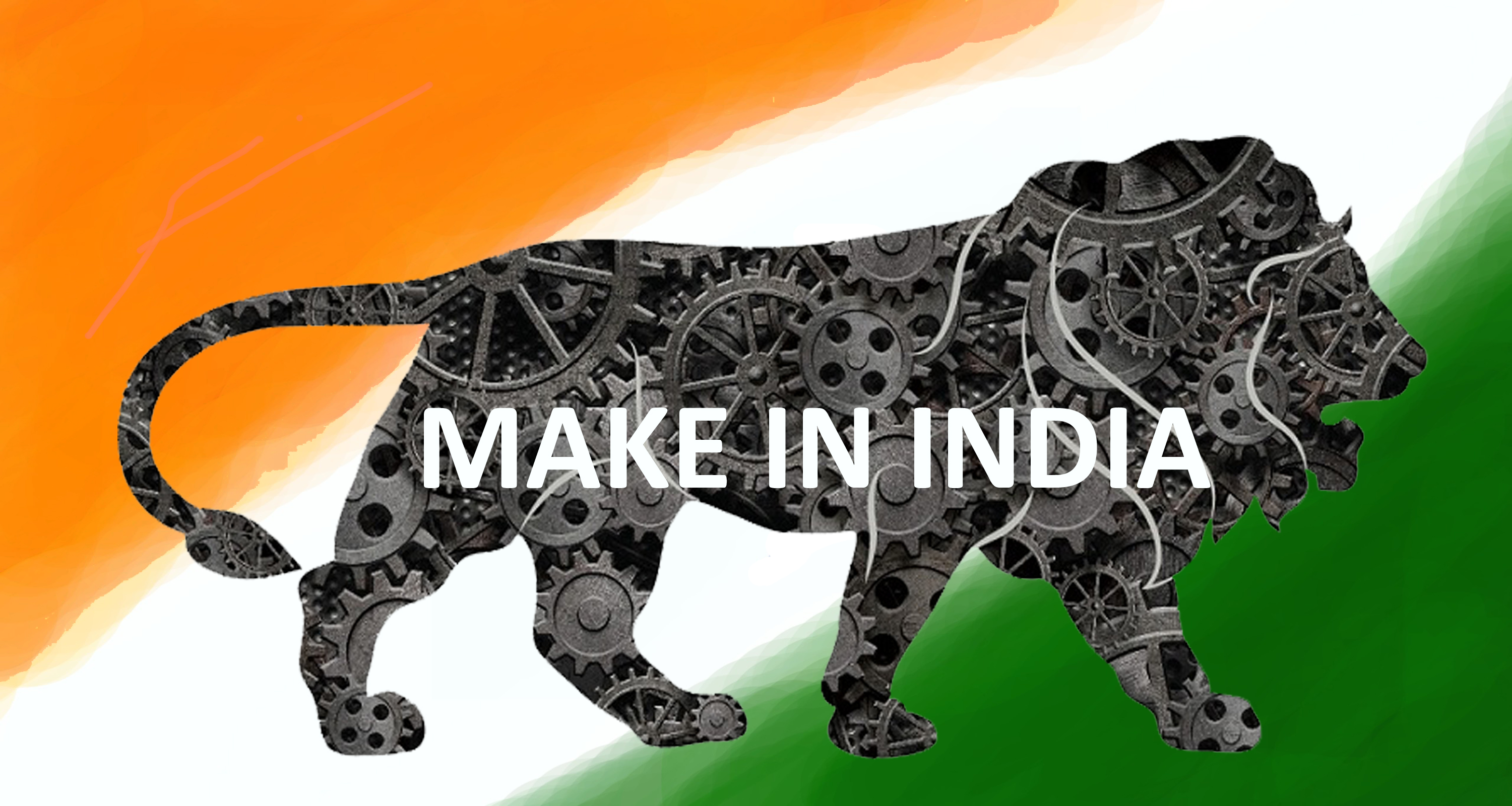
Make in India

All You Need To Know About 'Make In India' - iPleaders
source: Google

As India is completing her 75th year of independence, the government has put all its focus on making India self-reliant. In 1950, since the very first plan formulated by planning commission, self-reliance was given due importance. From a broken agrarian economy India has built up an economy which is seventh largest in the world. However, the fact is that it is not sufficient to meet the growing needs of 140 crore population of the country.

India is forced to depend on other nations to meet many of its needs even at present. This solidifies the need for an initiative to boost India’s production. Recognising this urge, the government of India has initiated the scheme termed “Make in India”.

Make in India aims to promote the manufacturer to develop, manufacture and assemble products domestically. It not only emphasizes on production but also focuses on innovation and research. Under this scheme government provides market for goods made in India and also markets them in international markets. “Make in India” had three stated objectives:

  • to increase the manufacturing sector’s growth rate to 12-14% per annum;
  • to create 100 million additional manufacturing jobs in the economy by 2022;
  • to ensure that the manufacturing sector’s contribution to GDP is increased to 25% by 2022 (later revised to 2025).

In order to achieve this objectives government of India has initiated several programs like:

Sagarmala

Sagarmala Programme aims to provide enhanced connectivity between the ports and the domestic production& consumption centres. The programme envisages unlocking the potential of waterways and the coastline to minimize infrastructural investments required to meet these targets.

Bharatmala

The Bharatmala Pariyojana is a centrally-sponsored and funded Road and Highways project of the Government of India.[1] The total investment for 83,677 km committed new highways is estimated at ₹10.63 lakh crore, making it the single largest outlay for a government road construction scheme.

Digital India

Digital India is a campaign launched by the Government of India in order to ensure the Government’s services are made available to citizens electronically by improved online infrastructure and by increasing Internet connectivity or making the country digitally empowered in the field of technology.[1][2] The initiative includes plans to connect rural areas with high-speed internet networks. It consists of three core components: the development of secure and stable digital infrastructure, delivering government services digitally, and universal digital literacy.

Freight corridors and Industrial corridors

These are infrastructure projects to facilitate easy movement of goods as well as infrastructural setup for business investments

UDAN RCS

Ude Desh ka Aam Naagrik (Hindustani for “Let the common citizens of the country fly”), known by its acronym UDAN (Hindi for “flight”) is a regional airport development program of the Government of India and part of the Regional Connectivity Scheme (RCS) of upgrading under-serviced air routes. Its goal is to make air travel affordable and widespread, to boost inclusive national economic development, job growth and air transport infrastructure development of all regions and states of India.

Last two years was the period when we realised the importance of self-reliance the most. During lockdown when international borders were closed there was shortage of many goods. On successful implementation of this initiative India could be able to meet its own needs along with the needs of the world. So let us hope that on the eve of 100th year of independence India would be a global leader with an economy sufficient to meet the demand of the world.

Let us conclude on the note that self-reliance is the most important thing a country as well as an individual should strive for.

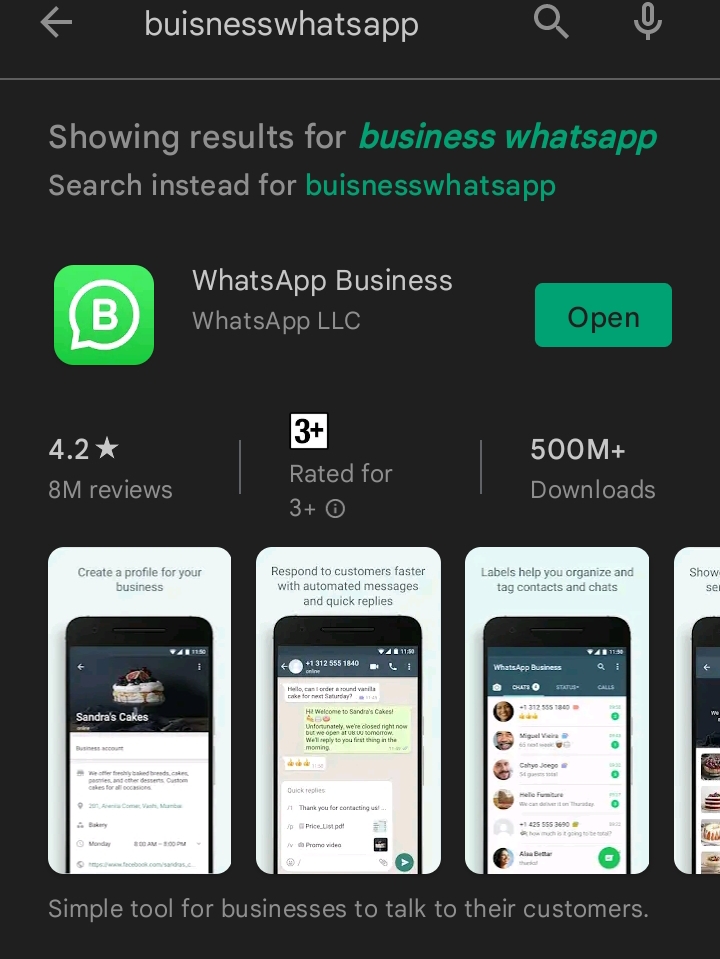
Features of buisness watsapp

watsapp which well known to people of all generations including kids,now a days it is main source of communication or intraction between people’s.

Now a days buisness are going online so meta company also introduced a best application for buisiness it is watsapp buisines, although everyone who are reading this blog are familiar with this application but please spend some of your valuable time in reading this in which we know best updated buisines watsapp Together with WhatsApp chatbot, WhatsApp Business is a very powerful tool for commerce. Thanks to many new features that the platform keeps on releasing, WhatsApp is becoming a great retail place, especially during remote times. Even if you are not going to build a WhatsApp chatbot, there

Let’s look closer at WhatsApp Business app features that you might enjoy as much as we do:

1. Business Profile
2. Quick Replies
3. Automatic Greeting Message
4. Automatic Away Message
5. Contacts Labels
6. Message Statistics
7. Catalogs

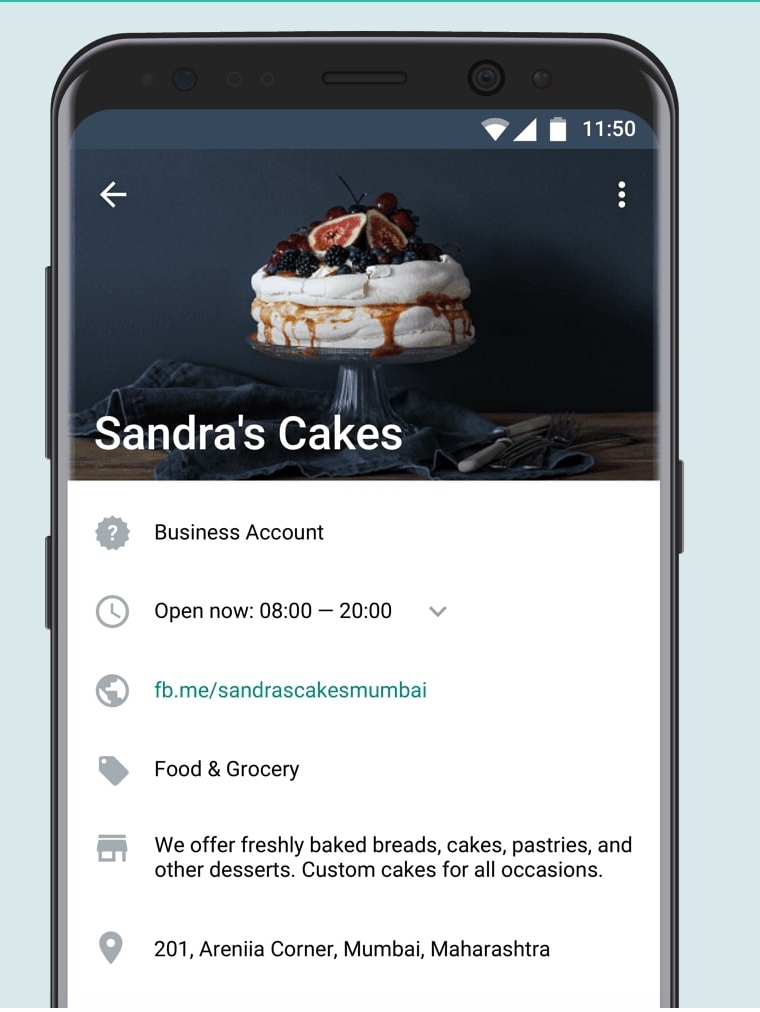
1.Business Profile

Create a business profile with helpful information for your customers, like your address, business description, email address, and website. Business accounts help brands to gain a user’s loyalty. A business profile gives the company a familiar “face” and identity. To have a “Verified” badge next to your company name, WhatsApp has to confirm that this is a verified business account.

Steps to add details about your business: Go to WhatsApp Business app – Open Settings > Business settings > Profile.

3.Quick Reply

These are frequent messages to answer common questions. Quick replies let you save and reuse messages you frequently send so you can easily answer common questions in no time. Simply press the “/” on your keyboard to select a quick reply and send.

3.Automatic Greeting Message

WhatsApp for business enables you to create a greeting message that users will receive when they start a dialog with your company or after 14 days of inactivity. By sending an instant message, you welcome and introduce a company to a new potential customer with no delays and waiting time.

Steps to set up a greeting message: Settings > Business settings > Greeting message. From here, you can create a new greeting message or edit an existing one.

4.Setting Away Message

Away messages are like greeting messages. They send a custom message to people who are trying to connect with the company after your working hours. You can write a custom message or send your working hours. You can set up for them to activate at the chosen time.

Steps to set up an away message: Settings > Business settings > Away message > “Activate away message                                     

You can also edit your away message from here and schedule when you want to send this message. You can choose from Always send, Custom schedule, or after your work hours

5.Label Contacts

Businesses can organize their contacts and categorize them with labels for easy access. This way, you can easily search through your contacts and keep them grouped and organized.

Steps to add a label to a new contact: Click the menu button on the client’s chat page > choose a label and then save.

Steps to add a new label: Click the menu button on the client’s chat page > click “ New label” > click save

6.Access Message Statistics

WhatsApp for Business lets you access vital metrics like how many of your messages were sent, delivered, and read.

Steps to access statistics: Tap the Menu button > Settings > Business Settings > Statistics

7.Catalogs and Collections

The other feature that will be beneficial for your business is Catalogs. They look like this:

Catalogue for bakery

For each item in your catalog, you can add information, including price, description, and product code. This is so much easier for your customers than having to ask you about each item separately or go from WhatsApp to the website.

In October 2021, WhatsApp added Collections to make shopping even easier. They will act as folders to group items inside a business account. Users can navigate to the category they’re looking for right away without scrolling through the whole product list.Once added, you’re free to modify the Collection just like items to keep the information up to date.

Pro Tip: think of collections as categories on ecommerce websites. “Last chance” or “Sale” could be as converting in WhatsApp as they are on the website. Using these on WhatsApp Business account means providing similar well-paved shopping experience.

@channa2021

Thank you for reading this blog i believe this is helpful to you

The Roots of STEM Talent of India

Credit: Dreamstime

Introduction

The Information Technology sector in India has built its reputation by providing cost-effective solutions and providing employment to millions of people in the process. However, the full-time research workforce in India was estimated to be just 2,00,000 in 2015 by UNESCO. Are we, as a nation, adequately promoting careers in Science, Technology, Engineering, and Mathematics (STEM) subjects, and are we even able to generate enough talent for our own demand? Are we losing some of our best minds to other countries because of a lack of support and opportunities?

What is STEM?

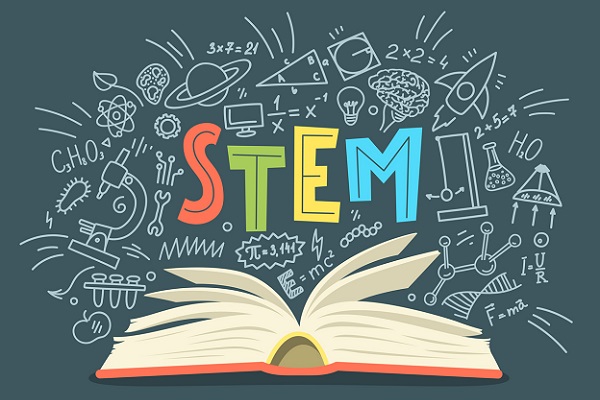
STEM, in full science, technology, engineering, and mathematics, field, and curriculum centered on education in the disciplines of science, technology, engineering, and mathematics (STEM). The STEM acronym was introduced in 2001 by scientific administrators at the U.S. National Science Foundation (NSF). The organization previously used the acronym SMET when referring to the career fields in those disciplines or a curriculum that integrated knowledge and skills from those fields. In 2001, however, American biologist Judith Ramaley, then assistant director of education and human resources at NSF, rearranged the words to form the STEM acronym.

Women in STEM

Under-representation of women and gender pay gaps are well-recognized global challenges in STEM sectors. While Indian Technology firms can still boast of a relatively better female-to-male ratio, according to UNESCO estimates, only 14 percent of the researchers in India are women. Even engineering colleges have skewed gender ratio in favor of male students, and according to a Kelly Global Workforce Insights (KGWI) survey, 81 percent of the women in STEM fields in India have perceived a gender bias during performance evaluation.  The annual ‘Girls in Tech’ MasterCard research indicates that while interest in STEM careers is increasing gradually, women are still less likely than men to pursue a STEM career and less likely to remain in the field for their entire career owing to male dominance in the fields. 

STEM Sector in India

The focus on building the scientific prowess of the masses, and bet on specialized educational institutions to do the same, institutions like the Indian Institute of Technology (IIT), Indian Institute of Science (IISc), and All India Institute of Medical Science (AIIMS) was founded and promoted to develop the country’s scientific and technical manpower, and in the process help the society and economy prosper. However, with time, these institutes have largely been reduced to stepping stones for a well-paying career. Especially in the last two decades, the relentless quest of students, and their parents, to ensure admission to such premier institutes has given rise to an astronomical coaching classes industry as well. A particular blow to STEM education came when the All India Council for Technical Education (AICTE) liberally allowed the setting up of engineering institutes across the country a few years ago. The move was undertaken in anticipation of a huge demand for engineering studies. However, this not only eroded the value conferred on an engineering degree but also compromised the quality of education and training provided on a fundamental level.

Making STEM a Priority

The first step towards fixing what’s broken is the identification and acknowledgment of the present challenges and understanding the context in which they arise. In other words, the government and the private education sector must make a genuine attempt at understanding their shortcomings, and reflect on why so few Indian institutes are recognized for quality STEM education and training. Establishing global partnerships with countries that have built sophisticated STEM expertise is critical to paving the way for knowledge exchange and skill development. While American and European universities are known for their focus on STEM education, countries in the networks of BRICS and ASEAN could also prove to be beneficial partners. This also needs to be backed by healthy funding to develop independent institutes that focus on research, pure sciences, and other derivatives of STEM subjects. The Indeed survey showed that job seekers in the age group of 21-25 were 12 percent more inclined towards jobs in STEM sectors than in others. Inculcating innovation and creativity in young minds and encouraging them to pursue dedicated courses right from the moment they stepped into the formal education system is essential. However, in the present system, STEM studies might simply be added as an additional layer to the existing curriculum and would increase pressure on students and teachers alike.

References

BASE RATE AND DRI SCHEME: A SUPERIOR LENDING RATE

Credit: PlanAdvisor

Introduction

The Financial and Banking sector of any country plays a paramount role in the functioning of the economy through intermediation. This sector has undergone numerous reforms in the past few years. One of the outcomes of these reforms is that now banks are more liberalized and have the freedom to determine the interest rates on their own. Banks are allowed to determine the lending rates on loans and advances concerning the base rate. The Base Rate is one of the amendments to the lending rate introduced by the RBI. Let’s now discover what it is, the term associated with it, and the factors determining it. 

What is Base Rate?

A Base rate is defined as the minimum interest rate set by the country’s central bank below which banks are not permitted to lend to their customers. This rate is usually taken as the standard interest rate by all the banks functioning in the country. Introduced in June 2010, the base rate is simply regarded as the standard lending rate offered by commercial banks. 

Why is Base Rate System used?

In the earlier days, the ostensible problem with the credit market was the lack of transparency. There used to be some segments in the banking system that were hidden or kept unknown to the customers. Banks use to give no clear information on the interest rate charged for a loan. So, to bring transparency and awareness to the credit field and to ensure that banks pass the benefit of lower interest rates to borrowers, the RBI implemented the notion of Base Rate across all the banks.

Factors Determining the Base Rate

Base Rates must consider and include all the elements of lending rates which are across various categories of borrowers. It is practicable that the base rate may be different for different banks. The four significant components that typically decide or determine the base rate set by a particular bank include

  • Cost of Funds i.e., interest rates provided by the banks on deposits
  • Operating Costs
  • The Minimum rate of Returns
  • Cost of the Cash Reserve Ratio.

So, the base rate presented by one bank can be dissimilar to the rate of another bank owing to any one or more of the above-declared factors. The most prevalent factor is the difference in interest rates provided by the banks on deposits.

What is DRI Scheme?

DRI Scheme stands For Differential Rate of Interest Scheme. It was launched to provide credit access to the low-income group. It is better known as DIR Scheme. This scheme was set in motion from the year 1972. The loan scheme empowers or authorizes the banks to lend money to weaker and incapable sections of society at a concessional interest rate. In simpler terms, DRI Scheme was introduced to financially assist low-income groups. The loan scheme visualizes lending by banks to the incapable section of the society at a uniform concessional rate of interest. There is no requirement or obligation of collateral or third-party guarantee. The assets which are created or bought from the loan amount will be hypothecated to the banks.

Conclusion

Every bank must review its base rate quarterly. Since the primary intention of implementing the base rate is transparency in the prices of the lending product, every bank has to reveal its base rate details in all their branches and on their official websites too. DRI Scheme is enhancing the Financial Inclusion Goal of India. In April 2016, RBI introduced a new concept known as MCLR (Marginal Cost of Lending Rates) as a replacement for the Base Rate. So, the MCLR is the new internal benchmark that all institutions will follow.

References

  1. https://www.creditmantri.com
  2. https://economictimes.indiatimes.com
  3. https://www.investopedia.com