Child Marriage legalised on Rajsthan

Currently, Rajasthan govt released an amendment “Rajasthan compulsory Registration of Marriage Amendment Bill 2021” it allowed registration of child marriages, it’s 21 century and we all are aware of how heinous child marriage is, here are some of my views on this act

In my views law is not wrong
Those who commit or help in child marriage will still be punished, but those who already had marriage were not allowed to have registration and so they were not able to avail all govt schemes and benefits, those saying it will make it easier to do child marriage remember availing govt benefits are everyones fundamental rights.

Those saying it’s illegal look it like this rape is illegal but rape victim and culprit both have some rights that we can’t snatch, like culprit must be allowed to go court etc, ofcourse child marriage is as heinous as rape and here victims are both boy and girl but why they suffer whole life for it, they can’t get rashion, jobs, water, now as everything is more and more digitalizing and you can’t prove you’re married, it will become more hard to avail services like jacha bacha Suraksha and this are thee parents who most need it.

Also one negative point is it will make child marriage easier, but many people will not be able to avail fundamental rights isn’t it totally wrong also we can make child marriage hard by making strong rules. As we have data of child marriage we can ask govt employee who are posted there why they let it happen like police or magistrate, they will become more accountable this way.

If I’m missing some points or you want to share your views here’s my email soni362002@gmail.com

HAVE WE FORGOTTON OUR SHEROES ?

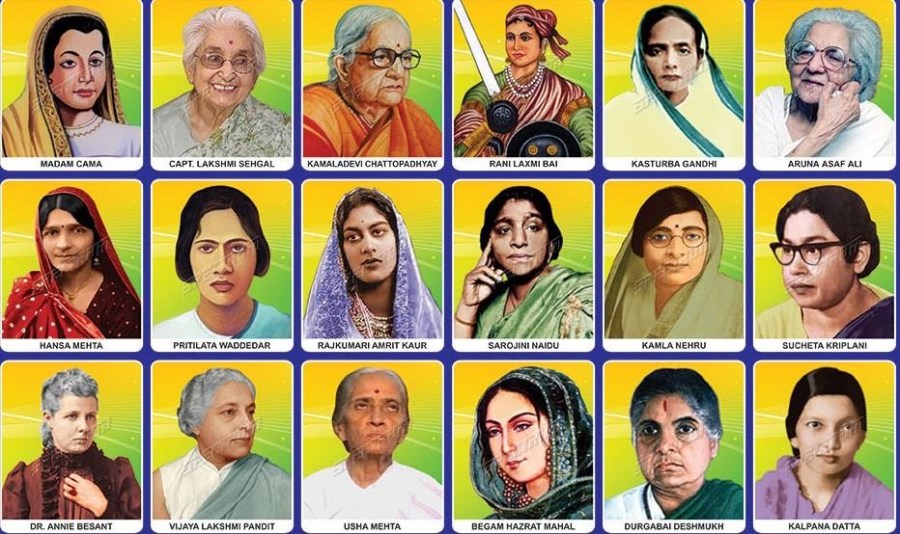
Women have made landmark contributions encompassing various fields.Its time we sing joys of celebration for our sheroes too like we do for men.They have suffered various setbacks in life but emerged powerful as pointed out by Swami Vivekanand ,“Woman has suffered for eons, and that has given her infinite patience and infinite perseverance”.

For celebration we need to know about the milestones they have crossed and the hinderances they’ve overcome.

Their benefactions can be categorized Two folds .First theEducational Sector.

Second the Political and the Social Sector.

In Education:-

When discussing about Economy we cannot rule out the role education.The first female graduates Kadimbini Ganguly and Chandramukhi Bose long broke the stereotypes of Male centric education system.There have been other historic Educationists of India like Ayyalasomayajula Lalitha who became the first Engineer of India back in 1943.

Anandibai Gopalrao Joshi was the first female doctor of India.

SavitriBai Phule along with Mahatma Jyotiba Phule led a movement for education of Girls.

They faced social ostracization and societal pressures but did not stop.In the end, SavitriBai Died while serving the victims of plague.In the field of law which was highly patriarchic Cornelia Sorabji broke all shakles and became India’s first female lawyer.                                                           Durgabai Deshmukh an early lawyer and political activist said-“I had then decided to take up the study of law so that I could give women free legal aid and assist them to defend themselves.”

These woman are not mere inspirations or role models,theybecame game changers and paved the way for education for the upcoming generation.

Polity:-

Politics despite being male dominated ,some Strong Female leaders have made immense contributions to freedom struggle. Going back to the the Delhi Sultanate,Razia Sultan became the first and last Female to ever became sultan in 1236.

After that there were different princely states in which women lead their dynasties. Rani Laxmibai became an epitome of strength along with JhalkariBai giving a strong fight to British.

Uda Devi a ‘Dalit Virangana’ fought the British Bravely in 1857 Battle.

Rani Gaidinliu of Manipur,was imprisoned at a young age of 13 because of her Anti-British Stand.During the 1857 Revolt the participation of Begum Hazrat Mahal of Lucknow is unmatched.AhalyaBai Holkar of Malwa Kingdom is still remembered as one of the Finest Leaders of India.In the modern era of freedom struggle Female Leaders like Sarojini Naidu,Annie Besant,Vijay Laxmi Pandit(First Female President of UNGA),Aruna Asif Ali(Grand Old Lady of Independence) etc fought against the British.        

Be it Anti partition movement of 1906 or Non Co-operation Movement or Civil Disobedient Movement, Women have added by large,the amplitude of struggle.

Revolutionaries like Capt.Laxmi Sehgal lead the Jhasi rani regiment of INA Army made by Subhash Chandra Bose.AlsoPritilata Waddedar,Kalpana Datta took up arms against the British.

Post-Independence Rajkumari Amrit Kaur became the first woman Health Minister of India.

Indira Gandhi not just became India’s First Prime Minister but also was the first female Finance Minister(1970-71),to present a budget.Sucheta Kriplani became the first female to become a Chief Minister of UP,also Sarojini Naidu became the first ever female Governor in UP.

The list of contributions made by our early Women is never ending. Such zeal and sacrifices, on par with those of Men, despite miniscule opportunities, simply motivates us.

It would be appropriate to agree with Mohammad Ali Jinnah when he quoted,

There are two powers in the world; one is the sword and the other is the pen. There is a great competition and rivalry between the two. There is a third power stronger than both, that of the women”.

Mohd Ali Jinnah

History Of India And National Movement

Revolt of 1857
Before 1857 in 100years of a journey of Mughal emperor is ruled 1757 to set up own dynasty which was long time India and in 1857 British came that was partly they have owned and fight to rule in India and establish east India company which was named by the British. That was the “Revolt” after 1857 started and the modern history began the Mughal emperor became a pensioner of EIC.


In the background, 1757 war Plassey between Mughals and Nawab of Bengal for policies because of British was intervened for east India company by sending the governor leadership of Robert Clive control to seize indirect and French allies which broken by Captain John Munro after that they confirmed that British will go ruled in India.


1765- Treaty of Allahabad
When the British have proved that they are going to rule in India they changed the policies of East India Company and the Rights to collect the Revenue of Bengal, Bihar and Orissa which was called Deewani by the states for a collection that they won in fights and the Nizamat in Bangal which given states that maintain their Law and orders and then it became Dual system of Government this reason made the biggest Revolt of 1857. And the Mughal emperor was shah Alam became a pensioner if east India company that fixed amount given by the British which was 260000 the impact of symbolic importance he has power but the time changed that he got a yearly pensioners system of Diwani is taken charge by East India company they made different policies in revenue changes.

  • New land revenue settlements.
  • Growth of intermediary.
  • Eviction of peasants from their lands.
  • Intervention in Tribal regions.
  • Destruction of domestic handcraft and promotion of British goods.

That became the experiment that some has to succeed some are not successful but ultimately the situation has come in front of East India company has to appoint new post for their money collection(Tax) because they are not sufficient to handle the work and other became middle class came in the area to give money called money lenders. Imposed different taxes that are become reason farmers faced many problems inland.
The new market also establishes by the British command east India company India became the manufacturer for raw material in the market because they have given rights to take charge and command EIC whatever the market in India like cotton manufacture mills handicraft that tribal made by them all are produced in Britain. This is the only marketing and manufacture India and the production is over the business of profit is now British in hand only one thing comes in mind of drainage of wealth they pay tax to the British government.

These are all the reasons that British pay money for tax and money for their government to east India company this become main benefits of permission given but they also send money to Britain so especially pay tax.
Military Revolt on 29 march 1857 behind reason become revolt because of British they invented the Enfield rifle and they use kind of grease they made of pig or cow that military refuse to use that greased cartridges. 10th may all regiment was also denied and they killed British army officers because they are large in number so they were more powerful on them and run away to Delhi on 11 May came from Meerut they induce in these all problem and movement were started they went to bahadur shah Zafar lead them. That they have their army and army chief bakht khan who was more than 84 years old he told bahadur shah that this is the biggest opportunity for us to make a change they are ready to lead them and they become symbolic. There were many revolts began by different states Lucknow on 4th June begum Hazrat mahal (w/o Nawab Wajid Ali Shah) Brijis Qadir.

SUPPRESSION OF “REVOLT”
On 21th September Delhi Hudson B.S Zafar was arrested and sent to Rangoon and his son were killed in 1852. In Lucknow send Halov Outram to control them but they cannot control but after that Collin Campbell send to kill them and then Begum Hazrat Mahal went to Nepal and Lucknow get occupied by the British and the Kanpur revolt is over won by Campbell tatyatope hanged by them and nana sahib went to Nepal in 1857 revolt has over by east India company. The reason behind the revolt

  • Politocal- Doctrine of laps.
  • socio-Religious – Christianzation of India, Religious disabilities Act 1856.
  • Economic- Drain of wealth

And India in 18th century 1757 – 1764 British kingdom established by the struggle for succession. In 1803 Aurangzeb son MD muazzam shah Alam(65yr old) fight the British won get emperor and he adopted tolerance policies with Hindu kings but those who found them struggle they try to induce the end the make friendly relationship. There are many Mughal emperors and Hindu samaras who ruled between this time. But the British kingdom was the last that occupied India.
The democracy of India is the big challenge that faced the third freedom of the nation. The Indian national movement was an organised mass movement and affected both internal and external. It led to the formation of the Indian national congress in 1885. Struggles of the country have broken the people of India by socio-Cultural, and Economic factors that led to the rise of Nationalism.
Tilak was the first leader who leads this movement. The British colonial authorities called it “The father of the Indian unrest”. He was also given a title name “Lokmanaya” as a leader and an independence activist Mahatma Gandhi called him “The Maker of Modern India”.
Indian National Congress
Tilak encouraged the swadeshi movement and the Boycott movement. The movement consisted of any Indian produce goods. there was a gap which had to be filled by the production of those goods in India itself.
Dadabhai Naroji formed the East India Association in 1867 and Surendranath Banerjee founded Indian National Association in 1876. Seventy- two Indian delegates met in Bombay in 1885 and founded the Indian National Congress.
The demands of education, awareness about the rights, freedom of speech reform and expansion of the legislative council’s development of modern capitalist industries in India.
The national movement in (1858- 1905)
Procrastination by Qween Victoria announced that now east India company will not intertwine in India British has only the power by parliament it changed the whole democracy. growth of nationalism in this index administration. It was British rule and its direct and indirect consequences that provided the material, moral and intellectual conditions for developing a national movement in India. British is the only reason for policies for their backwardness.
The first session will be held in Pune, but it’s changed for a reason and held in Bombay in Gokul das Sanskrit school and the second session Kolkatta by Dadabhai Naroji has been three-time 1886, 1893 and 1906. Total 434 delegates are standing Community and the third session in madras (1887) formed by Badruddin Tyabin. He is the third president of the Indian national congress. He declared that he had denounced all communal Muslims and bring them into the party and introduced resolution no XII at the Allahabad congress.

Digital marketing has became necessary

Take a risk and keep testing, because what works today won’t work tomorrow, but what worked yesterday may work again.”- Amrita Sahasrabudhe.

Digital marketing is a canopy for marketing. It is all about marketing Products and services through digital technologies, overall the Internet, digital marketing involves all marketing weapon that requires an electronic device or the internet.

When small businesses get started, their focus is often on how to get their first group of customers through the door. They may rely on traditional forms of advertising, such as print ads and coupon mailers or even big signs on the side of the road. They may trust that since they know they offer a good product or service, it’s only a matter of time until customers will find their
way to them.

This decade 2021, in just a three month whole world is facing new pandemic (covid19). As per government order we have to maintain social distancing and isolation. Every social gathering is
canceled. Small business or any other company can take this situation as an opportunity. As everyone will be in there houses all they gonna do there is watch TV, laptop or stick to there phone. This will be best opportunity to show cast there product or company.

Nower day people tend to believe in digital marketing then the traditional one. It’s an psychology of people if their favorite or popular celebrity do promote the particular product they will bye it then the unknown face doing the same ad. They qualities of advertisement also plays an important role on consumers mind. ” popular the celebrity is the more costumer they will attract”.

The group of potential customers that are found online is a much larger group of people than you are likely to be able to attract locally. Using digital marketing, you can reach an enormous audience in a way that is both cost-effective and measurable.

41% of U.S. buyers search and buy on Amazon while 28% search on Google then buy on Amazon, so small business SEO is still crucial . 3.2 billion people or 42% of the world population uses social media today (Emersys, 2019). Facebook, Instagram, Twitter, Reddit, and LinkedIn are the market leaders. LinkedIn offers 80% of social media B2B leads, for example. On average, these people spend 2 hours and 22 minutes on social media networks per day, 80% of the time is on mobile.


At last “It’s hard to find things that won’t sell online.” – Jeff Bezos

MAHATMA GANDHI – Mohandas Karamchand Gandhi

MAHATMA GANDHI (1869)Mohandas Karamchand Gandhi (2 October 1869- 30th January 1948), Popularly known as MAHATMa Gandhi or Bapu (Father of Nation ),he was the pre-eminent leader of Indian nationalism in British -ruled India . Employing non-violent Civil disobedience, Gandhi led India to independence and inspired movements of non-violence ,civil rights and freedom across the world. He is known in India as the Father of Nation ;his birthday, 2 October, is celebrated as Gandhi Jayanthi, a National holiday and world -wide as the international Day of Non-violence .world-wide Gandhi’s philosophy was not theoretical but of pragmatism. Asked to give messages to the people, he responded, “My life is my messages “.Civil rights movements in South Africa (1893-1914)Gandhi was 24 when he arrived in South Africa to work as a legal representative for the Muslim Indian Traders based in the city of Pretoria.He spent 21 years in south Africa, where he developed his political view,ethics and political leadership skills. In South Africa, Gandhi faced the discrimination directed at all coloured people. Heels thrown off a train at Pietermaritzburg after refusing to move from the first -class though he had a first-class ticket.Struggle for Indian Independence (1915-47)In 1915,Gandhi returned to India permanently . He attained an international reputation as leafing Indian nationalist ,theorist and organizer . He joined the Indian National congress and was introduced to Indian issues, politics and the Indian people primarily by Gopala Krishna Gokhale. Gokhale was a key leader of the Congress Party best known for his restraint and moderation,and his insistence on working inside the system .Gandhi took Gokhale’s liberal approach based on British Whiggish tradition and transformed it to make it look wholly Indian.Champaran and khedaGandhi’s first major achievements came in 1918 with the Champaran and Kheda agitations of Bihar and Gujarat. The Champaran agitation pitted the local peasantry against their largely British landlords who were backed by the local administration. The peasantry was forced to grow Indigo, a cash crop whose demand had been declining over two decades, and were forced to sell their crops to the planters at a fixed priceKhilafat movementsIn 1919 Gandhi ,with his weak position in congress, decided to broaden his base by increasing his appeal to Muslims. The opportunity came from the khilafat movement, a worldwide protest by Muslims against the collapsing status of the caliph,the leader of their religion. His success made him India’s first national leader with a multicultural base and facilitated his rise to power within congress,which had previously been unable to reach many Muslims. In 1920 Gandhi became a major leader in congress. Gandhi always fought against “communalism “,which pitted Muslims against Hindus in politics, but he could not reverse the rapid growth of communication after 1922.Salt Satyagraha(Salt March)Gandhi stayed out of active politics and,as such,the limelight for most of the 1920s. He focused instead on resolving the wedge between the swaraj party and the Indian National Congress, and expanding initiatives against untouchability , alcoholism,ignorance and poverty. He returned to the fore in 1928.In the preceding year, the British government had appointed a new constitutional reform commission under sir John Simon, which did not include any Indian as its member. Gandhi then launched a new Satyagraha against the tax on slat in March 1930.This was highlighted by famous Salt March to Dandi.Quit Undia MovementQuit India became the most forceful movement in the history of struggle,with mass arrests and violence on an unprecedented scale. In 1942 although stillb committed in hid efforts to “launch a non-violent movement “,Gandhi clarified that the movement would not be stopped by individual act of violence, saying that the ” ordered anarchy ” of “the present system of administration ” was “worse than real anarchy “.He called on all congressmen and Indians to maintain discipline via ahimsa,and Karo ya maro (“Do or die”) in the cause of ultimate freedomNon-violenceGandhi explains his philosophy and way of life in his autobiography “The story of My Experiments with Truth “.Literary worksGandhi was a prolific writer. One of Gandhi’s earliest publications, Hind Swaraj,Published language; Indian Opinion while in South America and, Young India, in English, and Navajivan ,a Gujarati monthly, on his returns to India. Later,Nakajima was also published in hindi. In addition, he wrote letters almost every day to individuals and newspapers. Gandhi also wrote several books including his autobiography, “The Story of My Experiments with Truth “.Rabindranath Tagore is said to have accorded the title ” Mahatma” to Gandhi.World Farm Animals DayGandhi’s birthday is chosen as a commemoration for the billions of non-human animals that are slaughtered by the human farming industry each year. The practice started in 1983.AssassinationOn 30 January 1948,just five months of coyntry’s Independence, the Mahatma was on his way to his usual prayer meeting in the Birla Mandir in the capital city. His smiling face revealed only a divine serenity. Suddenly a middle-aged man named Nathuran Godse entered his path and directly facing him fired three shots point and blank at the 79 year old disarmed leader. Dignitaries Jawaharlal Nehru declared: “The lights has gone out of our lives”. It is nearly six decades that Gandhiji departed from us,but Gandism is still very much alive and kicking in the national psyche of India.Current impact within IndiaGandhi’s birthday, 2 October, is National holiday in India, Gandhi’s date of death death,30 January, is commemorated as a Martyrs’ Day in India. There are two temples in India dedicated to Gandhi,One is located sambalpur in orissa and the other at Nidaghatta village nera kadur in chikmangalur district of Karnataka. The Gandhi Memorial in Kanyakumari resembles central Indian Hindu temples and the Tamukkan or Summer palace in Madurai now houses the Mahatma Gandhi Museum.MAHATMA GANDHI (1869)Mohandas Karamchand Gandhi (2 October 1869- 30th January 1948), Popularly known as MAHATMa Gandhi or Bapu (Father of Nation ),he was the pre-eminent leader of Indian nationalism in British -ruled India . Employing non-violent Civil disobedience, Gandhi led India to independence and inspired movements of non-violence ,civil rights and freedom across the world. He is known in India as the Father of Nation ;his birthday, 2 October, is celebrated as Gandhi Jayanthi, a National holiday and world -wide as the international Day of Non-violence .world-wide Gandhi’s philosophy was not theoretical but of pragmatism. Asked to give messages to the people, he responded, “My life is my messages “.Civil rights movements in South Africa (1893-1914)Gandhi was 24 when he arrived in South Africa to work as a legal representative for the Muslim Indian Traders based in the city of Pretoria.He spent 21 years in south Africa, where he developed his political view,ethics and political leadership skills. In South Africa, Gandhi faced the discrimination directed at all coloured people. Heels thrown off a train at Pietermaritzburg after refusing to move from the first -class though he had a first-class ticket.Struggle for Indian Independence (1915-47)In 1915,Gandhi returned to India permanently . He attained an international reputation as leafing Indian nationalist ,theorist and organizer . He joined the Indian National congress and was introduced to Indian issues, politics and the Indian people primarily by Gopala Krishna Gokhale. Gokhale was a key leader of the Congress Party best known for his restraint and moderation,and his insistence on working inside the system .Gandhi took Gokhale’s liberal approach based on British Whiggish tradition and transformed it to make it look wholly Indian.Champaran and khedaGandhi’s first major achievements came in 1918 with the Champaran and Kheda agitations of Bihar and Gujarat. The Champaran agitation pitted the local peasantry against their largely British landlords who were backed by the local administration. The peasantry was forced to grow Indigo, a cash crop whose demand had been declining over two decades, and were forced to sell their crops to the planters at a fixed priceKhilafat movementsIn 1919 Gandhi ,with his weak position in congress, decided to broaden his base by increasing his appeal to Muslims. The opportunity came from the khilafat movement, a worldwide protest by Muslims against the collapsing status of the caliph,the leader of their religion. His success made him India’s first national leader with a multicultural base and facilitated his rise to power within congress,which had previously been unable to reach many Muslims. In 1920 Gandhi became a major leader in congress. Gandhi always fought against “communalism “,which pitted Muslims against Hindus in politics, but he could not reverse the rapid growth of communication after 1922.Salt Satyagraha(Salt March)Gandhi stayed out of active politics and,as such,the limelight for most of the 1920s. He focused instead on resolving the wedge between the swaraj party and the Indian National Congress, and expanding initiatives against untouchability , alcoholism,ignorance and poverty. He returned to the fore in 1928.In the preceding year, the British government had appointed a new constitutional reform commission under sir John Simon, which did not include any Indian as its member. Gandhi then launched a new Satyagraha against the tax on slat in March 1930.This was highlighted by famous Salt March to Dandi.Quit Undia MovementQuit India became the most forceful movement in the history of struggle,with mass arrests and violence on an unprecedented scale. In 1942 although stillb committed in hid efforts to “launch a non-violent movement “,Gandhi clarified that the movement would not be stopped by individual act of violence, saying that the ” ordered anarchy ” of “the present system of administration ” was “worse than real anarchy “.He called on all congressmen and Indians to maintain discipline via ahimsa,and Karo ya maro (“Do or die”) in the cause of ultimate freedomNon-violenceGandhi explains his philosophy and way of life in his autobiography “The story of My Experiments with Truth “.Literary worksGandhi was a prolific writer. One of Gandhi’s earliest publications, Hind Swaraj,Published language; Indian Opinion while in South America and, Young India, in English, and Navajivan ,a Gujarati monthly, on his returns to India. Later,Nakajima was also published in hindi. In addition, he wrote letters almost every day to individuals and newspapers. Gandhi also wrote several books including his autobiography, “The Story of My Experiments with Truth “.Rabindranath Tagore is said to have accorded the title ” Mahatma” to Gandhi.World Farm Animals DayGandhi’s birthday is chosen as a commemoration for the billions of non-human animals that are slaughtered by the human farming industry each year. The practice started in 1983.AssassinationOn 30 January 1948,just five months of coyntry’s Independence, the Mahatma was on his way to his usual prayer meeting in the Birla Mandir in the capital city. His smiling face revealed only a divine serenity. Suddenly a middle-aged man named Nathuran Godse entered his path and directly facing him fired three shots point and blank at the 79 year old disarmed leader. Dignitaries Jawaharlal Nehru declared: “The lights has gone out of our lives”. It is nearly six decades that Gandhiji departed from us,but Gandism is still very much alive and kicking in the national psyche of India.Current impact within IndiaGandhi’s birthday, 2 October, is National holiday in India, Gandhi’s date of death death,30 January, is commemorated as a Martyrs’ Day in India. There are two temples in India dedicated to Gandhi,One is located sambalpur in orissa and the other at Nidaghatta village nera kadur in chikmangalur district of Karnataka. The Gandhi Memorial in Kanyakumari resembles central Indian Hindu temples and the Tamukkan or Summer palace in Madurai now houses the Mahatma Gandhi Museum.

Mahadevi Varma


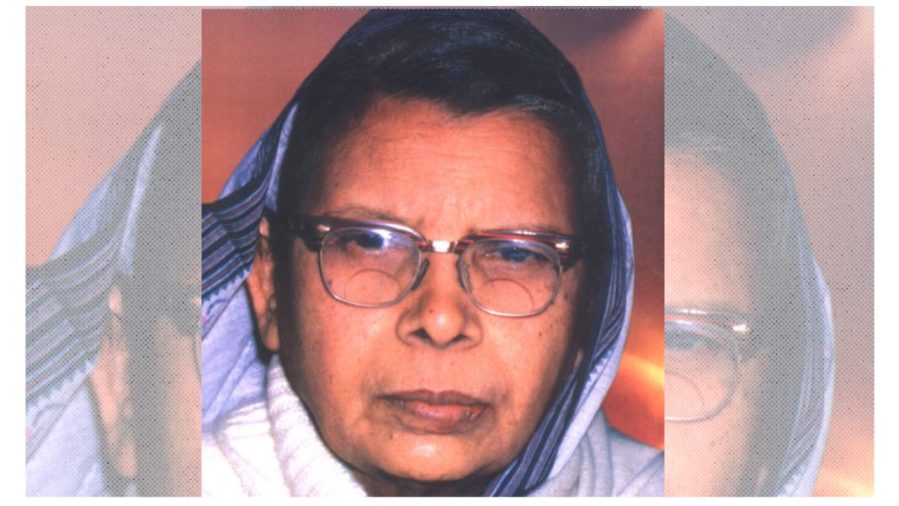
In the 1920s, a time when few Indian girls could dream of finishing school and being anything other than housewives and mothers, one-woman name Mahadevi Varma discovered a love of writing and went on to become one of the key figures in a new era of Hindi poetry.

Mahadevi Varma best known as an outstanding Hindi poet, was a freedom fighter, woman’s activist and educationist from India. She is widely regarded as the “modern Meera”. She was a major poet of the Chhayavaad generation, a period of romanticism in Modern Hindi poetry ranging from 1914- 1938. With passage of time, her limited but outstanding prose has been recognised as unique in Hindi Literature. She was a prominent poet in Hindi Kavi sammelans (Gatherings of poets).


She was the Principal, and then the Vice Chancellor of Prayag Mahila Vidyapeeth, a woman’s residential college in Allahabad. She was awarded India’s highest literary award, for lifetime achievement, the Sahitya Akademi Fellowship in 1979, followed by the Jnanpith Award in 1982. She was the recipient of the Padma Vibhushan, India’s second-highest civilian award, in 1988.


Mahadevi Varma was deeply affected by Buddhism and also contributed to the Indian freedom movement. She even tried to become a Buddhist bhikshuni. Mahadevi was appointed as the first headmistress of Allahabad (Prayag) Mahila Vidyapeeth, which was started with a view to imparting cultural and literary education to girls through Hindi medium.

Later, she became the chancellor of the institute. Mahadevi is considered to be one of the four major poets of the Chhayavaadi school of the Hindi literature, others being Suryakant Tripathi ‘Nirala’, Jaishankar Prasad and Sumitranandan Pant. She was also a noted painter. She drew a number of illustrations for her poetic works like Hindi and Yama.


Many of her books are included in the syllabus for school children by CBSE. A few of these are; Neelkanth, which is about her experience with a peacock; Gaura, a story about a beautiful cow; Mere Bachpan Ke Din and Gillu, about her childhood memories; and also her poem Madhur Madhur Mere Deepak Jal. Mahadevi Varma studied the compositions of devout poets like Meera, Sur and Tulsi from childhood. This is the reason that these poets became his source of inspiration. Following are the major compositions of Mahadevi Varma – ‘Neehar’, ‘Neerja’, ‘Sandhyagit’, ‘Deepshikha’, ‘Yama’, ‘Movies of the past’, ‘Lines of Smriti’, ‘Links of series’ etc.
Mahadevi Verma received several awards for her poems which had a language that was original and lyrical, at the same time having profound meaning. She was able to paint a picture that was both colourful as well as had depths of philosophy in it.

GST: Simplified

GST is a destination-based tax on consumption of goods and services. It is proposed to be levied at all stages right from manufacture up to final consumption with credit of taxes paid at previous stages available as set off. In a nutshell, only value addition will be taxed and the burden of tax is to be borne by the final consumer. 

A few important points of consideration are given below: 

The tax would accrue to the taxing authority, which has jurisdiction over the place of consumption which is also termed as place of supply. 

1. The Existing Taxes that are proposed to be Subsumed under GST- 

The GST would replace the following taxes: 

(i) Taxes currently levied and collected by the Centre:

a. Central Excise duty 

b. Duties of Excise (Medicinal and Toilet Preparations) 

c. Additional Duties of Excise (Goods of Special Importance) 

d. Additional Duties of Excise (Textiles and Textile Products) 

e. Additional Duties of Customs (commonly known as CVD) 

f. Special Additional Duty of Customs (SAD) 

g. Service Tax 

h. Central Surcharges and Cesses so far as they relate to supply of goods and services 

(ii) State taxes that would be subsumed under the GST are: 

a. State VAT b. Central Sales Tax

c. Luxury Tax

d. Entry Tax (all forms)

e. Entertainment and Amusement Tax (except when levied by the local bodies) 

f. Taxes on advertisements

g. Purchase Tax

h. Taxes on lotteries, betting and gambling i. State Surcharges and Cesses so far as they relate to supply of goods and services. 

The GST Council shall make recommendations to the Union and States on the taxes, cesses and surcharges levied by the Centre, the States and the local bodies which may be subsumed in the GST. 

2. The Status of Tobacco and Tobacco Products under the GST Regime- 

Tobacco and tobacco products would be subject to GST. In addition, the Centre would have the power to levy Central Excise duty on these products. 

3.Type of GST proposed to be Implemented- 

It would be a dual GST with the Centre and States simultaneously levying it on a common tax base. The GST to be levied by the Centre on intra-State supply of goods and /or services would be called the Central GST (CGST) and that to be levied by the States would be called the State GST (SGST). Similarly, Integrated GST (IGST) will be levied and administered by the Centre on every inter-state supply of goods and services. 

4. Need for Dual GST-  India is a federal country where both the Centre and the States have been assigned the powers to levy and collect taxes through appropriate legislation. Both the levels of Government have distinct responsibilities to perform according to the division of powers prescribed in the Constitution for which they need to raise resources. A dual GST will, therefore, be in keeping with the Constitutional requirement of fiscal federalism.  

5. Authority to Levy and Administer GST-  Centre will levy and administer CGST and IGST, while states will levy and administer SGST.   

6. Benefits from GST-  Introduction of GST would be a very significant step in the field of indirect tax reforms in India. By amalgamating a large number of Central and State taxes into a single tax and allowing set-off of prior-stage taxes, it would mitigate the ill effects of cascading and pave the way for a common national market. For the consumers, the biggest gain would be in terms of a reduction in the overall tax burden on goods, which is currently estimated at 25%-30%. Introduction of GST would also make our products competitive in the domestic and international markets. Studies show that this would instantly spur economic growth. There may also be revenue gain for the Centre and the States due to widening of the tax base, increase in trade volumes and improved tax compliance. Last but not the least, this tax, because of its transparent character, would be easier to administer.  

7. Concept of IGST-  Under the GST regime, an Integrated GST (IGST) would be levied and collected by the Centre on inter-State supply of goods and services. Under Article 269A of the Constitution, the GST on supplies in the course of inter-State trade or commerce shall be levied and collected by the Government of India and such tax shall be apportioned between the Union and the States in the manner as may be provided by Parliament by law on the recommendations of the Goods and Services Tax Council.  

8. Deciding Authority for levy of GST- The CGST and SGST would be levied at rates to be jointly decided by the Centre and States. The rates would be notified on the recommendations of the GST Council.  

Tax reforms must be implemented. To improve revenue performance factors like globalization, large informal sectors and policies of neighboring countries must be considered. 

Karst Topography

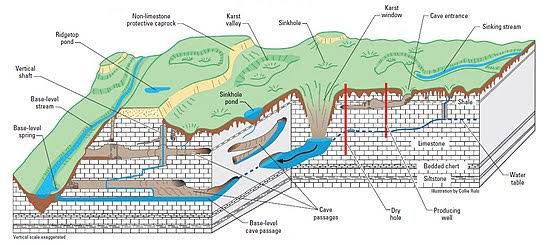
Karst is a type of landscape where the dissolving of the bedrock has created sinkholes, sinking streams, caves, springs, and other characteristic features. Karst is associated with soluble rock types such as limestone, marble, and gypsum. In general, a typical karst landscape forms when much of the water falling on the surface interacts with and enters the subsurface through cracks, fractures, and holes that have been dissolved into the bedrock. After traveling underground, sometimes for long distances, this water is then discharged from springs, many of which are cave entrances.

Chemical Reaction:-

Limestone is a type of carbonate rock — that is, a rock made up primarily of a carbonate mineral which, in the case of limestone, is usually calcite or aragonite. These are both forms of calcium carbonate (CaCO3). Over time, limestone may be dissolved by carbonic acid (i.e., carbon dioxide dissolved in water). Carbonic acid is formed when rain picks up CO2 as it falls through the atmosphere. Once it hits the ground, it may pick up more CO2 in the soil, turning into a weak carbonic acid solution. When this solution seeps into limestone bedrock via cracks and fissures, larger openings are created. Over the course of thousands of years, this erosive process creates underground drainage systems and caves.

Mammoth Cave,USA is the longest Cave system in the world.

Xiaozhai Tiankeng,China Largest Sinkhole.

Other examples,Yutacan peninsula,Mexico

Cockpit Country,Jamaica etc.

In India karst topography is present in the Vindhya region (mainly southwestern Bihar), the Himalayas (parts of Jammu & Kashmir, Robert Cave, Sahasradhara, the eastern Himalayas, areas near Dehradun), Pachmarhi in Madhya Pradesh, the surrounding coast near Vishakhapatnam, and Bastar in Chhattisgarh.

Landforms :-

First Indian to earn ‘A’ standard Olympic quota

Sajan Prakash created history by becoming the first Indian ever to clear the ‘A’ standard of international swimming, clocking 1:56.38 minutes in the 200m butterfly. Eventually, heads to the Tokyo Olympics as the first Indian to make it to successive Games.

It wasn’t the fastest of races, which meant Sajan had to push himself to set the pace, with Israeli Marc Hinawi as a marker. The Indian was right behind Czech swimmer Lunak Sebastien in Lane 4 at the first turn, which he completed in 25.99s. Sajan would take the lead at 100m, clocking 29.57s on the return, and finish with identical, consistent splits of 30.41s in the second half.


27-year-old, Sajan Prakash from Kerala won gold which is his second in two weeks. After coming agonisingly close to slashing ‘A’ at Belgrade, Serbia, last week. Coach Pradeep Kumar said, “He was spending 19 seconds and 52 metres underwater over four laps, and we focussed on speeding his pace and gaining 80 centimetres in all to breach the ‘A’ Cut.”

Born in Idukki in the shadow of the tallest peak in the Western Ghats – the Anamudi mountains – Sajan swam under coach Saju Sebastien at Neyveli (Tamil Nadu) before heading off to his friend Pradeep Kumar. He would also work in a training stint in Thailand on a FINA scholarship, and was seen as the most consistent performer since his Rio Games outing. The pandemic saw him head to Dubai where he worked in an indoor pool, silently chipping away the seconds.


Former Asiad medallist Virdhawal Khade explained Butterfly is considered the hardest strokes. While Khade reckons said the Butterfly relies on strong shoulders, it is all in the kick that Sajan scores. He further contunied “Even now, he’s not the most dominant guys. But he works hardest and helps young swimmers and is generous with his help. It’s his time now to become the alpha of Indian swimming and lead the others. If youngsters ever needed someone to look up to, there’s none better than this nice guy. Sajan’s put a smile on everyone’s face in Indian swimming,”.

Medical negligence during Covid-19

Law on Medical Negligence in India: How and when to file a case | Medical  Negligence Law Guide

NEGLIGENCE DURING THE COVID-19 PHASE

With the COVID 19 pandemic surrounding the globe and in excess of 2 million active instances of the same, the caring administrations by the medical experts is the main redeeming quality going with the careful steps that are the duty of the considerable number of citizens. Be that as it may, the security of the residents is being taken consideration by the clinical organization yet what it involves for the clinical clique who is over and over being blamed for negligence in discharge of average duty. On one hand the medical practitioners are being hailed as ‘Corona warriors’ but on the other hand, with the increase in cases wouldn’t there be a increase in negligence?

India had only 111 Covid-19 testing   centers to deal with a population of 1.35 billion people. This accounts to the medical negligence of the practitioners along with the hospital administrations especially at a time when every state is trying to reduce the number of cases. The number of beds available in the hospitals is comparatively less and as a result the citizens are dependent on understaffed and under-funded state run health facilities for COVID 19 diagnosis and treatment. This is a serious issue as people do not believe on the state authorities. A lady who was quarantined after her Spain visit states that there is a lack of basic amenities in the hospitals. People fear to come forward as they doubt the skills of the administration to treat their disease. Global health experts claimed that India does not have enough infrastructure and other facilities to face the pandemic. The claim nearly became evident with the increasing number of cases in India. Not only hospital authorities but the government has been lacking service, testing is another major concern. India has performed a little over 100,000 tests — a rate of nearly 47 tests per million people compared with 4,572 tests per million in the U.S., 2,753 tests per million in the U.K, and 8,800 per million in South Korea[1]. At present, India is not adequately testing to identify new cases, which might be hiding the true number of cases. An incident of severe medical negligence was noted when the Patna All India Institute of Medical Sciences (AIIMS-P) handed over the body of a COVID-19 positive patient to his family members.

In the midst of the vulnerability made by the COVID-19 pandemic, the judiciary remains the sole symbol of would like to review the worries of residents oppressed by the absence of satisfactory medical framework and the rising occasions of clinical negligence. There is trust that vital estimates will be taken by the Supreme Court, to safeguard the confidence and any expectation of the individuals.

VIEWS

Medical Negligence is, by and by, a hard issue to set up. On the off chance that negligence cases result from the current emergency, they will be tried comparable to target norms of care. The courts will think about the real factors and conditions of the case, including that the medicinal services staff were acting in an emergency. Considering past cases and the law’s methodology, the significance of clinical rules, conventions, staff preparing, ability appraisal, and enlistment expect a fundamental centrality, and all means should be completely reported. Documentation of steps taken in every one of these issues will demonstrate pivotal in safeguarding any cases brought. In any case, the COVID 19 is a phenomenal occasion and the relevance of the above laws in such conditions of most extreme criticality and affectability stays to be questionable. After the lockdown ends it would be unmistakable component of the lawful framework to observe such case emerging out of clinical carelessness in taking care of crown positive patients.

It isn’t expressed that specialists (doctors) are careless or reckless, however while carrying out a duty which requires a great deal of knowledge and care, regularly numerous experts fail to perform their duty towards the patient. Medication which is perhaps the noblest profession requires setting a domain which can profit the victims of different diseases. Numerous specialists even the expert in some cases dismisses little things to be dealt with while practicing which may bring about harms to the patients that could have been maintained with a permanent disability from that time or even the demise of the patients.

This type of negligence makes patients more prone to harm than to heal. And to avoid these sorts of accidents, prevention and careful behavior of doctors is important. The most prevalent way of doing this is relevant laws and statutes to ensure a patients well being. In a case where a US-based doctor who was Indian from origin lost his 29-year-old wife who was a child psychologist during their visit to India fifteen years ago. The Supreme Court asked the Kolkata-based hospital and three doctors to pay over Rs 11.41 crore[2]. “A bench of justices C K Prasad and V Gopala Gowda arrived at a figure of Rs 6.08 crore as compensation after considering aspects such as loss of consortium, pain and suffering and the cost of litigation.”

Another such case was noted where the Apex Court awarded a compensation of 1.8 crores to a women who had lost her eyes in 1996.[3] Cases like this are evidence of the medical malpractice in India. The government requires making strict rules to prevent the same, so that the justice prevails. People of India should be provided with adequate medical facilities, hygiene and sanitation. Laws should be strict for not only medicine but for all such professions to maintain a certain standard of care and prevent breach of duty.


[1] https://www.bbc.com/news/world-asia-india-51922204

[2] THE OUTLOOK

[3] Krishna Iyer v. State of Tamilnadu and Others, 2015 STPL(Web) 1239 SC

The Indian Tax System

There are various references in History which act as evidence that taxation existed in olden times also. Some references are ‘Arthashastra’ by Chanakya, King Dalip’s regime and Caesar Augustus. The word “Tax” originated from “Taxation” meaning ‘an estimate’. These were imposed and collected on the trade of commodities or livestock in a disorganised manner. The importance of tax increased with time and became a source of government income and expenditure.

TAX STRUCTURE IN INDIA 

India has a well developed taxation structure. The tax system in India is mainly a three-tier system which is based between the Centre, State governments and the Local Government organisations. In most cases, these local bodies include the local councils and the municipalities. According to the Constitution of India, the Government has the right to levy taxes on individuals and organisations. However, the Constitution states that none has the right to levy or charge taxes except the authority of law. 

The tax structure in India is divided into two components: Direct Taxes (such as income tax) and indirect taxes (such as custom duty). 

I. Direct Taxes: Direct taxes are those taxes that are not shifted, that is, the incidence of which falls on persons who pay them to the government, the taxpayer. According to Article 265, each tax levied or collected has to be backed by an accompanying law, passed either by the Parliament or the State Legislature. 

The direct taxes in India are: 1. Wealth Tax- 

Wealth tax is one of the major direct taxes in India. It is also known as the Wealth Tax Act, 1957. This tax is applicable to all the citizens of India. Wealth tax is the cess levied on owned property. It applies to those who enjoy property ownership benefits. It is applicable to every property owner till he or she retains the ownership of that particular property. The tax paid on property depends entirely on the current market rate. In case the property is not generating any income, then also wealth tax has to be paid. 

2. Corporate Income Tax- 

Corporate income tax is levied in many different forms in India. Corporate Income Tax is primarily meant to be paid by domestic corporations. Domestic corporations in India pay a minimum income tax rate of 35 per cent along with a surcharge of 2.5 per cent. Corporate income tax is also applicable to foreign organisations that have their own economic bases working in the country. These types of corporations are required to pay tax on 40 per cent of their income along with a surcharge of 2 per cent. This surcharge goes as a reservation for funding the state‘s education. Corporate income tax is also applicable to all the people that are working for any corporation in or outside India. 

3. Personal Income Tax- 

This is the most common form of tax in India. The system of personal income tax in India is very similar to the taxation system in the United States of America. It is based on the personal income of an individual. If the annual income of an individual is under Rs. 1, 80, 000/- then he or she is exempted from paying any personal tax. There are further allowances made under the personal income tax domain for the physically handicapped and elderly. 

II. INDIRECT TAXES: An indirect tax is defined as a tax levied on goods and services rather than on income or profits. Given below are the indirect taxes imposed in India: 

1. Sales Tax- 

Sales tax is the tax levied by the State Government on goods bought and sold in the country. This policy is followed in most industrially developed countries in the world. The taxes levied under sales tax are not the same for all kinds of goods. 

2. Custom Duties-

Custom duties were introduced in India through the Customs Act in 1962. This duty was introduced with the aim of checking illegal exports and imports of goods. Taxes are charged for all the goods that are imported into the country, mainly to protect the industries in India. 

Shortcomings of Indian Tax System: 1. Canon of Justice: The increased activities of the Government of India to develop the infrastructure and economy indicate a regressive tax structure that is against the canon of justice. The lower and middle income groups have to bear more burden of taxation as compared to the higher income groups because the government tries to raise amounts by indirect taxation. 

2. Agricultural Income: Agricultural income is not taxed in India. Hence, there is a higher burden of taxes on the urban areas. 

3. Complex Tax Framework: India has a complex tax framework with contradictory tax exemptions. Efforts are being made by the IT Department to enhance and simplify transparency of the tax system to help the individual taxpayers by reducing their compliance costs. 

4. Removal of Tax Incentives: Tax exemptions are given to achieve the objectives of development but they promote rent seeking behaviour, contributing to the complex tax laws. Exemptions lead to tax leakage and tax abuse which makes the system counterproductive and dysfunctional. 

5. Refunds: Getting refunds of tax from the Income Tax Department is a difficult process. It should be made easier by easy accessibility through internet services and refunding electronically. 

6. PAN: The tax base must be increased by extending PAN to cover all citizens serving as a Citizen Identification Number. 

7. Monopolistic Power of Tax Officials: The tax officials operate within a geographical limit with ambiguously defined roles that leads to abusive behaviour on their part. A high degree of discretionary power and lack of adequate monitoring and reporting mechanisms leads to corruption. The tax officials misuse the rules of the government and extract illegal payments from taxpayers. 

8. Lack of Supervision: There is a lack of supervision and monitoring of officers and holding them accountable for their actions. There must be promotion and enforcement of ethical standards, merit based recruitments, promotion procedures and regular staff rotation schemes to prevent the creation of a nexus. 

9. Decrease in Tax Revenue due to Corruption: Corruption decreases tax revenue, which leads to a shortfall in the funds of the government. This forces governments to resort to public borrowing and public debt, thereby endangering fiscal sustainability. Corruption adds to the adverse effect over investment and growth. 

10. Broadening the Tax Base: The majority in India do not file personal income tax. To bring them into the tax net, the government adopted a “one-in-six” scheme under which an individual satisfies one out of six criteria. This measure has increased the number of individual income tax payers, but a lot needs to be done still. 

India was different from other countries as they were made by the Indian citizens without any sort of external interference. 

There are different types of taxes in India. The system of taxation in India is clearly vested in the hands of authorities such as the central government, state government and the local governments. The taxes that are levied by the central government are on personal income, central excise, custom duties and service tax.


DIGITAL INDIAN CAMPAIGN


Digital India is an umbrella programme that covers multiple Government Ministries and Departments. It weaves together a large number of ideas and thoughts into a single, comprehensive vision so that each of them can be implemented as part of a larger goal.
Each individual element stands on its own, but is also part of the larger picture. Digital India is to be implemented by the entire Government with overall coordination being done by the Department of Electronics and Information Technology (DeitY).


Digital India aims to provide the much needed thrust to the nine pillars of growth areas, namely Broadband Highways, Universal Access to Mobile Connectivity, Public Internet Access Programme, e-Governance: Reforming Government through Technology, e-Kranti – Electronic Delivery of Services, Information for All, Electronics Manufacturing, IT for Jobs and Early Harvest Programmes. Each of these areas is a complex programme in itself and cuts across multiple Ministries and Departments.


The Digital India programme aims at pulling together many existing schemes. These schemes will be restructured, revamped and re-focused and will be implemented in a synchronized manner. Many elements are only process improvements with minimal cost implications. The common branding of programmes as Digital India highlights their transformative impact. While implementing this programme, there would be wider consultations across government, industry, civil society, and citizens to discuss various issues to arrive at innovative solutions for achieving the desired outcomes of Digital India.

Best trekking destination in Himachal

The beautiful range of mountains keep convincing all folks that Himachal Pradesh is definitely an area wherever God should be taking a breath each whereas. Brimmed with snow, the landscapes, temples, and hills glorify the land even further.

Himachal handily may be a paradise for trekkers. This north Indian state is home to many exciting treks taking to alpine lakes, meadows, sprawling valleys, apple orchards, foot of some lofty range of mountains, Peaks and even to Hindu spiritual sites.

We are going to show top 5 best trekking destinations in Himachal:

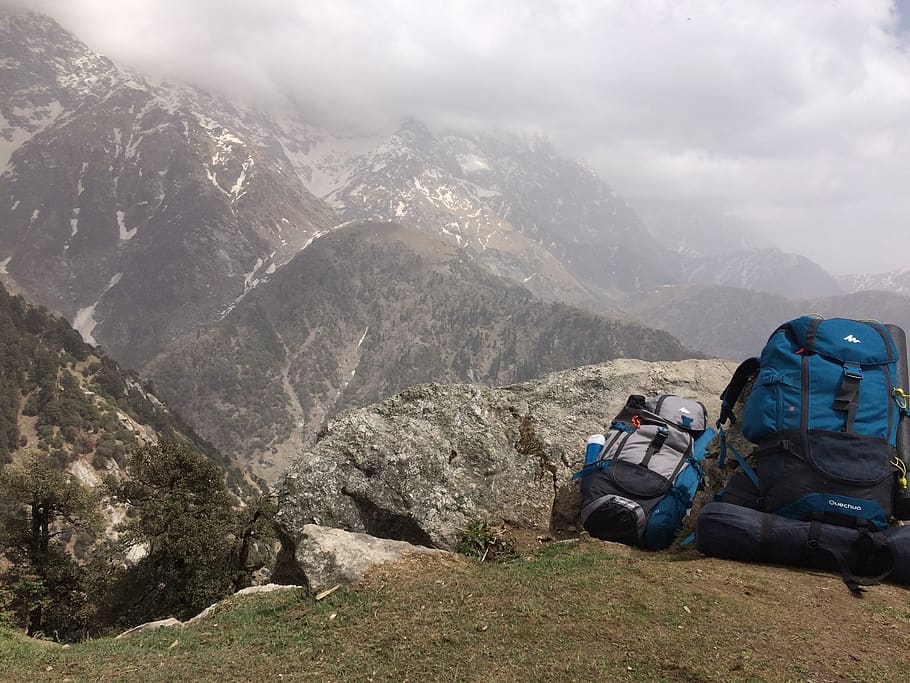
1.   Triund Trek, Mcleodganj (Easy)

At a distance of eight klick from McLeod Ganj Bus Stand and thirteen klick from Dharamshala, Triund could be a lovely hill settled in Dhauladhar Mountains in Kangra district of Himachal Pradesh. it’s placed at Associate in Nursing altitude of 2842 m. Triund is a common trekking website in McLeod Ganj and attracts a great deal of holidaymakers each year. It’s additionally one in every one of the most effective trails of short treks in Himachal state. Triund offers the proper reading of the Dhauladhar Mountains on one facet and Kangra natural depression on the opposite.

Triund is Associate in Nursing eight klick trek from the McLeod Ganj Bus Stand. This is often atiny low and a simple trek, which may be done either from McLeodganj or Dharamkot, that is a pair of klick previous McLeodganj. The path is half-dozen klick from Dharamkot and passes through Galu Devi temple. From this temple, it takes around three hours to reach Triund. The initial half the trek could be a gradual incline and also the last a pair of kicks from Snowline restaurant involves a steep climb all the way until Triund. The last one klick has twenty two exhausting curves before finally reaching Triund. on the method there square measure several tiny Tea outlets wherever one will refresh throughout the hike. Trek may also be started from Bhagsu Nag.

There is a Devi Temple placed on the highest of Triund Hill for the best purpose. From here one will have a lovely read of the Moon Peak and Hindu deity Pass. renowned among trekkers and hikers, there’s a snowline at Ilaka visited by adventurers that could be any trek from Triund Hill.

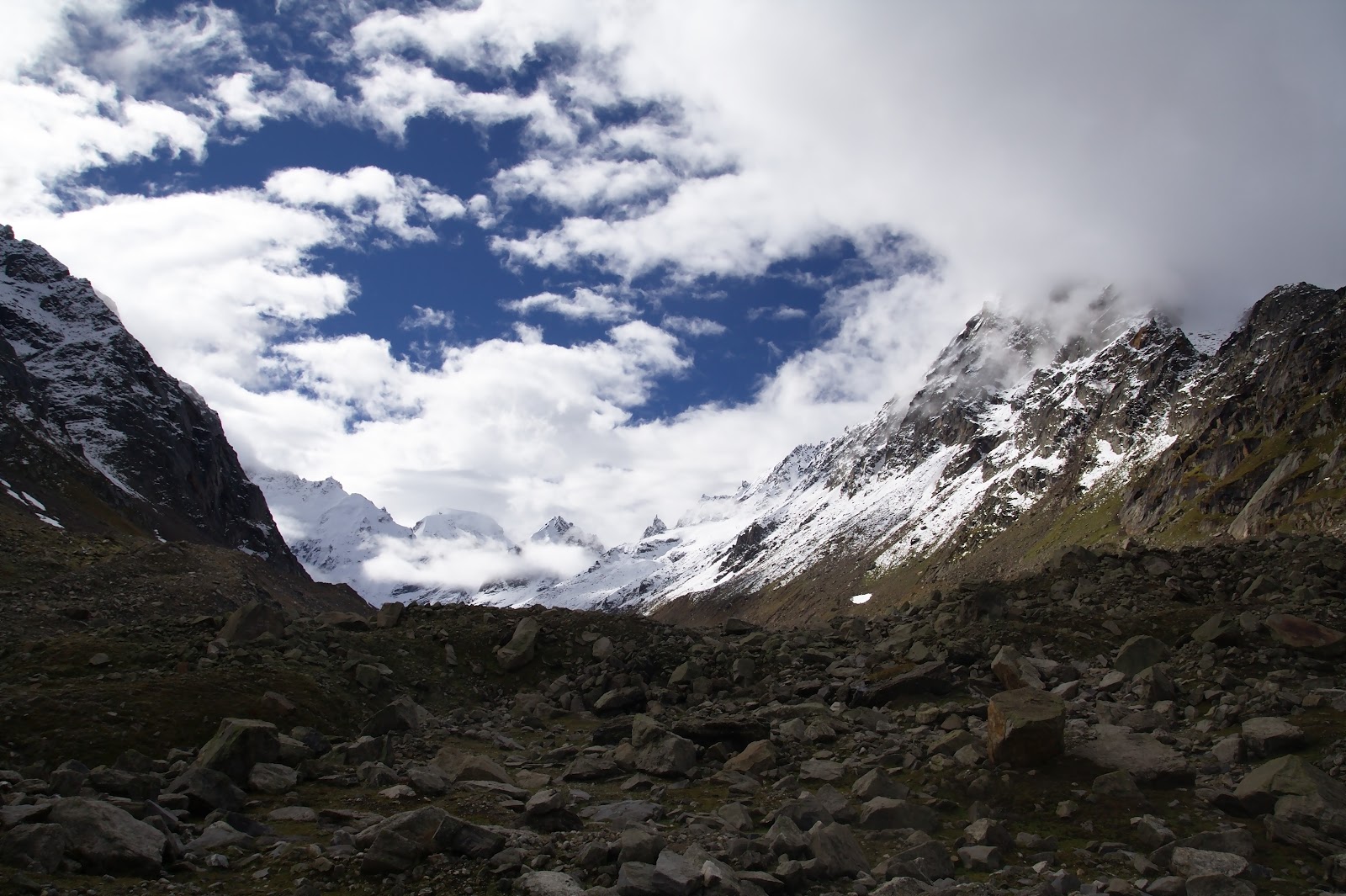
2.   Hampta Pass Trek, Manali (Easy to Moderate)

 Hampta Pass is known for its stunning landscape and totally different terrains that ne’er cross. Witness the postcard-type landscapes, have the bone-chilling expertise of a stream crossing, get a day nap aboard the attractive wildflowers and notice solitude at Chandratal Lake.

Hampta Pass introduces you to the technique of stream crossing, the art of walking on snow bridges and additionally to the challenges of downward-sloping down the slippery mountain. Hampta pass may be an all-round trek wherever you see totally different landscapes starting from forest to meadows to snow and additionally get a glimpse of mountain risks like rough parcels and high altitude challenges. For all sensible reasons, Hampta Pass is one amongst the simplest treks in Himachal.

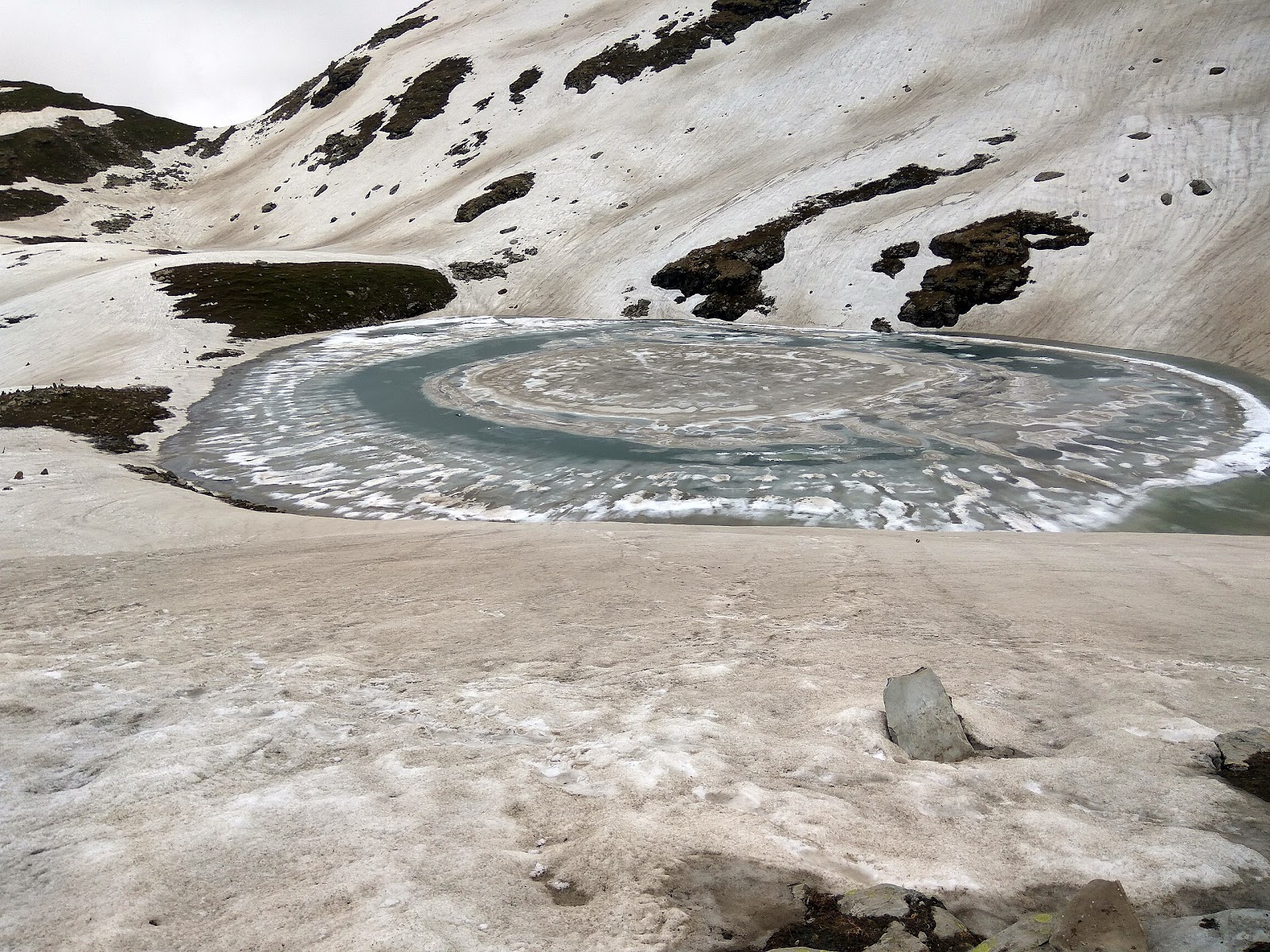
3.   Bhrigu Lake Trek, Manali (Easy to Moderate)

If you’re a beginner in Trekking In Himachal Pradesh, then Bhrigu Lake Trek is definitely a perfect selection for you. No different trek will take you to the fascinating peak in just 2 days than Bhrigu Trek. Also, you need to understand that this place has been the house to Bhrigu Maharishi and folks feel blessed to have achieved it. before moving, check that you’ll trek the steep trails and don’t get petrified of them. Besides that, you need to visit this Bhrigu lake before the Gregorian calendar month because the state changes in the middle of that month.

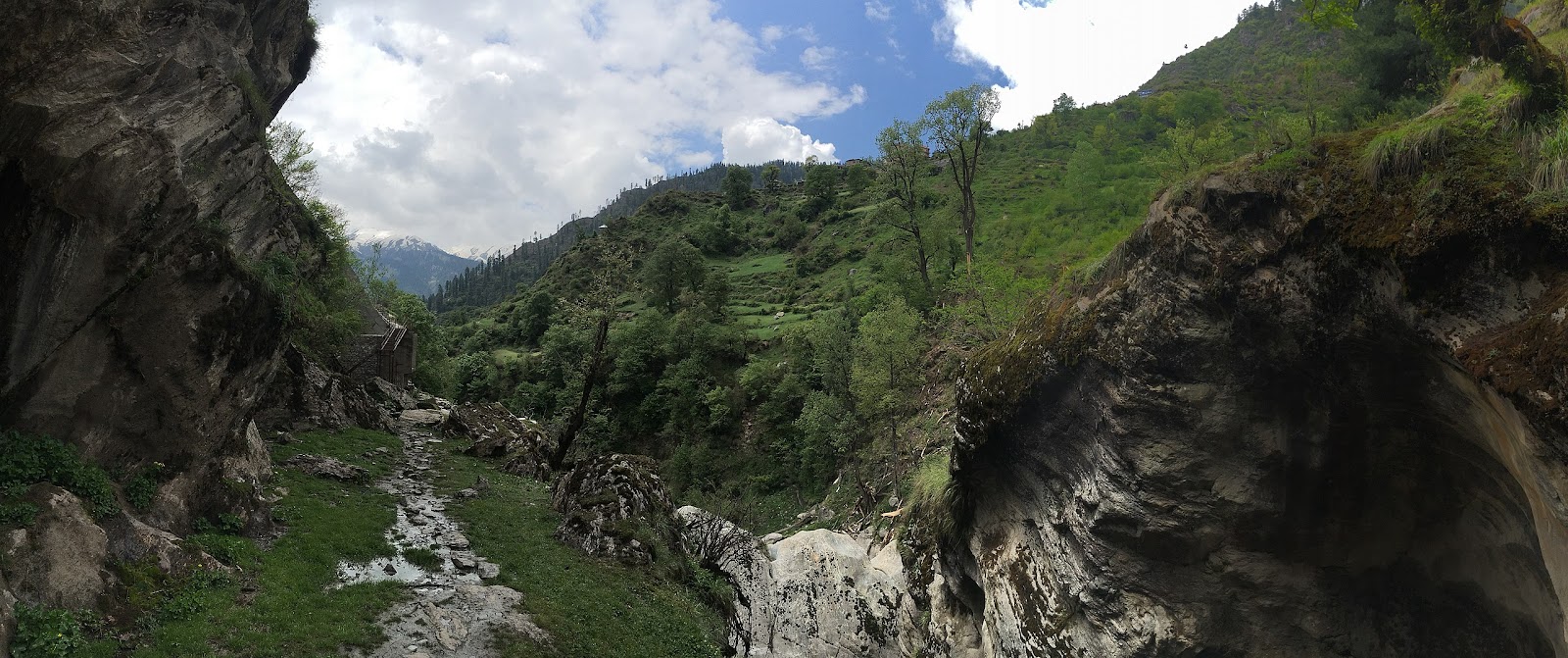
4.   Kheerganga Trek, Kasol (Easy)

A seductive watercourse, Kheerganga is one among the simplest travel destinations because it looks like a gap between the doors to heaven. you’ll forget the reckoning of your time after you keep passing through the exciting views in your approach. Eventually, you’ll be able to cowl this twelve klick trek in five to six hours or most daily. Trust us, you’ll definitely fall infatuated with the sweetness of Kheerganga.

5.   Indrahar Pass Trek, Dharmshala (Easy)

Among the trekking routes from Dharmshala, Indrahar Pass trek is one among the foremost fashionable places below Himachal Pradesh business. It begins from the Kangra depression and takes you to the Ravi geographic region, endowing you with the fascinating great thing about Dhauladhar ranges on your approach. The issue that you simply area unit getting to love the foremost is that the path comprising snow bridges, curved streams of mountains, and also, the cedar tree trees.

DENTAL HEALTH PROBLEMS

In the past few decades, our lifestyle has witnessed a momentous change. This transformation has put a significant strain on our dental health.

Oral health is the most neglected area of our overall health. It is a common misconception that brushing twice a day would keep all dental problems at bay. That is why most people do not know about others ways of dental care.

Oral health directly affects our overall health and quality of life. Our mouth is the threshold of our inner body. Every germ or bacteria that enter our body comes through our oral space. Therefore, to keep our body as fit as a fiddle we must ensure that our oral health is at par.

Most people consider tooth decay to be the only dental problem. However, there exist several dental problems that people must know.
The other dental health problems include:

SOURCE- PEXELS

TOOTHACHE DUE TO CAVITIES-


Tooth decay primarily happens due to unhealthy eating habits. Cavities or tooth decay are the areas in the tooth that have been decayed and have formed holes in them.
It happens when food, acids, or bacteria form a coating on your teeth called plaque. These acids start to eat away the enamel and the underlying tissue. If neglected it can permanently damage your teeth.

TEETH STAINING-


It is the most common problem people suffer all over the world. It is also caused by unhealthy eating habits. Consumption of tobacco, alcohol, or even smoking can lead to discoloration of the teeth.

GINGIVITIS-


Gingivitis is referred to as the inflammation of the gums. It occurs through the formation of plaque on one’s teeth due to poor dental hygiene.
Symptoms of Gingivitisincludes swollen and reddened gums. It also causes bleeding from the gums while brushing or flossing. If the disease is left untreated it leads to periodontitis, a more serious gum disease.

CHIPPED TOOTH-


Most of us have the habit of tearing and breaking things from our teeth. This sometimes causes the shedding of a part of the tooth.
A chipped tooth is categorized under the number 1 type of tooth injury. It is mainly caused by biting hard substances, or conditions like bruxism. It might also be caused due to accidents.

MISALIGNED TEETH-


This problem is also very common among people. Misaligned or crooked teeth cause jaw pain. This misalignment can also lead the food debris to get stuck in between the teeth and cause a dental problem.

So these were some other dental problems that need serious attention and treatment.

The Dabbawala

You would have heard of the Mumbai Dabawalas. Well if you did not let me tell you about them. One of the most important and driving force behind the satiety of Mumbai’s hunger is because of them. These men do not ask for anything and enjoy doing their work with utmost dedication and love. Nothing can stop them from doing their job let it be the weather or their own injuries. This group of individuals have a 6 sigma star rating and a minute margin of error.

What makes them so special? Their unconditional devotion to the people of Mumbai. They run day in and out to make sure all the individuals get their meals right on time. They are so selfless that even with the amount of money they earn monthly, they are always satisfied. They have families to run too but they still never ask for more. People from various other countries have been so amused by their accuracy that they have even conducted their PhD researches on them! Institutes such as IIM, one of the most prestigious universities of management of India also claim and give them as an example of brilliancy.

How did this start? Well, Long ago, A Parsi man always wanted home made food sent to him in office. He then appointed the first Dabbawala. This soon grew over the years and now the committee runs with so many more dabbawalas. They are so well reputed that even Harvard Business School had performed a study on them. Individuals such as Mr Richard Branson, personally even did the duties of a dabbawala and transported huge tiffin orders to his colleagues at Virgin, Mumbai. Even though the people running with our food, do not have the needed education it does not act like a barrier for them. They challenge themselves no matter what and are a huge inspiration to everyone in and around India!