TEACHING EXCELLENCE IN INDIA

PC: Creator: nzphotonz | Credit: Getty Images/iStockphoto

We have so many students studying in so many educational institutions but is everyone receiving a quality education? It we are striving for excellence; we must define it clearly. It means different things to different people. One can say that creating, imparting and disseminating knowledge to generations with increasing quality implies excellence. The quality of education in any school has to be useful, but India is far from that school. We always talk about private schools. There are more than 70% of students in government school s, and the need is to get trained teachers to educate them. Several students are full of passion, and they have aspirations. There are so many issues that prevail in government schools.

Underprivileged students go there, and they complain that teachers don’t come and infrastructure is miserable. The number of toilets is increasing, but the number of functional toilets is still poor. Same goes for drinkable water as well- taps are increased but not functioning correctly. These children dwell in rural areas and are not from well-to-do families. To progress in life, they somehow do self-study, manage to get a tutor who teaches for a paltry sum and somehow clears class 10. The poor’s children get enrolled late, and even after that, they do not develop an understanding of subjects. A need for bridge course is felt in all schools to see that all gaps are filled regarding subject knowledge. We must understand that even though private schools are in a better education providing position today, excellence can exist anywhere, and we hear about success stories from government ones as well.

Even the poor now want to send children to private school. They believe that if they are in a private school or can learn English then, that gets them the passport to a bright future. Our government introduced the quota system in private schools to address this issue, but it is clear that it is not a solution. Do we need to bridge the gap between private and government schools, or do we privatise education completely? A private school, if it has the significant infrastructure, must accommodate such children and be fit for them in terms of imparting education according to their level. In private schools, many emphases are given on exam result, which is essential, but they need to put equal focus on other skills too. They are looking at skill development also as conceptual education isn’t enough nowadays, but the centre must increase more. Sports, technological advancement, globalised conduct and other curricular develop a child entirely and make for a true representative of modern India.

Even for private schools, there is an issue of access to high-quality education. Only a person studying in topmost school or college will be exposed to that excellent knowledge; while students of their schools, who are not enrolled in that top place don’t have access to it. Unfortunately, our school curriculum is hopelessly outdated. Had the schools been teaching how to study through cell phones and laptops ore, the information provided by top schools would be in their hands. If a student feels like learning something today, he should have access to that particular piece of information that he seeks. Technology is that classrooms create a big difference. If excellence is available somewhere, then through technology, we must bring it to students.

Let us not forget that teachers play the most critical role in bringing excellence; in reality, not every teacher joins this profession out of love and passion; circumstances to have a force on people. Still, every teacher must stay committed to ensure excellence in their work and students. There is undoubtedly a disconnect between industry and education. No matter how conceptually strong a student is, once he goes to the industry, employers require to train him according to their needs. We need a system which prepares us for work-life as well. The education system must cater to the real-life challenges and demands of life. Only a few get into top institutions, and how can the system meet the challenge of creating a platform for more students? Investment in education is critical as we need more quality institutions to meet the demands of rising population. We need to ensure that as we grow more institutions, we also maintain high quality.

Moreover, India needs its best students to compete with the world’s best with cutting edge knowledge. We must produce role models and become magnets for outsiders. We boast of having Indians as the best minds of the world; they are heads of big companies in the world. Ironically, there is no electricity or internet in many villages. So many Indians can make India a superpower if only they would get a fundamental requirement of education and the internet will play a massive role in shaping a bright rural India. The government must ensure that these should reach the common man in all the parts of rural India. If there is a successful model available anywhere, then that has to be emulated. We must take advantage of technology as today the learning process is undergoing tremendous change. If the students have access to quality education, then the students will contribute more to society, and everyone will prosper.

COMPULSORY MILITARY TRAINING IN SCHOOLS?

Military training in schools.

Any training on a person adds various skills. Some people want the central government must consider this proposal seriously and implement it in educational institutions. Many children are unable to decide what to pursue in life, and when they experience the hardships on military turf, this idea will be clear. Minimum military training is essential and broadens the mindset and toughens it. In a way, it is vocational training. India may get potential officers while will strengthen the armed forces in future. The defence of the country is left alone in the able arms of troops, and with this compulsion, we can also participate in it. The education improves national morale, health, builds up character and even the ability to face hardships.

People who serve in the army stay away from family for a very long time. When the children of their country join them in the training arena, they will get a morale boost. It will be an incredible feeling when so many children come and are with you. At a place, so many children from different backgrounds will share common space and air. This will bring Indian closer, and the walls of difference will get lower. The children need patriotic reinforcement, and this idea will also foster discipline in them. They will be more team spirit, orderliness and respect for one another when exposed to the adventures of training. Once a student receives basic training and wishes to volunteer, the military will get a trained volunteer. Indian girls will develop defensive skills and become stronger physically.

However, the Indian military is not equipped with the necessary infrastructure and number of officers to take on a significant population of a school child. Even if training institutions and academics are established, it will take much time for them actually to take place. They will require much money for maintenance and upkeep. Even if a decision in favour of this is made, it should be done for students above the age of 18 years and not for school-going children. The rigours of training may be too much for a school going child to handle, and also the mind is better prepared for this at a decent age of 18 years. The government has checked the feasibility, affordability and practicality of it. This is practically impossible for now. We do not have resources which are adequate to fulfil wants of everyone, and now we are asking for a further hole in the pocket of the government. India is a democratic set-up; people are free to choose their professions. Compulsion is respect for military training; it is felt, will go against the democratic ethos.[1] The anticipated benefits of imparting military training to all the youth will not be commensurate with the expenditure involved in such an effort. This would translate into unmanageable figure and will also be a significant drain on the limited resources of a developing country.

We are not prepared for it at the moment, but we can always inculcate the knowledge on a curriculum or introduce it as a separate course.


[1] Pradip R Sagar, Centre may not be in favour of Military Training, availabe at: https://www.theweek.in/news/india/2018/03/17/centre-may-not-be-in-favour-of-compulsory-military-training.html.

Negotiating- The Art, a small story!!!

I think there is an art to it it’s a craft, the negotiating training this morning in the office and the reason, negotiating it be is because it’s the one area of the deal where people need me the most and they need me the most they think I have the most confidence and the confidence that I have going to the deal comes from experience and it comes from honestly – practice practice practice because no matter what you’re selling you’re selling. Two different people you’ve got a seller and a buyer and in every negotiation you’ve got price you’ve got pressure and you’ve got persistence those are the three P’s remember that is it can be a nice little instructional.

The negotiations between Disney and Lucasfilm - A negotiation case ...

An iPhone cost to make now you’re not going to negotiate the price of an iPhone because there’s too strong demand but let’s say there wasn’t strong demand then you can negotiate or you can find a retailer who’s going to sell it to you for cheaper because it doesn’t cost nearly as much to make that phone. As it does for you to buy it real estate is the same way a deal that’s listed from 10 8 down to 10 so 10 million bucks the offer originally came in at 8 million dollars okay that seems like it’s way too far apart. If I go to the seller he’s going to say you got to come up they’re going to say oh no this is my offer so what do you do what do you do you remember the price you want to try to get – which in this instance was around 8 and a half that’s where we thought we’d get a deal done and the legacy price what the seller paid seller paid six point five. So, even at our low terrible awful offer that sellers making money that’s a good thing to remember and to consistently remind each side and then you let time saturate the emotions of the deal and you use repetition you only paid six five even if this bullshit offer you’re making money.

The Art of Negotiation in Project Management

There are clients who are losing million and they use pressure right the fear of a falling market and the fear of missing out every seller fears they’re not going to get their price going forward because maybe the market could change every buyer has a little fear that they’re going to lose it a little fear they’re going to miss out and then you’re trying to find the price in the middle where both sides will say we came to that number because that’s the max or the minimum that I’m willing to go to get this deal done.

Can a Business Simulation Game help develop Negotiation and ...

WOMEN EMPOWERMENT IN CORPORATE SECTOR

If a woman can bring me into this Earth, if a woman can bear the labour of raising and guiding me, then certainly a woman can be my boss at work.

Times have indeed changed, and myths have been effaced where other than the ‘exotic’ not much came to mind when thought about Indian women. Indian women are becoming increasingly visible and thriving in the professional and public sphere.

Whether it is Barkha Dutt, who has become an idol for several journalists, Arundhati Roy, a Booker prize winner and a social activist, the industry bigwig and a magnate Indra Nooyi, or Kiran Mazumdar Shaw, who become the wealthiest Indian women after the initial public offering of her company Biocon, worth over $1.1 billion. All herald the advent of Indian professional woman.

During 1987-93, the role of women worldwide underwent a dramatic change. Women today share the podium with men in almost all fields, be it kitchen or office. They have now entrenched themselves as an integral part of the workforce.

After 1991, the increased role of the private sector and spurt in the number of MNCs facilitated a slow but definite rise in the number of women managers and entrepreneurs as against some abysmal figures two decades ago.

MNCs in the previous decade has witnessed quite a volatile environment with numerous challenges calling for the multitalented and experts. Many executives have emerged and are recognised by their expertise, organisational contribution and leadership despite these corporate vicissitudes. India has not by serendipity but by destiny witnessed the proliferation of women who have spurred and fostered growth in the economy and marked themselves as stellar performers. Women have time and again contrived to leave a good mark here.

I will not call it unfortunate rather consequential that we see only a handful of companies headed by women or women at the helm of strategic departments. Till the corner of the new century, women have not been welcomed to hold and glorify the top positions of a slew of corporate houses. Society had its stereotypes and biases against women in management where the male trains had higher perceived value than female traits. Innumerable myths had clouded this society and deemed women in control as anachronistic. Stymied with the straightjacket of envy and as a result male chauvinism, female employees confronted barriers while climbing up the corporate ladder. The perceived notion was that women are ruled by the heart and not head; they are more personal than professional/ the fallacious idea was deduced from their parallel profession, as an employee and as a mother.

Following are some of the myths perceived by society-

  1. Women switch jobs more frequently than men.
  2. They are not willing to travel extensively for the organisation.
  3. They fall apart in a crisis.
  4. They only work because their economic reasons force them to do so.
  5. They are too concerned with the social aspects of the jobs and cannot be entrusted with important matters

Furthermore, women have to deal with the complexities of a dual role as working women and mother. Unfortunately, they were thought of as less committed and tenacious. Lastly, they have inner battles as well likely mainly getting scupper by their apathy, which they need to fight and overcome by developing confidence, appropriate skills and attitude.

Male chauvinists, in particular, have denounced them with such shoddy treatment in mentoring, training and development at work, there was bound to be resentment. Fortuitously, our genial women didn’t resort to vandalism but charted their way into the corporate turf, competing for head to head with males. Today globally, women are the 10% senior managers in fortune 500 companies. Having said this, aspirations will never foil, and women are here to stay.

Today the beautiful part of women manager is that she is very good at juggling around tasks. One of their most persuasive skills is her ability at multitasking. Researchers have developed reports which state that women managers see things laterally, intuitively and differently. They can handle more contradictions, can tolerate more and can deliver much more than men. The reality is that women have a different value system, which they bring to the organisation. Management studies on gender initiatives have three findings:

  1. Some companies like female workers to be ‘boys’, wanting them to play golf, do things like men; they even commend them but sarcastically complement after doing a task efficiently- ‘She is the man’, citing male chauvinism again.
  2. Some companies recognise that females do the same work but require different incentives.
  3. Others recognise that women bring them a different approach and attitude to the workplace.

This doesn’t revamp the gender equality inherent in the system, which requires a paradigm shift in its perspective. A qualification of being a male and not a female doesn’t guarantee organisational excellence. Therefore, women in corporate India are aware of the various constraints they work under and are trying to make the best of the bargain. And when they do reach the managerial level, they bring with them the silver lining. For instance, employers today exhibit a preference to employ more women in Human Resources as compared to men and also in the retail and service sector. Hence, they are no longer damsels in distress.

The statistics say that 1/3rd of employees at Indian software companies today is a woman; which were stereotyped as abstract, obsessive and unsuitable for them. NASSCOM puts this figure at 38% higher than their western counterparts. Let me now give you a glimpse of the Indian corporate divas- Vidya Mahan Chhabria, the chairperson of the $2billion Jumbo Group and Naina Lal Kidwai, vice-chairperson and MD of HSBC securities and capital markets, are the two Indian women to feature of the list of the 50 most powerful women in International business by The Fortune magazine. There are several others like Sullaija Firozi Motwani heading Kinetic Group and Mallika Srinivasan leading Chennai- based Tractor Making Co. name TAFE, who are prominent figures in the burgeoning automotive sector and other who successfully manage family-run businesses. Shahnaz Hussain of Shahnaz Group, Renu Karnad of HDFC. Schuana, Alisha and Nadia Chouhan managing Parle Argo are the epitomai of the phenomenal works done by the Indian corporate women. In a country where sex ration is on the decline, where the representation of women in the Parliament has remained at an abysmal low of less than 7% since independence, the emergence of leading ladies, even if it just a few, In India’s corporate sector is hopefully only a precursor for more. In India, women can achieve greatness if their path is clear.

To trounce men in this sector is afar away but not inconceivable for it took men millenniums to dominate this society and now having witnessed women shake this supercilious pillar in the last two decades, it won’t be long before these emerging flairs vociferously exorcise this notion as they are getting empowered.

ENVIRONMENT- THE BEAUTY OF EARTH

Our environment is one of the most important aspects to survive on this planet. Moreover, it is the only thing that can make life sustainable. Without it, we cannot survive even a single day.Furthermore, we will not have food and water to survive. And this will also be possible because of the imbalance of heat and atmospheric pressure. Thus it is important that we should take care of the environment.

World Environment on 5th June every year. Furthermore, the world environment day is run by the United Nations Environment Programme(UNEP). Above all the main purpose of celebrating this day was to spread awareness. The awareness was about the conservation of our environment.

On the world environment day, we all take a day off from our work. Moreover, we all plant small saplings in a barren land so that it may grow and flourish in the land area after some years. Also, we take part in various processions to make people aware of this day. So that they may also take part in protecting our environment.The school provides buses to take the students to the jungles. There they come to know about the different types of plants. And the types of vegetation in which they survive. Also, the students have to bring a sapling from their homes and plant them inside the ground. Further, it also creates an emotional attachment to the environment.

Moreover, disease like lung cancer is affecting even the minors. As a result, is a major threat to the people living in urban areas. To reduce the risk of air pollution China is establishing various air purifiers in their ecosystem. With the help of these people are at least getting pollution-free air to breathe.In addition, it is also taking mandatory measures like population reduction, banning the use of plastic, and planting trees in every community.

PLANNING- process and importance

WHAT IS PLANNING?????
Planning is a common term which focuses on pre deciding the things which we have to do later. Not only deciding the things but also planning includes thinking of the ways by which we can complete a particular plan successfully. It is an important parameter of the management and we need to plan things in the every sphere of life so that we can go on accordingly. Planning is the combination of creativity and innovation. Planning is done to perform any task effectively and efficiently so that there is no hurdle between the complete process of the task which we wish to perform. In the business world, it is said that planning acts as a bridge to reach the position where we wish to reach.
STEPS OF PLANNING
Planning is not an easy task rather it is a combination of several steps. The complete process of planning has been divided into 7 different steps which are mentioned below –

  1. To set objectives i.e. to decide where we aim to reach. It is basically aiming the destination. Every organization has some targets and thus has to complete them so setting objectives is the first and important step of the planning process.
  2. To develop premises i.e. to set assumptions. No work is completed without a risk and assuming things. So premises are basically assuming what can be done. So making those assumptions is the next step.
  3. To identify alternative courses of action is the third step i.e. once the objective has been set and assumptions have been made, then it is the time to identify and think the proper course of actions which must be performed to reach that particular aim.
  4. To evaluate alternative course i.e. to think of the advantages and disadvantages of each course of action and to find what alternative can work for it if that would not happen.
  5. The next step is to select the best alternative which would be suitable according to our aim. The best plan is adapted and implemented.
  6. The next step is to implement the actual plan which has been thought of yet. This is the step where actually planned course of actions take place and where actually the work is done by the individuals.
  7. The next and final step of the process of planning is to follow-up the actions. In this step all the validation and verification occurs that whether the planned process is going on with the same flow or not. Also it is seen that whether the plan needs any change or it should go on like that only.

IMPORTANCE OF PLANNING

  1. Planning tends to reduce the uncertainty of occurring a process.
  2. It is very essential to provide a proper direction to the plan.
  3. Planning helps to promote innovative ideas and thus the planned work is done more efficiently.
  4. Planning helps in decision-making and dividing the equal amount of work to each individual of the group or team.
  5. Planning reduces confusion at any level of the process.
  6. Planning helps in setting some goals and thus an organization does better work.

SHOPPING IN INDIA

The crumbling sound of new shopping bags,  the moment when you discover that one dress or trinket that you absolutely must own are some simple joys of shopping, glittering, line between those who shop for utility, and the more amazing kind that are shopaholics. So if you’ve crossed that line and come over, and are looking for a change from your own city then there are a numerous place for shopping in India.

If you have to choose one place in India to shop at for everything traditional and ethnic, it has to be Jaipur. Mirror Work, tie and dyes, exuberant embroideries and just so much color,break for amazing street food and you are set. Maybe even buy some traditional puppets. Jaipur is undoubtedly one of the best shopping places in India.When you are done pampering yourself, also hoard some beautiful, and mostly hand-painted and natural color printed home decor goodies, from cushions, bed sheets to rajaais.

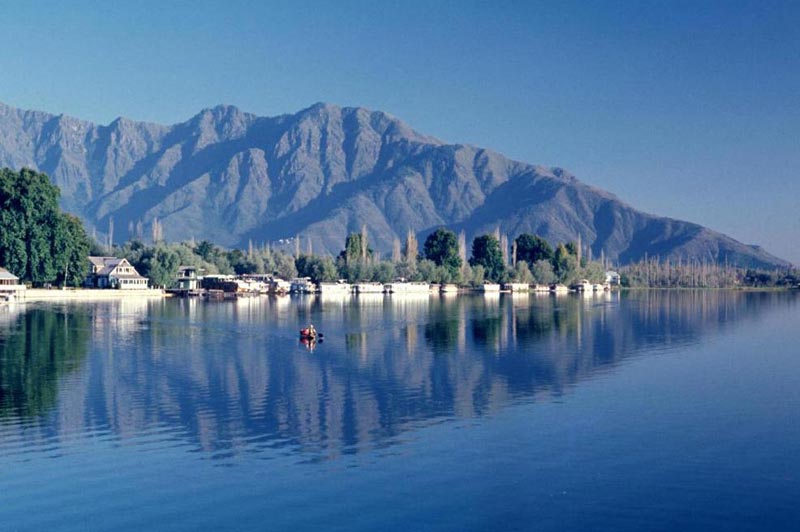
While the Pashmina Shawls and Silk Carpets and just a handful of saffron are going to cost you a pretty big sum, you can be assured that these three are Kashmir’s absolute favourites and worth all the money. And don’t forget to hoard Paper mache boxes and handicrafts for family and friends too.

If there is one place where you get the best of both traditional, ethnic and contemporary as well as budget street shopping and splurging designer labels, it is Delhi. The sheer variety on this city’s list is amazing and this makes it one of the best place to buy clothes in India. Don’t miss Sarojini Nagar and lajpat nagar if you are interested street shopping and clothing (sometimes even top brands) and jewellery on a budget. 

You just don’t leave Chennai without a bright Kanchipuram Sari. Even if you don’t wear saris too often, a fine silk sari is essential, and if you are looking for a special one, it doesn’t get better than this.Do visit Pondy Bazaar and maybe grab a bite at Anna Salai in between. Express Avenue and Phoenix Market  City are some popular malls for shopping in India.

While Ahmedabad may not have the most happening shopping scene, it does offer some of the best options for ethnic wear in North India. Step out proudly with a colourful and glittering ghagra cholis.

Anupama

I have seen this movie a hundred times, every time I learn something new from this movie. A beautiful movie which depicts a string of emotions different people go through. What is fascinating about this movie is that in this movie no one is perfect ( as defined by the Indian cinema), everyone has their own traits which makes them look different but all these people with different traits live together and do not try to change each other rather they respect individuality ,Which I think this generation does not do. We are always in a race to become like someone, want a hair style like her,  hey I want a bike like him, You should do an MBA as she did and etc. There are many factors which tends us to change our identity, our belief systems to make us someone we are not. What is required is not to make ourselves like others rather to learn things constantly, and bring out a better human from inside.

This movie revolves around Uma played by Sharmila Tagore who is a very shy and a quiet girl. Who never speaks up ,does not have aspirations or desires rather thinks that she is the reason her mother died. Her mother died at the time of her birth, since then her father went into an emotional trauma and distances himself from his daughter. The father daughter share the same roof but never do they talk to each other. This movie is directed by Hrishikesh Mukherjee and his movies always depicts complex relationships in a very simple yet elegant way.

Ashok played by Dharmendra is a struggling writer, he is poor but is determined not to ask the rich for favors. He has some principles in life reading this you might think he would be a very strict person, that’s not true. He is fun, he translates his misery into a joke every time he  talks to people.

Such meaningful and heartfelt movies with songs having references to the storyline is not made nowadays. It does not mean that all the movies in this era are bad,  it is just that they do not have any relevance, every movie you see today will have a catchy party song, a very heartfelt romantic song, a sad song that is it just to grab public attention. In Anupama the director used songs only to convey some feelings which cannot be said by a speech. Like the song  kuch dil ne kaha portrays that Uma is a person who is shy of talking to people but opens up her feelings to flowers and leaves as she thinks they are her friends.

This movie does not have dramatic screenplay but it sure has many emotions, beliefs and trusts being broken or overflowed. Ashok when meets Uma and comes to know of her feelings , he gives her some advice about how grateful she should be that she has many things that many people don’t have and about the emotional chakravyuh she is in, he says “it is you who can get yourself out of this, some problems that we have created have to be solved by ourselves that is the best way”.

The movie was an eye-opener for me and I guess it would for you too.


BEST PLACES TO VISIT IN INDIA

India is the world of resplendent colors and rich cultural locales, be it magnificent monuments, heritage temples or tombs. The country’s ancient cultural heritage is inextricable linked to its technology driven present existence. The co-existence of a number of religions and cultures,makes it the perfect place for a complete.

Tourism in India is the largest service industry, with a contribution of 6.23% to the national GDP and 8.78% of the total employment in India. India witnesses more than 5.5 million annual foreign tourist arrivals and  740 million domestic tourism visits. In the year 2010, 17.9 million foreign tourists visited India. Majority of foreign tourists come from USA and UK. Maharashtra, Tamil Nadu, Delhi, Uttar Pradesh and Rajasthan are the top 5 state to receive inbound tourists.

The mountain town in Ladakh is quickly rising to the top of must-visit lists.The towering Himalayas supply a dramatic backdrop and plenty of opportunity for adrenaline junkies to get their fix.Rock climbing and if you’re looking for something a little tamer, short trekking jaunts can be arranged.For a glimpse into the town’s culture and rich history, visit the Shey Palace and the many Buddhist monasteries.

One of India’s prettiest hill stations, Manali has long been a honeymooner’s paradise.The Beas river has whitewater  rafting and there’s skiing, trekking, paragliding and zorbing to be done all along the hilly terrain nearby. Rohtang Pass has mesmerizing views of the great mountains, the Vashisht hot water springs has bathhouses for visitors to soak in the bubbling water and then there are large and small waterfalls at short drives all around Manali.

Darjeeling was developed as a hill station and tea plantation area, thanks to its cooler temperatures.Today, Darjeeling’s tea estates are world-renowned, but there’s more to it than its picturesque rolling hills sheathed in green.Nestled in the lesser Himalayas, Darjeeling offers breath-taking views of the great mountain including Mt Everest.Tiger Hill, at an altitude of 2,590 meters gives visitors a glimpse of the Kanchen Junga range. The ropeway and cable car rides, the natural history museum, the zoological parks  and botanical gardens all give tourists a flavor of the natural wealth of the Himalayas.

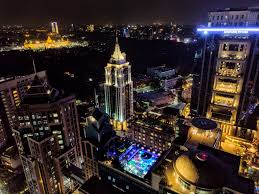
The buzzing metro might be one of the most recognized Indian cities abroad, but the ‘Garden City’ had plenty going for it long before it became and IT hub. Bengaluru offers a blend of the old and the new and won’t disappoint. The Bangalore Palace is a glimpse into the city’s royal past and the imposing Vidhana Soudha structure and example of its  prosperous present.There are plenty of ancient religious centers, such as St. Mary’s Basilica, St Patric’s Church and Shri Nimishamba Devi Temple.Younger tourists will enjoy the plentiful shopping  at the many malls, all offering the biggest brands, and the thriving nightlife complete with pubs and lounge bars.

PRIDE OF INDIA

India is one of the oldest civilizations in the world, spanning a period of more than 4000 years, and witnessing the fusion of several customs and traditions, which are reflective of the rich culture and heritage of the Country.The history of the nation gives a glimpse into the magnanimity of its evolution.This transformation of the nation instills a sense of national pride in the heart of every Indian within the Country and abroad, and this section is a modest attempt at keeping its flame alive.

It is a Peninsula Island which means it is surrounded by oceans from three sides such as the Bay of Bengal in the east, the Arabian Sea in the west and the Indian ocean in the South. The National animal of India is a tiger, the national bird is a peacock, national flower is a lotus, national fruit is mango and national sports is hockey.India is a land of Lord Shiva and Lord Krishna, the dream of Buddha and Mahatma Gandhi. India is a country where the people are of different castes, creed, religions, and cultures live together and they speak different languages. It is the main reason why India is said to be a country of “Unity in Diversity”.India is well known for its spirituality, philosophy, science, and technology.It is also famous for farming and agriculture which is the backbone of the country, it uses the produced food grains and other items of their own country.The agricultural land mostly produces sugarcane, cotton, jute, rice, wheat, cereals, and many other crops.

It is rich in monuments, tombs, churches, historical places of architecture, etc. are the source of income to it. India is a place where Taj Mahal,the golden temple, Qutab Minar, Red fort, Ooty, Nilgiris, Kashmir, Khajuraho,etc. are wonders exist in the country. It is the country of great rivers, mountains, valleys, lakes, and oceans. Hindi is the national language of India. In India there are 29 states and 7 union territories, in 29 states there are many small villages and cities.

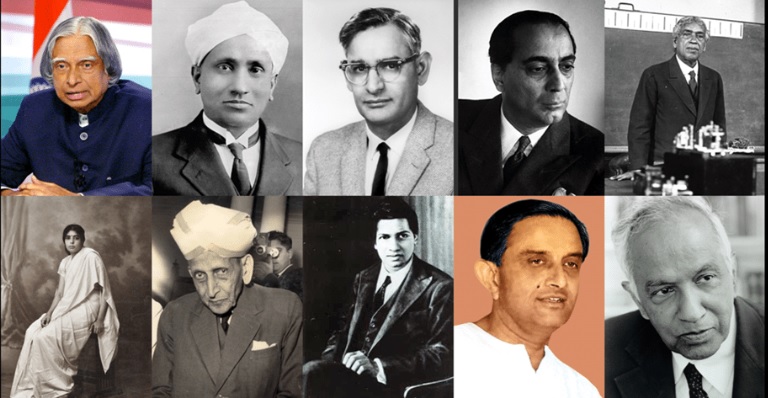
India is a country of great leaders and freedom fighters. The Indian soldiers are on borders to protect our India from terrorists. The great leaders like Chhatrapati Shivaji, Mahatma Gandhi, Jawaharlal Nehru, Dr. Babasaheb Ambedkar, etc., the great scientists like Dr. Homi Bhabha, Dr. C.V Raman, Dr. Naralikar, etc., the great reformers like Mother Teresa, Pandurangashastri Alphaville,these are great peoples took birth in India.In her lap breathe the happy followers of the various religions of the world. We have a unique culture that has developed over the centuries.

SCIENTISTS OF INDIA

Historical Digambar Jain Temple Shows the Path of Nonviolence : Super Exclusive Diary !!!!!!!!!

Old Delhi is replete with marvelous places of historical importance. Right from architectural brilliance and the housing example of Mughals like Red Fort, Delhi has plenty of Gurdwaras that commemorates the protest of the Sikhs against Mughal Emperors. Old Delhi is such a charming location where you may find everything coming together. Every religion finds a place here. You can visit the Chandni Chowk to taste the most delicious and mouthwatering food items.

Digambar Jain Naya Mandir holds a great reverence for the Jains. It was built during the time of Mughals when Shah Jahan was ruling. Jains were known to be talented in business matters and this is why the emperor made rooms for Jains in his own capital. Take up Digambar Jain Naya Mandir trip to experience the real marvel in Delhi. With the tour package, you can tour several interesting places in Delhi.

Credit : Third Party Reference

DIGAMBAR JAIN NAYA MANDIR PACKAGE

Chandni Chowk, located in the Old Delhi, is dotted with interesting places. The Digambar Jain Temple, the most important religious site for the Jains, is situated opposite to the Red Fort, Chandni Chowk. Build in the year 1657 AD, the temple was made under the rule of Mughal Emperor Aurangzeb. It is dedicated to Lord Mahavira Swami and Parshwanath Swami. Made from red sandstones, the interior of Digambar Jain Temple has superb carvings, paintings and golden artwork.

It is dedicated to Lord Mahavira who was the 24th Jain Tirthankaras. You will find the main shrine located in the first floor that may be reached with few flights of steps. This temple has various other shrines just like the primary one. One of the Shrines in Digambar Jain Temple is dedicated to God Adinath.

There is a medical center here for curing the birds residing in the temple. When you tour Digambar Jain Naya Mandir, you need to carry fruits and rice to offer to the Gods. The impressive sandstone temple is also known as the ‘Lal mandir’ since it is made up of sandstone.

EXPLORE THE VARIOUS FACETS OF THE CITY WITH OLD DELHI TOURS

Delhi, whether old or new, offers a gamut of tourist attractions to the travelers. In the old Delhi, you can find gardens, parks, historical architectural sites and even the modern structures dot the place. Visitors from all across the globe travel to Delhi to catch the glimpse of diverse facets metropolis.

Credit : Third Party Reference

Tour operators in Delhi can arrange the planned tours to Digambar Jain Naya Mandir which will let you visit other sites like Jama Masjid, Qutub Minar, Red Fort, Jantar Mantar. The old Delhi Chandni Chowk provides delighting shopping experience. Tourists of all ages get attracted by rich culture, art and architecture.

The travel agents online arranging Digambar Jain Naya Mandir visit or travel package can arrange guided tours. The major function of the guided tours includes ticket bookings, reservations and a well planned travel itinerary. There are expert guides to make necessary arrangements such as dining, transportation and other aspects.

Jain religion gives the most priority to nonviolence property. You need not worry about the flight bookings, hotel reservations when you are with the tour operator.

By the way, Happy Guru Purnima to everyone. Best wishes !!!

Reference – https://divyanshspacetech.wordpress.com

ATTITUDE v/s EGO…The real life stories…!!!

Attitude is a huge thing and small part of Attitude is EGO, Example if Attitude is a Continent then Ego is just a small country in it Attitude can be divided into two parts first Right attitude and Second is Wrong attitude people get confuse between ego and attitude because ego is the part of wrong attitude but the best part is that you can be a good attitude person without having an ego. Likewise, Every Indian is an Asian, but every Asian will be an Indian is not compulsory similarly,

“every Egoistic person will for sure have Attitude, but person who has Attitude doesn’t have Ego”.

Your attitude matters in your life – Journey of life Continues

Hence even you should be a person who has attitude you shouldn’t be a person who is egoistic or who has a bad attitude (wrong attitude) Now let’s talk about definition, Attitude shows what we think about other things How we feel and how we respond in any situation whereas Ego always allow us to think about our self-esteem and self-importance for example, person who has a Good Attitude will say No matter what happens I will win whereas an Egoistic person will say, that no matter what happens no one can beat me Good attitude person will live life as if he is the king of the world. Whereas bad attitude person lives a life as if everyone is their slave and everyone should always obey them.


Now let’s talk about today’s Book summary which is related to this Topic Author Ryan has accomplished huge successes in a very young age he was only 19 years when he became the youngest executive in the Talent Management Agency who later did signing of big rock bands, and also did consulting for many books which was sold in millions at the age of 21 he was the marketing director of an amazing Company AMERICAN PAREL. At the age of 25 he was also the best selling author everything was so perfect, but suddenly one day time changed and everything changed in his life he lost everything, he started failing in his life, he made a tattoo in his hand, he tattooed the most important reason of his failure in his hand so that he never forget that and should never repeat that same mistake in his life and can avoid such failure again.

200+ Ego Quotes, Sayings, Images to Inspire You in Love and Life ...

The tattoo which he made in his hand was “EGO IS THE ENEMY” because his ego was the main and the most important reason for his failure and that reason he never wanted to forget Ryan defines Ego as an unhealthy belief which make us obsessed about self-importance. Ryan says that ego is “something which converts our Confidence to Arrogance Ego is that dangerous thing which ruins or destroys our long term goals by just giving us short term satisfaction, and by making us feel; superior from others for just for short time and such ego is not at all right”. Author says that every person in their lives always stays in one stage out of three first stage is ASPIRING, second is SUCCEEDING and third is FAILING:

  1. Either person is aspiring, means working on something in order to achieve something in his life wanted to become something in his life.
  2. Either person has already achieved in his life, means he already faced success.
  3. Either person is failing in his life, he is not able to achieve anything huge in his life.

Now the biggest obstacle which stands firm in front of us during all three stages to defeat us is nothing but our OWN EGO. Now let’s see how EGO Comes between all three stages to destroy our goals:

1.Aspiring, Rohit has seen a video related to body building he loved that video, hence he decided that he will for sure become a bodybuilder no matter what happens after deciding. On first day he started posting workout pictures on social media pages by NO PAIN NO GAIN #WORKINGONMYDREAMS with this he started showing off more than his actions, he do less and show more after few days his entire motivation goes down, and he return to his normal life. Well this happens to many people and the reason for this is EGO Our Ego always makes us think what others are thinking about us therefore instead of taking maximum action for our goal completion. We started doing easy things to impress others such has we started talking more, we start uploading pictures on social media pages which in reality nor impress others not even allow us to complete our goals because in show off and talking same resources are required which is needed to complete our actual goals, which is our time, mental physical health /energy and our will power and mostly we use all these and finish it just by showing off and talking. Hence it will be best if you avoid wasting your energy on talking and in thinking about it all day, start using that same energy in taking action and in completing your goals.


2.Succeeding, at age 18 Howard Hughes took the biggest decision. He gave money to his relatives and bought 100 percent shares of his family business and became owner of that company. It was an Oil drill bit company this was the very bold decision because he wasn’t much aware about the business but still it proved to be the most brilliant move of his, Hughes shifted that company from 1 million dollar to 1 billion dollar he became very successful. His overconfidence or can say his Ego destroyed his success his ego made his career the most embarrassing the most dishonest and waste career in the history. The first huge Success of Hughes made him believe the he is very talented and he can be successful in any business, hence he get into Aviation field, film making and in stock market, and in every field he faced a huge loss in fact a biographer has shown Hughes end life in his book like he was sitting in his favorite chair naked, without taking care of his health, without bathing he was fighting with lawyers with investigators, investors by hiding his every wrong doings. So, that he doesn’t lose his everything Hughes Ego was the reason for his embarrassing end even after getting success he failed miserably most of the time when people get success, then their ego shift them from humble and learning person to overconfident person about their capabilities therefore they failed to maintain their success and hence they lose everything in their lives.


3.Failing, after many scandals and 300 million loss, company gave two options to American Apparel Founder Dove Chaney, first option to resign as a CEO from the company and to work as Creative Consultant and for that he will get a good pay or salary, and second to resign and completely leave the company at that Time Dove rejected both options and chose the third and the worst option which was to FIGHT. He filed a case against his company, he sue his company, instead of searching a better CEO for a company. He made that company to reach to bankruptcy his ego didn’t allow him to think better for his company instead he destroyed his company as well as himself because after that case his life was so devastated that he used to sleep on his friend couch because he was bankrupt, had no money. Ego is something which never allow us to understand our own shortcomings and faults just like an alcoholic who feels the whole world is doing wrong with him. He himself does the worst for himself, without realising that he is the biggest enemy of himself. Similarly, when we fail to achieve something, at that time instead of taking responsibility our ego starts making excuses starts blaming world and others our ego blames and make excuses so that our respect doesn’t decrease hence we do everything but never realize our mistakes and shortcomings because of which we fail to overcome it and fail to get success and achievements in our lives.

Leadership Without Ego: How to Get Your Ego Out of the Way?

Girl Trafficking More Heinous Offence Than Drug Trafficking

While taking a very serious note of the notorious crime of girl trafficking, none other than the Orissa High Court itself has just recently on June 29, 2020 in a latest, landmark and extremely laudable judgment titled Panchanan Padhi Vs State of Odisha in Case No.: BLAPL No. 2612 of 2020 has minced no words to categorically observe that trafficking of girls is an offence more heinous than drug trafficking but ironically less stringent. How can our lawmakers still take this for granted? How can our law makers still justify less stringent punishment for trafficking of girls as compared to drug trafficking?

                         At the outset, Justice SK Panigrahi who authored this commendable, comforting and courageous judgment makes it a point to first and foremost recollect what the legendary Justice VR Krishna felt about this woman issue by stating that, “No nation, with all its boasts, and all its hopes, can ever morally be clean till all its women are really free – free to live without sale of their young flesh to lascivious wealth or commercializing their luscious figures…..” It is our lawmakers who must bear this in mind always while enacting laws! How can less stringent punishment be ever justified by anyone for heinous offences like girl trafficking?

                                          To start with, the ball is set rolling in para 1 of this noteworthy judgment wherein it is first and foremost observed that, “The instant case has once again given an opportunity to this Court to ponder as to how the opportunistic predators seize upon the vulnerability of some desperate and impoverished girls. The accused herein is allegedly notorious for his aplomb in identifying girls and capitalizing their distress condition but caught red-handed by police. The Petitioner herein has preferred the instant application under Section 439 of the Code of Criminal Procedure vide BLAPL No. 2612 of 2020 against the C.T. Case No. 379 of 2020 pending before the court of the Learned SDJM Bhubaneswar (T), CSI, Bhubaneswar for alleged offences punishable under Sections 4/5 of the Immoral Trafficking (Prevention) Act, 1956 read with Section 370(3)/467/471/120B and 34 of the Indian Penal Code. The court of the Addl. Sessions Judge, Bhubaneswar has rejected the application seeking grant of bail vide B.A No. 260 of 2014 filed by the Petitioner herein u/s 439 Cr.PC on 4.3.2020.”

                                        While elaborating on the facts, it is then stated in para 2 that, “The factual matrix of the instant case as set out in the F.I.R. is that on 21.01.2020 at around 10:00 AM Shri Alok Kumar Jena, Inspector of Police, STF/informant received information from a reliable source that one Ibrahim Khan and one Ruksar Begaum of Danagohiri, from Pipili, Dist. Puri are regularly trafficking girls from Kolkata and other places and engage them in sexual exploitation for commercial purposes from which he derive income. It was also informed that the girls were being procured from Kolkata and they were housed in a rented house at Bishnukunj Ratha Road, PS-Shree Lingaraj, Bhubaneshwar. They were being exploited at the instance of Ibrahim Khan and Ruksar Begum. These girls were forcefully sent to various hotels and lodges where they were subjected to sexual abuse and exploitation. Upon receiving such information, the informant apprised the Superintendent of Police, STF, Bhubaneswar who recorded the said facts vide Station Diary Entry No. 4 dated 21.01.2020 and directed the informant to reach the spot along with a team of police officers including some lady officers to conduct the raid.”

                                       Going forward, it is then brought out in para 3 that, “Accordingly, the informant accompanied by a team of police officers including some lady officers proceeded to the aforementioned house where the kingpin Ibrahim Khan and his wife were residing. After reaching at the said house, which is a double storied building, they gheraoed the said building to prevent the egress or ingress by anyone. The informant proceeded to the first floor and knocked at the door of the first room and in response to the same one of the girls opened the door and he could notice the presence of six girls in the room. He, thereafter disclosed his as well as his team’s identity by showing their Identity Cards and asked for production of their identity cards. The six girls disclosed their respective identity and they were stated to have been brought from Kolkata by alluring them to work in some beauty parlors in the city.”

                                       Be it noted, it is then revealed in para 4 that, “Before conducting the said raid, the informant secured the presence of two respectable persons of the locality as witnesses to the search and seizure operation. Thereafter, while conducting the personal search of the girls by the lady police officers, they found six mobile phones, thirty unused condoms etc. Those articles were seized in presence of the seizure witnesses and a seizure list was prepared on the spot which was duly signed by the witnesses as well as the victims.”

                                        More damningly, it is then unfolded in para 5 that, “During examination of the victims, they revealed that the aforesaid Ibrahim Khan and Ruksar Begum and certain other unknown persons have procured them from Kolkata and on some false pretext of employment in beauty parlors forced them into sexual slavery and prostitution. As per victims’ statement made under Section 161 of Cr.P.C. the present petitioner was forcibly sending them to various hotels and lodges and were arranging customers for such illegal act. The Petitioner herein was acting in concert with aforesaid principal accused by making wide publicity among the prospective customers to be in touch with them for such act. The victims have further disclosed that Ibrahim Khan and Ruksar Begum have kept them in the said rented house and they used to give them a sum of 1000/- per day as allowance and lion’s share of the amount received was pocketed by them. The informant and other officers nabbed Ibrahim Khan and Ruksar Begum from the adjacent rooms of the said building. On being interrogated they confessed that they were running a prostitution racket by forcefully exploiting the victims in the adjoining rooms. During the search of Ibrahim Khan, 5 Aadhaar Cards of the girls along with a mobile phone and cash of 40,000/- were recovered from his pant pocket and were seized in the presence of witnesses. During interrogation, the above-named accused persons also confessed that the Aadhaar Card were forged documents to facilitate the business of prostitution.”  

                                As a corollary, what follows next is then stated in para 6 as: “The victims were rescued and were kept in shelter homes. The accused persons were apprehended U/s. 4 and 5 of Immoral Trafficking (Prevention) Act read with Sections 370(3), 467, 471 & 120B/34 of Indian Penal Code who were later produced along with seized articles before STF. Accordingly, the FIR was drawn and these accused persons have been forwarded U/s. 4/5 Immoral Trafficking (Prevention) Act read with Section 370(3), 467, 471 & 120B/34 of Indian Penal Code on 22.01.2020.”  

                                  To put things in perspective, it is then observed in para 9 that, “Perused the up-dated case diary and the rival submissions of the parties, wherein it is deciphered that the victim girls have clearly stated against the accused persons in their statements recorded U/s. 161 of Cr.PC. It prima facie reveals that the principal accused Ruksar and Ibrahim have kept them in the house for the purpose of sexual exploitation. The statement of the victim girls also hints that the accused persons were threatening them to face starvation if they try to flee from the said house. In addition, the accused have fabricated their Aadhaar Cards and the seizure list also reveals that 30 unused condoms along with their mobile phones were seized from the possession of victim girls. The instant petitioner was also alleged to have been working in partnership with principal accused. Prima facie, it appears to be a complete racket run by the principal accused and his accomplice though the complete picture will emerge from a thorough trial.”

                                       While lambasting the trafficking crime, it is then held in no uncertain terms in para 10 that, “The crime of trafficking girls is dehumanizing as well as utterly shameful to our civilized society. This issue has sufficiently captured the attention of our Constitution makers and also appeared on the radar screen of modern Indian Law. Despite constitutional dictums and legal provisions, the humanity is still struggling to combat human trafficking. It is a complex policy challenge which intersects many policy paradigms. The international policy frameworks have also been in place since long, especially, since 1904, the international community has been working together to understand and put together the pieces of the human trafficking puzzle. There are six international treaties that explicitly address issues related to human trafficking. However, this issue has only topped the policy agendas of the international community in 2000. [United Nations drafted the Protocol to Prevent, Suppress and Punish Trafficking in Persons, Especially Women and Children (UN Anti Human Trafficking Protocol-2000)].”

                                             While lamenting the deep inroads made by this menace of trafficking, it is then underscored in para 13 that, “Unfortunately, despite the protection afforded by the Constitution, the stringent laws and large number of treaties and conventions, commercial sexual exploitation with its concomitant human rights abuse is expanding multi-fold. The human rights discourse is profoundly silent on this grave issue. Such exploitation is now not confined to conventional brothels, but is spreading everywhere including residential areas, hotels, clubs etc. as apparent in the present case. One cannot be oblivious of the fact that the ‘flesh trade’ today is evolving into varied forms with the advent of new technologies. This makes the strict enforcement of these laws even more challenging. The Parliamentary Standing Committee Report on the Immoral Traffic (Prevention) Amendment Bill, 2006 dated 23.11.2006 notes that there were about 30 lakh women in the prostitution trade. According to the National Crime Records Bureau, 5264 human trafficking cases were reported in India in 2018. Disturbingly, about 25 percentage of such cases were for the purposes of sexual exploitation for prostitution and child pornography. The commercialization of sexuality is seen as a part of the explanation for prostitution. It is seen as a worst expression of the unequal distribution of power between men and women. Despite the substantial role of poverty in promoting sex commerce and human trafficking, the complexities of cultural values, attitudes and practices towards sex deserve serious consideration as well. The multi pronged approach to gender reforms – one that ranges from institutional education to grass-root activism – will provide the rupture in the tradition of a perverted imagined values towards sexuality.”       

                                More significantly, it is then very rightly pointed out in para 15 that, “The High Courts of several states have not only recognized the menace of human trafficking but also taken up cases for strengthening the Institutional Machinery and various statutory agencies mandated by various laws. The High Court of Delhi in Bachpan Bachao and Ors. vs. Union of India (UOI) and Ors. ILR (2010) Supp (5) Delhi 376, High Court of Gauhati (Agartala Bench) in Tara Das vs. State of Tripura 2009 (1) Crimes 745 (Gau.) and High Court of Gujarat in Sahyog Mahila Mandal and Ors. vs. State of Gujarat and Ors 2004 GLH (2) 236 : (2004) 2 GLR 1764 have delved into issues of human trafficking, prostitution and its implications on the society. It has been emphasized on the fact those courts and other instrumentalities of the State have to deal with these issues in a sensible manner and there is a need to come out of stereotype attitude. Even if the accused had a limited role in selling the victims or in the prostitution business, no leniency can be shown to him inasmuch as he played a major role in the racket to push the helpless and innocent girls into prostitution. If any leniency is shown for committing such heinous crime, like forcing a girl into prostitution, it would amount to an affront to the statutes which govern the field and, more importantly, the Constitution of India.”

                                               Most significantly, no words are then minced to say in simple and straight language in para 17 that, “The kingpins behind such sex rackets exert considerable influence in the area and are bound to intimidate the victims. More importantly, the safety and security of the witnesses is a major concern, especially in view of the fact that these are organized crime syndicates. The nature of crime is such that grant of bail will only embolden such hardened criminals, who keep evading the law and punishment, to perpetuate such heinous crimes. The complex and troubling issue as emerged in the instant case, in essence, demonstrates a conflict between collective morality of the society and markedly skewed legislations which mismatches the culpability of the participants in question (i.e. service provider, facilitator) and the recipient of the services. Though it involves clandestine and unlawful trafficking of girls but the law makers have missed the opportunity to prescribe a stringent punishment regime, even though the present offence is far more heinous than drug trafficking. There seems to be an all-pervasive puritan, moral, anti-prostitution posture of the Government, but in practice, there is a yawning gap between the law and its enforcement which results in abysmally low conviction rates.”   

                                     In essence, what is then chiefly mentioned in para 18 is that, “The principal accused, other accomplices and the co-accused, namely, Ibrahim Khan, Ruksar Begum, Ajay Bihari, Sunil Kumar Moharana, Keshab Sahoo, Aluddin Khan, Prashant Kumar Pradhan have already been granted bail by this court. This court is, therefore, constrained to grant bail to the accused in the instant case on the grounds of parity alone.”

                                            Finally, para 19 then concludes by holding that, “In view of the facts and circumstances of the case as discussed above, it is directed that the petitioner may be enlarged on bail on some stringent terms and conditions as deemed just and proper by the learned S.D.J.M, Bhubaneswar. It is, however, clarified that the above observations shall not come in the way of a fair trial before the Ld. Trial Court and it will proceed to decide the matter on its own merits, uninfluenced by any of the observation made hereinabove. The bail application is accordingly disposed of.”

                      In conclusion, the bottom line of this latest, landmark and extremely laudable judgment is that it is high time and now the offence of girl trafficking must be taken most seriously! It very rightly laments that this offence is more serious than drug trafficking yet ironically less stringent. It also very rightly cites in para 14 the Report of the Committee on Amendments to Criminal Law which was headed by Justice JS Verma (Retd) and which submitted its report on 23.01.2013 stating that human trafficking is no less a serious crime than drug trafficking. It is high time and now our law makers must take the initiative to make offence of girl trafficking a more serious crime than drug trafficking and so hugely increase the quantum of punishment and fine so that it can act as a powerful deterrent to offenders!     

Sanjeev Sirohi, Advocate,

s/o Col BPS Sirohi,

A 82, Defence Enclave,

Sardhana Road, Kankerkhera,

Meerut – 250001, Uttar Pradesh.

INDIAN WEDDING

An Indian wedding is a grand occasion, very colorful and very lavish with a lot of pomp and show. The festivities of the Indian Wedding begin at least a week in advance. The guests, the get together, the music and dance all are a part of this event.It is one of the most crucial events in the life of every Indian mother, father, daughter, son, brother or sister etc. The word ‘Indian Wedding’ carries a whole baggage of an entire fortune which people long to spend.It starts with the hunt for the perfect match followed by celebrations, lasting at least for a week, before marriage.

An Indian wedding is almost like a festival, the festivities and celebrations all around, create an aura of joy and excitement. In such an environment, one’s happiness knows no bounds.Elaborate preparations are made in the terms food, fun, floral decoration etc.The bride and bridegroom are adorned with the most precious jewels and attire.Not only the pomp and show but the whole environment at an Indian wedding is bright, colorful and grand.It is a custom for the bridegroom’s family, relatives and friends to reach the bride’s house in a procession, accompanied by a band, with the groom, riding a mare, dressed like a prince.

The bride is then brought forward, surrounded by her friends and relatives, for exchanging garlands with the groom. After this, the bride and the groom are seated on a raised platform, on throne like chairs.All the guests then come turn wise to give their good wishes and wedding gifts. The most important part of the wedding is the taking of vows by the bride and the groom, who go around the fire seven times, amidst chanting of mantras by the priests. When the religious ceremony is over, the bride and the groom are pronounced husband and wife.

The rituals and ceremonies are religious in nature and they bind not only two people but also two families.However, they vary from religion to religion, place to place and are inextricably linked with heavy expenditure. Sometimes, people spend their entire fortunes on an Indian wedding and this can decide their fate because many a family becomes bankrupt and the worst part is that even after spending their life’s earnings, on the pomp and show, the couple’s happiness, after marriage, is not ensured.

The Easiest is to be Happiest😃…How to be happy???

  1. To live by is that one day you will be gone it may be in 50 years it may be in 50 weeks it may be next week or even today. I don’t know you don’t know nobody knows and rather than live in fear of this we should embrace the fact that this life is short and unpredictable knowing this we must live fully today it’s not a recipe for recklessness rather a recipe to offer your all today to offer your absolute best today in everything you do to give your greatest energy. To this day to your family to everyone you encounter today it’s a reminder for you to go away your best self in each moment what if they couldn’t speak to you tomorrow what if you were gone tomorrow what would they speak of you what are you able to do this will leave an enduring positive memory within the lives.

two men laughing
Photo by Ketut Subiyanto on Pexels.com

  1. There is nothing you cannot be do or have if there has been someone even one person on this planet that has done it before that means you can – it doesn’t mean it will be easy but it does mean it is possible and as long as it is possible you can work towards it you can make a plan learn what must be finished you to measure your craziest most abundant life a life most would consider impossible.
  2. Nothing is worth it if it doesn’t make you happy if it doesn’t a make you happy or B make you better don’t make time for it now before and if you jump on this let me clarify nothing is worth it if it doesn’t make you happy. It means if it doesn’t make you happy now while you’re doing it or it isn’t going to make you happy as a result of doing it most likely is not worthwhile almost everything worth fighting for goes to need a true fight to win an excellent prize. You will need to suffer and sacrifice for nearly anything worthwhile in life but you ought to ask yourself this question about everything you are doing in your life does this make me happy if the solution is not any ask yourself will this sacrifice i’m making cause more happiness within the future if not you ought to let it go.


student with documents and laptop happy about getting into university
Photo by Ketut Subiyanto on Pexels.com

  1. Be yourself always no exceptions it’s such a tragedy to see so many people on this planet living lives they don’t want to live just because they listen to other people who did an equivalent the sole way you’ll live happy during this life. The only way you’ll achieve success is that if you be you let me repeat that because perhaps it’s the foremost important thing you’ll ever apply to your life the only way you can be happy in this life the only way you can be successful is if you will never be truly happy in life. If you are constantly doing things to please others to compete with others or to be like another you are unique and that is your greatest gift when you follow your own path regardless if that matches in with others you open up space for nice things to enter your life compare yourself to nobody compete with no other make your own decisions and it’ll cause your greatest vital principle .
  2. Everything you would like is already within you during this world we see endless samples of people that seemingly have it all materially speaking but they’re empty inside things will never complete you people will never complete you no matter what Terry McGuire says “needing nothing attracts everything”. When you come from an area of needing nothing of seeking nothing outside yourself to form you cheerful you open up space for more amazing things to enter your life and if things don’t come that’s fine you don’t need them real happiness is never found outside of us it is not found in possessions or wealth happiness is always and only found within us. It is a state of mind never forget this happiness is the highest level of excess do what feels good the rest will follow principle.

happy children lying on bed with father
Photo by Ketut Subiyanto on Pexels.com

  1. there’s no room for toxic people but there is never-ending space for positive energy and positive people surrounding yourself. With energy killers is one of the worst things you can do if you want to live a happy fulfilled and successful life unfortunately not everyone including families and friends will share an equivalent positive energy you’ve got some will take a short time some might never get there allow them to run their own race, while you specialise in living your own happiness. Those who are truly aligned with you’ll never hold you back from living the life you would like to measure don’t ever dim your lights to suit in with others shine bright those that see your spark will shine with you remember you can’t live an excellent life a cheerful life if you surround yourself with toxic people.
  2. Whatever you focus on you will find if you search for negativity in this world you will find plenty of it. If you look for hate anger violence and sadness you’ll find it but an equivalent is true on the flip side if your only intention is to look for the great you’ll find only the great whatever meaning you give your life becomes your life. It can be a failure or a lesson heartbreak or character building life is against you making you stronger because there is no such thing as reality we choose our own reality by the meaning we give each moment in our lives make it your intention to seem for the great in your life, to note the great in others to be grateful for what you do have to see challenges as opportunities.

happy young woman opening cosmetic bottle while standing against white background
Photo by Karolina Grabowska on Pexels.com