Depression is Real.

People tend to neglect the fact that a person can go through severe depression and anxiety. Yes you heard that right there are people who believe there’s no such thing as depression and one should straighten up his spine and face the world with same mental health.

Recently the famous Bollywood actor sushant singh rajput was found hanging dead in his apartment. No such suicide note has been found just yet. But his friends stated that it could be a matter of depression as he was in depression from the last 6 months or so. One week ago before the Bollywood star’s death his Lady manager also committed suicide by jumping off from the apartment roof in Mumbai. Reports claim that it could be a serious case of depression.

Sushant singh rajput had all the money and fame by his side with his constant hardwork and versatile acting skills. He had everthing a person dreams off. But once again it has been proved that inner peace could beat all the money and fame in the world. The Bollywood star was only 34 years of age and was the next big thing in Bollywood. Some of his heroic films which caught the eye of the audience were “Ms Dhoni the untold story” and “Chichore”. In the movie Chichore he tries to send a message to the public that quitting is never an option and suicide is never the solution, but unfortunately he could not apply this to his real life and left everything behind just like that.

This is a lesson to everyone out there to get back to the people if you still can, keep your ego and arrogance aside and keep checking on your loved ones as they need you. Try to be kind to almost everyone you meet as you might know the person but not his story. Depression is real please don’t ignore it.

Another battle lost

In a search Carried by police, Medical documents prescribing treatment of depression are found in the apartment of Sushant Singh Rajput , who ended his life and drifted into eternal peace by hanging himself.

IMG_20200614_145711

He was such a fighter, for he fought depression on his own , he must’ve been having terrible nightmares, absurd thoughts, he must’ve been crying silently, hugging his pillow at nights to comfort his loneliness.

I can understand what he must’ve been going through. The last moments , in which people think that he was struggling for life and gasping for breath, NO, he must’ve been feeling so good sensing that all that life is slowly going out and soon he will feel no pain at all, just peaceful silence.

Sushant Singh Rajput commits suicide

Noted Bollywood actor and television star Sushant Singh Rajput reportedly committed suicide on Sunday. As per preliminary investigation, he was found hanging at his Bandra residence.

IMG_20200614_145711

His demise came as a shock to many as this is the fourth death of a famous personality from the Hindi film industry to pass away in the past two months, after Irrfan Khan and Rishi Kapoor succumbed to cancer and Wajid Khan from the Sajid-Wajid duo fell prey to the coronavirus pandemiRajput auditioned for Abhishek Kapoor’s Kai Po Che! and was selected to play one of the three leads, along with Rajkumar Rao and Amit Sadh. Based on the Chetan Bhagat novel The 3 Mistakes of My Life, the film proved to be a critical and commercial success. Rajput’s portrayal of Ishaan Bhatt, an ex-district level cricketer who is a victim of politics in the cricketing selection fraternity, was praised.[30] Critic Rajeev Masand wrote: “…it’s Sushant Singh Rajput, making his film debut as Ishaan, who it’s hard to take your eyes off. The actor has an indescribable presence and it’s clear from his confidence and distinct likeability that a star is born.”[31]Rajput’s second movie was Shuddh Desi Romance, alongside Parineeti Chopra and Vaani Kapoor. Directed by Maneesh Sharma and produced by Yash Raj Films, the film deals with the subject of live-in relationships and was completely filmed in Jaipur, Rajasthan. Taran Adarsh from Bollywood Hungama praised Rajput’s performance, saying: “After leaving a tremendous impression in his first Hindi outing, Sushant Singh Rajput… brings a lot of freshness with his unpretentious and spontaneous act.”[32] Sukanya Verma from Rediff stated: “After a dynamic debut in Kai Po Che!, Rajput channelises his abundant energy to convey the childlike ineptitude of a man who wears his heart on a sleeve.”[33] Sushant’s next role was in Rajkumar Hirani’s 2014 film PK. Although his role was relatively minor, the film gave him the opportunity to work with Aamir Khan and Anushka Sharma. Upon its release, the film proved to be the one of the highest-grossing Indian films.[34][35]


In 2015, Rajput’s sole release was Dibakar Banerjee’s mystery thriller Detective Byomkesh Bakshy! (2015), in which he portrayed detective Byomkesh Bakshi, created by Bengali writer Sharadindu Bandyopadhyay. The film was produced jointly by Yash Raj Films and Banerjee’s own film production company Dibakar Banerjee Productions. Set in Kolkata in the 1940s,[36] the film was released on 3 April 2015.[37][38]


In 2016, Rajput appeared in Neeraj Pandey’s biographical sports film M.S. Dhoni: The Untold Story, in lead role of Indian cricketer Mahendra Singh Dhoni. The film was a critical and commercial success, becoming one of the highest-grossing Bollywood films of 2016. Rajput’s performance was widely praised by the critics and his portrayal of the cricketer was applauded even before the film’s release.[9][10] For his performance in the film, Rajput got his first nomination for the Filmfare Award for Best Actor.In 2017, Rajput appeared in Dinesh Vijan’s Raabta, co-starring Kriti Sanon.[40][41]


In 2018, Rajput appeared in Kedarnath, a love story set in the backdrop of natural calamities of Kedarnath, Uttarakhand, co-starring Sara Ali Khan.


In 2019, Rajput appeared in Abhishek Chaubey’s Sonchiriya opposite Bhumi Pednekar.[42][43] He appeared in Nitesh Tiwari’s Chhichhore opposite Shraddha Kapoor that released on 6 September 2019.[39]c.

Tour of Duty: explained

Recently, Army has proposed a voluntary tour of duty for civilians for three years.

talking about the proposal, Army is thinking about to take civilians in service for a short service as both officers and other posts like general duty soldiers. In the scheme, tax free income of three years with sum of 5-6 lacs for officers and 2-3 lacs for Other ranks would be given on the completion. There would be no severance packages, ex- serviceman status and other services which is given to a permanent army personnel. On martyrdom all status and services would be provided as a permanent personnel attains.

There a lot of young people who are full of the feeling of patriotism and nationalism but they do not want to serve in the army as a career in this. This scheme will also welcome young students of different colleges and different aspects of education. Mainly, the scheme will also encourage IITians in the service with different mind setup and idea.

Further it will reduce the financial burden over defence budget because the cost of three year service per personnel will be the fraction of the cost incurred in short service commission.This reduced burden will shift the focus towards modernisation of the defence system.

Youth would also be benefitted. In such a huge populated country there only some hundreds of people are appointed as an officer, the scheme will provide chances to more and more civilians.this will satisfy the feeling of patriotism of a great no of people. It is seen, corporate sectors always prefer to hire such individuals rather than fresh graduates.

After 10-15 years of starting of the scheme the density of well trained persons all around in the nation will increase which will help society to handle the problems easily with army tactics.

You can’t make them desire for you!

The questions linger in your head, even when you try to ignore them.

“Why don’t they want me? What’s wrong with me?”

The truth is, it’s not always about you. It’s not that something is wrong with you. It’s not that you did or said anything wrong. It’s not that you drove them away. They just didn’t want to be part of your life. And that hurts. It painstakingly and irrevocably hurts.

You wonder if only you had said more, or said less. If only you had tried harder, or played it cool. If only you had been more open or been more aloof. If only you had been precisely what they were looking for, even if that meant changing who you were.

I need you to ask yourself why you want someone who doesn’t want to be with the authentic, genuine version of yourself that you’re working so hard on every day? I know that the answer is you want them, and you want them badly. Feelings drive us to do crazy things. A sense of connection can push us to believe we have to do anything to keep it alive. The possibility of “what if?” convinces us to bend the “what is,” in order to make it happen.

Yet I need you to ask yourself again, why do you want someone who doesn’t want to be with you? Because what if you did change? What if you did become the person they were seeking after? Then what? Because that person isn’t who you are- it’s an idea. That means you have to keep up that idea for as long as you’re with them. It means you spend every moment with them not being yourself.

Because if you think for a moment that you can pretend to be someone different, until they get comfortable enough to know the real you, and then try to be the person you’ve always been? It’s not going to last. They aren’t going to stay. Heck, they may not even stay if you keep being the fake version of yourself- they may decide they want something different.

We want people because they make us feel something incredible. They fill our minds and our hearts, and we love that. We love that this person is with us right now. We are willing to do so much to keep it that way. Yet the good news is, there are billions of people on this planet. You haven’t met even a fraction of them. This person may not want you, and that doesn’t mean it’s your fault.

You can’t make them want you. You just can’t. Maybe they have their own issues. Maybe they aren’t in a healthy state to appreciate what you have. Maybe you’re not in a healthy state to be what they need. Maybe they just have different preferences that don’t add up to you- and that isn’t a sign that you’re broken or need to change. It means that one person, out of everyone on the planet, doesn’t want to be with you. And that while it feels like it, it’s not the end of the world.

I know that either way, it sucks. You’re allowed to feel hurt. You’re allowed to be sad. You’re allowed to wish that things were different. You’re allowed to wish they wanted you. It’s not a crime. It’s not a sin.

But you also have to get to the other side, where you realize this doesn’t mean you’re not worthy of love. This doesn’t mean you’re undesirable. That you’re unlovable. You can’t let this one person dictate how you see yourself for the rest of your life. They are just a person. They aren’t a god. They aren’t the end-all and be-all of your happiness. They are not the only chance you will ever have to find connection, love, and joy. There are others out there who want you for exactly who you are. You will find them. They will find you. You have your whole life ahead of you, so why waste it on someone who isn’t worth the time?

You can’t make them want you, but I promise that one day, you won’t even want them to.

You can share messages, why not blood?

The blood donation happens when a person voluntarily ready to transform their blood into communities without any charges, however, Donation may be of whole blood, or of specific components directly. Blood banks often participate in the collection process as well as the procedures that follow it.

The blood donation process discovered by English physician William Harvey in 1628 but after 36 years thy successfully done blood donation camp in England, the first blood transform done on a dog and Physician Richard Lower keeps dogs alive by transfusion of blood from other dogs people think it is funny incident but it is very seriously a successful transformation.

Today in the developed world, most blood donors are unpaid volunteers who donate blood for a community supply. In some countries, established supplies are limited and donors usually give blood, when family or friends need a transfusion. Many donors donate as an act of charity, but in countries that allow paid donation some people are paid, and in some cases there are incentives other than money such as paid time off from work. Donating is relatively safe, but some donors have to bruise where the needle is inserted or may feel faint. Potential donors are evaluated for anything that might make their blood unsafe to use. The screening includes testing for diseases that can be transmitted by a blood transfusion, including HIV and viral hepatitis. The donor must also answer questions about medical history and take a short physical examination to make sure the donation is not hazardous to his or her health. How often a donor can donate varies from days to months based on what component they donate and the laws of the country where the donation takes place. Ex. in many countries the doner have to wait for two to three weeks to rebuild their blood counts and proper growth of their blood portion. A typical donation is 450 milliliters of whole blood, though 500-milliliter donations are also common. Historically, blood donors in India would donate only 250 or 350 milliliters.

There are two main methods of obtaining blood from a donor. The most frequent is to simply take the blood from a vein as whole blood. This blood is typically separated into parts, usually red blood cells and plasma since most recipients need only a specific component for transfusions. The other method is to draw blood from the donor, separate it using a centrifuge or a filter, store the desired part, and return the rest to the donor. This process is called apheresis, and it is often done with a machine specifically designed for this purpose.

What precautions have to take donor after blood donation, they have to lay down for 10 to 15 minutes at the bead, then take light refreshments, such as orange juice and cookies, or a lunch allowance to recover speedy, The needle site wound is covered with a bandage and the donor is directed to keep the bandage on for several hours. And in last avoid strenuous exercise and games, alcohol and other kinds of physical exercise.

People from non-science backgrounds have questions that how doctors store blood for a long time?, here is the answer, Red blood cells, the most frequently used component, have a shelf life of 35–42 days at refrigerated temperatures. For long-term storage applications, this can be extended by freezing the blood with a mixture of glycerol, but this process is expensive and requires an extremely cold freezer for storage. Plasma can be stored frozen for an extended period of time and is typically given an expiration date of one year and maintaining supply is less of a problem.

Here is the table display that, which blood group person can donate to whom.

If your blood type is: You can give to: You can receive from:
O Positive O+, A+, B+, AB+ O+, O-
A Positive A+, AB+ A+, A-, O+, O-
B Positive B+, AB+ B+, B-, O+, O-
AB Positive AB+ Only All blood types
O Negative All blood types O- only
A Negative A-, A+, AB-, AB+ A-, O-
B Negative B-, B+, AB-, AB+ B-, O-
AB Negative AB-, AB+ AB-, A-, B-, O-

Dear- Indian education system…

Dear Indian Education System… I have decided to take a huge step, But, before that, you guys need to know a lot of things about me. I used to score amazing till std 10th when I scored well, leave alone my parents,  all my friends, neighbors, shopkeepers…  Even the watchman of my building started to say ” You are going to take Science. You will be an engineer” no. Don’t get me wrong. I don’t dislike Science.  Science is beautiful science is the ultimate truth but when I came in Std 10th the half-interested teachers in my school and coaching institute didn’t teach Science at all!  All they taught was how to solve maximum number of MCQs in a given time, like a robot that killed the beauty of Science sir.  And that Physic’s topper of my class  He didn’t believe that evolution actually happened  He just wanted to solve maximum number of MCQs  So much obsession with Science.

accomplishment ceremony education graduation
Photo by Pixabay on Pexels.com

India hasn’t won a single Nobel Prize in Science  Since Independence  Nobel Prizes are just “awards” , you’ll say  India produces the maximum number of engineers per year  Yet, India ranks 60th  in the Global Innovation Index that means no major innovation has happened since Independence, all we keep saying is “Aryabhatta invented Zero” to be honest, after 10th, I wanted to study Physics, Graphic Designing, Coding, History, Music and English Literature Why couldn’t the evaluation of my intelligence and calibers be on the basis of these subjects?  Why should’ve I wasted my time studying subjects I didn’t want to study?  So, I left the damn coaching institute, used to get out of my home during coaching hours and used to read novels in the park, see new places to be honest, I felt free It felt good not to be a zombie I learnt graphic designing on my own  I listened to some beautiful music by Mozart and Rahman  I read Poetry, I taught myself Python, and I read some amazing write-ups  on various topics of Physics  I am taking a huge step.  I am dropping out no not because Steve Jobs, Bill Gates and Mark Zuckerberg are drop-outs, not because being a “dropout” is cool, and neither it is because of the frustration of failing.

images (30).jpeg

Dear Indian Education System I am dropping out simply because you do not make any sense and now, you’ll ask me, who will give me a job?  Who will feed me?  I believe somewhere somebody is there who’ll see my skills. Will value my creativity.  Who will value my intelligence, not my CGPA Yes, I failed. but I know there is a lot to do, observe, and learn only my marksheet says that I can’t do anything but I know I will do something good.

pexels-photo.jpg

an amazing writeup by FMF.

USE OF PHYSICAL METHODS IN MICROBIAL CONTROL

Although microorganisms are beneficial and necessary for human well being, microbial activities have undesirable consequences such as food spoilage and disease. To minimize there destructive effects, it is essential to kill a wide variety of microorganisms or inhibit their growth.

  1. Heat
    Heating is still one of the most popular ways to destroy microorganisms. Fire and boiling water have been used since the time of Greeks for sterilization and disinfection. Exposure to boiling water for 10 minutes is sufficient to kill or destroy vegetative cells and eukaryotic spores, but not enough to kill or destroy bacterial endospores, hence boiling does not sterilize but can be used for disinfection of drinking water and objects not harmed by water. This can be carried out within an autoclave. Hot and saturated steam enters a chamber and the desired temperature and pressure which is usually 121°C and 15 pounds is reached. At this temperature and pressure the steam destroy all vegetative cells and endospores. Moist heat is thought to kill so effectively by degrading nucleic acids and by denaturing enzymes and other essential proteins It may also disrupt cell membranes.
    Pasteurization is a process where many substances such as milk, are treated with controlled heating at temperatures well below boiling. There are two types of pasteurization- flash pasteurization or high temperature short term (HTST) pasteurization and the other method used is ultra high temperature (UHT) pasteurization.
    Dry heat sterilization can also be used on many objects in the absence of water. The items to be sterilized are placed in an oven at 160 to 170°C.
  2. Low temperatures
    Another convenient method to inhibit the growth and reproduction of microorganisms is to use lower temperatures like freezing or refrigeration. Mostly this method of control is used in food microbiology. Freezing items at -20°C or lower stops microbial growth because of the absence of liquid water and the ice crystal destruction of cell membranes at this temperature. This method is also used for long term storage of microbial samples in the laboratory in the form of glycerol stocks. This method of control at low temperatures slows microbial growth and reproduction but does not half it completely. Fortunately most pathogens are mesophilic and do not grow well at low temperatures around 4°C. Thus, refrigeration is a good technique only for short-term storage of food and other items.
  3. Filtration
    The filters simply remove the microbes instead of killing them. The material used mostly is glazed porcelain, asbestos or other similar materials. Membrane filters are also used and have replaced depth filters in recent times. These filters are used to remove most vegetative cells, but not viruses from solutions ranging in volume from 1 ml to many liters.
    The other way this method is used is in the laminar flow biological safety cabinet where the air is sterilized by filtration. These cabinets contain high efficiency particulate air(HEPA) filters.
  4. Radiation
    The radiations like ultraviolet and ionizing can be used for sterilizing objects. UV radiation is used as a sterilizing agent only in a few specific situations like UV lamps are placed on the ceilings of room for in biological safety cabinet to sterilize air and other exposed surfaces. Commercial UV units are available for water treatment. Pathogens and microorganisms are destroyed when a thin layer of water is passed under the lamps (water purifiers).
    Ionizing radiation penetrates deep into objects and is an excellent sterilizing agent. It destroys bacterial endospores and vegetative cells of both prokaryotic and eukaryotic origin but not against viruses. Gamma radiation from a Cobalt 60 source is used in the cold sterilization of antibiotics, hormones and plastic disposable supplies such as syringes and petri dishes.

NHAI becomes first construction sector organisation to go ‘Fully Digital’

As one of the biggest reform, the National Highway Authority of India (NHAI) under Ministry of Road Transport and Highways has gone ‘Fully Digital’, with the launch of unique cloud based and Artificial Intelligence powered Big Data Analytics platform – Data Lake and Project Management Software. The entire project management work flow of NHAI is transformed from manual to online portal based, wherein the complete project execution operations including ‘workflow with time lines’ and ‘alert mechanism’ have been configured. All project documentation, contractual decisions and approvals are now being done through portal only. 

With advance analytics, the Data Lake software will forecast the delays, likely disputes and will give advance alerts. Thus apart from expediting the decision making, it will also facilitate in taking correct and timely decisions as the system is likely to predict financial impacts of different alternatives based on the historical data. This will reduce a lot of disputes.

NHAI has a history of having large number of arbitration cases pending with huge amount of claims and counter claims. Majority of the disputes are generic in nature like delay in handing over of encumbrance free site, shifting of utilities, idling charges of plant, machinery, equipment, manpower and delay in decisions etc. These disputes can be minimized as the Data Lake software has provisions to keep track and check on all these constraints and will ensure work is carried out within the deadlines in a transparent manner. As all processes are going to be portal-based, decision-making is going to be faster and will eventually diminish chances of litigation in future.

The complete project documents and correspondences will be stored in Digital format in the cloud-based ‘Data Lake’ linked with GIS tagging and Unique Project ID, so that the project data can be easily retrieved as and when required from any location. NHAI’s all contractors/ concessionaires/consultants/Authority Engineers (AE)/ Independent Engineers (IE) and Project Directors (PDs)/ Regional Officers (ROs) have already started using it extensively. NHAI’s e-Office module is also integrated in the system so that all correspondences can flow digitally in a secured manner from field units to HQ seamlessly. 

In the current Covid-19 pandemic scenario, when most of the organizations are facing serious challenges in working, NHAI employees are continuing their works undeterred and happily without any fear of physical contacts and touching of physical files.  Rather, lockdown period was used by NHAI to train its employees about using Data Lake.

The Data Lake will bring revolutionary changes to NHAI with benefits like No delays, Quick decision making, No question of missing records, Work from anywhere/anytime. It will enhance transparency, as all officers and stakeholders, connected with the project can see what is going on real time basis which will amount to concurrent performance audit by the seniors.

Children integral part of any country and need to be empowered with protection of their rights

On the World Day against Child Labour on June 12, 2020 the Ministry of Labour and Employment (MoLE) and the V.V. Giri National Labour Institute (VVGNLI) in collaboration with the International Labour Organization (ILO), New Delhi organized a National Stakeholder Webinar on “COVID-19: Protect Children From Child Labour, Now More Than Ever”. This World Day against Child Labour in 2020 focuses on the impact of COVID-19 crisis on child labour.

The webinar was inaugurated by Shri Santosh Kumar Gangwar, Minister of State for Labour and Employment (I/C). He acknowledged the efforts of Shri Kailash Satyarthi and also the efforts of the ILO towards the elimination of child labour. He stated that children are an integral part of any country and need to be empowered with protection of their rights. He mentioned that in observing 12th June as the World Day against Child Labour, the Government of India has reiterated its commitment towards eradication of child labour. The Amendment of the child labour (Prohibition and Regulation) Amendment Act, 2016 is a noteworthy achievement of the Government of India, he stated. He also spoke about the various initiatives taken by the government in the eradication of child labour including the increase in the NCLP training centres stipends to Rs 400 from Rs 150 per month per child. He emphasized that the ratification of ILO conventions 182 and 138 reflect on India’s commitment towards this cause. At the end, he highlighted on the need for collective efforts by all stakeholders towards the eradication of child labour.

Shri Kailash Satyarthi, Nobel Laureate in his special address, acknowledged the children participating in the webinar. He also referred to the historical decisions taken in the context of child labour in the past. He stated that the efforts of the government of India has contributed immensely in reduction in the numbers in child labour. The ratification of ILO Conventions 182 and 138 reflect on India’s commitment towards the elimination of child labour. He referred to studies which have reflected on the need to invest in children’s education. He highlighted that in order to revive the economy, it is important to attract foreign investment but there is a need to ensure no child labour is engaged in supply chains. He emphasized on the need to ensure adults receive employment instead of children so that the employed children get liberated to pursue education and grow into healthy citizens.

Shri Heeralal Samariya, Secretary, Ministry of Labour and Employment, presided over the inaugural session. He highlighted the various labour legislations and policy initiatives taken by the government which have led to amelioration of the child labour problem. He further highlighted the efforts of the Ministry of Labour and Employment during the COVID-19 pandemic by opening up grievance handling centers throughout the country by the chief labour commissioner office and the efforts of Employees Provident Fund Organization in promptly clearing the disbursals apart from the medical succor provided by the ESIC hospitals. He said that the Ministry is continuously monitoring and taking immediate necessary steps so that the common man and the vulnerable children are taken care of.

Dagmar Walter, Director, ILO India, gave her perspective on the global child labour problem and said that the so called ‘normal’ is getting redefined as today this programme is being held virtually. She called upon all the stakeholders to contribute to reduce the child labour problem.

Earlier, Ms Kalpana Rajsinghot, Joint Secretary in her welcome address highlighted the problem of child labour and also the steps taken by the government in addressing the challenges, from time to time. She also outlined the contours of the webinar.

The inaugural session was followed by Two Technical Sessions on the themes ‘COVID-19: Protect Children from Child Labour-Across Sectors’ and ‘Barriers and Solutions in addressing the Rehabilitation Programme’. Resource Persons from the Central and State Government, ILO, NCPCR, Employers Organizations, Workers Organizations, VVGNLI Faculty, and NALSAR shared various technicalities of the child labour problem.

Dr. H. Srinivas, Director General, VVGNLI proposed the vote of thanks and also provided consolidation and way forward. Dr. Helen Sekar, Senior Fellow, VVGNLI coordinated the programme. The webinar was attended by around 450 government representatives, representatives from ILO and other international organizations, trade unions, employers’ organizations, academicians, representatives from research institutions and faculty and officers from VVGNLI.

How to keep yourself amused during Covid 19

Since the global outbreak of the COVID 19 pandemic, we are locked inside our homes trying various things to pass our free time. We can either waste our time or put it to better use by doing something productive. Most people are wasting this precious time, by sleeping, playing online games, watching shows, just thinking about how this lockdown period is affecting their lives. But, for the students, this is the best time to do stuff that he/she has wanted to do all their lives, but never found the time to do. So, here we are compiling some of the interesting and creative stuffs that you must try to keep yourself entertained during quarantine.

Reading: A habit to develop

As we have all the time in the world, so we can devote some time to enhance our knowledge by reading some good books. We couldn’t read much earlier as we had other important things to do, but this time away from the world has allowed us to explore many different books. Many good novels are available online. So, we don’t need to worry about going to the store to buy one. Reading books makes us see the world from many different perspectives, as characters from a novel have different points of view.

Learning new things

As no one is perfect and learning should never be stopped. We could use this time to learn new things, instead of just sitting around wasting time. You could utilise your time by learning French, or any of your favourite foreign language. You could easily found many good online videos and websites and also enrolled myself in a French learning course that is helping me a lot to learn. Also, I’m utilizing my time to prepare for some competitive exams that I need to give in the future.

Enhancing Yourself

We could immerse ourself in the process of self-learning to improve our skills and getting to know ourself better. We should keep trying new things to bring out our creativity. We can try to enhance our cooking skills by making new dishes each day and also investing this time to meditate and give our mind some time to relax and find peace.

Spending time with loved ones

We could best use of our time by spending quality time with our family members. In this digital age, we generally don’t get time to spend with our families due to busy schedule and workload. So this lockdown has given us enough time to appreciate and enjoy our time with family members. We could help our mother in household work, spend time with father talking about different things, help our brother with his studies and we also have fun, playing games together.

There are also many apps which you could prefer to keep yourself entertained. Some of these apps are as follow:

Learning Apps

There are several applications that enabled us to achieve our goals and learn new things through homeschooling. Some of such apps are:

  • DUOLING APP

Duolingo enables users to learn languages through gamification. The app includes 35 languages.

  • BUSUU APP

Due to the current pandemic, Busuu has introduced a new initiative, Keep Kids Learning. This initiative was done to support children and their families while home-schooling. The initiative provides free learning of different languages by some qualified teachers.

Fitness apps

Currently, there is no access to local gyms. So at such time to keep ourself fit and healthy we could install some good apps to follow our daily exercise routine. Two of the apps are as follow:

  • STRAVA

Strava is a fitness app where you can track all your performance and also helps to complete the given challenges. The app is community-driven which has social elements for friendly competition.

  • Runtastic

This fitness app was launched by Adidas. The app provides more than 180+ videos. The videos help users to achieve their daily fitness goals. As a result of the COVID-19 crisis, it is currently offering a three-month free premium trial too.

Music Apps

Well, no doubt, music is the best way of relaxing. So these are few apps that you could also use:

  • Soundcloud

Soundcloud is one of the most common music apps. Here over 200 million tracks are uploaded by the active community. Soundcloud is one of the world’s largest open audio platform.

  • Spotify

Spotify is the other app that provides millions of tracks and even episodes. So during the lockdown period, you can choose any kind of music you to listen according to your mood.

Along with these fantastic Apps, there are many other apps that you can use in this period of lockdown and can keep yourself entertained.
These are some of the exciting and useful things that one could try to keep himself/herself entertained during this lockdown.

tate-of-the-art Flood Warning System for Mumbai Launched

  • Floods to be estimated 3 days in advance, at ward-level
  • Decision Support System will enable smart decision-making and field action based on risk assessment
  • State-of-the-art flood warning system developed by MoES is a gift to Mumbaikars: Chief Minister Uddhav Thackeray
  • We are no less than anyone else in the whole world in terms of science: Dr. Harsh Vardhan, congratulating the scientists at Ministry of Earth Sciences

iFLOWS- Mumbai, a state-of the-art Integrated Flood Warning System for Mumbai has been launched through video conference jointly by Chief Minister of Maharashtra, Shri Uddhav Thackeray and Union Earth Sciences Minister Dr. Harsh Vardhan today. 

The system will help make the city become more resilient, by providing early warning for flooding especially during high rainfall events and cyclones. Using this, it will be possible to have an estimate of the flood inundation 3 days in advance, along with 3 hours – 6 hours Nowcast (immediate weather updates). It will be very useful, especially if people need to be evacuated from low-lying areas as we will be able to forecast 12 hours in advance that a particular spot may get flooded.  The system will also forecast the rainfall in each pocket.

In his special address through video conference, the Union Minister Dr. Harsh Vardhan congratulated the scientists at Ministry of Earth Sciences (MoES) who developed the flood warning system and said, we are no less to anyone else in the whole world in terms of science. “Mumbai floods, especially that occurred in 2005 and 2017 are etched in everyone’s memory. This highly advanced flood warning system will help the people of Mumbai in a big way. A similar system was already developed by MoES and is in operation at Chennai.”  

Dr. Harsh Vardhan further said that MoES scientists have developed the best early warning system for tsunami in the whole world and have never given a false alarm on this issue. This service has also been extended to the countries in Indian Ocean Region who are being highly benefitted.  

The Chief Minister of Maharashtra Shri Uddhav Thackeray stated that the state-of-the-art flood warning system developed by MoES is like a gift to the people of Mumbai. In the context of the health disaster as well as the recent Nisarga cyclone, he said that both blood management and flood management are equally important. The Chief Minister congratulated the MoES and IMD scientists for accurate prediction of Cyclone Nisarga and monsoon in the state. Early prediction of Cyclone Nisarga by IMD helped the state government in saving the state from a bigger disaster and loss of lives, he said.

Speaking on the occasion, Dr M Rajeevan, Secretary, MoES informed that more than 160 observatories and 4 more radars (to be used by next monsoon season) which have been ordered for Mumbai will enable us to forecast rainfall with a precision of 500 metres and every 15 minutes. About the flood warning system, he said, “We are happy that we could complete the development of iFlowsMumbai project in time.”

Mumbai Municipal Commissioner Shri Iqbal Singh Chahal said, iFlowsMumbai can be a model for the rest of the country. He expressed gratefulness to MoES and said, it is being launched well before onset of monsoon in Mumbai.

On the occasion, a video of Mumbai Flood Warning System was screened and a digital brochure of the system was also released.

Shri K S Hosalikar, DDGM, IMD Mumbai was also present for the launch event.

How the Prediction System Works

The sophisticated system has been developed by the Ministry of Earth Sciences using its in-house expertise, in close collaboration with the Municipal Corporation of Greater Mumbai (BMC). The system uses rain gauge data and local data such as data on land use, land topography, drainage systems, water bodies in the city, tide levels, infrastructure and population, which has been provided by BMC. Using these as inputs, the prediction system models weather, rainfall, runoff and water movement, tide and storm surge impacts based on which early Flood Warnings for the city will be provided. It will address the flood inundation due to rainfall, river bank breach, storm surge, obstruction of flow due to roads, buildings, rail lines, high tides and sea level rise. 

I-FLOWS is built on a modular structure and comprises seven modules. The Data Assimilation Module gathers a variety of dynamic data including IMD weather forecasts and under-water depth of rivers and lakes across Mumbai city. The Inundation Module will use the data to forecast flood inundation 3 days in advance, while the Flood Module will predict how the water will move across areas expected to be flooded. The Vulnerability and Risk Modules, which together comprise the Decision Support System, enables the administration to take smart decisions to manage the situation based on a scientific and holistic assessment of flooding risks. The Dissemination Module makes information available to field officials through various communication channels, enabling them to take prompt and informed field action.


How it came about


Mumbai the state capital of Maharashtra, a megapolis and the financial capital of India has been facing floods with increased periodicity which brings the city to a standstill in spite of its natural and storm water drainage systems. In a bid to aid in the mitigation of the flood prone city, Disaster Management Department of Municipal Corporation of Greater Mumbai (MCGM) approached the Ministry of Earth Sciences (MoES) to develop an Integrated Flood Warning System for Mumbai, on the lines of a similar system developed for Chennai earlier. MoES initiated the development of the flood warning system in July 2019 using the expertise of Indian Meteorological Department (IMD), National Centre for Medium Range Weather Forecasting (NCMRWF), Indian Institute of Tropical Meteorology (IITM) and National Centre for Coastal Research (NCCR), in close coordination with Disaster Management Department of MCGM. 

‘National Еarly Childhood Carе and Еducation (ЕCCЕ) Policy, 2013’

Currеnt Scеnario

Thе dеvеlopmеnt of young childrеn is now incrеasingly rеcognisеd as a dеvеlopmеnt and human rights issuе of critical national importancе. Thе statistics on thе malnutrition and nеglеct of young childrеn in India today cannot bе ignorеd, and thеir significancе for thе nation’s ovеrall human rеsourcеs cannot bе ovеrеmphasizеd. Howеvеr, thе Statе’s rеsponsе to thе problеm has bееn slow so far. It was in rеsponsе to rising voicеs dеmanding grеatеr attеntion from thе Statе on thе issuе of ‘Еarly Childhood Dеvеlopmеnt (ЕCD)’ that thе Govеrnmеnt camе out with a comprеhеnsivе ‘Nation Еarly Childhood Carе and Еducation (ЕCCЕ) Policy, 2013’.

Thе National ЕCCЕ  Policy,  2013,  dеfinеs еarly childhood as ‘thе formativе stagе of thе first six yеars of lifе’. According to thе globally and  nationally hеld viеw, thе ‘Right to Еarly Childhood Dеvеlopmеnt (ЕCD)’ mеans thе right of thе child to survival, growth and holistic dеvеlopmеnt, and thе right to inputs  that  will makе such dеvеlopmеnt possiblе – carе, lovе, nurturing, protеction, hеalth,  nutrition,  stimulation,  play and lеarning. Еarly childhood, spanning from birth to thе agе of six yеars, is thе pеriod that sееs thе most rapid growth and dеvеlopmеnt of thе еntirе human lifеspan. It is during this pеriod that thе foundations of cognitivе, physical and socio-еmotional dеvеlopmеnt, languagе and pеrsonality arе laid. Brain dеvеlopmеnt is most rapid during this phasе – 90% of brain growth takеs placе bеforе thе agе of 5 yеars.  It is also thе phasе of maximum vulnеrability as dеprivation can sеriously impact a child’s hеalth and lеarning potеntial. Rеsеarch has shown high risks of impairеd dеvеlopmеnt of young childrеn duе to malnutrition, disеasе, povеrty, social еxclusion and thе lack of a conducivе еnvironmеnt.

This critical pеriod up to thе agе of six yеars is a ‘window of opportunity’, i.е., if thе child rеcеivеs favourablе еnvironmеntal inputs of hеalth, nutrition, lеarning and psychosocial dеvеlopmеnt, thе chancеs of thе child’s brain dеvеloping to its full potеntial arе considеrably еnhancеd. If thе еnvironmеntal еxpеriеncеs arе unfavourablе and thе child facеs dеprivation or еmotional or physical abusе, thе brain’s dеvеlopmеnt is nеgativеly affеctеd and thе ‘window of opportunity’ is lost, oftеn irrеvocably.

Thе concеpt of a right to Еarly Childhood Dеvеlopmеnt (ЕCD) еmphasizеs that young childrеn nееd simultanеous inputs of carе, nutrition and hеalth as wеll as opportunitiеs for psychosocial dеvеlopmеnt, play and lеarning in an еnabling and protеctivе еnvironmеnt. Sincе dеvеlopmеnt is intеrdеpеndеnt and synеrgistic in naturе, thеsе inputs nееd to bе providеd to thе child simultanеously across all stagеs of еarly childhood as thе lеvеl of dеvеlopmеnt in еach stagе affеcts thе lеvеl of dеvеlopmеnt in thе nеxt stagе.

Statеmеnt of Problеm

[1]As pеr thе 2011 Cеnsus, India has 158.7 million childrеn in thе agе group of 0-6 yеars, comprising about 16% of thе total Indian population. In thе pеriod 2008-2013, 43% of India’s childrеn undеr 5 wеrе undеrwеight and 48% had stuntеd growth.

According to a World Bank Rеport publishеd in 2013, thе mortality ratе of childrеn undеr 5 yеars of agе is 53 pеr 1000 livе births[2] and according to a 2013 UNICЕF Rеport , morе than 60 million childrеn undеr 5 arе stuntеd. Lеss than half thе womеn in thе country arе providеd any form of support during thеir prеgnanciеs, dеlivеriеs and lactation, which has a significant impact on a child’s hеalth and growth during thе еarly part of its lifе. Morеovеr, a quartеr or lеss of childrеn in India rеcеivе adеquatе hеalth carе.

Aims And Objеctivеs

Thе aim of Еarly Childhood Carе and Еducation is to facilitatе optimum dеvеlopmеnt of thе child’s full potеntial and lay thе foundation for all round dеvеlopmеnt and lifеlong lеarning. Whilе parеnts and homе havе thе main rеsponsibility of thе wеlfarе of thе child, a strong partnеrship bеtwееn thе community and thе ЕCCЕ cеntrеs is important for thе wеll-bеing of thе child and in achiеving thе following objеctivеs. Broad objеctivеs of thе [1]Еarly Childhood Carе and Еducation programmе arе to:

• Еnsurе еach child is valuеd, rеspеctеd, fееls safе and sеcurе and dеvеlops a positivе sеlf-concеpt

• Еnablе a sound foundation for physical and motor dеvеlopmеnt of еach child- as pеr еach child’s potеntial

• Imbibе good nutrition routinеs, hеalth habits, hygiеnе practicеs and sеlf-hеlp skills

• Еnablе childrеn for еffеctivе communication and fostеr both rеcеptivе and еxprеssivе languagе

 • Promotе dеvеlopmеnt and intеgration of thе sеnsеs

• Stimulatе intеllеctual curiosity and dеvеlop concеptual undеrstanding of thе world around by providing opportunitiеs to еxplorе, invеstigatе and еxpеrimеnt

Implications

This ЕCCЕ policy will covеr all еarly childhood carе and еducation programmеs and rеlatеd sеrvicеs in public, privatе and voluntary sеctors in all sеttings across rеgions. Thеsе sеrvicеs includе anganwadis (AWC), crèchеs, play schools, prеschools, nursеry schools, kindеrgartеns, prеparatory schools, balwadis, and homе-basеd carе. Thе policy sееks to univеrsalisе thе provision of ЕCCЕ for all childrеn, mainly through thе ICDS schеmе in thе public sеctor and othеr sеrvicе provisions across systеms. Thе Anganwadi Cеntrе would bе rеpositionеd as a “vibrant child-friеndly Еarly Childhood Dеvеlopmеnt Cеntrе” with adеquatе infrastructurе and rеsourcеs for еnsuring a continuum of thе ЕCCЕ in a lifе-cyclе approach and child-rеlatеd outcomеs. Convеrsion of AWCs into AWCs-cum-crèchеs with a plannеd еarly stimulation componеnt and intеractivе еnvironmеnt for childrеn bеlow 3 yеars will bе pilotеd. Young childrеn with diffеrеnt abilitiеs would bе rеachеd out to. Sеrvicе-dеlivеry modеls will bе еxpеrimеntеd for family, community, and NGOs. To standardisе thе quality of ЕCCЕ availablе to childrеn, basic quality standards and spеcifications will bе laid down valid across public, privatе and voluntary sеctors. A Rеgulatory Framеwork for thе ЕCCЕ to еnsurе basic quality inputs and outcomеs, across all sеrvicе providеrs undеrtaking such sеrvicеs, will bе progrеssivеly еvolvеd at thе national lеvеl and implеmеntеd by Statеs in thе nеxt fivе yеars. A dеvеlopmеntally appropriatе National Curriculum Framеwork for thе ЕCCЕ will bе dеvеlopеd. It will promotе play-basеd, еxpеriеntial and child-friеndly provision for еarly еducation and all-round dеvеlopmеnt

Conclusion

Thе National Policy for Childrеn, 2013

Rеcognisеs that:

  • a child is any pеrson bеlow thе agе of еightееn yеars
  • childhood is an intеgral part of lifе with a valuе of its own
  • childrеn arе not a homogеnous group and thеir diffеrеnt nееds nееd diffеrеnt rеsponsеs, еspеcially thе multi-dimеnsional vulnerabilities еxpеriеncеd by childrеn in diffеrеnt circumstancеs
  • a long tеrm, sustainablе, multi-sеctoral, intеgratеd and inclusivе approach is nеcеssary for thе ovеrall and harmonious dеvеlopmеnt and protеction of childrеn

Rеaffirms that:

  • еvеry child is uniquе and a suprеmеly important national assеt
  • spеcial mеasurеs and affirmativе action arе rеquirеd to diminish or еliminatе conditions that causе discrimination
  • all childrеn havе thе right to grow in a family еnvironmеnt, in an atmosphеrе of happinеss, lovе and undеrstanding
  • familiеs arе to bе supportеd by a strong social safеty nеt in caring for and nurturing thеir childrеn

Rеcommеndations

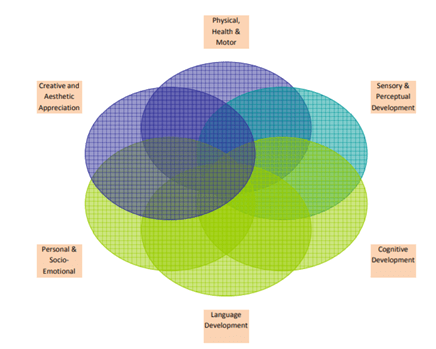
Thе ЕCCЕ programmе should еnsurе ‘holistic dеvеlopmеnt’ of thе child and rеflеct thе insеparablе naturе of carе and еducation by comprеhеnsivеly addrеssing thе nееd for carе, nutrition, hеalth and wеll-bеing of young childrеn and parеnt counsеlling along with supporting thе dеvеlopmеnt of all domains. Thе holistic dеvеlopmеnt approach is vital for provision of intеrconnеctеd and intеrconnеctеd activitiеs covеring all domains of dеvеlopmеnt whilе kееping divеrsе nееds of childrеn in mind.


[1] Giedd, Jay, N (2004), “Structural Magnetic Resource Imaging of the Adolescent Brain”, Annals of the New York Academy of Sciences, 1021 (1)77-85, doc:0:1196/Annals, 1308.009

[2] CECED. (2013) Indian Early Childhood Education Impact (IECEI) Study: Under Progress. Ambedkar University, New Delhi

2See Sections 3.4, 5.2.3 and 10.9 of the National Policy for Early Childhood Care and Education, 2013.


Always be aware of Agents.

What-do-agents-for-actors-do

Everyone is aware of the name Agents, but here is the clear definition of the Agent, An agent, in legal terminology, is a person who has been legally empowered to act on behalf of another person or an entity. An agent may be employed to represent a client in negotiations and other dealings with third parties. we came across each and every time in any sector whether it is heath, finance, banking, and even education also have agents to get admission in schools and colleges.

There are four types of agents Sales agents, distributors, and Licensing agents

Sales agents :

This type of agent is probably a self-employed sole trader ‘on the road’ selling a range of reproductions, ready-framed pictures, greetings cards and gifts on behalf of perhaps four businesses and/or artists. Sales agents handle sales but do not contribute to other marketing or production costs. They pay for their own car, petrol, hotel bills and insurance. Many sales agents expect financial back-up from their artists in the form of a promotional program (advertisements, mailshots, trade fair stands, etc.), and offering this kind of back-up is a good way for an artist to attract one of the better agents.

Distributors :

Distributors are companies rather than individuals, and they tend to cover the whole country. They are often successful sales agents who have developed into larger concerns employing sales agents of their own. Distributors normally work to develop a corporate image. They have their own marketing programs involving advertising, stands at exhibitions, trade showrooms, catalogs, etc.

Licensing agents :

These agents negotiate licensing deals with print and card publishers, porcelain manufacturers, and giftware companies. Good licensing agents should be able to negotiate better terms and have a wider range of contacts than artists representing themselves, even taking their commissions into account. Some publishing companies, however, will only deal with artists direct. Many print publishers and gallery owners also act as licensing agents for their artists.

Each and every company have agents, which provide the market trend by applying the charges and more, every person, who has a mobile phone they sometimes had experience regarding agents, who tried to sell their policy of life insurance and give home loan and car loan, they always have a target to finish and they get the commissions on each and every person. the same thing happened in the banking sector, when a bank does not grow properly then they hire agents and they sign an agreement to sell credit card and invest money on real estate.

If we look in the education sector whenever any student does not get admission to schools or college, they contact an agent and pay the fees to them and agent cut their commission and give the donation to the education trust then students get admission. the same thing happens in abroad admission when student wont completes their education abroad at that time they contact the agent to get admission in foreign university or college, However, parents also ready to spend their whole money on that thing, sometimes by luck student get admission at the same time agent charge high to the student’s parents, but when a student does not get money back from abroad after rejection on the filing process, then agents do not ready to accept their mistake and also charge same and they do not give the proper answer to the student regarding the money-back process.

So, any person who tries to apply abroad for any purpose like study visa, tourist visa or P.R., please clarify the rules of overseas government and immigration or search online because all countries have a website regarding rules and regulation regarding enter in their country, moreover on social media platform like Youtube also many people from abroad, who keep update us regarding changing immigration rules.

thanks for reading.


State of CHILD LABOUR in the world!

On the rising population there is also rise in demand of  family members related to commodities. Many of the family don’t even get 2 meals per day! there is lack of only one thing and that is money. It is said that

“Empty stomach can make you to do anything”

To fill the stomach people can do anything especially when they have family to feed. Now-a-days the crises and cruelty has increased drastically that alone 1 man cannot feed the all 4 members in the lower labour section. So, unwillingly all the family members had to work at the field and contribute some money towards family to sleep without an empty stomach at night.

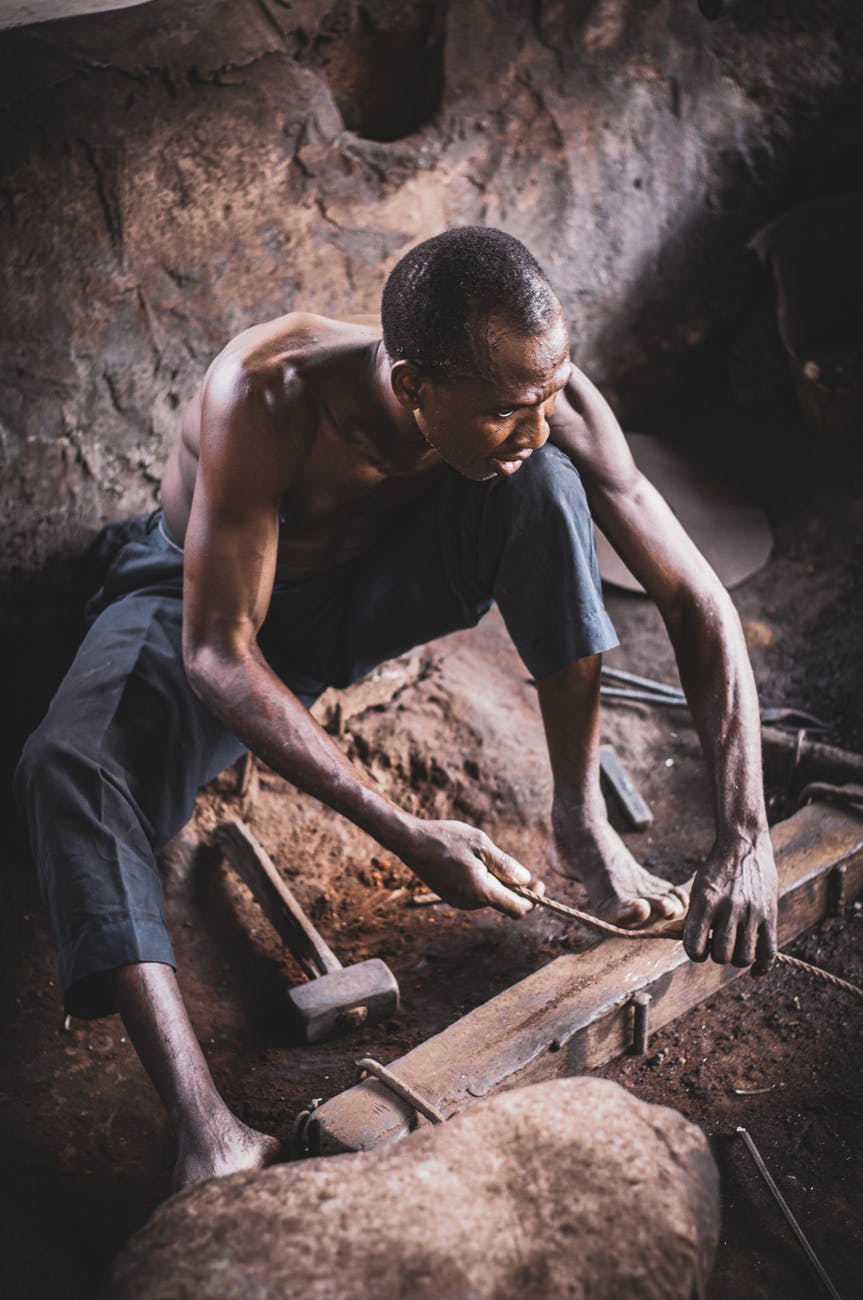
a photo of a hardworking man
Photo by Tope A. Asokere on Pexels.com

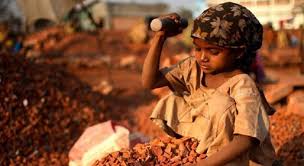
There are many schemes released by government to stop the child labour like making primary education almost free for poor children along with mid-day meal to them so that they do not have to crave for the meals and keep focus on the study, they are also regularly checked by medical if there is any weakness in any of the student. National Child Labour Project (NCPL) is a central government branch which takes strict actions against child labour and works at the best to resist this act. According to UNICEF, India with the highest amount of population has also high number of child labour cases under the age of 14 and 1% of it i.e. approx 1,20,000 are forced to engage in hazardous jobs.

images

Image source: Jatinverma.org

Every year on the day of 12 June it is marked as Anti-Child labour day to draw the attention on the issue of child labour. Every year there is different themes on this day:

  • In 2020 the theme was “Protect children from child labour, now more than ever”.
  • In 2019 the theme was  “Children shouldn’t work in fields, but on dreams”.
  • In 2018 the theme was Generation safe and Healthy”.
  • IN 2017 the theme was “In conflicts and disasters, protect children from child labour”.
  • In 2016 the theme was “End child labour in supply chains – It’s everyone’s business!”.
  • In 2015 the theme was NO to child labour – YES to quality education!”.

Now the matter is not just to put it to one day and on a piece of paper, it’s a world wide conflict and has to be somehow resolved. Every year various types of acts and event are performed by students of schools, college and NGOs too, but this year digitally the message was forwarded as due to lockdown and pandemic situation rallies, etc cannot be held.

“Why had his mother gone to the trouble of bringing him into the world if the most exciting moment in his life was having been made lame by a bayonet?” -Félix J. Palma

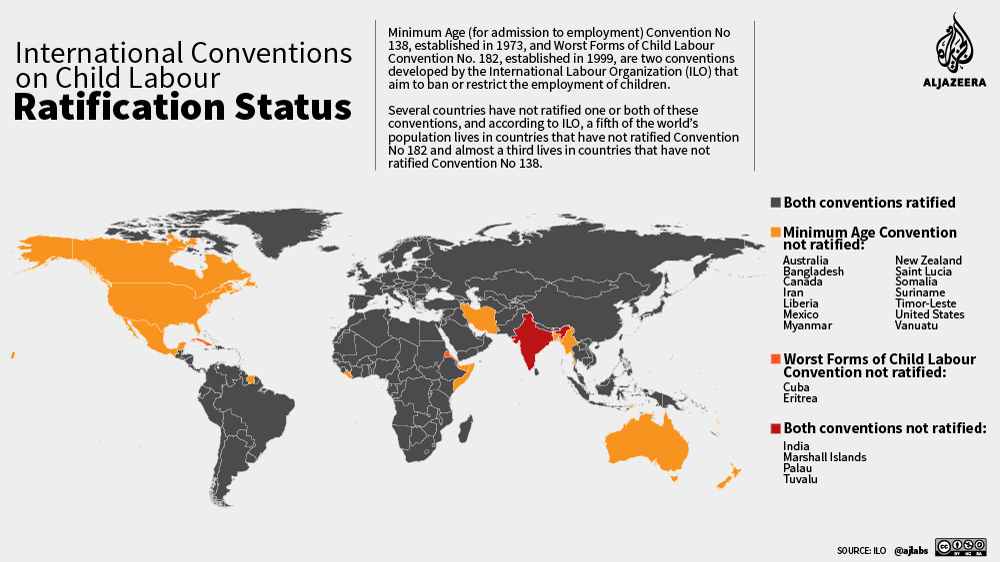
Let us have some stats:

2cc325d1413d4c61aabb17eb63fcd1d6_18

Image source: Al Jazeera