THE BALLAD

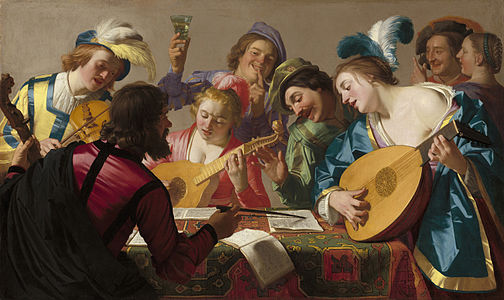
The ballad is a simple narrative poem in short stanzas telling a story. It may be called a short story in verse. Originally it used to be sung to the accompaniment of musical instrument like the hard by strolling bands of singers or minstrels. The word is derived from the Latin ‘Ballare’ which means to dance. This shows its connection with tribal dance.

A ballad deals with some episode of simple motive written in stanza suitable for all oral transmission. In ancient ballad, often, the authors were unknown. The themes were commonly furnished by the elementary aspects of life. Large space was given to tales of adventure and love, fighting and valour. Generally supernaturalism was an essential elements of such ballads.

HOW THE BALLAD IS EVOLVED:

The ballad begin to appear in England even before chaucer’s time. The earliest English Ballad is the fragmentary ‘Judas’ of the 13th century. The central characteristics of the Ballad are narative presentation, simplicity and spontaneity of expression. The most popular Ballad measure used to be there ‘quatrain stanza’ with rhyme at the end of the second and fourth lines.

TYPES OF BALLAD:

There are only two kinds of ballads. The traditional ballad and The Ballad of growth and the modern Ballad or the literary Ballad.

The traditional ballad: It is originated from the folk culture of each nation. Most of these ballads are of unknown of the authorship. They are the authentic ballads that have grown naturally among a primitive race and are transmitted orally from generation to generation. They are impersonal in character because they are not concerned with the subjective feelings of the narrator.

The Theme: The Ballad mostly deals with love and adventure. The narrator generally begins with the climatic episode and tells the story by means of action and dialogue. There is no attempt to give the details of place and time and no introductions are given. Most traditional ballads have a sudden and abrupt beginning as in the famous ballads ‘Sir Patrick Spens’ and ‘The Wife of Usher’s Well’. These ballads use refrains and repetitions. Many of these ballads have immense dramatic power and metrical beauty. Most of the ancient English ballads are collected in Bishops Percy’s ‘Reliques of Ancient English Poetry’ published in 1765. Majority of them are of Scottish origin. There are several ballads dealing with the legend of Robin Hood. Some other important traditional ballads are ‘Chevy chace’, ‘Edom O’ Gordon’, ‘Thomas, The Rhymer’ and ‘The Bailiff’s Daughter of Islington’.

Modern or Literary ballad (Ballad of Art): It is generally written by a learnt poet in conscious and sophisticated imitation of the traditional ballad. Many of the conventional features like the stanza form are retained in the literary Ballad. Bishop Percy’s collections of songs and ballads gave a powerful impetus to the writings of ballads. Some of the greatest literary ballads were written during the period of the romantic revival. The most well-known among them is Coleridge’s ‘Rime of the Ancient mariner’ in which the ballad metre is used. Wordsworth wrote two ballads-‘We are Seven and ‘The Tables Turned’. Keats’s famous ‘La Bella Dame Sans Merci’ represents a variation on the traditional Ballad stanza.
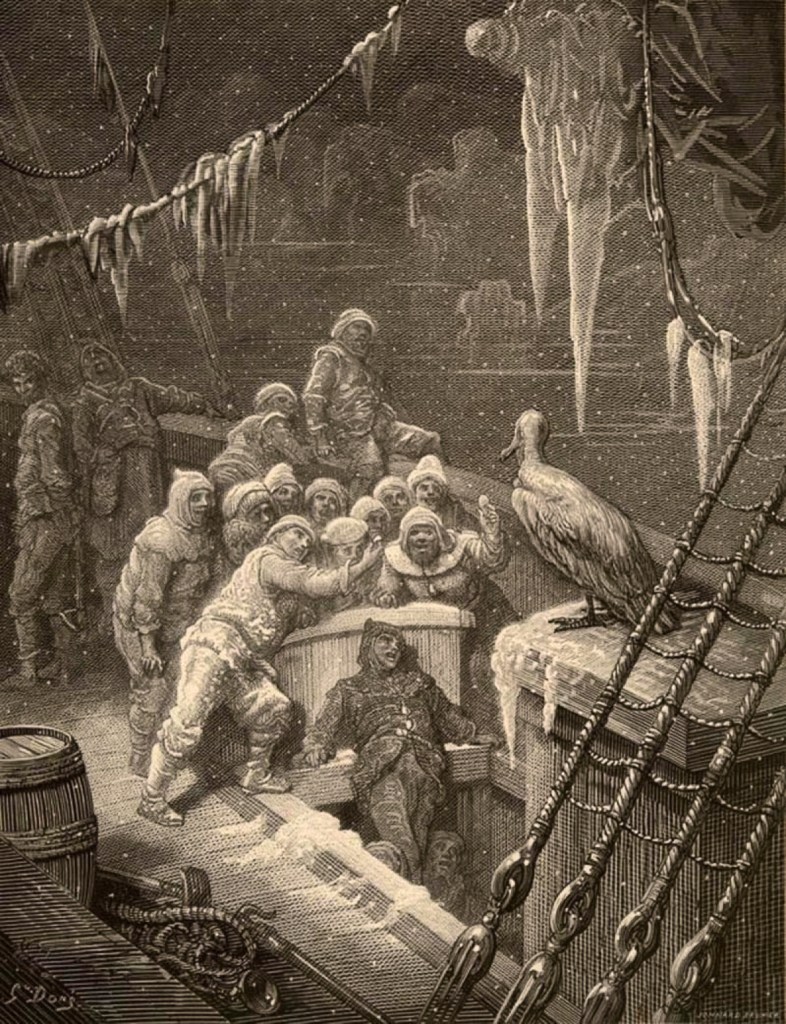
Rime of the Ancient Mariner

The Theme: The theme strongly resembles that of the traditional ballads. Literary ballads show enlargement of description, psychological interest and a more finished style. In ballads like Tennyson’s ‘The Revenge’, Browning’s ‘Herve Reil’ and Rossetti’s ‘The king’s Tragedy’ we not only this sterling qualities of the old ballads but also traits of originality which make them modern and original poems. The theme strongly resembles that of the traditional ballads.

Important Literary Ballads: Scott’s ‘Eve of St. John’, Kingsley’s ‘The Sands of Dee’ and William Morris’s ‘Shameful Death’.

Mock ballad: the mock ballad is a minor form of literary Ballad in which a comic theme is treated with the seriousness appropriate to a regular ballard. It follows the ballad conventions in all respects except in the choice of the theme.

Important mock ballads: Cowper’s ‘John Gilpin’, William Maginn’s ‘The Rime of the Ancient Waggoner’ and an excellent parody of Coleridge’s ‘The Rime of the Ancient Mariner’.
A STITCH IN TIME SAVES NINE

“A Stitch in Time Saves Nine” is a phrase and has a lot of wise meanings inside it when understood. This phrase reflects the hole in a cloth and tries to make the people understand that, a small hole in a cloth keeps on getting bigger if it is not fixed on time. It means that timely effort will help in preventing more work in future and also tries to teach – Prevention is Better than Cure. Hence, if a problem exists then one must fix it immediately. If not fixed in time. then even small problem can lead to a bigger problem.

Importance of “A Stitch in Time Saves Nine”

  • This phrase tells about the “Importance of Time“. Time is the most important part of life and according to many successful individuals, time is money. Time is precious because time is limited. There are 24 hours in a day and its constant and the human life of a particular person is also fixed, which shows that we can’t afford to waste time at all. And this is what the phrase describes.
  • Another concept that the phrase describes is “Effort in Time“. This is possible by dealing with problems in proper time. While dealing with a problem, there’s a need to contribute proper amount of effort in the right time and when the problem is not solved and delayed, then it will make the problem more hard to solve and more time will be consumed. So, following “Stitch in Time Saves Nine” saves effort and time.
  • Another advantage of the phrase is “Better Decision Making“. Following this concept ensures that a person has sufficient time to handle the problem and this is the most wise decision. This shows that within problem time interval, the person will solve the problem efficiently. And when the person delays the problem the time available for solving problem will be reduced . This will cause shortage of time. This will make the person more stressful and nervous. This would lead to poor decision.

This proverb is a learning for everyone. It is an important advice for everyone. It doesn’t target any specific person or age group or people rather a lesson for all, for everyone from different phases of life and walks of life. It advices the individual to carry out the responsibilities and immediately solve problem, how ever small and simple it may be.

FOR EXAMPLE: To students, it advices to get their doubts cleared from the beginning itself otherwise they will keep getting bigger and will need more time, affect the performance. Small doubts when not cleared will lead to bigger doubts and finally affect the scores. This advice is also important for officials and professionals and suggests them not to neglect the problems and postpone them. It is important to solve every problem with keen interest and sense of responsibility. Have you noticed, how with time the problems keep getting bigger and get things complicated ? This is what the proverb tries to teach everyone and warn us.

Action at right time and required moment saves a lot of time and effort in the future. Delayed actions, adds to the problems and aggravates them. Thus, we should tackle them before it gets difficult. This saying has a very valuable and rational meaning and has a lot to learn from.

Traits of an epic

An Epic is a long narrative in verse on a great and serious subject related in an elevated style. An epic tells a generally well-known story and is centered around a heroine or semi-divine figure whose actions depend on the faith or a tribe, a nation are a human race.

types of epics

Historically, there have been two types of epics the primitive a big for the epic of growth, and epic of art all literary epic.

The main traits of an epic are the following:

  1. The subject matter of an epic is heroine ok or mythical kind full stop the hero is a figure of national or even cosmic importance as an Achilles in Homer’s Iliad, Aeneas in Virgil’s Aenid, Adam or Christ in Milton Paradise Lost and Rama in Ramayana.
  2. The setting of an epic is vast and comprises several worlds. In Odyssey, the whole known word is the scene of action of Ulysses. In Virgil’s Aeneid and Dante’s Divine comedy, Earth, heaven, and hell are the scenes of action. In paradise lost also the scene of action has cosmic dimensions embracing Earth, heaven, and hell.
  3. The action in an epic involves superhuman deeds such as the deeds of Achilles or the journey of Ulysses. Paradise Lost presents The War and heaven, Satan’s journey through chaos, and his audacious attempts to outwit God by corrupting mankind. The Ramayana presents several wars and the prolonged wanderings of the hero.
  4. The action of an epic is often controlled by supernatural agents. Gods and Goddesses mingle with the humans and fight on both sides. In Homer, the Olympian gods participate in all activities and Paradise Lost devils, Angels, and God himself are involved.
  5. The Epic contains several thrilling episodes like battles, duals, wanderings, ordeals, and the like.
  6. In most Epics, there is a moral purpose. The hero represents a cause and the victory of good over evil is ensured. Sometimes characters themselves are personifications of good or evil.
  7. In the narration of an epic, certain conventions are followed. It is narrated in an ornate, ceremonial, and grand style that is deliberately distanced from ordinary speech. Epic similes, figures of speech, classical allusions and references, and repetitions are used. The characters are given set speeches. The narration usually begins with an invocation to the muse or a guiding Spirit. Both ‘Aenid’ and Paradise Lost begin with such invocations. Usually, the narrative starts in the middle of the story as in Paradise Lost which begins with the fallen angels gathering their Forces for revenge. Only later does Milton tell tells us what happened before the Fall.
  8. The Epic is usually divided into twelve books through Iliad and Odyssey have 24 books each. Spencer’s fairy Queen was planned in 12 book’s and Milton’s Paradise Lost also has 12 books.

Some of the famous Epics:

  • Milton’s “Paradise Lost”
  • Spenser’s “Faerie Queen”
  • Arnold’s “Sohrab and Rustom”
  • “Hyperion” by Keats
  • The Epic of Gilgamesh
  • The Homeric Poems – The Odyssey
  • The Mahabharata
  • Virgil – The Aeneid The Aeneid
  • Ovid – Metamorphoses
  • Firdawsi – The Shahnameh
  • Beowulf

The Epic

The Farce

The Epic

Introduction:

Impersonal poetry can be divided into two groups dash the narrative and The dramatic.

Epic:

In the first group, The Epic on the heroic poem is the most important. an epic is a long narrative in verse on a great and serious subject related in an elevated style. And nothing else is generally a well-known story and is centered around the heroic or semi-divine figure whose action depends on the fate of a tribe in addition to the human race. The action in an epic is serious and there is a good deal of physical and spiritual conflict. the characters and events or boat ride in detail, elaborate descriptions of places and actions are given, figures of speech are used and usually, an elevator and ornated style are adopted. Aristotle the epic second only to tragedy. It was the norm of great poetry in sixteenth and seventeenth-century England. Dryden wrote, “A hero poem, truly such, is undoubtedly the greatest work which the soul of man is capable to perform.

Two types of epics:

Historically, there have been two types of epics:

  • The primitive epic or The epic of growth
  • The epic of art or the literary epic.

The epic of growth:

The epic of growth is not entirely the work of a single author but is evolved from pre-existing legends, folk poems, and sagas. It is the final product of a long series of accretions and synthesis shaped by the conscious intervention of some great poet. Well-known examples of this type of EPIC are Iliad and Odyssey, the English Beowulf, and the Indian epics The Ramayana and The Mahabharata. All epics of growth deal with the same subject matter – the deed of heroes. These heroes belong to the race and their exploits form the core of mythology. As such the epics of growth contain supernatural and religious elements. The style of such an epic is marked by directness and simplicity. Stylistic devices may be repeater why they are never obscure.

The epic of art:

The epic of art or the literary epic is the product of individual genius. Of this kind, the earliest was Virgil’s ‘Aenid’. It became a model for the later epic poets. In English, the supreme example of a literary epic is Milton’s Paradise Lost. Arnold’s “Sohrab and Rustom” the fragmentary epic “Hyperion” by Keats and Spencer’s “Fairy Queen” also belong to this category stop a literary epic is the result of the poet’s erudition and scholarly research through it shares several of its characteristics with the epic of growth. Most traits of the traditional epic are found in the literary epic also.

Conclusion:

The Epic is an important literary form in English literature. In the earlier period, In the English language mostly authors wrote about Historical novels and Epic novels. They described the huge events, God’s and their stories and incidents. Even now Epic is mostly used to write about mythologies and God deeds and it is popular among the readers. Nowadays, authors are writing many fictional epics also.

Book Review: 1984 by George Orwell

Two must read books by Paulo Coelho

The Sonnet

The Sonnet is the lyric in fourteen lines in iambic pentameter governed by certain prescribed rules in general and in the arrangement of The rhymes. It aims at concentrated expression, but a fairly complex development of a single theme also is possible.

Origin of sonnet:

It derives its name from the Italian “sonnetto”which means “A little song” or sound sung to the strain of music. It has only one leading thought or emotion as in Milton’s ‘On his blindness’ or Keats’s ‘On first looking into chapman’s Homer’.

Sonnets were first written in Italy in the latter half of the thirteenth century. The form of composition is associated with the name of petrarch, through the form had been used even by Dante before him.

Composition of the sonnets:

A petrarchan sonnet is composed of two parts, the octave compressing the first eight lines and the sestet compressing the last six lines. The octave two has rhymes ‘a’ and ‘b’ are arranged in the a b a b a b a b scheme. The sestet has three rhymes arranged in various forms as cde, cde or cde, dcd or cde, dce. The octave may be divided into two stanzas of four lines each called quatrains and sestet into two of three lines is called the tercets. At the end of the eight lines, there is a pause called caesura followed by a turn of thought called volta. Milton wrote some of his sonnets in this manner.

Some of the earliest writers of sonnet:

The sonnet was introduced in England by wyatt and Surrey in the 16th century. They discarded the Italian form and adapted a new rhyme sheme. Surrey wrote his sonnets in three quatrains in alternate rhymes followed by a concluding couplet.- a b a b, c d c d, e f e f, g g . This form was later used by Shakespeare with the marvelous success in his series of sonnet dedicated to Mr WH. so it came to be known as the shakespearean sonnet. romantic poets like Wordsworth and keat’s followed the shakespearean pattern. Spenser adopted a slightly altered form of the shakespearean sonnet. He used an intermixture of rhyme to connect each of the quatrains making it a b a b, b c b c, c d c d, e e.

The theme of the sonnets:

The common theme of a sonnet is love as the sonnets of Shakespeare, Philip Sidney and Elizabeth Barrett Browning. However several poets have used other themes also in their sonnets. Milton’s sonnet ‘On his blindness’, wordsworth’s sonnet addressed to Milton, Keats’s sonnet ‘On first looking into chapman’s Homer’ and Arnold’s Sonnet on Shakespeare are examples.

Some of the famous sonnets are:

  • Sir Thomas Wyatt, ‘Whoso List to Hunt’.
  • Sir Philip Sidney, Sonnet 1 from Astrophil and Stella.
  • William Shakespeare, Sonnet 29.
  • John Donne, ‘Death, Be Not Proud’.
  • William Wordsworth, ‘Composed upon Westminster Bridge’.
  • John Keats, ‘On First Looking into Chapman’s Homer’.

Conclusion:

Sonnet is one of the literary forms that used in majorly writing poems. It will contain fourteen lines and has a lot of poetical devices like, metaphor, allitration, personalification etc.

The Farce

Bookish Terms

Google CEO Sundar Pichai’s view on former Amazon CEO Jeff Bezos flying into space

Google’s CEO Sundar Pichai admitted that he was “jealous” of the Blue Origin and Amazon founder Jeff Bezos for his July 20 space flight that would launch him, and his brother, Mark Bezos, into the edge of the space. Bezos is expected to fly approximately 100 kilometres or 328,000 feet to the Kármán Line on New Shepard on the day that marks NASA’s Apollo moon landing anniversary.


Speaking about Bezos’ 11-minute trip to space, Google’s CEO Pichai told BBC in a televised interview, “Well, I’m jealous, a bit,” adding that he would love to look at Earth from space. He then went on to describe his views on AI, saying that it is the most profound technology that humanity has developed.

the interview, Pichai talked about a varied range of things. When asked when was the last time he cried, he said: “Seeing the morgue trucks parked around the world during COVID. And seeing what’s happened in India over the past month.”

Meanwhile, British billionaire Richard Branson on last Sunday soared more than 50 miles above the New Mexico desert aboard his Virgin Galactic rocket plane and safely returned in the vehicle’s first fully crewed test flight to space, a symbolic milestone for a venture he started 17 years ago.

launch of the VSS Unity passenger rocket plane marked the company’s 22nd test flight of its SpaceShipTwo system, and its fourth crewed mission beyond Earth’s atmosphere. It was also the first to carry a full complement of space travelers – two pilots and four “mission specialists,” Branson among them.Heralding a new space tourism era, Branson reached space with three employees, including one of Indian-origin, leaving Jeff Bezos to follow his route on July 20. Bezos has been planning to fly aboard his own suborbital rocketship, the New Shepard, later this month.

SHAKESPEAREAN ROMANCES

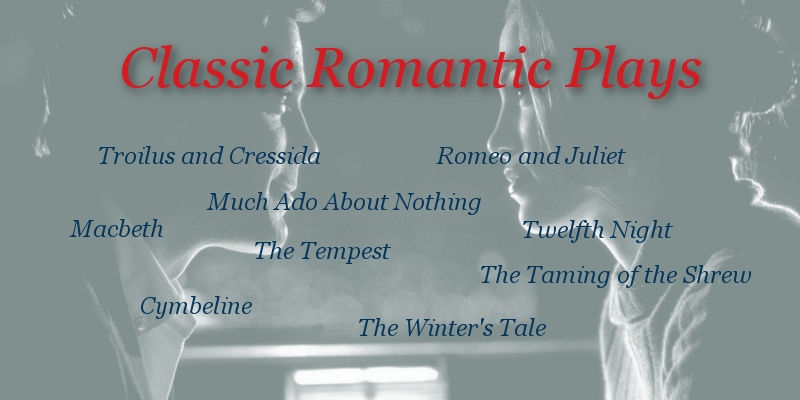
The plays of Shakespeare’s final period (1608-12) are called Romances. In Shakespeare’s own time they were simply classified as tragedies and comedies. Shakespeare must have written his tragedy and comedy plays under the influence of his younger contemporaries. Beaumont and Fletcher were very popular. The masques at the court of James I also must have influenced Shakespeare. Shakespeare’s romances are in fact, neither tragedies nor comedies but are a mixture of both.

Dowden has pointed out that the last plays of Shakespeare reveal society, serenity, and sanity as contrasted with the storm and strain of the tragedies. They supplement the tragedies with their more relaxed atmosphere and are marked by great forbearance, sense of reconciliation and forgiveness. However, Lytton Strachey thinks that these plays express a mood of boredom rather than serenity.

The romances of Shakespeare have certain common characteristics. They have motifs common in romance literature such as improbable happenings, separation, wanderings, reunion and reconciliation. They contain several elements of the tragi-comedies made popular by Beaumont and Fletcher. There are only a few memorable than heroes. In these plays Shakespeare has returned to his lyrical style of the earlier plays.

CHIEF CHARACTERISTICS:

1. The scene of these plays is unknown, remote and the setting is imagery. Cymbeline is set in early Britain and the setting of the Tempest is somewhere in the Mediterranean.

2. The happenings are fanciful. There is no logical cause and effect relationship. In the light of reason, the events appear absurd the feats of magic in The Tempest, the concealment of Hermione for sixteen years in The Winter’s tale and the abduction of two sons of Cymbeline would appear unnatural. But in Shakespeare’s world of imagination these events are delightful.

3. The romances are full of anarchronisms, long lapses of time (as in The Winter’s Tale), wizardry and fantastic voyages (as in The Tempest). These become part of the apparatus of the play.

4. Characters are types. They do not have marked personalities of the characters in the great comedies or tragedies. However, heroines are most memorable than heroes. Miranda, Perdita, and Imogen are lovely but weak. Villains like Iachimo in Cymbeline and Leontes in The Winter’s Tale are not hardened Villains. Even Ferdinand in The Tempest is no match for Benedick or Orlando.

5. Pastoral scenes are a part of the romances. In The Winter’s Tale, Florizel and Perdita are a part of pastoral life.

6. The supernatural element is predominant in the romances. The Tempest and Cymbeline are examples. The Tempest also shows Prospero’s magic and the elusive character Ariel. In The Winter’s Tale the Delphic Oracle is introduced and in Pericles the King’s Wife Thaisa becomes a priestess in the temple of Diana.

7. In the romances sea is dominant. There is shipwreck in Pericles and The Tempest. Sea voyage are mentioned in all of them. Sea is a symbol of regeneration.

8. The romances show breakdown of family relationships, separation of family members and their eventual reunion and restoration. In the opening of each play a father looses the offspring through his own folly and at the end the child is restored. This recovery of lost children is a part of the romances. In The Winter’s Tale, Perdita is restored to King Leontes; in Cymbeline the two sons of the king is restored; in The Tempest Fredinand is restored to his father and in Pericles, Marina is restored to her father, the King.

9. The romances are marked by a spirit of reconciliation and forgiveness. In The Tempest, Prospero’s forgives his wicked brother Antonio; in Cymbeline Posthumous reconciles with Imogen and in The Winter’s Tale, Leontes reconciles with Hermione.

10. In the romances there is an assumption that the events in the world of the play are subject to forces other than normal. There is a sense of magical reason of the errors of action. This assumption helps to enhance the dramatic situation and keeps the audience aware of the mystery of human personality.

A critic has called the romances ‘divine comedies’ because the divine grace imposes its beneficent will on the humans. The romances are ethical and spiritual and are the creations of an older and more sober Shakespeare. As Dowden has pointed out, the one word that interprets Shakespeare’s last plays is ‘reconciliation’, a word ‘over all, beautiful as the sky’.

THE ELIZABETHAN THEATRE

The early part of the Elizabethan age was a period of strolling players. It was a time when the actors had to go to the audience instead of the audience coming to the actors. These strolling players performed in improvised theatres anywhere in tavern, yards, palaces or gentleman’s house.

DRAMATIC COMPANIES OF ELIZABETHAN PERIOD:

There were many such touring traumatic companies but the most important where the Admiral’s Men and Chamberlain’s Men. When both these companies where patronised by Queen Elizabeth. James I who succeeded Elizabeth took Chamberlin’ Men under his protection and thereafter the company was called the “King’s Men“. It was to this company that Shakespeare belonged for most of his career as a dramatist.

THE THEATRES OF THE TIME:

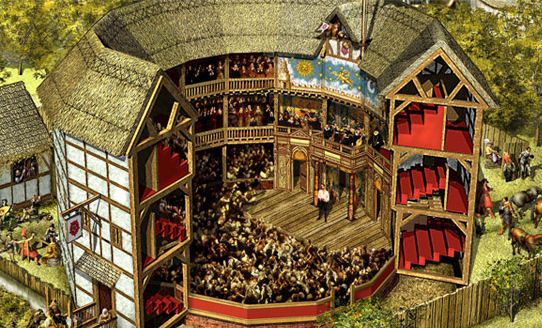
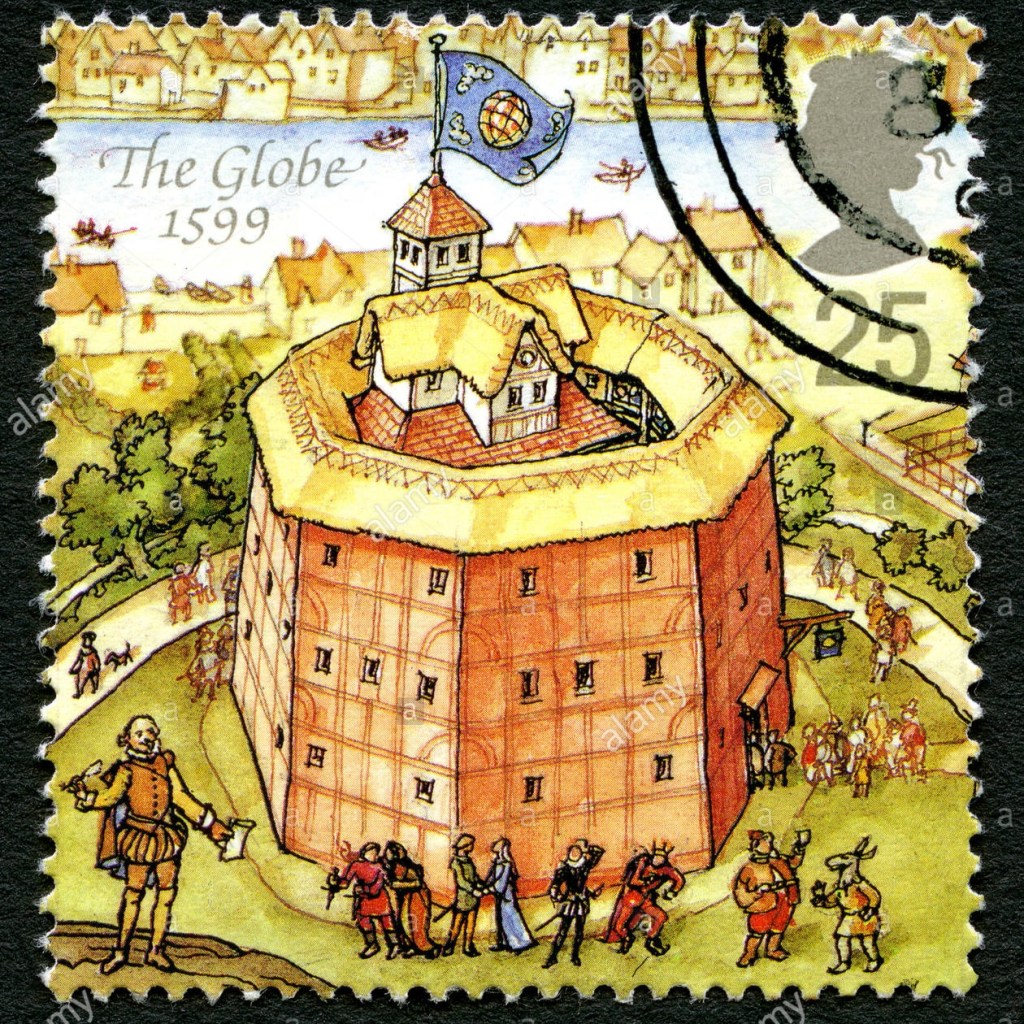
The first permanent theatre was built in 1576 by James Burbage, father of one of the colleagues of Shakespeare at Shoreditch, to the north of London. It was called the theatre as it was the only one of its kind in existence. Soon other theatres were also built thus the famous ‘Rose’ was built in 1587 the ‘Globe’ in 1599 and the ‘Fortune’ in 1600. Most of the theatres of the time was small as they were expected to accommodate only a limited number of spectators. They were different in shape, the Swan was after octagonal but the fortune was square. Part of the theatre that is the yard in the front of the stage was open to the sky where is the backstage as well as the galleries found in the yard was roofed.

THE STAGE ARRANGEMENT AND PRACTICES:

Throughout the Elizabethan period the theatre was half open to the sky and the place were acted during day time. But towards the end of Shakespeare’s career great changes for the better took place. In 1608 James Burbage bought the refectory of old Blackfriars Monastery and convert it into an indoor playhouse. Here plays where acted by candlelight and therefore most stage effects were possible.

The stage arrangement in the Elizabethan theatre was not so elaborate as in a modern one. Its main drawback was that there were no proper stage appliances to produce the effect of change in time and place. Placards were sometimes used to announce the location of the action. Shakespeare considered such devices as very and realistic and therefore tried to convey the effects of place time and action through the dialogues between characters. For instance, in Hamlet, Act I, scene 1, to let the audience know that the time of action is dawn for Horatio says to Marcellus and Bernardo.

“But look, the morn in russet mantle clad Walks o’er the dew of yon eastern hill”

There was no drop curtain in the Elizabethan theatre. The end of a scene was so often indicated by a rhyming couplet. In Hamlet, Act II,

“. . . I will have grounds

More relative than this, play is the king, Wherein I catch the conscience of the king”

NO FEMALE ACTORS:

A feature of great importance of Elizabethan stage was that there were no female performers. The acting profession was entirely masculine. It was only in the Restoration period that professional actresses became the accepted part of the English theatre. Women’s part was therefore played by young boys train from childhood for the purpose. The dramatic company for which Shakespeare wrote his plays, perhaps did not have many such ‘actresses’ and that is the reason why there are only a few women in most of his place. He had his own difference about the effect that was likely to be produced by these boy actresses and so he tried to overcome the difficulty by making his heroine is like Roselind, Viola and Beatrice appear under the disguise of boys. It was likely that this boy actors are not able act successfully like the part of somewhat grown up women of the type of Lady Macbeth and Cleopatra. Shakespeare himself is aware of this difficulty when he makes Cleopatra complain

“. . . and I shall see

Some squeaking Cleopatra boy may greatness”

AUDIENCE:

The audience of the Elizabethan age consisted of a small motley crowd drawn from all sections of society differing in tastes, education and wealth. Most of them were highly superstitious believing in ghost and witches and witchcraft and found of witnessing scenes of violence like brutal fights and bear biting. Those who could pay well was seated in the galleries from where they could have a better view of the performances. Some of the most privilege person sat on the stools on the stage and this enables them to pass remarks on the acting of the players. The rest of the audience known as groundlings, the most unruly and noisy section of the spectators, who pay just the penny stood on the floor around the uncovered part of the stage which jutted into the yard.

RELIGIOUS TO NON-RELIGIOUS DRAMA:

The Elizabethan age was a period of transition from the old religious trauma tomorrow and non religious plays. It is often said that the church was the cradle of English drama. In the beginning the dumb show were performed inside the church or the church premises by the clergyman. After the Renaissance there was a revival of learning and the demand was for the new type of classically influenced non-religious drama. At first this plays were written according to the classical tradition, observing the three unities of time, place and action. Later this rules were broken and the modern type of drama was evolved.

THE PLAYWRIGHTS OF THE PERIOD:

The first English dramatist of some originality was Robert Greene, who was one of “University wits“. The famous “Spanish tragedy” written by Thomas kyd is considered to be first tragedy in English. However, Christopher Marlowe, the author of Tamberline, The Jew of Malta, Dr. Faustus and Edward II is recognised by all as the father of english tragedy.

SHAKESPEARE’S CONTRIBUTION:

The presiding deity, however, of the Elizabethan stage, was William Shakespeare whose dramatic carrier extended to about 20 years from 1590 to 1610. Starting as an errand boy and actor of minor parts, be slowly rose to prominence and dominated the stage for years together without any break and without arrival anywhere in the vicinity. At the end of his career having earned a fortune sufficient to live comfortably for the rest of his life. ‘Shakespeare return to his native town, Stratford-on-Avon.’

FRENCH REVOLUTION (1789-1799)

France was for years ruled by the spots like Louis XIV. The kings ruled the country as they like without caring for the good of the common people. As a result of this indifference of the autocratic monarchs. There was famine and suffering all over the country the popular upsurge against the tyranny of kings culminated in the abolition of monarchy and their establishment of the French public.

CAUSES FOR THE REVOLUTION:

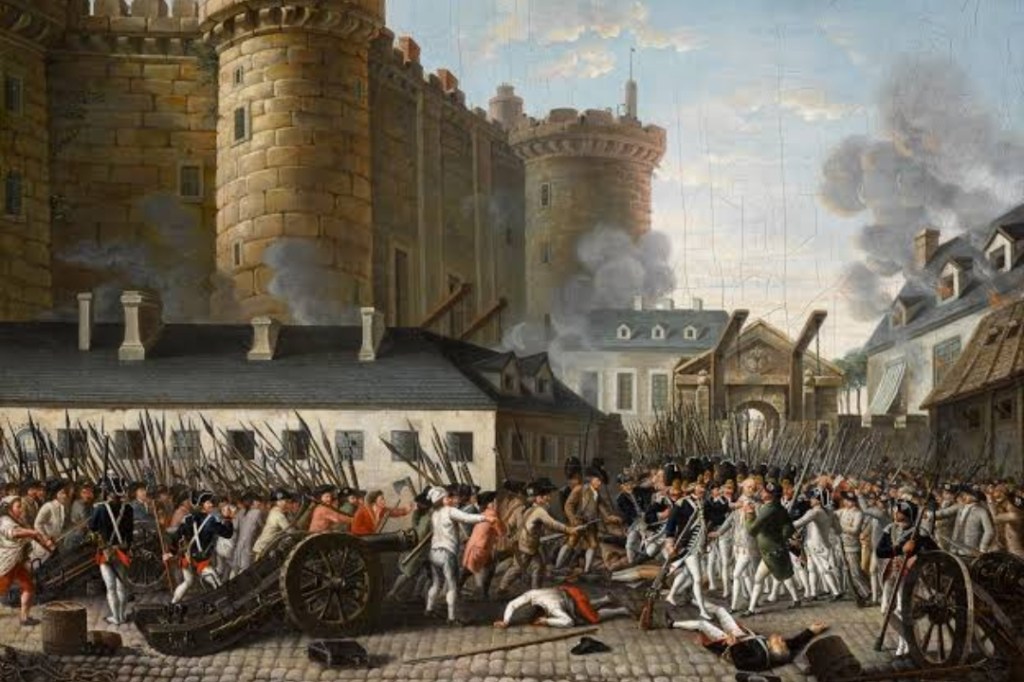
The French revolution started with the breaking open of the state prison “Bastille” on 14 July 1789 their reign of terror that followed their beheading of King Louis XVI and his Queen ended only when Napoleon became Emperor in May 1804. In 1793 England was forced to declare war against French Revolution because the French Revolutionary rules offered to help all nations who wished to follow the example of the French and overthrow their kings. The war continued up to the “Battle of Waterloo” in 1815 when Lord Wellington inflicted a crushing defeat on Napoleon.

EFFECTS OF REVOLUTION:

NATIONAL DEBT: This prolonged war of twenty years had lasting effects on England. The most important and immediate effect was the huge National Debt. It has been estimated that the cost of the war from the beginning to the end was nearly £1,000,000,000. The nation which consisted of nineteen million people had to pay annually a large amount by way of interest. In 1815 the country had to raise £ 74,000,000 by taxation alone.

UNEMPLOYMENT: The peace that followed the war was the cause of a fall in the prices of coal and iron. Many men employed in the industry was thrown out of their jobs. alAfter the signing of the peace treaty nearly half a million of soldiers sailors and others who had been engage directly in the war were dismissed from active service. They added to the already swelling army of the unemployed. Thus the problem of unemployment become much more accurate than before.

CORN LAW: During the twenty years of War there was no import of European corn into England. This caused the price of corn to go high. But the agricultural lords stood to the benefit by this. However after the Restoration of peace the free flow of European corn was resumed which brought down the price of English corn. This was resented by the English agriculturist. The corn law was passed in 1816 and this have disastrous effect on the poor and especially in the time of famine. Their sufferings led to the formation of Anti-corn law League. It was this association that was ultimately responsible for the repeal of the corn law in 1846 by the then Prime Minister of Robert Peel.

THE BATTLE OF PETERLOO: In 1819 the magistrates of Manchester foolishly attempted to arrest a radical leader known as Orator Hunt at a large gathering in St. Peter’s field. On meeting with resistance from the crowd the government officer order the cavalry charge upon the unarmed mob. Eleven persons were killed and 600 wounded. The even popularly was called the battle of peetalu or the Manchester massacre was used by agitators to embarrass the government. To get their grievances redressed the poor agitated for parliamentary reform and after much opposition from the lords the first reform bill was passed in 1832.

Battle of Trafalgar

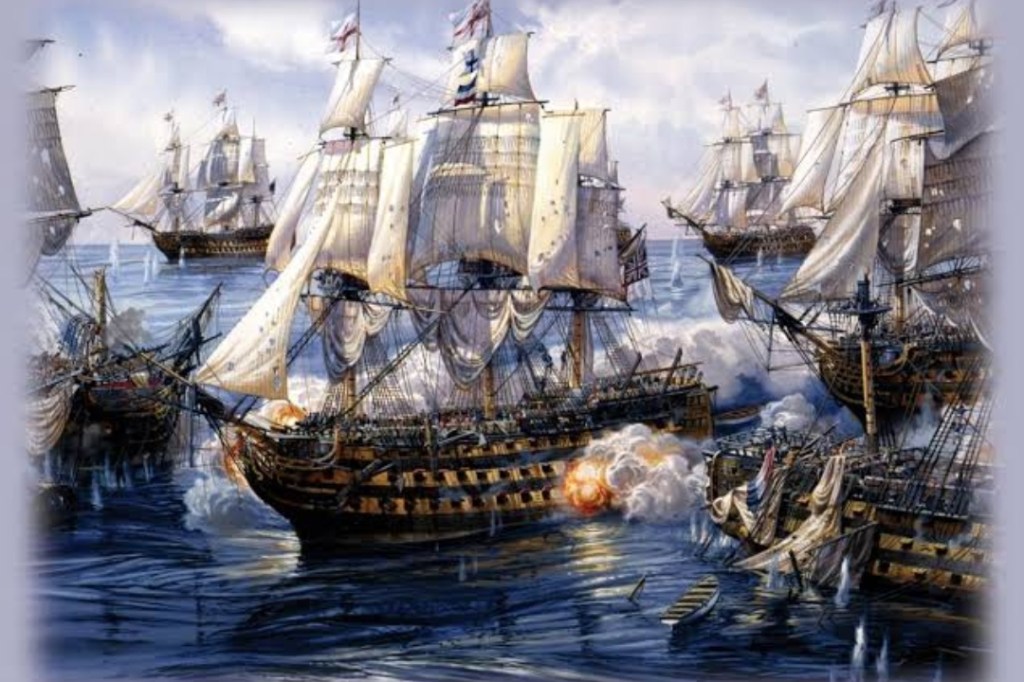
THE ARMY AND NAVY BECOME THE NATIONAL INSTITUTIONS: Another effect of the French revolution was that both navy and army recognized as national institutions. The battle of Trafalgar won by Lord Nelson during the Revolutionary war in 1805 highlighted the greatness of the English navy. Their victory was commemorated renaming a part of London as Trafalgar square where the statue of Nelson stands on a lofty column. Trafalgar square with its 1.5 metre column top by the statue of Admiral Horatio Nelson looking out to the River Thames, is one of the favourite tourist spots in London. It is the traditional end of most protest marches and rallies in the capital. With the victories of Lord Wellington at Waterloo in 1815 on land the army became popular as it had never been before. Barracks were built to house the troops and the haphazard billeting of soldiers in public houses came to an end. This was done to the great relief of both the civilian population and the soldiers themselves.

INFLUENCE IN ENGLISH LITERATURE: The French revolution ushered in a new era in the history of English literature. Coming when it did, English romanticism should be considered as a byproduct of the great political event. Romanticism or the romantic movement started when Wordsworth and Coleridge together published the Lyrical ballads in 1798. Wordsworth discarded the artificial style and showed by practice that beautiful poems could be written on ordinary subjects and in ordinary language. The movement was completed by younger poets like Byron, Shelley and keats.

The Farce

Introduction:

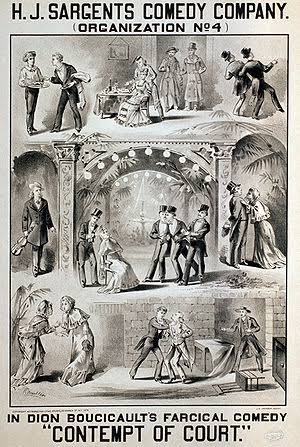
The Farce is a dramatic work designed solely to produce laughter. Originally a farce was an explanatory or additional matter introduced into the main play sometimes to increase its length. Slowly actors begin to use this as an occasion and thus it became a part of the play.

The Plot of the Farce:

In Farce no attempt is made at Fidelity to life. Its aim is merely to provide laughter. For this purpose, it employs funny incidents absurd characters, humorous situations, and witty dialogue. Farce does not aim at a realistic representation of things but provides caricature. The plot in a farce usually appears nonsensical, characters in the indulge in deception impersonations, and irrationalities. There are angry wives, helpless husbands, and funny old men indulged in the most unexpected activities. Serious and respectable people are drawn into the most undignified positions, grave and priggish persons are debunked. Most farce is centered around love affairs which themselves are caricatures. In the end, everybody comes out without any harm.

The elements of the Farce:

The elements of the farce can be seen even in the early English plays. Shakespeare’s ‘A midsummer night’s dream’ and ‘Twelfth Night’ are examples to show how farcical elements could be interspersed with comedy with great effect. Event tragedies had farcical scenes as we see in Marlowe’s Dr. Faustus.

Some Famous works of Farce:

As a separate form of entertainment, the farce came into vogue towards the close of the seventeenth century. The first popular farce was ‘The Rehearsal’ by the Duke of Buckingham. But The anti-sentimental comedy almost destroyed farce. But the anti-sentimental comedies of Sheridan and Goldsmith brought back farcical humor into English drama. Some of the scenes in Sheridan’s ‘The Rivals’ and most of the scenes in his “School for scandal” are enchantingly Farcical. Similarly in the play “She Stoops Conquer” by Goldsmith. In the Victorian period, the farce attained a sort of respectability. Farces such as ‘ The Private Secretary’ and ‘Charley’s Aunt’ were several times.

In modern times, the farce is an accepted form of dramatic entertainment. Most of the plays of Oscar Wilde and Bernard Shaw have farcical situations and dialogue. The farce requires unusual inventiveness, a craftsman, and a sense of humor on the part of the writer.

Most modern comic one-act plays tend to be farces. The purpose of such plays is only to give brief entertainment without malice and laughter without vulgarity. Modern one-act plays like ‘The Dear Departed’ are essentially farce designed to produce laughter.

Conclusion:

The Farce is a famous literary form in earlier literature. In this form, most of the scenes from the plays and characters from the novels will have some comical and entertaining content. Which boosts up the audience’s mindset. These literary forms are used to length the drama in earlier periods. But, most of the audience loved this method and they often started to use it regularly in stage dramas. Farce is used merely for the entertainment of the audience. Even now, most of the writers include some comical scenes in their works to make the plot entertaining.

Start your own business part 1

Start your own business part 2

THE HISTORICAL NOVEL

Introduction:

The Historical Novel is a work of fiction that attempts to convey the spirit manners and the social conditions of the past age with realistic details and nearly perfect fidelity to historical facts. The subject matter may compass both public and private events. The protagonist may be an actual historical figure or an invented figure. The historical novel can be The dramatic interest of plot and character with the more or less detailed picture of the varied features of the life of a particular age. The most important feature of the historical novel is its vivid reproduction of the life of a bygone age.

Even before the coming of the historical novel comer writers had used history in their novels. As a result of the impulse to word novelty during the Renaissance and after several writers made use of history. In England, Horace Walpole used a particular period in history as background to his Gothic novels.

First Historical novel:

The passing away of the feudal system created and nostalgia for the past. compared with social and economical changes caused by the French Revolution and the industrial revolution, This nostalgia created the proper climate for the emergence of the historical novel. The first great historical novel in English was Sir Walter Scott’s Waverley published in 1814. A series of novels based on Scottish history appeared. Among them, the most important is “Guy Mannering”, Kenilworth, Old Morality, and “The Heart of Midlothian”. Among the more popular of Scott’s novels are “Ivanhoe” and the Talisman dealing with the Crusades. In this novel, memory and imagination serve Scott’s creative purpose of the central narrative is supported by a strong love of humanity.

The tradition of the historical novel continued into the story and age. Charles Dicken’s “A tale of two cities” Thackeray’s “The history of Henry Esmond Esquire” George Eliot “Romola” and Charles Reade’s “The cloister and the Hearth” is important historical novels of the Victorian period. In the continent, the historical novel florist in the writings of Balzac, Dumas, and Tolstoy. It is generally agreed that Tolstoy’s “War and Peace” is the greatest among the historical novel. “Robert Grave’s I Claudius” is another historical novel of significance.

The historical novel marches on one side with the realistic novel and the other side with the national epic. Saintsbury has remarked that historical novelists give only a subordinate position to the actual historical figure and should allot a prominent position to the imaginary figure because the chief object of the novel is the interpretation of the human character.

In the Historical novel, The recreation of the spirit undertone of the bygone ages is more important than other runs to the truth. The historical novel list has to reconcile the clients of history and art.

Conclusion:

The historical novel has limitations for stop it is suffering from the weakness of both history and novel. Unless the novelist is scholarly and unprejudiced, he is likely to give you a half-digested and biased view of historical facts. It is also open to question whether the imaginative recreation of facts is preferably the fact to themselves.

The Humanitarian Movements

The Social Novel

Rules of Happiness

Be silent in the heat of Anger.

As we all do, In anger we never think twice before saying anything and this is the main reason behind the poor relationship. We cause harm to both others and us both.

Avoid caring what people think.

Before doing anything we always think to much about others think if I do that. And this leads to unhappiness and doubt on ourselves.

Don’t waste time in explanation.

There is no need to explain yourself always. Sometimes we have to believe on our own capabilities and prove others that what I did is right decision for me.Time reveals Everything.

Privacy is Everything.

Never tell everyone, everything. Everyone is not happy with your success. Don’t reveal your path to anyone before you achieve something.

Don’t screw your present, thinking of past.

Start working for your success now. Past has gone it never come back but why we waste our present and future by thinking of past. We design our future by make use of present.You are responsible for everything that you do. So start working for your future.

Stop overthinking, Sometimes it’s okay to not know answers.

We just ruin our life by overthinking. What we overthink is never going to happen. So just relax and enjoy your life without thinking anything.

It’s okay to not be okay.

Everyone’s mental state is not same. And sometimes It’s okay to feel low. It’s okay to be sad. We just have to believe on ourselves. And do what we want. Its okay, everything will be alright soon…

Don’t compare own life with others.

Everyone is different. And if we compare ourselves with other then we just ignore our own capabilities. So believe in yourself,your capabilities.

Don’t let others to disrupt your inner peace.

Sometimes, some people come in our life just to pull us down. But we have to focus on our goals. If we disrupt our inner peace then they will succeed in their intentions. We have to focus more whenever we meet any problems in between our goals.

We are always unattractive in the eyes of society.

No matter what we do, society will never going to appreciate us. So don’t worry about the society and do whatever you want. We always worry about “Chaar log” but no one ever saw them.

Take a charge of your own happiness, we are only responsible for ours not others.

Content Writing As A Career

Over time content writing has evolved enormously in the market. Content writing as a career provides a tremendous opportunity. In today’s world, many big firms are hiring content writers exclusively to provide content solutions to clients. 

This brings us to the question that if content writing has such potential, What do I need to become a content writer? What are the career opportunities? Salary Expectation? Well, you will find all the answers needed in this article. 

What do you need to become a content writer?

While many of the companies prefer hiring an individual who has a degree in literature or journalism & mass communication, one with excellent writing and communication skills is also welcomed by the companies. In short, anyone with good writing and communication skills can apply for it. Also, thorough knowledge of the field you are writing about is always a plus point. 

What are the career opportunities?

Looking at the demand for content writers, it can be said that the demand will stay longer in the industry. Besides taking a job in a firm one can also become a freelance writer or a full-time blogger. Mentioned below are some of the different fields of content writing:-

I) Public Relations Writing: These days, most of the corporate hire in-house writers to write their newsletters, press releases, and bulletins.

II) Technical Writing: It mostly deals with literature like user manuals and do-it-yourself kits, etc.

III) Marketing Content: In this field, a writer should be able to attract customers through catchy headlines and slugs. As a marketing content writer, one needs to be creative to attract the attention of consumers and convince them. This type of writing includes brochures, fliers, etc.

IV) Web content: As websites need to update their content to stay fresh and relevant, they hire content writers. 

V) Others: Some of the other fields of content writing includes – health, lifestyle, financial, children’s writing, academic, copywriting, and fashion.

Salary Expectation

As an experienced freelance writer one can earn up to Rs 40-50 thousand in a month. And for the content writers working for a firm, the salary varies from company to company. The average starting salary for a content writer ranges from Rs 15,000 to Rs 20,000 per month. 

If you think you are made for writing then you should give content writing a short. 

Freedom of Speech

The right to speak freely of discourse is the option to say whatever you like about whatever you like, at whatever point you like, correct? Wrong. The right to speak freely of discourse is the option to look for, get and grant data and thoughts, everything being equal, using any and all means.’
The right to speak freely of discourse and the right to opportunity of articulation applies to thoughts of various sorts including those that might be profoundly hostile. In any case, it accompanies duties and we trust it tends to be genuinely limited.
At the point when the right to speak freely of discourse can be limited You probably won’t anticipate that we should say this, however in specific conditions free discourse and opportunity of articulation can be limited.

Governments have a commitment to preclude disdain discourse and incitement. Furthermore, limitations can likewise be legitimized in the event that they ensure explicit public interest or the rights and notorieties of others.

Any limitations on the right to speak freely of discourse and opportunity of articulation should be set out parents in law that must thus be clear and compact so everybody can get them. Individuals forcing the limitations (regardless of whether they are governments, managers or any other person) should have the option to show the requirement for them, and they should be proportionate. The entirety of this must be upheld by protections to stop the maltreatment of these limitations and consolidate an appropriate offers measure….also, when it can’t

Limitations that don’t follow this load of conditions disregard opportunity of articulation. We consider individuals put in jail exclusively for practicing their right to free discourse to be detainees of soul. Jabbar Savalan was detained subsequent to calling for challenges the government on Facebook. We thought of him as a detainee of still, small voice and lobbied for his delivery. Peruse Jabbar’s story

Governing rules

Any limitation ought to be just about as explicit as could be expected. It is inappropriate to boycott a whole site in view of an issue with one page.

Public safety and public request
These terms should be definitely characterized in law to forestall them being blamed for over the top limitations.

Ethics
This is an extremely abstract region, yet any limitations should not be founded on a solitary custom or religion and should not oppress anybody living in a specific country.

Rights and notorieties of others
Public authorities ought to endure more analysis than private people. So slander laws that stop real analysis of a government or public authority, disregard the right to free discourse.

Impiety
Securing theoretical ideas, strict convictions or different convictions or the sensibilities of individuals that trust them isn’t justification for limiting ability to speak freely.

Media and writers
Writers and bloggers face specific dangers in view of the work they do. Nations thusly have a duty to secure their right to the right to speak freely of discourse. Limitations on Newspapers, TV stations, and so forth can influence everybody’s more right than wrong to opportunity of articulation.

Informants
Government ought to never bring criminal procedures against any individual who uncovers data about denials of basic liberties.

Rights and duties
Free discourse is one of our most significant rights and quite possibly the most misjudged. Utilize your ability to speak freely to stand up for those that are denied theirs. Be that as it may, use it capably: it is something incredible.

Love or friendship

Love is an intense feeling towards someone but as a science student I call it just hormonal action.

Friendship is the purest love…

– osho

Friendship is the sweetest form of love. Try to find love and friendship both in same person.

It is an intense affection towards a person or thing. It maybe anything like if a person read the novel and their hobby is to read a novel. By doing this he or she is just forget everything what is happening in this whole world. They can do anything just to read the next part of the book. Their mood is depend on what is going on in that novel.

Like if a person attracted towards someone, then the person sacrifice their own happiness for them.

As parents sacrifice their happiness just for the sake of their child’s happiness. They do everything just to see a smile on our face. that

Mother’s and father’s love is very different as we see mother’s love everyday Like- how can she make good meals for us, she make us feel good when we at our worst.

If we need something we don’t directly go to the Dad, we just say that to the mom and as a postman mom deliver our messages to the Dad. And she convinces the dad for doing that.

Dad don’t show us that how much they love us, how much day care for us. But he do every single thing everyday just to give us some comfort.

I Remember one thing in when my mom was admitted to the hospital, my dad has a bicycle there was a little seat on its rod and where I used to sit and a seat is also on back of the bicycle where my brother was used to sit. Dad take us to the hospital by bicycle and we used to talk all over the way to the hospital and it is best my memory of life.

My Dad was dropping and picking me up after school is my best memories of school time.

Dad work all the day just for us. So that we spend time with mom. And that is another way of showing love.

Dad was always doing things for me we talked like friends. And also my mom behave like a friend to me. We always share our feelings, everything. Mom never judge me what I say. She always understands my intentions. She always wants me to do right. She motivates me.

Whenever I think of that time, Nostalgia hit me like a truck.

In today’s world everyone thought love is just only between two couples.

Love has no limitations. It may be started from a little child’s affection towards their toy to a various sacrifices of our parents.

Pure love has sacrifices, trust, affection, care, mutual understanding. There is no space for selfishness.

Friendship is very important in every single relationship.

If there is no friendship in between parent – student, teacher – student, 2 couples or every single relationship then that relationship has to end at last.

Like we observe the relationship between 2 best friends are unbroken. No matter what happens between them their bond always remains same.

So only love is not necessary for a relationship, friendship is more important.

In every relationship, love and friendship both is very important.