Literature broadly is any collection of written work, but it is also used more narrowly for writings specifically considered to be an art form, especially prose fiction, drama, and poetry. In recent centuries, the definition has expanded to include oral literature, much of which has been transcribed.
“With the dawning of a new age, after pandemics have done their work, we may find ourselves at the watershed of singular considerations about how to handle the changes that revolutionize our lives, and trace the silver lining in a new reality. (What do they think behind their dirty aprons?)” ― Erik Pevernagie
TASTE THE POWER OF THE ‘PROVERB’
Clouds are the symbol of grave period of life and the silver lining as mentioned refers to the bright, contented, or enjoyable times. It is very obvious that the entire proverb is about optimism. If an individual is positive even in the murkiest of periods, then indeed things will ultimately be in his/her favour. However, if the individual has a pessimistic approach towards life, then no opportunity in his/her life can ever make him/her gratified and he/she will end up in difficulties. Ups and Downs are part and parcel of life. In fact, if these did not exist, life would have been boring and meaningless. All these understandings enhance us in some way or the other and help us to become strongminded individuals. In fact, all the hardships and difficulties we face in life have the effect of making us richer in experience and educate us to embark upon adverse situations. Therefore, it can be appropriately said that ‘Every Cloud has a Silver Lining’.
HOW DARKNESS PENETRATES OUR LIVES
To elucidate the above, let us analyse the problems of a person called Kamal. He was an average person, coming from a middle-class family. His parents, who were well-educated themselves, wanted him to have the best education and so he was admitted to the best school in the city. As a student, he outshined neither in academics nor in sports and was always placed in the middle of his class in both. Even in extra co-curricular activities Kamal did not leave behind any distinctive mark. Being an obedient child, he was always guided by parental advice, which prevented the development of his personality and as a result, he lacked self-confidence.
AN IRON DETERMINATION PAVES THE WAY
However, Kamal’s life went disordered with the sudden demise of his father in an accident. The family was staring at imminent poverty because his father was the sole bread-winner and the pension that they were to get was not enough to fund the education of both Kamal and his younger sister. All of a sudden, the entire burden of the family descended on Kamal’s young shoulders, but that was a blessing in disguise because the misfortune made him resolute. He developed into a very strong-willed individual who was ready to take on the world legitimately. Kamal took stock of the situation and started providing private tuitions to supplement the family income. In doing so, he realized that his actual calling in life was to be an academician. Gradually, he cleared all the examinations with flying colours and at a very young age joined an elite institution as a there has been no looking back since then. Had the disaster never occurred, Kamal might have followed and done what his parents believed fit for him instead of realizing his own potential and aptitude in life and society would have been left without a very good teacher.
SO…BE OPTIMISTIC
Like Kamal, there are millions of such individuals who suffer major hindrances in their lives but still manage to pull through. So, one should never feel hopeless because of problems, as no individual in this world leads an uncomplicated existence. Whenever clouds of worries appear, they always carry an indication of something better that might happen.So, we must be inspired from such events and should always move frontward in life even if it is hard for us to do so. Strong willpower and undying hope pave the way for success to be achieved. Every single problem in life is like a riddle which hides some solution and a mindful search for that solution open many closed doors of achievements.
“Catherine Earnshaw, may you not rest as long as I am living. You said I killed you–haunt me then. The murdered do haunt their murderers. I believe–I know that ghosts have wandered the earth. Be with me always–take any form–drive me mad. Only do not leave me in this abyss, where I cannot find you! Oh, God! It is unutterable! I cannot live without my life! I cannot live without my soul!”
-Heathcliff
‘Wuthering Heights’ is a 19th century gothic novel that revolves around the lives of two families: the Earnshaws, the Lintons and the peculiar boy adopted by the Earnshaws named Heathcliff. Set in the damp mysterious English moores, the story is riddled with the themes of love, revenge, and drama. It merges the supernatural with the real and creates a unique world that leaves us both horrified and curious. The novel has multiple levels of narrators ranging from the newly moved in Lockwood to Wuthering Heights’ lifetime caretaker Nelly Dean and finally to the inhabitants of both Heights and Thrushcross Grange.
“Treachery and violence are spears pointed at both ends; they wound those who resort to them worse than their enemies.”
The theme of violence and revenge runs constantly throughout Wuthering Heights and Heathcliff acts as the tool through which it is propagated. A chain reaction of continues revenge takes place when Old Earnshaw’s affection towards the foundling Heathcliff deeply upsets Hindley. After Earnshaw’s death, Hindley neglects Heathcliff and degrades him. Overcome with a desire for revenge, upon his return, Heathcliff successfully deceives Hindley into selling off Wuthering Heights. Furthermore, he also takes in Hareton Earnshaw and condemns him to a life of degradation and torture. Heathcliff also seeks revenge against Edgar for marrying Catherine and marries his sister Isabella. He tortures her both physically and mentally and even continues this mistreatment towards their son Linton, whom he uses merely as a tool to take over Thrushcross Grange. He forces marriage between Linton and young Catherine, confines her, and beats her up violently as he sees her as a proof of the union between his Cathy and Edgar. Heathcliff’s affinity for revenge and violence plays a major role in driving Catherine away from him. As he nears his death, he gradually abstains from it and is in turn able to reunite with a ghostly presence of Cathy.
“If all else perished, and he remained, I should still continue to be; and if all else remained, and he were annihilated, the universe would turn to a mighty stranger.”
As for the gothic elements, the novel can be considered the prime example of a gothic novel for a multitude of reasons. The setting of the English moors in itself reflects the untamedness of the novel’s characters and their mindsets.The house ‘Wuthering Heights’ is described as being old and gloomy, similar to the ruined castle-like gothic architecture. A few characters like the tyrannies, deceitfully handsome villains, fragile women and ghosts are said to be typical to a gothic novel. Heathcliff can be seen as a gothic villain, who loses sight of all morality in mad pursuit of his passion. The character of Isabella Linton is a typical example of the fragile woman who is beautiful and innocent but is brutally exploited by the villain. Another major element of the gothic is the inclusion of ghosts and other supernatural elements. In the start of the novel, the ghost of Catherine Earnshaw appears and grabs hold of Mr. Lockwood, whom he thinks is a ‘changeling’ and is mentioned throughout the novel. The weather also contributes to the damp dark setting and constantly reflects the melancholic feelings of the characters. Typical to a gothic narrative, Wuthering Heights touches upon concepts that are considered paranoid, barbaric and the tabooed.
When I picked up the book first, I did it with the assumption that the book would be circling around basic morals and lessons that our children usually learn when they get acquainted with their surroundings, this assumption was based on the mere fact, that the book is based on the lives of farm animals. But a very much-needed reality check came, once the short intricate book progressed in my hands.
George Orwell, the author of this 112 pages worth book, uses his gift of simple writing to bring forth a complex life cycle. His writing explains and describes the enormity, complexity, and the need for various important concepts like war, education, laws, government, development, etc in the most straightforward way possible.
While this book may only last for a few hours, it gives various lessons, that can last you a lifetime. George Orwell manages to explain the recurring need for war, the persisting inequality in our society, the struggles of an updated education system, and many more concepts in detail, with just the help of a few farm animals.
Further George Orwell not only provides a wholesome end to the book, but he also manages to bring a conclusion to the vicious cycle of life, in his effortless way.
In the end, the book makes you question a lot of things around you. It opens your eyes to the realities of life in the most captivating way. And persuades you to question, analyze, and conclude everything around you in your way.
Classics are usually stereotyped as boring and hard to understand. But rest assured that not only will this book end in just the knick of time, but it will also provide you a much-needed understanding of life, in the most simplistic way.
Should you read this book ?
Yes, absolutely. Don’t get intimidated by its must-read classic status, Because it will be a book to treasure for a lifetime.
Digital marketing the world become digitalizing day to day.
Every things we can do with digital, we are become digital life’s.
Marketing is main source for improve companies, on before digital life’s there was we have person to person and posters to expose their products and services
Now , we are in surviving digital life’s . every things will get on internet so the bases of internet ,we have recognised by Digital marketing .
The digital marketing it is high level, digital marketing refers to advertising delivered through digital channels such as search engines, websites, social media, email, and mobile apps.
by help of these online media channels, digital marketing is the method by which companies endorse goods, brands and services.
On these digital marketing we have a wide range of digital marketing jobs out there meaning there are a huge variety of career options.
Video/audio production.
Interactive technology (such as AI)
Mobile marketing.
Search engine optimization (SEO)
Search engine marketing (SEM)
Social media.
E-commerce.
Email marketing.
Scopes for digital marketing
The scope of digital marketing is quite good. Anyone who is looking to learning digital marketing would surely get a good benefit from it. There are also huge of job opportunities available in the field .
How can you start
There we have many web sites and blogs, start learning digital marketing help of reading books or blogs, enrolling in courses, watching videos on YouTube, listening to podcasts, watching webinars, and more.
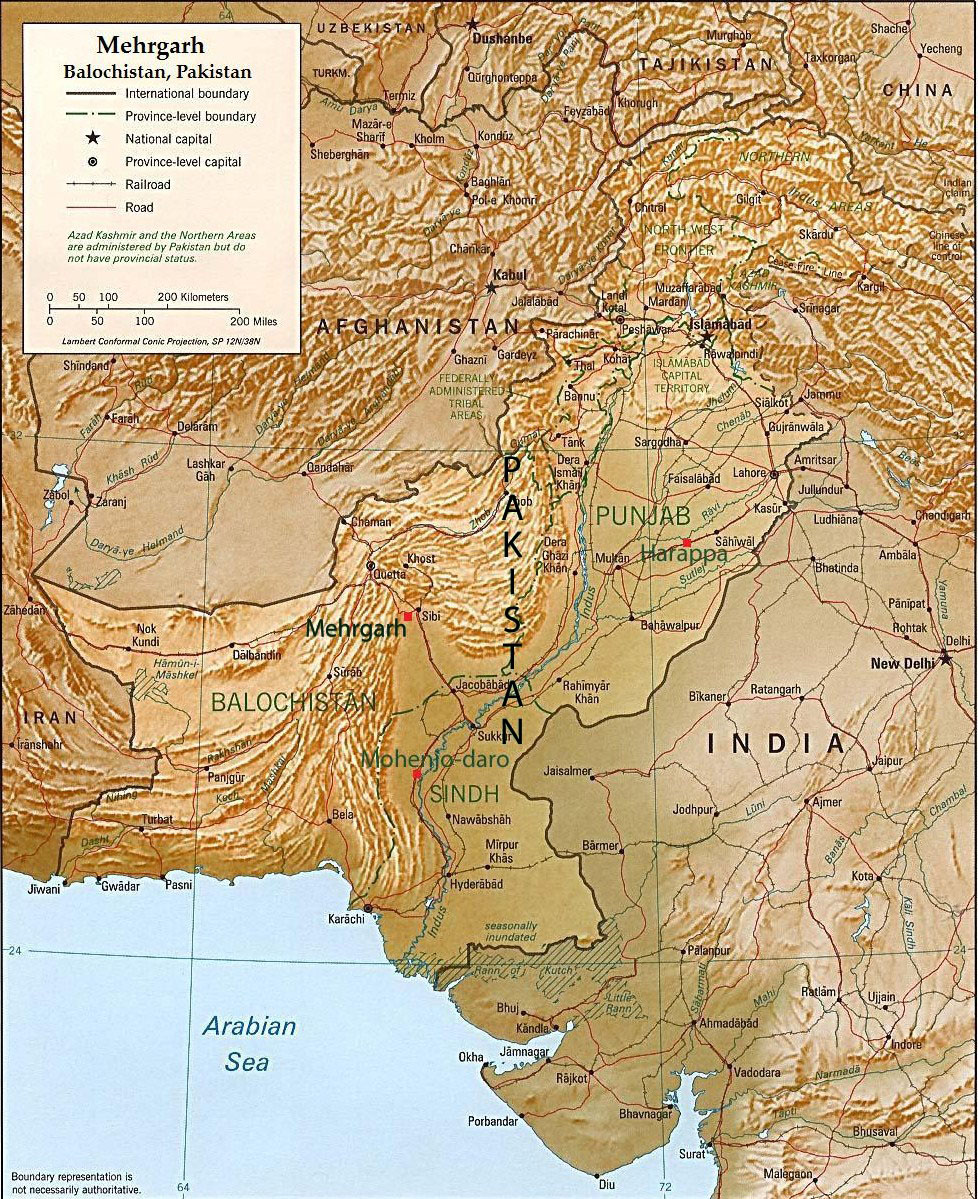
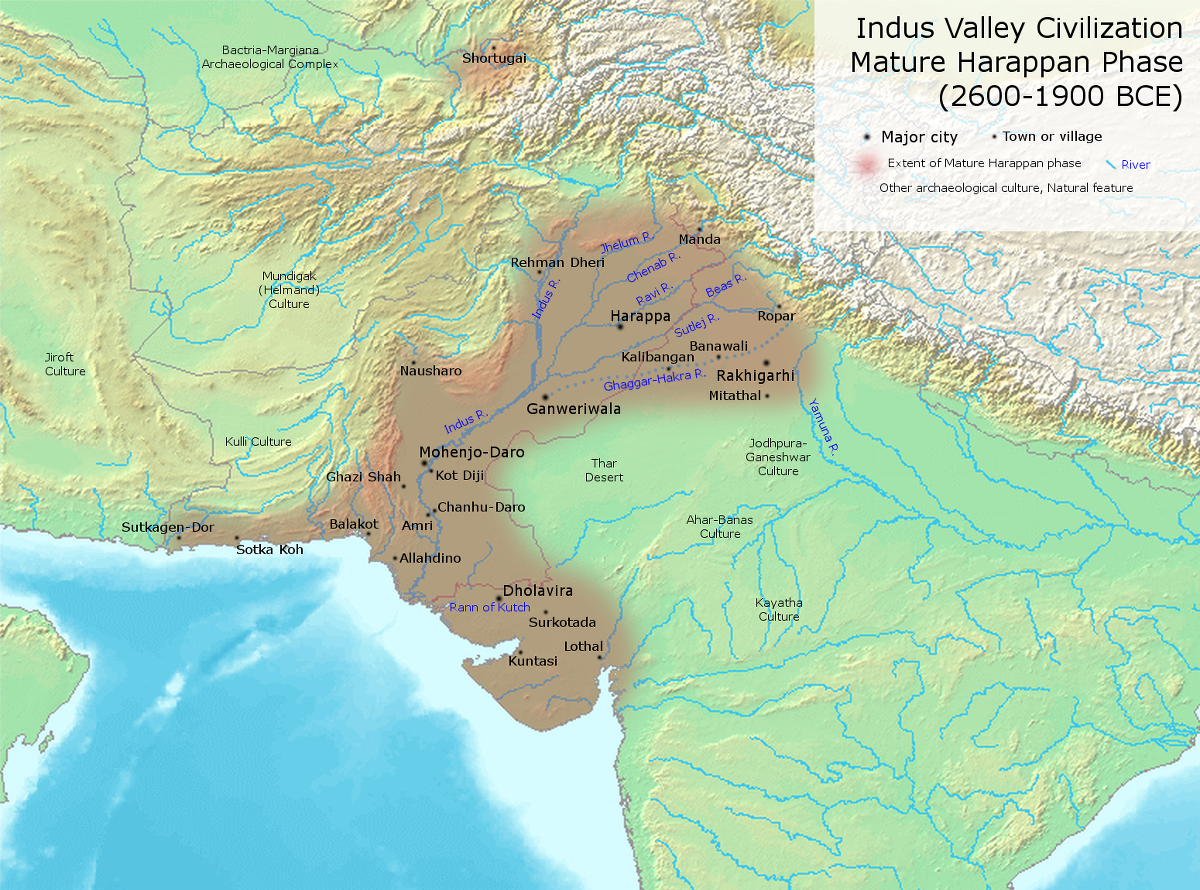
The Indus Valley Civilization existed through its early years of 3300-1300 BCE, and its mature period of 2600-1900 BCE. The area of this civilization extended along the Indus River from what today is northeast Afghanistan, into Pakistan and northwest India. The Indus Civilization was the most widespread of the three early civilizations of the ancient world, along with Ancient Egypt and Mesopotamia. Harappa and Mohenjo-daro were thought to be the two great cities of the Indus Valley Civilization, emerging around 2600 BCE along the Indus River Valley in the Sindh and Punjab provinces of Pakistan. Their discovery and excavation in the 19th and 20th centuries provided important archaeological data about ancient cultures.
Overview
The Indus River Valley Civilization, 3300-1300 BCE, also known as the Harappan Civilization, extended from modern-day northeast Afghanistan to Pakistan and northwest India.
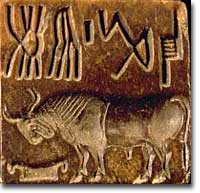
Important innovations of this civilization include standardized weights and measures, seal carving, and metallurgy with copper, bronze, lead, and tin.
Little is understood about the Indus script, and as a result, little is known about the Indus River Valley Civilization’s institutions and systems of governance.
The civilization likely ended due to climate change and migration.
Indus Valley Civilization:
The Indus Valley Civilization was one of the three “Ancient East” societies that are considered to be the cradles of civilization of the old world of man, and are among the most widespread; the other two “Ancient East” societies are Mesopotamia and Pharonic Egypt. The lifespan of the Indus Valley Civilization is often separated into three phases: Early Harappan Phase (3300-2600 BCE), Mature Harappan Phase (2600-1900 BCE) and Late Harappan Phase (1900-1300 BCE).
At its peak, the Indus Valley Civilization may had a population of over five million people. It is considered a Bronze Age society, and inhabitants of the ancient Indus River Valley developed new techniques in metallurgy—the science of working with copper, bronze, lead, and tin. They also performed intricate handicraft, especially using products made of the semi-precious gemstone Carnelian, as well as seal carving— the cutting of patterns into the bottom face of a seal used for stamping. The Indus cities are noted for their urban planning, baked brick houses, elaborate drainage systems, water supply systems, and clusters of large, non-residential buildings.
The Indus Valley Civilization is also known as the Harappan Civilization, after Harappa, the first of its sites to be excavated in the 1920s, in what was then the Punjab province of British India and is now in Pakistan. The discoveries of Harappa, and the site of its fellow Indus city Mohenjo-daro, were the culmination of work beginning in 1861 with the founding of the Archaeological Survey of India in the British Raj, the common name for British imperial rule over the Indian subcontinent from 1858 through 1947.
The Twin Cities :
The ruins of two ancient cities, Harappa and Mohenjo-Daro (both in modern-day Pakistan), and the remnants of many other settlements, have revealed great clues to this mystery. Harappa was, in fact, such a rich discovery that the Indus Valley Civilization is also called the Harappan civilization.
Harappa was a fortified city in modern-day Pakistan that is believed to have been home to as many as 23,500 residents living in sculpted houses with flat roofs made of red sand and clay. The city spread over 150 hectares (370 acres) and had fortified administrative and religious centers of the same type used in Mohenjo-daro. The modern village of Harappa, used as a railway station during the Raj, is six kilometers (3.7 miles) from the ancient city site, which suffered heavy damage during the British period of rule.
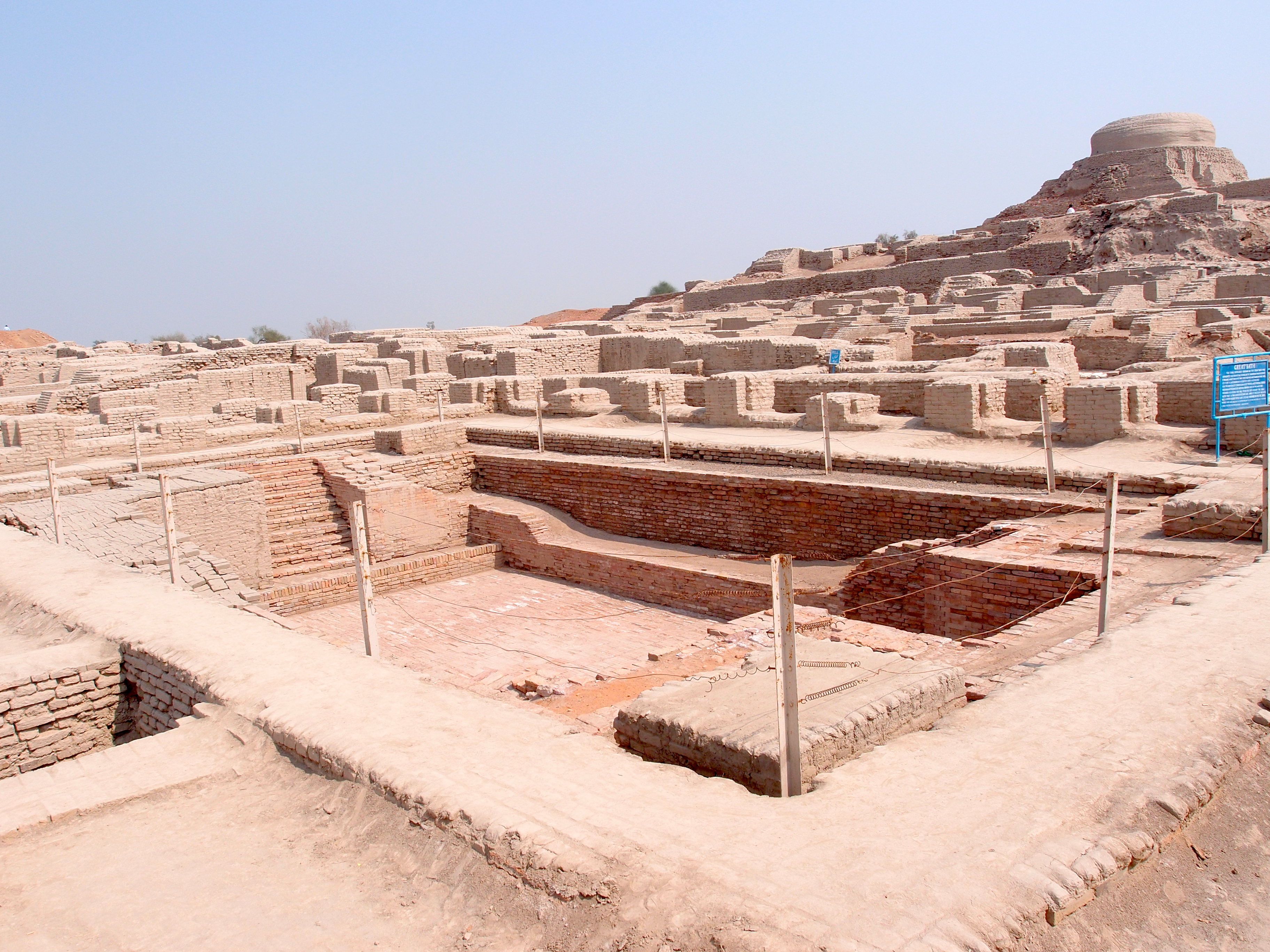
Mohenjo-daro is thought to have been built in the 26th century BCE and became not only the largest city of the Indus Valley Civilization but one of the world’s earliest, major urban centers. Located west of the Indus River in the Larkana District, Mohenjo-daro was one of the most sophisticated cities of the period, with sophisticated engineering and urban planning. Cock-fighting was thought to have religious and ritual significance, with domesticated chickens bred for religion rather than food (although the city may have been a point of origin for the worldwide domestication of chickens). Mohenjo-daro was abandoned around 1900 BCE when the Indus Civilization went into sudden decline.
The ruins of Harappa were first described in 1842 by Charles Masson in his book, Narrative of Various Journeys in Balochistan, Afghanistan. In 1856, British engineers John and William Brunton were laying the East Indian Railway Company line connecting the cities of Karachi and Lahore, when their crew discovered hard, well-burnt bricks in the area and used them for ballast for the railroad track, unwittingly dismantling the ruins of the ancient city of Brahminabad.
Geography and time-frame :
In 1856, British colonial officials in India were busy monitoring the construction of a railway connecting the cities of Lahore and Karachi in modern-day Pakistan along the Indus River valley.As they continued to work, some of the laborers discovered many fire-baked bricks lodged in the dry terrain. There were hundreds of thousands of fairly uniform bricks, which seemed to be quite old. Nonetheless, the workers used some of them to construct the road bed, unaware that they were using ancient artifacts. They soon found among the bricks stone artifacts made of soapstone, featuring intricate artistic markings.Though they did not know it then, and though the first major excavations did not take place until the 1920s, these railway workers had happened upon the remnants of the Indus Valley Civilization, also known as the Harappan Civilization, after Harappa, the first of its sites to be excavated, in what was then the Punjab province of British India and is now in Pakistan. Initially, many archaeologists thought they had found ruins of the ancient Maurya Empire, a large empire which dominated ancient India between c. 322 and 185 BCE.Before the excavation of these Harappan cities, scholars thought that Indian civilization had begun in the Ganges valley as Aryan immigrants from Persia and central Asia populated the region around 1250 BCE. The discovery of ancient Harappan cities unsettled that conception and moved the timeline back another 1500 years,situating the Indus Valley Civilization in an entirely different environmental context.
There is evidence of settlement in this area as early as 7000 BCE.The Indus Valley Civilization is often separated into three phases: the Early Harappan Phase from 3300 to 2600 BCE, the Mature Harappan Phase from 2600 to 1900 BCE, and the Late Harappan Phase from 1900 to 1300 BCE.
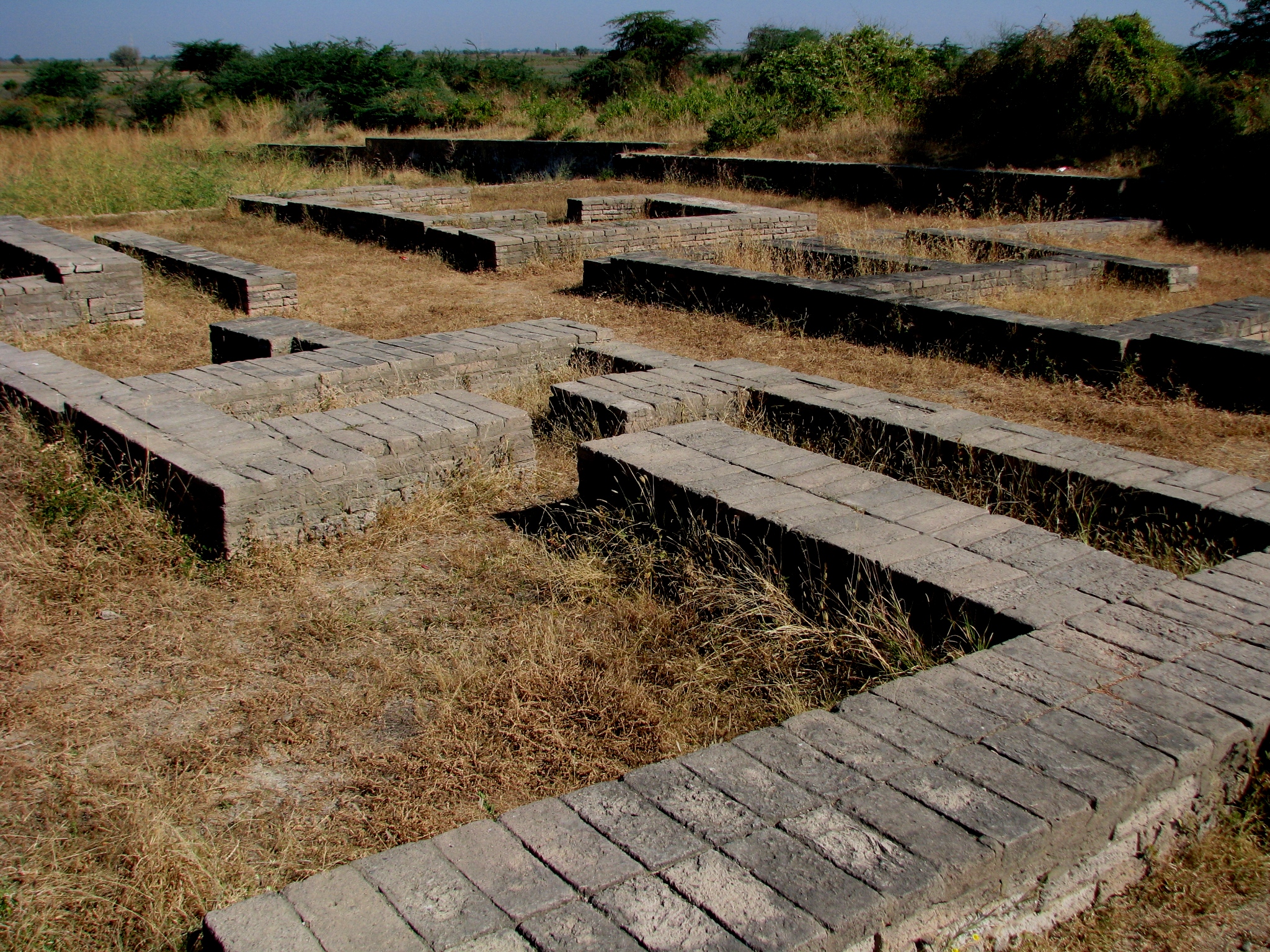
The Indus cities are noted for their urban planning, a technical and political process concerned with the use of land and design of the urban environment. They are also noted for their baked brick houses, elaborate drainage systems, water supply systems, and clusters of large, nonresidential buildings.The Indus Valley Civilization began to decline around 1800 BCE.
Urban infrastructure and architecture:
By 2600 BCE, small Early Harappan communities had developed into large urban centers. These cities include Harappa, Ganeriwala, and Mohenjo-daro in modern-day Pakistan and Dholavira, Kalibangan, Rakhigarhi, Rupar, and Lothal in modern-day India. In total, more than 1,052 cities and settlements have been found, mainly in the general region of the Indus River and its tributaries.Mohenjo-daro is thought to have been built in the twenty-sixth century BCE; it became not only the largest city of the Indus Valley Civilization but one of the world’s earliest major urban centers. Located west of the Indus River in the Larkana District, Mohenjo-daro was one of the most sophisticated cities of the period, with advanced engineering and urban planning.
Harappa was a fortified city in modern-day Pakistan that is believed to have been home to as many as 23,500 residents living in sculpted houses with flat roofs made of red sand and clay. The city spread over 150 hectares—370 acres—and had fortified administrative and religious centers of the same type used in Mohenjo-daro.Both cities had similar organization and featured citadels, central areas in a city that were heavily fortified—protected with defensive military structures.The remains of the Indus Valley Civilization cities indicate remarkable organization; there were well-ordered wastewater drainage and trash collection systems and possibly even public baths and granaries, which are storehouses for grain.Harappans demonstrated advanced architecture with dockyards, granaries, warehouses, brick platforms, and protective walls. These massive walls likely protected the Harappans from floods and may have deterred military conflicts.
Indus Valley Cities:
The cities of the ancient Indus Valley consisted of highly functional, multistory buildings and structures constructed with uniform, kiln-burnt bricks. There is evidence of urban planning due to the uniformity of size and the style of the brickwork, as well as the organization of streets and neighborhoods into grid patterns, much like many current cities.
The first-known sanitation system, whereby waste-water was directed into covered drains that lined major streets and where clean water was obtained from wells in a designated room in the home, was employed in the ancient Indus Valley. This system of sewage and drainage is quite remarkable and was more advanced than some seen even today.
The Indus Valley Civilization is also known for developing a unified system of weight and measurement, as well as a decimal system and the first known use of negative numbers. In 2001, it was discovered that people from the early Harappan period had knowledge of proto-dentistry with the excavation of the first evidence of drilled human teeth.
Art in the Indus Valley :
The Indus Valley period is well documented through the wealth of artifacts that were excavated from its magnificent cities. It is widely believed that most of the inhabitants of Indus Valley cities were tradespeople and artisans. Archaeologists have excavated sculptures, seals, pottery, gold jewelry, elaborate beadwork, and anatomically detailed figurines in terracotta , ceramic, bronze, lead, tin, and steatite from the ancient Indus Valley area.
A number of bronze, gold, stone, and terracotta figures of girls in dance poses reveal the presence of some dance forms from the time, and a harp-like instrument depicted on a seal indicates the use of stringed musical instruments.
Similarities in the iconography and construction of excavated artifacts suggest the considerable mobility and trade networks of the Indus Valley inhabitants. Raw materials found only in distant regions, such as lapis lazuli and steatite, were imported for artistic use. It is believed that the trade networks of the Indus Valley reached as far as Afghanistan, coastal Persia, northern and western India, Mesopotamia , and Egypt.
The Fall of Harappan Culture:
The remains of their walls yield clues about the culture that thrived in the Indus Valley. Clay figurines of goddesses are proof that religion was important. Toys and games show that even in 3000 B.C.E., kids — and maybe even adults — liked to play. Pottery, textiles, and beads are evidence of skilled craftsmanship and thriving trade
It was this intensive devotion to craftsmanship and trade that allowed the Harappan culture to spread widely and prosper greatly. Each time goods were traded or neighbors entered the gates of the cities to barter, Indus culture was spread.Eventually, though, around 1900 B.C.E, this prosperity came to an end. The integrated cultural network collapsed, and the civilization became fragmented into smaller regional cultures. Trade, writing, and seals all but disappeared from the area.
Many believe that the decline of the Harappan civilization was a result of Aryan invasions from the north. This theory seems logical because the Aryans came to power in the Ganges Valley shortly after the Indus demise of the Indus Valley Civilization. Because there is little evidence of any type of invasion though, numerous historians claim that it was an environmental disaster that led to the civilization’s demise. They argue that changing river patterns disrupted the farming and trading systems and eventually led to irreparable flooding.
Although the intricate details of the early Indus Valley culture might never be fully known, many pieces of the ancient puzzle have been discovered. The remains of the Indus Valley cities continue to be unearthed and interpreted today. With each new artifact, the history of early Indian civilization is strengthened and the legacy of this ingenious and diverse metropolis is made richer.
“Competition is a good thing; it forces us to do our best.”
Nancy Pearcey
Since every aspect in life has two angles, competition too can be considered in the positive as well as the negative sense. Mostly, competition is used in the negative sense which is the reason most of the businesses end on a short note. Thus, we will be learning a positive sense of this word in today’s article.
The term becomes negative when you resolve to imitating the procedures followed by your competition. As discussed in earlier articles, a business needs to stand out for which uniqueness is quintessential. Thus, blindly following the footsteps of your competition isn’t going to help. Also, focussing merely on your competition and their profits isn’t the right move because that diverts your attention from the possible surplus you could generate. In short, avoid opening up an encyclopaedia of services offered by your competition just so as to match their ability because that isn’t possible. All have different capabilities and varied ways of thinking. Perhaps you could do better than the competition and in order to believe yourself, lay aside continuous inspection of the competition. Let us understand this better.
For instance, a company selling electrical appliances and will of course have competition because one can’t possibly come up with a business extremely alien to all, owing to the desires of the mob. Thus, competition persists because we need to consider the needs of the population on this planet and arrange for such services that would benefit. Uniqueness must come in the way we exhibit or present those services.
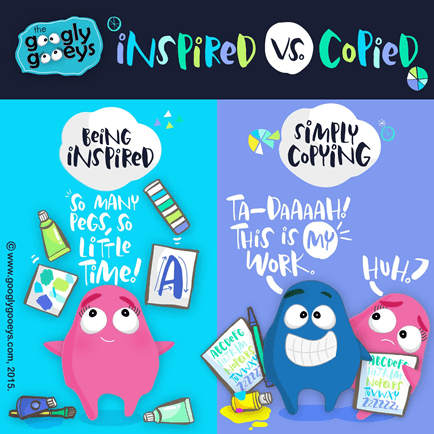
Getting back to the story, you are receiving good deal traffic but are occupied in considering the competition. You’re trying to get into their good books so as to know more about their ways of introducing and presenting the services. However, while you are busy understanding your competition, you failed to comprehend over the fact that you could understand the psychology of the customers and list their desires thereby coming up with a unique form of exhibition of your services. In short, you lose access to creativity when you are busy imitating which certain businessmen term as ‘taking inspiration’. A point to be noted is, that inspiration means simply learning from the competition and coming up with your own unique form of services while imitation is looking up services provided by the competition that seem to best appeal to the mob and trying out the same! Most businessmen resort to the latter but coin their efforts as former!
Yes, there is a possibility of better inclining towards the latter because we feel that more customers would be attracted to us as well, as they do to the competition. But a point that we miss out on is, that if the customers have already tried that way out, why would they be interested in yet another company offering the same format with no particular speciality or uniqueness in its services? Also, customers remain glued to the same company for ages owing to the trust and genuineness they feel towards that brand which is the reason, they wouldn’t actually be interested in trying out a new brand with the same level of services. Why take the risk and opt for a new brand with same manner of exhibition of services when the old one does the trick? That is when uniqueness comes into the picture because your aim shouldn’t be to snatch the customers of your competition which is a tedious task and may gain no possible results. Instead, your aim should be to gain a new set of enthusiastic customers for yourself. Don’t go for Renaissance in business that is rebirth or revival of your competition. Go for something unique that people would be excited enough to try out owing to the way it functions.
Thus, competition should be taken in a positive sense. Take inspiration from them. Capture some of their bonus points that help them and develop your business with creativity on the basis of that structure. In short, use your competition as stepping stones to success! Also, competition can help you grow vividly because it helps understand updates of market trends which keep changing and are visible in your competition. By closely observing the same, you could flourish your business and step by step, move further than your competition not by imitating them but by personal creativity. The competition would neither blame you for stealing their ideas nor would you feel guilty of being a copy cat! So, be yourself and unique in business to ensure additional bonuses in the future!
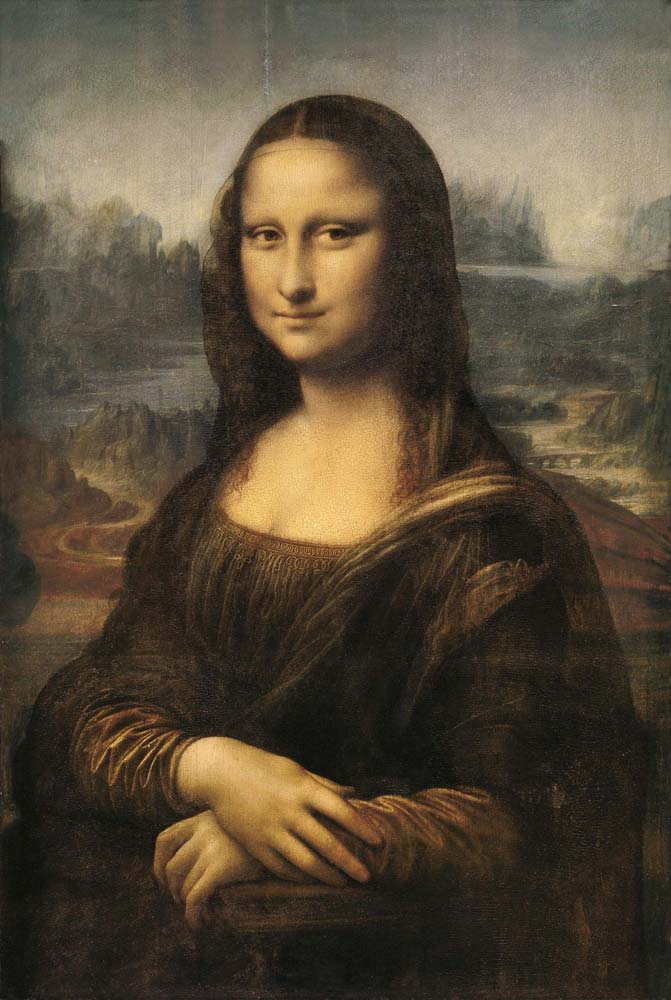
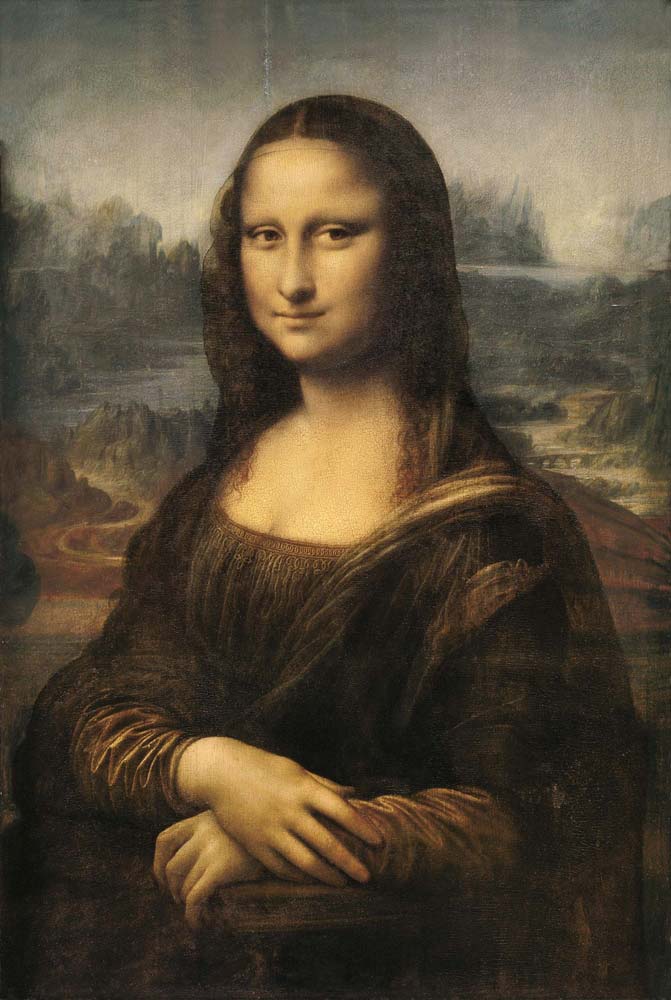
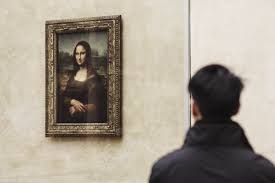
Most people feel disappointed when they see the most famous painting in the world “Mona Lisa”. Questions like ‘Why is this painting famous?’, ‘Is it worthy enough to be called a masterpiece?’, ‘What makes her unique?’ arise in the minds of hundreds. But if we ignore it all and just look at the painting, we see the greatest psychological portrait ever painted. A portrait that is much more ahead of time that we are still trying to figure out.
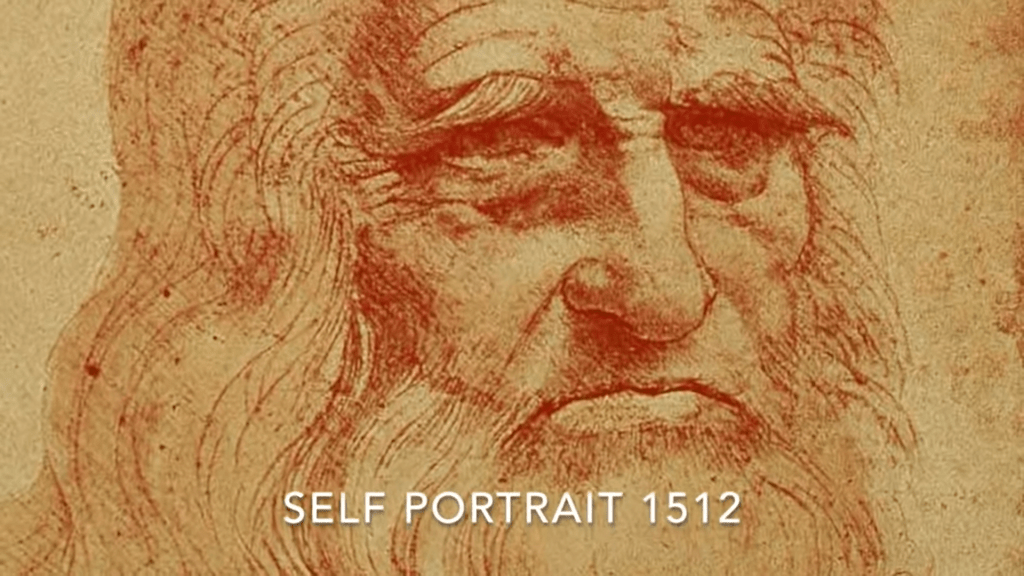
Leonardo da Vinci in his sixties moved to the Chateau of Amboise in France with his sketchbooks and one painting “The Mona Lisa”. Because he knows how important the painting was for him.
Leonardo is one of the greatest inquisitive minds in history, a self-made man with an unquenchable appetite for knowledge, and dedicated his life to studying anatomy, geology, and philosophy.
Leonardo da Vinci
The Painting
Mona Lisa was painted on a thin-grained piece of a poplar tree and a layer of lead white. He used glazes that have a very small amount of pigment mixed with the oil. This brought depth and luminosity as the white undercoat of lead reflects the light through the glazes. He used tiny brushstrokes applied super slowly over years. Leonardo pioneered many brushing techniques which brought the paint to life.
Mona Lisa
Clothes and Jewelry
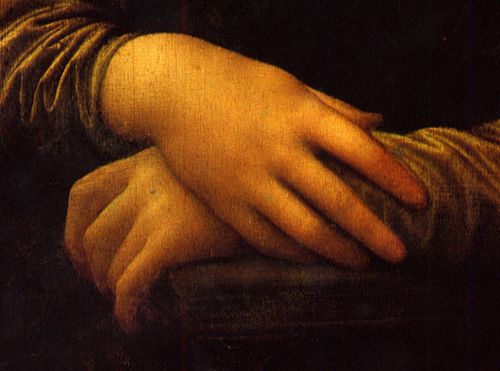
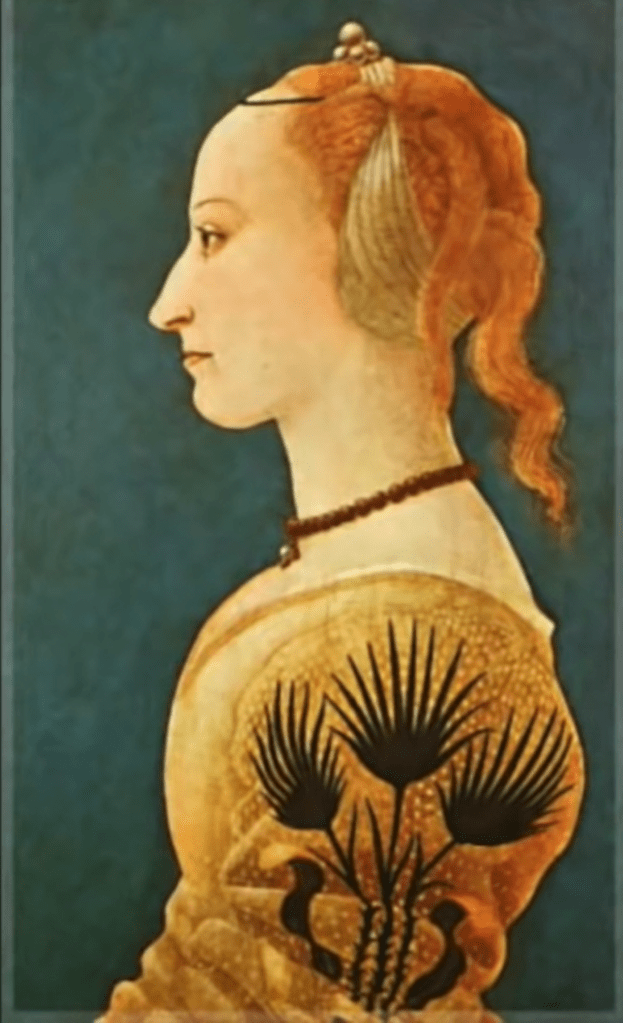
Unlike any other commissioned portraits of the aristocracy we usually see with expensive outfits, Mona Lisa is a pretty simple wealthy woman with no jewelry, clothes that are nothing special, and simple hair.
Leonardo uses the classic pyramid-shaped composition that was introduced during the renaissance. The structure provides stability and provides a central focus. In this painting, the focus is directed towards her face.
Portrait of Mona Lisa without jewelry
Portrait of Maddalena Strozzi with jewelry.
What makes her different?
Instead of a full-length pose, Leonardo had painted Mona Lisa in a three-quarter length to cut down the distractions. Today this pose is normal but on those days it was groundbreaking. Previously the people in the portrait are erect, but Mona Lisa is relaxed with hands resting gently.
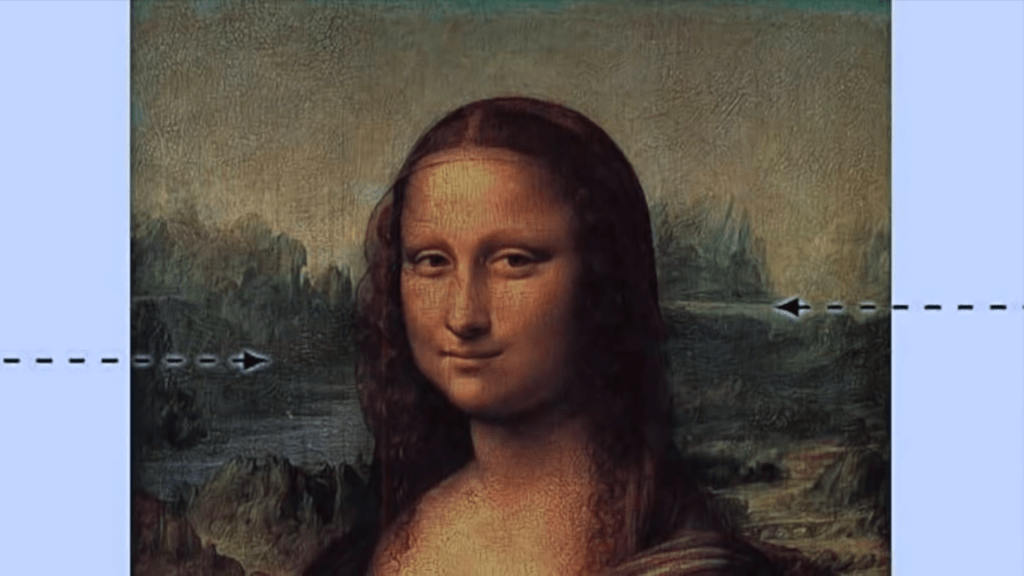
If you look at Mona Lisa’s eyes you see they are staring at you, but women in paintings never did that. The background of any other portrait has a simple background of either an open sky or a room but the background of the Mona Lisa is a complex aerial perspective of a landscape. The curves of her hair and clothing reflect the valleys and river flowing connecting humanity and nature. If you look at the background and compare the horizons on both sides you see it is not lined up. This visual trick gives an illusion of movement.
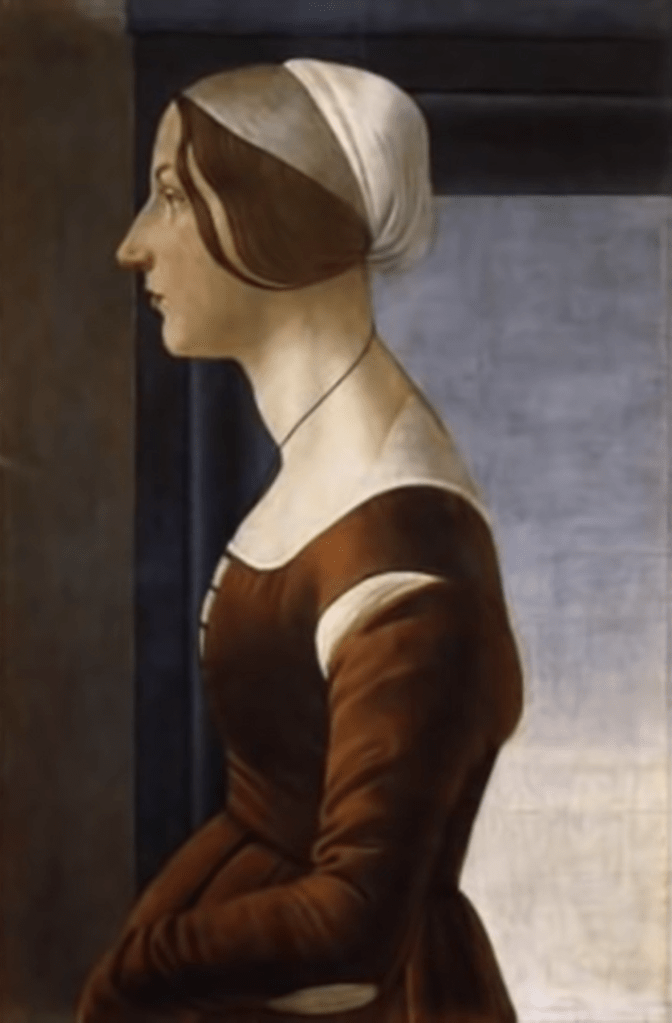
erect portrait with plane background
erect portrait with room background
level of horizons
Her eyes and smile follows you
Leonardo has used the Sfumato technique to paint Mona Lisa’s eyes. It creates a depth near the eyes of Mona Lisa which is unusual in the case of other paintings and sculptures. Leonardo has studied human anatomy, the structure of a human face, and smiles exposing the muscles and nerves. He started researching how a smile works and analyzed every possible movement of the face. Artists never painted a smiling face before, portraits are generally serious. When you look into her eyes first she smiles then she is not. The smile comes and goes as we look deep into her face. When we look away smile stays.
Leonardo from his optic studies observed that the light comes and hits the whole retina instead of hitting at one point. This was the key to her mysterious smile.
The human eye has two different regions for seeing the world one is a central area called the fovea(to read colors) and the other is the peripheral area(to see the black and white motion and shadows). When we focus on the eyes the peripheral vision is on the smile and pick up the shadows from her cheekbones. When you look at her smile directly you cannot see the shadows, and she isn’t smiling but smirking. This is not your imagination, but it is about how you see.
Her eye’s on you!Inner part of the eye
Sfumato technique
Sfumato is a blending technique for softening the transition between colors to make sure there are no sharp lines, layer by layer he blended everything in Sfumato style.
Chiaroscuro
chiaroscuro is an effect of contrasted light and shadow that gives a 3D effect.
These styles were never seen before Mona Lisa. Hence, seeing Mona Lisa for the first time must have been astonishing. How genius Leonardo da Vinci is that he understood this 500 years ago.
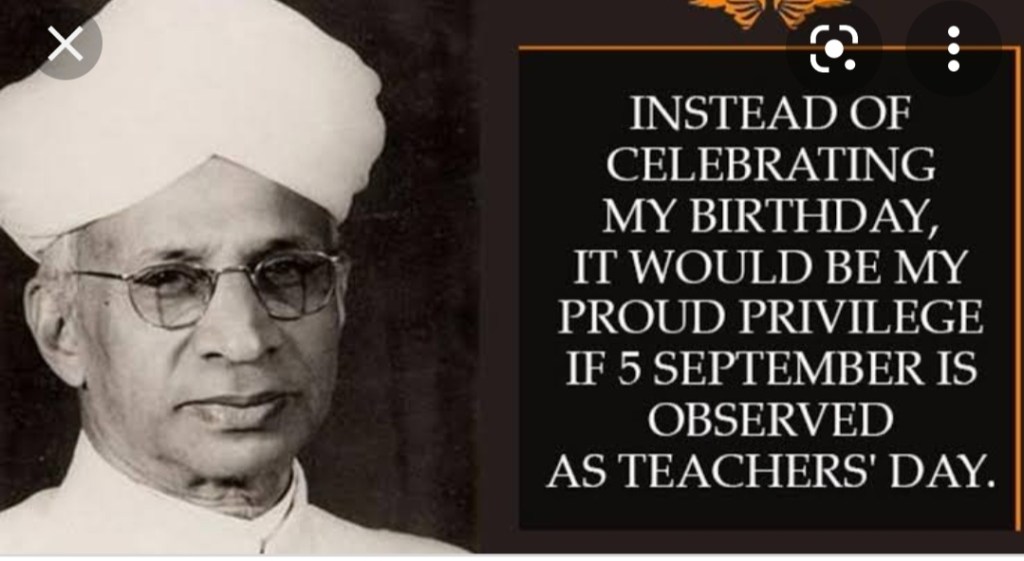
Teacher’s day is a special day for the appreciation of teachers,& may include celebration to honor them for their special contributions in a particular field area ,or the community in general.
5 th September is the birth anniversary of a great teacher Dr Sarvepalli Radhakrishnan who was a staunch believer of education & was a well known diplomat,scholar,the president of India and above all a teacher.
Best teacher ever
Who are Teachers?
Teachers nourish and prepare students for their future as they are the real icon of knowledge and wisdom. They create awareness among the students and common people. They are the source of light in the world that has been darkened due to ignorance. Our teachers are the true pillars of our success. They help us garner knowledge, improve our skills, grow confidence as well as they help us to choose the right path to success. But, despite playing such a crucial role in the lives of students and in nation-building, they rarely are shown the gratitude that they deserve. So, as a student, it is our duty to thank them at least once a year and Teachers’ Day gives us an ideal opportunity to do so!.
As it is rightly said that:
Jagranjosh
In addition to their own teachers and mentors, 5th September is also a day when a person can look back, and be inspired by the life and works of Dr. S. Radhakrishnan. Dr. Radhakrishnan hailed from a small city boy and with the help of education, he became an esteemed politician and a visionary educationist.
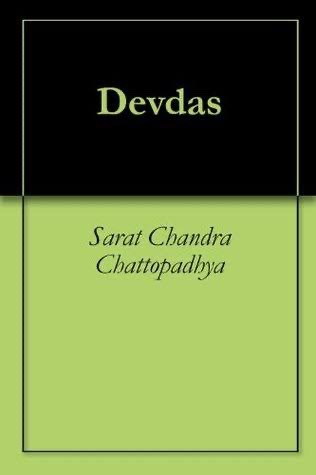
Book Cover of Novel, Devdas. (Photo Credits: Goodreads)
There’s a certain notion among Indians that every sad lover in the country is a real life Devdas. But deep down, let’s analyse, was Devdas really a lover or yet another male chauvinist?
Plot:
The story starts with two childhood family friends Devdas and Paro, both belonging to rich households and immediate neighbours. Both of their families are well connected to the each other as well. The story revolves around Indian state of Bengal.
Slowly, Devdas and Paro grow up and start developing love for each other. However, Devdas was a spoilt rich brat and this is the reason his father sends him to London for higher studies. Paro becomes sad on knowing this and waits for his return. Devdas returns home after 10 years of studies and is now a well grown up. Paro, on the other hand, exceptionally beautiful, fantasises about her childhood love Devdas.
On his return to Bengal, Devdas and Paro meet and resume their fairy tale love story. However, Dev’s family isn’t happy with their relationship as Paro was from a lower caste background. Things go worse when Devdas’s mother insults Paro’s mother for offering her daughter as a bride to Devdas’s family. This was followed my Paro getting insulted by Devdas’s father who calls her “characterless” as she went on to meet Dev at late night. Devdas seeing all this, refused to accept Paro as his family was against the relationship.
Paro’s mother, unable to bear the insult, vows to get Paro married in a family which would be lot more rich and influential than Devdas. And she does so! A week later Paro marries a rich old man from a nearby village. However, just before her marriage, Devdas suddenly arrives and offers his hand to Devdas to which Paro refuses. Devdas gets angry at the refusal and hurts Paro with a gold necklace and thus Paro suffers from an injury.
Months later Paro’s marriage to the old man, Paro pays a visit to Devdas where it’s revealed he’s completely alcoholic and lonely. Paro requests him to come with him but Devdas doesn’t agree but promises her that he would come to Paro once before his death. Devdas also meets a courtesan, Chandramukhi with whom he develops loves but leaves her yet again.
Finally, the story ends with Devdas fulfilling his promise of coming to Paro but Paro’s husband refuses to let her meet Devdas. At the end, an alcoholic Devdas passes away leaving Paro sobbing.
Character of Devdas.
1) Devdas was never a lover.
I wonder, how people have beautifully whitewashed the ignorant and abusive nature of Devdas. When Paro went to meet Devdas late at night putting her dignity at stake, Devdas refused to go with her fearing about his own family honour. If this is the case, how can he be called a lover? If family and society was more important to him, it shows he never actually loved Paro.
2) Devdas was a male chauvinist.
Devdas suddenly offered his hands to Paro when Paro was just about to marry. Paro taking into consideration her self respect questioned Devdas that why is he so late and why didn’t he come when Paro went out to meet him at his home the week before. She also asked Devdas about the reasons why her parents and she were insulted by Dev’s family. Devdas couldn’t tolerate a woman questioning him and instead of apologising to her, he shouted at her for being “too arrogant”. Devdas cared about his family honour but didn’t care about Paro’s family honour: This shows his ingrained patriarchy.
3) Devdas tries to justifies abuse!
Perhaps one of the most problematic chapters of the book was when Paro refuses Dev’s offer of running away with him on her wedding night with the old man. On getting a rejection from Paro, Dev goes intolerant and beats Paro with a gold necklace. Paro suffers from an injury and her head starts bleeding. Devdas asks Paro to keep this injury with her for life as it would always remind her of Devdas. Paro agrees to this and throughout the book she is shown to love that injury. This also shows how much the book has normalised and romanticised a brutal abuse and also definitely brutal abusers!
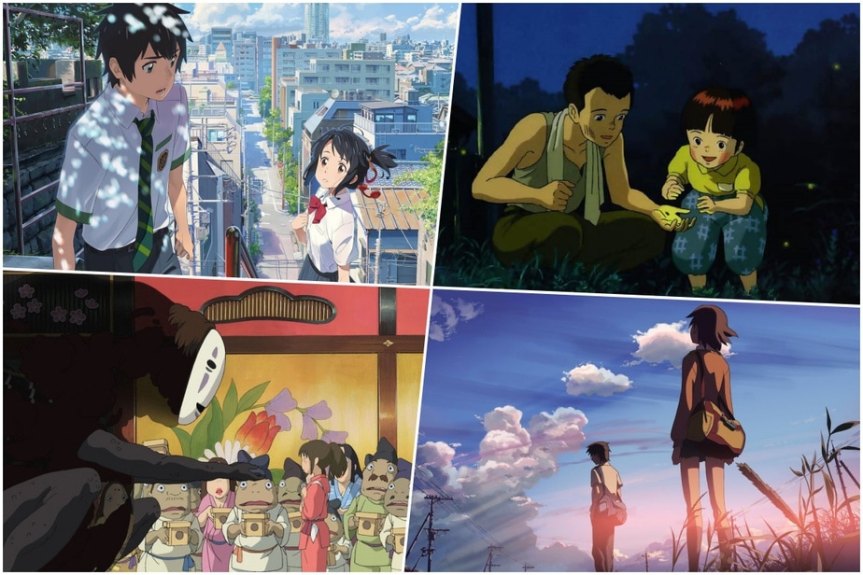
Anime refers to the animation works produced in Japan. There are many famous anime series like death note, dragon ball z, Naruto, one piece etc. which have successfully captured the hearts of people all around the globe. Similarly, there are a many anime films which are very good to watch. Here are some of the greatest anime films which are worth checking out:
• Your Name ( 2016):
The first thing that comes to mind about this film is it’s extraordinarily breath taking animation. It is directed by Makoto Shinkai and has a 98% Rotten tomatoes rating. It is a one of a kind romantic fantasy film. It is a timeless tale of love of two teenagers who share a magical connection of switching bodies but things get very complicated when they decide to meet in person. This film has a very different take on love. It also depicts the power time has on us and how it changes everything. The music in this film is very stunning and makes the experience even better.
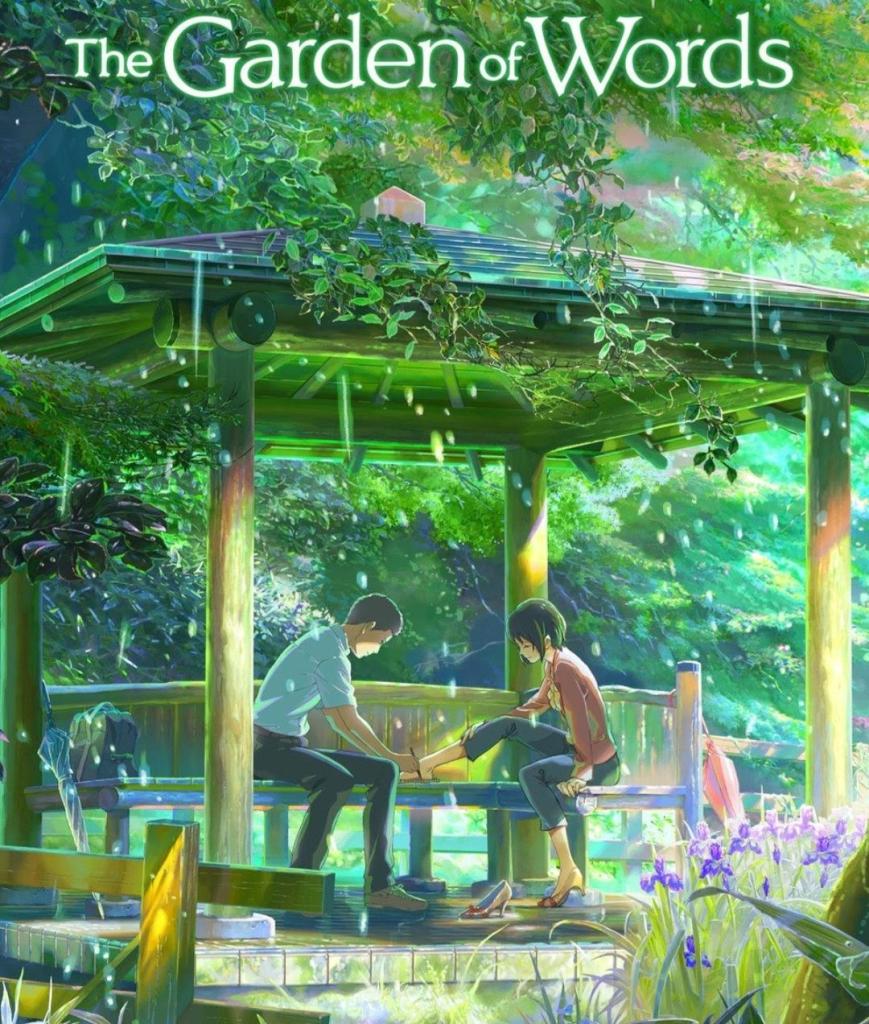
• The Garden of Words (2013) :
This is another Makoto Shinkai’s film. It is rather a mini movie with a runtime of 45 minutes. The animation in this film is very realistic. This film is very soothing to watch. The music and the scenes of rain are very relaxing. T story revolves around a teenager who skips school and meets a mysterious older women who shares his feelings of alienation. This film depicts loneliness and the need of companionship very well. It shows how insecurities can be both cause and result of loneliness. It showcases very relatable thoughts and feelings. Not being able to let go of past, inability to move forward in life, fear of failure, fear of being judged etc. are very aptly portrayed.
• A Silent Voice (2016) :
This is a very emotional film. It is directed by Naoko Yamada. This film depicts the effects bullying has both on the victim and the bully. The story revolves around a boy who bullied a deaf girl to the point where she has to transfer to another school. Years later, he sets out to make amends. It is a very powerful story of redemption of a sinful past. It deals with issues like sucide, self loathe, guilt, bullying, disability etc. This film depicts how self acceptance leads towards healing and how strong karma is. Self love, self forgiveness etc. are portrayed very well. Over all , this film is a roller coaster of emotions.
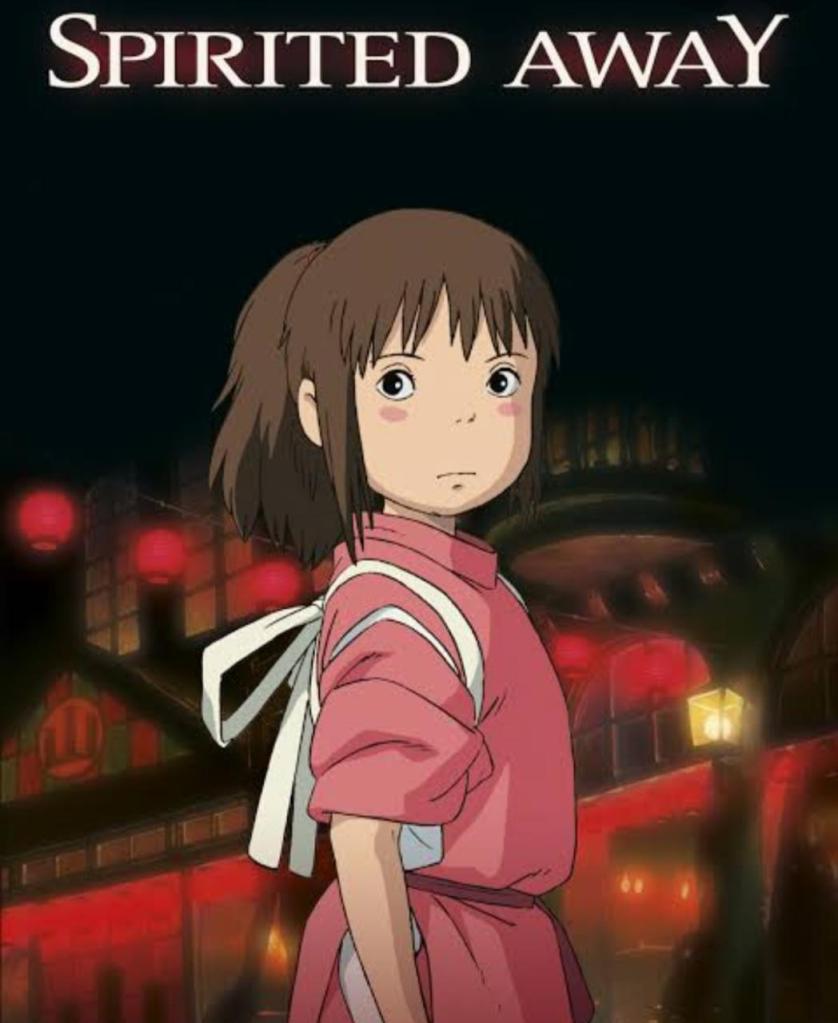
• Spirited Away (2001) :
This is an all time classic. It has a 97% Rotten tomatoes rating and is the winner of 2003 Best Animated Feature in Academy Awards. It is a Studio Ghibli film and is directed by Hayao Miyazaki. It is one of the best film studio Ghibli has produced. The story revolves around a girl whose parents get cursed when they go to a strange amusement park. Then then meets a boy who tells her about that park and how he has to work there to free her self and her parents. Just like any other ghibli film, it is very detailed when it comes to animation, the pacing is not fast which makes it very relaxing to watch and world exploration is done neatly. There are a lot of mythological referencing in the film and is perfect for both children and adults.
“Haider” is a movie based on the setting of the insurgency-torn Kashmir of 1995, where there was a massive dispute between India and Pakistan. This movie is an adaptation of one of the classic plays of Shakespeare’s “Hamlet”.Although the director Vishal Bhardwaj tried to portray the original play as it is with excellent cinematography but there are several incidents which contrast with the play, but many instances make this movie worth being called an adaption of the Shakespearean play.
The contrast in setting:
If we begin with the setting of Hamlet, we see it begins in the ancient fortress of Denmark in the late middle ages of the 14th and 15th centuries. Whereas in the Movie Haider, Set in Srinagar in 1995, during militancy and a brutal Indian counter-insurgency. The setting itself changes a lot of cultural and linguistic widegap that made the play and movie different.
The contrast in Cultural, linguistic, and Religion:
Since Haider is a Bollywood movie and the director tried to make this movie in favor of the Indian audience to make it more likable and hit it was essential to be relatable to the Indian context. When we investigate Hamlet, it has all those autocratic lives of kings and queens and has a lavish livelihood.
Linguistically also there is a widening between the 2 as one is in Hindi with a mixture of Urdu dialects, whereas Hamlet is in old English which also shows that the movie is culturally different in all terms.
Hamlet has been portrayed through the Reflection of Christianity, on the other hand, Haider portrays the political mishappen with Islamic reflection.
At certain times when there is a contrast in culture and norms the effects are often visible and here there are certain differences in the plot whereas the relationship is portrayed in both.
In context to Plot:
There are several events that have been edited in the movie from the play. Such as the major ones counted as: The play shows us the King of Denmark is already dead and the ghost of King Hamlet tells the truth to Prince Hamlet about his murder, as when we investigate the movie it is the character Roohdaar who tells Haider about the culprit of his father’s murder.
Also, the relationship between Gertrude and hamlet is not much affectionate as the way it is shown in the movie about Haider and Ghazala.
All Shakespearean Tragedy Plays has this element of all the characters die in the end. But in the movie, we see that some of the characters like Roohdaar, Khurram, and Haider himself were alive in the end.
If we compare the Themes then substantially all the themes like Revenge, Corruption, Religion, Politics, women, Madness Vs. Sanity is the major theme portrayed in the movie exactly like the play.
One of the most striking scenes is the equivalent of the “to be or not to be” scene in Shakespeare. Haider turns the “to be or not to be” soliloquy into a confessional and motivational speech in front of a crowd in the market square. It is decidedly more public and more political. He uses the hangman’s rope around his neck as an imaginary microphone. Haider also carries a boom box with a cassette player. The first question he poses points to an existentialist inquiry: “Hello, mike testing 1, 2, 3. Hello. Can you hear me?” Like Hamlet, Haider has longed to be heard. He urges the crowd to reflect on Kashmir’s political crisis: “Do we exist or do we not? Chutzpah is our problem.”
Haider Vs Hamlet – A contrast to the Characters:
Hamlet Vs. Haider: looking into the character analysis of the play Hamlet, prince hamlet is an idealistic knowledgeable person who is very Melancholy, cynical in nature and is having a huge amount of Hatred for his own uncle Claudius who has married his mother Gertrude and hamlet has a repulsion towards his mother’s sexuality.
A similar portrayal is in the movie where Haider is a student of “Revolutionary poets of British India” who studies at Aligarh University comes to find his Missing Father (Doctor Hilaal Meer), there he comes to know about his Mother Ghazala having illegitimate affair with his own uncle Khurram.
We can bring to a point that both Haider and Hamlet are closely similar in their character whereas due to some contrast in the context both the characters differ in some situations, but one thing is certain is about both characters becoming insane and the theme of sanity vs madness gives highlight due to the death of king hamlet/Dr.Hilaal Meer.
Ophelia Vs. Arshia: Since the play/movie is also about the tender love story of Haider- Arshia/hamlet- Ophelia, this portrays the role of love which leads to the death of people due to the brutal conspiracies done by Polonius and Claudius for taking an avenge from prince hamlet. Love is taken as a key to a dark plot of killing hamlet by making Ophelia as a medium/ messenger of hamlet.
The same plot goes into Haider too where Arshia was a journalist and was in love with Haider, but her love became a tragedy where her own father Parvez used her daughter to keep a track of her whereabouts of Haider when he was trying to find his father’s murderer.
Both Arshia/Ophelia can be a contrast because Arshia on the one side was a stern woman who took her own stand despite all the barriers of her being a woman in a patriarchal world, whereas Ophelia was very sensitive, and a woman suppressed by other men and did what her father told her to do.
In the end, both die out of the madness of losing their father and love at the same time and commits suicide.
Claudius Vs. Khurram: The evil of the play who dies in the end, whereas in the movie he does not, as Haider changes his ideology for not killing his uncle due to his mother notions that “Intekaam se Intekaam Paida hoti Hai!” In the play and the movie Claudius/Khurram is the one with all sinister mind and political ambitions who wanted to kill his own Nephew and wanted to have full rights on Ghazala/Gertrude. His lust for women and power goes in the end when he was in the verge to die.
Polonius Vs. Parvaze: Father of Ophelia/Arshia who was good close friend of Claudius/ Khurram and was giving a prominent contribution in the dark conspiracy made by Claudius, but later gets mistakenly killed by Hamlet when hamlet losses his sanity. Polonius had the greed of power and money and was as sinful as his friend Claudius.
Parvez in the movie was the police inspector which was helping Khurram with his own daughter Arshia who was in extreme love with Haider.
Gertrude Vs. Ghazala: Married to the new king of Denmark who was hamlet’s uncle. Often as a woman there where many questions raised on her married and love life as she remarried a man which was against the ethics and she had a very fragile relationship with her own son Hamlet, and they did not have an ideal mother son relationship.
In the movie, we see that Ghazala and Haider had an affectionate relationship despite all the hatred between them in the end Ghazala even sacrificed her life for Haider by killing herself with a bomb explosion.
Roohadaar: He was an ISI agent but considered to be the ghost of hamlet and in the play, we do not have any character related to Roohdaar as the ghost of king hamlet himself tells the truth to prince hamlet about his brutal murder, whereas in the movie Roohdaar and the militant group himself tells the murder of the doctor.
Indeed, he was a good friend of the doctor and was in the prison with the doctor and he was the messenger to stimulate an urge of hatred in Haider’s mind towards his own uncle.
Horatio (A good friend of Hamlet): This character is missing in the movie as he was a good friend and played a positive supportive role for hamlet. Also, a reason why the movie and play are somewhat out of context from each other due to some change in the character appearance.
Fortinas: A close acquaintance of hamlet who had faced the same pain of losing father just like hamlet, but we do not know which character will fit the best for this. so, we can consider that this character is not available in the movie as Haider in the movie was often a loner in the movie and beacme distant from his close ones in the later part of the movie.
Conclusion:
Though the tale is somewhat similar in the movie and play but also certain characters and stories are invisible as this makes the movie or the play incomplete. Since it is an adaption so we cannot expect to be the twin of each other.
From in critic’s point of view, this movie can be rated 7.5/10 as it has all those elements of Shakespearean plays and the cinematography of Vishal Bhardwaj which is perfectly splendid!
Taken all the consideration the story is well portrayed in the movie in spite of all the cultural and religious differences with all those political contexts.
Themes of Revenge, women, corruption, religion, politics, madness are common in both the movie and play.
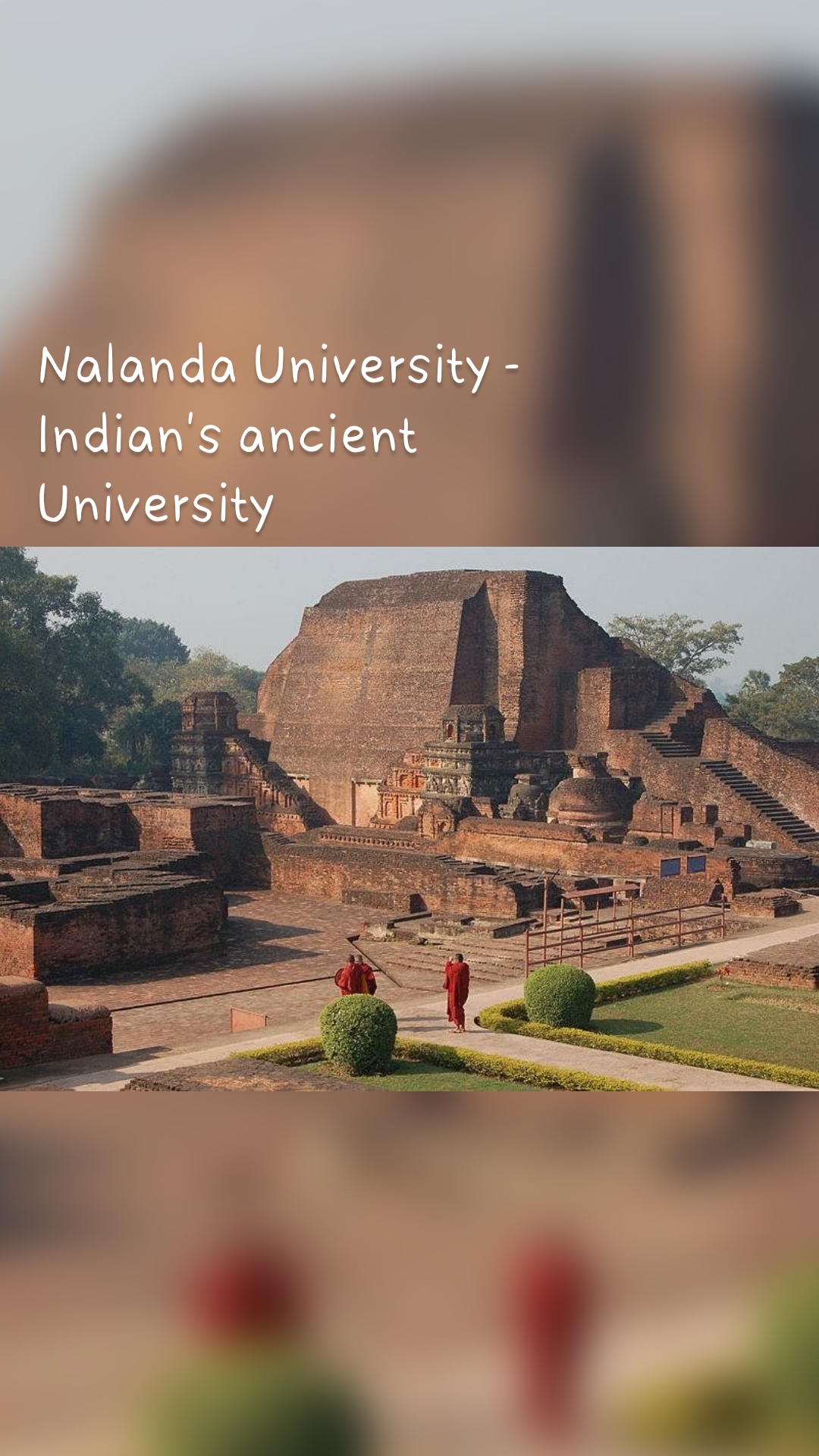
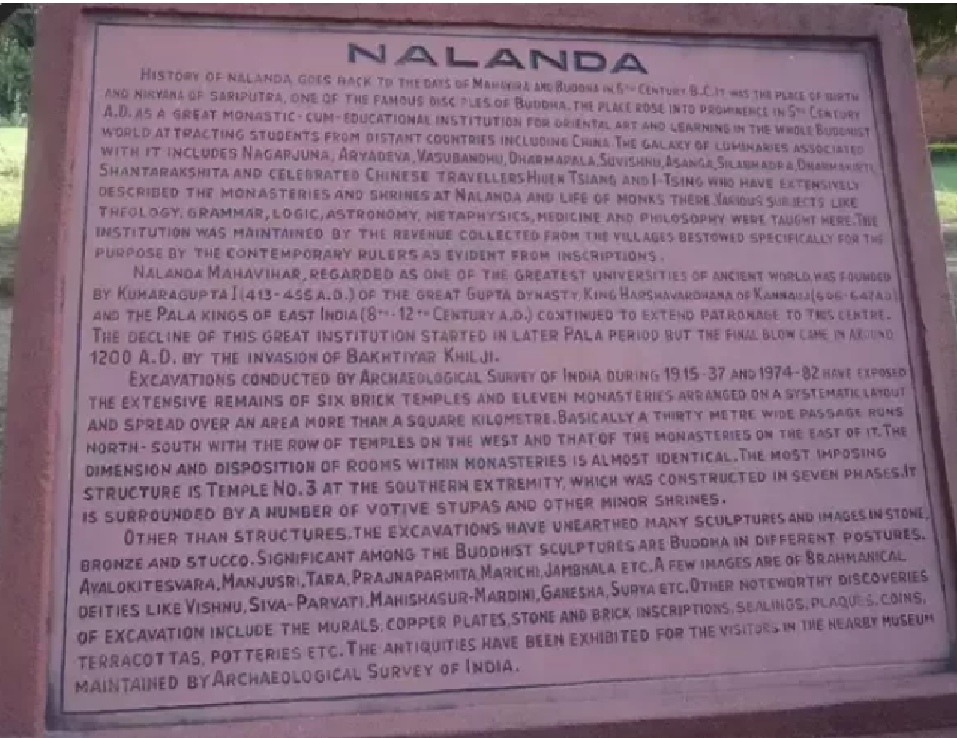
The origins of this scholastic institution in 5th century CE. It served for an uninterrupted duration of 800 years
The university thrived under the patronage of the rulers of the Gupta dynasty during the 5th and 6th centuries.
It continued to flourish under Emperor Harshavardhan of Kannauj in the 7th century as well.
The growth and the popularity of the university continued until the 9th century.
The declination of Nalanda University was primarily due to the establishment of four other seats of Buddhist learning in the same region under the Pala Empire from the 9th century to the 12th century
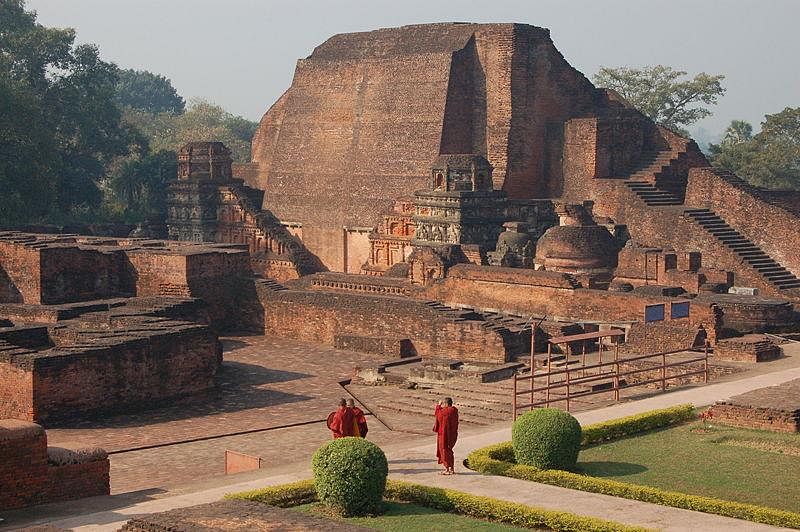
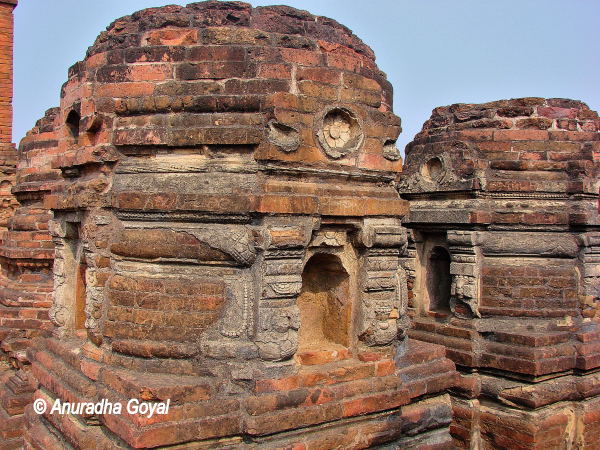
Small stupas
FACTS
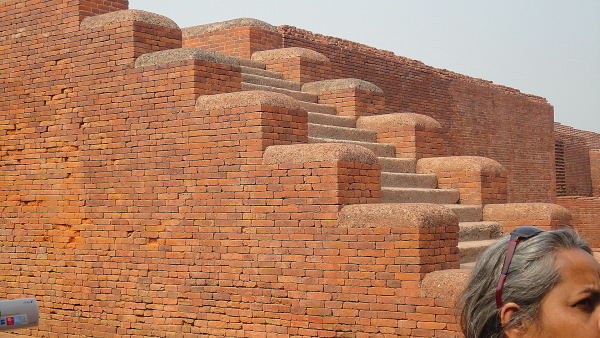
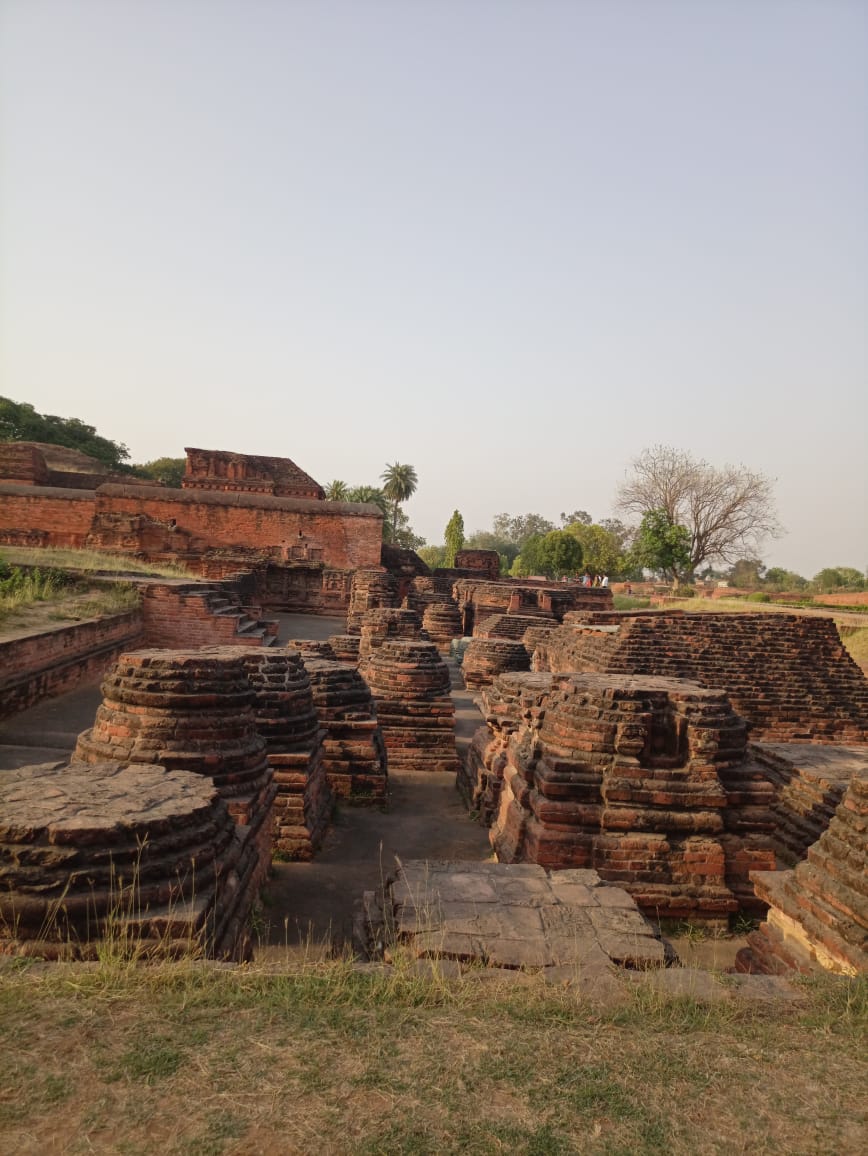
Taken by Kirti kumari
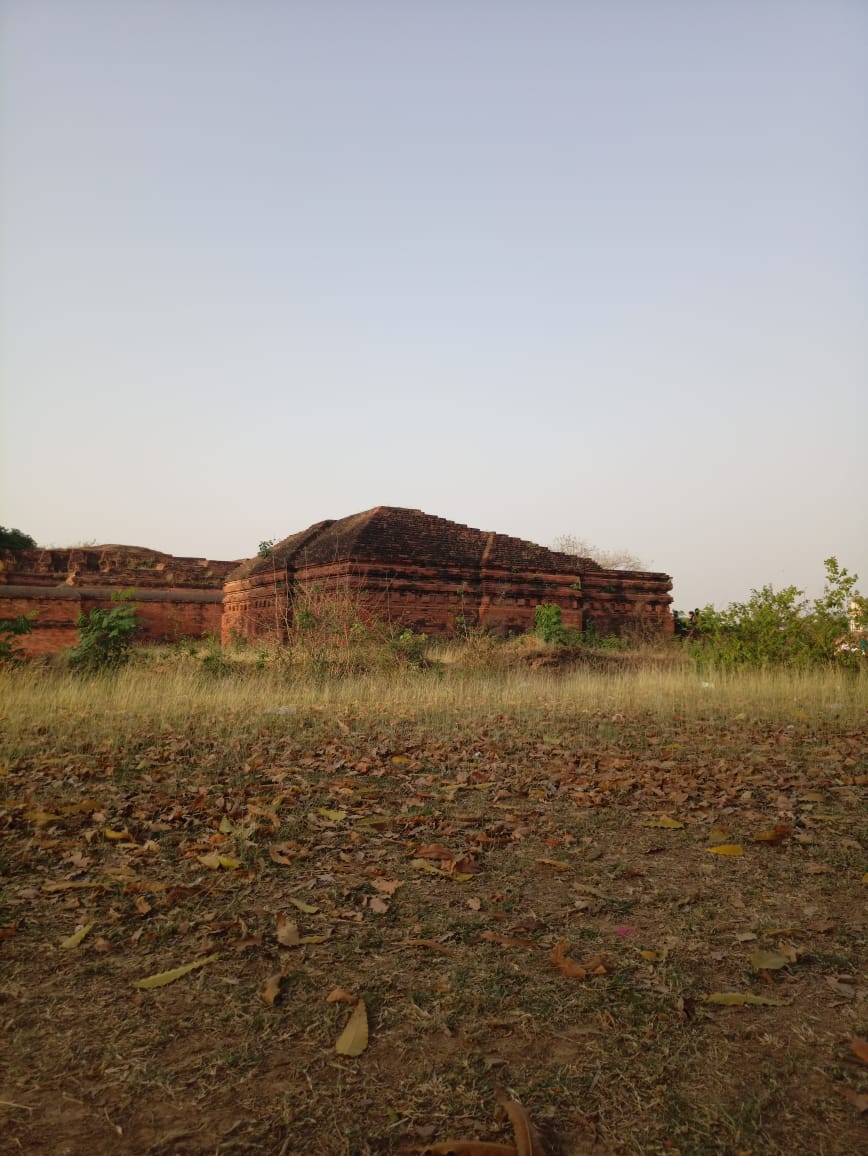
Remains of university
Oldest university with hostel facilities in India.
The massive library of Nalanda was called Dharma Gunj, meaning the Treasury of Truth or the Mountain of Truth.
It contained hundreds of thousands of books.
The subjects taught at Nalanda covered in every field of learning, and it attracted pupils and scholars from Korea, Japan, China, Tibet, Indonesia, Persia and Turkey
It is believed that the library of Nalanda was so huge that it burned for months after the university was ransacked by Bakhtiyar Khilji and the library was set on fire.
Nalanda was attacked three times by the invaders –
The Huns
The Gaudas
Bhaktiyar Khilji – who brought about its complete destruction.
Archeologists and historians are of the opinion that just 10% of the Nalanda campus has been excavated till date. Around 90% remain to be excavated.
The ruins of Nalanda were the location for the shooting of the popular song “O Mere Raja” from the Bollywood movie Johny Mera Naam starring Hema Malini and Dev Anand.
By Kirti kumari
DECLINATION
Ruins of Nalanda University
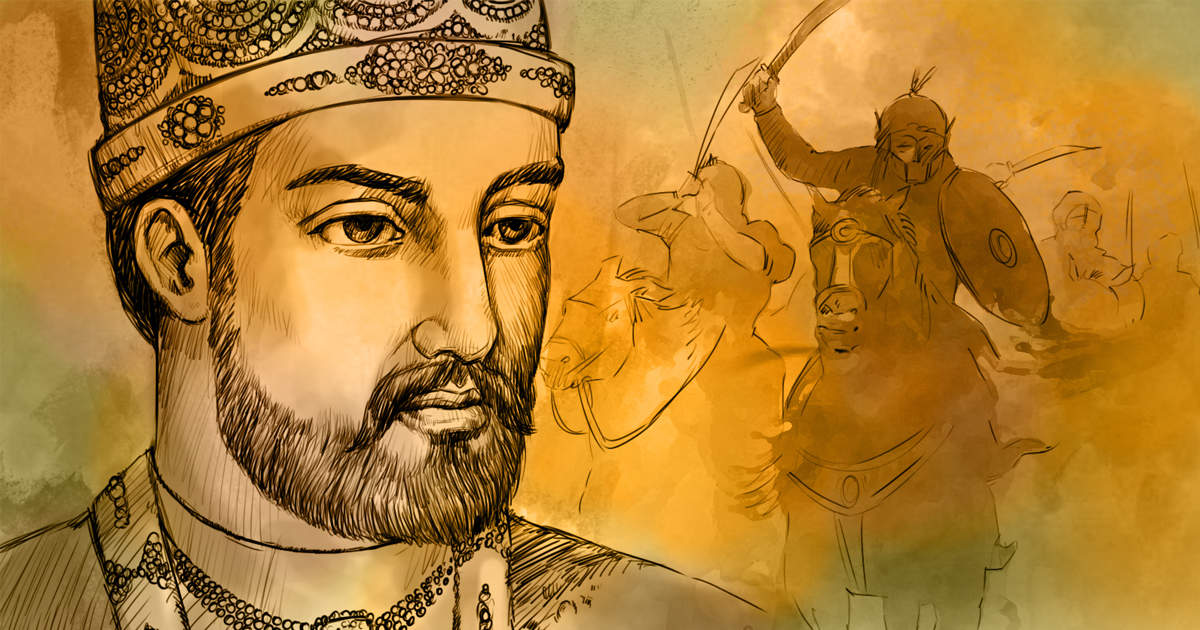
Muḥammad Bakhtiyar Khalji, a Turkic invader destroyed the Nalanda University in 1202 AD.
Bakhtiyar Khilji
At that time Bakhtiyar Khilji had captured some areas ruled by Buddhists in North India and once he became quite ill. He got enough treatment from his princes but he could not recover and reached a moribund condition.
Then someone advised him to take the treatment from Acharya Rahul Sribhadra, who was head of Ayurveda department of Nalanda University. But Khilji was not ready for this. He had more faith in his princes. He was not willing to believe that Indian physicians have more knowledge than his wife and their masters.
But to save his life he had to call Acharya Rahul Sribhadra, head of Ayurveda department of Nalanda University. Then Bakhtiar Khilji put a strange condition in front of Vaidyaraj that I will not eat any kind of medicine given by him. They had to fix it without medication. After thinking of this, Vaidyaraj accepted his condition and after a few days, he came to Khilji with a Quran and said that he had to read the page of the Quran. And after reading these pages you will free from illness.
Bakhtiar Khilji read the Quran as Vaidyaraj said he was cured.
“It is said that Rahul Shribhadra applied for medicine on some pages of the Quran. and as he started reading those pages of the Quran he kept on recovering.”
After recovering khilji was shocked by the fact that an Indian scholar and teacher had more knowledge than his princes and countryman.
After this, he decided to destroy the roots of Buddhism and Ayurveda. As a result, Khilji set fire to the great library of Nalanda and burned around 9 million manuscripts.
Studio Ghibli is a Japanese animation studio that has been creating wonderful animated movies since 1985. Founded by Hayao Miyazaki and co., Ghibli’s movies have always stood apart for their thought-provoking themes and immensely settings. Ghibli animations have the power to transport us to an ethereal land that transcends beyond the mundanities of human life. They are usually set in a mythical of fictional landscapes which are hidden from and within the everyday realities of humans. Through these fictional characters and magical settings, Ghibli movies have a way of moving us to tears with etched emotions. Their plotlines are heart-wrenchingly beautiful and are often presented with a touching message to humanity. Another element that adds to the beauty of each movie is that they are accompanied by an assortment of soulful music. Ghibli movie magic lies in the fact that it can instantly takes us lands that reminds us of the beauty of mossy meadows, gentle rivers, sweet smell of earth after the first rain, dewdrops on a tender leaf and vast grasslands meeting a clear blue sky in its horizon.
Here’s a list of top 3 must-watch Ghibli movies:
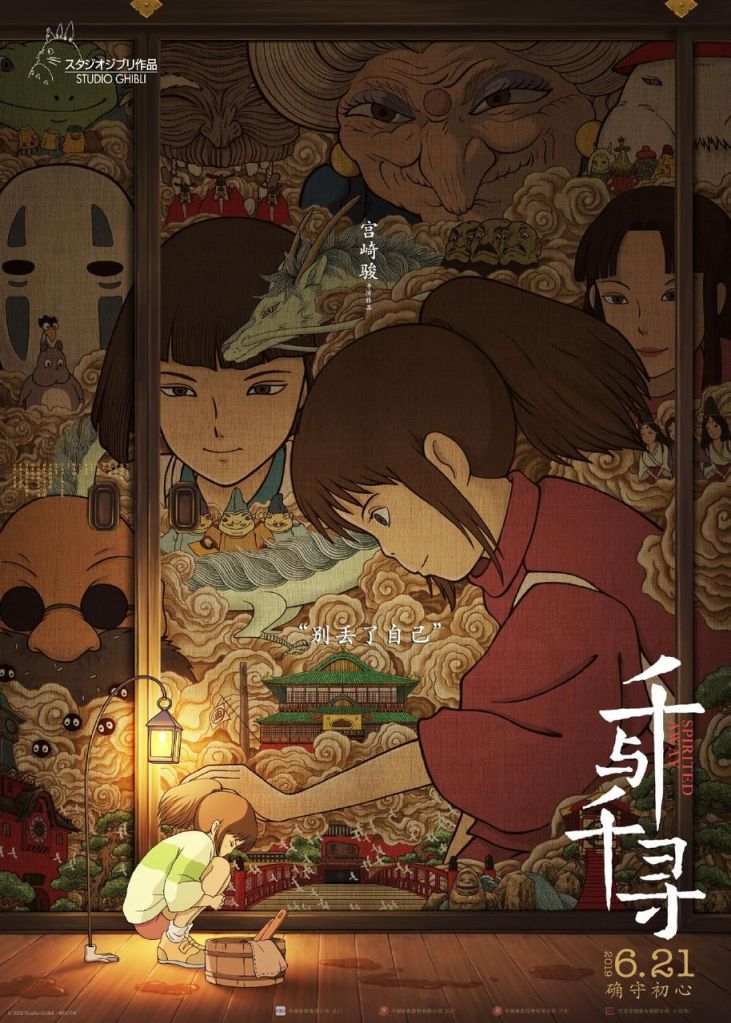
1. Spirited Away
Spirited Away was released in 2001 and was directed by Hayao Miyazaki. Spirited Away follows the story of Chiro, a 10-year-old girl who, while moving into a new neighbourhood with her family, accidentally enters the world of Kami or Japanese folk spirits. The family crosses into the threshold before sunset, not knowing that it transforms into the magical land of spirits after sun down. After her parents are turned into pigs, Chiro embarks on a journey to recover their true selves by working for the land’s wealthiest witch Yubaba. Set with beautiful animations of glittering nightscape and elegant river spirits, Spirited Away is easily a true cinematic masterpiece. It won the Academy award for ‘Best Animated Feature Film’ in 2002 and is critically acclaimed worldwide.
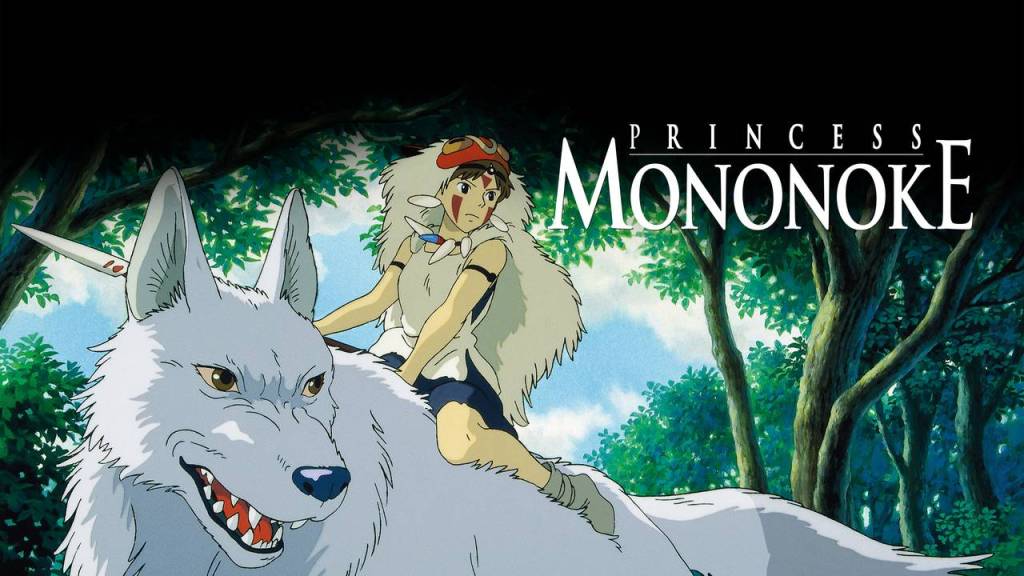
2. Princess Mononoke
Princess Mononoke was released in the year 1997 and was directed by Hayao Miyazaki. It is a thought-provoking story that questions and laments the destruction of nature sue to mankind’s greed for more. Set in the late Muromachi perios, it follows the story of a young Prince Ashitaka who encounters wild forest gods and its protectors who are caught fighting against humans who seek to destroy the forest for their purposes. With surreal mythical creatures and an abundance of emotions, Princess Mononoke moves us with its powerful message.
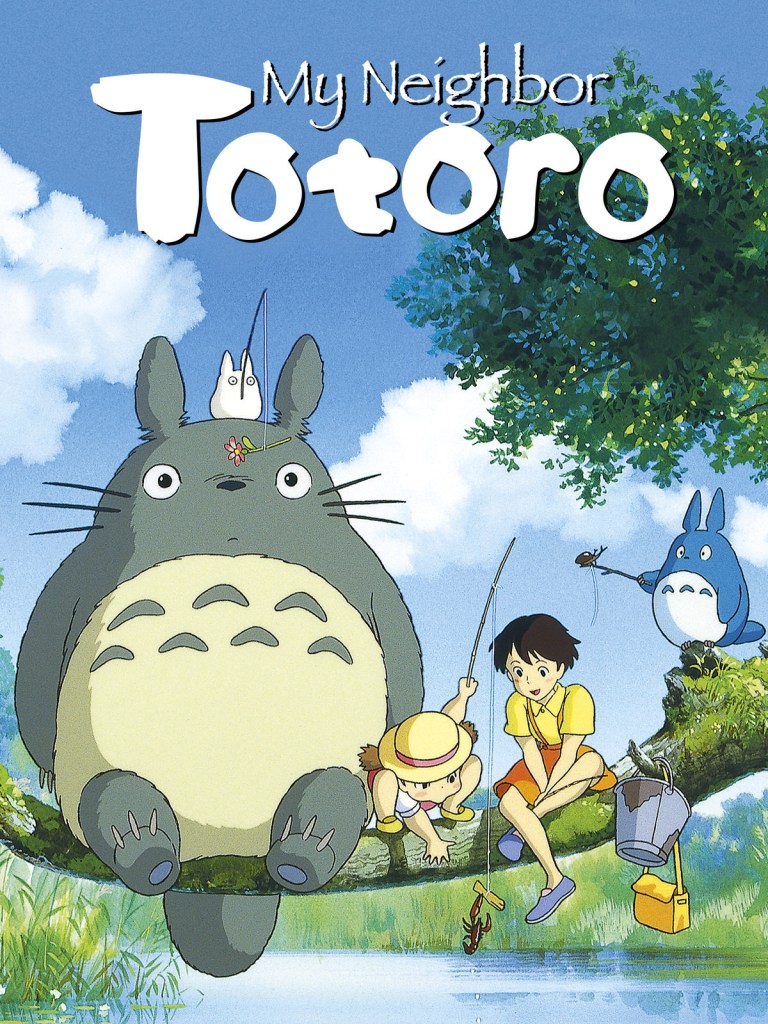
3. My Neighbor Totoro
My Neighbour Totoro was released in the year 1988 and was directed by Hayao Miyazaki. It follows the story of two little girls named Satsuki and Mei who, while moving into their new house, discover a hoard of fantasy creatures in their backyard. The two children, especially the younger one is innocently curious. As she stumbles into a mossy hole, she discovers a couple of friendly wood spirits including the huge Totoro who keep her company until her sister arrives back from school. Set in a post-war Japan, the movie shines with the innocence of the children and explore their humorous interactions with the mysterious and cute creatures. Totoro was widely popular and has been the face of Studio Ghibli since.
There are several other notable Ghibli movies including Howl’s Moving Castle, Castle in the Sky, Grave of the Fireflies and Kiki’s delivery service, etc.
WHO is bringing the world’s scientists and global health professionals together to accelerate the research and development process, and develop new norms and standards to contain the spread of the coronavirus pandemic and help care for those affected.
The R&D Blueprint has been activated to accelerate diagnostics, vaccines and therapeutics for this novel coronavirus.
The solidarity of all countries will be essential to ensure equitable access to COVID-19 health products.
Global research database
WHO is gathering the latest international multilingual scientific findings and knowledge on COVID-19. The global literature cited in the WHO COVID-19 database is updated daily (Monday through Friday) from searches of bibliographic databases, hand searching, and the addition of other expert-referred scientific articles. This database represents a comprehensive multilingual source of current literature on the topic. While it may not be exhaustive, new research is added regularly.
The WHO evidence retrieval sub-group has begun collaboration with key partners to enrich the citations and build a more comprehensive database with inclusion of other content. The database is built by BIREME, the Specialized Center of PAHO/AMRO and part of the Regional Office’s Department of Evidence and Intelligence for Action in Health.
For further information or questions, please contact the WHO Library via email.
Disclaimer: the designations employed and the presentation of the material in publications listed in this database does not imply the expression of any opinion whatsoever on the part of WHO concerning the legal status of any country, territory, city or area or of its authorities, or concerning the delimitation of its frontiers or boundaries. Dotted and dashed lines on maps represent approximate border lines for which there may not yet be full agreement.
The mention of specific companies or of certain manufacturers’ products in publications listed in the database does not imply that they are endorsed or recommended by WHO in preference to others of a similar nature that are not mentioned. Errors and omissions excepted, the names of proprietary products are distinguished by initial capital letters.
By listing publications in this database and providing links to external sites does not mean that WHO endorses or recommends those publications or sites, or has verified the content contained within them. The database has been compiled without warranty of any kind, either expressed or implied. The responsibility for the interpretation and use of publications included in this database lies with the reader. In no event shall WHO be liable for damages arising from its use.
The 2nd half 20th Century – the socio cultural movements that effected people are merging and becoming more. Post Colonial literature became popular, Ngugi wa thiongo a Kenyan thinker – Moving the Centre – The plurality of culture and literature, the shift from Eurocentric understanding of the world. Grand narratives centred around the Eurocentric understanding, and postcolonial works thus became a shift from these Grand Narratives. The way art aesthetics and literature were looking at the past and the grand narratives became problematic, because people felt a need to bring back the past, but simultaneously in every country there was this need to bring something new back. Every age becomes a response to a previous period and the previous period is a response to resistance. Literatureis not something that is just to entertain people, the position of literature is embedded in our social systems, part of your existence. To understand postmodernism, is to lie on modernism. France Fanon, Meena Kandasamy, examples of theoretical perception are taken forward with people of different discipline. Thiongo’s work becomes important for the possibility of multiple centres and multiple meanings – a product of European imperialism and internal resistance as well.
Mcluhan’s Medium as message, depending on the medium the reachability is different and the access as well is differing.
Susan Sontag – a revolt against ‘the departure from modernism can be regarded as new sensibility, a revolt against canonised modernism’s avant-guard revolution’ – Critiquing the high culture of Modern Capitalist world, against the cannon. On one hand Modernism tried critiquing the Grand narratives and on the other it cerated a canon for itself.
Modernism is adopting plurality like Postmodernism, but was lamenting fragmentation even though working through it, trying to work on a wholesome unity, they continued to believe that with lit or artistic expression we may achieve a ‘self’ while postmodernism are embracing fragmentation, praising dissent, rather celebrating fragmentation.
Arnold Toynbee – birth of postmodernism, and questioning the tradition moral values and beliefs (grand narratives); and by questioning this he’s talking about the development of cultural modernists and the different understanding of the world, a better apparatus of understanding world and culture. Grand Narratives continue to be over – aching and totalising and replace or silence other narratives around us. And how mini-narratives can replace grand narratives by promoting plurality and heterogeneity as it becomes local. [Culture in modernism – a cultural innovation – development of new meanings.] Postmodernism is branching out to different ways, questioning the requirement and the need for plurality and heterogeneity.























 Eduindex
You must be logged in to post a comment.